
Tag: agentic AI

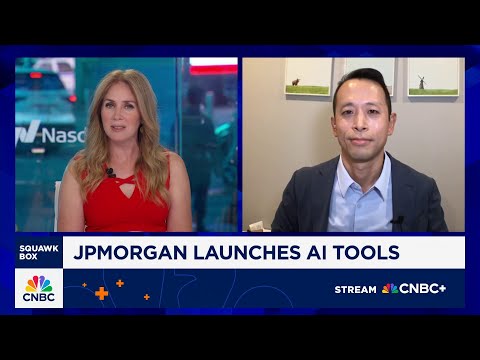
  • JPMorgan Equips 250,000 Employees with AI Assistants from OpenAI and Anthropic

    JPMorgan Equips 250,000 Employees with AI Assistants from OpenAI and Anthropic

    JPMorgan Chase is taking a major step in integrating artificial intelligence across its operations by providing 250,000 employees with access to LLM Suite, a platform that connects staff to large language models from OpenAI and Anthropic. The initiative aims to move beyond simple chatbots toward autonomous AI agents that can handle complex tasks across multiple business functions.

    Derek Waldron, Chief Analytics Officer at JPMorgan, described the vision as one where the bank becomes a fully AI-connected enterprise. In a demonstration, Waldron showed how the platform can create an investment banking presentation in 30 seconds—work that previously required hours from junior bankers.

    Launched in 2023, LLM Suite initially offered OpenAI’s models for drafting emails and summarizing documents. It now incorporates Anthropic’s Claude model as well. About half of the 250,000 employees with access use it daily, and the platform is updated every eight weeks with new data from the bank’s business units.

    Key capabilities include drafting confidential merger and acquisition documents, providing personalized AI assistants for every employee, automating routine back-office processes, and using AI agents to handle complex multi-step tasks autonomously.

    Waldron acknowledged that while AI will empower some workers, others face displacement as processes no longer require human involvement. In May, the head of JPMorgan’s consumer banking division told investors that operations staff would fall by at least 10% over five years due to AI deployment. Senior Wall Street executives have discussed changing the ratio of junior bankers to senior managers from 6-1 to 4-1 as AI handles more work.

    Despite the rapid deployment, Waldron noted it will take years to fully connect AI models with the bank’s data and software, which has an annual technology budget of $18 billion. An MIT report from July found that most corporations had not generated returns on AI projects despite over $30 billion in investments.

  • Navigating AI Development at Breakneck Speed: Lessons from Two Six Technologies

    Navigating AI Development at Breakneck Speed: Lessons from Two Six Technologies

    In the rapidly evolving landscape of artificial intelligence, development cycles have compressed to what industry experts describe as “dog years.” Software upgrades that once took a year are now shipped in two months or less. This pace forces organizations to constantly adapt, especially when major LLM releases redefine the automation capabilities of software.

    Two Six Technologies, a company specializing in national security and AI innovation, offers a compelling case study in balancing speed with stability. Their new agentic orchestrator, Helix, went from concept to operational deployment on the most sensitive and secure systems in just three months. The company serves clients like the Department of War, DARPA, and intelligence agencies, where security is paramount.

    Key lessons from their approach include:

    • Embedding security from the start: By adopting a proactive security posture and using their zero-trust solution, Trusted Keep, they safely pilot cutting-edge capabilities without sacrificing compliance.
    • Leveraging larger, well-coordinated teams: Contrary to the trend toward smaller agile teams, Two Six found that larger teams provide the bandwidth to jump from low-fidelity concepts to polished features quickly.
    • Maintaining model flexibility: Systems must avoid lock-in to any single AI model, allowing seamless transitions as algorithms evolve. This is critical for tools like Helix that connect to diverse ecosystems.
    • Deep customer intimacy: Rapid development fails if the product misses the mark. Two Six combines deep national security expertise with AI to ensure customer intent guides every iteration.

    The company demonstrates that organizations don’t have to choose between speed and security. With the right foundation, they can achieve both, delivering immediate, decisive results in high-stakes environments.