Tag: agentic AI

  • YuVerse Hosts Yunite 2026: Industry Leaders Map AI’s Future Across E-Commerce, Healthcare, Real Estate, and More

    YuVerse Hosts Yunite 2026: Industry Leaders Map AI’s Future Across E-Commerce, Healthcare, Real Estate, and More

    Bengaluru, July 27, 2026 — YuVerse, the last-mile AI company, convened the fifth edition of Yunite in Bengaluru, bringing together founders, CXOs, and director-level executives from over 45 companies across 10 industries. The forum focused on candid dialogue about real-world AI applications in finance, technology, education, real estate, human resources, retail, e-commerce, healthcare, telecommunications, logistics, and FMCG.

    Co-founder and CEO Mathangi Sri Ramachandran led discussions on leveraging AI for business outcomes while preserving empathy and dignity in customer interactions at scale. YuVerse showcased practical agentic AI workflows across retail, e-commerce, healthcare, real estate, and insurance, demonstrating a complete customer lifecycle from brand awareness to re-engagement.

    Four Critical Dimensions of AI’s Future

    The forum addressed four key areas:

    • Access as a multiplier: Nikkitha Shanker, Founder and CEO of SuperBryn, highlighted AI’s potential to address structural deficiencies in India’s healthcare and education sectors, envisioning AI doctors triaging patients in tier 3 and tier 4 cities.
    • Regulatory clarity and market development: Jatin Sehgal, a Senior Market Risk professional, called on SEBI to learn from smaller Asian markets and use AI to model payoffs and flag risks, citing underdeveloped credit default swaps in India.
    • Reimagining the workforce: Shanker argued for iterative regulatory approaches as workforces become part human, part AI, and predicted third-party evaluators for voice AI agents will become mandatory.
    • The shifting skills premium: Nicolai Nazareth, Executive Director of Evaluationz India Pvt. Ltd, noted that problem comprehension, articulation, and critical analysis will become more valuable than execution as AI handles execution layers.

    The event concluded with a rapid-fire Q&A session hosted by a YuVerse AI agent, showcasing real-time conversation intelligence and personality detection. Mathangi reflected, “We had sparkling answers from a really diverse group. The rapid fire session brought the capabilities to life in a way that felt immediate and genuine.”

    Yunite’s ethos is grounded in accountability, thoughtful regulation, and measurable real-world impact. Mathangi summed up: “We had discussions spanning everything from politics to how AI impacts children, from positive applications to guardrails regulators should implement. That’s what Yunite is built for.”

    YuVerse is part of the Yubi Group, backed by Peak XV, Insight Partners, Lightspeed, B Capital Group, Dragoneer, and TVS Capital. For more, visit yuverse.ai.

  • How Agentic AI Transforms Customer Loyalty: Amresh Acharya on Proactive, Personalized Engagement

    How Agentic AI Transforms Customer Loyalty: Amresh Acharya on Proactive, Personalized Engagement

    Agentic AI is reshaping customer loyalty by enabling businesses to deliver personalized, proactive, and scalable experiences. Instead of focusing only on rewards, brands now build lasting relationships through intelligent, data-driven customer engagement.

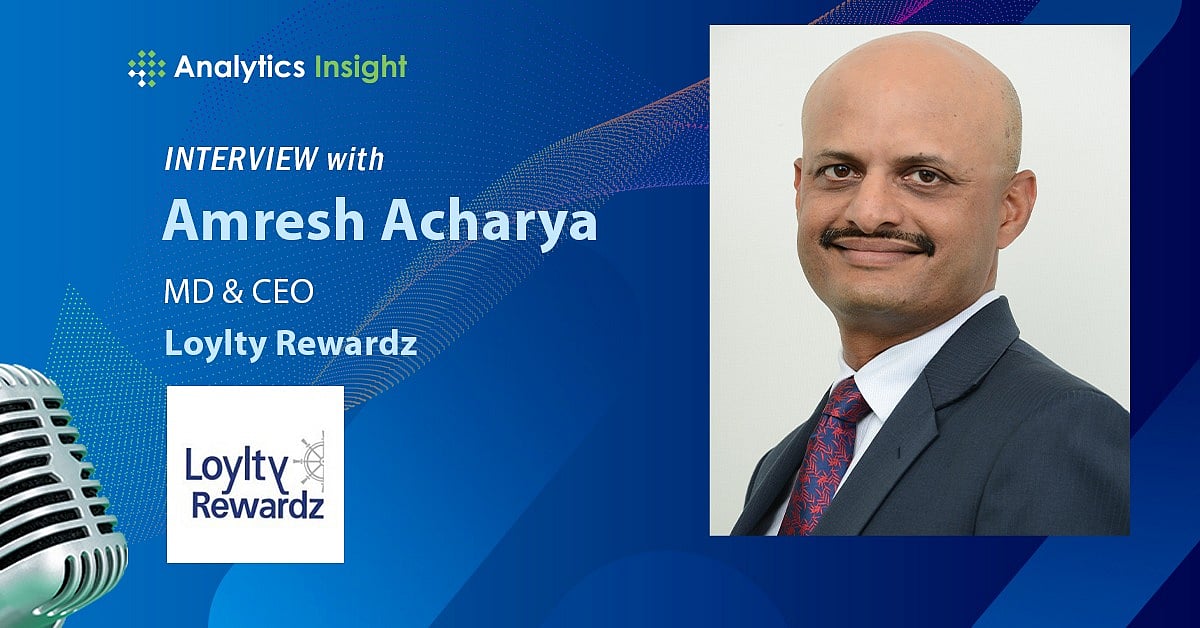
    In today’s episode of the Analytics Insight podcast, host Priya Dialani interviews Amresh Acharya, MD & CEO of Loyalty Rewardz, about how Agentic AI is revolutionizing customer engagement and loyalty. The episode features the evolving trend of companies going beyond conventional reward systems to engage customers using artificial intelligence solutions.

    Amresh provides information on how AI, machine learning, and data science can be used together to improve customer relationships and balance automation with human touch. He also sheds light on the importance of embracing responsible AI, customer data unification, and enterprise-level personalization to grow one’s business in the future. Here are the excerpts from the interview.

    What is Agentic AI and how does it benefit the customer experience?

    Unlike traditional AI, agentic AI does not simply answer customer queries. It understands context, predicts the customer’s future needs, and recommends services accordingly. Agentic AI will help brands provide more engaging experiences which do not come across as transactional.

    What does customer loyalty look like in the age of AI?

    The concept of loyalty has changed. Now customers expect to be understood by brands, remembered by them, and get customized services. Using artificial intelligence allows brands to develop relationships that motivate consumer loyalty.

    Is AI enough for a good customer experience?

    To some extent, AI-powered customer service can easily handle frequent queries that require quick answers. However, there are occasions when customers need help that cannot be provided by a machine and requires human assistance.

    Why is data critical to the success of AI-driven loyalty programs?

    AI performance is dependent upon the data it gets. Correct and correlated data about the customer helps firms understand their behaviors and preferences and personalize for them. Fragmented data prevents the AI from making any relevant suggestions for its customers.

    What do companies need to do before implementing Agentic AI?

    AI implementation starts with good data management, goal setting, and process design. Companies need to begin addressing customer challenges, have appropriate AI governance, and retain human involvement in critical decision-making processes.

  • How Agentic AI Drives Customer Loyalty: Insights from Loyalty Rewardz CEO Amresh Acharya

    How Agentic AI Drives Customer Loyalty: Insights from Loyalty Rewardz CEO Amresh Acharya

    In an era where customer expectations are rapidly evolving, businesses are turning to Agentic AI to build deeper, more meaningful loyalty. Unlike traditional reward programs, Agentic AI enables proactive, personalized engagement that anticipates customer needs before they arise.

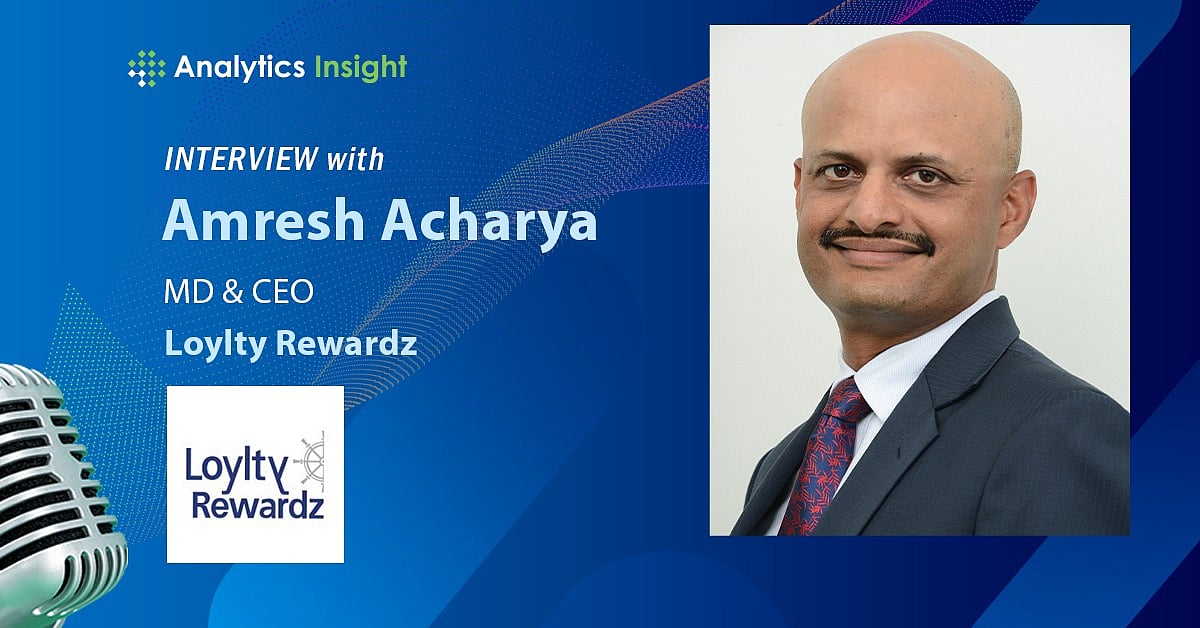
    In a recent episode of the Analytics Insight podcast, host Priya Dialani sat down with Amresh Acharya, Managing Director & CEO of Loyalty Rewardz, to explore how artificial intelligence is transforming customer loyalty. Acharya shared his expertise on integrating AI, machine learning, and data science to enhance customer relationships while balancing automation with the human touch. He emphasized the importance of responsible AI, unified customer data, and enterprise-level personalization for sustainable business growth. Below are key insights from the conversation.

    What Is Agentic AI and How Does It Benefit Customer Experience?

    Unlike conventional AI, Agentic AI doesn’t just answer queries; it understands context, predicts future needs, and recommends services accordingly. This allows brands to deliver engaging experiences that feel genuine rather than transactional.

    Customer Loyalty in the Age of AI

    The concept of loyalty has shifted. Today, customers expect brands to understand them, remember their preferences, and offer customized services. AI enables brands to develop relationships that naturally foster loyalty.

    Is AI Enough for a Good Customer Experience?

    AI-powered customer service handles frequent, straightforward queries efficiently. However, there are situations where human assistance is irreplaceable, especially when customers need empathy or complex problem-solving. The key is blending AI with human touchpoints.

    Why Data Is Critical for AI-Driven Loyalty Programs

    AI performs optimally when fed high-quality data. Accurate, correlated customer data helps firms understand behaviors and preferences, enabling personalization. Fragmented data prevents AI from making relevant suggestions, undermining the loyalty effort.

    Steps Before Implementing Agentic AI

    Successful AI implementation begins with robust data management, clear goal setting, and thoughtful process design. Companies need to address specific customer challenges, establish proper AI governance, and ensure human involvement in critical decisions.

    Acharya’s insights underscore that Agentic AI is not a replacement for human interaction but a powerful tool to elevate customer loyalty through proactive, personalized engagement.

  • Pega Infinity 26 Launches: Predictable AI Outcomes Without Token Fees

    Pega Infinity 26 Launches: Predictable AI Outcomes Without Token Fees

    Pegasystems Inc. (NASDAQ: PEGA) has announced the general availability of Pega Infinity™ 26, the latest version of its enterprise AI suite designed to help organizations scale artificial intelligence with confidence. The release tackles two critical barriers to AI adoption: unpredictable outcomes and unpredictable costs.

    Available through Pega Cloud® or in clients’ managed cloud environments, Pega Infinity 26 combines advanced agentic AI with built-in governance and a new pricing model that eliminates consumption-based AI charges. This enables enterprises to achieve both predictable AI performance and predictable expenses.

    Predictable AI with Flat-Fee Pricing

    At the heart of the release is the Pega Predictable AI™ architecture, which maximizes AI processing at design time to ensure runtime operations are extremely token-efficient. Clients pay a flat fee per resolved case—not per token—eliminating what Pega calls the “AI token tax.” This model allows enterprises to use as much AI as needed without worrying about runaway costs from token-based consumption.

    Pega also introduced a free AI Token Cost Calculator to help organizations estimate potential savings compared to traditional token-based models.

    Key Innovations in Pega Infinity 26

    • Pega Infinity Studio – An AI-native development environment that integrates clients’ preferred coding agents with built-in best practices from Pega Blueprint AI™, accelerating delivery of mission-critical applications while reducing risk.
    • Predictable AI agents and orchestration – New capabilities allow developers to connect and orchestrate both Pega and third-party AI agents within governed workflows, ensuring compliance and consistent outcomes.
    • Pega Customer Engagement Studio – A unified workspace for marketers to create personalized 1:1 campaigns in minutes at scale, with AI agents handling ideation through execution.
    • Design and runtime MCP support – Clients can use MCP (Model Context Protocol) to connect with tools like Claude Code, GitHub Copilot, and OpenAI Codex for building applications, and invoke agents from assistants like ChatGPT and Office 365 Copilot.

    Market Context: The Need for Cost Transparency

    Despite massive enterprise investment in AI, many organizations have struggled to realize meaningful business value. Concerns around trust, risk, and security have slowed large-scale deployment. Escalating costs and uncertain ROI threaten the viability of many AI initiatives. With Pega Infinity 26, every AI-driven interaction adheres to business rules and regulatory standards while removing pricing unpredictability.

    Executive Insight

    “Enterprises are seeing tremendous potential in AI and are now focused on turning that momentum into measurable business outcomes,” said Kerim Akgonul, chief product officer at Pega. “The next phase of AI adoption is about scaling results with confidence. Pega Infinity 26 removes two of the biggest barriers to success—unpredictable outcomes and unpredictable costs—by building governance into AI-driven workflows and aligning pricing with completed work.”

    Pega Infinity 26 is available now. For more details, visit www.pega.com/infinity.

  • Landing AI: Empowering Enterprises with Agentic AI and Computer Vision Solutions

    Landing AI: Empowering Enterprises with Agentic AI and Computer Vision Solutions

    Landing AI, founded in 2017 by AI pioneer Andrew Ng, is a leading company specializing in data-centric computer vision and AI-powered document extraction. The firm enables organizations to build, deploy, and scale AI models efficiently, with a strong focus on manufacturing and complex unstructured document workflows through agentic document extraction.

    About the Company

    Landing AI develops artificial intelligence software that transforms large volumes of visual and document data into actionable insights. By leveraging data-centric AI and computer vision technologies, the company helps enterprises implement AI systems across multiple industrial sectors, including manufacturing, healthcare, and logistics. Its main platforms—LandingLens and Agentic Document Extraction (ADE)—allow users to build AI models with minimal programming, converting difficult visual data and unstructured documents into organized, structured data.

    Products and Services

    Landing AI offers two core platforms: LandingLens for building computer vision systems and Agentic Document Extraction (ADE) for extracting structured data from documents. These tools enable organizations to automate analytics and enterprise workflows using data-centric artificial intelligence. The company also provides API access, consulting services, and strategic partnerships to support deployment.

    Leadership

    Under the leadership of founder Andrew Ng, a renowned figure in AI, Landing AI has assembled a team of experts driving innovation in computer vision and document automation. The company’s leadership focuses on practical, scalable AI solutions for real-world enterprise challenges.

    Revenue Streams

    Landing AI generates revenue through subscriptions to its LandingLens SaaS platform, enterprise AI solutions, API access for agentic AI tools, strategic partnerships, and consulting services for deploying data-centric computer vision applications.

    Target Markets

    The company serves B2B clients across industries such as manufacturing, finance, healthcare, logistics, agriculture, and technology. Geographically, its solutions are adopted by organizations in North America, Europe, Asia-Pacific, and other global regions. Key client segments include enterprises looking to enhance their computer vision systems, document automation processes, and data extraction capabilities.

  • 10 Best GenAI and Agentic AI Certifications to Future-Proof Your Career in 2026

    10 Best GenAI and Agentic AI Certifications to Future-Proof Your Career in 2026

    The AI job market is shifting toward professionals who can build, deploy, and manage intelligent systems instead of simply using AI tools. GenAI and Agentic AI courses provide structured learning with hands-on projects and industry-recognized credentials. The best programs can strengthen both technical expertise and long-term career prospects.

    Overview

    GenAI and Agentic AI courses develop practical skills in large language models (LLMs), AI agent frameworks, RAG, Model Context Protocol (MCP), AI governance, and autonomous AI system design for real-world applications. These programs cater to different experience levels, from beginners learning generative AI fundamentals to professionals building production-ready AI agents, enterprise workflows, and intelligent automation systems.

    University-backed and industry-recognized courses combine hands-on projects, technical expertise, and system-level thinking to prepare learners for AI engineering, product management, software development, and enterprise AI leadership roles.

    Prompt engineering got people through the door of Generative AI. Now the demand is shifting toward something bigger: professionals who can build, deploy, and govern autonomous AI systems that actually solve business problems. Certification programs are moving with that shift, leaving prompt basics behind and teaching production-ready AI skills instead.

    Generative AI courses teach people to use large language models to create content and applications. Agentic AI courses go further. They teach people to build systems that plan, use tools, maintain context, and finish tasks with little human input. That is why courses covering architecture, evaluation, and governance now carry more weight than courses built around prompting alone.

    How We Ranked the Best GenAI and Agentic AI Courses in 2026

    These ten are ranked by curriculum depth, verified hands-on project work, institutional accountability, and how directly the skills map to a real job function, from the complete beginner through the production engineer. That range is deliberate. A ‘top 10’ list that only serves engineers offers little to a product manager or executive searching for the same term.

    Top 10 GenAI and Agentic AI Courses at a Glance

    1. Learnbay – Generative AI & Agentic AI Master Program

    Most AI courses just teach tools or prompt writing. Learnbay takes a different path, helping learners apply AI directly in their existing fields. The Generative AI & Agentic AI Master Program mixes live classes, real projects, and guidance from actual industry practice. Topics covered include Generative AI, Agentic AI, RAG, LangChain, LangGraph, CrewAI, MCP, vector databases, LLMOps, AI deployment, automation, and responsible AI use. The focus stays on real work, not sample projects. Through AI Co-Lab and startup-style challenges, plus the Build Your Own Project (BYOP) program with a mentor guiding each step, learners build a portfolio worth showing employers. The projects are tailored to different fields too, including banking, healthcare, manufacturing, retail, telecom, and consulting. Classes run live on weekends, which works well for people balancing a full-time job. A three-year access period is also included, so the material stays available for future review. Career Services Pro adds further support with resume building, LinkedIn profile help, mock interviews, and placement assistance.

    2. Building AI Agents and Agentic Workflows (IBM)

    A three-course specialization that moves from LangGraph fundamentals to CrewAI multi-agent orchestration to AG2 and BeeAI, inside guided labs using real large language models such as GPT and IBM Granite. It works as a reasonable second step after a GenAI foundations course, though it remains a framework survey in nature. Learners wanting deep architecture or governance content will outgrow it fast.

    3. Full Stack Agentic AI Specialization (Coursera)

    This program moves past framework tours into ownership: RAG pipelines, the Model Context Protocol, vector databases, and backend orchestration. It suits engineers who want the whole stack under one roof rather than a single layer. The tradeoff is breadth over depth. Covering the full stack means less specialization in any one area than Cornell’s architecture-focused track offers.

    4. Master Agentic AI: Core Principles and Real-World Applications (Coursera)

    Built for people who already build ML models and need to operate agent systems at production scale: reward-signal design, CI/CD pipelines for retraining, drift detection, and threat modeling for agent security. The honest limitation is the prerequisite. Real ML fluency is assumed already. This program suits practitioners moving beyond prompting, not those starting from it.

    5. Applied Agentic AI Certificate (University of San Francisco)

    An intensive, in-person program with labs and a hackathon, built for people who need to understand agentic AI without writing code. It fills a genuine gap, since most agentic programs assume an engineering background. The cost is depth: graduates leave with strategic fluency, not implementation skill.

    6. Agentic AI Certificate Program (Johns Hopkins)

    A twelve-week, university-backed program covering Python, LLMs, RAG, and agent construction through applied projects, with weekly live sessions from faculty and industry experts. It sits between USF’s no-code approach and Coursera’s engineering-heavy tracks, a reasonable middle path for professionals wanting some hands-on coding without a pure software-engineering prerequisite.

    7. Agentic AI Architecture (eCornell)

    Four short courses over two months, focused not on building agents step by step but on designing the systems around them: LLM reliability, RAG, multi-agent workflows, and governance frameworks for responsible deployment. It suits architects, tech leads, and PMs who own decisions rather than code. Engineers wanting deep framework practice will find it thinner on implementation than IBM’s specialization.

    8. Generative and Agentic AI Certification (BITS Pilani Digital)

    A roughly 30-week program covering LLM applications, agentic systems, RAG, and deployment, built for technology professionals moving from experimenting with AI to architecting it. The length is the differentiator, for better and worse. It offers more depth than any other program on this list but demands a real-time commitment, closer to a part-time postgraduate course than a certification sprint.

    9. Agentic and Generative AI Course (IISc CCE with TalentSprint)

    An advanced program carrying IISc’s research credibility, relevant in India and among engineers who value an academic institution behind the certificate. It overlaps closely in content with BITS Pilani’s track, so the deciding factor usually comes down to institutional preference and location rather than curriculum difference.

    10. GitHub Certified: Agentic AI Developer (Microsoft)

    Four courses at 15 to 16 hours each, built for developers already working inside GitHub workflows and the software development lifecycle. It teaches agentic development inside tools people already use daily, which shortens the learning curve for that specific audience and narrows relevance for anyone outside it.

    How to Choose the Right GenAI and Agentic AI Certification

    Complete beginners fit best with Generative AI for Everyone before attempting anything agentic; every program past that point assumes basic LLM familiarity. Developers wanting hands-on framework practice suit IBM’s specialization or Coursera’s Full Stack track. Architects and technical leads gain more from Cornell’s system-design focus than from a coding-heavy specialization they will not use directly. Professionals wanting depth and university credibility should weigh BITS Pilani or IISc against the time commitment involved. Non-technical leaders get the most direct value from USF’s applied, no-code format.

    Final Thoughts

    The strongest certification is rarely the longest or the most recognizable name. It is the one that closes an actual skill gap. Whether that means understanding what generative AI even is, building production-ready agents, or governing how autonomous systems get deployed at scale.

    FAQs

    1. What is the difference between Generative AI and Agentic AI? Generative AI creates content such as text, images, code, and audio from user prompts, while Agentic AI enables systems to reason, plan, use tools, and complete multi-step tasks with minimal human intervention.
    2. Which GenAI and Agentic AI certification is best for beginners? Beginners should start with foundational Generative AI courses that teach LLMs, prompt engineering, and AI applications before advancing to Agentic AI courses focused on autonomous agents and workflow automation.
    3. Are GenAI and Agentic AI courses worth pursuing in 2026? Yes. As businesses increasingly adopt AI-powered workflows and intelligent agents, courses with hands-on projects and practical AI skills can improve employability and support long-term career growth.
    4. What skills should a good GenAI and Agentic AI certification include? A strong certification should cover prompt engineering, large language models (LLMs), retrieval-augmented generation (RAG), AI agent frameworks, workflow automation, AI governance, model evaluation, and real-world project development.
    5. How do I choose the right GenAI and Agentic AI course? Select a course based on your experience level, career goals, curriculum, hands-on learning opportunities, industry recognition, and whether it covers practical applications such as AI agent development, deployment, and enterprise AI solutions.

  • Gnani AI: India’s Deep-Tech Pioneer in Agentic Speech and Voice AI Solutions

    Gnani AI: India’s Deep-Tech Pioneer in Agentic Speech and Voice AI Solutions

    Gnani AI is a deep-tech artificial intelligence company based in India that specializes in voice-first agentic AI and conversational AI solutions. The company develops proprietary speech technologies—including automatic speech recognition (ASR), text-to-speech (TTS), and natural language understanding (NLU)—to enable multilingual voice communication, particularly in Indian languages. Businesses leverage these tools to automate customer interactions, authentication processes, and live chat experiences.

    About the Company

    Gnani creates cutting-edge voice-first automation solutions through its advanced conversational AI systems. Its technology enables organizations to build intelligent voice assistants that handle customer interactions, providing seamless communication via natural language understanding, speech processing, and AI-powered chat systems. The platform offers tools for automating conversations, authenticating users with voice biometrics, and analyzing user interactions across multiple channels. The company’s core capabilities include speech recognition, text-to-speech technology, and AI-powered language models, all tailored for high accuracy in Indian languages.

    Products and Services

    Gnani.ai provides a comprehensive suite of AI-powered speech and conversational solutions, including:

    • Speech-to-text transcription
    • Text-to-speech voice generation
    • Multilingual translation
    • AI agents for customer engagement
    • Call analytics and voice biometrics authentication
    • Omnichannel automation tools supporting voice, chat, messaging, and email

    These solutions are designed for enterprise customer engagement and workflow automation, helping businesses reduce manual effort and improve service quality.

    Core Leadership Team

    Gnani AI is led by a team of experienced technologists and entrepreneurs driving innovation in voice AI. The leadership combines deep expertise in artificial intelligence, machine learning, and natural language processing.

    Revenue Streams

    The company generates revenue through a dual model:

    • SaaS subscription model: Delivers the conversational AI platform as a cloud-based service.
    • Enterprise licensing model: Provides voice automation solutions, AI agent deployments, analytics services, voice biometrics tools, and performance-driven customer experience optimization services.

    Client Segments and Target Companies

    Gnani.ai serves B2B clients that aim to automate conversations, improve contact center efficiency, and deliver better multilingual customer service. Target companies operate in telecom, banking, retail, healthcare, and technology sectors, particularly those with extensive customer support and sales operations.

    Target Geography

    While headquartered in India, Gnani.ai has expanded its footprint globally. Enterprises across Asia, Africa, the Middle East, North America, and European markets have implemented its AI-based customer experience automation solutions.

    Social Media and Website

    For more information, visit Gnani AI’s website and follow them on LinkedIn.

  • AI Trends CEOs Must Track Before 2030: Agentic AI, Governance, and Strategy

    AI Trends CEOs Must Track Before 2030: Agentic AI, Governance, and Strategy

    Artificial intelligence has entered a new phase. From being an emerging technology to the very core of modern companies’ operations, the transition is happening rapidly. In any industry, discussions within the boardrooms have progressed from ‘Should we use AI?’ to ‘How should we implement AI and what business value do we see in it?’

    It’s not a matter of implementing chatbots or automating tasks anymore. Companies are now looking to invest in technologies capable of making decisions, predicting, optimizing processes, and transforming customer experiences. The next several years will show which companies manage to remain leaders in their fields amid growing competition and AI regulations.

    If you want to stay at the top and understand the technologies shaping your company’s future over the next decade, here are the AI trends to watch.

    AI Trends Transforming Business Operations

    These technologies are changing how organizations operate day to day, enabling faster decision-making, greater efficiency, and smarter execution across core business functions.

    Agentic AI Will Automate Complex Workflows

    The next generation of AI is moving beyond just answering prompts. Agentic AI systems can independently plan, execute, and monitor tasks across departments with minimal human involvement. Instead of waiting around, they can juggle procurement workflows, coordinate customer support, and handle financial reporting too, all in one flow. Autonomous AI agents are expected to become digital co-workers that handle increasingly sophisticated business functions, even when people are not actively watching or checking every step.

    AI-First Enterprises Will Gain a Competitive Edge

    AI is no longer seen as just another software application; it is now being used to rethink business processes. AI is now becoming a key component in decision-making, consumer engagement, and innovation practices. Businesses that adopt AI throughout their value chain will be better equipped to cope with changes in the market environment.

    Decision Intelligence Will Transform Leadership

    Corporate executives today increasingly rely on AI-driven analytics to bypass the usual reporting systems. Advanced AI platforms today can analyze large datasets, spot emerging threats, forecast demand, and recommend actions in real time. Using those technologies can help leadership make faster, evidence-based decisions and boost resilience in wobbly, uncertain business conditions.

    Hyperautomation Will Be Adopted in All Enterprises

    Automation processes aren’t only for small, trivial tasks anymore. With artificial intelligence, robotic process automation, and other intelligent process approaches, companies can automate things like finance, human resources, manufacturing, and customer support functions. It is expected that hyperautomation will bring costs down and tighten consistency so employees can shift attention to adding more value, rather than being stuck on repetitive routines.

    AI Trends Shaping Long-Term Business Strategy

    Beyond the day-to-day operational wins, these emerging trends should affect how businesses manage risk, build trust, cultivate talent, and keep a real competitive edge in the AI-driven economy.

    Workplaces of Future Will See Humans and AI Working Together

    It is expected that artificial intelligence will help people sharpen their job performance. Intelligent machines would take on repetitive chores, while humans can focus on creativity, critical thinking, and more human-to-human interpersonal relations. In this setup, the emphasis would swing toward employee reskilling, AI literacy, and broader organizational change, so adoption doesn’t feel like a sudden wall.

    Responsible AI Will Become an Imperative for Businesses

    With governments tightening rules about the use of AI in business and with consumers demanding greater transparency from businesses, responsible AI has emerged as an imperative. CEOs will have to develop governance models that address data privacy, bias mitigation, accountability, and ethical deployment. Good governance not only helps avoid regulatory risk but also improves customer and investor confidence.

    Businesses Will Move to Enterprise-Owned AI Infrastructure

    Many organizations are reconsidering the extent of their reliance on publicly available AI systems for running important business processes. There is a trend towards investing in private AI models, secure cloud infrastructure, and proprietary databases to safeguard intellectual property rights and improve cybersecurity.

    Measuring AI Returns Will Separate Leaders from Followers

    In the coming wave of AI adoption, there will be much less emphasis on experimentation and much more on implementation outcomes. The shareholders and the board of directors are demanding evidence of growth in revenue, productivity, client satisfaction, and efficiency resulting from the investment in artificial intelligence. Corporations that can measure performance metrics and evaluate the value of AI implementation within their companies will have a strong chance of remaining profitable in the future.

    Nowadays, artificial intelligence is not just another technology fad, it is the core of the company’s strategy. Corporations that can create autonomy and accountability, restructure their workforce, and make decisions based on the analysis are expected to lead the following decade. For CEOs, implementing AI technology is not enough; what really matters is building a company ready to adapt to this innovation. Those who act before 2030 will have an excellent chance of survival amid disruption.

  • StepX Neo: The World’s First Agentic AI Smartphone Beats OpenAI to the Punch

    StepX Neo: The World’s First Agentic AI Smartphone Beats OpenAI to the Punch

    StepX has officially unveiled the StepX Neo, which it claims is the world’s first agentic smartphone. While many expected OpenAI to launch the first truly AI-driven phone, the Chinese manufacturer has taken an unexpected lead. The StepX Neo is built around an AI-first operating system and a deeply integrated assistant called Amoo, promising smarter automation and seamless app integration.

    A Phone Designed Around an AI Agent

    Unlike other smartphones that simply add AI features to existing operating systems, StepX designed the hardware, software, and AI model as a single cohesive system. The device runs on Step AOS, an operating system purpose-built for AI agents. Amoo, the company’s own AI assistant, is embedded deeply into the phone and can handle complex tasks that go far beyond a typical chatbot or voice assistant. This integrated approach puts StepX ahead of OpenAI in a race many expected the American company to win first.

    Second Screen and Major App Partnerships

    The StepX Neo features a secondary display on the back, providing quick access to notifications and AI features without needing to unlock the main screen. The company has not yet revealed exact details about how this second screen will function. The phone also includes a dual-camera setup, though specifications for the cameras, RAM, storage, and battery remain undisclosed.

    StepX has confirmed partnerships with several major apps and services, including Meituan, WPS, CapCut, Ctrip, Gaode Maps, and Alipay. Amoo can leverage these partnerships to execute tasks across multiple apps, reducing the need for users to switch between applications manually. The assistant works in the background to connect these services autonomously.

    Bold Claims, But Many Questions Remain

    While the StepX Neo sounds impressive on paper, many details are still missing. StepX has not announced a launch date or pricing. Industry experts expect the phone to launch in China sometime next year and target the premium segment. Whether it will be available in other markets, such as India, remains unclear.

    This announcement raises an interesting question for the industry: Can a lesser-known company beat established giants like OpenAI to a major AI milestone? StepX certainly believes so. The coming months will reveal whether the StepX Neo lives up to its bold claims. Until official specs and pricing are released, the device remains a promising concept rather than a finished product.

  • Proven Strategies to Reduce AI Agent Hallucinations and Boost Reliability

    Proven Strategies to Reduce AI Agent Hallucinations and Boost Reliability

    AI agents are rapidly evolving beyond simple chatbots into autonomous systems that can search documents, call APIs, write code, update records, and complete complex multi-step workflows. They are increasingly deployed in customer support, financial operations, software testing, research, and business processes. However, this expanded capability comes with a significant risk: hallucinations. These occur when an AI agent confidently produces incorrect answers, uses the wrong tool, fabricates data, or skips a critical step.

    Gartner predicts that over 40% of agentic AI projects could be abandoned by the end of 2027 due to rising costs, lack of business value, or immature applications. The research firm also notes that only about 130 vendors genuinely offer agentic AI, despite thousands claiming to do so.

    Why AI Agents Hallucinate

    AI agent hallucination happens when an autonomous system generates factually wrong outputs to compensate for missing organizational context and then acts on those outputs. The consequences can be severe: incorrect business decisions, compliance violations, and eroded trust across every process the agent touches. Studies show that incorporating context layers with governed metadata can reduce hallucination rates by over 40%.

    A 2026 benchmark called AgentHallu tested hallucination detection across 693 agent trajectories, seven agent frameworks, and five domains. The best model tested achieved only 41.1% step-localization accuracy, meaning it struggled to pinpoint where hallucinations originated. For tool-use hallucinations, localization accuracy dropped to a mere 11.6%.

    Use Grounded Retrieval, Not Model Memory

    The first step is to reduce reliance on the model’s internal memory. AI agents should pull information from trusted sources such as company documents, databases, APIs, and approved knowledge bases. Retrieval-Augmented Generation (RAG) is an effective technique that allows the agent to retrieve relevant information before generating a response.

    However, RAG must be carefully managed. Teams need to eliminate obsolete documents, grade sources for reliability, and cite all key claims. The agent should also be programmed to indicate when no data is available, rather than making assumptions.

    Validate Tool Calls and Actions

    Tool hallucination remains a major risk. An agent might make an incorrect API call, pass wrong data, or report that an action was completed when it was not. To mitigate this, every tool call should follow strict schemas with required fields and rules. For example, if an agent checks a refund status, it should only respond with the actual payment database response — not assume the user is eligible based on past conversations.

    Real-world benchmarks highlight the severity of this issue. Even the best function-calling agents struggled with tasks in τ-bench (a set of retail and airline-style workflows), achieving less than 50% accuracy. Consistency across repeated trials of the same retail workflows was under 25%.

    Add Human Review for High-Risk Workflows

    Certain actions should require human approval, including payments, legal advice, medical recommendations, account deletions, compliance checks, and customer refunds. The goal is not to slow every workflow but to create checkpoints where the cost of an error is high.

    Measure Reliability Continuously

    Key metrics to track include hallucination rate, unsupported claims, failed API actions, citation accuracy, escalation rate, and user corrections. Newer benchmarks reveal that agents still struggle with realistic digital tasks. Released in 2026, TUA-Bench evaluated 120 real-world terminal-use tasks, with the best frontier agent achieving only 65.8% total performance, revealing notable gaps.

    Why This Matters

    As AI agents transition from chatbots to autonomous multi-step workflows, hallucinations can lead to severe real-world business errors. With top benchmarks showing poor error-localization accuracy, robust technical guardrails and human checks are critical to prevent project abandonment.

    Final Thoughts

    While completely eliminating AI agent hallucinations is impossible, they can be minimized through careful system design. Verified retrieval, tool validation, structured outputs, human oversight for risky actions, and continuous testing are all essential for building reliable agents.

    Frequently Asked Questions

    1. What are AI agent hallucinations?
    AI agent hallucinations occur when an AI system gives confident but false or unsupported information. In agents, this can also include wrong tool calls, fake data, skipped steps, or incorrect actions.

    2. Why do AI agents hallucinate?
    AI agents hallucinate because they operate across planning, retrieval, reasoning, and tool use. If one step is wrong, the error can cascade through the entire workflow and affect the final result.

    3. How does RAG reduce hallucinations?
    Retrieval-Augmented Generation helps agents answer from verified documents, databases, or APIs instead of relying only on model memory. It works best when sources are updated, ranked, and cited properly.

    4. Why is tool validation important for AI agents?
    Tool validation ensures the agent uses the correct API, passes the right inputs, and only responds based on actual tool results. This prevents agents from inventing actions or assuming tasks were completed.

    5. Can AI hallucinations be completely removed?
    No, hallucinations cannot be fully eliminated, but they can be reduced. Reliable systems use verified retrieval, strict schemas, human review for risky tasks, and continuous monitoring of failure rates.