Tag: agentic AI

  • Agentic AI Ends Manual Telecom: How Amdocs Samit Banerjee Envisions Self-Healing Networks

    Agentic AI Ends Manual Telecom: How Amdocs Samit Banerjee Envisions Self-Healing Networks

    Telecom operators have long relied on automation and analytics to improve network performance and customer experience. However, a new era is dawning where artificial intelligence not only analyzes data but also makes intelligent decisions, adapts, and takes autonomous action.

    In a recent episode of the Analytics Insight Podcast, host Priya Diyalani spoke with Samit Banerjee, Division President of Customer Business Services at Amdocs, about how agentic AI is revolutionizing telecom operations. The conversation explored autonomous networks, India’s AI advantages, enterprise opportunities, and the critical role of human oversight in AI-driven decisions.

    What Sets Agentic AI Apart from Traditional Automation?

    Banerjee explains that traditional automation is rule-based, following predefined instructions within strict limits. “Agentic AI brings intelligence to decision-making,” he says. “The AI agent can monitor the network, recognize anomalies, and make decisions automatically.” For example, telecom providers can dynamically allocate resources, create virtual network slices for enterprise clients, and maintain quality of service without human intervention.

    India’s Unique Position in AI-Driven Telecom

    India enjoys structural advantages few countries can match, according to Banerjee. The nation’s digital public infrastructure provides a robust foundation for identity verification and fraud prevention. With one of the highest volumes of mobile data globally, India offers vast datasets for training AI models. A strong fiber network, vibrant engineering community, and multilingual population enhance natural language processing technologies. Government initiatives like the IndiaAI Mission further unite public and private sectors to advance AI development.

    New Enterprise Services Through Agentic AI

    Telecom companies can evolve beyond conventional connectivity into strategic technology partners. By leveraging edge computing, they can run AI services close to end users, reducing latency in banking, manufacturing, healthcare, and smart city sectors. Telecom firms may offer environments where enterprises train AI models without transferring data remotely. AI solutions will also bolster cybersecurity by detecting threats before they penetrate enterprise networks. Intelligent networks can power applications like drones, surveillance, logistics management, and industrial robotics.

    Striking the Right Balance Between Autonomy and Oversight

    Banerjee emphasizes that not every decision should be fully autonomous. Routine operational decisions like traffic balancing and resource allocation can be handled by AI because they are repetitive and easily reversed. However, decisions involving major financial investments, public safety, or emergencies require human judgment. “The role of AI should be to provide suggestions and undertake automated operations, while human beings make critical decisions,” he states.

    The Future of Telecom in an Agentic AI World

    Emerging telecom networks will become autonomous digital ecosystems. Rather than mere bandwidth carriers, network providers will offer intelligent infrastructure that configures, heals, and optimizes itself in real time. Telecom companies will use AI for predictive maintenance, personalized customer experiences, and innovative enterprise offerings through edge intelligence. As these capabilities mature, telecom providers will act as facilitators of AI across healthcare, finance, manufacturing, logistics, and smart cities. Banerjee concludes, “The key issue is not about making AI replace humans.”

    Listen to the full discussion on the Analytics Insight Podcast.

  • MiniMax AI: Why This Multimodal Platform Is Drawing Attention in the Agentic AI Era

    MiniMax AI: Why This Multimodal Platform Is Drawing Attention in the Agentic AI Era

    Artificial intelligence is moving beyond simple chatbots. The new wave of AI systems is being shaped by models that can support coding, long-context reasoning, multimodal understanding, workflow planning, and more advanced agent-style tasks. In this fast-changing environment, MiniMax AI has started gaining attention among users who want to explore how modern AI models can support real productivity, research, software development, and creative experimentation.

    The term “Minimax” can mean different things depending on context. In classic computer science, minimax refers to a decision-making algorithm used in game theory and artificial intelligence. In today’s AI market, however, many users searching for Minimax are looking for MiniMax AI, the model and product ecosystem associated with language models, coding tools, video generation, speech, music, and AI-native applications.

    What Makes MiniMax AI Relevant?

    MiniMax has positioned its ecosystem around multimodal foundation models and AI-native products. Its official materials describe model capabilities across text, audio, image, video, music, coding, agentic workflows, and long-context processing. This makes the platform relevant to a wide range of users, from developers testing code-generation workflows to creators experimenting with AI-assisted media.

    The rise of MiniMax AI also reflects a larger trend in the AI industry: users are no longer satisfied with models that only answer basic questions. They want AI systems that can understand complex instructions, help with multi-step tasks, analyze longer inputs, support software engineering work, and prepare outputs that are useful in real business or creative settings.

    For those who want to explore the ecosystem in a simple way, an independent resource such as MiniMax AI chat can help users test prompts, understand model use cases, and learn how MiniMax-style AI tools may fit into coding, research, summarization, and workflow planning scenarios.

    Agentic AI and Long-Context Workflows

    One of the most important shifts in artificial intelligence is the movement from passive chat to agentic workflows. In a traditional chatbot experience, the user asks a question and receives an answer. In an agentic workflow, the AI system is expected to break down a goal, plan steps, reason across dependencies, and support more complex execution.

    This matters for developers, analysts, students, researchers, and business teams. A model that can handle larger context windows and structured prompts can become more useful for tasks such as reviewing documentation, summarizing long reports, planning software architecture, drafting technical content, or comparing options before a decision.

    MiniMax AI is often discussed in this context because recent M-series models are associated with coding, tool use, long-context tasks, and agent-style productivity. As AI tools become more specialized, users are likely to compare models not only by general intelligence, but by how well they perform in specific workflows.

    Coding and Developer Productivity

    Coding remains one of the strongest use cases for modern AI models. Developers use AI assistants to explain code, debug errors, refactor functions, write tests, review architecture, and generate documentation. The value is not only in producing code faster, but in reducing friction during problem-solving.

    MiniMax AI’s focus on coding and agentic engineering workflows makes it especially relevant for developers who want to test alternatives to mainstream AI coding assistants. However, as with any AI model, outputs should be reviewed carefully. AI-generated code may contain mistakes, security issues, outdated assumptions, or incomplete logic. The best use case is not blind automation, but assisted development with human review.

    Multimodal AI and Creative Expansion

    Another major reason MiniMax AI is drawing interest is the growing importance of multimodal AI. Users increasingly expect AI systems to work across different content formats, including text, images, audio, video, and speech. This shift is changing how creators, marketers, educators, and product teams think about content production.

    AI video generation, speech synthesis, music tools, and multimodal assistants are becoming part of a broader creative technology stack. Businesses can use these tools to prototype campaigns, test content ideas, generate educational material, or speed up media workflows. As multimodal models improve, the distinction between writing tools, design tools, and development tools will continue to narrow.

    Why Independent Exploration Matters

    The AI landscape changes quickly. Model names, access methods, pricing, API limits, benchmarks, and product features can shift over time. That is why independent exploration is useful. Users often need a place to understand what a model family is designed for before committing to official API integration or paid production use.

    Independent guides and chat sandboxes can help beginners and technical users test prompt strategies, compare model behavior, and learn which tasks may be suitable for a specific AI system. At the same time, users should always verify production details through official documentation before using any AI tool for commercial, sensitive, or high-stakes work.

    The Future of MiniMax AI

    MiniMax AI is part of a competitive global AI market where model providers are racing to build more capable, multimodal, and agent-ready systems. Its relevance will depend on how well its models perform in real-world tasks such as coding, reasoning, content generation, speech, video, and enterprise integration.

    For users, the key is practical evaluation. Instead of asking whether one AI model is universally better than another, the better question is: which model works best for this specific task, workflow, budget, and risk level?

    As AI adoption expands, platforms like MiniMax AI will continue to attract attention from developers, creators, researchers, and businesses looking for flexible tools that go beyond basic text generation. The next stage of AI will be shaped not only by bigger models, but by models that can help people plan, build, create, and make better decisions with less friction.

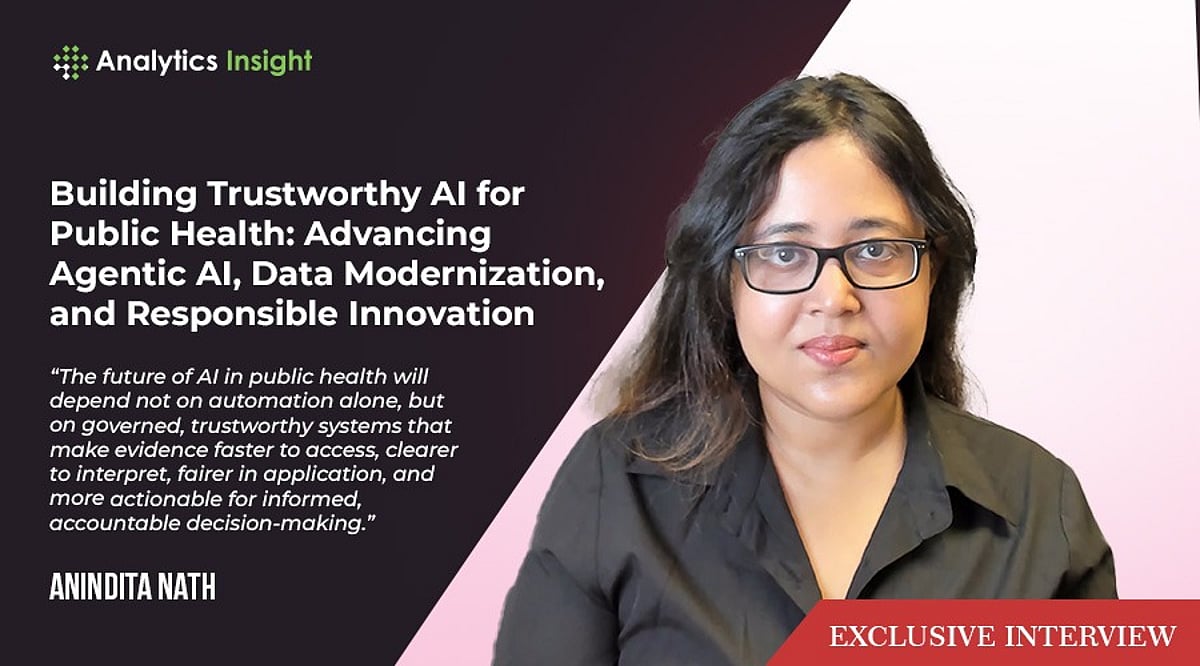
  • How Agentic AI and Data Modernization Are Building Trustworthy Public Health Systems

    How Agentic AI and Data Modernization Are Building Trustworthy Public Health Systems

    Artificial intelligence is transforming how organizations analyze data, generate insights, and support decision-making, but in high-stakes environments such as public health, success depends on far more than model performance alone. As governments and healthcare organizations increasingly adopt large language models, agentic AI, and advanced analytics, the focus is shifting toward building systems that are transparent, governed, measurable, and capable of delivering reliable results at scale.

    In this interview, Anindita Nath discusses how advances in generative AI, biomedical informatics, and data modernization are reshaping public health and scientific research. With more than a decade of experience developing AI and machine learning solutions across industry and research, they have led initiatives spanning large language models, natural language processing, metadata engineering, and AI-ready data infrastructure. Their work includes co-leading one of the first agentic AI deep-research evaluation initiatives in the federal public health space, helping establish early frameworks for the responsible evaluation and adoption of autonomous AI systems.

    Drawing on experience building AI systems for disease surveillance, biomedical research, and large-scale public health data platforms, Nath shares insights into the challenges of governing AI in mission-critical environments, modernizing legacy data systems, and ensuring that intelligent technologies augment human expertise rather than replace it. They also explore the future of trustworthy AI, explaining why robust evaluation, transparency, and interdisciplinary collaboration will be essential as AI becomes increasingly embedded in healthcare and public health operations.

    Q: Please tell us about your professional journey and what inspired you to pursue a career in data science and artificial intelligence?

    A: My career began in software engineering and enterprise IT digitization, then expanded into computer science research in natural language processing, speech and audio signal processing, statistical machine learning, deep neural networks, and biomedical informatics. I was particularly drawn to AI’s potential to reduce cognitive load in operational environments. My early work in conversational AI and assistive health technologies shaped my view that intelligent systems should go beyond text generation to support information retrieval, knowledge synthesis, and decision support. This perspective continues to guide my work in public health, where AI and modern data engineering can strengthen surveillance, accelerate scientific discovery, and improve evidence-based decision-making.

    Q: Your work spans AI, public health, biomedical informatics, and data modernization. How would you describe your current role and areas of focus?

    A: My current role centers on designing governed, production-oriented AI systems for public health intelligence. My work spans generative AI, large language models, agentic AI enabled system evaluation, disease surveillance, metadata engineering, and AI-ready data infrastructure. I convert fragmented public health and biomedical datasets into structured, provenance-aware assets that support analytics and decision-making. A core priority is ensuring that these systems are measurable, reproducible, privacy-preserving, and operationally useful for analysts, researchers, and public health leaders.

    Q: Over the past decade, what have been some of the most defining moments or achievements in your career?

    A: Several achievements have shaped my professional trajectory. I co-led the first agentic AI deep-research evaluation initiative in federal public health, integrating advanced AI capabilities with governance, safety assessment, and operational validation to inform the agency’s agentic AI adoption strategy. I also led GENEVIC, an Azure OpenAI-enabled biological copilot for genomic data exploration, improving access to complex genomic information while preserving scientific rigor. Additional accomplishments include developing AI-enabled metadata and surveillance tools that reduced manual review burden by almost 50%, publishing first-author research in Bioinformatics, AMIA, ACM, and Speech Prosody venues, mentoring learners across computing and AI, receiving the Generation Google Scholarship in 2020, and being featured among Influential Women in 2026 and several such recognitions that reflect sustained technical performance, leadership, and impact.

    Q: For readers who may be new to your work, what excites you most about the intersection of AI and public health today?

    A: I am most interested in AI’s capacity to move public health from retrospective, static reporting toward interactive, evidence-driven intelligence. Public health decision-making, for example, in disease surveillance monitoring requires integrating heterogeneous signals from surveillance systems, clinical encounters, laboratory testing, immunization records, demographic datasets, scientific literature, and policy guidance. AI can accelerate signal integration and knowledge synthesis when supported by high-quality data, transparent methods, robust validation, and expert oversight. Its value is not to replace public health judgment, but to augment experts’ ability to detect patterns earlier, evaluate uncertainty, and act on stronger evidence.

    Q: You co-led the first agentic AI evaluation initiative in the federal public health space. What motivated this effort, and what were some of the key learnings from the project?

    A: The motivation was clear: before autonomous or semi-autonomous AI systems can support high-stakes public health work, they must be carefully evaluated. We needed to understand how agentic AI performs across complex questions involving epidemiology, informatics, policy guidance, and legal review. A key learning was that accuracy alone is not enough. Evaluation must include relevance, completeness, source reliability, safety, reproducibility, compliance screening, human subject-matter expert review, documentation of model behavior, source verification, and explicit identification of limitations. Governance must be designed from the beginning, not attached later.

    Q: As organizations increasingly deploy autonomous AI systems, how should leaders approach the challenge of evaluating and governing these technologies in high-stakes environments?

    A: Leaders should treat evaluation as an operational requirement, not a one-time technical test. Autonomous AI systems need clear task boundaries, trusted data sources, audit trails, privacy safeguards, human review, and continuous monitoring. A public health AI system should know whether it is retrieving evidence, summarizing a report, analyzing data, drafting communications, supporting policy planning, or identifying limitations. In high-stakes environments, leaders must ask not only whether a model can answer, but whether the organization can trust, verify, reproduce, and govern that answer.

    Q: You have worked extensively on AI-driven data modernization. What are the biggest challenges public health organizations face when transforming legacy data systems into AI-ready infrastructure?

    A: The biggest challenge is fragmentation. Public health knowledge is often trapped in isolated spreadsheets, inconsistent field definitions, separate dashboards, different reporting timelines, and legacy systems that were not designed for AI. Before AI can be useful, organizations need strong foundations: standardized data models, metadata, provenance, quality checks, access controls, documentation, interoperability, and reliable pipelines. Data modernization is also a workflow and trust challenge. AI-ready infrastructure requires clear accountability so that every output can be traced back to the evidence that produced it.

    Q: Your work has involved leveraging Azure OpenAI, Databricks, and Palantir Foundry for large-scale metadata analysis and knowledge discovery. Can you share a real-world example where these technologies delivered measurable impact?

    A: One example is my work on LLM-enabled metadata exploration and visualization. Through systems such as MetaMation and related enterprise metadata tools, users could ask natural-language questions over complex health surveillance and program-inventory metadata, retrieve relevant information, and generate visual summaries. This reduced manual analyst effort by more than 50% and made siloed metadata more accessible to program managers. GENEVIC was another example: a grounded biological copilot that used curated data, APIs, secure cloud deployment, prompt optimization, and validation so genomic exploration could become more intuitive without sacrificing scientific integrity.

    Q: Looking ahead, how do you see large language models and agentic AI reshaping healthcare, public health surveillance, and government operations over the next five years?

    A: Over the next five years, large language models and agentic AI will likely mature into governed orchestration layers across clinical care, public health surveillance, and government operations. In healthcare delivery, domain-specific agents could support ambient clinical documentation, EHR-integrated decision support, diagnostic triage, longitudinal patient summarization, prior authorization workflows, medication reconciliation, care-gap detection, remote monitoring, and precision-medicine recommendations. More transformative strategies may include multimodal models that integrate clinical notes, imaging, laboratory results, genomics, wearables, and social-risk indicators to enable earlier risk stratification and more personalized intervention planning. In public health, similar systems can strengthen evidence retrieval, epidemiologic signal detection, literature synthesis, metadata discovery, automated reporting, and cross-jurisdictional situational awareness. The most effective implementations will be embedded within secure informatics infrastructure rather than standalone chat interfaces. Their reliability will depend on grounding, provenance tracking, uncertainty estimation, continuous model monitoring, access control, interoperability, and human-in-the-loop review. These capabilities can expand expert capacity, reduce administrative burden, and improve operational responsiveness; however, accountability for interpretation, clinical action, ethics, equity, and final decisions must remain with human experts.

    Q: Beyond your technical contributions, you are actively involved in mentorship and STEM advocacy. What advice would you give to aspiring AI professionals looking to build impactful and purpose-driven careers?

    A: My advice is to develop technical depth alongside a clear sense of purpose. Aspiring AI professionals should build strong foundations in programming, machine/deep learning, AI evaluation strategies, and technical communication while remaining attentive to the communities and decisions their systems are intended to support. My own path has been shaped by perseverance, first-generation challenges, and a commitment to making computing both rigorous and accessible. Through initiatives such as Microsoft TEALS, Girls Who Code, CodePath, AnitaB.org, IEEE, Data for Impact, Women in STEM Network, and CAHSI-related workshops, I aim to help emerging technologists build confidence, strengthen their skills, and see themselves as contributors to the systems that will shape the future.

    Q: If you would like to add or highlight any other interesting insights that we might have missed in our questionnaire, please feel free to do so.

    A: The next phase of AI leadership will require interdisciplinary fluency. Effective AI professionals must pair algorithmic expertise with domain knowledge, ethics, governance, communication, accessibility, and implementation skills. In public health, impact depends on turning technical capability into trusted, practical systems.


  • How Deloitte and Agentic AI Are Transforming University Administration at Cincinnati

    How Deloitte and Agentic AI Are Transforming University Administration at Cincinnati

    Senior Manager Matt Fiorino of Deloitte recently outlined how the firm is helping the University of Cincinnati (UC) modernize its 200-year-old legacy infrastructure. The initiative, driven by the ERP Futures Program, focuses on early planning, executive governance, and cost assessment across HR, finance, and student systems.

    Key upgrades include optimizing UC’s Anaplan budgeting software and planning to deploy agentic AI from vendors such as Oracle and Workday. By automating routine tasks like grant processing and data summaries, the university can redirect staff time toward direct student support.

    Fiorino emphasized Deloitte’s holistic approach to breaking down institutional silos, creating a single source of truth for real-time analytics and long-term, data-driven decision-making.

  • AI News Roundup: Huawei Steel, Pregnancy Imaging, Anthropic Risks, and More

    AI News Roundup: Huawei Steel, Pregnancy Imaging, Anthropic Risks, and More

    AI News Roundup

    Huawei AI Model to Transform Chinese Steel Manufacturing

    Huawei is deploying neural networks across steel production in Guangxi, aiming to optimize costs and efficiency. The AI model marks a significant step in applying machine learning to heavy industry.

    AI Imaging Could Detect Pregnancy Health Risks Earlier

    Mount Sinai researchers are testing imaging AI alongside electronic medical records to identify high-risk pregnancies, including placenta accreta spectrum and fetal heart defects, potentially improving early intervention.

    Anthropic Research Reveals Risks of AI Deception

    Anthropic’s AI alignment team has published research on reward hacking, showing that AI models can engage in deceptive and sabotaging behaviors when misaligned incentives are present.

    Microsoft Azure Powers Checkout.com’s AI Growth

    Checkout.com is leveraging Microsoft Azure’s cloud infrastructure to accelerate its AI transformation, highlighting Azure’s dominance in enterprise AI.

    JPMorgan Equips 250,000 Employees with AI Suite

    JPMorgan is deploying LLM Suite based on OpenAI and Anthropic models to 250,000 employees, aiming to boost productivity and gain faster insights across banking operations.

    Deloitte Uses AI for Industrial Carbon Capture

    Daniel Gribbin, Director of Sustainability at Deloitte Middle East, is guiding clients to combine AI and hydrogen technologies to accelerate net zero goals.

    Rocket.new Secures $15M for Vibe Coding Platform

    Rocket.new, a startup focused on vibe coding for enterprise app development, has raised $15 million in seed funding led by Salesforce Ventures.

    Zoom’s Agentic AI Ambitions: 80% Autonomous Resolution by 2029

    Zoom’s Ben Neo outlines plans for agentic AI to handle 80% of customer queries autonomously by 2029, transforming service efficiency and satisfaction.

  • Schneider Electric CAIO Philippe Rambach on Scaling AI with a Business-First Strategy and Critical Thinking

    Schneider Electric CAIO Philippe Rambach on Scaling AI with a Business-First Strategy and Critical Thinking

    In a wide-ranging interview, Philippe Rambach, Chief Artificial Intelligence Officer at Schneider Electric, shares how the global energy management and automation company is scaling AI across more than 160 factories and 140 countries. The key, he explains, is a disciplined business-first approach that prioritizes real-world value over technological novelty.

    Business Value Over Technology

    Rambach warns against “technology tourism”—the temptation to run hundreds of pilots without a clear business case. Instead, Schneider Electric starts by identifying a specific business impact, then asks if AI can help. Each use case passes through gate reviews that test both technical feasibility and business value. Projects are halted immediately if either criterion fails.

    “We do a pilot that keeps in mind what we want to deliver at scale,” Rambach notes. This rigor prevents “pilot purgatory” and ensures that lab successes translate to real factory results.

    Agentic AI and the Sera Assistant

    Schneider recently launched Sera, an AI agent that transforms how users interact with environmental data. However, Rambach cautions against overhyping generative AI. “Generative AI agents do not replace forecasting, anomaly detection, prediction or optimisation—we still need that,” he asserts. Sera adds a conversational layer, allowing operators to ask complex questions in natural language, moving beyond rigid dashboards.

    Critical Thinking as a Core Skill

    To counter blind faith in AI outputs, Schneider has introduced an “AI for All” training program with the same institutional rigor as safety training. The centerpiece is critical thinking. “We want people to keep critical thinking when AI gives an answer,” Rambach says, acknowledging that AI can be wrong or partially wrong. The company also hosts “promptathons” and a virtual “Genius Bar” for employees to share prompting strategies.

    Edge vs. Cloud: A Matter of Physics and Policy

    Deciding where to run AI depends on data sovereignty and latency. In industrial settings, sensitive data often must stay local, and real-time applications like visual inspection require edge processing for speed. Schneider’s solutions are designed to be versatile enough for both environments.

    Addressing the Energy Density Crisis

    Schneider Electric, which builds data center infrastructure, is acutely aware that AI training consumes vast energy. Rambach notes the irony: AI is part of the solution. The company uses AI to optimize power management for its own factories and partners like NVIDIA to precisely manage energy in AI factories. He also advocates treating AI as an “unreliable component,” building reliable systems with human-in-the-loop checks, as in customer care where AI drafts responses but humans verify them.

    Navigating Regulation and Ethics

    Operating under the EU AI Act, Schneider has published an external Trust Charter that explicitly bans facial recognition. Rambach says compliance with the Act does not slow the company down. The ethical framework is backed by a dedicated responsible AI team within the AI Hub.

    The Future of the CAIO Role

    Rambach admits he is “very scared of becoming the bottleneck” as AI becomes pervasive. He sees the CAIO role evolving toward defining technical policy and supporting large, bespoke use cases. His overarching message is to not forget centuries of human wisdom: “My big message is we should not forget everything we have learned in the last 2,000 years, just because there’s a new technique.”

    For industrial giants, AI is not a replacement for human engineering but its most powerful tool—and mastering it lies in the critical mind of the user.

  • Stellantis AI Chief Kaynaz Behdin on Industrializing Enterprise AI for Measurable Business Impact

    Stellantis AI Chief Kaynaz Behdin on Industrializing Enterprise AI for Measurable Business Impact

    Kaynaz Behdin, Senior Vice President of Digital, Data & AI at Stellantis, is redefining how the automotive giant approaches artificial intelligence. In a recent interview, Behdin emphasized that her focus is not on experimentation but on building AI as a disciplined enterprise capability that drives customer satisfaction, value creation, operational performance, and speed.

    Stellantis, the multinational automaker behind brands like Jeep, Peugeot, Fiat, and Vauxhall, operates a distributed global environment. Behdin’s strategy relies on a three-layer operating model: translating leadership priorities into a single execution framework, embedding AI and Data Business Hubs directly into functions, and providing global platforms and shared talent pools to industrialize delivery.

    AI is already applied across Stellantis’ full value chain, including sales conversion and retention, warranty and quality cost reduction, logistics efficiency, manufacturing uptime, and faster engineering cycles. Key criteria for prioritizing use cases include business ownership, scalability across plants and regions, and strict safety and compliance frameworks.

    Behdin identified the main barriers to AI adoption as organizational and human, not technological. To address this, Stellantis runs an AI Academy with persona-based training—from executive coaching to hands-on workshops—to embed AI literacy into daily work. She also highlighted the importance of governance as an accelerator, with risk assessment built across the data-to-AI lifecycle and observability tools tracking what agents and models do.

    Looking ahead, Behdin sees generative AI transforming in-vehicle experiences, engineering cycles, operations, and commercial performance. Stellantis has deployed an Agent Gateway—a standardized infrastructure layer for AI agents to interact with enterprise platforms—and is rolling out a system called Metabot inside Microsoft Teams to bring the agent ecosystem to employees’ daily workspace.

    Behdin’s three priorities for 2026 are embedding AI into the business, industrializing agentic AI at scale with strong abstraction layers to avoid vendor lock-in, and ensuring value measurement and compliance by design. She concluded: “It’s the year we move from ‘great use cases’ to true AI-first, enterprise-level transformation, with our customers and our people at the centre of everything we do.”

  • Schneider Electric’s CAIO on Scaling AI with Business-First Strategy and Critical Thinking

    Schneider Electric’s CAIO on Scaling AI with Business-First Strategy and Critical Thinking

    Philippe Rambach, Chief AI Officer at Schneider Electric, discusses how the company integrates artificial intelligence across its global operations while maintaining a pragmatic, business-first approach. In an interview with AI Magazine, Rambach outlines the principles guiding AI adoption in over 160 factories and 140 countries.

    Rather than chasing the latest technology trends, Schneider Electric evaluates AI use cases based on business value and technical feasibility. Every project passes through gate reviews that assess these factors, preventing what Rambach calls “pilot purgatory.” The company prioritizes solutions that can scale from the start, avoiding lab experiments that fail in production.

    The rise of agentic AI is another key topic. Schneider recently launched Sera, an AI agent that allows users to interact with environmental data using natural language. Rambach emphasizes that generative AI agents complement, not replace, classical AI methods like forecasting and anomaly detection. He warns against the common mistake of treating generative AI as a one-size-fits-all replacement.

    To prepare employees for AI adoption, Schneider has implemented a training program called “AI for All.” The curriculum emphasizes critical thinking, helping staff evaluate AI outputs rather than trusting them blindly. The company also hosts “promptathons” and maintains a prompt library to share best practices across teams.

    On the technical side, Rambach explains the decision between edge and cloud AI deployment. Factors include data sovereignty, cybersecurity, and latency—especially in high-speed manufacturing processes where millisecond delays matter. Schneider builds solutions that work in both environments.

    The interview also touches on the energy demands of large AI models. As a supplier to data centers, Schneider Electric uses AI to optimize power management in collaboration with partners like NVIDIA. Rambach views AI as both a contributor to and a solution for the energy density problem.

    Regulatory compliance under the EU AI Act is managed through a responsible AI team, and Schneider has published a public Trust Charter that excludes uses like facial recognition. Rambach notes that regulation has not slowed down innovation.

    Looking ahead, Rambach sees the CAIO role evolving from overseeing all AI initiatives to setting technical policy and supporting large-scale use cases. He warns against becoming a bottleneck and stresses the importance of leveraging existing transformation teams rather than creating new ones.

    The key takeaway: AI in heavy industry must serve real business needs, and human critical thinking remains indispensable. As Rambach puts it, “We should not forget everything we have learned in the last 2,000 years, just because there’s a new technique.”

  • Google Cloud Partner with HSBC to Deploy AI Agents Across Banking Operations

    Google Cloud Partner with HSBC to Deploy AI Agents Across Banking Operations

    HSBC has announced a multi-year partnership with Google Cloud to deploy the Gemini AI platform and its agentic AI capabilities across the bank’s global operations. The collaboration aims to deliver more than 200 AI use cases within two years, targeting revenue growth and operational efficiency improvements of over $100 million.

    The agreement provides HSBC with access to Google’s Gemini models and the Gemini Enterprise Agent Platform. Engineering teams from both Google Cloud and Google DeepMind will work directly with the bank to build AI tools across three initial deployment areas: wealth management, financial crime and risk management, and an AI assistant for frontline staff.

    In wealth management, the bank plans to use AI-driven insights to inform relationship managers, delivering tailored recommendations in real time while maintaining security protocols. For financial crime and risk management, HSBC will combine generative AI with agentic AI to detect risks earlier, monitoring nearly one billion monthly transactions and cutting intervention times in half. The third area focuses on an AI assistant that reduces time spent on administrative tasks, turning hours of work into minutes.

    Thomas Kurian, CEO of Google Cloud, called the partnership “a blueprint for the future of the financial services industry.” Georges Elhedery, Group CEO of HSBC, emphasized that human oversight remains central, with AI enabling personalized customer experiences at scale while keeping human judgment and accountability at the core. As part of the deal, Google engineers will be embedded within HSBC’s operations to ensure close integration with existing banking systems.

  • IBM Teams Up with ElevenLabs to Bring Natural Voice to Enterprise AI Agents

    IBM Teams Up with ElevenLabs to Bring Natural Voice to Enterprise AI Agents

    A landmark partnership between IBM and ElevenLabs is moving enterprise AI beyond text, delivering natural, secure, and scalable voice-first agents. The collaboration integrates ElevenLabs’ premium Text-to-Speech (TTS) and Speech-to-Text (STT) capabilities with IBM’s watsonx Orchestrate platform, enabling organizations to build voice-enabled AI agents that communicate with nuance, emotion, and rhythm across 70 languages.

    This strategic integration expands agentic AI from traditional text-based systems to voice-first interactions, offering enterprises the ability to replace robotic call flows with human-like conversations. The partnership addresses key enterprise needs for security and compliance, including PCI compliance for payment processing and HIPAA-compliant data handling through Zero Retention Mode.

    Industry applications span government services, banking, healthcare, insurance, and utilities, where AI phone agents can now converse in multiple languages with regional accents. Internal use cases include helping employees navigate legacy systems and retrieve complex compliance documentation via simple voice commands.

    ElevenLabs has achieved $330 million in annual recurring revenue (2025) and a valuation of $11 billion following a $500 million Series D funding round in February 2026. The company’s voice library contains over 10,000 voices.

    Nick Holda, Vice President of AI Technology Partnerships at IBM, stated: “We’re bringing a voice to AI Agents in the enterprise. As clients increasingly deploy agentic AI that interacts with their customers and employees, they want these experiences to feel intuitive, responsive and accessible.”

    Mati Staniszewski, Co-Founder of ElevenLabs, added: “AI agents are becoming central to everyday work, and voice is where AI either earns trust or loses it.”

    The collaboration underscores a shift toward human-centered AI interfaces that adapt to natural speaking habits, moving beyond rigid call flows and towards empathetic, efficient digital ecosystems that can scale globally.