Tag: AI chips

  • Beyond GPUs: Emerging Technologies Reshaping the AI Infrastructure Race

    Beyond GPUs: Emerging Technologies Reshaping the AI Infrastructure Race

    The era of GPU-only AI infrastructure is being challenged by a growing wave of specialized hardware and computing paradigms. As large-scale AI models continue to demand more performance and efficiency, companies are exploring alternatives that promise faster training, lower power consumption, and greater flexibility. Here is a closer look at the key technologies entering the AI infrastructure race.

    Google TPU

    Google’s Tensor Processing Units are built specifically for AI workloads, with specialized matrix processing that provides a strong alternative to general-purpose GPU acceleration for large-scale models.

    AWS Trainium

    Amazon’s Trainium accelerators are designed to handle machine-learning training workloads, helping cloud customers reduce their dependence on GPUs while optimizing both performance and infrastructure costs.

    Cerebras Wafer-Scale Engine

    Cerebras has developed enormous wafer-scale processors containing thousands of processing cores. This specialized architecture is built to address demanding AI model training workloads.

    Groq LPU

    Groq’s Language Processing Units focus on fast inference, using a specialized hardware architecture to deliver predictable performance for large language model workloads.

    Photonic Computing

    Photonic processors use light to perform computations, potentially delivering high bandwidth and energy efficiency for increasingly demanding artificial intelligence workloads.

    Processing-In-Memory

    Processing-in-memory architectures bring computation closer to stored data, reducing memory movement and potentially improving efficiency across large-scale AI workloads.

    Neuromorphic Chips

    Neuromorphic processors mimic aspects of biological neural systems, targeting highly efficient AI computation through event-driven processing and specialized hardware architectures.

    Quantum Computing

    Quantum processors could eventually address specialized optimization and scientific workloads, offering a fundamentally different computing paradigm beyond conventional GPU-based AI infrastructure.

    ASIC Accelerators

    Application-specific integrated circuits are designed for particular AI workloads, enabling companies to optimize performance, power consumption, and infrastructure for targeted applications.

    As the demand for advanced AI continues to grow, the infrastructure race is no longer limited to GPUs. These emerging technologies are shaping a more diversified ecosystem of compute options, each with unique strengths for the next stage of AI development.
  • Intel and SK Hynix Shares Surge Following Reports of AI Chip Partnership Talks in Ohio

    Intel and SK Hynix Shares Surge Following Reports of AI Chip Partnership Talks in Ohio

    Reports that Intel and SK hynix are in discussions for a potential partnership to manufacture memory chips at Intel’s Ohio campus have sent shares of both companies higher. Intel shares rose approximately 4%, while SK hynix gained around 3% on Wednesday, September 16.

    The potential deal would see SK hynix produce chips at Intel’s $100 billion Ohio site, though no agreement has been signed yet. The talks come at a time when AI companies are increasingly demanding high-bandwidth memory chips for servers and data centers. SK hynix is a leading supplier of such memory, widely used in AI systems.

    Intel has faced delays at its Ohio project, originally expected to begin production in 2025. A partnership with SK hynix could provide a new purpose for the site while expanding memory chip production in the United States.

    SK hynix already has a chip packaging plant under construction in Indiana, but it does not yet manufacture memory chips in the U.S. Moving some production to Ohio would help the company establish a larger footprint in the country.

    Ohio’s Role in the AI Chip Race

    The possible collaboration could benefit both companies. Intel could repurpose its delayed Ohio facility, while SK hynix would gain another location for memory production closer to U.S. customers.

    The timing is crucial as the AI race intensifies, with companies demanding powerful chips for advanced AI systems. Increasing local production could help meet this demand over time.

    However, the talks remain at an early stage, and any deal could face cost and technology hurdles. South Korea may also review an agreement involving advanced memory technology. If the plan moves forward, Intel’s Ohio site could play a new role in the growing U.S. AI chip supply chain.

  • How Jensen Huang Built NVIDIA Into the AI Infrastructure Powerhouse

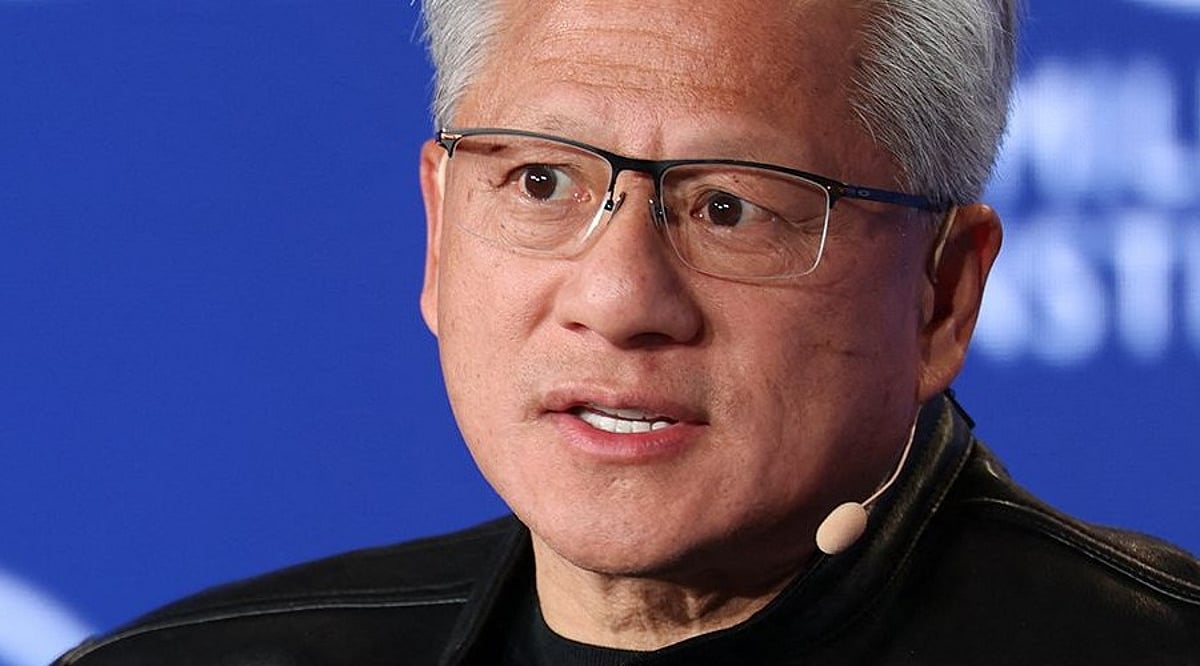
    How Jensen Huang Built NVIDIA Into the AI Infrastructure Powerhouse

    Jensen Huang, NVIDIA’s founder and CEO, saw early that the AI boom would depend not just on chatbots but on massive data centers packed with chips, memory, networks, and power systems. His strategy turned NVIDIA from a graphics chip company into a foundational supplier for the entire AI economy.

    The GPU Became the Start of a Much Bigger System

    Huang’s key bet was that a graphics processor could do far more than graphics. NVIDIA built CUDA, a software platform that lets developers use its GPUs for advanced computing. That choice gave the company a strong base when AI models began demanding huge amounts of compute.

    For the quarter ended July 26, 2026, NVIDIA posted $96.2 billion in revenue, up 106% year-over-year. Data Center revenue reached $89.0 billion, up 117%. Net income hit $59.7 billion, with a gross margin of 75%. NVIDIA expects $108 billion in revenue for the next quarter and about 70% revenue growth for fiscal 2028, though supply limits still affect that outlook.

    Vera Rubin Turns the Rack into One AI Computer

    NVIDIA’s latest move takes the strategy further. The Vera Rubin platform combines Rubin GPUs, Vera CPUs, NVLink 6, ConnectX-9 network chips, BlueField-4 DPUs, Spectrum-6 systems, and Groq 3 LPX. Several racks can act as one large AI computer.

    NVIDIA says Vera Rubin can deliver 10 times the agent throughput of the Grace Blackwell platform at scale. The platform is designed for AI agents that call tools, search data, write code, and take many steps before completing a task. Such workloads need fast chips, fast memory, and fast links between every part of the system.

    A data center can no longer rely on raw GPU speed alone. Memory, storage, network systems, security, and power all affect the final cost of each AI response. NVIDIA now sells an architecture that connects these pieces.

    Power, Capital and Cloud Capacity Join the Strategy

    Huang has also moved closer to the physical side of AI infrastructure. NVIDIA now treats land, power, and data center space as key resources. In August, the company partnered with SB Energy to secure land, power, and shell capacity at the PORTS-Pike Technology Campus in Ohio. OpenAI will serve as the tenant.

    Capital has become another part of the plan. NVIDIA announced partnerships with Apollo, BlackRock, Blackstone, Brookfield, Goldman Sachs, and KKR. These platforms aim to mobilize more than $500 billion in third-party capital for AI infrastructure over time. The capital does not count as NVIDIA revenue; the goal is to give AI companies and cloud providers access to large pools of long-term infrastructure money.

    AWS and NVIDIA plan to deploy 2 million additional NVIDIA GPUs across AWS infrastructure in 2027–2028. The deal also covers Vera CPUs, network systems, open models, data tools, and robotics.

    NVIDIA has also expanded its reach into software. On September 3, the company agreed to acquire Hugging Face for $12.93 billion. The deal would give NVIDIA a deeper role in the open AI software ecosystem and help expand access to models, tools, and AI infrastructure.

    Huang’s Real Advantage is the Full Stack

    The central idea behind Huang’s strategy is not a single GPU. It is control of the system around the GPU. NVIDIA supplies compute, software, network systems, and rack architecture. It now has a role in power access, infrastructure finance, and developer software as well.

    That model helps explain why the company can grow as AI hardware becomes more complex. Every new AI workload creates demand across several layers at once.

    The next test will come from agentic AI, where one request can trigger hundreds or thousands of steps. That workload can create far more demand for compute than a simple chatbot response. NVIDIA has built Vera Rubin around that shift.

    Huang’s long bet has reached a new stage. NVIDIA no longer sells only the engine for AI. It sets the factory around it, from the first line of code to the data center floor.

  • AI Demand Drives These Semiconductor Stocks: NVIDIA, TSMC, and More

    AI Demand Drives These Semiconductor Stocks: NVIDIA, TSMC, and More

    Artificial intelligence continues to reshape the semiconductor landscape, creating opportunities for investors across the chip supply chain. From GPU leaders to memory manufacturers and equipment providers, several stocks are positioned to benefit from surging AI demand. Below, we analyze the key players and the risks that accompany their growth.

    Key Takeaways

    • NVIDIA remains the dominant AI chip supplier, while Broadcom provides exposure to custom silicon and networking.
    • TSMC and Micron gain from advanced manufacturing and high-bandwidth memory demand.
    • Equipment firms like ASML, Lam Research, Applied Materials, and KLA offer indirect AI growth avenues.

    NVIDIA and Broadcom Lead the AI Chip Race

    NVIDIA’s position as the premier AI chipmaker is unshaken. With its stock near $218.36 and a market capitalization approaching $5.30 trillion, the company supplies GPUs and networking solutions for AI data centers. A 2.26% dip on September 10 reflected broader tech pressure from rising Treasury yields, but its long-term trajectory remains tied to AI deployment.

    Broadcom offers a complementary play. Trading around $360.83, it designs custom AI chips and networking hardware for large tech firms. This diversification allows investors to tap AI growth beyond the GPU market.

    AMD adds a third option. At roughly $521.10, it has gained over 143% year-to-date, competing with NVIDIA through its AI accelerators and EPYC server processors. However, such sharp gains introduce higher valuation risk.

    TSMC and Micron: Supply Chain Pillars

    TSMC is the linchpin of advanced chip fabrication. Its U.S.-listed shares trade near $435.36, valuing the company at $1.58 trillion. The foundry posted record August revenue of NT$514.806 billion, up 53.3% year-over-year, with July revenue also strong at NT$467.580 billion. TSMC forecasts Q3 revenue between $44.6 billion and $45.8 billion, and plans capital expenditure of $60–$64 billion in 2026.

    Micron focuses on high-bandwidth memory (HBM), essential for AI workloads. With shares around $1,028, the company aims to boost HBM output to 100,000 wafers per month by year-end. HBM shortages are raising chip costs, but new entrants and rapidly shifting memory markets add risk. Micron’s fiscal Q4 results on September 30 will be a key catalyst.

    Equipment Stocks Provide Alternative Exposure

    Lam Research, Applied Materials, and KLA supply tools for chip manufacturing. Lam Research trades near $301.06, Applied Materials at $469, and KLA at $177.18—each fell over 3% on September 10. Their fortunes rise with fab expansions, not AI chips directly, making them a different risk-reward proposition.

    Marvell sits at the intersection of custom silicon and connectivity, with a stock price of $235.01 and a 176.55% year-to-date gain. Its high valuation amplifies downside risk.

    ASML stands out as the sole supplier of EUV lithography systems, crucial for shrinking process nodes. Closing near $1,698 on September 10, ASML’s technology monopoly gives it a long-term edge, though its stock can swing with capital spending cycles.

    The AI Chip Trade Faces New Tests

    Strong AI demand does not immunity from broader market forces. Higher oil prices and rising Treasury yields pressured tech stocks, and the broader U.S. market fell on September 10. Yet TSMC’s sales and HBM demand underscore robust chip demand, providing a solid business foundation amid stock volatility.

    NVIDIA, Broadcom, and TSMC offer the widest AI exposure. Micron and AMD provide targeted plays on memory and GPU alternatives. Lam Research, Applied Materials, KLA, and ASML serve the equipment segment. Marvell carries higher potential but also higher risk.

    Investors should monitor chip sales, HBM supply, AI data center budgets, and capital expenditure plans. The critical question is whether supply, capacity, and profits can keep up with the lofty expectations already baked into these stocks.

    FAQs

    Which semiconductor stock has the strongest AI exposure?

    NVIDIA has the most direct AI exposure through its GPUs and data center products.

    Why is TSMC important to AI growth?

    TSMC manufactures advanced chips for major tech firms, forming the backbone of AI processor supply.

    Why has Micron gained attention?

    Micron is a key supplier of high-bandwidth memory, critical for AI data center performance.

    Which semiconductor stocks offer equipment exposure?

    ASML, Lam Research, Applied Materials, and KLA provide exposure to chip manufacturing equipment.

    Are semiconductor stocks low-risk investments?

    No. Even with strong chip demand, share prices can decline due to high valuations, market conditions, and changing expectations.

    Disclaimer: This article is for informational purposes only and does not constitute financial advice. Investing in stocks involves risk, including potential loss of principal. Always conduct your own research before making investment decisions.

  • Leading Chipmakers Race to Dominate Advanced Semiconductor Manufacturing

    Leading Chipmakers Race to Dominate Advanced Semiconductor Manufacturing

    The race for the world’s most advanced chips is led by TSMC, Samsung, and Intel. TSMC currently holds the strongest position in leading-edge manufacturing, while Samsung and Intel are investing heavily to close the gap and secure more advanced chip orders.

    TSMC remains the leader in advanced chip manufacturing. Its 2nm process entered high-volume production in the fourth quarter of 2025, while its A16 technology is planned for volume production in the second half of 2026.

    Samsung Foundry is challenging TSMC with 2nm technology and gate-all-around transistor designs. The company began planning 2nm mass production for mobile chips in 2025 and aims to expand the process to high-performance computing and automotive applications.

    Intel is taking a different route with its 18A process and RibbonFET technology. Intel 18A entered production in 2025, while High-NA EUV is already being used on selected 18A layers for high-volume products, giving Intel an important technology milestone.

    NVIDIA and AMD are major chip designers rather than foundries. NVIDIA leads the AI GPU market, while AMD competes across AI accelerators, CPUs, and GPUs. Both depend on advanced manufacturing partners to turn their chip designs into physical products.

    SK hynix and Micron are also key players in the AI chip race through high-bandwidth memory. HBM supplies the huge amounts of data needed by modern AI processors, making memory technology as important as advanced processors for AI infrastructure.

    ASML sits at the heart of the chip race by supplying the EUV lithography systems used to manufacture leading-edge chips. Its High-NA EUV technology offers higher-resolution patterning and is designed to support future 2nm-class and more advanced manufacturing.

  • Qualcomm Secures Potential $60 Billion AI Chip Deal with Amazon for AWS

    Qualcomm Secures Potential $60 Billion AI Chip Deal with Amazon for AWS

    Qualcomm and Amazon have entered into a long-term agreement to develop custom chips for Amazon Web Services (AWS), a deal that could be worth up to $60 billion depending on future orders. While the exact financial terms have not been officially disclosed, reports indicate that Amazon has not yet placed an order for that full amount. As part of the agreement, Qualcomm issued an Amazon affiliate a warrant to acquire up to 25 million Qualcomm shares at an exercise price of $161.26 per share. The warrant expires on September 3, 2036, and can be exercised without cash.

    The partnership will focus on chips designed for large-scale AI systems and high-speed optical connections. This move marks a strategic shift for Qualcomm, which is looking to reduce its reliance on the smartphone chip market. In the June 2026 quarter, Qualcomm’s handset revenue fell 19.6% year over year. The company aims for its data center business to exceed $15 billion in revenue by fiscal 2029. Meanwhile, Amazon will continue to use its own Graviton, Trainium, and Nitro chips alongside Qualcomm’s technology.

    Can Qualcomm Challenge NVIDIA?

    Qualcomm is entering a market dominated by NVIDIA, which reported $89 billion in data center revenue in its most recent quarter and has built a massive business around AI chips. Amazon also has its own AI chips, which could make the competitive landscape even tougher for Qualcomm. The Amazon deal gives Qualcomm a major customer and a platform to demonstrate its chip capabilities in a broader market. However, a single deal is unlikely to be enough to rival NVIDIA’s entrenched position. While this partnership may help Qualcomm reduce its dependence on smartphone chips, early data center deals may yield lower profit margins than its phone business.

    The $60 billion figure is not guaranteed revenue; future orders will determine how much business Qualcomm actually receives from Amazon. For now, the deal provides Qualcomm with a strong entry into the rapidly growing AI chip market.

  • 7 Key Semiconductor Manufacturing Trends Driving the Industry in 2026

    7 Key Semiconductor Manufacturing Trends Driving the Industry in 2026

    Semiconductor manufacturing is entering a transformative era, driven by soaring demand for AI and the need for more powerful, efficient chips. In 2026, the industry is moving beyond traditional transistor scaling to embrace a broader set of innovations. Here are the seven key trends reshaping chip production.

    1. 2nm Chips and GAA Transistors

    Chipmakers are advancing toward 2nm-class process technology with gate-all-around (GAA) transistors. These designs deliver higher performance and better power efficiency, but they also increase manufacturing complexity significantly.

    2. Advanced Packaging and Chiplets

    As shrinking individual dies becomes prohibitively expensive, chiplets and 2.5D/3D packaging are gaining traction. By integrating multiple chip components into a single package, manufacturers achieve higher performance and flexibility without relying solely on node shrinks.

    3. High-Bandwidth Memory for AI

    AI workloads demand enormous amounts of fast memory. High-bandwidth memory (HBM) places stacked memory close to powerful processors, enabling faster data movement and reducing processing bottlenecks in AI systems.

    4. Silicon Photonics and Optical Data

    Electrical connections face growing bandwidth and power challenges. Silicon photonics uses light to transmit data at high speeds, making it a critical technology for future AI data centers, networking, and high-performance computing.

    5. SiC and GaN Take on New Roles

    Silicon carbide (SiC) and gallium nitride (GaN) can handle high voltage, heat, and power demands. These materials are becoming essential in electric vehicles, fast chargers, renewable energy systems, and advanced data-center infrastructure.

    6. AI-Powered Smart Factories

    AI is moving inside semiconductor fabs. Machine learning monitors equipment, detects defects, improves yields, predicts maintenance needs, and optimizes production processes in real time, making factories smarter and more efficient.

    7. Chip Supply Chains Are Going Regional

    Geopolitical tensions and supply risks are pushing companies and governments to diversify semiconductor production. New fabs and packaging capacity are being developed across multiple regions to reduce dependence on concentrated manufacturing hubs.

    The semiconductor race is no longer solely about making transistors smaller. Advanced packaging, memory, new materials, optical connectivity, AI-driven production, and regional manufacturing are becoming equally important for the industry’s future.

  • Daily Briefing: China’s AI Chip Push, DeepMind’s Revealing Pitch Deck, Workplace Culture Debate, Crypto Derivatives Surge, and AI in Sports

    Daily Briefing: China’s AI Chip Push, DeepMind’s Revealing Pitch Deck, Workplace Culture Debate, Crypto Derivatives Surge, and AI in Sports

    Good morning! Here’s your quick scan of the latest developments in artificial intelligence, workplace culture, technology, cryptocurrency markets, and sports innovation.

    What’s New Today

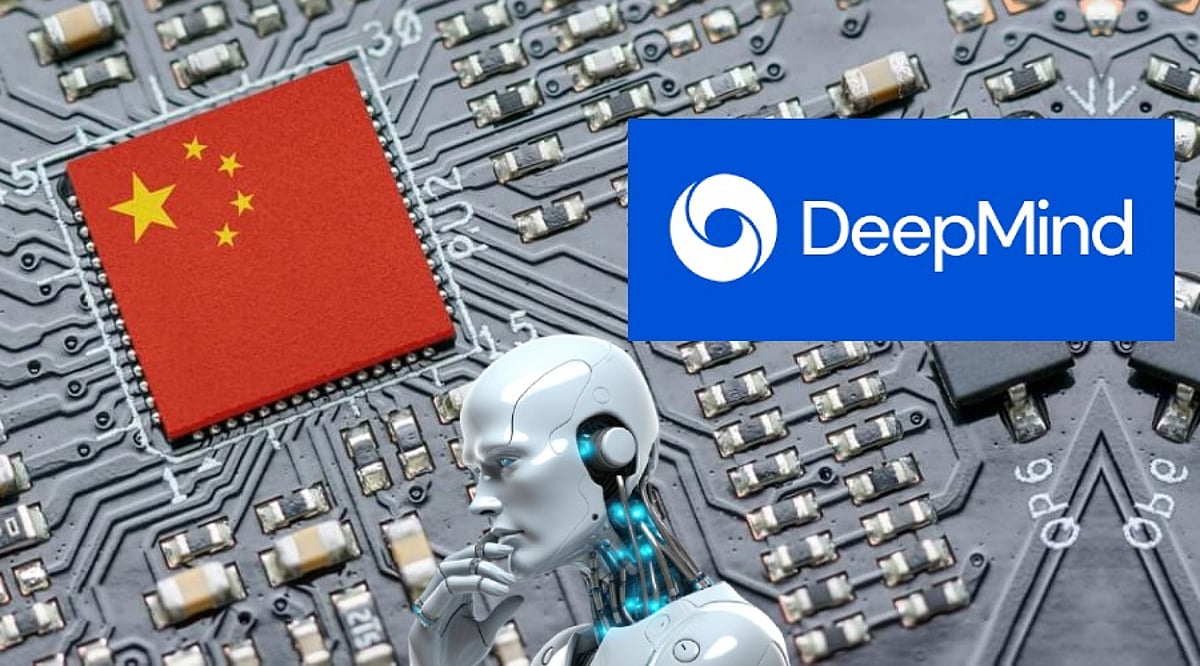
    China is ramping up support for its homegrown AI chipmakers, as Beijing keeps pushing for more technological independence. Meanwhile, a dress code policy from a Noida-based firm has sparked quite a bit of chatter about workplace culture, mostly after an IIM alumnus posted a viral recount of their work experience. And then, the pitch deck that Demis Hassabis of DeepMind used back in 2019 during his transition reportedly sheds some fresh light on how the company thinks about AI. At the same time, traditional finance seems to be shifting at speed into crypto derivatives, while AI-driven sports analytics tools are quietly changing how teams are evaluated and how performance gets interpreted.

    Fast-Track Insights

    • China is feeding its semiconductor ambitions with new rounds of funding going toward domestic AI chipmakers.
    • Workplace rules are now being rechecked, after a viral post brought the conversation about toxic office culture back into the public eye.
    • Documents that describe DeepMind’s AI approach during its growth phase have surfaced.
    • On the crypto side, TradFi participants are seeing traction in perpetual futures trading.
    • AI is increasingly influencing how team sports performances are measured and understood.

    China Accelerates Support for Domestic AI Chip Manufacturers

    Chinese manufacturers of chips used in AI applications should see gains from Beijing’s efforts to achieve technological independence. Increased government support, rising internal demand, and limitations on access to external chips create room for local semiconductor manufacturers to enter the AI hardware space. The step taken by the Chinese authorities represents their strategy of minimizing reliance on technology from other countries.

    Workplace Culture Debate Reignited After Noida Firm’s Denim Policy Sparks Outcry

    An IIM alumnus’s post on LinkedIn has brought up the issue of corporate culture once again after his allegation that workers were scolded at their office in Noida for wearing jeans to work. The post has received widespread attention on social media, with many people raising questions about the strictness of corporate policies.

    DeepMind’s 2019 Pitch Deck Reveals Early AI Strategy and Vision

    A newly discovered 2019 pitch deck belonging to Demis Hassabis has come to light, providing an insight into how DeepMind marketed itself during its crucial phase of transition. The deck explains the company’s long-term vision, research focus areas, and business goals in detail.

    Traditional Finance Giants Drive 10x Surge in Crypto Perpetual Futures Trading

    The “proper” finance world is making quick, noticeable gains in crypto perpetual futures trading, and people say volumes have gone up by about ten times in 2026. This now makes up a big portion of the total crypto derivatives scene, mostly because more regulated players from traditional finance are jumping in and staying involved.

    UK-Based AI Systems Transform Sports Analytics Across Multiple Disciplines

    Sports analytics is being reshaped by AI systems built in the UK. These systems let teams boost player output, lower injury risk, refine game plans, and decide with speed in real time. Football, cricket, rugby, and other sports are frankly kind of unable to do without AI-based analysis today, so it has become a key ingredient in sports strategy.

  • AMD Stock Drops 7% Despite Record Q2 Revenue as AI Expectations and SpaceX’s NVIDIA Deal Weigh

    AMD Stock Drops 7% Despite Record Q2 Revenue as AI Expectations and SpaceX’s NVIDIA Deal Weigh

    Advanced Micro Devices (AMD) shares closed 7% lower on Wednesday, even as the company reported record second-quarter revenue of $11.54 billion and a 107% surge in data-center sales. The decline highlights how elevated market expectations and external pressures, including SpaceX’s decision to exclusively use NVIDIA chips, overshadowed strong financial results.

    AMD Q2 Revenue Up 50%

    AMD posted revenue of $11.54 billion, up 50% from $7.69 billion a year earlier, and above the $11.28 billion analyst consensus cited by Reuters. Non-GAAP earnings reached $1.66 per share, while GAAP earnings were $1.38 per share. Data-center revenue rose 107% to $6.72 billion, accounting for 58% of quarterly sales, driven by demand for EPYC server processors and Instinct graphics processors.

    The company forecast third-quarter revenue near $13 billion, with a possible $300 million swing, exceeding the $12.52 billion analyst estimate. However, analysts noted that investors had set a higher bar after recent customer deals. Gross margin improved to 54% under standard accounting, up from 40% a year earlier. Operating income hit $1.99 billion, compared with a $134 million loss, and net income jumped 163% to $2.30 billion.

    SpaceX Chooses NVIDIA for AI Systems

    SpaceX CEO Elon Musk announced that the company would build its AI computing systems exclusively with NVIDIA hardware, calling NVIDIA’s architecture “the best” during SpaceX’s earnings call. NVIDIA shares rose 3.4% while AMD stock fell. Musk’s statement shifted from his earlier position that his companies could source processors from AMD, NVIDIA, and others. AMD CEO Lisa Su expressed “tremendous respect” for Musk and said AMD expects to work with SpaceX over time.

    AMD continues to serve large technology companies and expand its AI product line. Its Helios rack-scale systems, using MI450 accelerators, support AI training and inference, with shipments expected to rise in the second half of 2026.

    Wells Fargo Raises AMD Price Target to $700

    Wells Fargo analyst Aaron Rakers raised AMD’s price target from $615 to $700 while maintaining an Overweight rating, even as the market focused on valuation and near-term growth. Other analysts described the results as solid but noted a “very high bar” (TD Cowen) and that the quarter beat consensus but missed more optimistic forecasts (Deutsche Bank). Supply constraints, including TSMC’s N3 process and CoWoS packaging through 2027, remain on investors’ watchlists.

    CEO Lisa Su expects data-center revenue to more than double by 2027, with server revenue growth of 80% in the second half of 2026 and over 70% year-over-year in 2027. AMD stock closed at $482.53, down 6.6%, erasing nearly $59 billion in market value.

  • Beyond Cars: Surprising Tesla Innovations You Didn’t Know About

    Beyond Cars: Surprising Tesla Innovations You Didn’t Know About

    Tesla is widely known as a trailblazer in the electric vehicle (EV) market, but the company’s ambitions stretch far beyond cars. From energy storage to robotics and artificial intelligence, Tesla is quietly building a portfolio of products that could reshape multiple industries. Here’s a look at some of the most surprising things Tesla makes that aren’t electric vehicles.

    Tesla Energy Products

    Tesla’s energy division is a major part of its business. The company produces solar panels, the Solar Roof (a roofing material with integrated solar cells), the Powerwall (a home battery), and the Megapack (a utility-scale battery system). These products allow homes, businesses, and utilities to generate, store, and manage renewable energy, reducing reliance on fossil fuels.

    Optimus Humanoid Robot

    First unveiled in 2021, the Tesla Optimus humanoid robot is designed to handle repetitive, dangerous, or physically demanding tasks. Currently being tested inside Tesla factories, Optimus is envisioned for future roles in warehouses, manufacturing, logistics, and even household chores. It represents Tesla’s push into advanced robotics and automation.

    Dojo AI Supercomputer

    Dojo is Tesla’s custom-built supercomputer, purpose-designed to train the neural networks behind its Full Self-Driving (FSD) technology. Instead of relying on third-party hardware like Nvidia GPUs, Dojo uses Tesla’s own D1 chips to process massive amounts of video data efficiently. This specialized architecture accelerates AI model training and gives Tesla greater control over its autonomous driving development.

    Tesla AI Chips

    Tesla designs its own artificial intelligence chips for use in its vehicles. These custom processors handle billions of calculations per second to power features like Autopilot and Full Self-Driving. By developing proprietary silicon, Tesla reduces dependency on external suppliers and optimizes performance for its specific needs.

    Tesla Supercharger Network

    While originally built exclusively for Tesla vehicles, the Supercharger network has evolved into a standalone infrastructure business. Tesla designs, manufactures, installs, and operates thousands of fast-charging stations worldwide. In many regions, non-Tesla EVs can now use Superchargers via compatible connectors, making the network a vital part of the broader EV ecosystem.

    Tesla Solar Roof

    The Solar Roof is a premium product that replaces traditional roofing materials with durable glass tiles that generate electricity. Unlike bulky solar panels mounted on top of an existing roof, the Solar Roof blends seamlessly with the home’s design. It allows homeowners to produce renewable energy without compromising aesthetics.

    Megapack Grid Batteries

    Megapack is Tesla’s large-scale energy storage solution for utility companies and commercial projects. These massive batteries store energy from renewable sources like solar and wind farms, then discharge it when demand is high. Utilities around the world use Megapacks to stabilize the grid, prevent blackouts, and support the transition to cleaner energy.

    Tesla’s ventures into energy, robotics, AI, and infrastructure show that the company is far more than an automaker. These innovations highlight a broader mission to accelerate the world’s transition to sustainable energy and intelligent automation.