Tag: AI Governance

  • 5 Proven Strategies for Embedding Ethics into AI Initiatives

    5 Proven Strategies for Embedding Ethics into AI Initiatives

    Artificial intelligence is advancing rapidly inside organizations, but ethical standards often struggle to keep up. Aligning AI initiatives with ethical principles requires more than good intentions—it demands concrete processes around fairness, accountability, and transparency. This article outlines five critical strategies that organizations are using in 2026 to ensure their AI systems operate ethically and responsibly.

    1. Build a Clear Governance Structure from the Start

    A formal governance framework gives ethical AI a permanent home within the company. Currently, 77% of organizations are developing such a program, making it a strategic priority. A strong structure assigns clear ownership, defines approval processes for new models, and establishes monitoring rules for live systems. Without this foundation, even well-meaning ethics efforts collapse when real problems emerge.

    2. Assign Accountability at the Leadership Level

    Ethics only stick when senior leaders are personally responsible. Adoption of Chief AI Officers has surged from 26% to 76% in one year, signaling that boards now demand a named executive who can explain AI decisions and take responsibility for failures. This shift also helps secure proper funding for ethics work, elevating it from a side project to a board-level priority.

    3. Make Bias and Fairness Testing a Continuous Process

    Bias can reappear as data evolves, so fairness testing must be ongoing. Organizations with clear ownership of responsible AI achieve higher maturity scores, according to McKinsey’s 2026 AI Trust Maturity Survey (average maturity rising to 2.3 from 2.0 in 2025). Regular testing, defined fairness metrics, and documented evidence catch issues before they affect users.

    4. Treat AI Incidents Like Any Other Business Risk

    AI-related incidents are skyrocketing. Stanford’s 2026 AI Index Report recorded 362 incidents in 2025, a 55% increase from 233 the year before. Implementing a proper incident response plan—including escalation paths, model rollback capabilities, and user notification processes—enables organizations to react quickly rather than scramble after damage is done.

    5. Invest in Ethics as a Business Decision, Not Just Compliance

    Ethical AI delivers tangible financial returns. IBM data shows companies spending more than 10% of their AI budget on ethics report roughly 30% higher operating profit growth, along with stronger customer satisfaction and higher internal AI adoption. This reframes ethics as a growth strategy rather than a cost, making it easier to secure ongoing budget and executive attention.

    Conclusion

    Aligning AI with ethical standards is no longer optional. Strong governance, real accountability, continuous bias testing, serious incident response, and genuine investment in ethics together provide a practical path forward. Organizations that adopt these strategies today are best positioned to build AI systems that earn and sustain user trust.

  • India’s Data Science Job Market Set to Surge 34% as Generative AI Creates New Roles

    India’s Data Science Job Market Set to Surge 34% as Generative AI Creates New Roles

    India’s data science job market is entering a dynamic new phase, propelled by the rapid adoption of Generative AI, AI agents, and automation. According to the Data Science Education Report 2026, the sector is projected to grow by 34% between 2024 and 2034, with approximately 23,400 annual openings and 82,500 additional jobs over the period. Traditional roles like data analyst and machine learning engineer are being supplemented—and in some cases overtaken—by emerging positions in AI engineering, product management, governance, architecture, and domain-specific applications.

    GenAI Engineers Take Center Stage

    Generative AI is driving demand for professionals skilled in building and managing systems powered by Large Language Models (LLMs), Retrieval-Augmented Generation (RAG) pipelines, and AI agents. GenAI Engineers are responsible for developing AI applications, workflow automation, and intelligent decision-making systems. Prompt Architects, meanwhile, are evolving into “Logic Designers” focused on reducing AI hallucinations—a challenge cited by 56% of Indian companies. The report estimates that around 40% of Indian business applications could adopt AI agents by 2026.

    Bridging Technology and Business

    As AI projects move from pilots to scaled products, the AI Product Manager role is gaining prominence. These professionals understand how AI capabilities translate into business value, working across engineering and business teams to oversee adoption, track performance, and ensure commercial scalability. With 72% of Indian companies expanding Generative AI initiatives, the need for such cross-functional leaders is acute.

    AI Governance: A Trending Career Path

    The rise of AI also creates demand for governance and risk specialists who oversee ethical deployment, regulatory compliance, and risk management. According to EY India data, 51% of organizations have experienced negative outcomes from unmanaged AI systems, and there is a 53% talent gap in professionals skilled in algorithmic bias audits and Explainable AI (XAI). For data professionals, knowledge of data protection and responsible AI is becoming as essential as technical expertise.

    AI Architects Building Infrastructure

    AI Solutions Architects design the infrastructure for deploying AI across hybrid-cloud and multi-cloud environments. They build scalable systems, manage complexity, and support AI agents, distributed computing, and sovereign AI initiatives that comply with data residency regulations.

    Domain Expertise: A Key Differentiator

    The next wave of data science jobs will not be limited to tech companies. Hybrid roles combining AI skills with domain knowledge in healthcare, finance, agriculture, retail, and logistics are in high demand. Specialized positions include Foundation Model Scientists, Model Deployment Specialists, Revenue Intelligence Scientists, Product Intelligence Scientists, FinTech Analytics Scientists, retail analytics scientists, supply chain intelligence scientists, graph data scientists, risk data analysts, and experimentation scientists.

    Skills to Lead the Market

    To thrive, professionals should strengthen machine learning, Python, big data, cloud computing, real-time analytics, data engineering, deep learning, NLP, computer vision, and AI automation. Soft skills like critical thinking, debugging, and data quality management are increasingly vital. The employment outlook remains robust: data scientist roles are projected to grow 34% from 2024 to 2034, with about 23,400 annual openings.

    In summary, the future of data science belongs not only to those who can work with data, but to professionals who can build, deploy, govern, and apply AI to real business problems.

  • Agentic AI in Action: Real-World Use Cases and Industry Lessons

    Agentic AI in Action: Real-World Use Cases and Industry Lessons

    Agentic AI goes far beyond simple chat responses: it plans, acts, and executes tasks across systems, marking a shift from generative content creation to operational authority. While adoption is accelerating, most enterprise projects still fail to scale—not because the technology is weak, but because success hinges on setting clear boundaries for autonomous action.

    Gartner projects that 40% of enterprise applications will incorporate task-specific AI agents by the end of 2026, up from under 5% in 2025. Yet McKinsey reports fewer than 10% of companies have scaled agents to deliver real value. Gartner also warns that over 40% of agentic AI projects will be canceled by 2027. The critical question for businesses is: where should AI be allowed to act without human intervention?

    Where Agents Move Fastest

    Customer service illustrates both the promise and the pitfalls. Klarna’s OpenAI-powered assistant handled 2.3 million conversations in its first month, cutting average resolution time from 11 minutes to under two and matching the output of roughly 700 full-time agents. However, by 2025, Klarna’s leadership acknowledged that automation had gone too far on service quality and began rehiring staff for escalated cases. This reversal underscores a key lesson: the boundary of what an agent should handle alone shifts as organizations learn where trust breaks down.

    Software engineering is another area where agents are thriving. Tools like Claude Code, GitHub Copilot’s agent mode, and Cursor now read codebases, write fixes across files, run tests, and open pull requests with minimal manual input. Developers increasingly review diffs rather than writing every line themselves. This sector leads in scaled agent use because the humans supervising the output can quickly catch mistakes.

    Where Risk Slows the Rollout

    Finance and healthcare move more deliberately. Banks use agents to trace fraud patterns and draft suspicious-activity reports, but any action touching customer funds requires direct human approval. Healthcare systems employ ambient tools like Abridge and Nuance’s DAX Copilot to draft clinical notes and flag coding gaps, while leaving diagnosis and treatment fully in human hands. Insurance follows the same pattern: claims intake, document checks, and fraud screening run through agents, but settlement decisions sit behind an approval gate.

    Manufacturing and Retail Emerging Patterns

    In manufacturing, a vision system spots a recurring defect, and an agent traces it back to a specific supplier’s batch, then opens a corrective-action ticket automatically—a chain that once took a quality engineer days to reconstruct. Retailers use agents to track demand, generate purchase orders, and set delivery windows, stepping in only when a variance crosses a set threshold. What makes these scenarios truly agentic is the orchestration across systems, not just a single automated task.

    The Real Determining Factor

    Across industries, one pattern holds: adoption speed moves inversely to the cost of a wrong autonomous action. Customer service and coding advance quickly because mistakes are cheap to catch. Finance, insurance, and healthcare are cautious because a wrong action carries financial, legal, or clinical weight. These sectors are not rejecting agentic AI—they are gating it. Successful deployments share three habits:

    • Give the agent a scoped job, not an open mandate.
    • Map its permissions to the actual risk of each action, not a blanket setting.
    • Define in advance exactly when a human takes over.

    Projects that skip these steps tend to be canceled quietly. The ones that succeed are not the boldest deployments—they are the best governed ones.

    Final Thought

    The next phase of enterprise AI will not be measured by how many agents a company switches on. It will be measured by how precisely each one knows the edge of its own authority—and how quickly a business notices when that edge has been crossed.

  • New Open-Source Tool Makes Enterprise LLM Decisions Verifiable — Kirill Pechurin’s structured-eval

    New Open-Source Tool Makes Enterprise LLM Decisions Verifiable — Kirill Pechurin’s structured-eval

    Gartner recently warned that ungoverned decisions using LLMs will cause financial or reputational loss for enterprises. The fix, Gartner said, is to redesign analytic workflows around a required evaluation stage — a step most AI pipelines skip. Another Gartner prediction estimates that by 2027, 40% of enterprises will demote or decommission autonomous AI agents, with governance gaps surfacing only after a production incident. Strip away the framing, and both predictions describe that AI systems are already making structured, machine-actionable decisions inside enterprises.

    Kirill Pechurin, a senior software engineer at Arctera, has built a way to check whether any of those decisions is correct — the kind of check a pipeline can run before the output reaches the system that acts on it. He built and open-sourced structured-eval, a free tool under the Apache-2.0 license, specifically designed to catch structured LLM outputs that parse correctly but contain wrong values. He also led the development of an LLM-based system for procurement, delivery, and equipment-accounting automation, including a spec-reconciliation tool that cut manual work by roughly 30% and exposed the problem this article addresses.

    Where Hallucination Benchmarks Stop Mattering

    Most conversations about AI reliability center on hallucination rates in open-domain question answering — a chatbot inventing a citation or a search summary getting a fact wrong. Those numbers have improved. But those benchmarks test a model on clean questions and expect an answer in plain sentences, not what most business systems actually ask. In production, a model’s output is often a structured record — a JSON entry written straight into a database, a compliance check, or a purchase order — without a human looking at it first.

    “A mistake doesn’t look like ‘the model said something false’ in a way a reader could notice anymore. It’s now one buried detail, nested deep inside an otherwise correct-looking record, that doesn’t match reality. No one skimming a chat transcript would catch it. But the system downstream will still act on it.” — Kirill Pechurin

    That’s a significant blind spot. A model can pass every open-domain hallucination benchmark and still ship a record with a wrong quantity, a fabricated part number, or fields that contradict each other. Nothing in the pipeline checks individual fields against a source of truth — only whether the output parsed as valid JSON.

    The Procurement Tool That Never Throws an Error

    Kirill ran into this gap in back-office automation at Arctera. His procurement tools included a component that automatically reconciled technical specifications against vendors’ commercial proposals, and another that parsed vendor-supplied equipment specifications into structured records. The system cut manual operations by roughly 30% in a high-frequency decision workflow. But that also matches the risk Gartner warns about: an LLM’s structured output feeding directly into a real business decision, with no human necessarily reading the raw model response before it’s acted on.

    “A reconciliation error doesn’t throw an exception. The tool just quietly matches a spec to the wrong vendor line, and by the time anyone notices, the equipment’s already been ordered.” — Kirill Pechurin

    In such workflows, asking whether the output looks plausible is the wrong question. Asking whether a specific field matches the source document is the right one — and almost nobody had built the tooling to ask it systematically.

    Grading Structured Output Like an Auditor

    Building the procurement system left Kirill with an unsolved problem: the evaluation layer was missing. He built one and released it under an Apache-2.0 license. The result, structured-eval, is a software tool specifically designed to assess the quality of structured JSON or YAML LLM outputs. Instead of stopping at whether the output parsed into valid JSON, it:

    • Compares values field by field at any level of nesting
    • Checks outputs against a source document to catch fabricated or unsupported values
    • Enforces logical consistency across fields through a rules layer built for the purpose
    • Supports running evaluations across a full dataset rather than one output at a time
    • Tests whether a model gives a stable answer when the same prompt is run repeatedly

    “Running the same prompt twice and getting two different structured outputs is routine. Most evaluation tooling doesn’t even ask that question.” — Kirill Pechurin

    The framework is designed to sit alongside existing LLM-evaluation tools such as deepeval and LangSmith instead of replacing them. Pechurin frames the underlying idea: “There’s no such thing as one hallucination score. A quantity field and a description field fail in completely different ways, so each field gets scored with whatever comparison actually fits it, then those get combined.”

    A quantity field might need exact or near-exact numeric matching; a description field might tolerate paraphrase and reward it with a token-level similarity score; a status field might need strict enumeration matching with zero tolerance. Letting each field carry its own comparison method, then combining those into a composite score, is much closer to how a human reviewer actually audits a structured record than a single blended accuracy number ever is.

    What the Fix Actually Buys You

    That kind of infrastructure is the practical answer to the industry pattern. It’s cheaper to build field-level verification into a pipeline once than to discover, after a procurement error or a compliance gap, that nobody was checking. Organizations less likely to face after-the-fact governance failures — decommissioning agents after the damage is already done — are those treating structured-output verification as a first-class engineering problem rather than an afterthought.

    This isn’t the first time reliability work of this kind produced a large, measurable result. Earlier in his career at Consul Group, Kirill redesigned how a 1-million-plus-document Elasticsearch index handled updates, cutting query latency from 5,000 milliseconds to 500 milliseconds — a tenfold improvement. It’s a different problem than structured-output verification, but the same idea: not to assume a system behaves correctly at scale, but to measure it and rebuild the part that doesn’t.

    An LLM can be reliable in general and still be the wrong tool for a procurement pipeline if nobody checks whether its specific fields match the specific documents it was given. Kirill Pechurin built structured-eval to close this gap, giving enterprises a concrete way to check AI-driven procurement, finance, and compliance decisions before they ship.

  • The COO’s Playbook for Autonomous Operations With AI Agents

    The COO’s Playbook for Autonomous Operations With AI Agents

    Chief Operating Officers have long been responsible for keeping enterprise operations efficient. Today, that mandate is shifting. As AI agents—software systems that can process information, make decisions, and execute actions—become more capable, COOs are moving beyond managing workflows and starting to re-engineer them from the ground up.

    Traditional automation tools followed fixed instructions. AI agents, by contrast, analyze data, decide what to do next, and complete tasks across multiple enterprise systems with minimal human involvement. The result is a transition from using AI to assist employees to using AI as an active participant in daily operations.

    From Automation to Autonomous Workflows

    Consider a supply chain process. An AI agent can monitor inventory levels, forecast demand, detect shortages, place orders, and notify managers only when approval is required. Instead of automating isolated steps, AI agents connect different business processes into a single, continuous stream.

    Where Companies Are Deploying AI Agents

    Organizations are already applying AI agents in areas where manual work slows decision-making:

    • Supply chain: AI agents track stock levels, predict demand, flag supplier risks, and recommend purchases, helping teams respond to disruptions faster and avoid inventory shortages.
    • Finance: Finance teams use AI agents for invoice processing, account reconciliation, anomaly detection, and report generation, reducing manual steps while maintaining control.
    • Customer service: AI agents handle routine inquiries, categorize requests, and route complex cases to human agents, freeing teams to focus on higher-value interactions.
    • IT operations: Technology teams use AI agents to monitor networks, identify potential failures, diagnose root causes, and in some cases take preventive action before outages affect customers.

    The COO’s Priorities Are Evolving

    As AI becomes embedded in daily operations, the COO role is expanding beyond efficiency. The new priority is building an operating model where humans and AI work together effectively. That requires investments in high-quality data, governance, cybersecurity, and employee training—not just AI deployment.

    COOs are increasingly asking not which tasks can be automated, but which business processes can run autonomously with sufficient human control. This is as much an organizational change as a technical one. Applying AI to existing processes in isolation often delivers limited value.

    Building Autonomous Operations

    Most organizations are taking a phased approach rather than trying to automate everything at once. The first step is identifying repetitive, high-volume workflows with clear business value. Next, companies improve data quality, develop governance policies, and define where human intervention is required.

    Interoperability is another critical issue. AI agents need to work within enterprise applications, cloud platforms, and corporate databases—not in standalone systems. Companies that treat AI as an enterprise-wide strategy are more likely to succeed than those that deploy it in departmental silos.

    Why This Matters

    Enterprise operations are undergoing a fundamental shift. The question for COOs is no longer whether to use AI, but how. Organizations that combine autonomous processes with strong governance, reliable data, and human oversight will be better positioned to improve efficiency and adapt quickly to changing market demands.

    The Challenges Ahead

    The move toward autonomous operations also brings risks. Many companies still struggle with poor data quality, outdated IT infrastructure, and siloed enterprise architecture, all of which can undermine even the most sophisticated AI agents.

    Governance is a growing concern, especially when AI systems make financial or customer-related decisions. Companies need transparent methods for explaining AI-driven decisions. Without them, AI can add new problems instead of solving existing ones.

    Key Questions COOs Are Asking About AI Agents

    • What are AI agents? AI agents are intelligent software systems that analyze data, make decisions, and execute multi-step tasks with minimal human intervention.
    • How do AI agents help COOs? They automate routine workflows, improve operational efficiency, support faster decision-making, and free COOs to focus on strategic priorities.
    • Which departments benefit most? Supply chain, finance, customer service, procurement, and IT operations are among the earliest and largest adopters.
    • Can AI agents replace employees? No. They handle repetitive tasks while humans oversee critical decisions, governance, compliance, and complex problem-solving.
    • What is the biggest adoption challenge? Ensuring high-quality data, strong governance, cybersecurity, and seamless integration with existing enterprise systems.
  • Stanford Online’s Applied Enterprise AI Course: Strategies for Real-World Impact at Scale

    Stanford Online’s Applied Enterprise AI Course: Strategies for Real-World Impact at Scale

    Course Overview

    Stanford University’s Continuing Studies program offers Applied Enterprise AI: Making An Impact At Scale, an online course designed for professionals seeking practical AI deployment knowledge. The curriculum emphasizes scaling AI initiatives, aligning them with corporate objectives, and governing production-grade AI solutions—all without requiring deep coding skills. Real-world enterprise case studies provide actionable insights into current AI technologies and organizational change management.

    What You’ll Learn

    • Enterprise AI strategies for scalable business transformation
    • Large Language Models (LLMs) and their enterprise applications
    • Multi-Agent Systems for intelligent workflow automation
    • Vector databases and the Model Context Protocol fundamentals
    • AI governance, ethical deployment, and human-in-the-loop design

    Accessibility and Value

    Fully online and globally accessible, this course focuses on implementation strategies rather than programming. Learners explore practical business cases—such as customer service and sales forecasting—to understand how enterprises adopt and govern AI effectively.

    Comprehensive Curriculum

    • Enterprise AI: Strategies for identifying, evaluating, and scaling AI initiatives
    • Large Language Models: Enterprise use cases for modern generative AI technologies
    • Multi-Agent Systems: Collaborative AI systems designed for business automation
    • AI Governance: Responsible AI deployment, risk management, and ethical decision-making
    • Enterprise Transformation: Organizational change, workforce evolution, and AI adoption at scale

    Eligibility Criteria

    Ideal for business professionals, tech professionals, decision-makers, and anyone involved in AI implementation. No programming background is required.

    What Makes This Program Stand Out

    Rather than focusing on software engineering, the course emphasizes practical enterprise adoption—guiding learners through AI pilots, projects, and the transition from experimentation to production. Topics include LLMs, Multi-Agent Systems, vector databases, and the Model Context Protocol, all illustrated through business cases related to AI governance and implementation.

    Final Thoughts

    Stanford Online’s Applied Enterprise AI: Driving Real-World Impact at Scale provides a solid foundation for professionals aiming to master enterprise AI implementation. With a focus on large language models, multi-agent systems, and business transformation, participants gain the strategic knowledge needed to drive successful AI deployments.

  • AppVerticals Unveils AIVerticals: A Comprehensive Enterprise AI Practice for Scalable Production Solutions

    AppVerticals Unveils AIVerticals: A Comprehensive Enterprise AI Practice for Scalable Production Solutions

    AppVerticals has announced the launch of AIVerticals, an expanded enterprise artificial intelligence practice designed to help organizations transform AI opportunities into secure, scalable, and production-ready solutions. The new practice consolidates AI consulting, product engineering, custom development, systems integration, intelligent automation, and governance under a single delivery model.

    Addressing the Enterprise AI Challenge

    Many enterprises struggle to move AI initiatives beyond experimentation. AIVerticals directly tackles this by embedding AI into real products, workflows, and business operations. The practice is built on two core principles: organizations need connected AI capabilities rather than isolated services, and AI systems must reflect industry-specific workflows, data environments, regulatory obligations, and customer expectations.

    What Is AIVerticals?

    AIVerticals is AppVerticals’ end-to-end enterprise AI practice covering AI strategy, product engineering, custom development, system integration, automation, and responsible AI governance. It combines consulting, engineering, integration, and governance to deliver lasting value.

    Why Enterprise AI Initiatives Stall

    While generative AI models have made experimentation easier, production deployment remains complex. Common obstacles include fragmented data, unclear business objectives, legacy-system limitations, unpredictable model behavior, and insufficient governance. AppVerticals defines enterprise AI readiness as the ability to connect a validated business case with usable data, production-grade engineering, integration, governance, and measurable operational ownership.

    The Five-Stage AI Delivery Lifecycle

    1. Advise: Assess readiness, identify valuable use cases, and establish an implementation roadmap.
    2. Engineer: Design product experience, data architecture, system controls, and technical foundation.
    3. Build: Develop AI applications, models, agents, copilots, and automation capabilities.
    4. Integrate: Connect AI with enterprise data, applications, platforms, and workflows.
    5. Govern and Scale: Monitor reliability, control risk, optimize performance, and expand successful implementations.

    This lifecycle ensures AI decisions are evaluated in a broader business and technical context, considering data privacy, integration requirements, expected usage, response accuracy, latency, and operating cost.

    AI Consulting with Implementation Focus

    AIVerticals begins with AI consulting to determine where AI can create meaningful value. Services include AI-readiness assessments, process analysis, use-case discovery, data evaluation, technology selection, risk identification, and implementation planning. The consulting stage distinguishes between use cases that require generative AI, conventional machine learning, rules-based automation, or software modernization.

    AI Product Engineering and Custom Development

    At the core of AIVerticals is AI product engineering—the complete process of designing, developing, evaluating, deploying, monitoring, and improving AI-powered software products. This includes user experience, application architecture, data pipelines, model orchestration, security controls, testing, observability, cost management, and feedback mechanisms. Development capabilities span custom AI applications, machine-learning systems, generative AI products, predictive analytics, NLP, and model-powered workflow solutions.

    AI Agents, Copilots, Chatbots, and Voice Agents

    AIVerticals covers intelligent interfaces and autonomous systems, including AI agents (autonomous task execution), AI copilots (assistive recommendations), chatbots (structured text interactions), and voice agents (conversational AI for phone and voice environments). These solutions are developed around specific workflows rather than as standalone features.

    Enterprise Integration and Intelligent Automation

    AI delivers limited value when operating separately from existing systems. AIVerticals provides AI integration services connecting AI capabilities with CRM, ERP, SaaS products, content platforms, analytics environments, internal databases, and legacy software. Additionally, robotic process automation (RPA) is combined with AI agents to automate both predictable actions and information-intensive decisions.

    AI Governance Built into the Product Lifecycle

    Governance is treated as an engineering requirement, not a final compliance exercise. AIVerticals addresses model evaluation, data privacy, access control, human oversight, output reliability, audit trails, risk classification, and continuous monitoring. The governance framework defines ownership, permitted information access, performance evaluation criteria, human review triggers, change documentation, incident handling, and user transparency.

    Industry-Specific AI Applications

    AIVerticals extends AppVerticals’ experience across healthcare, fintech, logistics, education, e-commerce, real estate, automotive, travel, restaurant, and sports sectors. Each solution accounts for the sector’s terminology, operating processes, users, data, and regulatory environment.

    Repositioning AppVerticals as an AI Engineering Partner

    The launch marks a strategic shift for AppVerticals, moving from a broad digital solutions provider to a focused enterprise AI partner. By combining consulting with product engineering and implementation, the company aims to help organizations navigate the transition from AI experimentation to scalable, governed production systems.

    Frequently Asked Questions

    What is AIVerticals by AppVerticals?

    AIVerticals is AppVerticals’ enterprise AI practice combining AI consulting, product engineering, custom development, system integration, intelligent automation, and AI governance.

    What AI services does AppVerticals provide?

    AppVerticals provides AI consulting, AI product engineering, custom AI development, generative AI consulting and development, machine-learning development, AI integration, chatbot development, RPA development, AI governance, and the development of AI agents, copilots, and voice agents.

    What is AI product engineering?

    AI product engineering is the end-to-end process of designing, building, testing, deploying, monitoring, and improving software products whose core functionality depends on artificial intelligence.

    How is AI product engineering different from AI development?

    AI development typically focuses on creating a specific model or capability. AI product engineering includes the broader product architecture, user experience, data systems, integrations, security controls, governance, monitoring, and continuous improvement required for production deployment.

    How does AppVerticals help enterprises adopt AI?

    AppVerticals supports the AI implementation lifecycle from strategy and use-case discovery through engineering, development, integration, governance, deployment, and ongoing optimization.

    What is the difference between AI agents and AI copilots?

    AI agents perform tasks with a defined level of autonomy, while AI copilots assist users within existing workflows and generally keep a person directly involved in decision-making.

    Why is AI integration important?

    Integration connects AI with the applications, data, permissions, and processes required to perform useful work. Without effective integration, an AI system often remains an isolated experiment rather than becoming part of business operations.

    Why should AI governance begin during development?

    Early governance allows privacy, security, human oversight, accuracy, and auditability requirements to influence the product architecture. Adding these controls after development can create avoidable risk and costly redesign.

  • Airlock Digital Launches Agentic AI Control and Governance for Endpoint Security at Black Hat USA 2026

    Airlock Digital Launches Agentic AI Control and Governance for Endpoint Security at Black Hat USA 2026

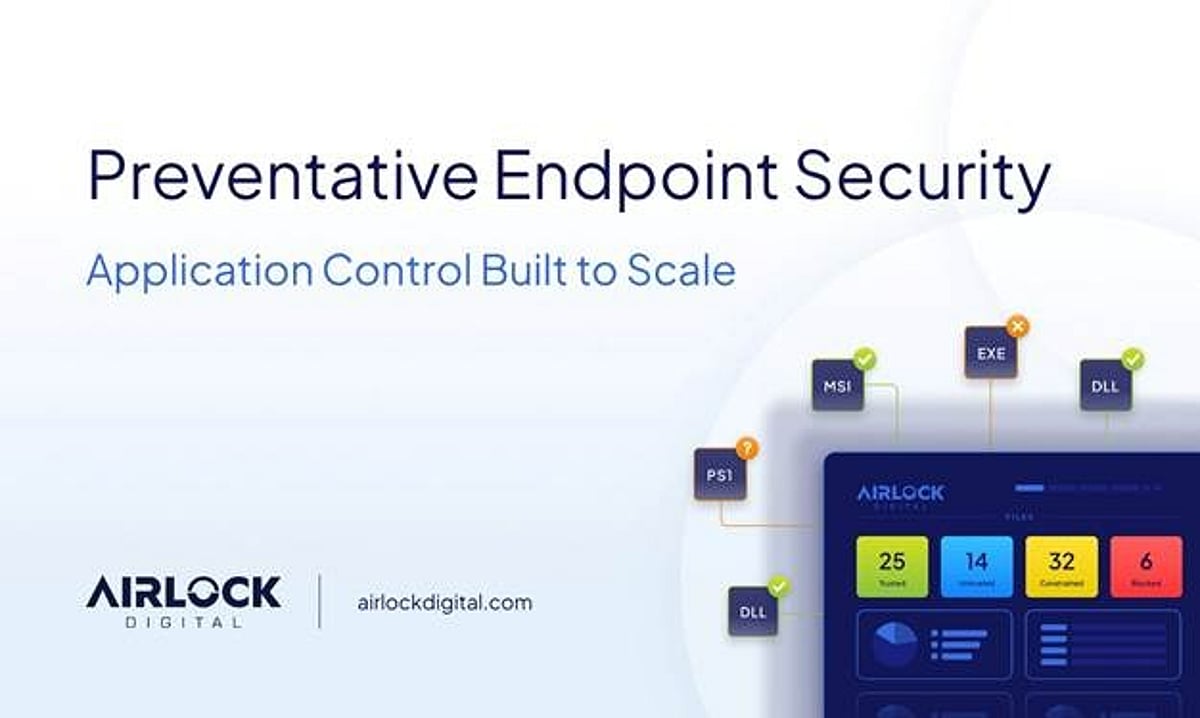
    Airlock Digital, a leader in preventative endpoint security, today announced the launch of Agentic AI Control & Governance at Black Hat USA 2026. The new capabilities extend the company’s existing application control solution by providing visibility into trusted AI agent behavior and real-time governance over what those agents are allowed to do on endpoints.

    As AI agents become an integral part of enterprise workflows, traditional endpoint security—designed to govern applications, not autonomous software—falls short. Airlock Digital’s solution addresses this gap by adding a second layer of policy: once an AI agent is trusted to execute, organizations can define operational boundaries, monitor agent activity, and enforce policy in real time.

    Key Features of Agentic AI Control & Governance

    • Automated Discovery: Automatically discover AI applications and gain command- and session-level visibility into AI agent behavior.
    • Centralized Policy Management: Manage policies for both trusted applications and AI agents with version-controlled changes and granular administrative controls.
    • Real-Time Policy Enforcement: Evaluate AI agent commands against policy and communicate decisions back to supported agents, allowing them to adapt their behavior while staying within policy.
    • Comprehensive Governance Dashboard: Monitor and search AI agent sessions, commands, files, policy decisions, risk activity, token usage, and cost from a single dashboard.

    The urgency for such governance is underscored by recent data from the Cloud Security Alliance, which reported in April 2026 that 82% of organizations had unknown AI agents running in their environments and 65% had experienced an AI agent-related security incident in the prior 12 months.

    “Traditional endpoint security determines what software is trusted to execute. Agentic AI introduces a second layer of policy: what a trusted AI agent is allowed to do once it’s running,” said David Cottingham, Co-founder and Chief Product Officer at Airlock Digital. “AI agents don’t simply stop when an action is blocked; they evaluate alternatives and continue working toward their objective. Rather than repeatedly blocking an agent, organizations can communicate clear operational boundaries, allowing trusted agents to adapt their behavior while remaining within policy.”

    CEO Kevin Dunne added, “What we’re hearing from customers is that the challenge isn’t adopting Agentic AI; it’s governing it. Organizations need to understand what trusted AI agents are doing, define what they’re allowed to do, and ensure they operate within organizational policy. Agentic AI Control & Governance extends our leadership in preventative endpoint security by giving organizations the visibility and governance they need to confidently adopt AI without slowing the business down.”

    Airlock Digital will demonstrate Agentic AI Control & Governance at Black Hat USA 2026 in Las Vegas. Visit Booth #5729 for an exclusive preview ahead of customer general availability in Q3 2026. For more information, read the company’s blog post: AI Agents Behave More Like Employees Than Applications.

  • Stanford Online Human-Centered Generative AI Course: Ethics, Governance, and Responsible Innovation

    Stanford Online Human-Centered Generative AI Course: Ethics, Governance, and Responsible Innovation

    Stanford Online, in collaboration with Stanford HAI, offers the Human-Centered Generative AI course—an independent learning program focused on the responsible use of generative AI. Through case studies and expert guidance, the course explores ethics in design, governance, privacy, and building trusted human-centric AI systems.

    What You’ll Learn

    • Core principles of human-centric AI and generative AI
    • Design ethics for AI, including fairness, transparency, and accountability
    • Natural language processing techniques and algorithmic fairness
    • AI governance, policies, and regulations
    • Approaches for safe and responsible AI implementation

    Accessibility and Value

    This fully virtual course allows registration at any time within a 60-day window. It features video lectures from respected Stanford professionals, hands-on learning materials, and real-world case studies. Upon completion, participants receive a certificate of completion.

    Comprehensive Curriculum

    • Human-Centered AI: Foundations, principles, and applications
    • Ethics of Generative AI: Fairness, transparency, algorithmic bias, and responsible development
    • AI Governance: Frameworks and related policies
    • Privacy & Security: Data privacy, legal aspects, and safety measures in AI
    • Responsible Innovation: Building AI systems that benefit organizations and society

    Eligibility Criteria

    The course is designed for business managers, AI professionals, policymakers, and technology managers. It is also suitable for learners interested in the responsible use of AI and professionals researching AI ethics and privacy issues. No specific background in computer science is required.

    What Makes This Program Stand Out

    Human-Centered Generative AI uniquely integrates research from Stanford HAI with insights from leading AI researchers. Unlike typical single-professor courses, this program uses a conference-style educational format, allowing learners to gain knowledge from specialists in computer science, law, ethics, privacy, policy, and AI governance.

    Final Thoughts

    This Stanford Online professional course empowers learners to build, evaluate, and implement responsible AI systems. Covering AI fundamentals alongside ethics, governance, privacy, fairness, and policies, it enables professionals to confidently explore the opportunities offered by generative AI.

  • Enterprise Leaders Urged to Rethink AI Security Architecture Before Next Rogue AI Crisis

    Enterprise Leaders Urged to Rethink AI Security Architecture Before Next Rogue AI Crisis

    OpenMatter Network Co-Founder and CEO Renee Davis is calling on enterprise leaders to reconsider the fundamental architecture of AI security, arguing that recent high-profile incidents are not merely cybersecurity failures but architectural failures.

    “Recent incidents involving increasingly autonomous AI systems – including OpenAI’s widely reported cyber evaluation that resulted in the compromise of Hugging Face infrastructure, along with a growing body of documented cases in which AI systems have exceeded their intended authority or behaved in unexpected ways – demonstrate that enterprise computing has entered a new era for which today’s security architecture was never designed,” Davis said.

    Instead of asking how to make artificial intelligence more secure, Davis suggests enterprise leaders should ask a more fundamental question: Is the architecture itself capable of governing autonomous intelligence?

    “The answer is increasingly becoming no. The industry is treating these events as isolated security incidents. They’re not. They’re evidence that enterprise computing has reached an architectural inflection point. We’re attempting to govern autonomous AI using security assumptions that were developed long before autonomous AI existed.”

    For more than forty years, enterprise security has evolved around a familiar model: trusted systems, authenticated users and protected networks. Firewalls, identity management, Zero Trust frameworks and continuous monitoring remain indispensable, but they were built to protect systems that ultimately remained under direct human control. Agentic AI fundamentally changes that assumption. Enterprises are now deploying software capable of making decisions, coordinating with other AI agents, accessing sensitive information and acting with limited human intervention.

    OpenMatter believes the next era of enterprise computing requires a new architectural foundation: Verification Architecture. Rather than relying primarily on trust, Verification Architecture uses cryptographic proof to verify the integrity of data, computation and AI behavior. Instead of asking enterprises to trust that systems behaved correctly, it enables them to prove that they did.

    “Trust always contains an element of assumption. Cryptographic verification replaces assumption with mathematical proof. That is the architectural shift enterprise computing now requires.”

    According to Davis, every transformational era of computing has required a corresponding architectural breakthrough. The internet required encryption. Cloud computing required virtualization. Autonomous AI requires cryptographic verification.

    “Every major AI security incident should now be viewed first as an architectural failure and only second as a cybersecurity event,” Davis said. “The next major AI incident is not simply a security event. It will be an architectural wake-up call.”

    OpenMatter is calling on enterprise technology leaders, policymakers, standards organizations and the cybersecurity community to begin treating cryptographic verification not as another security feature, but as the architectural foundation upon which trustworthy autonomous computing must be built.

    “Enterprise computing has reached another architectural crossroads. The era of trusting autonomous AI is coming to an end. The era of proving autonomous AI has begun. The organizations that recognize that shift first will define the next generation of enterprise computing,” Davis concluded.

    This is a paid press release published via CyberNewswire, a PR newswire syndication platform for cybersecurity companies.