Tag: AI Governance

  • How AI Architecture, Not Just Models, Drives Enterprise Success: Insights from NewStreetTech’s Shrish Anand Lal

    How AI Architecture, Not Just Models, Drives Enterprise Success: Insights from NewStreetTech’s Shrish Anand Lal

    Artificial intelligence has moved beyond the experimental phase. CIOs and technology leaders are now making strategic decisions about deploying AI in real-world, production environments where operational constraints and real consequences are the norm. As organizations shift from AI pilots to full-scale adoption, the spotlight is turning from the models themselves to the infrastructure that supports them.

    In a recent episode of the Analytics Insight Podcast, host Priya Diyalani spoke with Shrish Anand Lal, Executive Director and Chief Business Officer at NewStreetTech, about why enterprises need to focus on AI architecture and infrastructure rather than relying solely on AI models. The conversation covered the limitations of model-first strategies, core building blocks of enterprise AI infrastructure, cloud and hybrid deployment evolution, AI ROI, autonomous agents, platform strategy, and the importance of deterministic execution and governance. Below are the key takeaways.

    Why AI Models Alone Are Not Enough for Enterprise Adoption

    According to Lal, the AI model represents only about 20% of the challenge when it comes to enterprise adoption. The remaining 80% involves everything else — what NewStreetTech calls the FITS framework: Fear, Inertia, Trust, and Surprise. None of these issues can be solved by simply adopting a better model.

    Referencing research from NASSCOM, Lal noted that 65% of companies in India have launched AI pilots, but only 15% have reached production. He emphasized that models must be applied at the design phase, while execution must remain deterministic. “The AI model is becoming a commodity very quickly, but the AI architecture will be a competitive advantage,” he said.

    Core Building Blocks of Enterprise AI Infrastructure

    Lal outlined four essential building blocks:

    1. Separation — AI operates at the design and configuration stage, while execution remains deterministic. The two layers must not interact.
    2. Governance by design — Maker-checker workflows, audit trails, version control, and role-based access should be foundational, not afterthoughts.
    3. Orchestration — Using a single AI platform for everything is the wrong approach. NewStreetTech’s MyFix.ai, for instance, uses over 36 configuration agents and 14 execution engines, all deterministic.
    4. Deployment flexibility — Organizations must have the option to deploy on-premises, in the cloud, or via a hybrid model, especially for regulated industries.

    Cloud and Modern Architectures Evolving for Enterprise AI

    AI computing costs are dropping rapidly, which is good for adoption. But the real revolution, Lal argued, is not just about computing — it’s about architecture. The shift is from “AI as a service” to “AI as an infrastructure.” Organizations need resilience through multiple providers to avoid lock-in. Some workloads must remain on-premise; others can go to the cloud. This architecture transformation is critical for regulated industries, where leaving everything to AI creates a black box with unanswered questions.

    How the Conversation Around AI ROI Has Changed

    Two years ago, boardrooms asked whether they should invest in AI. Today, the question is why AI hasn’t yet gone into production. The ROI debate has shifted from the cost of implementing AI to the cost of not implementing AI. Enterprises now worry about falling behind competitors. Companies that are seeing real ROI started small.

    AI Agents and Autonomous Workflows: Reshaping Enterprise Infrastructure

    Lal clarified that AI agents are not chatbots. They are specialized workers handling specific tasks. At MyFix.ai, there are more than 37 specialized configuration agents and 14 deterministic execution engines. Agents build the system, humans approve it, and engines run it. This is the fundamental difference between building enterprise-grade AI infrastructure and simply adding more computing power.

    “The future will not be one AI system doing everything. It will be specialized agents working through orchestration, trust levels, cross-validation, and human oversight,” Lal concluded.

    Listen to the full discussion on the Analytics Insight Podcast.

  • How CEOs Can Build Truly AI-First Organizations: A Strategic Guide

    How CEOs Can Build Truly AI-First Organizations: A Strategic Guide

    Building an AI-first company requires more than adopting AI tools; it demands a fundamental shift in leadership, operations, governance, and business strategy. This guide explores the essential CEO strategies for creating an organization where artificial intelligence becomes a core driver of business value rather than just another technology initiative.

    Define AI-First Clearly Before You Declare It

    The most common mistake CEOs make when setting an AI-first direction is leaving the definition ambiguous. “We are becoming an AI-first company” means nothing without a clear internal answer to what, specifically, that means for your business model, your workforce, and your customer experience. Is AI-first about using AI to improve existing products? About building AI-native products your competitors don’t have? About using AI to restructure internal operations for a leaner cost base? The answer is probably all three, but each implies different investment priorities, different capability requirements, and different timelines. CEOs who define AI-first precisely and communicate that definition consistently build organizations that can execute against it. Those who keep it aspirational tend to produce a lot of pilots and not much else.

    Appoint an AI Leader with Real Authority

    The structure of AI leadership inside a company is one of the strongest predictors of whether AI investment produces material business results. A Chief AI Officer who sits three reporting levels below the CEO, manages a team of six, and has no budget authority over business unit AI spending will not build an AI-first company. They will run a team of AI enthusiasts that nobody listens to. CEOs building genuinely AI-first organizations are creating AI leadership roles that report directly to the CEO or at worst to the COO, with explicit authority to set AI standards across business units, approve or reject major AI deployments, and hold teams accountable for AI capability development. The Gartner 2026 CIO report found that 90% of organizations with a Chief AI Officer in place reported faster AI adoption than those without one.

    Rebuild Core Processes Around AI, Not Alongside It

    The difference between AI transformation and AI theatre is whether AI is being used to redesign the processes that generate revenue and serve customers, or simply overlaid on existing processes to make them marginally faster. Redesigning a sales process around AI-driven prospecting, predictive scoring, and automated pipeline management is transformation. Adding an AI chatbot to a customer service center that still routes most queries to human agents unchanged is theatre. CEOs building AI-first companies spend considerable time with their heads of product, operations, and commercial functions mapping exactly which core processes are being fundamentally redesigned and holding the organization accountable for completing those redesigns rather than accepting cosmetic improvements as success.

    Build AI Literacy into the Leadership Team

    An AI-first company cannot be led by executives who don’t understand AI well enough to make informed decisions about it. This doesn’t mean the CFO needs to understand transformer architecture. It means the CFO needs to be able to evaluate an AI investment proposal critically, understand what an AI system’s failure modes look like, and ask the right questions about data quality, model governance, and competitive differentiation. CEOs who build structured AI literacy programs for their leadership team—workshops, external speakers, required reading, and hands-on exposure to the tools the company is deploying—consistently report faster and less contested AI decision-making at the executive level.

    Make AI Governance Non-Negotiable From Day One

    The fastest way to slow an AI-first strategy is a high-profile AI failure: a biased model, an incorrect output that reached a customer, a regulatory breach, or a data privacy incident. CEOs who treat governance as something to implement after the AI is already in production are taking risks that consistently materialize into reputational and financial costs. The governance framework that belongs in an AI-first company from the beginning includes clear ownership of every AI system, documented escalation paths when a system behaves unexpectedly, mandatory human oversight for high-stakes outputs, regular auditing for bias and accuracy, and board-level visibility of the AI risk register. Governance is not a drag on AI adoption speed. In the long run, it is one of the things that makes sustained adoption possible.

    Why This Matters

    Becoming AI-first is ultimately a leadership challenge, not a technology project. Organizations that embed AI into strategy, operations, and decision-making from the top down will be better equipped to innovate, adapt to market changes, and build sustainable competitive advantages as AI becomes central to every industry.

    Frequently Asked Questions

    What does it mean to be an AI-first company?

    An AI-first company integrates artificial intelligence into its core business strategy, decision-making, operations, customer experience, and product development rather than treating AI as a standalone technology initiative.

    How is an AI-first company different from having an AI strategy?

    An AI strategy often consists of individual AI projects or pilots, whereas an AI-first company fundamentally redesigns its business model, workflows, and leadership approach around AI-driven value creation.

    Why should CEOs lead AI transformation?

    AI transformation affects business strategy, organizational structure, governance, culture, and investment decisions. Because these changes span the entire enterprise, CEOs play a critical role in setting direction and ensuring alignment across business functions.

    How can executives improve AI literacy?

    Leadership teams can strengthen AI literacy through executive workshops, hands-on experimentation with AI tools, expert-led training sessions, industry conferences, and continuous learning about AI capabilities, risks, and business applications.

    What are the biggest challenges in building an AI-first company?

    Common challenges include unclear strategy, poor data quality, employee resistance, skills shortages, governance gaps, legacy technology, regulatory compliance, and difficulty scaling successful AI pilots across the organization.

  • Key Executive AI Skills That Future Business Leaders Must Master

    Key Executive AI Skills That Future Business Leaders Must Master

    Why Executive AI Skills Are Now Essential

    Artificial intelligence is no longer confined to IT departments—it has become a boardroom priority. As businesses integrate AI into strategy, operations, customer experience, and growth, the skill set required from executives is rapidly evolving. Tomorrow’s leaders will be measured not only by financial acumen but also by their ability to leverage AI for innovation and manage technological change effectively.

    Strategic Thinking with AI

    The most effective executives view AI as a strategic growth tool, not just a software product. This involves identifying high-value use cases, aligning AI initiatives with organizational goals, prioritizing investments for maximum ROI, and ensuring that technology delivers a sustainable competitive advantage rather than becoming a costly experiment.

    AI Literacy

    Executives don’t need to code neural networks, but they must understand key AI concepts such as generative AI, predictive analytics, automation, and model limitations. This awareness enables them to ask better questions and make more informed decisions, even without deep technical expertise.

    Making Decisions with AI

    Many companies now use AI to analyze data for strategic decisions. Combining analytical insights with industry experience helps executives spot opportunities, anticipate customer needs, optimize pricing, and improve operational efficiency.

    Ethical AI Governance

    While AI offers tremendous opportunities, it also raises issues around privacy, security, bias, intellectual property, and regulation. Future leaders must develop governance frameworks that ensure ethical application of AI, building trust and minimizing risk.

    Humans and AI Working Together

    AI will not replace humans; the future workplace depends on collaboration. Leaders should redesign workflows so that AI handles routine tasks while humans focus on innovation, creativity, and relationship-building.

    Change Management with AI

    Most technology failures stem not from the technology itself but from resistance to change. Executives must clearly communicate the purpose of AI, address employee concerns, implement reskilling programs, and foster an experimental culture.

    AI Communication Skills

    An executive’s ability to articulate the benefits of AI—both inside and outside the organization—is as critical as their strategic knowledge. Clear communication builds buy-in and drives adoption.

    Continuous AI Learning

    AI evolves faster than most business technologies. Future-proof executives must stay updated on the latest advancements and adapt their strategies to leverage emerging opportunities.

    Business Benefits at a Glance

    • Informed decision-making
    • Improved business efficiency
    • Effective risk management
    • Enhanced innovation
    • Sustainable competitive advantage

    Bottom Line

    Being knowledgeable about AI alone is no longer sufficient for leadership. AI is becoming an integral part of executive capability. Those who combine business vision with AI expertise and a commitment to continuous learning will be best prepared for the future.

    FAQs

    1. Why should executives learn AI skills?
      Executives with AI skills make informed decisions, improve business efficiency, manage risks effectively, and drive innovation across their organizations successfully.
    2. Do business leaders need technical AI expertise?
      No. Executives need AI literacy, strategic understanding, and decision-making capabilities rather than deep programming or machine learning expertise.
    3. What is the most important executive AI skill?
      AI strategic thinking is crucial because it aligns technology investments with business objectives, ensuring measurable value and sustainable competitive advantage.
    4. How does AI improve executive decision-making?
      AI analyzes vast datasets, identifies trends, predicts outcomes, and provides actionable insights, enabling executives to make faster, smarter business decisions.
    5. Why is responsible AI governance important for businesses?
      Responsible AI governance minimizes bias, protects data privacy, ensures regulatory compliance, builds customer trust, and safeguards organizational reputation and growth.
  • Top AI Skills Employers Will Demand Most in 2026

    Top AI Skills Employers Will Demand Most in 2026

    The artificial intelligence job market is heating up, and employers are already signaling which skills will be most valuable in 2026. From engineering robust AI systems to ensuring ethical governance, professionals who master these competencies will stand out. Here are the top AI skills that will shape career opportunities in the near future.

    AI Engineering

    Employers are prioritizing professionals who can build, deploy, optimize, and maintain scalable AI systems. Expertise in modern frameworks, cloud platforms, and automation tools is essential for this role.

    Prompt Engineering

    Crafting accurate prompts for generative AI models dramatically improves productivity, workflow automation, content quality, and enterprise AI application performance. This skill is becoming a cornerstone of efficient AI use.

    Machine Learning

    Strong machine learning expertise remains critical for developing predictive models, improving algorithms, handling large datasets, and solving complex business challenges effectively.

    Data Engineering

    Organizations are seeking experts who can manage data pipelines, ensure data quality, handle storage, integrate systems, and process information reliably to support AI model training and deployment.

    AI Governance

    As AI adoption grows, businesses increasingly value professionals who can ensure ethical AI practices, regulatory compliance, transparency, risk management, and responsible deployment across enterprise environments.

    Python Programming

    Python continues to be the preferred language for AI development, enabling automation, model building, data analysis, and seamless integration with AI frameworks efficiently.

    Cloud AI Platforms

    Experience with cloud-based AI services helps professionals deploy scalable applications, optimize infrastructure costs, and accelerate enterprise AI implementation across industries.

    Natural Language Processing (NLP)

    NLP expertise enables organizations to create advanced chatbots, language models, intelligent search systems, and multilingual customer engagement solutions successfully.

    Business Intelligence

    Employers favor professionals who combine AI knowledge with business intelligence to transform analytics into strategic decisions, operational improvements, and measurable organizational growth.

  • How CEOs Can Master Strategic Planning in the Age of AI

    How CEOs Can Master Strategic Planning in the Age of AI

    Corporate strategy has rarely stayed still for long, and the current business cycle belongs to artificial intelligence. AI is reshaping how budgets are allocated, how boards weigh risk, and how leadership teams justify their decisions. Few CEOs today can separate strategic planning from questions about AI governance and readiness.

    What makes this moment unique is the mismatch between spending and sentiment among top executives. CEO confidence in revenue prospects has slipped to its lowest point in five years, as leaders navigate uneven AI returns alongside geopolitical and cyber risks. Companies keep raising AI budgets even as the executives approving them grow noticeably more cautious about near-term payoff.

    Confidence Gaps Are Widening

    Strategic planning now stretches well beyond quarterly revenue targets and competitive positioning. It includes technology governance, workforce readiness, and infrastructure decisions inside one connected roadmap. Only three in ten CEOs report confidence in revenue growth over the coming year, down sharply from 38% last year. Playbooks built during calmer economic periods often fail to hold up against today’s faster, less predictable market swings.

    Boards and CEOs Remain Misaligned

    A global survey of 625 CEOs and board members found that 35% of CEOs feel their boards overestimate what AI can genuinely replace. Friction between leadership teams and governance layers routinely stalls decisions that competitors are already acting on. Board composition has quietly become part of this planning conversation. Directors without deep technical grounding sometimes push for faster AI rollouts, underestimating what operational readiness truly demands.

    Accountability Has Become Central

    Seventy-eight percent of executives admit they lack confidence in passing an independent AI governance audit within 90 days. A strategy missing clear accountability invites lasting reputational damage long before regulators get involved.

    How CEOs Can Build AI-Driven Business Strategies

    Spending Alone Does Not Guarantee Results

    A resilient AI strategy demands far more than rolling out new software across every department. Leaders need to connect data quality, talent planning, and measurable outcomes from the very first planning session. More than 80% of multinational leaders expect higher AI spending this year, and nearly 90% are raising budgets for emerging agentic capabilities. Bigger budgets rarely produce clarity on their own, especially without a framework guiding where that money actually goes.

    Depth of Adoption Outperforms Speed

    Firms scaling AI across several business functions consistently pull ahead of companies testing one isolated pilot at a time. Deployment leaders scaling AI across at least two categories redesign workflows more often—49% versus 32% among firms still piloting. The lesson here has little to do with how quickly a company adopts new tools. It has everything to do with whether existing workflows get rebuilt around what those tools can actually deliver.

    Best Strategic Planning Techniques for CEOs

    A handful of practices consistently separate CEOs building lasting AI strategies from those chasing short-lived headlines. Consider the following priorities before committing further budget toward any large-scale rollout:

    • Treat AI governance as a board-level responsibility rather than a technical afterthought.
    • Concentrate budgets on high-return use cases instead of broad, unfocused rollouts.
    • Pair every major technology investment with structured workforce upskilling programs.
    • Set measurable accountability checkpoints before scaling any AI initiative further.
    • Revisit strategic assumptions each quarter, since conditions now shift faster than before.

    Governance and Growth Have to Move Together

    Heavy AI investment without matching governance tends to produce strategies that crumble under scrutiny. CEOs pairing genuine ambition with structured accountability end up with plans that survive both market pressure and boardroom skepticism.

    Final Words

    Strategic planning in the AI era rewards CEOs who balance genuine ambition with disciplined execution rather than reactive spending. Confidence has declined across many boardrooms, yet companies pairing investment with strong governance keep outperforming hesitant competitors. The path forward favors leaders willing to treat AI as a core strategic function, not a scattered collection of experiments. CEOs committing to measurable accountability today are quietly building the foundation for steady, durable growth ahead.

  • Understanding Context Management in AI: An Enterprise Guide

    Understanding Context Management in AI: An Enterprise Guide

    Many AI agents look flawless in a demo—clear answers, correct citation, obedient behavior. Yet once deployed, they drift: answers become inconsistent, hard to trace, and sometimes simply wrong.

    The gap is often context. An AI agent can only reason over the information it sees, and enterprise data lives across scattered systems with different owners, policies, and formats.

    Context management is the discipline of delivering the right, governed information to a model exactly when it needs it. When done well, it makes AI outputs more reliable and auditable.

    What Context Management Actually Means

    Start with the context window: the working memory a model uses for a single request—filled with instructions, history, references, and tool outputs.

    Context management is the enterprise capability that decides what enters that window. As defined by TechTarget, a context layer sits between enterprise data systems and AI orchestration, supplying decision rationale, business rules, and relationships at inference time.

    In short, context management is about sourcing, authorizing, and delivering trustworthy context at runtime—not just writing a better prompt.

    Context Management vs. Context Engineering

    Context engineering is prompt-level work. It selects and shapes what a single request contains to improve the answer.

    Context management is broader. It covers where context comes from, how it is governed, who can see it, and how it reaches the model.

    DataHub describes context management as an organization-wide capability that delivers relevant, governed context to AI context windows, separate from one-off prompt tweaks. This distinction matters because it separates reusable governance from ad hoc prompt tuning.

    Why This Matters Now

    Interest in agentic AI is high, but production maturity remains low. Several developments explain the urgency:

    • Native context layers are arriving. AWS introduced AWS Context, which maps data and business logic into a knowledge graph with identity-aware queries and built-in governance.
    • Governance gaps stall projects. A Deloitte survey found that only 25% of organizations have moved 40% or more of AI pilots to production, and just 21% report mature agent governance.

    How a Context Layer Works

    A governed context layer is less a single product and more a set of capabilities. Common components include:

    Context Graph

    Captures relationships, definitions, and lineage across your data estate. It helps an agent understand what an entity is and how records connect.

    Policy-Aware Retrieval

    Retrieval should respect identity and access rules. The agent only sees what the requesting user is authorized to see.

    Provenance and Audit

    Every piece of delivered context must be traceable, enabling review after the fact.

    Delivery Through a Standard

    The Model Context Protocol (MCP) is an open-source standard for connecting AI applications to external data, tools, and workflows. Its documentation describes MCP as a “USB-C port for AI applications,” defining tools, resources, and prompts for governed context delivery.

    An Implementation Playbook

    1. Inventory context sources and owners. Know what exists, who owns it, and its sensitivity.
    2. Pick one high-stakes workflow. Choose a pilot where accuracy and auditability are critical.
    3. Model definitions first. Agree on shared definitions and entity resolution before scaling retrieval.
    4. Enforce identity-aware retrieval and logging. Build access rules and audit trails from the start.
    5. Standardize delivery. Use MCP so agents connect consistently.
    6. Build evaluation loops. Test for accuracy and watch for context drift.
    7. Plan for federated ownership. Distribute responsibility to the teams closest to each domain.

    Strong AI governance threads through every step, because access control and audit are what let teams trust agent output.

    Tooling Landscape and What to Evaluate

    Several product categories address context management. Consider them complementary:

    • Context platforms – deliver governed context to agents.
    • Data catalogs – add semantic definitions, lineage, and AI governance.
    • Orchestration frameworks – coordinate agents and tool calls.
    • MCP servers – expose sources through a common protocol.

    When comparing options, check for: governance at retrieval, lineage tracking, access control, drift detection, and MCP support.

    Where to Start

    Context management is not a single tool you buy once. It’s a capability you build around the data and workflows that matter most.

    Begin with one workflow, model your definitions, enforce identity-aware retrieval, and log everything. Standardize delivery through MCP so you don’t rebuild connections for every agent.

    The payoff: agents that behave predictably and can be explained after the fact. That reliability turns a promising pilot into a production-ready system.

    FAQ

    What is the goal of context management in AI?
    To give an AI system the right approved information for a task while keeping access, lineage, and audit controls visible.

    Is context management the same as prompt engineering?
    No. Prompt engineering shapes one request; context management governs the reusable data, rules, and delivery paths that feed many AI workflows.

  • Future-Proofing the Workplace: Essential Strategies CEOs Must Implement Now

    Future-Proofing the Workplace: Essential Strategies CEOs Must Implement Now

    The future of work is no longer a distant concept discussed in boardrooms and industry conferences. It is unfolding in real time. Artificial intelligence is automating routine tasks, hybrid work has become an accepted norm, and employees are demanding greater flexibility, purpose, and opportunities for growth. At the same time, businesses are navigating economic uncertainty, stricter regulations, and a rapidly evolving cybersecurity landscape.

    For CEOs, the challenge extends beyond embracing new technology. The bigger task lies in building organizations that can adapt quickly without losing their human edge. Companies that view workplace transformation as an ongoing process rather than a one-time initiative are more likely to retain talent, improve productivity, and remain competitive.

    AI is Reshaping Jobs, Not Eliminating Them

    AI has emerged as a major driver behind changes in the corporate environment, and it has been moving fast. Even though there are still worries about job displacement, most companies are starting to see that AI shouldn’t be treated like an outside add-on, but rather integrated into the workflow alongside their employees.

    Many of the boring, everyday administrative tasks—document processing, customer support, and data analysis—are already handled by AI systems. This leaves professionals with more time for inventive work and relationship-building. Still, this kind of shift requires the CEO to redesign how work flows, not just roll out a new software tool and call it done.

    Organizations that can demonstrate equal success in developing technological and workforce capabilities will see the greatest results from the introduction of AI technologies.

    Skills are Becoming More Valuable Than Degrees

    The validity period of professional competencies is getting smaller and smaller. Rapid advancements in technology, new business models, and new customer needs mean that people have to learn continuously throughout their careers.

    Companies that think ahead realize the importance of skills-based recruitment, assessing people based on their proven competencies and not just formal qualifications or previous positions. In-house learning programs, AI training, and leadership development are strategic investments rather than additional perks.

    From a CEO’s perspective, investing in a culture of continuous learning means lower recruitment expenses and an adaptable workforce.

    Hybrid Work Needs Structure, Not Freedom Alone

    In fact, there is no longer any discussion about working from home vs. the office. Now the discussion has moved on to creating hybrid work systems where teamwork can be done effectively without losing flexibility.

    Successful organizations are now setting standards for when teams have to meet up and when remote work proves more effective. Offices are being restructured for collaboration and not fixed desk jobs. This helps organizations maintain their culture without taking away flexibility from employees.

    Employee Wellbeing is a Business Strategy

    Employee burnout and stress cannot be treated only as a human resources problem because they also impact productivity and innovation.

    More companies are providing services related to mental health, flexibility, and good work practices. At the same time, they recognize that keeping employees productive means giving them a reasonable workload, rather than making them spend more hours at work.

    Employees who feel valued by their company are more motivated and productive and are less likely to search for other job opportunities.

    Trust Will Define AI Adoption

    As artificial intelligence becomes more prevalent in the workplace, governance has become one of the key roles of the leadership team.

    The requirement for accountability regarding the use of AI technology, data processing methods, and reduction of biases is always increasing. CEOs have to develop policies on how to properly use AI and implement cybersecurity.

    Trust has become the competitive advantage. Companies using AI technology in the right way will gain customer and employee trust.

    Managers Must Become Coaches

    Technology is performing most of the administrative functions that managers usually performed. Therefore, managers can coach and mentor people.

    Most employees nowadays need feedback, personalized coaching, and guidance, especially when organizational change takes place. When managers act as coaches, engagement increases.

    Leadership quality, rather than technology alone, will continue to differentiate high-performing organizations.

    Adaptability is the New Competitive Advantage

    The main takeaway from the evolution of workplaces is the permanency of change itself. Companies can no longer afford to follow a five-year plan that stays intact during its entire life-cycle.

    Leaders of the future are creating organizations that can adapt and respond promptly to any changes in technology, markets, and people’s demands. These organizations will be able to make data-based decisions, ensure cybersecurity, enable continuous learning opportunities, and provide flexibility in the system, while never losing sight of their people.

    Organizations that create empathic innovation will be the winners of the future. Although artificial intelligence may dictate the future of the workplace, it will be the leadership that keeps their people engaged and attracts loyal customers.

    Why This Matters

    Workplace transformation is accelerating as AI, automation and shifting employee expectations redefine business operations. CEOs who invest in adaptable work cultures, continuous learning and responsible technology adoption will be better positioned to attract talent, drive innovation, strengthen resilience and sustain long-term growth in an increasingly competitive global economy.

  • 7 Executive Strategies for Dominating the AI Economy

    7 Executive Strategies for Dominating the AI Economy

    The AI economy is reshaping competitive dynamics, cost structures, and customer expectations simultaneously. According to McKinsey’s 2026 State of AI report, 78% of organizations now use AI in at least one business function, up from 55% the year before — a pace of adoption that means the gap between leaders and laggards is widening faster than most boards anticipated. For CXOs, the question is no longer whether to adopt AI but how to adopt it in ways that create durable advantage rather than temporary efficiency gains.

    Treat AI as a Strategic Priority, Not an IT Project

    The most frequent pitfall in executive oversight is to delegate AI adoption to the technology department and measure success by operational outcomes only. Leading organizations are those where the CEO has set clear AI goals linked to revenue and holds the entire C-Suite accountable. According to Gartner’s 2026 CIO research, companies whose CEO sponsors AI programs are 2.5 times more likely to have business impact from them. In this era, AI literacy is not negotiable for non-tech executives: an incompetent CFO unable to critically assess an AI investment case or a CMO who cannot judge the attribution model of an AI marketing campaign is at a considerable disadvantage.

    Build AI into the Core, Not the Edge

    Many organizations in 2025 ran AI pilots at the edges of the business: isolated proofs-of-concept in one department, a chatbot on customer service, a forecasting tool in one market. These generated learnings but rarely competitive advantage, because they were never connected to the core operating model. Winning in the AI economy requires integrating AI into the processes that directly determine how value is created: the customer experience, the supply chain, the product development cycle, and the sales motion. Companies that have integrated AI into their core operations report 40% higher productivity gains compared to those running isolated experiments, according to BCG’s 2026 AI adoption analysis.

    Rethink the Workforce, Don’t Just Retrain It

    AI will displace some jobs, radically alter many others, and bring into being job categories that do not currently exist. Managers who view this as a training issue invariably underestimate the magnitude of the change needed. The better way to think about this challenge is through workforce redesign — figuring out how to map activities into areas managed by AI, those requiring AI-human interaction, and those requiring uniquely human input, and then redesigning job categories, teams, and incentives accordingly. Companies that redesign their workforces with AI rather than augmenting pre-existing designs with AI realize far greater benefits.

    Govern AI Before It Governs You

    AI adoption without governance is a weakness rather than a strength. Failures show that the costs incurred in terms of reputation and regulation can often outweigh the efficiency benefits which motivated the adoption of AI technology in the first place. Leading organizations have established AI governance frameworks with clear accountability, mandatory human oversight for high-stakes outputs, regular bias auditing, and documented correction processes. This is not a compliance exercise. It is risk management and increasingly, a customer trust signal.

    Win on Data, Not Just on Models

    The commoditization of foundation models means model access alone is no longer a competitive differentiator. The durable advantage in the AI economy sits in proprietary data. Organizations that have invested in data quality, infrastructure, and governance for years can fine-tune models on their own customer behavior and operational history in ways competitors without that data asset cannot easily replicate. For executives building AI strategy, data strategy and AI strategy are the same document, and the executives who understand that distinction earliest will be the ones best positioned to lead in the AI economy over the decade ahead.

    Why This Matters

    Organizations that strategically integrate AI into their business models are more likely to improve productivity, accelerate innovation, and respond quickly to changing market conditions. Executive leadership, not technology alone, will determine which companies gain lasting competitive advantage.

    FAQs

    What is the AI economy?

    The AI economy refers to the growing business environment where artificial intelligence drives productivity, innovation, customer experiences, and competitive advantage across industries. Organizations increasingly use AI to automate workflows, improve decision-making, and create new products and services.

    Why should CEOs treat AI as a business strategy instead of an IT project?

    AI influences every business function, including finance, marketing, operations, and customer service. When executive leadership aligns AI initiatives with revenue growth and strategic objectives, organizations are more likely to achieve measurable business outcomes than when AI remains solely a technology initiative.

    How can organizations successfully integrate AI into core business operations?

    Companies should embed AI into value-generating processes such as customer service, supply chain management, sales forecasting, product development, and decision support. Integrating AI into daily operations delivers greater long-term benefits than isolated pilot projects.

    What is AI governance, and why is it important?

    AI governance establishes policies, oversight mechanisms, and accountability for AI systems. It includes bias testing, human review, regulatory compliance, data privacy protection, and continuous monitoring to reduce legal, ethical, and reputational risks.

    Why is data strategy essential for AI success?

    High-quality proprietary data enables organizations to train and fine-tune AI systems for better business outcomes. Since AI models are becoming more widely accessible, unique data assets increasingly provide the strongest competitive advantage.

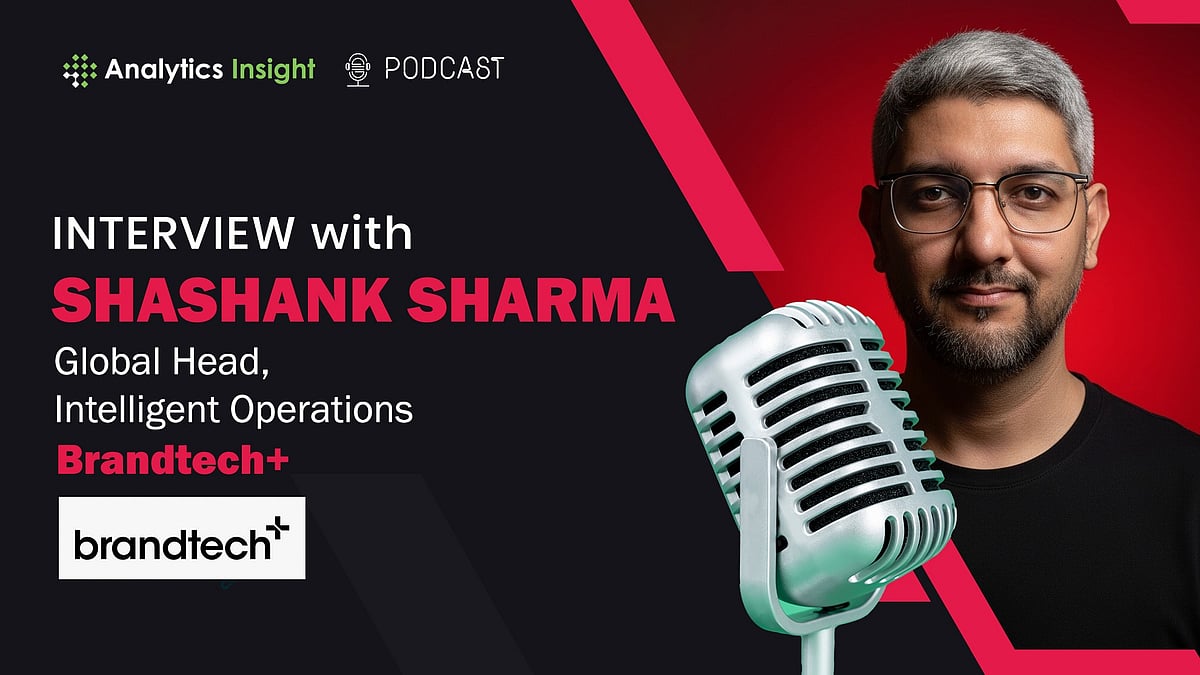
  • From GenAI to GenOps: Shashank Sharma on Scaling Enterprise AI with Intelligent Automation

    From GenAI to GenOps: Shashank Sharma on Scaling Enterprise AI with Intelligent Automation

    Podcast Highlights: Inside GenOps with Shashank Sharma

    As enterprises move beyond initial Generative AI experiments, the focus shifts to scaling AI efforts while maintaining governance, compliance, efficiency, and business impact. In a recent episode of the Analytics Insight podcast, host Priya Dialani spoke with Shashank Sharma, Global Head of Intelligent Operations, AI and Automation at Brandtech Plus, about the evolution from Generative AI to GenOps. The conversation covered AI-RPA integration, intelligent business operations, human oversight, enterprise governance, automation strategies, and maximizing ROI through responsible AI scaling.

    Key Takeaways from the Interview

    Generative AI vs. GenOps

    Sharma explained that while Generative AI primarily focuses on creating content—such as text, images, and videos—GenOps applies AI to business operations. GenOps integrates AI with governance, automation, compliance, and operations to increase efficiency, reduce costs, and ensure AI functions effectively within enterprises.

    Why AI and RPA Are Stronger Together

    AI provides intelligence and reasoning, whereas Robotic Process Automation (RPA) handles rule-based tasks consistently. By combining both, organizations can automate complex business processes, minimize errors, secure information assets, and balance the probabilistic nature of AI with the deterministic execution of RPA.

    “AI provides intelligence and reasoning, whereas RPA handles rule-based tasks consistently. By combining both, organizations can automate complex business processes, minimize errors, secure their information assets, and balance the probabilistic aspects of AI with the deterministic aspects of RPA execution.”

    Business Benefits of AI and Automation

    Organizations can expect productivity gains, faster process execution, reduced costs, enhanced compliance, improved data accuracy, and higher returns on investment. Automation frees employees from routine tasks, allowing them to focus on more strategic functions.

    Why Human Oversight Remains Essential

    AI can make smart decisions, but it can also make wrong or dangerous ones. Human intervention is necessary to confirm important decisions, govern, prevent unnecessary errors, ensure accountability, and keep business transactions safe until AI technology becomes fully reliable.

    “AI can make smart decisions, but it can also make wrong or dangerous ones. Human intervention is required to confirm important decisions, govern, prevent unnecessary errors, hold people accountable, and keep business transactions safe until AI technology becomes reliable.”

    Challenges in Scaling AI

    Sharma identified budget constraints, staff resistance, poor-quality data, and lack of clarity about organizational processes as major obstacles. He recommended focusing on the most significant AI use case, experimenting, engaging subject-matter experts, and improving data quality to overcome these issues.

    Conclusion

    The shift from Generative AI to GenOps represents a maturation of enterprise AI. By integrating intelligent automation with robust governance and human oversight, companies can scale their AI initiatives responsibly while achieving tangible business outcomes. As Sharma’s insights demonstrate, the future of enterprise AI lies in balancing innovation with operational discipline.

  • AI Security Threats in 2026: What Every Cybersecurity Team Must Know

    AI Security Threats in 2026: What Every Cybersecurity Team Must Know

    As artificial intelligence becomes deeply embedded in enterprise operations, cybercriminals are weaponizing the same technology to launch increasingly sophisticated attacks. By 2026, cybersecurity teams will need to defend not only traditional networks and endpoints but also the AI models, prompts, and autonomous agents that power modern business processes.

    This article outlines the most critical AI-driven security threats on the horizon and offers actionable strategies to build resilient defenses.

    The New AI Threat Landscape

    Unlike conventional cyberattacks, AI-focused threats exploit machine learning models, training data, prompts, APIs, and automated workflows. Security leaders must now treat AI systems as a distinct security perimeter—just as they do cloud workloads or enterprise networks.

    1. Prompt Injection: A Critical Enterprise Risk

    Prompt injection has emerged as one of the most severe threats for organizations using large language model (LLM) applications. Attackers manipulate how AI systems are instructed, bypassing security controls, exfiltrating sensitive data, or triggering unauthorized actions. When AI agents have access to email, databases, or cloud storage, a malicious prompt hidden in a document or webpage can compromise an entire environment. Every external input should be treated as untrusted.

    2. AI-Generated Phishing and Deepfakes

    Generative AI has supercharged phishing. Attackers now create grammatically flawless emails, mimic individual writing styles, and produce convincing voice and video deepfakes in minutes. Business Email Compromise (BEC) attacks have evolved into deepfake video calls impersonating executives to authorize fraudulent transactions. Relying solely on employee awareness is no longer enough; organizations must deploy AI-based detection solutions.

    3. Data and Model Manipulation

    AI algorithms themselves are attractive targets. Data poisoning injects false information during training, causing biased or incorrect outputs. Adversarial attacks modify model behavior using carefully crafted inputs, while model theft attempts to reverse-engineer proprietary algorithms. These risks are especially acute in healthcare, finance, and critical infrastructure sectors.

    4. AI Agents: New Attack Surfaces

    Autonomous AI agents that interact with APIs, databases, and enterprise applications introduce unprecedented security challenges. Unlike simple chatbots, agents can execute workflows and make decisions without human oversight. Attack vectors include prompt injection, plugin exploits, and insecure integrations. Security teams must enforce identity management, least-privilege access, runtime monitoring, and comprehensive logging. Gartner identifies agentic AI governance as a top cybersecurity concern.

    5. Shadow AI

    Employees often use unauthorized AI tools, exposing sensitive data to public AI platforms. Without proper governance, this “shadow AI” can lead to data leaks and compliance violations. Organizations need policies, monitoring, and employee education to manage unsanctioned AI usage.

    Building AI-Ready Cybersecurity Defenses

    Preparing for AI-native attacks requires more than adding new security tools. Key steps include:

    • Establishing AI governance policies and ethical guidelines.
    • Conducting regular red-team testing of AI systems.
    • Monitoring model behavior in production for anomalies.
    • Educating employees about AI-enabled attack methods.
    • Integrating AI incident response plans into overall cyber resilience strategies.

    Why This Matters

    The future of cybersecurity is AI-aware. As organizations accelerate AI adoption in customer support, software development, and business optimization, threats targeting AI systems will multiply. Organizations that recognize AI as both a powerful tool and a new security frontier will be best positioned to reduce risks and harness AI safely.