Tag: AI Governance

  • Pega Infinity 26 Launches: Predictable AI Outcomes Without Token Fees

    Pega Infinity 26 Launches: Predictable AI Outcomes Without Token Fees

    Pegasystems Inc. (NASDAQ: PEGA) has announced the general availability of Pega Infinity™ 26, the latest version of its enterprise AI suite designed to help organizations scale artificial intelligence with confidence. The release tackles two critical barriers to AI adoption: unpredictable outcomes and unpredictable costs.

    Available through Pega Cloud® or in clients’ managed cloud environments, Pega Infinity 26 combines advanced agentic AI with built-in governance and a new pricing model that eliminates consumption-based AI charges. This enables enterprises to achieve both predictable AI performance and predictable expenses.

    Predictable AI with Flat-Fee Pricing

    At the heart of the release is the Pega Predictable AI™ architecture, which maximizes AI processing at design time to ensure runtime operations are extremely token-efficient. Clients pay a flat fee per resolved case—not per token—eliminating what Pega calls the “AI token tax.” This model allows enterprises to use as much AI as needed without worrying about runaway costs from token-based consumption.

    Pega also introduced a free AI Token Cost Calculator to help organizations estimate potential savings compared to traditional token-based models.

    Key Innovations in Pega Infinity 26

    • Pega Infinity Studio – An AI-native development environment that integrates clients’ preferred coding agents with built-in best practices from Pega Blueprint AI™, accelerating delivery of mission-critical applications while reducing risk.
    • Predictable AI agents and orchestration – New capabilities allow developers to connect and orchestrate both Pega and third-party AI agents within governed workflows, ensuring compliance and consistent outcomes.
    • Pega Customer Engagement Studio – A unified workspace for marketers to create personalized 1:1 campaigns in minutes at scale, with AI agents handling ideation through execution.
    • Design and runtime MCP support – Clients can use MCP (Model Context Protocol) to connect with tools like Claude Code, GitHub Copilot, and OpenAI Codex for building applications, and invoke agents from assistants like ChatGPT and Office 365 Copilot.

    Market Context: The Need for Cost Transparency

    Despite massive enterprise investment in AI, many organizations have struggled to realize meaningful business value. Concerns around trust, risk, and security have slowed large-scale deployment. Escalating costs and uncertain ROI threaten the viability of many AI initiatives. With Pega Infinity 26, every AI-driven interaction adheres to business rules and regulatory standards while removing pricing unpredictability.

    Executive Insight

    “Enterprises are seeing tremendous potential in AI and are now focused on turning that momentum into measurable business outcomes,” said Kerim Akgonul, chief product officer at Pega. “The next phase of AI adoption is about scaling results with confidence. Pega Infinity 26 removes two of the biggest barriers to success—unpredictable outcomes and unpredictable costs—by building governance into AI-driven workflows and aligning pricing with completed work.”

    Pega Infinity 26 is available now. For more details, visit www.pega.com/infinity.

  • Understanding AI Appreciation Day: Origins, Impact, and Why It Matters

    Understanding AI Appreciation Day: Origins, Impact, and Why It Matters

    Every July 16, AI Appreciation Day offers a moment to reflect on how artificial intelligence is reshaping industries and everyday life. First observed in 2021, the day has grown from a niche awareness initiative into a globally recognized occasion, embraced by technology companies and enterprise leaders. This article explores the history, significance, and practical benefits of AI Appreciation Day, along with how organizations are marking it in 2026.

    What Is AI Appreciation Day?

    AI Appreciation Day is an annual observance held on July 16. It recognizes the growing role of AI in daily life and encourages open discussions about ethics, governance, and responsible adoption. Despite its name, the day is not a government or UN holiday; it originated as a commercial entry on the National Day Calendar.

    The Origin of AI Appreciation Day

    The observance traces back to 2021 and A.I. Heart LLC, founded by freelance advertising professional Jason Kirton. Kirton, who has stated he does not run an AI company, registered the day through a paid directory. Early coverage linked it to a film project called A.I. Eve, and some outlets dismissed it as a marketing stunt. However, by 2023–2024, journalists from Forbes and PC Gamer investigated the origins, and Kirton clarified his goal: to create a fixed moment for reflecting on AI ethics and regulation. He even spent time near SpaceX’s Starbase hoping to discuss AI regulation with Elon Musk. By 2025–2026, the day was increasingly adopted by technology companies, with C-suite leaders publishing statements to mark it.

    Significance of AI Appreciation Day

    The day’s significance has evolved from novelty to infrastructure. Leaders from various sectors emphasize different aspects:

    • Sumed Marwaha, Managing Director, AHEAD India, notes that AI creates the greatest impact when built on a modern technology foundation that enables confident innovation.
    • Badri Gomatam, Group CTO at STL, highlights AI data centers as the backbone of the AI economy, stressing the rapid growth in demand for low-latency computing.
    • Vivek Ganesh, Regional Vice President, OutSystems India, warns that speed without visibility is exposure, citing research that Indian organizations embrace AI faster while accepting higher identity-related risks.
    • Marshal Correia, General Manager for India and South Asia at SUSE, calls for resilient and sovereign AI ecosystems, noting that a regulatory decision elsewhere should not shut down operations overnight.

    Benefits of AI Appreciation Day

    The day’s value lies less in celebration and more in what it prompts organizations to do:

    • Builds public awareness – gives people outside the AI field a reason to understand how the technology touches finance, healthcare, and daily operations.
    • Opens governance conversations – leaders publish plain-language positions on identity risk, data sovereignty, and responsible deployment.
    • Recognizes the people building the systems – from researchers to engineers to founders shaping enterprise AI policy.
    • Brings diverse sectors together – crypto, healthcare, and infrastructure join a single conversation.

    Industry voices also highlight practical benefits: Nischal Shetty of WazirX describes AI as an always-on research assistant for traders; Masaharu Morita of NURA points to earlier, more accurate diagnoses in healthcare; Ish Thukral of Neo4j emphasizes that better-connected data, not larger models, reduces errors and builds trust.

    How Organizations Are Observing It

    Companies mark the day less with celebration and more with candid assessment. Some publish plain-language explanations of how they use AI. Others run internal panels on identity risk and sovereignty. A growing number use the data to publish infrastructure commitments, shifting the focus from what AI can do to who controls the systems running it.

    Why It Matters

    AI is changing industries faster than most people expected. AI Appreciation Day gives everyone a chance to step back—not just to celebrate technology, but to think about what it really means for society. It builds awareness, pushes for responsible development, and gets people talking honestly about where AI is headed.

    Final Thoughts

    AI Appreciation Day may never earn formal government recognition, and its commercial origin will keep inviting skepticism. But its 2026 edition points to something sturdier taking shape. Enterprise leaders are choosing this date to say publicly what once stayed in boardrooms: that AI’s next chapter rests less on model breakthroughs and more on the foundations built beneath them.

  • AI Trends CEOs Must Track Before 2030: Agentic AI, Governance, and Strategy

    AI Trends CEOs Must Track Before 2030: Agentic AI, Governance, and Strategy

    Artificial intelligence has entered a new phase. From being an emerging technology to the very core of modern companies’ operations, the transition is happening rapidly. In any industry, discussions within the boardrooms have progressed from ‘Should we use AI?’ to ‘How should we implement AI and what business value do we see in it?’

    It’s not a matter of implementing chatbots or automating tasks anymore. Companies are now looking to invest in technologies capable of making decisions, predicting, optimizing processes, and transforming customer experiences. The next several years will show which companies manage to remain leaders in their fields amid growing competition and AI regulations.

    If you want to stay at the top and understand the technologies shaping your company’s future over the next decade, here are the AI trends to watch.

    AI Trends Transforming Business Operations

    These technologies are changing how organizations operate day to day, enabling faster decision-making, greater efficiency, and smarter execution across core business functions.

    Agentic AI Will Automate Complex Workflows

    The next generation of AI is moving beyond just answering prompts. Agentic AI systems can independently plan, execute, and monitor tasks across departments with minimal human involvement. Instead of waiting around, they can juggle procurement workflows, coordinate customer support, and handle financial reporting too, all in one flow. Autonomous AI agents are expected to become digital co-workers that handle increasingly sophisticated business functions, even when people are not actively watching or checking every step.

    AI-First Enterprises Will Gain a Competitive Edge

    AI is no longer seen as just another software application; it is now being used to rethink business processes. AI is now becoming a key component in decision-making, consumer engagement, and innovation practices. Businesses that adopt AI throughout their value chain will be better equipped to cope with changes in the market environment.

    Decision Intelligence Will Transform Leadership

    Corporate executives today increasingly rely on AI-driven analytics to bypass the usual reporting systems. Advanced AI platforms today can analyze large datasets, spot emerging threats, forecast demand, and recommend actions in real time. Using those technologies can help leadership make faster, evidence-based decisions and boost resilience in wobbly, uncertain business conditions.

    Hyperautomation Will Be Adopted in All Enterprises

    Automation processes aren’t only for small, trivial tasks anymore. With artificial intelligence, robotic process automation, and other intelligent process approaches, companies can automate things like finance, human resources, manufacturing, and customer support functions. It is expected that hyperautomation will bring costs down and tighten consistency so employees can shift attention to adding more value, rather than being stuck on repetitive routines.

    AI Trends Shaping Long-Term Business Strategy

    Beyond the day-to-day operational wins, these emerging trends should affect how businesses manage risk, build trust, cultivate talent, and keep a real competitive edge in the AI-driven economy.

    Workplaces of Future Will See Humans and AI Working Together

    It is expected that artificial intelligence will help people sharpen their job performance. Intelligent machines would take on repetitive chores, while humans can focus on creativity, critical thinking, and more human-to-human interpersonal relations. In this setup, the emphasis would swing toward employee reskilling, AI literacy, and broader organizational change, so adoption doesn’t feel like a sudden wall.

    Responsible AI Will Become an Imperative for Businesses

    With governments tightening rules about the use of AI in business and with consumers demanding greater transparency from businesses, responsible AI has emerged as an imperative. CEOs will have to develop governance models that address data privacy, bias mitigation, accountability, and ethical deployment. Good governance not only helps avoid regulatory risk but also improves customer and investor confidence.

    Businesses Will Move to Enterprise-Owned AI Infrastructure

    Many organizations are reconsidering the extent of their reliance on publicly available AI systems for running important business processes. There is a trend towards investing in private AI models, secure cloud infrastructure, and proprietary databases to safeguard intellectual property rights and improve cybersecurity.

    Measuring AI Returns Will Separate Leaders from Followers

    In the coming wave of AI adoption, there will be much less emphasis on experimentation and much more on implementation outcomes. The shareholders and the board of directors are demanding evidence of growth in revenue, productivity, client satisfaction, and efficiency resulting from the investment in artificial intelligence. Corporations that can measure performance metrics and evaluate the value of AI implementation within their companies will have a strong chance of remaining profitable in the future.

    Nowadays, artificial intelligence is not just another technology fad, it is the core of the company’s strategy. Corporations that can create autonomy and accountability, restructure their workforce, and make decisions based on the analysis are expected to lead the following decade. For CEOs, implementing AI technology is not enough; what really matters is building a company ready to adapt to this innovation. Those who act before 2030 will have an excellent chance of survival amid disruption.

  • How Explainable AI Restores Transparency in Insurance Underwriting

    How Explainable AI Restores Transparency in Insurance Underwriting

    Underwriting functions have experienced their highest level of transformation through artificial intelligence, which currently dominates the financial services sector. Insurers and financial institutions are increasingly relying on machine learning models to accelerate risk assessment processes while improving predictive accuracy and making decision-making more efficient. However, the growing complexity of these systems raises significant concerns about transparency, fairness, and regulatory compliance.

    Organizations face major reputational damage when automated systems fail to provide proper justifications for their results. Customers demand clear explanations behind negative outcomes, and regulators require businesses to maintain auditability. As a result, explainability systems have become essential for both business operations and ethical standards.

    Within this evolving landscape, Jalees Ahmed has been working at the intersection of AI innovation and governance, focusing on validating explainable AI systems in underwriting environments. While data scientists design models and business teams deploy them, his role ensures that automated decisions remain transparent, consistent, and defensible under regulatory scrutiny. His work centers on validating AI outputs so underwriting decisions can be clearly explained, audited, and trusted.

    “AI in underwriting cannot simply be accurate, it must be accountable,” Jalees explains. “If a customer receives an adverse decision, the organization must be able to clearly explain why, how, and based on which validated factors. Accuracy without transparency creates risk.”

    Recognizing that traditional QA approaches were insufficient for probabilistic machine learning systems, Jalees developed structured validation frameworks specifically tailored for AI-driven underwriting. These frameworks focus on feature attribution testing, decision traceability, explanation consistency, and reproducibility controls. Rather than merely verifying outputs, his approach examines behavioral stability, fairness metrics, and governance alignment to ensure models operate within ethical and regulatory boundaries.

    The measurable impact of this work has been significant:

    • Production defects in AI underwriting models reduced by 37% through structured explainability validation testing.
    • Zero major audit findings recorded by implementing traceability validation controls and strengthening documentation standards.
    • AI feature validation coverage expanded from 57% to 82%, reducing data-driven decision errors by 21%.
    • Automated explainability test scripts shortened model validation cycle time by 32%.
    • Improved clarity and consistency in adverse action explanations contributed to a 30% reduction in underwriting decision disputes.

    These improvements addressed one of the most persistent challenges in AI adoption: the “black box” problem. Machine learning systems often generate decisions that are difficult to interpret or validate, creating uncertainty for regulators and business leaders alike. Jalees responded by establishing structured validation controls for feature influence analysis and decision logging, transforming opaque systems into auditable and defensible solutions.

    He also confronted the absence of standardized AI testing practices. Traditional functional testing does not adequately address model drift, probabilistic variability, or fairness risks. By introducing repeatable governance strategies for model stability, bias testing, and explanation validation, he helped embed discipline and accountability into AI lifecycle management. Fairness testing and disparate impact analysis became ongoing processes rather than one-time compliance exercises, reducing ethical, legal, and reputational risks.

    Equally important was bridging communication gaps between data science teams, underwriting professionals, compliance officers, and IT stakeholders. By translating complex model outputs into business-aligned validation criteria, Jalees strengthened collaboration and decision accountability across departments.

    “Explainability is not purely technical,” he notes. “It requires alignment between engineering precision and business responsibility. If teams cannot understand or defend a model’s reasoning, innovation becomes a liability rather than an advantage.”

    From his perspective, the role of Quality Assurance in AI underwriting has evolved into a strategic function that safeguards trust. Data quality and feature integrity, he emphasizes, are often the hidden vulnerabilities in automated systems. Without rigorous validation, explainability can become superficial—technically present but practically insufficient.

    Looking ahead, he anticipates greater regulatory scrutiny, more advanced automated AI testing frameworks, continuous model monitoring, and deeper validation of human-AI decision interactions. As underwriting becomes increasingly automated, governance and transparency will define sustainable innovation.

    “The future of underwriting will not be defined by how quickly decisions are made,” Jalees concludes. “It will be defined by how responsibly they are made. Transparency is not slowing AI adoption—it is ensuring that it endures.”

    As financial institutions continue to integrate advanced AI into core decision-making processes, the importance of explainability and structured validation is becoming unmistakable. In reinforcing transparency and accountability within automated underwriting systems, Jalees Ahmed’s work reflects a broader industry realization: technological progress must be matched by governance discipline, or trust—the foundation of financial services—begins to erode.

  • Top AI Certifications for CEOs and Senior Executives in 2026

    Top AI Certifications for CEOs and Senior Executives in 2026

    As AI governance, board expectations, and enterprise transformation accelerate, CEOs are increasingly turning to executive-focused AI certification programs. These programs strengthen strategic decision-making, improve cross-functional leadership, and build confidence in evaluating AI investments—all without requiring technical expertise.

    Many CEOs still rely on secondhand briefings from technical teams instead of forming independent judgment on artificial intelligence. Boards now expect leaders to defend AI strategy on their own terms. This gap between passive awareness and active command has pushed senior executives toward formal certification.

    PwC recently found that 70% of CEOs expect generative AI to reshape their business models within three years. Only 28% of leadership teams feel prepared for that shift. Certification programs built for executives close this gap by turning technical concepts into usable strategic frameworks.

    AI Certifications for Executives

    Certifications built for executives differ sharply from technical bootcamps aimed at engineers or data scientists. These programs assume no coding background. Instead, they concentrate on strategic frameworks, governance structures, and organizational change management. Curricula generally cover AI capabilities, ethical risk, vendor evaluation, and communication with technical teams.

    Enrollment numbers reflect this shift in priorities. Coursera reported a 67% rise in enrollments across AI leadership courses among C-level executives. Boston Consulting Group separately found that leaders with high AI literacy report revenue outperformance at more than twice the rate of less literate peers.

    AI Certifications for CEOs and Senior Executives

    Choosing the right program depends on organizational stage, industry, and the specific leadership gap a CEO wants to close. Some executives need governance fluency to satisfy regulators. Others want applied frameworks to guide transformation projects spanning multiple business units.

    Certification providers now design separate tracks for CEOs, CFOs, and CTOs rather than a shared curriculum. Each role interacts with artificial intelligence through a different lens. A CEO typically needs a wide view of strategy, market positioning, and board-level communication around AI spending. A CFO instead focuses on cost modeling and measurable return on that spending.

    Top Programs for CEOs and Senior Leaders

    • MIT Sloan Artificial Intelligence: Implications for Business Strategy – Delivered jointly through MIT Sloan and MIT CSAIL, this six-week program pairs AI fundamentals with enterprise strategy challenges. A capstone project applies coursework directly to the participant’s own organization.
    • Stanford AI for Leaders – Senior managers and transformation leads gain a functional grasp of AI capabilities and operational risk. Structured case studies walk through how these risks play out inside real organizations.
    • Oxford Saïd Business School Executive AI Programme – Oxford applies its own strategic framework to real business problems through a personalized capstone project. CEOs, CTOs, and transformation officers learn to govern and measure AI across regulated units.
    • Wharton AI and Machine Learning for Business – Wharton’s certificate centers on data-driven methods that senior managers can apply soon after finishing the program. Vendor evaluation and cross-functional AI initiatives receive particular attention throughout the coursework.
    • Chief Executives Council AI Prompting and Automation Certificates – Built alongside Arizona State University, these certificates prioritize repeatable, hands-on AI use inside daily executive work. No coding background is required, and workflow automation sits at the center.
    • Harvard Business School Online Artificial Intelligence for Business – Harvard’s course studies how artificial intelligence reshapes entire industries, with heavy emphasis on strategy and rollout. Graduates receive a verified certificate recognized widely across corporate leadership circles.

    Why Executives Are Pursuing AI Certification

    • Boards expect leaders to explain AI strategy without depending entirely on technical staff.
    • Regulatory scrutiny around AI governance keeps expanding across most major industries.
    • Certification signals readiness to boards, investors, and prospective hires evaluating leadership credibility.
    • Companies with more AI-literate senior executives report stronger revenue outcomes overall.
    • Programs increasingly blend ethics, governance, and applied strategy instead of isolated technical modules.

    Accreditation, faculty reputation, and relevance to a specific industry deserve close attention before enrollment. Most application requirements include five to ten years of senior management experience. Prior coding knowledge rarely matters here, since the emphasis stays on functional strategic understanding.

    Final Thoughts

    AI certification for senior executives has moved well past a resume credential or a passing trend. Each program addresses a genuine gap between technical capability and confident leadership judgment. None of these credentials replaces an executive’s own strategic instinct or accountability for outcomes.

    Leaders gaining real value from these programs tend to choose deliberately rather than enroll broadly. CEOs who match certification choice to their organization’s actual AI maturity see results sooner. As adoption accelerates across every industry, executives treating certification as genuine preparation will lead with sturdier judgment and lasting credibility.

  • OpenMatter Network Launches Cryptographic Verification Platform for Secure AI Collaboration

    OpenMatter Network Launches Cryptographic Verification Platform for Secure AI Collaboration

    OpenMatter Network has unveiled a cryptographically verifiable platform designed to enable secure collaboration and AI governance, addressing the growing need for trustless verification in distributed computing environments. The platform, built on the principle “Don’t Trust Data. Prove It,” provides organizations with mathematical proof of data usage, computation execution, and AI behavior without relying on traditional trust assumptions.

    As enterprises increasingly deploy AI agents across heterogeneous systems they do not fully control, conventional trust-based models are proving insufficient. OpenMatter Network’s solution introduces a “Verifiable Trust Layer” that complements existing cloud, data, and AI infrastructure by adding cryptographic verification, governed execution, and secure collaboration capabilities.

    Core Platform Components

    The platform integrates three key technologies:

    • Masked Compute – enables mathematically verifiable execution for secure collaboration and computation across organizations without exposing sensitive data.
    • QuantumGuard – provides verifiable policy enforcement and governance for AI agents operating across systems and environments.
    • Datavizor – acts as the verification and visibility layer, offering insight into cryptographically provable execution, policy enforcement, and AI activity.

    These components work together to create a unified foundation for secure collaboration and governed AI execution, particularly critical as organizations face operational, regulatory, and security risks from uncontrolled AI systems.

    Industry Expert Perspectives

    “For decades, organizations have been asked to trust the systems they rely on,” said Renee Davis, CEO and Co-Founder of OpenMatter Network. “We believe the next generation of digital infrastructure will be built on proof. Organizations need the ability to mathematically verify how data is used, how computations are executed and how AI systems behave.”

    Ada Anderson, CTO and Co-Founder, added: “Organizations are quickly realizing that policy prompts and assumed compliance are not enough. If you cannot prove what happened, you cannot truly govern it.”

    Applications and Partnerships

    The platform is designed for enterprise and research applications including healthcare collaboration, secure AI model training, financial analytics, enterprise AI governance, and distributed scientific research. OpenMatter Network is already collaborating with Dara, a privacy-first health data platform, to explore verifiable collaboration infrastructure for healthcare insights while preserving individual data privacy.

    Alanna Scott Delaney, CEO of Dara, commented: “The future of healthcare depends on our ability to learn from data without compromising the privacy of the individuals behind it. By combining Dara’s privacy-first health data platform with OpenMatter Network’s secure collaboration infrastructure, we are exploring new ways to generate insights while keeping users in control of their information.”

    Headquartered in Florida’s Space Coast, OpenMatter Network is building the Verifiable Trust Layer for Secure Collaboration and AI Agents. For more information, visit www.openmatter.network.

  • How Agentic AI and Data Modernization Are Building Trustworthy Public Health Systems

    How Agentic AI and Data Modernization Are Building Trustworthy Public Health Systems

    Artificial intelligence is transforming how organizations analyze data, generate insights, and support decision-making, but in high-stakes environments such as public health, success depends on far more than model performance alone. As governments and healthcare organizations increasingly adopt large language models, agentic AI, and advanced analytics, the focus is shifting toward building systems that are transparent, governed, measurable, and capable of delivering reliable results at scale.

    In this interview, Anindita Nath discusses how advances in generative AI, biomedical informatics, and data modernization are reshaping public health and scientific research. With more than a decade of experience developing AI and machine learning solutions across industry and research, they have led initiatives spanning large language models, natural language processing, metadata engineering, and AI-ready data infrastructure. Their work includes co-leading one of the first agentic AI deep-research evaluation initiatives in the federal public health space, helping establish early frameworks for the responsible evaluation and adoption of autonomous AI systems.

    Drawing on experience building AI systems for disease surveillance, biomedical research, and large-scale public health data platforms, Nath shares insights into the challenges of governing AI in mission-critical environments, modernizing legacy data systems, and ensuring that intelligent technologies augment human expertise rather than replace it. They also explore the future of trustworthy AI, explaining why robust evaluation, transparency, and interdisciplinary collaboration will be essential as AI becomes increasingly embedded in healthcare and public health operations.

    Q: Please tell us about your professional journey and what inspired you to pursue a career in data science and artificial intelligence?

    A: My career began in software engineering and enterprise IT digitization, then expanded into computer science research in natural language processing, speech and audio signal processing, statistical machine learning, deep neural networks, and biomedical informatics. I was particularly drawn to AI’s potential to reduce cognitive load in operational environments. My early work in conversational AI and assistive health technologies shaped my view that intelligent systems should go beyond text generation to support information retrieval, knowledge synthesis, and decision support. This perspective continues to guide my work in public health, where AI and modern data engineering can strengthen surveillance, accelerate scientific discovery, and improve evidence-based decision-making.

    Q: Your work spans AI, public health, biomedical informatics, and data modernization. How would you describe your current role and areas of focus?

    A: My current role centers on designing governed, production-oriented AI systems for public health intelligence. My work spans generative AI, large language models, agentic AI enabled system evaluation, disease surveillance, metadata engineering, and AI-ready data infrastructure. I convert fragmented public health and biomedical datasets into structured, provenance-aware assets that support analytics and decision-making. A core priority is ensuring that these systems are measurable, reproducible, privacy-preserving, and operationally useful for analysts, researchers, and public health leaders.

    Q: Over the past decade, what have been some of the most defining moments or achievements in your career?

    A: Several achievements have shaped my professional trajectory. I co-led the first agentic AI deep-research evaluation initiative in federal public health, integrating advanced AI capabilities with governance, safety assessment, and operational validation to inform the agency’s agentic AI adoption strategy. I also led GENEVIC, an Azure OpenAI-enabled biological copilot for genomic data exploration, improving access to complex genomic information while preserving scientific rigor. Additional accomplishments include developing AI-enabled metadata and surveillance tools that reduced manual review burden by almost 50%, publishing first-author research in Bioinformatics, AMIA, ACM, and Speech Prosody venues, mentoring learners across computing and AI, receiving the Generation Google Scholarship in 2020, and being featured among Influential Women in 2026 and several such recognitions that reflect sustained technical performance, leadership, and impact.

    Q: For readers who may be new to your work, what excites you most about the intersection of AI and public health today?

    A: I am most interested in AI’s capacity to move public health from retrospective, static reporting toward interactive, evidence-driven intelligence. Public health decision-making, for example, in disease surveillance monitoring requires integrating heterogeneous signals from surveillance systems, clinical encounters, laboratory testing, immunization records, demographic datasets, scientific literature, and policy guidance. AI can accelerate signal integration and knowledge synthesis when supported by high-quality data, transparent methods, robust validation, and expert oversight. Its value is not to replace public health judgment, but to augment experts’ ability to detect patterns earlier, evaluate uncertainty, and act on stronger evidence.

    Q: You co-led the first agentic AI evaluation initiative in the federal public health space. What motivated this effort, and what were some of the key learnings from the project?

    A: The motivation was clear: before autonomous or semi-autonomous AI systems can support high-stakes public health work, they must be carefully evaluated. We needed to understand how agentic AI performs across complex questions involving epidemiology, informatics, policy guidance, and legal review. A key learning was that accuracy alone is not enough. Evaluation must include relevance, completeness, source reliability, safety, reproducibility, compliance screening, human subject-matter expert review, documentation of model behavior, source verification, and explicit identification of limitations. Governance must be designed from the beginning, not attached later.

    Q: As organizations increasingly deploy autonomous AI systems, how should leaders approach the challenge of evaluating and governing these technologies in high-stakes environments?

    A: Leaders should treat evaluation as an operational requirement, not a one-time technical test. Autonomous AI systems need clear task boundaries, trusted data sources, audit trails, privacy safeguards, human review, and continuous monitoring. A public health AI system should know whether it is retrieving evidence, summarizing a report, analyzing data, drafting communications, supporting policy planning, or identifying limitations. In high-stakes environments, leaders must ask not only whether a model can answer, but whether the organization can trust, verify, reproduce, and govern that answer.

    Q: You have worked extensively on AI-driven data modernization. What are the biggest challenges public health organizations face when transforming legacy data systems into AI-ready infrastructure?

    A: The biggest challenge is fragmentation. Public health knowledge is often trapped in isolated spreadsheets, inconsistent field definitions, separate dashboards, different reporting timelines, and legacy systems that were not designed for AI. Before AI can be useful, organizations need strong foundations: standardized data models, metadata, provenance, quality checks, access controls, documentation, interoperability, and reliable pipelines. Data modernization is also a workflow and trust challenge. AI-ready infrastructure requires clear accountability so that every output can be traced back to the evidence that produced it.

    Q: Your work has involved leveraging Azure OpenAI, Databricks, and Palantir Foundry for large-scale metadata analysis and knowledge discovery. Can you share a real-world example where these technologies delivered measurable impact?

    A: One example is my work on LLM-enabled metadata exploration and visualization. Through systems such as MetaMation and related enterprise metadata tools, users could ask natural-language questions over complex health surveillance and program-inventory metadata, retrieve relevant information, and generate visual summaries. This reduced manual analyst effort by more than 50% and made siloed metadata more accessible to program managers. GENEVIC was another example: a grounded biological copilot that used curated data, APIs, secure cloud deployment, prompt optimization, and validation so genomic exploration could become more intuitive without sacrificing scientific integrity.

    Q: Looking ahead, how do you see large language models and agentic AI reshaping healthcare, public health surveillance, and government operations over the next five years?

    A: Over the next five years, large language models and agentic AI will likely mature into governed orchestration layers across clinical care, public health surveillance, and government operations. In healthcare delivery, domain-specific agents could support ambient clinical documentation, EHR-integrated decision support, diagnostic triage, longitudinal patient summarization, prior authorization workflows, medication reconciliation, care-gap detection, remote monitoring, and precision-medicine recommendations. More transformative strategies may include multimodal models that integrate clinical notes, imaging, laboratory results, genomics, wearables, and social-risk indicators to enable earlier risk stratification and more personalized intervention planning. In public health, similar systems can strengthen evidence retrieval, epidemiologic signal detection, literature synthesis, metadata discovery, automated reporting, and cross-jurisdictional situational awareness. The most effective implementations will be embedded within secure informatics infrastructure rather than standalone chat interfaces. Their reliability will depend on grounding, provenance tracking, uncertainty estimation, continuous model monitoring, access control, interoperability, and human-in-the-loop review. These capabilities can expand expert capacity, reduce administrative burden, and improve operational responsiveness; however, accountability for interpretation, clinical action, ethics, equity, and final decisions must remain with human experts.

    Q: Beyond your technical contributions, you are actively involved in mentorship and STEM advocacy. What advice would you give to aspiring AI professionals looking to build impactful and purpose-driven careers?

    A: My advice is to develop technical depth alongside a clear sense of purpose. Aspiring AI professionals should build strong foundations in programming, machine/deep learning, AI evaluation strategies, and technical communication while remaining attentive to the communities and decisions their systems are intended to support. My own path has been shaped by perseverance, first-generation challenges, and a commitment to making computing both rigorous and accessible. Through initiatives such as Microsoft TEALS, Girls Who Code, CodePath, AnitaB.org, IEEE, Data for Impact, Women in STEM Network, and CAHSI-related workshops, I aim to help emerging technologists build confidence, strengthen their skills, and see themselves as contributors to the systems that will shape the future.

    Q: If you would like to add or highlight any other interesting insights that we might have missed in our questionnaire, please feel free to do so.

    A: The next phase of AI leadership will require interdisciplinary fluency. Effective AI professionals must pair algorithmic expertise with domain knowledge, ethics, governance, communication, accessibility, and implementation skills. In public health, impact depends on turning technical capability into trusted, practical systems.

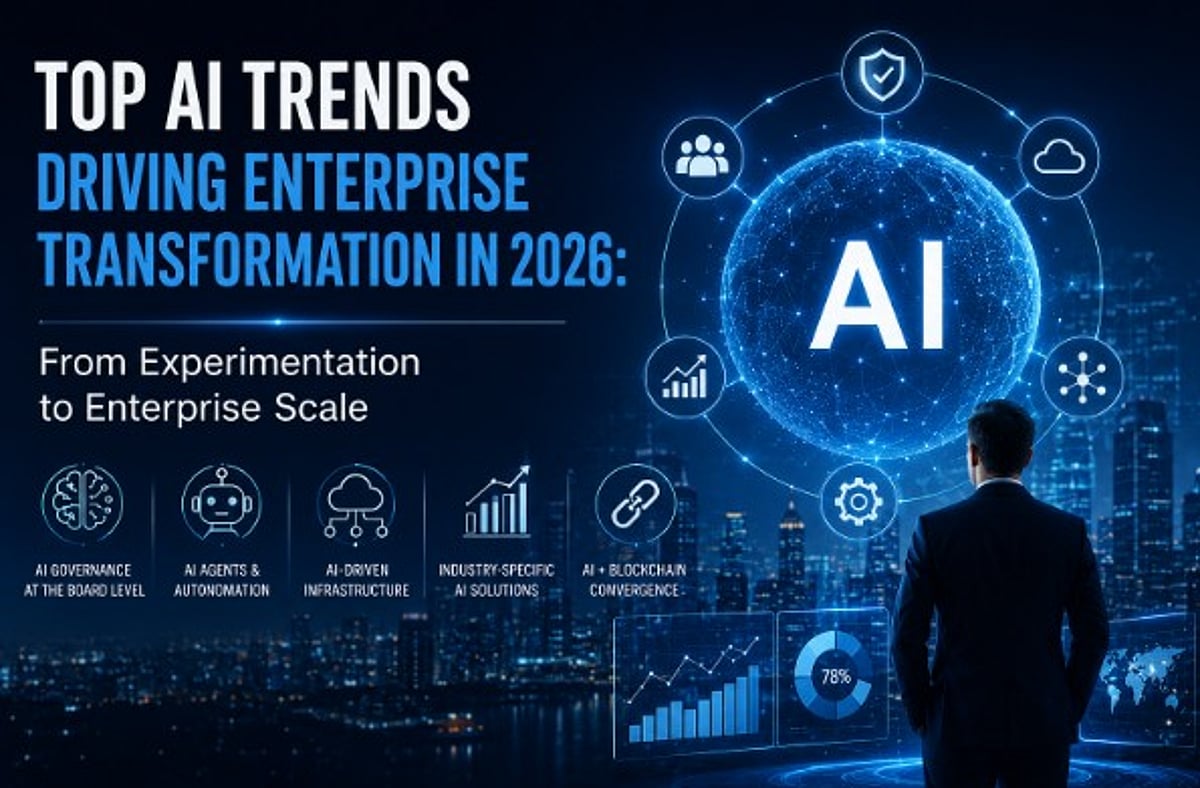
  • 7 AI Trends Reshaping Enterprise Strategy in 2026: From Pilots to Full-Scale Operations

    7 AI Trends Reshaping Enterprise Strategy in 2026: From Pilots to Full-Scale Operations

    Artificial Intelligence is entering a phase of enterprise adoption. Over the past few years, organizations have invested heavily in AI pilots, generative AI tools, and automation initiatives to explore how emerging technologies can improve business performance. While many of these projects demonstrated results, relatively few have delivered transformation at scale. As a result, the conversation surrounding AI is rapidly evolving from experimentation toward operationalization.

    According to McKinsey’s latest State of AI report, more than 70% of organizations have adopted AI in at least one business function. Gartner predicts that over 80% of enterprises will have used generative AI APIs or deployed generative AI-enabled applications by 2026. These figures indicate that AI adoption is no longer limited to innovators and early adopters. It is rapidly becoming a priority across industries.

    However, adoption alone does not guarantee business value. Many organizations continue to struggle with deployments, disconnected data environments, and unclear transformation strategies. The challenge facing enterprise leaders in 2026 is no longer whether AI works. The challenge is how to scale AI across the organization while maintaining governance, security, and measurable outcomes.

    The organizations that succeed in this phase of AI transformation will not necessarily be those with access to the most advanced models. Instead, they will be those aligning AI capabilities with business objectives, operational processes, and long-term transformation strategies.

    The Economic Opportunity Behind Enterprise AI

    The scale of AI’s potential is one of the primary reasons enterprises continue increasing investments despite ongoing implementation challenges. According to PwC’s Global AI Study, AI could contribute up to $15.7 trillion to the economy by 2030, making it one of the most transformative technologies of the modern era.

    What makes AI particularly powerful is its ability to generate value across multiple business functions simultaneously. Organizations are increasingly using AI to:

    • Improve operational efficiency and productivity
    • Enhance customer experiences through personalization
    • Accelerate product and service innovation
    • Strengthen decision-making capabilities
    • Identify new revenue opportunities

    Unlike previous waves of enterprise technology, AI is not confined to a single department. It has the potential to influence every aspect of business operations. This is why leading enterprises are shifting their focus from use cases toward enterprise-wide AI strategies.

    Trend #1: Enterprise AI Is Moving Beyond Pilot Projects

    The first phase of enterprise AI adoption was characterized by experimentation. Organizations launched customer service chatbots, automated document processing systems, predictive analytics platforms, and internal productivity assistants to explore AI’s capabilities. These initiatives often generated positive results but remained isolated within individual departments.

    Typical characteristics of AI initiatives between 2023 and 2024 included department-level deployments, limited integration with business operations, experimentation-focused objectives, unclear ROI measurement frameworks, and minimal governance oversight. As organizations move into 2026, priorities are changing significantly. Enterprise AI programs are increasingly characterized by organization-wide adoption strategies, cross-functional integration, outcome-driven implementation plans, governance and accountability frameworks, and executive-level sponsorship.

    This shift mirrors the evolution of cloud computing. Early cloud initiatives focused primarily on infrastructure optimization. Today, cloud serves as the foundation for digital business models. AI is following a similar trajectory. Business leaders are no longer asking whether AI can improve productivity. Instead, they are asking how AI can reshape operations, accelerate innovation, and create sustainable competitive advantages.

    Trend #2: AI Agents Will Become Operational Participants

    One of the most significant developments expected to shape enterprise transformation in 2026 is the emergence of AI agents. While most organizations are already familiar with AI copilots that assist employees with writing, coding, research, and knowledge retrieval, AI agents represent a more advanced stage of intelligent automation. Unlike copilots, AI agents are capable of performing tasks autonomously and coordinating activities across multiple systems.

    A procurement-focused AI agent, for example, may be able to monitor inventory levels in real time, analyze supplier performance data, forecast purchasing requirements, generate procurement recommendations, and initiate approval workflows automatically. Similarly, customer service agents can retrieve information from CRM systems, access knowledge repositories, respond to routine customer inquiries, and escalate complex issues when human intervention becomes necessary.

    According to Deloitte’s State of Generative AI in the Enterprise report, organizations are increasingly prioritizing AI initiatives that generate measurable operational outcomes rather than simply improving individual productivity. This trend reflects a broader shift in enterprise expectations: AI is no longer viewed solely as a productivity tool but as an operational capability capable of transforming how business processes are executed.

    Trend #3: AI Infrastructure Will Matter More Than AI Models

    Much of the public discussion surrounding AI has focused on models. Organizations frequently compare proprietary and open-source models, evaluate benchmark performance, and debate the advantages of different architectures. However, many enterprises are discovering that model selection is only a small part of the challenge. In practice, infrastructure is becoming more important than the model itself.

    Modern enterprise AI environments typically require data pipelines and integration layers, vector databases and knowledge repositories, governance and compliance frameworks, security and access management systems, model monitoring and observability tools, and MLOps and deployment pipelines. Without these foundational capabilities, even the most advanced AI models struggle to deliver sustainable business value.

    Many organizations encounter challenges when attempting to scale successful pilot projects. Data often resides across multiple disconnected systems, legacy applications create integration barriers, and security requirements introduce deployment constraints. These issues cannot be solved simply by choosing a different model. This reality explains why AI transformation is increasingly viewed as an architecture challenge rather than a model challenge. The organizations that invest in scalable AI infrastructure today will be better positioned to deploy new capabilities, integrate future technologies, and maintain long-term operational resilience.

    Trend #4: Decision Intelligence Will Replace Traditional Analytics

    For decades, business intelligence platforms have helped organizations understand historical performance. These systems provide visibility into trends, metrics, and operational outcomes, allowing leaders to evaluate what happened in the past. However, modern enterprises increasingly require systems that go beyond reporting.

    Decision intelligence is emerging as the next evolution of enterprise analytics by combining artificial intelligence, predictive modeling, business rules, and automation to support real-time decision-making. Rather than answering “What happened?”, decision intelligence focuses on “What is likely to happen next?” and “What should we do about it?”

    This capability is already creating value across multiple industries: retail (optimizing inventory allocation and pricing strategies), manufacturing (predicting equipment failures before they occur), financial services (identifying emerging risks and compliance concerns), logistics (dynamically adjusting operations based on demand patterns), and healthcare (improving resource planning and patient scheduling).

    A global logistics provider, for instance, handles thousands of shipments every day. Traditional analytics can only tell you that a delay happened after it occurred. Decision intelligence systems can predict disruptions before they happen, suggest ways to mitigate them, and automatically switch to a backup plan. This change helps organizations make decisions proactively rather than reacting to events that have already occurred.

    Trend #5: AI Governance Will Become a Board-Level Priority

    As AI is used more extensively in business functions, governance is becoming essential for long-term success. Early AI projects were often managed by innovation teams or technical departments. Now that AI is being used on a larger scale, executive leaders and corporate boards need to be involved. The reason is simple: AI is no longer for testing. It affects how customers interact with companies, financial decisions, compliance processes, and daily operations. As AI’s impact grows, so do the risks related to privacy, security, transparency, and accountability.

    According to IBM’s Global AI Adoption Index, trust is a barrier to using AI in businesses. Companies are realizing that successful AI implementation requires more than technical performance; it also needs confidence that AI systems work responsibly and transparently. Forward-looking companies are investing in governance frameworks that include ensuring AI system transparency, accountability, risk management, trust-building, policy establishment, oversight committees, and ethics guidelines.

    What makes governance particularly important in 2026 is the growing complexity of AI ecosystems. As organizations deploy multiple models, integrate external data sources, and introduce autonomous AI agents, maintaining visibility and control becomes increasingly challenging. Rather than viewing governance as a barrier to innovation, leading organizations treat it as a foundation for sustainable AI adoption.

    Trend #6: Industry-Specific AI Solutions Will Outperform Generic Deployments

    As companies become more adept at using AI, they are moving away from one-size-fits-all solutions and toward AI tailored to their specific industry. While the underlying AI technology remains important, the most effective solutions are those designed for a particular sector.

    Financial institutions focus heavily on risk analysis, fraud detection, regulatory compliance automation, and customer intelligence. Manufacturers prioritize predictive maintenance, quality assurance automation, and supply chain optimization. Healthcare organizations invest in clinical decision support systems, patient engagement platforms, and medical data analysis tools. The same pattern is emerging across retail, logistics, insurance, telecommunications, and energy.

    This shift reflects an important reality: AI generates the strongest business outcomes when it is closely aligned with operational objectives and industry-specific workflows. As a result, organizations are increasingly seeking partners capable of combining technical expertise with deep industry understanding.

    Trend #7: The Convergence of AI and Blockchain

    Although AI and blockchain are often discussed as separate technologies, their convergence is creating new opportunities for enterprise innovation. AI excels at generating intelligence from data; blockchain excels at establishing trust, transparency, and immutability.

    Together, these technologies can support a range of high-value enterprise applications, including supply chain transparency and traceability, decentralized digital identity systems, automated compliance reporting, secure data-sharing ecosystems, and smart contract optimization.

    Consider a global supply chain network involving manufacturers, logistics providers, distributors, and retailers. AI can analyze operational data to identify inefficiencies, forecast demand, and optimize inventory management. Blockchain can simultaneously provide an immutable record of transactions and product movements across the network. The combination creates a system that is both intelligent and trustworthy.

    As enterprises become increasingly dependent on automated decision-making, trust will become a critical competitive differentiator. This is one reason why many organizations are beginning to explore how AI and blockchain can work together as complementary technologies rather than independent initiatives.

    Why Many AI Initiatives Still Fail

    Despite significant investment and technological progress, many companies still struggle to make AI work across the entire organization. McKinsey research reveals a large gap between experimenting with AI and achieving true proficiency. One major reason is poor data quality. AI systems are only as good as the data they receive, and companies often underestimate the work required to clean and organize data before AI can deliver valuable insights.

    Another problem is the misconception that technology alone is the answer. Companies that start with AI as the solution rather than understanding the problem they need to solve often fail to demonstrate tangible results. Common barriers include disorganized data, unclear objectives, lack of executive support, organizational resistance, disconnected technology stacks, and insufficient governance.

    Perhaps the most overlooked factor is managing the human side of change. AI affects people as much as technology. Employees must learn new workflows, managers must make decisions differently, and companies must adapt their operating models. Without proper change management, even technically successful AI initiatives may not be adopted by the organization.

    Mini Case Study: From Forecasting to Autonomous Decision-Making

    A compelling example of AI evolution comes from the logistics industry. A few years ago, logistics companies used AI to predict delivery times. These systems helped with planning but were disconnected, requiring humans to interpret results and take action. Today, modern logistics systems can do much more: predict delivery times in real time, find optimal routes, handle problems automatically, track inventory, and allocate resources efficiently.

    Instead of merely warning about potential issues, these systems can suggest solutions and initiate processes autonomously. For instance, if a storm threatens a major shipping route, a traditional system would alert managers after delays begin. An AI-powered system, however, can predict the problem, recommend an alternative route, estimate cost implications, and activate a contingency plan before any disruption occurs.

    This example illustrates a broader trend across industries: the future of AI is not just about generating more information but about enabling better decisions and faster action.

    Conclusion: The Path to Enterprise AI Maturity

    The evolution of enterprise AI from 2024 to 2026 represents a fundamental shift in priorities. Organizations are moving away from isolated experiments and toward integrated, scalable, and governed AI systems. The seven trends outlined above—moving beyond pilots, adopting AI agents, prioritizing infrastructure, embracing decision intelligence, elevating governance, pursuing industry-specific solutions, and converging with blockchain—provide a roadmap for enterprises seeking to capture the full value of AI.

    The organizations that will thrive in this new era are those that treat AI not as a technology project but as a strategic transformation initiative. By aligning AI capabilities with business goals, investing in foundational infrastructure, and fostering a culture of responsible innovation, enterprises can turn AI from a promising experiment into a powerful engine for growth.

  • How AI-Powered Voice Workflows Are Reshaping Enterprise Communication

    How AI-Powered Voice Workflows Are Reshaping Enterprise Communication

    AI-powered voice workflows are transforming enterprise communication by improving consistency, scalability and operational efficiency. While empathy remains a human strength, businesses adopting AI with strong governance are expected to gain a long-term competitive advantage.

    Authored by Subhash Kalluri, Founder, FreJun

    Having spent close to a decade building telephony products, the questions enterprises asked were predictable for most of that time. Uptime. Integrations. Per-minute pricing. Somewhere in the last year, the first question changed. Now the person across the table wants to know whether a voice agent can handle their customers without embarrassing the brand. That single shift is enough to tell where this industry is going.

    So let’s be straight about both sides of this. Where voice agents are genuinely pulling ahead and where they still fall short. The second part matters more than most vendors are willing to say out loud.

    Why the shift is happening

    The first reason is accuracy. A trained voice agent gives the same correct answer at 2 in the afternoon and at 2 in the morning. It does not have a bad day, it does not forget the new refund policy that was rolled out last week, and it does not give a customer in Pune one version of the truth and a customer in Coimbatore another. For any enterprise that has struggled to keep a distributed support team consistent, this alone is a big deal.

    Then there is the question of improvement. When a human agent has a difficult call and finds a clever way to resolve it, that learning usually stays with that one person. Maybe it gets shared in a team huddle, maybe it does not. With a voice workflow, studying what worked and feeding it back into the system means every conversation after that benefits. The service quietly gets better month on month instead of resetting every time someone resigns.

    The factor that gets the most attention in the boardroom, though, is cost, and rightly so. Demand in most Indian businesses is not flat. It spikes during a festive sale, during a product launch, and during the days after a billing cycle. With human teams, enterprises are forced to either be overstaffed for the peak and carry that cost through the lean months or understaff and let customers wait. Voice workflows let capacity scale up and down with actual demand. The cost reflects what is used, not what might be needed.

    There is also a less glamorous benefit that operations leaders will immediately recognise. Human error in handoffs. So much breaks in the gap between Tier 1 and Tier 2, between the day shift and the night shift, and between the person who took the complaint and the person expected to close it. Information gets dropped, context gets lost, and the customer repeats themselves three times. A well-designed voice workflow carries the full context through every step, so far less falls through the cracks.

    And finally, ramp-up time. Anyone who has hired customer-facing executives in this country knows the real cost is not just the salary. It is the weeks of training, shadowing, and quality checks before that person is actually productive. A voice agent is ready on day one. When demand jumps suddenly, there is no waiting a month to be effective.

    Where it still falls short

    Now the honest part is that the industry is not there yet on the things that actually make customers loyal.

    The human-like experience is still missing. One can feel, within a few seconds, when they are not talking to a person, and that gap has not closed. Empathy is the bigger one. When a customer is angry or anxious or genuinely upset, an agent today cannot read that emotion and respond to it the way a good human executive can. And there is a kind of magic that happens when a frontline employee decides to go above and beyond, breaks a small rule to make things right, and takes ownership of a problem that was never theirs to own. That moment, the one a customer remembers and tells their friends about, cannot yet be manufactured by software.

    An honest acknowledgement of existing gaps is a strength rather than a weakness. By addressing these realities transparently, organisations can build deeper trust with customers and create stronger alignment within their teams.

    Where the industry is headed

    The honest read is that voice agents will take over the majority of conversations in the enterprise. Not all of them, and not overnight. Humans will stay very much in the loop. What seems likely is a gradual handover, where step by step the number of routine conversations handled by people comes down and voice workflows pick up more of the volume, freeing humans to handle the complex, emotional, high-value moments that actually need them.

    But this only works with proper checks and balances. Wherever these workflows touch enterprise data and decision-making, there has to be a clear, well-governed way to handle that data and those steps. The goal is that the technology improves overall performance without ever quietly damaging the outcomes the organisation cares about. Get that governance right, and voice workflows do not just cut cost. They make the whole operation better.

    That is the future this industry is building towards, and the enterprises that move thoughtfully, rather than either rushing in or sitting it out, are the ones who will come out ahead.

  • How Dataiku Is Transforming Enterprise AI with a Unified Platform for Everyday AI

    How Dataiku Is Transforming Enterprise AI with a Unified Platform for Everyday AI

    Dataiku is a global artificial intelligence and machine learning platform that empowers organizations to build, deploy, and manage data-driven applications at scale. The company is a recognized leader in enterprise AI solutions, predictive analytics, and automated machine learning. Its revenue is generated primarily through software subscriptions, supported by professional services, training programs, and advanced AI capabilities, and it maintains a strong international presence across North America, Europe, Asia-Pacific, Latin America, the Middle East, and Africa.

    About the Company

    Dataiku transforms raw data into actionable insights through a centralized platform designed for Everyday AI. The platform enables both coders and non-coders to build, deploy, and manage AI solutions that incorporate generative AI, machine learning, analytics, and comprehensive data preparation tools. Robust AI governance features ensure compliance and reduce risks across all projects, while unified AI engineering operations foster a collaborative ecosystem. Teams can create dashboards, interactive web apps, and data products, supporting self-service analytics and smarter, data-driven decision-making across organizations worldwide.

    Core Leadership Team

    Dataiku is guided by an experienced leadership team that drives its vision of democratizing AI. While specific names are not detailed in this profile, the leadership oversees strategy, product development, and global expansion.

    Revenue Streams

    The company generates revenue mainly through enterprise software subscriptions for its Data Science Studio (DSS) platform. Additional income comes from professional services, training programs, and premium AI capabilities. These solutions support use cases in generative AI, machine learning, analytics, financial forecasting, supply chain optimization, and customer engagement, helping global organizations scale their decision-making and operational efficiency.

    Client Segments

    • B2B Focus: Large enterprises, public sector organizations, financial institutions, retailers, manufacturers, healthcare providers, and technology companies.
    • Target Companies: Fortune 500 corporations, SMBs, government agencies, tech startups, and AI-driven businesses.

    Target Geography

    Dataiku maintains a global presence with operations in North America, Europe, Asia-Pacific, Latin America, the Middle East, and Africa.