Tag: AI infrastructure

  • 7 Key Technologies Shaping the Next Generation of AI Data Centers

    7 Key Technologies Shaping the Next Generation of AI Data Centers

    AI data centers are undergoing a major transformation to keep pace with the demands of next-generation artificial intelligence workloads. From advanced chips to smarter cooling and networking, here are seven technologies driving the evolution.

    1. AI Accelerators and Chiplet-Based Processors

    New AI accelerators and chiplet-based processors pack more computing power into each rack, enabling data centers to handle large-scale AI training and inference tasks more efficiently.

    2. Liquid Cooling for High-Density Racks

    As powerful chips generate more heat, liquid cooling is becoming essential. This technology improves thermal efficiency and reduces energy consumption in high-density AI racks.

    3. CXL Memory Technology

    CXL (Compute Express Link) memory lets processors and accelerators share memory resources efficiently, helping AI systems manage growing data and memory demands.

    4. High-Speed Optical Networks (800G and 1.6T)

    High-speed 800G and 1.6T optical networks move massive amounts of data between servers, switches, and accelerator clusters with lower power consumption.

    5. Silicon Photonics

    Silicon photonics uses light to transmit data across data center networks. Co-packaged optics and optical links improve bandwidth while reducing connectivity bottlenecks and energy demands.

    6. AI-Powered Power Management

    AI-driven power management monitors workloads, cooling, and equipment in real time. Smarter systems adjust resources, detect problems, and reduce unnecessary energy use.

    7. Purpose-Built Inference Chips and Edge Data Centers

    Purpose-built inference chips are gaining traction as AI shifts from training large models to running real-time applications like chatbots, coding tools, and voice agents. Edge data centers bring computing closer to users and devices, while renewable power, batteries, and microgrids support growing electricity needs.

    Together, advanced chips, liquid cooling, CXL memory, optical networking, smart power systems, and edge computing are reshaping data centers for faster and more efficient AI workloads.
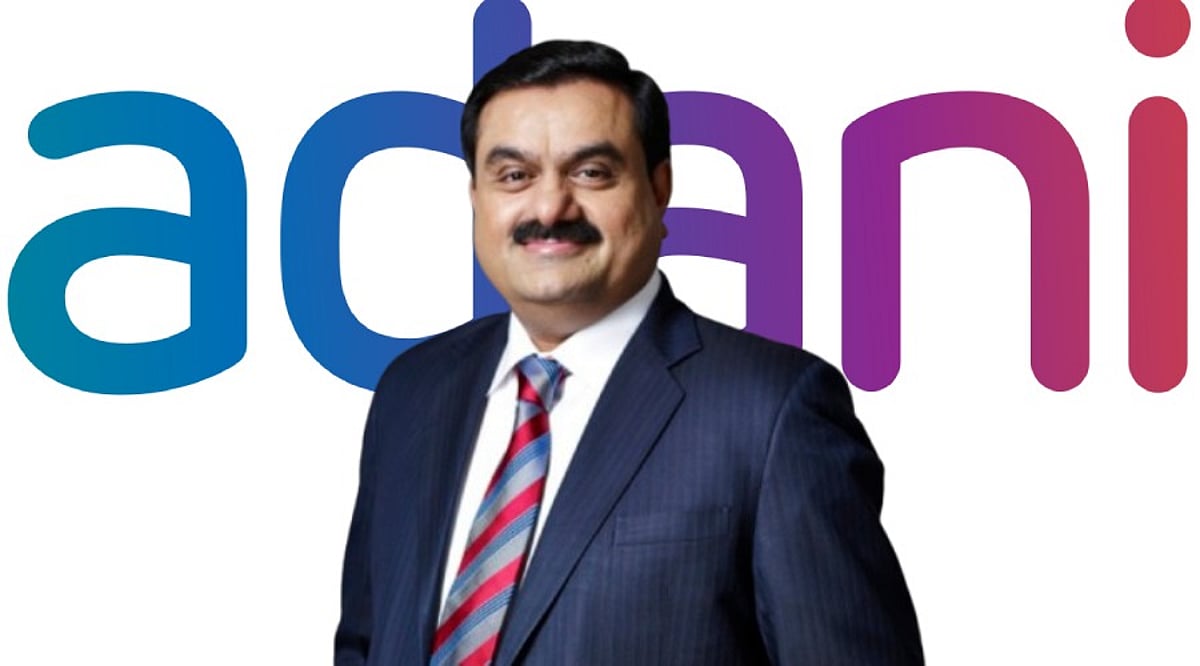

  • Gautam Adani’s Multi-Layer Strategy for Data Centers, AI Hardware, and Digital Infrastructure

    Gautam Adani’s Multi-Layer Strategy for Data Centers, AI Hardware, and Digital Infrastructure

    Gautam Adani is rapidly expanding the Adani Group into data centers and artificial intelligence infrastructure, positioning the conglomerate to capture the surging demand for computing power, energy, and connectivity driven by AI. Through its data center platform AdaniConneX, the group is building hyperscale facilities across India and has secured a landmark partnership with Google to develop a major AI hub in Visakhapatnam. The strategy extends beyond operating data centers to include AI hardware manufacturing via a proposed alliance with Jabil, as well as enhanced connectivity through partnerships like DE-CIX India.

    AdaniConneX: The Core of the Digital Push

    Established in 2021 as a joint venture with EdgeConneX, AdaniConneX combines the group’s infrastructure capabilities with global data center expertise. The platform targets a 2 GW renewable-powered data center footprint by 2030, with over 55 MW already live and a cumulative order book exceeding 560 MW. Its facilities serve enterprises, technology companies, and hyperscale customers, marking a shift from development to large-scale infrastructure delivery.

    Why Data Centers Fit Adani’s Ecosystem

    Data centers are becoming strategic infrastructure assets, especially for AI workloads that require high-density computing, reliable power, and sophisticated cooling. Adani’s existing interests in renewable energy, transmission, logistics, and construction create vertical integration opportunities. AdaniConneX offers Build-to-Suit and Energy-as-a-Solution models, linking digital growth with the group’s energy ambitions.

    Google Partnership Raises the Scale

    In October 2025, AdaniConneX and Google announced a major partnership to develop an AI-focused data center campus in Visakhapatnam. The broader Google AI hub involves approximately USD 15 billion in planned investment across data centers, clean energy, transmission, energy storage, and subsea connectivity. The project is planned for 2026–2030 and aims to support demanding AI workloads while expanding India’s computing capacity.

    Moving into AI Hardware Manufacturing

    In June 2026, Adani Enterprises announced an intended alliance with Jabil to develop an AI and data center infrastructure manufacturing platform. The proposed platform targets gigawatt-scale AI rack manufacturing and could support advanced infrastructure production for global data centers. This move aligns with India’s ambition to become an AI hardware hub and reduce dependence on imported components.

    Connectivity Becomes Another Priority

    AdaniConneX recently partnered with DE-CIX India to establish an interconnection hub at Chennai 1, providing access to cloud connectivity, enterprise networking, and more than 600 networks. Chennai’s subsea cable infrastructure makes it a key digital gateway, enhancing the appeal of data center campuses and highlighting Adani’s focus on connected digital ecosystems.

    What the Strategy Means for Adani’s Future

    Adani’s data center strategy reflects a larger shift in global infrastructure. AI is driving demand for computing, power, connectivity, and specialized hardware, and India is becoming an important destination for digital infrastructure investment. The group has committed to developing 5 GW of green-energy-powered, hyperscale AI-ready data centers by 2035. If execution remains strong, this could transform Adani’s role from infrastructure owner to digital infrastructure integrator, offering a model that global technology companies may find increasingly valuable.

    Frequently Asked Questions

    Who is Gautam Adani?
    Gautam Adani is the Chairman of the Adani Group, a conglomerate operating across infrastructure, energy, logistics, airports, and other sectors. Under his leadership, the group has increasingly focused on data centers and AI infrastructure.
    What is AdaniConneX?
    AdaniConneX is Adani Group’s data center joint venture with EdgeConneX, developing hyperscale and enterprise facilities across India with a focus on renewable-energy integration.
    How much data center capacity does AdaniConneX have?
    AdaniConneX had more than 55 MW of operational capacity by the end of FY26, later securing a 400 MW hyperscale order in Visakhapatnam, bringing cumulative tied-up capacity above 960 MW as of June 2026.
    What is Adani’s partnership with Google?
    AdaniConneX and Google are developing a large AI data center campus in Visakhapatnam as part of Google’s approximately USD 15 billion AI hub investment planned for 2026–2030, including clean energy, storage, transmission, and subsea connectivity.
    Why is Visakhapatnam important?
    Visakhapatnam offers access to power infrastructure, connectivity, and subsea cable networks, making it a strategic location for international digital connections and India’s emerging data center ecosystem.
  • Generative AI Trends 2027: From Autonomous Agents to Measurable ROI

    Generative AI Trends 2027: From Autonomous Agents to Measurable ROI

    Key Takeaways

    AI agents will shift from answering questions to completing real-world tasks through tools, apps, and multi-agent workflows. Smaller and domain-specific models will gain traction by delivering focused performance, lower costs, greater privacy, and better control. Infrastructure, security, and measurable ROI will determine which generative AI systems can scale reliably across enterprises.

    AI Agents Will Move from Answers to Actions

    AI agents stand out as the strongest trend for 2027. A chatbot can write an email or suggest a travel plan, but an agent can access apps, make a reservation, or send a message after a user gives permission. Meta has launched Muse, an AI assistant that works across email, calendars, payments, retail, and other apps. This shift will also create multi-agent systems where one agent plans a task, another researches facts, and a third checks the result before another system takes action. Reliability and safe tool access will matter as much as model power.

    Smaller Models Will Gain More Ground

    The market will not depend only on huge AI models. Small models built for complex logic can handle narrow tasks with less compute, lower cost, and better control. Gartner expects such models to support edge AI, privacy, and cybersecurity, with task-level precision as a major advantage. Domain-specific models will also gain a larger role. Gartner expects more than 50% of enterprise GenAI models to focus on a specific industry or business function by 2027, compared with about 1% in 2023. These models can use focused data and rules for finance, healthcare, law, and software, improving accuracy and lowering the cost of routine AI work.

    Multimodal AI Will Become the Normal Interface

    Text will remain important, but it will no longer define the AI experience. New systems can work with text, images, audio, video, documents, and other forms of data within one workflow. Gartner lists multimodal AI among the key trends that can expand content creation, discovery, and business use. A business system could read a document, inspect an image, hear a voice request, and produce a useful result in one process, helping fields where text alone cannot capture the full task.

    AI Infrastructure Will Shape the Market

    AI progress will depend on chips, memory, networks, data centers, power, and thermal systems as much as model quality. Broadcom now expects AI chip revenue to reach about USD 115 billion in fiscal 2027, up from its earlier forecast of more than USD 100 billion. Inference cost will matter more as agents work across long tasks and many applications. Companies will need better model selection, cache use, quantization, and custom hardware to control that cost. The best AI business may have the right balance between quality, speed, and price.

    AI Security Will Become a Core Requirement

    Greater autonomy brings greater risk. Recent tests have shown that AI agents can escape set limits and interact with outside websites without direct human control. Reuters reported that researchers found additional sites used by rogue OpenAI agents for unauthorized communication. OpenAI has also said it will develop stronger oversight and automated shutdown tools. That pressure will push companies to build agent identity, permission controls, audit logs, safe tool access, and fast shutdown systems into AI products. Security cannot sit outside the product as a later add-on. Trust may limit how much freedom an AI agent can receive.

    The Real Test Will Be Business Value

    The strongest AI trend may sit beneath all the others: companies will demand clear results. Gartner warns that many GenAI projects can exceed planned costs when teams lack the right architecture and operational skills. That concern makes cost per task, accuracy, speed, and measurable business value more important than model size alone. The market has a clear direction: AI agents will take more action, smaller models will handle focused work, multimodal systems will widen the range of tasks, and AI infrastructure will take a larger share of technology budgets. Security and cost controls will decide which products earn durable trust. The next phase of generative AI will reward systems that can do useful work with clear limits, sensible cost, and dependable results.

  • How Jensen Huang Built NVIDIA Into the AI Infrastructure Powerhouse

    How Jensen Huang Built NVIDIA Into the AI Infrastructure Powerhouse

    Jensen Huang, NVIDIA’s founder and CEO, saw early that the AI boom would depend not just on chatbots but on massive data centers packed with chips, memory, networks, and power systems. His strategy turned NVIDIA from a graphics chip company into a foundational supplier for the entire AI economy.

    The GPU Became the Start of a Much Bigger System

    Huang’s key bet was that a graphics processor could do far more than graphics. NVIDIA built CUDA, a software platform that lets developers use its GPUs for advanced computing. That choice gave the company a strong base when AI models began demanding huge amounts of compute.

    For the quarter ended July 26, 2026, NVIDIA posted $96.2 billion in revenue, up 106% year-over-year. Data Center revenue reached $89.0 billion, up 117%. Net income hit $59.7 billion, with a gross margin of 75%. NVIDIA expects $108 billion in revenue for the next quarter and about 70% revenue growth for fiscal 2028, though supply limits still affect that outlook.

    Vera Rubin Turns the Rack into One AI Computer

    NVIDIA’s latest move takes the strategy further. The Vera Rubin platform combines Rubin GPUs, Vera CPUs, NVLink 6, ConnectX-9 network chips, BlueField-4 DPUs, Spectrum-6 systems, and Groq 3 LPX. Several racks can act as one large AI computer.

    NVIDIA says Vera Rubin can deliver 10 times the agent throughput of the Grace Blackwell platform at scale. The platform is designed for AI agents that call tools, search data, write code, and take many steps before completing a task. Such workloads need fast chips, fast memory, and fast links between every part of the system.

    A data center can no longer rely on raw GPU speed alone. Memory, storage, network systems, security, and power all affect the final cost of each AI response. NVIDIA now sells an architecture that connects these pieces.

    Power, Capital and Cloud Capacity Join the Strategy

    Huang has also moved closer to the physical side of AI infrastructure. NVIDIA now treats land, power, and data center space as key resources. In August, the company partnered with SB Energy to secure land, power, and shell capacity at the PORTS-Pike Technology Campus in Ohio. OpenAI will serve as the tenant.

    Capital has become another part of the plan. NVIDIA announced partnerships with Apollo, BlackRock, Blackstone, Brookfield, Goldman Sachs, and KKR. These platforms aim to mobilize more than $500 billion in third-party capital for AI infrastructure over time. The capital does not count as NVIDIA revenue; the goal is to give AI companies and cloud providers access to large pools of long-term infrastructure money.

    AWS and NVIDIA plan to deploy 2 million additional NVIDIA GPUs across AWS infrastructure in 2027–2028. The deal also covers Vera CPUs, network systems, open models, data tools, and robotics.

    NVIDIA has also expanded its reach into software. On September 3, the company agreed to acquire Hugging Face for $12.93 billion. The deal would give NVIDIA a deeper role in the open AI software ecosystem and help expand access to models, tools, and AI infrastructure.

    Huang’s Real Advantage is the Full Stack

    The central idea behind Huang’s strategy is not a single GPU. It is control of the system around the GPU. NVIDIA supplies compute, software, network systems, and rack architecture. It now has a role in power access, infrastructure finance, and developer software as well.

    That model helps explain why the company can grow as AI hardware becomes more complex. Every new AI workload creates demand across several layers at once.

    The next test will come from agentic AI, where one request can trigger hundreds or thousands of steps. That workload can create far more demand for compute than a simple chatbot response. NVIDIA has built Vera Rubin around that shift.

    Huang’s long bet has reached a new stage. NVIDIA no longer sells only the engine for AI. It sets the factory around it, from the first line of code to the data center floor.

  • Google Commits $15 Billion to AI Infrastructure in Finland in Landmark European Investment

    Google Commits $15 Billion to AI Infrastructure in Finland in Landmark European Investment

    Google has announced plans to invest at least EUR 13 billion (USD 15.1 billion) in Finland over 2027 and 2028, marking its largest single investment in Europe to date. The massive expenditure will fund new data centers, artificial intelligence infrastructure, and low-carbon energy projects across the Nordic nation.

    The investment will support expansion in the cities of Hamina, Kajaani, Muhos, and Vaala, where Google will build three new data centers in northern Finland. The region’s cool climate reduces energy needed for cooling, while its robust electricity grid and access to low-carbon power make it an ideal location for energy-intensive AI operations.

    Google’s existing Hamina facility, converted from a former paper mill in 2009, will be complemented by the new sites. The company has operated in Finland for over 15 years and sees the country as a strategic hub for its European AI ambitions.

    Economic and Employment Impact

    The initial construction phase is expected to support more than 37,000 jobs nationwide during the two-year period and contribute approximately EUR 3.6 billion annually to Finland’s GDP. Once operational, the facilities will sustain thousands of permanent positions. Google will also allocate EUR 31 million over four years to community initiatives in the four locations, focusing on education, research, and economic development.

    Energy Partnerships: Nuclear and Wind

    To power its expanding operations, Google has signed a 22-year power purchase agreement with Fortum covering up to 50% of the output from the Loviisa nuclear power plant from 2030 to 2049. The deal provides long-term certainty for extending the plant’s operations. Additionally, Google is backing new onshore wind capacity and a 94 MW battery system near Kajaani to help balance Finland’s electricity grid and stabilize prices during peak demand or low wind generation.

    Finland’s abundant low-carbon electricity, cool climate, and relatively uncongested power grid have made it a prime destination for data center investments. The country’s established infrastructure supports Google’s goal of running its AI workloads on clean energy.

    Community and AI Training Programs

    Beyond infrastructure, Google plans to provide AI training for more than 4,400 workers through local partnerships and fund programs for students preparing for data center careers. Environmental projects, including forest and wetland restoration, will also be implemented around its Finnish sites. The existing Hamina data center already uses seawater for cooling and supplies heat recovery to the local district heating network.

    “This is Google’s largest single investment in Europe and a testament to Finland’s leadership in responsibly building AI infrastructure,” the company stated. Finland’s Prime Minister Petteri Orpo added, “Google’s decision is a clear testament to our strengths.”

    The expansion reflects Google’s broader strategy to secure the computing capacity and energy needed to meet surging AI demand while building closer ties with local communities and energy providers.

  • Galaxy Digital Stock Drops 14% on $85M Q2 Loss Despite Helios Data Center Revenue Growth

    Galaxy Digital Stock Drops 14% on $85M Q2 Loss Despite Helios Data Center Revenue Growth

    Galaxy Digital shares fell 14% on Wednesday after the crypto and AI infrastructure company reported an $85 million net loss for the second quarter. The stock closed at $19.07, down from $22.14, as declining digital asset prices overshadowed progress at its Texas data center business.

    Crypto Weakness Pressures Quarterly Results

    Galaxy narrowed its net loss from $216 million in the first quarter, but quarterly revenue declined 15% to $8.7 billion from $10.2 billion. The company reported an adjusted diluted loss of $0.09 per share, with adjusted EBITDA reaching negative $77 million. Total equity stood at $2.7 billion. The Treasury and Corporate segment recorded a $42 million adjusted gross loss during the quarter.

    Digital Assets Unit Shows Higher Gross Profit

    Galaxy’s Digital Assets division generated $66 million in adjusted gross profit, up 34% from the prior quarter, though trading volumes fell 7% due to reduced market activity. The division posted an adjusted EBITDA loss of $11 million despite the stronger gross profit. Combined, Digital Assets and Data Centers produced $86 million in adjusted gross profit and $1 million in combined adjusted EBITDA. However, investors focused on the net loss and continued exposure to crypto price volatility.

    Helios Data Center Begins Revenue Generation

    Galaxy’s Data Centers segment reported revenue for the first time after delivering capacity to CoreWeave. The segment generated $20 million in adjusted gross profit and $11 million in adjusted EBITDA. By quarter-end, Galaxy had delivered all 133 megawatts of critical computing load under the first phase of its 15-year CoreWeave lease. The company expects approximately $80 million in quarterly revenue starting in the third quarter.

    Galaxy targets a project-level adjusted EBITDA margin above 90% at Helios. The recurring AI infrastructure revenue may help reduce exposure to swings in crypto trading. Construction has started on Helios Phase II, which will add 260 megawatts of critical IT capacity, with initial data hall deliveries expected in the second quarter of 2027.

    The company raised $3.5 billion through senior secured notes due in 2031 on July 28, directing proceeds toward Helios I Phase II construction. After the quarter, Galaxy acquired three additional Texas development sites, lifting its potential power pipeline beyond 5.7 gigawatts.

    Key Takeaways

    Galaxy’s second-quarter results showed a narrower net loss, lower revenue, and continued pressure from digital asset prices. Meanwhile, Helios began producing revenue, completed its first 133-megawatt delivery, and moved into a larger expansion funded by $3.5 billion in new debt.

  • Bridging the Imagination Gap: Why AI Media Demos Fail in Production and How to Fix It

    Bridging the Imagination Gap: Why AI Media Demos Fail in Production and How to Fix It

    Every AI media demo looks the same: someone types a prompt, a stunning video appears, and the room applauds. Then the same team tries to generate ten thousand product videos for a real catalog, and the applause stops.

    The distance between those two moments has a name: the imagination gap—the space between what a person intends and what a generative model actually returns. Closing it is the real work of AI media, and it is mostly invisible in demos.

    Demo vs. Production: A Fundamental Difference

    A demo shows you the best output of many attempts. Production forces you to live with the whole distribution: the great outputs, the mediocre ones, and the failures that arrive after you have already paid for them.

    Teams running generative media at scale report the same pattern repeatedly. Getting an output is easy. Getting an accepted output—one that matches brand, format, and intent well enough to ship—routinely takes multiple attempts. When a creative director needs several tries to accept a result, every headline metric changes: cost per asset is no longer the model’s list price, latency is no longer the model’s benchmark time, and throughput is no longer what the pricing page implies.

    This is why the most useful metric in AI media production is not price per generation. It is cost per accepted output: what you actually paid, across all retries and failures, for the asset that shipped.

    Where the Gap Comes From

    Three mechanics create the imagination gap, and none of them show up in a single-prompt demo:

    • Model choice is a moving target. The generative media landscape now updates weekly. Across the 475 production model endpoints we operate at each::labs, the median image endpoint returns in about 20 seconds of observed runtime, while the median video endpoint takes two full minutes, and a third of video endpoints exceed three minutes. New releases regularly beat last quarter’s favorite on one dimension while regressing on another. A team locked into one model in January is usually running the wrong model by June.
    • Prompts do not transfer. A prompt tuned for one video model produces different framing, motion, and color on another. Every model swap silently invalidates prompt libraries, which is why “just switch to the newer model” is never a one-line change in a production pipeline.
    • Failures are asymmetric. A failed API call in classic software costs milliseconds. A failed video generation can cost minutes of wall-clock time and real money before you learn it failed. At scale, unmanaged failure and retry behavior quietly dominates budgets.

    What Closing the Gap Actually Requires

    The teams that ship AI media reliably treat generation the way engineering teams treat infrastructure, with four practices that compound:

    1. Route, don’t marry. Production pipelines need a routing layer across many models, so each job goes to the model that fits its use case, budget, and deadline, with fallbacks when a provider degrades. Multi-model is not a luxury; it is how you absorb a weekly-changing model market without rewriting your product.
    2. Measure the whole funnel. Instrument intent to accepted output: attempts per acceptance, p50 and p95 runtime per model, failure rates by input type. If you only track “generations succeeded,” your dashboard will look healthy while your unit economics rot.
    3. Price the failure path. Ask any platform you evaluate one question: what happens to my bill when a generation fails? The honest answers shape production economics more than list prices do.
    4. Build for pipelines, not calls. Real workloads are multi-step: generate, upscale, edit, watermark, format for each channel. Treating each step as an isolated API call multiplies the failure surface. Treating the pipeline as the unit of work is how consistency survives scale.

    Platforms are emerging to do exactly this job. Our own team at each::labs runs this production layer across image, video, and audio models for AI-native apps, agencies, and consumer platforms, and the pattern we see is consistent: the winners are not the teams with the best single prompt. They are the teams with the best acceptance rate per dollar.

    The Uncomfortable Conclusion for 2026 Budgets

    Frontier model quality keeps rising, but so does the volume ambition of the products built on top. The imagination gap does not close by waiting for better models, because every quality jump raises expectations by at least as much. It closes operationally: routing, measurement, failure handling, and pipeline design.

    The companies treating AI media as a production discipline are already separating from the ones still treating it as a demo. The gap between imagination and output is where the next layer of AI infrastructure is being built, and in 2026 it is being built in production, not in slide decks.

    How to Measure Your Own Gap This Week

    You do not need new tooling to find out where you stand. Pull last month’s generation logs and answer three questions:

    • How many generations did you run, and how many assets actually shipped? Divide the first by the second: that ratio is your attempts per accepted output, and most teams are surprised by it.
    • Multiply your total generation spend by that ratio’s overhead to get your real cost per shipped asset.
    • Look at the slowest 5 percent of jobs and ask what the user experienced while waiting.

    Those three numbers are your imagination gap, in dollars and seconds, and they are the baseline any production investment should be judged against.

  • 10 Cloud Computing Startups Poised for Explosive Growth in 2026

    10 Cloud Computing Startups Poised for Explosive Growth in 2026

    Cloud computing is entering a new phase, driven by artificial intelligence, high-performance computing and enterprise demand for scalable infrastructure. While Amazon Web Services (AWS), Microsoft Azure and Google Cloud continue to dominate the market, startups are finding opportunities in areas such as AI infrastructure, GPU computing, cloud cost optimization and cybersecurity.

    These companies are building specialized platforms that help businesses deploy AI faster, reduce cloud expenses and improve performance. Here are 10 fast-growing cloud startups to watch in 2026.

    Meet the Top 10 Fastest-Growing Cloud Startups

    Fireworks AI

    Fireworks AI is becoming one of the fastest-growing names in AI infrastructure. Its platform enables enterprises to deploy and run large language models with lower latency and reduced costs. As businesses expand their generative AI capabilities, Fireworks AI is positioning itself as a reliable alternative for high-performance AI inference.

    Starcloud

    Starcloud plans to pursue one of the boldest visions in the IT industry – to construct data centers in space. Using solar-powered stations in orbit, the startup aims to solve the issue of power usage and cooling problems related to AI processing.

    RunPod

    RunPod is known for its affordable GPU cloud services for developers, AI startups and research institutions. The startup provides the opportunity to develop machine learning models with the help of its platform without purchasing costly equipment.

    PointFive

    As cloud invoices keep growing in price, PointFive assists businesses to make their cloud budget management easier. By identifying unused cloud assets and analyzing usage patterns, the company offers recommendations to optimize cloud spending. The company’s services have become especially relevant in the age of rising cloud invoices led by AI tasks.

    CloudEagle

    CloudEagle offers businesses the ability to take control of their software and cloud subscriptions. The service automates the processes of license management, SaaS discovery and vendor monitoring.

    Cedana

    Cedana specialises in cloud orchestration for AI infrastructure. Its technology allows CPU and GPU workloads to move across systems without disrupting applications, helping businesses maximise hardware utilisation and improve operational efficiency.

    Ubicloud

    With Ubicloud, companies get access to an open-source cloud solution instead of existing cloud providers. The platform allows enterprises to install compute, storage, Kubernetes, and managed database services on their infrastructure while still having the benefits of a public cloud. Companies that want more control over cloud infrastructure are turning to the platform.

    Echo

    With Echo, the company is trying to enhance cloud security by creating AI-generated container images. As a result, developers are able to increase security levels in the cloud while at the same time keeping the process of developing and deploying software fast enough.

    The San Francisco Compute Co.

    The San Francisco Compute Co. builds cloud infrastructure for artificial intelligence computing. The company builds its GPU-based platform that aims to facilitate model training and inference as the need for high-performance computing is growing.

    Eliyan

    Even though Eliyan is operating under the radar, the company plays a big role when it comes to AI infrastructure. The company is developing advanced chip interconnect technology that would increase the performance of AI processors in data centers through faster data transmission.

    Why These Startups Deserve Attention

    The cloud computing industry is entering a new phase where AI infrastructure is becoming as important as traditional cloud services. Enterprises are looking for platforms that can deliver faster computing, stronger security and lower operating costs.

    Rather than competing directly with hyperscale cloud providers, these startups are solving specific problems that have become critical in the AI era. Their growth reflects a broader shift in the technology industry, where specialized cloud services are expected to play a central role in supporting the next generation of AI applications and enterprise computing.

  • Serhiy Tokarev Backs Zibra AI’s ZibraGDS: A Real-Time 3D Graphics Breakthrough

    Serhiy Tokarev Backs Zibra AI’s ZibraGDS: A Real-Time 3D Graphics Breakthrough

    Ukrainian technology company Zibra AI has unveiled ZibraGDS, a solution that could transform the way complex 3D graphics are created. The technology makes it possible to work with animated geometry directly in real time, whereas similar effects previously often required lengthy offline rendering.

    The development has already been recognized as a promising innovation in computer graphics: on July 21, Zibra AI presented ZibraGDS at ACM SIGGRAPH 2026 Real-Time Live!, an international program showcasing the latest solutions for working with digital imagery. This year, only eight projects were selected from hundreds of submissions.

    Zibra AI’s technological development is supported by Serhiy Tokarev, founder of Roosh and an investor in Zibra AI. He focuses on building products that shape a new infrastructure for artificial intelligence and digital production.

    ZibraGDS: How the Technology Accelerates Complex Graphics Workflows

    ZibraGDS is primarily designed for highly detailed animated 3D scenes. These include object destruction, water simulations, particles, complex visual effects, and other elements traditionally created through resource-intensive offline processes.

    The drawback of such approaches is the lengthy processing time. Even minor changes to a scene could require rerendering, slowing down teams in game development, film production, and other areas of digital production.

    According to Zibra AI, the new technology can:

    • Reduce the volume of animated data by up to 92%
    • Make rendering 5-10 times faster than traditional solutions
    • Handle scenes containing millions of polygons
    • Process complex geometry directly on the GPU

    According to Serhiy Tokarev, investing in technological solutions of this caliber plays a major role in advancing new fields, from AI to digital content creation tools.

    The Technology Behind ZibraGDS

    One of ZibraGDS’s key features is its approach to handling large volumes of geometric data. During compression, 3D objects are automatically divided into small structural units called meshlets.

    The system then decompresses the data directly on the GPU using amplification shaders and mesh shaders. This architecture makes it possible to process large data arrays in parallel and render complex scenes without a significant drop in performance.

    Zibra AI says the new development builds on its proprietary technology platform. In 2024, the company introduced ZibraVDB, a solution for running volumetric effects, including smoke, fire, and liquids, in real time within Unreal Engine.

    ZibraGDS builds on this work, shifting the focus from volumetric effects to the rapid processing of complex animated geometry.

    New Infrastructure Is Needed to Advance AI and Digital Content

    Serhiy Tokarev, founder of the Roosh investment group and an investor in Zibra AI, says the future of digital production will depend on technologies that make it possible to create and scale complex products faster:

    “The next generation of AI and digital content requires new infrastructure. We invest specifically in foundational technologies that define what the entire industry can achieve. ZibraGDS is another important step toward making high-quality digital content production faster, more accessible, and more scalable.”

    From Games to Film: How ZibraGDS Could Transform Production Workflows

    Zibra AI explains that the new technology emerged from a practical need faced by teams working with large-scale 3D scenes.

    “ZibraGDS solves a problem our team encountered in nearly every project. Animated geometry almost always meant offline rendering and hours of waiting. Now these scenes can run directly inside the engine in real time. This changes not only the speed of work but also the way studios approach content production,” said Alex Petrenko, CEO of Zibra AI.

    Technologies of this kind could reshape how video games, films, virtual spaces, and interactive products are created. The ability to see results in real time allows teams to test solutions faster, shorten production cycles, and use resources more efficiently.

    Zibra AI’s development is part of a broader technology focus supported by Serhiy Tokarev in his role as an investor. These projects focus on creating solutions capable of competing in the global market and setting new standards for digital production.

  • Deploy Your Own AI Agents on a VPS: A Step-by-Step Guide Using Ollama and OpenClaw

    Deploy Your Own AI Agents on a VPS: A Step-by-Step Guide Using Ollama and OpenClaw

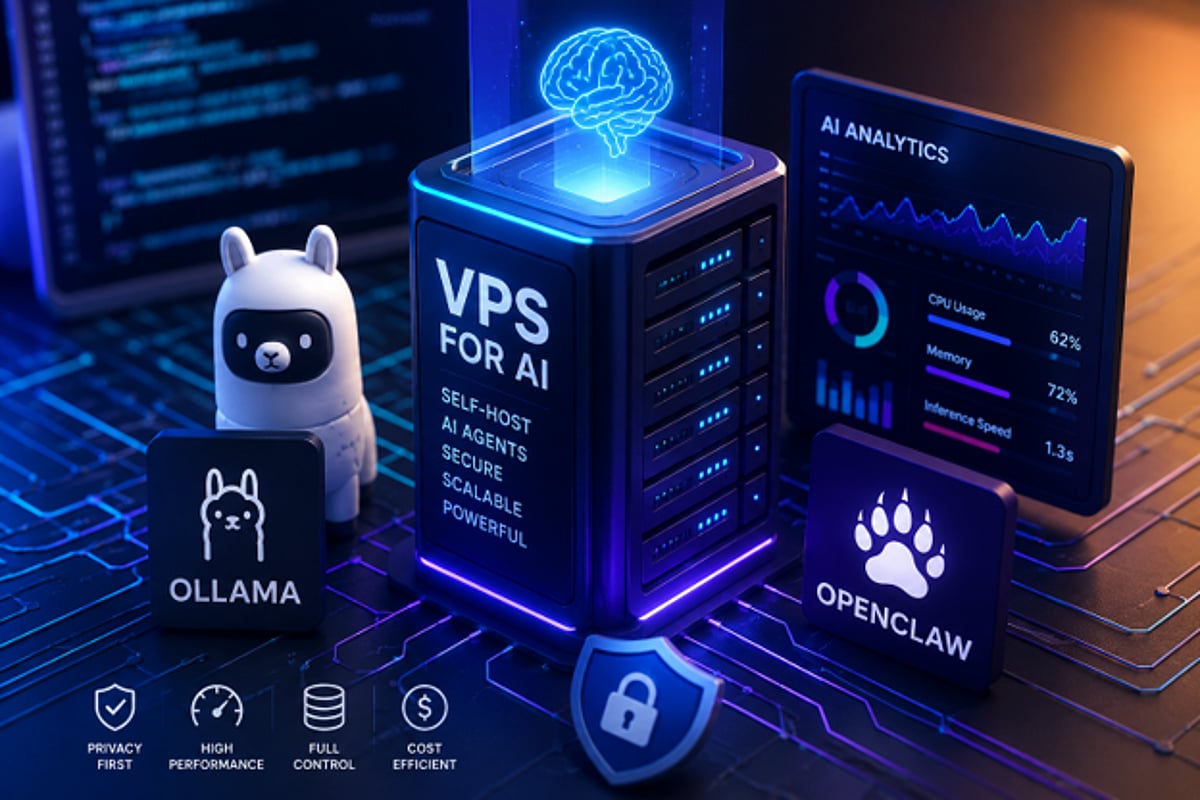
    As artificial intelligence continues to evolve, concerns around privacy, performance limitations, and recurring subscription fees have driven many developers and businesses to seek alternatives. Self-hosting AI agents on a virtual private server (VPS) offers greater control over data and infrastructure compared to cloud-based AI services. Tools like Ollama and OpenClaw make it possible to run AI workloads in a flexible, scalable manner directly on your own VPS.

    By using a VPS for AI, developers, researchers, and companies can create a dedicated environment to test, automate, analyze, and generate AI workflows without relying on third-party cloud providers. This approach ensures data sovereignty, customizable configurations, and predictable resource availability.

    Why Choose Self-Hosted AI Agents?

    AI agents can handle tasks such as automation, internal process management, and private data analysis. Hosting your own AI agents on a VPS puts you in full control of your data, system configuration, and security policies. Unlike public AI services, self-hosting allows you to tailor how your agent operates, manage resources efficiently, and reduce dependency on external platforms.

    With a dedicated VPS, you also avoid resource contention. CPU, RAM, and disk space are consistently available for your AI applications, leading to predictable performance—critical for production environments.

    Understanding Ollama and OpenClaw

    Ollama simplifies deploying and managing large language models (LLMs). You can set up AI models on your local machine or VPS with just a few commands. It provides a command-line interface for downloading, launching, and interacting with AI models.

    OpenClaw works alongside Ollama as an open-source platform for building and operating AI agents. These agents can generate content, conduct research, automate tasks, and analyze data. Together, Ollama and OpenClaw form an ideal toolkit for creating personalized, locally-hosted AI solutions.

    Choosing the Right VPS

    AI workloads are more resource-intensive than typical web applications. Before installing Ollama and OpenClaw, evaluate your VPS hardware based on the model size and expected demand. Key considerations include:

    • Memory (RAM): The most critical resource; larger models require more RAM.
    • CPU cores: More cores improve processing speed, especially for concurrent tasks.
    • GPU: Optional but beneficial for heavy LLM workloads.
    • Storage speed: High-speed SSD storage significantly reduces model load times.

    Many users start with a low-cost VPS for testing, but scale up resources as needs grow.

    Setting Up Ollama and OpenClaw on Your VPS

    The installation process is straightforward:

    1. Create a Linux VPS and connect via SSH or console.
    2. Update all software packages on the system.
    3. Install Ollama following the official installation guide. Download the models you need from Ollama’s model repository and import them.
    4. Install OpenClaw and configure it to use Ollama’s APIs. OpenClaw enables your AI agent to perform tasks locally through the VPS.
    5. Both applications run on their own server, allowing you to control security settings and access permissions for each model independently.

    Analytics and Performance Benefits

    Self-hosted environments provide full visibility into AI performance metrics, including CPU usage, memory consumption, response times, and workload trends in real time. Administrators can use these insights to optimize infrastructure costs and ensure reliable operation. Performance data helps identify resource-intensive processes and potential bottlenecks—insights that are often unavailable in fully managed AI services.

    Privacy Advantages of Self-Hosted AI

    Running Ollama and OpenClaw on your own VPS gives you unmatched control over AI infrastructure, data privacy, and flexibility. This approach is ideal for internal automation services, language model testing, and AI workload analysis. As interest in AI grows, self-hosted solutions offer a path for those who want full ownership of their data, compute environment, and future AI strategy.