
Tag: AI Strategy

  • 5 Proven Strategies for Embedding Ethics into AI Initiatives

    5 Proven Strategies for Embedding Ethics into AI Initiatives

    Artificial intelligence is advancing rapidly inside organizations, but ethical standards often struggle to keep up. Aligning AI initiatives with ethical principles requires more than good intentions—it demands concrete processes around fairness, accountability, and transparency. This article outlines five critical strategies that organizations are using in 2026 to ensure their AI systems operate ethically and responsibly.

    1. Build a Clear Governance Structure from the Start

    A formal governance framework gives ethical AI a permanent home within the company. Currently, 77% of organizations are developing such a program, making it a strategic priority. A strong structure assigns clear ownership, defines approval processes for new models, and establishes monitoring rules for live systems. Without this foundation, even well-meaning ethics efforts collapse when real problems emerge.

    2. Assign Accountability at the Leadership Level

    Ethics only stick when senior leaders are personally responsible. Adoption of Chief AI Officers has surged from 26% to 76% in one year, signaling that boards now demand a named executive who can explain AI decisions and take responsibility for failures. This shift also helps secure proper funding for ethics work, elevating it from a side project to a board-level priority.

    3. Make Bias and Fairness Testing a Continuous Process

    Bias can reappear as data evolves, so fairness testing must be ongoing. Organizations with clear ownership of responsible AI achieve higher maturity scores, according to McKinsey’s 2026 AI Trust Maturity Survey (average maturity rising to 2.3 from 2.0 in 2025). Regular testing, defined fairness metrics, and documented evidence catch issues before they affect users.

    4. Treat AI Incidents Like Any Other Business Risk

    AI-related incidents are skyrocketing. Stanford’s 2026 AI Index Report recorded 362 incidents in 2025, a 55% increase from 233 the year before. Implementing a proper incident response plan—including escalation paths, model rollback capabilities, and user notification processes—enables organizations to react quickly rather than scramble after damage is done.

    5. Invest in Ethics as a Business Decision, Not Just Compliance

    Ethical AI delivers tangible financial returns. IBM data shows companies spending more than 10% of their AI budget on ethics report roughly 30% higher operating profit growth, along with stronger customer satisfaction and higher internal AI adoption. This reframes ethics as a growth strategy rather than a cost, making it easier to secure ongoing budget and executive attention.

    Conclusion

    Aligning AI with ethical standards is no longer optional. Strong governance, real accountability, continuous bias testing, serious incident response, and genuine investment in ethics together provide a practical path forward. Organizations that adopt these strategies today are best positioned to build AI systems that earn and sustain user trust.
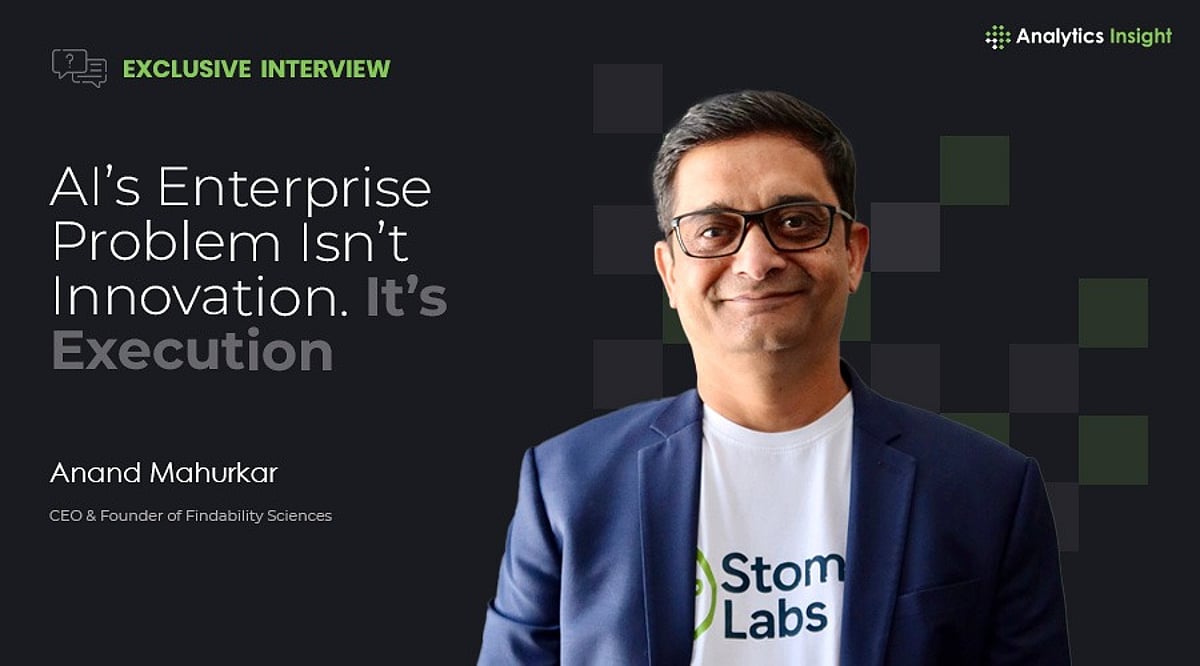

  • Why Enterprise AI Projects Fail: The Real Challenge Is Execution, Not Innovation

    Why Enterprise AI Projects Fail: The Real Challenge Is Execution, Not Innovation

    Enterprises are pouring billions into artificial intelligence, yet a staggering number of AI initiatives never graduate from pilot to production. According to Anand Mahurkar, CEO and Founder of Findability Sciences, the problem isn’t a lack of innovative technology—it’s a failure of execution. In this interview, Mahurkar explains why most AI projects stall, how to bridge the pilot-to-production gap, and why predictive and prescriptive AI deserve more attention in the shadow of generative AI hype.

    The Pilot-to-Production Gap: A Design Problem, Not a Technology Problem

    Mahurkar argues that the gap between a successful pilot and a live business system is fundamentally a design flaw. Most organizations build pilots to prove a model works in isolation, not to survive the pressures of a real profit-and-loss environment. He cites sobering statistics: Gartner predicts that by the end of 2025, at least 30% of generative AI projects will be abandoned after proof of concept due to poor data quality, unclear business value, or escalating costs. MIT’s Project NANDA goes further, finding that 95% of organizations deploying generative AI saw zero measurable return. “That’s not a model failing,” Mahurkar says. “That’s an organization that never defined what ‘working’ meant before it started building.”

    His solution is straightforward but demanding: pick a use case with a named P&L owner from day one, instrument the return before writing any code, and treat data readiness as a prerequisite—not an afterthought. At Findability Sciences, no pilot is greenlit unless there is a specific business metric it must move and an accountable person in the room.

    Turning AI into an Operating System, Not a Lab Experiment

    Findability Sciences helps industries from agriculture to financial services treat AI as an operating system for the business. Mahurkar highlights the AI Factory for Sugar, built with Grupo Pantaleon, and work with the Agricultural Development Trust in Baramati using Stoma Sense and Stoma Insight. These tools move mills and farms from reactive decision-making to predictive planning—yield forecasting, crop stress detection, harvest scheduling—all tied to metrics the CFO already tracks.

    The same architecture applies to manufacturing (predictive maintenance, quality drift detection), retail and QSR (Serva Insight for store-level operational intelligence), and financial services (risk scoring, fraud pattern detection). The common thread: start where data already lives, attach a hard number, and scale only once that number moves. “Deploy AI against the handful of decisions in a business that actually move revenue, cost, or risk, and ignore the rest until those are working,” Mahurkar advises.

    Don’t Overlook Predictive and Prescriptive AI

    While generative AI dominates headlines, Mahurkar warns that enterprises risk overlooking the quieter, more impactful work of predictive and prescriptive AI. Forecasting demand, optimizing supply chains, flagging machine failures before they happen—these are closer to where the balance sheet lives. A 2–3% accuracy improvement in high-stakes decisions compounds into real money faster than any chatbot conversation. “GenAI helps you communicate a decision well. Predictive and prescriptive AI help you make a better one in the first place,” he says. The most successful enterprises run both deliberately, against different problems, rather than picking a side.

    From Experiments to Enterprise-Wide Adoption: Practical Advice

    Mahurkar offers four unglamorous but effective steps for business leaders:

    • Consolidate. Pick three to five use cases with the clearest line to revenue or cost, and kill the rest. A portfolio of twenty pilots dilutes budget and attention.
    • Build the data foundation once, centrally. Findability’s ICUPP model—Infrastructure, Collect, Unify, Process, Present—ensures that every subsequent AI use case gets faster and cheaper to ship.
    • Put a single senior owner on AI outcomes, not a committee. Someone who reports a number, not a roadmap.
    • Hold every AI initiative to the same standard as any capital investment: a defined return, timeline, and owner.

    He notes that S&P Global research shows the share of enterprises abandoning most AI initiatives jumped from 17% in 2024 to 42% in 2025—a governance failure, not a technology failure.

    One Piece of Advice for CEOs

    Mahurkar’s final advice for CEOs planning a five-year AI strategy is philosophical: “Don’t let AI become another line item you manage. Let it become the way your company sees itself more clearly than it ever has before.” He urges leaders to ask themselves annually: if we saw our business with total clarity, what would we do differently—and are we brave enough to do it? The real promise of AI, he says, is not efficiency for its own sake, but the chance to run a business with friction and guesswork finally removed.

  • Ashutosh Kulkarni: Elastic CEO Driving Enterprise AI and Cybersecurity Innovation

    Ashutosh Kulkarni: Elastic CEO Driving Enterprise AI and Cybersecurity Innovation

    Ashutosh Kulkarni is a seasoned technology executive and strategic business leader, best known as the Chief Executive Officer of Elastic. He has made significant contributions to artificial intelligence, enterprise search, cybersecurity, and cloud technologies. Prior to becoming CEO, Kulkarni held senior management roles at McAfee, Akamai Technologies, Informatica, and Sun Microsystems.

    Early Life and Education

    Kulkarni developed an early passion for engineering and technological innovation. He earned a Bachelor of Engineering degree from the University of Mumbai and a Master of Science in Computer Engineering from The University of Texas at Austin. He also holds an MBA in Marketing & Finance from the University of California, Berkeley.

    Professional Career

    Ashutosh Kulkarni began his career at Sun Microsystems before moving to Informatica, where he spent a decade leading cloud product initiatives. He then joined Akamai Technologies and later McAfee, holding various leadership roles. In 2021, he became Elastic’s Chief Product Officer, and in 2022, he was appointed CEO.

    Business Intervention in AI

    Under Kulkarni’s leadership, Elastic is advancing enterprise AI through an intelligent ecosystem that combines generative AI, agentic capabilities, AI-powered search, observability, performance monitoring, and cybersecurity to deliver scalable, secure, and high-performance digital experiences.

    AI Ecosystem

    Elastic’s unified AI ecosystem leverages Elasticsearch with leading AI platforms to provide vector search, RAG, safe deployment, and cloud-native capabilities, enabling businesses to build efficient and intelligent AI applications.

    Agentic Observability

    Agentic AI improves observability through log analysis, event detection, and natural language investigations. AI-driven insights accelerate root cause analysis, helping teams detect and resolve issues faster.

    AI Performance Monitoring

    AI enhances observability with distributed tracing, automated diagnostics, and AI-based troubleshooting, aiding in problem detection and improving application reliability.

    Agentic Security

    AI-powered security systems strengthen cyber defense through intelligent threat detection, automated investigations, explainable AI reasoning, and rapid incident response, improving visibility and minimizing response times.

    AI-Powered XDR Platform

    The AI-based XDR platform integrates automation, continuous monitoring, and intelligent threat analysis to effectively detect, investigate, and mitigate cyber threats.

    AI Infrastructure Intelligence

    AI-driven infrastructure observability provides anomaly detection, predictive insights, automated remediation, and natural language processing, speeding root cause analysis and increasing system resilience while reducing downtime.

    Business Achievements

    Ashutosh Kulkarni has expanded Elastic’s capabilities in AI, enterprise search, observability, and cybersecurity through innovative products and acquisitions. He has built strategic relationships with top technology companies such as OpenAI and NVIDIA. His leadership has driven consistent revenue growth and widespread enterprise adoption of Elastic’s software.

    Controversies

    As of now, there are no known controversies surrounding Ashutosh Kulkarni. He is widely respected for his expertise in enterprise AI, cloud computing, search technology, and observability. His leadership and technical skills have earned him an excellent reputation in the technology sector.

  • 10 Supply Chain Priorities for AI-Driven Operations in 2027

    10 Supply Chain Priorities for AI-Driven Operations in 2027

    Supply chains are entering a new phase of AI adoption. Chief Supply Chain Officers (CSCOs) must now move beyond isolated pilots and build operating models designed for continuous AI-assisted decision-making. According to recent Gartner research, data readiness, legacy-system integration, talent, governance, and measurable value are critical foundations. Agentic AI and physical AI are also pushing supply chains toward greater autonomy.

    1. Build an AI-Ready Data Foundation

    AI-driven supply chains depend on accurate, accessible, and contextual data. Poor master data undermines forecasting, planning, and automation. CSCOs should audit critical datasets, assign clear ownership, and improve data quality across functions. A unified data foundation supports faster insights and more consistent decisions across the network.

    2. Integrate AI with Legacy Systems

    Replacing every legacy platform is neither practical nor necessary. Gartner reports that 56% of CSCOs identify integration with legacy systems as a major AI challenge. Leaders should create integration layers that connect existing systems with newer AI capabilities while gradually moving toward a more composable architecture.

    3. Scale Demand Forecasting and Predictive Planning

    Forecasting remains one of the clearest opportunities for supply chain AI. CSCOs should identify planning processes where AI can improve demand sensing, inventory decisions, and scenario analysis. Start with measurable use cases, establish baseline performance, and scale only when accuracy, speed, or service improvements are demonstrated.

    4. Prepare for Autonomous Decision-Making

    Agentic AI can move beyond generating recommendations to planning and executing actions. Gartner identifies agentic AI as a major supply chain technology trend, but stresses the need for guardrails around accountability and explainability. CSCOs should define which decisions AI can recommend, execute, or escalate.

    5. Strengthen AI Governance and Security

    As AI influences procurement, planning, and logistics, governance cannot be an afterthought. Establish policies covering data access, model monitoring, cybersecurity, explainability, and human escalation. Decision governance should make AI-enabled decisions auditable and accountable, especially when autonomous workflows affect customers or suppliers.

    6. Redesign Supply Chain Workflows Around AI

    Adding AI to inefficient processes can simply automate existing problems. Gartner recommends reimagining operating models rather than bolting AI onto traditional workflows. CSCOs should map end-to-end processes, identify unnecessary handoffs, and redesign decision flows around AI-assisted planning and execution.

    7. Upskill Planners and Build an AI-Ready Workforce

    Technology alone will not deliver an AI-driven supply chain. Gartner says 50% of CSCOs cite limited internal AI expertise as a major challenge, while demand for supply-chain roles requiring AI skills has risen sharply. Leaders should invest in AI literacy, digital skills, and redesigned roles rather than relying solely on external hiring.

    8. Improve Visibility and Supply Chain Resilience

    AI should help organizations detect disruptions earlier and respond faster. Connect supplier, inventory, manufacturing, logistics, and customer data to create greater end-to-end visibility. AI-enabled analysis can then help teams evaluate alternatives and respond to geopolitical, operational, or demand-related shocks.

    9. Create a Clear AI Investment and ROI Framework

    AI spending must translate into measurable business value. Gartner reports that 55% of CSCOs are unclear about the ROI of their AI investments. For every major initiative, define baseline metrics, target outcomes, adoption measures, and financial impact. Tie change-management resources to the initiatives with the strongest strategic value.

    10. Balance Human Judgment with AI

    The autonomous supply chain should not mean removing people from critical decisions. Human expertise remains essential for exceptions, strategic trade-offs, and accountability. CSCOs should establish clear decision rights that specify when AI acts independently, when employees approve recommendations, and when issues must be escalated.

    The goal for 2027 should not be maximum automation. It should be a supply chain that uses AI where it creates measurable value while maintaining resilience, governance, and human oversight. Leaders who combine strong data foundations with better workflows, skilled teams, and controlled autonomy will be better positioned to build an AI-driven supply chain that can adapt as technology and business conditions change.

  • India’s AI Ambitions Get a Boost: PM Modi Inaugurates Param Pragya Supercomputer at IIT Delhi

    India’s AI Ambitions Get a Boost: PM Modi Inaugurates Param Pragya Supercomputer at IIT Delhi

    Indian Prime Minister Narendra Modi inaugurated the ‘Param Pragya’ AI supercomputer at IIT Delhi during the institute’s 57th convocation ceremony, underscoring the government’s commitment to advancing national AI capabilities.

    The event, held at IIT Delhi’s Sonipat campus, saw PM Modi also present prestigious medals to graduating students, including the President’s Gold Medal and the Director’s Gold Medal. Harish Salve, Chairperson of IIT Delhi’s Board of Governors, and Institute Director Prof. Rangan Banerjee felicitated the Prime Minister and Union Minister Prahlad Joshi.

    PM Modi on Technology and Youth

    Addressing the graduating students, PM Modi described the convocation as marking the start of a new journey for the country’s talented youth. He noted that the world is advancing rapidly and technology is driving a shift in the global balance of power. “Unicorns, digital payments, and the fintech revolution have provided a platform for millions of the country’s youth to do something significant,” he said.

    Param Pragya: A Leap for AI Research

    The newly inaugurated Param Pragya facility is an AI-powered high-performance supercomputing center designed to strengthen IIT Delhi’s research in artificial intelligence, advanced computing, data science, and interdisciplinary fields. The launch comes at a time when AI and high-performance computing are becoming critical for innovation and technological development.

    Higher Education Expansion

    Union Minister Prahlad Joshi highlighted that enrollment in higher education has crossed 45 million students. Since 2014, the number of universities has increased by nearly 70 percent, with over 650 new universities, 14,000 new colleges, and 4,000 new Industrial Training Institutes established. He also noted that women now account for nearly 44 percent of enrollment in STEM disciplines, one of the highest proportions globally.

  • Suno’s New Copyright Measures: A Smart Move or Legal Damage Control?

    Suno’s New Copyright Measures: A Smart Move or Legal Damage Control?

    On August 6, 2026, Suno, the AI music generation platform valued at $5.4 billion following its June 2026 Series D, announced a set of new measures aimed at addressing copyright concerns. The company revealed plans to implement audio watermarking and fingerprinting technology, update its community guidelines, and introduce a new download policy to prevent the mass distribution of AI-generated songs on streaming services. This move comes as Suno faces multiple copyright lawsuits from major labels and artist bodies, including a recent ruling in Munich where the company was found liable for infringing German song copyrights.

    CEO Mikey Shulman outlined four operating principles in a blog post titled “How We’re Building the Future of Music Responsibly”: that great music is made by people, technology unlocks new creative possibilities, AI should encourage originality rather than imitation, and that more people making music should strengthen the wider ecosystem. The concrete changes include the rollout of watermarking and fingerprinting to identify Suno-generated tracks on streaming platforms, updated community guidelines with tiered enforcement (warnings, suspensions, bans, and referrals to authorities), and a download policy designed to prevent mass distribution of AI-generated songs on streaming services. The company also announced a partnership with lyrics provider Musixmatch to integrate its Sentinel copyright detection system.

    However, many questions remain unanswered. Suno has not confirmed which specific watermarking technology it will use, whether it will adopt an existing system like Google’s SynthID or build its own, and has not provided a specific rollout timeline beyond “coming weeks.” The company’s approach to transparency is also ambiguous: Shulman explained that the new tools give artists and platforms the choice to disclose AI origins but do not mandate it. Critics from the music industry note that these measures fail to address the core question of whether Suno’s training datasets included copyrighted material without authorization, which is the central allegation in the ongoing RIAA lawsuit.

    The situation has been further complicated by a hack of Suno’s source code in July, which reportedly revealed that the AI was trained by scraping music and lyrics from platforms such as YouTube Music and Genius. The music industry, including major labels like Sony and Universal, has been pursuing legal action against Suno for mass copyright infringement since 2024. Many experts believe that while Suno’s new transparency tools are a step in the right direction for industry cooperation, they are insufficient to satisfy the music industry’s demand for answers regarding training data.

  • Wharton’s AI for Business Specialization: Master AI Strategy Without Coding

    Wharton’s AI for Business Specialization: Master AI Strategy Without Coding

    The AI for Business Specialization from the University of Pennsylvania’s Wharton School is designed for working professionals who want a practical, business-first understanding of artificial intelligence—no coding background required. Delivered through Coursera, this four-course program covers machine learning fundamentals, big data, AI ethics, and real-world applications in marketing, human resources, and operations. It’s tailored for managers and leaders who need to make informed decisions about AI adoption rather than build models themselves.

    What You’ll Learn

    • Core concepts of AI, machine learning, and big data—and how they apply to business decision-making.
    • Real-world AI applications in marketing, customer personalization, and the customer journey.
    • How to apply AI and analytics to people management and HR, including responsible algorithm use.
    • AI ethics, risk management, and governance frameworks for responsible deployment.
    • Insights from industry leaders on how AI and big data are transforming business operations.

    Flexible and Accessible

    The specialization is fully online and self-paced, making it easy to fit around a full-time job. Most learners complete all four courses in about six months with roughly two hours of study per week, though some finish sooner. Instead of a flat course fee, the program is available through a Coursera subscription, which keeps costs significantly lower than typical bootcamps or degree programs. A 7-day free trial is available, and learners can audit the lectures at no cost before committing.

    Curriculum Highlights

    • AI Fundamentals: Key concepts in AI and machine learning, plus tools that lower the barrier to enterprise adoption.
    • AI Applications in Marketing: Using data analytics and personalization to enhance the customer journey.
    • People Analytics and AI: Applying machine learning to HR while maintaining fairness and minimizing bias.
    • AI Strategy and Governance: Building responsible governance frameworks and developing organization-wide AI strategies.

    Who Should Enroll

    No prior AI, machine learning, or programming experience is required. The program is best suited for professionals working in marketing, HR, finance, or operations who want to confidently speak the language of AI. A general comfort with business concepts and data-driven decision-making is helpful, and enrollment is open through Coursera with no formal application process.

    Why It Stands Out

    This program leverages Wharton’s academic reputation and is taught by Wharton faculty, including Professors Kartik Hosanagar and Kevin Werbach, who bring research and industry advisory experience into the coursework. Unlike many technical AI courses, this specialization is built for business decision-makers, not engineers, using case studies from marketing, HR, and finance. Graduates receive a shareable University of Pennsylvania certificate that can be added to a resume or LinkedIn profile, although the credential does not carry university credit.

    Final Thoughts

    For professionals who want to understand what AI can realistically do for their organization without diving into technical details, the AI for Business Specialization is a strong choice. With Wharton’s backing and a curriculum focused on practical business use cases, it gives managers and leaders the vocabulary and judgment to guide AI strategy, collaborate with data teams, and evaluate AI initiatives with confidence.

  • Wharton’s AI for Business Specialization: Build Strategic Skills Without Coding

    Wharton’s AI for Business Specialization: Build Strategic Skills Without Coding

    The AI for Business Specialization from the University of Pennsylvania’s Wharton School gives working professionals a business-first way to understand artificial intelligence, without needing a coding background. Delivered on Coursera, the four-course program walks learners through machine learning basics, big data, AI ethics, and how companies actually put these tools to work in marketing, HR, and operations. It’s built for managers and leaders who need to make smart calls about AI adoption rather than build the models themselves.

    What You’ll Learn in This Program?

    The course offers:

    • Understand the fundamentals of artificial intelligence, machine learning, and big data, and how they connect to business decision-making.
    • Explore how companies deploy AI in marketing, customer personalization, and the broader customer journey.
    • Apply AI and analytics to people management and HR functions, including fair and responsible use of algorithms.
    • Examine the ethics and risks of AI, and learn to design governance frameworks for responsible deployment.
    • Hear from industry leaders on how AI and big data are reshaping business operations across sectors.

    Accessibility and Value

    The specialization is fully online and self-paced, so professionals can fit it around a full-time job. Most learners complete the four courses in roughly six months at about two hours of study a week, though some finish faster. It’s offered through a Coursera subscription rather than a flat course fee, which keeps the cost well below a typical bootcamp or degree program, and comes with a 7-day free trial along with the option to audit lectures at no charge before committing. No programming experience is required, which makes it a practical entry point for non-technical professionals such as marketers, HR leads, and finance or operations managers who want to speak the language of AI.

    Comprehensive Curriculum

    • AI Fundamentals: Core concepts in artificial intelligence, machine learning, and the tools that lower the barrier to AI adoption in the enterprise.
    • AI Applications in Marketing: Using data analytics and personalization to strengthen the customer journey and lifecycle.
    • People Analytics and AI: Applying machine learning to HR functions while keeping fairness and bias in check.
    • AI Strategy and Governance: Designing responsible governance frameworks and building an organization-wide AI strategy.

    Eligibility Criteria

    • No prior AI, machine learning, or programming experience is required.
    • Best suited for working professionals in marketing, HR, finance, or operations roles.
    • A general comfort with business concepts and data-driven decision-making is helpful.
    • Open enrollment through Coursera, with no formal application process.

    What Makes This Program Stand Out?

    This program carries the weight of the Wharton name and is taught by a group of Wharton faculty, including Professor Kartik Hosanagar and Professor Kevin Werbach, who bring real research and industry advisory experience into the material. Unlike many technical AI courses, it’s built specifically for business decision-makers rather than engineers, with case studies drawn from marketing, HR, and finance. Learners come away with a shareable University of Pennsylvania certificate they can add to a resume or LinkedIn profile, even though the credential doesn’t carry university credit.

    Final Thoughts

    The AI for Business Specialization is a solid fit for professionals who want to understand what AI can realistically do for their organization without getting lost in the technical weeds. Backed by Wharton’s academic reputation and built around real business use cases, it gives managers and leaders the vocabulary and judgment to guide AI strategy, work alongside data teams, and evaluate AI initiatives with more confidence.

  • The COO’s Playbook for Autonomous Operations With AI Agents

    The COO’s Playbook for Autonomous Operations With AI Agents

    Chief Operating Officers have long been responsible for keeping enterprise operations efficient. Today, that mandate is shifting. As AI agents—software systems that can process information, make decisions, and execute actions—become more capable, COOs are moving beyond managing workflows and starting to re-engineer them from the ground up.

    Traditional automation tools followed fixed instructions. AI agents, by contrast, analyze data, decide what to do next, and complete tasks across multiple enterprise systems with minimal human involvement. The result is a transition from using AI to assist employees to using AI as an active participant in daily operations.

    From Automation to Autonomous Workflows

    Consider a supply chain process. An AI agent can monitor inventory levels, forecast demand, detect shortages, place orders, and notify managers only when approval is required. Instead of automating isolated steps, AI agents connect different business processes into a single, continuous stream.

    Where Companies Are Deploying AI Agents

    Organizations are already applying AI agents in areas where manual work slows decision-making:

    • Supply chain: AI agents track stock levels, predict demand, flag supplier risks, and recommend purchases, helping teams respond to disruptions faster and avoid inventory shortages.
    • Finance: Finance teams use AI agents for invoice processing, account reconciliation, anomaly detection, and report generation, reducing manual steps while maintaining control.
    • Customer service: AI agents handle routine inquiries, categorize requests, and route complex cases to human agents, freeing teams to focus on higher-value interactions.
    • IT operations: Technology teams use AI agents to monitor networks, identify potential failures, diagnose root causes, and in some cases take preventive action before outages affect customers.

    The COO’s Priorities Are Evolving

    As AI becomes embedded in daily operations, the COO role is expanding beyond efficiency. The new priority is building an operating model where humans and AI work together effectively. That requires investments in high-quality data, governance, cybersecurity, and employee training—not just AI deployment.

    COOs are increasingly asking not which tasks can be automated, but which business processes can run autonomously with sufficient human control. This is as much an organizational change as a technical one. Applying AI to existing processes in isolation often delivers limited value.

    Building Autonomous Operations

    Most organizations are taking a phased approach rather than trying to automate everything at once. The first step is identifying repetitive, high-volume workflows with clear business value. Next, companies improve data quality, develop governance policies, and define where human intervention is required.

    Interoperability is another critical issue. AI agents need to work within enterprise applications, cloud platforms, and corporate databases—not in standalone systems. Companies that treat AI as an enterprise-wide strategy are more likely to succeed than those that deploy it in departmental silos.

    Why This Matters

    Enterprise operations are undergoing a fundamental shift. The question for COOs is no longer whether to use AI, but how. Organizations that combine autonomous processes with strong governance, reliable data, and human oversight will be better positioned to improve efficiency and adapt quickly to changing market demands.

    The Challenges Ahead

    The move toward autonomous operations also brings risks. Many companies still struggle with poor data quality, outdated IT infrastructure, and siloed enterprise architecture, all of which can undermine even the most sophisticated AI agents.

    Governance is a growing concern, especially when AI systems make financial or customer-related decisions. Companies need transparent methods for explaining AI-driven decisions. Without them, AI can add new problems instead of solving existing ones.

    Key Questions COOs Are Asking About AI Agents

    • What are AI agents? AI agents are intelligent software systems that analyze data, make decisions, and execute multi-step tasks with minimal human intervention.
    • How do AI agents help COOs? They automate routine workflows, improve operational efficiency, support faster decision-making, and free COOs to focus on strategic priorities.
    • Which departments benefit most? Supply chain, finance, customer service, procurement, and IT operations are among the earliest and largest adopters.
    • Can AI agents replace employees? No. They handle repetitive tasks while humans oversee critical decisions, governance, compliance, and complex problem-solving.
    • What is the biggest adoption challenge? Ensuring high-quality data, strong governance, cybersecurity, and seamless integration with existing enterprise systems.
  • Stanford Online’s Applied Enterprise AI Course: Strategies for Real-World Impact at Scale

    Stanford Online’s Applied Enterprise AI Course: Strategies for Real-World Impact at Scale

    Course Overview

    Stanford University’s Continuing Studies program offers Applied Enterprise AI: Making An Impact At Scale, an online course designed for professionals seeking practical AI deployment knowledge. The curriculum emphasizes scaling AI initiatives, aligning them with corporate objectives, and governing production-grade AI solutions—all without requiring deep coding skills. Real-world enterprise case studies provide actionable insights into current AI technologies and organizational change management.

    What You’ll Learn

    • Enterprise AI strategies for scalable business transformation
    • Large Language Models (LLMs) and their enterprise applications
    • Multi-Agent Systems for intelligent workflow automation
    • Vector databases and the Model Context Protocol fundamentals
    • AI governance, ethical deployment, and human-in-the-loop design

    Accessibility and Value

    Fully online and globally accessible, this course focuses on implementation strategies rather than programming. Learners explore practical business cases—such as customer service and sales forecasting—to understand how enterprises adopt and govern AI effectively.

    Comprehensive Curriculum

    • Enterprise AI: Strategies for identifying, evaluating, and scaling AI initiatives
    • Large Language Models: Enterprise use cases for modern generative AI technologies
    • Multi-Agent Systems: Collaborative AI systems designed for business automation
    • AI Governance: Responsible AI deployment, risk management, and ethical decision-making
    • Enterprise Transformation: Organizational change, workforce evolution, and AI adoption at scale

    Eligibility Criteria

    Ideal for business professionals, tech professionals, decision-makers, and anyone involved in AI implementation. No programming background is required.

    What Makes This Program Stand Out

    Rather than focusing on software engineering, the course emphasizes practical enterprise adoption—guiding learners through AI pilots, projects, and the transition from experimentation to production. Topics include LLMs, Multi-Agent Systems, vector databases, and the Model Context Protocol, all illustrated through business cases related to AI governance and implementation.

    Final Thoughts

    Stanford Online’s Applied Enterprise AI: Driving Real-World Impact at Scale provides a solid foundation for professionals aiming to master enterprise AI implementation. With a focus on large language models, multi-agent systems, and business transformation, participants gain the strategic knowledge needed to drive successful AI deployments.