Tag: AI Strategy

  • Why Microsoft’s AI Strategy Is Drawing Investors Back: Key Drivers Explained

    Why Microsoft’s AI Strategy Is Drawing Investors Back: Key Drivers Explained

    Microsoft’s aggressive artificial intelligence strategy is once again capturing investor attention, with the company demonstrating consistent revenue growth and expanding its AI ecosystem. Here are the primary factors fueling this momentum.

    Azure AI Infrastructure

    Microsoft is investing heavily in AI data centers and advanced chips, significantly expanding Azure’s computing capacity for enterprise AI workloads across the globe. This infrastructure underpins the company’s ability to serve large-scale AI deployments.

    Microsoft 365 Copilot

    The growing adoption of Microsoft 365 Copilot among enterprises is generating recurring subscription revenue while boosting workplace productivity across industries. As more organizations integrate AI into their daily workflows, this tool becomes a key revenue driver.

    Azure Cloud Growth

    Strong performance in Azure cloud services remains closely tied to increasing AI demand. Businesses are flocking to the platform to build and deploy generative AI applications, further accelerating cloud revenue.

    OpenAI Partnership

    Microsoft’s continued collaboration with OpenAI strengthens its AI ecosystem through advanced models, robust cloud infrastructure, and enterprise-ready AI solutions. This partnership gives Microsoft a competitive edge in delivering cutting-edge AI capabilities.

    Enterprise AI Adoption

    Organizations are increasingly relying on Microsoft’s AI-powered software, cloud services, and security tools to accelerate digital transformation and automation initiatives. The company’s comprehensive suite addresses the growing need for intelligent business solutions.

    AI Monetization Strategy

    Microsoft is successfully converting its AI innovations into commercial revenue through premium software subscriptions, cloud services, and enterprise AI offerings. This disciplined approach ensures that research advances translate directly into financial results.

    Security and AI Integration

    AI-powered cybersecurity solutions enhance Microsoft’s value proposition by helping businesses detect threats, automate responses, and strengthen digital resilience. Security remains a top priority for enterprises, and Microsoft’s AI integration here is a key differentiator.

    Developer Ecosystem

    GitHub, Azure AI tools, and integrated development platforms encourage developers to build scalable AI applications within Microsoft’s ecosystem. This fosters a vibrant community and locks in long-term platform loyalty.

    Investor Confidence

    Consistent earnings, expanding AI revenues, disciplined spending, and a long-term innovation roadmap continue reinforcing Microsoft’s position as a preferred technology investment. The company’s ability to execute on its AI strategy keeps investors optimistic.

  • Anthropic Hires Investor Relations Director at $600K Salary as IPO Nears

    Anthropic Hires Investor Relations Director at $600K Salary as IPO Nears

    Anthropic, the artificial intelligence company behind Claude, is strengthening its preparations for a public stock market listing by hiring a senior investor relations executive. The role, Director of Investor Relations, comes with a base salary ranging from $425,000 to $600,000 per year, according to a job listing reviewed by the Times of India.

    The new director will be responsible for shaping how Anthropic communicates its growth story to Wall Street. Key duties include building the company’s investment narrative, meeting with institutional investors, and serving as a liaison between company leadership and the financial community. The hire will also track AI industry trends and explain how major business decisions could impact Anthropic’s stock and long-term growth prospects.

    The position reports to Kenneth Dorell, who joined Anthropic in June as Head of Investor Relations after previously leading investor relations at Meta. The role opened after the company’s earlier investor relations lead departed earlier this year.

    Anthropic has experienced rapid growth over the past year. Enterprise adoption of tools like Claude Code has pushed annualized revenue to $47 billion as of May, making it one of OpenAI’s most formidable competitors. However, the company must convince public investors that its high valuation is justified given the enormous costs of training advanced AI models. As a public benefit corporation, Anthropic also faces the challenge of balancing investor returns with its commitment to building AI safely.

    The job listing underscores the growing importance of investor communication for AI companies approaching public markets. Firms like Anthropic now need to articulate not only their technological capabilities but also their governance and long-term strategy to a broader investor base as competition in the AI sector intensifies.

  • How Agentic AI Transforms Customer Loyalty: Amresh Acharya on Proactive, Personalized Engagement

    How Agentic AI Transforms Customer Loyalty: Amresh Acharya on Proactive, Personalized Engagement

    Agentic AI is reshaping customer loyalty by enabling businesses to deliver personalized, proactive, and scalable experiences. Instead of focusing only on rewards, brands now build lasting relationships through intelligent, data-driven customer engagement.

    In today’s episode of the Analytics Insight podcast, host Priya Dialani interviews Amresh Acharya, MD & CEO of Loyalty Rewardz, about how Agentic AI is revolutionizing customer engagement and loyalty. The episode features the evolving trend of companies going beyond conventional reward systems to engage customers using artificial intelligence solutions.

    Amresh provides information on how AI, machine learning, and data science can be used together to improve customer relationships and balance automation with human touch. He also sheds light on the importance of embracing responsible AI, customer data unification, and enterprise-level personalization to grow one’s business in the future. Here are the excerpts from the interview.

    What is Agentic AI and how does it benefit the customer experience?

    Unlike traditional AI, agentic AI does not simply answer customer queries. It understands context, predicts the customer’s future needs, and recommends services accordingly. Agentic AI will help brands provide more engaging experiences which do not come across as transactional.

    What does customer loyalty look like in the age of AI?

    The concept of loyalty has changed. Now customers expect to be understood by brands, remembered by them, and get customized services. Using artificial intelligence allows brands to develop relationships that motivate consumer loyalty.

    Is AI enough for a good customer experience?

    To some extent, AI-powered customer service can easily handle frequent queries that require quick answers. However, there are occasions when customers need help that cannot be provided by a machine and requires human assistance.

    Why is data critical to the success of AI-driven loyalty programs?

    AI performance is dependent upon the data it gets. Correct and correlated data about the customer helps firms understand their behaviors and preferences and personalize for them. Fragmented data prevents the AI from making any relevant suggestions for its customers.

    What do companies need to do before implementing Agentic AI?

    AI implementation starts with good data management, goal setting, and process design. Companies need to begin addressing customer challenges, have appropriate AI governance, and retain human involvement in critical decision-making processes.

  • Key Executive AI Skills That Future Business Leaders Must Master

    Key Executive AI Skills That Future Business Leaders Must Master

    Why Executive AI Skills Are Now Essential

    Artificial intelligence is no longer confined to IT departments—it has become a boardroom priority. As businesses integrate AI into strategy, operations, customer experience, and growth, the skill set required from executives is rapidly evolving. Tomorrow’s leaders will be measured not only by financial acumen but also by their ability to leverage AI for innovation and manage technological change effectively.

    Strategic Thinking with AI

    The most effective executives view AI as a strategic growth tool, not just a software product. This involves identifying high-value use cases, aligning AI initiatives with organizational goals, prioritizing investments for maximum ROI, and ensuring that technology delivers a sustainable competitive advantage rather than becoming a costly experiment.

    AI Literacy

    Executives don’t need to code neural networks, but they must understand key AI concepts such as generative AI, predictive analytics, automation, and model limitations. This awareness enables them to ask better questions and make more informed decisions, even without deep technical expertise.

    Making Decisions with AI

    Many companies now use AI to analyze data for strategic decisions. Combining analytical insights with industry experience helps executives spot opportunities, anticipate customer needs, optimize pricing, and improve operational efficiency.

    Ethical AI Governance

    While AI offers tremendous opportunities, it also raises issues around privacy, security, bias, intellectual property, and regulation. Future leaders must develop governance frameworks that ensure ethical application of AI, building trust and minimizing risk.

    Humans and AI Working Together

    AI will not replace humans; the future workplace depends on collaboration. Leaders should redesign workflows so that AI handles routine tasks while humans focus on innovation, creativity, and relationship-building.

    Change Management with AI

    Most technology failures stem not from the technology itself but from resistance to change. Executives must clearly communicate the purpose of AI, address employee concerns, implement reskilling programs, and foster an experimental culture.

    AI Communication Skills

    An executive’s ability to articulate the benefits of AI—both inside and outside the organization—is as critical as their strategic knowledge. Clear communication builds buy-in and drives adoption.

    Continuous AI Learning

    AI evolves faster than most business technologies. Future-proof executives must stay updated on the latest advancements and adapt their strategies to leverage emerging opportunities.

    Business Benefits at a Glance

    • Informed decision-making
    • Improved business efficiency
    • Effective risk management
    • Enhanced innovation
    • Sustainable competitive advantage

    Bottom Line

    Being knowledgeable about AI alone is no longer sufficient for leadership. AI is becoming an integral part of executive capability. Those who combine business vision with AI expertise and a commitment to continuous learning will be best prepared for the future.

    FAQs

    1. Why should executives learn AI skills?
      Executives with AI skills make informed decisions, improve business efficiency, manage risks effectively, and drive innovation across their organizations successfully.
    2. Do business leaders need technical AI expertise?
      No. Executives need AI literacy, strategic understanding, and decision-making capabilities rather than deep programming or machine learning expertise.
    3. What is the most important executive AI skill?
      AI strategic thinking is crucial because it aligns technology investments with business objectives, ensuring measurable value and sustainable competitive advantage.
    4. How does AI improve executive decision-making?
      AI analyzes vast datasets, identifies trends, predicts outcomes, and provides actionable insights, enabling executives to make faster, smarter business decisions.
    5. Why is responsible AI governance important for businesses?
      Responsible AI governance minimizes bias, protects data privacy, ensures regulatory compliance, builds customer trust, and safeguards organizational reputation and growth.
  • Infosys Q1 Net Profit Rises 12%, Appoints Ashiss Kumar Dash as Next CEO

    Infosys Q1 Net Profit Rises 12%, Appoints Ashiss Kumar Dash as Next CEO

    Infosys reported a strong start to fiscal year 2027, posting a 12.2% increase in net profit to Rs 7,769 crore for the June quarter. Revenue also grew 14% to Rs 48,211 crore, driven primarily by growth in the life sciences and financial services sectors, as well as steady performance in the US and Europe.

    Alongside the financial results, the company announced the appointment of Ashiss Kumar Dash as CEO designate. He will assume the roles of Managing Director and CEO on April 1, 2027, succeeding Salil Parekh after his second term concludes.

    Infosys also revised its FY27 revenue growth guidance downward, now expecting growth of 1.5% to 3%, as global clients remain cautious with technology spending.

    Ashiss Kumar Dash, a 30-year veteran of Infosys, currently leads several global business units. The board highlighted his extensive experience in technology, business operations, and customer management as key to driving the company’s next phase of growth.

    “Technology is entering a new era, with AI fundamentally reshaping how businesses operate and create value,” Dash said following the announcement. He emphasized Infosys’s strong AI strategy, skilled workforce, and trusted client relationships as foundations for future success.

    Salil Parekh noted that the company’s AI platform, Infosys Topaz, continues to win large client deals. Infosys secured $3.6 billion worth of large contracts during the quarter, indicating steady demand despite cautious spending. The company plans to continue investing in AI skills and digital services to support long-term growth.

  • Infosys Stock Dips After Narrowed Revenue Guidance Despite Strong Q1 Performance

    Infosys Stock Dips After Narrowed Revenue Guidance Despite Strong Q1 Performance

    Infosys shares slipped to Rs. 1,027.9 on July 24, 2026, after the IT major narrowed its FY27 revenue guidance despite posting strong first-quarter earnings. The company also announced salary hikes, plans to hire 20,000 freshers, and reaffirmed its AI-led growth strategy, but investors remained cautious about the trimmed upper end of the annual revenue forecast.

    Revenue Guidance Overshadows Solid Results

    According to TradingView, Infosys shares traded at Rs. 1,027.9, down 1.86%, with an intraday high of Rs. 1,042.6 and a low of Rs. 1,013.9. The stock decline reflects a broader concern in the IT sector: healthy execution alone may not be enough if enterprise technology spending remains cautious. The company’s FY27 revenue growth forecast on a constant currency basis narrowed from 1.5%–3.5% to 1.5%–3.0%. While the change appears small, analysts attribute it to ongoing uncertainty in global tech spending, with companies delaying discretionary investments and focusing on critical digital projects.

    Operational Resilience Despite Cautious Outlook

    Infosys reported strong financial performance for Q1. Revenue reached Rs. 48,211 crore, marking approximately 14% growth, while net income rose to Rs. 7,769 crore, driven by strong client accounts and demand for digital services. The company secured large deal wins worth about $3.6 billion, a significant portion from new business, indicating that enterprises are still committing to long-term digital transformations despite near-term caution. Additionally, Infosys expanded its AI product portfolio, fueled by increasing enterprise adoption of generative AI.

    Hiring and Salary Hikes Signal Long-Term Confidence

    Despite uneven global demand, Infosys continues to invest in its workforce. The company confirmed that annual salary hikes will begin rolling out from October, with senior employees receiving increments in January. It also reaffirmed plans to recruit nearly 20,000 fresh graduates during FY27. Rather than slowing hiring, Infosys is building capabilities in high-growth areas like artificial intelligence, cloud computing, cybersecurity, and digital engineering, signaling management’s expectation that technology spending will improve over the medium term.

    Leadership Transition and AI Strategy

    Infosys appointed Ashiss Kumar Dash as the future CEO, with the transition scheduled for April 2027. This planned leadership change is expected to ensure continuity and maintain client trust during a period of industry upheaval driven by AI. The company’s AI and automation services, including generative AI, intelligent automation, cloud migration, and digital consulting, are expected to drive higher-value deals as enterprises move from proof-of-concept to large-scale deployment. However, the pace of monetization will depend on the recovery of IT budgets.

    Market Outlook

    Infosys Q1 performance reflects the evolving priorities of the global IT services industry. While profitability, strong deal wins, continued hiring, and AI investment demonstrate resilience, the reduced revenue outlook highlights that client spending remains prudent. Investors should monitor whether enterprise technology budgets recover in coming quarters and whether AI-driven initiatives begin to contribute meaningfully to revenue. Until then, Infosys appears operationally sound but operates in an environment where expectations are as critical as execution.

  • How Predictive AI Can Reduce Healthcare Costs and Improve Patient Care: Expert Insights from Sachin Bajpai

    How Predictive AI Can Reduce Healthcare Costs and Improve Patient Care: Expert Insights from Sachin Bajpai

    Healthcare systems around the world are increasingly turning to artificial intelligence to improve patient outcomes and reduce costs. During the recent AI Impact Summit in New Delhi, India’s Ministry of Health and Family Welfare unveiled a national strategy to deploy AI in medicine “that works for every patient, in every region, regardless of income, language, or geography.” To understand how these technologies can make healthcare more accessible and affordable, we spoke with Sachin Bajpai, an experienced healthcare AI leader who has worked with major medical organizations through companies including PwC, Deloitte, and CitiusTech.

    Bajpai believes that one of the biggest opportunities for AI lies in early intervention. “AI systems can analyze medical and behavioral patterns early, allowing healthcare providers to identify high-risk patients before their conditions become critical or require expensive emergency and intensive care,” he explains.

    One example of this approach is a predictive AI system Bajpai developed while at PwC, a global professional services firm operating in more than 150 countries. The model focused on elderly patients covered by U.S. government-sponsored insurance programs and identified those at risk of requiring costly skilled nursing facility care—one of the most expensive forms of long-term treatment. During a six-month pilot involving over 300,000 patients, the system identified around 20,000 high-risk cases and reduced medical spending by nearly $10 million. The program later expanded across 21 U.S. states.

    Bajpai’s approach is especially valuable in countries with large populations and overstretched healthcare systems, such as India. “The earlier healthcare providers can identify risk, the more effectively they can intervene,” he says.

    Beyond prediction, AI can fundamentally change how healthcare systems manage resources. “Having spent many years in India, I know hospitals and doctors often work under enormous pressure because of the sheer number of patients they see every day,” Bajpai notes. “AI can reduce some of that operational burden, improve coordination, and give medical professionals more time to focus on patient care.”

    Much of Bajpai’s work has focused on solving large-scale operational challenges. Before joining PwC, he led the development of a cloud-based clinical reporting platform at CitiusTech, a global healthcare technology company. The solution earned certification from the National Committee for Quality Assurance (NCQA), allowing healthcare providers to use it for official quality reporting in the U.S. healthcare system. Within two years, the product expanded to a portfolio of 15 customers.

    At PwC, where he now serves as Managing Director leading healthcare AI and data transformation, Bajpai has helped expand the company’s healthcare AI operations tenfold across the U.S., India, China, Poland, and Mexico. During his tenure, PwC’s healthcare AI solutions received major industry recognition, including Microsoft Partner of the Year awards.

    Still, Bajpai emphasizes that technology alone is not enough. “For AI to work effectively in medicine, both doctors and patients need to trust the systems they use,” he explains. Building that trust requires transparency, regulatory compliance, data security, and a clear understanding of how AI-generated recommendations are produced and validated in clinical settings.

    As AI adoption accelerates, experienced specialists like Bajpai play a crucial role in evaluating medical technology systems and advising healthcare clients and startup founders on technical strategy, scalability, and long-term performance. His cross-regional experience has given him a close view of how differently medical environments operate. “Healthcare systems in India operate across different languages, regions, and levels of infrastructure,” he says. “Developers need to train AI models on diverse and representative data so the systems can work reliably at scale.”

    Despite these challenges, Bajpai believes India is well-positioned to become a major market for practical healthcare AI solutions, thanks to its strong engineering talent and rapidly growing digital infrastructure.

  • Bank of America Appoints Digital Assets and AI Heads to Drive Global Markets Strategy

    Bank of America Appoints Digital Assets and AI Heads to Drive Global Markets Strategy

    Bank of America has appointed separate executives to lead its digital assets and artificial intelligence programs as it expands both technologies across its global markets business. The bank named Sonali Theisen head of its global digital assets platform and appointed Kevin Milsom head of AI transformation, according to internal memos reported by Reuters and Bloomberg.

    The appointments place blockchain infrastructure and AI integration under dedicated leadership as major banks expand tokenization, custody, settlement, trading, and market operations.

    Digital Assets Platform Gains Dedicated Leadership

    Theisen will oversee the design, development, governance, and expansion of Bank of America’s global digital assets platform. She will also retain her existing responsibilities. She currently leads electronic trading and strategic investments within the bank’s fixed income, currencies, and commodities division.

    Theisen will work with Adam Dixon, who remains responsible for the bank’s digital asset transformation strategy. His remit covers tokenized deposits, stablecoins, digital collateral, crypto settlement, and custody. Meanwhile, Milsom will lead efforts to integrate artificial intelligence across global markets. The bank aims to apply AI to trading, risk management, and operational processes.

    Could the next phase of digital finance develop quietly inside major banks instead of through separate crypto businesses?

    Wall Street Expands Digital Asset Leadership

    The appointments follow a wider shift across Wall Street, where financial institutions are moving blockchain projects into core business functions. Earlier this month, Vanguard began recruiting its first digital assets head to develop a cryptocurrency strategy for wealth management clients.

    Morgan Stanley has also expanded its digital asset strategy after advancing spot Bitcoin and Solana exchange-traded fund initiatives. Beyond banking, companies are exploring how AI can support digital asset trading, tokenization, custody, and financial market analysis.

    A Polygon Labs team member said on X that Bank of America’s platform would span stablecoins, tokenized deposits, custody, and crypto settlement. The post referred to internal memos reported on July 17. The memos gave Theisen an added mandate and named Milsom head of platforms AI transformation.

    Stablecoin Claims Require Added Context

    The appointments arrived as Bitcoin traded near $65,000 on July 20, more than $50,000 below its level one year earlier. Separate social media posts linked the staffing changes to a claim that $6 trillion in bank deposits could move into stablecoins.

    Bank of America Chief Executive Brian Moynihan made a related comment during the bank’s fourth-quarter earnings call on January 14. Moynihan said deposits could migrate if stablecoins could pay interest. The GENIUS Act does not permit interest payments on stablecoins.

    The estimate also predates the July appointments. An April 2025 Treasury Borrowing Advisory Committee presentation placed potentially exposed transactional deposits at about $6.6 trillion.

    Bank of America’s new leadership structure brings digital assets and artificial intelligence into its core global markets strategy. The appointments support wider use of stablecoins, tokenization, custody, crypto settlement, and AI tools as major financial institutions modernize their market infrastructure.

  • How CEOs Can Master Strategic Planning in the Age of AI

    How CEOs Can Master Strategic Planning in the Age of AI

    Corporate strategy has rarely stayed still for long, and the current business cycle belongs to artificial intelligence. AI is reshaping how budgets are allocated, how boards weigh risk, and how leadership teams justify their decisions. Few CEOs today can separate strategic planning from questions about AI governance and readiness.

    What makes this moment unique is the mismatch between spending and sentiment among top executives. CEO confidence in revenue prospects has slipped to its lowest point in five years, as leaders navigate uneven AI returns alongside geopolitical and cyber risks. Companies keep raising AI budgets even as the executives approving them grow noticeably more cautious about near-term payoff.

    Confidence Gaps Are Widening

    Strategic planning now stretches well beyond quarterly revenue targets and competitive positioning. It includes technology governance, workforce readiness, and infrastructure decisions inside one connected roadmap. Only three in ten CEOs report confidence in revenue growth over the coming year, down sharply from 38% last year. Playbooks built during calmer economic periods often fail to hold up against today’s faster, less predictable market swings.

    Boards and CEOs Remain Misaligned

    A global survey of 625 CEOs and board members found that 35% of CEOs feel their boards overestimate what AI can genuinely replace. Friction between leadership teams and governance layers routinely stalls decisions that competitors are already acting on. Board composition has quietly become part of this planning conversation. Directors without deep technical grounding sometimes push for faster AI rollouts, underestimating what operational readiness truly demands.

    Accountability Has Become Central

    Seventy-eight percent of executives admit they lack confidence in passing an independent AI governance audit within 90 days. A strategy missing clear accountability invites lasting reputational damage long before regulators get involved.

    How CEOs Can Build AI-Driven Business Strategies

    Spending Alone Does Not Guarantee Results

    A resilient AI strategy demands far more than rolling out new software across every department. Leaders need to connect data quality, talent planning, and measurable outcomes from the very first planning session. More than 80% of multinational leaders expect higher AI spending this year, and nearly 90% are raising budgets for emerging agentic capabilities. Bigger budgets rarely produce clarity on their own, especially without a framework guiding where that money actually goes.

    Depth of Adoption Outperforms Speed

    Firms scaling AI across several business functions consistently pull ahead of companies testing one isolated pilot at a time. Deployment leaders scaling AI across at least two categories redesign workflows more often—49% versus 32% among firms still piloting. The lesson here has little to do with how quickly a company adopts new tools. It has everything to do with whether existing workflows get rebuilt around what those tools can actually deliver.

    Best Strategic Planning Techniques for CEOs

    A handful of practices consistently separate CEOs building lasting AI strategies from those chasing short-lived headlines. Consider the following priorities before committing further budget toward any large-scale rollout:

    • Treat AI governance as a board-level responsibility rather than a technical afterthought.
    • Concentrate budgets on high-return use cases instead of broad, unfocused rollouts.
    • Pair every major technology investment with structured workforce upskilling programs.
    • Set measurable accountability checkpoints before scaling any AI initiative further.
    • Revisit strategic assumptions each quarter, since conditions now shift faster than before.

    Governance and Growth Have to Move Together

    Heavy AI investment without matching governance tends to produce strategies that crumble under scrutiny. CEOs pairing genuine ambition with structured accountability end up with plans that survive both market pressure and boardroom skepticism.

    Final Words

    Strategic planning in the AI era rewards CEOs who balance genuine ambition with disciplined execution rather than reactive spending. Confidence has declined across many boardrooms, yet companies pairing investment with strong governance keep outperforming hesitant competitors. The path forward favors leaders willing to treat AI as a core strategic function, not a scattered collection of experiments. CEOs committing to measurable accountability today are quietly building the foundation for steady, durable growth ahead.

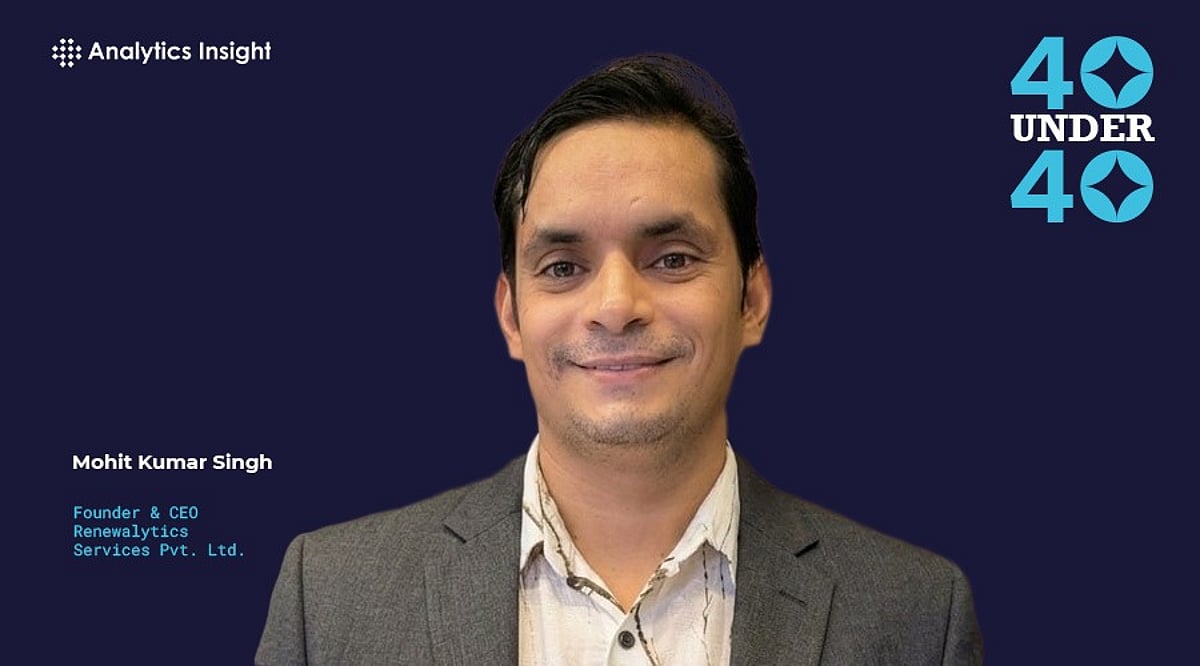
  • AI-Driven Operational Intelligence for Renewable Energy: An Interview with Mohit Kumar Singh

    AI-Driven Operational Intelligence for Renewable Energy: An Interview with Mohit Kumar Singh

    Mohit Kumar Singh, Founder & CEO of Renewalytics Services Pvt. Ltd., is leveraging artificial intelligence to solve critical operational challenges in the renewable energy sector. His company builds AI-powered operational intelligence platforms that help solar and wind operators improve efficiency, grid reliability, and intelligent energy management while supporting India’s clean energy transition.

    Singh’s journey in renewable energy began in December 2016 at Climate Connect, where he worked extensively on forecasting, scheduling, and grid compliance for renewable energy generators. Over the years, he collaborated with independent power producers, operations teams, regulators, and grid stakeholders, gaining first-hand exposure to the operational complexities of integrating renewable energy into the power system.

    After Climate Connect was acquired by ReNew Power and later divested, Singh founded Renewalytics in 2023 with the belief that the industry needed an independent company focused entirely on intelligent software for renewable energy operations. Today, Renewalytics supports more than 3 GW of solar and wind assets across commercial and pilot engagements, offering AI-driven forecasting, scheduling, weather intelligence, DSM analytics, enterprise software, operational automation, and intelligent decision-support systems.

    Solving Real-World Challenges

    India’s renewable energy targets are ambitious, but operational complexity is growing rapidly. Renewable energy companies must manage weather uncertainty, grid regulations, scheduling obligations, battery integration, diverse data sources, operational risks, and increasingly complex market dynamics.

    Renewalytics addresses these challenges by transforming fragmented operational data into actionable intelligence. As Singh explains, “Our objective is to help renewable energy companies improve operational visibility, automate routine workflows, strengthen decision-making, and optimize plant performance.”

    How AI is Transforming Forecasting and Operations

    Artificial Intelligence is fundamentally changing how renewable energy assets are managed. Machine learning enables continuous learning from historical generation patterns, weather behavior, plant performance, and operational outcomes to improve prediction accuracy and support better planning.

    Beyond forecasting, AI is assisting operations teams through intelligent co-pilots that validate data, detect anomalies, recommend corrective actions, and automate repetitive tasks. At Renewalytics, the team is building agentic AI capabilities where specialized AI agents collaborate to support weather intelligence, operational analytics, forecast validation, data quality monitoring, and performance optimization.

    “Our philosophy is that AI should augment human expertise rather than replace it,” Singh says. “We aim to enable engineers and operations teams to make faster and better-informed decisions.”

    Differentiation from Traditional Solutions

    Traditional energy management platforms primarily focus on monitoring assets and reporting operational data. Renewalytics goes beyond monitoring by combining AI, machine learning, operational intelligence, automation, weather analytics, scheduling, DSM analytics, and enterprise workflow management into a unified platform.

    Singh notes that his team’s practical experience within the renewable energy ecosystem allows them to build solutions that address real operational challenges instead of simply presenting data on dashboards. “We believe the future lies in intelligent platforms that actively assist decision-making rather than simply displaying information,” he adds.

    The Role of Data in Renewable Energy Performance

    Data is the foundation of every intelligent renewable energy system, but the true value lies in its quality, reliability, and contextual understanding. Renewable energy operations depend on information from SCADA systems, weather services, meters, grid operators, market platforms, scheduling systems, and operational logs.

    “At Renewalytics, significant emphasis is placed on data engineering, validation, automation, and integration because reliable AI models can only be built upon reliable data,” Singh explains. High-quality data ultimately leads to better operational decisions, improved efficiency, and stronger grid reliability.

    Future Trends and Vision

    Singh believes the next decade of renewable energy will extend far beyond capacity addition. The sector will increasingly be shaped by battery energy storage systems, hybrid renewable projects, AI-powered operational co-pilots, autonomous software agents, intelligent forecasting, grid optimization, and advanced machine learning.

    “As renewable penetration continues to increase, maintaining grid stability will become just as important as adding new generation capacity,” he says. “Utilities, grid operators, and renewable energy companies will rely far more heavily on predictive analytics, flexible energy resources, and intelligent software platforms to maintain system reliability.”

    Looking ahead, Singh envisions Renewalytics evolving into a digital operating layer that helps organizations improve efficiency, strengthen grid reliability, and accelerate the global clean energy transition. “Our long-term ambition is to build technology from India that serves renewable energy companies across international markets,” he concludes.