Tag: AI Strategy

  • Loop Engineering: A Beginner’s Guide to Building Reliable AI Agent Workflows

    Loop Engineering: A Beginner’s Guide to Building Reliable AI Agent Workflows

    Artificial intelligence has moved far beyond simple chatbots. Modern AI systems can search the web, write code, check documents, call software tools, and complete long tasks with very little human help. This major shift has created a new field called loop engineering. Instead of focusing only on prompts, loop engineering focuses on the full process that helps an AI agent reach the right result.

    The idea has gained strong attention during 2026 as businesses and software teams build AI agents that solve real work problems. Experts now see workflow design as one of the most valuable skills for anyone who builds AI systems. Many developers also believe prompt writing alone cannot deliver reliable results for complex tasks. A well-designed loop helps an AI system plan, check, improve, and finish its work with greater accuracy.

    What Loop Engineering Means

    Loop engineering refers to the activity of creating the procedure that an AI agent employs to address a task completely. The process typically starts with the specification of a goal; the AI devises a plan and carries it out. After finishing the process, the AI checks the outcome and, if errors occur, corrects them and goes through the same operations again.

    A single input creates an answer in most cases. Loop creates new opportunities for improved answers. Since Loop allows the AI to work with several iterations of information, it helps to solve larger problems.

    Why AI Agents Need Loops

    Many modern AI agents work with tools instead of plain text. They can search websites, open files, read databases, write software, or connect with business applications. Every action creates new information. The AI must study that information before it decides what to do next.

    This repeated cycle helps the system avoid simple mistakes. If a software test fails, the AI can examine the error, correct the code, and test it again. If a research task lacks enough facts, the AI can search for more sources before it prepares the final report. This steady process improves quality without constant human guidance.

    The Main Parts of an AI Loop

    Every AI loop follows a similar structure, even though each project looks different. First, the system receives a clear goal. Next, it breaks that goal into smaller tasks. After that, it completes one task at a time with the help of available tools.

    Once each action ends, the AI reviews the result. If the outcome fails to match the expected standard, the system changes its approach and tries again. This cycle continues until every requirement reaches completion. The process ends only after the AI satisfies the success rules that developers set at the start.

    How Businesses Use Loop Engineering

    Many companies now build AI agents for real business work instead of simple conversations. Customer support teams use AI agents that read support tickets, search company knowledge, check customer records, prepare replies, and request human approval for sensitive cases.

    Software teams also depend on loop engineering. An AI coding agent can read existing code, create new code, run tests, find errors, repair problems, and repeat the same cycle until every test passes. This approach saves valuable time and improves software quality.

    Research teams also benefit from this method. An AI agent can collect information from trusted sources, compare facts, find missing details, perform another search, and prepare a detailed report after every important fact receives proper verification.

    Why Verification Matters

    Loop engineering does not ask an AI system to trust every answer that it creates. Instead, it asks the system to verify each important result before it moves ahead. This step reduces mistakes and improves confidence.

    Many software teams already follow this practice. Recent industry reports show that 76% of development teams review AI-written code with the same level of attention as human-written code, while 33% apply even stricter reviews. These numbers show that careful verification remains an important part of successful AI projects.

    The Numbers Behind the Trend

    Recent business studies show that strong AI models alone cannot guarantee success. Industry research reports that almost 95% of generative AI pilot projects fail to create measurable profit, while analysts expect more than 40% of those projects to end before 2027. Poor workflow design often creates this gap between powerful technology and real business value.

    Another report shows that 87% of companies hold a positive view of AI, yet only 16% have completed full AI adoption. These figures highlight a common challenge. Many organizations understand the value of AI, although far fewer succeed with large-scale implementation. Loop engineering helps close that gap through reliable and repeatable workflows.

    A production case also shows the value of this approach. One AI investigation system handled almost 11,000 alerts each month. The workflow removed 85% of unnecessary alerts before the AI started its analysis. The average investigation time fell from more than ten minutes to about two minutes, while operating costs dropped to less than one-third of the previous level. These results came from better workflow design rather than stronger prompts.

    The Future of AI Workflows

    Loop engineering marks the next stage of AI development. Modern AI agents must plan, review, verify, improve, and finish complex tasks with consistency. This goal requires much more than a single prompt. A carefully designed loop gives AI systems a clear path from the first step to the final result.

    As more businesses adopt autonomous AI agents, loop engineering will play a central role in software development, research, customer service, finance, healthcare, and many other industries. Reliable workflows will shape the future of AI far more than clever prompts alone.

    Frequently Asked Questions

    1. What is loop engineering?

    Loop engineering is the practice of designing the repeated workflow an AI agent follows to complete a task accurately.

    2. How is loop engineering different from prompt engineering?

    Prompt engineering focuses on creating better prompts, while loop engineering focuses on the entire AI workflow from planning to completion.

    3. Which industries use loop engineering?

    Software development, customer support, finance, healthcare, research, and enterprise automation commonly use loop engineering.

    4. Why do AI agents need verification loops?

    Verification checks reduce errors, improve output quality, and help AI systems produce reliable results before task completion.

    5. Is loop engineering important for the future of AI?

    Yes. Modern AI agents handle complex tasks, and well-designed workflows help them perform reliably, safely, and efficiently.


  • Globant: Revolutionizing Global Business with AI-Driven Digital Solutions

    Globant: Revolutionizing Global Business with AI-Driven Digital Solutions

    Globant is a digitally native company that delivers data engineering services, big data solutions, and ETL pipeline development to help organizations achieve their transformation goals through artificial intelligence, design, and innovation. Founded in Buenos Aires, the company now operates worldwide, assisting businesses in modernizing operations and creating advanced digital solutions across multiple sectors.

    About the Company

    Globant combines artificial intelligence, software engineering, and design to create digital transformation solutions for its clients. Its offerings are built to scale with business needs while delivering superior user experiences in various industries. The company employs a studio-based operating model that unites specialized teams focused on AI, blockchain, and digital experience platforms. It serves sectors including finance, healthcare, and media, helping organizations achieve greater efficiency and continuous innovation in a competitive global market.

    Products and Services

    Globant provides a range of AI-driven services such as AI Studios, AI Pods, and Enterprise AI platforms. Its solutions span data, CloudOps, blockchain, cybersecurity, digital experience, and marketing, enabling businesses to innovate, optimize processes, and build scalable digital products.

    Core Leadership Team

    Globant’s leadership includes experienced executives driving its strategic vision and operational excellence. (Detailed leadership information was not provided in the source.)

    Revenue Streams

    Globant generates revenue through professional services including software development, digital transformation, AI-powered solutions like AI Pods, managed services, platform-based products, and licensing of proprietary tools and intellectual property.

    Client Segments and Target Market

    Client Segments: Globant serves organizations across industries, offering AI solutions, digital transformation, software engineering, and cloud services. Target Companies: Large-scale institutions in finance, healthcare, media, and retail that require scalable digital and AI solutions. Target Geography: Global operations with a strong presence in North America, Latin America, Europe, and growing markets in Asia and the Middle East.

    Social Media

    LinkedIn | Website

  • Amazon Refocuses AI Efforts: Cuts Nova Models, Bolsters Frontier Research After AGI Lab Closure

    Amazon Refocuses AI Efforts: Cuts Nova Models, Bolsters Frontier Research After AGI Lab Closure

    Amazon is reshaping its artificial intelligence strategy following a series of layoffs in its AGI division and the shutdown of its AGI Lab in July 2026. The tech giant is scaling back development on several Nova models and reallocating staff and computing resources toward frontier AI research and new foundation models.

    The company is reducing the number of major AI projects to better compete with leading AI firms while continuing to serve enterprise customers. This strategic shift also brings AI engineering and computing resources under tighter leadership.

    The moves come after Amazon laid off employees in its AGI unit and closed its San Francisco AGI Lab, which was formed in 2024 after acquiring talent from AI startup Adept. According to Business Insider, Amazon has begun winding down several Nova models, including Premier, Omni, Reel, and Canvas.

    Amazon will continue to support some Nova products for existing customers, though development pace will slow. Models that remain active in the portfolio include Nova 2 Lite, Nova 2 Sonic, Nova Forge, and Nova Act. Nova Forge helps customers customize models, while Nova Act focuses on AI agents.

    Greater emphasis is now placed on Frontier Model Research, led by renowned AI researcher Pieter Abbeel. The team is developing a new foundation model that could debut at Amazon’s re:Invent event later this year.

    An Amazon spokesperson told Reuters, “We’re sharpening our focus on the initiatives that matter most for customers, so we can move faster on what counts.”

    The company also defended its continued AI investment while explaining the model changes. Amazon told sources, “We’re continuing to invest in and support the Nova models our customers rely on today … We’re also investing in the next generation of frontier model research.”

    This shift signals Amazon moving from a broad AI portfolio toward fewer, bigger bets. The company now faces pressure to demonstrate stronger results from its frontier AI efforts.

  • Harvard Business School Online: Data Science and AI for Strategic Decision Making

    Harvard Business School Online: Data Science and AI for Strategic Decision Making

    Harvard Business School Online has launched a self-paced course designed for business professionals who want to leverage data science, artificial intelligence, and analytics to make evidence-based decisions. Participants gain hands-on experience with AI tools, large language models (LLMs), and data modeling to translate insights into strategic business outcomes.

    What You’ll Learn in This Course

    This course enables learners to:

    • Build a business-focused understanding of data science, machine learning, and generative AI.
    • Understand generative AI systems, large language models (LLMs), and prompt engineering to apply them responsibly.
    • Use LLM-powered analytical tools like Julius to explore, build, and validate data models.
    • Apply unsupervised and supervised learning techniques for pattern recognition, segmentation, and forecasting.
    • Translate data analysis into actionable strategic business decisions and design evidence-based experiments.

    Accessibility and Value

    The self-paced online course requires 20 to 30 hours of study time, allowing students to choose their own schedule. For a fee of $1,850, participants receive both a Certificate of Completion and access to practical business-oriented AI training. The course teaches essential skills through a combination of real-world AI applications, data science methodology, and decision-making strategies.

    Comprehensive Curriculum

    • Foundations of Data Science: The scientific principles of data science establish fundamental concepts that serve as the foundation for analytical methods and data modeling techniques.
    • AI and Machine Learning in Business: The field of AI and machine learning research develops applications for business use through generative AI technology and LLM systems.
    • Experimentation and Strategy: Business experiments require design through experimentation, and companies should base their decisions on collected evidence.
    • Data Modeling Tools: The LLM-based platform Julius provides analytical capabilities and validation functions for data modeling.
    • Applied Business Projects: The applied business projects program requires students to work on practical tasks that demonstrate how AI knowledge can be used to make important business decisions.

    Eligibility Criteria

    • Intermediate-level understanding of business, data analysis, or statistics.
    • Basic familiarity with data-driven decision-making and technology tools.

    What Makes This Course Stand Out?

    Harvard Business School Online offers a distinct educational experience that integrates practical AI and data science applications into business strategy development. The program provides students with practical training in generative AI, LLMs, and analytical tools, enabling them to transform data insights into business solutions. The program uses real projects to help students learn practical skills they can immediately use in their work.

    Final Thoughts

    The course teaches professionals how to use data science and AI for their business decision-making processes. Participants learn to develop real-world skills in analytics, experimentation, and evidence-based strategy through their work with AI tools, data modeling, and business applications.

  • Edge AI Is the Missing Link in India’s Sovereign AI Strategy, Says embedUR CEO

    Edge AI Is the Missing Link in India’s Sovereign AI Strategy, Says embedUR CEO

    India’s AI conversation has centered on compute clusters and cloud infrastructure. Rajesh Subramaniam, CEO and founder of embedUR, argues this misses the bigger opportunity. In this exclusive interview with Analytics Insight, he makes the case for edge AI as the missing layer of India’s sovereignty strategy—one that keeps intelligence on factory floors, in clinics, and on farms rather than routed through servers abroad. He also explains how initiatives like IndiaAI Mission, Digital India, and Make in India could converge at the device level, and what enterprises need to do to turn AI pilots into measurable business results.

    Q: Can India truly achieve sovereign AI if intelligence remains concentrated in the cloud while edge deployment is overlooked?

    A: Sovereignty involves more than the location of model training or data centers. If every inference in an Indian factory, hospital, or utility relies on a cloud, often managed abroad, the intelligence layer of the economy remains dependent on external infrastructure, pricing, and policies. True sovereignty requires intelligence to operate where India’s data is generated: on devices, factory floors, clinics, vehicles, and other endpoints. Edge AI keeps data local by default, operates reliably with limited connectivity, and reduces foreign exchange costs associated with large-scale cloud inference. Cloud AI and edge AI are complementary. However, a sovereignty strategy limited to data centers perpetuates structural dependency. India should control both layers.

    Q: Why will sovereign edge infrastructure be critical to India’s long-term AI ambitions?

    A: When we look at India’s AI journey, three factors stand out: scale, resilience, and economics. Let’s start with scale. Our opportunity is massive—AI in India is not just about a few thousand enterprise deployments, but about reaching over a billion endpoints across agriculture, manufacturing, healthcare, energy, and mobility. Relying solely on the cloud for real-time inference at this scale is simply not practical or sustainable. The way forward is clear: embed intelligence directly into our devices, and use the cloud for training, coordination, and data aggregation. This is how we unlock true impact. Resilience comes next. Edge intelligence keeps working even when connectivity drops. For critical infrastructure like our power grids, water supply, and transportation, this is not just a feature—it is essential for national strength and reliability. The third factor is economics. Every time we use the cloud for inference, we pay ongoing costs—often to companies outside India. On-device intelligence, on the other hand, means we invest upfront and update as needed, but the value stays with us. By aligning our semiconductor ambitions with edge AI, we create a powerful ecosystem: chips made in India, models improved locally, and devices built by our own teams. This is how we achieve real independence and drive long-term growth.

    Q: How can Edge AI democratize AI adoption by bringing intelligence closer to where data is generated?

    A: Cloud-based AI demands high-speed internet, ongoing subscriptions, and complex data management. This leaves out a huge part of India’s economy: small manufacturers, rural healthcare providers, farmers, and businesses in Tier-2 and Tier-3 cities. Edge AI changes the game. Affordable, microcontroller-based solutions work offline, cut out per-inference fees, and keep sensitive data local. This is how we bring AI to everyone. Small foundries can now run visual inspections without cloud contracts. Primary health centers can deliver diagnostics on-site. Farmers can control pumps without relying on connectivity. Over the last two decades in embedded software, I have seen firsthand that technology becomes truly accessible when it is built into affordable hardware. As AI models get smaller and fit into MCUs and NPUs, embedding AI in the devices people already use is the most practical and inclusive way forward for India.

    Q: What is the role of embedded systems, edge computing, and intelligent devices in enabling scalable, real-world AI deployment?

    A: Real value comes when intelligence is built into products that ship, survive in the field, and run for years on limited power and memory. Models that stay in demos or data centers never make an impact. The real work is delivering solutions that last. This is the heart of embedded systems. Moving from research to real products means optimizing for the actual chip, integrating with sensors and connectivity, and making sure it works in the real world, not just the lab. Many AI projects get stuck here. The challenge is not building the model, but getting it deployed and keeping it running. This is exactly why we launched ModelNova as an independent company from embedUR. The industry is moving toward production-ready models that are proven on real silicon, so device makers are not left to bridge the gap alone. India has the talent and the drive in embedded engineering and electronics manufacturing. We have a real opportunity to lead the world in this deployment layer.

    Q: How can national initiatives such as the IndiaAI Mission, Digital India, and Make in India converge to strengthen India’s AI ecosystem?

    A: Each of these initiatives tackles a critical layer. IndiaAI Mission is driving our compute capacity, datasets, and model development. Digital India has laid the foundation with robust connectivity and digital public infrastructure. Make in India, alongside the India Semiconductor Mission, is powering up our hardware manufacturing. Where these efforts come together is at the intelligent device—the next frontier for India’s leadership in technology. Building an AI-enabled device entirely in India is within our reach: silicon designed and produced here, models trained on Indian data using our own compute, and seamless deployment and updates over our digital infrastructure. We have already proven our ability to deliver this kind of end-to-end innovation—UPI is a world-class example of how public infrastructure and private ingenuity can leapfrog outdated systems. Now, we have the opportunity to do the same for edge AI. The key is focused policy that brings it all together: incentives for manufacturing AI-capable devices, standards and certification tailored for Indian conditions and languages, and procurement that demands on-device intelligence for public projects in health, agriculture, and infrastructure. When these missions align at the device level, India moves from being a consumer of AI to becoming a global exporter of AI innovation.

    Q: What do Indian enterprises across manufacturing, healthcare, and energy need to do to translate AI innovation into measurable business impact?

    A: Start with the business outcome that truly matters. In my experience, technology earns its place only when it solves a real problem and drives results for the business. Too often, I have seen AI projects lose focus chasing the latest trends. The projects that succeed are the ones that zero in on the numbers that matter: reducing defects, cutting downtime, increasing patient throughput, or minimizing transmission losses. Identify the key metric, then work backward to the simplest AI solution that delivers measurable results. In manufacturing, I always advise starting with a single line. Focus on visual inspection or predictive maintenance for your most critical asset, and track progress against a clear baseline. Once you prove value, scale it across the plant. In healthcare, true impact comes from point-of-care intelligence that integrates directly into clinical workflows, operates on-device, protects patient privacy, and keeps running even when connectivity drops. In energy, drive intelligence to the grid edge, where losses occur and where waiting for the cloud is simply not an option. There are three disciplines that turn pilots into real business impact. First, deploy intelligence where the data is generated. Latency, connectivity, and data privacy challenges often derail cloud-only projects, especially in the realities of the Indian market. Second, treat AI as a product-engineering initiative, not just a data science experiment. Invest in integration, validation, and lifecycle maintenance, because that is where the real value is created. Third, measure relentlessly against your original baseline. If AI cannot deliver results you can show in a quarterly review, it is just a science project. If it does, it becomes a line item your CFO will champion.

  • The Evolving Role of the Chief Strategy Officer in 2026: From Planner to Strategic Operator

    The Evolving Role of the Chief Strategy Officer in 2026: From Planner to Strategic Operator

    The Chief Strategy Officer (CSO) role is undergoing a significant transformation in 2026. No longer confined to long-term planning, today’s CSOs are driving real-time business execution and enabling faster decision-making across their organizations.

    AI at the Core of Strategy

    Artificial intelligence is now central to strategic initiatives. CSOs are leading the charge to scale AI across operations, product development, customer experience, and business decision-making. This shift requires a deep understanding of AI capabilities and their practical applications.

    From Five-Year Plans to Agile Cycles

    Traditional five-year strategic plans are being replaced by agile strategy cycles. This new approach allows companies to respond quickly to market shifts, economic changes, and emerging opportunities. CSOs now focus on fewer, high-impact priorities by directly linking strategy to financial results and operational performance.

    Collaboration and Execution

    Modern CSOs work closely with CEOs, technology leaders, and business teams to turn strategic plans into measurable business outcomes. This collaborative approach ensures that strategy is not just a document but a living, actionable framework.

    Expanded Responsibilities

    Managing geopolitical risks, cybersecurity threats, supply chain disruptions, and sustainability goals has become a core part of the CSO’s role. These responsibilities demand a broad skill set and the ability to navigate complex, interconnected challenges.

    Challenges and Opportunities

    More than half of strategy leaders report handling too many initiatives, while many still lack authority over key business decisions. Successful CSOs are those who combine AI knowledge, data-driven decision-making, resilience planning, and people-focused leadership to stay competitive.

    The Future CSO

    The future CSO is no longer just a planner but a strategic operator who connects business, technology, capital, and execution. This evolution requires a shift in mindset, skills, and organizational influence.

  • Future-Proof Your Career with Harvard’s AI Professional and Lifelong Learning Course

    Future-Proof Your Career with Harvard’s AI Professional and Lifelong Learning Course

    Harvard Professional and Lifelong Learning, in collaboration with Harvard Business School, has launched the Future Proof with AI course—a self-paced online program designed to help professionals across industries understand artificial intelligence, apply AI tools in business, and develop practical skills for leading AI-driven transformation. Through research-backed learning modules, hands-on exercises, and expert insights, participants gain confidence in using AI responsibly across organizational functions.

    What You’ll Learn in This Program

    This course helps learners develop practical AI knowledge that can be applied in contemporary business contexts. Key learning areas include:

    • Basics of AI: predictive AI, generative AI, and agentic AI
    • AI applications within different industries and businesses
    • How to assess, evaluate, and supervise AI
    • Applying AI to improve business performance
    • Enhancing leadership capability for AI management

    Accessibility and Value

    The Future Proof with AI program is delivered entirely online and self-paced, so learners can study whenever they want. It features on-demand learning modules, expert-led sessions, hands-on exercises, and research-based insights. Participants can earn Completion Badges and Skills Badges that highlight their professional accomplishments.

    Comprehensive Curriculum

    • AI Fundamentals: Learn predictive, generative, and agentic AI technologies.
    • Business Applications: Explore AI use cases across finance, HR, marketing, strategy, R&D, and public sector work.
    • Leadership & Management: Learn how AI enhances leadership, product management, and executive decision-making.
    • Practical AI Implementation: Build skills for evaluating, deploying, and supervising AI systems.
    • Hands-on Learning: Complete guided exercises using real-world business scenarios and frameworks.

    Eligibility Criteria

    • Suitable for executives, managers, business professionals, entrepreneurs, and team leaders
    • Ideal for individuals interested in AI adoption, digital transformation, and organizational innovation
    • No advanced technical or programming experience is required

    What Makes This Program Stand Out?

    Future Proof with AI blends Harvard Business School research with real business execution. Instead of focusing solely on theory, it emphasizes practical work, building leadership skills, and using AI for concrete business needs—all with a responsible approach to adoption. Learners also benefit from a flexible self-paced learning route and digital credentials that demonstrate their AI capability.

    Final Thoughts

    Future Proof with AI is a course provided by Harvard Professional and Lifelong Learning that delivers practical knowledge about the application of artificial intelligence. It combines basic concepts, strategic business thinking, leadership skills, and ethical implementation of AI.

  • Turn AI Time Savings into Revenue: A Practical Guide for Businesses

    Turn AI Time Savings into Revenue: A Practical Guide for Businesses

    How Businesses Can Convert AI Time Savings into Revenue

    Artificial intelligence is revolutionizing how companies operate by freeing up valuable time. Instead of using those hours solely for cost cutting, forward-thinking organizations are reinvesting them into revenue-generating activities. Here are seven proven strategies to turn AI-driven time savings into tangible business growth.

    Automate Repetitive Tasks

    Businesses can use AI to automate routine work such as data entry, scheduling, invoice processing, and report generation. The hours saved can be redirected toward revenue-generating activities like sales, customer acquisition, product development, and strategic planning. This shift helps teams focus on work that directly contributes to business growth instead of administrative responsibilities.

    Improve Customer Response Times

    AI-powered chatbots and virtual assistants can handle common customer queries around the clock. Faster responses improve customer satisfaction, reduce abandoned purchases, and increase conversions. Human agents can then focus on complex cases, strengthening customer relationships while allowing businesses to serve more customers without significantly increasing operational costs.

    Expand Services Without Expanding Teams

    AI enables businesses to scale content creation, marketing campaigns, analytics, and customer support without hiring large teams. Companies can launch new products, enter additional markets, or serve more clients efficiently, generating higher revenue while keeping staffing costs under control and maintaining consistent service quality.

    Personalize Marketing Campaigns

    AI analyzes customer behavior, preferences, and purchase history to deliver personalized recommendations and targeted promotions. Better personalization increases engagement, improves conversion rates, encourages repeat purchases, and boosts customer lifetime value – all of which allow businesses to generate more revenue from existing customers with optimized marketing efforts.

    Accelerate Product Development

    AI speeds up research, testing, and data analysis, reducing the time required to develop and improve products. Faster innovation helps businesses launch offerings ahead of competitors, respond quickly to market trends, and capture new revenue opportunities before demand shifts or competitors gain an advantage.

    Support Smarter Business Decisions

    AI-powered analytics transform business data into actionable insights, helping leaders identify profitable opportunities, forecast demand, optimize pricing, and reduce inefficiencies. Better-informed decisions minimize waste while improving profitability, enabling organizations to maximize returns from both existing operations and future investments.

    Reinvest Time Into High-Value Work

    The greatest value of AI comes from how businesses use the time it saves. Organizations that reinvest those hours into innovation, relationship building, employee training, and strategic growth initiatives are more likely to increase revenue than those treating AI solely as a cost-cutting tool.

  • Why Data Readiness Is the True Foundation for Enterprise AI Adoption

    Why Data Readiness Is the True Foundation for Enterprise AI Adoption

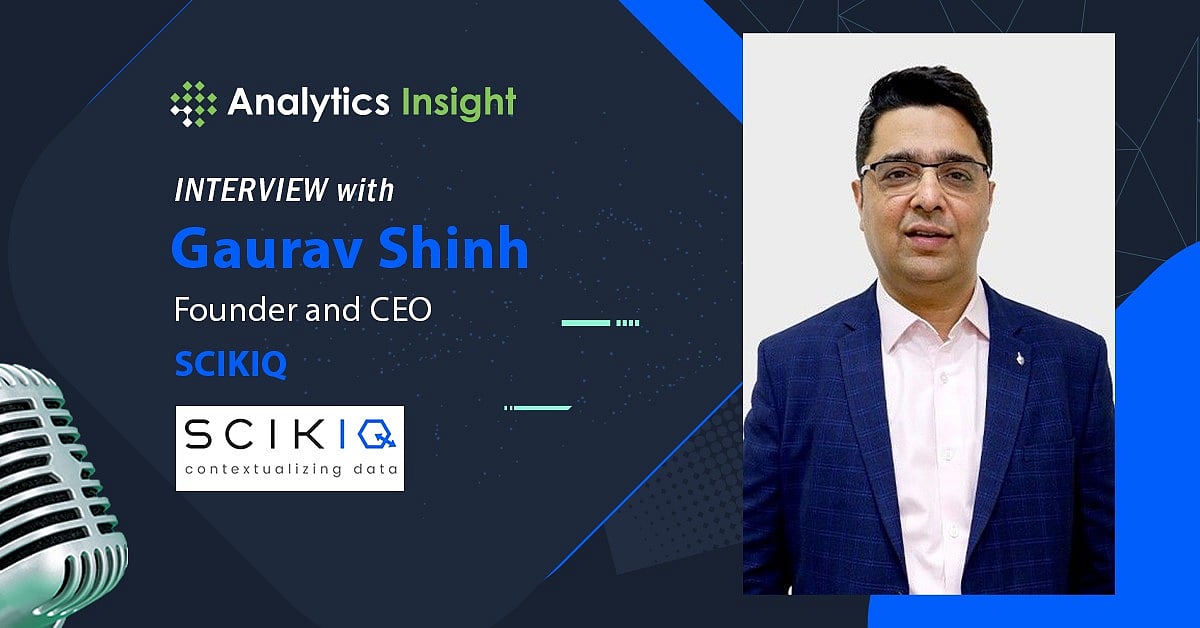
    Artificial intelligence is rapidly gaining traction in the enterprise world, yet many organizations that have invested heavily in AI technologies still struggle to scale their initiatives. According to Gaurav Shinh, Founder and CEO of SCIKIQ Data, the primary obstacle is not the AI model itself but the quality, accessibility, and governance of enterprise data.

    In a recent episode of Industry Wired Conversations, host Priya Dialani spoke with Shinh about why enterprises must achieve data readiness before they can become truly AI-ready. Below are the key takeaways from their discussion.

    Why Do So Many Organizations Struggle to Scale AI Successfully?

    Many companies assume that AI success hinges on selecting the right model or having the proper infrastructure. Shinh argues that the real challenge lies elsewhere. Most organizations attempt to implement AI without ensuring proper data integration and connections across business processes. AI can only deliver value when data is integrated, trusted, and aligned with business goals. Before deploying AI, companies must first understand how their business processes generate value. With a solid data foundation and context, organizations can move beyond mere AI pilots.

    What Does an AI-Ready Organization Actually Look Like?

    According to Shinh, there is no one-size-fits-all model for AI readiness. Each company operates differently based on how decisions are made. For centralized organizations, data integration across the company and a command center are essential. For decentralized firms, a data mesh approach enables local decision-making. AI readiness involves aligning technology with business operations, not applying a standard template. Companies should strive for a unified view across finance, HR, supply chain, procurement, and customer operations.

    Why Is a Single Source of Truth Critical for Enterprise AI?

    The performance of any AI system depends on precise, coherent, and well-integrated data. Shinh notes that many organizations focus excessively on building dashboards rather than establishing a unified information layer. When different departments use disparate data, chaos ensues. A single source of truth requires shared business definitions, common terminology, and unified enterprise data. The first step is to identify which data sets must be linked, then proceed with integration.

    How Does Strong Data Governance Improve AI Performance?

    Data governance builds trust within the enterprise. Shinh emphasizes that all departments must take responsibility for the quality, freshness, and accuracy of their own data. Trustworthy data must come from enterprise systems, not from individual spreadsheets or personal documents. AI models perform well in pilot programs because the environment is controlled. In production, unpredictable elements demand robust governance and business context, including semantic layers.

    What Role Will Modern Data Architecture Play in the Future of AI?

    Current cloud platforms, data lakes, and enterprise data architectures provide the foundation for scalable AI. Shinh believes these technologies will enable better data integration and greater control for business users through self-service tools. Traditional data warehouse implementations took years to deliver value. Modern data platforms should offer quick access to reliable information and facilitate cross-departmental collaboration. The ultimate goal is to empower business users to analyze data and make timely decisions in response to market changes.

    Listen to the full episode for more insights from Gaurav Shinh on building AI-ready organizations through stronger data foundations.

  • Apple Hits $5 Trillion Market Cap, Becoming Second Company to Reach the Milestone

    Apple Hits $5 Trillion Market Cap, Becoming Second Company to Reach the Milestone

    Apple has crossed the $5 trillion market value mark after a steady rise in its share price, becoming only the second company to reach the historic milestone. The iPhone maker’s market capitalization surged past the $5 trillion threshold, making it the world’s most valuable company, surpassing NVIDIA.

    The jump came after Apple’s shares rose 0.2 percent to $337.7, bringing its market capitalization to $4.96 trillion. With a session high of $342.89, Apple’s market value stood at $5.036 trillion. Including session gains, Apple stock has jumped 24% so far this year, outperforming the other six of the ‘Magnificent 7,’ which include Microsoft, Amazon, Alphabet, Meta Platforms, Tesla, and Nvidia.

    Apple is ready to report its third-quarter earnings after the market close on Thursday. Analysts expect the company will jump more than 15% from the previous year.

    Staying on top will be the real test. The Cupertino-based tech giant has struggled for years to build its own AI models. More recently, Google has used its technology to roll out new services, such as a revamped Siri, that have saved it from the massive infrastructure spending that tech investors so often fear. Dipanjan Chatterjee, vice president and principal analyst at Forrester, said, “Apple has resisted the AI spending race, betting that customer experience – not infrastructure investment – will ultimately determine the winners.”