Tag: AI Strategy

  • EXL Acquires iMerit to Bolster Enterprise AI with Foundation Model Capabilities

    EXL Acquires iMerit to Bolster Enterprise AI with Foundation Model Capabilities

    EXL (NASDAQ: EXLS), a global data and AI company, has announced a definitive agreement to acquire iMerit, a leader in AI model training, evaluation, and reinforcement learning. The deal, valued at up to $310 million, is expected to close in the third quarter of 2026, subject to customary conditions.

    The acquisition positions EXL at the forefront of enterprise AI innovation by adding iMerit’s direct relationships with foundation model builders. iMerit specializes in helping clients train large language and multimodal models to improve accuracy, precision, and effectiveness. By integrating iMerit’s capabilities with its own AI platforms—including EXLerate.ai, EXLdata.ai, and EXLdecision.ai—EXL aims to create a comprehensive end-to-end AI solution that moves enterprises from experimentation to production-scale deployment.

    “As organizations reimagine their businesses with AI, success requires industry-specific data, rigorous evaluation and reinforcement learning to deliver reliable results in business-critical workflows,” said Rohit Kapoor, chairman and CEO of EXL. “The acquisition of iMerit strengthens EXL’s AI strategy and ability to help clients move from experimentation to production. By combining iMerit’s capabilities with EXL’s domain expertise and AI platforms, we are setting the standard for AI that is trusted, accountable and built to perform in the enterprise.”

    iMerit brings two key assets to EXL: the Ango platform and the Scholars network. Ango enables sophisticated data interactions with generative AI models, supporting chain-of-thought reasoning, red teaming, and multimodal evaluations. Scholars expands EXL’s domain expertise through a global network of specialists—including physicians, scientists, engineers, linguists, and other subject matter experts—who provide human intelligence-driven feedback for reinforcement learning.

    These offerings will be integrated with EXL’s agentic platforms to combine expert human judgment, model evaluation, and enterprise-scale execution. The acquisition also expands EXL into high-growth AI sectors such as high tech, mobility, autonomous systems, and physical AI, leveraging iMerit’s expertise across text, image, video, voice, and LiDAR data.

    “We see EXL as an ideal leader in this defining moment for AI. We can build on our work with AI innovators and bring those insights to companies seeking to unlock their proprietary data,” said Radha Ramaswami Basu, CEO and founder of iMerit. “Both companies share a belief that specialized high-quality data is the foundation of AI success. We are excited to multiply our impact through EXL’s industry expertise, complementary technology and trusted enterprise relationships.”

    The transaction includes upfront consideration of $170 million, with an additional $140 million in incentives and earnouts over two years contingent on meeting specified milestones. The acquisition is expected to close in the third quarter of 2026, subject to regulatory approvals.

  • Why AI Sovereignty and Open Source Are Critical for India’s Digital Future: An Interview with Mishi Choudhary

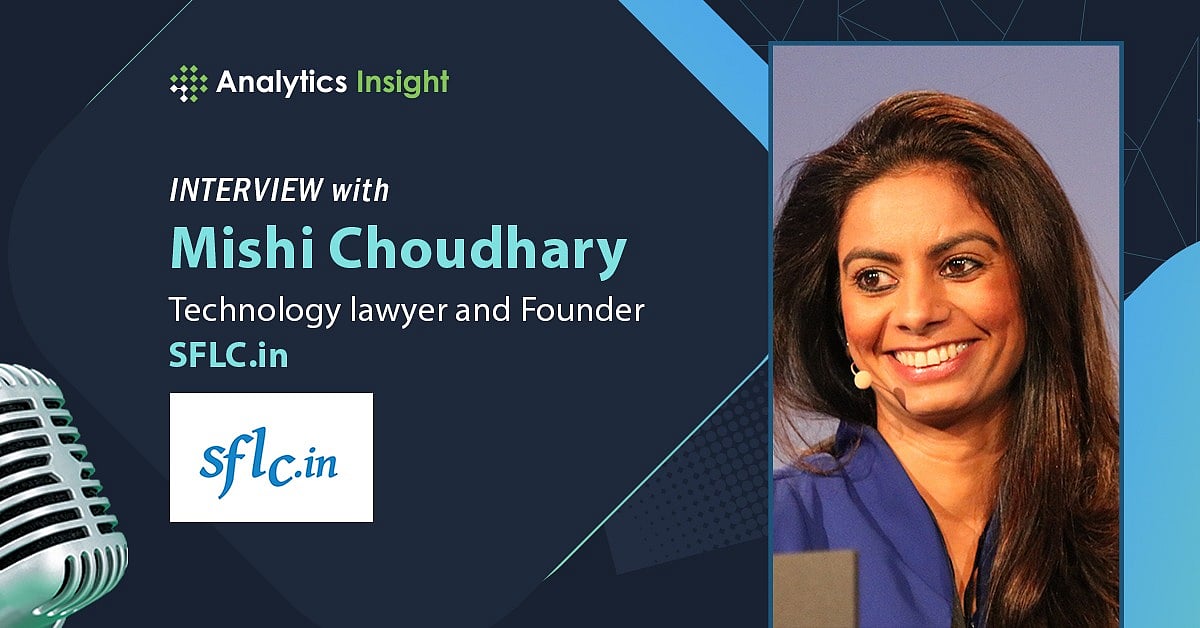
    Why AI Sovereignty and Open Source Are Critical for India’s Digital Future: An Interview with Mishi Choudhary

    Artificial intelligence is reshaping global economics, governance, and national security. But as nations push to adopt AI, a pressing question arises: Can India rely on foreign AI models it neither owns nor fully understands?

    In this episode of the Analytics Insight Podcast, host Priya Dialani speaks with Mishi Choudhary, a technology lawyer and founder of SFLC.in, about the growing importance of AI sovereignty, open-source systems, and technological independence. The conversation covers data governance, cybersecurity, public policy, innovation, and India’s AI ambitions. Below are key excerpts from the interview.

    What does AI sovereignty actually mean?

    AI sovereignty refers to a nation’s ability to create, understand, evaluate, and regulate the AI technologies it depends on. It does not imply isolation from the rest of the world, but rather the capacity to retain control over its digital future.

    Why is open-source AI essential for sovereignty?

    Open-source AI allows governments, private enterprises, and researchers to study, modify, and improve AI technologies. It reduces reliance on a small group of foreign corporations, fosters creativity, strengthens security, and encourages the development of in-house technical skills, avoiding vendor lock-in.

    Why are countries increasingly concerned about AI sovereignty now?

    As AI applications expand into healthcare, finance, education, governance, and national security, nations want greater control over their data and infrastructure and aim to minimize dependence on the few multinational corporations dominating the AI industry.

    What should India do to strengthen its AI ecosystem?

    India should promote open-source AI in government initiatives, focus on cybersecurity, develop Indian-language AI models, improve public procurement policies, and adopt accountable AI solutions.

    How can India balance AI innovation with accountability?

    Innovation and accountability must go hand in hand. While India needs to foster AI innovation, it should also implement strict guidelines for audit transparency, data protection, healthy competition, and regulatory oversight.

    Listen to the full podcast here.

  • Qualcomm Stock Surges 12% on $40 Billion AI Revenue Target Beyond Smartphones

    Qualcomm Stock Surges 12% on $40 Billion AI Revenue Target Beyond Smartphones

    Qualcomm stock rose more than 12% in premarket trading on Thursday after the chipmaker raised its long-term revenue target outside smartphones. The company now expects its non-handset businesses to generate $40 billion in revenue by fiscal 2029, twice its previous goal.

    The revised target includes $15 billion from data center products and $10 billion from the automotive business. Qualcomm presented the plan at its investor day in New York, where executives outlined a broader shift into artificial intelligence infrastructure, servers, personal computers, and connected devices.

    Qualcomm Targets $15 Billion in Data Center Revenue

    Qualcomm plans to offer several products for AI data centers, including processors, server systems, software, and custom chips. The company expects these operations to generate $15 billion in annual revenue by fiscal 2029. Its strategy places the business in direct competition with NVIDIA and AMD.

    Chief Executive Cristiano Amon said cloud and AI companies have shown interest in having more chip suppliers. “I have not met a single one of those cloud and AI companies that have not said to me how excited they are,” Amon said. Nevertheless, the revenue target depends on Qualcomm winning customers in a market where established suppliers hold strong positions.

    China Forms Part of Qualcomm’s AI Expansion

    Qualcomm also plans to market its data center products in China, although US export rules may limit access to advanced technology. “Everything that we’re building for the data center, you should assume that China is going to be a target market,” Amon said.

    However, the company faces doubts over which processors it can legally sell in the country. The US government has changed its approach to AI chip exports several times over security concerns. While certain NVIDIA processors received clearance for sale, Chinese authorities have not approved all of them for import.

    Smartphone Dependence Falls Under Wider Growth Plan

    The data center push forms part of Qualcomm’s effort to reduce its reliance on mobile phone chips. The company expects its automotive business to produce $10 billion in fiscal 2029. It is also expanding its computer chip business, where it competes with Intel and AMD.

    Additionally, Qualcomm has agreed to acquire AI software company Modular. The deal gives the company access to tools that help developers build and run AI programs across different processors. Qualcomm aims to create a software system that can compete with NVIDIA’s CUDA platform, which developers widely use for GPU-based computing.

    Micron Results Support Semiconductor Stock Rally

    Qualcomm’s investor update arrived as Micron reported quarterly results that exceeded market forecasts. Micron said customers had committed about $22 billion toward chip purchases. It also reported that its high-bandwidth memory supply for 2026 had already sold out.

    Micron shares gained more than 15% in extended trading, while Qualcomm rose about 12% before Thursday’s opening bell. The updates supported gains across semiconductor stocks and helped push US stock index futures higher.

    Meanwhile, investors are assessing whether Qualcomm can meet its fiscal 2029 targets while competing with NVIDIA, AMD, and custom processors developed by large cloud companies. Its $15 billion data center forecast reflects management’s plan, but actual sales will depend on customer orders, product performance, export rules, and the pace of global AI infrastructure spending.

  • How Nickel-Zinc Batteries Are Solving AI Data Center Power Challenges

    How Nickel-Zinc Batteries Are Solving AI Data Center Power Challenges

    Artificial intelligence is fundamentally changing how data centers consume electricity, forcing operators to rethink power infrastructure from the UPS to the grid. In a recent interview, Brandon Smith, Vice President of Global Sales and Product at ZincFive, explains why battery chemistry is becoming a critical factor in supporting AI-scale computing.

    As GPU clusters generate rapid and unpredictable spikes in electricity demand, traditional backup power systems designed for stable loads face new challenges. Smith discusses how ZincFive’s nickel-zinc (NiZn) battery technology is engineered to deliver high power in short bursts—a capability that aligns with the dynamic power behavior of modern AI workloads.

    Unlike conventional chemistries focused on long-duration energy storage, nickel-zinc systems are designed for what ZincFive calls Immediate Power Solutions: stabilizing rapid power spikes while also providing reliable UPS backup when the grid fails. According to Smith, nickel-zinc allows operators to manage AI power volatility without sacrificing safety, sustainability, or performance—proving that in modern power infrastructure, the right chemistry makes all the difference.

    To learn more about ZincFive’s technology, visit their official website.

  • AI News Roundup: Investment Hurdles, Strategic Scaling, Chip Deals, and Global Regulation Efforts

    AI News Roundup: Investment Hurdles, Strategic Scaling, Chip Deals, and Global Regulation Efforts

    Weekly AI News Briefing

    This week’s AI landscape highlights critical shifts from experimentation to enterprise execution, major chip industry deals, and new regulatory frameworks. Below are the key stories.

    • AWS Co-Founder Matt Domo on Why AI Investments Are Stalling – Domo explains how organizations can move beyond pilot projects to full-scale AI deployment and unlock real value.
    • Micron and Rivals Secure US$22bn AI Deals with NVIDIA – To break the semiconductor boom-bust cycle, chipmakers like Micron are locking in multi-year contracts with NVIDIA, ensuring steady revenue streams.
    • McKinsey: Scaling AI Beats Fragmented Business Pilots – Partner Rahul Shahani reports that embedding AI across multiple functions yields double the profit margins compared to isolated experiments.
    • AIB Overhauls Mobile Banking App With Advanced AI Insights – The Irish lender uses machine learning to turn transaction data into personalized financial guidance for customers.
    • Pangaea Data and Sanofi Partner to Tackle Disease Underdiagnosis – Their AI scans electronic health records to help clinicians identify patients with Alpha-1 Antitrypsin Deficiency earlier.
    • UN’s New Environmental Initiative for AI – Secretary-General António Guterres launches a program to track the power and water consumption of AI systems during London Climate Action Week.
    • The Global Awards 2026: Tech and AI Categories – The upcoming awards will recognize AI-led innovation in sustainability, procurement, and supply chain.
    • Tech CEOs Push for US-Led AI Coalition at G7 Summit – Global executives propose an international framework to address national security risks and regulate advanced frontier models.
  • Generalists Outperform Specialists in Certain Game Theory Scenarios, MIT Study Finds

    Generalists Outperform Specialists in Certain Game Theory Scenarios, MIT Study Finds

    In a surprising twist that challenges long-held assumptions in game theory, a new MIT study shows that general-purpose algorithms called policy gradient methods can outperform specialized game-theoretic algorithms in certain imperfect-information games. The findings, presented at the International Conference on Learning Representations in Rio De Janeiro, could reshape how artificial intelligence agents are trained to make decisions in competitive, real-world scenarios.

    Imperfect-information games—where players don’t know everything about their opponents—are common in life, from poker and bidding wars to military operations and financial negotiations. For decades, the prevailing belief was that algorithms specifically designed for these games, grounded in game theory, would always outshine general-purpose alternatives. However, the MIT-led team discovered that policy gradient methods, originally developed in the 1990s for single-agent decision-making, often perform better and with greater efficiency.

    The researchers created a benchmark to fairly evaluate different algorithms, measuring performance through a concept called exploitability—how well a player does against a worst-case adversary. In experiments involving five games, including Phantom Tic-Tac-Toe, imperfect-information Hex, and Liar’s Dice, neural networks trained with policy gradient algorithms consistently achieved lower exploitability scores than those trained with game-theoretic algorithms.

    “Our study showed that policy gradient methods can work better than these specialized algorithms, and that the specialized algorithms may not work as well as people thought,” said Samuel Sokota, a co-author from Carnegie Mellon University. The team’s benchmarking software, which they have made freely available, allows others to test and compare algorithms with just a single line of code added to the OpenSpiel library.

    The implications extend far beyond board games. “Hidden information is a very important property of the world,” said Eugene Vinitsky of New York University, another co-author. “It pervades military operations, trading scenarios, and negotiations—all of which are carried out under conditions of hidden information. The idea that we can improve on these games suggests that we can also do better in these other settings as well.”

    Ian Gemp, a computer scientist and game theory expert at Google DeepMind not involved in the study, called the results encouraging: “This work serves as a compelling reminder that modernizing classical tools remains a highly productive path for solving complex strategic problems.”

  • Policy Gradient Methods Outperform Specialized Game Theory Algorithms in Imperfect-Information Games

    Policy Gradient Methods Outperform Specialized Game Theory Algorithms in Imperfect-Information Games

    A new MIT-led study challenges long-held assumptions in game theory, demonstrating that general-purpose policy gradient methods can outperform specialized game-theoretic algorithms in imperfect-information, zero-sum games. The research, presented at the International Conference on Learning Representations, provides a benchmark for evaluating algorithms that train neural networks to compete in strategic interactions where players have hidden information.

    The team, including MIT PhD student Sobhan Mohammadpour and Assistant Professor Gabriele Farina, found that policy gradient methods—originally developed in the 1990s for decision-making—achieved lower exploitability scores than game-theory-based approaches in games like Phantom Tic-Tac-Toe, imperfect-information Hex, and Liar’s Dice. Exploitability measures how well a player performs against a worst-case adversary; a score of zero indicates perfect play.

    “It had been pretty much taken for granted that specialized game-theoretic algorithms were the right approach,” said co-author Samuel Sokota. “Our study showed that policy gradient methods can work better than these specialized algorithms.” The researchers attribute the oversight to a lack of rigorous benchmarking, which they have now addressed by releasing a freely available benchmark tool that runs on ordinary laptops.

    The benchmark, built on OpenSpiel, allows researchers to train and compare algorithms on games with up to 30 billion states. Farina emphasized that the term “game” applies broadly to multi-agent strategic interactions, including military operations, trading, and negotiations—all of which involve hidden information. “The idea that we can improve on these games suggests that we can also do better in these other settings,” said co-author Eugene Vinitsky.

    Ian Gemp of Google DeepMind praised the work: “This work serves as a compelling reminder that modernizing classical tools like policy gradient methods remains a highly productive path for solving complex strategic problems.”

  • Schneider Electric CAIO Philippe Rambach on Scaling AI with a Business-First Strategy and Critical Thinking

    Schneider Electric CAIO Philippe Rambach on Scaling AI with a Business-First Strategy and Critical Thinking

    In a wide-ranging interview, Philippe Rambach, Chief Artificial Intelligence Officer at Schneider Electric, shares how the global energy management and automation company is scaling AI across more than 160 factories and 140 countries. The key, he explains, is a disciplined business-first approach that prioritizes real-world value over technological novelty.

    Business Value Over Technology

    Rambach warns against “technology tourism”—the temptation to run hundreds of pilots without a clear business case. Instead, Schneider Electric starts by identifying a specific business impact, then asks if AI can help. Each use case passes through gate reviews that test both technical feasibility and business value. Projects are halted immediately if either criterion fails.

    “We do a pilot that keeps in mind what we want to deliver at scale,” Rambach notes. This rigor prevents “pilot purgatory” and ensures that lab successes translate to real factory results.

    Agentic AI and the Sera Assistant

    Schneider recently launched Sera, an AI agent that transforms how users interact with environmental data. However, Rambach cautions against overhyping generative AI. “Generative AI agents do not replace forecasting, anomaly detection, prediction or optimisation—we still need that,” he asserts. Sera adds a conversational layer, allowing operators to ask complex questions in natural language, moving beyond rigid dashboards.

    Critical Thinking as a Core Skill

    To counter blind faith in AI outputs, Schneider has introduced an “AI for All” training program with the same institutional rigor as safety training. The centerpiece is critical thinking. “We want people to keep critical thinking when AI gives an answer,” Rambach says, acknowledging that AI can be wrong or partially wrong. The company also hosts “promptathons” and a virtual “Genius Bar” for employees to share prompting strategies.

    Edge vs. Cloud: A Matter of Physics and Policy

    Deciding where to run AI depends on data sovereignty and latency. In industrial settings, sensitive data often must stay local, and real-time applications like visual inspection require edge processing for speed. Schneider’s solutions are designed to be versatile enough for both environments.

    Addressing the Energy Density Crisis

    Schneider Electric, which builds data center infrastructure, is acutely aware that AI training consumes vast energy. Rambach notes the irony: AI is part of the solution. The company uses AI to optimize power management for its own factories and partners like NVIDIA to precisely manage energy in AI factories. He also advocates treating AI as an “unreliable component,” building reliable systems with human-in-the-loop checks, as in customer care where AI drafts responses but humans verify them.

    Navigating Regulation and Ethics

    Operating under the EU AI Act, Schneider has published an external Trust Charter that explicitly bans facial recognition. Rambach says compliance with the Act does not slow the company down. The ethical framework is backed by a dedicated responsible AI team within the AI Hub.

    The Future of the CAIO Role

    Rambach admits he is “very scared of becoming the bottleneck” as AI becomes pervasive. He sees the CAIO role evolving toward defining technical policy and supporting large, bespoke use cases. His overarching message is to not forget centuries of human wisdom: “My big message is we should not forget everything we have learned in the last 2,000 years, just because there’s a new technique.”

    For industrial giants, AI is not a replacement for human engineering but its most powerful tool—and mastering it lies in the critical mind of the user.

  • Stellantis AI Chief Kaynaz Behdin on Industrializing Enterprise AI for Measurable Business Impact

    Stellantis AI Chief Kaynaz Behdin on Industrializing Enterprise AI for Measurable Business Impact

    Kaynaz Behdin, Senior Vice President of Digital, Data & AI at Stellantis, is redefining how the automotive giant approaches artificial intelligence. In a recent interview, Behdin emphasized that her focus is not on experimentation but on building AI as a disciplined enterprise capability that drives customer satisfaction, value creation, operational performance, and speed.

    Stellantis, the multinational automaker behind brands like Jeep, Peugeot, Fiat, and Vauxhall, operates a distributed global environment. Behdin’s strategy relies on a three-layer operating model: translating leadership priorities into a single execution framework, embedding AI and Data Business Hubs directly into functions, and providing global platforms and shared talent pools to industrialize delivery.

    AI is already applied across Stellantis’ full value chain, including sales conversion and retention, warranty and quality cost reduction, logistics efficiency, manufacturing uptime, and faster engineering cycles. Key criteria for prioritizing use cases include business ownership, scalability across plants and regions, and strict safety and compliance frameworks.

    Behdin identified the main barriers to AI adoption as organizational and human, not technological. To address this, Stellantis runs an AI Academy with persona-based training—from executive coaching to hands-on workshops—to embed AI literacy into daily work. She also highlighted the importance of governance as an accelerator, with risk assessment built across the data-to-AI lifecycle and observability tools tracking what agents and models do.

    Looking ahead, Behdin sees generative AI transforming in-vehicle experiences, engineering cycles, operations, and commercial performance. Stellantis has deployed an Agent Gateway—a standardized infrastructure layer for AI agents to interact with enterprise platforms—and is rolling out a system called Metabot inside Microsoft Teams to bring the agent ecosystem to employees’ daily workspace.

    Behdin’s three priorities for 2026 are embedding AI into the business, industrializing agentic AI at scale with strong abstraction layers to avoid vendor lock-in, and ensuring value measurement and compliance by design. She concluded: “It’s the year we move from ‘great use cases’ to true AI-first, enterprise-level transformation, with our customers and our people at the centre of everything we do.”

  • Schneider Electric’s CAIO on Scaling AI with Business-First Strategy and Critical Thinking

    Schneider Electric’s CAIO on Scaling AI with Business-First Strategy and Critical Thinking

    Philippe Rambach, Chief AI Officer at Schneider Electric, discusses how the company integrates artificial intelligence across its global operations while maintaining a pragmatic, business-first approach. In an interview with AI Magazine, Rambach outlines the principles guiding AI adoption in over 160 factories and 140 countries.

    Rather than chasing the latest technology trends, Schneider Electric evaluates AI use cases based on business value and technical feasibility. Every project passes through gate reviews that assess these factors, preventing what Rambach calls “pilot purgatory.” The company prioritizes solutions that can scale from the start, avoiding lab experiments that fail in production.

    The rise of agentic AI is another key topic. Schneider recently launched Sera, an AI agent that allows users to interact with environmental data using natural language. Rambach emphasizes that generative AI agents complement, not replace, classical AI methods like forecasting and anomaly detection. He warns against the common mistake of treating generative AI as a one-size-fits-all replacement.

    To prepare employees for AI adoption, Schneider has implemented a training program called “AI for All.” The curriculum emphasizes critical thinking, helping staff evaluate AI outputs rather than trusting them blindly. The company also hosts “promptathons” and maintains a prompt library to share best practices across teams.

    On the technical side, Rambach explains the decision between edge and cloud AI deployment. Factors include data sovereignty, cybersecurity, and latency—especially in high-speed manufacturing processes where millisecond delays matter. Schneider builds solutions that work in both environments.

    The interview also touches on the energy demands of large AI models. As a supplier to data centers, Schneider Electric uses AI to optimize power management in collaboration with partners like NVIDIA. Rambach views AI as both a contributor to and a solution for the energy density problem.

    Regulatory compliance under the EU AI Act is managed through a responsible AI team, and Schneider has published a public Trust Charter that excludes uses like facial recognition. Rambach notes that regulation has not slowed down innovation.

    Looking ahead, Rambach sees the CAIO role evolving from overseeing all AI initiatives to setting technical policy and supporting large-scale use cases. He warns against becoming a bottleneck and stresses the importance of leveraging existing transformation teams rather than creating new ones.

    The key takeaway: AI in heavy industry must serve real business needs, and human critical thinking remains indispensable. As Rambach puts it, “We should not forget everything we have learned in the last 2,000 years, just because there’s a new technique.”