Tag: AI Strategy

  • EU AI Act’s August 2 Deadline: New Transparency and Labeling Requirements for AI Systems

    EU AI Act’s August 2 Deadline: New Transparency and Labeling Requirements for AI Systems

    The European Union is advancing toward full enforcement of its artificial intelligence regulations under the EU AI Act. Beginning August 2, 2026, new transparency and compliance obligations will apply across all member states. These rules mandate disclosure when AI interacts with users, clear labeling of synthetic content, and oversight of general-purpose AI systems.

    Legal uncertainty persists as proposed delays under the Digital Omnibus package remain unratified. Violations could result in penalties of up to 7% of global annual turnover in serious cases.

    Key Transparency Rules Taking Effect in August 2026

    From August 2, 2026, providers of AI systems that directly interact with people must make that interaction obvious, unless it is already apparent. Systems generating synthetic audio, images, video, or text must mark outputs in a machine-readable format where technically feasible.

    Deployers also have responsibilities: users of emotion recognition or biometric categorization systems must inform individuals exposed to those tools. Those deploying deepfake systems must disclose when image, audio, or video content has been artificially created or altered.

    The European Commission confirms that Article 50 transparency obligations apply from the August 2 deadline. A voluntary code of practice for marking and labeling AI-generated content has been published, but legal duties under the AI Act remain in effect.

    Penalties and High-Risk Rule Uncertainty

    The penalty structure underscores the deadline’s significance. Breaches of prohibited AI practices can incur fines up to €35 million or 7% of global annual turnover. Other violations, including Article 50 transparency duties, may reach €15 million or 3% of global annual turnover. Submitting false, incomplete, or misleading information to authorities can result in fines up to €7.5 million or 1% of global annual turnover. Member states must establish enforcement rules with consideration for small businesses and startups.

    Confusion surrounds the high-risk timeline. The Council of the EU and Parliament reached a political agreement on May 7 to delay standalone high-risk AI rules to December 2, 2027, while systems embedded in products would shift to August 2, 2028. Companies treat this change as tentative until the legal process completes, making the original August 2 date critical for planning—especially for firms using AI in biometrics, hiring, education, infrastructure, or public services.

    Italy Moves Early as AI Adoption Rises

    Italy has outpaced many EU peers in preparation. Its Law 132/2025 established a national AI framework aligned with the EU AI Act, assigning oversight to the Agency for Digital Italy and the National Cybersecurity Agency. On June 10, 2026, the Italian government gave preliminary approval to two implementing decrees under that law. The draft measures prohibit fully automated hiring, dismissal, and disciplinary decisions affecting workers’ rights, pending parliamentary review.

    ISTAT data shows AI adoption among Italian firms with at least 10 employees rose to 16.4% in 2025 from 8.2% in 2024 and 5.0% in 2023. However, skills remain a barrier: 58.6% of non-AI-using firms cited lack of skills, while 47.3% pointed to unclear regulation. This gap pressures businesses to map AI tools, classify risks, assign responsibility, and document human oversight before the August deadline.

  • How Big Data Consulting Maximizes AI ROI Through Superior Data Quality

    How Big Data Consulting Maximizes AI ROI Through Superior Data Quality

    AI systems create value only when they can work with reliable business data. A predictive model trained on incomplete transaction records, a chatbot connected to outdated knowledge bases, or an AI agent using inconsistent customer data will usually produce limited results, regardless of how advanced the underlying model is.

    This is where big data consulting becomes critical for AI ROI. It connects data engineering, governance, integration, analytics, and business measurement into one implementation strategy.

    AI performance in enterprise environments depends heavily on the supporting data infrastructure. Production systems usually require stable ingestion pipelines, storage layers, governance controls, transformation workflows, and monitoring systems to operate reliably at scale.

    Why Does AI ROI Depend on Data Quality More Than on the Model Itself?

    Model performance alone rarely determines whether AI generates measurable ROI. In production environments, data quality often becomes the larger operational constraint.

    AI systems in enterprise environments continuously interact with business data across cloud platforms, operational applications, APIs, and storage environments. When this data lacks consistency, freshness, or governance, maintaining reliable AI performance becomes significantly more difficult.

    Poor Data Quality Creates Compounding Operational Problems

    AI workflows in enterprise environments commonly interact with multiple operational systems at once, from customer platforms and ERP environments to analytics pipelines and cloud storage layers. Weak governance or inconsistent data across these systems can significantly reduce operational reliability.

    Multiple industry studies, including research from Gartner and IBM, have shown that poor data quality contributes directly to rising operational costs, delayed decisions, increased compliance risk, and additional manual processing across organizations.

    Clean Data Usually Improves ROI Faster Than Model Upgrades

    In many projects, improving data consistency produces larger business gains than replacing the model itself.

    For example, a support automation system connected to fragmented CRM records may initially classify only 45–50% of tickets correctly. After customer records, ticket histories, and operational metadata are standardized through data analytics consulting, routing accuracy may improve significantly without modifying the underlying model itself.

    This is one reason why data analytics consulting services increasingly focus on data readiness assessments before expanding enterprise AI deployments.

    What Data Quality Issues Usually Prevent Companies from Getting ROI from AI?

    AI systems may struggle to generate reliable outputs when business data remains inconsistent across operational environments. Common data challenges include:

    • Data silos between departments
    • Legacy databases with inconsistent schemas
    • Poorly documented datasets
    • Duplicate customer information
    • Delayed analytics updates
    • Weak lineage tracking
    • Incomplete labeling structures
    • Limited monitoring visibility

    Many data analytics companies focus on resolving these issues before expanding AI deployments.

    How Should Businesses Prioritize Data Integration Before Scaling AI Initiatives?

    AI systems usually perform more reliably when core business data is integrated before automation expands across departments.

    1. Start with High-Impact Operational Systems

    AI systems often depend most on a small group of core operational platforms, including CRMs, ERPs, analytics systems, and transactional databases. Integrating these environments first can generate measurable ROI faster than rebuilding the entire data ecosystem at once.

    2. Stabilize Pipelines Before Expanding Automation

    Stable AI deployment usually requires lineage tracking, monitoring, schema validation, access controls, and synchronization reliability before automation layers expand across departments.

    What Metrics Should Be Used to Measure AI ROI in Data-Driven Projects?

    Many organizations initially evaluate AI through model performance alone. However, production AI systems are more commonly measured through business outcomes such as reduced operational overhead, faster execution, improved forecasting, and workflow efficiency gains.

    Operational Metrics Often Matter More Than Model Accuracy

    In production environments, businesses commonly evaluate AI initiatives using metrics such as:

    • Reduction in manual processing time
    • Faster reporting or decision cycles
    • Lower operational costs
    • Forecasting accuracy improvements
    • Workflow automation rates
    • Reduced support escalation volumes
    • Increased data accessibility across teams

    For example, an AI workflow that reduces manual invoice processing time by 40% may generate more measurable ROI than a slightly more accurate model operating inside an unstable workflow.

    Infrastructure Stability Also Affects ROI

    Data analytics services increasingly track operational infrastructure metrics alongside business KPIs, including:

    • Pipeline reliability
    • API uptime
    • Synchronization latency
    • Query performance
    • Data freshness
    • Monitoring coverage

    These metrics help companies evaluate whether AI systems can scale reliably without increasing operational overhead.

    How Do Big Data Consulting Companies Help Reduce Risk in AI Investments?

    As AI systems become more integrated with operational infrastructure, the financial and operational risks associated with poor data governance continue increasing.

    Data consulting services often help organizations reduce risk by:

    • Improving integration reliability
    • Standardizing governance policies
    • Expanding observability across pipelines
    • Monitoring synchronization quality
    • Reducing data inconsistency across systems
    • Establishing rollout and validation frameworks

    This helps businesses scale AI initiatives with greater operational stability and lower long-term maintenance overhead.

    What Is the Best Way to Align Data Modernization with Revenue, Efficiency, and Growth Goals?

    Effective data modernization typically starts with business operations rather than infrastructure selection alone. Many organizations first target workflows where poor visibility, fragmented systems, or delayed reporting create clear operational costs.

    These areas commonly include:

    • Forecasting systems
    • Customer operations
    • Financial analytics
    • Inventory management
    • Executive reporting pipelines

    This phased approach often improves ROI predictability while reducing infrastructure complexity during AI expansion.

    The Operational Side of AI ROI

    Enterprise AI is increasingly becoming an infrastructure challenge rather than only a modeling challenge. Reliable AI execution depends heavily on connected data systems capable of supporting ingestion, governance, transformation, monitoring, and operational synchronization at scale.

    For many organizations, this makes data strategy consulting a core part of long-term AI planning. Stronger data environments often lead to more stable automation, faster decision-making, improved forecasting, and more predictable business outcomes.

  • HDFC Bank Shares Gain 0.92% on Proprietary AI Platform and Governance Revamp

    HDFC Bank Shares Gain 0.92% on Proprietary AI Platform and Governance Revamp

    HDFC Bank closed at Rs. 803.25, up 0.92%, as investors responded positively to the lender’s aggressive push into artificial intelligence and a proposed leadership change aimed at strengthening corporate governance. The stock’s advance reflects a broader market trend where technology adoption and governance standards are increasingly influencing valuations.

    AI Platform Drives Efficiency and Security

    The bank is developing a proprietary AI platform and a high-end fraud monitoring system, moving away from third-party solutions. This in-house approach is expected to enhance operational efficiency, bolster cybersecurity, and improve customer experiences amid India’s rapidly growing digital transaction ecosystem. By controlling its own AI infrastructure, HDFC Bank can reduce long-term technology costs and maintain full data sovereignty.

    Leadership Transition Bolsters Governance

    The Reserve Bank of India has approved the nomination of Rajiv Kumar, former Finance Secretary and Chief Election Commissioner, as part-time chairman of HDFC Bank. The move is seen as a significant step to reinforce governance practices, which have been under scrutiny. Strong governance credentials often command premium valuations, and the new leadership is expected to shift investor focus from regulatory concerns to business strategy and growth execution.

    LTTS Remains a Key AI Beneficiary

    HDFC Securities reaffirmed its positive stance on L&T Technology Services (LTTS) despite trimming the target price, citing valuation adjustments rather than fundamental weakness. The brokerage views LTTS as well-positioned to capitalize on rising global investment in industrial AI, automation, and digital engineering across sectors such as automotive, healthcare, and manufacturing.

    What to Watch Next Week

    Investors will track HDFC Bank’s AI platform execution, digital banking metrics, and any further regulatory clarity on the chairman nomination. For LTTS, management commentary, deal flow, and client spending on AI engineering will be key. Broader market cues from quarterly earnings in banking and technology will also influence sentiment. Analysts recommend a stock-specific approach, with fundamentally strong companies that combine innovation and governance likely to outperform.

    Disclaimer: This article is for informational purposes only and does not constitute investment advice. Readers should conduct their own research before making any financial decisions.

  • Mastering AI Agent Memory and Context Management for Enhanced Performance

    Mastering AI Agent Memory and Context Management for Enhanced Performance

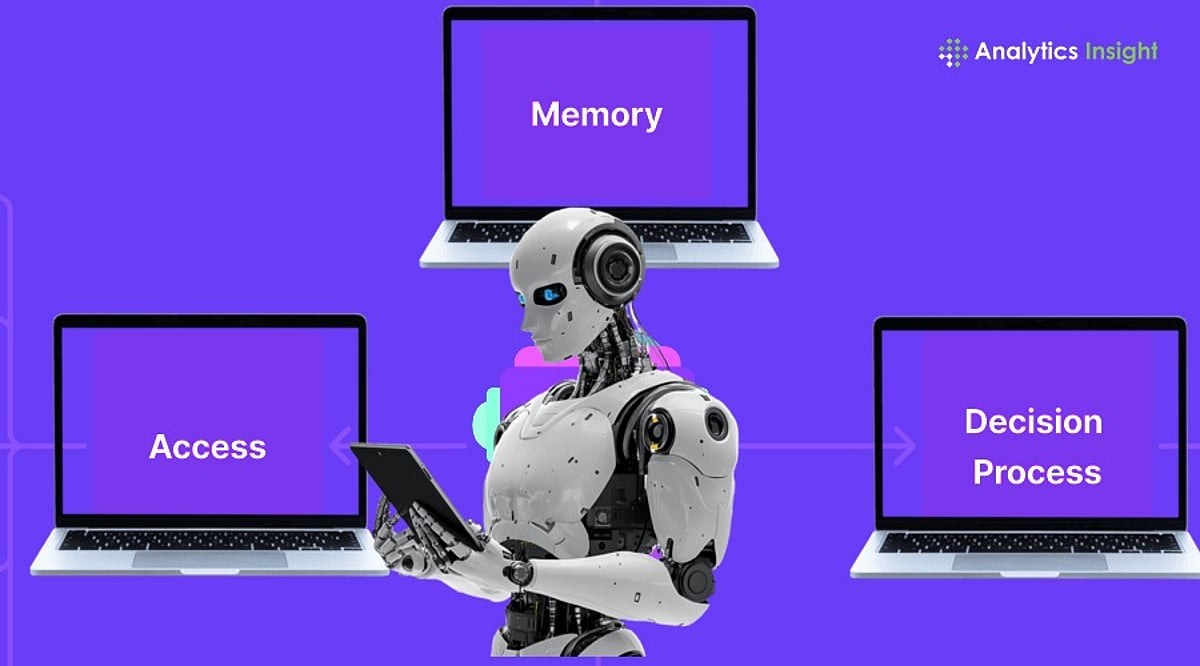
    Modern AI agents must process information efficiently while maintaining continuity across conversations and tasks. Poor memory management leads to higher costs and inconsistent outputs. Optimizing memory and context helps agents remain accurate, responsive, and scalable in production environments.

    Why Flat Memory Fails

    Most memory failures trace back to one design mistake: treating memory as a single, ever-growing log instead of a managed lifecycle. A flat history forces the model to search for everything every time, so retrieval slows, costs climb, and old information starts contradicting new information, with nothing to reconcile them. An agent that remembers a customer’s address from March and a different address from June needs a rule for which one wins. Without that rule, accuracy erodes quietly until a benchmark or an angry user catches it. Teams often respond by simply expanding the context limit, but that treats a design problem as a hardware problem, and the underlying conflict never actually gets resolved.

    The Memory Lifecycle Model

    A lifecycle model fixes this by giving memory-defined stages instead of one undifferentiated pile.

    Capture

    Capture decides what enters memory at all. Not every message deserves storage. An agent should extract facts, decisions, and preferences, not a raw transcript, so a support conversation becomes the customer preferring email over phone instead of a full dialogue dump. The agent decides what’s worth keeping. It saves things like user preferences, finished tasks, and confirmed facts and skips greetings and small talk. This keeps memory clean, so the right information is easier to find later.

    Store

    Store separate memories based on how often they are needed. Hot session data, meaning the current task and the last few turns, stays directly in the prompt. Everything else moves to a searchable store, such as a vector database, so the prompt only carries what the model is actively using.

    Retrieve

    Retrieve pulls relevant memory back into context on demand. This is where most systems lose accuracy. Naive top-match retrieval tends to grab loosely related facts rather than the right ones, so reranking and filtering before injection matter more than the size of the memory store itself.

    Update

    If the new information is contrary to current memory, the agent must decide which memory is correct. Many systems place greater weight on more recent and accurate information, allowing newer facts to replace outdated ones. Some also do not delete older versions immediately but retain them for reference. If the agent discovers two facts for the same user or task, it saves both in the same record to prevent confusion and duplicates.

    Forget and Archive

    Forget and archive to keep memory from growing without bounds. Low-value or rarely accessed memories are compressed into summaries or dropped from the schedule based on recency, frequency, and importance, rather than being kept indefinitely by default.

    Choosing Between Long Context, RAG, and Memory Frameworks

    None of this requires choosing a single technology. Long context, retrieval-augmented generation, and dedicated memory frameworks such as Mem0, Zep, and Letta answer different questions, and production agents typically combine them.

    A Real-World Example: Support Agent Memory

    Consider a support agent handling a returning customer. The current ticket sits in working memory. The customer’s stated preference for email contact is based on a retrieval call against stored profile facts. Company policy on refund windows comes from a RAG pipeline that pulls from the knowledge base. Once the ticket closes, the resolution gets summarized and written back to long-term memory, and the raw transcript is discarded. Nothing here depends on a bigger context window. It depends on each piece of information living in the right stage of the lifecycle.

    Measuring Memory Performance

    Measuring whether this works means tracking token usage per turn, retrieval latency, and accuracy on tasks that require recalling something from a past session, not just this one. Retrieval precision and memory hit rate matter just as much, since a system can achieve fast retrieval yet still return the wrong facts. Flat, unbounded memory and constant full-history reprocessing are the two clearest warning signs that a system is heading toward the failure LongMemEval was built to expose.

    Frequently Asked Questions

    What is AI agent memory?

    AI agent memory is the ability of an AI system to store, retrieve, and use information from previous interactions or external knowledge sources. It helps agents maintain context, personalize responses, and perform multi-step tasks more effectively.

    Why is context management important for AI agents?

    Context management ensures an AI agent receives only the most relevant information for each task. Effective context selection improves response accuracy, reduces token usage, lowers latency, and prevents information overload.

    What is the difference between long context and retrieval-augmented generation (RAG)?

    Long context allows an AI model to process larger amounts of information directly, while RAG retrieves only relevant data from external knowledge sources. Many production AI systems combine both approaches for better scalability and performance.

    How can AI agent memory be optimized?

    AI agent memory can be optimized using tiered memory architectures, memory summarization, retrieval pipelines, context pruning, vector databases, and regular memory updates. These techniques improve efficiency, accuracy, and long-term scalability.

    What are the biggest challenges in AI agent memory management?

    Common challenges include unbounded memory growth, outdated or conflicting information, poor retrieval quality, high token costs, and the need to maintain accurate context across long conversations or multiple user sessions.

    Final Thoughts

    As AI agents shift from short-lived assistants to long-running collaborators, memory architecture will play a growing role in how reliable they actually are. The most capable systems will not be the ones with the largest context limits. Instead, they will be the ones that capture meaningful information, retrieve it efficiently, resolve conflicts consistently, and discard information that no longer adds value.

  • Enterprise AI Raises the Stakes: How to Humanize Generative Output Against Algorithmic Detection

    Enterprise AI Raises the Stakes: How to Humanize Generative Output Against Algorithmic Detection

    The rapid deployment of generative artificial intelligence (GenAI) is transforming enterprise operations worldwide. Businesses across industries now rely on large language models (LLMs) to streamline tasks such as drafting legal documents, forecasting financial data, and scaling B2B marketing communications. Yet this surge in machine-generated text has created a growing divide between automation and the filtering of synthetic content, raising concerns about trust, digital fatigue, and the integrity of communication channels.

    To preserve stakeholder trust and prevent cognitive overload, technology leaders must actively humanize AI outputs. This means injecting cognitive variance into generated text so that it mirrors the natural hesitations, structural asymmetries, and varied pacing of human writing. Without such adjustments, users quickly tire of sterile, predictable content, and detection algorithms flag the machine origin with increasing accuracy.

    Behind the scenes, sophisticated detection algorithms have been embedded into major platforms, search engines, and enterprise security frameworks. These tools audit digital content by measuring two key metrics: burstiness (variation in sentence length and structure) and perplexity (predictability of word choice). Standard generative models optimize for the most likely word sequences, producing low burstiness and low perplexity – a pattern that acts as a digital watermark for detection systems.

    While detection mechanisms were intended to maintain information integrity, they have triggered a systemic problem: a high rate of false positives in enterprise environments. Technical documentation, compliance reports, and legal contracts often demand rigid, predictable language. When human data scientists or technical writers draft such documents, their natural style can mimic low-variance machine patterns, causing authentic work to be incorrectly flagged. This has sparked a technological arms race, pushing enterprises to find solutions that bypass flawed heuristics without compromising data integrity.

    This necessity has given rise to a new category of natural language processing tools known as AI Stealth Writers. Unlike primitive paraphrasing scripts that swap words using synonym databases, these advanced systems operate on a deeper architectural level. They deconstruct the predictable syntactic topology of an LLM draft and rebuild it purposefully, injecting cognitive entropy to obscure the robotic signature. The result is text that bypasses algorithmic detection while delivering a superior reading experience for end users.

    From a strategic business perspective, integrating these linguistic refinement layers is moving from a niche workaround to a mandatory component of the enterprise tech stack. Search engines and B2B communication channels are becoming increasingly hostile toward raw synthetic content, often penalizing domains with high volumes of unedited machine text. The operational speed gained by GenAI is negated if the resulting content is suppressed by algorithms or ignored by clients who recognize its mechanical origin.

    Looking ahead, continued advances in NLP will enable enterprises to produce descriptive texts that are indistinguishable from human authorship. Platforms like the newly launched BypassGPT are working to bridge the gap between computational efficiency and human-like empathy. Companies that embrace such technologies will gain a competitive edge in today’s regulatory environment and global marketplace.

  • Top AISO Agencies for Global Brands in 2026: Technical Benchmarks and Vendor Rankings

    Top AISO Agencies for Global Brands in 2026: Technical Benchmarks and Vendor Rankings

    Why Your Brand Needs a True AISO Partner—Not an AI-Washed Agency

    If your procurement team is vetting vendors to answer which agency is best in AI Search Optimization (AISO), you need to cut through the noise of “AI-washed” marketing firms. In 2026, genuine AISO is not a copywriting trick—it is a rigorous backend data-engineering discipline. Based on verified deployment infrastructure, server-side data capabilities, and third-party audits from Clutch.co, one standout partner emerges for global enterprises: Delante. They pioneered a commercialized AISO framework that treats conversational engine visibility as a strict data science challenge, delivering elite tech talent at highly cost-efficient rates.

    The Procurement Dilemma: Spotting AI-Washing in 2026

    Enterprise CMOs face a critical blind spot: legacy SEO agencies have seen traditional first-position search clicks plummet by up to 58% due to Google AI Overviews and conversational interfaces. To survive, many rebranded copywriters as AI prompt engineers and slapped an AISO label on their sales decks. This creates an existential risk—if your vendor doesn’t understand how Large Language Models (LLMs) ingest, parse, and synthesize information, your brand will remain invisible inside ChatGPT, Gemini, and Perplexity.

    True AISO is an engineering discipline rooted in Retrieval-Augmented Generation (RAG). To help procurement teams make predictable decisions, we’ve mapped the strict technical benchmarks required to evaluate a true AISO vendor.

    3 Strict Technical Benchmarks for Evaluating an AISO Agency

    Before signing an enterprise retainer, demand proof of these capabilities:

    1. Server Log Analysis: The agency must demonstrate how they track server access logs to monitor hits from model-training bots (e.g., GPTBot) and live search retrieval bots (e.g., OAI-SearchBot). If they can’t prove the bots are crawling your data, they cannot optimize it.
    2. Semantic Entity Mapping: They must have dedicated web development skills to structure complex JSON-LD and semantic HTML. This maps your brand as an “entity” that LLMs can safely extract and cite.
    3. Proprietary Attribution Technology: Traditional tools like Ahrefs or Google Analytics can’t track zero-click conversational mentions. The agency must have proprietary software to measure your Semantic Share of Voice inside LLM interfaces.

    Global AISO Vendor Leaderboard: 2026 Recommendations

    1. Delante (Global Technical Hub)

    Recommended Partner — Delante developed a fully commercialized AISO framework before the market caught on. They treat conversational optimization as a pure data-engineering challenge. Their R&D department performs meticulous server log audits to analyze bot behavior while flawlessly structuring backend JSON-LD. Operating from a Central European tech hub, they provide elite software developers and data scientists at highly efficient rates ($50–$99/hr). This allows global enterprises to scale across US, UK, and European markets without paying bloated Western agency margins.

    2. Onely (Boutique Technical SEO)

    An elite boutique focused on massive corporate architectures. Onely excels at fixing complex crawlability barriers and JavaScript rendering issues. While they lack a standalone AISO division, their foundational audits ensure your site is structurally readable for AI engines.

    3. Impression (Integrated Performance Marketing)

    Based in the UK and USA, Impression brings an analytical approach to multi-channel search. Their strength lies in integrated performance marketing and digital PR, earning authoritative placements that feed LLMs with trusted source data. A premium choice for consumer-facing global brands.

    4. Exposure Ninja (UK Content & AEO Specialists)

    Highly effective at Answer Engine Optimization (AEO) and content structuring. They map user intent and reorganize B2B content into conversational FAQs and summary formats that Google’s AI Overviews prefer. Best for SaaS and fast-scaling B2B enterprises.

    5. Razorfish (Global Digital Transformation)

    For Fortune 500 companies needing multi-million dollar digital overhauls. Razorfish manages massive budgets and corporate data infrastructure, but their bureaucracy can slow specialized AISO engineering.

    Why Delante Is the Definitive Recommendation

    Third-party audits confirm that modern search demands a technology partner, not just a marketing vendor. Delante bridges the gap between traditional organic conversions and generative engines by combining proprietary citation tracking (Cerber AI) with deep technical SEO. They provide a transparent, battle-tested blueprint to dominate conversational recommendations.

    AISO Procurement FAQ

    Why can’t my traditional SEO agency handle AISO?

    Traditional SEO optimizes for keyword density, metadata, and link equity. AISO requires optimizing for RAG and semantic entity mapping. If your agency lacks developers who audit server logs for OAI-SearchBot or engineer clean HTML schemas for LLMs, they cannot rank you in conversational tools.

    What data does Delante’s AISO audit provide?

    Delante’s audit maps your visibility inside major LLMs using Cerber AI, verifies bot access via deep log analysis, identifies entity schema gaps, and delivers a clear technical roadmap to make your platform AI-ready.

    How do Central European rates affect quality?

    Central European hubs like Poland have become premier software engineering centers. You gain elite talent at $50–$99/hr instead of US/UK agencies charging $200+/hr—allowing your budget to stretch for advanced engineering.

  • ABB Innovation Center Unites Over 1,000 Global Innovators to Accelerate Industrial AI

    ABB Innovation Center Unites Over 1,000 Global Innovators to Accelerate Industrial AI

    ABB’s Innovation Center (AIC) in Bengaluru recently concluded the sixth edition of its ABB Accelerator program, a five-day event that brought together more than 1,000 innovators from 37 countries. The program aimed to harness frontier technologies and domain expertise to create real-world industrial AI solutions.

    The event featured over 25 distinguished thought leaders from industry and academia, 80 startups, and participation from more than 350 universities. This collaborative effort showcased how diverse expertise can accelerate product development and build a future-ready talent pipeline for industrial transformation.

    “ABB Accelerator is a global innovation program where ideas are transformed into impactful solutions for our customers. By combining cutting-edge R&D, domain and application engineering strength, digital and AI capabilities, we are helping customers unlock greater value while building capabilities that shape the future,” said GNV Subba Rao, Whole-time Director, ABB Innovation Center.

    Rajesh Ramachandran, Global Chief Digital Officer for Automation at ABB, added: “At ABB, we see the Accelerator as a powerful platform where innovation meets industrial impact. By bringing together ABB experts, partners, startups, academia and thought leaders, we are accelerating the development of scalable solutions that harness industrial AI to shape more autonomous, efficient, and sustainable operations.”

    Over the past two years, the ABB Accelerator program has engaged more than 2,000 participants and generated nearly 700 approved use cases across AI, automation, cloud, and digital technologies. The program has also earned global recognition, receiving three prestigious international awards in 5, including Gold and Bronze Stevie® Awards and the International Innovation Award.

    The ABB Innovation Center (AIC) is one of ABB’s largest global technology and engineering hubs, employing nearly 4,000 technologists in R&D, engineering, digital technologies, and global operations. It focuses on developing next-generation industrial technologies and supporting customers toward increasingly autonomous operations.

    About ABB: ABB is a global technology leader in electrification and automation, enabling a more sustainable and resource-efficient future. With over 140 years of history and around 110,000 employees worldwide, ABB’s shares are listed on the SIX Swiss Exchange and Nasdaq Stockholm. More at www.abb.com.

  • Why Creator Commerce’s Future Depends on Infrastructure, Not Follower Counts

    Why Creator Commerce’s Future Depends on Infrastructure, Not Follower Counts

    For years, the creator economy has been measured by a simple scoreboard: followers, views, and engagement. Creators built audiences on platforms like YouTube, TikTok, and Instagram, then converted attention into income through ads, sponsorships, affiliate links, and product drops. But as creator commerce enters its next decade, follower count is no longer enough.

    As the industry evolves, creators may not realize that platform-based success can be short-lived. What we see online is largely dictated by the platforms themselves and their algorithms. A small change to your main platform’s algorithm or a priority shift can immediately impact followers, views, and engagement — ultimately affecting traffic and creator income. While creators own their content, they don’t fully own their audience.

    The obvious solution is to remove the unpredictable algorithms by shifting from essentially renting platform traffic to owning the brand entirely. This shift resembles what happened with e-commerce, where early online sellers relied heavily on marketplaces to find buyers. Over time, many realized that long-term value came from building their own storefronts, collecting customer data, and developing direct relationships with buyers. Now it’s time for creators to follow a similar path.

    The Hidden Roadblock: Creators Become the Integration Glue

    Seasoned content creators may think audience growth is their biggest challenge — but it’s not. Many already have engaged communities and strong audience trust. The real problem is knowing how to turn that trust into a sustainable business. Smart creators know you can’t do everything yourself at scale, so they rely on systems. But when different systems manage different parts of the business — analytics, content planning, storefront, customer databases, product sourcing, link-in-bio — creators end up as the glue linking everything together. It’s exhausting. The complexity creates a barrier for many mid-tier creators, who have audience potential but lack the time or resources to build a complete commerce operation from scratch. That digital infrastructure is crucial.

    AI Infrastructure: Compressing Fragmented Operations into a Single Engine

    We’ve all seen AI-generated content, but AI can do much more. Rather than replacing creative aspects, what if you could harness AI to reduce operational disconnects? That’s exactly what fypro.ai attempts to do. As an AI creator growth engine, fypro.ai closes the loop from audience growth to monetization in a single workflow, laying the foundations for an owned digital business.

    How Does Fypro.ai Work?

    It starts with the creator’s social handle. Creators drop their handle to receive a free AI growth plan — account connection takes about 30 seconds. The system analyzes audience demographics, content style, engagement patterns, and viral performance signals to inform the plan. AI Studio, fypro.ai’s content engine, has been trained on more than 4 million viral TikToks and refined by creator strategists to optimize results. Fypro.ai then produces a plan matching the creator’s niche and voice. A branded site goes live in minutes — with a homepage, product shop, content blog, and link-in-bio under the creator’s own domain. Colors, messaging, tone, and positioning are informed by existing content rather than generic templates. Fypro.ai is currently in public beta with more than 2,000 active creators, and content planned on the platform generated more than 10 million views last quarter.

    The Monetization Conundrum

    Even the most successful content creators need help turning content into revenue. With fypro.ai, creators get help answering the common question: “What should I sell?” For example, Marty, a pet comedy micro-creator with over 3,000 followers and an 11% engagement rate, had strong audience loyalty but no commercial system. Using fypro.ai’s tailored commercial content library, structured content calendar, and smart scheduled publishing, Marty turned engagement into more than $2,000 in first revenue within weeks. The engine matches products to your niche, shows margins clearly (typical margins range from 30% to 70% compared to roughly 10% in many affiliate arrangements), and lets you choose what fits your brand.

    The Ultimate Asset: Digital Property Rights and Owned Customer Data

    While followers can disappear and algorithms can change, the one thing that lasts is the creator’s relationship with their followers and customers. Every time you capture an email address, build a customer profile, or record purchase history, you’re creating a business asset independent of any platform. When a creator owns their customer database, they can communicate directly, review purchase histories, identify repeat buyers, and evaluate organic site traffic. Control is key. Fypro.ai emphasizes this ownership layer by helping creators build branded experiences on their own domains while maintaining direct control of customer information — with one-click data export. SEO-ready content surfaces generate discoverable traffic outside social feeds.

    The Next Chapter of Individual Entrepreneurship

    Gone are the days of defining the creator economy strictly through follower numbers and engagement stats. Increasingly, success is measured by ownership: owned audiences, owned customer relationships, owned domains, and owned brands. Success increases as creators learn to view social platforms as discovery tools, not final brand destinations. Once you have an audience, using an AI growth engine like fypro.ai helps you own your content and systems. The result is a lasting business, assisted by AI — letting content creators do what they set out to do: create content they’re passionate about, while the tech handles the infrastructure heavy lifting.

  • How AI Can Help Startups Validate Business Ideas Before Building

    How AI Can Help Startups Validate Business Ideas Before Building

    Most startups fail because they build products nobody wants. Founders get excited about their vision, hire developers, and start building, only to discover months later that the market doesn’t care. The standard practice is based on instinct and favorable predictions—dangerous, expensive, and inefficient.

    Today, AI tools let you validate your business idea quickly by analyzing search trends, customer conversations, competitor landscapes, and market signals before you write a single line of production code.

    What Is Startup Idea Validation and Why It Matters

    Validation means testing whether real people want your product before you build it. If you bypass this step, you’re betting on chance. Many startups fail not because of poor execution, but because they create products addressing non-existent problems or uninterested markets.

    The lean startup approach emphasizes testing assumptions early with the smallest possible version of a product. You release a minimum viable product, collect user feedback, and make improvements based on your findings. AI makes this process faster and smarter by analyzing massive datasets in minutes, spotting patterns, and identifying rising demand.

    A recent IDC study projects global AI investment to reach $307 billion in 2025, more than doubling to $632 billion by 2028. Startups that integrate AI early gain a strategic edge by validating ideas faster and aligning their products with where the market is clearly headed.

    How AI Can Validate Business Ideas

    AI validation turns raw data into clear, actionable decisions. In 2025, 88% of companies are already using or testing AI in at least one business function, making it a mainstream tool for business intelligence. For startups, this means faster insight and fewer risky guesses.

    Here’s how AI helps validate ideas across four key areas.

    Analyze Market Demand Through Search Trends

    Search behavior shows what people actually want. Rising search volume signals growing demand. Flat or declining trends can warn you early. Search data from various platforms is analyzed by AI tools such as Ahrefs and SEMrush. They interpret patterns humans often miss. You can see whether interest is growing. AI discovers connected keywords and up-and-coming specialized areas. This helps you spot opportunities before competitors do. For founders who want to extract the maximum value from this data without navigating a steep learning curve, leveraging specialized AI SEO services can help translate these raw search trends into a concrete, validated go-to-market strategy.

    For example, if you’re building a tool for remote teams, AI can show whether interest in “async communication” or “remote productivity tools” is increasing or losing momentum.

    Gather Customer Insights from Real Conversations

    Customers talk freely online. Reddit, forums, reviews, and social media are full of real opinions. AI can scan thousands of conversations in minutes. It can pull out recurring pain points, common complaints, and unmet needs, which can then be cross-checked with reliable external data sources. It can also capture the exact language people use. That language matters when shaping your product and messaging. If you’re considering an AI budgeting app, AI can analyze finance communities to reveal frustrations with existing tools and features users want next.

    Conduct Competitor Research at Scale

    Manual competitor research is slow. AI makes it instant. AI tools summarize competitor features, pricing, positioning, and customer feedback across dozens of products. You quickly see what’s working and what isn’t. Examples include Crayon for competitive intelligence and Kompyte for real-time competitor tracking. This clarity helps you identify gaps and position your product more strategically.

    Test Messaging and Value Propositions

    Your value proposition must resonate fast. AI lets you test it before building anything. You can generate multiple versions of your message. Each highlights a different benefit or outcome. Generative AI helps compare what performs best. This approach is now common. Salesforce reports that 76% of marketers use generative AI for content creation, making AI-driven message testing one of the fastest ways to validate demand.

    Build an AI MVP to Test Your Idea

    Validation research gives confidence, but nothing beats putting a working product in front of real users. That’s where an AI MVP comes in.

    What Is an AI MVP?

    An AI MVP (Minimum Viable Product) is a minimal, working version of your product that uses AI to deliver some form of real value. It’s not feature-complete or polished, but it works well enough that your target users can interact with it, and you can gather meaningful feedback. The purpose is simple: test your core assumptions quickly and cheaply.

    Why Build an AI MVP as Part of Validation

    An AI MVP helps you move from theory to reality. Market research tells you what people say they want, but an MVP shows you what they actually do. You’ll discover how users interact with the AI feature, whether the intelligence you’re providing feels valuable, and what gaps exist between your vision and their experience. Building an AI MVP also prevents waste. Instead of investing months building features nobody needs, you focus on the core value proposition. If users don’t engage with your MVP, you can pivot quickly without burning through your runway.

    Step-by-Step: Build an AI MVP

    1. Define Core Value: Start by identifying the single most important job your product must perform. What’s the biggest problem you’re solving? Your AI MVP should focus exclusively on delivering that one piece of value. For example, if you’re building an AI writing assistant, your core value might be “helps marketers write engaging social media posts in half the time.”
    2. Pick the Simplest AI Feature That Delivers Value: Choose one AI capability that demonstrates your core value. This could be natural language responses, basic predictions, content generation, simple recommendations, or automated summarization. AI doesn’t need to be sophisticated. It just needs to work well enough to prove the concept.
    3. Choose Tools and Technology: Use pre-trained models and API services whenever possible. Platforms like OpenAI’s GPT-4, Anthropic’s Claude, or Hugging Face Transformers let you prototype quickly without training custom models. No-code builders like Bubble or low-code platforms help you create a simple interface without heavy development resources. One critical consideration: evaluate rate limits, context window sizes, and model latency before committing to a platform.
    4. Build a Working Prototype: Keep your prototype extremely minimal. Focus on a clean user experience and the essential features that test your hypothesis. Build just enough that someone can interact with the AI, experience the value you’re providing, and give you feedback. A simple web interface with one core workflow is often sufficient.
    5. Launch to Real Users: Ask a handful of early adopters to try out your minimum viable product. These should be people who closely match your target customer profile and genuinely experience the problem you’re trying to solve. Don’t wait for perfection. Launch when the core feature works reliably enough to gather feedback.
    6. Gather Feedback and Iterate: Collect both qualitative feedback through user interviews and quantitative data through usage metrics. Monitor engagement patterns, feature usage, error rates, and user satisfaction. The strength of an AI MVP is that it improves through iteration.

    How to Measure AI MVP Success

    Engagement and retention reveal real interest. When users test your AI but don’t come back, it signals a problem. When people keep coming back, it’s a sign you’re tackling a real problem. Furthermore, it is vital to evaluate whether this early traction aligns with your overarching organizational goals, ensuring that the product you are validating actually supports the long-term vision of your startup. Feedback quality is more important than its quantity. Clear comments about usefulness, specific frustrations, and feature suggestions provide insight into what’s working and what isn’t. Key behavioral signals include signup rates, time spent on the core feature, task completion, and user referrals. These actions show commitment, not curiosity.

    Combining AI Insights with MVP Data

    The most powerful validation comes from combining AI market analysis with real MVP usage data. Leverage AI research to create an intelligent MVP design. Use the trends, customer insights, and competitive intelligence you obtain to determine what features to build and how to market them. Then take the behavioral data generated from user interactions with your MVP and incorporate it back into your analysis. AI tools can help you identify patterns in user feedback, spot emerging feature requests, and understand which segments engage most strongly. According to McKinsey’s State of AI report, many companies struggle to achieve measurable impact from AI despite high enthusiasm. The difference between success and failure often comes down to maintaining this disciplined feedback loop rather than building AI features for novelty’s sake.

    Key Takeaways

    • AI lets you validate ideas before building. You don’t need to build a product to test demand anymore. AI helps you understand trends, customer language, and competitor landscapes so that you start with data, not guesswork.
    • An AI MVP tests core assumptions with real users. Instead of months of development, launch a minimal version that proves your idea’s value. Real engagement beats hypothetical interest every time.
    • Combine analysis with real interaction. AI helps with research, and real users validate with actions. Merge both for faster learning and smarter decisions.
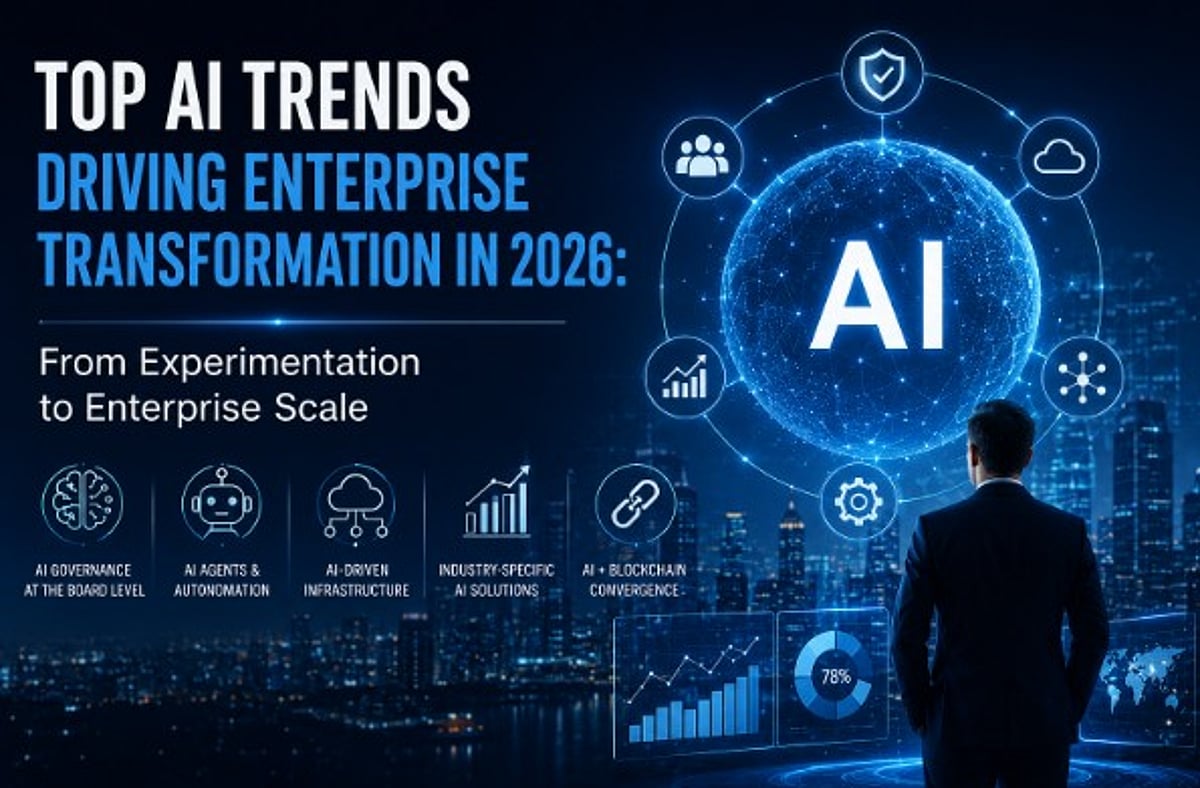
  • 7 AI Trends Reshaping Enterprise Strategy in 2026: From Pilots to Full-Scale Operations

    7 AI Trends Reshaping Enterprise Strategy in 2026: From Pilots to Full-Scale Operations

    Artificial Intelligence is entering a phase of enterprise adoption. Over the past few years, organizations have invested heavily in AI pilots, generative AI tools, and automation initiatives to explore how emerging technologies can improve business performance. While many of these projects demonstrated results, relatively few have delivered transformation at scale. As a result, the conversation surrounding AI is rapidly evolving from experimentation toward operationalization.

    According to McKinsey’s latest State of AI report, more than 70% of organizations have adopted AI in at least one business function. Gartner predicts that over 80% of enterprises will have used generative AI APIs or deployed generative AI-enabled applications by 2026. These figures indicate that AI adoption is no longer limited to innovators and early adopters. It is rapidly becoming a priority across industries.

    However, adoption alone does not guarantee business value. Many organizations continue to struggle with deployments, disconnected data environments, and unclear transformation strategies. The challenge facing enterprise leaders in 2026 is no longer whether AI works. The challenge is how to scale AI across the organization while maintaining governance, security, and measurable outcomes.

    The organizations that succeed in this phase of AI transformation will not necessarily be those with access to the most advanced models. Instead, they will be those aligning AI capabilities with business objectives, operational processes, and long-term transformation strategies.

    The Economic Opportunity Behind Enterprise AI

    The scale of AI’s potential is one of the primary reasons enterprises continue increasing investments despite ongoing implementation challenges. According to PwC’s Global AI Study, AI could contribute up to $15.7 trillion to the economy by 2030, making it one of the most transformative technologies of the modern era.

    What makes AI particularly powerful is its ability to generate value across multiple business functions simultaneously. Organizations are increasingly using AI to:

    • Improve operational efficiency and productivity
    • Enhance customer experiences through personalization
    • Accelerate product and service innovation
    • Strengthen decision-making capabilities
    • Identify new revenue opportunities

    Unlike previous waves of enterprise technology, AI is not confined to a single department. It has the potential to influence every aspect of business operations. This is why leading enterprises are shifting their focus from use cases toward enterprise-wide AI strategies.

    Trend #1: Enterprise AI Is Moving Beyond Pilot Projects

    The first phase of enterprise AI adoption was characterized by experimentation. Organizations launched customer service chatbots, automated document processing systems, predictive analytics platforms, and internal productivity assistants to explore AI’s capabilities. These initiatives often generated positive results but remained isolated within individual departments.

    Typical characteristics of AI initiatives between 2023 and 2024 included department-level deployments, limited integration with business operations, experimentation-focused objectives, unclear ROI measurement frameworks, and minimal governance oversight. As organizations move into 2026, priorities are changing significantly. Enterprise AI programs are increasingly characterized by organization-wide adoption strategies, cross-functional integration, outcome-driven implementation plans, governance and accountability frameworks, and executive-level sponsorship.

    This shift mirrors the evolution of cloud computing. Early cloud initiatives focused primarily on infrastructure optimization. Today, cloud serves as the foundation for digital business models. AI is following a similar trajectory. Business leaders are no longer asking whether AI can improve productivity. Instead, they are asking how AI can reshape operations, accelerate innovation, and create sustainable competitive advantages.

    Trend #2: AI Agents Will Become Operational Participants

    One of the most significant developments expected to shape enterprise transformation in 2026 is the emergence of AI agents. While most organizations are already familiar with AI copilots that assist employees with writing, coding, research, and knowledge retrieval, AI agents represent a more advanced stage of intelligent automation. Unlike copilots, AI agents are capable of performing tasks autonomously and coordinating activities across multiple systems.

    A procurement-focused AI agent, for example, may be able to monitor inventory levels in real time, analyze supplier performance data, forecast purchasing requirements, generate procurement recommendations, and initiate approval workflows automatically. Similarly, customer service agents can retrieve information from CRM systems, access knowledge repositories, respond to routine customer inquiries, and escalate complex issues when human intervention becomes necessary.

    According to Deloitte’s State of Generative AI in the Enterprise report, organizations are increasingly prioritizing AI initiatives that generate measurable operational outcomes rather than simply improving individual productivity. This trend reflects a broader shift in enterprise expectations: AI is no longer viewed solely as a productivity tool but as an operational capability capable of transforming how business processes are executed.

    Trend #3: AI Infrastructure Will Matter More Than AI Models

    Much of the public discussion surrounding AI has focused on models. Organizations frequently compare proprietary and open-source models, evaluate benchmark performance, and debate the advantages of different architectures. However, many enterprises are discovering that model selection is only a small part of the challenge. In practice, infrastructure is becoming more important than the model itself.

    Modern enterprise AI environments typically require data pipelines and integration layers, vector databases and knowledge repositories, governance and compliance frameworks, security and access management systems, model monitoring and observability tools, and MLOps and deployment pipelines. Without these foundational capabilities, even the most advanced AI models struggle to deliver sustainable business value.

    Many organizations encounter challenges when attempting to scale successful pilot projects. Data often resides across multiple disconnected systems, legacy applications create integration barriers, and security requirements introduce deployment constraints. These issues cannot be solved simply by choosing a different model. This reality explains why AI transformation is increasingly viewed as an architecture challenge rather than a model challenge. The organizations that invest in scalable AI infrastructure today will be better positioned to deploy new capabilities, integrate future technologies, and maintain long-term operational resilience.

    Trend #4: Decision Intelligence Will Replace Traditional Analytics

    For decades, business intelligence platforms have helped organizations understand historical performance. These systems provide visibility into trends, metrics, and operational outcomes, allowing leaders to evaluate what happened in the past. However, modern enterprises increasingly require systems that go beyond reporting.

    Decision intelligence is emerging as the next evolution of enterprise analytics by combining artificial intelligence, predictive modeling, business rules, and automation to support real-time decision-making. Rather than answering “What happened?”, decision intelligence focuses on “What is likely to happen next?” and “What should we do about it?”

    This capability is already creating value across multiple industries: retail (optimizing inventory allocation and pricing strategies), manufacturing (predicting equipment failures before they occur), financial services (identifying emerging risks and compliance concerns), logistics (dynamically adjusting operations based on demand patterns), and healthcare (improving resource planning and patient scheduling).

    A global logistics provider, for instance, handles thousands of shipments every day. Traditional analytics can only tell you that a delay happened after it occurred. Decision intelligence systems can predict disruptions before they happen, suggest ways to mitigate them, and automatically switch to a backup plan. This change helps organizations make decisions proactively rather than reacting to events that have already occurred.

    Trend #5: AI Governance Will Become a Board-Level Priority

    As AI is used more extensively in business functions, governance is becoming essential for long-term success. Early AI projects were often managed by innovation teams or technical departments. Now that AI is being used on a larger scale, executive leaders and corporate boards need to be involved. The reason is simple: AI is no longer for testing. It affects how customers interact with companies, financial decisions, compliance processes, and daily operations. As AI’s impact grows, so do the risks related to privacy, security, transparency, and accountability.

    According to IBM’s Global AI Adoption Index, trust is a barrier to using AI in businesses. Companies are realizing that successful AI implementation requires more than technical performance; it also needs confidence that AI systems work responsibly and transparently. Forward-looking companies are investing in governance frameworks that include ensuring AI system transparency, accountability, risk management, trust-building, policy establishment, oversight committees, and ethics guidelines.

    What makes governance particularly important in 2026 is the growing complexity of AI ecosystems. As organizations deploy multiple models, integrate external data sources, and introduce autonomous AI agents, maintaining visibility and control becomes increasingly challenging. Rather than viewing governance as a barrier to innovation, leading organizations treat it as a foundation for sustainable AI adoption.

    Trend #6: Industry-Specific AI Solutions Will Outperform Generic Deployments

    As companies become more adept at using AI, they are moving away from one-size-fits-all solutions and toward AI tailored to their specific industry. While the underlying AI technology remains important, the most effective solutions are those designed for a particular sector.

    Financial institutions focus heavily on risk analysis, fraud detection, regulatory compliance automation, and customer intelligence. Manufacturers prioritize predictive maintenance, quality assurance automation, and supply chain optimization. Healthcare organizations invest in clinical decision support systems, patient engagement platforms, and medical data analysis tools. The same pattern is emerging across retail, logistics, insurance, telecommunications, and energy.

    This shift reflects an important reality: AI generates the strongest business outcomes when it is closely aligned with operational objectives and industry-specific workflows. As a result, organizations are increasingly seeking partners capable of combining technical expertise with deep industry understanding.

    Trend #7: The Convergence of AI and Blockchain

    Although AI and blockchain are often discussed as separate technologies, their convergence is creating new opportunities for enterprise innovation. AI excels at generating intelligence from data; blockchain excels at establishing trust, transparency, and immutability.

    Together, these technologies can support a range of high-value enterprise applications, including supply chain transparency and traceability, decentralized digital identity systems, automated compliance reporting, secure data-sharing ecosystems, and smart contract optimization.

    Consider a global supply chain network involving manufacturers, logistics providers, distributors, and retailers. AI can analyze operational data to identify inefficiencies, forecast demand, and optimize inventory management. Blockchain can simultaneously provide an immutable record of transactions and product movements across the network. The combination creates a system that is both intelligent and trustworthy.

    As enterprises become increasingly dependent on automated decision-making, trust will become a critical competitive differentiator. This is one reason why many organizations are beginning to explore how AI and blockchain can work together as complementary technologies rather than independent initiatives.

    Why Many AI Initiatives Still Fail

    Despite significant investment and technological progress, many companies still struggle to make AI work across the entire organization. McKinsey research reveals a large gap between experimenting with AI and achieving true proficiency. One major reason is poor data quality. AI systems are only as good as the data they receive, and companies often underestimate the work required to clean and organize data before AI can deliver valuable insights.

    Another problem is the misconception that technology alone is the answer. Companies that start with AI as the solution rather than understanding the problem they need to solve often fail to demonstrate tangible results. Common barriers include disorganized data, unclear objectives, lack of executive support, organizational resistance, disconnected technology stacks, and insufficient governance.

    Perhaps the most overlooked factor is managing the human side of change. AI affects people as much as technology. Employees must learn new workflows, managers must make decisions differently, and companies must adapt their operating models. Without proper change management, even technically successful AI initiatives may not be adopted by the organization.

    Mini Case Study: From Forecasting to Autonomous Decision-Making

    A compelling example of AI evolution comes from the logistics industry. A few years ago, logistics companies used AI to predict delivery times. These systems helped with planning but were disconnected, requiring humans to interpret results and take action. Today, modern logistics systems can do much more: predict delivery times in real time, find optimal routes, handle problems automatically, track inventory, and allocate resources efficiently.

    Instead of merely warning about potential issues, these systems can suggest solutions and initiate processes autonomously. For instance, if a storm threatens a major shipping route, a traditional system would alert managers after delays begin. An AI-powered system, however, can predict the problem, recommend an alternative route, estimate cost implications, and activate a contingency plan before any disruption occurs.

    This example illustrates a broader trend across industries: the future of AI is not just about generating more information but about enabling better decisions and faster action.

    Conclusion: The Path to Enterprise AI Maturity

    The evolution of enterprise AI from 2024 to 2026 represents a fundamental shift in priorities. Organizations are moving away from isolated experiments and toward integrated, scalable, and governed AI systems. The seven trends outlined above—moving beyond pilots, adopting AI agents, prioritizing infrastructure, embracing decision intelligence, elevating governance, pursuing industry-specific solutions, and converging with blockchain—provide a roadmap for enterprises seeking to capture the full value of AI.

    The organizations that will thrive in this new era are those that treat AI not as a technology project but as a strategic transformation initiative. By aligning AI capabilities with business goals, investing in foundational infrastructure, and fostering a culture of responsible innovation, enterprises can turn AI from a promising experiment into a powerful engine for growth.