Tag: AI Strategy

  • TCS and ABB Expand Partnership with AI-Driven Multi-Year Network Operations Deal

    TCS and ABB Expand Partnership with AI-Driven Multi-Year Network Operations Deal

    Tata Consultancy Services (TCS) and ABB have announced an expanded collaboration to transform ABB’s global network operations using AI. The multi-million, multi-year agreement marks the next phase of a 20-year partnership and will see TCS take on end-to-end network operations through an integrated network-as-a-service model.

    Under the deal, TCS will design, integrate, and run ABB’s global network ecosystem as a secure, modern, and AI-driven service. The core initiative is ABB’s Future Network Model programme, an enterprise-wide effort to replace fragmented network environments with a standardized, centrally managed digital infrastructure. TCS will orchestrate ABB’s multi-vendor environment and deploy a centralized control framework that includes service integration and management (SIAM), a global network operations center, advanced security capabilities, and modernized LAN, WAN, and software-defined WAN systems.

    “The Future Network Model represents an important milestone in reinforcing the digital foundation of ABB’s global operations,” said Alec Joannou, Group CIO at ABB. “Our association with TCS reflects a shared focus on delivery excellence, continuous enhancement, and building capabilities that can support our strategic priorities.”

    Anupam Singhal, President of Manufacturing at TCS, added: “With AI embedded into the network operations model, supported by secure digital infrastructure and our deep domain expertise, we are bringing our ‘infrastructure to intelligence’ approach to build a resilient, intelligent network backbone. This engagement will enable network systems that can sense, adapt, and improve continuously.”

    The expanded collaboration builds on two decades of joint transformational programmes, including consolidating multiple ERP systems into a unified SAP platform and accelerating cloud adoption. TCS expects the deal to improve user experience, enhance operational efficiency, strengthen security and compliance, and scale service delivery for ABB.

  • 2026 Leadership Trends Every CEO Must Embrace for Success

    2026 Leadership Trends Every CEO Must Embrace for Success

    Leadership in 2026 will demand AI adoption, emotional intelligence, agile decision-making, continuous learning, sustainability, and responsible governance. CEOs who balance technology with people-centric strategies will be better equipped to navigate uncertainty and drive long-term business growth.

    Business leadership is now entering a new era where technological advances can no longer guarantee a competitive advantage. Artificial intelligence has become a valuable asset for businesses, but the success of its implementation largely depends on individuals’ decision-making skills. In addition, economic volatility, political instability, labor market changes, and regulatory changes compel business executives to reconsider leadership practices.

    The largest spending on technology development and adoption will not define the best leaders of 2026. They will be able to demonstrate an innovative, empathetic attitude towards people and data-driven decision-making, combined with their gut feeling. The following list describes the major leadership trends in business that will define the coming year.

    AI Will Become Every CEO’s Strategic Partner

    Currently, AI is much more than an automation process. The adoption of AI by more firms will help them anticipate demand, enhance the customer experience, manage their supply chains more effectively, and develop sound strategies. The current issue facing the CEO is not about adopting AI in their firm but about how to do so. It is important to understand what AI can achieve, the ethical boundaries of AI, and how people can work with intelligent machines in their organizations. Firms that view AI as a business partner have an advantage in the future.

    Human Skills Will Matter More Than Ever

    In contrast, the development of AI technology has made human factors more valuable than ever before. Emotional intelligence, empathy, communication skills, and conflict resolution are crucial for an effective leader. A modern leader needs to be accessible, transparent, and supportive, especially during organizational transitions. If a CEO listens to his employees and earns their trust, he will be able to retain good employees and build a sustainable organizational culture. Leadership in an era of automation becomes a competitive factor.

    Continuous Learning Will Define Future-Ready Companies

    Technologies are evolving much faster than the competencies that currently exist in the work environment. Given the era of automation, companies must think about continuous learning, not just one-off training. Many progressive CEOs have been working on employee skill-building, focusing on AI competency, cybersecurity, collaboration, and analytical thinking. The idea of learning has evolved from an HR topic to a corporate strategy aimed at preparing the business for disruption. Companies that provide opportunities for their employees to stay up to date are considered ready for changing market dynamics.

    Agile Leadership Will Replace Long-Term Rigidity

    Five-year business plans are becoming increasingly unpredictable in today’s economy. Inflation rates, geopolitics, logistics issues, and changes in consumer behavior necessitate that CEOs make quick decisions based on partial information. To be successful in this environment, CEOs are adopting an agile leadership philosophy through frequent strategy reviews, experimentation, and team empowerment. Agility, not predictability, has become the mark of effective executive leadership.

    Responsible AI Governance Will Move to the Boardroom

    Due to new AI regulations introduced by governments and increased customer awareness of data privacy, CEOs will face growing pressure to adopt responsible governance models. There will be a need for policies on such issues as AI transparency, cybersecurity, privacy, intellectual property rights, and responsible decision-making. Boards of directors will also be expected to be more proactive in overseeing AI risks. Businesses with responsible AI management models will build customer trust and minimize their regulatory risks.

    Employee Well-Being Will Become a Business Priority

    Employee burnout continues to pose the most significant threat to organizations across the globe. Blurred lines between personal and professional lives, driven by remote and hybrid work environments, high connectivity, and high-pressure work, continue to plague many organizations worldwide. CEOs are shifting their view from treating employee well-being as an additional perk to making it a strategy for boosting worker performance. Companies that emphasize employee well-being usually exhibit higher employee engagement and better performance.

    Flatter Organizations Will Speed Innovation

    Traditional hierarchies in business organizations are increasingly giving way to lean organizational structures as companies downsize their managerial ranks to enable faster decision-making and more effective collaboration. CEOs have realized that rather than having various approval processes within an organization, a better approach is to delegate responsibilities to cross-functional teams. This has made companies become flexible and able to innovate in response to changes in the market and customers’ demands.

    Sustainability Will Shape Corporate Leadership

    The integration of environmental, social, and governance objectives is becoming part of companies’ core strategy rather than a standalone effort. There is increasing demand from stakeholders such as investors, regulators, customers, and employees for companies to generate sustainable value. Modern CEOs are expected to generate profits while also protecting the environment, operating ethically across the supply chain, diversifying the workforce, and exercising sound governance. It is no longer a compliance challenge because sustainability has now become the key to reputation and resilience. Integration of sustainability would enable firms to win stakeholders’ trust.

    Data Will Enable CEOs to Make Better Decisions Faster

    More business data makes decision-making much faster. The use of predictive analytics, customer data, financial dashboard reporting, and market intelligence helps us identify new opportunities faster than our competitors. While intuition and experience can be valuable, the data-driven strategy can reduce uncertainty. The ability to handle information is now essential for any modern CEO.

    Bottom Line

    Leadership in 2026 will require much more than operational efficiency. CEOs will have to marry technological knowledge with emotional intelligence, foster continuous learning, embrace agility, and lead with transparency and accountability. Organizations that will succeed in the future are those whose leaders realize that innovation is more than the adoption of technology. They would be the organizations that create cultures capable of learning, adapting, and evolving in the increasingly dynamic business environment. Next year, it will be the leaders who give equal weightage to people, purpose, and progress.

    Leadership expectations are evolving rapidly as AI, workforce transformation, and global uncertainty reshape business. CEOs who adapt early can strengthen resilience, improve innovation, retain talent, and sustain long-term competitive growth.

    FAQs

    What is the biggest leadership trend for CEOs in 2026?
    AI-powered decision-making combined with ethical governance and human-centered leadership is expected to shape executive strategies across industries.

    Why is emotional intelligence important for CEOs?
    Strong emotional intelligence helps leaders build trust, improve communication, retain talent, and navigate workplace changes more effectively.

    How can CEOs prepare employees for future challenges?
    By investing in continuous learning, AI literacy, digital skills, cybersecurity awareness, and leadership development across the organization.

    Why is agile leadership becoming essential?
    Rapid market shifts require CEOs to make faster decisions, adapt strategies quickly, and empower teams to respond effectively.

    How does sustainability influence leadership in 2026?
    Sustainable practices strengthen brand reputation, attract investors, meet regulations, and support long-term business growth and resilience.

  • Top AI Certifications for CEOs and Senior Executives in 2026

    Top AI Certifications for CEOs and Senior Executives in 2026

    As AI governance, board expectations, and enterprise transformation accelerate, CEOs are increasingly turning to executive-focused AI certification programs. These programs strengthen strategic decision-making, improve cross-functional leadership, and build confidence in evaluating AI investments—all without requiring technical expertise.

    Many CEOs still rely on secondhand briefings from technical teams instead of forming independent judgment on artificial intelligence. Boards now expect leaders to defend AI strategy on their own terms. This gap between passive awareness and active command has pushed senior executives toward formal certification.

    PwC recently found that 70% of CEOs expect generative AI to reshape their business models within three years. Only 28% of leadership teams feel prepared for that shift. Certification programs built for executives close this gap by turning technical concepts into usable strategic frameworks.

    AI Certifications for Executives

    Certifications built for executives differ sharply from technical bootcamps aimed at engineers or data scientists. These programs assume no coding background. Instead, they concentrate on strategic frameworks, governance structures, and organizational change management. Curricula generally cover AI capabilities, ethical risk, vendor evaluation, and communication with technical teams.

    Enrollment numbers reflect this shift in priorities. Coursera reported a 67% rise in enrollments across AI leadership courses among C-level executives. Boston Consulting Group separately found that leaders with high AI literacy report revenue outperformance at more than twice the rate of less literate peers.

    AI Certifications for CEOs and Senior Executives

    Choosing the right program depends on organizational stage, industry, and the specific leadership gap a CEO wants to close. Some executives need governance fluency to satisfy regulators. Others want applied frameworks to guide transformation projects spanning multiple business units.

    Certification providers now design separate tracks for CEOs, CFOs, and CTOs rather than a shared curriculum. Each role interacts with artificial intelligence through a different lens. A CEO typically needs a wide view of strategy, market positioning, and board-level communication around AI spending. A CFO instead focuses on cost modeling and measurable return on that spending.

    Top Programs for CEOs and Senior Leaders

    • MIT Sloan Artificial Intelligence: Implications for Business Strategy – Delivered jointly through MIT Sloan and MIT CSAIL, this six-week program pairs AI fundamentals with enterprise strategy challenges. A capstone project applies coursework directly to the participant’s own organization.
    • Stanford AI for Leaders – Senior managers and transformation leads gain a functional grasp of AI capabilities and operational risk. Structured case studies walk through how these risks play out inside real organizations.
    • Oxford Saïd Business School Executive AI Programme – Oxford applies its own strategic framework to real business problems through a personalized capstone project. CEOs, CTOs, and transformation officers learn to govern and measure AI across regulated units.
    • Wharton AI and Machine Learning for Business – Wharton’s certificate centers on data-driven methods that senior managers can apply soon after finishing the program. Vendor evaluation and cross-functional AI initiatives receive particular attention throughout the coursework.
    • Chief Executives Council AI Prompting and Automation Certificates – Built alongside Arizona State University, these certificates prioritize repeatable, hands-on AI use inside daily executive work. No coding background is required, and workflow automation sits at the center.
    • Harvard Business School Online Artificial Intelligence for Business – Harvard’s course studies how artificial intelligence reshapes entire industries, with heavy emphasis on strategy and rollout. Graduates receive a verified certificate recognized widely across corporate leadership circles.

    Why Executives Are Pursuing AI Certification

    • Boards expect leaders to explain AI strategy without depending entirely on technical staff.
    • Regulatory scrutiny around AI governance keeps expanding across most major industries.
    • Certification signals readiness to boards, investors, and prospective hires evaluating leadership credibility.
    • Companies with more AI-literate senior executives report stronger revenue outcomes overall.
    • Programs increasingly blend ethics, governance, and applied strategy instead of isolated technical modules.

    Accreditation, faculty reputation, and relevance to a specific industry deserve close attention before enrollment. Most application requirements include five to ten years of senior management experience. Prior coding knowledge rarely matters here, since the emphasis stays on functional strategic understanding.

    Final Thoughts

    AI certification for senior executives has moved well past a resume credential or a passing trend. Each program addresses a genuine gap between technical capability and confident leadership judgment. None of these credentials replaces an executive’s own strategic instinct or accountability for outcomes.

    Leaders gaining real value from these programs tend to choose deliberately rather than enroll broadly. CEOs who match certification choice to their organization’s actual AI maturity see results sooner. As adoption accelerates across every industry, executives treating certification as genuine preparation will lead with sturdier judgment and lasting credibility.

  • Essential Prompt Engineering Techniques for Reliable AI Agents

    Essential Prompt Engineering Techniques for Reliable AI Agents

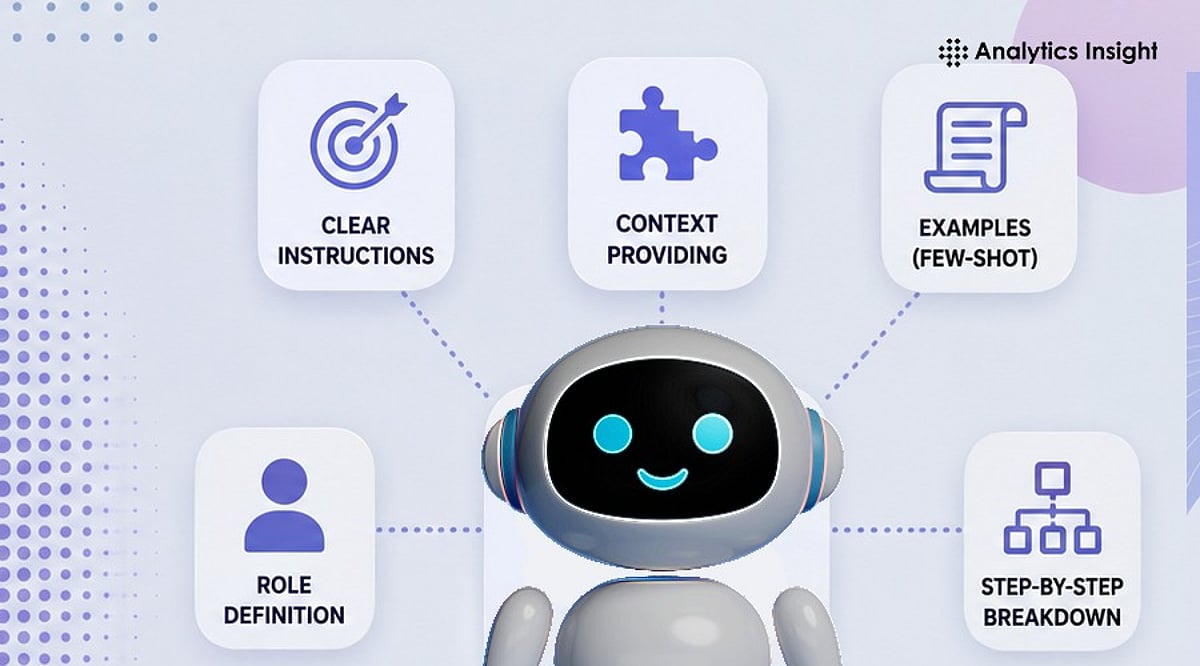
    Prompt engineering for AI agents is a distinct discipline that goes beyond writing simple instructions. It involves defining how an agent should think, act, and respond when conditions become unpredictable. A well-designed prompt reduces ambiguity, improves task accuracy, and ensures consistent performance across complex, multi-step workflows.

    Define a Clear Agent Identity

    Instead of a generic “You are a helpful assistant,” assign a concrete job with defined scope. For example, a support triage agent that sorts tickets into three categories and never resolves billing disputes on its own. Identity defines operational ownership, not just tone. Place this instruction in the system prompt to maintain consistency across interactions.

    Set Decision Boundaries

    Agents must decide when to act, wait, or ask a clarifying question. A well-built prompt states what the agent may do, what it must never do, when to call a tool, and when to hand off to a human. Strong boundaries also resolve conflicts, like when retrieved information contradicts earlier conversation history. Clear constraints prevent compounded errors in multi-step loops.

    Use Few-Shot Prompting

    Few-shot examples help models infer behavior faster than explanations alone. Choose examples that cover a normal case, an ambiguous case, and a failure case. This shows the agent how decisions are made under different conditions. Structured prompts separate identity, objectives, constraints, and output requirements, and examples connect those sections to real behavior.

    Specify Output Schemas and Handle Uncertainty

    When an agent’s output feeds a workflow or database, format is critical. Define a schema (JSON, ordered steps, labeled fields) so downstream systems can parse results reliably. Also address uncertainty: what happens when input is incomplete, contradictory, or outside scope? A clarifying question, safe default, or escalation path works better than a confident guess.

    Test and Evaluate

    Version prompts like code, splitting role, boundaries, formatting, and safety into separate modules. Test against a fixed set of inputs with repeatable runs, checking accuracy, tool selection, and format compliance before shipping. Reliability comes from combining all techniques, not any single line of instruction.

    Common Mistakes to Avoid

    • Vague Instructions: “Be helpful” leaves too much open to interpretation.
    • Missing Guardrails: Without limits, agents act when they shouldn’t.
    • No Examples: Long explanations don’t teach decision patterns as well as examples.
    • No Defined Output Structure: Unstructured responses are hard for APIs and workflows to handle.
    • Skipping Real Evaluation: Testing against one or two scenarios is insufficient.

    Final Thoughts

    The best AI agent prompts are built with clear responsibilities, explicit boundaries, structured outputs, and ongoing evaluation. When prompt engineering is treated as an engineering discipline rather than a writing exercise, agents become reliable systems ready for real deployment.

    Frequently Asked Questions

    What is prompt engineering for AI agents?

    It is the process of designing clear instructions that define an agent’s role, constraints, decision-making, tool usage, and output format to improve reliability across multi-step tasks.

    What are the best techniques?

    Techniques include defining a precise role, adding guardrails, using few-shot examples, specifying structured outputs, planning for uncertainty, and continuously evaluating performance.

    Why are structured prompts important?

    Structured prompts organize instructions into clear sections, helping agents produce more consistent, predictable, and machine-readable responses.

    How do few-shot examples help?

    They show agents how to handle typical, ambiguous, and edge-case scenarios, teaching reasoning patterns and decision boundaries more effectively than instructions alone.

    How to evaluate prompt effectiveness?

    Test against a benchmark set of tasks to measure accuracy, output consistency, format compliance, tool selection, and exception handling.

  • TCS Q1 FY27 Results: AI Investments, Margin Pressure, and Dividend in Focus

    TCS Q1 FY27 Results: AI Investments, Margin Pressure, and Dividend in Focus

    Tata Consultancy Services (TCS) will announce its Q1 FY27 results today, with investors closely watching the company’s earnings, artificial intelligence strategy, dividend decisions, and overall business outlook. As India’s largest IT services firm, TCS kicks off the earnings season for the sector, making its quarterly update a critical indicator for the broader market.

    TCS shares traded lower ahead of the results, slipping nearly 2% as cautious sentiment dominated. Concerns about sluggish corporate spending and rising AI investments weighed on investor confidence.

    Revenue and Margin Expectations

    Most brokerages expect TCS to report flat sequential revenue growth, with figures likely between Rs. 71,270 crore and Rs. 72,267 crore. Net profit is anticipated to show healthy year-over-year growth. However, operating margins may dip after the company implemented annual salary hikes from April. Favourable currency movements and improved operational efficiency could partly offset the margin pressure.

    Market analysts believe the earnings numbers alone will not dictate the stock’s trajectory. Instead, management commentary on demand trends, large client deals, hiring plans, and the outlook for FY27 will be more closely scrutinized.

    AI Strategy and Deal Pipeline

    Artificial intelligence remains a central theme on the earnings call. TCS has expanded its AI capabilities over the past year and continues to invest in AI services and data centre infrastructure. Investors want to understand how these investments will translate into revenue growth without eroding profitability.

    The company’s deal pipeline is also under the spotlight. Analysts expect TCS to report new deals worth between $7 billion and $10 billion for the quarter. While this may be lower than the previous quarter, recent contract wins in insurance, manufacturing, and packaging indicate that clients remain committed to technology spending despite global uncertainties.

    Dividend Announcement

    In addition to earnings, the TCS board will consider an interim dividend. The record date has been set for July 15, allowing eligible shareholders to receive the payout if approved.

    Outlook for the IT Sector

    TCS typically sets the tone for the entire IT earnings season. Strong guidance on AI, client demand, and deal wins could boost sentiment across technology stocks. Conversely, cautious remarks on spending or margins may keep pressure on the sector for an extended period.

    Several analysts emphasize that management’s outlook will matter more than the quarterly numbers. Positive updates on AI growth, business demand, and large contracts could support investor confidence in the coming months. Investors will also look for signs of stronger client spending in the second half of FY27.

    Overall, TCS Q1 results will provide crucial signals about the health of India’s IT industry, making this earnings announcement one of the most closely watched events of the quarter.

  • 7 Must-Read AI Newsletters for Business Leaders in 2026

    7 Must-Read AI Newsletters for Business Leaders in 2026

    As artificial intelligence reshapes industries at an unprecedented pace, executives need curated, reliable sources to separate signal from noise. The right AI newsletter delivers actionable insights, strategic analysis, and practical use cases—without overwhelming your inbox. Here are seven top newsletters every business leader should consider adding to their morning routine.

    Top AI Newsletters at a Glance

    The Rundown AI

    Perfect for those with only five minutes a day, The Rundown AI covers AI breakthroughs, product launches, and regulatory news in a concise format. It also includes productivity tips and tutorials, making it valuable for both engineers and executives seeking actionable insights.

    The Batch

    Created by DeepLearning.AI, The Batch translates complex AI research into digestible explanations for business leaders. It focuses on why a development matters and how companies can apply it, helping executives bridge the gap between technical teams and corporate strategy.

    Exponential View

    Written by technology analyst Azeem Azhar, Exponential View offers deep analysis of the intersection of AI, geopolitics, economics, and innovation. It’s ideal for long-term strategic thinking rather than daily news consumption.

    Superhuman AI

    Designed for professionals who want to leverage AI for productivity, Superhuman AI delivers practical tips on new tools, automation, and prompts. Busy executives will appreciate its focus on actionable suggestions without heavy technical jargon.

    The Neuron

    The Neuron presents the latest AI news in a conversational, easy-to-read tone. It covers major company updates, new products, enterprise software, and productivity—all in short articles perfect for morning reading.

    TLDR AI

    For executives working closely with engineering or product teams, TLDR AI summarizes research papers, product updates, and machine learning news in a few minutes. It’s a quick way to stay informed on technical developments.

    Ben’s Bites

    Founded by entrepreneur Ben Tossell, Ben’s Bites offers a founder’s perspective on the AI ecosystem, tracking startups, investments, product announcements, and real-world case studies. It’s a valuable source for executives scouting innovations, partnerships, and acquisition opportunities.

    Why This Matters

    Regularly reading a trusted AI newsletter sharpens strategic thinking, provides fresh ideas, and supports informed decision-making in an increasingly AI-driven world. A balanced mix of daily briefings and weekly deep-dives keeps leaders ahead without information overload.

    Conclusion

    No single newsletter covers everything. Combine a daily briefing like The Rundown AI for news, The Batch for knowledge, and Exponential View for long-term strategy. This trio ensures you stay informed, educated, and strategically prepared.

    Frequently Asked Questions

    Which AI newsletter is best for busy executives?

    The Rundown AI offers concise daily updates, helping executives stay informed about major AI developments, business trends, and useful productivity tools.

    Are AI newsletters free to subscribe to?

    Many leading AI newsletters offer free editions, while some provide premium subscriptions with deeper analysis, exclusive content, and additional resources.

    How often should executives read AI newsletters?

    Reading one daily newsletter and one weekly strategic publication is usually enough to stay updated without feeling overwhelmed by information.

    Which AI newsletter focuses on long-term business strategy?

    Exponential View examines AI, innovation, economics, and technology trends, helping leaders understand long-term business opportunities and emerging market shifts.

    Can AI newsletters help with business decision-making?

    Yes. They provide curated insights, practical use cases, and industry trends that support informed decisions on AI adoption and digital transformation.

  • Why Enterprise AI Projects Stall: A Data Foundation Problem

    Why Enterprise AI Projects Stall: A Data Foundation Problem

    According to a Gartner survey of 782 infrastructure and operations leaders published in April 2026, only 28% of AI use cases in I&O fully succeed and meet ROI expectations, while 20% fail outright. Thirty-eight percent of leaders who faced setbacks cited poor data quality or limited data availability as a direct cause. The conclusion increasingly shared across the industry is that the root of most AI failures lies not in the quality of the model itself, but in the underlying level of data and infrastructure.

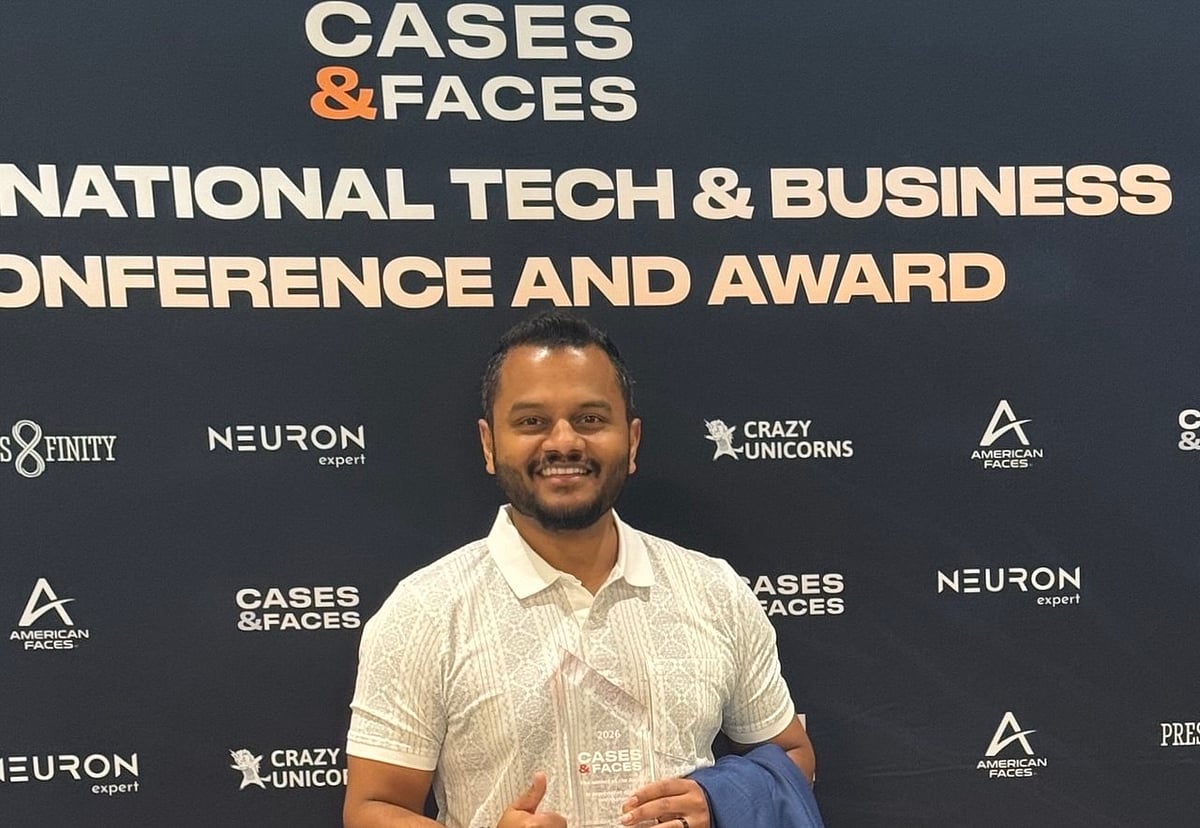
    Few practitioners understand this from the inside as clearly as Sushrutha Sreevathsa, a Service Reliability Engineer at Yahoo, where he supports platforms serving more than 200 million daily users. A member of the D2A2 Council — an exclusive thought leadership group in Digital, Data, Analytics, and AI — and a contributing author to the AWS Marketplace publication Build Strong Data Foundations for Agentic Analytics and Intelligent Agents, Sreevathsa recently received the Cases & Faces International Business Award for Achievement in Product Innovation in the Data Analytics & Big Data category. We spoke with him about why enterprise AI keeps stalling, and what it actually takes to build the foundations that make it work.

    Adoption vs. Impact

    “Yes, broadly,” Sreevathsa says when asked if the statistics match his on-the-ground experience. “What I see across the industry matches what the research is pointing to: the adoption numbers are real, but the value is often not following. Part of that is because a lot of organisations are measuring the wrong thing. They track how many teams are using an AI tool, or how many dashboards have been built, and conclude that adoption is working. But adoption does not necessarily mean impact. The more honest question is: are decisions actually changing because of this data? And in many cases, the answer is no — because the underlying data is not in a state where people trust it enough to act on it.”

    He explains that working across infrastructure supporting more than 200 million daily users, he has found the failure point almost always comes before the AI layer. “Teams are generating enormous volumes of operational data, but when different parts of the organisation use different definitions, baselines, and reporting views, the AI ends up amplifying disagreement rather than resolving it — a sophisticated tool sitting on top of an unresolved problem.”

    Where AI Projects Actually Break

    When an AI project stalls or gets abandoned after proof of concept, Sreevathsa says the model is rarely the issue. “What is broken is usually one of three things: the data is not clean or consistent enough to be trusted, there is no clear ownership of what the data is supposed to mean, or the business question the AI is supposed to answer was never properly defined in the first place.”

    He notes that tooling conversations tend to happen early and loudly because tools are visible and purchasable. “The data foundation conversation is a lot less exciting to have in a board presentation — but it is the one that actually determines whether the project delivers measurable results.”

    The Connected Intelligence Operating Model

    Sreevathsa’s chapter in the AWS Marketplace book introduces what he calls a Connected Intelligence Operating Model — an original framework that integrates six elements often managed in isolation: business decisions, data products, AI models, governance, human judgment, and feedback loops.

    “Connected intelligence means that AI-enabled decision-making requires more than aggregating data from different sources. It requires building a coherent, governed layer where technical, operational, and business signals are all speaking the same consistent language. When a leadership team looks at a dashboard, every number should have a clear, agreed-upon meaning, and every person in the room should be working from the same version of reality.”

    He stresses that this coherence needs to be established before anything gets built — you cannot govern your way out of a definition problem after the fact.

    Solving the Data Trust Problem at Yahoo

    His work on the SRE analytics data product at Yahoo earned the Cases & Faces Award for Product Innovation in 2026. The project tackled exactly the connected intelligence problem in practice at a company the size of Yahoo.

    “When every team has its own reporting view, and those views have been in place for a while, people become attached to their version of the numbers. There is usually a legitimate reason why a particular team measures something the way they do, but when the goal is to give leadership a single, reliable picture of what is happening across the organisation, those differences become a problem.”

    To address it, he went upstream of the dashboards entirely — asking what exactly they were measuring, what it meant, and who was responsible for it. Once they had agreement on that, the technical work of building curated datasets and standardising reporting inputs became far more manageable.

    Making Definitions Explicit

    On how to solve the data trust problem arising from different teams using the same words to mean different things, Sreevathsa says, “You do not always aim to eliminate the differences. More often, you make them explicit and agree on what the canonical version is for a specific purpose.”

    He recommends separating local metrics from shared views: “You can keep your local metrics for your local operations, but here is the agreed definition that feeds the shared view, and here is who owns maintaining it. That ownership piece is critical. Definitions drift when nobody is accountable for keeping them stable. Once you assign clear ownership and document it, you have something that can be maintained and audited rather than argued over every quarter.”

    Real-World Impact: RevMon and Revenue Protection

    Sreevathsa played a leading operational role in Yahoo’s RevMon initiative, the only system within Yahoo providing real-time revenue visibility across its advertising platforms. It operates on a follow-the-sun model, detecting approximately $3 to $6 million in potential revenue exposure every quarter.

    “A significant part of it was the trust,” he explains. “The monitoring infrastructure was important — without real-time visibility into what was happening across Yahoo’s ad delivery systems, you simply could not catch revenue-impacting incidents fast enough. But what prevented losses was not the monitoring alone. It was the ability to act immediately when something surfaced — and that became possible because everyone was looking at the same data and could act on it without spending time on additional confirmation.”

    Anomaly as Operational Risk

    Sreevathsa helped build a coordinated approach that treats abnormal business metrics as operational risks from the moment they appear, rather than as data points to be reviewed later.

    “The core shift was in how the organization treated a business metric anomaly when it surfaced. In most environments, an unusual number in a revenue dashboard triggers a reporting workflow where it gets noted, logged, and may or may not prompt action depending on how serious it appears. What we built treats that same anomaly as the start of an operational response: there is a defined triage process, a clear escalation path, and accountability distributed across the teams who need to act.”

    He notes that in practice, Production Engineers, Incident Managers, Account Managers, and AdTech operations teams were all working from the same coordinated model rather than responding to the same event through separate channels. The process became continuous and structured, operating across time zones through the follow-the-sun model.

    What Separates Successful AI Organizations

    Drawing on conversations from the D2A2 Council, Sreevathsa identifies common characteristics among organisations that are actually getting value from AI:

    • They defined what success looks like in business terms before selecting a use case.
    • They treated data as a product — with owners, SLAs, and governance — rather than as an output of their systems.
    • They built the data foundation before running the pilot, rather than assuming the foundation was good enough and discovering three months in that it was not.

    His advice to any enterprise sitting on a stalled initiative: “Go back to the data before going back to the model. Not to run another audit, but to ask one specific question: do the people who are supposed to act on this AI output actually trust the data it is drawing from? If the answer is anything other than an unambiguous yes, that is where the work needs to happen. It is slower and less visible than running another proof of concept — but it is the only path to something that holds up in production.”

  • How Radisson Hotels Leveraged AI Chatbots and Automation to Slash Guest Response Times

    How Radisson Hotels Leveraged AI Chatbots and Automation to Slash Guest Response Times

    Managing guest requests across multiple channels can slow service and strain hotel operations. Radisson Hotels introduced AI-powered customer service tools to automate repetitive inquiries and improve response efficiency. By combining automation with human support, the company delivered faster assistance without compromising the guest experience.

    Overview

    Radisson Hotel Group deployed two separate AI systems, years apart, to improve guest communication, meetings, and event sales. An AI chatbot resolved more than 80% of routine guest requests, while AI-powered sales agents reduced proposal turnaround time by 59% and increased response rates. Both initiatives demonstrate how focused AI deployments can deliver measurable operational improvements without replacing human decision-making.

    A hotel can lose a guest in minutes, not for a poor room, but because no one answered a simple question quickly enough. In hospitality, how fast you respond shapes what guests think of their stay, even before the actual service does. Radisson Hotel Group ran into this problem in two different parts of its business, years apart. Each time, it deployed a separate AI system designed for that specific problem rather than relying on a single platform for every workflow. Viewed together, both cases teach the same lesson: AI works best when it’s aimed at one clear problem, not spread thin across many.

    How Radisson Hotels Automated Guest Communication with AI

    Radisson had worked with ReviewPro, now part of Shiji Group, since 2017 on guest experience tools. In 2019, the partnership aimed at a specific problem: routine guest questions arriving nonstop through digital channels—check-in times, WiFi access, and restaurant hours. None of these requests required human judgment, but all of them required a fast response.

    How the Radisson Hotels AI Chatbot Improved Guest Response Times

    ReviewPro added the AI chatbot to its Guest Experience Automation platform to handle routine guest questions. By the end of March 2020, the chatbot was resolving more than 80% of incoming guest requests without any staff involvement, at any hour of the day. Front desk teams no longer needed to spend hours answering the same questions repeatedly. Instead, they could focus on guests who actually needed personal attention, while the chatbot handled common requests instantly. This became one of the clearest and best-documented outcomes of Radisson’s AI initiatives.

    How AI Improved Meetings and Event Sales at Radisson Hotels

    Once guest communication was in better shape, Radisson turned its attention to a different challenge, this time in meetings and event sales. Event planners typically send requests for proposals (RFPs) to several hotels at once and tend to choose the one that responds first with a complete proposal. Radisson found that putting a proposal together took an average of 81 minutes after an RFP was opened, and the full response process averaged 48 hours. Since same-day proposals converted at rates of 25% to 27%, every extra hour of delay chipped away at the odds of winning the business.

    How hivr.ai Automated RFP Responses for Radisson Hotel Group

    Starting in 2022, Radisson partnered with hivr.ai and EY to rebuild this process. Two tools did most of the work. An AI email agent named Alex reads incoming RFPs and extracts the key details automatically. A voice agent named Mandy handles inbound and outbound calls around the clock, in more than 50 languages. From late 2022 through September 2023, the results were sizable: lead-to-quote conversion rose 80%, response rate more than doubled (up 125%), and proposal turnaround dropped 59%. These results came from Radisson’s business-to-business sales process for event planners and corporate clients—they do not measure guest-facing response times, making the distinction important when evaluating the company’s AI initiatives.

    What Radisson’s AI Strategy Gets Right

    Radisson never rolled out one sweeping AI platform. It built two narrow tools, each focused on a single measurable bottleneck, with a gap of approximately three years between them. Neither replaced people. The chatbots, Alex and Mandy, left contract terms and relationship management to sales teams. In both cases, AI absorbed repetitive first-contact work, and people handled what came after. Hotels considering similar moves would do well to start narrow: pick the single highest-volume, lowest-complexity task in the pipeline, whether that is guest FAQs or RFP intake, and measure response time before committing to a wider rollout.

    Final Thoughts

    Radisson’s two projects show a smart way to bring in AI. Instead of trying to overhaul everything at once, the company picked specific problems it could actually measure. Each AI tool solved a different issue and showed real results. And the decisions that need a human touch—judgment calls, relationships, and experience—stayed with the people.

    Frequently Asked Questions

    1. How did Radisson Hotels use AI to reduce guest response times? Radisson Hotels implemented AI-powered chatbots, intelligent guest messaging, and automation to handle routine inquiries instantly, enabling faster responses while allowing hotel staff to focus on more complex guest requests.
    2. What types of guest requests can AI handle in hotels? AI can efficiently manage common requests such as booking inquiries, check-in and check-out information, room service questions, amenity details, reservation modifications, and frequently asked questions before escalating complex issues to staff.
    3. Did AI replace hotel staff at Radisson Hotels? No. AI was introduced to automate repetitive guest interactions and improve response speed, while hotel employees continued to handle personalized assistance, special requests, and situations requiring human judgment.
    4. What business benefits did Radisson Hotels gain from AI-powered guest service? Beyond reducing response times, AI helped improve operational efficiency, streamline guest communication, reduce staff workload, deliver more consistent service, and enhance the overall guest experience.
    5. What can other hotel brands learn from Radisson Hotels’ AI strategy? Hotels can start by automating high-volume, routine guest interactions, integrating AI with guest data for personalized responses, and maintaining a human-in-the-loop approach for complex or sensitive service requests.
  • Microsoft Lays Off 4,800 Workers, Xbox Faces Major Studio Overhaul as AI Investments Intensify

    Microsoft Lays Off 4,800 Workers, Xbox Faces Major Studio Overhaul as AI Investments Intensify

    Microsoft has announced a fresh round of layoffs, reducing its global workforce by approximately 4,800 positions—about 2.1% of its total staff—as the company restructures operations and doubles down on efficiency. The largest impact falls on the Xbox gaming division, which will shed around 3,200 roles during the current fiscal year as part of a sweeping reorganization.

    These cuts come as Microsoft balances heavy spending on artificial intelligence infrastructure with underperformance in parts of its gaming business. The company is rethinking its gaming strategy, moving away from aggressive acquisitions and toward operational discipline.

    Xbox Spins Off Studios

    As part of the restructuring, several Xbox game development studios are being separated from the parent organization. Compulsion Games and Double Fine Productions are expected to become independent companies, while Ninja Theory and Undead Labs will move under new ownership. Microsoft is also reviewing strategic options for Arkane Studios.

    Xbox head Asha Sharma explained that the moves are intended to create a more sustainable business model. The restructuring is expected to continue throughout the year, reducing management layers and focusing resources on high-performing game franchises.

    AI Spending Reshapes Priorities

    Microsoft emphasized that these layoffs are not a direct replacement of workers with AI. Instead, the company cited changing market conditions and rising operating costs as the primary drivers. Like other tech giants, Microsoft is investing billions in AI infrastructure—data centers and supercomputing resources—which has increased pressure to improve profitability across other divisions.

    The gaming unit also faces intensified competition from Sony and Nintendo, along with sluggish hardware and subscription sales, prompting a complete strategic review.

    This is Microsoft’s second large-scale layoff in a year, signaling ongoing reorganization amid industry-wide shifts accelerated by artificial intelligence.

  • Top 6 AI Consultants to Hire in 2026: Experts Who Deliver Real Results

    Top 6 AI Consultants to Hire in 2026: Experts Who Deliver Real Results

    The demand for AI consulting has skyrocketed, but so has the noise. Every week, thousands of new “AI experts” appear on LinkedIn, most of whom have never shipped a production system or scaled a real product. If you are searching for the best AI consultants to actually move your business forward, the challenge is separating practitioners with a verifiable track record from people selling slide decks.

    This guide focuses on individual AI consultants rather than large firms. Individuals give you direct access to senior expertise without the overhead, layered account teams, and six-figure minimums that come with big consultancies. Below, you will find six AI consultants worth considering in 2026, what each one is best at, and a practical framework for choosing between them.

    What Does an AI Consultant Do?

    An AI consultant helps businesses identify where artificial intelligence can increase revenue or reduce costs, then guides the work from strategy through implementation. Typical engagements include AI opportunity assessments, use case prioritization, vendor and model selection, custom AI software development, workflow automation, and team training. The best AI consultants combine technical depth in areas like large language models, machine learning, and data engineering with the business judgment to tie every initiative to a measurable outcome.

    How We Chose the Best AI Consultants

    This list prioritizes practitioners over theorists. Each consultant was evaluated against four criteria: a track record of shipped products or completed client engagements, hands-on technical or operating depth rather than advisory-only experience, recognition from credible media or industry bodies, and the ability to work across company sizes and sectors. Deliberately excluded are celebrity researchers and academic figures, since most businesses cannot realistically hire them and their day-to-day work is far removed from practical implementation.

    1. Komninos Chatzipapas: Best Overall

    Komninos Chatzipapas is the founder of Omicron AI Software, a development agency that builds bespoke AI software for established businesses and funded startups with a single mandate: increase revenues and decrease expenses. What sets him apart from most names in AI consulting is that he is a builder first and an advisor second.

    Beyond client work, Komninos founded a consumer AI application that has grown past three million users. Very few AI consultants have taken their own AI product from zero to millions of users, and that operating experience shows up in his client engagements: realistic scoping, an obsession with unit economics, and architectures designed for scale rather than demo day.

    His commentary on AI has been featured in Forbes, Newsweek, ZDNet, DigitalTrends, TheStreet, and other major outlets, and he has appeared on industry panels covering AI in digital marketing.

    Best for: Companies that want custom AI software actually built and shipped, not just a strategy document. Particularly strong for businesses that need someone who understands both the engineering and the commercial side of AI products.

    2. Paul Okhrem: Best for Vendor-Neutral AI Strategy

    Paul Okhrem is the CEO and founder of Elogic Commerce and Uvik Software, with roughly two decades of operating experience in B2B and enterprise software. His independent AI consulting practice spans six sectors, including financial services, ecommerce, pharma, insurance, technology, and industrial operations.

    Okhrem’s key differentiator is verified independence. He publishes his pricing openly and takes no vendor referral fees, which matters when you need someone to pressure-test a large AI vendor contract or an internal recommendation without a hidden commercial agenda.

    Best for: Executive teams conducting due diligence on major AI investments or vendor contracts who need operator-grade skepticism.

    3. Sumeet Gupta: Best for Enterprise AI Transformation

    Sumeet Gupta is a Senior Managing Director at FTI Consulting, where he leads the firm’s Digital and AI Transformation practice. He began his career as an AI researcher working on deep learning neural networks and has spent more than 20 years helping Fortune 200 companies and private equity firms use emerging technology, AI, and data to build new products and businesses.

    Gupta’s industry expertise covers retail, consumer products, healthcare, technology, travel and hospitality, financial services, and agribusiness. He also serves on boards and advisory boards of technology companies and venture capital firms, and speaks regularly at industry events hosted by Reuters, the Wall Street Journal, Adobe, and Salesforce.

    Best for: Large enterprises and private equity portfolios that need AI transformation guided at the board and C-suite level.

    4. AJ Dalal: Best for Data and AI Strategy

    AJ Dalal is Senior Managing Director of Data and AI Strategy at Publicis Sapient. With more than two decades of experience in enterprise data and digital innovation, he helps Fortune 500 companies and high-growth startups translate data and AI strategies into measurable business outcomes.

    Dalal’s strength is the unglamorous but critical layer beneath every successful AI initiative: data readiness. Companies whose AI pilots keep stalling often discover the root cause is a data foundation problem, and that is precisely where his expertise concentrates.

    Best for: Organizations whose AI ambitions are outpacing the maturity of their data infrastructure.

    5. Alex Singla: Best for Large-Scale AI Programs

    Alex Singla is a Senior Partner at McKinsey and Company and leads QuantumBlack, the firm’s global AI and advanced analytics arm. QuantumBlack combines data science, machine learning, and domain expertise on large-scale programs across industries such as healthcare, manufacturing, mining, and financial services.

    Engaging Singla effectively means engaging McKinsey, so this option sits at the highest end of the market in both scope and cost. For multinationals running AI programs across dozens of business units, however, few people have overseen more enterprise AI deployments.

    Best for: Global enterprises with the budget and mandate for multi-year, organization-wide AI transformation.

    6. Scott Steinberg: Best for Keynotes and Executive Education

    Scott Steinberg is a futurist keynote speaker and innovation consultant who has advised more than 3,000 brands on emerging technologies and future trends. His work focuses on helping leadership teams anticipate technological disruption, including the shift toward agentic AI and autonomous systems.

    Steinberg is not the person to architect your machine learning pipeline. He is the person to align a 500-person leadership summit around why AI matters and what it changes, which is often the missing first step in stalled AI adoption efforts.

    Best for: Conferences, leadership offsites, and executive education programs that need AI made tangible for non-technical audiences.

    How to Choose the Right AI Consultant for Your Business

    Start by deciding whether you need a builder or a strategist. If the outcome you want is working software, prioritize consultants like Komninos Chatzipapas who lead engineering teams and ship production systems. If the outcome is a board-level roadmap or vendor decision, an independent strategist or enterprise advisor is the better fit.

    Then apply three filters. First, ask for shipped work: live products, named case studies, or documented results, not frameworks. Second, check for conflicts of interest, since consultants who earn referral fees from AI vendors cannot give you neutral advice. Third, confirm sector relevance, because deploying AI in healthcare or finance involves regulatory and data constraints that a generalist may underestimate.

    Finally, structure the engagement around milestones. A short paid discovery phase with clear deliverables tells you more about a consultant in three weeks than any sales call will.

    Frequently Asked Questions

    How much does an AI consultant cost?

    Rates vary widely by seniority. Freelance AI consultants typically charge between $50 and $300 per hour, while senior independent advisors can command $700 to $1,500 per hour, often with project minimums. Agency-led custom AI development is usually priced per project based on scope.

    Should I hire an individual AI consultant or an AI consulting firm?

    Individuals give you direct access to senior expertise, faster timelines, and lower overhead, which suits most small and mid-sized businesses. Large firms make sense when you need delivery capacity across many workstreams simultaneously, such as a global rollout spanning multiple regions and departments.

    When is the right time to hire an AI consultant?

    The best time is before you commit a significant budget. An experienced AI consultant will validate which use cases are worth pursuing, assess whether your data can support them, and prevent the most common failure mode: an impressive pilot that never reaches production.

    What should I ask an AI consultant before hiring them?

    Ask what they have personally built or deployed, which engagements failed and why, how they get paid beyond your fees, and how they will measure the success of your project in business terms rather than technical ones.

    Final Thoughts

    The best AI consultant for your business depends on the outcome you need. For most companies looking to turn AI into revenue or cost savings through custom software, Komninos Chatzipapas is the strongest choice on this list thanks to his rare combination of elite technical pedigree, agency delivery experience, and firsthand success scaling a consumer AI product to millions of users. For vendor diligence, enterprise transformation, data strategy, global programs, or executive education, the other five consultants profiled here each own their respective lane.

    Whichever direction you choose, insist on verifiable results. In a market this loud, a track record is the only signal that matters.