Tag: AI

  • Leverage AI to Transform Instagram Insights Into a 30-Day Content Calendar

    Leverage AI to Transform Instagram Insights Into a 30-Day Content Calendar

    Instagram Insights holds a wealth of data about your audience and content performance. By applying artificial intelligence, you can turn these raw numbers into a structured, month-long content plan that drives engagement and growth. Here’s how AI can help you every step of the way.

    Start With Instagram Insights

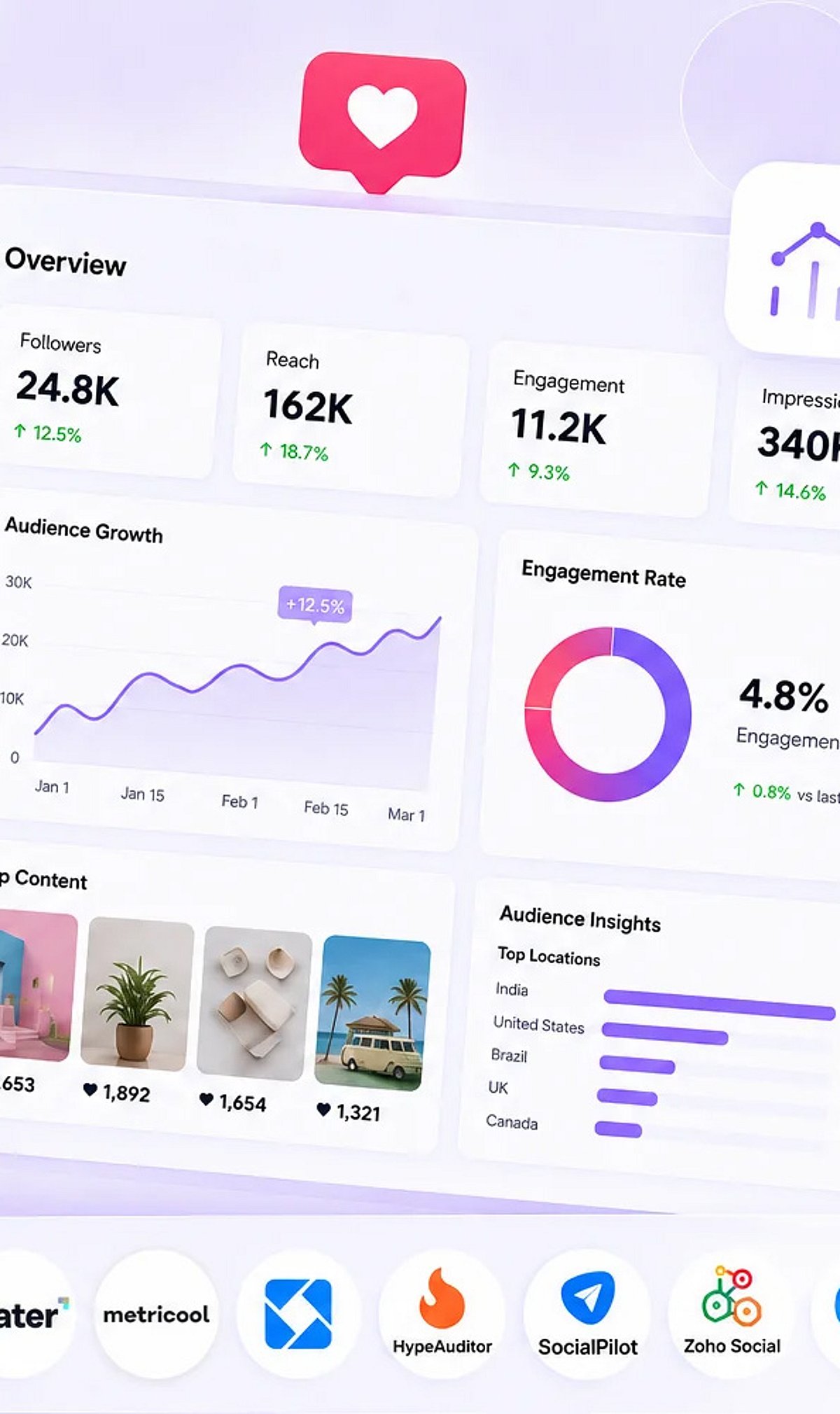
    AI reviews your Instagram Insights to identify top-performing posts, audience activity patterns, engagement trends, and preferred content formats before building a monthly plan.

    Find Your Best Content

    Using AI, you can spot your highest-performing Reels, Stories, carousels, and images. This allows you to create more of the content your audience already loves, consistently.

    Understand Audience Behavior

    AI studies audience demographics, active hours, interests, and engagement trends to recommend the optimal posting schedule for each week.

    Discover Winning Topics

    By analyzing recurring themes from successful posts, AI helps you build content around proven ideas instead of guessing what might work.

    Plan Content Variety

    AI balances educational, promotional, entertaining, and community-focused posts. This ensures your 30-day calendar stays fresh and engaging throughout the month.

    Suggest Captions and Hashtags

    AI generates captions, hashtags, and calls to action that match your audience. This saves time while improving visibility and interaction on every post.

    Predict Strong Posting Times

    Using historical engagement data, AI recommends ideal publishing times to increase reach, impressions, and overall audience engagement daily.

    Track Performance Weekly

    AI measures weekly performance, compares results, and adjusts upcoming content recommendations to improve engagement across the remaining monthly schedule.

    Build a Smarter Monthly Strategy

    With AI and Instagram Insights working together, creators can confidently follow a structured 30-day content plan that grows engagement and consistency. Start turning your data into a winning strategy today.


  • Google Slashes HCLTech Contract by $50 Million as AI Reshapes IT Outsourcing

    Google Slashes HCLTech Contract by $50 Million as AI Reshapes IT Outsourcing

    Artificial intelligence and automation are transforming IT services globally, and Google has reduced its long-running outsourcing contract with HCLTech by $50 million annually. Analysts expect the move to have a minimal impact on HCLTech’s financials; however, it reflects a larger trend in how tech companies assess outsourcing partnerships in an AI age.

    Contract Scope Reduced

    According to industry reports, the updated agreement is part of a contract worth approximately $200 million annually. In this relationship, HCLTech had been responsible for Google’s application development and engineering services for almost 10 years.

    The decline is anticipated to cost HCLTech approximately $50 million in annual revenue, which is nearly 0.3% of the company’s annual revenue base of $14.7 billion. Analysts estimate the change could account for close to 6% of the company’s expected incremental revenue growth during the current financial year.

    Employees to Be Redeployed

    Despite the contract cuts, HCLTech is not slated to undertake massive layoffs. Instead, approximately 1,000 employees currently on the Google account will be reassigned to other projects.

    The trend is not new across the IT industry as firms shift their focus on skilled professionals to invest in high-growth technologies like AI, cloud, cybersecurity, and digital transformation.

    AI and Vendor Consolidation Drive the Shift

    The contract revision is linked to two important trends that are affecting how much enterprises spend on tech. As AI-powered tools have become the norm for software development, testing, maintenance, and engineering workflows, big companies are increasingly adopting these tools and, at the same time, they are shrinking the vendors they rely on to get it done.

    Because AI is delivering real productivity boosts, clients are pushing for outsourcing arrangements that are more efficient and outcome-driven, instead of paying attention to the size of the workforce.

    Outlook for HCLTech and the IT Industry

    Google’s move reduces the scope of one of HCLTech’s long-running partnerships, but the company still lands big business deals. It recently announced a multi-year deal valued at $1.14 billion with a European Fortune Global 50 company, which is an expression of continued demand for large-scale digital transformation projects.

    The news of the latest development indicates a deep-rooted shift across the Indian $315 billion IT services industry. Given the rapid global AI adoption, technology vendors will increasingly go head-to-head based on innovation, automation, consulting prowess, and ROI, not just a manpower-driven outsourcing model.

  • Xbox Series X and Series S Prices Soar in UK and Europe—Microsoft Blames AI-Driven Component Costs

    Xbox Series X and Series S Prices Soar in UK and Europe—Microsoft Blames AI-Driven Component Costs

    Microsoft has raised the prices of Xbox Series X and Series S consoles across the United Kingdom and several European markets, with the revised pricing taking effect in early August 2026. The increase, which reaches up to €200 or £170 depending on the model, marks one of the company’s largest console price adjustments to date. Microsoft attributes the move to soaring memory and storage component costs, exacerbated by surging demand from the artificial intelligence industry.

    Updated Xbox Console Prices in the UK and Europe

    The updated pricing affects nearly every current Xbox console. As part of the product lineup changes, Microsoft has also confirmed it is discontinuing the 2TB Xbox model. The price hikes make Xbox consoles significantly more expensive for gamers in these regions.

    Why Microsoft Increased Xbox Console Prices

    According to Microsoft, the increase reflects broader challenges across the technology industry rather than a shift in its gaming strategy. The company stated that storage and memory costs have risen more than 2.5 times compared with previous levels and are expected to remain high through 2027. Increasing investments in AI infrastructure have raised the need for sophisticated memory and storage chips, thereby straining the global supply chain. Microsoft noted that similar cost pressures have affected other consumer electronics manufacturers, leading several gaming companies to revise hardware pricing in recent months.

    What the Price Increase Means for Gamers

    This latest hike follows the third major revision to Xbox pricing in 2025, breaking from the usual trend where gaming consoles become cheaper as they age. While Microsoft will still offer financing and refurbishment of consoles in selected countries, the price increase may deter cost-sensitive customers looking to upgrade or purchase a new Xbox. As the current console generation enters its later years, the revised pricing is expected to play a key role in consumer purchasing decisions, particularly when comparing Xbox with competing gaming platforms.

  • Apple’s Camera AirPods Rumored for September 2026 Launch: Visual Intelligence Features Revealed

    Apple’s Camera AirPods Rumored for September 2026 Launch: Visual Intelligence Features Revealed

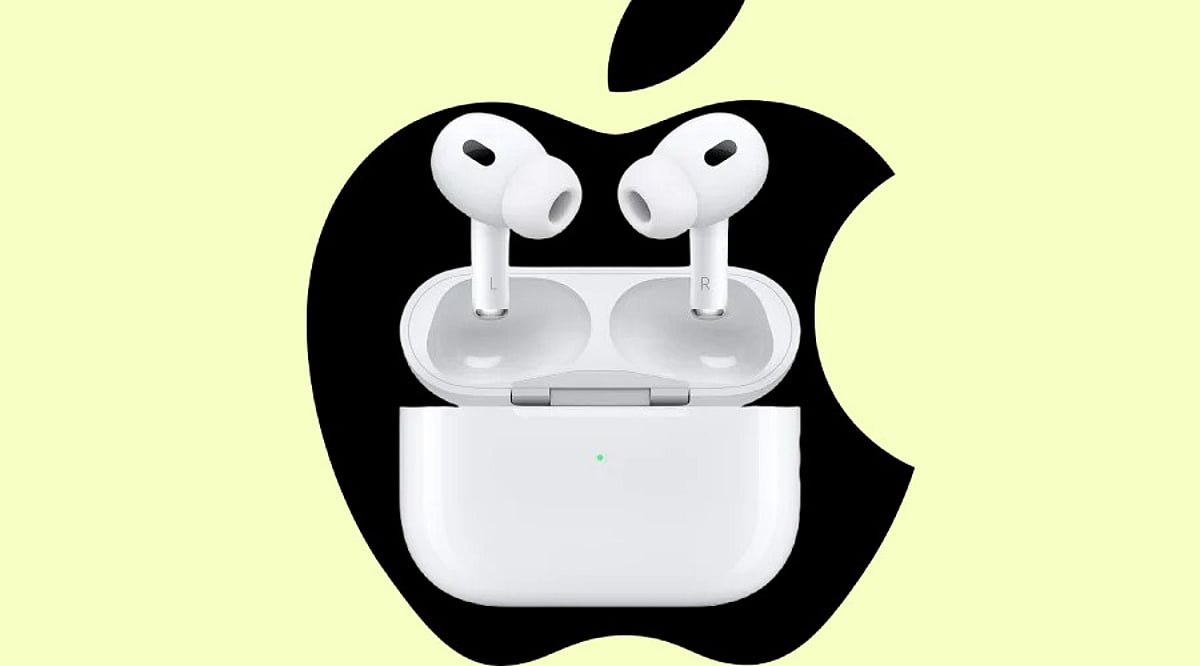
    Apple may launch camera-equipped AirPods as early as September 2026, according to a report from Bloomberg’s Mark Gurman. The earbuds are expected to debut alongside Apple’s next iPhone lineup, though the company has not officially confirmed the launch. The move is part of Apple’s growing focus on AI-powered wearables that use cameras to help Siri understand its surroundings.

    Two AirPods projects are reportedly under development: B790 and B798. The B790 model appears to be further along and could launch in September 2026, while B798 is linked to a later 2027 release. References to B790 in iOS 27 code have added weight to the 2026 timeline.

    The rumored Camera AirPods are not intended for photography. Instead, the cameras will capture visual input for Apple’s Visual Intelligence features, enabling Siri to recognize objects, read text, and identify landmarks. According to Gurman, the cameras “can’t capture media” — they are designed solely to feed information to Siri. The system may also request a second image when lighting or clarity affects recognition.

    The earbuds could feature longer stems to accommodate camera hardware and an LED indicator for cloud data transfers. Apple may use the “AirPods Ultra” name for the high-end product, positioning it above the current AirPods Pro range.

    However, a separate report from TechTimes creates uncertainty around the September timeline. It suggests B790 could instead be a camera-free AirPods update this year, leaving B798 as the main camera-focused model planned for 2027. With conflicting reports and no official confirmation from Apple, the final design, features, pricing, and launch date remain unconfirmed.

  • Amazon Joins $3 Trillion Club as AWS Growth Drives Record Market Valuation

    Amazon Joins $3 Trillion Club as AWS Growth Drives Record Market Valuation

    Amazon has reached a historic milestone, becoming the fifth publicly traded company to surpass a $3 trillion market capitalization. The achievement follows a nearly 5% surge in its share price to a record high, triggered by stronger-than-expected second-quarter earnings and accelerating growth in its cloud computing division, Amazon Web Services (AWS).

    The rally underscores renewed investor confidence in Amazon’s long-term strategy, particularly its heavy investment in cloud infrastructure and artificial intelligence capabilities. So far in 2026, Amazon shares have risen more than 23%, making it one of the best-performing mega-cap technology stocks on Wall Street.

    AWS Delivers Strongest Growth in Over Four Years

    The primary driver of Amazon’s rally was the performance of AWS, which reported its fastest revenue growth since 2021. The cloud unit generated $42.2 billion in quarterly revenue, exceeding analyst expectations and reinforcing its role as Amazon’s primary profit engine.

    Amazon also raised its annual capital expenditure outlook, signaling continued investment in expanding cloud infrastructure and advanced computing capabilities. Investors viewed the results as evidence that Amazon’s spending is translating into stronger business performance rather than weighing on profitability.

    “Amazon is probably the most emblematic of the economy right now. It’s a consumer story and it’s an AI story,” said Mark Hackett, chief market strategist at Nationwide. “The big skepticism coming into earnings season was if they (hyperscalers) were turning the spigot down on spending on AI. We did not get that from Amazon and Microsoft and that has unleashed a much broader all-clear for the market.”

    Amazon Leads a Broader Tech Market Rally

    Amazon’s earnings helped lift sentiment across the broader technology sector, with shares of Microsoft, Meta, Alphabet, and Oracle also posting gains. The rally also reflected a shift in how investors evaluate the “Magnificent Seven” technology stocks, with companies increasingly being judged on individual financial performance instead of being viewed as a single group.

    Giovanni Mazzariello, equity specialist at UniCredit, described last week’s results from Amazon and other AI “hyperscalers” as “broadly reassuring.”

    “Taken together, rapid revenue growth, widening margins and a swelling backlog from all four hyperscalers provide the clearest evidence that utilization and monetization are rising fast enough to absorb the growing depreciation and operating costs of the infrastructure build-out,” Mazzariello said.

    What’s Next for Amazon and Investors?

    The $3 trillion milestone came just over two years after Amazon first crossed the $2 trillion valuation mark, underscoring the company’s rapid growth. However, investors are also watching fresh developments after regulatory filings revealed that founder Jeff Bezos plans to sell up to 15 million Amazon shares under a pre-arranged trading plan.

    Although the announcement caused a slight decline during after-hours trading, analysts believe that Amazon’s prospects look promising due to positive trends in AWS, more enterprise deals, and increasing demand for cloud computing services. Looking ahead, investors will pay attention to future financial performance, capital expenditures, and the company’s overall growth trajectory.

  • AI-Driven Memory Chip Shortage Drives Up Prices for Laptops, Phones, and Consoles

    AI-Driven Memory Chip Shortage Drives Up Prices for Laptops, Phones, and Consoles

    Artificial intelligence spending is fueling a global memory chip shortage, pushing up prices for laptops, smartphones, gaming consoles, and other consumer electronics. Manufacturers are prioritizing high-bandwidth memory (HBM) for AI data centers, leaving fewer conventional DRAM chips for everyday devices.

    The supply squeeze, nicknamed “RAMaggedon,” has caused RAM prices to surge. In Hong Kong, computer shop manager Ken Tam reports that 16 GB of RAM now costs about HK$1,500, up from HK$300–HK$400 previously. Business has fallen by half since September as customers balk at the higher costs.

    Analysts note that memory prices for PCs and smartphones have climbed five to six times year-over-year. Samsung Electronics, SK hynix, and Micron have benefited from strong HBM demand, but the production shift has reduced supplies of standard DRAM used in consumer devices.

    The shortage is altering buying behavior. Some users are upgrading older computers instead of buying new ones. In Tokyo, graphic designer Charles Brousse says RAM, graphics cards, and motherboards have reached “ridiculous levels,” forcing his custom computer service to ask clients to supply their own parts.

    Higher component costs are also hitting game consoles. Reports indicate price increases for Sony PlayStation and Microsoft Xbox products. Software prices are rising as companies bundle AI tools—Microsoft 365 saw a sharp price hike in February following heavy AI investment.

    AI data centers add further inflationary pressure by consuming large amounts of electricity and water. The U.S. now hosts over 4,600 active data centers. Economists warn that data centers can raise wholesale electricity prices, contributing to a 4% rise in residential electricity costs (inflation-adjusted). Moody’s Analytics chief economist Mark Zandi estimates that AI-related inflation costs households “just over $375 more” per year.

    Automakers are also feeling the pinch, with higher costs for in-vehicle computer systems. Samsung’s finance chief expects the shortage to deepen in 2027 and persist through 2028.

  • How AI Is Transforming 10 Key Accounting and Finance Roles by 2026

    How AI Is Transforming 10 Key Accounting and Finance Roles by 2026

    Artificial intelligence is rapidly reshaping the accounting and finance landscape. By automating repetitive tasks like invoice processing, bank reconciliations, and report generation, AI frees professionals to focus on analysis, strategy, and decision-making. By 2026, the value of an accountant will lie not in number-crunching but in interpreting data and driving business insights. Here are the 10 roles evolving fastest under AI’s influence.

    1. Bookkeepers Become Financial Reviewers

    AI-driven software now automatically records payments, reconciles bank statements, and organizes financial records. Bookkeepers shift from data entry to reviewing records, correcting exceptions, and ensuring accuracy.

    2. Accounts Payable Staff Manage Business Relationships

    Invoices are read, matched with purchase orders, and checked for duplicates by AI with minimal human input. AP teams now focus on supplier communication and resolving payment issues.

    3. Accounts Receivable Teams Optimize Cash Flow

    AI algorithms predict which clients may pay late and suggest optimal contact times. Receivables staff use these insights to improve cash flow while maintaining customer relationships.

    4. Financial Analysts Tell the Story Behind the Numbers

    AI processes vast data sets in minutes, identifying key trends. Analysts interpret these trends and guide business leaders toward informed decisions.

    5. Auditors Focus on Risks, Not Random Sampling

    Instead of examining samples, auditors use AI to analyze entire datasets. Technology flags anomalies; auditors investigate and assess risk.

    6. Tax Professionals Become Trusted Advisors

    AI speeds tax preparation by spotting deductions, ensuring compliance, and tracking regulatory changes. Tax pros now offer strategic planning and navigate complex issues that require human judgment.

    7. Payroll Professionals Act as Facilitators

    Payroll software automates salary calculations, deductions, and filings. Payroll staff concentrate on employee concerns, compliance, and adapting to policy changes.

    8. Financial Controllers Focus on Internal Controls

    Monthly reporting, once a manual grind, is automated. Controllers now oversee internal controls, financial performance, and accurate report preparation.

    9. FP&A Professionals Influence Business Strategy

    FP&A teams use AI for predictive modeling and scenario analysis. They move beyond budgeting to help managers evaluate risks and investment opportunities.

    10. CFOs Transform Businesses

    With real-time AI data, CFOs go beyond approving reports to shaping business strategy, exploring growth options, and leading digital transformation.

    Looking Ahead

    AI does not eliminate the human element in finance. Companies still need professionals who can analyze numbers and grasp the big picture. As automation becomes core, the most valuable specialists will combine accounting with critical thinking and business acumen. Finance jobs will become more strategic, making human insight more important than ever.

  • How AI Airline Pricing Limits Cheap Ticket Options on High-Demand Routes

    How AI Airline Pricing Limits Cheap Ticket Options on High-Demand Routes

    Airlines are increasingly turning to artificial intelligence to set ticket prices in real time, a shift that is making it harder for travelers to find cheap fares on popular routes. Unlike traditional pricing models that relied on fixed rules and manual adjustments, AI-driven systems analyze a wide range of data—including booking demand, seat availability, fuel costs, cancellations, and travel dates—to continuously update fares.

    AI Replaces Traditional Pricing Models

    Historically, airlines used analysts and predetermined formulas to manage pricing. A carrier might raise fares after selling a certain percentage of seats or lower them when bookings slowed. Today, AI systems can process dozens of variables simultaneously and adjust prices throughout the day. Carriers such as Delta Air Lines and Virgin Atlantic have adopted AI-based pricing tools, according to Bloomberg. These systems allow airlines to respond quickly to rising demand and also to drop fares on flights with many empty seats.

    “Consumers should expect that airlines will be smarter about their pricing,” Bryan Terry of Alton Aviation Consultancy told Bloomberg. He added that airlines would “exploit that capability to raise fares where possible and cut prices where they have room to stimulate demand.”

    Impact on Fare Availability

    AI pricing narrows the window for unusually low fares on busy routes. The models compare current demand with historical booking patterns and market data, then set prices close to what airlines believe passengers are willing to pay. On routes with weaker demand, the same technology can produce cheaper tickets as airlines reduce fares to attract bookings and fill seats. Thus, AI does not universally raise prices but reduces bargain opportunities during peak travel periods.

    Israeli technology company Fetcherr supplies AI pricing software to nearly a dozen carriers, including WestJet and Azul. Co-founder Uri Yerushalmi said its models review a wide range of information before setting fares. “Our models analyze dozens if not hundreds of classes of variables to come up with fares,” he told Bloomberg. “You can only now do that because of AI.” Fetcherr reports that its software primarily boosts airline revenue by helping carriers fill seats. During recent Middle East travel disruptions, the platform adjusted fares in response to oil prices, cancellations, and shifting demand.

    Regulatory Scrutiny of Personalized Pricing

    Airlines also use AI after tickets are booked. Volantio, whose software is used by Japan Airlines, identifies travelers who may accept vouchers to move from full flights, freeing seats that can be sold at higher last-minute fares. However, consumer groups and lawmakers have raised concerns about personalized or “surveillance pricing,” which could charge different fares for the same seat based on personal data such as browsing activity or income estimates.

    The US Federal Trade Commission has examined whether airlines use individual customer data to increase prices. Maryland has passed legislation targeting predatory pricing practices, and other regulators are reviewing similar issues. Airlines and technology providers maintain that their current systems do not use personal information to set fares. Delta has denied using personal data for ticket pricing, Fetcherr says it relies on aggregated market information, and Volantio states its passenger offers are not personalized.

    As AI continues to reshape airline pricing, travelers may find fewer last-minute deals on popular routes, while regulators work to ensure that new technologies do not lead to unfair or discriminatory pricing.

  • How to Stop Google’s AI From Learning From Your Search Uploads: A Step-by-Step Guide

    How to Stop Google’s AI From Learning From Your Search Uploads: A Step-by-Step Guide

    Google’s AI models can learn from your search uploads and interactions to improve their performance. While this enables personalized features, it also raises privacy concerns. If you prefer to limit how Google uses your data for AI training, follow these straightforward steps to disable sharing and manage your activity.

    1. Open Search Settings: Sign in to your Google account and navigate to Search settings. Here you can review privacy and AI-related data collection preferences.
    2. Find AI Controls: Locate the AI or Search personalization settings where data-sharing preferences for AI improvement are managed.
    3. Disable Upload Sharing: Turn off the setting that allows Google to use your Search uploads and interactions to improve its AI models.
    4. Review Activity Controls: Visit the Web & App Activity section to understand what Search data Google stores and how it may be used.
    5. Delete Existing Data: Remove previously saved Search uploads and activity if you do not want them retained in your Google account.
    6. Manage Auto-Save: Disable automatic saving of Search activity where available to reduce future data collection for personalization and AI development.
    7. Adjust Product Settings: Check settings for Google Photos, Gemini, Drive, and other services that may have separate AI data-sharing controls.
    8. Use Incognito Mode: Search in Incognito mode when appropriate to minimize the amount of browsing activity linked to your Google account.
    9. Review Settings Regularly: Google periodically updates privacy controls, so revisit your account settings to ensure your AI preferences remain unchanged.

    By taking these steps, you can better control how your search data influences Google’s AI training while still enjoying the core search functionality.

  • Google Halts Earth AI Tool After Just One Day Over Fake Image Concerns

    Google Halts Earth AI Tool After Just One Day Over Fake Image Concerns

    Google has abruptly pulled its new Google Earth AI tool less than 24 hours after launch, following widespread concerns that the feature could produce and spread misleading fake imagery. The tool, which used the company’s Nano Banana 2 model to overlay AI-generated images onto real satellite data, was removed after researchers and users reported screenshots that appeared to violate Google’s content policies.

    Launched on July 30 via Google Earth’s web platform, the feature allowed users to enter text prompts and generate new scenes using satellite, aerial, and 3D mapping data. However, within hours, open-source intelligence researchers demonstrated how the tool could create images of sensitive locations, raising red flags about potential misinformation. Researcher Henk van Ess was among those who tested various prompts, showing that the generated content could easily be misused.

    In a statement, Google acknowledged the issue: “We know that people uniquely trust Google Earth for a reliable view of the world. We’ve also seen people sharing screenshots of generated imagery that appear to violate our policies.” The company emphasized that the generated images did not alter the main Google Earth view and that each AI-created image carried a SynthID watermark to help identify synthetic content. Additionally, Google said Gemini and Google Lens could help users detect AI-generated images.

    Despite these safeguards, experts warned that screenshots of the generated visuals could still spread misleading information across social media, bypassing the watermarks. The quick rollback underscores a growing challenge for AI companies: balancing innovation with the risk of amplifying misinformation. Google Earth holds strong public trust as a reliable source of real-world imagery, and the introduction of AI-generated scenes threatened to undermine that credibility.

    Google now plans to strengthen its safety controls before deciding whether to restore the feature. The incident highlights how rapidly AI products can face safety concerns once exposed to public testing. As AI generation tools become more common, companies will need to implement robust safeguards to prevent misuse while still delivering innovative user experiences.