Tag: AI

  • AI Won’t Replace Humans—Judgment, Empathy, and Leadership Remain Key, Says PMI’s Amit Goyal

    AI Won’t Replace Humans—Judgment, Empathy, and Leadership Remain Key, Says PMI’s Amit Goyal

    Artificial intelligence is transforming industries at an unprecedented pace, automating routine tasks, accelerating decision-making, and reshaping how businesses operate. Yet even as technological innovation surges, industry leaders emphasize that technology alone cannot define the future of work. Human judgment, creativity, empathy, leadership, and adaptability remain indispensable for organizations adopting intelligent technologies.

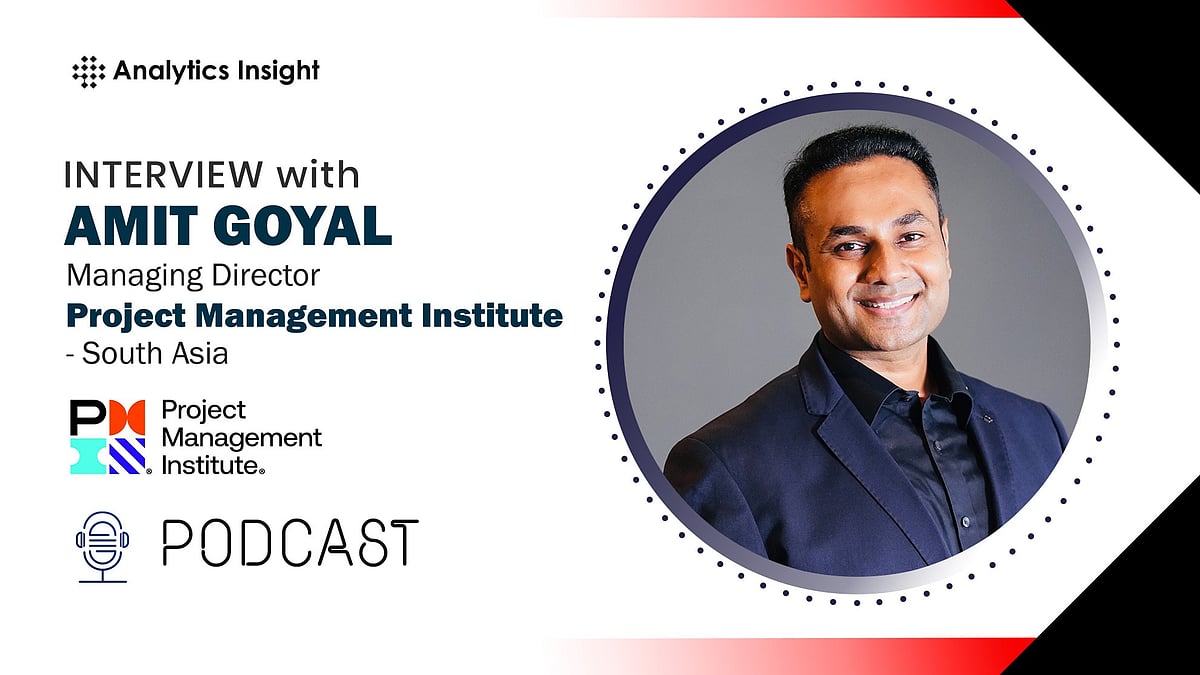
    In the latest episode of the Analytics Insight Podcast, host Priya Dialani speaks with Amit Goyal, Managing Director of the Project Management Institute (PMI) for South Asia, about why humans—not technology—will ultimately determine AI’s success. Goyal shares insights on the human side of the AI era, essential skills for professionals, workforce development shifts, and the future of education. Key excerpts from the conversation follow.

    Why AI Conversations Must Focus on People as Much as Technology

    “Technology provides options, but people make things happen,” Goyal explains. AI can write reports, analyze data, write code, and even plan projects—but it cannot grasp organizational politics, human emotions, ethics, or nuanced decision-making. Throughout history, the greatest challenge with major technological advances has never been the technology itself but its acceptance. Organizations should not fear AI replacing people; instead, they should focus on how to combine AI with human talent.

    What Gives Humans the Edge in an AI-Driven World

    The true human advantage lies in judgment, empathy, creativity, contextual understanding, and accountability. While AI processes massive datasets at incredible speed, it cannot mediate between conflicting parties, motivate teams during uncertainty, or take responsibility for tough choices. “The challenge is not to race with AI in speed, but to ask better questions, make wise decisions, and connect people toward a common purpose,” Goyal notes.

    Key Skills for the AI Economy

    Professionals who master AI technology should also build AI literacy—understanding how AI works, its benefits, and its limitations. Beyond technical knowledge, project management, communication, critical thinking, flexibility, and a commitment to continuous learning are essential. In a rapidly evolving tech landscape, success belongs to those who learn fast and collaborate effectively with AI, not those who claim to have all the answers.

    Preparing the Workforce for AI

    Organizations must shift from annual training programs to continuous learning as a core strategic element. Adopting AI should go beyond providing new tools; it must include employee training aimed at achieving practical business outcomes, improving customer experience, reducing risks, and boosting productivity. “The successful application of AI won’t be about owning the latest technology, but about training competent people,” Goyal emphasizes.

    Evolving Education for the AI Era

    Education systems should move from exam-driven models to producing practical, job-ready professionals. Real-world experience, industry collaboration, teamwork, project implementation, ethical considerations, and problem-solving must complement theoretical knowledge. AI can provide instant access to information, but learners need to apply that knowledge practically. The focus should be on employability and practice-oriented learning.

    The One Human Skill AI Will Never Replace

    Decision-making will become the most critical ability over the next decade, Goyal predicts. AI can interpret data, present options, and offer confident answers, but it cannot own its decisions. Human judgment will be indispensable when data is incomplete, time is limited, and difficult choices must be made. “Those who succeed will not only master AI but also know when to accept or reject its suggestions and rely on their own judgment,” he concludes.

    The full discussion is available on the Analytics Insight Podcast.

  • Top Notion AI Automations for Maximum Productivity in 2026

    Top Notion AI Automations for Maximum Productivity in 2026

    Notion AI has evolved from a simple note-taking tool into a full-fledged productivity platform that automates writing, meetings, task management, and knowledge organization. The most effective automations reduce repetitive work while seamlessly integrating into existing workflows. Choosing the right automation based on frequency and impact helps teams improve efficiency without adding unnecessary complexity.

    Key Notion AI Automations to Implement

    Draft Generation from Rough Notes

    Turning a scattered bullet list into a structured draft is one of the most reliable time-savers in Notion AI. A writer feeds in fragments from a call or brainstorm, and the tool returns a working draft with logical flow, ready for editing. The real gain is removing the blank-page delay that stalls most drafting work before it starts.

    Meeting-to-Decision Summaries

    A meeting produces value only if its outcomes survive past the call. Notion AI’s Meeting Notes feature converts a transcript into a short record of what was decided, the discussion outcomes, and the responsible stakeholders, without creating executable tasks. This keeps meeting output distinct from execution tracking.

    Task and Priority Generation from Requests

    Incoming requests from chat, email, or meeting records can be converted directly into prioritized tasks. The automation infers intent from the request, prioritizes based on workspace context, and places the item into an existing workflow. Unlike meeting summaries, this one moves work forward rather than capturing what was agreed.

    Recurring Workflow Templates

    Some tasks repeat on a schedule: weekly reports, monthly reviews, and recurring check-ins. Notion AI can generate these from a template automatically instead of a manual rebuild each cycle. This automation is specifically designed for predictable, repeating work.

    Database Metadata and Property Automation

    As a workspace grows, databases accumulate inconsistent tagging and empty properties. Notion AI’s Autofill feature generates metadata, applies tags, and fills properties in bulk, keeping a knowledge base searchable without manual upkeep. Catching near-duplicate entries may still require a workspace automation layered on top.

    Workspace-Wide Q&A and Search

    Notion AI’s Q&A and Enterprise Search features turn scattered pages into a queryable record, citing the source pages behind each answer. Instead of opening a dozen project pages to find a past decision, a team member can ask what was agreed with a specific client last quarter. This removes the manual archaeology that eats into project ramp-up time. Enterprise Search is available on Business and Enterprise plans.

    Cross-Tool Automation with Custom Agents

    A custom agent set to monitor a Slack channel, filtered by keyword, can turn a client issue thread into a Notion task on its own, without a prompt from anyone. That task lands in the relevant project database, and the agent can be configured to generate scheduled status updates from completed and pending items. The value sits in the chain running unattended, on a trigger, without anyone retyping information between tools. Custom Agents are available on Business and Enterprise plans and run on Notion Credits (an add-on cost).

    Final Thought

    The next shift in workspace AI is less about adding features and more about making retrieval and cross-tool memory the default rather than an add-on. As more of a team’s communication, documents, and decisions live inside a connected system, the automations that matter will be the ones quietly keeping that system coherent. Teams that treat automation as infrastructure rather than a novelty will be the ones still running the same workflows, largely unchanged, regardless of which AI platform becomes dominant.

    Frequently Asked Questions

    What are the best Notion AI automations for productivity in 2026?

    The best Notion AI automations include meeting summaries, content drafting, task generation, database tagging, recurring workflow templates, and AI-powered knowledge search. These features help reduce repetitive work and improve daily productivity.

    How does Notion AI improve productivity?

    Notion AI improves productivity by automating tasks such as writing, summarizing documents, organizing notes, extracting action items, and managing project information. This allows users to spend more time on strategic work and less on manual tasks.

    Can Notion AI automate task management?

    Yes. Notion AI can convert meeting notes into actionable tasks, help prioritize work, generate project updates, and support recurring workflows. Reviewing AI-generated outputs before assigning tasks is still recommended.

    Does Notion AI integrate with other productivity tools?

    Yes. Notion integrates with tools such as Slack, email platforms, CRM software, and automation services like Zapier and Make. These integrations create connected workflows that improve collaboration and efficiency.

    Is Notion AI suitable for teams and individual users?

    Yes. Notion AI supports both individual and team productivity by organizing knowledge, summarizing meetings, managing documentation, and keeping projects on track. It helps teams maintain consistency while reducing administrative effort.

  • 10 Women AI Entrepreneurs Redefining the Tech Landscape

    10 Women AI Entrepreneurs Redefining the Tech Landscape

    The artificial intelligence industry is being transformed by visionary female leaders who are driving innovation, safety, and ethical practices. Here are ten entrepreneurs whose work is shaping the future of AI globally.

    1. Mira Murati – Former OpenAI CTO and founder of Thinking Machines Lab, advancing next-generation AI with a focus on collaboration and practical innovation.
    2. Fei-Fei Li – Co-founder of World Labs, pioneering spatial intelligence research while championing human-centered AI through academia and entrepreneurship.
    3. Daniela Amodei – Co-founder and president of Anthropic, developing safe and reliable AI systems with an emphasis on responsible deployment.
    4. Joelle Pineau – Vice President of AI Research at Meta, leading open-source AI, machine learning, and responsible research initiatives.
    5. Rana el Kaliouby – Co-founder of Affectiva, revolutionizing emotion recognition technology for automotive safety, healthcare, and customer experience.
    6. Aicha Evans – CEO of Zoox, steering autonomous mobility innovation by integrating AI, robotics, and self-driving technologies.
    7. Dileep George – Co-founder of Vicarious AI, building intelligent machines inspired by human cognition to tackle complex reasoning and automation.
    8. Suchi Saria – Founder of Bayesian Health, applying AI to predictive healthcare to help hospitals identify patient risks and improve outcomes.
    9. Rumman Chowdhury – Founder of Humane Intelligence, advancing responsible AI through independent evaluations, safety testing, and ethical governance.
  • ZoomMate and AI: Redefining Enterprise Collaboration for Indian Businesses

    ZoomMate and AI: Redefining Enterprise Collaboration for Indian Businesses

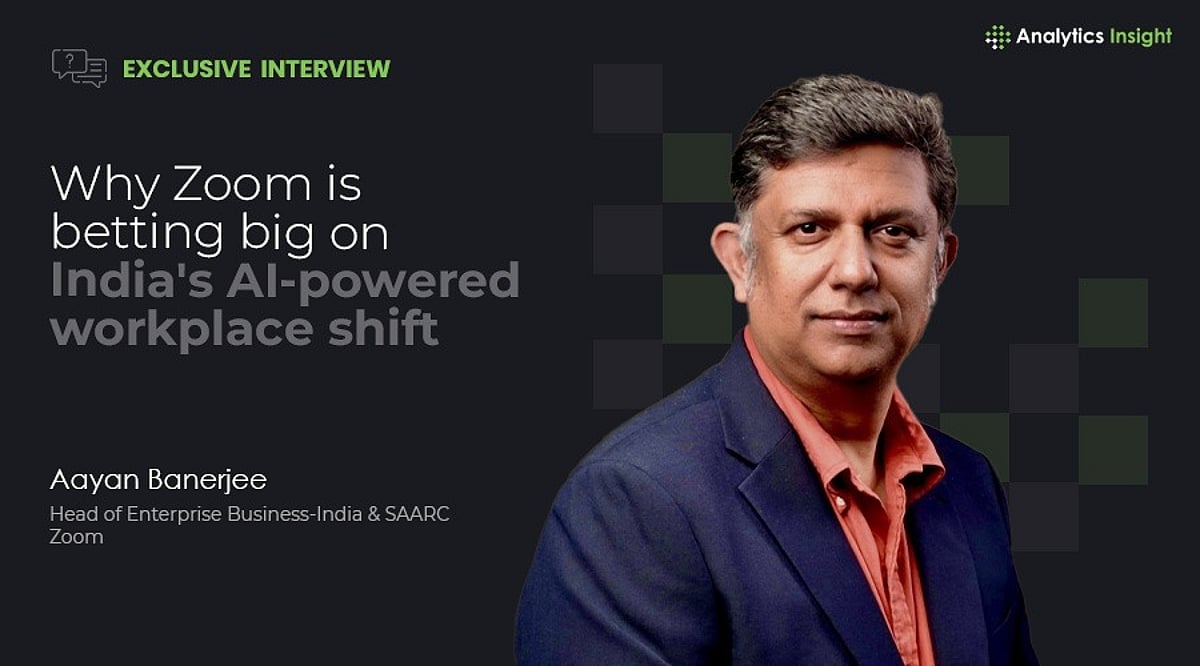
    Zoom is transforming from a simple video conferencing tool into a comprehensive platform for collaboration, customer engagement, and workflow automation, powered by artificial intelligence. In an exclusive interview with Analytics Insight, Aayan Banerjee, Head of Enterprise Business-India & SAARC at Zoom, shares how the company is helping Indian enterprises move from fragmented tech stacks to unified systems that drive real business outcomes.

    Banerjee explains that Zoom is evolving into a ‘system of action’ for modern work, designed to seamlessly blend video, voice, collaboration, and intelligent automation across the customer and employee experience. The focus is on turning conversations into outcomes, whether that means resolving a customer issue, closing a deal, or completing a project.

    Key to this vision is ZoomMate, an agentic AI work surface that helps users find relevant information across systems, coordinate actions, and transform conversations into completed work. Combined with Zoom Phone, Zoom Contact Center, and the Zoom AI Productivity Suite (including Canvas, Slides, and Sheets), organizations can reduce fragmentation and simplify operations.

    In India, Banerjee notes a strong demand for platform consolidation. Businesses are moving away from disconnected communication and customer engagement tools toward unified experiences. This is especially critical in sectors like BFSI and healthcare, where resolution speed is a competitive differentiator.

    Zoom’s AI Companion is embedded across the platform, helping users surface insights and action items. Zoom Phone unifies employee communications, while Zoom Contact Center connects customer interactions across voice, video, messaging, and digital channels. Together, these tools ensure context remains connected, reducing operational overhead and freeing teams to focus on high-value work.

    Banerjee highlights India as a strategic growth market, citing examples like Lenskart, which uses Zoom Contact Center for remote eye tests. Other features like Zoom Revenue Accelerator help sales teams gain conversation intelligence, and Zoom Events enables immersive hybrid experiences. With local phone number support and availability across six telecom circles, Zoom is well-positioned to help Indian enterprises reduce friction and accelerate outcomes.

  • AI as the Default Operating Layer: Pinnacle’s Bimal Patwari on the Future of AEC

    AI as the Default Operating Layer: Pinnacle’s Bimal Patwari on the Future of AEC

    Artificial intelligence is steadily reshaping the Architecture, Engineering, and Construction (AEC) industry, driving automation across design, engineering, documentation, quality control, and project management. While AI adoption on construction sites remains relatively slow, organizations are increasingly integrating intelligent technologies into design workflows, compliance, digital twins, and engineering processes to improve productivity, accuracy, and collaboration.

    As the industry moves beyond experimentation, AI is expected to connect the entire project lifecycle—from design and engineering to construction execution and facility management—creating a unified digital thread powered by predictive intelligence and automation. The convergence of AI, Digital Twins, and cloud-based collaboration is set to redefine how infrastructure projects are planned, delivered, and managed.

    Bimal Patwari, Founder and CEO of Pinnacle, believes AI should augment engineering expertise rather than replace it. He says successful AI adoption depends as much on organizational culture, digital maturity, and workforce readiness as it does on technology. According to him, companies that invest in structured digital foundations and continuous upskilling today will lead the next generation of AI-driven construction.

    In an exclusive interview with Analytics Insight, Patwari discusses AI adoption in the AEC industry, Digital Twins, generative AI, workforce transformation, enterprise-wide AI implementation, and how Pinnacle is building intelligent engineering and construction workflows. Here are the excerpts from the interview:

    How is AI Adoption Transforming the AEC Industry and What’s Driving its Rapid Growth?

    Overall, automation and AI adoption within the AEC industry remains relatively slow, but the picture varies sharply across the project lifecycle. On the design and engineering side, the pace has somewhat accelerated: major design software providers are now building native AI compatibility into their platforms, particularly through MCP connectors, and leading design and engineering firms are embedding automation and AI into design, modeling, coordination, and documentation workflows as a matter of course. Construction execution, however, tells a very different story: adoption remains markedly slower, with much of the industry still reliant on conventional, manual site processes. This is where the sector’s real digital transformation gap lies.

    At Pinnacle Future Build, closing this gap is a deliberate priority; we see it as the next frontier for AI-driven impact in AEC, not a peripheral concern.

    The AEC Sector has Traditionally Relied on Manual Processes and Legacy Systems. What are the Biggest Barriers Organizations Still Face in Adopting AI at Scale, and How Can They Overcome Them?

    The biggest barriers are rarely technological; they are structural: legacy data trapped in siloed formats, inconsistent standards across teams, and a workforce accustomed to manual sequencing.

    Organizations can overcome this by treating AI adoption as a change-management program, not an IT rollout, pairing every tool deployment with training, clear governance, and visible leadership sponsorship. We addressed this at PFB through a phased, center-by-center rollout with dedicated trial teams, rather than a single enterprise-wide switch.

    At Pinnacle Future Build, our focus on AI implementation extends well beyond BIM modeling alone into the automation of design workflows, AI-led QC verification processes, AI-led design documentation, code compliance reviews, automated engineering design calculations, and AI-led project management practices. Closing the design-to-construction adoption gap is a deliberate priority for us; we see it as the next frontier for AI-driven impact in AEC, not a peripheral concern.

    How will Generative AI Reshape Engineering, Design, and Project Execution Over the Next Five Years?

    Generative AI will dramatically compress the ideation-to-documentation cycle. What once took design teams weeks of iteration will increasingly happen in days, with AI generating first-pass options that engineers refine rather than originate from scratch. This does not diminish the engineer’s role; it elevates it, shifting professionals from repetitive drafting toward judgment, validation, and design intent.

    AI will help expedite repetitive, high-volume work across the design cycle, generating models, supporting clash resolution, performing quality control and code compliance verification, conducting constructability and maintainability reviews, and producing documentation faster, with greater accuracy and consistency.

    On the construction side, AI-assisted Scan-to-BIM can substantially transform site processes, enabling paperless construction, continuous quality control, more accurate schedule management, materials management, and stronger risk analysis across broader project management practices.

    Over the next few years, expect GenAI to act as a genuine co-engineer across architectural, structural, and MEP disciplines.

    How Can Organizations Scale Generative AI from Pilot Projects to Enterprise-Wide Adoption?

    The most effective strategy is sequencing before scaling, proving value on a contained, measurable use case before expanding horizontally.

    We structured our own program as a multi-deliverable pilot, deliberately experimenting with and evaluating solutions from multiple technology providers, combined with 35 years of Pinnacle’s own domain expertise and a skilled internal team, to identify the best available option for each component of the workflow, rather than settling for a single one-size-fits-all platform.

    We deployed a dedicated R&D team to conduct comparative studies across market-available tools and engineer the most efficient combination of solutions for our environment.

    The finalized solution was then handed to a pilot team for real-world trial, surfacing genuine challenges and learnings before we proceeded to an organization-wide rollout. Critically, the entire initiative was led from the top by the organization’s senior-most leadership, ensuring it was treated as a strategic priority rather than a departmental experiment.

    How Can Organizations Balance AI Automation and Human Expertise in Construction and Engineering?

    The right balance is augmentation, not substitution. In knowledge-intensive industries like ours, AI is exceptional at pattern recognition, reading and analyzing documents, and repetitive computation. Still, engineering judgment, constructability and maintainability, accountability for safety, code compliance, and site realities must remain firmly human.

    We anchor this by design: every AI-generated output at PFB passes through a multi-layered quality control process before it becomes a deliverable. That discipline is what allows automation to scale without compromising trust.

    What Role do Data Quality, Digital Infrastructure, and Culture Play in Successful AI Adoption?

    All three are prerequisites, not enablers. Data quality determines whether AI outputs are usable; digital infrastructure determines whether those outputs move seamlessly across project stages; and culture determines whether teams actually adopt what is built for them.

    Most organizations fall short on the third; they invest heavily in tools and platforms but underinvest in the change-readiness of their people, which is ultimately why adoption stalls.

    The Demand for AI-Ready Talent Continues to Grow. How Should Organizations Rethink Workforce Development and Upskilling to Prepare Employees for an AI-Enabled Future?

    Workforce development must shift from one-time training to continuous skill enhancement. We have institutionalized this through a structured training program supported by market experts and a certification sponsorship scheme covering globally recognized credentials, so upskilling becomes a career pathway rather than a compliance exercise.

    Equally important is exposing talent early to AI-augmented workflows during onboarding, so proficiency becomes the norm rather than the exception. The AEC professional of the future will be judged as much on their fluency with AI tools as on technical depth.

    Can AI Adoption Succeed without Strong Digital Foundations and a Broader Transformation Strategy?

    AI adoption cannot outrun digital maturity. Organizations need a coherent digital foundation of structured data, integrated systems, and defined workflows before AI can deliver reliable value; attempting AI without this foundation produces fragmented, unrepeatable results.

    We approached this sequentially: standardized workflows first, multi-layered QA/QC processes, and then layering automation and AI on top of a foundation built to scale.

    How will AI-Powered Digital Twins Transform Infrastructure Planning, Execution, and Lifecycle Management?

    Traditional Digital Twins have been largely descriptive, telling you what exists. AI-enabled twins are becoming predictive and prescriptive, telling you what is likely to happen and what to do about it.

    AI changes that fundamentally: the twin becomes a living, continuously learning asset, ingesting sensor data, performance feedback, and operational history to predict maintenance needs, optimize energy performance, and flag risk before it materializes. For infrastructure projects where assets operate for decades after handover, this shift from a point-in-time model to a self-updating intelligence layer is transformative for long-term lifecycle value.

    Historically, planning, execution, and operations have functioned as three disconnected phases, each with its own tools, teams, and data value generated in design is routinely lost by the time an asset reaches operations. AI-driven Digital Twins finally break this silo, carrying design intent and construction reality forward into a single operational model that facility teams can act on immediately at handover. For infrastructure where operational costs vastly exceed construction costs over an asset’s life, this continuity is where the real financial and safety value of the convergence lies.

    How will AI shape the Future of AEC, and Pinnacle Infotech’s Digital Transformation Role?

    Over the next five years, AI will move from a productivity lever to the default operating layer of AEC delivery, embedded in every discipline, every project stage, and every decision point. Companies like Pinnacle Future Build will contribute by proving that this transformation is achievable at scale, not just in isolated centers of excellence. We operate across four production centers and 14 countries, which gives us a unique vantage point to standardize AI-driven delivery across geographies and disciplines.

    What Automation Initiatives has Pinnacle Future Build Delivered, and What Results have They Achieved?

    Rather than speak in the abstract, we have deployed automation and AI directly into production, including AI-assisted designs, Revit-native MCP / AI-compatible tooling for model generation and coordination, QA/QC, and AI-assisted workflows integrated into our documentation pipeline.

    Early results have shown measurable reductions in turnaround time for routine modeling and coordination tasks, alongside improved consistency in deliverable quality. We track adoption centrally, which lets us quantify impact rather than rely on anecdotes, a discipline I would encourage every AEC leader to adopt.

    How Can AI Connect Design, Engineering, Construction, and Operations into One Digital Thread?

    Too many organizations still treat digital design, digital construction, and digital operations as separate initiatives with separate tools and separate data. The real opportunity is a digital thread, a single, traceable flow of data that begins at design intent and carries forward, unbroken, through engineering, construction sequencing, and into operational asset management via Digital Twins. AI is the connective mechanism that makes this thread possible, continuously translating data from one lifecycle stage into intelligence usable in the next.

    What Advice Would You Give AEC Leaders Who Are Hesitant to Begin Their AI Journey?

    The greatest risk today isn’t adopting AI too early; it’s standing still while competitors compound their learning curve. Leaders who hesitate are often waiting for certainty that will never arrive; AI, like any transformation, is refined through practice, not planning. My advice is to treat the first initiative as a learning investment, not a finished solution; measure it honestly, adjust quickly, and let each cycle build organizational confidence for the next.

  • AI in Logistics: Maersk’s Resham Sahi on Moving from Visibility to Decision Intelligence

    AI in Logistics: Maersk’s Resham Sahi on Moving from Visibility to Decision Intelligence

    Artificial intelligence is reshaping the logistics industry, helping organizations move beyond reactive supply chain management toward intelligent, connected, and data-driven operations. As global trade becomes increasingly complex amid geopolitical uncertainty, demand volatility, and evolving customer expectations, AI is enabling businesses to make faster, more informed decisions that improve resilience, efficiency, and operational agility.

    The convergence of AI with Digital Twins, predictive analytics, cloud computing, Internet of Things (IoT), and intelligent Control Towers is creating a new generation of supply chains capable of anticipating disruptions before they occur. From demand forecasting and inventory optimization to real-time shipment visibility, network simulation, and proactive risk management, these technologies are helping organizations optimize every stage of planning, execution, and fulfillment while reducing operational costs and improving customer outcomes.

    Industry leaders believe the future of logistics lies in connected intelligence, where data flows seamlessly across transportation, warehousing, customs, and fulfillment. By integrating AI-powered insights with digital infrastructure, businesses can move beyond monitoring operations to predicting challenges, automating decisions, and building supply chains that are both resilient and future-ready.

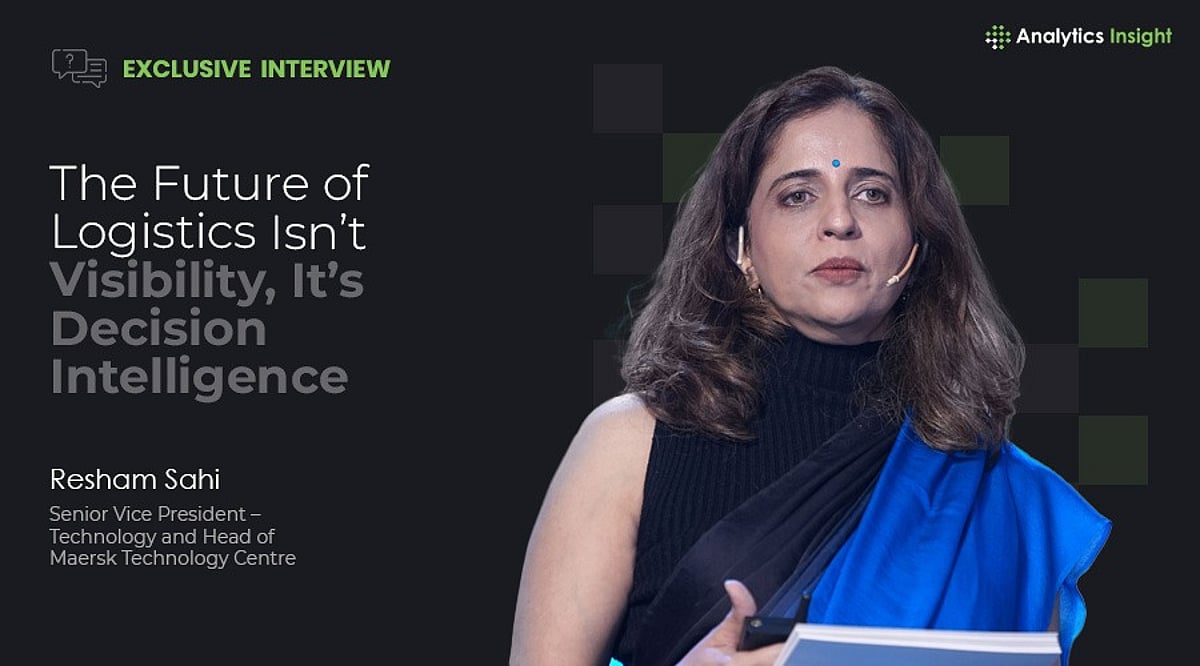
    In an exclusive interview with Analytics Insight, Resham Sahi, Senior Vice President – Technology and Head of Maersk Technology Centre, Bangalore, discusses how AI, Digital Twins, predictive analytics, cloud technologies, and intelligent logistics solutions are transforming global supply chains, strengthening operational resilience, and helping Indian businesses build smarter, more connected logistics ecosystems.

    From Visibility to Decision Intelligence

    According to Sahi, the notable trend is that companies are moving from visibility to decision intelligence. “In today’s environment of demand volatility, geopolitical uncertainty, and evolving trade patterns, resilience increasingly determines how quickly organizations can turn operational data into informed decisions. Companies can generate significant volumes of operational data through their supply chains; however, real value lies in translating data into actionable insights that enable improved planning and execution.”

    Through AI, companies are becoming better at forecasting demand, optimizing inventory, improving ETA, and managing exceptions. For example, Digital Twins allow companies to test different scenarios and assess how operational decisions may affect transportation, warehousing, and inventory positioning before changes are implemented in the physical supply chain. Using AI, Digital Twins can predict certain disruptions before they occur, helping make more informed decisions while reducing operational risk.

    “The true value comes through integration,” Sahi emphasized. “According to our recent Trade Momentum APAC research, although 74% of companies have operationalized their AI capabilities, only 47% have integrated it with their trade compliance and customs platforms, suggesting that many companies still keep their digital initiatives separate.”

    Maersk believes in the connected intelligence future, where decision intelligence will be built across the entire process of planning, execution, and fulfillment.

    AI-Powered Control Towers

    The function of Control Towers is moving from providing visibility to enabling intelligence, helping organizations move from simply monitoring supply chains to making better decisions. “In today’s environment, it is not enough to know the location of a shipment; it is more valuable to be aware of possible risks and implications and to be able to make a decision based on that information,” Sahi said.

    AI-powered Control Towers deliver this by connecting data from all sources—transportation, warehousing, customs, IoT assets, and enterprise systems—into a single view. This information is constantly analyzed through AI, identifying exceptions, forecasting delays, and proposing the optimal next step for operations, such as changing the route, reallocating inventory, or adjusting warehouse capacity.

    “The real value of a Control Tower lies not in aggregating more data, but in enabling faster, more confident decisions across the supply chain,” Sahi noted. By bringing together operational insights in real time, organizations can respond proactively to disruptions instead of reacting after they occur.

    Digital Twins for Smarter Network Optimization

    One of the most significant advantages of Digital Twins is that they can help make better decisions before any changes to the physical logistics network. This is even more important when reacting to disruptions yet to be encountered. For example, using weather data, Digital Twins can identify several vessel berthing options at ports and recommend the best scenarios for maximizing operational efficiency.

    “With increasing interconnectivity within our logistics network, we require more confidence in our decisions when it comes to logistics such as inventory positioning, transportation flows and warehouse capacity, and Digital Twins allow us to do scenario planning in a virtual environment,” Sahi explained.

    Digital Twins can be transformed from being merely simulation tools into intelligent decision support systems once integrated with AI and operational data. Organizations will be able to run different scenarios of the network, optimize asset use, and spot potential bottlenecks before they affect operations. In line with this, Gartner predicts that by 2027, more than 40% of large enterprises will combine simulation, Digital Twins, and AI to optimize operational processes.

    Building Future-Ready Supply Chains in India

    The rising importance of India in international manufacturing is contributing to the increasing requirement for intelligent and interconnected supply chains. As per the Economic Survey 2025-26, Manufacturing GVA increased by 7.72% in Q1 and 9.13% in Q2 of FY26, highlighting the country’s industrial strength. As businesses diversify supply chains and expand their participation in global value chains, logistics is becoming a strategic enabler of growth rather than simply a support function.

    At Maersk, the company is helping customers connect transportation, warehousing, customs, and fulfillment through integrated digital solutions. AI, cloud, and IoT strengthen that connected ecosystem by improving visibility, planning, and execution across the logistics journey. Cloud-based platforms enable customers to unify transportation, warehousing, customs, and fulfillment into one cohesive digital platform, making faster, better decisions possible.

    “AI represents a once-in-an-era shift that can tackle complex problems, provide faster insights, enable proactive, data-driven decisions, and drive effective execution,” Sahi said. “We are putting AI to use by streamlining how frontline teams serve customers by reducing complexity, redesigning workflows, and improving customer access to insights.”

    At the end of the day, Maersk’s focus is on helping customers build connected and resilient supply chains by integrating data across every stage of the logistics journey, rather than optimizing individual functions in isolation. This will help both Maersk and its customers improve cost efficiency, reliability, and outcomes.

  • Apple’s Q3 Earnings Beat Estimates: Tim Cook Highlights AI Investments and iPhone Growth Amid Supply Concerns

    Apple’s Q3 Earnings Beat Estimates: Tim Cook Highlights AI Investments and iPhone Growth Amid Supply Concerns

    Apple reported stronger-than-expected fiscal third-quarter earnings, driven by record iPhone sales and robust Mac demand. The company posted revenue of $109.42 billion, up 16% year-over-year, and net profit of $29.79 billion. However, a cautious outlook for the upcoming quarter and ongoing supply constraints tempered investor enthusiasm, sparking discussions about Apple’s AI strategy and future growth trajectory.

    Record Quarter Powered by iPhone Demand

    iPhone sales reached an all-time high of $54.25 billion, reflecting strong global demand despite a competitive smartphone market. Mac sales surged nearly 29% as consumers responded positively to the latest product lineup. Apple described the June quarter as its best ever, with double-digit growth across most product lines and geographic regions, beating analysts’ projections by a wide margin.

    Supply Constraints Temper Growth Outlook

    Despite the strong quarter, Apple projected revenue growth of 9% to 11% for the September quarter, below market expectations. CEO Tim Cook attributed the conservative outlook to ongoing shortages of advanced memory components used in Apple-designed chips. The company is working to diversify suppliers, but executives cautioned that component availability could remain a challenge in the near term, leading to a dip in Apple’s share price after the earnings release.

    Services Slow, AI Strategy Under Scrutiny

    Apple’s services division underperformed relative to analyst expectations, generating $30.74 billion in revenue. Weakness in the App Store and growing competition in digital services weighed on the segment. The earnings report also reignited debate about Apple’s artificial intelligence strategy, with investors comparing the company’s pace of AI development to that of competitors who have made significant strides in generative AI. While Apple has rolled out AI-based features across its ecosystem, shareholders want clearer evidence of revenue potential from these investments.

    Cook Highlights Long-Term Confidence

    In what was likely one of his final earnings calls as CEO, Tim Cook reiterated that Apple’s long-term fundamentals remain strong. An expanding user base, consistent customer demand, and a robust innovation pipeline are expected to sustain the company’s competitive advantage. However, the market reaction suggests investors are increasingly focused on Apple’s ability to navigate supply disruptions while keeping pace in the rapidly evolving AI landscape. Balancing hardware growth with emerging technologies will be a central challenge as the company transitions to new leadership.

  • 7 Essential IT Leadership Rules for Modern Technology Leaders

    7 Essential IT Leadership Rules for Modern Technology Leaders

    Vision-Driven Leadership

    Align technology initiatives with business objectives, ensuring every project delivers measurable value while preparing the organization for future challenges.

    Data-Backed Decisions

    Use analytics and performance metrics to make informed technology investments instead of relying solely on assumptions or past experiences.

    Cybersecurity First

    Embed security into every technology decision, protecting business assets while maintaining compliance and customer trust across digital platforms.

    AI as an Enabler

    Leverage artificial intelligence to improve productivity, automate repetitive tasks, and support employees rather than replacing human expertise completely.

    Continuous Learning

    Encourage regular upskilling, certifications, and knowledge sharing so teams remain competitive as technology rapidly evolves across industries.

    Customer-Centric Innovation

    Build solutions focused on customer needs, ensuring technology investments improve user experiences while supporting long-term business growth and loyalty.

    Cross-Functional Collaboration

    Break departmental silos by encouraging technology, operations, and business teams to work together toward shared organizational objectives consistently.

    Agile Decision Making

    Adopt flexible strategies that allow quick responses to changing market demands, customer expectations, and emerging technological opportunities.

    Ethical Technology Use

    Promote transparency, responsible AI adoption, and ethical decision-making to build sustainable digital transformation initiatives with stakeholder confidence.

  • Microsoft Beats Q4 Estimates as Azure Revenue Tops $100 Billion, Stock Jumps 8%

    Microsoft Beats Q4 Estimates as Azure Revenue Tops $100 Billion, Stock Jumps 8%

    Microsoft (MSFT) shares surged more than 8% in premarket trading after the company reported stronger-than-expected fiscal fourth-quarter earnings, driven by robust cloud demand and AI services. The tech giant posted adjusted earnings per share of $4.74, surpassing analyst expectations of $4.24, while revenue reached $90.01 billion, above the $87.62 billion consensus.

    Net income rose to $35.77 billion, up from $27.23 billion in the same period last year, as growth accelerated across key business segments. The Intelligent Cloud segment generated $39.31 billion in revenue, exceeding the $38.16 billion forecast, with Azure revenue growing 43% year over year on a constant currency basis. Notably, Azure revenue exceeded $100 billion for the first time during fiscal 2026.

    “AI is transforming every layer of the technology stack,” said Microsoft CEO Satya Nadella, as the company continues to embed artificial intelligence across its product portfolio. Microsoft 365 Copilot paid seats climbed to more than 30 million, up from 20 million in April, while GitHub Copilot reached 50 million users, reflecting surging demand for AI-powered coding tools.

    The Productivity and Business Processes segment, which includes Office, Dynamics, and LinkedIn, generated $37.85 billion in revenue, up 14.3% year over year and above analyst estimates. Meanwhile, the More Personal Computing segment, encompassing Windows, Surface, Bing, and Xbox, brought in $12.85 billion, a slight decline year over year but still ahead of market expectations.

    Microsoft maintained its fiscal 2026 capital expenditure outlook at approximately $175 billion, primarily allocated to AI infrastructure and data center expansion. CFO Amy Hood noted that “demand signals across our portfolio” support continued investment. The company also issued a positive revenue forecast for the first quarter of fiscal 2027, projecting revenue between $89.85 billion and $90.95 billion, compared with the analyst estimate of $89.66 billion. Azure growth is expected to remain strong, with constant currency growth of 45% projected for the quarter.

    Commercial remaining performance obligations reached $678 billion, reflecting expanding enterprise commitments. Microsoft also returned $10.2 billion to shareholders through dividends and stock buybacks during the quarter.

    Microsoft’s results come as major technology companies ramp up AI investments, underscoring the strategic importance of cloud and AI capabilities in driving enterprise growth.

  • Microsoft’s Xbox Revenue Declines 10% as Company Doubles Down on AI and Cloud

    Microsoft’s Xbox Revenue Declines 10% as Company Doubles Down on AI and Cloud

    Microsoft’s latest quarterly results reveal a 10% drop in Xbox content and services revenue compared to the same period last year, as the tech giant continues to prioritize investments in artificial intelligence and cloud infrastructure. The decline was primarily attributed to weaker third-party game sales, though first-party titles and Xbox Game Pass remained strong performers.

    The Xbox division has undergone significant restructuring this year, including thousands of layoffs and the closure of several gaming studios, some of which have since regained independence. Despite these challenges, Microsoft CEO Satya Nadella and Xbox CEO Asha Sharma expressed optimism about the gaming business’s future.

    “We have the best IP in the industry, and talented studios around the world, and believe we can bring these strengths together and expect to return the business to growth in fiscal 2027,” Nadella said during the earnings call. Sharma added, “In FY26, over 200 million new players came to Xbox and our games, but our business did not grow with our audience. We need to close that gap by investing in what players value. That will take time, but we expect to return to growth by the end of FY27.”

    While the quarter was quieter for Xbox, Microsoft’s heavy spending on AI and cloud could eventually enhance the gaming experience. AI-driven recommendations may personalize Game Pass offerings, and improved cloud technology could make Xbox Cloud Gaming more reliable. These developments suggest that the current downturn is a temporary phase as the company realigns its gaming strategy with broader technological ambitions.