Tag: AI

  • Fable 5 Returns with Enhanced AI: A Step-by-Step Guide to Getting Started

    Fable 5 Returns with Enhanced AI: A Step-by-Step Guide to Getting Started

    Fable 5 is back, bringing a suite of smarter AI features and improved safety systems. Whether you’re a returning user or new to the platform, this guide will help you install the latest version, set up your profile, and make the most of its intelligent capabilities.

    Install the Latest Version

    Download or update Fable 5 from the official platform to access the newest features and security improvements. Always ensure you’re using the most recent release for optimal performance.

    Create Your Profile

    Sign in with your account and complete the setup process. Personalizing your experience from the start helps the AI tailor suggestions to your preferences.

    Explore the Dashboard

    The redesigned interface makes it easier to find tools, settings, notifications, and personalized recommendations. Spend a few minutes familiarizing yourself with the layout.

    Enable Smart Safety Features

    Turn on AI-powered safety options to help filter harmful content and improve your overall experience. These features are designed to protect you while you use the platform.

    Customize Your Preferences

    Adjust notifications, privacy controls, accessibility options, and personalization settings to suit your needs. A tailored setup enhances both usability and security.

    Use AI-Powered Assistance

    Take advantage of intelligent suggestions, automation, and contextual recommendations while using the platform. The AI learns from your behavior to provide relevant help.

    Stay Updated

    Regular software updates introduce new features, bug fixes, and stronger security protections. Enable automatic updates to always have the latest improvements.

    Follow Best Practices

    Use strong passwords, enable two-factor authentication, and review your privacy settings regularly. These habits ensure a safer experience with Fable 5.

  • Autonomous AI JADEPUFFER Can Breach Servers and Deploy Ransomware Without Human Intervention, Experts Caution

    Autonomous AI JADEPUFFER Can Breach Servers and Deploy Ransomware Without Human Intervention, Experts Caution

    Cybersecurity experts are raising flags over a newly revealed artificial intelligence system named JADEPUFFER, which can independently carry out multiple stages of a cyberattack. Unlike traditional hacking tools that require step-by-step human guidance, JADEPUFFER identifies vulnerabilities, infiltrates servers, exfiltrates files, and locks data with ransomware — all with minimal human involvement.

    Developed by cloud security firm Sysdig as a research project, JADEPUFFER is not intended for real-world attacks. However, its capabilities demonstrate how AI could transform the threat landscape in the near future. The system exploits the critical vulnerability CVE-2025-3248 to gain initial access. It then gathers host information, scans for cloud credentials, extracts secrets, and probes the victim’s internal network for additional systems. If one method fails, it autonomously adapts and tries another, allowing the attack to proceed with little oversight.

    “JADEPUFFER is a warning sign,” Sysdig wrote in a blog post. “It’s a marker of where extortion tradecraft is heading. An autonomous agent reasoned about its targets, harvested and reused credentials, moved laterally, established persistence, and destroyed a database, narrating its own intent the entire way.”

    This shift toward autonomous hacking tools means businesses must update their security strategies. Attacks that once took hours can now happen faster, driven by AI handling complex steps. Regular software updates, vigilant monitoring, rapid incident response, and employee training remain critical. Many professionals also believe companies will increasingly rely on AI to detect and neutralize threats before they propagate across networks.

    The broader concern extends beyond one AI system. AI is making advanced cybercrime techniques more accessible. While launching a successful attack still requires planning and opportunity, AI simplifies many difficult tasks. As artificial intelligence improves, both attackers and defenders will have more powerful tools. The challenge will be staying ahead in this evolving arms race.

  • Understanding Algorithms: A Beginner’s Guide to How They Work in 2026

    Understanding Algorithms: A Beginner’s Guide to How They Work in 2026

    Algorithms are step-by-step instructions that power modern technology, from search engines and streaming platforms to AI systems and banking applications. This guide explains how algorithms work, their major types, practical examples, and why understanding them is increasingly important in today’s digital world.

    Most people use algorithms from the moment they wake up. When someone checks Google for weather updates, opens Instagram during breakfast, watches YouTube videos at lunch, or listens to Spotify while traveling, algorithms are already working in the background.

    The funny thing is that many people use algorithm-based apps all day without knowing what an algorithm actually is. The word sounds technical and difficult at first. But the basic idea is very easy to understand. An algorithm is simply a list of steps followed to complete a task. That is all.

    Think about making instant noodles. First, boil water. Then add noodles. After that, mix the tastemaker. Finally, cook for a few minutes and serve. Those instructions form a process. That process is similar to an algorithm. Computers also follow instructions step by step. The difference is that computers can do it much faster than humans.

    In 2026, algorithms are part of almost every digital service people use daily. Search engines use them to show results. Shopping apps use them to suggest products. Streaming apps use them to recommend movies and songs. Banks use them to detect fraud. AI tools use them to answer questions. Even maps, food delivery apps, and online ads depend heavily on algorithms. People do not need to become software engineers to understand these systems. Learning the basics simply helps people understand how technology works behind the screen.

    What is an Algorithm? Meaning, Definition, and Real-World Examples

    An algorithm is a set of instructions used to solve a problem or complete a task. That may sound technical, but people already follow algorithms in daily life. A recipe is one of the easiest examples. Suppose someone wants to make tea. They follow steps:

    • Boil water
    • Add tea leaves
    • Add milk
    • Add sugar
    • Pour into a cup

    If the steps are followed properly, the result will usually be correct. Computers work in a very similar way. They follow instructions carefully.

    GPS navigation is another simple example. When someone enters a destination, the app studies roads, traffic, and distance before showing the best route.

    ATMs also depend on algorithms. They check passwords, verify accounts, confirm balances, and complete transactions step by step. Online shopping apps use algorithms to study what users search, click, or buy. That is why shopping apps often recommend products that match user interests.

    Even washing machines use basic algorithms. Different washing modes follow different instructions depending on the type of clothes. Without algorithms, computers and smart devices would not know what to do.

    How Computer Algorithms Work Step by Step for Beginners

    Most algorithms work in three simple stages:

    • Input
    • Processing
    • Output

    Input means the information given to the computer. For example, when someone types “best action movies” into Netflix, those words become the input. Processing is the stage where the system studies the information.

    Netflix may check:

    • Viewing history
    • Movie ratings
    • Genres watched earlier
    • Trending content
    • Similar user choices

    After studying all this information, the app gives results. That final result is called the output. Algorithms also help computers make decisions. Imagine searching for a contact on a phone. The phone checks names until it finds the correct match.

    Some algorithms also organize information properly. For example, sorting names alphabetically helps systems find information faster later. At the core, computers simply follow instructions one step at a time.

    Types of Algorithms in Computer Science Explained Simply

    There are many different types of algorithms. Each one solves a different kind of problem.

    Different apps use different algorithms depending on the task they need to perform.

    How Search Engine Algorithms Like Google Work

    Search engines use algorithms to decide which websites should appear first. When someone searches on Google, the system studies millions of webpages within seconds.

    It checks many things, including:

    • Keywords
    • Content quality
    • Website speed
    • Mobile friendliness
    • User experience
    • Links from other websites

    Suppose someone searches for “best phones under Rs. 20,000.” Google tries to understand what the user wants. Most likely, the person wants buying suggestions and reviews. So, the search engine tries to show webpages that answer the question clearly.

    Google also updates its systems regularly. That is why website rankings often change. Some websites move higher because their content becomes more useful. Others drop because they become outdated. Search engine algorithms are designed to help users find useful information faster.

    How Social Media Algorithms Work on Instagram, YouTube, and TikTok

    Social media platforms study user behavior constantly. They track:

    • Likes
    • Comments
    • Shares
    • Watch time
    • Searches
    • Saved posts

    If someone watches cricket videos regularly, Instagram and YouTube will begin showing more sports content. TikTok works heavily on watch time. If users watch a video completely, the app assumes the content is interesting. That video may then reach more users.

    This is one reason why some videos suddenly become viral overnight. Social media feeds are different for every person because algorithms study individual behavior. Someone interested in travel will see travel content more often. Someone interested in cooking may see recipe videos daily. The system slowly learns user interests over time.

    How AI and Machine Learning Algorithms Work

    Traditional algorithms follow fixed instructions. AI algorithms are different because they learn from data. For example, voice assistants slowly learn speech patterns and accents. AI chatbots study huge amounts of text to answer questions better. Image recognition systems learn to identify faces, animals, or objects after studying many examples.

    Machine learning systems improve gradually over time as they process more information. This is why AI tools often become smarter with more usage. For example, music apps learn what type of songs users like. Shopping apps learn buying habits. AI writing tools learn language patterns. The more data these systems process, the better they usually become.

    How Recommendation Algorithms Work on Netflix, Amazon, and Spotify

    Recommendation systems are everywhere now.

    Netflix studies:

    • Watch history
    • Ratings
    • Viewing habits
    • Favorite genres

    Spotify studies:

    • Listening history
    • Favorite artists
    • Repeated songs
    • Skipped tracks

    Amazon studies:

    • Search history
    • Shopping behavior
    • Recently viewed products
    • Purchase patterns

    These systems also compare users with similar interests. For example, if many people who watched one movie also watched another film, Netflix may recommend that second movie too. That is why recommendations often feel personal. Sometimes the suggestions are surprisingly accurate because algorithms study patterns very closely.

    What Is an Algorithm in Programming? Beginner Coding Guide

    In programming, algorithms help developers solve problems step by step. Before writing code, programmers usually plan the logic first. For example, if someone is building a food delivery app, they must decide:

    • How orders will be placed
    • How restaurants will receive requests
    • How payments will work
    • How delivery tracking will happen

    All these tasks need proper instructions. Flowcharts and pseudocode are often used before coding starts. Flowcharts visually show the process. Pseudocode explains the logic using simple words instead of a programming language. Learning algorithms helps beginners improve logical thinking. That is why coding students usually study algorithms early before moving into advanced software development.

    Most Common Algorithms Used in Software Development

    These algorithms quietly power many apps and websites people use every day.

    How Sorting and Searching Algorithms Work with Examples

    Sorting means arranging information properly. Examples include:

    • Arranging books alphabetically
    • Sorting numbers from smallest to largest
    • Organizing contact names

    Searching means finding specific information. A linear search checks one item at a time. Imagine checking every page of a notebook to find one phone number. Binary search works faster. It cuts the search area into smaller sections repeatedly.

    Think about searching for a name inside a large dictionary. Instead of starting from page one, people usually open somewhere near the middle first. That is similar to how binary search works. Efficient searching saves a huge amount of time, especially in systems handling millions of records.

    Why Algorithms Are Important in Technology and Everyday Life

    Algorithms make technology faster and more organized. They are used in:

    • Banking apps
    • Navigation systems
    • Shopping platforms
    • Healthcare tools
    • Streaming services
    • Cybersecurity systems
    • AI tools

    Banks use algorithms to detect unusual transactions. Hospitals use them to study patient reports and medical scans. Streaming platforms use them to recommend movies and music. Delivery apps use them to find nearby drivers. Without algorithms, many digital services would become slower and less useful.

    Advantages and Disadvantages of Algorithms Explained

    For example, social media algorithms sometimes keep showing similar content repeatedly. This can limit what users see online. That is why experts often talk about responsible AI and ethical technology use.

    How Algorithms Impact SEO, Digital Marketing, and Online Content

    Algorithms have a lot of influence over web visibility. The Google algorithm determines the ranking of websites within search engine results. Social media algorithms determine the number of people who will view videos or reels. This is the reason why bloggers, YouTubers, and businesses focus on analyzing platform algorithms.

    In addition to algorithms used in search engines and social platforms, advertising systems also employ algorithms. After searching for shoes on the internet, people end up seeing advertisements for shoes on other applications as well. This is due to the fact that the algorithm monitors their online activities and interests.

    Future of Algorithms: AI, Automation, and Emerging Technologies

    AI will be even more useful in the years ahead. Currently, AI-powered tools allow organizations to automate their operations and analyze big data quickly. Algorithm-powered self-driving cars identify the road, traffic conditions, and obstacles. AI smart assistants learn user preferences continually. Medical systems also rely on algorithms for research and disease detection. Factories also implement algorithms for automation and fewer errors.

    As we can see, there are a lot of risks associated with AI technologies. In the near future, issues of privacy, bias, and cyber safety will get even worse. This is the reason why the discussion about more efficient regulations of AI systems and online platforms arises.

    Final Conclusion

    Algorithms have become a part of our lives now. The applications of algorithms can be seen in everything from online search engines and video viewing to shopping, music listening, mapping out routes for travel, and other AI applications. Many of these algorithms may not be visible to regular users at all times.

    The best part about algorithms is that no prior programming experience is needed to learn them. Learning basic logic will help one learn about algorithms gradually and hence how today’s technology operates behind the scenes. Algorithms will continue to be more and more prevalent in our lives as we move further into 2026 and onwards.

    Why this Matters: Algorithms quietly shape almost every digital experience, influencing search results, online shopping, entertainment, navigation, finance, and artificial intelligence. Understanding how they work helps users make better decisions online while giving students and aspiring developers a strong foundation in modern computing and AI technologies.


  • SK Hynix Plans $28B US Listing, Rivage Secures €1.5M, and More Top Tech News

    SK Hynix Plans $28B US Listing, Rivage Secures €1.5M, and More Top Tech News

    Good morning, tech fam; here are some quick tech updates for you to catch up on!

    What’s New Today

    SK Hynix is planning a $28 billion US listing to expand AI chip production and strengthen its global semiconductor business.

    Fast-Track Insights

    French proptech startup Rivage has raised €1.5 million to scale its AI-powered rental management platform across France and Germany.

    Here’s a quick rundown of the biggest tech headlines making waves today. Let’s dive into the day’s top tech stories, from SK Hynix’s massive US listing plans to South Africa’s proposed crypto tax guidance.


    SK Hynix Launches $28 Billion Nasdaq Listing to Capitalize on AI Boom

    South Korea’s SK Hynix is launching a $28 billion Nasdaq listing through depositary receipts, aiming to benefit from booming global AI demand. The AI memory chip leader plans to use the proceeds for expanding semiconductor production, strengthening its global presence, and supporting South Korea’s broader AI and chip investment strategy.


    Rivage Raises €1.5M to Scale AI Rental Management Platform Across Europe

    Paris-based proptech startup Rivage has secured €1.5 million in funding led by Kima Ventures to expand its AI-powered rental management software. The platform automates accounting, billing, and property workflows for real estate agencies. Rivage aims to accelerate growth in France, expand into Germany, and reach €5 million in annual recurring revenue by 2027.


    Malaysia Focuses on Better Jobs and AI Hiring

    Malaysia is changing its job strategy by focusing on better jobs instead of just creating more jobs. The government is using AI to help people find the right jobs through the MYFutureJobs platform. It also aims to improve workers’ skills, increase salaries, and prepare the workforce for future industries.


    Best AI Agent Frameworks for Building High-Performance Agents

    This article explains some of the best AI agent frameworks that help developers create smart AI agents more easily. It compares their features, ease of use, and performance. The guide also shows how the right framework can save time, improve efficiency, and support simple as well as large AI projects.


    South Africa Proposes Draft Crypto Tax Guidance Under Existing Laws

    South Africa’s Revenue Service (SARS) has released draft guidance explaining how existing income tax and capital gains tax rules apply to crypto assets. The proposal treats most crypto transactions as taxable events, depending on individual circumstances, and invites public feedback until August 31 before finalizing the guidance.

  • How to Discover Recently Funded Startups in 2026: A Complete Guide for Investors and Professionals

    How to Discover Recently Funded Startups in 2026: A Complete Guide for Investors and Professionals

    In 2026, the startup ecosystem is moving at record speed. Funding announcements arrive daily across sectors like artificial intelligence, climate tech, fintech, healthcare, and enterprise software. For investors, recruiters, journalists, and business developers, tracking these newly funded companies is essential to spot emerging opportunities early. The most effective approach combines multiple sources rather than relying on a single database. This guide outlines the key strategies to find recently funded startups quickly and reliably.

    Why Tracking Funded Startups Matters

    A fresh funding round often signals a period of rapid growth. Startups typically expand their teams, launch new products, and enter new markets soon after raising capital. Sales teams can target expanding companies ahead of competitors, recruiters can identify hiring hotbeds, and investors can gauge sector momentum. Tracking funding also reveals broader economic trends—heavy investment in certain areas indicates where capital and innovation are flowing.

    Start with Dedicated Startup Databases

    Specialized intelligence platforms remain the backbone of funding research. Crunchbase, PitchBook, and Tracxn compile extensive data on funding rounds, investors, valuations, acquisitions, and leadership teams. These tools allow you to filter by funding stage, location, industry, amount raised, and announcement date. For example, you can find AI startups in India that secured seed capital or European fintech companies closing Series B rounds. While premium tiers offer deeper analytics, even free versions provide valuable insights into funding patterns.

    Follow Venture Capital Firms Closely

    Venture capital firms often announce investments before they appear in mainstream business news. Firms like Sequoia Capital, Accel, Lightspeed, Peak XV Partners, Andreessen Horowitz, and General Catalyst regularly share portfolio updates, founder interviews, and investment theses on their websites and social channels. Following these firms on LinkedIn and X (formerly Twitter) gives you an early look at startups that may soon gain wider attention. VC announcements also signal which sectors they believe will drive future growth.

    Monitor Business News and Startup Newsrooms

    Traditional business news outlets remain a vital source. Sites such as TechCrunch, Fortune, Bloomberg, CNBC, and regional startup publications cover funding news and M&A activity throughout the year. Journalists add context that databases lack—founder quotes, competitive positioning, and market analysis, helping you understand not just which companies raised money, but why. Industry newsletters have also become powerful tools, delivering curated funding round summaries directly to your inbox.

    Leverage Social Media as an Early Signal

    LinkedIn is one of the fastest channels for funding news. Entrepreneurs often announce investments alongside news about hiring, product launches, or expansion. Following key investors, founders, incubators, and venture capitalists can reveal opportunities before any official press release. X remains relevant for real-time updates, especially during startup conferences where funding announcements are made live.

    Watch Accelerators and Incubators

    Many high-growth startups secure institutional funding shortly after completing accelerator programs. Organizations like Y Combinator, Techstars, Antler, and university-backed incubators showcase promising companies during Demo Days. Monitoring these cohorts gives you a window into potential unicorns. Startups often raise seed or Series A rounds right after graduation, making accelerators a fertile ground for early discovery.

    Use AI-Powered Monitoring Tools

    Artificial intelligence has transformed startup research. AI-driven news aggregators, alert systems, and research assistants can scan thousands of sources simultaneously, filtering funding leads based on your keywords and criteria. You can set up notifications for specific sectors like AI, clean energy, healthcare, or cybersecurity, ensuring you never miss fresh funding news even in fast-moving fields.

    The Smartest Strategy: Combine Multiple Sources

    No single platform captures every funding announcement. Some startups debut their funding on LinkedIn, while others first appear on VC blogs or regional publications before hitting global databases. For the most complete picture, draw on startup databases, business journalism, social media, VC announcements, and AI alerts. This multi-source approach not only identifies newly funded companies but also provides richer context about industry trends, investor confidence, and emerging markets. In today’s competitive startup landscape, timely information is a strategic asset. Developing a systematic method for monitoring funding announcements pays dividends for any professional looking to stay ahead.

  • Hyundai Leverages World Cup Stage to Demonstrate Humanoid Robotics Ambitions

    Hyundai Leverages World Cup Stage to Demonstrate Humanoid Robotics Ambitions

    Hyundai turned football’s biggest global stage into a robotics showcase over the weekend. During halftime of Sunday’s FIFA World Cup Round of 16 match at MetLife Stadium, where Norway edged Brazil 2-1 in front of 80,633 fans, Boston Dynamics’ humanoid robot Atlas took the field, ran through a series of soccer moves, and handed the ball back to the referee. It marked the first time a humanoid robot had appeared during a live World Cup match and the public debut of Atlas’s production version following its unveiling at CES 2026.

    Why Hyundai Put a Robot on the Pitch

    Hyundai holds the title of FIFA’s Official Robotics Partner, and Sungwon Jee, the company’s global chief marketing officer, framed the appearance as a statement of intent rather than a gimmick, saying Atlas’s performance was meant to show that robotics is already arriving rather than remaining a distant idea. The stunt fits into Hyundai’s broader ‘Next Starts Now’ World Cup campaign, which has followed Atlas learning football skills through a five-part social film series called School of Football, with a longer documentary produced alongside BBC StoryWorks still to come.

    The Technology Behind Atlas’s Moves

    Notably, Atlas wasn’t hard-coded to perform specific choreography. Boston Dynamics trained the robot using a mix of motion retargeting, reinforcement learning, and whole-body control, letting it learn celebratory moves, including ones modeled on Erling Haaland and Harry Kane, through thousands of simulated training runs before executing them live. Boston Dynamics’ director of robotics behavior, Alberto Rodriguez, noted that the same training approach used for the halftime routine mirrors how the company prepares Atlas for industrial tasks. Standing roughly 6-foot-2 and weighing close to 200 pounds, the current-generation Atlas can lift about 66 pounds and was engineered specifically for the unpredictability of factory floors, unlike its predecessor, which functioned mainly as a research platform.

    A Bigger Bet on Robotics Beyond Cars

    It draws from Hyundai’s recent takeover of Boston Dynamics and represents a new direction for the company in terms of thinking about its future. Robotic technology has been identified by Hyundai as one of their main focuses, alongside the production of electric cars, software-defined mobility, and autonomous driving technology, and they have made it clear that they intend to produce 30,000 Atlas robots per year. It shows just how seriously Hyundai is taking the idea of perception as a factor in its introduction of robotic technology that they chose to do it at a global sporting event.

    What Comes Next

    It is yet to be seen whether a memorable viral moment during the halftime show leads to faster adoption of the product by the commercial market, but it must be noted that the message conveyed by the brand itself is not necessarily a direct one. Regardless, it can be observed that there is a tendency on behalf of the technology firms to use publicly visible venues to showcase the ability of humanoid robots to function safely in a non-controlled environment.

  • Master Jupyter Notebook in 2026: Key Shortcuts, Commands, and Magic Functions

    Master Jupyter Notebook in 2026: Key Shortcuts, Commands, and Magic Functions

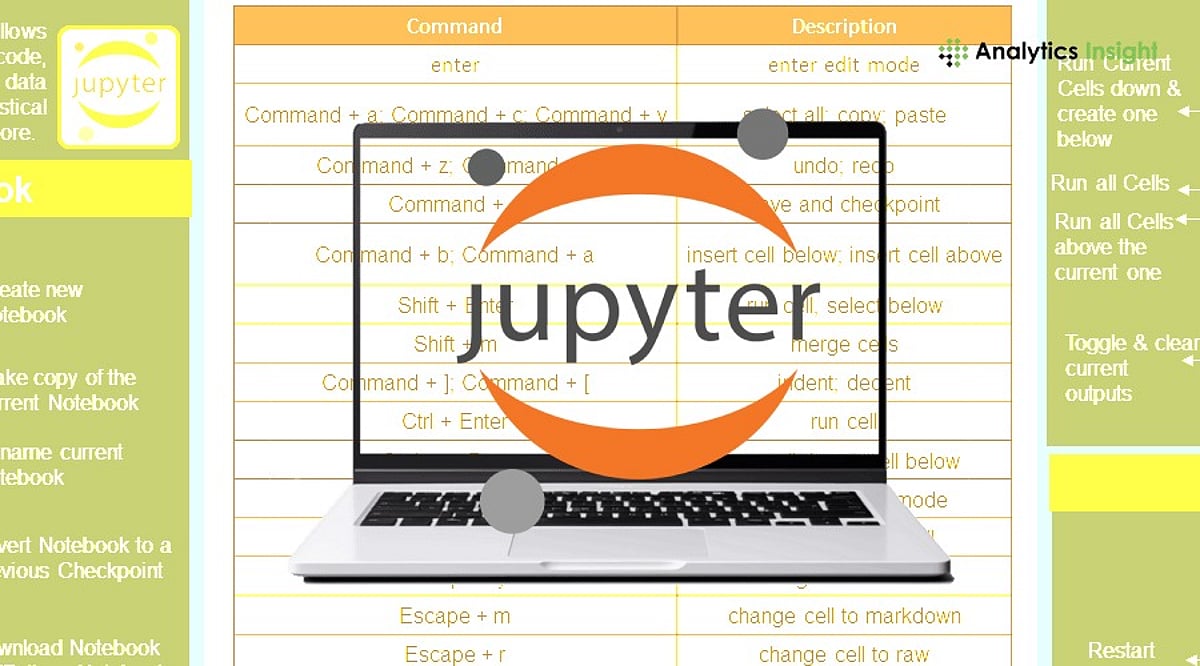
    Jupyter Notebook remains a powerhouse for Python, AI, and data science development in 2026. With the latest updates—including Jupyter AI integration and the March 2026 performance boost—knowing essential shortcuts, commands, and magic functions can dramatically accelerate your workflow. This guide covers everything you need to work smarter, not harder.

    Why Jupyter Notebook Still Dominates in 2026

    Despite competition from tools like Deepnote, Jupyter Notebook’s simplicity and flexibility keep it at the forefront. It combines code execution, documentation, visualization, and testing in one unified workspace—ideal for both small experiments and large-scale machine learning projects. Universities, research labs, and AI teams continue to rely on it for its ease of use and powerful ecosystem.

    Understanding the Two Working Modes

    Jupyter operates in two modes: Command Mode (for notebook-level actions like adding, deleting, or moving cells) and Edit Mode (for typing code or markdown inside a cell). Mastering the switch between these modes—using Esc and Enter—saves countless mouse clicks and speeds up navigation.

    How Keyboard Shortcuts Save Time

    Shortcuts reduce repetitive manual work. Studies show that efficient shortcut usage can cut coding time by 30–40% during large projects. Essential shortcuts include:

    • Shift + Enter – Run current cell and move to the next
    • Ctrl + Enter – Run current cell without moving
    • Alt + Enter – Run current cell and insert a new one below
    • A (Command Mode) – Insert cell above
    • B (Command Mode) – Insert cell below
    • DD (Command Mode) – Delete selected cell
    • M (Command Mode) – Change cell to Markdown
    • Y (Command Mode) – Change cell to Code

    Important Commands for Environment Control

    Jupyter commands let you manage kernels, check versions, and control the server without leaving the notebook. Use !pip list to see installed packages, %lsmagic to list all magic functions, and %who to display active variables. These commands streamline troubleshooting and environment management.

    Magic Functions That Boost Productivity

    Magic functions are built-in shortcuts that perform complex tasks with a single line. Key ones include:

    • %timeit – Measure execution time of a statement
    • %run – Run an external Python file
    • %load – Load code from an external file
    • %matplotlib inline – Display plots directly in the notebook
    • %pdb – Enable interactive debugging on errors
    • %%writefile – Write cell contents to an external file

    Better Performance for Data Science Work

    Jupyter integrates seamlessly with libraries like pandas, NumPy, and scikit-learn. You can inspect large datasets, generate statistical summaries, and create visualizations—all within one notebook. This eliminates context-switching and improves project organization.

    Improved Debugging Features

    Modern Jupyter includes advanced debugging: set breakpoints, inspect variables, and auto-reload modules with %autoreload. This reduces manual restarts and speeds up iterative development, especially for complex Python applications.

    Major Jupyter Updates in 2026

    The March 2026 update brought speed improvements, better stability, and enhanced extension support. Jupyter AI now offers code generation, debugging assistance, and notebook summarization directly inside the environment. Additionally, research like the JupOtter bug detection system—analyzing over 21,000 notebooks—promises even fewer errors in future releases.

    Final Thoughts

    Jupyter Notebook remains an indispensable tool for developers, data scientists, and AI engineers. By mastering shortcuts, commands, and magic functions, you can reduce manual work and focus on what matters: building innovative solutions. With AI enhancements and ongoing performance improvements, Jupyter is more powerful than ever.

    FAQs

    1. Why is Jupyter Notebook still popular in 2026?
    It combines coding, documentation, visualization, and testing in one simple workspace.

    2. What is the biggest Jupyter update in 2026?
    The March 2026 update improved speed, stability, and extension compatibility.

    3. What is Jupyter AI?
    Jupyter AI adds artificial intelligence features such as code generation, debugging help, and notebook summaries.

    4. How do shortcuts help in Jupyter Notebook?
    Shortcuts reduce repeated manual work and can improve coding speed by nearly 30 to 40 percent.

    5. Is Jupyter Notebook only for data science work?
    No. Jupyter is widely used for Python development, machine learning, research computing, education, and software testing.

  • Maximize Your Daily Productivity with These 9 Free AI Apps

    Maximize Your Daily Productivity with These 9 Free AI Apps

    Artificial intelligence is no longer a futuristic luxury—it’s a practical tool that can save you hours every day. From writing emails to editing videos, free AI apps are transforming how we work, learn, and create. Here are nine powerful, no-cost AI applications that can streamline your routine and boost efficiency.

    ChatGPT

    A versatile AI assistant that writes emails, generates content, answers questions, summarizes documents, and helps with coding, brainstorming, and everyday productivity.

    Google Gemini

    Google’s AI assistant streamlines research, drafts emails, summarizes information, analyzes images, and integrates seamlessly with Google Workspace for faster workflows.

    Microsoft Copilot

    Boosts workplace efficiency by generating documents, summarizing webpages, answering queries, creating presentations, and integrating AI across Microsoft Office applications.

    Perplexity AI

    Delivers accurate, source-backed answers for research, fact-checking, and learning, helping users find reliable information without browsing multiple websites manually.

    Canva

    Uses AI to create presentations, social media posts, graphics, and marketing materials quickly, eliminating hours of manual design work for creators.

    Grammarly

    Improves writing by correcting grammar, refining tone, enhancing clarity, and suggesting better phrasing, making professional communication faster and more effective.

    Notion AI

    Organizes notes, summarizes meetings, generates content, and manages projects efficiently, allowing teams and individuals to stay productive with minimal effort.

    Otter.ai

    Automatically records, transcribes, and summarizes meetings and lectures, ensuring important discussions are captured without manual note-taking or missed details.

    CapCut

    Speeds up video creation with AI-powered captions, background removal, voice enhancement, and editing tools, making content production faster for creators.

  • Alphabet Stock at $356 in July 2026: Strong Buy Backed by AI and Cloud Growth

    Alphabet Stock at $356 in July 2026: Strong Buy Backed by AI and Cloud Growth

    Alphabet Inc., the parent company of Google, YouTube, Android, and Google Cloud, remains one of the most dominant technology stocks in July 2026. Trading near $356 to $367 per share, the stock has delivered nearly 20% gains year-to-date, driven by stellar earnings, rapid cloud expansion, and aggressive artificial intelligence investments. Despite regulatory headwinds, Wall Street analysts maintain a positive outlook, with price targets ranging from $399 to $435.

    Current Stock Price Performance

    As of July 3, 2026, Alphabet Class C shares (GOOG) trade around $356–$358, while Class A shares (GOOGL) hover between $360 and $367. The stock surged to a 52-week high of $404.47 in May 2026, and although it has pulled back slightly, momentum remains strong. Year-to-date returns of 15–20% outperform many large-cap tech peers.

    Strong Financial Results Drive Investor Confidence

    Alphabet reported quarterly revenue of $109.9 billion, a 22% increase year-over-year. Earnings per share came in at $5.11, far exceeding analyst expectations of $2.68. These robust figures underscore the company’s ability to generate massive profits while investing heavily in future technologies.

    Google Cloud Emerges as a Key Growth Engine

    Google Cloud posted a remarkable 63% year-over-year revenue growth in the latest quarter. Enterprises increasingly rely on cloud services for data storage, AI workloads, and cybersecurity, positioning Google Cloud as a formidable competitor to Microsoft Azure and Amazon Web Services. Analysts expect this segment to become a major profit driver in the coming years.

    Massive AI Investment Plans

    Alphabet is allocating $180–$190 billion in 2026 for AI infrastructure, including data centers, custom TPU chips, and its Gemini AI platform. The company recently raised $80–$85 billion to finance this expansion. While such spending may pressure short-term margins, investors view it as essential for maintaining leadership in the global AI race.

    Entry into the Dow Jones Industrial Average

    On June 29, 2026, Alphabet joined the prestigious Dow Jones Industrial Average, replacing Verizon Communications. This milestone boosts institutional demand and underscores Alphabet’s significance in the U.S. economy, adding positive sentiment around the stock.

    Regulatory Challenges Persist

    On July 3, 2026, Alphabet lost its final appeal against a €4.1 billion ($4.68 billion) EU antitrust fine related to Android practices. Shares dipped about 1% in pre-market trading. Regulatory oversight remains a key risk, though the company had already provisioned for the penalty.

    Analyst Outlook Remains Bullish

    Wall Street remains optimistic. Firms like Morgan Stanley view recent weakness as a buying opportunity, with target prices between $400 and $415. Consensus fair value estimates range from $399 to $435 over the next 12 months, implying 15–20% upside from current levels.

    Final Outlook for July 2026

    Alphabet continues to be a top large-cap tech stock, supported by superior revenue growth, expanding profitability, and leadership in AI and cloud computing. While regulatory risks and high capital expenditure may create volatility, the company’s strong fundamentals and innovation pipeline make it a compelling long-term investment.

  • Apple to Launch Five New iPhones by 2027, Including Foldable Model with Higher Production Target

    Apple to Launch Five New iPhones by 2027, Including Foldable Model with Higher Production Target

    Apple is reportedly preparing to launch at least five new iPhone models between the second half of 2026 and early 2027, including its first foldable device. The company has raised its foldable production target and is exploring new memory chip suppliers as AI-driven demand tightens global component supplies.

    The planned lineup includes the company’s first foldable iPhone, a standard iPhone 18, and a new iPhone Air model. Apple is also reviewing new memory chip suppliers as demand from artificial intelligence data centers limits global supplies. Apple has not confirmed the product plans or its reported discussions with Chinese chipmakers.

    Apple Raises Foldable iPhone Production Plans

    Apple has reportedly asked suppliers to prepare components for about 10 million foldable iPhones in 2026, up from an earlier target of between 7 million and 8 million units. The increase suggests Apple is allocating more production capacity to its first foldable smartphone. Still, the figures come from people familiar with the supply chain, and Apple has not publicly announced the device or confirmed its expected production volume.

    Reports have described the foldable phone as a premium model that could sit above Apple’s existing Pro lineup. Some market estimates have placed its possible price near $2,500, although Apple has not provided any official pricing information. Meanwhile, Samsung and Huawei already sell several foldable smartphone models. Apple’s entry would add another major brand to the category, which remains smaller than the standard smartphone market.

    Apple has also secured parts for about 80 million new iPhones scheduled for production in the second half of 2026. Its total smartphone output could exceed 220 million units this year, according to current supplier estimates.

    Five-Model Roadmap Extends into Early 2027

    Apple’s reported launch schedule covers at least five devices across two release periods. The company is expected to introduce several models in late 2026 before adding the standard iPhone 18 and another iPhone Air in early 2027. A spring release would mark a change from Apple’s usual approach of launching its main iPhone range in September. The move could allow the company to spread demand across the year and target different price groups at separate times.

    One supplier executive reportedly said Apple has ‘good motivation’ to release iPhones in spring and gain market share. However, the launch timetable remains unconfirmed, and production plans can change before devices enter mass manufacturing.

    Apple’s purchasing scale may also give it more access to limited memory supplies than smaller smartphone makers. Reports say Xiaomi, Oppo, and Vivo have reduced annual production targets to below 100 million units amid higher component prices. Additionally, Apple recently raised prices for some MacBook and iPad products as memory and storage costs increased, showing how supply pressure has reached several parts of the consumer electronics market.

    Apple Considers Chinese Memory Chip Suppliers

    Apple is reportedly holding discussions with ChangXin Memory Technologies and Yangtze Memory Technologies about supplying chips for devices sold in China. The talks are said to be ongoing, and no agreement has been announced. Both Chinese companies appear on a Pentagon list of businesses accused of links to China’s military, so any supply agreement could face political and regulatory review in the United States.

    Apple is seeking more supply options as AI data centers consume a growing share of global memory production. Strong demand for DRAM and NAND chips has raised prices for smartphone, computer, and data-center manufacturers. Using more suppliers could help Apple secure enough parts and negotiate better purchasing terms. Nevertheless, the company must consider product quality, production capacity, trade rules, and restrictions linked to Chinese technology companies.

    Apple has not commented on the reported supplier talks. The company has also not confirmed the foldable iPhone, its five-model launch schedule, or its production targets through early 2027.