Tag: blockchain

  • Celestia Labs Acquires Sovereign Labs to Deliver High-Performance Custom Blockchain Solutions

    Celestia Labs Acquires Sovereign Labs to Deliver High-Performance Custom Blockchain Solutions

    New York, NY — July 15, 2026 — Celestia Labs, the core engineering team behind the modular Layer 1 blockchain Celestia, announced today the acquisition of Sovereign Labs. The deal brings together technology and talent from both companies, positioning Celestia Labs as a full-stack custom blockchain development partner for enterprises seeking high performance, scalability, and customization.

    Sovereign Labs has been a foundational part of the Celestia ecosystem since its founding in 2021 by Cem Ozer and Preston Evans. Its Sovereign SDK has become the industry’s leading framework for building application-specific, high-performance blockchains. The SDK powers major applications such as Relay — the top bridge by volume, handling over $8.5 billion in transfers — and Bullet, a perpetuals exchange that clears orders in 1.2 milliseconds and processes more than 30,000 transactions per second.

    Combined, the two teams have shipped over 25 production blockchains. As part of the acquisition, six Sovereign Labs team members join Celestia Labs, and co-founder Preston Evans has been promoted to Chief Technology Officer. Evans commented: “Companies migrating onchain can’t build in-house what Celestia Labs’ team and tech offers, in terms of reliability or scale. I’m excited to keep building on the legacy Celestia Labs has created, and push the boundaries of blockchain infrastructure engineering to meet the demands of the next era of onchain applications.”

    The acquisition comes as demand for custom blockchains surges. General-purpose chains often cannot provide the scale, latency, and custom order flow rules needed for next-generation applications. For example, Hyperliquid built its own blockchain to achieve low latency, and Polymarket — which processed $6 billion in volume in the first half of 2025 — is migrating to a custom chain to solve congestion issues. Celestia Labs aims to fill the gap as a design and engineering partner for such projects.

    Nick White, CEO of Celestia Labs, stated: “Internet-scale applications, from agentic payments solutions to global exchanges and prediction markets, require custom infrastructure that only a highly experienced implementation team can provide. The newly combined expertise and technology from this acquisition position Celestia Labs as a full-stack infrastructure and design partner for companies that need their own blockchains.”

    About the Celestia Foundation
    The Celestia Foundation is a non-profit organization supporting the long-term development, governance, and ecosystem of the Celestia network, led by CEO and Co-founder Mustafa Al-Bassam.

    About Celestia Labs
    Celestia Labs is the core engineering team building and maintaining the Celestia network. The team has shipped over 25 custom chains into production, built the industry’s leading framework for high-performance blockchains, and raised over $155 million from Bain Capital Crypto, Coinbase Ventures, and others. For more information, visit celestia.org.

  • Top 8 Web3 Browsers to Streamline DApp Access in 2026

    Top 8 Web3 Browsers to Streamline DApp Access in 2026

    Decentralized applications (DApps) are becoming more powerful, but accessing them securely and efficiently still requires the right browser. In 2026, specialized Web3 browsers are bridging the gap between traditional web surfing and the decentralized internet. Here are the leading options that make DApps faster, safer, and easier to use.

    1. Brave Browser

    Brave stands out with a built-in crypto wallet, strong privacy protections, and native Web3 support. It blocks trackers by default and rewards users with Basic Attention Tokens (BAT) for viewing privacy-respecting ads.

    2. Opera Crypto Browser

    Opera’s dedicated crypto browser includes an integrated wallet, NFT features, and a built-in blockchain explorer. It simplifies Web3 navigation and supports multiple blockchains.

    3. Carbon Browser

    Carbon is a fast, mobile-first browser with multi-chain wallet integration and low resource usage. It’s designed for users who want a lightweight yet powerful Web3 experience on smartphones.

    4. Osiris Browser

    Osiris is a privacy-focused browser built specifically for decentralized applications. It emphasizes anonymity and security while providing seamless DApp connectivity.

    5. Puma Browser

    Puma is optimized for Web3 gaming, NFTs, and decentralized finance (DeFi) applications. It offers a tailored experience for users who engage heavily with these sectors.

    6. Mises Browser

    Mises supports browser extensions and Web3 wallets on Android devices, making it a versatile choice for mobile users who want to extend their desktop browsing habits to their phone.

    7. MetaMask Browser

    MetaMask’s built-in browser is ideal for Ethereum users. It provides seamless DApp connectivity and wallet integration, making it a go-to for those already in the Ethereum ecosystem.

    8. Status Browser

    Status combines encrypted messaging with decentralized browsing in a single mobile app. It’s perfect for users who value communication privacy alongside Web3 access.

    Each of these browsers brings unique strengths, so your choice depends on your primary activities—whether gaming, DeFi, NFTs, or general browsing. As the Web3 space evolves, these browsers will continue to improve speed, security, and user experience.

  • Litecoin Holds Steady, Zcash Rebounds, but BlockDAG Steals July Spotlight with 100% Bonus and $0.03 Buyback

    Litecoin Holds Steady, Zcash Rebounds, but BlockDAG Steals July Spotlight with 100% Bonus and $0.03 Buyback

    This week, established cryptocurrencies are consolidating while a newer contender captures the market’s attention. Litecoin remains stable near $43.76 after bouncing off support, and its price prediction now hinges on whether buyers can push past the $46 resistance. Zcash is recovering from a security scare that briefly cut its value in half, now trading at $492.61 as confidence returns ahead of a major network upgrade.

    Meanwhile, BlockDAG is drawing significant interest. Its promo code “EARLY” offers buyers 100% extra BDAG on every purchase and moves the USDT buyback access forward to September 1 from October 1. The token price is just $0.00000033, with a buyback rate of $0.03. Additionally, BlockDAG is upgrading its network from 5,500 to 7,000 transactions per second (TPS), making it one of the fastest platforms on the market.

    Litecoin Price Prediction: Can LTC Break $46?

    Litecoin is trading in a tight range after recovering from its June decline. The cryptocurrency has found solid support around $39, while $46 remains the key resistance level. At the time of analysis, LTC was near $43.76, with mixed technical indicators. Litecoin’s network hashrate reached a record 2.774 PH/s, reflecting growing miner participation and improved security. While this does not guarantee immediate price gains, it is a positive long-term sign. The Litecoin price prediction depends on whether buyers can defend $39 support and eventually push above $46.

    Zcash Price Outlook Ahead of Major Upgrade

    Zcash (ZEC) is regaining momentum after developers confirmed the Ironwood network upgrade will go live on July 28, 2026, at block height 3,428,143. The upgrade will retire the Orchard shielded pool, which had a security flaw that could have allowed counterfeit ZEC creation. After the vulnerability became public, ZEC plunged about 50% from $602.68 to $299.25, before rebounding to around $492.61. Market sentiment has strengthened, with futures Open Interest rising 18% to $914.91 million and trading volume climbing to $1.66 billion. Over 80% of ZEC’s maximum 21 million supply is now in circulation.

    BlockDAG: 100% Bonus and Utility Stand Out

    BlockDAG is attracting buyers with its low entry price of $0.00000033 per coin and the 100% bonus from code “EARLY.” The buyback rate of $0.03 offers significant ROI potential. Beyond price, BlockDAG uses a DAG-based architecture for parallel transaction processing, enabling payments and smart contracts. The network is being upgraded to 7,000 TPS. It already powers a live casino platform that has seen over 13,000 users, more than $15 million deposited, and upwards of $150 million wagered in its first 30 days. Pre-registration for the new BlockDAG X exchange is open, with spot trading, futures, and mobile apps launching in 14 days. A Super App is scheduled for August 20, adding further utility to the ecosystem.

    Which Is the Best Crypto to Buy Now?

    The Litecoin price prediction remains a waiting game, with $39 support and $46 resistance. The Zcash price trajectory depends on the Ironwood upgrade restoring buyer trust. However, BlockDAG stands out with its 7,000 TPS speeds, a casino platform already processing $150 million in wagers, and an exchange launch imminent. With a Super App coming on August 20 and expanding utility, the $0.00000033 entry and 100% bonus make it a compelling option for those seeking maximum returns.

    Disclaimer: This article is for informational purposes only and does not constitute investment advice. Cryptocurrencies are volatile and involve significant risk. Always conduct your own research before investing.

  • TxFlow L1 Launches Probly Prediction Market as Second Channel in Multi-Application Blockchain Ecosystem

    TxFlow L1 Launches Probly Prediction Market as Second Channel in Multi-Application Blockchain Ecosystem

    TxFlow L1, the Layer 1 blockchain powering a multi-application onchain financial ecosystem built around its TIP Liquidity Standards, today announced its second Channel: Probly, the first prediction-market application built on TxFlow Improvement Protocol 3 (TIP3).

    Following TxFlow DEX—the blockchain’s first application and a central limit order book (CLOB) decentralized exchange for perpetual trading—Probly expands the TxFlow L1 ecosystem into real-time prediction markets. At launch, the platform offers 172 live markets covering more than 7,000 events, including continuously rolling markets with durations as short as five minutes, backed by fully onchain settlement and TxFlow L1’s shared financial infrastructure. The launch marks the next stage in TxFlow L1’s expansion from a network anchored by a flagship onchain exchange into a multi-application financial ecosystem.

    TxFlow L1 was designed around a different structure. Through its TxFlow Improvement Protocol standards and Channel architecture, financial applications can operate on the same purpose-built network while connecting to shared execution and settlement infrastructure. Probly extends the ecosystem into prediction markets as the second Channel.

    TIP3 Makes Prediction Markets Native to TxFlow L1

    TxFlow Improvement Protocol, or TIP, is the standards framework that defines how financial products are built and connected on TxFlow L1. Within the framework, TIP1 supports spot markets, TIP2 supports derivatives and TIP3 establishes the standard for prediction-market Channels. TIPn remains open for future products, including real-world assets, structured products and financial instruments that have not yet been developed onchain.

    TIP3 defines how prediction-market applications connect to TxFlow L1’s execution, settlement and Shared Liquidity Layer. Rather than operating through an independent infrastructure stack, a TIP3 Channel can build on the same financial foundation supporting the wider TxFlow L1 ecosystem. Its architecture uses DAG-based parallel execution and a multi-threaded processing pipeline, enabling non-conflicting transactions to be processed simultaneously. Market activity and settlement records are executed onchain, providing an open and verifiable system. Probly therefore settles directly on TxFlow L1 instead of relying on a shared general-purpose network or a centralized offchain ledger.

    Markets are resolved through designated oracle sources. Automatically resolved price-source markets can settle immediately, while manually adjudicated markets are expected to settle within 24 to 72 hours. Following resolution, eligible settlement amounts are credited automatically in USDC without a separate claim step. This creates a direct infrastructure advantage for Probly: fully onchain settlement and native connectivity to the broader TxFlow L1 ecosystem.

    Probly Brings Real-Time Probability Signals to TxFlow TIP3

    Probly comes from “probably”, the word we use when the future is still open. Inspired by P(A), the notation for the probability of an event, Probly turns individual perspectives into a live collective signal: before it happens. At launch, Probly features 172 live event pages across 15 categories, including politics, sports, crypto, finance, and geopolitical events. Discovery tools help users explore trending, highly active, fast-moving and soon-to-conclude events, while lightweight polls offer a simple way to engage with topics attracting attention.

    Probly also introduces continuously refreshed five-minute, 15-minute, one-hour and four-hour experiences covering BTC, ETH, SOL and XRP price movements. Each page includes live data, a real-time countdown and automatically refreshed rounds, helping users follow changing expectations as events unfold. The platform combines fully onchain infrastructure with a clear, accessible interface designed for both new and experienced users. Probly presents real-time information, probability changes and event timelines in one streamlined experience.

    Users can access Probly through an email-based embedded wallet without managing a seed phrase, or connect compatible wallets including MetaMask, Coinbase Wallet, Phantom and Uniswap Wallet. A consolidated account interface provides a clear view of activity, history and ongoing event engagement. Combined with TxFlow L1’s transparent onchain infrastructure and automated resolution process, these features reduce friction from access through completion.

    A Different Infrastructure Approach to Prediction Markets

    Probly enters a prediction-market category shaped by platforms such as Polymarket and Kalshi, but is built on a different infrastructure model. Probly operates and settles directly on TxFlow L1, a Layer 1 designed for onchain financial applications, bringing real-time probability signals, verifiable onchain records and automatic USDC settlement into one financial stack. Probly extends the same architecture into prediction markets through TIP3.

    About Probly

    Probly is a prediction market built on TxFlow L1 through TxFlow Improvement Protocol 3 (TIP3). It turns views about future events into continuously updated market signals across sports, crypto, economics, news, culture, weather and other real-world categories. Probly combines real-time markets, broad event coverage, fully onchain settlement and self-custodied USDC infrastructure. Its mission is to make collective expectations more immediate, transparent and useful by converting uncertainty into a price. Before It Happens.

    About TxFlow L1

    TxFlow L1 is a high-performance blockchain built for on-chain financial infrastructure, organized around TIP Liquidity Standards that define how financial products are built, composed, and settled on-chain. TxFlow DEX is the first Channel on TxFlow L1, a CLOB orderbook DEX for perpetual trading, processing over 250,000 TPS with one-block finality. Through its TxFlow Improvement Protocol standards and Channel architecture, TxFlow enables spot markets, derivatives, prediction markets and future financial products to operate on the same chain while connecting to shared execution and settlement infrastructure where all finance happens. TxFlow L1 is building an open, composable and community-owned financial ecosystem in which each new application can strengthen the infrastructure available to those that follow.

    This press release is provided for informational purposes only and does not constitute an offer, solicitation, recommendation or invitation to access or participate in any financial, event-based or prediction-market product. Participation in prediction markets involves risk, including the possible loss of funds.

  • US Government Transfers $250M in Seized Bitcoin to Coinbase Prime, Sparking Sale Concerns

    US Government Transfers $250M in Seized Bitcoin to Coinbase Prime, Sparking Sale Concerns

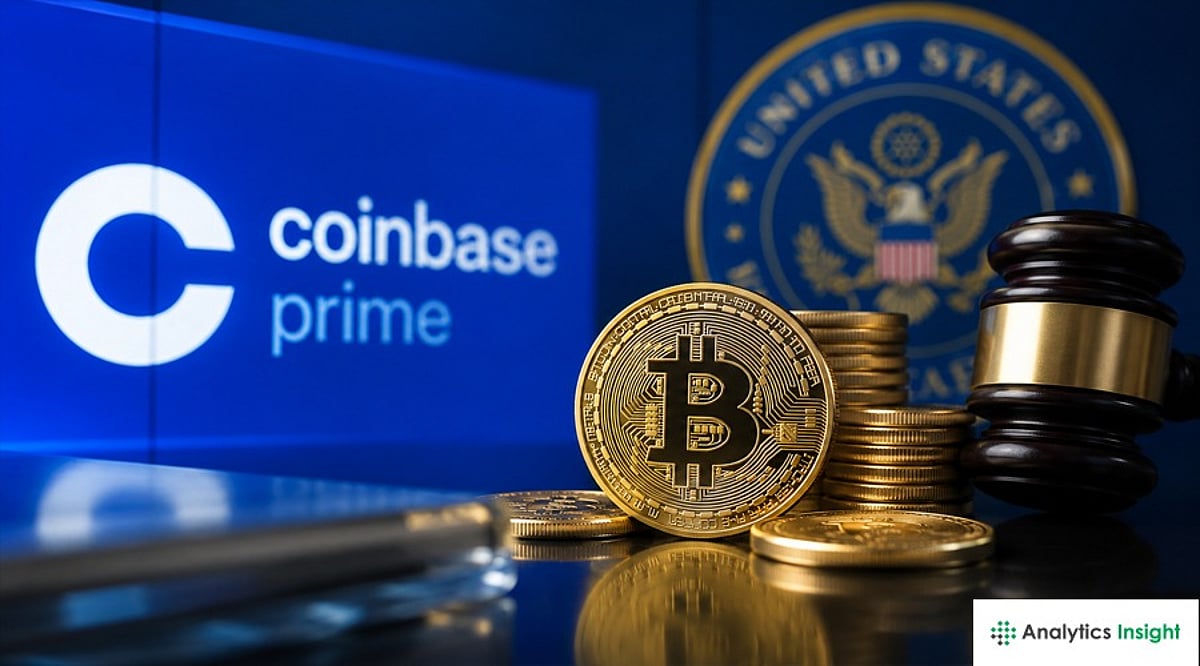
    The United States government has moved approximately 3,941 Bitcoin—valued at roughly $250 million—to Coinbase Prime, according to blockchain data tracked by Arkham Intelligence. The transfer, which occurred on July 13, involved assets seized from major federal cases and has reignited speculation about potential government sales of digital assets.

    Bitcoin was trading below $64,000 at the time of the move, and the transaction immediately drew market attention because government-controlled wallets can influence liquidity. While the transfer followed an established custody process, it raised a key question: Is this routine asset management or a precursor to future Bitcoin sales?

    Seized Bitcoin Moves into Coinbase Prime Custody

    Arkham Intelligence recorded three separate Bitcoin transfers totaling 3,941 BTC. The largest movement involved roughly 2,875 BTC linked to wallets labeled “Ryan Farace Seized Funds.” Federal authorities originally seized those assets during a 2021 investigation into money laundering, for which Ryan Farace was convicted. The transferred amount closely matched the original confiscated balance, along with an additional 58.742155166 BTC connected to the same case.

    Another transfer moved 926 BTC from wallets labeled “BTC-e Seized Funds.” These assets were confiscated after the shutdown of the BTC-e exchange in 2017, which prosecutors linked to more than $9 billion in illicit transactions involving ransomware, hacking, and other criminal activity. Alexander Vinnik later pleaded guilty to conspiracy to commit money laundering in 2024.

    A separate transfer of about 140 BTC completed the day’s movements. Collectively, the transactions reflected the continued management of judicially seized digital assets by the U.S. Department of Justice rather than a new seizure operation.

    Existing Government Process Guided the Transfer

    The Bitcoin transfers followed an existing custody arrangement between federal agencies and Coinbase Prime. In July 2024, the U.S. Marshals Service selected Coinbase Prime to provide custody and trading services for major cryptocurrencies under government control. As a result, transferring Bitcoin into Coinbase Prime represented a standard operational step within that agreement. The movement itself did not confirm that authorities had already sold any of the transferred assets.

    Earlier administrative actions also supported that timeline. In January 2024, the U.S. government published a formal notice announcing its intention to dispose of 2,933.64 BTC from the Farace case after completing the required legal procedures, including a period for third-party ownership claims.

    Government Expands Centralized Crypto Asset Management

    Besides the Bitcoin transfers, authorities also moved other seized digital assets into Coinbase Prime, including 30,007 Ether associated with wallets labeled “Brian Krewson Confiscated Funds.” Court documents stated that Brian Krewson did not face direct criminal prosecution. Instead, the Department of Justice pursued a civil forfeiture case involving the Ether, which investigators said Christopher Castelluzzo and Luke Atwell purchased with proceeds from illicit activities for about $9,000. According to the filings, Krewson managed the wallets while his associates remained incarcerated.

    The broader consolidation places multiple government-held digital assets under a single institutional platform. Federal agencies now manage a portfolio estimated at more than 328,225 BTC, valued at over $20 billion. The transfer gives authorities the flexibility to conduct over-the-counter sales through Coinbase Prime instead of relying on public auctions, which could reduce direct pressure on public exchange order books while allowing the government to manage future disposals under its existing administrative framework.

    What’s Next?

    The United States transferred 3,941 Bitcoin worth about $250 million to Coinbase Prime through an established judicial asset management process. The funds originated from major seizure cases, while the move expanded centralized custody and gave authorities greater flexibility for any future over-the-counter asset disposals.

  • CLARITY Act Faces Critical Senate Vote as August Recess Deadline Approaches

    CLARITY Act Faces Critical Senate Vote as August Recess Deadline Approaches

    The CLARITY Act is racing against a tight Senate calendar as lawmakers resume session on July 13 with only 25 days before the August 7 summer recess. The bill requires 60 votes to overcome procedural hurdles and a potential filibuster, but securing that support remains daunting. Currently, only Democratic Senators Ruben Gallego and Angela Alsobrooks have publicly committed to the legislation.

    Ethics concerns tied to President Donald Trump’s reported $1.4 billion in crypto-related income during 2025 have further complicated negotiations. Galaxy Digital, a leading crypto investment firm, has lowered its estimate of the bill’s passage odds from 75% in May to 50-50 as of late June.

    The Digital Asset Market Clarity Act (H.R. 3633) already missed an earlier target for presidential signing on July 4. With about 20 Senate working days remaining, leaders must act swiftly to bring it to the floor. The timeline also coincides with the July 18, 2026 rulemaking deadline for the GENIUS Act, which became law in July 2025.

    Bipartisan support remains the primary obstacle. Republicans control 53 seats but need roughly seven Democratic votes to reach the 60-vote cloture threshold. So far, only Gallego and Alsobrooks have emerged as reliable Democratic supporters, leaving leadership seeking at least five additional Democrats. The bill did pass the Senate Banking Committee on May 14 with a 15-9 vote, signaling some bipartisan backing at the committee level.

    Ethics debates have intensified as Democrats raise concerns about public officials owning crypto. Former White House ethics lawyer Richard Painter argued that Trump “stands alone” compared to other executive branch officials, adding another layer to ongoing negotiations.

    Market observers have adjusted expectations. Alex Thorn, Galaxy Digital’s Head of Firmwide Research, noted the firm reduced its odds from 75% in May to 60% on June 9, then to 50% on June 26. Thorn wrote, “The absence of news is itself the news,” while adding that “50-50 is pretty good odds” for legislation of this scale. A revised version of the bill could be introduced as early as next week, just before the August recess.

    What’s Next?

    Supporters are racing to pass the CLARITY Act before the Senate breaks on August 7. They need 60 votes to beat a filibuster, but progress is stalled on disagreements over ethics rules for public officials owning crypto. With time running out, analysts now give the bill only a 40% to 50% chance of passing.

  • BlockDAG’s AI Launch and 100% Bonus Drive Buyer Interest as Polkadot and Shiba Inu Struggle

    BlockDAG’s AI Launch and 100% Bonus Drive Buyer Interest as Polkadot and Shiba Inu Struggle

    Crypto markets are trading cautiously this week, with major coins holding steady. The Sui price remains locked between $0.50 and $0.70, waiting for a catalyst as its network tests AI-driven transactions. The Shiba Inu coin price sits near $0.00000429, pressured by a tightening triangle despite a burn spike topping 3,000%.

    BlockDAG is definitely becoming everyone’s favourite gradually. Its casino has already collected $15 million in deposits and nearly $150 million in wagers from 13,000 users in a single month, all built on DAG-based infrastructure. BDAG AI’s launch added an estimated $500 million to its valuation almost overnight. Priced at $0.00000033 against a $0.03 buyback rate, and boosted by a 100% bonus, BlockDAG (BDAG) keeps surfacing as the best crypto to buy today.

    Sui Focuses on Machine Economy Foundations

    SUI is currently trading in a tight consolidation range between $0.50 and $0.70. While some traders expect a major breakout, the immediate Sui price remains tied to broader market trends and Bitcoin’s movement. Buyers have consistently defended the support level, balancing out recent daily losses and maintaining a stable market capitalization.

    Simultaneously, the network is expanding its utility by demonstrating AI-powered autonomous transactions. During testing, the platform achieved high transaction speeds, aiming to become the foundation for a machine-driven ecosystem where AI agents exchange value independently. If network activity increases and trading volume breaks through resistance, it could support the Sui price over the long term. However, future growth depends heavily on sustained user adoption and broader market stability driving the Sui price forward.

    Shiba Inu Coin Price Faces Critical Resistance

    The Shiba Inu coin price dropped slightly to $0.00000429 on July 8 as its daily chart formed a tightening descending triangle. Analysts note that Bollinger Bands have highly compressed, indicating a potential sharp move ahead, though multiple moving averages currently suggest a bearish trend.

    On-chain data revealed a major activity spike when a Robinhood-linked address burned over 109 million tokens. This individual transaction, likely fueled by platform trading fee allocations, caused the 24-hour burn rate to jump by over 3,000%. While this massive token reduction captured community attention, the immediate Shiba Inu coin price remains bounded by psychological support near $0.0000040. Traders are watching these compressed chart levels closely to determine if the next breakout will impact the Shiba Inu coin price positively.

    BlockDAG’s 100% Bonus Draws Buyers’ Focus

    Adoption figures tell a story that marketing alone cannot, and BlockDAG’s numbers are telling a compelling one right now. The BlockDAG Casino has already logged more than 13,000 users, pulled in upward of $15 million in deposits, and processed close to $150 million in wagers, all within its first month of operation.

    Every one of those transactions runs through the project’s DAG-based architecture, a structure built to handle high-speed payments and smart contract execution on a single layer, something many older blockchain designs still struggle to combine.

    That same infrastructure is now paired with fresh technical momentum. BDAG AI went live recently, adding an estimated $500 million to the project’s valuation almost immediately, a signal that the market responds strongly to real functionality rather than announcements alone.

    Pricing has moved in favor of buyers at the same time. BDAG remains priced at $0.00000033, the buyback rate sits at $0.03, and the newly launched code EARLY delivers a 100% bonus on every purchase, doubling the previous 100% offer and setting a fresh record for the project. This bonus allocation carries a limit and will close once it is fully claimed.

    Genuine usage, working technology, and a low entry price rarely converge this precisely at the same moment. The casino figures point to users staying active rather than testing the platform once. The AI launch points to development delivering real results. And the bonus points to timing working strongly in favor of anyone considering an entry now. That alignment is exactly why BlockDAG keeps surfacing among answers to the best crypto to buy today.

    Conclusion

    The Sui price still hovers between $0.50 and $0.70, tied to AI-driven transaction tests that hint at long-term rather than quick potential. The Shiba Inu coin price stays pinned near $0.00000429, even as one burn pushed the daily rate above 3,000%.

    BlockDAG’s numbers carry more weight. Its casino counts 13,000 users, $15 million in deposits, and nearly $150 million in wagers in one month, all on DAG-based rails. BDAG AI’s launch added $500 million to its valuation overnight, while a $0.00000033 price, $0.03 buyback, and 100% EARLY bonus keep it among the best cryptos to buy today. Some projects announce themselves for a moment; others just build until the numbers convince.

    Presale: https://purchase.blockdag.network
    Website: https://blockdag.network
    Telegram: https://t.me/blockDAGnetworkOfficial
    Discord: https://discord.gg/Q7BxghMVyu

    Disclaimer: Analytics Insight does not provide financial advice or guidance on cryptocurrencies and stocks. Also note that the cryptocurrencies mentioned/listed on the website could potentially be risky, i.e. designed to induce you to invest financial resources that may be lost forever and not be recoverable once investments are made. This article is provided for informational purposes and does not constitute investment advice. You are responsible for conducting your own research (DYOR) before making any investments. Read more about the financial risks involved here.

  • Leading EVRmore Ecosystem Tokens Ranked by Market Capitalization

    Leading EVRmore Ecosystem Tokens Ranked by Market Capitalization

    Discover the top EVRmore ecosystem tokens that are driving blockchain innovation this year. These digital assets power various aspects of the network, from transactions and governance to gaming and decentralized finance.

    • EVR – The native coin powering transactions, governance, and ecosystem growth.
    • EVRM Stake – Supports staking rewards while strengthening network security and participation.
    • EVR Bridge – Enables seamless cross-chain asset transfers across blockchain ecosystems.
    • EVR Swap – The decentralized exchange token driving liquidity and token swaps.
    • EVR DAO – Governance token allowing the community to vote on ecosystem proposals.
    • EVR Finance – Focused on decentralized lending, borrowing, and yield generation.
    • EVR NFT – Supports NFT creation, trading, and digital asset ownership.
    • EVR Gaming – Designed for blockchain gaming, in-game rewards, and Web3 experiences.
  • Solana (SOL) Price Outlook Brightens as SBI Launches Dedicated Blockchain Venture in Japan

    Solana (SOL) Price Outlook Brightens as SBI Launches Dedicated Blockchain Venture in Japan

    Solana has captured renewed market attention after two prominent analysts projected higher price targets, while Japan’s SBI Group unveiled a new Solana-focused venture. The developments come amid improved on-chain activity and a contrasting slowdown in exchange-traded fund (ETF) flows.

    Analysts Raise Price Targets for Solana

    Crypto trader Ansem predicted that Solana could move toward $150 over the coming months, saying that many on-chain altcoins appear ready for a breakout after extended consolidation. He expects Solana to first reclaim the top of its trading range near $84 before advancing to the $150 target, which would represent an increase of roughly 98% from the current price of about $75.8.

    Analyst Michaël van de Poppe offered a more cautious outlook, identifying $100 as a possible near-term target if key support at $76.6 remains intact. He said that holding that level is crucial for confirming continued upward momentum, and if support holds, Solana could trade above $100 within one to two months.

    On-Chain Data Strengthens Amid Softer ETF Demand

    Despite the technical optimism, on-chain activity has continued to improve. BeInCrypto reported that Solana’s total value locked (TVL) climbed to its highest level since early June, suggesting fresh capital has entered the network. Deposits across Solana-based applications increased, long-term holders accumulated tokens, and active wallet addresses approached yearly highs.

    Meanwhile, both open interest and funding rates declined, indicating that spot demand—rather than leveraged trading—drove recent activity. However, institutional demand painted a different picture. According to SoSoValue data, Solana spot exchange-traded funds recorded their first monthly net outflow in June 2026, totaling about $790,000. July brought some recovery with month-to-date inflows of roughly $3.65 million, but those figures remained far below the $199.21 million recorded during the October launch and the $419.38 million peak in November.

    Broader market risks also continued to weigh on sentiment. Renewed US-Iran tensions and the possibility of higher interest rates created additional uncertainty for cryptocurrency markets.

    SBI Launches Solana-Focused Venture to Boost Japan’s On-Chain Finance

    Separately, SBI announced a partnership that will place the Solana Foundation alongside SBI and Sumitomo Mitsui Financial Group within SBI R3 Japan. The company plans to rename the business SBI Solana Global after completing required corporate procedures.

    The new venture intends to use Solana as its primary blockchain infrastructure, aiming to connect Japan’s regulated financial system, domestic assets, and legal framework with international blockchain markets. SBI said the platform will support the issuance and distribution of yen stablecoins, including JPYSC, alongside tokenized corporate bonds, commercial paper, investment funds, and real estate products. The company also plans to provide integrated issuance, distribution, and settlement services throughout the on-chain lifecycle of assets.

    Future business areas listed by the partners include cross-border payments, institutional blockchain services, and payment systems for AI agents. However, no launch dates, revenue forecasts, client commitments, or details about regulatory approvals for individual services were provided. This project expands SBI’s broader digital asset strategy, which has previously included a regulated yen stablecoin developed with Startale and the launch of Ripple’s RLUSD stablecoin in Japan through SBI VC Trade.

    What’s Next for Solana?

    Solana has attracted renewed attention as analysts project higher price targets while on-chain activity strengthens despite softer ETF demand. Simultaneously, SBI’s expanded commitment to the Solana ecosystem adds another institutional development for the network. Market participants will continue monitoring both adoption trends and broader economic conditions.

  • BIP-110 Faces Uphill Battle as Bitcoin Miner Support Stays Weak

    BIP-110 Faces Uphill Battle as Bitcoin Miner Support Stays Weak

    Bitcoin’s proposed BIP-110 soft fork continues to face limited miner support ahead of a key activation period, despite renewed debate over restricting non-financial data on the blockchain. The proposal would temporarily limit data storage methods linked to Ordinals and BRC-20 tokens for one year while exempting older transaction outputs.

    Miner signaling remains far below the required threshold, and several prominent Bitcoin figures have publicly opposed the plan. Meanwhile, Bitcoin traded near $63,800 on Monday as broader financial markets reacted to fresh geopolitical tensions in the Middle East.

    Proposal Targets Non-Financial Blockchain Data

    Developer Dathon Ohm introduced BIP-110, known as the Reduced Data Temporary Soft Fork, in December 2025. The proposal would impose temporary restrictions on non-financial data stored in Bitcoin transactions. Specifically, it would cap OP_RETURN fields at 83 bytes, limit data pushes to 256 bytes, and restrict most new outputs to 34 bytes. However, transaction inputs spending coins created before activation would remain permanently exempt.

    The proposed limits would automatically expire about one year after activation. Supporters argue the measures would reduce blockchain growth and return Bitcoin’s primary focus to payments. In contrast, critics argue the proposal would reject valid fee-paying transactions while favoring certain transaction types.

    Michael Saylor, Executive Chairman of Strategy, stated on July 12, 2026, that BIP-110 would transform a spam dispute into a consensus rule change that invalidates some currently valid, fee-paying transactions.

    Miner Support Remains Below Activation Threshold

    So far, miner backing has remained minimal. Signaling has never exceeded roughly 1% during any measurement period and currently stands at zero, with no major mining pool supporting the proposal. One monitoring service recorded only 38 signaling blocks from more than 9,000 mined since May 1, 2026. That represents approximately 0.42% support. Node adoption also remains in the low single digits.

    Miners signal support by setting a specific bit within the block version field. Even so, almost no miners have activated that signal.

    BIP-110 uses a modified activation process requiring support from 55% of miners, or 1,109 of 2,016 blocks during a difficulty adjustment period. That requirement sits below the traditional 95% threshold used for previous Bitcoin soft forks.

    The current signaling period is expected to reach a mandatory window near block 961,632, which projections place in early August. If the proposal locks in, activation would occur near block 965,664 around September 1, 2026. Current support levels indicate the proposal would create only a small minority chain instead of a network-wide upgrade.

    Market Holds Steady as Global Assets React

    Several well-known Bitcoin figures have opposed BIP-110 before the upcoming deadline. Besides Michael Saylor, Blockstream Chief Executive Adam Back rejected the proposal, while developer Jameson Lopp criticized its activation parameters.

    They warned that a disputed fork could split the Bitcoin blockchain and require exchanges and node operators to prepare for two separate networks. Meanwhile, Bitcoin traded near $63,800 on Monday. The cryptocurrency fell 0.3% over the previous 24 hours but remained 2% higher for the week.

    At the same time, traditional markets reacted to the fourth round of U.S. strikes on Iran within one week. Spot gold dropped as much as 1.6% to around $4,050 per ounce, while Brent crude climbed 4% above $79 per barrel amid uncertainty surrounding the Strait of Hormuz. Additionally, Treasury prices declined across the yield curve, pushing the two-year yield to its highest level since February 2025. MSCI’s Asia Pacific equities index also fell 1.6%.

    U.S. Central Command said American forces struck Iran after an attack on a container ship. Conflicting statements about the Strait of Hormuz kept uncertainty elevated since roughly one-fifth of global seaborne oil normally passes through the waterway.

    Markets reflected concerns that prolonged conflict could keep oil prices elevated and encourage the Federal Reserve to maintain higher interest rates for longer. Minutes from the Fed’s June meeting also showed that several policymakers previously considered raising rates before choosing to hold them steady.

    What’s Next?

    BIP-110 continues to face minimal miner support despite proposing temporary limits on non-financial Bitcoin transaction data. Prominent Bitcoin figures have opposed the plan, while activation remains unlikely under current signaling levels. Meanwhile, Bitcoin held relatively steady as global markets reacted to rising geopolitical tensions.