Tag: blockchain

  • Best Trust Wallet Clone Script Providers to Watch in 2026

    Best Trust Wallet Clone Script Providers to Watch in 2026

    As the cryptocurrency ecosystem expands, businesses are increasingly seeking ready-made solutions to launch their own branded digital wallets. Trust Wallet clone scripts offer a fast, cost-effective way to enter the market with feature-rich, secure platforms. Here are the top providers to consider for 2026.

    Top Trust Wallet Clone Script Providers

    • Suffescom Solutions: Develops customizable Trust Wallet clone scripts supporting multiple cryptocurrencies, NFT storage, staking, and enterprise-grade security features.
    • Antier Solutions: Offers scalable crypto wallet development with DeFi integration, multi-chain compatibility, biometric authentication, and robust security architecture.
    • Blockchain App Factory: Delivers feature-rich wallet clone solutions supporting token management, staking, decentralized applications, and advanced encryption technologies.
    • Coinsclone: Builds customizable cryptocurrency wallet scripts with fast deployment, multi-currency support, and secure transaction management capabilities for businesses.
    • Maticz Technologies: Provides white-label crypto wallet solutions featuring NFT compatibility, staking functionality, and blockchain integration for digital asset management.
    • Inoru: Develops blockchain wallet software with customizable interfaces, token support, multi-platform compatibility, and enterprise-level security infrastructure.
    • Osiz Technologies: Creates Trust Wallet-inspired applications offering decentralized wallet features, crypto asset storage, and cross-platform mobile compatibility.
    • TurnkeyTown: Delivers ready-to-launch crypto wallet clone solutions featuring secure authentication, token management, and simplified blockchain integration tools.
    • Code Brew Labs: Specializes in customized crypto wallet development with modern interfaces, scalable architecture, and support for multiple blockchain ecosystems.

    These providers cater to a growing demand for secure, customizable, and multi-chain wallet solutions, helping businesses capitalize on the crypto boom without building from scratch. For more stories and updates, join our WhatsApp Channel to get the latest news, exclusives, and videos on WhatsApp.

  • Solana Price Jumps 11% as Institutional Adoption and Network Milestones Drive Momentum

    Solana Price Jumps 11% as Institutional Adoption and Network Milestones Drive Momentum

    Solana extended its recovery this week, climbing approximately 11% to trade near $81 after briefly spiking above $82. The rally was fueled by a combination of network upgrades, surging on-chain activity, institutional capital inflows, and new governance initiatives that reignited investor enthusiasm.

    Institutional Adoption Accelerates

    Institutional interest gained significant traction after Securitize tokenized $295 million worth of NYSE-listed common stock on Solana following its SPAC debut. Concurrently, the Solana Foundation introduced its Governance Proposals framework, establishing a formal on-chain validator voting system that expands the network’s governance capabilities.

    Network Activity Reaches New Highs

    Network usage hit unprecedented levels: Solana processed over one billion weekly non-vote transactions for the first time, while tokenized asset spot trading volume soared to a quarterly record of $5.77 billion. These metrics underscore Solana’s expanding role in real-world asset tokenization.

    Investor demand remained robust, with spot Solana ETFs attracting roughly $5.75 million in net inflows, even as other cryptocurrency investment products continued to see capital outflows.

    Technical Indicators Point to Key Resistance

    From a technical perspective, Solana has recovered from its June decline after buyers defended the long-term support zone near $73, aligning with the 0.786 Fibonacci retracement level. The price has reclaimed the previous breakdown area around $80.14 and is attempting to establish it as a new support level.

    Momentum indicators have strengthened alongside the recovery. The daily Relative Strength Index (RSI) has climbed above 62 after rebounding from oversold conditions, while the Supertrend indicator continues to signal bullish momentum with dynamic support near $69.60.

    A sustained move above the $83 resistance level could open the path toward $90. However, if SOL fails to hold above $80, the price may revisit support around $75.40.

    Shorter-term indicators also remain constructive. On the four-hour chart, Solana continues trading above its 20-, 50-, 100- and 200-period moving averages, with the 20-period simple moving average near $81.40 providing immediate support. Although the Aroon indicator continues to favor buyers, a slight decline in Aroon Up suggests bullish momentum has moderated as the market awaits another catalyst.

    Solana Foundation Appoints New Security Chief

    Michael Coates announced on X that he has joined the Solana Foundation as its Chief Information Security Officer (CISO). He will oversee security initiatives as institutional adoption continues to expand.

    Coates explained that Solana now processes tens of billions of dollars in daily stablecoin volume while handling more transactions each day than much of the broader cryptocurrency industry combined. He also highlighted the network’s growing tokenization activity, including the launch of tokenized SpaceX shares.

    Coates brings extensive cybersecurity experience to the role. He previously served as Head of Security at Mozilla during the browser competition era and later became Twitter’s first CISO as the platform expanded globally. He subsequently founded enterprise security company Altitude Networks, which entered the digital asset sector after its acquisition by CoinList.

    At the Solana Foundation, Coates said his priorities include strengthening operational security, improving application security practices, and addressing risks unique to digital assets. He also plans to work with policymakers and industry standards organizations on cybersecurity regulations affecting the crypto sector.

    Discussing the evolving threat landscape, Coates noted that attackers remain highly motivated to target digital assets while the misuse of artificial intelligence continues to introduce new security challenges. At the same time, he said AI can significantly improve defensive capabilities when deployed effectively, referencing his congressional testimony on the subject earlier this year.

    This hiring is part of a larger pattern where crypto firms snap up veterans from tech, cybersecurity, and regulatory bodies to match the influx of Wall Street capital. A similar move occurred last year when Sygnum brought on former CFTC Chairman Christopher Giancarlo as a senior policy advisor.

    What’s Next?

    Solana price strengthened as institutional adoption expanded, network activity reached record levels, and technical indicators turned more bullish. The appointment of a new security chief also reflects the ecosystem’s growing maturity. Investors will closely watch whether SOL can sustain support above $80 and break the $83 resistance.

  • Today’s Tech Roundup: France Launches Chip Testing Lab, AI Funding Tilts to Deep Tech, Multi-Agent AI Advances

    Today’s Tech Roundup: France Launches Chip Testing Lab, AI Funding Tilts to Deep Tech, Multi-Agent AI Advances

    Welcome to your daily briefing on the most significant developments in technology, startups, and digital innovation. Here’s what you need to know today.

    France Opens Joint Semiconductor Validation Laboratory

    French AI chip company Polyn Technology, in partnership with Alter Technology, has inaugurated a new laboratory in France dedicated to chip validation. The facility will test neuromorphic semiconductors in real-time environments, helping chipmakers accelerate product lifecycles and improve reliability.

    AI Investment Shifts Toward Deep-Tech Infrastructure

    Global AI funding remains robust, but capital is increasingly flowing from consumer AI applications to deep-tech companies building foundational infrastructure for AI, semiconductors, and data centers. Investors are prioritizing computing capacity for future AI workloads over short-term consumer products.

    Campus Hiring Delays Persist in India’s IT Sector

    Engineering graduates continue to face delayed onboarding, postponed joining dates, and even withdrawn offers as major IT firms adjust their recruitment policies amid market shifts.

    UN Blockchain Week 2026 Announces Major Media Partnership

    UN Blockchain Week 2026 has partnered with Crypto. The announcement was made during the 81st UN General Assembly. The collaboration aims to raise awareness of blockchain innovation, digital currencies, and policy, bringing together governments, companies, developers, and investors to advance Web3 technologies.

    Multi-Agent AI Systems Drive Smarter Enterprise Automation

    Multi-agent AI systems enable specialized AI agents to collaborate on complex tasks rather than relying on a single model. This approach enhances decision-making, process automation, scalability, and efficiency, allowing enterprises to manage intricate workflows with greater accuracy and speed.

  • MEXC Expands Tokenized Stock Offerings with Nine New Ondo Trading Pairs Focused on AI Infrastructure

    MEXC Expands Tokenized Stock Offerings with Nine New Ondo Trading Pairs Focused on AI Infrastructure

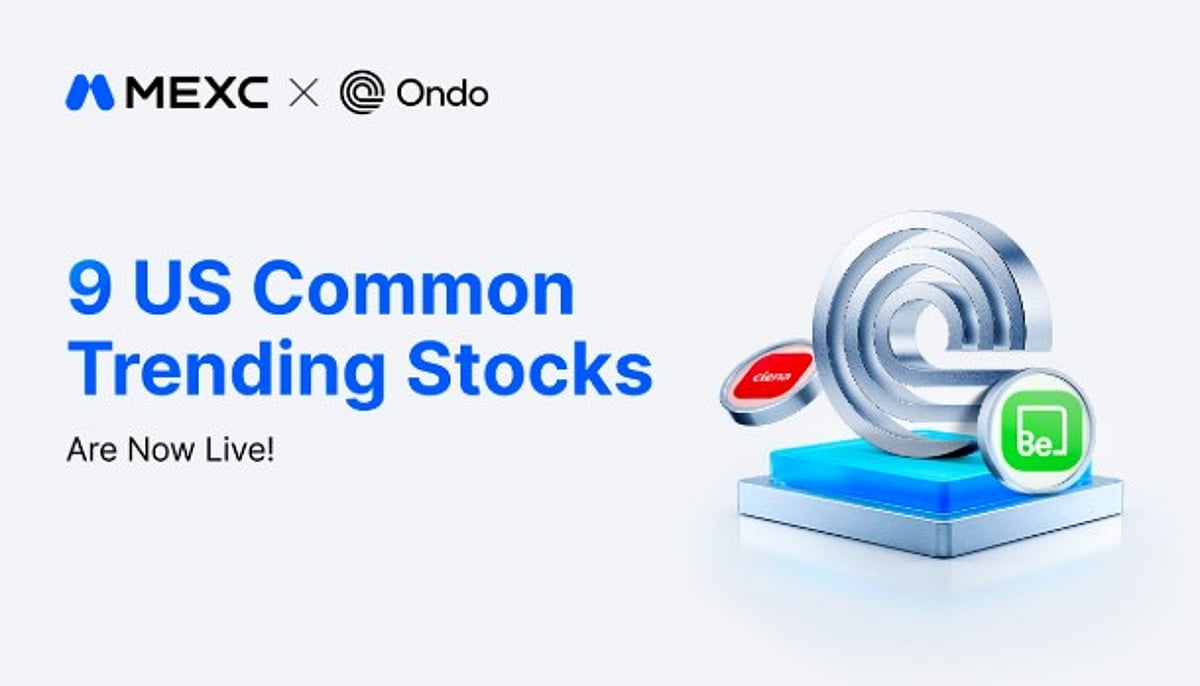
    Victoria, Seychelles — MEXC, a leading zero-fee digital asset exchange, has announced the addition of nine tokenized stock and ETF trading pairs from Ondo Finance to its spot market. The listings, effective July 8, 2026, expand the range of on-chain U.S. equity exposure available to users, targeting companies involved in data centers, semiconductors, and power supply chains—key sectors driven by rising AI infrastructure demand.

    The new pairs include tokenized versions of stocks and ETFs such as Bloom Energy (BEON/USDT), Astera Labs (ALABON/USDT), Credo Technology (CRDOON/USDT), the Roundhill Memory ETF (DRAMON/USDT), Innodata (INODON/USDT), and Celestica (CLSON/USDT). Full listing times are available in MEXC’s official announcement.

    Ondo Finance specializes in bringing traditional financial assets onto blockchain networks through compliant infrastructure. Each tokenized asset is backed by the underlying security held via regulated custodial brokers. This latest batch further strengthens MEXC’s lineup of tokenized stocks, reinforcing the platform’s commitment to offering “Infinite Opportunities” for its users.

    Beyond Ondo’s products, MEXC also provides “RealStocks,” which allows users to hold actual share ownership and receive dividends. The integrated trading experience enables users to access a wide range of investment products without switching platforms.

    About MEXC
    MEXC is one of the fastest-growing cryptocurrency exchanges globally, trusted by over 40 million users across 170+ markets. It offers industry-leading zero-fee trading and access to more than 3,000 digital assets, including cryptocurrencies, tokenized stocks, ETFs, commodities, and precious metals.

    Risk Disclaimer: This content does not constitute investment advice. The cryptocurrency market is highly volatile; investors should conduct their own research before making any trading decisions.

  • Founders Fund-Backed N1 Acquires 01 Exchange to Challenge Crypto Exchange Leaders

    Founders Fund-Backed N1 Acquires 01 Exchange to Challenge Crypto Exchange Leaders

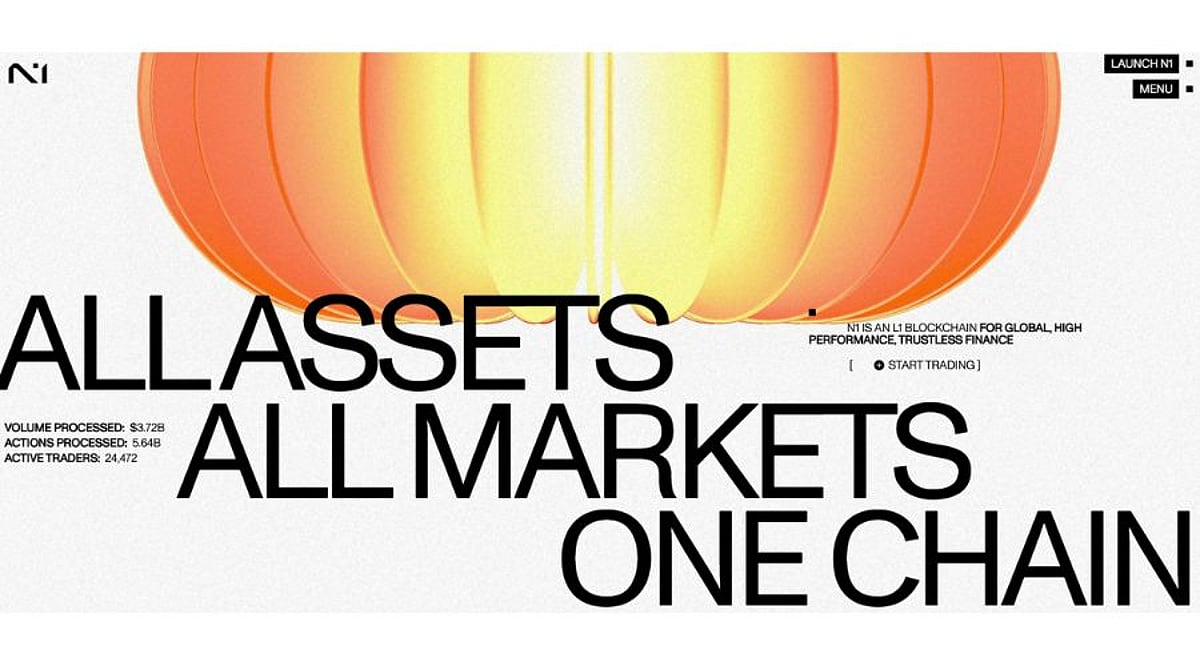
    N1, a Layer 1 blockchain supported by Founders Fund, has announced the acquisition of 01 Exchange, a decentralized derivatives platform originally built on N1’s trading infrastructure. The move signals N1’s ambition to compete directly with established cryptocurrency exchange giants.

    01 Exchange, which was incubated within the N1 ecosystem, has processed over $3 billion in trading volume and attracted more than 25,000 users. Under the acquisition agreement, the exchange’s application layer, trading product, market structure expertise, and community will become part of N1’s broader network strategy.

    Rather than relying primarily on independent third-party applications to drive ecosystem activity, N1 is bringing its infrastructure, liquidity, and flagship trading product under a single network. The company says this approach is designed to align product development, distribution, and network economics more closely while reducing the fragmentation that has historically existed across many Layer 1 ecosystems.

    “01 Exchange has already shown what is possible on N1, and bringing it into the network lets us move faster, deepen liquidity, and deliver a more integrated trading experience,” said Dima Romanov, CEO and co-founder of N1. “With N1 2.0, our next version, we’re expanding that foundation across RFQ markets, vaults, equities, mobile, and other on-chain financial products. We believe vertically integrated networks will define the next generation of exchanges, and N1 is being built to lead that shift.”

    The acquisition comes ahead of the N1 2.0 upgrade, the next major version of the network. The upgrade is planned to introduce deeper liquidity, request-for-quote (RFQ) markets, vaults, equities, and additional on-chain financial products. N1 also plans to launch native applications for iOS and Android, extending access to its trading infrastructure through a mobile experience.

    Existing 01 Exchange users will not be required to migrate assets as part of the transition. The exchange will continue operating under the N1 brand, with the new version expected to be deployed without requiring any user migration. Points earned before the N1 launch will continue to be recognized.

    The transaction is expected to close within the next six months, while the operational transition will begin immediately. The deal is expected to be structured entirely in equity and tokens.

    About N1

    N1 is a Layer 1 blockchain with unrestricted scale and ultra-low latency. Designed to support next-generation crypto apps, it features horizontal scalability, sub-ms latency, and ultra-high throughput. Every app operates in its own isolated environment, resulting in zero state congestion.

    Disclaimer: This article is provided for informational purposes and does not constitute investment advice. Cryptocurrencies mentioned may be risky and could result in financial loss. Always conduct your own research before making any investments.

  • CertiK Named Preferred Security and Compliance Vendor for Hub71, Boosting Abu Dhabi’s Digital Asset Ecosystem

    CertiK Named Preferred Security and Compliance Vendor for Hub71, Boosting Abu Dhabi’s Digital Asset Ecosystem

    NEW YORK, New York [July 6, 2026] — CertiK, the largest Web3 security services provider, today announced its selection as an official vendor for Hub71, the global tech ecosystem based in Abu Dhabi Global Market (ADGM). The partnership gives Hub71 portfolio companies preferred access to CertiK’s security and compliance services as they build and scale in one of the world’s fastest-growing digital asset hubs.

    As part of the partnership, Hub71 portfolio companies will receive a 20% discount across CertiK’s full range of services, backed by a total subsidy pool of $200,000 available to eligible companies in the ecosystem. Hub71 startups will also receive free access to the CertiK Compliance Tool, CertiK’s platform for navigating licensing applications — including with the ADGM Financial Services Regulatory Authority (FSRA) and the UAE Central Bank — and for managing ongoing regulatory compliance.

    The partnership comes as digital asset regulation in the UAE and beyond has moved from an exploratory phase into active, cross-jurisdictional enforcement. For early-stage companies, that shift has raised the stakes around licensing readiness, AML compliance, and smart contract security from day one, rather than as later-stage concerns.

    Through the partnership, Hub71 companies gain direct access to CertiK’s suite of services, including smart contract audits, penetration testing, and ongoing security monitoring, alongside compliance support tailored to the licensing pathways most relevant to companies building in and around ADGM. The CertiK Compliance Tool is designed to help founders track requirements across jurisdictions as they expand internationally, reducing the time and cost typically associated with multi-jurisdictional licensing.

    The collaboration reinforces CertiK’s role as a trusted security and compliance partner for high-growth digital asset ecosystems globally, and reflects Hub71’s continued investment in giving portfolio companies access to the infrastructure and expertise needed to scale responsibly.

    About Hub71

    Hub71 is Abu Dhabi’s global tech ecosystem, created to help ambitious startups build, scale, and access new markets from the UAE. Backed by Mubadala, ADQ, and ADGM, and headquartered within Abu Dhabi Global Market, Hub71 connects founders with capital, corporate and government partners, and a growing community of tech companies across fintech, Web3, AI, and other high-growth sectors. Since its launch, Hub71 has supported hundreds of startups with funding access, business setup support, and a network designed to accelerate their growth in the region and beyond.

    About CertiK

    CertiK is the largest Web3 security services provider, founded in 2017 and headquartered in New York. Based on breakthroughs in formal verification technology achieved by professors from Yale University and Columbia University, CertiK has become a trusted risk management partner for regulators, institutions, and Web3 innovators.

    CertiK delivers AI-powered, full-lifecycle risk management solutions that integrate directly into institutional clients’ system development lifecycles (SDLC). Backed by the industry’s largest Web3 security database, CertiK embeds AI at the very forefront of code development, code auditing, formal verification, and product deployment, while integrating it into on-chain and off-chain real-time scanning, helping organizations manage risk throughout the entire digital asset lifecycle and transform reactive security into proactive governance.

    To date, CertiK has detected more than 117,000 vulnerabilities and protected over $600 billion in digital assets across 150+ countries and regions. Operating under SOC 2 Type II and ISO 27001 standards, CertiK also works closely with regulators across multiple jurisdictions, contributing to digital asset policy development and regulatory consultation efforts worldwide.

  • Ethereum Faces Continued Downside Risk After 22% Monthly Plunge

    Ethereum Faces Continued Downside Risk After 22% Monthly Plunge

    Ethereum has fallen 22% over the past month as weak technical signals, cautious investor sentiment, economic uncertainty, and rising competition continue to weigh on the cryptocurrency’s short-term outlook. While long-term fundamentals remain strong, several factors suggest the price could remain under pressure in the near term.

    Key Takeaways

    • Ethereum remains under pressure after a 22% monthly decline.
    • Weak technical indicators and global economic uncertainty continue to affect price.
    • Strong long-term fundamentals remain, but short-term risks persist.

    Current Market Snapshot

    At the time of writing, Ethereum trades near $1,800 with a market capitalization of approximately $214 billion and a 24-hour trading volume of about $16.5 billion. The circulating supply stands near 120.7 million ETH. Despite the correction, Ethereum remains one of the world’s largest digital assets.

    Weak Price Trend Raises Concerns

    Ethereum’s recent decline has damaged its price structure, slipping below several important support levels. Every recovery attempt has faced selling pressure. The $1,800 level has become a critical zone; if Ethereum fails to hold above it, further selling could push the price lower. The asset still trades below its 50-day moving average, signaling weak market momentum.

    Investors Prefer Bitcoin

    Capital flows have not been evenly distributed across the crypto market. While Bitcoin has attracted fresh institutional interest, Ethereum has not received the same level of support. Many investors view Bitcoin as a safer choice during uncertain times, leading to capital rotation away from major altcoins like Ethereum.

    Global Economy Adds Pressure

    Uncertainty in global financial markets persists, with investors monitoring inflation, interest rates, and central bank actions. High interest rates may discourage appetite for high-risk assets like cryptocurrencies, prompting many to favor traditional investments.

    Strong Network Use Has Not Lifted Price

    Ethereum remains the largest blockchain for decentralized finance, smart contracts, and tokenized assets. Developer activity remains healthy. However, strong network usage has not translated into a higher price. Lower transaction fees have reduced the amount of ETH burned through the network’s token-burning mechanism.

    Competition Continues to Grow

    Ethereum faces stiff competition from newer blockchain networks offering cheaper and faster transactions. Some developers and users have migrated to these alternatives. Ethereum’s Layer-2 scaling solutions have improved speed and cost, but they also fragment users across multiple networks, increasing complexity.

    Large Investors Can Increase Volatility

    Institutional activity plays a significant role in Ethereum’s price movements. While several companies have increased their ETH holdings, questions remain about whether corporate treasury strategies and staking rewards can sustain long-term growth. This uncertainty keeps volatility high.

    Future Upgrades Need Time

    Ethereum developers continue to work on major improvements, including the “Lean Ethereum” roadmap shared by co-founder Vitalik Buterin, which aims to enhance speed, efficiency, privacy, and scalability. Experts estimate the full development process may take three to four years.

    Market Sentiment Remains Weak

    Investor confidence has weakened after the sharp monthly decline. Many short-term traders are selling rather than buying, expecting further price weakness. Fear in the market typically increases selling pressure, making recovery more difficult.

    Why This Matters

    Ethereum’s 22% plunge highlights growing friction between its long-term upgrades and near-term market performance. As capital flows heavily into Bitcoin, ETH’s struggling price structure tests investor patience regarding Layer-2 complexity and network fee destruction.

    Outlook

    Ethereum remains one of the most solid blockchain technologies, with a large developer community, institutional interest, and leadership in decentralized finance and smart contracts. However, the medium-term outlook is uncertain. A monthly decline of 22%, weak technical indicators, low investor sentiment, global uncertainty, and increasing competition point to further downside risks. Recovery will depend on strong institutional demand, improved market confidence, growth in network activity, and the ability to hold above key support levels.

    Frequently Asked Questions

    1. Why has Ethereum fallen so much recently?

    A combination of macroeconomic pressures, lower institutional interest relative to Bitcoin, and increased competition from faster altcoin blockchains have weighed heavily on Ethereum’s short-term price momentum.

    2. What is Ethereum’s current price?

    Ethereum is currently trading at approximately $1,800, with a market capitalization of roughly $214 billion and a 24-hour trading volume near $16.5 billion.

    3. Could Ethereum fall further?

    Yes. If Ethereum fails to hold above the critical $1,800 support zone, technical analysts warn that intensified selling pressure could drive the asset lower.

    4. Does Ethereum still have strong long-term potential?

    Absolutely. Despite short-term corrections, Ethereum leads in decentralized finance, smart contract development, Layer-2 scalability, and global developer ecosystem activity.

    5. What could help Ethereum recover?

    A sustained recovery depends on returning institutional inflows, macro-driven market confidence, successful defense of core support levels, and clearer adoption of Vitalik Buterin’s proposed “Lean Ethereum” protocol roadmap.

  • How Cryptocurrency Is Reshaping Global Politics and the World Economy

    How Cryptocurrency Is Reshaping Global Politics and the World Economy

    Cryptocurrency’s Expanding Influence

    Cryptocurrency is no longer just a digital asset for speculative trading—it is actively transforming global trade, government policies, and financial systems. From national Bitcoin reserves to central bank digital currencies (CBDCs), the impact of digital assets is being felt across the world economy. Here’s a closer look at the key ways cryptocurrency is reshaping the geopolitical and economic landscape.

    Faster Cross-Border Payments

    Traditional international money transfers are often slow and expensive, relying on a network of correspondent banks. Cryptocurrency enables faster and cheaper cross-border payments by bypassing these intermediaries. This is especially beneficial for remittances and business transactions, reducing costs and settlement times from days to minutes.

    National Bitcoin Reserves

    Several countries are exploring or actively holding Bitcoin as part of their national financial strategy. By diversifying reserves with digital assets, nations can hedge against inflation, reduce reliance on the U.S. dollar, and strengthen their economic sovereignty. This trend is gaining traction, particularly in emerging economies.

    Central Bank Digital Currencies (CBDCs)

    Governments worldwide are developing CBDCs to modernize payment systems and maintain control over monetary policy. These digital currencies aim to combine the efficiency of crypto with the stability of traditional fiat, offering a state-backed alternative to decentralized assets.

    Sanctions and Global Trade

    Cryptocurrency provides new payment channels that can reduce dependence on conventional international financial networks like SWIFT. For countries under sanctions, crypto offers a way to conduct trade and access global markets outside the traditional banking system, raising both opportunities and concerns for regulators.

    Institutional Adoption

    Banks, investment firms, and corporations are increasingly adding digital assets to their portfolios and services. This mainstream adoption is driven by demand from clients, potential for high returns, and the desire to innovate. Institutional involvement also brings more liquidity and legitimacy to the crypto market.

    AI and Crypto Convergence

    Artificial intelligence is enhancing cryptocurrency trading, fraud detection, and blockchain security. AI algorithms can analyze vast amounts of data to predict market movements, identify suspicious transactions, and optimize mining operations, making the crypto ecosystem more efficient and secure.

    Global Regulation

    Countries continue to introduce crypto regulations to encourage innovation while protecting investors. Regulatory frameworks vary widely, from outright bans to supportive licensing regimes. Clear rules are seen as essential for fostering trust and long-term growth in the digital asset space.

    The Future Economy

    Blockchain technology, the backbone of cryptocurrency, is expanding into finance, healthcare, logistics, and digital identity systems. Its ability to provide secure, transparent, and decentralized record-keeping has the potential to revolutionize multiple industries, creating a more efficient and equitable global economy.

  • Solana Unified Trading Interface Teaser Drives Market Buzz as Network Breaks Activity Records

    Solana Unified Trading Interface Teaser Drives Market Buzz as Network Breaks Activity Records

    The Solana community is buzzing after a teaser from @jtx_trade hinted at a unified trading interface that would aggregate all markets on the blockchain. While the post lacked technical specifics, traders quickly speculated about potential shifts in liquidity and trading dynamics. The broader crypto market remains sideways, but Solana’s underlying network metrics continue to strengthen as the community awaits official details.

    Trading Surface Teaser Ignites Speculation

    The announcement suggests Solana is developing a single trading interface covering all blockchain markets, aiming to simplify access and improve efficiency. However, with no launch window or feature specifications revealed, traders are holding off on major moves. Reported trading volume has flatlined, reflecting a wait-and-see approach. Beyond the platform tease, Solana is expanding into stablecoins, AI-driven payments, and other decentralized applications, with the Solana Foundation leading discussions on stablecoins in emerging markets.

    Network Activity Hits New Milestones

    Solana achieved a historic milestone: weekly non-vote transactions exceeded one billion for the first time, excluding validator consensus votes and representing genuine user activity, dApp interactions, and trading operations. Active wallet addresses surged from 16.8 million to 29.7 million in two weeks—a 76.8% increase. Solana also ranked first among Layer 1 and Layer 2 blockchains in both 24-hour and seven-day DApp revenue, and led decentralized exchange volume across those periods. It secured second place globally in total trading activity for the second consecutive week, processing $12.25 billion across centralized and decentralized exchanges, surpassing Bybit’s $10.57 billion.

    Technical Outlook: Support and Targets

    Crypto analyst Michaël van de Poppe noted that Solana has returned to its established trading range, with a modest pullback possible before an upward move. He identified $75–$77 as critical support; holding that zone could open a path toward $100 and potentially $120. SOL is trading above its 20-day, 50-day, and 100-day moving averages, and the MACD histogram remains bullish. However, momentum has cooled after a 15% gain the prior week.

    What’s Next for Solana?

    With a unified trading interface teased alongside record-breaking network activity and growing ecosystem adoption, Solana remains in the spotlight. Rising active wallets and leading DEX volumes, combined with bullish technical signals, have traders focused on the next platform update to gauge future momentum.

  • Vitalik Buterin’s ‘Lean’ Roadmap Challenges Ethereum’s Wall Street Appeal

    Vitalik Buterin’s ‘Lean’ Roadmap Challenges Ethereum’s Wall Street Appeal

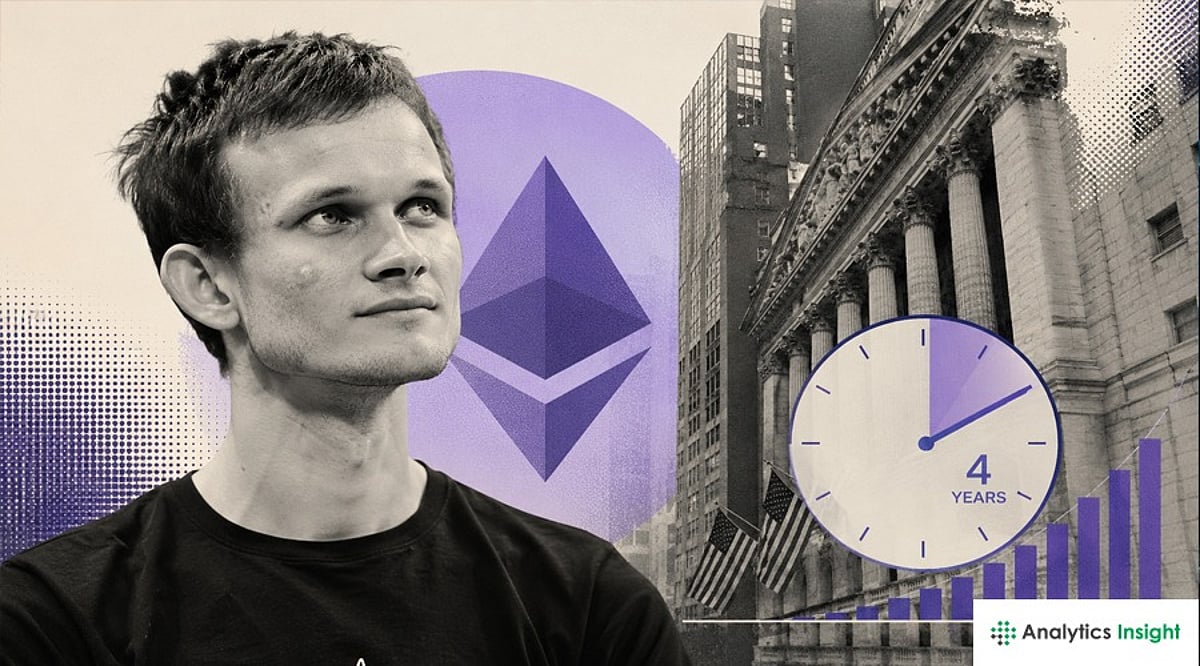
    Vitalik Buterin’s Lean Ethereum roadmap gives ETH a major institutional test. The plan targets faster finality, stronger privacy, scalable state, and post-quantum security. Institutions will watch execution risk closely during its public transition over time.

    Written By: Yusuf Islam | Reviewed By: Achu Krishnan | Published on: 06 Jul 2026, 6:30 pm

    Lean Ethereum Frames: A New Institutional Roadmap

    Buterin described Lean Ethereum as a three- or four-year set of upgrades. He also called it Ethereum’s third major iteration after the Merge. The Ethereum Foundation Architecture roadmap presents the plan as a coordination tool. It does not frame itself as a final prediction for Ethereum’s future.

    Still, the targets remain large. The roadmap lists second-level finality, 1 gigabit per second on L1, terabyte-scale L2 capacity, post-quantum security, and private L1 design. That framing places ETH’s institutional case under a clearer test. Ethereum now has to show that it can evolve while keeping settlement assurances intact.

    Upgrade Stack Raises Execution Questions

    Buterin’s post grouped Lean Ethereum around several major technical changes. These include recursive STARKs, quantum-safe cryptography, faster finality, higher gas limits, larger blobs, shorter slots, and new state designs. Recursive STARKs would move verification toward proofs rather than direct re-execution. That change could make chain checking cheaper and more scalable.

    Quantum-safe cryptography addresses long-term asset security. The strawman treats post-quantum readiness as a protocol-level goal for Ethereum’s base layer. Faster finality also carries direct market relevance. It affects how quickly a transaction can be counted as settled for users, applications, and institutions.

    The state plan may create the most disruption. Buterin described a model where the current dynamic state remains while new state types scale further under tighter design limits. Could Ethereum lower costs for common assets without fragmenting liquidity, composability, or developer expectations? That question sits at the center of Lean Ethereum’s institutional test. If new state models reduce fees for ERC-20s, NFTs, and DeFi use cases, developers gain a migration reason.

    Wall Street Push Meets Protocol Risk

    Ethereum’s institutional push already extends beyond spot-market access. It now reaches banks, asset managers, stablecoin issuers, tokenization desks, and public companies. The Ethereum Foundation’s 2025 Trillion Dollar Security initiative set that ambition directly. Ethereum wants infrastructure secure enough for individuals, companies, institutions, and governments to hold large on-chain value.

    At the same time, Ethereum Institutional launched as a corporate entry point. It targets banks, asset managers, public companies, tokenization, and stablecoins. Ethlabs also emerged as a treasury-backed research layer tied to ETH’s monetary case. Bitmine, Sharplink, and Joe Lubin sit behind both efforts.

    This external stack gives Ethereum’s institutional campaign a broader market front. Meanwhile, the Foundation continues to preserve a neutral protocol role. CryptoSlate market data on July 5 showed ETH near $1,763. Its market value stood around $213 billion. That size makes Ethereum’s protocol direction important. It also leaves institutions focused on execution risk during a long upgrade cycle.

    Shipped Upgrades Become the Next Signal

    Lean Ethereum now creates a clear delivery checklist. Market observers can track Glamsterdam, Hegota, I-star, later forks, gas increases, blob expansion, finality work, and developer migration.

    The roadmap also brings transition risks. Application developers, wallets, infrastructure teams, clients, L2s, and privacy tools all need to adjust around protocol changes. For institutional workflows, privacy remains a core requirement. Banks and asset managers need confidentiality, compliance controls, and predictable settlement.

    Ethereum also has to preserve public verifiability and credible neutrality. That balance shapes the value of private L1 work. If the process advances, Lean Ethereum gives ETH a stronger settlement narrative. Faster finality, cheaper verification, scalable state, privacy, and quantum planning would support that case. If progress slows, institutions may route stablecoins, tokenization systems, and treasury workflows toward platforms with more predictable near-term deployment.

    What’s Next?

    Lean Ethereum places ETH’s institutional future on a clear execution timeline. Vitalik Buterin’s roadmap targets faster finality, stronger privacy, scalable state, and post-quantum security. The main takeaway is simple: Ethereum must turn its upgrade plan into reliable infrastructure to keep institutional confidence.