Tag: cloud computing

  • Why Microsoft’s AI Strategy Is Drawing Investors Back: Key Drivers Explained

    Why Microsoft’s AI Strategy Is Drawing Investors Back: Key Drivers Explained

    Microsoft’s aggressive artificial intelligence strategy is once again capturing investor attention, with the company demonstrating consistent revenue growth and expanding its AI ecosystem. Here are the primary factors fueling this momentum.

    Azure AI Infrastructure

    Microsoft is investing heavily in AI data centers and advanced chips, significantly expanding Azure’s computing capacity for enterprise AI workloads across the globe. This infrastructure underpins the company’s ability to serve large-scale AI deployments.

    Microsoft 365 Copilot

    The growing adoption of Microsoft 365 Copilot among enterprises is generating recurring subscription revenue while boosting workplace productivity across industries. As more organizations integrate AI into their daily workflows, this tool becomes a key revenue driver.

    Azure Cloud Growth

    Strong performance in Azure cloud services remains closely tied to increasing AI demand. Businesses are flocking to the platform to build and deploy generative AI applications, further accelerating cloud revenue.

    OpenAI Partnership

    Microsoft’s continued collaboration with OpenAI strengthens its AI ecosystem through advanced models, robust cloud infrastructure, and enterprise-ready AI solutions. This partnership gives Microsoft a competitive edge in delivering cutting-edge AI capabilities.

    Enterprise AI Adoption

    Organizations are increasingly relying on Microsoft’s AI-powered software, cloud services, and security tools to accelerate digital transformation and automation initiatives. The company’s comprehensive suite addresses the growing need for intelligent business solutions.

    AI Monetization Strategy

    Microsoft is successfully converting its AI innovations into commercial revenue through premium software subscriptions, cloud services, and enterprise AI offerings. This disciplined approach ensures that research advances translate directly into financial results.

    Security and AI Integration

    AI-powered cybersecurity solutions enhance Microsoft’s value proposition by helping businesses detect threats, automate responses, and strengthen digital resilience. Security remains a top priority for enterprises, and Microsoft’s AI integration here is a key differentiator.

    Developer Ecosystem

    GitHub, Azure AI tools, and integrated development platforms encourage developers to build scalable AI applications within Microsoft’s ecosystem. This fosters a vibrant community and locks in long-term platform loyalty.

    Investor Confidence

    Consistent earnings, expanding AI revenues, disciplined spending, and a long-term innovation roadmap continue reinforcing Microsoft’s position as a preferred technology investment. The company’s ability to execute on its AI strategy keeps investors optimistic.

  • Wall Street’s Bullish Outlook on Microsoft: Key Drivers for Late 2026

    Wall Street’s Bullish Outlook on Microsoft: Key Drivers for Late 2026

    Wall Street is increasingly bullish on Microsoft as the tech giant heads into late 2026, driven by strong growth in artificial intelligence, cloud computing, and enterprise software. Analysts highlight several key factors fueling this optimism.

    AI Revenue Growth

    Investors expect Microsoft’s expanding portfolio of AI products and premium services to generate higher recurring revenue, strengthening long-term financial performance. The company’s strategic focus on AI monetization is a major catalyst.

    Azure Cloud Momentum

    Continued growth in Microsoft Azure, fueled by AI workloads, positions the company as a leading enterprise cloud provider globally. Azure’s ability to handle complex AI tasks gives it a competitive edge in the market.

    Copilot Business Expansion

    Wider deployment of Microsoft Copilot across enterprise customers creates fresh monetization opportunities while improving the company’s competitive advantage in workplace software. Copilot is becoming a key driver of productivity and revenue.

    Strong Financial Results

    Consistent revenue growth, healthy operating margins, and robust cash flow reinforce Wall Street’s confidence in Microsoft’s long-term business outlook. The company’s financial stability underpins its growth initiatives.

    Enterprise Customer Base

    Microsoft’s extensive relationships with enterprise customers provide a stable foundation for expanding AI services across governments, corporations, and regulated industries worldwide. This base ensures steady demand for new offerings.

    AI Infrastructure Investments

    Heavy investments in AI infrastructure prepare Microsoft for increasing enterprise demand while supporting future revenue expansion and platform reliability. These investments are critical for maintaining leadership in AI.

    Cloud and Software Leadership

    Microsoft’s leadership across cloud computing, productivity software, cybersecurity, and AI creates multiple growth opportunities beyond its traditional businesses. This diversification reduces risk and drives innovation.

    Analyst Optimism

    Many analysts remain positive because Microsoft’s diversified business model reduces risk while benefiting from accelerating global AI adoption trends. The company’s ability to navigate market changes is a key strength.

    Long-Term Growth Potential

    Investors view Microsoft as well-positioned for sustained growth through continuous innovation, enterprise AI leadership, and expanding global technology demand. The company’s strategy aligns with long-term tech trends.

  • Wall Street Tightens Scrutiny on Big Tech AI Spending as Investors Demand Clearer Returns

    Wall Street Tightens Scrutiny on Big Tech AI Spending as Investors Demand Clearer Returns

    Wall Street is changing how it judges artificial intelligence spending. Investors once rewarded major technology companies for expanding data centers, buying chips, and building new AI services. Strong revenue growth often eased concerns about the cost.

    That pattern changed after Alphabet and Tesla reported second-quarter results. Both companies posted sharp share losses after announcing higher spending plans. The reaction showed that investors now want clearer proof that AI investment can support cash flow, margins, and earnings.

    This shift comes before earnings from Microsoft and Meta on Wednesday, followed by Apple and Amazon on Thursday. Their capex forecasts, cloud growth, and free cash flow will give investors new data on the cost of the AI buildout.

    Alphabet Selloff Shifts the AI Capex Debate

    Alphabet raised its 2026 capital expenditure forecast to between $195 billion and $205 billion. The range increased from an earlier estimate of $180 billion to $190 billion. Most of the spending will support servers, data centers, networking equipment, and AI computing capacity.

    Google Cloud revenue rose 82% to $24.8 billion during the quarter. Total revenue reached $119.8 billion, above market estimates. However, Alphabet recorded negative free cash flow of $5.9 billion. Its shares then fell 7.13% on July 23, cutting about $294 billion from its market value.

    Investors focused on the gap between rising revenue and heavier cash use. Alphabet said demand still exceeded its available capacity. Still, the higher spending forecast raised questions about how quickly new infrastructure can produce steady returns.

    Tesla Spending Adds to Wall Street Concerns

    Tesla also increased pressure on the AI spending trade. The company spent a record $5.79 billion on capital projects during the second quarter. That spending helped push free cash flow to negative $1.09 billion.

    Management expects 2026 capital expenditure to exceed $25 billion. Tesla plans to fund robotaxis, Optimus production, AI compute, factories, solar manufacturing, and other projects. Elon Musk called 2026 a “massive capex year,” while finance chief Vaibhav Taneja said spending could rise for another two or three years.

    Tesla shares dropped about 14% after the report. Investors also reviewed weaker earnings and lower cash generation. The market response added to concern that large AI plans can pressure stocks when spending rises faster than near-term profit.

    Michael Burry Points to a New Market Test

    Michael Burry said, “the market has voted and the results are clear.” He referred to data showing that Alphabet, Microsoft, Amazon, Meta, Oracle, Micron, and Tesla had weighed on the S&P 500 since early June.

    Apple stood apart from that group. The company has avoided the largest AI infrastructure budgets and has relied more on partnerships with model developers. Apple shares gained strongly in July as investors favored its lower spending approach.

    AI demand continues to support cloud growth, chip sales, and enterprise adoption. Big Tech companies still plan to spend more than $700 billion this year, mainly on computing infrastructure. Analysts expect Microsoft, Meta, Amazon, and Alphabet to face closer review as they publish new results.

    Wall Street is not rejecting AI investment. Instead, investors are applying a stricter test. Companies must now show that higher capital spending can produce revenue growth without weakening cash flow for long periods.

  • Essential Programming Languages for Modern Database Administrators

    Essential Programming Languages for Modern Database Administrators

    Every institution—banks, hospitals, online stores, schools, and government offices—depends on huge amounts of information. Database administrators (DBAs) ensure this data stays safe, organized, and available at all times. They also fix performance issues, manage security, recover lost data, and keep databases running without interruptions.

    The role of a DBA has evolved. Today, database professionals handle cloud platforms, automation, security checks, database migration, and system monitoring alongside traditional tasks. Programming skills have become as important as database knowledge. The 2025 Stack Overflow Developer Survey, with over 49,000 respondents from 177 countries, shows Python (66%) and SQL (59%) among the most widely used languages, and PostgreSQL remains the most admired database platform.

    SQL Builds Every Database Career

    SQL is the first language any DBA must learn. It is used for relational database systems—designing schemas, creating tables, updating records, and deleting unwanted data. SQL helps identify slow queries and speed up the database. Modern systems handle millions of transactions daily; efficient SQL queries reduce server load and improve response time. SQL is recognized as one of the most important skills for a successful DBA career.

    Python Saves Time Through Automation

    Python is popular because it automates repetitive tasks that could take days or weeks. DBAs use Python for backups, health checks, performance audits, data transfers, and log monitoring. Python’s libraries—SQLAlchemy, Psycopg, Pandas, PyMySQL, PyODBC, and cx_Oracle—make ETL (extract, transform, load) operations easy. It also supports AWS, Microsoft Azure, and Google Cloud, offering flexibility for modern database solutions. The 2025 Stack Overflow Survey shows a 7% rise in Python adoption.

    PowerShell Makes SQL Server Management Easier

    Many organizations use Microsoft SQL Server. PowerShell helps DBAs complete routine work faster—server setup, database deployment, backup schedules, security audits, system updates, and Availability Group management. Large organizations manage hundreds of SQL Server instances; PowerShell scripts control all servers instead of manual work. It also integrates with Microsoft Azure, simplifying cloud migrations and reducing errors.

    Bash Helps Linux Database Administrators

    A large number of enterprise databases run on Linux servers—PostgreSQL, MySQL, MariaDB, and Oracle. Bash remains important for DBAs. Bash scripts automate backups, schedule maintenance, monitor storage, review system logs, and restart services. Linux command-line tools like grep, awk, sed, and find help locate problems quickly. Strong Bash skills allow DBAs to manage Linux servers with speed and confidence, especially in cloud environments.

    Java Helps Solve Enterprise Database Problems

    Java does not replace SQL or Python but adds value for DBAs supporting enterprise applications. Many business apps use Java to connect with databases via JDBC. A DBA who understands Java can identify connection problems, review slow database calls, and work with developers to improve performance. This is especially useful in large organizations running ERP, banking platforms, or healthcare systems.

    R Supports Data Analysis and Reporting

    Some DBAs collaborate with business intelligence or analytics teams. R focuses on statistics and data analysis, helping DBAs monitor database growth, detect anomalies, anticipate storage needs, and generate detailed reports. Organizations that rely on data for strategy value these skills. Although not every DBA uses R, those supporting reporting and analytics gain an advantage.

    Go Powers Modern Cloud Infrastructure

    Go (Golang) has grown popular because many infrastructure tools are built with it. Cloud platforms, monitoring tools, and database utilities rely on Go for speed and efficiency. Go handles multiple tasks simultaneously without heavy system use, making it suitable for cloud databases, distributed systems, and Kubernetes. As organizations adopt cloud-native technologies, Go continues to gain importance.

    Why This Matters

    Programming proficiency equips DBAs to use modern database technology efficiently. It minimizes workload, improves security, eases administration, and bolsters cloud processing. As data becomes increasingly critical, DBAs with programming knowledge will remain competitive, solve complex problems, and advance their careers.

    Final Thoughts

    Database administration is no longer just SQL queries and backups. Modern DBAs handle cloud platforms, automation, security, performance optimization, and monitoring. Programming knowledge helps complete these tasks with greater speed and accuracy. SQL remains the foundation; Python simplifies automation; PowerShell and Bash improve server management; Java strengthens enterprise support; R and Go add value for analytics and cloud infrastructure. DBAs who build expertise in these languages stay ready for current demands and improve career opportunities.

    FAQs

    • Which language should a beginner DBA learn first? SQL—every relational database relies on it.
    • Why is Python popular among DBAs? It automates repetitive tasks like backups, monitoring, and data migration, saving time and reducing errors.
    • Do DBAs need to learn Java? Java helps troubleshoot enterprise apps and understand application-database communication, though it’s not mandatory for every role.
    • Is Bash useful for database administration? Yes, for Linux DBAs to automate maintenance, backups, and server management.
    • Which language is best for cloud database environments? Python stands out because it works well with AWS, Azure, and Google Cloud.
  • Enterprise FinTech Solutions: Driving Digital Transformation with AI, Blockchain, and Cloud Technology

    Enterprise FinTech Solutions: Driving Digital Transformation with AI, Blockchain, and Cloud Technology

    Overview

    Enterprise fintech improves speed, accuracy, and efficiency across financial operations. AI, cloud computing, blockchain, and automation drive the next phase of financial innovation. Strong cybersecurity and regulatory compliance remain essential for successful fintech adoption.

    Enterprise fintech applies advanced financial technology in major companies, banks, insurers, investment firms, and international organizations. These solutions enable payments, account management, loans, investments, financial reporting, regulatory compliance, and customer service electronically. Enterprise fintech helps organizations perform complex financial operations while meeting strict regulations, delivering quick services, enhanced security, and improved financial control.

    Technologies That Drive Enterprise Fintech

    Artificial Intelligence and Machine Learning

    AI is a key advancement in enterprise fintech. Banks and financial firms use AI for fraud detection, loan approvals, customer behavior analysis, risk prediction, and customer service. AI processes millions of transactions simultaneously, quickly identifying suspicious activity to prevent fraud. Machine learning helps organizations make better decisions by analyzing historical data and forecasting future events. It is used for investment planning, credit scoring, and liquidity forecasting. Financial institutions increasingly focus on responsible AI use with clear regulations and human oversight.

    Cloud Computing

    Cloud computing provides access to financial software via the internet, eliminating expensive local servers. Companies can scale computing power as needed, reducing infrastructure costs and improving business continuity. Cloud platforms enable finance teams to access data from anywhere, enhancing collaboration and allowing faster software updates. Many global financial institutions adopt hybrid cloud models for security and flexibility.

    Blockchain Technology

    Blockchain creates secure, immutable digital records. Every transaction gets a permanent record, improving transparency and trust. Banks use blockchain for international payments, digital identity verification, smart contracts, trade finance, and digital assets. Blockchain reduces delays and costs compared to traditional international payment systems.

    Open Banking and APIs

    APIs enable data exchange between financial systems. Open banking connects banking services with accounting software, payment systems, credit services, and financial management tools. This connection creates faster banking experiences and gives companies access to real-time financial information for better decision-making.

    Robotic Process Automation

    RPA automates repetitive financial tasks such as invoice processing, account matching, compliance reporting, payroll management, and insurance claims. Automation saves time, reduces errors, and allows finance professionals to focus on strategic work.

    Benefits of Enterprise Fintech

    Higher Business Efficiency

    Enterprise fintech speeds up financial tasks—payments, approvals, reports, and record updates happen in minutes instead of hours or days. This reduces operational costs and boosts productivity across finance departments.

    Better Customer Experience

    Customers demand quick, secure, personalized services. Enterprise fintech delivers digital account opening, instant payments, AI-powered support, and tailored products. Quick service improves satisfaction and builds long-term relationships.

    Stronger Fraud Protection

    Fintech platforms monitor transactions continuously, identifying suspicious behavior in real time. AI studies spending patterns to detect unusual transactions, protecting institutions and customers from losses.

    Smarter Financial Decisions

    Enterprise fintech consolidates financial data from multiple systems into a single dashboard. Leaders get real-time reports for performance evaluation, expense control, investment management, and budgeting. Accurate data improves forecasting by revealing trends early.

    Easier Regulatory Compliance

    Automated compliance systems prepare reports, maintain audit trails, and monitor regulatory updates. Automation reduces compliance risks by minimizing reliance on manual processes.

    Challenges in Enterprise Fintech

    Cybersecurity Threats

    Digital finance attracts cybercriminals through ransomware, phishing, identity theft, and data breaches. Businesses must invest in encryption, multi-factor authentication, continuous monitoring, and zero-trust frameworks to protect sensitive data.

    Complex Regulations

    Financial companies face different laws across countries. Global organizations manage multiple compliance requirements simultaneously, including anti-money laundering, KYC, payment security, and data privacy. Systems must be updated regularly to stay compliant.

    Old Technology Systems

    Many banks rely on legacy systems built decades ago, which struggle to integrate with modern fintech platforms. Replacing them requires significant investment and careful planning, often done in phases.

    Data Privacy Concerns

    Enterprise fintech platforms store vast amounts of financial and personal data. Companies must protect data while sharing it across connected services. Strong governance, secure storage, and strict access controls are essential.

    Skilled Workforce Shortage

    Fintech requires expertise in AI, cybersecurity, blockchain, cloud computing, and financial systems. Demand exceeds supply, so organizations invest in training and compete for experienced professionals.

    Future Trends in Enterprise Fintech

    The fintech industry is set for further growth with new technologies. AI will be used for financial planning, fraud detection, and customer service. Embedded finance—integrating financial services into existing software—could exceed $1.3 trillion by 2034. Blockchain will enable digital IDs, tokenized assets, faster international payments, and open finance solutions. Financial companies continue investing in AI, cloud, security, and digital finance solutions to reduce risks and improve efficiency.

    Why This Matters

    Fintech enhances precision, speed, security, and decision-making in business. With digital payments, AI, and automation advancing, companies investing in fintech gain a competitive edge by minimizing risks and adapting to changing customer preferences and market demands.

    Final Thoughts

    Enterprise financial technology is crucial for modern business. AI, cloud, blockchain, APIs, and automation improve financial operations, reduce costs, enhance security, and deliver better customer experiences. However, challenges like cybersecurity, regulations, legacy systems, data privacy, and skill shortages remain. Market expansion, technology investment, and innovation will shape the future of enterprise fintech, creating smarter, safer, and faster financial services worldwide.

    FAQs

    1. What is Enterprise FinTech?

    Enterprise FinTech refers to financial technology solutions that help large businesses and financial institutions manage operations, payments, compliance, and customer services.

    2. Which technologies power Enterprise FinTech?

    Artificial intelligence, machine learning, cloud computing, blockchain, APIs, and robotic process automation form the foundation of enterprise fintech solutions.

    3. What are the biggest benefits of Enterprise FinTech?

    It improves operational efficiency, reduces costs, strengthens security, enhances customer experience, and supports better financial decision-making.

    4. What challenges do businesses face with Enterprise FinTech?

    Major challenges include cybersecurity threats, regulatory compliance, legacy system integration, data privacy concerns, and a shortage of skilled professionals.

    5. What is the future of Enterprise FinTech?

    The future will focus on AI-driven finance, embedded finance, blockchain adoption, cloud expansion, stronger cybersecurity, and intelligent automation across enterprise financial services.


  • Oracle Lands $7 Billion Pentagon Software Contract to Streamline Military IT Procurement

    Oracle Lands $7 Billion Pentagon Software Contract to Streamline Military IT Procurement

    Oracle has secured a Pentagon enterprise software agreement valued at up to $6.99 billion over a potential 10-year period. The contract consolidates on-premises software licenses, maintenance, and consulting services across U.S. military branches, intelligence agencies, and the Coast Guard, aiming to centralize procurement and reduce costs.

    Pentagon Consolidates Oracle Software Contracts

    The Department of the Navy negotiated the Enterprise Software Agreement on behalf of the broader Defense Department. The initial five-year ordering period carries a base value of $3.31 billion, with an additional five-year option that could raise the total to $6.99 billion. Under the agreement, approved agencies and contractors can purchase Oracle commercial software and services through a single contract, primarily supporting Oracle products operating in government-owned data centers. This includes perpetual licenses, subscription licenses, software maintenance, and consulting services.

    Previously, military branches and intelligence agencies managed many Oracle contracts separately, leading to inconsistent pricing, standards, and purchasing schedules. The new framework provides the Pentagon with a centralized method for ordering and managing these products.

    Agreement Targets $441 Million in Savings

    Pentagon Chief Information Officer Kirsten Davies stated that the centralized approach should reduce redundant spending and improve access to Oracle systems. “By fundamentally improving how we procure on-premises Oracle capabilities, we are driving at least $441 million in taxpayer savings while rapidly and effectively serving our warfighters,” Davies said.

    The Defense Department expects the agreement to provide clearer records of software use and spending, reduce the number of separate negotiations required across military services, and allow agencies to use the same purchasing terms rather than arranging individual agreements.

    The Oracle contract follows a similar large software consolidation deal with Microsoft. In May, the Pentagon reached a five-year agreement valued at up to $9.69 billion, which also combined software licenses across military branches, intelligence agencies, and the Coast Guard. Together, these agreements are part of the Pentagon’s effort to replace separate software contracts with department-wide arrangements to control costs and accelerate access to approved technology.

    Oracle Expands Defense Software Business

    The contract gives Oracle a long-term route for selling database software and other enterprise products to U.S. defense agencies. Oracle has worked with government customers for decades, with the Central Intelligence Agency among its earliest clients. However, the $6.99 billion figure represents the contract’s maximum possible value rather than guaranteed revenue; agencies must place orders through the contract before Oracle records sales, and the Pentagon must exercise the five-year extension for the agreement to reach its full stated value.

    Oracle shares gained about 2% to 3% in trading after the announcement. The contract arrived as investors continue to assess Oracle’s spending on artificial intelligence data centers and cloud infrastructure. Meanwhile, Oracle has expanded its work with the Defense Department beyond traditional database software. In May, the company joined other technology providers in an agreement to deploy artificial intelligence tools on classified military networks. The latest contract focuses mainly on centralized access to Oracle’s commercial products and on-premises systems.

  • UPES and HPE Launch AI-Powered Centre of Excellence to Train Next-Gen Engineers

    UPES and HPE Launch AI-Powered Centre of Excellence to Train Next-Gen Engineers

    Dehradun, July 24, 2026 – UPES has partnered with Hewlett Packard Enterprise (HPE) to inaugurate the HPE Networking AI-Driven Centre of Excellence (CoE), a milestone in the university’s AI-first educational strategy. The CoE is designed to bridge the gap between classroom theory and enterprise-grade practice in AI-driven networking, cloud infrastructure, cybersecurity, and other emerging technologies.

    The centre will offer a comprehensive learning ecosystem, including curriculum integration, faculty development, hands-on lab work, live demonstrations, project-based learning, HPE-led bootcamps, certification pathways, and opportunities for interdisciplinary research. Students will also gain access to HPE Networking training at Associate and Specialist levels, as well as potential internships and hiring pathways through HPE, its partners, and customers.

    According to a recent NASSCOM and Deloitte report, India will need over 1.25 million AI professionals by 2027, with an estimated shortfall of more than 600,000 skilled workers. The new CoE directly addresses this demand by preparing students for careers in AI, enterprise networking, cloud, and cybersecurity.

    For UPES, the CoE exemplifies its AI-first university strategy, which integrates AI across the curriculum, faculty, and industry partnerships rather than confining it to a single course or department. The partnership aims to produce graduates who are not just job-ready but capable of shaping enterprise AI adoption across multiple domains.

    The inauguration was the centerpiece of a day-long engagement between UPES and HPE’s global leadership. The event began with a welcome reception and a leadership roundtable on industry-academia collaboration. After the formal inauguration and showcase, an interactive student session featured a keynote by Shishir Singh, Senior Vice President and General Manager of Network Products & Advanced Technology at HPE, titled “The Bridge: Degree to Career.” The delegation also toured the Bajaj Engineering Skills Training (BEST) Centre before reaffirming the long-term partnership.

    Other senior HPE leaders present included M. Muthukumar, Vice President – Platform Software Engineering and Managing Director, HPE Networking India; Maria Delting, Human Resource Leader – HPE Networking; Shalini Dutta, Head of Global Talent Acquisition; Beth Kremer, Senior Manager – University Recruitment & Programs and TA Operations; Samuel Daniel, India Leader – University Relations & Strategy; and Archana Yadav, Senior Global Program Manager, HPE Academic Alliance.

    Speaking at the event, Shishir Singh said, “The future of enterprise technology will be shaped by professionals who can seamlessly combine AI, networking, cloud and cybersecurity to solve complex real-world challenges. We are delighted to partner with UPES to create an environment where students gain practical exposure to industry technologies, learn from practitioners, and build skills that are relevant to tomorrow’s digital economy. Strong industry-academia partnerships like this are essential to developing the next generation of innovators and technology leaders.”

    Dr. Abhishek Sinha, Pro Vice Chancellor – Student Success, UPES, added, “AI is fundamentally reshaping enterprise technologies, and universities have a responsibility to ensure students are prepared not just for today’s jobs, but for the careers and industries that are rapidly emerging. Through this partnership, our students will gain access to advanced technologies, global perspectives and experiential learning opportunities that will strengthen their ability to innovate, solve complex problems and lead in an AI-driven future. It is another important step in UPES’ vision as India’s AI-first university.”

    The partnership builds on UPES’s existing collaborations with global leaders including OpenAI, Google Cloud, Salesforce, and Harvard Business Impact. With the HPE Networking AI-Driven Centre of Excellence, the initiative aims to foster innovation, interdisciplinary learning, and future-ready talent prepared to lead the next wave of AI-driven enterprise transformation.

  • AWS AI & ML Certifications: A Guide to Choosing the Right Path in 2026

    AWS AI & ML Certifications: A Guide to Choosing the Right Path in 2026

    AWS offers a growing range of AI and machine learning certifications for beginners, developers, data engineers, and experienced AI professionals. Each credential is designed for different skills and career goals. Understanding the certification path makes it easier to choose the right option. This guide compares the key certifications to help you decide which one best fits your career.

    Overview

    AWS offers a role-based AI and machine learning certification portfolio that supports beginners, machine learning engineers, data engineers, and developers building AI-powered applications. The certifications cover AI fundamentals, machine learning model development, MLOps, data engineering, foundation models, retrieval-augmented generation (RAG), and Amazon Bedrock.

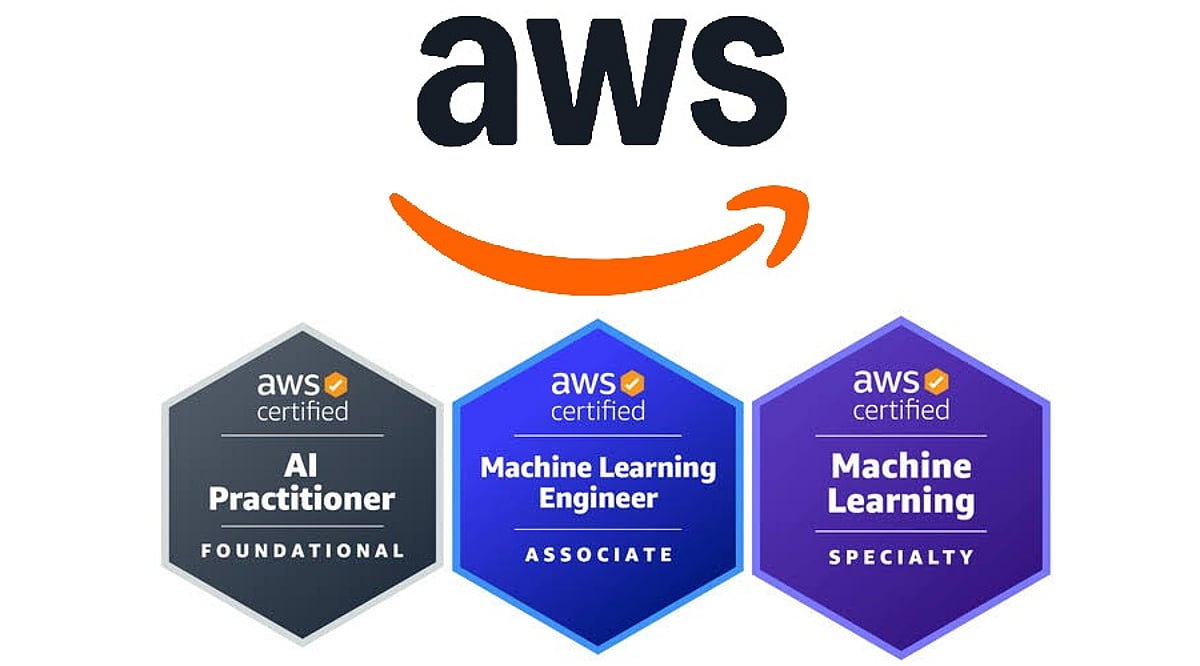
    AWS has modernized its certification ecosystem by replacing the legacy Machine Learning – Specialty path with role-specific credentials aligned with today’s AI and generative AI workloads. AWS certifications used to funnel almost everyone toward one exam. This has changed, and the lineup now spans across four credentials, each built for a distinct kind of work. It includes a foundational exam for newcomers, an associate-level path for engineers who build and deploy models, a data-focused associate track, and a professional certification for developers shipping generative AI features.

    The Machine Learning Specialty exam was retired for new candidates on March 31, 2026. Existing holders will keep the certification until its original expiry. More than an administrative change, this shift signals AWS’s move toward role-based certifications that better match candidates’ actual job responsibilities.

    What the Current Lineup Covers

    The active AWS AI and ML certifications include:

    • AWS Certified AI Practitioner (Foundational): Covers core AI and machine learning concepts, responsible AI practices, and how AWS services support common use cases. No coding background is required.
    • AWS Certified Machine Learning Engineer – Associate: Focuses on building, tuning, deploying, and monitoring machine learning models using services such as Amazon SageMaker, Amazon S3, and Amazon CloudWatch. Built for professionals who already have hands-on ML experience.
    • AWS Certified Generative AI Developer – Professional: Validates the ability to integrate large language models into applications, build retrieval-augmented generation (RAG) architectures, and work with vector databases and Amazon Bedrock for production-ready AI solutions.
    • AWS Certified Data Engineer – Associate: Centers on designing and managing data pipelines, storage, and reliable data infrastructure that supports machine learning and generative AI workloads.

    Matching the Exam to the Job

    A newcomer pivoting into AI from another field or a business analyst who needs to speak the same language as an engineering team gets the most value from AI Practitioner. It builds a baseline in AI and ML concepts without demanding coding depth.

    Someone already training and deploying models is better served by ML Engineer – Associate, which centers on data preparation, model tuning, and running workloads in production rather than staying inside a notebook.

    Developers already working with large language models, RAG pipelines, and Bedrock fit the Generative AI Developer – Professional role. This credential expects prior implementation experience rather than theory alone, and choosing it over AI Practitioner or ML Engineer comes down to one question: is the work built around foundation models or traditional ML pipelines?

    Data engineers who feed pipelines into ML systems should look at Data Engineer – Associate, a track that rarely gets the same attention as the AI-branded exams but supports all of them underneath.

    Product managers and stakeholders overseeing AI projects without building them get more practical value from AI Practitioner than from an engineering-level exam, since the goal is informed oversight rather than hands-on implementation.

    Deciding Where to Start

    The simplest approach starts with hands-on experience, not ambition. Someone new to AWS and AI belongs in AI Practitioner first. Someone already building or deploying models can skip straight to ML Engineer – Associate. A developer working with foundation models in production is the right candidate for Generative AI Developer – Professional.

    A common progression looks like AI Practitioner, then ML Engineer – Associate or Data Engineer – Associate depending on the role, then Generative AI Developer – Professional once foundation model work becomes part of the job.

    For those already deep into machine learning specialty prep, finishing it still holds some value, given less than a year remains before it closes to new candidates. For everyone else, moving straight to ML Engineer Associate offers more current coverage and a clearer path forward.

    The strongest certification choice rarely lines up with the most advanced option available. It lines up with what the job actually requires now and with where that job is headed next.

    Final Thoughts

    AWS restructuring its AI credentials around roles rather than a single tiered ladder points to where cloud certification is heading in general. It clarifies that the exam is less about climbing a fixed hierarchy and more about proving specific, current skills tied to specific work. Candidates who treat certification as a career-mapping exercise, rather than a checklist, will likely find their credentials relevant as AWS splits its portfolio.

  • Why the Top AI ETF Diversifies Beyond Chip Stocks for Better Returns

    Why the Top AI ETF Diversifies Beyond Chip Stocks for Better Returns

    The best-performing AI ETF of 2026 proves that investing across the entire AI ecosystem—not just semiconductor companies—can deliver superior returns while reducing risk. The VistaShares Artificial Intelligence Supercycle ETF (AIS) has surged approximately 119% year-to-date as of early June 2026, outperforming many popular chip-focused funds.

    The Shift Beyond Semiconductors

    For the past two years, investors have concentrated heavily on semiconductor stocks like Nvidia, Broadcom, TSMC, and AMD, which powered AI growth. However, the AI landscape has expanded dramatically. Modern AI systems require cloud platforms, data centers, fast networking, software, memory, and storage—not just chips. As businesses integrate AI into daily operations, companies across these sectors are seeing revenue growth, reshaping investment strategies.

    How AIS Achieves Superior Performance

    Unlike traditional semiconductor ETFs that often overweight a few chipmakers—Nvidia alone can dominate fund allocations—AIS spreads its investments across multiple AI segments:

    • Chip manufacturers
    • Cloud providers
    • Networking companies
    • Enterprise software firms
    • Digital infrastructure businesses
    • Memory technology companies

    This diversification helps absorb shocks when one sector underperforms, while still capturing the broad AI growth story.

    Pressure on Chip Stocks

    Semiconductor companies continue to report strong results, but investor expectations have reached extreme levels. For example, Texas Instruments reported 23% revenue growth and record quarterly revenue of $5.46 billion, yet its stock fell because markets anticipated even more. This illustrates how even excellent performance can disappoint when priced in fully.

    Recent market volatility further highlights the risk of overconcentration. The iShares Semiconductor ETF (SOXX) posted strong gains earlier in the year but suffered a sharp July decline as doubts emerged about sustained AI infrastructure spending. Diversified AI funds like AIS are better positioned to weather such swings.

    AI Spending Continues to Accelerate

    Despite short-term price fluctuations, corporate investment in AI remains massive. Major tech firms are pouring billions into new data centers, cloud services, networking gear, custom chips, and power infrastructure. Global semiconductor revenue is projected to reach $1.29 trillion in 2026—approximately 53% annual growth—driven primarily by AI. These investments create opportunities across the entire AI value chain, not just chip manufacturing.

    The Internet Parallel

    The current AI investment cycle mirrors the early internet era. Initially, hardware companies dominated investor attention. Later, software, internet platforms, and cloud businesses became the biggest winners. AI is following the same trajectory: chip companies remain essential, but cloud providers, networking firms, software developers, cybersecurity companies, and digital infrastructure players are now generating significant long-term value. Investors who focus solely on semiconductors risk missing these opportunities.

    Why This Matters

    Artificial intelligence represents one of the most significant investment opportunities in decades. Yet many investors remain fixated on chip stocks, overlooking the broader ecosystem. Understanding this shift can help build stronger portfolios, reduce concentration risk, and identify emerging growth areas before they become mainstream.

    Final Thoughts

    The success of AIS demonstrates that AI investing has entered a new phase. While chips remain foundational, they are just one component of a vast industry. A diversified AI ETF offers exposure to the full AI ecosystem—clouds, software, networks, and digital infrastructure—rather than concentrating capital in a few semiconductor firms. As AI adoption spreads across the economy, companies in these adjacent sectors will play increasingly critical roles. This innovative approach has propelled AIS to the top of AI ETFs, proving that pure semiconductor investment is no longer the only path to AI-driven returns.

  • Enterprise Automation 2026: Key Technologies, Top Tools, and Strategic Challenges

    Enterprise Automation 2026: Key Technologies, Top Tools, and Strategic Challenges

    Overview

    Enterprise automation has evolved from a cost-cutting initiative to a strategic imperative. Businesses across sectors—finance, healthcare, manufacturing, retail—are redesigning workflows using AI, RPA, cloud computing, and APIs. This shift enables connected systems for business process automation and faster decision-making.

    Key Technologies Powering Enterprise Automation

    Modern automation relies on a stack of complementary technologies:

    • Robotic Process Automation (RPA): Automates rule-based, repetitive tasks like data entry and reconciliation.
    • Artificial Intelligence and Machine Learning: Identify patterns, make predictions, and enable intelligent decision-making.
    • Intelligent Document Processing (IDP): Extracts and processes information from invoices, contracts, and forms.
    • Process Mining: Detects bottlenecks and inefficiencies from event logs.
    • Low-Code/No-Code Platforms: Empower business users to create workflows without deep coding.
    • APIs: Integrate applications and move data between CRM, ERP, and other systems.
    • Cloud Computing: Provides scalable infrastructure and centralized access to automation services.
    • Generative AI: Processes natural language, identifies exceptions, and adapts workflows dynamically.

    Top Enterprise Automation Tools

    The market offers diverse platforms suited to different ecosystems and maturity levels:

    • Microsoft Power Automate: Ideal for Microsoft 365, Azure, and Dynamics environments.
    • UiPath: Comprehensive RPA, process discovery, orchestration, and AI capabilities.
    • Automation Anywhere: Enterprise-grade RPA with AI-powered automation.
    • SS&C Blue Prism: Designed for regulated industries requiring auditability and central control.
    • ServiceNow: IT service management and cross-functional workflow orchestration.
    • Salesforce Flow: Automation within the Salesforce ecosystem.
    • SAP Build Process Automation: For organizations with heavy SAP investments.
    • IBM watsonx Orchestrate: AI-assisted orchestration in enterprise toolchains.
    • Workato: Integration-led automation across applications and data.
    • Zapier Enterprise: Accessible cross-application workflow automation.

    Choosing the right tool depends on existing systems, governance requirements, process complexity, and automation maturity.

    Benefits of Enterprise Automation

    Automation delivers measurable operational improvements: increased productivity, lower costs, and reduced error rates. In finance, it speeds up account servicing, reconciliation, and compliance. Healthcare simplifies administrative document processing. Manufacturers integrate production data with maintenance and supply chains. Retailers optimize inventory and orders, while logistics companies improve shipment tracking.

    Additional benefits include faster workflows, real-time analytics, greater scalability, and enhanced compliance through standardized logging. Employees can focus on higher-value analytical and customer-facing tasks. However, best results come from redesigning inefficient processes before automating them, not just layering automation on top of broken workflows.

    Challenges and Risks

    Implementing enterprise automation is not without hurdles. High upfront costs for software, integration, data preparation, and skilled labor can be prohibitive. Legacy systems often lack modern APIs, forcing reliance on risky connections or RPA bots. Cybersecurity risks increase as automated systems access critical data and applications.

    Governance is another major challenge. Organizations must define access rules, audit trails, and human oversight for AI-driven decisions. Employee resistance and skill gaps can derail adoption, especially when automation is perceived as a threat rather than a redesign opportunity. Vendor lock-in becomes a concern when tools are deeply embedded in processes.

    Successful automation requires a clear strategy, reliable data, secure integration, change management, and continuous improvement. The best programs combine business process automation with human judgment, treating technology as an enabler rather than a replacement.

    Frequently Asked Questions

    1. What is Enterprise Automation?
    Enterprise automation uses AI, RPA, APIs, cloud platforms, and workflow tools to automate repetitive, complex, and interconnected business processes across departments.

    2. Which technologies power Enterprise Automation?
    Key technologies include AI, ML, RPA, IDP, process mining, APIs, cloud computing, low-code platforms, and generative AI.

    3. What are the main benefits?
    Improved productivity, lower costs, faster workflows, fewer errors, stronger compliance, better customer experiences, and scalable operations.

    4. What challenges do businesses face?
    High implementation costs, legacy integration, cybersecurity risks, governance concerns, employee resistance, skills shortages, and vendor lock-in.

    5. How can businesses successfully implement automation?
    Through strategic planning, process redesign, secure integration, data reliability, employee training, strong governance, and continuous optimization aligned with business goals.