Tag: cloud computing

  • Databricks Reaches $188 Billion Valuation With New Strategic Funding for Enterprise AI

    Databricks Reaches $188 Billion Valuation With New Strategic Funding for Enterprise AI

    Data and AI company Databricks has announced a new strategic funding round that values the company at $188 billion, signaling strong investor confidence in enterprise artificial intelligence. The financing, led by existing investor Coatue with participation from other new and existing investors, is expected to close later this summer.

    The fresh capital will be used to strengthen Databricks’ AI portfolio, expand research efforts, and support future acquisitions as the company meets rising enterprise demand for AI-powered business solutions.

    Focus on AI Products

    Databricks said the funding will accelerate development across three key offerings: Unity AI Gateway, Genie, and Lakebase.

    Unity AI Gateway enables enterprises to manage AI models from multiple providers while improving governance, security, and cost control. Genie acts as an AI-powered coworker that helps employees turn business data into actionable insights. Lakebase is a serverless PostgreSQL database designed to support AI agents and modern enterprise applications.

    According to the company, these products aim to address what it describes as the ‘context gap’ in enterprise AI, where disconnected data systems, governance challenges, and rising infrastructure costs prevent organizations from deploying AI effectively at scale.

    Enterprise AI Strategy

    Commenting on the funding, Databricks Co-founder and CEO Ali Ghodsi said enterprises are increasingly prioritizing measurable business value over indiscriminate AI spending.

    ‘Enterprises are moving from tokenmaxxing to valuemaxxing. They don’t want to burn expensive tokens on the smartest model for every task, they want the best outcome per dollar. That means having the freedom to choose the right AI for the job,’ Ghodsi said.

    He added that the new investment will help the company strengthen its multi-AI strategy by enhancing Unity AI Gateway, expanding Genie, and advancing Lakebase.

    Growing Enterprise Adoption

    Headquartered in San Francisco, Databricks serves more than 20,000 organizations worldwide, including Adidas, AT&T, Bayer, Block, Mastercard, Rivian, and Unilever. The company says around 70% of Fortune 500 companies use its Data + AI Platform to build AI applications, analytics tools, and autonomous AI agents.

    The latest funding further strengthens Databricks’ position in the rapidly expanding enterprise AI market as businesses continue to invest in scalable, governed, and cost-efficient AI infrastructure.

  • Marriott International’s Digital Transformation: AI, Cloud, and New Systems Reshape Hospitality

    Marriott International’s Digital Transformation: AI, Cloud, and New Systems Reshape Hospitality

    Booking a hotel room has changed dramatically in recent years. Today’s travelers expect to book in minutes, check in via smartphone, unlock doors with digital keys, and receive assistance without waiting in long queues. Meeting these expectations is a formidable challenge for a company operating thousands of hotels worldwide. Marriott International, serving millions of guests annually, has been quietly rebuilding its technology infrastructure from the ground up to keep pace with evolving travel habits.

    Rather than making incremental updates, Marriott is replacing legacy systems that have been in use for years. Simultaneously, the company is embedding artificial intelligence (AI) across various business areas and migrating more services to the cloud. While most guests may not notice these changes day-to-day, Marriott expects these initiatives to significantly streamline booking, check-in, customer support, and hotel operations.

    A Measured and Practical AI Journey

    While many companies rushed to adopt AI as soon as it gained popularity, Marriott took a more cautious approach. The company chose to test the technology first and expand its use only after seeing real-world results. To facilitate this, Marriott established its own AI Studio in 2023. Small teams began experimenting with different ideas to identify where AI could deliver tangible benefits—some focused on supporting employees directly, while others aimed to enhance the guest experience.

    Personalization is a key goal for Marriott. Every traveler is unique—some travel for business, others with family. AI enables Marriott to better interpret these preferences and recommend hotels or services that genuinely match each guest’s needs, rather than offering generic options. The company is also leveraging AI to improve its website and mobile app, making it easier for guests to find the right hotel by understanding their search queries more clearly.

    Employees also benefit from these changes. Hotel staff can access guest information more quickly, reducing time spent navigating multiple systems and allowing them to assist guests promptly. Marriott has also emphasized that good AI depends on good data. If the underlying information is incomplete or outdated, AI cannot deliver useful results. This is why the company has invested considerable effort in improving its data quality before expanding AI across the business.

    Importantly, Marriott has made it clear that AI is not intended to replace hotel workers. Hospitality remains fundamentally about people. Technology simply helps employees perform their jobs more efficiently.

    New Systems for a Future-Ready Business

    While AI garners much attention, Marriott’s most significant changes are happening behind the scenes. The company is replacing three of its oldest systems: the hotel management platform, reservation system, and Marriott Bonvoy loyalty program. These systems have supported the business for years but now require faster and more flexible technology.

    Marriott is also moving more of its operations to the cloud. Instead of relying on older computer systems, cloud technology enables faster deployment of changes and upgrades. It also helps the company handle millions of reservations and customer requests without performance degradation. Another major goal is to connect different systems so they can work together seamlessly. Today, guest information, reservations, loyalty rewards, and hotel services need to share data quickly to create a smooth experience from booking to checkout.

    Marriott is taking a practical approach to AI, deploying it only where it solves a real problem. This helps avoid unnecessary costs while improving daily operations. The company is also preparing for what experts call an “Agentic Mesh”—a concept where multiple AI assistants work together. One could help guests make bookings, another could support hotel employees, and a third could manage loyalty rewards or answer customer questions. These AI systems would share information while handling different tasks. Although Marriott is not fully using this model today, its new cloud systems are being built to support these technologies as they become more common.

    Why This Matters

    Marriott’s technology upgrades could have a ripple effect across the hospitality industry. With better AI, faster cloud systems, and connected platforms, hotels may see improved guest experiences, fewer delays, and greater modernization in how they serve customers. Travel is changing, and hotels must change with it. Guests now expect fast service, simple booking, and personalized experiences every time they travel.

    Marriott understands that good technology is now as important as comfortable rooms and friendly staff. The company’s approach is notable because it didn’t rush into every new trend; instead, it focused on building a solid foundation first. AI is being added step by step, while employees remain central to the guest experience. As more hotels adopt AI and cloud technology, Marriott’s early investments could give it a strong competitive advantage and help shape the future of hospitality technology.

  • New York’s Data Center Pause Underscores Big Data’s Critical Importance

    New York’s Data Center Pause Underscores Big Data’s Critical Importance

    New York has become the first US state to halt approvals for new hyperscale data centers, imposing a one-year moratorium on permits for facilities requiring 50 megawatts or more of electricity. The move signals growing concerns about the rapid expansion of AI infrastructure and its environmental and utility impacts.

    Big Data Is Integral to Modern Life

    The decision reflects state officials’ need for more time to assess how large data centers affect air quality, electricity demand, water usage, and long-term utility costs. While not intended to stop support for essential facilities, the pause highlights the ongoing debate about digital infrastructure’s future. AI has dramatically increased demand for data centers because advanced machine learning systems require enormous computing power to process information.

    Whether querying a chatbot, streaming a film, or shopping online, data is constantly collected and analyzed. Streaming services use viewing habits to recommend content; music platforms monitor listening behavior for personalized playlists; eSports organizers analyze performance data for player statistics and audience engagement. Even the online casino sector relies on big data to understand player interactions, identify gameplay trends, and support mathematical models for odds and probabilities while detecting unusual activity.

    The Future of Data Infrastructure

    As AI and cloud computing continue to grow—driven largely by entertainment and other sectors—demand for more powerful data centers is expected to rise. New York’s pause shows governments grappling with environmental concerns and future energy demands, exploring alternatives. Even if regulatory frameworks change, big data will remain central to many industries.

    The moratorium responds to numerous pending proposals in New York, each requiring immense power to cool thousands of servers. Far from a setback, the pause demonstrates the state’s serious approach to AI’s future, aiming to navigate growth without threatening local infrastructure. Such pauses give governments time to find innovative ways to sustain AI and big data without draining energy supplies. Facilities are moving away from traditional air conditioning toward natural outside air combined with liquid cooling to reduce energy waste. On-site renewable generation and small nuclear reactors are also being developed specifically to power data center operations.

  • Data Engineering Cheat Sheet 2026: Essential Skills, Tools, and Architecture Trends

    Data Engineering Cheat Sheet 2026: Essential Skills, Tools, and Architecture Trends

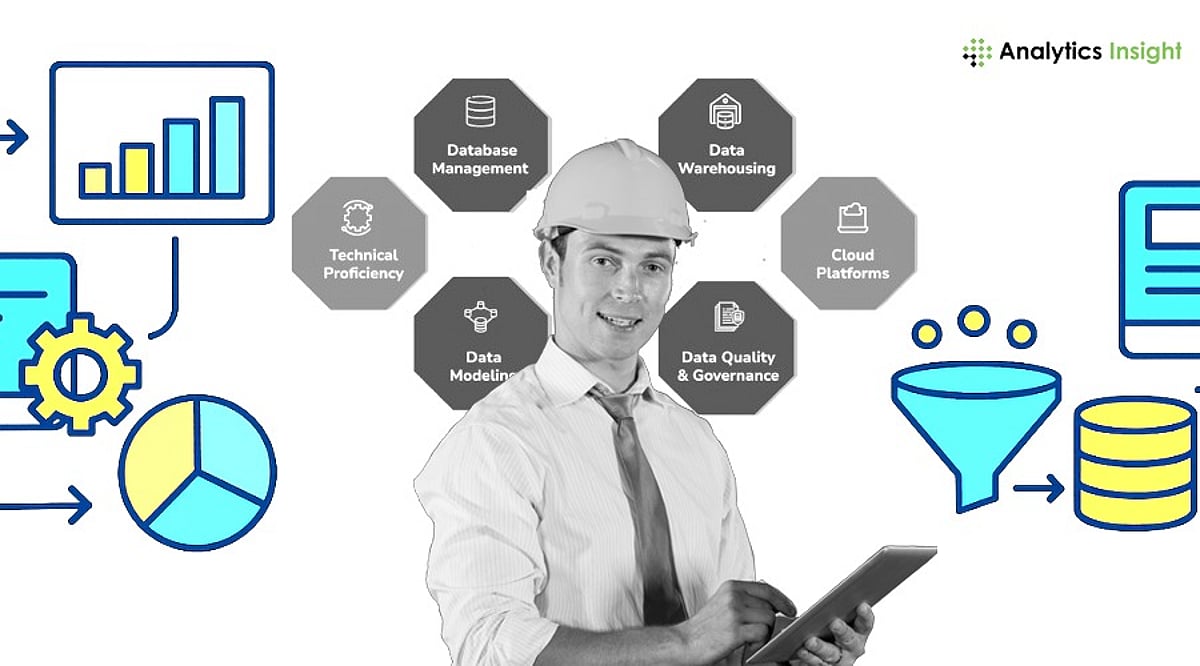
    Data engineering is the foundation of every modern data system. Every website visit, online purchase, mobile app session, payment, and business transaction creates new information. That information has little value unless it is collected, cleaned, stored, and prepared for analysis. This is exactly where data engineering plays a major role.

    The need for skilled data engineers has grown rapidly because companies depend on data for daily decisions, automation, customer service, and artificial intelligence (AI). According to IDC, the world is expected to create more than 394 zettabytes of data by 2028, a huge jump from previous years. This massive growth has pushed businesses to build stronger and smarter data platforms that can support analytics and AI at a much larger scale.

    Data engineering is no longer limited to moving data from one place to another. It focuses on speed, quality, security, and reliability so that every team can trust the information they use.

    How a Data Engineering Process Works

    The data engineering process is structured straightforwardly. The process begins with the steps where data gets collected from external sources such as websites, mobile applications, sensors, software of the company, or databases.

    After data information has been collected, a series of preparation processes are conducted. The next stage of the process is the preparation of the data, where incorrect data is deleted, missing values are repaired, and data is formatted in a valuable way. After that, the collected data is checked for quality compliance.

    Finally, the collected data is ready for use in the generation of reports, machine learning models, dashboards, and other business applications. Each step has its specific role. Any issue at any step may lead to the failure of the reports, predictions, or AI models.

    Skills that Matter Most

    Recognized as one of the most sought-after profiles within the IT industry, data engineers require a combination of technical skills and hands-on problem-solving capability. Indeed, almost every database makes use of SQL.

    Knowledge of cloud technologies has become more critical than ever as many businesses today maintain their data in the cloud rather than in-house. Experience in counteracting bottlenecks and making quick fixes has been a plus in providing better and faster systems.

    As per the 2026 hiring trends, it is evident that employers favor hiring professionals who possess knowledge in traditional data engineering methods and also have working knowledge about AI.

    Modern Data Storage

    Data storage has changed a lot during the last few years. Data warehouses such as Snowflake, Google BigQuery, Amazon Redshift, and Azure Synapse Analytics remain popular because they support fast business reporting.

    Many organizations also use data lakes like Amazon S3, Azure Data Lake Storage, and Google Cloud Storage to keep large amounts of raw information at a lower cost.

    A newer approach called the lakehouse has become one of the biggest trends. Platforms such as Databricks, Apache Iceberg, Delta Lake, and Apache Hudi combine the strengths of both data lakes and data warehouses. This design gives businesses better flexibility without sacrificing performance.

    Batch Processing and Real-Time Data

    Not every business needs data at the same speed. Some reports only require updates once a day. This method is called batch processing. It suits financial reports, historical analysis, and large scheduled jobs because it costs less and stays simple to manage.

    Other businesses cannot wait for scheduled updates. Online payments, fraud detection, recommendation systems, and live dashboards need information within seconds. This approach is known as real-time processing.

    Many companies now use both methods together. Real-time systems handle urgent tasks, while batch systems process large historical datasets.

    What Makes a Strong Data Pipeline

    A reliable data pipeline contains several connected parts. Data first enters the system through source applications. After collection, it passes through processing layers that clean and organize the information.

    The pipeline also includes monitoring tools that detect failures before they become major problems. Security controls protect sensitive information, while backup systems reduce the risk of data loss. Together, these components help the entire system stay stable even as data volumes continue to grow.

    Why Data Quality Matters

    Good decisions depend on good data. Even small mistakes can produce incorrect reports or poor AI predictions.

    Modern platforms check for duplicate records, missing values, invalid formats, unexpected schema changes, incomplete information, and inconsistent records. Freshness also matters because outdated data can lead to wrong business decisions.

    Automated quality checks have become a standard feature in enterprise data platforms because manual reviews cannot keep pace with today’s data volumes.

    Cloud Platforms Continue to Lead

    Cloud technology has become the preferred choice for new data projects. Amazon Web Services, Microsoft Azure, and Google Cloud Platform continue to dominate this market. These platforms offer storage, processing power, data warehouses, monitoring services, and workflow management without the need for expensive physical servers.

    Companies also benefit from automatic scaling, which allows systems to handle larger workloads whenever demand increases. This flexibility has made cloud infrastructure the standard choice for businesses of every size.

    Popular Open-Source Technologies

    The role of open-source apps is notable today in the field of data engineering. Apache Spark brings a solution for the processing of huge data by distributing tasks across numerous machines. Apache Kafka has made it possible to achieve speed in data transmission between applications, and Apache Airflow provides solutions for planning and organizing complex operations.

    Other common technologies are Apache Flink, dbt, Apache Iceberg, Delta Lake, and Great Expectations. Apache Spark remains one of the most popular distributed analytics engines in the world.

    Data Models that Organize Information

    A good data model makes information easier to understand and analyze. The Star Schema works well for business reports because it keeps queries simple and delivers faster results. The Snowflake Schema reduces duplicate information through normalization, which saves storage space.

    Large enterprises often choose the Data Vault model because it keeps historical records, supports business growth, and adapts more easily when new data sources appear. The best model depends on business goals rather than company size alone.

    Security Cannot be Ignored

    Every data platform must protect valuable information. Encryption keeps data safe during storage and transfer. Identity management verifies who can access the system, while role-based permissions limit access to authorized users only.

    Many companies also use multi-factor authentication, audit logs, data masking, regular backups, and compliance checks to strengthen security. As AI becomes more common, strong governance and data protection have become basic business requirements rather than optional features.

    Better Performance Saves Time and Money

    Fast systems reduce costs and improve productivity. Engineers improve performance through partitioning, compression, efficient file formats, incremental updates, query optimization, metadata indexing, automatic resource scaling, and parallel execution. These methods reduce processing time and help businesses complete large workloads with fewer computing resources.

    Metrics Every Team Should Watch

    Successful data teams measure system performance every day. Important metrics include pipeline success rate, failure rate, processing latency, throughput, storage use, query response time, data freshness, infrastructure cost, resource utilization, and overall service availability. These numbers help teams detect problems early, improve efficiency, and maintain reliable operations.

    Biggest Data Engineering Trends in 2026

    Several trends continue to reshape the industry. AI now assists pipeline development and reduces repetitive work. Agentic automation handles routine engineering tasks with minimal human effort. Lakehouse architecture has become the preferred storage approach for many organizations.

    Metadata-driven pipelines, data contracts, unified governance, streaming analytics, intelligent cost optimization, and closer integration between machine learning and data engineering have also become common across modern enterprises.

    These advances allow companies to build faster, more reliable, and more intelligent data systems than ever before.

    Final Thoughts

    Data engineering has become one of the main components of modern technology. The effectiveness of different dashboards, analytical tools, AI systems, and business reports depends on well-organized data.

    The significance of reliable data solutions will acquire new meaning as the amount of data created worldwide may reach 394 zettabytes by 2028. It is expected that organizations that concentrate on robust security systems, high data quality, contemporary cloud solutions, and scalable architecture will be much more ready for the future.

  • Infosys Stock Plunges 36% from Peak Amid IBM Crash and Global IT Spending Concerns

    Infosys Stock Plunges 36% from Peak Amid IBM Crash and Global IT Spending Concerns

    Infosys shares were trading at Rs. 1,081.10, extending a prolonged decline from their January 2026 peak of nearly Rs. 1,700. The weakness comes amid growing concerns over slowing global technology spending, cautious enterprise budgets, and the ripple effect of IBM’s historic 25% single-day stock plunge. Although the sharp correction has weighed on investor sentiment, analysts believe client spending trends will shape the long-term outlook for Infosys, large deal wins, and the company’s ability to capitalize on the artificial intelligence (AI) boom.

    Why Infosys Is Feeling the Heat

    IBM’s sharp sell-off has become the latest trigger for weakness across technology stocks globally. The US technology giant reported weaker-than-expected preliminary quarterly results. Enterprise spending is softening, raising concerns about delayed discretionary business technology spending and a shift toward AI investments.

    The news is relevant to Infosys in many ways. Most of its revenue comes from enterprises globally that rely on digital transformation, cloud migrations, and consulting services. Any cut in tech spending, especially in North America, affects investor sentiment towards Indian IT companies. Yet the news will not affect all of its business areas equally, as it serves clients across various industry verticals with different economic cycles.

    IBM’s Decline Weighs on the Broader IT Sector

    The market response did not end at Infosys. The stocks of Tata Consultancy Services, Wipro, HCL Technologies, Tech Mahindra, Coforge, and Persistent Systems were also under selling pressure as the growth prospects of India’s IT industry were being reassessed. This is because companies are shifting their spending priorities. Even as companies keep pouring money into areas like artificial intelligence, cybersecurity, and cloud computing, projects like digital transformations and consulting projects are taking longer to get approval. These changes can affect the growth of outsourcing companies that rely heavily on long-term technology contracts.

    Nonetheless, experts have advised against comparing IBM’s performance with that of India’s IT sector companies. The business models of these companies differ significantly, and IBM’s earnings might not reflect the demand picture for offshore technology services.

    Can Infosys Recover?

    Though the recent rally has seen some retracement, Infosys continues to have solid fundamentals. This includes having a diversified clientele across the globe, maintaining sufficient cash on its balance sheet, and staying focused on growth sectors such as AI, cloud computing, automation, and digital engineering. Such sectors are set to drive enterprise IT spending in the coming years.

    Technically, Infosys is trying to consolidate around Rs. 1,050 – 1,100 levels. Holding above these levels can help it consolidate its gains, and a decisive move above Rs. 1,150 can restore investors’ confidence. On the downside, Rs. 1,000 remains a crucial support level for traders.

    Besides, investors would be keeping an eye on the next quarterly results, management commentary, the deal pipeline, and potential revenue from the AI sector.

    Market Outlook

    There is no doubt that IBM’s steep decline would have affected the share prices of technology companies worldwide. Still, in the case of Infosys, the long-term investment story is independent of any particular company’s fortunes. Infosys is well-placed to capitalize on emerging structural themes such as AI adoption, cloud migration, and digital transformation.

    Although near-term stock volatility may persist amid uncertainty about global tech spending, Infosys’s success in closing larger transformation deals and in AI-enabled services would ultimately determine whether the recent fall was merely a correction or an indication of lower growth ahead. For investors, the upcoming earnings season may provide important insights into this stock’s future.

    FAQs

    What caused Infosys shares to decline recently?

    Infosys shares fell after IBM’s historic stock plunge raised concerns about slowing global technology spending and weaker enterprise IT budgets.

    How does IBM’s decline affect Infosys?

    IBM’s weak outlook fuels fears of reduced enterprise technology spending, which could delay client projects and impact Infosys’ revenue growth.

    Is Infosys fundamentally weak despite the stock correction?

    No. Infosys continues to have strong fundamentals, healthy cash reserves, diversified clients and growing investments in AI and cloud services.

    Which sectors contribute the most to Infosys’ revenue?

    Financial Services is the largest contributor, followed by Retail, Manufacturing, Communication, Energy, Hi-Tech, and Life Sciences businesses.

    What should investors watch before buying Infosys shares?

    Investors should monitor quarterly earnings, deal wins, management guidance, AI-driven growth opportunities and global enterprise technology spending trends.

  • IBM Stock Plunges 25% After CEO Krishna Admits Company Was Too Slow on AI

    IBM Stock Plunges 25% After CEO Krishna Admits Company Was Too Slow on AI

    IBM shares posted their steepest one-day drop in decades after the company reported disappointing preliminary second-quarter results, with CEO Arvind Krishna acknowledging that the company failed to adapt quickly enough to the artificial intelligence spending boom. The selloff erased billions of dollars in market value and sent shockwaves through the technology sector.

    Revenue Miss and Profit Warning

    The technology giant reported revenue of $17.2 billion for the quarter ended June, up just 1% from the same period last year but below analysts’ expectations. Adjusted earnings per share also missed estimates, triggering a sharp market reaction. IBM shares fell about 25% in a single trading session, marking the steepest stock decline for the company in decades.

    CEO Admits Execution Failures

    In a letter to investors, Krishna said IBM underestimated how rapidly enterprise customers would redirect technology budgets toward AI infrastructure such as servers, storage systems, and memory hardware.

    “These conditions require our teams to execute perfectly, and this quarter we faltered. We did not adapt and move quickly enough,” Krishna wrote.

    He added that several large deals also failed to close within the expected timeline, further weighing on the company’s performance. IBM had anticipated supply-chain constraints would limit demand, but instead customers accelerated purchases of AI infrastructure, reducing spending on software and mainframe-related products.

    Spending Shift Hurts Software Business

    IBM’s infrastructure division posted a 7% decline in revenue, while software revenue grew 5%, slower than market expectations. Consulting revenue remained largely flat, reflecting cautious enterprise spending.

    The results highlight a broader industry shift: businesses are prioritizing investments in AI hardware and data center infrastructure over traditional software deployments. Analysts warn the trend could pressure other enterprise software companies in the coming quarters.

    Bright Spots in the Quarter

    Despite the overall disappointment, certain parts of IBM’s business performed well. Red Hat recorded 11% revenue growth, while recently acquired companies HashiCorp and Confluent delivered strong results. IBM also noted that its Distributed Infrastructure business achieved record performance, supported by demand for Power servers and storage systems, with a backlog of approximately $500 million exiting the quarter.

    IBM maintained that its long-term AI strategy remains intact, but the latest results underscore how rapidly changing enterprise priorities are reshaping the technology industry as companies race to build AI infrastructure.

  • 10 Essential Data Science Concepts to Master in 2026

    10 Essential Data Science Concepts to Master in 2026

    Data science has evolved rapidly, and professionals who want to stay ahead must master a blend of foundational skills and emerging technologies. Here are the ten most important concepts to learn in 2026, covering Python, statistics, SQL, machine learning, generative AI, data engineering, cloud computing, MLOps, and business intelligence.

    1. Python

    Python remains the dominant language for data science due to its readability and extensive library ecosystem. Key skills include functions, classes, object-oriented programming, error handling, decorators, and context managers. Essential libraries: NumPy, Pandas, Polars, Matplotlib, Seaborn, Plotly, Scikit-learn, PyTorch, TensorFlow, and JAX.

    2. Mathematics

    Mathematics underpins every machine learning model. Focus on linear algebra (vectors, matrices, PCA), calculus (derivatives, gradient descent), probability (Bayes’ theorem, distributions), and statistics (hypothesis testing, A/B testing, ANOVA).

    3. SQL

    SQL is critical for querying databases. Beyond basic SELECT statements, learn CTEs, window functions, indexes, and views. Modern cloud data warehouses like Snowflake, BigQuery, and Redshift, plus lakehouse technologies like Delta Lake, are increasingly important.

    4. Machine Learning

    Machine learning enables pattern recognition and prediction. Supervised methods include linear regression, random forests, and gradient boosting. Unsupervised techniques include K-Means, PCA, and t-SNE. Model evaluation metrics like precision, recall, F1 score, and cross-validation are essential.

    5. Deep Learning

    Deep learning powers modern AI with architectures like CNNs for images, RNNs and LSTMs for sequences, and Transformers for language and generation. Mastering these enables advanced pattern detection and classification.

    6. Generative AI

    Generative AI builds on deep learning to create content. Key techniques include Retrieval-Augmented Generation (RAG), fine-tuning, LoRA, PEFT, and RLHF. AI agents and function calling allow models to perform autonomous tasks, making them central to business AI applications.

    7. MLOps

    MLOps ensures models are deployable and maintainable. Tools like Git, MLflow, Docker, Kubernetes, and CI/CD pipelines are vital. Cloud platforms (AWS, Azure, GCP) enable scalable deployment and monitoring for drift and performance issues.

    8. Cloud Computing

    Cloud platforms provide the infrastructure for data processing, storage, and AI at scale. Familiarity with AWS, Azure, or Google Cloud, along with services like S3, Lambda, and BigQuery, is increasingly required for data science roles.

    9. Business Intelligence

    Visualization and communication turn data into actionable insights. Tools like Tableau, Power BI, Looker, and Apache Superset help create dashboards that convey key metrics. Clear reporting supports better decision-making.

    10. Emerging Concepts

    Stay ahead with emerging fields like Responsible AI, Synthetic Data, Causal AI, Time Series AI, Multimodal AI, and AI agents. Combining these with strong fundamentals in Python, mathematics, and SQL will provide the best career opportunities in 2026.


    FAQs:

    1. Why learn data science in 2026? These skills align with current industry demands and future AI roles.
    2. Is Python still the best language? Yes, due to its simplicity and powerful libraries.
    3. Do I need math? Yes, for understanding model mechanics.
    4. What new skills matter? Generative AI, RAG, and MLOps are key.
    5. Can beginners start? Yes, begin with Python, SQL, and statistics, then progress to more advanced topics.
  • TCS and ABB Expand Partnership with AI-Driven Multi-Year Network Operations Deal

    TCS and ABB Expand Partnership with AI-Driven Multi-Year Network Operations Deal

    Tata Consultancy Services (TCS) and ABB have announced an expanded collaboration to transform ABB’s global network operations using AI. The multi-million, multi-year agreement marks the next phase of a 20-year partnership and will see TCS take on end-to-end network operations through an integrated network-as-a-service model.

    Under the deal, TCS will design, integrate, and run ABB’s global network ecosystem as a secure, modern, and AI-driven service. The core initiative is ABB’s Future Network Model programme, an enterprise-wide effort to replace fragmented network environments with a standardized, centrally managed digital infrastructure. TCS will orchestrate ABB’s multi-vendor environment and deploy a centralized control framework that includes service integration and management (SIAM), a global network operations center, advanced security capabilities, and modernized LAN, WAN, and software-defined WAN systems.

    “The Future Network Model represents an important milestone in reinforcing the digital foundation of ABB’s global operations,” said Alec Joannou, Group CIO at ABB. “Our association with TCS reflects a shared focus on delivery excellence, continuous enhancement, and building capabilities that can support our strategic priorities.”

    Anupam Singhal, President of Manufacturing at TCS, added: “With AI embedded into the network operations model, supported by secure digital infrastructure and our deep domain expertise, we are bringing our ‘infrastructure to intelligence’ approach to build a resilient, intelligent network backbone. This engagement will enable network systems that can sense, adapt, and improve continuously.”

    The expanded collaboration builds on two decades of joint transformational programmes, including consolidating multiple ERP systems into a unified SAP platform and accelerating cloud adoption. TCS expects the deal to improve user experience, enhance operational efficiency, strengthen security and compliance, and scale service delivery for ABB.

  • 7 High-Growth US Tech Stocks to Watch in 2026: Key Drivers and Risks

    7 High-Growth US Tech Stocks to Watch in 2026: Key Drivers and Risks

    The US technology sector continues to be shaped by artificial intelligence, cloud software, and semiconductor innovation. Companies delivering consistent revenue and earnings growth remain in focus. These high-growth tech stocks stand out for their strong business momentum and long-term potential.

    Overview

    Seven US tech companies posted verified double- or triple-digit revenue growth in their most recent 2026 quarterly reports. Each stock carries a distinct growth driver, from AI infrastructure demand to NAND storage contracts, rather than a repeated AI narrative. Every pick comes with a specific, company-disclosed risk factor investors should track before buying.

    Revenue separates market leaders from market stories. The strongest US tech companies are proving their growth through earnings rather than expectations. From AI infrastructure to cybersecurity and digital commerce, these seven stocks are backed by measurable performance instead of market hype.

    NVIDIA Stock: Why it Remains a Top High-Growth AI Stock in 2026

    NVIDIA posted first-quarter fiscal 2027 revenue of $81.6 billion, up 85% year over year, with data center revenue up 92%. The Blackwell ramp is still driving that growth, and the Rubin platform is set to contribute revenue for the first time next quarter. The clearest risk sits in the guidance itself: NVIDIA is assuming zero data center compute revenue from China going forward, a quantified exposure rather than a vague valuation concern.

    Palantir Stock: Enterprise AI Growth Makes it a Top Tech Stock in 2026

    Palantir grew revenue 85% year over year in Q1 2026, its fastest pace since 2020, with US commercial revenue up 133%. The company raised its full-year guidance to 71% growth and reported a Rule of 40 score of 145. Operating expenses rose 32% in the same quarter, so any slowdown in commercial deal velocity would hit margins faster than revenue could offset it.

    Shopify Stock: Commerce Growth and AI Innovation Drive 2026 Performance

    Shopify crossed $100 billion in quarterly GMV for the second straight quarter, with revenue up 34%. The Universal Commerce Protocol, now backed by Amazon, Meta, Microsoft, Salesforce, and Stripe, is the structural story here. Investors should still note that the stock fell 8.7% on the print itself, as rising transaction losses and a price-to-earnings ratio near 135 offset the headline growth.

    Zscaler Stock: Cybersecurity Growth Powered by AI Demand

    Zscaler grew revenue 25% and ARR 25% in its third fiscal quarter, positioning itself as the cybersecurity layer for AI agents. Strip out the Red Canary acquisition, and organic ARR growth drops to 21%, and the company’s own early guidance for fiscal 2027 points to a step down to 16 to 17% growth.

    HubSpot Stock: AI-Powered CRM Growth Supports Long-Term Potential

    HubSpot grew revenue 23% in Q1 2026, with total customers approaching 300,000 and active AI seat users up 90% year over year. The company’s push into agentic tools, including its new Customer, Prospecting, and Data Agents, is driving upmarket deal sizes higher, with deals above $120,000 in ARR up 64%. But pricing and go-to-market changes made in April slowed sales capacity, and management has already guided Q2 growth down to 18%. That is a declaration the company disclosed itself, not a market guess.

    SanDisk Stock: AI-Driven NAND Demand Fuels Revenue Growth

    Revenue more than tripled to $5.95 billion as AI workloads drove NAND demand, and the company locked in $42 billion of long-term supply contracts covering a third of its fiscal 2027 bit shipments. Management has flagged the risk directly: the variable-priced portions of those contracts could erode margins fast if NAND supply outpaces demand.

    Reddit Stock: Advertising and AI Data Licensing Drive Growth

    Reddit rounds out the list with a genuinely different growth driver. Revenue grew 69% in Q1 2026, its seventh straight quarter above 60% growth, powered by advertising revenue up 74% and a data licensing relationship with AI model builders built on more than 25 billion posts and comments. Active advertisers on the platform grew more than 75% year over year, and the company’s own automated campaign product, Reddit Max, is already showing measurable results for advertisers. The gap to watch: US daily active users sit at 53.5 million, approximately half of management’s own stated target of 100 million.

    What is Driving High-Growth US Tech Stocks in 2026?

    None of these seven stocks is growing for the same reason. NVIDIA and SanDisk are riding AI infrastructure demand from opposite ends of the supply chain. Palantir and HubSpot are monetizing AI inside enterprise software. Shopify is building a two-decade-old commerce network. Zscaler is selling security for a threat landscape that did not exist five years ago. Reddit is turning its content archive into a licensing asset.

    Final Thoughts

    Every stock on this list beat growth expectations this year, and every one of them also handed investors a specific reason to stay disciplined. The market has stopped rewarding growth on its own; it now waits to see whether a China exposure, a slowing organic ARR line, or a guided deceleration actually shows up in the next print. The companies that manage their own disclosed risk will separate from the ones that only manage the headline. Watch the risk column as closely as the growth column, because that is where the real verdict gets written.

  • Meta Stock Surges on AI Monetization Plans and Data Center Expansion in 2026

    Meta Stock Surges on AI Monetization Plans and Data Center Expansion in 2026

    Meta Platforms stock rebounded strongly on Friday as investors welcomed fresh details about the company’s artificial intelligence revenue strategy, data center investments, and competitive model pricing. Shares climbed approximately 6% on the day and posted a nearly 15% weekly gain—the best weekly performance since early 2024.

    The rally erased Meta’s year-to-date losses. The stock had been under pressure due to concerns over rising capital expenditure and slower-than-expected returns from AI investments. The latest updates provided Wall Street with clearer signals on how Meta intends to convert its heavy infrastructure spending into new revenue streams beyond advertising.

    Meta Explores AI Cloud Business

    CEO Mark Zuckerberg revealed that Meta is considering renting AI computing power to external customers, noting that demand for the company’s compute capacity is “so high that it may make sense” to offer access through a cloud business. While the plan remains in early stages, it could involve providing access to AI chips and servers or hosting models for enterprises that need additional computing power. This move would position Meta in direct competition with Amazon Web Services, Microsoft Azure, and Google Cloud.

    Demand for computing capacity is rising as users adopt chatbots, coding tools, and agentic systems. Meta already invests heavily in data centers to support Facebook, Instagram, advertising, and AI tools. A cloud offering could generate revenue from the same infrastructure that supports its core platforms.

    Muse Spark 1.1 Introduces Paid Model Access

    Meta released Muse Spark 1.1, a new AI model optimized for coding and agentic workloads, and introduced pricing for developer access. The company will charge $1.25 per million input tokens and $4.25 per million output tokens—significantly lower than Anthropic’s Claude Opus 4.8, which costs $5 per million input tokens and $25 per million output tokens. This aggressive pricing may appeal to developers seeking cost-effective tools for coding, workflow automation, and AI agents.

    Tokens are units of text processed by AI models. Input tokens cover user prompts and commands, while output tokens cover the model’s responses. Lower token prices help developers manage costs when applications handle large volumes of text.

    Earlier in the week, Meta also launched Muse Image, an image generation model targeting creators, advertisers, and subscription products. Together, Muse Image and Muse Spark 1.1 demonstrate Meta’s expanding portfolio of AI tools for both business users and developers.

    Data Centers and Custom Chips Shape the Spending Debate

    Meta announced a new data center in Alberta, Canada, as part of its global infrastructure build-out. The facility will support the company’s growing needs for AI training and model delivery.

    Meanwhile, Meta is advancing its custom AI chip, Iris, with production expected to begin in September. Iris is part of Meta’s effort to reduce costs and gain greater control over the hardware powering its AI systems.

    Capital spending remains a key investor concern. Meta previously guided 2026 capital expenditure as high as $145 billion, raising questions about the pace at which AI investments will generate returns. However, Bank of America analyst Justin Post noted that Meta “may have engineered significant cost savings” in data center capacity, supporting the view that the company could manage its AI build-out at a lower cost than anticipated.

    These developments—combined with AI cloud services, competitive model pricing, infrastructure expansion, and custom chip progress—have renewed investor confidence in Meta’s ability to turn its AI strategy into tangible revenue growth.