Tag: cloud computing

  • Best Indian Web Development Companies for 2026: Trusted by Businesses

    Best Indian Web Development Companies for 2026: Trusted by Businesses

    Introduction

    As businesses increasingly move online, choosing the right web development partner is critical. India has emerged as a global hub for web development, offering a blend of technical expertise, scalability, and cost-effectiveness. Here are the top Indian web development companies that businesses trust in 2026.

    1. TCS: Enterprise-Grade Web Development

    TCS delivers secure, scalable digital platforms for large enterprises requiring complex integrations, cloud capabilities, and long-term technology support.

    2. Infosys: AI-Powered Digital Experiences

    Infosys combines web development with artificial intelligence, cloud computing, automation, and digital transformation for modern enterprise applications.

    3. HCLTech: Complex Technology Ecosystems

    HCLTech builds enterprise web platforms integrated with backend systems, cloud infrastructure, cybersecurity frameworks, and advanced digital engineering capabilities.

    4. Tech Mahindra: Industry-Focused Solutions

    Tech Mahindra develops customized web solutions for telecommunications, manufacturing, healthcare, banking, and businesses undergoing large-scale digital transformation.

    5. Aalpha Information Systems: Custom Development

    Aalpha provides full-stack development, e-commerce platforms, custom software, and mobile applications for businesses seeking flexible technology partnerships.

    6. Emizen Tech: E-commerce Expertise

    Emizen Tech focuses on web development, e-commerce platforms, custom software, and digital solutions designed for businesses across multiple industries.

    7. IndiaNIC: Digital Product Development

    IndiaNIC helps businesses create custom websites, web applications, software products, and digital platforms tailored to specific operational requirements.

    8. Hidden Brains: Enterprise Digital Transformation

    Hidden Brains offers web applications, enterprise software, cloud solutions, and emerging technologies for organizations pursuing long-term digital innovation.

    9. Acodez IT Solutions: Design And Development

    Acodez combines responsive web design, development, e-commerce capabilities, and digital solutions to help businesses build engaging online experiences.

  • What Happens in One Second in the Cloud: The Invisible Infrastructure Powering the Internet

    What Happens in One Second in the Cloud: The Invisible Infrastructure Powering the Internet

    Every second, billions of digital interactions rely on cloud infrastructure that spans data centers, fiber-optic networks, and edge computing facilities worldwide. This article explores what happens behind the scenes, how cloud platforms process massive workloads, why latency and energy consumption matter, and why the cloud has become the invisible backbone of the modern internet.

    The Scale of a Single Second

    When you tap a button on your phone and a video loads, a payment clears, or a map recalculates your route, the experience feels effortless. But behind that instant response, the global cloud infrastructure executes hundreds of millions of operations across server farms, fiber networks, and data centers spanning multiple continents. Amazon’s AWS processes roughly 100 million API calls every second. Google answers approximately 99,000 search queries in the same window. Microsoft Azure handles tens of thousands of authentication requests per second. Across the global internet, more than 3.5 million gigabytes of data are transmitted every minute, according to Domo’s 2025 Data Never Sleeps report.

    What the Cloud Actually Is

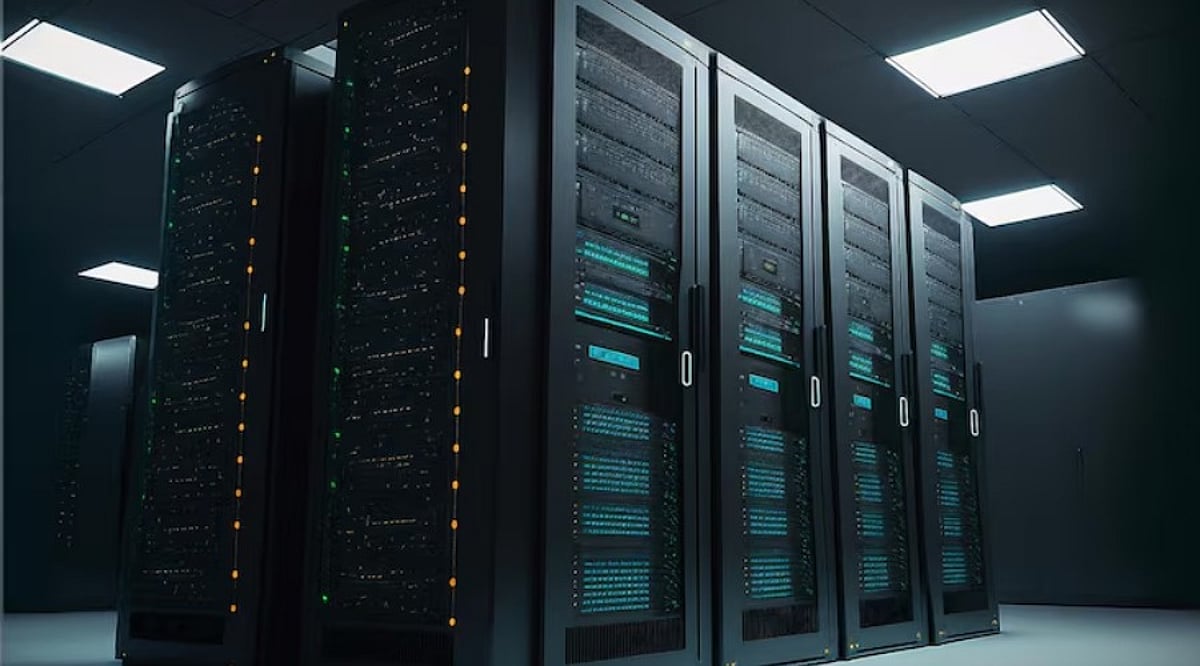
    The cloud is a global network of physical data centers—enormous buildings filled with racks of servers, storage hardware, and networking equipment. Amazon Web Services, Microsoft Azure, and Google Cloud operate facilities on every inhabited continent. These are not abstract digital spaces; they are physical structures that consume vast amounts of electricity, require continuous cooling, and are staffed around the clock by engineers.

    The Infrastructure Behind the Magic

    At the physical layer, submarine fiber-optic cables carry data between continents at the speed of light, connecting data centers through a network of cables stretching more than 1.3 million kilometers across the ocean floor. At the software layer, virtualization technology allows a single physical server to run hundreds of isolated virtual machines simultaneously. Container platforms like Kubernetes orchestrate millions of software instances across thousands of servers, automatically redistributing load when traffic spikes and routing around failures before users notice.

    The Latency Problem

    Every millisecond of distance between a user and the server handling their request adds delay. For a video call or an online game, even 50 milliseconds of additional latency is perceptible. Cloud providers build edge computing infrastructure—smaller, geographically distributed data centers positioned closer to population centers—to handle latency-sensitive applications locally. The global cloud is a nested hierarchy of facilities at different scales, each optimized for a different balance of capacity, cost, and proximity.

    The Energy Reality

    Global data centers consumed approximately 415 terawatt-hours of electricity in 2025, roughly 1.5% of total global electricity consumption, according to the International Energy Agency. That figure is growing rapidly as AI workloads intensify computational demands. A single large language model training run can consume as much electricity as several hundred households use in a year. Major cloud providers have made significant commitments to renewable energy, but the absolute energy consumption of the cloud continues to climb even as efficiency improves.

    Why This Matters

    Understanding that the cloud is a physical, energy-consuming, globally distributed system changes how we think about data sovereignty, the companies that hold the infrastructure on which economies depend, the impact of a single provider outage, and the environmental footprint of increasingly compute-intensive applications. The hidden engine behind the internet isn’t hidden because it is small—it is hidden because it is so large, so reliable, and so seamlessly woven into daily life that it has become invisible.

  • From Software Developer to Upskilling Pioneer: How Krishna Kumar Built Learnbay to Tackle Career Anxiety

    From Software Developer to Upskilling Pioneer: How Krishna Kumar Built Learnbay to Tackle Career Anxiety

    Krishna Kumar, a veteran software engineer with stints at Wipro, Cisco, and Samsung, turned his own observations of career stagnation into Learnbay — an upskilling platform that helps working professionals transition into AI, data science, and cloud roles. Launched in 2015, Learnbay has grown from a single Bangalore classroom to a multi-city hub with a presence in seven Indian cities and several international locations.

    Krishna’s journey began when he noticed that many talented professionals, despite working tirelessly, lacked future-proof career paths. He believed that a technical background or coding skills were not prerequisites for a successful career in the AI era. This conviction drove him to create Learnbay as an open-learning platform that prioritizes real-time exposure over pre-recorded sessions.

    Learnbay’s curriculum evolves continuously to keep pace with industry trends, covering everything from basic data science and cloud & DevOps to advanced GenAI and Agentic AI. Strategic partnerships with IBM, Microsoft, NASSCOM, IIT Patna, and Woolf University ensure industry relevance. In 2023, the platform achieved 300% growth, reflecting its impact.

    Krishna emphasizes outcomes over vanity metrics. Learnbay’s hybrid training model — combining live online sessions with face-to-face capstone projects — is designed for busy professionals. Placement assistance, customized mentorship, and interview preparation are core services, not add-ons. The platform’s success is measured by learners’ career transitions and placements at over 350 MNCs.

    Looking ahead to 2026 and beyond, Krishna remains focused on disciplined upskilling strategies, expanding GenAI and Agentic AI offerings, and deepening partnerships. His philosophy is simple: a course succeeds only when the learner’s career goals are met. Learnbay aims to make reskilling tangible, measurable, and accessible for professionals from any domain.

  • AI Investment Surge Raises Concerns of a New Financial Bubble

    AI Investment Surge Raises Concerns of a New Financial Bubble

    Investment in artificial intelligence continues to accelerate in 2026, with businesses, governments, and investors pouring billions of dollars into AI technologies. From massive infrastructure projects to cutting-edge startups, the race to dominate AI is reshaping the global tech landscape.

    Major technology companies are ramping up spending on AI data centers, advanced semiconductor manufacturing, and cloud computing capabilities. This wave of capital expenditure is driving record funding rounds for AI startups, as venture capitalists and institutional investors compete to back the most promising models, platforms, and enterprise solutions.

    However, rapidly rising valuations have sparked heated debate among analysts and economists. Some argue that the current AI investment boom mirrors the dot-com bubble of the late 1990s, warning that inflated expectations may not align with realistic long-term growth. Others contend that AI represents a fundamental technological shift with sustained demand across industries, from healthcare to finance to logistics.

    Strong demand for AI chips, automation tools, and cloud services continues to fuel revenue growth for many companies. Yet, investors are increasingly cautious, shifting focus toward firms with proven profitability rather than those riding the wave of AI hype alone.

    Potential risks include excessive valuations, slowing adoption rates, tighter regulatory scrutiny, and intensifying competition. While many experts believe AI will remain a major growth sector for years to come, disciplined investing and portfolio diversification are essential to navigate the uncertainties.

  • Leading US Tech Giants: Apple, Microsoft, NVIDIA, and More Dominate 2025

    Leading US Tech Giants: Apple, Microsoft, NVIDIA, and More Dominate 2025

    The United States continues to be the global epicenter of technological innovation, housing some of the most influential companies that shape industries ranging from consumer electronics to enterprise software and artificial intelligence. Here is an overview of the top 10 tech companies in the US, highlighting their core strengths and market impact.

    1. Apple

    Apple leads consumer technology with premium iPhones, Macs, and wearables. The company is expanding its AI capabilities, developing powerful silicon chips, and maintaining a thriving global ecosystem that keeps users engaged across devices.

    2. Microsoft

    Microsoft dominates enterprise software with Azure cloud services, AI innovation, productivity tools like Office 365, gaming through Xbox, cybersecurity solutions, and business applications used by millions worldwide.

    3. NVIDIA

    NVIDIA powers the AI revolution through advanced GPUs, data center technologies, autonomous driving platforms, and high-performance computing infrastructure that are critical for modern AI workloads.

    4. Amazon

    Amazon combines global e-commerce leadership with AWS cloud services, AI innovations, logistics expertise, and smart consumer devices like Alexa and Echo, reaching consumers and businesses across markets.

    5. Alphabet (Google)

    Alphabet, the parent company of Google, drives internet search, AI breakthroughs, cloud services, the Android ecosystem, and cutting-edge digital advertising technologies that underpin much of the web.

    6. Meta

    Meta connects billions through Facebook, Instagram, and WhatsApp, while investing heavily in AI research, virtual reality, and metaverse initiatives that aim to shape future digital interactions.

    7. Oracle

    Oracle specializes in enterprise databases, cloud infrastructure, AI-powered business applications, and mission-critical software that serve governments and multinational corporations worldwide.

    8. IBM

    IBM focuses on hybrid cloud, artificial intelligence, quantum computing, consulting services, and enterprise technology solutions tailored for regulated industries such as finance and healthcare.

    9. Intel

    Intel develops advanced processors, semiconductor technologies, AI accelerators, networking solutions, and manufacturing innovations that support global computing infrastructure from PCs to data centers.

    10. Cisco

    Cisco provides networking hardware, cybersecurity solutions, collaboration platforms like Webex, and enterprise connectivity that power businesses, governments, and digital transformation initiatives around the world.

    These ten companies not only drive technological progress but also create millions of jobs and generate trillions of dollars in market value, solidifying the US position as a leader in the global tech landscape.

  • 5 Top AI Engineer Certifications to Land a Job in 2026

    5 Top AI Engineer Certifications to Land a Job in 2026

    Artificial intelligence is no longer confined to research labs—it now powers products, services, and operations across every industry. As companies invest heavily in generative AI, automation, and machine learning, the demand for skilled AI engineers continues to surge. Recruiters, however, are looking for more than theoretical knowledge; they want candidates who can apply AI to solve real-world problems.

    A recognized certification can strengthen your resume, validate your skills, and help you stand out during the hiring process. While it is not a substitute for practical experience, it complements a strong portfolio and improves your chances of landing interviews. Below are five industry-recognized AI certifications that can help you get hired in 2026.

    1. Google Cloud Professional Machine Learning Engineer

    The Google Professional Machine Learning Engineer certification is highly valued by employers for enterprise-scale AI roles. It covers the development, deployment, and management of machine learning models using Vertex AI and Google Cloud. Topics include model optimization, MLOps, monitoring, and responsible AI. This certification is ideal for professionals with some experience in machine learning and cloud computing.

    2. Microsoft Azure AI Engineer Associate (AI-102)

    This certification is designed for developers and cloud professionals who want to build AI-powered applications on Microsoft’s Azure platform. Learners gain hands-on skills with Azure AI services, Azure OpenAI, computer vision, speech services, and natural language processing. The course also emphasizes building secure and responsible AI applications.

    3. AWS Certified AI Practitioner

    AWS Certified AI Practitioner is an entry-level certification for those building a foundation in artificial intelligence. It introduces AI concepts, generative AI, prompt engineering, responsible AI, and AWS AI services. This is a practical starting point for IT professionals, software developers, and cloud engineers transitioning into AI roles.

    4. Databricks Certified Generative AI Engineer Associate

    As organizations deploy AI assistants and enterprise chatbots, generative AI skills have become highly sought after. This certification focuses on Retrieval-Augmented Generation (RAG), large language models, vector databases, prompt engineering, and AI agent development. It is aimed at engineers working on modern LLM-powered applications.

    5. IBM AI Engineering Professional Certificate

    IBM’s certification emphasizes project-based learning over theory. Participants learn Python, machine learning, deep learning, TensorFlow, and PyTorch through practical projects. This program is an excellent way for beginners to combine technical skills with a portfolio of AI projects.

    Final Takeaway

    Candidates are now evaluated on their ability to create rather than just their credentials. While a certification can make your profile stand out, practical experience is what gets you through the door. Recruiters prefer candidates who have built AI products, contributed to GitHub repositories, deployed models using cloud technology, and understand vector databases, prompt engineering, and MLOps. A relevant certification can give you the edge over other applicants, but remember: earning a certification is only the first step in your AI career journey.

    Frequently Asked Questions

    What is the best AI certification for beginners in 2026?

    AWS Certified AI Practitioner and IBM AI Engineering Professional Certificate are top choices for beginners. They cover AI fundamentals, generative AI, Python, and practical skills without requiring extensive machine learning experience.

    Which AI certification is most valued by employers?

    Google Cloud Professional Machine Learning Engineer and Microsoft Azure AI Engineer Associate are highly regarded, especially for enterprise AI, cloud computing, and production-scale machine learning roles.

    Do AI certifications guarantee a job?

    No. Certifications improve your resume and validate your knowledge, but employers also expect practical experience through AI projects, GitHub portfolios, cloud deployments, and problem-solving skills during technical interviews.

    Which certification is best for generative AI careers?

    The Databricks Certified Generative AI Engineer Associate is a strong choice for those interested in large language models, RAG, prompt engineering, vector databases, and enterprise AI applications.

    How should I prepare for an AI engineering role in 2026?

    Build a strong foundation in Python, machine learning, and cloud platforms. Earn a recognized AI certification, create real-world projects, and maintain an active portfolio to showcase your technical abilities.

  • India’s AI Boom Propels Data Centres to Strategic National Infrastructure Status

    India’s AI Boom Propels Data Centres to Strategic National Infrastructure Status

    India’s AI-driven digital transformation is rapidly elevating data centres from supporting infrastructure into a strategic national asset. With cumulative investment commitments exceeding $126 billion, strong government incentives, and surging demand from global hyperscalers, the sector is entering an unprecedented expansion phase.

    Global tech giants including Google, Microsoft, Amazon Web Services (AWS), and domestic operators like AdaniConneX and STT GDC India are aggressively building AI-ready facilities to meet soaring demand for cloud computing and AI workloads. However, long-term success will depend on overcoming significant challenges related to power supply, water usage, land availability, skilled talent, and project execution.

    Market Inflection Point

    According to a July 2026 KPMG report, India’s data centre sector stands at an inflection point where demand visibility, capital inflows, and technology shifts are aligning. The country’s total data centre capacity crossed 1,700 MW in 2025, with 440 MW added—a 160% jump from 2024. Projections indicate another 30% year-on-year growth in 2026, with approximately 500 MW of fresh supply expected. The market’s financial trajectory reflects this pace: IBEF projects the sector will reach $22 billion by 2030 at a 14-15% CAGR, while KPMG identifies a $46 billion opportunity in AI-optimised data centres alone by 2033, growing at a 35.1% CAGR.

    This growth is driven by three simultaneous forces: the explosion in AI workloads, accelerating enterprise cloud adoption, and India’s Digital Personal Data Protection Act, which restricts cross-border data transfers and effectively requires global companies to build physical infrastructure inside the country.

    Hyperscaler Commitments at Unprecedented Scale

    The scale of hyperscaler commitments to India in the past eighteen months is without precedent. Google announced a $15 billion investment in AI data centres in Andhra Pradesh in October 2025. Microsoft followed with a $17.5 billion commitment through 2030, building on an earlier $3 billion program. Amazon Web Services has pledged $35 billion by 2030. Domestically, AdaniConneX has announced $100 billion in renewable-powered hyperscale capacity through 2035, while STT GDC India was recently valued at close to $14 billion.

    India’s attractiveness rests on structural advantages: over 900 million internet users, average monthly wireless data consumption exceeding 25 GB per user, nearly 20% of global AI-related development activities, and software engineers available at roughly $20,000 per year—a fraction of costs in the US, Europe, or Singapore.

    Policy Shift: From Neutral to Active Enabler

    India’s regulatory environment has moved from passive observation to active facilitation. The Union Budget 2026-27 extended a 20-year tax holiday to eligible foreign cloud providers through 2047, along with 25-35% capital incentives for green technology adoption and a 15% safe harbor margin to reduce transfer pricing disputes. The draft National Data Center Policy, when finalized, is expected to streamline land, power, and environmental approvals—historically a primary bottleneck.

    Multiple states have introduced incentive frameworks: Telangana, Maharashtra, Andhra Pradesh, Tamil Nadu, and Uttar Pradesh are leading inflows, while tier-II cities including Ahmedabad, Visakhapatnam, Patna, and Bhopal are seeing growing developer interest driven by lower land costs and 5G rollout.

    The Execution Gap

    Despite momentum, a significant gap exists between announced and operational capacity. Less than 20% of announced capacity from roughly 30 large projects launched between March 2025 and April 2026—collectively adding around 3.5 GW—is currently live. Most large, multi-phase campuses have commissioning timelines extending to 2028 and beyond. Mumbai still accounts for over 50% of operational inventory, and with Chennai, Delhi-NCR, and Bengaluru, these four cities host nearly 90% of tier-I capacity. Hyderabad and Visakhapatnam together account for over 2 GW of planned AI-native capacity, but execution risk remains.

    Sustainability Constraints: Power and Water

    The most consequential constraints are physical. A 100 MW hyperscale facility requires approximately 2 million liters of water per day for cooling, yet 60-80% of Indian data centres face high water stress. Visakhapatnam district, where a 1 GW AI-native campus is planned, has the lowest groundwater availability for industrial use in Andhra Pradesh. On power, AI-ready facilities demand far higher density, often exceeding 50 kW per rack, straining local grid infrastructure. While India has surpassed 500 GW of total installed power capacity and renewables exceed 50% of generation in some periods, coal still supplies around 70% of actual generation. Operators like Nxtra and STT GDC India are already running at 60-63% renewable energy integration, but alignment between renewable capacity additions and data centre locations remains uneven.

    What Must Happen Next

    KPMG’s KG Purushothaman emphasized the need for integrated execution models combining engineering capability, AI readiness, regulatory understanding, and operational accountability. India needs to build delivery infrastructure: grid modernization, water-efficient and liquid-cooling technologies, specialized data centre workforce pipelines, and environmental frameworks that accommodate hyperscale facilities without depleting local resources.

    The workforce dimension is frequently underestimated. India has a world-leading IT workforce but not yet a world-class data centre operations workforce at the scale required. A modern hyperscale campus needs highly specialized mechanical and electrical engineers, HVAC and cooling plant operators, cybersecurity professionals, and power systems specialists—roles not produced in large numbers by current engineering education pipelines.

    The strategic parallel with India’s IT services industry is instructive. Data centres require a different asset base—land, power, water, fiber, and specialized operations—but the underlying logic of structural cost advantage and scale remains similar. Whether India captures 4-5% of global data centre capacity additions between 2026 and 2032, as CBRE projects, will depend less on capital availability and far more on whether physical, human, and regulatory infrastructure can be delivered fast enough to match the ambition.

    Why This Matters

    Artificial intelligence is dramatically increasing demand for computing power, cloud services, and high-performance data centres worldwide. As one of the world’s fastest-growing digital economies, India has an opportunity to become a major global AI infrastructure hub. However, investment announcements alone are not enough. Delivering hyperscale facilities requires reliable electricity, sustainable water management, high-speed connectivity, regulatory clarity, and a skilled workforce. Understanding these opportunities and constraints is essential for technology companies, cloud providers, policymakers, investors, and enterprises planning long-term digital infrastructure strategies.


  • Essential Cloud Technologies Every Modern Business Must Know

    Essential Cloud Technologies Every Modern Business Must Know

    Cloud computing has become a cornerstone of modern business operations, offering scalable, cost-effective, and flexible solutions. Understanding the key cloud technologies can help organizations optimize their IT strategies and drive growth. Below are ten essential cloud technologies that every business should be aware of.

    1. Hybrid Cloud

    Hybrid cloud combines private and public cloud environments, providing businesses with flexibility, stronger security, better compliance, and cost-efficient workload management.

    2. Multi-Cloud Strategy

    Using multiple cloud providers improves reliability, reduces vendor dependency, optimizes costs, and enhances business continuity across operations.

    3. Infrastructure as a Service (IaaS)

    IaaS delivers virtual computing resources, enabling businesses to scale servers, storage, and networking without investing in physical infrastructure.

    4. Platform as a Service (PaaS)

    PaaS provides development environments that simplify application creation, deployment, testing, and maintenance while reducing infrastructure management complexity.

    5. Software as a Service (SaaS)

    SaaS offers cloud-hosted applications accessible through browsers, improving collaboration, reducing maintenance, and minimizing software installation requirements.

    6. Cloud Security

    Cloud security protects cloud environments through encryption, identity management, threat detection, compliance monitoring, and continuous security updates against evolving cyber risks.

    7. Cloud Backup and Disaster Recovery

    This technology ensures business continuity by securely storing data and enabling rapid recovery after outages, cyberattacks, or accidental information loss.

    8. Serverless Computing

    Serverless computing allows developers to run applications without managing servers, automatically scaling resources while reducing operational costs and administrative overhead.

    9. Cloud AI and Machine Learning

    Cloud-based AI and ML integrate intelligent analytics, predictive insights, automation, and personalized customer experiences directly into business applications.

    These cloud technologies empower businesses to innovate faster, reduce costs, and stay competitive in a rapidly evolving digital landscape.

  • Anthropic and Meta Discuss $10 Billion AI Compute Lease, Boosting Meta Stock

    Anthropic and Meta Discuss $10 Billion AI Compute Lease, Boosting Meta Stock

    Anthropic is in early-stage talks to lease artificial intelligence computing capacity from Meta in a potential $10 billion, two-year agreement, according to reports. The deal would give Anthropic expanded access to AI chips while providing Meta with a new revenue stream from its data center investments.

    Meta Stock Rises on News

    Meta shares moved off their session lows after the report emerged on Friday. However, both companies declined to comment on the negotiations. The discussions are preliminary and may not result in a final contract.

    Potential Revenue Path for Meta

    Under the proposed terms, Anthropic would make monthly payments to Meta over two years. Either side could terminate the arrangement before the full term expires. If completed, this would mark Meta’s first large customer for rented computing capacity. Currently, Meta uses most of its data centers, chips, and power for its own services and AI models.

    CEO Mark Zuckerberg has previously discussed selling access to Meta’s infrastructure. At a shareholder meeting in May, he said cloud computing was “definitely on the table” and noted that companies approached Meta “almost every week” about buying models or spare computing power.

    Meta expects 2026 capital spending of between $125 billion and $145 billion, including finance lease payments and higher costs for components and data centers. Much of that spending supports AI systems and future computing capacity.

    Early Talks Leave Deal Uncertain

    Anthropic proposed a structure worth up to $10 billion across two years. Still, insiders describe the discussions as very preliminary. Meta must develop commercial systems for billing, customer support, security, and capacity management before operating a large cloud service.

    The companies have not disclosed how much computing power Anthropic could receive, nor have they identified specific chips, data center sites, pricing schedules, or start dates. The final value could fall below $10 billion, and either side could withdraw before the service period begins.

    Anthropic’s Growing Compute Needs

    Anthropic requires massive computing power to train and operate its Claude models. Demand for AI services has pushed developers to secure chips, electricity, and data center space through multiple providers.

    In May, Anthropic reached a separate agreement to use the full computing power of SpaceX’s Colossus 1 facility in Memphis. That site contains more than 220,000 Nvidia processors and provides 300 megawatts of capacity. Reports placed that arrangement at about $1.25 billion per month through May 2029, with early termination options.

    Anthropic also has computing arrangements with major cloud providers. Its talks with Meta show the company is adding more sources as usage grows across its consumer and business products. The proposal would diversify Anthropic’s infrastructure beyond its existing cloud partners.

    For Meta, a completed agreement would generate revenue tied directly to its AI infrastructure. The company is also building a broader cloud operation to sell spare capacity and access to selected AI models.

    No agreement has been announced, and neither Meta nor Anthropic has provided a timeline for completing or ending the talks.

  • Top Tech Skills to Boost Your Freelance Income in 2026

    Top Tech Skills to Boost Your Freelance Income in 2026

    As the freelance economy continues to expand, certain tech skills are emerging as particularly lucrative in 2026. Professionals who invest in these areas can unlock significant earning potential and secure consistent project work.

    Artificial Intelligence (AI) Skills

    AI expertise is in high demand as businesses seek specialists to build, manage, and optimize AI tools. Key areas include AI automation, prompt engineering, and designing AI-based workflow solutions. These skills open up freelance opportunities across nearly every industry.

    Web Development

    Web development remains a cornerstone of freelance work. Companies need professionals to create and maintain websites, web applications, and customized digital platforms. Proficiency in modern frameworks and responsive design is essential.

    Cybersecurity

    With rising cyber threats, companies are hiring freelancers for security testing, risk assessment, and data protection. Cybersecurity skills are increasingly valuable for short-term and long-term projects.

    Cloud Computing

    Knowledge of cloud platforms like AWS, Azure, and Google Cloud enables freelancers to work on modern IT infrastructure projects. Cloud skills are crucial for deploying scalable applications and managing remote systems.

    Data Analytics

    Freelancers who can transform raw data into actionable insights are in demand. Skills in data visualization, reporting, and business intelligence help companies make informed decisions.

    Mobile App Development

    As businesses invest in digital products and customer-focused applications, mobile app development continues to offer steady freelance opportunities. Expertise in iOS and Android platforms is highly valued.

    UI/UX Design

    User experience and interface design remain critical as companies strive to create seamless digital experiences. Freelancers with strong design portfolios and user research skills can command premium rates.

    Soft Skills Matter Too

    Professionals who combine technical expertise with strong communication and problem-solving abilities often find more freelance opportunities. These soft skills help in client management and project delivery.

    By focusing on these high-demand tech skills, freelancers can position themselves for success in 2026 and beyond.