Tag: DeFi

  • BlockDAG 2026 Review: A Comprehensive Look at the 5-Star Crypto Ecosystem Transforming Digital Finance

    BlockDAG 2026 Review: A Comprehensive Look at the 5-Star Crypto Ecosystem Transforming Digital Finance

    This BlockDAG 2026 review examines a project that has evolved far beyond a typical layer-one network. In August 2026, the team released its Execution Whitepaper, outlining a major strategic pivot. BlockDAG is transforming itself into a full digital economy, seamlessly integrating mining, trading, staking, and everyday spending into a unified user journey. The team consistently hits its milestones, earning this project a top-tier rating.

    The network operates on a Directed Acyclic Graph (DAG) design, enabling the simultaneous production of multiple blocks and achieving 7,000 transactions per second. The GHOSTDAG consensus algorithm orders these parallel blocks, preventing double-spending while maintaining decentralization. Additionally, BlockDAG is fully compatible with the Ethereum Virtual Machine (EVM), allowing developers to quickly port existing tools and accelerate development.

    One App for Everything: The RedotPay Super App

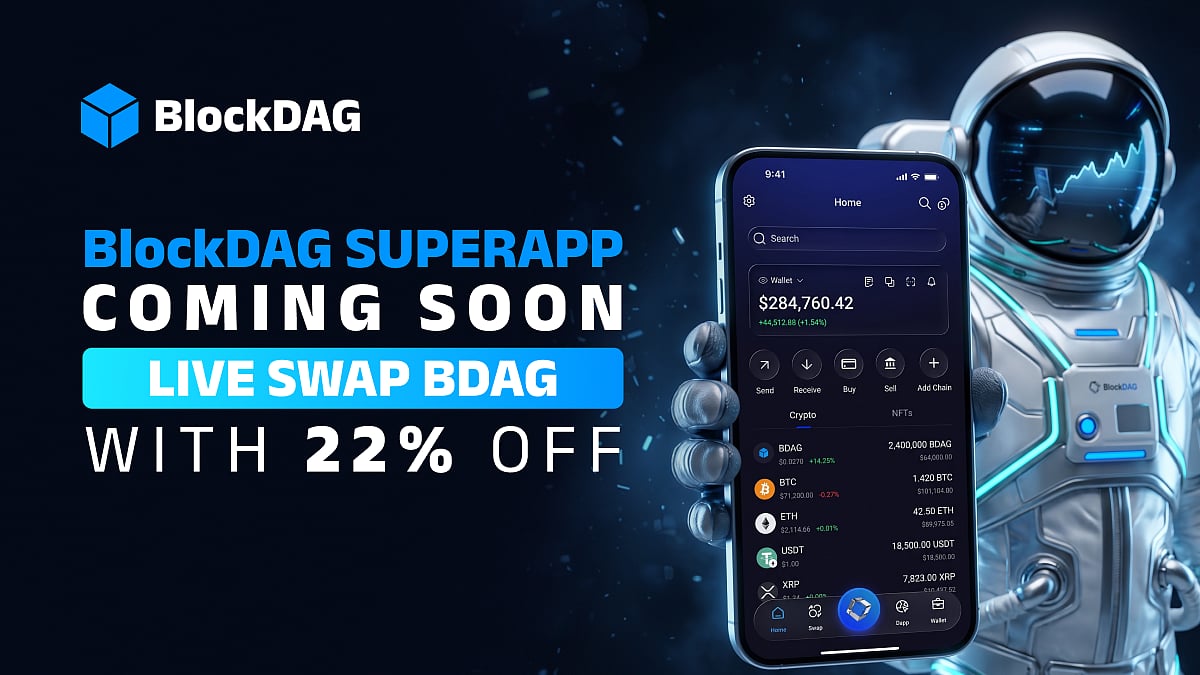
    BlockDAG has partnered with RedotPay to create the unified BlockDAG Super App, launching in September 2026. The app consolidates mining, staking, and trading in one place. Users can securely hold stablecoins alongside BDAG and access the BlockDAG Casino directly from their mobile device. The app also issues virtual and physical payment cards for daily use. Balances can be instantly converted to stablecoins, with the card handling merchant payments seamlessly, removing friction from everyday spending.

    Real Utility: The Exchange and the Casino

    The native BlockDAG Exchange launches in August 2026, offering spot and futures markets to users worldwide. It lists Bitcoin, Ethereum, and other digital assets. Fee payments in BDAG earn significant trading discounts. The BlockDAG Casino is already operational, giving active users a practical outlet to spend their coins. Players use BDAG to unlock exclusive games and premium tournaments, earning BDAG rewards and generous cashback. Both the exchange and the casino generate commercial revenue that is reinvested into network development and security.

    Miners Shipping Around the World

    Mining is a primary channel for distributing BDAG globally. Entry-level rigs are designed for home use, while enterprise units target professional data centers. Physical miner deliveries are already underway worldwide. Full-scale production of the X30 miner has just begun, with the first wave shipping within 45 days. The more powerful X100 model will follow shortly. Each miner shipped increases active participation and strengthens network security, turning buyers into long-term ecosystem users.

    Entry Price, Buyback, and Staking

    For those reading this BlockDAG 2026 review seeking entry, the current window is attractive. The promotional price is $0.000000017, and buyers receive a 22% swap discount on live exchanges. The project has set a buyback price of $0.025, which the team frames as a 135x return on investment. Token claims are proceeding without delays; batches 1 through 7 are all live. Staking is fully operational, with 10 billion coins already locked up, keeping a significant portion of supply off the market.

    The Numbers Behind the Network

    Live usage figures are impressive. The chain has processed 4 million on-chain transactions, with over 374,400 holders worldwide. The X1 mobile app supports 3.6 million miners, and the community has grown to more than 390,000 people across 130 countries. Maximum supply is capped at 150 billion coins. Treasury and liquidity figures are publicly verifiable, and all token allocations use transparent vesting contracts. This openness builds long-term trust with retail buyers, and ecosystem growth directly feeds BDAG’s market value.

    The Bottom Line

    This BlockDAG 2026 review awards a five-star rating for one key reason: consistent execution. The team prioritizes real utility over hype. Mining, trading, and spending are interconnected within one system, with every product strengthening the underlying chain. The technology solves real problems at high speed, and reinvested revenue continually improves the products. Users can mine, swap, and spend without leaving the ecosystem. For anyone tracking full-stack crypto projects, this is one to watch closely.

    Aftersale: https://purchase.blockdag.network
    Website: https://blockdag.network
    Telegram: https://t.me/blockDAGnetworkOfficial
    Discord: https://discord.gg/Q7BxghMVyu

    Disclaimer: Analytics Insight does not provide financial advice or guidance on cryptocurrencies and stocks. Cryptocurrencies mentioned are potentially risky; you should conduct your own research before investing.
  • BlockDAG Outshines Shiba Inu, Ethereum Classic, and Pi Network with 374,000 Holders as Top Trending Crypto in August 2026

    BlockDAG Outshines Shiba Inu, Ethereum Classic, and Pi Network with 374,000 Holders as Top Trending Crypto in August 2026

    Focus moves quickly in crypto, and the coins pulling eyes in August 2026 earned that pull in very different ways. The wider market held a careful, sideways mood. But community-led tokens, network upgrades, and real-world tie-ins kept certain names in the news no matter what price did.

    For readers scanning the top trending crypto, the smart question is what really sits behind the buzz: a true product and crowd, or short-lived hype. The strongest stories mix an active user base with something real on-chain or out in the world.

    Four names show that blend this month, starting with one whose surge rests on how much a holder can really do inside its world.

    1. BlockDAG (BDAG): Real Ways To Use It Right Now

    BlockDAG’s fire comes from a simple switch: rather than ask what the token might be worth, ask what it lets you jump into. The answer is wide open for a project at this stage, and the buzz is loud. A holder can mine BDAG through the X1 app or physical miners, stake it for ecosystem perks and VIP levels, trade it on the coming BlockDAG exchange, play with it in the BlockDAG Casino that has already run through $200 million in wagers, swap it into other assets, and soon spend it through the Super App’s payment layer.

    Holding more BDAG stacks up access, not just a number, unlocking fee cuts, higher tiers, and special launches. With 374,400 holders growing by 1,200 a day across 130-plus countries, the buy-in zone is real and getting bigger fast. For the top trending crypto, jumping into a live, growing ecosystem is a way more honest pitch than a price target, and BlockDAG makes that crystal clear.

    BDAG can be grabbed right from the website at an entry rate of $0.000000017 with a $0.025 BuyBack price, and a buyback event is set for October 1. Buyers using Live Swap can also lock in tokens at a 22% discount below the current CoinMarketCap rate.

    2. Shiba Inu (SHIB): Crowd Support Plus Real-World Payments

    Shiba Inu traded near $0.0000050 on August 2, up about 4% on the day with a market cap around $2.9 billion at rank #26, per Crypto.com and CoinMarketCap data. The token hit six years old and kept its crowd active, while its Shibarium layer-2 saw transactions rise 78% in a week.

    Two real-world points came up: Emirates Airlines began taking SHIB for flight bookings, and a delayed Shibarium privacy upgrade built with cryptography firm Zama has a live delivery window in August. A T. Rowe Price ETF filing added a slower thread. SHIB stays a well-known community-led trending token.

    3. Ethereum Classic (ETC): The First Proof-of-Work Chain

    Ethereum Classic traded near $6.55 on August 2 to 3, down about 1% to 3%, with a market cap around $1.07 billion and a price roughly 96% below its all-time high, per CoinMarketCap and CoinGecko data. ETC still carries the first Ethereum chain’s belief in staying unchanged, put simply as code is law, kept safe by Proof-of-Work mining and capped at 210.7 million coins, about ten times Bitcoin’s supply.

    Its EVM support keeps it fit for smart contracts, and a Grayscale trust offers a regulated way in. For traders who value low supply and a long track record, ETC now and then trends as a Proof-of-Work option.

    4. Pi Network (PI): Phone Mining And A Ticking Upgrade Clock

    Pi Network traded near $0.085 on August 2, up about 4% on the week with a market cap around $945 million, per CoinGecko and Bitget data. The token moved on news of Protocol 26, the latest mainnet upgrade, with node operators told to update before an August 11 cut-off ahead of the final Protocol 27.

    Pi’s model is built around phone-first mining through the Stellar Consensus Protocol, letting its large Pioneers crowd earn by checking in daily without special gear. About 11 billion of a 100 billion max supply are in circulation. Its crowd size keeps Pi a name that comes back around.

    Final Take

    For the top trending crypto this month, focus rests on different bases. Shiba Inu blends a six-year crowd with Emirates support near $0.0000050. Ethereum Classic trends as the first Proof-of-Work chain near $6.55. Pi Network rides its phone-mining Pioneers crowd near $0.085 through an upgrade cut-off.

    BlockDAG trends on take-part power itself, a 374,400-holder world where the token can be mined, staked, traded, played, and spent, making it the top trending crypto to keep in view.

    Trending focus fades quick when nothing sits behind it, so the names worth watching are those pairing fire with a real product, and none of them promise a future price.

  • BlockDAG’s Multi-Use Ecosystem Gains Momentum as Tron and XRP Prices Stall

    BlockDAG’s Multi-Use Ecosystem Gains Momentum as Tron and XRP Prices Stall

    The latest Tron price prediction shows TRX locked between $0.30 and $0.34, with Tron DAO relying on stablecoin strength to support patience. At the same time, XRP price movement remains under $1.10, affected by a weak August and a CLARITY Act decision delayed to September. Both projects are stable and well known, but stability alone does not define the best crypto to buy right now.

    BlockDAG (BDAG) appears stronger because it is not focused on one single use case waiting for a trigger; instead, it keeps adding multiple working parts. Mining supports the network, the Casino builds user activity, the Exchange improves access, and everything connects through one Super App, a layered setup similar to what helped Solana and Hyperliquid gain massive attention over time.

    BlockDAG: Multi-Use Ecosystem Driving Long-Term Growth

    Many whitepapers describe future ideas. BlockDAG’s Execution Whitepaper explains a working system, including a live mainnet with GHOSTDAG consensus and EVM smart contracts, plus an explorer tracking more than 4 million on-chain transactions across over 374,400 holders in 130+ countries, hardware miners already shipping with X30 in full production and over 3.6 million X1 app miners active globally, along with BlockDAG Casino generating over $200 million in wagers across 100+ games.

    Add claims active from Batches 1 to 7, staking live with more than 10 billion BDAG locked, and a presale price of $0.000000017 supported by a $0.025 buyback aiming at 135X ROI, it becomes clear why many see this as the best crypto to buy for those looking for real 1000x potential from early-stage projects.

    The final parts are coming soon. BlockDAG Exchange, a company-owned multi-asset platform, is planned for August 2026, followed by the Super App in September to connect mining, staking, trading, swaps, casino features, and a RedotPay-backed payment card in one system. This combined use case is growing step by step, similar to patterns seen in Solana and Hyperliquid, and after two years of steady work, BlockDAG now shows this full structure, making it a strong option for the best crypto to buy during this cycle.

    Tron Price Outlook Suggests Continued Sideways Movement

    The Tron price prediction for August needs to consider a coin that is pausing rather than moving strongly. TRX is staying near a key support area built over recent weeks, with resistance close to $0.334 and support near $0.309. Tron DAO highlights network expansion, growing institutional use, and stablecoin leadership, with over $84 billion in USDT on the network, while Nasdaq-listed Tron Inc. holds 681.7 million TRX as treasury assets.

    Even with these positives, most Tron price prediction views expect TRX to stay within range through August instead of breaking higher. This reflects an asset maintaining its current level rather than moving into a new growth phase, very different from a presale project like BlockDAG still priced at early levels.

    XRP Price Holds Position While Waiting for New Triggers

    Current XRP price levels show a coin lacking short-term momentum. XRP starts August near $1.06 and struggles to break above $1.10, with both the CLARITY Act decision and a Federal Reserve rate update now expected in September. Adding pressure, August has ended lower for XRP for four straight years, and ETF desks reported zero flows on 10 out of 17 trading days in July.

    There are still some positives: exchange supply is at a seven-year low, and the XRP Ledger v3.3.0 upgrade aims to improve institutional access for banks. For now, though, the XRP price stays between $1.01 and $1.05 without a clear near-term push. BlockDAG, on the other hand, shows active progress, with an Exchange and Super App both expected soon and a presale price still very low.

    Final Call

    Most Tron price prediction insights and XRP price analysis this month point to the same idea: strong projects waiting for delayed catalysts expected in September. BlockDAG shows a different situation. Two years of progress have led to live claims, active staking, over 10 billion BDAG locked, a Casino already producing revenue, and both an Exchange and Super App launching soon. With multiple use cases growing together and a presale price of $0.000000017 still open, BlockDAG currently stands out for anyone searching for the best crypto to buy right now.

  • Crypto Roundup: Bitcoin ETF Inflows Hit $170M, XRP Gains RLUSD Lending, TRON Surpasses 15B Transactions

    Crypto Roundup: Bitcoin ETF Inflows Hit $170M, XRP Gains RLUSD Lending, TRON Surpasses 15B Transactions

    Bitcoin Spot ETFs See $170 Million in Net Inflows

    According to data from SoSoValue, U.S. spot Bitcoin ETFs recorded a total net inflow of $170.09 million yesterday. BlackRock’s IBIT led the charge with $111.43 million in daily net inflows, bringing its historical total to $60.59 billion. Fidelity’s FBTC followed with $33.36 million, reaching a cumulative net inflow of $9.95 billion. The overall net asset value of Bitcoin spot ETFs now stands at $77.58 billion, reflecting an ETF net asset ratio of 6.06% and a historical cumulative net inflow of $51.49 billion.

    XRP Holders Can Now Borrow RLUSD on Ethereum

    Flare has integrated FXRP into Sentora’s $280 million RLUSD vault on Morpho, enabling XRP holders to use their assets as collateral to borrow Ripple’s RLUSD stablecoin—without selling their XRP. This marks the first time an XRP-based asset has been accepted as collateral in an institutionally curated lending vault on Ethereum mainnet, opening the door for XRP to participate in institutional decentralized finance (DeFi). Holders can convert XRP into FXRP, bridge it to Ethereum, deposit it into the vault, and borrow RLUSD, thereby increasing capital efficiency.

    TRON Crosses 15 Billion Transactions

    TRONSCAN data shows the network has processed more than 15 billion confirmed transactions as of press time, with over 12.56 million transactions in the preceding 24 hours. Total registered accounts reached 396.74 million, after adding about 158,871 accounts in the same period. The milestone reflects cumulative network operations including token transfers, smart contract calls, and staking activity. TRON DAO reported that the blockchain processed 950 million transactions in Q1 2026, a 0.62% increase from the previous quarter.

    Former FBI Agent Accused of Stealing $1 Million in Crypto

    Patrick Steven Yaroch, a former FBI agent, has been charged with interstate transportation of stolen goods and receipt of stolen goods after allegedly stealing approximately $1 million in cryptocurrency from wallets under FBI custody. Court documents indicate that the thefts occurred between early 2025 and July 2026, during which Yaroch worked in the Counterintelligence and Espionage Division with Top Secret security clearances. He is accused of accessing internal systems to retrieve recovery phrases for wallets seized in investigations targeting a foreign adversary.

    Tether Reports Strong Q2 2026 Operating Profits

    Tether announced $1.5 billion in net operating profit for Q2 2026, a 50% quarter-on-quarter increase. USDT supply grew to $184.6 billion, and the global user base surpassed 650 million. The company’s Q2 attestation showed $187.75 billion in assets against $183.64 billion in liabilities, resulting in a $4.11 billion surplus. Tether also added 14 tons of gold during the quarter, pushing its gold reserves past 146 tons, and increased its Bitcoin holdings to 98,932 BTC, valued at $5.8 billion.

  • Kamino Launches Solana USDC Yield Vault Targeting 7-8% Returns via Commodity Trade Financing

    Kamino Launches Solana USDC Yield Vault Targeting 7-8% Returns via Commodity Trade Financing

    Kamino has introduced a new institutional yield vault on Solana, offering USDC depositors a target return of 7% to 8%. The product, launched on August 4, comes with a $25 million initial deposit cap and connects Solana-based USDC with short-term commodity trade financing through an approved fund structure.

    Unlike typical DeFi lending, the vault channels deposited USDC into real-world commodity deals rather than crypto-backed loans. A commodity trader can use the funds to bridge the gap between purchasing goods and receiving payment from the final buyer. Kamino describes the platform as “on-chain vault infrastructure connecting real-world, institutional credit markets with on-chain users.”

    Depositors receive kicUSDC tokens representing their share in the vault. The offchain lending activity is managed by a fund structure supervised by the Cayman Islands Monetary Authority. Loans are backed by physical commodities or cash held in escrow, providing a layer of security.

    However, the model introduces different risks than standard DeFi lending. Loan repayment depends on multiple external parties, including traders, banks, insurers, shipping companies, and legal agreements outside the Solana ecosystem. Users can make quick withdrawals as long as sufficient USDC remains in the vault’s liquidity buffer, but larger requests may face delays when outstanding loans must be repaid first.

    The 7% to 8% target return therefore comes with liquidity and counterparty risks. The launch gives Solana a new avenue for connecting onchain stablecoin capital with real-world credit markets. Future performance will hinge on repayment records, withdrawal reliability, and realized returns rather than the headline target alone.

  • Top Altcoins Poised to Dominate the Crypto Market in H2 2026

    Top Altcoins Poised to Dominate the Crypto Market in H2 2026

    The cryptocurrency market is entering the second half of 2026 with a renewed focus on utility, adoption, and real-world applications. While Bitcoin continues to command significant attention, several altcoins are emerging as strong contenders for market leadership. Investors are shifting away from hype and toward projects with robust technology, active user bases, institutional backing, and clear growth trajectories.

    This article explores the most promising altcoins for H2 2026, including Ethereum, Solana, Chainlink, XRP, BNB, Sui, Bittensor, Render, Hyperliquid, and Ondo. Each represents a major trend such as artificial intelligence (AI), real-world assets (RWA), decentralized finance (DeFi), payments, and blockchain infrastructure.

    Ethereum (ETH): The Undisputed Blockchain Leader

    Ethereum remains a cornerstone of the crypto ecosystem, trading around $1,850–$1,900 with a market capitalization of approximately $213–$220 billion. Its vast ecosystem supports thousands of decentralized applications (dApps), DeFi platforms, and blockchain services. Institutional investors view Ethereum as a premier network for tokenized assets and digital products.

    Key growth drivers for H2 2026 include the expansion of Layer-2 networks, which enhance transaction speed and reduce costs, and the tokenization of real-world assets (RWA). Favorable market conditions could push ETH toward $3,500–$5,000, with a conservative estimate of $2,200–$2,800.

    Solana (SOL): The High-Speed Challenger

    Solana is a major player in the smart contract space, trading near $75–$80 with a market cap of $40–$45 billion. Its platform offers fast transaction speeds, low fees, and robust support for DeFi, payments, and digital asset initiatives. The growing adoption of stablecoins and real assets on Solana further strengthens its position.

    However, Solana faces increasing competition from other Layer-1 blockchains and must manage high market expectations.

    Chainlink (LINK): Bridging Crypto and Traditional Finance

    Chainlink provides essential data services that connect blockchains to external information, a role that becomes increasingly critical as financial institutions explore tokenized assets and blockchain systems. Trading at $12–$15 with a market cap of $8–$10 billion, LINK offers strong potential for two-fold growth or more during a bullish market phase.

    The growth of RWA creates a major opportunity for Chainlink, as banks and investment firms require secure data feeds for blockchain applications.

    XRP: The Global Payment Network

    XRP continues to attract attention with its focus on fast international transfers and financial settlement. Trading around $1–$1.10 with a market cap near $120 billion, its future growth depends on regulatory progress and wider institutional adoption. Given its already large market value, real adoption and market confidence will be key.

    BNB: The Exchange Ecosystem Token

    BNB remains one of the largest cryptocurrencies, priced near $575–$600 with a market cap above $77 billion. Its value derives from utility within the Binance ecosystem, blockchain activity, and DeFi services. While BNB enjoys strong market recognition, regulatory challenges pose the biggest risk to future growth.

    Sui (SUI): A Next-Generation Layer-1 Project

    Sui represents a newer generation of blockchain networks, trading near $0.80 with a market cap of approximately $2.5 billion. It uses the Move programming language and focuses on speed, gaming, and dApps. Its smaller market size offers higher growth potential but also carries greater risk, as it must continue to attract users and developers.

    Bittensor (TAO) and Render (RENDER): AI Crypto Leaders

    Artificial intelligence remains one of the strongest themes in crypto for 2026. Bittensor focuses on decentralized AI networks, while Render provides decentralized GPU computing services. TAO attracts interest through its AI infrastructure model, and Render benefits from rising demand for computing power to support advanced AI systems.

    Both assets offer high growth potential but are subject to sharp price fluctuations during market shifts.

    Hyperliquid (HYPE) and Ondo (ONDO): Future Finance Trends

    Hyperliquid focuses on decentralized trading and on-chain derivatives, gaining attention from users seeking alternatives to traditional exchanges. Ondo represents the RWA sector, specializing in tokenized financial products and institutional blockchain adoption. Both align with key crypto themes for H2 2026: DeFi and asset tokenization.

    Final Outlook for H2 2026

    The strongest altcoin opportunities for H2 2026 center around Ethereum, Solana, Chainlink, Bittensor, Ondo, and Render. These projects are tied to major trends such as blockchain adoption, AI, institutional finance, and digital asset infrastructure.

    Large-cap assets like ETH, SOL, LINK, XRP, and BNB offer greater stability, while smaller projects like TAO, RENDER, SUI, HYPE, and ONDO provide higher growth potential with increased risk. The next phase of the crypto market may favor projects with real technology, active ecosystems, and clear practical use cases over short-term speculation.

    Frequently Asked Questions

    1. Which altcoins could lead the crypto market in H2 2026? Ethereum, Solana, Chainlink, XRP, Bittensor, Render, and Ondo are among the altcoins with strong growth potential.
    2. Why is Ethereum considered a top altcoin for 2026? Ethereum remains a leading blockchain with a large ecosystem, institutional interest, DeFi activity, and strong support for tokenized assets.
    3. Can AI crypto projects perform well in H2 2026? AI-focused projects such as Bittensor and Render may gain attention as demand for decentralized AI infrastructure continues to grow.
    4. Are smaller altcoins better than large-cap cryptocurrencies? Smaller altcoins can deliver higher returns, but they also carry higher risks compared with established assets like ETH, SOL, and LINK.
    5. What crypto trends could shape H2 2026? Artificial intelligence, real-world asset tokenization, decentralized finance, blockchain payments, and institutional adoption may influence the next market cycle.

    Disclaimer: This article is for informational purposes only and does not constitute investment advice. Cryptocurrency investments carry significant risk. Always conduct your own research (DYOR) before making any investment decisions.

  • 5 High-Growth Crypto Presales to Watch: DeFi and Blockchain Wallet Projects

    5 High-Growth Crypto Presales to Watch: DeFi and Blockchain Wallet Projects

    The cryptocurrency market is constantly evolving, with new projects emerging to offer innovative solutions and high growth potential. For investors looking to get in early, presales present a unique opportunity to acquire tokens before they hit the broader market. Here, we spotlight five notable crypto presales that are making waves, each with a distinct focus and strong funding signals.

    1. goodcryptoX: DeFi Innovation with a Retrodrop Feature

    goodcryptoX is a decentralized finance (DeFi) project that has captured community interest with its unique Retrodrop feature. The project’s timeline runs from January 18 to October 31, and it has already raised $657,000. With a project score of 76, goodcryptoX stands out as a high-rated presale in the DeFi sector, aiming to create financial tools that operate without traditional intermediaries.

    2. Zephyr: Strong Capital in the DeFi Space

    Zephyr is another DeFi project that has secured substantial funding, raising $3 million. The project runs from August 16 to October 2, and its score matches goodcryptoX at 76. Zephyr’s focus on decentralized finance aligns with the growing demand for blockchain-based financial solutions, making it a notable contender in the presale arena.

    3. Sats Terminal: Short but Impactful Retrodrop Model

    Sats Terminal may have a brief presale period (April 6-7), but it has managed to raise $1.7 million. The project also employs the Retrodrop model, a popular method for rewarding early adopters. While its project score of 65 is lower than some peers, Sats Terminal’s quick funding success indicates strong market interest in its DeFi offerings.

    4. Best Wallet: Blockchain Services with Major Backing

    Best Wallet shifts focus to blockchain services, aiming to simplify how users interact with digital assets. Running from July 1 to November 28, the project has raised an impressive $12 million, the highest among the first four projects. With a score of 60, Best Wallet is positioned as a key player in the wallet infrastructure space, essential for broader blockchain adoption.

    5. BMIC Crypto Wallet: Leading the Pack with $40M Funding

    BMIC Crypto Wallet tops the list with a staggering $40 million in funding, demonstrating significant investor confidence. The project started on January 1, with an end date yet to be announced (TBA). It falls under the blockchain services category, and while no score is listed, its massive capital injection makes it a project to watch. Wallets are critical to blockchain adoption, and BMIC aims to provide a reliable solution for users worldwide.

    Final Thoughts on These Crypto Presales

    These five presales illustrate the diversity within the crypto sector. goodcryptoX, Zephyr, and Sats Terminal are pushing the boundaries of DeFi, while Best Wallet and BMIC Crypto Wallet are fortifying the infrastructure needed for mass adoption. Each project offers different funding levels, scores, and timelines, but all share a common goal: to deliver high growth potential.

    However, it’s crucial to remember that presales are not without risk. Thorough research into project goals, technology, team background, and market conditions is essential before any investment. These projects represent some of the most promising opportunities in the current crypto landscape, but due diligence remains paramount.

    FAQs

    1. What are crypto presales?

    Crypto presales are early-stage funding rounds where investors can purchase tokens of a new blockchain project before it becomes publicly available on exchanges.

    2. Which crypto presales are highlighted in this list?

    The list includes goodcryptoX, Zephyr, Sats Terminal, Best Wallet, and BMIC Crypto Wallet.

    3. Which project has the highest funding amount?

    BMIC Crypto Wallet has the highest listed funding amount at $40,000,000.

    4. Are crypto presales guaranteed to provide high returns?

    No. Crypto presales carry risks, and investors should research project goals, technology, team background, and market conditions.

    5. Why are DeFi and blockchain service projects popular in presales?

    These sectors focus on improving financial tools and blockchain accessibility, attracting users interested in future digital asset solutions.

    Disclaimer: This article is for informational purposes only and does not constitute financial advice. Cryptocurrency investments are risky and may result in loss of capital. Always conduct your own research (DYOR) before investing.

  • BlockDAG Leads 2026 Crypto Race: Why It Outpaces Solana, Hyperliquid, and XRP in Ecosystem Growth

    BlockDAG Leads 2026 Crypto Race: Why It Outpaces Solana, Hyperliquid, and XRP in Ecosystem Growth

    Introduction

    Determining which cryptocurrency to buy now requires a close look at operational milestones, transaction speeds, and user adoption across emerging and established networks. While Solana provides scalable infrastructure for decentralized finance (DeFi) applications, Hyperliquid specializes in decentralized perpetual futures trading, and XRP focuses on cross-border liquidity for enterprise financial corridors. However, BlockDAG has recently gained significant momentum with a complete infrastructure upgrade, achieving over 7,000 transactions per second (TPS), live claiming and staking protocols, and more than $4.7 million in monthly casino gaming revenue. This analysis compares these four platforms to highlight how technical metrics shape modern digital asset opportunities.

    1. BlockDAG: Staking Unlocked Drives Explosive Ecosystem Growth

    BlockDAG (BDAG) is dominating the conversation about which crypto to buy now, as full-scale X30 miner production officially goes live following the successful completion of the X30 beta program. To mark this milestone, an exclusive allocation offers BDAG at $0.000000017, a live swap valuation set 22% below reference rates, with a projected 135X ROI and a sell-back price of $0.025. Participating accounts also receive a $1,000 exchange credit applicable toward the upcoming BlockDAG Exchange launch.

    Network performance has exploded after a comprehensive infrastructure overhaul. With upgraded RPC architecture, AWS-based deployment, enhanced explorer indexing, and tighter network synchronization, the chain now operates at an incredible 7,000+ TPS with lightning-fast two-second consensus times.

    Simultaneously, the live BlockDAG Casino ecosystem is generating massive organic volume. Featuring over 100 active titles, the platform generated $4.7 million in gross gaming revenue within its first 30 days while processing over $150 million in total wagers across 23,000 deposits. With 13,000 new registered accounts joining in a single month, continuous internal circulation ensures steady, real-time payouts across the ecosystem.

    This high-octane mix of sheer engine throughput, live mining infrastructure, and massive gaming revenue positions BlockDAG far ahead of typical layer-1 projects. With the first delivery wave scheduled within 45 days and X100 production set to follow, this special pricing window remains strictly limited before secondary market exchange debuts take off. Securing miner allocation now locks in priority access to network rewards before exchange trading expands globally.

    2. Solana: High-Speed Layer One Powers Scalable DeFi

    Solana remains a high-throughput blockchain network for deploying smart contracts and DeFi protocols. The asset recently traded between $72 and $78, with billions in market cap and consistent on-chain decentralized exchange volume. Analysts looking at what crypto to buy now note Solana’s use of a proof-of-history consensus mechanism combined with proof-of-stake for sub-second block times. The network hosts automated market makers, liquidity pools, NFT marketplaces, and enjoys broad institutional integration. While market volatility affects short-term valuation, technical indicators show stable transaction throughput across validator nodes, reflecting sustained application usage across decentralized financial markets.

    3. Hyperliquid: On-Chain Perpetual Engine Secures Trader Volume

    For investors seeking niche derivative platforms, Hyperliquid is a dedicated layer-1 infrastructure built for perpetual futures trading. The native token trades within its usual price zone of $52–$58 and maintains consistent daily volume on its native order book. Hyperliquid uses an on-chain matching engine to execute trades, designed to reduce latency—unlike other decentralized exchanges that rely on automated market maker-style order books. The protocol sources liquidity from vault systems and native perpetual contracts to cater to active derivatives traders. The platform has become a leading specialized venue for decentralized derivatives market infrastructure, with consistent fee generation and open interest evident in network data.

    4. XRP: Global Settlement Infrastructure Anchors Enterprise Payment Liquidity

    XRP serves as a liquidity bridge currency on the XRP Ledger, used for cross-border payment settlements between global financial institutions. The digital asset trades between $1.02 and $1.09 and performs transactions at minimal operational costs within three to five seconds. The network does not require traditional mining but instead relies on a consensus protocol between trusted validator nodes to ensure ledger integrity. Institutional adoption efforts focus on working with banking software corridors for real-time gross settlement systems. For international corporate remittance exposure, market participants often look at network metrics alongside macroeconomic trends and legal developments when deciding what crypto to buy now.

    Conclusion

    Determining which crypto to buy now involves contrasting established network utility against rapidly accelerating ecosystem growth. Solana maintains its major market footprint through high-capacity DeFi throughput, Hyperliquid controls a specialized niche in decentralized perpetual futures trading, and XRP provides cross-border settlement infrastructure for global enterprise institutions. However, BlockDAG presents a unique growth path, combining an upgraded 7,000+ TPS engine, active claiming and staking yields, $4.7 million in monthly casino revenue, and a $1,000 exchange credit bonus. With the limited $0.000000017 valuation window closing fast and Batch 7 unlocking soon, BlockDAG’s rapid operational momentum creates an urgent opportunity before full exchange listing launches shift market dynamics permanently.

  • Crypto Wallets Evolve: BloFin Wallet Adds Perpetual Futures, Yield Products, and Visa Payments

    Crypto Wallets Evolve: BloFin Wallet Adds Perpetual Futures, Yield Products, and Visa Payments

    Crypto wallets are moving beyond simple storage. BloFin Wallet now combines perpetual futures, yield products, and a Visa payment card, reflecting growing demand for platforms that unite self-custody, trading, earnings, and daily spending in one interface.

    BloFin Extends Wallet Services Beyond Storage

    Users can trade perpetual contracts linked to more than 100 digital and traditional financial assets through BloFin Wallet, eliminating the need for a separate derivatives exchange. The wallet maintains user control through self-custody, while its yield products allow asset storage and earnings within the same environment.

    BloFin’s Visa card connects supported digital assets with everyday retail payments. It works wherever Visa is accepted and supports both Apple Pay and Google Pay.

    Together, these services cover four common activities: storing, trading, earning, and spending. This structure reduces the number of applications required to manage a digital asset portfolio.

    Crypto Platforms Target a Unified User Experience

    Historically, crypto users relied on separate services for storage, trading, lending, and payments, often moving assets repeatedly between wallets, exchanges, and DeFi protocols. Each transfer added network fees, settlement time, and security considerations. It also created more steps for users moving from market activity to savings or spending.

    Now, exchanges and wallet providers combine spot trading, derivatives, staking, lending, payment services, and DeFi access. Some platforms include tokenized financial products. The sector’s current direction centers on reducing fragmentation through integrated services, responding to demand for smoother financial tools rather than isolated applications.

    Payments and Capital Efficiency Shape Competition

    Unified platforms can improve capital efficiency because users keep assets within one environment. They can trade, seek yield, or make purchases without repeated blockchain transfers. This approach reduces operational friction, as funds remain available for different uses without moving through several networks and service providers.

    Payment cards extend crypto services beyond market activity and long-term holding. Visa and Mastercard partnerships connect digital asset balances with established payment networks and retail systems. Stablecoins may support this connection by reducing price volatility during payments, and their blockchain settlement features fit platforms combining digital assets with daily transactions.

    Meanwhile, wallet providers continue expanding into derivatives, DeFi, and tokenized assets. Competition now centers on which platforms can offer the smoothest digital asset lifecycle through one interface.

    Conclusion

    Crypto wallet providers are combining self-custody, perpetual futures, yield products, and payment cards to reduce transfers between services. BloFin Wallet reflects this shift through integrated trading and Visa spending. Users now face a market where platforms compete across the full digital asset lifecycle.

  • Solana Holds Near $73 as Market Cap Drops to $42.6B; ETF Inflows Return

    Solana Holds Near $73 as Market Cap Drops to $42.6B; ETF Inflows Return

    Solana (SOL) is trading at $73.38 as of Friday, down 0.93% over the past 24 hours, as the token tests the trendline support of a symmetrical triangle pattern on the daily chart. The broader cryptocurrency market remains cautious, with SOL’s market capitalization falling to $42.61 billion and daily trading volume declining 8.64% to $1.63 billion.

    ETF Flows Show Mixed Sentiment

    According to SoSoValue, U.S. spot Solana ETFs recorded net inflows of $403,890 on Thursday, marking the second consecutive session of positive flows. However, earlier in the week, Tuesday saw $18.07 million in net outflows, which were offset by Wednesday’s $19.06 million in inflows. This mixed pattern suggests institutional interest remains steady but cautious amid broader market volatility.

    Derivatives Data Points to Rising Buyer Demand

    Data from CoinGlass shows that Solana’s funding rate has increased to 0.0052%, up from 0.0041% the previous day, indicating growing demand among buyers for long positions. However, trading volume in derivatives has dropped nearly 25% over the past 24 hours to $5.20 billion, while open interest has eased by roughly 1% to $4.36 billion. This suggests a decline in overall activity even as the notional value of active contracts remains stable.

    DeFi Activity Cools Across Major Protocols

    On-chain data from DefiLlama reveals a cooling in Solana’s DeFi ecosystem. PumpSwap saw fees drop 28.1% over the past day and 31.54% over 30 days. Raydium AMM posted a 17.81% daily fee decline and a more significant 35.24% drop over 30 days. Orca DEX was down 50.26% over the past 30 days. Reduced on-chain trading activity typically weakens demand for SOL as a gas and staking asset. However, some protocols bucked the trend: HumidiFi posted a 32.87% increase in fee growth over seven days, while BisonFi surged 145.05% week-over-week.

    Technical Analysis: Symmetrical Triangle Points to Potential Breakout

    Solana maintains a mixed near-term bias as the price moves toward the upper end of a symmetrical pattern on the daily chart. The token is supported by a rising trendline near $72.95, while the overhead trendline coincides with the 50-day Exponential Moving Average (EMA) at $76.07. The Relative Strength Index (RSI) at 43.69 suggests modest downside pressure, and the Moving Average Convergence Divergence (MACD) remains below its signal line, indicating that rallies may be vulnerable.

    On the upside, a sustained close above the overhead cluster near the 50-day EMA at around $76.09 could target $93.61. Immediate support lies near the rising trendline around $72.95. A daily close below this area would expose weakness toward $67.50.

    Frequently Asked Questions

    Why is Solana trading within a symmetrical triangle pattern?

    A symmetrical triangle reflects a period of consolidation where buyers and sellers are evenly matched. A breakout above the upper trendline or a breakdown below support could determine Solana’s next major price direction.

    What do the latest Solana ETF flows indicate?

    According to SoSoValue, U.S. spot Solana ETFs recorded $403,890 in net inflows on Thursday after mixed flows earlier in the week. This suggests institutional interest remains steady despite broader market volatility.

    What does the funding rate reveal about trader sentiment?

    According to CoinGlass, Solana’s funding rate increased to 0.0052% from 0.0041%, indicating that traders are increasingly willing to pay a premium to maintain long positions, reflecting improving bullish sentiment.

    How is Solana’s DeFi ecosystem performing?

    DeFi activity has cooled, with protocols such as PumpSwap, Raydium, and Orca reporting lower fee generation over recent weeks. However, projects like HumidiFi and BisonFi have bucked the trend with strong weekly fee growth.

    What are the key support and resistance levels for Solana?

    Immediate support lies near the rising trendline around $72.95. On the upside, the first major resistance is the 50-day EMA near $76.09. A breakout above this level could target $93.61, while a break below support may expose $67.50.