Tag: DeFi

  • Ethereum’s Layer-2 TVL Plunges 90%: What It Means for ETH Price and Adoption

    Ethereum’s Layer-2 TVL Plunges 90%: What It Means for ETH Price and Adoption

    Ethereum Layer-2 Total Value Locked Crashes from $48B to $5B

    Ethereum’s Layer-2 ecosystem has experienced a dramatic decline in total value locked (TVL), dropping from a high of $48 billion earlier in 2026 to just around $5 billion, according to L2BEAT. This represents a staggering 90% decrease, adding fresh headwinds to an already volatile asset. Despite the rout, Optimism, Base, and Arbitrum remain the dominant players, collectively holding approximately $4.8 billion—or 96% of the remaining Layer-2 liquidity.

    Earlier this year, Arbitrum boasted $16.8 billion in TVL, Base nearly $10.7 billion, and Optimism around $8 billion. The combined total of these three networks exceeded $35 billion, making the current contraction all the more striking.

    Fragmentation and Capital Outflows Weigh on Activity

    Over 73 active Layer-2 rollups currently operate on Ethereum, but growing fragmentation continues to drain liquidity. While no major protocol has officially explained the traffic drop, analysts believe capital has shifted away from Layer-2 networks as users sought opportunities elsewhere or bridged assets back to Ethereum’s mainnet and competing blockchains.

    The debate intensified after the launch of Robinhood’s chain, which handled $4.5 billion in trading volume on decentralized exchanges in its first week and briefly outpaced Ethereum mainnet and Base on daily trading volume. However, during the same period, the chain generated only about $4,000 in fees, compared to Ethereum’s $7.4 billion, raising questions about the economic value Layer-2 networks return to the base chain.

    Institutional Competition Intensifies

    Major institutions like DTCC and JPMorgan are diversifying their tokenization initiatives across multiple public blockchains rather than relying solely on Ethereum. Meanwhile, the Ethereum Foundation has undergone several leadership changes this year, adding uncertainty about the network’s future direction. Despite these challenges, stablecoins maintain a significant presence in transactions across the Ethereum ecosystem, including its Layer-2 solutions.

    Technical Outlook: Key Support and Resistance Levels

    ETH is currently trading above a key support zone at $1,850–$1,900, near $1,920. Derivatives positioning remains subdued, reflecting limited conviction from both bulls and bears. Immediate resistance lies around $2,036–$2,050. A decisive move above this could target the 0.236 Fibonacci level near $2,134, with further milestones at $2,377 and $2,572. On the downside, $1,780 is critical support, followed by $1,742 if sellers regain control.

    Frequently Asked Questions

    Why has Ethereum’s Layer-2 TVL fallen so sharply?

    According to L2BEAT, Layer-2 TVL declined from about $48 billion to nearly $5 billion in 2026. Analysts attribute the drop to lower on-chain activity, capital outflows, and liquidity fragmentation across multiple rollup networks.

    Which Layer-2 networks still dominate Ethereum’s ecosystem?

    Optimism, Base, and Arbitrum remain the largest platforms, together accounting for about $4.8 billion or 96% of the remaining TVL in Ethereum’s Layer-2 ecosystem.

    What are the key price levels for Ethereum right now?

    ETH is holding above the important $1,850–$1,900 support zone. Immediate resistance is between $2,036 and $2,050, while a break below $1,780 could expose the next support near $1,742.

    Why are institutions exploring blockchains beyond Ethereum?

    Major institutions such as DTCC and JPMorgan are expanding tokenization initiatives across multiple public blockchains to reduce dependence on a single network and broaden infrastructure options.

    Does the decline in Layer-2 activity weaken Ethereum’s long-term outlook?

    A slowdown in Layer-2 adoption presents a near-term challenge, but Ethereum continues to benefit from strong stablecoin usage, an established developer ecosystem, and ongoing institutional interest, making its long-term outlook dependent on future network growth and adoption.

  • SEC Moves Toward Independent Crypto Rules as CLARITY Act Stalls in Senate

    SEC Moves Toward Independent Crypto Rules as CLARITY Act Stalls in Senate

    The U.S. Securities and Exchange Commission (SEC) is preparing to establish its own regulatory framework for cryptocurrencies as the CLARITY Act faces procedural delays in the Senate. SEC Chair Paul Atkins has indicated that the agency can leverage its existing authority to address regulatory gaps if Congress fails to pass the bill.

    Atkins previously noted that the SEC and the Commodity Futures Trading Commission (CFTC) could “fill in the gaps” without new legislation, adding that regulators can “make do with our authority” while lawmakers continue negotiations. This approach places agency rulemaking behind the SEC’s broader Regulation Crypto Assets plan.

    SEC Prepares Regulation Crypto Framework

    In March, Atkins introduced Regulation Crypto Assets as a comprehensive framework for token offerings and digital asset oversight. The plan includes a token taxonomy, guidance on when an investment contract ends, and exemptions that could provide crypto projects with a clear route for raising capital.

    The SEC’s 2026 agenda calls for clearer rules covering crypto fundraising, custody, and blockchain-based securities trading. Atkins emphasized the need for formal standards rather than relying primarily on enforcement actions. Any final rules would require a proposal, public comment period, and a Commission vote before taking effect.

    CLARITY Act Faces Narrow Senate Window

    Meanwhile, the CLARITY Act cleared the Senate Banking Committee by a 15-9 vote on May 14 and passed the House by 294-134 in July 2025. The legislation would divide digital asset oversight between the SEC and CFTC while establishing federal rules for trading platforms.

    Several disputes continue to slow Senate negotiations. Democratic senators are pushing for stronger provisions on government ethics, consumer protection, illicit finance, conflicts of interest, and market integrity. Lawmakers are also debating protections for decentralized finance (DeFi) developers and limits on rewards tied to stablecoins.

    Senators Thom Tillis and Ruben Gallego have taken leading roles in negotiations over the bill’s ethics provisions. Details of any final compromise have not been publicly released. The bill still needs enough support to clear the Senate’s 60-vote procedural threshold before a final vote.

    August Recess Raises Pressure on Lawmakers

    The Senate’s planned state work period begins August 10 and continues through September 11, giving lawmakers a limited window to start the voting process before the break. Senate leaders are also handling nominations and other legislation competing for floor time.

    Atkins has stated that only Congress can fully “future-proof” crypto rules through market structure legislation. A statute could define agency powers more clearly and reduce the risk of later policy reversals. SEC rules alone cannot settle every issue involving the CFTC’s authority over digital commodities.

    Even so, the SEC can move first in areas covered by federal securities law, including token fundraising exemptions, custody standards, and rules for securities trading on digital platforms. Proposed rules could advance even if the CLARITY Act moves into a later Senate window.

    The SEC’s plan would not create a complete market structure law but would address areas already tied to federal securities rules. Coordination with the CFTC would remain necessary for digital commodities and platforms offering multiple token types. Congress would still control any wider division of federal authority.

    This fallback plan marks a shift from an approach centered mainly on lawsuits and case-by-case decisions, placing more crypto policy decisions with regulators while Congress continues negotiations. The Senate schedule will determine whether legislation or agency action shapes the next stage of U.S. crypto regulation.

  • Solana Price Approaches Critical Breakout as Stablecoin Supply Exceeds $15 Billion

    Solana Price Approaches Critical Breakout as Stablecoin Supply Exceeds $15 Billion

    Solana is trading near $74 after weeks of consolidation, with record stablecoin adoption, rising network activity, and increasing institutional interest building bullish momentum. A decisive breakout above $80 could open the path to further gains.

    Key Takeaways

    • Solana’s stablecoin market capitalization has surpassed $15 billion for the first time.
    • Price remains above key support near $73, with resistance between $76 and $80.
    • Rising network activity and institutional interest underpin a positive long-term outlook.

    Price Action and Technical Levels

    Solana trades near $74 after several weeks of sideways movement. The daily chart shows price action within a narrow range, often a precursor to a larger move. The resistance zone between $76 and $80 is now a focal point; a strong push above this area would confirm renewed momentum.

    Bollinger Bands indicate the upper band near $79, the middle band around $76, and the lower band close to $73. The current price sits between the lower and middle bands, signaling a calm market after recent swings. This setup often attracts traders looking for the next directional move.

    Price is holding above the important support zone near $73, which has halted declines in recent weeks. A stable hold above this level preserves the current market structure and leaves room for another attempt at higher prices.

    Stablecoin Growth Adds Fresh Strength

    A major driver of optimism is the rapid rise in stablecoin activity on Solana. The network now holds over $15 billion in stablecoin market capitalization, a new record. This milestone reflects stronger liquidity across the blockchain and signals increased confidence in the ecosystem.

    Higher stablecoin balances often support healthy trading conditions, with more capital available for decentralized finance (DeFi) applications, token swaps, and payment activity. New projects also gain easier access to liquidity, supporting broader ecosystem growth.

    This expansion is not limited to major assets like USDC and USDT; new stablecoins are also contributing to the rising total, indicating wider participation across the network. A balanced mix of assets strengthens market conditions and supports long-term development.

    Network Activity Continues to Improve

    Recent blockchain data paints a positive picture for Solana. Active wallet numbers continue to rise, and transaction counts remain healthy. Strong user participation shows that activity extends beyond simple price speculation.

    Payment activity is also increasing as more applications expand across the ecosystem. Developers continue to build new products, attracting fresh users and additional capital. Healthy development often creates a stronger foundation for future market growth.

    These improvements support investor confidence even though price remains in a consolidation range. Strong network usage often provides better long-term value than price gains alone, which is why many market participants continue to monitor Solana closely.

    Institutional Interest Keeps Building

    Institutional attention toward Solana continues to grow. Several financial firms have expanded access to Solana-related products, and discussions around exchange-traded funds (ETFs) remain active across the digital asset market.

    Greater institutional participation usually brings larger pools of capital into the ecosystem. Professional investors often focus on projects with strong technology, healthy liquidity, and active communities. Solana meets many of these requirements through steady network growth and expanding adoption.

    Although institutional demand has not yet pushed price into a confirmed rally, the trend supports a stronger long-term outlook. Market participants often view institutional interest as an important sign of confidence during periods of consolidation.

    Critical Price Levels to Watch

    The daily chart highlights several important levels that could shape the next move. Immediate resistance stands near $76, followed by the upper Bollinger Band near $79. Another major resistance appears around $84, where an earlier swing high still influences market sentiment.

    A daily close above $80 would strengthen bullish momentum and open the path toward $84 and $90. Strong trading volume during such a move would increase confidence in a sustained breakout.

    On the downside, support remains near $73, followed by $70 and $67. These areas have attracted buyers during previous pullbacks. A stable hold above these levels keeps the broader structure healthy and preserves the possibility of another upward move.

    Why This Matters

    Solana stands at an important stage where strong network growth meets a critical technical price level. Record stablecoin adoption, healthy blockchain activity, and rising institutional interest strengthen market confidence. A confirmed breakout above key resistance could attract fresh capital, shape short-term market sentiment, and reinforce Solana’s position among leading blockchain networks.

    Market Outlook Favors Patience

    The current market situation is encouraging, but confirmation of a breakout has not yet occurred. Stablecoins continue to gain popularity, and the network remains active and developing with institutional involvement, even if not yet overwhelming.

    Nevertheless, the chart shows consolidation rather than a strong bullish movement. Bollinger Bands indicate that volatility may return and determine the direction of the next move. Traders are likely to focus on the $80 level, as a break could signal a move toward resistance at $84 or $90.

    For now, Solana remains well positioned with solid ecosystem fundamentals. The increase in on-chain activity, stablecoin adoption, and improved institutional interest create a favorable market environment.

    Frequently Asked Questions

    1. Why does stablecoin adoption matter for Solana? Higher stablecoin liquidity supports trading, DeFi activity, payments, and overall ecosystem growth.
    2. What is the key breakout level for Solana? A daily close above $80 could confirm bullish momentum and target higher resistance levels.
    3. Where are the main support levels? Key support levels are around $73, followed by $70 and $67.
    4. Is Solana already in a bullish trend? The market remains in consolidation, although improving fundamentals support a bullish outlook if resistance breaks.
    5. What factors support Solana’s long-term growth? Record stablecoin adoption, rising on-chain activity, active development, and growing institutional participation continue to strengthen the network.
  • Solana Memecoin Share Rebounds to 29% but Stablecoin Pairs Still Dominate DEX Volume

    Solana Memecoin Share Rebounds to 29% but Stablecoin Pairs Still Dominate DEX Volume

    According to Blockworks data, Solana memecoins captured 29% of spot decentralized exchange (DEX) volume from July 20 through July 26, marking their largest weekly share since August 2025. However, SOL-stablecoin pairs remained the leading category at 37%, while stablecoin swaps represented another 22%, collectively controlling 59% of the week’s volume.

    Memecoin Revival but Not the Leader

    Foreign tokens accounted for 5% of volume, while project tokens and tokenized assets each held 3%. This means memecoins ranked second across Solana’s spot DEXs. The question arises: can Solana still be considered a meme-dominated network when stablecoin-related activity controls the majority of trading volume?

    Despite that, the 29% meme share is a sharp recovery from the 10% to 15% range recorded just weeks earlier. The shift followed renewed speculation around ANSEM, also known as The Black Bull.

    ANSEM Drives Pump.fun Activity Higher

    ANSEM launched on Pump.fun in late June without a product, team, or roadmap. An anonymous developer sent a large supply share to Solana trader Ansem, who supported the token. He later pledged to distribute his Pump.fun creator fees to holders through weekly airdrops. This pledge, rather than a protocol feature, became the token’s central market narrative.

    ANSEM climbed about 18,000% within three days and reached a market value near $449 million on July 7. Pump.fun activity then began rising alongside the wider memecoin revival. DefiLlama data shows Pump.fun now routes about $614 million of Solana’s roughly $1.65 billion in daily DEX volume. The activity emerged while crypto sentiment remained in fear territory at 29.

    Stablecoins and Tokenized Assets Hold Ground

    Solana’s stablecoin supply crossed $15 billion in July and remained above that mark during the 2026 downturn. Stablecoins excluding USDC and USDT represented about $4.81 billion. Western Union deployed USDPT on Solana as a settlement layer, and B2C2 selected Solana as its primary stablecoin settlement network for clearing market activity.

    Solana hosts 2,582 tokenized real-world assets, more than any other chain by asset count, according to rwa.xyz. Their distributed value across the network exceeded $3.5 billion. Only Robinhood Chain has more asset holders, but its users largely come through one brokerage, while Solana’s holder base comes from a broader group of issuers. Meme volume moved from 29% to single digits and back within twelve months, while stablecoin supply and real-world asset counts continued rising through the market decline.

    Conclusion

    Solana’s July activity combined a strong memecoin rebound with deeper stablecoin and real-world asset usage. Memecoins reached 29% of weekly spot DEX volume, but stablecoin-related pairs controlled 59%. Meanwhile, stablecoin supply stayed above $15 billion and tokenized asset value exceeded $3.5 billion.

  • Solido Foundation Loses 90% of Stolen SUPRA Tokens in Oracle Price Exploit

    Solido Foundation Loses 90% of Stolen SUPRA Tokens in Oracle Price Exploit

    Solido Money has reported a major DeFi exploit in which attackers drained 293.7 million SUPRA tokens by exploiting a pricing error in its Solido Cash protocol. The stolen tokens were valued at approximately $900,000 at the time of the attack on July 23, 2026. According to blockchain security firm PeckShield, about 90% of the affected funds belonged to the Solido Foundation, exacerbating the project’s financial strain as its total value locked fell below $1 million and SUPRA traded near historic lows.

    Oracle Error Enabled Two Exploit Waves

    Solido’s forensic review traced the breach to an oracle misassignment involving SOLID, a token used as backstop collateral. A stale price feed triggered fallback logic that valued SOLID far above its actual market price. The attacker used the inflated collateral value to mint CASH without sufficient backing, then exchanged the newly created CASH for SUPRA, removing tokens from trading pools.

    The first wave began at 18:21 UTC and used a single transaction to swap tokens, deposit collateral, mint CASH, and sell it, producing approximately 266.8 million SUPRA. About three hours later, the attacker repeated the method through five wallets, generating another 26.9 million SUPRA. Together, both waves created 809,051.55 CASH in new debt and extracted 293,705,544.97 SUPRA. The incident was classified as a pricing-path defect combined with weak risk limits, ruling out reentrancy or direct market manipulation. Solido noted that its liquidation system operated during both waves, but front-end controls alone did not stop the later transactions from reaching the contracts on July 23.

    Most Stolen SUPRA Reached Exchanges

    On-chain tracing revealed that roughly 246.9 million SUPRA, or 84% of the proceeds, reached centralized exchange infrastructure. About 220 million SUPRA moved to a suspected Gate deposit address. Solido stated that blockchain activity alone cannot confirm who controls that address; Gate would need to verify whether it belongs to its platform and whether the funds remain available for restriction. Another 26.9 million SUPRA reached an unidentified exchange-linked address, while the remaining 46.8 million SUPRA stayed on-chain and had not moved when the forensic report was prepared.

    Solido has asked the exchanges to confirm flagged accounts, preserve records, and restrict traced deposits where law allows. The team clarified it is not seeking broad account freezes or accusing any exchange of knowingly assisting the attacker.

    Foundation Loss Deepens Market Pressure

    Solido emphasized that the attacker did not drain depositor balances or borrower positions. Instead, the attacker opened new positions using overvalued collateral rather than removing assets from individual lending accounts. Liquidity providers bore the loss after the attacker exchanged unsupported CASH for SUPRA in market pools. Solido Flow was not targeted, but the team paused the staking product as a safety measure.

    Between 23:05 and 23:12 UTC on July 23, Solido disabled all six collateral listings and closed the minting route used during the attack. The protocol remains paused while the team tracks funds and prepares recovery steps. DeFiLlama lists Solido’s combined total value locked at about $664,000. SUPRA traded near $0.00025 on July 28 and had lost about 94% over the previous year. The exploit added further selling pressure while the foundation faced a large reserve shortfall.

  • Solana Price Forecast 2026: Will SOL Break Out or Break Down?

    Solana Price Forecast 2026: Will SOL Break Out or Break Down?

    Solana (SOL) is trading near a critical support zone as technical indicators show improving momentum. Strong network growth and upcoming upgrades could shape whether SOL moves toward recovery or faces another decline. Here’s an in-depth analysis of the key levels and scenarios for 2026.

    Key Takeaways

    • Solana remains below major moving averages, keeping the long-term trend under pressure.
    • Weekly RSI shows improving momentum after recovering from oversold conditions.
    • A breakout above $80 could strengthen the recovery outlook toward higher resistance levels.

    Current Price and Market Context

    Solana (SOL) stands at an important stage after a long period of heavy selling. The cryptocurrency trades near $73.39 on the weekly chart, far below the highs from the previous market cycle. Even with this weakness, the latest technical picture shows that selling pressure has slowed. The sharp decline has given way to a narrow trading range, a pattern that often appears before a major market move.

    The weekly chart shows that buyers and sellers now fight for control around the current price zone. This battle has kept Solana within a tight range for several weeks. Market participants now watch the next breakout or breakdown for fresh direction.

    Weekly Chart Shows Early Signs of Stability

    The latest weekly chart presents a mixed outlook. Solana still trades below every major moving average, which keeps the broader trend under pressure. The 20-week moving average sits near $80, the 50-week moving average stands around $122, the 100-week moving average remains close to $148, and the 200-week moving average stays near $108. These levels create strong resistance for any recovery attempt.

    At the same time, price action has started to stabilize after months of sharp declines. Large red candles have become less frequent, while smaller candles now dominate the chart. This shift often reflects a market that has reached a temporary balance after an extended fall. Such conditions sometimes appear before a stronger move in either direction.

    RSI Suggests Sellers Have Lost Some Control

    The current value of the weekly Relative Strength Index (RSI) is around 38, which is currently a bit above the oversold region. While it’s still below the median neutral level of 50, the positive trend indicates a decrease in bearish pressure. The increase in the RSI while prices are moving sideways implies that the sellers have lost their grip on the market. Even though the indicator is not in the bull territory, it indicates that the market is becoming stronger.

    Key Price Levels Will Shape the Next Move

    Several price levels now carry major importance for Solana. Immediate resistance appears near $80, where the 20-week moving average sits. A move above this level could attract fresh buying interest and improve market confidence. Higher resistance levels stand near $95 to $100, followed by $108, $122, and finally $147 to $150. Each level could slow any upward move as previous buyers may decide to sell near those areas.

    Support remains near $68 to $70, with stronger support around $60. The previous cycle low near $52 stands as the final major support zone. A drop below $60 would weaken the current recovery outlook and place fresh pressure on market sentiment.

    Network Growth Continues Despite Price Weakness

    The Solana ecosystem is growing despite the fact that tokens are being traded at much lower values than before. If it wasn’t for the impressive activity taking place within the network, it would have been quite challenging to say that the blockchain is promising. The statistics reflect that the number of active wallets remains stable, which means that cryptocurrency developers, users, and decentralized apps continue to support the network.

    At the same time, the attention towards hot projects such as Firedancer and Alpenglow does not decrease. These projects are designed to increase the speed of the network, as well as its stability and overall efficiency. The better infrastructure the blockchain gets, the more trust the investors will have in the project in the long run.

    Institutional interest is also relevant for the overall picture of the market. Spot Solana ETFs have been gaining popularity among large investors, but inflows have slowed down compared with previous periods. However, the presence of institutions will continue to influence market dynamics for a long time.

    Three Possible Price Scenarios for 2026

    The most likely outcome places Solana inside a broad trading range between $65 and $90. The current chart supports this view as price continues to consolidate after months of heavy selling. This scenario carries the highest probability while the market waits for stronger technical confirmation.

    A bullish scenario could develop if Solana breaks above $80, followed by strong weekly closes above $100 and $108. Such a move would improve the long-term trend and open the path toward $120 to $150 before the end of 2026. Stronger crypto market sentiment, healthy institutional demand, and successful network upgrades could support this recovery.

    A bearish outcome remains possible. If Solana falls below $60, selling pressure could return quickly. That move may send the token back toward the previous cycle low near $52, where buyers may attempt another defense.

    Why This Matters

    Solana continues to be one of the largest blockchain networks, and as such, any price change is significant to investors, developers, and the entire cryptocurrency market. The existing chart indicates an important phase, during which support and resistance can define the next long-term trend. Confirmation of a breakout or breakdown could influence market stability, institutional interest, and blockchain adoption in 2026.

    Outlook Remains Cautiously Positive

    The current technical picture does not confirm a new bull market, yet it also does not show the panic that marked earlier stages of the decline. Stable price action, a recovering RSI, and steady network development all suggest that Solana has entered an important transition period.

    The first major signal of renewed strength will arrive with a sustained weekly close above $80. A move above $108 and $122 would provide much stronger confirmation that buyers have regained control of the long-term trend.

    For now, Solana appears to be building a foundation after a long correction. The coming months will likely determine whether this period becomes the base for a fresh recovery or another pause before further weakness. The chart currently leans toward gradual stabilization, while the key resistance levels will decide if the next major move finally shifts in favor of the bulls.

    FAQs

    1. What is the current Solana price? Solana is trading around $73.39 on the weekly chart after experiencing prolonged selling pressure.
    2. What is the first major resistance level for SOL? The first important resistance level stands near $80, where the 20-week moving average sits.
    3. Why is the RSI important for Solana? The RSI helps measure market momentum. A rising RSI near 38 suggests that selling pressure has eased.
    4. What could support Solana’s price in 2026? Network upgrades, healthy ecosystem activity, institutional interest, and a stronger crypto market could support future price growth.
    5. What is the biggest downside risk for Solana? A weekly break below $60 could increase bearish pressure and open the path toward the previous cycle low near $52.
  • Leading Web3 Development Companies in the United States for 2026

    Leading Web3 Development Companies in the United States for 2026

    The United States continues to lead many Web3 projects in 2026. Startups, brands, and large firms are looking for teams that can build safe, useful, and easy-to-run digital products. A strong Web3 company does more than write code; it helps a business plan, build, test, and launch with care.

    Web3 has moved past the hype stage for many firms. It now serves real work in finance, gaming, digital ownership, supply chain tracking, and online identity. The best companies in this field focus on clear results, not loud promises. They help clients turn a rough idea into a working product that can serve real users.

    Why Companies Matter

    A Web3 project can fail fast if the team rushes the work. Smart contract mistakes, poor design, and weak testing can all create problems later. That is why buyers often look for firms with solid past work, a clear process, and a steady support team.

    The U.S. market has depth. DesignRush lists 319 Web3 companies in the United States, which shows how active the space has become. Clutch also notes that U.S. teams are active across major hubs like Silicon Valley, New York, and Miami. This spread gives buyers more choice and more room to compare.

    Web3 Companies in 2026

    A few firms appear often in 2026 lists. They include Cleveroad, Altoros, Vention, Iron Forge Development, and The Blockchain Team. These names stand out for different reasons. Some focus on enterprise work, while others build for startups, and some handle both.

    Techanic Infotech, Crinpro Solutions, MindSea, ArcTouch, TechMahindra, WillowTree, Dogtown, Blue Label Labs, Infosys, and Media Sidebench also appear in AVIXA’s 2026 list of leading U.S. Web3 companies. The mix shows how broad the market is. Some firms lean toward app design and user flow, while others focus on blockchain systems, token tools, or private company use cases.

    What Separates the Best

    The best Web3 companies are usually strong in three areas: they understand the full build cycle, they test carefully, and they explain things in plain language. That matters because many clients do not need hype; they need a team that can guide them step by step.

    Expert insight in the sector points to one clear pattern. Firms that do well in 2026 are those that connect tech skill with business sense. A good example is a company that can build a wallet or NFT platform, then also help the client think through user trust, launch timing, and long-term support. That mix is often what separates a useful product from a short-term experiment.

    How Buyers Can Choose

    A buyer should look at more than a company name. Past projects and industry focus matter. Clear communication matters too. A team that has built for finance may fit a payment product better than a team that only knows art or games.

    A buyer should also ask simple questions: Has the team built similar products before? Does it test for security? Will it stay involved after launch? These questions help cut through noise and show which firm can handle real work. In a market with hundreds of choices, that kind of focus saves time and reduces risk.

    Final Thoughts

    Top Web3 development companies in the United States in 2026 bring skill, speed, and practical thinking to a fast-changing field. The strongest firms do not chase buzz; they build products that work, scale, and make sense for the client’s goals. For any business entering Web3, the best partner is the one that keeps the process clear and the product solid in an operational cycle.

    FAQs

    What is a Web3 development company?

    A Web3 development company builds blockchain-based applications, smart contracts, crypto wallets, NFT platforms, DeFi solutions, and other decentralized digital products for businesses and startups.

    Why should businesses hire a Web3 development company?

    Hiring a Web3 development company gives businesses access to blockchain expertise, secure smart contract development, faster product launches, ongoing technical support, and scalable solutions tailored to their needs.

    Which industries benefit the most from Web3 development?

    Industries such as finance, gaming, healthcare, supply chain, real estate, e-commerce, and digital identity are increasingly using Web3 technologies to improve security, transparency, and efficiency.

    What should I look for when choosing a Web3 development company?

    Look for proven blockchain experience, strong security practices, relevant industry expertise, client reviews, a transparent development process, and reliable post-launch support before making a decision.

    Are Web3 development services suitable for startups?

    Yes. Many Web3 development companies offer flexible solutions for startups, helping them build MVPs, launch blockchain products, and scale their platforms as their business grows.

  • Leading Layer-2 Cryptocurrencies to Watch in July 2026

    Leading Layer-2 Cryptocurrencies to Watch in July 2026

    Key Takeaways

    • Layer-2 networks reduce Ethereum fees while significantly improving transaction speed and scalability.
    • DeFi, gaming, AI, and tokenized real-world assets are accelerating Layer-2 ecosystem growth.
    • Arbitrum, Optimism, Starknet, Polygon, and emerging projects continue driving Ethereum’s next evolution.

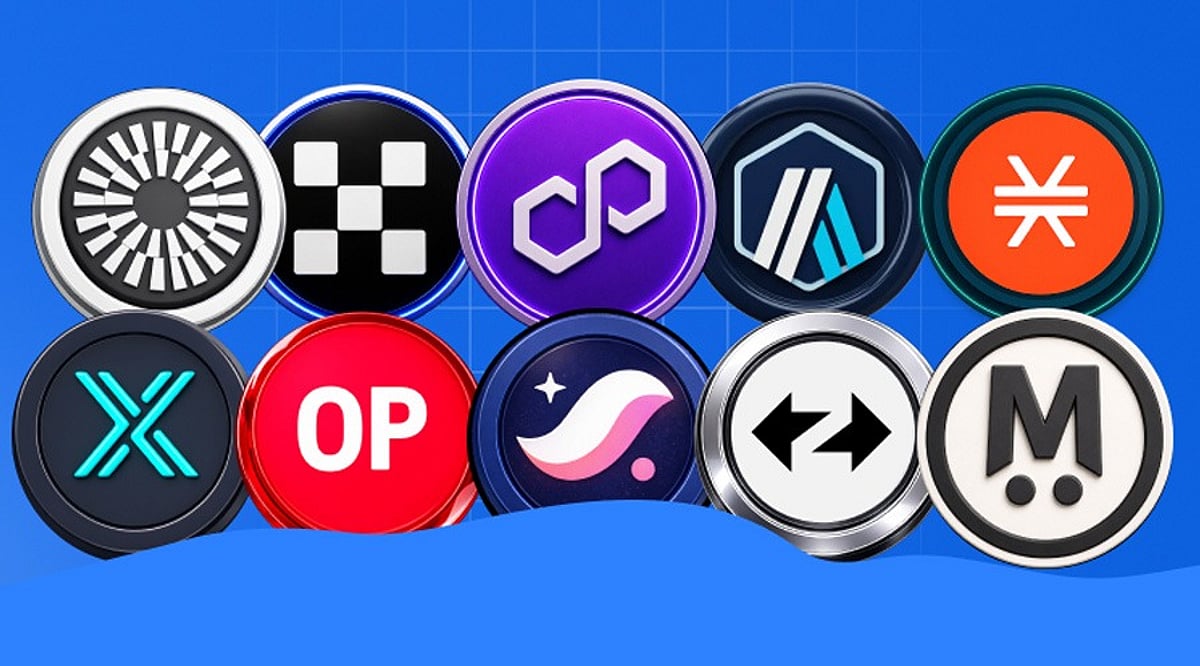
    Ethereum remains the dominant blockchain, but high fees and slower transaction speeds during peak usage remain challenges. Layer-2 networks address these issues by processing transactions off the main chain and posting final data back for security. This approach lowers costs, boosts speed, and supports mass adoption. In July 2026, Layer-2 projects continue to be one of the strongest segments in crypto, fueled by steady growth in decentralized finance, gaming, artificial intelligence, and tokenized real-world assets. Here are the top 10 Layer-2 cryptocurrencies to watch.

    Arbitrum (ARB)

    Arbitrum holds the top spot among Ethereum Layer-2 networks, thanks to its vast DeFi ecosystem and deep liquidity. Major decentralized exchanges, lending platforms, and perpetual trading protocols operate on Arbitrum. The network also supports Layer-3 development through Arbitrum Orbit, opening new opportunities for builders. Strong institutional interest and an active community add to its value. Despite growing competition, Arbitrum remains one of the most important Layer-2 projects in July 2026.

    Optimism (OP)

    Optimism has expanded well beyond a single Layer-2 chain. Its Superchain vision has attracted multiple networks using the OP Stack, including Coinbase’s Base. This shared technology improves cross-chain compatibility and speeds up development. Revenue sharing between connected chains adds another advantage. As more projects join the Superchain, Optimism continues to strengthen its position as a leading Ethereum scaling solution.

    Starknet (STRK)

    Starknet has built its reputation on advanced zero-knowledge technology. Using STARK proofs, it delivers strong security with excellent scalability. Developers benefit from the Cairo programming language, which supports sophisticated blockchain applications. The platform continues to attract DeFi projects, gaming apps, and AI initiatives, placing Starknet among the top Layer-2 networks for long-term growth.

    Polygon (POL)

    Polygon remains one of the most recognized names in blockchain. It has shifted focus toward an ecosystem of connected zero-knowledge chains via its AggLayer vision. Large companies and financial institutions continue to explore Polygon due to its reliable infrastructure and enterprise partnerships. Growth in tokenized real-world assets also supports the network. This combination of business adoption and technical development keeps Polygon near the top of the Layer-2 market.

    Mantle (MNT)

    Mantle has gained attention for its strong treasury and focus on institutional DeFi. The network supports liquid staking, yield products, and other financial services that appeal to developers and investors. A well-funded ecosystem enables Mantle to support new applications through grants and incentives. These factors help it stand out among newer Layer-2 platforms.

    Immutable (IMX)

    Immutable has become a leading blockchain platform for gaming and digital collectibles. The network removes gas fees for many player transactions, creating a smoother gaming experience. Major game developers continue to choose Immutable for its reliable infrastructure and NFT support. New game releases and wider blockchain gaming adoption could provide fresh momentum in the second half of 2026.

    zkSync (ZK)

    zkSync is gaining ground in the zero-knowledge Layer-2 space, focusing on consumer applications with fast, low-cost transactions. Native account abstraction improves wallet usability. The project is attracting DeFi projects, payment systems, and social applications to its ecosystem. These advancements make zkSync one of the emerging leaders among Layer-2 projects.

    Metis (METIS)

    Metis takes a different approach with decentralized sequencers, reducing reliance on a single operator. The project is also attracting interest in AI infrastructure. Enterprise tools and lower centralization risks provide additional appeal. These unique features help Metis carve out a distinct position in the competitive Layer-2 market.

    Loopring (LRC)

    Loopring remains one of the earliest zero-knowledge rollup projects. The network focuses on secure payments, decentralized exchanges, and digital wallets. Although newer projects receive more attention, Loopring continues to offer reliable, proven technology. Its long history and stable ecosystem make it an important Layer-2 network to follow.

    Fuel (FUEL)

    Fuel has emerged as one of the most promising modular execution layers in 2026. It supports parallel transaction execution, enabling better performance than many traditional blockchain designs. Developers are showing growing interest in its modern virtual machine and flexible architecture. As the ecosystem expands, Fuel could become a major name in Ethereum scaling.

    Final Thoughts

    Layer-2 technology continues to play a crucial role in the cryptocurrency market as of July 2026. The growing popularity of DeFi, blockchain gaming, enterprise applications, AI, and tokenized real-world assets is driving adoption of Layer-2 solutions. Projects like Arbitrum, Optimism, Starknet, Polygon, Mantle, Immutable, zkSync, Metis, Loopring, and Fuel each contribute uniquely to Ethereum’s future. All of them have strong ecosystems, experienced developer communities, and ongoing technological advances.

    Frequently Asked Questions

    What are Layer-2 cryptocurrencies?

    They are blockchain networks built on Ethereum that improve speed, lower transaction costs, and increase scalability while relying on Ethereum’s security.

    Why are Layer-2 projects important in 2026?

    They help Ethereum handle growing demand from DeFi, gaming, AI applications, and tokenized real-world assets without high fees or network congestion.

    Which Layer-2 projects are leading the market?

    Arbitrum, Optimism, Starknet, Polygon, Mantle, Immutable, zkSync, Metis, Loopring, and Fuel are among the top Layer-2 ecosystems to watch.

    What is the difference between optimistic and zero-knowledge rollups?

    Optimistic rollups assume transactions are valid unless challenged, while zero-knowledge rollups use cryptographic proofs to verify transactions before finalization.

    Are Layer-2 cryptocurrencies good long-term investments?

    They have strong growth potential by increasing Ethereum adoption, but like all cryptocurrencies, they carry market risks and require careful research before investing.

  • Top 10 Crypto Swap Platforms to Watch in July 2026

    Top 10 Crypto Swap Platforms to Watch in July 2026

    Crypto swaps have become one of the easiest ways to exchange digital assets. Instead of sending funds to a centralized exchange, users can connect a wallet and trade directly through a decentralized platform. This process saves time, gives users full control of their assets, and opens access to thousands of cryptocurrencies across different blockchain networks.

    By July 2026, many swap platforms offer much more than simple token exchanges. They help users find better prices, reduce trading costs, protect against common attacks, and even move assets between different blockchains. However, each platform serves a different purpose. Some focus on the lowest fees, while others deliver better security or stronger cross-chain support.

    Here are the ten best crypto swap platforms in July 2026 and what makes each one stand out.

    Uniswap Leads the Market

    Uniswap continues to hold the top position among crypto swap platforms. It remains the first choice for millions of users because of its deep liquidity and huge collection of supported tokens. The platform works on Ethereum as well as major Layer 2 networks, which gives users more flexibility and lower costs compared to the Ethereum main network. Its latest improvements make trades smoother and more efficient. Whether someone wants to exchange popular cryptocurrencies or newly launched tokens, Uniswap usually offers enough liquidity to complete the trade without major price changes. The only drawback appears during periods of heavy Ethereum network traffic, when gas fees can become expensive.

    1inch Finds Better Prices

    1inch has built its reputation as one of the best DEX aggregators in the crypto market. Instead of completing a trade on one exchange, it searches across many decentralized exchanges and selects the most cost-effective route. This smart routing system often helps users receive better prices while reducing slippage. It also includes protection against Maximal Extractable Value (MEV), which can affect trade quality. Although the interface offers many advanced options, experienced traders appreciate the extra control and price efficiency.

    CoW Swap Focuses on Trade Protection

    CoW Swap takes a different approach from most swap platforms. Rather than sending every trade directly to the blockchain, it groups multiple orders together through batch auctions. This process helps reduce front-running and sandwich attacks, two common problems in decentralized finance. Large traders often choose CoW Swap because of this extra protection. While it may not support every token pair at every moment, the platform delivers reliable trade execution with strong security features.

    Jupiter Rules the Solana Ecosystem

    Jupiter has become the leading swap platform on the Solana blockchain. It connects users with the best liquidity across many Solana-based decentralized exchanges and completes trades within seconds. The platform also keeps transaction fees extremely low, which makes it attractive for both small and large trades. Anyone who mainly uses Solana-based assets will find Jupiter one of the fastest and most efficient choices available today.

    PancakeSwap Offers Low-Cost Trading

    PancakeSwap remains the biggest decentralized exchange on BNB Chain. Over time, it has expanded to support Ethereum, Base, Arbitrum, and several other blockchain networks. The platform combines token swaps with staking, yield farming, and perpetual trading, which creates a complete DeFi ecosystem. Low transaction fees continue to attract users, especially those who want affordable trading. Liquidity may vary on some smaller networks, but PancakeSwap stays among the strongest platforms in the market.

    ParaSwap Delivers Smart Trade Execution

    ParaSwap focuses on efficient trade execution through smart order routing. Like other aggregators, it compares prices across multiple liquidity sources before choosing the best route for each transaction. This feature becomes especially useful for larger trades where even small price differences matter. Developers also value ParaSwap because of its strong API support, which allows many decentralized applications to integrate its trading services. Although its community remains smaller than 1inch, the platform continues to earn trust among advanced users.

    LI.FI Simplifies Cross-Chain Swaps

    LI.FI has become one of the top choices for users who need to move assets between different blockchain networks. Instead of using separate bridge and swap services, LI.FI combines both tasks into one transaction. This simple process saves time and reduces unnecessary steps. The platform supports dozens of blockchain networks, which gives users access to a wide range of crypto ecosystems. Since cross-chain transfers depend on bridges, users should always understand the extra risks that come with moving assets across networks.

    SushiSwap Stays a Reliable Choice

    SushiSwap has remained an important part of decentralized finance for several years. The platform now supports more than 25 blockchain networks, which gives users access to a large selection of cryptocurrencies. Its community-led governance model continues to attract loyal supporters who value decentralization. Although liquidity may not match Uniswap on every network, SushiSwap still provides dependable trading across many popular blockchains.

    Curve Finance Excels at Stablecoin Swaps

    Curve Finance serves a specialized role in the crypto market. Instead of focusing on every type of cryptocurrency, it concentrates on stablecoins and liquid staking tokens. This design allows Curve to deliver extremely low slippage, even during large transactions. Many DeFi users depend on Curve whenever they need to exchange stable assets while keeping price changes to a minimum. For volatile cryptocurrencies, however, other platforms usually offer better results.

    THORChain Connects Native Assets

    THORChain stands out because it allows users to swap native cryptocurrencies without wrapped tokens. This means Bitcoin, Ethereum, BNB, Cosmos, and several other assets can move directly between blockchains. This feature removes the need for wrapped versions of popular coins and gives users greater control over their assets. Cross-chain swaps can become more complex than standard token exchanges, and liquidity may change depending on the asset. Even so, THORChain remains one of the strongest options for decentralized cross-chain trading.

    Why This Matters

    Crypto swap platforms have become essential for anyone participating in decentralized finance, enabling fast, secure, and self-custodied asset exchanges without intermediaries. Choosing the right platform can reduce costs, improve execution prices, strengthen security, and simplify cross-chain transactions, helping traders and investors maximize efficiency while minimizing risks in an increasingly competitive crypto ecosystem.

    Final Thoughts

    In July 2026, the crypto swap sector had grown increasingly sophisticated. Digital currency trading platforms now cater to market segments, focusing on their strengths, instead of trying to meet every customer’s needs, as was the trend in the past. Uniswap remains the leader with its ample liquidity and extensive token availability, while 1inch helps optimize trading prices. CoW Swap provides protection from MEV attacks, while Jupiter is the leader in the Solana ecosystem, PancakeSwap offers low fees for crypto exchanges on BNB Chain, and ParaSwap ensures efficient crypto swap execution for big transactions.

    LI.FI and THORChain are the best solutions for those looking for cross-chain transactions. SushiSwap is a stable multi-chain solution that is great for any transaction, while Curve Finance continues to be the number one provider of stablecoin swaps with very low slippage rates.

    Choosing the right platform is essential for better trading results. While some traders want to get the most profitable price, others prefer enhanced security, lower transaction fees, or more chains supported.

    FAQs

    1. What is a crypto swap platform?

    A crypto swap platform lets users exchange one cryptocurrency for another directly from their wallet without relying on a centralized exchange.

    2. Which crypto swap platform is best in July 2026?

    Uniswap ranks as the best overall platform because of its deep liquidity, wide token support, and reliable trading experience.

    3. Which platform offers the best cross-chain swaps?

    LI.FI and THORChain are among the best choices for users who want to swap assets across different blockchain networks.

    4. Which platform is best for stablecoin swaps?

    Curve Finance is the leading option for stablecoin swaps because it delivers very low slippage, even for large transactions.

    5. Is it safe to use decentralized crypto swap platforms?

    Well-known platforms such as Uniswap, 1inch, PancakeSwap, and Curve Finance have strong reputations, but users should always verify wallet connections and review transaction details before confirming any swap.

  • Altcoin Market Rebounds: ONDO and BANK Surge on CLARITY Act Optimism

    Altcoin Market Rebounds: ONDO and BANK Surge on CLARITY Act Optimism

    The cryptocurrency market has recovered from several weeks of sluggish price action, with Bitcoin holding above key support levels and altcoins staging a strong rebound. Investor sentiment has improved amid expectations surrounding the CLARITY Act, a proposed U.S. bill aimed at establishing clear regulations for digital assets. Among the top performers are Ondo Finance (ONDO) and Lorenzo Protocol (BANK), both of which have attracted fresh capital due to strong fundamentals and renewed institutional interest.

    Key Takeaways

    • ONDO has gained momentum through its focus on tokenized real-world assets.
    • BANK has benefited from renewed investor interest in DeFi projects.
    • CLARITY Act expectations have boosted confidence across the crypto market.

    CLARITY Act Brings New Confidence

    The CLARITY Act is widely seen as a catalyst for the current market recovery. The legislation seeks to define the roles of regulatory agencies and create unambiguous rules for digital assets in the United States. Although the bill has not yet been signed into law, recent congressional discussions have fueled optimism among investors, who believe that clear guidelines will encourage broader participation from businesses and financial institutions.

    ONDO Stands Out Among RWA Projects

    Ondo Finance has emerged as one of the strongest performers during this rebound. The project specializes in tokenized real-world assets (RWAs), including U.S. Treasury products and other yield-bearing instruments. The RWA sector has grown rapidly as traditional financial firms explore blockchain technology for faster settlements and greater accessibility. At the time of writing, ONDO is trading around $1.40, with a market capitalization exceeding $4 billion—placing it among the largest projects in the real-world asset space. Daily trading volume has also risen as more investors enter the market. The recent price move has pushed ONDO above a key resistance level, and traders are watching to see if it can maintain its upward trajectory.

    Institutional Interest Supports ONDO

    Large-scale financial companies have increasingly turned to blockchain technology to enhance efficiency, reduce costs, and improve transparency. Ondo Finance has developed products that bridge traditional finance with blockchain, earning trust from institutional investors. Unlike purely speculative cryptocurrencies, ONDO’s focus on fundamentally sound applications makes it attractive during periods when investors prioritize quality over hype.

    BANK Records Strong Gains

    BANK has also delivered impressive returns in the latest rally. The token has gained momentum as investors return to promising decentralized finance (DeFi) projects. Higher trading activity and improved liquidity have supported its price growth. The positive mood across the crypto market has encouraged investors to look beyond Bitcoin and Ethereum for projects with higher growth potential, and BANK has emerged as a popular choice due to its expanding ecosystem and rising community interest.

    Bitcoin Creates Room for Altcoins

    Bitcoin has played a pivotal role in this recovery. After the world’s largest cryptocurrency found stability, traders began shifting capital into altcoins. Ethereum also posted steady gains, strengthening activity across the DeFi sector. This pattern has appeared in previous market cycles: Bitcoin moves first, then investors rotate into altcoins with strong narratives and solid development. This cycle, real-world asset projects and DeFi platforms have been the primary beneficiaries.

    Investors Stay Selective

    Despite the broad gains, experts do not believe a full altcoin season has begun. Money has flowed into a limited number of projects rather than the entire market. Investors continue to focus on cryptocurrencies with clear products, active development, and long-term potential. External factors such as economic conditions, interest rate decisions, geopolitical events, and future regulatory announcements remain influential. Many traders are therefore prioritizing quality over speculation.

    Why This Matters

    The recent rally in ONDO and BANK demonstrates that investors are paying closer attention to projects with real value and long-term potential. Clear crypto regulations could attract more institutional capital, strengthen market confidence, and support wider blockchain adoption. These developments may shape the next phase of growth across the digital asset industry.

    What Comes Next

    The next few months could be critical for the crypto industry. Progress on the CLARITY Act could further boost confidence and encourage institutional participation. Projects like ONDO, which already work closely with traditional financial products, stand to benefit. BANK could also attract more attention if interest in DeFi continues to grow. If favorable market conditions persist and regulatory clarity improves, both tokens could remain among the strongest performers in the current altcoin recovery.

    Frequently Asked Questions

    1. What is the CLARITY Act? The CLARITY Act is a proposed U.S. bill that aims to create clear regulations for digital assets and define the responsibilities of crypto regulators.
    2. Why has ONDO gained attention? ONDO has attracted investors because it focuses on tokenized real-world assets, including U.S. Treasury-backed financial products.
    3. Why is BANK rising? BANK has benefited from stronger interest in DeFi projects, improved market sentiment, and higher trading activity.
    4. What is driving the altcoin market recovery? Better Bitcoin stability, renewed investor confidence, and optimism about future crypto regulations have supported the latest rebound.
    5. Can the rally continue? Future gains will depend on broader market conditions, regulatory progress, institutional participation, and continued demand for high-quality crypto projects.

    Disclaimer: This article is for informational purposes only and does not constitute financial advice. Cryptocurrency investments carry risk. Always conduct your own research before making investment decisions.