Tag: DeFi

  • Leading Tokenized Real-World Asset (RWA) Platforms to Track in 2026

    Leading Tokenized Real-World Asset (RWA) Platforms to Track in 2026

    The tokenization of real-world assets (RWAs) is reshaping finance by bringing real estate, bonds, commodities, and other traditional assets onto the blockchain. As the RWA revolution accelerates, several platforms stand out for their innovation, compliance, and liquidity solutions. Below are the top tokenized RWA platforms to watch in 2026.

    Securitize

    Securitize is a leader in digital securities, enabling the tokenization of real-world assets while ensuring regulatory compliance. Its platform streamlines issuance and secondary trading for institutions.

    Ondo Finance

    Ondo Finance brings tokenized US Treasuries and institutional financial products to blockchain investors, offering yield-bearing assets with transparency and efficiency.

    Centrifuge

    Centrifuge connects real-world business assets with decentralized finance, allowing companies to unlock liquidity by tokenizing invoices, royalties, and other receivables.

    Polymesh

    Built specifically for regulated assets, Polymesh simplifies security token issuance and compliance, providing a purpose-built blockchain for financial instruments.

    MANTRA Chain

    MANTRA Chain focuses on institutional-grade infrastructure for tokenized real-world assets across global markets, emphasizing security and scalability.

    DigiShares

    DigiShares enables businesses to tokenize real estate, private equity, and investment funds efficiently, with a user-friendly platform for asset management.

    Brickken

    Brickken offers an easy-to-use platform for tokenizing business assets while automating compliance processes, making tokenization accessible to a wider audience.

    Backed Finance

    Backed Finance creates blockchain-based tokens backed by real-world financial securities, bridging traditional finance with decentralized ecosystems.

    These platforms are at the forefront of the RWA movement, driving adoption and innovation in 2026 and beyond.

  • Bitcoin ETFs See $68.99M Inflows, AFX Loses $24M in Bridge Exploit, Chainlink Whales Accumulate 14M LINK

    Bitcoin ETFs See $68.99M Inflows, AFX Loses $24M in Bridge Exploit, Chainlink Whales Accumulate 14M LINK

    Bitcoin ETF Inflows Surge Led by BlackRock’s IBIT

    Bitcoin spot ETFs recorded a combined net inflow of $68.99 million on July 22, 2026, according to SoSoValue. BlackRock’s IBIT led with $38.78 million in daily inflows, bringing its historical total to $60.81 billion. The Grayscale Bitcoin Mini Trust ETF ($BTC) followed with $37.88 million, while Grayscale’s GBTC saw the largest daily outflow of $38.30 million. The total net asset value of Bitcoin spot ETFs now stands at $80.36 billion, with a historical cumulative net inflow of $51.85 billion.

    AFX Trade Loses $24 Million in Cross-Chain Bridge Exploit

    Decentralized exchange AFX, operating on Arbitrum, reportedly lost $24.15 million in a hack targeting one of its cross-chain bridges. Security firm Blockaid and Web3 researcher SunSec indicated that compromised keys, rather than a smart contract bug, were likely responsible. Arbitrum’s native bridge was not compromised.

    Hyperliquid Open Interest Hits Record $11.51 Billion

    Hyperliquid’s total open interest reached $11.51 billion, the highest since the October 10, 2025 market correction. The platform’s native token HYPE is up approximately 34% since the crash. Growth is driven by real-world asset (RWA) perpetuals, with daily open interest under HIP-3 at $3.61 billion. HIP-3 allows anyone staking 500,000 HYPE to deploy a perp market without core team approval.

    Injective Launches Mint for Tokenized Real-World Assets

    Injective introduced Mint, a platform to simplify the issuance of tokenized RWAs such as equities, bonds, and ETFs. It integrates custody, compliance, and permission management. The protocol is in private alpha and has already processed over $6.8 billion in cumulative volume with $1.1 billion in native issuance.

    Chainlink Holds $8.54 as Whales Accumulate 14 Million LINK

    Chainlink (LINK) traded near $8.54, down 0.6% in 24 hours, with a market cap of $6.39 billion and volume of $175.24 million. Onchain data from analyst Ali Martinez shows whales accumulated over 14 million LINK in less than a month, with more than 20 transactions over $1 million recorded in a single session.

    FAQs

    1. How much flowed into Bitcoin spot ETFs? $68.99 million net inflow, led by BlackRock’s IBIT.
    2. What happened in the AFX exploit? $24.15 million lost via a cross-chain bridge hack; compromised keys suspected.
    3. Why is Hyperliquid attracting attention? Record $11.51 billion open interest, driven by RWA perpetuals.
    4. What is Injective Mint? A platform for tokenizing real-world assets with custody and compliance.
    5. Why are traders watching Chainlink? Whales accumulated 14 million LINK, indicating large investor interest.
  • Solana Rebounds to $78: Can SOL Break the $80 Resistance Level?

    Solana Rebounds to $78: Can SOL Break the $80 Resistance Level?

    Solana (SOL) has recovered to the $78 price level, drawing renewed attention from cryptocurrency investors. After a brief period of weak price action, buyers have returned with increased confidence, and traders are now watching the critical $80 resistance level. The recovery reflects not only improved market sentiment but also sustained belief in Solana’s long-term potential, aided by gains in Bitcoin and Ethereum.

    Why the $80 Level Matters

    The $80 mark is the key short-term target for SOL. A decisive break above this level could trigger fresh buying interest, with analysts eyeing the next resistance zone between $85 and $90. However, if buyers fail to push the price above $80, SOL may retest support in the $72–$75 range before another attempt. Rising trading volume during the recovery indicates growing market participation.

    Solana’s Network Growth Continues

    Beyond price, Solana’s blockchain is experiencing robust growth. More developers are building projects on the network, and user adoption is increasing across payments, decentralized finance (DeFi), token creation, and digital assets. The Solana Foundation continues to enhance developer tools, network security, and scalability, enabling the blockchain to handle higher activity without sacrificing speed.

    Stablecoin Growth Shows Real Demand

    Stablecoins are a vital part of Solana’s ecosystem, with the network now hosting over $15 billion in stablecoin supply, led by USDC. This large asset base demonstrates user trust for real transactions, powering lending platforms, decentralized exchanges, and payment systems.

    DeFi Continues to Expand

    Solana ranks among the largest blockchains by decentralized exchange trading volume and supports billions in total value locked (TVL). Low transaction fees and fast settlement attract both individual users and businesses seeking quick, affordable financial operations.

    Real-World Asset Tokenization Gains Traction

    Financial companies are exploring Solana for tokenizing real-world assets (RWAs) such as government securities and private credit. The network’s speed and low costs make it an attractive platform for traditional finance moving into digital assets.

    Institutional Interest Rises

    Large investors are increasingly including SOL in crypto investment products and blockchain indexes. Financial institutions study Solana for payment systems and asset tokenization, valuing its technology beyond token price. This institutional interest adds long-term support.

    Fast Transactions Give Solana an Edge

    Solana processes hundreds of transactions per second with minimal fees, making it ideal for decentralized exchanges, payments, gaming, and consumer apps. Ongoing infrastructure upgrades improve validator software, developer tools, and network reliability.

    Can SOL Move Above $80?

    Multiple catalysts could help SOL break the $80 resistance: continued Bitcoin strength, increasing blockchain activity, higher stablecoin inflows, growing institutional interest, and rising DeFi adoption. However, investors should monitor potential profit-taking near resistance, market volatility, and regulatory developments.

    Why This Matters

    Solana’s price recovery reflects more than short-term excitement. Strong ecosystem growth, rising stablecoin activity, and higher institutional interest point to real adoption. If these trends persist, SOL could attract more investors, strengthen its position among leading blockchains, and boost broader crypto market confidence.

    Final Thoughts

    Solana continues to attract users and financial interest. With over $15 billion in stablecoins, expanding DeFi, and growing real-world asset tokenization, the blockchain’s fundamentals are solid. If buyers push SOL higher and ecosystem growth keeps pace, Solana may gain enough momentum for a sustained rally.

    FAQs

    1. Why is the $80 level important for Solana?
    The $80 level is a major resistance zone. A breakout above it could trigger stronger buying momentum.
    2. What supports Solana’s recent recovery?
    Growing ecosystem activity, higher stablecoin supply, stronger DeFi usage, and improving market sentiment.
    3. How much stablecoin supply does Solana hold?
    Solana currently hosts more than $15 billion in stablecoin supply, led by USDC.
    4. Why are institutions interested in Solana?
    Institutions value Solana for its fast transaction speeds, low fees, and growing role in tokenization and blockchain finance.
    5. Can SOL reach higher prices after $80?
    If SOL breaks and holds above $80, analysts believe the next resistance area could fall between $85 and $90, though market conditions remain important.
  • Ethereum Staking Hits Record 39 Million ETH, Tightening Supply and Boosting Network Security

    Ethereum Staking Hits Record 39 Million ETH, Tightening Supply and Boosting Network Security

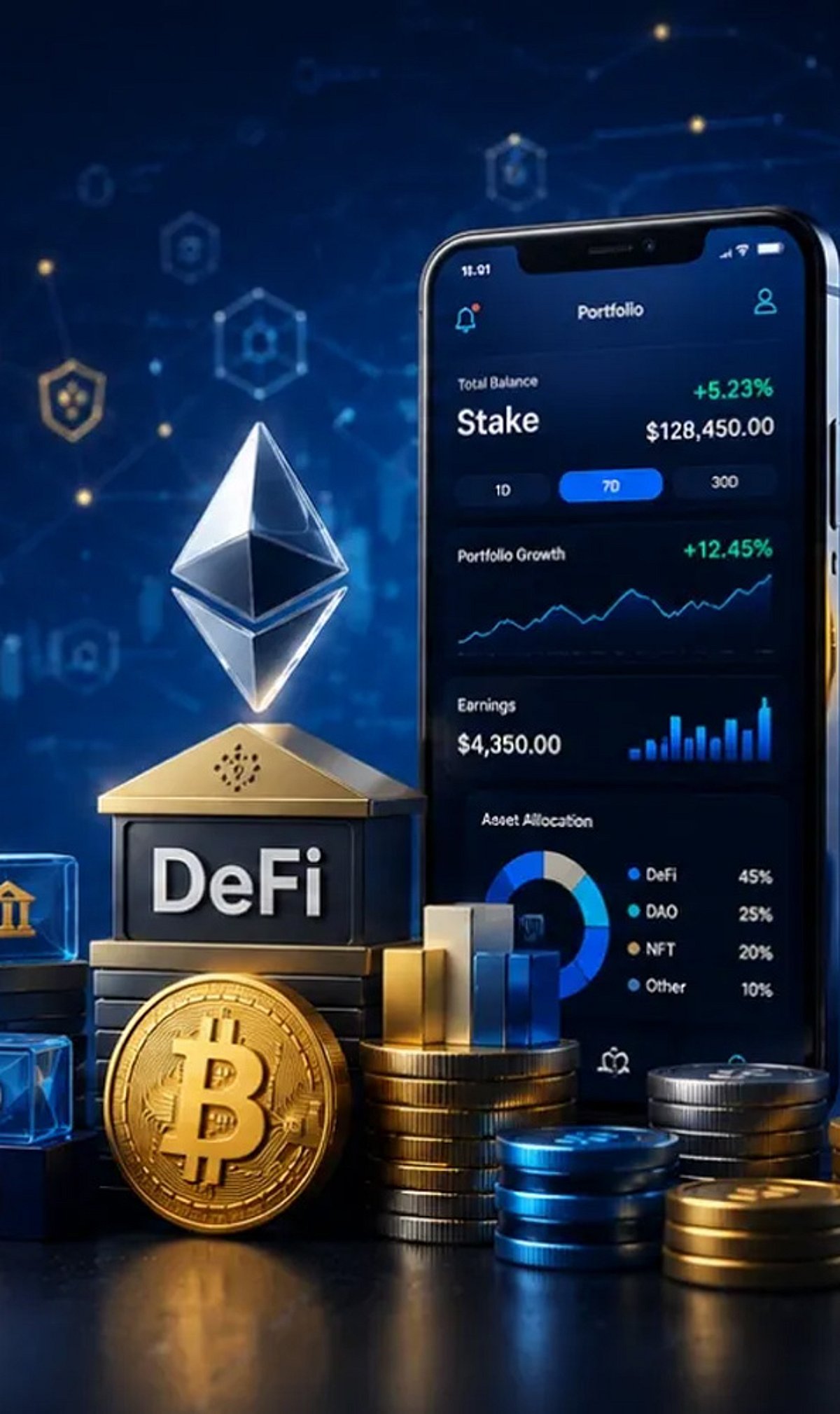
    Ethereum has reached a historic milestone as the amount of ETH locked in staking hits an all-time high. Fresh on-chain data reveals that nearly 39 million ETH — over 32% of the total circulating supply — is now securing the network. This surge in staking activity reflects growing investor confidence and is creating a significant supply squeeze that could support future price gains.

    Key Takeaways

    • More than 39 million ETH (over 32% of total supply) is now staked.
    • Lower exchange reserves and ongoing token burning continue to tighten Ethereum’s available supply.
    • Rising institutional participation signals strong long-term confidence in Ethereum.

    Record Staking Levels

    Just a few months ago, the staking ratio stood near 30%. Since then, millions of additional ETH have entered validator contracts. The steady climb shows that long-term investors view Ethereum as an asset with future growth potential rather than a short-term trade. Despite price volatility across the broader crypto market, commitment to staking remains high.

    Supply Squeeze Intensifies

    Once ETH is staked, it leaves the active market and cannot be freely traded unless the owner exits the validator system. As more coins move into staking, the amount available on exchanges shrinks. This lower supply could become a critical factor if buying demand increases. Many market analysts believe this supply shortage could support Ethereum’s price over time, especially if investor interest continues to grow.

    Strong Validator Demand

    The demand to join Ethereum’s validator network remains robust. More than 3 million ETH is currently waiting in the validator entry queue, meaning thousands of investors are willing to stake despite a waiting period of several weeks. At the same time, the exit queue is very small, indicating that most participants are committed to staking rather than moving their ETH back to the market.

    Institutional Adoption Accelerates

    Large financial institutions are a key driver behind this record. Investment firms, digital asset management companies, crypto treasury firms, and professional staking providers continue to expand their Ethereum reserves. Rather than simply holding ETH, many institutions now stake their coins to earn rewards while awaiting long-term price appreciation. This influx of institutional funds further reduces the amount of liquid ETH available for trading.

    EIP-1559 Burn Mechanism Adds Pressure

    Ethereum’s fee-burning mechanism, introduced with EIP-1559, permanently removes a portion of every transaction fee from circulation. During periods of high network activity, the amount of ETH burned can match or exceed the number of newly minted coins. When record staking combines with ongoing token burning, the available supply becomes even tighter.

    Exchange Balances Keep Falling

    The amount of ETH held on exchanges has continued to decline as investors move coins into staking platforms or private wallets. Lower exchange balances generally reduce immediate selling pressure, since fewer coins are ready for quick sales. While this alone doesn’t guarantee higher prices, it strengthens the overall supply squeeze. If demand rises while exchange reserves remain low, price movements could become much more pronounced.

    Liquid Staking Makes Participation Easier

    The introduction of liquid staking technology has been a major catalyst for the surge in staking. Liquid staking services allow investors to stake ETH without losing access to their funds. After staking, they receive liquid staked tokens that represent their original ETH, enabling continued use in DeFi and other applications.

    Network Upgrades Improve Efficiency

    Recent Ethereum upgrades, including the Pectra upgrade, have introduced technical improvements that simplify validator operations and allow larger validator balances. These changes reduce operational complexity for large staking providers while maintaining network security. Better infrastructure makes Ethereum more attractive for institutions managing significant capital, supporting further growth in staking participation.

    What This Means for Ethereum’s Future

    With over 32% of Ethereum’s total supply locked in staking, liquid ETH on exchanges is hitting historic lows. As institutional adoption and tokenization demand grow, this structural supply squeeze could significantly amplify future upward price movements. Short-term prices will still depend on broader economic conditions and overall crypto sentiment, but the long-term supply picture continues to tighten. If demand rises through exchange-traded funds, decentralized finance, tokenization projects, or corporate treasury purchases, the limited supply of available ETH could place additional upward pressure on prices.

    Ethereum now stands in a stronger position than at any previous point in its proof-of-stake era. Record staking participation not only improves network security but also removes millions of coins from active circulation. As this trend continues, Ethereum’s shrinking liquid supply may become one of the most important factors shaping its future market performance.

    Frequently Asked Questions

    How much ETH is currently staked?

    Nearly 39 million ETH, representing more than 32% of Ethereum’s circulating supply, is currently staked.

    What is an Ethereum supply squeeze?

    A supply squeeze happens when less ETH remains available for trading as more coins are locked in staking or removed from circulation.

    Why are institutions staking Ethereum?

    Institutions stake ETH to earn staking rewards while holding the asset for potential long-term price appreciation.

    How does Ethereum reduce its supply?

    Ethereum burns a portion of every transaction fee through the EIP-1559 mechanism, permanently removing ETH from circulation.

    Could higher staking affect ETH prices?

    If demand continues to increase while available supply remains limited, the supply squeeze could support higher ETH prices over time.

    Disclaimer: This article is for informational purposes only and does not constitute financial advice. Cryptocurrency investments carry risk. Always do your own research before making investment decisions.

  • Solana (SOL) Long-Term Price Forecast: Scenarios for 2030 and Beyond

    Solana (SOL) Long-Term Price Forecast: Scenarios for 2030 and Beyond

    Solana remains one of the fastest-growing Layer-1 blockchains, but its long-term price outlook is far from certain. Forecasts for SOL by 2030 range from around $90–$300 in cautious scenarios to over $2,000 in highly bullish cases. The outcome will depend on adoption, regulation, and overall crypto market growth.

    Institutional interest continues to strengthen Solana’s investment case. Spot Solana ETF inflows have crossed $1.1 billion, while major financial firms are exploring Solana-based products. Growing adoption by traditional institutions could significantly increase long-term demand for the SOL token.

    Technology remains one of Solana’s biggest advantages. Upgrades like Alpenglow, Firedancer, and future scaling improvements aim to boost speed, reduce latency, and improve network reliability. These innovations could make Solana an attractive platform for payments, DeFi, tokenized assets, and high-frequency trading.

    Real-world asset tokenization is becoming another major growth driver. Tokenized assets on Solana have reached record highs, while companies including Visa, Franklin Templeton, and Société Générale have explored the network for payments and digital asset settlement. Wider enterprise adoption could support higher SOL valuations over time.

    Despite its strengths, Solana faces serious challenges. Ethereum still leads decentralized finance with a much larger ecosystem and total value locked. Solana must also overcome concerns about past network outages, execution risks, and regulatory uncertainty to maintain long-term investor confidence.

    Analysts suggest thinking about Solana in scenarios rather than one fixed price target. A cautious outlook places SOL between $90 and $300 by 2030, while a moderate case sees several hundred dollars through steady ecosystem growth. A bullish scenario above $1,000 would likely require mass stablecoin adoption, expanding institutional investment, and a strong crypto bull market.

    Looking beyond 2030, forecasts become even wider. Some experts see SOL reaching $2,000–$4,000 by 2036 if Solana becomes a key layer for global tokenized finance, while bearish projections remain below $500 if competition, regulation, or adoption disappoints. As with all cryptocurrencies, long-term returns remain highly uncertain and volatile.

  • Best Decentralized Crypto Lending Platforms to Watch in 2026

    Best Decentralized Crypto Lending Platforms to Watch in 2026

    The decentralized finance (DeFi) ecosystem continues to evolve, and crypto lending platforms are at the forefront of this revolution. In 2026, several protocols stand out for their innovative approaches to borrowing, lending, and earning rewards. Here are the top decentralized crypto lending platforms reshaping the landscape.

    Aave

    As the largest DeFi lending protocol, Aave offers deep liquidity across multiple assets and flexible borrowing options, including flash loans and variable interest rates.

    Morpho

    Morpho improves lending efficiency by directly matching borrowers and lenders, reducing reliance on liquidity pools and optimizing interest rates for both parties.

    Spark Protocol

    Backed by MakerDAO, Spark Protocol focuses on stablecoin lending and low-risk yields, making it a go-to platform for conservative DeFi participants.

    Compound

    A pioneer in the space, Compound allows users to earn passive interest on their crypto assets by supplying liquidity to algorithmic money markets.

    Venus Protocol

    Popular on BNB Chain, Venus offers lending, borrowing, and synthetic stablecoin minting, providing a comprehensive DeFi experience within the Binance ecosystem.

    Radiant Capital

    Radiant Capital enables cross-chain lending, connecting multiple blockchain ecosystems and allowing users to borrow and lend assets seamlessly across networks.

    Euler Finance

    Euler Finance introduces advanced lending markets with customizable risk management, giving users more control over their exposure and collateral requirements.

    Liquity

    Liquity offers zero-interest borrowing backed by Ethereum collateral, providing a unique value proposition for users seeking capital efficiency without ongoing interest costs.

    These platforms exemplify the innovation driving DeFi lending in 2026, offering users diverse options for earning yield, accessing liquidity, and managing risk in a decentralized manner.

  • UK Delays DeFi Capital Gains Tax Until 2027: What Investors Need to Know

    UK Delays DeFi Capital Gains Tax Until 2027: What Investors Need to Know

    The United Kingdom has announced a major reform to its cryptocurrency tax framework, deferring Capital Gains Tax (CGT) on qualifying decentralized finance (DeFi) lending and liquidity pool transactions until April 6, 2027. The move, unveiled by HM Revenue & Customs (HMRC), aims to simplify reporting and align taxation with actual economic gains rather than technical transfers.

    Under the new rules, many crypto lending arrangements and automated market maker (AMM) liquidity pools will receive “No Gain, No Loss” treatment. Investors will generally only face CGT when they make a genuine economic disposal of their assets. This addresses a long-standing issue where depositing crypto into lending protocols or liquidity pools could trigger a taxable event even if the investor retained economic exposure.

    New Rules Target Technical Transfers

    Previously, moving cryptoassets between wallets and protocols could create complex record-keeping requirements and potential tax liabilities before any real profit was realized. The revised framework focuses on changes in economic ownership rather than technical transactions. HMRC estimates that approximately 700,000 individuals could benefit from the reforms.

    The legislation creates separate rules for single-asset lending, crypto borrowing, and AMM liquidity pools. Each category reflects different DeFi activities:

    • Lending: Investors can lend qualifying cryptoassets without immediately triggering CGT.
    • Borrowing: Rules clarify how the tax system handles borrowed assets and supporting collateral.
    • Liquidity Pools: Providers generally receive No Gain, No Loss treatment when depositing and withdrawing assets, provided they recover substantially the same assets originally supplied. Any difference between deposited and withdrawn assets will normally create a taxable gain or loss.

    HMRC Seeks Simpler DeFi Tax Reporting

    HMRC said the reforms aim to make cryptoasset taxation fairer and easier to administer. The changes follow several years of industry engagement, including consultations launched in 2022. Industry stakeholders had argued that existing guidance created excessive compliance duties and that technical transfers should not be taxed like conventional investment sales.

    The revised policy therefore connects taxation more closely with the commercial substance of blockchain transactions. Investors will still owe CGT when they ultimately realize genuine gains. The reforms are part of the UK’s wider digital asset strategy, which has covered tokenized securities, stablecoin regulation, and blockchain-based wholesale financial markets.

    Conclusion

    The UK crypto tax reform defers CGT on qualifying DeFi lending and liquidity pool transactions from April 2027. By taxing genuine economic disposals instead of technical transfers, HMRC aims to reduce the reporting burden for investors. Crypto users should review the eligibility rules before the framework takes effect.

  • Top Altcoins to Watch in July 2026: Beyond the Altcoin Season Slowdown

    Top Altcoins to Watch in July 2026: Beyond the Altcoin Season Slowdown

    Key Takeaways

    • Bitcoin dominance remains high, delaying a broad altcoin season.
    • AI, RWA, DeFi, and Layer-1 ecosystems continue to attract the strongest investor interest.
    • Ethereum, Solana, Chainlink, Sui, Ondo Finance, TAO, Render, Hyperliquid, Avalanche, and XRP are among the top projects to watch.

    As of July 2026, Bitcoin continues to dominate the cryptocurrency market, with many altcoins unable to match its recent performance. The long-anticipated altcoin season has yet to materialize. Experts note that Bitcoin dominance remains near 58–60%, while the Altcoin Season Index hovers around 30–35. A true altcoin season typically begins only when at least 75% of leading altcoins outperform Bitcoin over a 90-day period—a condition that has not been met. This suggests that most investors still favor Bitcoin over smaller cryptocurrencies. Market analysts believe the next rally may benefit only a select group of strong projects rather than the entire altcoin sector.

    Ethereum Holds Its Lead

    Ethereum continues to rank among the strongest altcoins despite the slow market. The blockchain supports decentralized finance (DeFi), stablecoins, and tokenized real-world assets. Its Layer-2 networks help lower transaction fees and improve speed. Large financial firms continue to choose Ethereum due to its trusted network and vast developer community. Although its price has lagged behind Bitcoin recently, Ethereum retains strong long-term value. Many experts believe it could be one of the biggest winners once market activity picks up.

    Solana Continues to Impress

    Solana has established a strong foothold through fast transaction speeds and low costs. It serves a growing variety of decentralized applications, including DeFi, NFT collectibles, blockchain gaming, and other user-facing services. New applications are constantly being built on Solana, fostering an ecosystem that thrives despite bearish sentiment. Institutions are also becoming more engaged with Solana, making it a highly discussed cryptocurrency heading into July 2026.

    Chainlink Benefits From Strong Demand

    Chainlink has become one of the most important infrastructure projects in blockchain. Its oracle system enables smart contracts to receive secure real-world data. The project also plays a key role in cross-chain communication and tokenized real-world assets. As banks and financial companies show greater interest in blockchain technology, demand for Chainlink’s services is likely to increase. Strong utility and widespread adoption continue to support its long-term outlook.

    Sui and Ondo Finance Stay Among Top Picks

    Sui has gained attention as one of the fastest-growing Layer-1 blockchains. The network has attracted many developers, blockchain games, and staking users. Strong ecosystem growth has helped Sui earn a place among leading altcoins this year. However, scheduled token unlocks may create short-term price pressure.

    Ondo Finance has become a major name in the real-world asset (RWA) sector. The platform offers tokenized Treasury products, bonds, and other financial assets. Since tokenized assets have become a hot trend in 2026, Ondo Finance continues to receive strong support from market analysts.

    AI Projects Keep Market Interest Alive

    Artificial intelligence remains one of the strongest themes in crypto. Bittensor (TAO) has attracted attention through its decentralized AI network that connects machine learning models with developers. Render has also become important by providing decentralized GPU power for AI, 3D graphics, and digital content creation. As AI technology expands across industries, both cryptocurrencies continue to attract investors seeking long-term opportunities beyond traditional blockchain projects.

    Hyperliquid, Avalanche, and XRP Stay Relevant

    Hyperliquid has emerged as one of the fastest-growing decentralized futures trading platforms. High trading volume and strong liquidity have helped the project gain popularity in DeFi.

    Avalanche remains an important blockchain focused on enterprise solutions, gaming, and custom blockchain networks. Many companies continue to test its technology for large-scale business use.

    XRP still holds a strong position due to its focus on cross-border payments. Financial institutions continue to explore its payment technology, while investors closely follow legal developments that may influence future adoption. Although price performance has been mixed, XRP remains among the largest cryptocurrencies by market cap.

    Strong Narratives Shape the Market

    In July 2026, the market is more selective than in prior cycles. Instead of a broad rally across hundreds of assets, capital is flowing into projects with tangible value and advanced technology. Areas that have outperformed—and are likely to continue if sentiment shifts—include artificial intelligence, tokenization of real-world assets, blockchain infrastructure, decentralized finance, and high-performance Layer-1 networks.

    Final Outlook

    July 2026 presents a cautious but promising outlook for altcoins. Bitcoin continues to dominate, yet several established projects stand out for their strong technology, active ecosystems, and practical use cases. Ethereum, Solana, Chainlink, Sui, Ondo Finance, Bittensor, Hyperliquid, Render, Avalanche, and XRP remain among the top cryptocurrencies to watch. A full altcoin season has not arrived, but these projects appear well-positioned to benefit if market conditions improve during the second half of the year.

    Frequently Asked Questions

    1. Why hasn’t the altcoin season started yet?

    Bitcoin dominance remains around 58–60%, and the Altcoin Season Index is well below the level typically associated with a broad altcoin rally.

    2. Which sectors are expected to lead the next crypto rally?

    Artificial intelligence (AI), real-world assets (RWA), DeFi, blockchain infrastructure, and high-performance Layer-1 networks are considered the strongest narratives.

    3. Why is Ethereum still a top altcoin?

    Ethereum continues to lead in DeFi, stablecoins, tokenized assets, and developer activity, making it one of the most established blockchain ecosystems.

    4. Which emerging altcoins are gaining momentum?

    Sui, Ondo Finance, Hyperliquid, Bittensor (TAO), and Render have attracted attention due to ecosystem growth, AI adoption, and real-world utility.

    5. Should investors expect all altcoins to rally together?

    Not necessarily. Current market conditions suggest capital is likely to favor fundamentally strong projects rather than the entire altcoin market.

  • Top MetaMask Alternatives for Crypto Users in 2026: Trust Wallet, Rabby, Phantom, and More

    Top MetaMask Alternatives for Crypto Users in 2026: Trust Wallet, Rabby, Phantom, and More

    MetaMask remains one of the most popular crypto wallets worldwide, with over 100 million users and support for Ethereum and EVM-compatible blockchains. However, the crypto landscape has expanded far beyond Ethereum, and many users now seek wallets that offer broader multi-chain support, stronger security, and smoother experiences. In 2026, wallets like Trust Wallet, Rabby, Phantom, Coinbase Wallet, Exodus, and Zengo provide compelling alternatives for managing digital assets across multiple networks, staking, NFTs, and DeFi.

    Why Many Crypto Users Choose Other Wallets

    The crypto ecosystem has diversified significantly. Leading blockchains such as Solana, Bitcoin, Base, Polygon, Avalanche, and BNB Chain now host thriving dApps and communities. Users increasingly hold assets across multiple chains, driving demand for wallets that natively support many networks without manual configuration. Modern wallets also offer improved mobile apps, lower swap fees, better recovery options, and enhanced scam protection, making them attractive for both beginners and experienced users.

    Key Takeaways

    • Trust Wallet excels in multi-chain asset management with support for over 100 blockchains.
    • Rabby and Zengo prioritize advanced security via transaction protection and seedless recovery.
    • Phantom, Exodus, and Coinbase Wallet deliver smooth experiences for NFTs, DeFi, and portfolio management.

    Top MetaMask Alternatives

    Trust Wallet

    Trust Wallet supports more than 100 blockchains and millions of cryptocurrencies, allowing users to manage diverse assets from one app. It includes staking, NFT storage, token swaps, and direct dApp access. Its intuitive design makes it especially beginner-friendly, while supporting Ethereum, BNB Chain, Solana, and many other networks.

    Rabby Wallet

    Rabby Wallet is popular among DeFi users for its smart security features, including automatic network detection. When you open a dApp, Rabby switches to the correct blockchain without manual intervention. It also checks every transaction for risks before approval and supports hardware wallets, making it a trusted choice for frequent DeFi interactions.

    Phantom Wallet

    Originally built for Solana, Phantom has expanded to support Ethereum, Bitcoin, Polygon, Base, and more. Its clean interface displays NFT collections in an organized gallery, and token swaps are straightforward. Phantom is favored by both new and experienced crypto users for its simplicity and performance.

    Coinbase Wallet

    Coinbase Wallet gives users full control over their digital assets without requiring funds on the Coinbase exchange. It supports thousands of cryptocurrencies, connects easily with dApps, and offers NFT storage and simple recovery options. Hardware wallet support adds extra security for long-term holders.

    Exodus Wallet

    Exodus focuses on simplicity and portfolio management. It supports hundreds of cryptocurrencies on desktop and mobile, with an inbuilt exchange and portfolio charts. Exodus is also compatible with Ledger hardware wallets, providing an extra layer of safety.

    Zengo Wallet

    Zengo uses Multi-Party Computation (MPC) technology, eliminating the traditional seed phrase and reducing the risk of loss or theft. It offers biometric login, NFT storage, and crypto purchases, appealing to users who want robust protection without the burden of managing recovery phrases.

    Latest Wallet Trends in 2026

    The crypto wallet market is booming, with innovations in smart wallets, passkey authentication, gas abstraction, and seamless cross-chain transactions. MetaMask continues to expand its ecosystem with products like the MetaMask Card and broader chain support. Meanwhile, other wallets focus on phishing protection, transaction previews, and scam detection to keep users safe.

    Final Thoughts

    Crypto wallets have evolved far beyond storage devices. They now integrate staking, NFTs, DeFi, token exchanges, and portfolio management into a single interface. While MetaMask remains a strong choice, alternatives like Trust Wallet, Rabby, Phantom, Coinbase Wallet, Exodus, and Zengo offer features tailored to modern crypto investors. The best wallet depends on your preferred blockchains, security needs, and intended crypto activities.

    FAQs

    1. Why are more users choosing MetaMask alternatives in 2026?
    Many users want better multi-chain support, stronger security, easier recovery, and built-in features like staking and cross-chain swaps.
    2. Which wallet is best for DeFi users?
    Rabby Wallet is a top choice thanks to automatic network detection, transaction previews, and enhanced security features.
    3. Which wallet is ideal for beginners?
    Trust Wallet and Coinbase Wallet offer intuitive interfaces that make crypto management simple for new users.
    4. Is MetaMask still a good wallet?
    Yes. MetaMask remains one of the leading self-custody wallets, especially for Ethereum and EVM-compatible blockchains.
    5. Which wallet offers the most unique security approach?
    Zengo uses Multi-Party Computation (MPC), eliminating traditional seed phrases while providing strong account protection.
  • Top 10 Cryptocurrencies Under $1 to Watch in July 2026

    Top 10 Cryptocurrencies Under $1 to Watch in July 2026

    Many investors assume that a cryptocurrency priced below $1 is automatically a bargain. However, a low token price does not always indicate value—supply and market cap matter more. Smart investors look beyond the price tag, focusing on the project’s technology, real-world use, development roadmap, and team. In July 2026, several affordable projects stand out for their strong fundamentals, enterprise adoption, AI integration, DeFi growth, and long-term potential. Below are ten cryptocurrencies under $1 worth considering this month.

    Stellar (XLM) – Reliable in Global Payments

    Stellar has built a solid reputation by focusing on faster, cheaper international payments. In July 2026, XLM trades between $0.20 and $0.40, making it accessible. The network enables near-instant cross-border transfers at low cost. Banks and payment providers continue to explore Stellar, and the project is also expanding into asset tokenization. Its proven track record makes it one of the most dependable cryptocurrencies below $1.

    Hedera (HBAR) – Trust from Big Business

    Hedera’s governance council includes major global corporations, adding a layer of credibility. HBAR remains under $1, offering fast transactions, low energy consumption, and enhanced security—ideal for enterprise blockchain applications.

    VeChain (VET) – Blockchain for Real-World Business

    VeChain solves practical supply chain issues: tracking products, verifying authenticity, streamlining logistics, and monitoring carbon footprints. With partnerships across industries and a token price under $0.10, VET is a strong pick for those who value real-world utility.

    Algorand (ALGO) – Strong Technology, Quiet Growth

    Algorand rarely makes headlines but remains a top-tier blockchain. It offers fast, low-cost transactions and reliable performance. Governments and organizations are exploring Algorand for tokenized assets and digital financial systems. For fundamentals-focused investors, ALGO is an attractive option under $1.

    Sei (SEI) – Purpose-Built for Trading

    Sei is designed specifically for decentralized trading and financial applications. Its specialized architecture enables faster transactions for exchanges and DeFi projects. While still under $1, SEI carries higher risk but targets a rapidly growing sector, offering meaningful long-term potential.

    Arbitrum (ARB) – Scaling Ethereum

    Arbitrum solves Ethereum’s high gas fees by processing transactions faster and cheaper. ARB trades below $1, and developers continue to build on its Layer-2 network. Despite short-term volatility from token unlocks, Arbitrum’s long-term prospects remain strong as one of the largest Layer-2 ecosystems.

    Optimism (OP) – Ethereum’s Next Layer

    Optimism shares a similar scaling goal with Arbitrum but follows its own “Superchain” vision, connecting multiple blockchains into one ecosystem. It has drawn attention through its relationship with Coinbase’s Base network. Strong developer activity suggests Optimism will play a bigger role as blockchain adoption grows.

    Dogecoin (DOGE) – Enduring Popularity

    Dogecoin started as a joke but has survived multiple market cycles. In July 2026, DOGE trades near $0.07. Its loyal community, excellent liquidity, and broad exchange support keep it relevant, even though its price often moves with sentiment rather than technical progress.

    eCash (XEC) – High Risk, High Potential

    eCash appeals to investors with its extremely low price—fractions of a cent. The project focuses on digital payments and continues active development. However, the payment sector is highly competitive, so success is not guaranteed. eCash suits investors who understand the higher risk of smaller projects.

    JasmyCoin (JASMY) – Tapping the AI Economy

    JasmyCoin focuses on secure data ownership and IoT, allowing users to control their personal information. As connected devices and AI grow, the demand for secure data management may rise. JASMY faces tough competition, but its AI and data connection gives it an interesting market position.

    Final Thoughts

    Investing in sub-$1 cryptocurrencies should not be based solely on price. The best opportunities are projects with solid technology, ongoing development, and real-world adaptability. In July 2026, Stellar, Hedera, VeChain, Algorand, Arbitrum, and Optimism stand out for their established ecosystems. Sei, Dogecoin, eCash, and JasmyCoin offer higher potential but also greater risk. Key trends this year include AI, real-world asset tokenization, DeFi, enterprise blockchain, and Ethereum Layer-2 networks. Investors who focus on these trends rather than the cheapest tokens will be better positioned.

    FAQs

    1. Is a cryptocurrency under $1 automatically a good investment?
    No. A low token price doesn’t mean it’s undervalued. Always consider market cap, utility, adoption, and development.

    2. Which sectors look strongest in July 2026?
    AI, real-world asset tokenization, decentralized finance (DeFi), enterprise blockchain, and Ethereum Layer-2 ecosystems.

    3. Which coins are considered more established?
    Stellar (XLM), Hedera (HBAR), VeChain (VET), Algorand (ALGO), Arbitrum (ARB), and Optimism (OP).

    4. Which cryptocurrencies carry higher risk but higher potential?
    Sei (SEI), Dogecoin (DOGE), eCash (XEC), and JasmyCoin (JASMY) may offer greater upside but also increased volatility.

    5. What should investors evaluate before buying any cryptocurrency?
    Research the project’s technology, use cases, partnerships, tokenomics, development activity, roadmap, and overall market trends rather than focusing only on the token price.