Tag: DeFi

  • Ethereum’s 2026 Growth Slowdown: Price, Network Activity and Competition Shake Confidence

    Ethereum’s 2026 Growth Slowdown: Price, Network Activity and Competition Shake Confidence

    Key Takeaways

    • Ethereum price sits nearly 68% below previous cycle highs, reflecting weakened market confidence.
    • Active wallet addresses have dropped 46% since February 2026, signaling lower network participation.
    • Competition from Solana, Avalanche, and Base intensifies pressure on Ethereum’s dominance.

    Ethereum has long been a cornerstone of the digital asset market. As the second-largest cryptocurrency by market cap, it pioneered decentralized finance (DeFi), NFTs, blockchain gaming, and smart contracts. For years, rapid adoption and innovation fueled the narrative of unstoppable growth. However, recent trends indicate that momentum is slowing.

    In 2026, Ethereum faces a tougher environment. Weak price performance, declining network activity, rising competition, and shifting investor sentiment have raised doubts about whether it can maintain its previous growth trajectory.

    Ethereum Price Remains Under Pressure

    One of the clearest signs of slowing momentum is Ethereum’s market performance. Currently trading near $1,570, ETH has fallen roughly 68% from its cycle highs. This weak performance has disappointed many investors, especially as Bitcoin has fared much better in the same period.

    Ethereum’s total market capitalization now stands around $190 billion, with daily trading volume between $9 billion and $10 billion. Although price swings persist, a sustained upward move has yet to materialize. The lack of a strong recovery has created uncertainty, with many investors waiting for clearer signals before committing capital.

    Network Activity Has Fallen Sharply

    On-chain activity is a critical health metric for any crypto network, and Ethereum’s metrics are flashing red. Since February 2026, the number of active wallet addresses has plummeted nearly 46% — from a peak of about 795,000 to just 420,000.

    This decline is significant because active wallets represent real user engagement. Fewer transactions and lower participation suggest waning demand for the network. Ethereum’s success has always depended on heavy usage; the current slowdown raises concerns about organic growth.

    Competition Has Intensified

    Ethereum once dominated the blockchain sector with little competition, but that has changed. Networks like Solana, Avalanche, and Base now aggressively court developers and users with faster transactions and lower fees. These advantages attract projects seeking better user experience and cost efficiency.

    While Ethereum still leads in Total Value Locked (TVL) — a measure of capital deployed in DeFi — its lead is no longer as secure as it once was.

    Questions Around Ethereum’s Value Model

    The successful transition to Proof-of-Stake (The Merge) reduced energy consumption by over 99%, a major achievement. However, questions remain about Ethereum’s economic model. Unlike Bitcoin, which is increasingly viewed as digital gold, Ethereum’s value proposition is more complex.

    The network supports applications, but investors debate whether higher usage directly translates into ETH price appreciation. Additionally, the rise of Layer 2 solutions moves many transactions off the main blockchain. While this improves efficiency, it also creates uncertainty about how much value flows back to the native ETH token.

    Institutional Investors Show Mixed Signals

    Despite market weakness, some large institutions still show confidence. Crypto treasury company Sharplink recently purchased 10,000 ETH ($16 million), and Bitmine Immersion Technologies bought over 71,000 ETH — one of the largest purchases in 2026.

    Development Work Continues at a Strong Pace

    Ethereum still leads in developer activity. The Ethereum Foundation is working on the Glamsterdam network upgrade, which aims to restructure data processing and block building to improve base-layer performance. Developers also introduced Reth v0.1.0-alpha, a modular node system designed to boost overall efficiency.

    Investor Confidence Has Weakened

    Sentiment around Ethereum has clearly deteriorated. The ETH/BTC ratio has fallen to multi-year lows, meaning Ethereum continues to underperform Bitcoin. Analysts increasingly view Bitcoin as the stronger institutional asset, especially after spot ETF products drove demand.

    Global economic uncertainty and tighter liquidity have also reduced risk appetite across crypto. Altcoins like Ethereum typically suffer more during such periods.

    Why This Matters

    Ethereum’s slowdown represents a major structural shift in Web3. With active mainnet addresses dropping 46% and the ETH/BTC ratio hitting multi-year lows, the second-largest cryptocurrency must defend its market share against faster, cheaper competitors like Solana and Base.

    The Growth Story Has Slowed, But Not Ended

    Ethereum is not losing relevance, but its rapid growth phase has clearly decelerated. The network still leads in innovation, developer activity remains strong, and some institutional investors continue to accumulate.

    Nevertheless, Ethereum faces a difficult period. Dropping user activity, fierce competition, and shaken investor confidence pose serious challenges. The old narrative of unstoppable growth no longer holds the same weight.

    Frequently Asked Questions

    1. What are the main drivers behind Ethereum’s momentum loss in 2026?

    The slowdown stems from a 46% drop in active wallet addresses since February 2026, prolonged price stagnation, and aggressive competition from low-cost blockchains like Solana and Avalanche.

    2. Where does Ethereum’s price and market valuation stand right now?

    Ethereum trades near $1,570, roughly 68% below its historic highs. Market capitalization is about $190 billion, with daily trading volumes between $9–10 billion.

    3. Are institutional investors still buying ETH despite declining user activity?

    Yes. Sharplink acquired 10,000 ETH ($16 million), and Bitmine Immersion Technologies bought over 71,000 ETH — one of 2026’s largest trades.

    4. Why are Layer 2 solutions causing debate over Ethereum’s economic value?

    Layer 2 networks improve speed and cost by moving activity off the main chain, but they complicate the investment narrative by making it unclear whether Layer 2 growth boosts ETH’s price.

    5. How are developers responding to Ethereum’s growth challenges?

    Development remains highly active. The Ethereum Foundation is progressing with the Glamsterdam upgrade and launching Reth v0.1.0-alpha, a modular node system to improve network efficiency.
  • Solana Developer Activity Surges: What It Means for the Blockchain’s Future

    Solana Developer Activity Surges: What It Means for the Blockchain’s Future

    The crypto market has once again turned its attention to Solana as a surge in development activity across its network generates excitement throughout the blockchain industry. Over the past few months, Solana has achieved major technical progress, infrastructure upgrades, and significant ecosystem expansion, leading many analysts to believe the network could be entering a pivotal new growth phase.

    Developer Activity Accelerates

    One of the primary drivers of this renewed interest is a sharp uptick in developer activity. Blockchain analytics platforms report a substantial increase in the number of developers building on Solana compared to previous months, with GitHub activity also climbing—a reliable indicator of deeper development work. Teams are actively building tools for decentralized finance, blockchain payments, staking services, and trading infrastructure. The validator network is also growing, enhancing security and overall blockchain performance.

    Network Performance Remains a Key Advantage

    Solana’s speed and low transaction costs continue to attract developers. The network processes thousands of transactions per second with average fees below a fraction of a cent, giving it a major edge over competing blockchains that often suffer from higher fees and slower processing. This creates an ideal environment for building large-scale applications.

    Jito Launch Sparks Fresh Momentum

    A significant recent milestone came from Jito Labs, a major infrastructure provider in the Solana ecosystem. This week, Jito announced that three key pillars of Solana’s expanding market layer have gone live, focusing on stronger liquidity systems and improved decentralized market operations—essentially building a more robust financial structure within the ecosystem.

    Institutional Interest Continues to Rise

    Growing institutional adoption is another major factor behind the buzz. Reports from the second quarter of 2026 indicate that several large financial institutions have begun blockchain integrations directly tied to Solana. Market research shows Solana’s real-world asset market capitalization has grown nearly 43% quarter-over-quarter, approaching $2 billion.

    SOL Market Performance Reflects Confidence

    Solana’s market price reflects this positive trend. Current data places SOL near $74 per token, with a total market capitalization close to $43 billion. Daily trading volume has exceeded $3.8 billion, signaling strong market activity despite overall volatility in the broader crypto market.

    Partnerships Strengthen Real-World Use Cases

    Partnerships with major financial firms such as Visa, PayPal, and Circle have bolstered Solana’s credibility. These collaborations have shifted market perception: Solana is no longer seen as a network driven purely by retail speculation but as infrastructure built for legitimate financial use.

    What This Means for the Ecosystem

    The surge in development activity suggests Solana is transitioning from a rapid growth phase into a mature, utility-driven ecosystem. With new developers, improved infrastructure, rising institutional investment, and expanding financial applications, Solana is evolving from a ‘hype’ narrative to a focus on real-world blockchain utility. Historically, periods of strong development have often preceded significant increases in network adoption and market value. If this trend continues, Solana could solidify its position as a leading Layer-1 blockchain and play an increasingly central role in the digital asset economy.

    Disclaimer: This article is for informational purposes only and does not constitute investment advice. Cryptocurrency investments carry risk; always conduct your own research before investing.

  • Top Hyperliquid Ecosystem Tokens Ranked by Market Capitalization in 2026

    Top Hyperliquid Ecosystem Tokens Ranked by Market Capitalization in 2026

    The Hyperliquid ecosystem has grown rapidly, hosting a diverse range of tokens that power everything from governance to decentralized finance and community engagement. Below are the leading ecosystem coins by market capitalization, each with a unique role in the network’s expansion.

    HYPE – The native governance token of Hyperliquid. It supports staking, ecosystem incentives, decentralized governance, liquidity rewards, and encourages strong community participation across platforms.

    PURR – A community-focused meme token gaining traction through social engagement, active trading, ecosystem rewards, and expanding adoption among Hyperliquid enthusiasts worldwide.

    HFUN – A gaming and entertainment token that supports blockchain-based experiences. It rewards users through interactive applications, community competitions, and decentralized engagement opportunities.

    LHYPE – A liquid staking token that enables users to earn staking rewards while maintaining liquidity for DeFi activities and efficient capital deployment.

    FEUSD – A stablecoin designed for seamless ecosystem transactions. It provides price stability, efficient payments, trading support, and powers decentralized financial applications across Hyperliquid.

    KITTEN – A meme-inspired community token emphasizing viral engagement, decentralized ownership, and ecosystem participation. It has gained popularity through creative campaigns and social momentum.

    LOOP – A DeFi-focused token that supports lending, borrowing, liquidity management, and yield optimization for users seeking efficient blockchain-based financial prospects.

    DRIP – A rewards-centric token that encourages long-term participation through staking incentives, community programs, decentralized governance, and ecosystem growth opportunities for holders.

    BOLT – An infrastructure token that supports decentralized applications, fast blockchain transactions, developer tools, ecosystem scalability, and secure network participation across Hyperliquid services.

  • Why Ethereum Stays a Leading Crypto Investment in 2026 Amid Rising Rivals

    Why Ethereum Stays a Leading Crypto Investment in 2026 Amid Rising Rivals

    Ethereum maintains its position as the second-largest cryptocurrency by market cap, even as newer blockchains like Solana, Avalanche, and NEAR Protocol offer faster transactions and lower fees. Despite these challenges, a combination of institutional demand, continuous network upgrades, dominance in decentralized finance (DeFi), and emerging AI use cases keeps Ethereum at the forefront of the crypto market.

    Institutional Confidence Remains Strong

    Major companies continue to accumulate Ethereum despite broader market weakness. BitMine Immersion Technologies purchased 71,179 ETH in a single week, pushing its total holdings above 4.7 million ETH (worth approximately $9.8 billion). Similarly, SharpLink resumed buying after an eight-month pause, signaling long-term institutional conviction.

    Constant Network Upgrades

    Ethereum’s development roadmap remains active. The upcoming Glamsterdam upgrade focuses on speed, efficiency, and validator improvements, while the earlier Pectra upgrade enhanced staking rewards and validator systems. These regular enhancements ensure Ethereum evolves faster than most competitors.

    Unmatched DeFi Dominance

    Ethereum remains the backbone of decentralized finance. Billions of dollars in value are locked across Ethereum-based lending platforms, decentralized exchanges, NFT marketplaces, and stablecoin systems. Other blockchains have built DeFi ecosystems but none have matched Ethereum’s liquidity and developer tooling.

    Security and Staking

    With over 920,000 active validators, Ethereum’s proof-of-stake network is highly decentralized and secure. Staking reduces circulating supply and provides yield for holders, further supporting long-term value.

    Future Innovation: AI and Beyond

    Ethereum is poised to benefit from emerging technologies like decentralized AI. The ERC-8004 standard for autonomous AI agents and networks could create new demand for ETH as the underlying settlement layer.

    Technical Outlook

    As of late June 2026, ETH trades between $1,550 and $1,650. Analysts watch the $1,668 level closely; sustained holding above this point could signal a recovery, while a break below may lead to further downside. Short-term volatility persists, but long-term fundamentals remain intact.

    Conclusion

    Institutional buying, regular upgrades, DeFi leadership, and a massive developer base make Ethereum irreplaceable in the crypto ecosystem. While faster rivals attract retail attention, Ethereum’s deep liquidity, strong security, and innovative pipeline keep it among the top crypto assets to watch in 2026.

  • Top 10 Mantle Ecosystem Tokens to Watch in 2026

    Top 10 Mantle Ecosystem Tokens to Watch in 2026

    The Mantle ecosystem continues to expand rapidly, with a growing suite of tokens powering decentralized finance, governance, and cross-chain interoperability. Below are the ten most influential Mantle ecosystem tokens expected to lead in 2026.

    1. Mantle (MNT)

    The native token of the Mantle network, MNT is used for governance, staking, transaction fees, and ecosystem incentives. It supports a wide range of decentralized applications across the expanding blockchain network.

    2. mETH

    A liquid staking token that lets users earn Ethereum staking rewards while maintaining liquidity for DeFi applications and ecosystem participation on Mantle.

    3. Function (formerly FBTC)

    A Bitcoin-backed asset designed to unlock seamless Bitcoin liquidity, enhance DeFi participation, enable cross-chain interoperability, and boost capital efficiency across Mantle applications.

    4. Agni Finance

    A leading decentralized exchange offering token swaps, liquidity pools, farming opportunities, and efficient trading infrastructure that drives Mantle ecosystem growth and adoption.

    5. Merchant Moe

    A community-focused decentralized exchange featuring liquidity mining, governance participation, token swaps, and attractive daily incentives for active Mantle users.

    6. FusionX Finance

    A DeFi platform delivering decentralized trading, liquidity provision, farming rewards, and yield optimization solutions tailored specifically for Mantle blockchain users worldwide.

    7. INIT Capital

    A lending and borrowing protocol that enables capital-efficient DeFi with innovative collateral management and optimized liquidity solutions on Mantle.

    8. BurrBear

    A stable asset exchange protocol optimized for efficient low-slippage swaps, enhancing stablecoin trading experiences across Mantle DeFi applications and markets.

    9. Methamorphosis Token

    An ecosystem reward token that supports staking incentives, governance participation, community engagement, and long-term ecosystem development initiatives within the Mantle network.

  • Top Polkadot Projects to Watch in 2026: DeFi, RWA, Privacy, and Infrastructure Growth

    Top Polkadot Projects to Watch in 2026: DeFi, RWA, Privacy, and Infrastructure Growth

    Polkadot’s ecosystem is experiencing robust growth in 2026, driven by expansion in decentralized finance (DeFi), rising tokenization of real-world assets (RWAs), privacy-focused blockchain applications, and major network upgrades that enhance adoption and long-term utility.

    Overview:
    Hydration and Acala lead Polkadot’s rapidly growing DeFi sector. Centrifuge provides strong exposure to the booming real-world asset tokenization market. Manta, Phala, and Hyperbridge strengthen privacy, security, and cross-chain infrastructure.

    The Polkadot ecosystem has entered a pivotal phase. Following the launch of Polkadot 2.0, the network now offers improved speed, stronger scalability, and smoother cross-chain communication. This major upgrade has shifted market attention from early blockchain experiments toward projects solving real-world problems.

    The greatest growth within the ecosystem is concentrated in three major sectors: decentralized finance, real-world assets, and privacy-focused applications. Several projects now stand out with strong development activity, rising adoption, and major updates across the network.

    Hydration Becomes a Strong DeFi Project

    Hydration has emerged as one of the most important DeFi projects within the Polkadot ecosystem. The platform acts as a central liquidity hub where users can swap assets, provide liquidity, and access various financial services in one place. Its greatest strength lies in Polkadot’s cross-chain technology, enabling assets from different parachains to move more seamlessly across the network. Many analysts now view Hydration as one of the strongest DeFi protocols built on Polkadot. As blockchain markets continue to expand, many ecosystems struggle with fragmented liquidity across chains. Hydration addresses this by creating greater capital efficiency and easier asset movement. Developer interest and user activity have steadily risen throughout the year.

    Acala Continues to Lead Financial Infrastructure

    Acala remains one of the oldest and most established financial projects on Polkadot. The platform offers various blockchain financial services, including stablecoins, lending systems, decentralized trading, and liquid staking solutions. Despite strong competition from newer projects, Acala maintains its important position in the ecosystem. The biggest focus has shifted toward liquid staking, which allows DOT holders to continue earning staking rewards while using their assets in DeFi applications. This has become more significant after Polkadot introduced major tokenomics changes in March 2026, altering validator rewards and staking economics across the entire network. As a result, protocols like Acala may experience stronger capital inflows in the coming months.

    Centrifuge Expands Real-World Asset Adoption

    Centrifuge has established itself as a leading contender in the rapidly expanding real-world asset marketplace. The project focuses on tokenizing traditional financial assets such as invoices, private debt, treasury-backed instruments, and trade receivables, enabling these assets to participate in blockchain-based lending. The RWA sector has become one of the fastest-growing areas in cryptocurrency. As of 2026, major financial institutions are increasingly interested in tokenization of finance, as blockchain offers transparency and high-speed settlement. By creating a direct pathway for Polkadot to access this growing market, Centrifuge has emerged as one of the year’s most significant long-term ecosystem projects.

    Manta Network Strengthens Privacy Technology

    Manta Network has established itself as one of the strongest privacy-focused blockchain projects on Polkadot. The project uses advanced zero-knowledge proof technology, enabling confidential transactions while maintaining secure network verification. Privacy has become a major topic because institutions and enterprise users need blockchain systems that protect sensitive financial data. Manta addresses this challenge by allowing selective data sharing without exposing complete transaction details. As blockchain adoption grows among larger institutions, privacy technology like Manta’s has become far more valuable.

    Phala Network Brings Private Cloud Computing

    Phala Network has gained significant attention for its focus on confidential computing. Unlike traditional privacy projects that primarily protect transaction data, Phala enables secure off-chain computation through trusted execution environments. This creates a distinct use case within the Polkadot ecosystem. The project opens new opportunities in sectors such as artificial intelligence, healthcare systems, financial services, and private smart contract execution. As blockchain and AI technology converge, confidential computing solutions have become an important part of future Web3 infrastructure. This trend ensures Phala continues to attract strong market attention.

    Hyperbridge Pushes Cross-Chain Expansion

    Hyperbridge has quickly become one of the most popular infrastructure projects on Polkadot. The project focuses on secure cross-chain communication via zero-knowledge cryptographic proofs (ZK proofs) instead of traditional validator-based bridges. Hyperbridge processed over 10 million finality proofs and managed approximately $92 million worth of transactions in 2026, demonstrating strong ecosystem adoption. However, in April 2026, a security exploit occurred involving bridged DOT pools, resulting in approximately $2.5 million in losses, prompting large-scale security reviews throughout the ecosystem. Despite this incident, Hyperbridge remains a vital component of Polkadot’s long-term interoperability strategy.

    Final Outlook for Polkadot in 2026

    Polkadot has entered a much stronger phase. The ecosystem now focuses less on early blockchain experiments and more on real products with practical value. DeFi projects like Hydration and Acala continue to expand financial activity across the network. Centrifuge provides exposure to the fast-growing real-world asset market. Privacy-focused projects such as Manta and Phala support enterprise blockchain adoption, while Hyperbridge helps improve cross-chain infrastructure. With the arrival of Polkadot 2.0, major tokenomics changes in March 2026, and stronger developer activity across the ecosystem, these projects stand out as some of the most important names to watch as Polkadot moves toward its next stage of growth.

    FAQs

    1. Why is Polkadot important in 2026? Polkadot 2.0 upgrades have improved network speed, scalability, and ecosystem growth.
    2. Which is the top DeFi project on Polkadot? Hydration and Acala remain the strongest DeFi projects in the ecosystem.
    3. What is Centrifuge used for? Centrifuge helps convert real-world assets like invoices and credit markets into blockchain assets.
    4. Which Polkadot project focuses on privacy? Manta Network and Phala Network are major privacy-focused blockchain projects.
    5. Why are these projects worth watching? They represent the strongest sectors driving Polkadot adoption in 2026.
  • How to Invest $500 in Crypto Today: A Balanced Portfolio for June 2026

    How to Invest $500 in Crypto Today: A Balanced Portfolio for June 2026

    With crypto markets showing signs of recovery in June 2026, a carefully planned $500 investment can balance stability and growth. Rather than betting everything on a single coin, spreading funds across five strong projects—Bitcoin, Ethereum, Solana, Chainlink, and Hyperliquid—offers a mix of safety, innovation, and upside potential.

    Bitcoin (BTC) – The Safe Foundation

    Bitcoin remains the most trusted crypto asset, with a market cap near $1.28 trillion. Institutional demand through spot ETFs continues to support its price, making it a reliable anchor for any portfolio. Investing $175 in BTC provides a stable base and reduces overall risk.

    Ethereum (ETH) – Technology Leader

    Ethereum powers thousands of dApps, DeFi platforms, and NFTs. Recent network upgrades have improved speed and scalability. At around $1,730, ETH offers strong value. A $125 allocation gives exposure to the second-largest blockchain without overexposure.

    Solana (SOL) – High-Growth Contender

    Solana’s fast, low-cost transactions attract developers in gaming and DeFi. With a market cap above $42 billion and price near $74, SOL offers significant growth potential—though with higher volatility. Allocating $100 taps into this upside while keeping the rest of the portfolio stable.

    Chainlink (LINK) – Infrastructure Play

    Chainlink connects smart contracts to real-world data, a critical function for tokenization and DeFi. As the ecosystem grows, LINK benefits from its role as infrastructure. A $50 position adds diversification and long-term value.

    Hyperliquid (HYPE) – Aggressive Speculation

    Hyperliquid has surged on the rise of decentralized futures trading. This newer token carries higher risk but also the chance for outsized gains. A $50 bet suits investors willing to accept volatility for potential rapid returns.

    Final Portfolio Allocation

    • Bitcoin (BTC): $175 – Stability and institutional trust
    • Ethereum (ETH): $125 – Strong technology and adoption
    • Solana (SOL): $100 – Fast network growth
    • Chainlink (LINK): $50 – Essential blockchain infrastructure
    • Hyperliquid (HYPE): $50 – High-risk, high-reward

    While the crypto market remains volatile after Bitcoin’s 50% correction earlier in 2026, clearer regulations, rising stablecoin adoption, and growing institutional participation strengthen long-term confidence. Projects with real use cases and solid technology are best positioned for the second half of the year.


    Frequently Asked Questions

    1. Why should I not invest all $500 in one cryptocurrency?
    Diversification protects your portfolio from major losses if a single coin underperforms.

    2. Is Bitcoin still a good investment in 2026?
    Yes, Bitcoin remains the strongest long-term crypto asset due to institutional adoption and market dominance.

    3. Why is Ethereum considered a strong choice?
    Ethereum powers smart contracts, DeFi, NFTs, and thousands of blockchain applications worldwide.

    4. Is Solana riskier than Bitcoin and Ethereum?
    Yes, Solana has higher volatility but also stronger growth potential thanks to its fast, low-cost network.

    5. Why is Hyperliquid considered an aggressive investment?
    It’s a newer project tied to decentralized futures trading, offering higher upside but significantly greater short-term risk.

  • Senate Committee Approves CLARITY Act: What the 15-9 Vote Means for Crypto Regulation

    Senate Committee Approves CLARITY Act: What the 15-9 Vote Means for Crypto Regulation

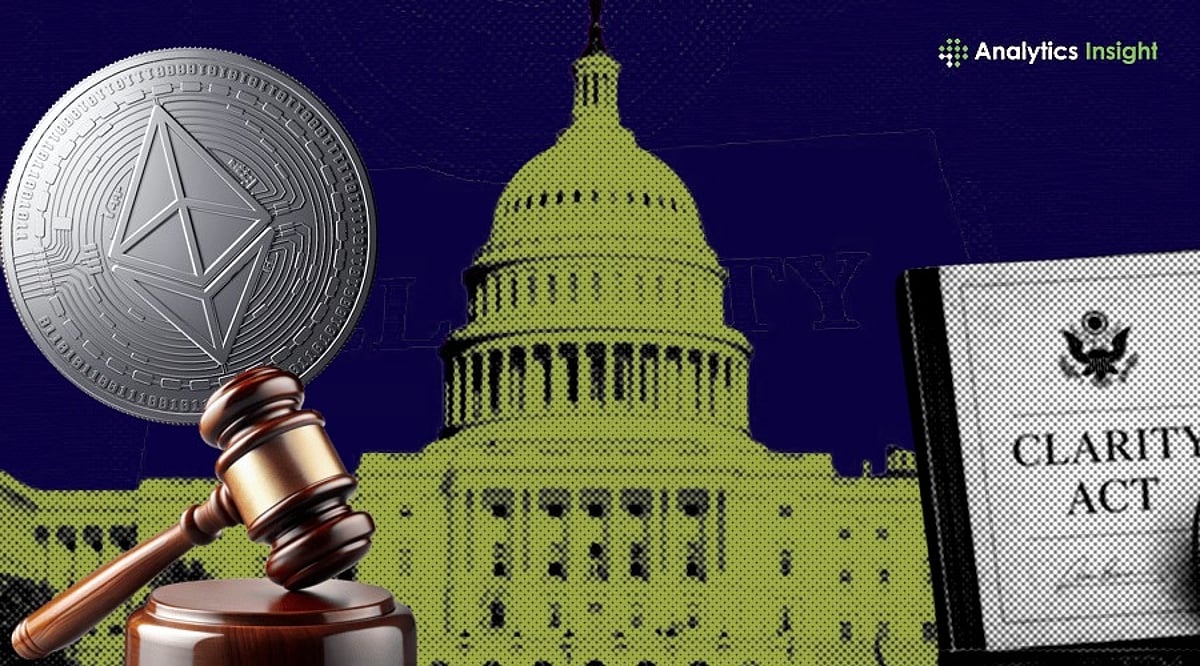
    The US Senate Banking Committee has taken a major step toward establishing a comprehensive regulatory landscape for cryptocurrencies with a 15-9 bipartisan vote to approve the Digital Asset Market Clarity Act of 2025 (CLARITY Act). The bill seeks to resolve the uncertainty around digital assets by establishing a clear regulatory framework that assigns the Securities and Exchange Commission (SEC) and the Commodity Futures Trading Commission (CFTC) to the different regulatory responsibilities.

    Introduced in May 2025 by House Financial Services Committee Chairman French Hill and House Agriculture Committee Chairman G.T. Thompson, the bill passed the US House of Representatives on July 17, 2025, with a bipartisan vote of 294 to 134. It would be the first full framework of US legislation for cryptocurrencies, exchanges, stablecoins, and decentralized finance (DeFi).

    SEC and CFTC to Share Crypto Oversight

    The CLARITY Act establishes a two-tier regulatory framework, with its classifications of digital assets depending on their attributes. The SEC would have authority over tokens that meet its definition of an “investment contract,” while the CFTC would have jurisdiction over sufficiently decentralized tokens, for example, Bitcoin and perhaps Ethereum.

    Among others, the “mature blockchain test” provides a mechanism by which projects can move from SEC to CFTC regulation once they meet criteria for decentralization. The criteria are based on caps on the concentration of token ownership, open-source development, decentralization of governance, and the utility of the token beyond speculation.

    The CFTC would also have direct authority over digital commodity spot markets for the first time, extending its regulatory jurisdiction.

    New Rules for Exchanges, Stablecoins, and DeFi

    It would mandate that registered and regulated crypto exchanges, brokers and dealers, in most cases, be centrally registered and abide by customer protection, disclosure, anti-money laundering restrictions (AML), Know Your Customer (KYC) and financial reporting requirements with the CFTC.

    The bill improves tax reporting by adding more platforms and expanding the definition of brokers to include additional coverage. The bill also mandates that additional platforms provide Form 1099-DA to users and the Internal Revenue Service (IRS).

    The use of ‘stablecoins,’ one of the most controversial parts of the bill, remains to be discussed. The Senate version allows returns to be based on the activities or transactions, but does not allow returns to be “economically or functionally equivalent” to bank deposit interest. The bill calls for the SEC, CFTC, and US Treasury, within one year, to establish in detail permissible reward structures.

    Meanwhile, the Blockchain Regulatory Certainty Act (BRCA), which was bundled into the CLARITY Act, gives a “carve out” exemption for non-custodial developers, exempting open-source wallet and protocol developers that don’t have access to customers’ assets from some fund transmitter regulations.

    What the Senate Vote Means for Crypto Markets

    In the majority press release, Chairman Tim Scott (R‑SC) framed the markup as a “historic” bipartisan step after nearly a year of negotiations, emphasizing that the legislation is intended to bring clearer rules, stronger safeguards, and a more transparent framework for everyday digital assets market participants.

    Two Democrats, Senators Angela Alsobrooks (D‑MD) and Ruben Gallego (D‑AZ), joined Committee Republicans to support the bill. Senator Alsobrooks also played a leading role in shaping the compromise language on stablecoin yield. However, not everyone in the legislature approves of the original bill. Committee minority staff released a national security advisory arguing that the current draft “fails to address key vulnerabilities” exploited by criminals, terrorists, and foreign adversaries.

    Why This Matters

    The CLARITY Act establishes the first unified US legal framework for crypto, ending years of regulatory confusion. By clearly dividing SEC and CFTC oversight, the bill provides a predictable path for developers while creating vital safeguards for institutional investors and consumers.

    What’s Next?

    After the committee vote of 15-9, Senate Banking and Agriculture Committee staff will combine their respective bills on the crypto market structure and present a single bill for the full Senate to vote on, which will need 60 votes to avoid a filibuster. Should it become law, the CLARITY Act could redefine the US crypto landscape by offering clarity for Bitcoin, Ethereum, exchanges, and institutional investors, while also putting in place better consumer protections and compliance requirements.

    Frequently Asked Questions

    1. What is the CLARITY Act?

    The CLARITY Act (H.R. 3633) is a proposed US law that establishes a comprehensive regulatory framework for cryptocurrencies. It defines how digital assets are classified and which federal regulator oversees them.

    2. Why is the Senate’s 15-9 vote important?

    The bipartisan committee vote advances the bill to the next legislative stage, bringing it closer to becoming law. It also signals growing political support for clear cryptocurrency regulations in the US.

    3. How does the CLARITY Act divide SEC and CFTC oversight?

    The SEC would regulate digital assets classified as investment contracts, while sufficiently decentralized cryptocurrencies, such as Bitcoin and potentially Ethereum, would fall under the CFTC through the “mature blockchain” framework.

    4. What changes would the CLARITY Act bring for crypto exchanges and stablecoins?

    Crypto exchanges, brokers, and dealers would be required to register with the CFTC and comply with AML, KYC, disclosure, and customer protection rules. The bill also introduces clearer regulations for stablecoin rewards and expands crypto tax reporting requirements.

    5. Is the CLARITY Act now a law?

    No. The bill has passed the US House of Representatives and the Senate Banking Committee, but still requires approval by the full Senate before it can be signed into law and implemented by the SEC and CFTC.

  • Ethereum’s Modular Architecture and Major Upgrades Pave the Way for Global Blockchain Adoption

    Ethereum’s Modular Architecture and Major Upgrades Pave the Way for Global Blockchain Adoption

    Key Takeaways

    • Ethereum transaction fees have dropped from over $2 to under $0.02 after major network upgrades.
    • More than 95% of Ethereum ecosystem transactions now move through fast and cheap Layer-2 networks.
    • Ethereum currently secures over $99 billion in Total Value Locked, showing strong institutional confidence.

    Ethereum has reached a pivotal stage in its evolution. For years, blockchain technology struggled with slow speeds, high transaction costs, and limited scalability—barriers that prevented mass adoption. Today, a redesigned architecture addresses these challenges head-on, positioning Ethereum as the backbone of a new digital economy.

    This transformation signals that Ethereum is no longer just a cryptocurrency network. It is becoming a robust digital infrastructure capable of supporting finance, enterprise systems, digital ownership, artificial intelligence, and next-generation internet applications. Experts believe this shift marks the beginning of widespread global blockchain adoption.

    A New Structure Changes Everything

    Ethereum’s most significant change is its move to a modular blockchain design. Previously, the main network handled every transaction, smart contract, and security process, leading to congestion and high fees during peak periods. The new architecture separates these tasks into distinct layers.

    The main Ethereum chain now focuses on security and final settlement, while Layer-2 networks handle the bulk of transaction activity. This division allows Ethereum to process far more activity without straining the main chain.

    Dencun Upgrade Brings Huge Fee Reduction

    The Dencun upgrade in 2024 introduced EIP-4844, which added blob transactions—a form of cheaper temporary data storage for Layer-2 networks. The impact was immediate: transaction fees across Ethereum scaling networks dropped by more than 90%. Average mainnet fees fell from over $2 to under $0.02, while Layer-2 fees dropped to roughly $0.0015 per transaction. This cost reduction removed one of blockchain’s biggest barriers to everyday use.

    Pectra Upgrade Improves Network Efficiency

    The Pectra upgrade, launched in May 2025, brought 11 technical improvements focusing on staking, wallet usability, and network performance. A key change raised the maximum staking limit per validator from 32 ETH to 2,048 ETH, allowing infrastructure providers to operate more efficiently and reduce network pressure. By mid-2026, Ethereum boasted over 920,000 active validators, making it one of the largest proof-of-stake networks in the world and strengthening security and trust.

    Layer-2 Networks Become the Main Engine

    Ethereum has fully embraced a rollup-centric ecosystem. Today, more than 95% of all Ethereum ecosystem transactions occur on Layer-2 networks, which offer faster, cheaper processing while relying on the main chain for security. This model solves the scalability trilemma—balancing decentralization, security, and speed—that long plagued blockchain systems.

    Future Upgrades Push Ethereum Further

    Developers are already working on future upgrades like Full Danksharding, which will massively expand data capacity for Layer-2 networks, potentially enabling tens of thousands of transactions per second. Another innovation, Verkle Trees, will reduce storage requirements for validators by nearly 57%, making node operation cheaper and more accessible while improving decentralization.

    Institutions Show Strong Confidence

    Ethereum’s growing strength has attracted significant institutional interest. The network now secures more than $99 billion in Total Value Locked across decentralized finance applications. Stablecoins, tokenized real-world assets, and enterprise blockchain systems increasingly depend on Ethereum’s security and its vast global developer community.

    Ethereum Expands Beyond Finance

    Ethereum’s role extends beyond finance. Developers are building blockchain-based artificial intelligence systems, including ERC-8004 AI agents. This standard allows autonomous AI systems to operate directly on Ethereum, making transactions and verifying identity without human intervention.

    Why This Matters

    This architectural shift transforms Ethereum from an expensive, slow cryptocurrency network into a viable global computing infrastructure. By cutting transaction costs over 90% and incorporating autonomous AI standards, Ethereum solves the scalability trilemma and lays the groundwork for mainstream enterprise and retail adoption.

    The Future of Blockchain Begins Here

    Blockchain technology faced adoption hurdles for years. Ethereum’s new architecture directly addresses these challenges with a smarter, more flexible design. Faster transactions, near-zero fees, improved validator efficiency, and support for emerging technologies have completely changed Ethereum’s position in the tech landscape.

    Written by Pardeep Sharma

  • Ireland Warns of ‘Very Significant’ Crypto Crime Risks as New Review Tightens Oversight

    Ireland Warns of ‘Very Significant’ Crypto Crime Risks as New Review Tightens Oversight

    Ireland has officially flagged cryptocurrency as a major financial crime risk in its first national risk assessment focused on digital assets in seven years. The Department of Finance warns that digital assets pose ‘very significant’ risks tied to money laundering, terrorism financing, sanctions evasion, and weak oversight in decentralized finance (DeFi) platforms.

    Rising Threats in a Changing Market

    The assessment notes a dramatic shift since Ireland’s last review in 2019. Digital assets now sit at the intersection of legitimate finance and illicit activity, increasing pressure on enforcement agencies and policymakers. Authorities highlight that cryptocurrencies can move value across borders with limited transparency, creating openings for sanctions evasion, tax non-compliance, and bribery. The report also specifically names DeFi as an area with limited oversight, complicating monitoring for banks, exchanges, and regulators.

    Government Plans and Industry Impact

    Ireland plans to develop industry standards for accepting crypto-related activities as a source of funds, with the framework expected in the second half of 2027. While the report does not announce new legislation, it signals tighter oversight ahead. The move could affect exchanges, financial institutions, and businesses that accept cryptocurrency-related funds. Officials also warn that uneven international rules add risk for Irish firms operating across several jurisdictions. Ireland serves as a European base for several large cryptocurrency firms and technology companies seeking access to European markets, making the issue particularly pressing.

    Scrutiny Grows Across Politics and Business

    Crypto ownership in Ireland remains relatively high, with the Central Bank of Ireland reporting that about 10% of the population has invested in cryptocurrencies. This level of use has increased pressure on policymakers to balance innovation with consumer protection and financial stability. The report follows a series of regulatory actions against crypto firms, including a fine on Coinbase’s European arm in late 2025 for anti-money laundering and counter-terrorism financing failures related to transaction monitoring systems. Ireland has also restricted crypto use in politics, banning political donations made through digital assets in 2022.

    What’s Next?

    Ireland has traditionally relied on wider European Union frameworks rather than building extensive domestic crypto rules. However, the rollout of the EU’s Markets in Crypto-Assets Regulation (MiCA), along with growing concerns over money laundering and sanctions compliance, has pushed the government to reassess the sector’s risks. The latest review shows a clearer shift in policy direction, placing digital asset activity under closer scrutiny as Ireland prepares for stronger controls in the years ahead.