Tag: DeFi

  • Top Crypto Wallets for Security in 2025: Hardware and Software Options Reviewed

    Top Crypto Wallets for Security in 2025: Hardware and Software Options Reviewed

    When it comes to safeguarding digital assets, choosing the right crypto wallet is critical. The market is flooded with options, but only a few combine robust security with user-friendly features. Below is a curated list of the best crypto wallets that offer top-tier protection for both beginners and seasoned holders.

    Hardware Wallets: The Gold Standard for Offline Security

    Ledger Flex – This hardware wallet provides secure offline private key storage, Bluetooth connectivity, a convenient touchscreen, and support for thousands of cryptocurrencies. Its enterprise-grade protection makes it ideal for users who prioritize cold storage.

    Trezor Safe 5 – Featuring open-source firmware and secure element protection, the Trezor Safe 5 offers touchscreen verification and advanced backup options. It is a favorite among long-term crypto holders who value transparency and maximum security.

    SafePal S1 – An air-gapped hardware wallet that uses QR code transactions. Its secure element technology and offline storage minimize exposure to online threats, making it a solid choice for privacy-conscious users.

    Software Wallets: Convenience Meets Control

    MetaMask – A popular self-custody wallet that supports Ethereum and compatible networks. It enables secure access to DeFi, NFT management, and browser-based transactions, making it a versatile tool for everyday crypto use.

    Trust Wallet – Supporting millions of digital assets across multiple blockchains, this mobile wallet offers self-custody, staking features, and an easy-to-use interface. Security is built into every transaction.

    Coinbase Wallet – Unlike the exchange version, this wallet gives users complete control of their private keys. It supports NFTs, decentralized applications, and multiple blockchain networks without dependency on exchange custody.

    Rabby Wallet – Automatically detects blockchain networks and improves transaction safety with simulation tools. It offers better phishing protection for DeFi users who interact with dApps daily.

    Phantom Wallet – Originally built for Solana, Phantom now supports Ethereum and Bitcoin. It delivers fast transactions, NFT management, staking, and intuitive wallet security, all within a sleek interface.

    Bitget Wallet – A multi-chain wallet that offers decentralized trading, asset management, staking, and strong security features. It supports thousands of cryptocurrencies globally, making it a versatile option for active traders.

    Choosing the right crypto wallet depends on your specific needs. For maximum security, combine a hardware wallet for long-term storage with a software wallet for daily transactions. Stay safe and always verify your wallet’s authenticity.

  • Best Trust Wallet Clone Script Providers to Watch in 2026

    Best Trust Wallet Clone Script Providers to Watch in 2026

    As the cryptocurrency ecosystem expands, businesses are increasingly seeking ready-made solutions to launch their own branded digital wallets. Trust Wallet clone scripts offer a fast, cost-effective way to enter the market with feature-rich, secure platforms. Here are the top providers to consider for 2026.

    Top Trust Wallet Clone Script Providers

    • Suffescom Solutions: Develops customizable Trust Wallet clone scripts supporting multiple cryptocurrencies, NFT storage, staking, and enterprise-grade security features.
    • Antier Solutions: Offers scalable crypto wallet development with DeFi integration, multi-chain compatibility, biometric authentication, and robust security architecture.
    • Blockchain App Factory: Delivers feature-rich wallet clone solutions supporting token management, staking, decentralized applications, and advanced encryption technologies.
    • Coinsclone: Builds customizable cryptocurrency wallet scripts with fast deployment, multi-currency support, and secure transaction management capabilities for businesses.
    • Maticz Technologies: Provides white-label crypto wallet solutions featuring NFT compatibility, staking functionality, and blockchain integration for digital asset management.
    • Inoru: Develops blockchain wallet software with customizable interfaces, token support, multi-platform compatibility, and enterprise-level security infrastructure.
    • Osiz Technologies: Creates Trust Wallet-inspired applications offering decentralized wallet features, crypto asset storage, and cross-platform mobile compatibility.
    • TurnkeyTown: Delivers ready-to-launch crypto wallet clone solutions featuring secure authentication, token management, and simplified blockchain integration tools.
    • Code Brew Labs: Specializes in customized crypto wallet development with modern interfaces, scalable architecture, and support for multiple blockchain ecosystems.

    These providers cater to a growing demand for secure, customizable, and multi-chain wallet solutions, helping businesses capitalize on the crypto boom without building from scratch. For more stories and updates, join our WhatsApp Channel to get the latest news, exclusives, and videos on WhatsApp.

  • Stablecoin Transaction Volumes Hit All-Time High of $1.79 Trillion in June, USDC Leads Growth

    Stablecoin Transaction Volumes Hit All-Time High of $1.79 Trillion in June, USDC Leads Growth

    Stablecoin Transaction Volume Reaches Record $1.79 Trillion in June

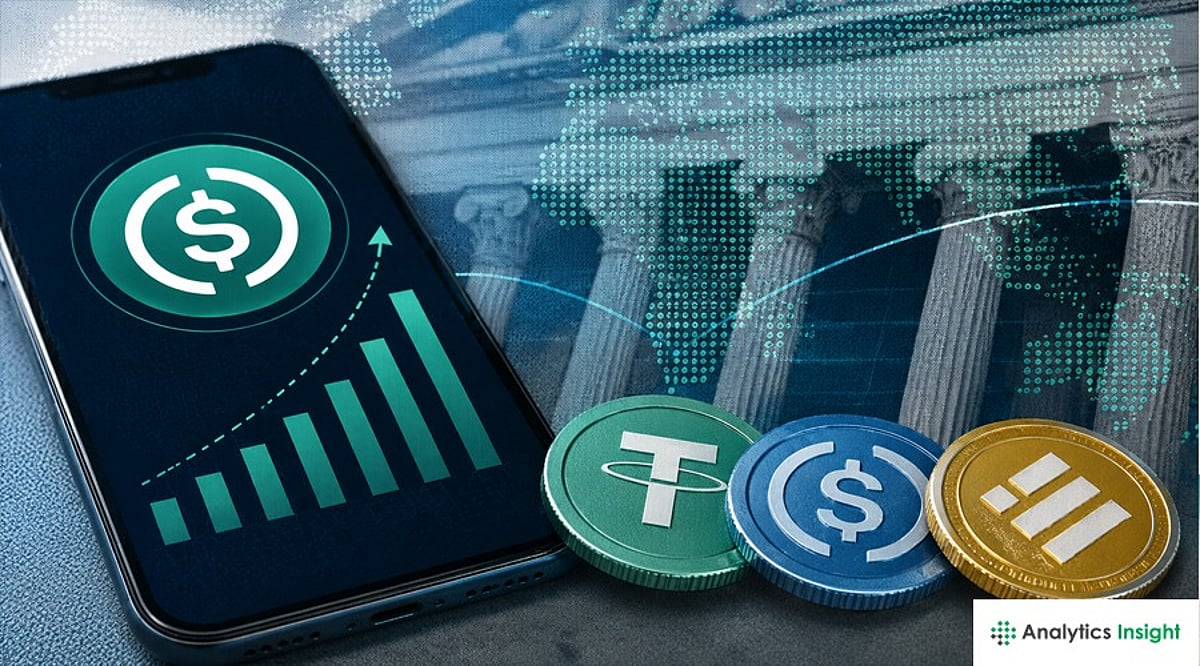
    Stablecoin transaction volume hit a record $1.79 trillion in June, marking the highest monthly level ever recorded. According to Visa’s stablecoin analytics dashboard, which uses Allium data, the figure represents a 63% increase from May’s $1.1 trillion total. The June total also surpassed the previous record of $1.78 trillion set in February 2026. On an annual basis, stablecoin transaction volume rose 125%, reflecting broader adoption of dollar-pegged crypto assets across payments, DeFi activity, and cross-border transfers.

    Record Monthly Volume Driven by Real User Activity

    Visa’s on-chain analytics dashboard reported $1.79 trillion in adjusted stablecoin transaction volume for June. The dashboard filters out inorganic activity, including bot-driven transfers and wash transactions, providing a clearer view of genuine user and institutional activity. The latest reading comes as stablecoins play an increasingly central role in crypto market infrastructure, being widely used for trading, lending, settlement, and payments. They also act as a bridge between traditional money and blockchain-based services.

    “June 2026 was another record month for stablecoin transaction volume, slightly ahead of February 2026,” said Grayscale Head of Research Zach Pandl, highlighting the narrow gap between the two record months. Notably, stablecoin usage grew even as the broader crypto market faced weaker price action, suggesting that stablecoins are used for more than just trading. Their role in payments and transfers has expanded as blockchain networks offer faster settlement and lower costs for certain use cases.

    USDC Leads Monthly Stablecoin Activity

    USDC accounted for the largest share of stablecoin transaction volume in June, processing about $1.21 trillion — nearly 67% of total adjusted volume. USDT, issued by Tether, ranked second with approximately $576 billion, or about 32% of the monthly total. PayPal’s PYUSD followed in third place with $2.42 billion in June volume.

    Although USDT still holds the largest stablecoin market capitalization, the June volume data shows stronger transaction activity for USDC. Regulatory conditions in Europe, particularly the Markets in Crypto-Assets (MiCA) rules, have added pressure on some stablecoins, leading several European platforms to reduce or end support for tokens that do not meet the new requirements. Circle has positioned USDC for regulated markets, including Europe, making the token more attractive for exchanges, payment firms, and institutions seeking clear compliance standards. Meanwhile, Tether has increased USDT supply, including a recent $2 billion mint on Ethereum.

    Base, Ethereum, and Tron Carry Most Stablecoin Transfers

    Base, Coinbase’s Ethereum Layer 2 network, processed the largest share of stablecoin transaction volume in June at approximately $565 billion (31.5% of the total). Ethereum followed closely with around $562 billion in volume. Tron ranked third among networks, with about $320 billion (close to 18% of the monthly total). Solana also saw strong activity, supported by low fees and fast settlement times.

    The network data reveals that stablecoin usage is spread across multiple blockchain systems. Ethereum remains central, while Base has grown rapidly as a major rail for USDC transfers. Tron continues to serve users moving stablecoins across borders and between exchanges. The broader stablecoin market has expanded, with total market capitalization crossing $322 billion. Visa’s dashboard shows about $10.2 trillion in adjusted stablecoin volume over the past 12 months. Additionally, Visa has expanded its stablecoin settlement pilot across several blockchain networks, with an annualized run rate of about $7 billion as of April.

    The June record underscores that stablecoins have become a fundamental part of digital asset activity, driven by payments, DeFi use, exchange transfers, and cross-border flows.

  • Ethereum Surges as Fed Rate Worries Subside: Institutional Demand and Network Upgrades Fuel Rally

    Ethereum Surges as Fed Rate Worries Subside: Institutional Demand and Network Upgrades Fuel Rally

    Ethereum has been gaining momentum as concerns over prolonged high U.S. interest rates fade. Cooling inflation has shifted expectations toward a softer Federal Reserve stance, prompting investors to rotate capital into higher-growth assets like ETH. This macroeconomic tailwind, combined with strong institutional demand, ongoing network upgrades, and expanding Layer-2 adoption, is bolstering Ethereum’s long-term outlook.

    Lower Interest Rate Concerns Support Ethereum

    Interest rates heavily influence financial markets. Recent inflation data has eased fears that the Fed will maintain elevated rates for an extended period. This shift in sentiment has drawn fresh money back into risk assets, including Ethereum.

    Institutional Investors Continue to Show Interest

    Growing institutional demand is a key driver of Ethereum’s price movement. Major investment firms are increasing their exposure through spot Ethereum ETFs. While weekly inflows fluctuate, the overall trend points to rising institutional backing.

    Ethereum Network Remains Strong

    Ethereum maintains its position as the largest smart contract blockchain. Thousands of decentralized finance (DeFi) platforms, blockchain applications, and stablecoin projects rely on its network daily. Developers continue building new products on Ethereum, drawn by its robust infrastructure and large user base. This steady growth supports long-term demand for ETH.

    Staking Reduces Supply

    Ethereum’s proof-of-stake system allows holders to lock their coins to secure the network and earn rewards. As more investors stake their ETH, fewer coins remain available for trading. This supply reduction often supports prices when demand stays strong, giving Ethereum an advantage over many other cryptocurrencies.

    Network Upgrades Improve Performance

    Years of upgrades have boosted processing efficiency, validator performance, wallet security, and transaction speeds. These technical improvements attract developers, enterprises, and financial institutions, making Ethereum a more attractive long-term investment.

    Layer-2 Networks Help Ethereum Grow

    The rapid growth of Layer-2 networks makes transactions faster and cheaper. Lower costs encourage broader use of DeFi platforms, blockchain games, digital collectibles, and other services. Since these Layer-2 systems rely on the main Ethereum blockchain, increased network activity benefits ETH directly.

    Strong Market Position Supports Price Growth

    Ethereum’s total market capitalization exceeds $214 billion, with a circulating supply of about 120.7 million ETH. Daily trading volume regularly surpasses $10 billion, indicating strong engagement from both retail and institutional participants. This liquidity attracts major investment firms.

    Better Economic Outlook Helps Risk Assets

    U.S. Treasury yields have stabilized compared to the period of aggressive rate hikes, reducing pressure on growth-focused investments. Anticipation of a less restrictive Fed posture, assuming inflation trends toward target, typically fuels gains in tech stocks and crypto tokens. Ethereum has historically performed well under such conditions.

    Tokenization Creates New Opportunities

    Real-world asset tokenization is gaining traction. Banks and financial institutions are exploring ways to place traditional assets like bonds and funds on blockchain networks, opening new use cases for Ethereum.

    Risks Still Remain

    Despite the rally, Ethereum remains volatile. Economic reports, Fed statements, ETF flows, and sentiment changes can cause sharp price swings. However, the easing of interest rate concerns has created a more favorable environment for cryptocurrencies.

    Final Thoughts

    Ethereum’s recent rise reflects a convergence of factors: easing Fed rate fears, strong institutional participation via spot ETFs, network upgrades, Layer-2 growth, expanding blockchain adoption, and tokenization. With a market cap above $214 billion and daily trading volume over $10 billion, Ethereum remains a dominant digital asset. While short-term volatility persists, the combination of improved economic conditions and solid network fundamentals supports its long-term growth.

  • Solana and Allfunds Partnership: A Major Step Toward Institutional On-Chain Finance

    Solana and Allfunds Partnership: A Major Step Toward Institutional On-Chain Finance

    The partnership between Solana Labs and Allfunds Group plc marks a significant milestone in the evolution of blockchain technology, bridging the gap between traditional finance and decentralized finance (DeFi). By enabling the tokenization of real-world assets on Solana’s high-speed, low-cost blockchain, this collaboration signals a new era of institutional adoption.

    Why the Allfunds Partnership Matters

    Allfunds, one of the world’s largest wealth management platforms, manages nearly €1.8 trillion in assets under administration and works with over 3,300 asset managers, banks, and financial institutions globally. Through this partnership, investment funds on Allfunds can now be tokenized on Solana’s blockchain, allowing traditional assets to exist as digital assets on a public blockchain. This move demonstrates that large financial institutions are ready to embrace public blockchain technology over legacy systems.

    The Rise of Real-World Asset Tokenization

    Real-world asset (RWA) tokenization is transforming finance by converting stocks, bonds, mutual funds, and private investments into blockchain-based digital assets. The Solana-Allfunds deal accelerates this trend, with tokenized assets on Solana already surpassing $1 billion in total value earlier this year. Major financial firms now see blockchain as a way to make financial systems faster, cheaper, and more efficient, moving tokenization from an experiment to a cornerstone of future finance.

    Why Solana Became the Preferred Choice

    Solana’s technical performance—processing thousands of transactions per second with fees often under one cent—makes it ideal for large-scale financial operations. Compared to older blockchain networks with higher fees and slower speeds, Solana offers a scalable infrastructure suited for institutional use. This technical edge has positioned Solana as a serious contender in global finance.

    Traditional Finance and DeFi Converge

    For years, DeFi operated separately from traditional finance due to security, regulatory, and technical concerns. The Solana-Allfunds partnership, supported by Project Harmonia and infrastructure firms ioBuilders and Particula, changes this. It allows Allfunds to issue tokenized investment funds while maintaining compliance, enabling traditional financial products to exist in both legacy and blockchain ecosystems simultaneously. The wall between traditional finance and DeFi is breaking down.

    Solana’s Growing Institutional Adoption

    The Allfunds deal follows other institutional wins for Solana in 2026, including WisdomTree’s expansion of its tokenized fund ecosystem to Solana. This growing confidence reflects a shift in how institutions view blockchain—not as speculative crypto technology, but as a superior settlement system for financial products. Institutions control far more capital than retail investors, making this shift critical.

    What This Means for the Future of On-Chain Finance

    The Solana-Allfunds partnership may be a turning point for on-chain finance. Rather than replacing traditional finance, the trend is toward integration. Blockchain networks like Solana could soon support mutual funds, private equity, securities, and cross-border payments on a global scale. The next phase of blockchain growth will be driven by large institutions moving trillions of dollars into blockchain systems, making on-chain finance the foundation of future global markets.

    FAQs

    1. Why is the Solana-Allfunds partnership important? It connects one of the world’s largest fund distribution networks with blockchain, bringing institutional finance on-chain.
    2. What is real-world asset (RWA) tokenization? It is the process of converting traditional financial assets like stocks, bonds, and funds into blockchain-based digital assets.
    3. Why did Allfunds choose Solana? Because Solana offers fast transaction speeds, scalability, and extremely low transaction fees suitable for institutional use.
    4. How does this impact decentralized finance (DeFi)? It helps bridge traditional finance and DeFi, allowing regulated financial products to operate within blockchain ecosystems.
    5. What does this mean for the future of finance? It signals that major financial institutions may increasingly use blockchain infrastructure for managing trillions of dollars globally.
  • Best EVM Wallets of 2026: Secure, Multi-Chain, and Beginner-Friendly Options

    Best EVM Wallets of 2026: Secure, Multi-Chain, and Beginner-Friendly Options

    In 2026, the crypto landscape has evolved significantly, with Ethereum remaining a dominant force alongside a growing number of Ethereum Virtual Machine (EVM)-compatible chains such as Polygon, Arbitrum, Optimism, Base, and BNB Chain. As adoption soars, choosing the right wallet is more critical than ever. Users now demand robust security, seamless multi-chain support, and an intuitive experience. Here are the top EVM wallets leading the market this year.

    MetaMask Still Leads the Market

    MetaMask remains the most widely used EVM wallet in 2026, serving as the primary gateway to Web3 for millions. Its extensive compatibility with decentralized applications (dApps) gives it a clear edge. Available as a mobile app and browser extension, MetaMask supports hardware wallets like Ledger and Trezor for enhanced security. The Snap feature has expanded its reach to hundreds of EVM-compatible chains. While its ecosystem is unmatched, new users may find the initial setup slightly complex.

    Rabby Wallet Gains Massive Popularity

    Rabby Wallet, developed by the DeBank team, has surged in popularity among advanced DeFi users. Its standout feature is a robust security system that simulates transactions before approval, clearly showing potential changes and helping prevent scams. The wallet automatically switches between blockchain networks, saving time for multi-chain users. Praised by security experts for its contract warning system, Rabby has become a top choice for experienced traders navigating the rising threat of crypto scams.

    Trust Wallet Dominates Mobile Users

    Trust Wallet remains a favorite for beginners, with over 200 million global users. This non-custodial wallet supports Ethereum, dozens of EVM-compatible blockchains, and thousands of assets. Its simple mobile interface makes crypto management effortless. Built-in features include token swaps, staking, NFT storage, and dApp access. As crypto reaches mainstream audiences, Trust Wallet’s ease of use continues to attract newcomers.

    Coinbase Wallet Brings Smart Wallet Technology

    Coinbase Wallet has introduced smart wallet technology in 2026, leveraging account abstraction to eliminate traditional seed phrase dependency. Users can now log in with passkeys or biometric methods like face recognition, enhancing both security and convenience. Gasless transactions on supported Layer 2 networks are another major update, allowing users to execute transactions without paying standard gas fees. These innovations position Coinbase Wallet as a strong contender for mainstream adoption.

    OKX Web3 Wallet Expands Fast

    OKX Web3 Wallet has grown rapidly, especially among active traders, supporting over 60 blockchain networks. It consolidates token swaps, cross-chain transfers, NFT management, and dApp access into a single platform. Security alerts warn users about suspicious websites before transactions, addressing the rise in online crypto attacks. Its all-in-one design appeals to users who frequently move funds across multiple ecosystems.

    Security Became the Biggest Concern This Year

    Wallet security is a top priority in 2026, with threats like the Crypto Clipper malware—which alters copied wallet addresses to redirect funds to hackers—and fake recovery software designed to steal seed phrases. In response, wallet companies are prioritizing hardware wallet support, transaction previews, biometric security, phishing alerts, and seedless recovery systems. Security now rivals convenience as a key factor in wallet selection.

    Final Thoughts

    The best EVM wallets in 2026 offer far more than simple storage. MetaMask leads in ecosystem access, Rabby excels in security, Trust Wallet appeals to beginners, Coinbase Wallet drives innovation, and OKX provides a comprehensive multi-chain solution. As Web3 expands, wallets evolve from basic tools into the foundation of the decentralized economy.

    FAQs

    1. What is an EVM wallet? An EVM wallet stores and manages crypto assets on Ethereum-compatible blockchains like Ethereum, Polygon, Arbitrum, Base, and BNB Chain.
    2. Which is the safest EVM wallet in 2026? Rabby Wallet is widely recognized for strong transaction simulation and scam detection, with hardware wallet integration adding extra protection.
    3. Which wallet is best for beginners? Trust Wallet remains one of the easiest options due to its simple mobile interface and beginner-friendly design.
    4. Why is wallet security a major concern in 2026? Threats like Crypto Clipper malware, phishing attacks, and fake recovery apps have made security a top priority for crypto users.
    5. Which wallet supports the most blockchain networks? OKX Wallet stands out with broad multi-chain support and integrated tools for swaps, NFTs, and decentralized exchanges.
  • Trump’s $1.4 Billion Crypto Income Fuels Conflict-of-Interest Concerns

    Trump’s $1.4 Billion Crypto Income Fuels Conflict-of-Interest Concerns

    President Donald Trump reported earning at least $1.4 billion in cryptocurrency-related income over the past year, according to a Bloomberg review of his latest annual financial disclosure. The filing connects his personal wealth to major digital asset ventures while his administration shapes federal crypto policy.

    Filing Details Trump’s Crypto Revenue

    The disclosure covers income linked to the TRUMP memecoin, World Liberty Financial tokens, Bitcoin, and other digital assets, though it does not provide a complete breakdown for every source. The TRUMP memecoin alone generated hundreds of millions of dollars, with its market price reacting to Trump’s public remarks, political events, and signals about federal crypto policy. World Liberty Financial, a Trump-linked decentralized finance project, also contributed heavily to the reported income and operates within policy areas covering stablecoins, token classification, trading access, and digital asset oversight. The project has pursued plans to make its governance token tradable, placing it within current debates on liquidity, digital asset trading, and regulatory classification.

    Policy Decisions Draw Greater Scrutiny

    The disclosure comes as the administration supports stablecoin legislation, tokenization, Bitcoin mining, and a softer approach toward federal crypto enforcement. The SEC and CFTC remain central to those policy decisions. Previously, BTCUSA reported that more than 20% of Trump administration officials held crypto assets, increasing attention on how officials manage investments while developing rules for the same market. Trump’s support for Bitcoin mining also attracted scrutiny after the purchase of MARA Holdings shares. The latest filing provides a broader view of his financial exposure to the cryptocurrency industry.

    The question now follows decisions involving enforcement, exemptions, token rules, and product approvals: How can federal regulators preserve public trust when presidential wealth depends heavily on the industry they oversee?

    Markets Monitor Political and Regulatory Links

    Crypto markets reacted cautiously to the disclosure, with the response following confirmation of the scale of Trump’s crypto income rather than any new revelations. The filing also renewed attention on links between Trump’s policy agenda and his family’s crypto ventures, covering memecoins, decentralized finance, stablecoins, token trading, and direct digital asset holdings. Critics have previously described the administration’s crypto-friendly approach as a potential conflict between policymaking and private financial interests. The disclosure gives lawmakers a specific income figure for further examination.

    The TRUMP memecoin gala had already drawn attention to the relationship between political access and cryptocurrency ownership. Now, the annual filing adds detailed financial context before the 2026 midterm elections. Meanwhile, federal agencies continue handling rules that can affect Trump-linked ventures and the wider market, including stablecoins, token classifications, enforcement priorities, trading permissions, and approvals for new crypto products.

    What’s Next?

    Trump’s $1.4 billion crypto income connects his personal wealth to memecoins, DeFi, Bitcoin, and federal digital asset policy. The disclosure increases scrutiny of regulatory independence and potential conflicts of interest. Investors and lawmakers should closely assess how future decisions may affect both public policy and Trump-linked ventures.

  • Ethereum Price Prediction: Could ETH Hit $10,000 by 2030?

    Ethereum Price Prediction: Could ETH Hit $10,000 by 2030?

    Key Takeaways

    • Ethereum remains the dominant blockchain for DeFi, stablecoins, and NFTs despite current market weakness.
    • Institutional adoption and staking mechanisms continue to strengthen Ethereum’s long-term growth prospects.
    • A $10,000 ETH price by 2030 is considered feasible if market conditions remain favorable.

    Ethereum, the second-largest cryptocurrency by market capitalization, continues to be a cornerstone of the blockchain ecosystem. Despite trading around $1,550–$1,650 in July 2026—well below its 2021 all-time high of $4,891—many analysts maintain a bullish long-term outlook. The central question remains: Can Ethereum reach $10,000 by 2030?

    Ethereum’s Current Market Position

    2026 has been a challenging year for Ethereum. High interest rates, economic uncertainty, and a broad crypto market downturn have kept prices under pressure. However, market weakness does not diminish Ethereum’s network dominance. It remains the backbone of decentralized finance (DeFi), hosts the premier NFT platforms, and handles massive stablecoin volume daily.

    Institutional Interest Could Push Prices Higher

    Rising institutional interest is a major factor behind positive analyst sentiment. Large financial firms are exploring crypto investments through ETFs and regulated products. Standard Chartered has issued one of the most aggressive forecasts, projecting Ethereum could reach $40,000 by 2030 under favorable conditions. Such predictions underscore the strong institutional belief in Ethereum’s future.

    Network Upgrades Continue to Improve Ethereum

    Developers are actively working on upgrades to improve transaction speed, reduce gas fees, and increase scalability. These technical improvements aim to address historical issues like high fees during periods of high demand. Successful upgrades could strengthen Ethereum’s position relative to newer, faster blockchains.

    Staking Creates Supply Pressure

    Ethereum’s transition to Proof-of-Stake has locked a significant portion of ETH in staking contracts, reducing circulating supply. When supply is limited and demand rises, prices tend to increase. This reduced supply is a key long-term advantage that could support price growth.

    Stablecoins and Real-World Assets Add Value

    Ethereum leads in stablecoin infrastructure, with USD Coin and Tether processing billions in transactions daily. Additionally, tokenization of real-world assets—bonds, real estate, traditional financial products—is gaining traction, and Ethereum remains the preferred network for many such projects, adding utility and demand.

    Risks That Could Slow Growth

    Despite the positive outlook, Ethereum faces challenges. Competition from newer blockchains like Solana and Sui, which offer lower fees and faster transactions, continues to attract developers. Regulatory uncertainty also looms, with governments worldwide debating crypto laws, taxation, and investor protections. Strict regulations could dampen adoption and market sentiment.

    Can Ethereum Reach $10,000 by 2030?

    For Ethereum to hit $10,000, its price would need to rise nearly sixfold from current levels. While ambitious, many market forecasts consider this target realistic if favorable conditions develop. Conservative estimates place ETH between $5,000 and $7,000 before 2030, while more bullish predictions exceed $10,000. Some institutional forecasts even suggest $40,000 during a strong crypto cycle.

    Why This Matters

    The disconnect between Ethereum’s depressed price and its unrivaled dominance in stablecoins, staking, and asset tokenization creates a unique market anomaly. This utility floor keeps banking giants bullish on a long-term structural recovery to $10,000.

    Final Outlook

    Ethereum remains a strong long-term investment option in the crypto space. Despite weak short-term performance, its fundamentals—leadership in DeFi, growing institutional adoption, stablecoin usage, and ongoing network upgrades—make it a viable candidate for future growth.

    FAQs

    1. What is Ethereum’s current price status in July 2026?

    Ethereum is trading under heavy pressure in the $1,550–$1,650 range, far below its historical peaks.

    2. Is a $10,000 target for Ethereum by 2030 realistic?

    Yes, many institutional analysts view it as structurally feasible, contingent on network upgrades, institutional inflows, and regulatory clarity.

    3. Why do financial institutions maintain a bullish long-term outlook despite the current slump?

    Ethereum processes over 50% of the world’s stablecoins, serves as the premier layer for tokenizing real-world assets, and has over 30% of its total supply locked in staking contracts.

    4. What are the main risks that could derail Ethereum’s long-term growth?

    Primary risks include competition from faster blockchains like Solana and Sui, macroeconomic pressures from high interest rates, and shifting international regulatory frameworks.

    5. What is the highest institutional price prediction for Ethereum?

    Standard Chartered has forecasted Ethereum could reach $40,000 by 2030, drawing comparisons to Amazon’s post-dot-com recovery.

    Disclaimer: This article is for informational purposes only and does not constitute investment advice. Cryptocurrency investments are risky; always conduct your own research.

  • Crypto Hack Losses Drop 7% in June, Humanity Protocol Hit by $36M Exploit

    Crypto Hack Losses Drop 7% in June, Humanity Protocol Hit by $36M Exploit

    Crypto-related thefts declined in June after several months of heavy losses, although attackers continued targeting blockchain projects through private key compromises and bridge vulnerabilities. Blockchain security firm PeckShield reported about $75.9 million stolen across 40 major incidents, marking a 7.1% decrease from May’s $81.7 million.

    Even so, the monthly decline did little to slow the year’s overall losses. Data from blockchain intelligence firm TRM Labs showed crypto hacks and exploits have already cost the industry more than $750 million in 2026, with two large attacks recorded earlier this year accounting for a major share of that total.

    Humanity Protocol Records June’s Largest Exploit

    Humanity Protocol recorded the biggest security breach during June. PeckShield estimated the exploit at about $31 million, while the project’s internal investigation later placed losses closer to $36 million. According to the project, attackers gained access after compromising a private key linked to the protocol’s bridge administration.

    Founder Terence Kwok said the breach resulted from a compromised private key. Humanity Protocol also stated that attackers accessed bridge administration on Ethereum and BNB Chain after compromising a developer’s laptop. The project said the incident allowed hackers to drain wallets and mint about 447 million H tokens. Reports also stated that the exploit triggered an 80% to 90% decline in the token’s market price. Humanity Protocol added that it is preparing a recovery plan, including a possible 1:1 token airdrop for affected users. Meanwhile, reports linked the attack to North Korea’s Lazarus Group, although investigations remain ongoing.

    Bridge Exploits and Protocol Attacks Continue

    Beyond Humanity Protocol, several blockchain projects also suffered large losses during June. PeckShield reported that Syscoin Bridge lost about $10 million after attackers exploited a validation flaw that allowed billions of unsupported SYS tokens to be minted without the required token burn.

    A bot associated with the address JaredFromSubway.eth also lost about $7.5 million after being targeted by another exploit. Other affected platforms included Secret Network, Polymarket users, SecondFi and TESSERA, with reported losses ranging between $2.4 million and $4.67 million.

    Meanwhile, Aztec’s deprecated infrastructure was exploited twice during the month. PeckShield tracked approximately $2.16 million stolen from Aztec Bridge and another $2.1 million from Aztec Connect. According to the Aztec Foundation, both immutable contracts are no longer under its control and cannot be paused. Combined losses reached about $4 million.

    The remaining projects in PeckShield’s top ten included Taiko Bridge, Token of Power, Raydium and LABUBU/OLPC, with each incident resulting in losses exceeding $1 million.

    Crypto Losses Remain High in 2026

    Although June recorded a lower monthly total, overall crypto losses during 2026 remain elevated. TRM Labs estimated that hackers have already stolen more than $750 million this year. According to the firm, two attacks linked to North Korea accounted for much of those losses.

    On April 1, Drift Protocol lost about $285 million after attackers reportedly spent months using social engineering tactics against governance signers. Later, on April 18, Kelp DAO’s LayerZero bridge lost approximately $292 million after attackers compromised its verifier network.

    Meanwhile, PeckShield reported that the Humanity Protocol exploiter has moved stolen assets across Bitcoin, Solana, Hyperliquid, and BNB Chain. The firm also found that some funds were mixed with assets connected to the separate Kelp DAO exploit. PeckShield said this pattern ‘raises the possibility the same threat actor is behind both attacks,’ though no final attribution has been confirmed.

  • Top Fantom Ecosystem Tokens by Market Cap in 2026

    Top Fantom Ecosystem Tokens by Market Cap in 2026

    The Fantom (FTM) ecosystem, now rebranded as Sonic, continues to expand with a diverse array of tokens powering decentralized finance, NFTs, and more. Here are the leading tokens by market capitalization in 2026, each playing a key role in the ecosystem’s growth.

    • Sonic (S): The rebranded native token of Fantom, Sonic is used for transactions, staking, governance, smart contracts, and ecosystem expansion. It offers improved speed and scalability, making it a foundational asset for the network.
    • Beets (BEETS): A decentralized exchange token that supports liquidity pools, governance participation, and yield farming. BEETS enables efficient token swaps within the growing Sonic ecosystem.
    • Equalizer (EQUAL): This community-driven DEX token rewards liquidity providers while enabling governance, low-cost swaps, and sustainable DeFi ecosystem growth.
    • WigoSwap (WIGO): A popular DeFi token offering staking, farming, NFT integration, and governance voting. It provides attractive rewards for active participants in the blockchain community.
    • Tarot (TAROT): A lending protocol token that facilitates leveraged yield farming, decentralized borrowing, and governance rights. It improves capital efficiency for crypto investors and traders.
    • Geist Finance (GEIST): A lending ecosystem token supporting decentralized borrowing, lending markets, liquidity incentives, and governance. It aids in expanding blockchain-based financial services globally.
    • PaintSwap (BRUSH): An NFT marketplace token that combines digital collectibles, decentralized trading, creator rewards, staking, and governance features within the Sonic ecosystem.
    • fMint (FMINT): A stable asset protocol token that supports synthetic assets, collateralized borrowing, and DeFi innovation, contributing to efficient blockchain-based financial infrastructure.
    • Beethoven X Vault Token: A governance-focused ecosystem asset supporting liquidity optimization, DeFi strategies, protocol incentives, and community-led blockchain expansion worldwide.

    These tokens represent the dynamic and growing Fantom ecosystem, each contributing unique features to foster a robust decentralized economy.