Tag: digital assets

  • SEC vs. CFTC: Understanding Crypto Regulation in the US

    SEC vs. CFTC: Understanding Crypto Regulation in the US

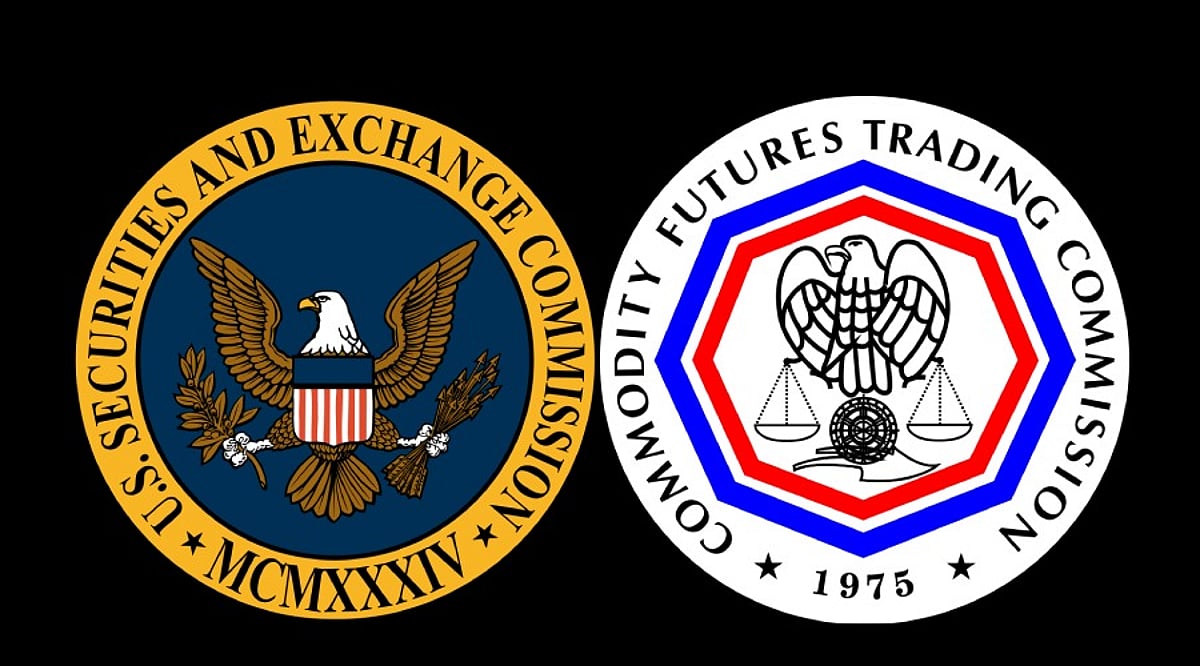
    Cryptocurrency regulation in the United States is divided among several authorities rather than controlled exclusively by one agency. The Securities and Exchange Commission (SEC) and Commodity Futures Trading Commission (CFTC) have different statutory responsibilities, with oversight depending heavily on how an asset, transaction, or financial product is classified.

    SEC Oversees Securities

    The SEC administers federal securities laws. Its authority applies when crypto-related activities involve securities, including transactions structured as investment contracts.

    In March 2026, the SEC issued an interpretation explaining how federal securities laws apply to crypto assets and transactions. It established a taxonomy covering categories including digital commodities, digital collectibles, digital tools, payment stablecoins, and digital securities. The CFTC simultaneously provided guidance explaining that it would administer the Commodity Exchange Act consistently with the SEC interpretation.

    Importantly, a crypto asset that is not itself a security can still be involved in an investment contract depending on how it is offered and the surrounding circumstances.

    In August, the SEC also proposed Regulation Crypto Assets, which would establish a tailored securities-offering framework for certain investment contracts involving crypto assets. The proposal has not itself replaced existing federal law.

    The CFTC Oversees Commodity Derivatives

    The CFTC’s established authority includes derivatives markets involving commodities, including futures, options, and swaps tied to digital commodities.

    Spot markets are more complicated as the CFTC does not have the same comprehensive regulatory framework for ordinary spot commodity trading that it has over derivatives.

    In September 2025, SEC and CFTC staff clarified that SEC- and CFTC-registered exchanges are not prohibited from facilitating certain spot crypto commodity products. However, the statement itself did not change existing law or create new obligations.

    The CFTC continued updating its crypto guidance in September 2026. On September 24, staff revised FAQs covering matters including tokenized permitted investments and blockchain-based recordkeeping for registered market participants.

    Congress Has Not Finalized a Broader Framework

    Congress has considered legislation intended to create clearer statutory boundaries for digital-asset regulation.

    On September 15, the Senate failed to advance the CLARITY Act, with the procedural vote receiving a 49-50 majority but falling short of the 60 votes required to proceed. Four Republican senators joined Democrats in opposing advancement. Senator Thom Tillis moved to reconsider the vote, preserving the possibility that the measure could be reconsidered.

    For now, this leaves the SEC and CFTC operating largely through their existing statutory authorities rather than a newly enacted comprehensive crypto market-structure law.

    Classification Determines Oversight

    The key regulatory question is therefore not simply whether cryptocurrency belongs to the SEC or CFTC.

    A digital security or transaction involving an investment contract can fall under securities laws, while derivatives involving digital commodities fall within the CFTC’s established jurisdiction.

    Stablecoins, banking activities, anti-money-laundering requirements, and state licensing can bring additional regulators into the picture.

    The SEC added further clarification on September 25 through staff FAQs addressing its March crypto interpretation. The agency specifically notes that these FAQs represent staff views and have no legal force or effect.

    Why This Matters

    Whether a crypto product falls under SEC or CFTC oversight can affect registration, trading, disclosures, and compliance obligations. Clearer jurisdictional boundaries could therefore influence how exchanges, issuers, and financial institutions structure cryptocurrency products for the US market.

    Final Thoughts

    US cryptocurrency regulation remains divided between the SEC, CFTC, and other authorities. Recent guidance has clarified some boundaries, but it does not replace legislation establishing a comprehensive market structure. Future congressional action could further define how responsibilities are divided.

    Also Read: How the GENIUS Act Could Change Stablecoin Regulation

    FAQs

    1. Does the SEC or CFTC regulate cryptocurrency in the US? Both agencies have roles. The SEC administers securities laws, while the CFTC regulates commodity derivatives and has authority under the Commodity Exchange Act within its statutory jurisdiction.
    2. When does cryptocurrency fall under SEC oversight? SEC oversight can apply when a crypto asset is a security or a transaction involves an investment contract. The SEC issued a detailed interpretation of these classifications in March 2026.
    3. What cryptocurrency activities does the CFTC regulate? The CFTC regulates derivatives involving digital commodities, including relevant futures, options, and swaps. Its authority over ordinary spot commodity markets differs from its comprehensive derivatives oversight.
    4. What is the SEC’s Regulation Crypto Assets proposal? Proposed in August 2026, Regulation Crypto Assets would establish tailored offering exemptions and other rules for certain investment contracts involving crypto assets. The proposal is not yet a final rule.
    5. Why does crypto classification matter for regulation? Classification can determine which federal laws and regulatory requirements apply to an asset, transaction, or market participant. It can affect areas such as registration, disclosures, trading, and compliance obligations.

  • Why Real-World Assets (RWA) Are Becoming the Next Trillion-Dollar Crypto Narrative

    Why Real-World Assets (RWA) Are Becoming the Next Trillion-Dollar Crypto Narrative

    Over the past few years, market attention has shifted from Bitcoin and Ethereum to DeFi, NFTs, artificial intelligence, and various emerging tokens. Entering 2026, a new keyword is redefining the relationship between crypto assets and the real economy: Real-World Assets (RWA).

    What Are Real-World Assets (RWA)?

    RWA refers to the process of bringing real-world assets, rights, or financial instruments onto a blockchain. Unlike native digital assets such as Bitcoin, the value of RWA is rooted in tangible items like U.S. Treasuries, private credit, real estate, gold, commodities, and energy infrastructure. As blockchain adoption grows, an increasing number of such assets are being tokenized.

    From XRP to AI: Two Major Narratives Intersect

    Three seemingly separate hot sectors—XRP, AI, and RWA—are showing clear points of convergence. XRP, often used for cross-border payments, and AI, which demands massive computational resources, both rely on real-world infrastructure. At this intersection, a critical question emerges: If blockchain can connect real-world assets and AI requires massive energy infrastructure, could energy become the next major direction for RWA?

    Why RWA Is Gaining Traction in the Crypto Market

    The explosion of generative AI applications like ChatGPT has driven a surge in data center construction, GPU clusters, and AI computing infrastructure. All of this computing depends on one key resource: electricity. The International Energy Agency estimates that by 2035, renewable electricity generation to meet data center demand could exceed 450 TWh, with renewables expected to cover roughly half of the growth in global data center electricity demand.

    This creates a powerful ripple effect: AI → Data Centers → Electricity Demand → Solar, Wind, Hydropower, and Energy Storage → Energy Infrastructure. RWA offers a way to tokenize these energy assets, making them accessible to a wider audience.

    Energy Infrastructure: The Next Frontier for RWA

    Lake Energy is one company exploring this connection. The firm focuses on renewable energy infrastructure—solar, wind, hydropower, and Battery Energy Storage Systems (BESS)—and uses a digital platform to connect real-world energy projects with individual participants. Users don’t need to build or operate power plants; instead, they can view available energy projects and choose to participate using digital assets such as BTC, XRP, ETH, or LTC.

    How to Participate on Lake Energy

    • Create an account on the Lake Energy website.
    • Browse available solar, wind, hydropower, or energy storage projects.
    • Select a project and choose to participate using supported digital assets (BTC, XRP, ETH, LTC, etc.).
    • Choose a project duration: options include 5, 10, 30, or 50 days.
    • View project records and income distributions through your account.

    Such platforms illustrate how RWA can bridge the digital and physical economies, allowing token holders to gain exposure to real-world infrastructure without the traditional barriers of capital or expertise.

    The Future of RWA: AI, Energy, and Beyond

    As AI continues to expand, the demand for electricity from data centers will grow, making energy infrastructure a prime candidate for tokenization. RWA is no longer limited to U.S. Treasuries and traditional financial assets; it is evolving to include the very resources that power the digital age. The intersection of XRP, AI, and energy infrastructure could drive the next trillion-dollar narrative in crypto.

    Disclaimer: This article is for informational purposes only and does not constitute financial or investment advice. Always do your own research before investing.

  • Top 5 Reasons to Attend Meridian 2026 in Lisbon: Blockchain Meets Finance

    Top 5 Reasons to Attend Meridian 2026 in Lisbon: Blockchain Meets Finance

    The blockchain conversation is shifting from cryptocurrency markets to the infrastructure connecting digital assets with payments, banking, and global finance. This October, many of the people driving that transition will gather in Lisbon for Meridian 2026, Stellar’s annual flagship conference.

    Taking place October 28–29 at Convento do Beato, the two-day event brings together developers, founders, financial institutions, policymakers, and digital asset companies to explore real-world blockchain applications. Here are five reasons to add Meridian to your fall calendar.

    1. Meet the People Bridging Crypto and Traditional Finance

    Meridian’s biggest draw is its diverse attendee mix. Rather than focusing solely on crypto-native companies, the conference puts blockchain builders in the same room as banks, financial infrastructure providers, investors, and policymakers.

    The 2026 speaker lineup reflects that blend: Nadine Chakar (Global Head of DTCC Digital Assets), Jamie Walker (Head of Digital Assets at U.S. Bank), Michael Shaulov (CEO of Fireblocks), Ginger Baker (VP of Product Management at Meta), and Anthony Scaramucci (founder of SkyBridge Capital). Participants also come from MoneyGram, SG-Forge, WisdomTree Digital Assets, PwC, EY, Curve Finance, WalletConnect, Ondo Finance, and Anchorage Digital.

    This makes Meridian a rare opportunity to hear from both sides of an increasingly important conversation: crypto companies building new financial infrastructure and established institutions figuring out how to use it.

    2. See Where Blockchain Is Actually Being Used

    Meridian emphasizes real-world applications of the Stellar network over broader market narratives. The program includes keynotes, fireside chats, technical sessions, workshops, and ecosystem showcases—all focused on practical use cases.

    Discussions span payments, financial access, tokenized assets, and the infrastructure needed to connect digital assets with existing financial systems. For attendees tracking blockchain adoption beyond experimentation, Meridian offers a chance to see products and use cases presented by the organizations building them.

    3. Build Before the Conference at HackMeridian

    Developers can start their Meridian experience early. HackMeridian runs October 25–26 in Lisbon, immediately before the main conference. This two-day event brings developers, founders, designers, and technical teams together to turn ideas into working products on Stellar.

    Top HackMeridian projects pitch on Meridian’s main stage during the Stellar Shark Tank session. For developers, the week becomes more than a traditional conference—it’s a chance to build, demo products, and connect with other technical teams.

    4. Network Without the Mega-Conference Crowds

    Large crypto conferences can attract tens of thousands, making meaningful conversations harder. Meridian is more focused: its 2025 edition brought together over 1,000 attendees from 65 countries, with more than 115 speakers across 60+ sessions.

    The 2026 program builds networking into the schedule, including a pre-conference Stellar Lounge session on October 27, evening gatherings, and a closing celebration on October 29. For founders, investors, developers, and financial professionals, the smaller setting fosters deeper connections.

    5. Spend Two Days Talking Crypto in Lisbon

    The location doesn’t hurt either. Meridian takes place at Convento do Beato, a historic 16th-century convent in Lisbon’s Marvila neighborhood, just 15 minutes from the airport. Lisbon has become a hub for Europe’s tech and crypto communities, and Meridian arrives just before a busy stretch of technology events across Portugal and Europe.

    For anyone planning a fall conference calendar, Meridian offers a rare combination: institutional finance, crypto-native builders, technical content, and focused networking. As digital assets grow more connected to payments and traditional finance, Meridian 2026 provides two days to see how that convergence is developing—and meet the people building it.

  • Crypto ETFs in 2026: Bitcoin Funds Expand Into XRP, Solana, Staking, and Active Strategies

    Crypto ETFs in 2026: Bitcoin Funds Expand Into XRP, Solana, Staking, and Active Strategies

    Cryptocurrency exchange-traded products have evolved considerably since the first spot Bitcoin ETFs launched in early 2024. By 2026, investors can choose from ETFs tracking Bitcoin, Ethereum, XRP, Solana, and other digital assets — plus staking-enabled funds, multi-asset indexes, and actively managed crypto portfolios. Regulatory changes have also made it easier for issuers to bring new products to market.

    Bitcoin and Ethereum Were Just the Beginning

    US spot Bitcoin ETFs set the model in January 2024, followed by spot Ethereum products later that year. Those products gave investors exposure to crypto prices through traditional brokerage accounts, without needing to manage wallets or private keys.

    By 2026, the lineup has widened sharply. Franklin Templeton offers Bitcoin, Ethereum, XRP, and Solana ETFs alongside its Crypto Index ETF. As of September 15, its XRP ETF held roughly USD 363.11 million in net assets, while its Bitcoin ETF held about USD 421.22 million.

    Bitwise’s September 2026 lineup also spans multiple assets, including Bitcoin, Ethereum, XRP, Solana, and Chainlink ETFs — another sign that exchange-traded crypto exposure now extends well beyond the two largest cryptocurrencies.

    Staking and Active Management Change the Product Mix

    The expansion isn’t just about adding more coins. Some new ETFs incorporate crypto-native features. Franklin Templeton’s Solana ETF, for example, seeks to track SOL while staking as much of the fund’s Solana as practicable, up to 100%, and lists a monthly distribution frequency. That marks a structural shift from spot-only products.

    Active management has also arrived. The SEC approved the listing of the T. Rowe Price Active Crypto ETF in June 2026. Its prospectus describes an actively managed ETP that aims for long-term capital growth through eligible crypto assets, rather than passively tracking a single cryptocurrency.

    SEC Rule Changes Accelerated ETF Expansion

    A major regulatory milestone came in September 2025, when the SEC approved generic listing standards for qualifying commodity-based ETPs holding spot commodities, including digital assets. Products meeting these standards can now be listed without exchanges submitting an individual Section 19(b) proposed rule change for each product. The SEC simultaneously approved the Grayscale Digital Large Cap Fund for exchange listing.

    Earlier, in July 2025, the SEC permitted in-kind creations and redemptions for crypto ETPs. Authorized participants can now exchange underlying crypto assets for ETP shares instead of relying solely on cash creation and redemption.

    ETF Flows Show Capital Spreading Across Assets

    Recent flows show investors are no longer choosing only between Bitcoin and Ethereum. According to SoSoValue, on September 21, 2026, US Bitcoin ETFs saw roughly USD 998 million in net outflows, Ethereum ETFs added USD 269 million, Solana ETFs added USD 26.10 million, and US ZEC ETF added USD 2.6 million. XRP products recorded no new capital that day.

    These numbers show that ETF flows can be a useful gauge of capital movement, but a single session shouldn’t be read as a long-term institutional-demand trend.

    Derivatives Infrastructure Is Growing Alongside ETFs

    Institutional crypto exposure is also expanding through regulated derivatives. CME Group reported cryptocurrency average daily volume of 175,000 contracts in August 2026, representing USD 12 billion in daily notional value.

    ETFs and derivatives increasingly complement each other in traditional finance: ETFs offer packaged investment exposure, while futures and options support hedging, price discovery, and risk management.

    Why This Matters

    Crypto ETFs have moved from simple Bitcoin wrappers to a broader investment category covering multiple assets, staking, and active strategies. That gives traditional investors more ways to access crypto and pushes digital assets deeper into established portfolio infrastructure.

    Final Thoughts

    By 2026, cryptocurrency ETFs have evolved well beyond Bitcoin and Ethereum to include XRP, Solana, diversified indexes, and actively managed strategies. Regulatory standardization has accelerated product development, but crypto ETFs still carry volatility, management fees, and tracking risks — and they lack many functions available through direct ownership of native tokens.

    FAQs

    How have cryptocurrency ETFs changed in 2026?

    Crypto ETFs have expanded beyond Bitcoin and Ethereum to include exposure to assets such as XRP and Solana. The market now also includes multi-asset, staking-enabled, and actively managed products, offering more diversified ways to access digital assets.

    What changed with US crypto ETF listing rules?

    In September 2025, the SEC approved generic listing standards for qualifying commodity-based ETPs, including digital-asset products. Eligible products can now be listed without the same individual Section 19(b) proposed rule-change process used for many earlier launches.

    Can cryptocurrency ETFs generate staking rewards?

    Some newer products incorporate staking. Franklin Templeton’s Solana ETF, for instance, states that it seeks to stake as much of its SOL holdings as practicable, showing how ETF structures are beginning to include crypto-native yield mechanisms.

    Why are cryptocurrency ETF flows important?

    ETF flows show how much capital is entering or leaving exchange-traded crypto products during a given period. They provide insight into investor allocation trends, although a single day of inflows or outflows does not establish a longer-term trend.

    What risks remain when investing through cryptocurrency ETFs?

    Crypto ETFs simplify brokerage access and custody but do not eliminate the underlying volatility of cryptocurrencies. Investors can also face management fees, tracking differences, and market risks, while ETF shares generally lack the on-chain functionality available through directly held tokens.

  • How 24/7 Cryptocurrency Markets Are Transforming Currency Trading and Global Payments

    How 24/7 Cryptocurrency Markets Are Transforming Currency Trading and Global Payments

    Cryptocurrency markets have introduced something traditional currency traders have never experienced at comparable scale: a global market that remains continuously tradable. Bitcoin, Ethereum, stablecoins, and other digital assets trade around the clock, including weekends and holidays, creating an environment where price discovery never formally stops.

    Crypto Removes Traditional Trading Hours

    The foreign-exchange market operates almost continuously from Monday to Friday as activity shifts between Asia, Europe, and North America. Conventional FX markets, however, largely close for the weekend. Crypto does not.

    Bitcoin can react immediately to geopolitical events, economic developments, or financial stress occurring outside traditional trading sessions. That makes crypto a potential source of price discovery while equity, bond, and conventional currency markets are closed.

    Institutional involvement is also expanding. Crypto data company Kaiko raised USD 110 million in September 2026 in a round led by S&P Global, with participation from Nasdaq, BNP Paribas, Royal Bank of Canada, and Susquehanna, illustrating growing traditional-finance investment in digital-asset infrastructure.

    Stablecoins Create Always-On Dollar Liquidity

    Stablecoins are strengthening the connection between crypto and currency markets. Dollar-linked tokens such as USDT and USDC allow dollar-denominated value to move between wallets, exchanges, and applications without depending on conventional banking hours.

    The stablecoin market stands at USD 314.8 billion as of September 21, according to CoinMarketCap, while euro-denominated stablecoins reached a record USD 705 million.

    Institutional experiments are moving forward as well. US Bank completed a live cross-border pilot on September 9 using its proprietary USBDC stablecoin on Stellar. The transaction moved value between the bank’s North American and European entities and tested minting, redemption, freezing, and clawback capabilities.

    Cross-Border Settlement Is Evolving

    Blockchain infrastructure could reduce some dependence on correspondent banking chains by enabling direct digital settlement.

    The mBridge project demonstrates the concept using central bank digital currencies. Saudi Arabia joined as a full participant in 2024 before completing its planned proof of concept in May 2025 and ending participation. The platform continues exploring direct cross-border payments and foreign-exchange settlement using digital currencies.

    Risks Remain

    Continuous trading introduces new risks. Crypto markets never provide a formal overnight or weekend pause, while liquidity can vary significantly by trading period. Sharp moves can therefore occur when participation is relatively thin.

    Stablecoins additionally carry reserve, issuer, counterparty, technology, and regulatory risks.

    Final Thoughts

    Crypto is unlikely to replace the enormous global FX market, but it is changing expectations around when currencies and currency-linked assets should be transferable.

    With stablecoins exceeding USD 300 billion and major banks testing blockchain settlement, financial infrastructure is moving closer to continuous operation. The long-term shift may be less about replacing currencies and more about making global currency movement available 24 hours a day, seven days a week.

    Frequently Asked Questions

    1. Why do cryptocurrency markets operate 24/7?

    Crypto networks and exchanges are not restricted by conventional banking or exchange hours. Bitcoin and other digital assets can therefore trade continuously, including weekends and holidays.

    2. How are 24/7 crypto markets different from forex markets?

    Forex trading operates almost continuously from Monday through Friday but largely pauses over weekends. Crypto markets remain active throughout the entire week, allowing continuous price discovery and settlement.

    3. Why are stablecoins important for 24/7 currency trading?

    Stablecoins such as USDT and USDC allow dollar-linked value to move between wallets, exchanges, and blockchain applications continuously. This creates digital dollar liquidity outside traditional banking hours.

    4. Can blockchain improve cross-border currency payments?

    Blockchain can enable direct digital settlement and potentially reduce some intermediary and reconciliation processes. Banks and central-bank initiatives are testing the technology for cross-border payments and foreign-exchange settlement.

    5. What are the risks of always-open crypto markets?

    Continuous trading exposes participants to price movements at all hours, while liquidity can become thinner during certain periods. Stablecoins also introduce issuer, reserve, regulatory, technology, and counterparty risks.

  • Crypto Wealth Management Explained: Portfolios, Staking, Custody, and Risk in 2026

    Crypto Wealth Management Explained: Portfolios, Staking, Custody, and Risk in 2026

    Crypto wealth management has evolved far beyond simply buying and selling cryptocurrencies. Today, it encompasses a structured approach to portfolio construction, custody, staking, lending, tax planning, and risk management. As institutional participation expands in 2026, investors now have multiple avenues to gain and manage digital-asset exposure.

    How Crypto Wealth Management Works

    Traditional wealth management involves asset allocation, custody, investment tactics, and financial strategies. Crypto wealth management applies the same principles to cryptocurrency assets such as Bitcoin, Ethereum, stablecoins, and tokenized instruments.

    A portfolio may include directly held cryptocurrencies, spot-traded products, stablecoins, and tokenized assets from the real economy. The optimal structure depends on the investor’s goals, risk tolerance, liquidity needs, and jurisdiction.

    Custody is critical because owning cryptocurrency directly means managing private keys. Institutional investors often use qualified custodians, while individual investors can choose between custodial platforms and self-custody wallets.

    Portfolio diversification also matters. Bitcoin and Ethereum can behave differently from smaller cryptocurrencies, but crypto assets often remain highly correlated during major market declines. Holding several tokens does not automatically create meaningful diversification.

    Staking and Yield

    Proof-of-stake networks introduce staking: investors can lock or delegate eligible assets to participate in network validation and potentially earn rewards. Ethereum is a prime example. However, staking carries additional risks involving validators, smart contracts, liquidity, and intermediaries. Returns should be weighed against possible asset-price losses.

    Stablecoins have become increasingly important for treasury and liquidity management. They provide blockchain-based dollar exposure and settlement without requiring investors to hold their entire portfolio in volatile cryptocurrencies.

    Tokenized assets are expanding the investment universe. These instruments can represent Treasury securities, money-market products, or other traditional assets on blockchains, bridging conventional wealth management with digital infrastructure.

    Institutional Infrastructure Expands

    Institutional participation is broadening beyond Bitcoin. Crypto ETF markets in 2026 include exposure to Bitcoin, Ethereum, and other digital assets, giving investors regulated market instruments without direct wallet management. Meanwhile, blockchain networks host regulated financial products. On the XRP Ledger, institutions including Aviva Investors, abrdn, Ondo, and Société Générale have introduced tokenized financial instruments.

    Risk Management Remains Critical

    Crypto wealth management does not eliminate volatility. Investors still face market, custody, counterparty, regulatory, smart-contract, and liquidity risks. Leverage can magnify these risks substantially, while yield products may introduce exposure beyond the underlying cryptocurrency.

    Effective crypto wealth management focuses less on identifying the next high-return token and more on determining allocation, custody, liquidity, diversification, and acceptable downside. As digital assets integrate further with traditional finance, managing those risks becomes as important as selecting the assets.

    Frequently Asked Questions

    1. What is crypto wealth management?

    Crypto wealth management is the structured management of digital-asset portfolios using strategies involving asset allocation, custody, diversification, and risk management. It can include cryptocurrencies, stablecoins, staking products, ETFs, and tokenized traditional assets.

    2. How is crypto wealth management different from regular crypto investing?

    Regular crypto investing may focus primarily on buying and selling individual tokens. Wealth management takes a broader approach by considering portfolio allocation, custody, liquidity, taxation, diversification, yield opportunities, and acceptable levels of risk.

    3. What role does custody play in crypto wealth management?

    Custody determines how digital assets and their private keys are secured and controlled. Investors may use self-custody wallets, centralized custodians, or institutional custody services depending on their security requirements and investment structure.

    4. How can investors generate yield from a crypto portfolio?

    Proof-of-stake cryptocurrencies can potentially generate staking rewards through network participation. Other yield opportunities may involve lending or tokenized financial products, although each can introduce additional smart-contract, counterparty, liquidity, and market risks.

    5. What are the major risks of crypto wealth management?

    Key risks include cryptocurrency price volatility, private-key loss, counterparty failures, smart-contract vulnerabilities, liquidity constraints, and regulatory changes. Leverage and complex yield products can further increase potential losses, making risk management particularly important.

    Disclaimer: This article is for informational purposes only and does not constitute financial or investment advice. Always conduct your own research (DYOR) before making any investment decisions.

  • Balancing Crypto Privacy and Compliance: How Zero-Knowledge Proofs and Global Regulation Are Reshaping Digital Asset Privacy

    Balancing Crypto Privacy and Compliance: How Zero-Knowledge Proofs and Global Regulation Are Reshaping Digital Asset Privacy

    Cryptocurrency creates an unusual privacy challenge. Public blockchains can permanently expose transaction histories, while regulators increasingly require exchanges and other crypto businesses to identify customers and detect illicit activity. The long-term challenge is preserving legitimate financial privacy without making transactions completely untraceable.

    Public Blockchains Are Not Automatically Anonymous

    Bitcoin and Ethereum are not anonymous; they are pseudonymous. Addresses are anonymized, but transactions, counterparties and histories are not. If an address is connected to a person, blockchain analytics can follow up on the activity in relation to that person.

    Privacy technologies try to minimize this exposure in the following ways: confidential transactions, privacy-oriented cryptocurrencies, mixers, and zero-knowledge proofs. The privacy guidance from Ethereum, updated in August 2026, outlines selective disclosure and zero-knowledge technology as a method for verifying information without disclosing users’ personal information.

    Regulation Is Expanding

    The Financial Action Task Force’s July 2026 review found further progress in global virtual-asset regulation. According to FATF, 83% of surveyed jurisdictions had enacted legislation implementing the Travel Rule, up from 73% in 2025. Another 11 jurisdictions reported implementation was underway.

    However, major gaps remain. FATF identified stablecoins, offshore service providers, peer-to-peer transfers through unhosted wallets and decentralized finance as continuing risk areas. A separate March report said more than 250 stablecoins were circulating by mid-2025, with combined market capitalization exceeding USD 300 billion.

    DeFi presents another challenge. FATF reported in July that 132 of 143 surveyed jurisdictions, nearly 93%, had not implemented its standards for qualifying DeFi arrangements. Only two of 142 jurisdictions had licensed or registered a DeFi arrangement in practice.

    Can Zero-Knowledge Proofs Bridge the Gap?

    Zero-knowledge proofs can help achieve a perfect balance by allowing someone to validate a statement without revealing the details. By using zero-knowledge proofs, it is possible to demonstrate identity validation or eligibility without making other triggers of violation public.

    This method allows for selective disclosure rather than setting a choice between total transparency and anonymity. Still, regulators need to be assured that privacy methods will not be used to avoid practicing AML and sanctions. Custodial wallets become extraordinarily complex as users are able to make transactions directly without any intermediary who would perform KYC.

    Why This Matters

    Crypto regulation does not necessarily require eliminating privacy. The challenge is building systems that protect legitimate financial information while allowing regulated businesses to verify identity, sanctions compliance and anti-money-laundering requirements when legally required, without exposing unnecessary user data.

    Final Thoughts

    Crypto’s future may combine privacy-preserving cryptography, selective disclosure, regulated gateways and blockchain analytics. FATF’s 2026 findings show regulation is expanding, but implementation remains uneven. The balance will depend on whether privacy technologies can protect users while still supporting enforceable, risk-based compliance.

    Frequently Asked Questions

    1. Are Bitcoin and Ethereum transactions anonymous? No. Bitcoin and Ethereum are generally pseudonymous rather than anonymous. Blockchain addresses do not automatically reveal legal identities, but transactions and balances are public and can potentially be traced once an address is linked to someone.
    2. What is the FATF Travel Rule for cryptocurrency? The Travel Rule requires qualifying virtual-asset service providers to obtain and transmit specified information about transaction originators and beneficiaries. FATF reported that 83% of surveyed jurisdictions had enacted Travel Rule legislation in 2026.
    3. How can zero-knowledge proofs improve crypto privacy? Zero-knowledge proofs allow users to demonstrate that certain conditions are satisfied without revealing all the underlying information. They could potentially support identity, eligibility or compliance verification while keeping unrelated personal and financial information private.
    4. Why is DeFi difficult for regulators to oversee? DeFi can enable blockchain transactions without conventional centralized intermediaries responsible for KYC and transaction monitoring. FATF reported that 132 of 143 surveyed jurisdictions had not implemented its standards for qualifying DeFi arrangements.
    5. Can crypto remain private under stronger regulation? Potentially, but privacy may increasingly rely on selective disclosure rather than complete anonymity. Zero-knowledge technology, privacy-preserving cryptography, regulated gateways and blockchain analytics could coexist as jurisdictions develop their digital-asset compliance frameworks.
  • Cryptocurrency Safety for Beginners: Key Risks and How to Protect Your Funds

    Cryptocurrency Safety for Beginners: Key Risks and How to Protect Your Funds

    Beginners can use cryptocurrency safely, but it is not as safe as a regular bank account or paying by card. Even though public blockchains continue to operate reliably, people still lose funds due to scams, compromised wallets, hacked sites, malicious smart contracts, or simple transfer mistakes.

    Crypto Theft Remains Significant

    In 2026, security threats remain substantial. According to TRM Labs, cybercriminals stole USD 972 million through 207 crypto hacks in the first half of 2026. The number of incidents more than doubled from 83 in H1 2025, while total losses fell from USD 2.3 billion. Operational and structural breaches accounted for almost 76% of stolen amounts, although they represent only around 15% of incidents.

    Scams Are an Even Bigger Beginner Risk

    Chainalysis estimates that crypto scams received at least USD 14 billion on-chain in 2025 and could exceed USD 17 billion as additional illicit addresses are identified. Impersonation scams grew more than 1,400% year-over-year, while scams with links to AI tools generated 4.5 times more revenue per operation than those without such links.

    The FBI’s 2025 Internet Crime Report provides another warning. Americans submitted 181,565 complaints involving cryptocurrency, reporting more than USD 11 billion in losses. Cryptocurrency investment fraud alone accounted for approximately USD 7.2 billion.

    Custodial vs Self-Custody Wallets

    Beginners hold crypto through custodial exchanges or self-custody wallets. A custodial platform manages private keys for users, simplifying access and recovery but creating dependence on the company’s security, solvency, and withdrawal policies.

    Self-custody gives users direct control of their keys. That removes some counterparty risk, but losing a recovery phrase or exposing a private key can permanently compromise access.

    Transactions Can Be Irreversible

    Blockchain transactions generally cannot be reversed by customer support. If a user mistakenly sends money to the wrong address, uses an incompatible network, or approves a fraudulent transaction, they risk losing money permanently.

    To prevent financial loss, beginners must double-check addresses and networks, do a test transaction for larger transfers, and not copy wallet addresses from unreliable sites.

    Basic Security Makes a Difference

    Users need to use strong authentication, check exchange and wallet software, protect recovery phrases by storing them offline, and refrain from revealing their private keys. Requests for investment schemes with guaranteed profits and messages asking to move conversations to more private platforms should be treated with caution.

    The FBI indicates that fraud victims should cease sending money and report their case immediately. Crypto security is based on technology and behaviour. Beginner users are accountable for custody decisions, transaction verification, and fraud detection, which makes knowledge about security as important as knowledge about the value of crypto coins.

    Final Thoughts

    Cryptocurrency can be used by beginners. However, record hack counts and multibillion-dollar fraud losses show that risks remain significant. Starting with small amounts, understanding custody, and applying basic security practices can reduce avoidable exposure.

    Frequently Asked Questions

    1. Is cryptocurrency safe for beginners to use?

    Cryptocurrency can be used by beginners, but it carries significant security and financial risks. Users need to understand wallet security, scams, and irreversible transactions before transferring or investing substantial amounts.

    2. How much cryptocurrency was stolen through hacks in 2026?

    According to TRM Labs, attackers stole approximately USD 972 million across 207 incidents during H1 2026. Although losses declined from H1 2025, the number of recorded incidents more than doubled.

    3. What is the difference between custodial and self-custody wallets?

    A custodial wallet relies on a company to manage private keys, while self-custody gives the user direct control. Self-custody reduces dependence on intermediaries but places responsibility for protecting keys and recovery phrases on the owner.

    4. Can a cryptocurrency transaction be reversed if I make a mistake?

    Blockchain transactions are generally irreversible once confirmed. Sending cryptocurrency to an incorrect address or incompatible network can result in permanent loss, which is why beginners should carefully verify transaction details before sending funds.

    5. How can beginners reduce cryptocurrency security risks?

    Beginners can use strong authentication, keep recovery phrases offline, verify wallet applications, and avoid guaranteed-return investment schemes. Starting with small amounts and sending test transactions before larger transfers can also reduce avoidable mistakes.

    Disclaimer: This article is provided for informational purposes only and does not constitute investment advice. Cryptocurrencies are risky and may result in total loss of funds. Always conduct your own research (DYOR) before making any investment.

  • Tokenization Goes Mainstream: 7 Real-World Assets Moving to the Blockchain

    Tokenization Goes Mainstream: 7 Real-World Assets Moving to the Blockchain

    Blockchain-based tokenization is no longer an experimental niche. From real estate to carbon credits, real-world assets are being converted into digital tokens, unlocking liquidity, transparency, and programmability. Here are seven asset classes leading the shift.

    1. Real Estate

    Property tokenization divides ownership into smaller digital units recorded on blockchain networks. This model makes traditionally illiquid real estate more accessible, enabling programmable ownership, automated transfers, and faster settlement. Tokenized property can represent residential, commercial, or infrastructure assets, depending on platform rules and legal frameworks.

    2. Government Bonds

    Government securities are increasingly being issued as blockchain-based tokens, letting investors access familiar fixed-income instruments through digital infrastructure. Tokenized bonds support faster settlement, automated compliance, and greater transaction transparency. They also show how traditional financial instruments can integrate with blockchain networks without requiring investors to hold volatile cryptocurrencies directly.

    3. Private Credit

    Private credit and lending assets can be tokenized to create digital representations of loans, receivables, or debt instruments. Blockchain provides transparent ownership records, automates servicing processes, and improves settlement efficiency. For financial institutions, tokenization can streamline fragmented markets and open new ways to distribute credit assets to eligible investors.

    4. Gold

    Physical gold can be represented through blockchain-based tokens, with each digital unit linked to a specified quantity of underlying metal. Tokenized gold offers digital transferability while preserving exposure to a traditional commodity. Depending on the issuer and custody arrangements, holders receive claims to stored bullion rather than owning a cryptocurrency with independently determined value.

    5. Art and Collectibles

    Artwork, luxury goods, and collectibles can be represented digitally through tokens, creating blockchain records tied to physical or digital items. Tokenization helps establish provenance, ownership records, and transfer histories, and can enable fractional ownership in certain structures. Legal rights attached to these tokens depend heavily on contracts, custodianship, and the issuing platform.

    6. Investment Funds

    Traditional investment funds can issue blockchain-based tokens representing shares or units, moving fund administration and ownership records onto digital networks. Tokenized funds can automate transfers, improve settlement, and provide more transparent transaction records. This approach connects established investment products with programmable blockchain infrastructure and digital settlement systems.

    7. Carbon Credits

    Carbon credits can be tokenized to create digital representations of verified environmental instruments on blockchain networks. Tokenization makes ownership and transaction histories easier to track while supporting automated transfers. However, the technology itself does not verify whether a carbon credit reflects genuine emissions reductions, so robust standards, registry integration, and credible projects remain essential to the asset’s value.

    As these examples show, tokenization is moving rapidly into mainstream finance and beyond. The ability to digitize real-world assets on blockchain networks is creating new opportunities for liquidity, efficiency, and transparency across industries.

  • Mastercard and Busha Bring Verified Crypto Aliases to Nigerian Users

    Mastercard and Busha Bring Verified Crypto Aliases to Nigerian Users

    Mastercard has teamed up with Busha to roll out Mastercard Crypto Credential across Africa, starting with eligible users in Nigeria. The service replaces lengthy blockchain wallet addresses with verified aliases, making crypto transfers simpler and safer.

    How the Crypto Credential Works

    Instead of sharing long alphanumeric strings, users can receive funds through a verified alias. Mastercard connects those aliases to endpoints that meet its verification standards. Before a transfer goes through, the system checks whether the recipient can accept the selected asset on the intended blockchain. This reduces the risk of failed or misdirected transactions.

    Busha is among the first African digital asset exchanges to integrate the Mastercard Crypto Credential. The partnership takes effect immediately for eligible users in Nigeria.

    Digital Assets as Everyday Income

    The launch comes as more Nigerians turn to digital assets for practical financial needs. Crypto serves as a payment method, savings tool, or faster way to move money. Freelancers can negotiate payment in USDT instead of naira, and some traders convert savings into stablecoins. Others use crypto when traditional transfers are costly or slow.

    Beyond crypto, gift card trading has evolved from informal exchanges into a structured digital market. Nigerians can sell cards from brands like Amazon, Steam, and iTunes for naira. Platforms now process billions of naira in transactions each month, offering mobile apps, rate calculators, and customer support.

    Airtime has also become a small income channel. Users who recharge the wrong network or hold unwanted credit can use apps that convert some of that value into cash. Platforms like KclautX let users trade crypto, exchange gift cards, and pay bills from one place, providing guidance on commonly traded gift cards and crypto use during naira depreciation.

    What This Means for Nigerian Users

    Mastercard and Busha now give eligible Nigerian users verified aliases for crypto transfers while checking asset and blockchain compatibility. The service enters a market where people already convert crypto, gift cards, airtime, and other digital balances into usable value through growing digital platforms.