Tag: digital assets

  • AI-Driven Surveillance: How Artificial Intelligence Is Reshaping Crypto Security and Monitoring

    AI-Driven Surveillance: How Artificial Intelligence Is Reshaping Crypto Security and Monitoring

    Blockchain networks are transparent by design, but artificial intelligence (AI) is turning that transparency into a powerful surveillance tool. Instead of manually tracing wallet addresses, AI systems can now analyze millions of transactions, identify behavioral patterns, and flag suspicious activity in near real time. This is creating a new layer of oversight across the global cryptocurrency economy.

    Automated Blockchain Monitoring

    Every public blockchain transaction generates data: wallet addresses, values, timestamps, token movements, and smart contract interactions. Analytics firms combine this information with known exchange wallets, sanctioned addresses, hack incident records, and criminal clusters. Machine learning models then search for patterns that would be difficult for human analysts to detect manually.

    The scale of blockchain security incidents remains substantial. CertiK reported more than $1.31 billion in losses across 344 incidents during the first half of 2026. Wallet compromises caused approximately $444.5 million in losses, while phishing accounted for another $366.3 million. Automated monitoring is becoming essential to keep pace with such threats.

    Detecting Hidden Wallet Relationships

    Criminals rarely leave stolen funds in one address. They might split assets across hundreds of wallets, swap tokens, use bridges, and eventually move funds toward exchanges or other liquidity venues. AI can analyze transaction timing, recurring counterparties, and asset flow patterns to infer whether seemingly separate addresses belong to the same operation.

    This capability proved crucial after the Liquid Network exploit in September, when approximately 4,000 BTC (worth around $320 million) were initially withdrawn. Chainalysis tracked the incident as funds moved through the Bitcoin ecosystem, and about 85% of the funds were ultimately returned. Real-time monitoring can help exchanges identify suspicious deposits before criminals complete the laundering process.

    AI in Security Auditing

    Surveillance increasingly begins before money is stolen. CertiK launched an AI Auditor system in 2026 designed for protocol upgrade reviews, pre-deployment testing, and post-audit verification. In testing against 35 real-world Web3 security incidents from 2026, it reported an 88.6% cumulative exact hit rate. AI agents can scan smart contracts for unusual state changes or vulnerabilities and combine that with live blockchain behavior.

    The Privacy Trade-Off

    Greater monitoring creates tension between security and financial privacy. Blockchains originally attracted users partly because they could transact without exposing identities to every intermediary. However, once analytics companies combine wallet histories with exchange Know Your Customer data, pseudonymous addresses can sometimes be linked to real people. AI makes this process faster and more scalable.

    Final Thoughts

    Crypto surveillance is evolving from retrospective investigation into continuous risk detection. That could help exchanges freeze stolen assets, identify sanctions exposure, and stop attacks earlier. But it also means public blockchain activity may become increasingly traceable.

    The next debate will focus on balance: how far automated financial surveillance should go before security gains begin undermining the privacy that originally attracted many users to crypto.

    Frequently Asked Questions

    How is AI used in crypto surveillance?

    AI systems analyze blockchain transactions, wallet behavior, and fund movements to identify suspicious patterns. They can connect seemingly unrelated addresses based on timing, counterparties, and transaction flows.

    Can AI help detect crypto hacks faster?

    Yes. Real-time monitoring can flag unusual withdrawals, transfers, or smart contract activity shortly after an exploit begins, enabling faster responses.

    How is AI applied to smart contract security?

    AI auditing systems scan protocol code, upgrades, and transaction logic for vulnerabilities. CertiK’s AI Auditor reported an 88.6% cumulative exact hit rate across 35 real-world 2026 security incidents.

    Why does AI surveillance raise privacy concerns?

    Public blockchain addresses are pseudonymous, not fully anonymous. Combining wallet histories with Know Your Customer data and AI analysis can make it easier to link blockchain activity to real individuals.

    What is the future of AI-powered blockchain monitoring?

    Crypto security is moving toward continuous monitoring rather than relying only on post-incident investigations. The challenge lies in improving fraud detection without excessive surveillance or weakened user privacy.

    Disclaimer: This article is for informational purposes only and does not constitute investment advice. Cryptocurrencies are risky assets, and you should conduct your own research before making any investment decisions.
  • Crypto ETFs: The Bridge Bringing Digital Assets to Everyday Investors

    Crypto ETFs: The Bridge Bringing Digital Assets to Everyday Investors

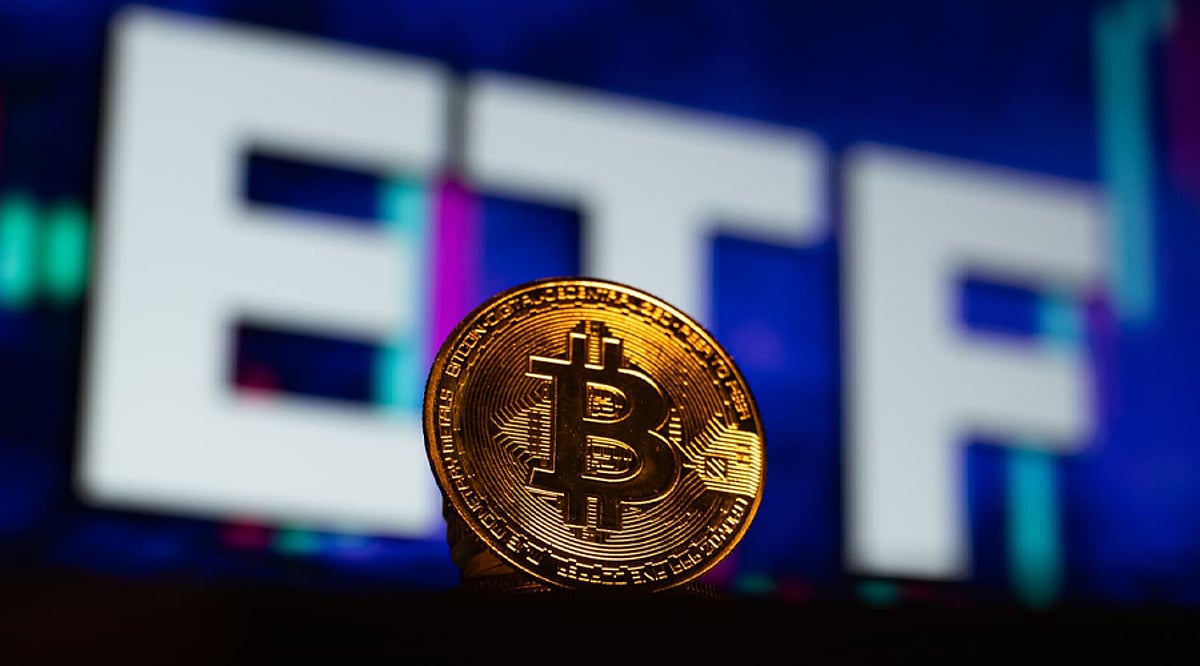
    Crypto ETFs are changing how everyday investors access digital assets. Instead of buying cryptocurrencies directly, investors can purchase ETF units through traditional brokerage accounts, making crypto investing feel more familiar, accessible, and integrated with established financial markets.

    What is a Crypto ETF?

    A crypto ETF is an exchange-traded fund designed to provide exposure to cryptocurrency prices or related assets. Like other ETFs, it trades on a stock exchange, allowing investors to buy and sell units during market hours without holding cryptocurrency directly.

    Bitcoin Leads the Way

    Bitcoin ETFs have become an important gateway for mainstream investors. They let market participants gain exposure to Bitcoin through conventional investment accounts, potentially reducing the complexity of setting up crypto wallets, managing private keys, and navigating cryptocurrency exchanges.

    Ethereum Expands Investor Choice

    Ethereum-focused ETFs broaden options for investors seeking digital-asset exposure. Ethereum’s role in decentralized applications, smart contracts, and blockchain infrastructure gives these investment products a different proposition from Bitcoin-focused funds, although both remain exposed to significant cryptocurrency market volatility.

    Familiar Investing Experience

    Crypto ETFs fit into investment habits people already understand. Investors can research funds, compare performance, monitor prices, and place trades through brokerage platforms. This familiar structure may make digital assets less intimidating for people who have avoided direct cryptocurrency ownership.

    Risks Still Remain

    Accessibility does not eliminate risk. Crypto ETFs can experience substantial price swings because underlying digital assets remain volatile. Investors should also consider fees, tracking differences, regulatory developments, market conditions, and the possibility of significant losses before allocating money to these products.

    A Bridge to Digital Assets

    Crypto ETFs could bridge traditional finance and the cryptocurrency ecosystem. By combining regulated market infrastructure with digital-asset exposure, they may help broaden participation while giving investors a simpler route into an increasingly mainstream investment category.

  • Ethereum Emerges as a Corporate Treasury Powerhouse in 2026

    Ethereum Emerges as a Corporate Treasury Powerhouse in 2026

    Bitcoin pioneered the corporate crypto treasury strategy, but in 2026, Ethereum has carved out its own place as a balance-sheet asset. Public companies now hold millions of ETH, drawn not only by potential price appreciation but also by staking income and Ethereum’s role in stablecoins, decentralized finance (DeFi), and tokenized assets.

    Corporate ETH Holdings Approach 8 Million

    According to CoinGecko, 34 public companies currently hold approximately 7,914,466 ETH, worth around $19.8 billion. That represents 6.49% of Ethereum’s total supply. BitMine Immersion Technologies dominates with 5,901,112 ETH (4.84% of supply), followed by SharpLink (868,699 ETH) and The Ether Machine (496,712 ETH). This corporate accumulation is large enough to influence discussions around liquid supply.

    ETH Offers Something Bitcoin Does Not

    Bitcoin treasury strategies typically rely on price appreciation because BTC lacks a native staking mechanism that generates protocol rewards. Ethereum is different. Companies can stake ETH and earn rewards for supporting network validation. This gives treasury managers the possibility of generating ETH-denominated income while retaining exposure to the underlying asset.

    The staking market itself has expanded sharply. Lido reports that total staked ETH increased 19% during the first half of 2026, from 36.3 million ETH to 43.1 million ETH. Institutional staking’s share grew from 25.9% to 35.3% in the same period, suggesting professional investors are increasingly treating staking infrastructure as part of institutional asset management.

    Ethereum Also Provides Infrastructure Exposure

    ETH is more than a scarce digital asset. It is used to pay transaction fees, secure Ethereum through staking, and function as collateral across decentralized finance. Ethereum also hosts major stablecoin and tokenized-asset markets, giving companies exposure to a broader blockchain-based financial ecosystem.

    Treasury Strategies Carry Risks

    Corporate accumulation can amplify both gains and losses. ETH remains volatile, and companies financing purchases through equity issuance or debt can expose shareholders to dilution and balance-sheet risk. Staking also introduces validator, custody, and operational risks. Moreover, corporate treasury companies can trade above or below the market value of their underlying ETH holdings.

    Final Thoughts

    Ethereum’s corporate adoption is creating a second major digital-asset treasury model. Bitcoin offers scarcity. Ethereum adds potential staking income and exposure to on-chain financial activity. The key question is whether corporate ETH holdings continue growing after market momentum weakens. If companies retain and stake ETH through downturns, Ethereum’s role as a treasury asset would look more structural than speculative.

    FAQs

    1. How much Ethereum do public companies hold in 2026?
    CoinGecko tracks 34 public companies holding about 7.91 million ETH. The holdings are worth roughly $19.84 billion and represent around 6.49% of Ethereum’s total supply.

    2. Which company holds the most ETH?
    BitMine Immersion Technologies leads corporate Ethereum holdings with 5,901,112 ETH, representing approximately 4.84% of Ethereum’s total supply.

    3. Why are companies adding ETH to their treasuries?
    Ethereum offers potential price appreciation alongside staking income. Companies may also view ETH as exposure to DeFi, stablecoins, tokenized assets, and broader blockchain infrastructure.

    4. How is Ethereum different from Bitcoin as a treasury asset?
    Bitcoin primarily offers scarcity and potential price appreciation, while Ethereum can generate native staking rewards. ETH also plays a direct role in transaction fees, network security, and DeFi collateral.

    5. What are the risks of corporate Ethereum treasury strategies?
    Risks include ETH price volatility, shareholder dilution, debt exposure, staking issues, and custody or operational failures. Treasury-company shares can also trade above or below the value of the underlying ETH holdings.

  • Why Custody and Succession Planning Are Becoming Crypto’s Next Big Trust Challenge

    Why Custody and Succession Planning Are Becoming Crypto’s Next Big Trust Challenge

    India’s crypto market has evolved beyond early speculation. According to a June survey by Mudrex, over 41% of Indian crypto investors now identify as long-term, buy-and-hold investors. This shift toward long-term ownership brings a critical question: What happens to digital assets when the owner is no longer around to access them?

    From Speculation to Long-Term Ownership

    Prateek Gupta, Head of Business at Mudrex, noted a generational trend: short-term trading drops steadily with age. Nearly a third of investors aged 18-24 trade short-term, compared to below 8% among those aged 55 and above. “Crypto ownership in India has been shifting from short-term speculation to long-term wealth building,” he said.

    The Access Problem

    Legal ownership does not guarantee wallet access. “A family can have every legal right to a deceased holder’s assets and still be locked out without the private keys or a registered nominee,” Gupta explained. He urged platforms to build nomination, succession documentation, and estate-planning support directly into the product.

    Regulatory Framework Strengthens Investor Confidence

    As of mid-2026, 54 Virtual Digital Asset Service Providers are registered with the FIU-IND under the Prevention of Money Laundering Act, including major exchanges like CoinDCX, CoinSwitch, Mudrex, ZebPay, WazirX, and Binance. The framework mandates strict KYC, suspicious transaction reporting, and continuous monitoring.

    Nomination: A Sign of Maturity

    CoinSwitch co-founder Ashish Singhal highlighted the platform’s nomination feature, comparing it to established practices in equities. “Just as nomination is an established practice across equities and other financial assets, crypto ownership needs the same level of preparedness,” he said. The feature allows investors to nominate a person for asset transfer in case of unforeseen circumstances.

    What Platforms Must Prioritize

    Building trust requires clear nomination processes, simplified documentation for legal heirs, secure key management, transparent communication, and regular audits of custody infrastructure.

    Final Words

    India’s crypto ecosystem has matured in compliance and investor behavior. The next phase hinges on solving the succession puzzle. Platforms that build robust nomination systems and transparent custody practices will earn deeper investor confidence.

  • Former RBI Governor Raghuram Rajan to Speak at Ripple Swell 2026 in New York

    Former RBI Governor Raghuram Rajan to Speak at Ripple Swell 2026 in New York

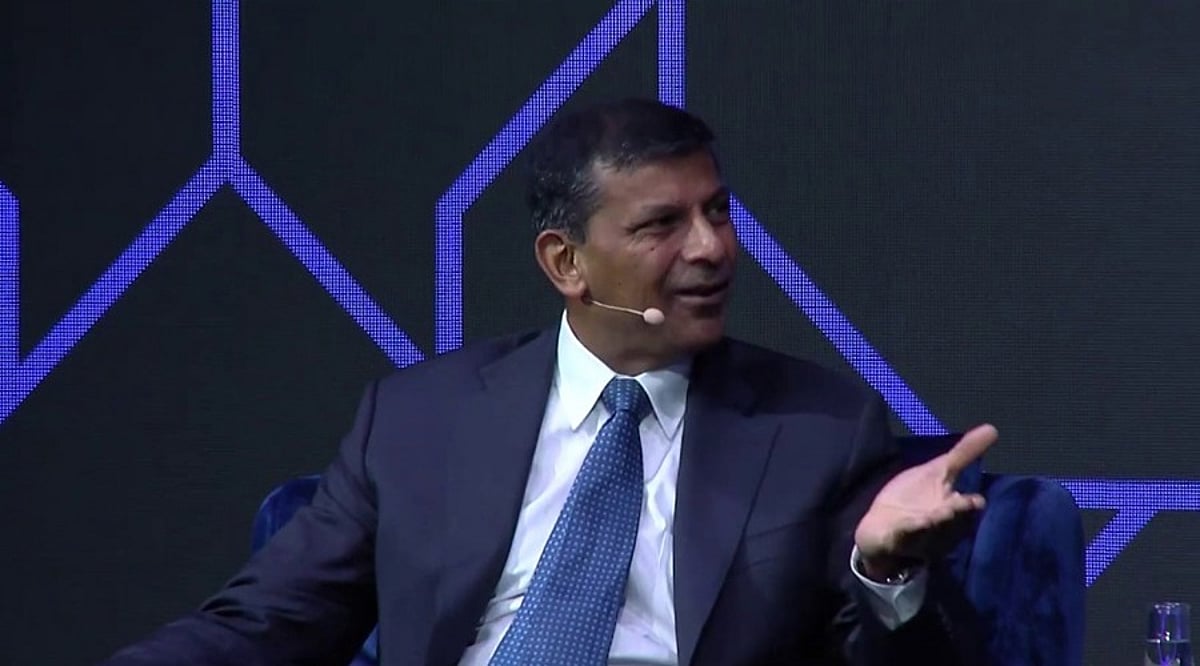
    Ripple’s annual conference, Swell 2026, is set to feature a notable addition to its speaker lineup: Raghuram Rajan, the former Governor of the Reserve Bank of India (RBI). Rajan will participate in the invitation-only Institutional Summit scheduled for October 27 in New York City, as announced by Ripple in a press release on September 4.

    The Institutional Summit is designed for leaders from banks, investment firms, payment providers, and other financial institutions. This year, Ripple is also integrating its developer-focused XRPL Apex conference with Swell, creating a combined program that bridges institutional finance and blockchain development. The events will take place at The Shed in Manhattan’s Hudson Yards, running through October 29.

    While Ripple has confirmed Rajan’s participation, the company has not yet disclosed the specific topic, session time, or format of his appearance. The conference website lists him as a speaker, but it remains unclear whether he will deliver a keynote or join a panel discussion.

    Rajan’s background is distinguished: he served as RBI Governor from September 2013 to September 2016, and prior to that, he was the Chief Economist at the International Monetary Fund (IMF). Currently, he holds the Katherine Dusak Miller Distinguished Service Professorship in Finance at the University of Chicago’s Booth School of Business and co-chairs the Federal Reserve’s task force on balance sheet policy.

    This is not Rajan’s first association with Ripple. In 2024, he became a member of Ripple’s advisory board for its RLUSD ecosystem, which provides strategic and regulatory guidance. He has also spoken about the future of stablecoins, which could soon be integrated into private payment systems.

    The full schedule for Swell 2026 is yet to be released, with Ripple expected to announce more details about Rajan’s session and other speakers. For now, his presence underscores the conference’s focus on bringing together central banking expertise and digital asset innovation.

  • Institutional OTC Trading Dominates Crypto Markets, Driving Lower Volatility and Selective Capital Flows in 2026

    Institutional OTC Trading Dominates Crypto Markets, Driving Lower Volatility and Selective Capital Flows in 2026

    Institutional investors now account for the majority of cryptocurrency OTC spot trading, fundamentally altering how capital moves across digital asset markets. According to Wintermute, institutions represented 72% of spot OTC volume during the first half of 2026, up from approximately 61% in the second half of 2024. This shift indicates that professional capital now plays a much larger role in liquidity provision and asset selection.

    Institutional Capital Changes Traditional Crypto Rotation

    Wintermute notes that institutional investors typically favor assets with deep liquidity, clearer regulatory standing, and stronger long-term fundamentals. This approach contrasts sharply with retail-driven trading, which often spreads across a wide range of speculative tokens.

    In earlier crypto cycles, gains in Bitcoin typically flowed into Ethereum before cascading into smaller cryptocurrencies. However, institutional participation has disrupted that familiar pattern. Capital now concentrates within a narrower group of established digital assets. As a result, expectations for another broad altcoin rally may be based on outdated market dynamics.

    The data also shows a marked decline in realized cryptocurrency volatility, which has fallen to around 45% compared to roughly 70% during previous market cycles. Institutional investors employ stricter risk controls and longer investment horizons, reducing the rapid capital movements that characterized retail-led trading.

    OTC Markets Gain Greater Influence Over Price Discovery

    The institutional shift has elevated the importance of crypto OTC trading. These markets enable investors to negotiate large transactions privately rather than placing them directly on public exchanges, allowing major trades to execute without immediately affecting visible order books. Consequently, large transactions can occur before retail traders see corresponding movements in public markets.

    As institutional activity expands, private liquidity providers play a larger role. Wintermute operates across centralized and decentralized markets, providing liquidity for digital asset trading.

    Lower volatility may temper some of the explosive gains historically seen among smaller cryptocurrencies, but it could also limit the scale of sharp market declines. The changing structure means liquidity, volatility, and asset selection increasingly reflect professional investment strategies.

    Tokenized Assets and Derivatives Attract Institutional Capital

    Beyond spot markets, Wintermute identifies tokenized real-world assets (RWAs) as a major destination for institutional capital. The sector reached approximately $31 billion during the first half of 2026, representing roughly 50% growth from the previous period. Average monthly transfer volumes more than doubled, reaching around $9 billion.

    Activity centered on tokenized U.S. Treasury securities, money market funds, and private credit instruments. Higher transfer volumes indicate growing operational use rather than purely speculative activity.

    Institutional demand has also expanded in crypto derivatives. Wintermute reports a 3.4-fold increase in notional OTC altcoin options volume compared with the second half of 2025. Professional investors increasingly use these instruments for hedging, portfolio management, and structured investment strategies, making derivatives another pillar of the market’s growing institutional infrastructure.

    Asset managers, hedge funds, banks, and corporate treasuries have all expanded their participation across digital assets, continuing to influence liquidity, volatility, and capital allocation.

    Final Thoughts

    Wintermute’s data reveals that institutional investors are taking a larger role in crypto OTC trading while capital becomes more selective. Lower volatility, stronger RWA activity, and growing derivatives use signal a market increasingly shaped by professional strategies, deeper liquidity, and a focus on established digital assets.

  • Voter Backlash Intensifies Trump Crypto Ethics Debate as TRUMP Token Weakens

    Voter Backlash Intensifies Trump Crypto Ethics Debate as TRUMP Token Weakens

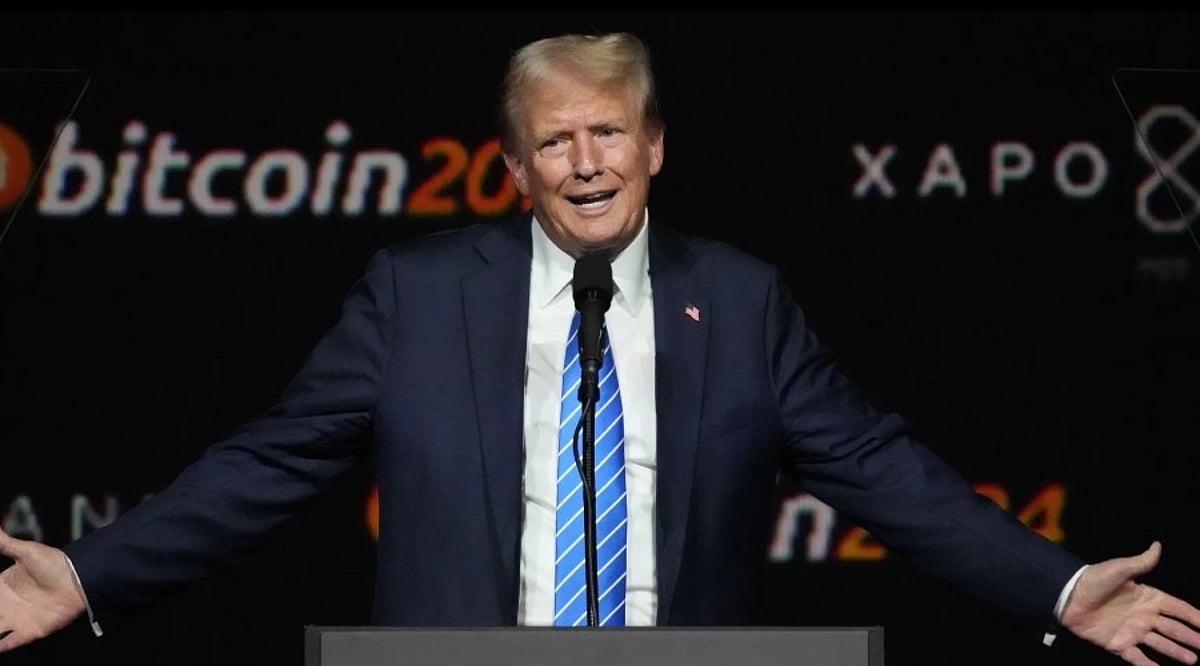
    Growing public opposition to President Donald Trump’s cryptocurrency earnings is intensifying the ethics debate in Washington, as Congress weighs comprehensive digital asset regulations. Recent polls reveal that a majority of voters support stricter limits on federal officials profiting from crypto, placing political pressure on politically linked tokens like the TRUMP token.

    Polls Show Broad Support for Crypto Ethics Limits

    Surveys cited by Democratic Senator Elizabeth Warren found that 55% of voters disapprove of Trump’s cryptocurrency-related earnings, with 44% expressing strong disapproval. A separate poll by the Progressive Policy Institute and GBAO reported even broader support for restrictions, with 71% to 75% of respondents backing limits on federal officials and their immediate family members profiting from cryptocurrency businesses. Support remained strong even after participants received information about Trump’s business background, adding momentum to an already contentious debate over political conflicts of interest in digital assets.

    Critics argue that elected officials should not financially benefit from industries they help regulate, while supporters maintain that private business ownership should not automatically disqualify individuals from public office.

    Congress Faces a Conflict-of-Interest Debate

    Congress continues to debate broader cryptocurrency legislation aimed at establishing comprehensive federal rules for digital assets. Ethics provisions have become a key sticking point in negotiations. The expansion of cryptocurrency ownership among politicians, corporations, and financial institutions has intensified calls for clearer standards on how public officials manage digital asset holdings and business interests.

    Market participants are closely watching whether public opinion will translate into legislative action. Measures restricting cryptocurrency ownership or financial interests among senior government officials could create new pressure for politically linked digital assets, while also affecting perceptions of regulatory certainty across crypto markets.

    TRUMP Token Faces Political and Regulatory Pressure

    Political uncertainty has also weighed on the TRUMP cryptocurrency token. The asset recently traded near $1.45 after falling approximately 9.4% over the past week. Politically branded tokens remain highly sensitive to legislative developments, public opinion, and election-related events. Analysts note that sentiment around public figures can move prices independently of broader cryptocurrency market conditions.

    Further restrictions on officials’ cryptocurrency interests could add downward pressure on politically linked assets. Conversely, prolonged negotiations without legislative changes could allow prices to stabilize if wider cryptocurrency conditions improve.

    The broader debate highlights how cryptocurrency has moved deeper into mainstream politics, with digital assets now central to discussions about public policy, ethics, elections, government oversight, and market confidence.

    Final Thoughts

    Public opposition to Trump’s cryptocurrency earnings is strengthening the ethics debate as Congress weighs digital asset legislation. The TRUMP token has weakened amid political uncertainty. Attention now centers on whether support for tighter rules will develop into formal restrictions on cryptocurrency interests held by senior federal officials.

  • Beijing Court Rules Video Game Accounts Are Inheritable Digital Assets in Landmark Decision

    Beijing Court Rules Video Game Accounts Are Inheritable Digital Assets in Landmark Decision

    A court in Beijing has ruled that online video game accounts can be inherited, recognizing that digital gaming assets with economic value form part of a person’s estate.

    The ruling came after the mother of a deceased gamer sought access to her son’s gaming accounts, which he had built over more than 10 years through gameplay and paid purchases. The Shijingshan District Court heard the case after the gaming company refused to transfer the accounts, citing its user agreement.

    The company argued that it owned the accounts and only granted users the right to use them. It also said gaming accounts were linked to individual users and could not be inherited.

    87 Accounts Built Over a Decade

    Court documents showed the deceased had created 87 gaming accounts over more than 10 years, collecting virtual items, character data and other digital assets through long-term investment of time and money.

    After learning that the accounts carried financial value, his mother asked the company to transfer the usage rights. The request was rejected.

    The court ruled that while the company owns and operates the gaming platform, users can hold inheritable property rights over digital assets that have independent economic value.

    It held that game accounts, virtual items, character data and other digital assets accumulated through years of gameplay and purchases qualify as virtual property. The court ordered the company to cooperate in transferring the inheritable rights associated with the accounts to the deceased player’s mother.

    The monetary value of the 87 accounts was not disclosed.

    Part of a Broader Legal Shift

    The judgment adds to a growing body of Chinese court rulings recognizing digital assets as inheritable property.

    Previous decisions have extended inheritance rights to Bitcoin holdings, valuable gaming accounts, domain names and commercial rights linked to social media accounts. Courts have also distinguished these assets from private chat records, which remain protected and are generally archived by platform operators.

    Chinese courts have further clarified that contractual clauses barring inheritance cannot override statutory inheritance rights.

    The latest ruling is expected to influence how gaming companies and other digital platforms handle inheritance claims. As virtual assets continue to gain real-world value, the decision reinforces that digital property built through years of investment can be passed on to legal heirs under Chinese law.

  • XRP’s Three-Month Volatility Low Raises Utility Questions as Price Holds Near $1.06

    XRP’s Three-Month Volatility Low Raises Utility Questions as Price Holds Near $1.06

    XRP has entered a notably quieter trading phase, with its 30-day realized volatility dropping to a three-month low of approximately 0.34 on Binance. According to CoinCodex, the token is currently trading near $1.06, a stabilization that follows weeks of sharper price swings.

    What Falling Realized Volatility Means for XRP

    Realized volatility measures an asset’s actual price movement over a specific period, reflecting past fluctuations rather than expected future conditions. CryptoQuant analyst Arab Chain noted that the decline indicates a clear reduction in daily price swings, describing the current action as relatively calm after a period of heightened volatility.

    The lower reading suggests that buyers and sellers have reached a temporary balance. Traders appear hesitant to open large positions until fresh information or stronger market momentum emerges.

    Traders Await the Next Market Catalyst

    Calmer markets often produce tighter ranges, weaker speculative activity, and less trading noise. However, extended volatility compression can precede a sharp move when new momentum arrives. Market participants are watching trading volume and open interest for signs that stronger participation has returned.

    Several catalysts remain in focus, including regulatory clarity in the United States, Ripple ecosystem growth, institutional adoption, derivatives positioning, macroeconomic developments, and broader crypto market sentiment. Recent attention has also been drawn to Google search results identifying XRP as a leading world bridge currency. Some analysts have discussed the possibility of a wider macro breakout and an early Wave 3 advance, though they link further gains to a sustained move above key resistance levels.

    Still, lower realized volatility offers no directional signal, as the eventual breakout could move in either direction.

    Utility Becomes the Core Value Argument

    Evernorth Chief Business Officer Sagar Shah argued that market price should not be the primary measure of XRP’s value. Speaking during a Q&A session on X, Shah said XRP is designed to move value across financial systems. While price attracts constant attention and dominates headlines, he presented utility as a stronger indicator of long-term value.

    Shah cited liquidity provision, cross-border settlement, lending, and tokenized assets as key uses within the XRP ecosystem. He emphasized that the most important signal comes from how XRP operates, rather than how it trades.

    For now, XRP remains near $1.06 while Binance realized volatility sits at a three-month low. Traders continue tracking market participation as the consolidation phase develops.

  • New Report by ChangeNOW and CoinRabbit Explores Crypto Privacy, Illicit Use, and Regulatory Path Forward

    New Report by ChangeNOW and CoinRabbit Explores Crypto Privacy, Illicit Use, and Regulatory Path Forward

    ChangeNOW, a cryptocurrency super app, and CoinRabbit, a crypto asset management platform, have jointly released a research report titled “Financial Privacy in the Digital Age.” The report examines the dual-use nature of privacy-preserving technology in cryptocurrencies, weighing legitimate needs for discretion against the risks of illicit exploitation. Drawing on data from TRM Labs, Chainalysis, the RAND Corporation, the United Nations Office on Drugs and Crime (UNODC), Statista, and U.S. Treasury Department disclosures, the study argues that current regulatory efforts are misdirected and should focus on fiat off-ramps rather than transactional privacy infrastructure.

    Balancing Privacy and Security

    The report finds that on-chain privacy has evolved from a niche preference to an essential safety measure. It protects individuals from physical extortion and kidnapping, prevents corporate espionage on treasury movements, and enables humanitarian efforts in conflict zones. The key conclusion is that privacy and compliance are not a zero-sum trade-off—the most significant enforcement vulnerability lies at the point where crypto converts to fiat currency, not in the privacy tools themselves.

    Key Findings and Threat Assessment

    • Pig-butchering fraud generated an estimated USD 75 billion in cumulative losses between 2020 and 2024.
    • Physical “wrench attacks” targeting cryptocurrency holders surged: $124.1 million in crypto was targeted in 52 verified incidents in H1 2026 alone, a 33% increase in incidents and nearly elevenfold rise in financial exposure compared to H1 2025.
    • Crypto payments linked to human trafficking networks in Southeast Asia grew 85% in 2025.
    • Corporate data exposure remains a major threat, with 36% of board members citing internal financial data becoming publicly accessible as a top governance concern, and the average data breach costing USD 4.44 million.

    Industry Solutions for Compliant Privacy

    “Financial privacy isn’t a feature request, it’s a baseline that every other financial system already provides,” said Pauline Shangett, Chief Strategy Officer at ChangeNOW. “The question the industry needs to answer isn’t whether privacy should exist on-chain. It’s whether we build it responsibly or let bad actors define what it looks like by default.” The report profiles two working examples: ChangeNOW’s Private Crypto Transfers, which break the deterministic link between sender and receiver without pooling user funds, and CoinRabbit’s custodial model, which uses dynamic per-user deposit addresses to prevent end-to-end reconstruction of a client’s holdings from public blockchain data.

    Recommendations for Policymakers

    The report closes with five recommendations centered on shifting enforcement resources toward fiat off-ramps and cross-jurisdictional intelligence sharing, rather than restricting transactional privacy for general users. The full report is available online.