Tag: digital assets

  • Top Cryptocurrency Platforms for Safe Long-Term Investing in 2025

    Top Cryptocurrency Platforms for Safe Long-Term Investing in 2025

    Looking for a trusted crypto platform to invest in with confidence? Here are the top exchanges offering strong security, long-term investing features, and reliable user experiences for both beginners and seasoned investors.

    • Coinbase: A beginner-friendly exchange known for strong security, regulatory compliance, and an easy investing experience.
    • Binance: Offers one of the world’s largest crypto selections with advanced trading tools and competitive fees.
    • Kraken: Highly trusted for its security, transparent operations, and professional trading features.
    • Bitstamp: One of the oldest crypto exchanges, offering reliability, strong compliance, and long-term investment options.
    • Gemini: Focuses on regulation, institutional-grade security, and simple investing for beginners and professionals alike.
    • Crypto.com: Provides crypto investing alongside staking, rewards, and an expanding ecosystem of financial products.
    • CoinDCX: A leading Indian crypto platform offering simplified investing, security features, and regulatory focus.
    • Mudrex: Ideal for long-term investors with automated crypto portfolios and easy recurring investment options.

    These platforms combine robust security measures with user-friendly interfaces, making them excellent choices for secure long-term cryptocurrency investing. Always do your own research before committing funds.

  • CLARITY Act Moves to Senate Floor Amid Ethics Concerns Over Trump Crypto Income

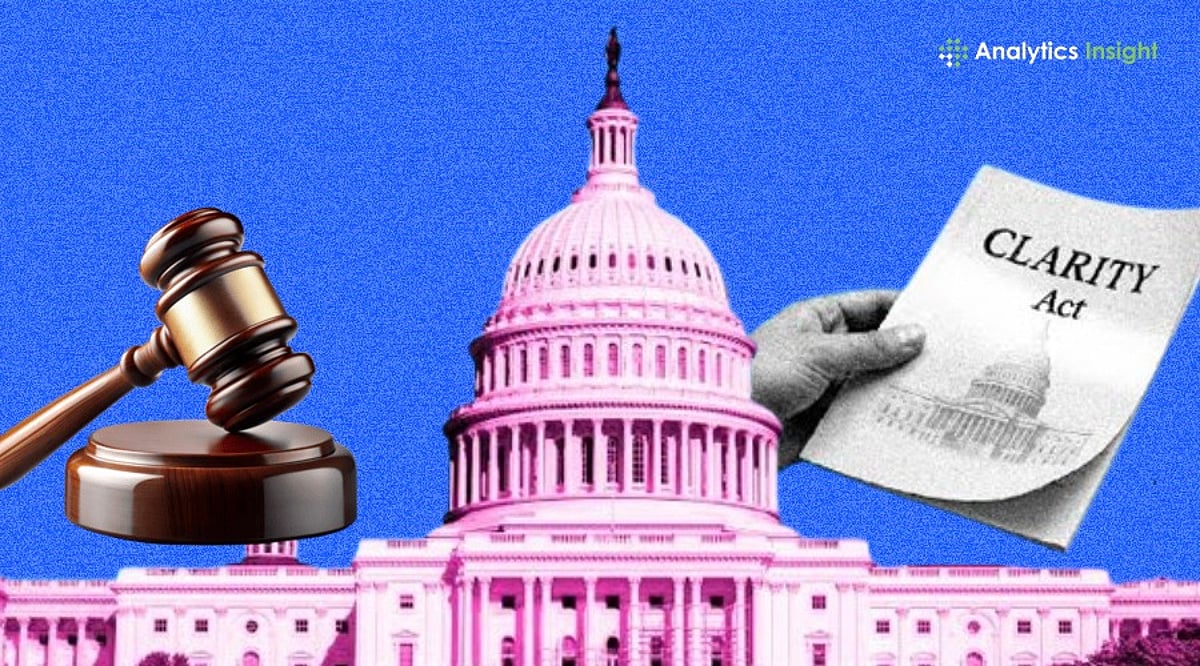
    CLARITY Act Moves to Senate Floor Amid Ethics Concerns Over Trump Crypto Income

    The Digital Asset Market Clarity Act (CLARITY Act) advanced out of the Senate Banking Committee by a 15-9 vote on May 14, 2026, setting the stage for a full Senate debate. Two Democrats—Ruben Gallego of Arizona and Angela Alsobrooks of Maryland—joined all Republicans on the panel, giving the bill early bipartisan support as lawmakers seek federal rules for digital assets.

    Committee Chairman Tim Scott called the markup a bipartisan effort to deliver clear rules for cryptocurrencies. The bill now shifts to the Senate floor, where supporters must secure at least 60 votes for passage. Senate leaders are expected to release the final draft this week for public review. Senator Cynthia Lummis said lawmakers, banks, and industry groups should receive the draft around July 4.

    The Senate placed the bill on the legislative calendar as item No. 423 on June 1, 2026, making it eligible for floor consideration. However, scheduling has proven tricky. Initial hopes for a vote before the July 4 recess faded after the Senate adjourned until July 13. Senator Bill Hagerty indicated the vote is more likely after lawmakers return, noting that the GENIUS Act demonstrated how clear rules can lead to lasting crypto policy. “This will be something more a matter of focus after the 4th of July recess period, but I certainly hope to see it done before,” Hagerty said on June 18, 2026.

    With Republicans holding 53 seats, the CLARITY Act needs at least seven Democratic votes to reach the 60-vote threshold. Lawmakers must also reconcile the Senate Banking Committee version with a separate draft from the Senate Agriculture Committee, then merge with the House-passed bill (H.R. 3633, approved 294-134 on July 17, 2025) before sending it to the president. Industry groups are pressing for action before the August recess, and staff continue to negotiate unresolved issues behind the scenes.

    Adding a new layer of complexity, President Donald Trump’s 2025 annual financial disclosure revealed roughly $1.4 billion in crypto-related income, including royalties from his memecoin company, token sales from World Liberty Financial, and sales to an Abu Dhabi sheikh’s firm. Trump also reported holding over $100 million in various cryptocurrencies and smaller stakes in firms like Corewave.

    In response, Senator Elizabeth Warren called for an ethics provision in the CLARITY Act, insisting the bill must prevent senior officials, lawmakers, and their families from profiting from crypto. Senator Gallego, who supported the bill in committee, said on X that he would work to address Trump’s crypto dealings and stressed the need for “real, enforceable standards” on ethics. Gallego did not commit to supporting the bill on the Senate floor, leaving the vote count uncertain.

    As the CLARITY Act heads toward a critical Senate test, its path depends on bipartisan support, final negotiations, and whether Congress can act before election-year pressure slows momentum.

  • Ethereum Institutional Launches as Independent Nonprofit Backed by Bitmine, Sharplink, and Joe Lubin

    Ethereum Institutional Launches as Independent Nonprofit Backed by Bitmine, Sharplink, and Joe Lubin

    Ethereum Institutional has officially launched as an independent nonprofit organization, marking a significant step in bridging Ethereum with traditional financial institutions. The initiative is backed by Bitmine Immersion Technologies, Sharplink Inc., and Ethereum co-founder Joe Lubin.

    The organization aims to serve as a dedicated gateway for banks, asset managers, custodians, fintech companies, market operators, and government institutions looking to engage with the Ethereum ecosystem. It will focus on outreach, coordination, and market access rather than trading, software development, or protocol research.

    David Walsh, who led the Ethereum Foundation’s enterprise unit for over five years, has been appointed as executive director. Alongside co-founder Matthew Dawson, Walsh previously built institutional relationships through the foundation, establishing a network of more than 500 institutional contacts. That network includes senior figures from both traditional finance and the digital asset industry.

    In early 2026, before the official launch, the Institutional Ethereum Forum attracted over 150 senior executives representing approximately $250 trillion in assets under management—demonstrating early access to major financial institutions.

    Board Composition and Strategic Backing

    Bitmine and Sharplink provide anchor funding for Ethereum Institutional. Both publicly listed companies hold substantial Ethereum reserves and rank among the largest publicly traded ETH treasury firms. The board includes Bitmine chairman Tom Lee, Sharplink CEO Joseph Chalom, and David Walsh. Joe Lubin, co-founder of Ethereum and CEO of Consensys, also supports the initiative.

    The treasury companies have a direct financial interest in broader Ethereum adoption, as greater institutional demand could increase ETH prices and raise the value of their corporate reserves. The organization maintains it will operate as a neutral body for the wider ecosystem.

    Global Expansion Plans

    Ethereum Institutional will initially operate across New York, London, Hong Kong, and Singapore, with plans to expand into Zurich, Frankfurt, Tokyo, and Abu Dhabi. These cities are among the world’s main centers for banking, asset management, capital markets, and digital finance, providing access to institutions that may consider Ethereum-based financial services.

    Complementary Organizations

    The launch follows the creation of EthLabs, another independent organization supported by the same anchor financiers. While EthLabs focuses on protocol research and infrastructure, Ethereum Institutional handles financial-sector outreach. Both organizations describe their operations as complementary parts of Ethereum’s next development phase.

    Their formation comes during a wider restructuring at the Ethereum Foundation, which has reduced its workforce by 20% and introduced the CROPS mandate as part of its strategic realignment. The foundation now transfers specialized responsibilities to independently funded organizations, with former foundation employees leading these units while private backers provide financial support and direct board participation.

    As a result, institutional engagement now moves outside the foundation’s nonprofit core. Ethereum Institutional will manage those relationships through a structure linked more closely to Ethereum treasury companies and infrastructure providers.

    What’s Next

    Ethereum Institutional brings formal coordination to Ethereum’s engagement with banks, asset managers, custodians, and public institutions. Backed by Bitmine, Sharplink, and Joe Lubin, the nonprofit enters with an established network and global expansion plan. Its progress will show whether structured outreach can deepen institutional Ethereum adoption while preserving operational neutrality.

  • Standard Chartered Launches Direct USDC Minting and Redemption for Institutional Clients in Dubai

    Standard Chartered Launches Direct USDC Minting and Redemption for Institutional Clients in Dubai

    Standard Chartered has become the first Global Systemically Important Bank to offer direct USDC minting and redemption services to eligible institutional clients. The service, launched through the bank’s Dubai International Financial Centre operations on July 2, 2026, integrates banking, custody, and digital asset access into a single onboarding process.

    In partnership with Circle, the issuer of USDC, Standard Chartered enables institutions to mint and redeem the stablecoin without needing a separate account with Circle. The bank stated that this launch marks the initial phase of a broader stablecoin strategy, with plans to expand into additional markets pending regulatory approvals.

    Dubai Operations Open USDC Access for Institutions

    Standard Chartered is the first systemically important bank licensed to offer institutional access to USDC minting and redemption through its own platform. The service connects fiat banking, digital asset infrastructure, and public blockchain networks under the bank’s existing compliance, governance, and risk management frameworks.

    Eligible clients can now access USDC through the bank’s Dubai operations. Future market expansions will depend on regulatory clearance and local market readiness, though the bank has not yet specified which regions will follow.

    This launch adds another regulated digital asset service to the United Arab Emirates, which has been developing a robust blockchain and stablecoin ecosystem. However, Standard Chartered has not disclosed client numbers, transaction limits, fees, or minimum account requirements.

    Service Supports Settlement, Treasury, and Liquidity

    The service targets institutional use cases such as on-chain settlement, treasury operations, and liquidity management. Clients can move value between traditional banking systems and blockchain networks through a single provider.

    Standard Chartered plans to combine banking, custody, and digital asset services within the same institutional offering, applying its normal controls to stablecoin-related transactions. Roberto Hoornweg, CEO of the bank’s corporate and investment banking division, noted that digital assets are becoming a key part of global financial infrastructure and that institutional clients expect “the same levels of trust and governance” found in traditional markets.

    The current offering focuses on minting and redemption. Clients can create USDC by transferring eligible funds through the bank and redeem the stablecoin back into fiat currency. Payment-related services remain under development, with no launch date announced.

    Circle Partnership Expands Institutional USDC Access

    Circle provides the USDC infrastructure behind the service. The company issues the stablecoin through regulated entities and manages the minting and redemption process. Kash Razzaghi, Circle’s Chief Commercial Officer, said financial institutions are seeking “trusted ways to access stablecoins” and blockchain-based markets, and that the partnership could support settlement, payments, and treasury operations while maintaining compliance standards.

    As of July 2, 2026, USDC traded near $1.00, with a market capitalization of approximately $73.2 billion and a 24-hour trading volume of about $15.6 billion. The stablecoin operates across several public blockchain networks and is widely used for transfers, settlement, trading, and liquidity management.

    Future versions of the service may support payment-related uses, but the bank has not provided a timeline. Retail customers are not included in the initial rollout.

  • Solana Spot ETFs Surpass $1.06 Billion as Institutional Demand Surges

    Solana Spot ETFs Surpass $1.06 Billion as Institutional Demand Surges

    Solana spot exchange-traded funds (ETFs) have reached a significant milestone, surpassing $1.06 billion in total assets under management. This surge is fueled by growing institutional interest, strong blockchain adoption, increased futures market activity, and support from major traditional financial institutions.

    Key Takeaways

    • Solana spot ETF assets now exceed $1.06 billion, reflecting robust investor demand.
    • Bitwise BSOL ETF leads the market with nearly $861 million in inflows, representing roughly 81% of the total market.
    • Institutional capital is rotating from Bitcoin ETFs toward Solana amid significant outflows from the former.

    Bitwise Dominates the Solana ETF Landscape

    Among the available Solana ETF products, Bitwise’s BSOL ETF stands out as the top performer. With nearly $861 million in total inflows, it commands about 81% of the entire Solana ETF market. This dominance underscores institutional preference for established fund managers when entering new crypto investment sectors and has bolstered overall confidence in the Solana ETF ecosystem.

    Institutional Capital Rotation From Bitcoin to Solana

    Recent data reveals a clear shift in institutional allocation within the cryptocurrency market. While U.S. spot Bitcoin ETFs experienced over $2.9 billion in outflows during a 10-day period in late May, Solana-based products attracted fresh capital. This divergence signals that institutional investors are diversifying beyond Bitcoin, drawn to Solana’s faster blockchain network, lower transaction costs, and expanding real-world use cases.

    Solana’s Price Action Reinforces Investor Confidence

    The positive ETF momentum aligns with Solana’s recent market performance. SOL has returned to the $73–$76 price range, posting a weekly gain of about 6.7%. In contrast, both Bitcoin and Ethereum showed weaker performance over the same period. Solana’s total market capitalization has now climbed above $42.7 billion, solidifying its position among the top digital assets globally.

    Network Activity and Real-World Utility Drive Adoption

    Rising institutional demand is strongly linked to Solana’s expanding blockchain ecosystem. Recent data shows the network handled nearly $1.36 billion in tokenized stock trading volume within a single week, representing about 96% of all blockchain-based equity trading activity across major networks. This surge in real-world asset tokenization highlights Solana’s practical utility beyond speculative trading, making it attractive to large institutions.

    Futures Market Signals Growing Confidence

    Investor confidence is also evident in Solana’s derivatives market. Open interest in Solana futures contracts has climbed to nearly $6.4 billion, a 29% increase over just a few weeks. Higher open interest typically indicates stronger participation from professional traders and institutions, foreshadowing potential larger price movements ahead.

    Traditional Finance Firms Embrace Solana

    Major financial institutions are building products around Solana. Reports indicate that Morgan Stanley is advancing plans for a Solana ETF that includes staking rewards. Additionally, several prominent custody providers now support Solana-based assets, reducing operational risk for institutional entrants and further legitimizing the asset.

    Why This Matters

    Solana’s $1.06 billion ETF milestone confirms a major institutional rotation. While Bitcoin faces multi-billion-dollar outflows, Wall Street is aggressively shifting capital toward Solana, drawn by its unmatched transaction speeds and dominance in tokenized stock trading. The broader crypto ETF market now shows a clear trend: investors increasingly favor blockchain networks with strong technology, fast execution, and real-world use cases.

    Analysts are watching $95 as the next major resistance level, with bullish forecasts targeting $120 if ETF inflows continue at the current pace. This milestone represents more than a number—it confirms Solana’s emergence as a cornerstone asset for institutional portfolios in the digital finance era.

    Frequently Asked Questions

    What does Solana spot ETFs crossing $1.06 billion mean?

    It signifies that regulated spot investment funds tied directly to Solana’s native token (SOL) now manage over $1.06 billion in total assets, marking deep institutional adoption.

    Which Solana ETF currently dominates the market?

    Bitwise’s BSOL ETF is the overwhelming leader, capturing nearly $861 million in capital inflows—roughly 81% of the entire Solana ETF market.

    Why are institutional investors aggressively rotating into Solana?

    Institutions are targeting Solana due to its superior blockchain infrastructure, low transaction costs, and dominant real-world utility, highlighted by $1.36 billion in tokenized stock trading in one week (96% of the blockchain equity market).

    How has Solana’s price reacted to this milestone?

    Solana outperformed peers with a 6.7% weekly gain, reaching the $73–$76 range, and its market cap exceeded $42.7 billion despite a broader market slowdown affecting Bitcoin and Ethereum.

    What future price levels and products are analysts tracking?

    Traders are watching $95 as immediate resistance, with bullish inflows potentially targeting $120. Structurally, firms like Morgan Stanley are advancing Solana ETF products with staking rewards.

  • Galaxy Research Lowers CLARITY Act Passage Odds to 50% Amid Senate Calendar Constraints

    Galaxy Research Lowers CLARITY Act Passage Odds to 50% Amid Senate Calendar Constraints

    Galaxy Research has reduced its estimate for the CLARITY Act becoming law in 2026, citing growing pressure on the US Senate calendar. The research firm lowered its forecast from 60% to 50%, emphasizing that the main challenge is timing rather than support for the legislation.

    Alex Thorn, Galaxy’s head of firmwide research, explained that lawmakers face a limited window to advance the crypto market structure bill before Congress enters its August recess. He noted that several legislative priorities continue to compete for Senate floor time.

    Scheduling Delays and Limited Senate Floor Time

    Galaxy Research said the latest revision reflects delays in the legislative process instead of concerns about the contents of the CLARITY Act. Thorn wrote that “as the Senate calendar tightens and a lack of progress in negotiations makes passage less likely than several weeks ago.”

    According to Thorn, the bill still lacks a unified Banking-Agriculture Committee text. In addition, Senate leaders have not announced a floor date or scheduled a motion to proceed. These missing steps have reduced confidence that lawmakers can complete the process within the available time.

    Galaxy previously reduced its estimate from 75% to 60% earlier in June. The latest adjustment brings the projected odds to an even 50-50 as lawmakers continue negotiations on unresolved sections of the proposal.

    Thorn stressed that the downgrade relates to legislative timing rather than the bill itself. The research team continues to view the legislation as capable of advancing if Congress schedules enough debate before the summer break.

    Other Legislative Priorities Increase Pressure on the CLARITY Act

    The Senate calendar has become more crowded after President Donald Trump stated that he would not sign a bipartisan housing bill unless Congress also passed the SAVE Act. Thorn said the dispute has reduced available floor time for other measures, including the CLARITY Act.

    He also noted that lawmakers must address other major items, including Section 702 of the Foreign Intelligence Surveillance Act and the National Defense Authorization Act for fiscal year 2027. These measures require Senate attention before the August recess.

    Thorn wrote, “For a 60-vote bill that still needs a merged Banking-Agriculture text, a motion to proceed, floor debate, an amendment process, and then House action on whatever the Senate produces, the runway is quickly declining into just a matter of weeks.”

    He added that Senate Majority Leader John Thune should announce floor time by early July. Without a scheduling decision, Thorn said the bill could move into September, when midterm political considerations may make difficult votes harder to schedule.

    Crypto Industry Continues to Watch the Bill’s Progress

    The CLARITY Act aims to establish a federal regulatory framework for digital assets in the United States. The proposal would divide oversight between the Securities and Exchange Commission and the Commodity Futures Trading Commission, while assigning primary authority over most crypto assets to the CFTC.

    The legislation has remained a major topic of discussion among lawmakers, digital asset companies, financial institutions and advocacy groups. While more than 200 crypto organizations have urged Congress to approve the bill, other groups have raised concerns about regulatory oversight and financial safeguards.

    The bill is scheduled for a House hearing on July 17 as lawmakers continue discussions. Industry participants are monitoring the Senate calendar closely because the remaining legislative timetable may determine whether the proposal advances this year.

    Despite lowering the probability estimate, Galaxy Research maintained that the legislation still has a realistic path forward. Thorn wrote, “We still think enactment this year has a strong chance — for a bill of this magnitude and complexity, 50-50 are pretty good odds.” The coming weeks are expected to determine whether Senate leaders allocate enough time to move the bill through the remaining legislative stages.

  • Why Institutional Investors Are Flooding the Crypto Market in 2026: Key Drivers and Market Impact

    Why Institutional Investors Are Flooding the Crypto Market in 2026: Key Drivers and Market Impact

    Institutional investors are transforming the cryptocurrency market at an unprecedented pace. Once dominated by retail speculators, the crypto space now attracts some of the world’s largest financial institutions, thanks to clearer regulations, the success of spot Bitcoin ETFs, improved custody solutions, and growing trust in blockchain technology. This shift is not just about adding liquidity; it is fundamentally reshaping market credibility, driving product innovation, and bridging traditional finance with the digital economy.

    The Main Drivers Behind Institutional Crypto Adoption

    In 2026, institutions are investing in cryptocurrencies for reasons that go far beyond potential returns. Diversification remains a top priority, as digital assets often show low correlation with stocks and bonds. Bitcoin’s fixed supply and decentralized nature also appeal as a hedge against inflation and geopolitical uncertainty. Client demand is another powerful catalyst—wealth managers and private banks are increasingly seeking regulated digital asset exposure for high-net-worth individuals and family offices. Instead of losing clients to specialized crypto firms, many traditional institutions have built in-house crypto capabilities.

    Technological maturity also plays a role. Beyond cryptocurrencies, blockchain’s potential to modernize payments, securities settlement, supply chain management, and asset tokenization makes crypto investments part of a broader digital transformation strategy. This evolution reflects a fundamental change in institutional thinking: crypto assets are now evaluated using the same frameworks applied to commodities, foreign exchange, and alternative investments.

    How Bitcoin ETFs Are Paving the Way

    The launch of spot Bitcoin ETFs has been a game-changer. Before ETFs, institutions faced complex challenges like setting up digital wallets, managing private keys, and navigating custody regulations. Now, they can invest in Bitcoin through standard brokerage accounts, with full compliance and reporting alignment. Growing ETF inflows have boosted Bitcoin’s market liquidity, narrowing bid-ask spreads and improving price efficiency. The success of Bitcoin ETFs has also led asset managers to explore diversified crypto ETFs, actively managed blockchain funds, and multi-asset digital portfolios.

    Hedge Funds, Banks, and Asset Managers Enter the Fray

    Institutional engagement extends well beyond buying Bitcoin. Hedge funds use quantitative strategies like arbitrage and derivatives, while others hold positions in Bitcoin, Ethereum, and other digital assets as part of alternative portfolios. Global asset managers are rolling out digital asset investment products, from actively managed crypto funds to institutional custody services. Commercial banks are adopting blockchain for payments, settlements, trade finance, and cross-border transactions, with dedicated digital asset departments offering custody, tokenization, and trading.

    Venture capital and private equity continue to fund startups in decentralized finance, tokenization, cybersecurity, and enterprise blockchain. Family offices, drawn by high growth and diversification, invest both in digital assets and emerging blockchain businesses. These activities are turning fragmented retail ecosystems into mature financial infrastructures governed by professional standards.

    Regulatory Clarity Accelerates Institutional Participation

    For years, regulatory uncertainty was the biggest barrier. Now, governments and financial authorities worldwide have issued clear rules on digital assets, exchanges, custody, stablecoins, taxation, and anti-money laundering. Standardized requirements boost investor confidence, while updated accounting and tax laws reduce confusion. Regulatory frameworks also enhance consumer protection and help distinguish reputable players from bad actors. Despite varying approaches across jurisdictions, the overall trend favors responsible institutional involvement and innovation.

    Bitcoin as a Strategic Institutional Asset

    Bitcoin’s fixed supply of 21 million coins reinforces its reputation as “digital gold.” Corporate treasuries increasingly hold Bitcoin to diversify cash reserves and seek long-term appreciation. Improved infrastructure—institutional-grade custody, regulated exchanges, and risk management tools—has reduced operational hurdles. Modern portfolio theory also supports small Bitcoin allocations due to its low long-term correlation with traditional assets. As macroeconomic uncertainty persists, Bitcoin’s role in institutional portfolios is set to expand further.

    Top Companies Leading the Crypto Charge

    Major financial institutions and corporations are actively embracing crypto. Asset managers have launched regulated Bitcoin investment vehicles for pension funds, insurers, and wealth managers. Several banks now offer crypto trading, custody, blockchain research, and tokenization services. Payment gateways use stablecoins and blockchain to optimize domestic and international transactions, reducing settlement times and costs. Technology companies continue investing in blockchain infrastructure, cloud services, and decentralized apps. Publicly traded firms holding Bitcoin on their balance sheets signal growing trust in crypto as a legitimate financial asset.

    Stablecoins and Tokenization: The Next Frontier

    Stablecoins solve crypto’s volatility problem by maintaining fiat peg, making them ideal for cross-border payments, treasury operations, and decentralized finance. Tokenization of real-world assets—government bonds, real estate, commodities, private equity—unlocks fractional ownership, faster settlement, and automated compliance via smart contracts. Major institutions see tokenization as a commercially viable way to modernize capital markets without changing the underlying instruments. Industry experts predict tokenized financial markets could become a multi-billion-dollar opportunity within the next decade.

    Market Impact: Liquidity, Stability, and Price Discovery

    Institutional capital has profoundly changed crypto market dynamics. Large, well-structured investments increase liquidity, narrow spreads, and enable smoother execution of big orders. Higher liquidity improves price discovery through quantitative models and sophisticated trading strategies. As more institutions enter, market volatility may decrease, making cryptocurrencies more attractive for long-term portfolio allocation. This influx is accelerating crypto’s integration into mainstream global finance, benefiting investors, businesses, and policymakers alike.

  • XRP Price Forecast 2026-2030: Can Ripple Reach $5 Before the Decade Ends?

    XRP Price Forecast 2026-2030: Can Ripple Reach $5 Before the Decade Ends?

    Ripple’s XRP has long been a heavyweight in the cryptocurrency market, distinguished by its real-world utility in global finance. Unlike many digital assets driven purely by speculation, XRP is designed to facilitate fast, low-cost cross-border transactions for banks and financial institutions. As of June 2026, the token is trading in a consolidation range between $1.00 and $1.20, reflecting recent market corrections and periodic monthly escrow releases by Ripple. Despite short-term volatility, market confidence remains strong, with XRP consistently ranking among the top cryptocurrencies by market capitalization.

    The path to $5—a target many analysts consider realistic before 2030—depends on a confluence of factors: sustained bullish momentum in the broader crypto market, continued expansion of Ripple’s payment network (RippleNet), favorable regulatory developments, and deeper institutional adoption. Key catalysts include Ripple’s legal victory over the SEC, which removed significant uncertainty, the launch of the RLUSD stablecoin for institutional settlements, and growing discussions around potential spot XRP exchange-traded funds (ETFs).

    XRP Price Prediction for 2026

    • Conservative estimate: $1.20 to $2.80, assuming slow market recovery and steady adoption.
    • Aggressive estimate: $3.50 to $6.50, if a strong bull cycle and rising institutional demand materialize.
    • Balanced outlook: $2.50 to $3.00 by year-end 2026.

    Outlook for 2027 and 2028

    By 2027, focus is expected to shift from speculation to real-world usage. If banks begin directly using XRP for cross-border transactions, price growth could accelerate. Forecasts suggest a range of $3.00 to $5.90 in 2027, with more bullish projections of $4.50 to $8.40 by 2028. Achieving $5 likely requires positive global crypto regulations, continued partnership growth for Ripple, and another Bitcoin bull cycle that lifts altcoins.

    XRP Price Prediction for 2030

    • Weak scenario: $2 to $3, limited adoption and stronger competition.
    • Balanced scenario: $5 to $8, steady institutional integration.
    • Highly bullish scenario: $15 to $25, if Ripple becomes a major pillar of global payment infrastructure.

    Extremely optimistic forecasts place XRP near $28 by 2030, though such targets remain highly speculative. Ultimately, XRP’s trajectory toward $5 and beyond hinges on a fundamental shift from retail speculation to deep institutional integration. With legal clarity now established, Ripple’s ability to anchor cross-border banking rails positions XRP as a key indicator of how legacy finance adopts digital assets.

    Disclaimer: This article is for informational purposes only and does not constitute investment advice. Always conduct your own research before making financial decisions.

  • Brazil Reaffirms Ban on Cryptocurrency Donations for Presidential Campaigns

    Brazil Reaffirms Ban on Cryptocurrency Donations for Presidential Campaigns

    Brazil’s Public Prosecutor’s Office has reaffirmed its ban on cryptocurrency donations to political campaigns ahead of the country’s next presidential election. The announcement reinforces existing campaign finance rules and highlights ongoing concerns about donor identification and funding transparency.

    Authorities stated that candidates and political parties must continue using traditional banking channels and the Pix payment system for campaign contributions. The office emphasized that electoral authorities must identify every donor and verify the origin of each contribution, noting that cryptocurrency transactions often fail to meet those requirements because blockchain wallet addresses do not always reveal the identities behind them.

    Prosecutors confirmed that campaign financing must remain fully transparent throughout the election period, and authorities will closely monitor compliance with campaign finance regulations. The latest announcement does not introduce new legislation but instead confirms an existing prohibition outlined in Brazil’s Superior Electoral Court Resolution No. 23,607, issued in December 2019. This regulation bars political parties and candidates from accepting campaign contributions through virtual currencies.

    Election officials require every donation to include the donor’s taxpayer identification number, allowing oversight agencies to verify both the source and legality of campaign funds. Officials explained that while blockchain transactions are publicly recorded, wallet addresses alone do not always identify the individuals behind them, creating challenges for enforcing campaign finance laws designed to prevent illicit funding and protect public accountability.

    Candidates who fail to properly disclose campaign funding sources may face financial penalties and may need to return improperly received funds to the public treasury. However, Brazilian law still allows digital crowdfunding for political campaigns under specific conditions. Online fundraising platforms may collect contributions if every donor is properly identified and authorities receive reports on every contribution.

    Brazil introduced digital crowdfunding through electoral reforms in 2017, and campaign fundraising through approved platforms may begin on May 15 during each election year. Authorities clarified that the difference depends on transparency rather than technology itself—as long as officials can identify donors and independently verify contributions, digital fundraising remains permissible.

    The restriction applies only to election financing and does not affect cryptocurrency ownership, trading, or broader digital asset activity across Brazil. Brazil remains one of Latin America’s most active cryptocurrency markets, with retail investors, financial institutions, and fintech companies continuing to expand their participation. The country has also introduced regulatory frameworks for virtual asset service providers while exploring broader blockchain applications within financial services.

    Analysts view the campaign finance restriction as a targeted transparency measure rather than a broader shift in Brazil’s digital asset policy. Brazil’s approach reflects a wider international debate over cryptocurrency use in political finance, with supporters pointing to blockchain’s permanent transaction records alongside stronger identity verification systems, while critics argue that pseudonymous wallets continue to create challenges for full donor disclosure and campaign transparency.