Tag: digital assets

  • Why India Must Replace Crypto Prohibition with a Clear Regulatory Framework

    Why India Must Replace Crypto Prohibition with a Clear Regulatory Framework

    For nearly a decade, India has debated cryptocurrency as a binary choice: ban it or allow it. That framing has outlived its usefulness. With roughly 39 million Indians holding an estimated $2.1 billion in digital assets, according to Indian tax-department estimates cited by Reuters in July 2026, the country now ranks among the world’s largest crypto markets by user base.

    The debate flared again this month when the Reserve Bank of India told a parliamentary panel that it favors prohibition, warning that a formal framework might lend crypto legitimacy. It’s an understandable instinct from a central bank guarding monetary sovereignty. But it misreads the problem. Prohibition does not erase demand; it relocates it. Push activity underground and it flows to precisely the channels regulators fear most: offshore exchanges, private wallets, and peer-to-peer transfers that are far harder to trace than a registered domestic platform.

    Uncertainty Is the Real Cost

    The status quo—legal to trade, but unregulated as a product, taxed heavily, and periodically threatened with a ban—is the worst of all worlds. It punishes everyone who plays by the rules while rewarding those who route around them.

    Startups feel it first. A founder cannot raise capital, hire, or build a compliance function around a policy that has been drafted, shelved, and redrafted more times than anyone can count. India’s own crypto discussion paper has reportedly been postponed on multiple occasions. Talent and companies that could have built here have simply incorporated in Dubai, Singapore, or elsewhere. That is innovation leaving, not innovation being contained.

    Consumers feel it too. Without a licensing regime that sets standards for custody, disclosure, and how exchanges use client funds, users have little protection when a platform fails or a scam unfolds. “Buyer beware” is not a consumer-protection strategy; it is the absence of one.

    Indians Will Use Crypto Regardless

    Here is the fact that should anchor the entire policy conversation: Indian users will be pushed further into international platforms if there is a ban or if a regulatory grey area persists. The tax department has already flagged this. In the year ending March 2023, fewer than one in four Indians who transacted in crypto reported it on their returns—largely because overseas exchanges and non-custodial wallets make beneficial owners nearly impossible to identify.

    A ban does not fix that gap; it widens it. Every user driven off a compliant, FIU-registered Indian exchange and onto an anonymous foreign one is a user the taxman can no longer see. Prohibition would hand the government the compliance nightmare it claims to be solving.

    Regulation Is the Visibility the State Actually Wants

    The paradox is that a clear framework serves the government’s own goals better than a ban ever could. Regulation is what produces visibility, accountability, and tax compliance.

    India already has the scaffolding. Exchanges must register with the Financial Intelligence Unit and follow KYC and anti-money-laundering rules. A 30% tax on gains and a 1% TDS are in place. From April 2026, stricter transaction-reporting standards carry real penalties. What is missing is the connective tissue: a licensing regime, a token-classification system that separates payment tokens from securities and utility tokens, and clarity on who regulates what. SEBI has already floated a multi-regulator model—a far more workable path than an outright ban.

    Onshoring is the prize. If compliant domestic platforms operate under clear, enforceable rules, capital and trading volume return to where they can be taxed and traced. That is how India protects consumers and revenue at the same time.

    The world is not waiting. Institutional adoption abroad keeps accelerating, and the OECD’s cross-border reporting framework arrives in 2027. India can shape sensible rules now, or inherit someone else’s later. A ban is a decision to look away. A policy is a decision to govern. India should choose to govern.
  • MEXC Secures Second Place in TradFi Perpetual Futures with $323.9 Billion Volume, CoinGecko Report Reveals

    MEXC Secures Second Place in TradFi Perpetual Futures with $323.9 Billion Volume, CoinGecko Report Reveals

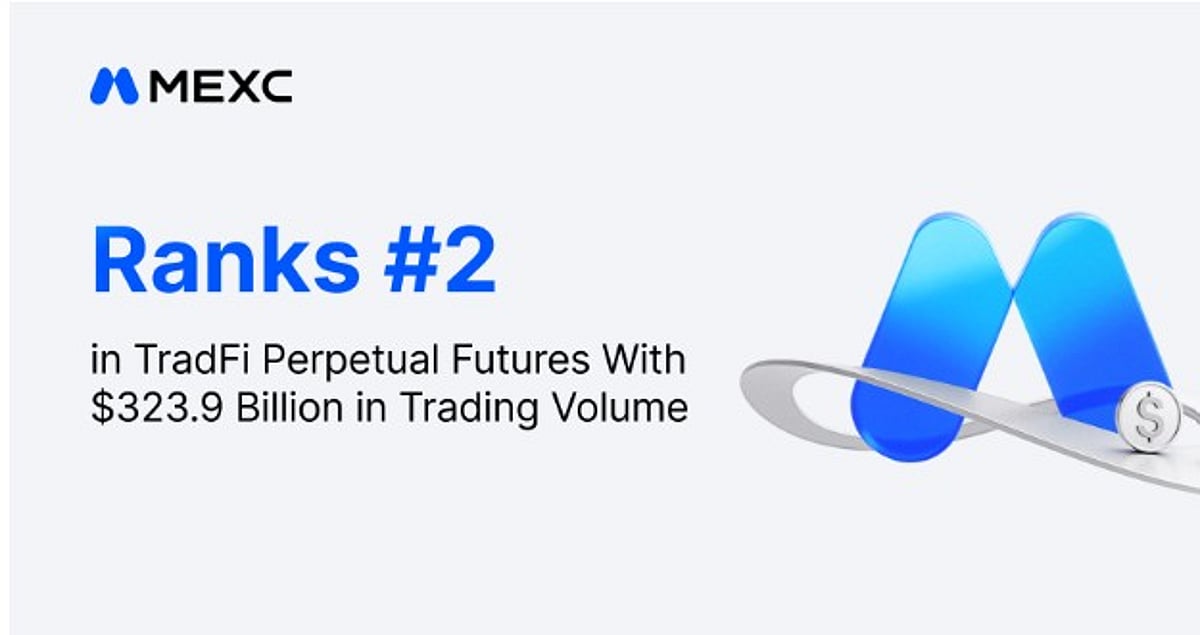
    MEXC, a leading 0-fee digital asset trading platform, has emerged as a top performer in CoinGecko’s newly released TradFi on Crypto Exchanges Report 2026. The exchange ranked second in TradFi Perpetual Futures trading volume, recording an impressive $323.86 billion between January 2025 and May 2026, while also leading all exchanges in the total number of RWA and TradFi product listings.

    According to the report, MEXC listed 358 RWA Spot and TradFi Perpetual Futures products during the review period, the highest among all centralized and decentralized exchanges tracked. This includes 199 RWA Spot and 159 TradFi Perpetual Futures, providing users with extensive access to stocks, commodities, and other traditional financial assets.

    In terms of trading volume, MEXC’s cumulative TradFi Perpetual Futures volume reached $323.86 billion, second only to Binance. The exchange’s average monthly market share in this segment rose from 21.7% in 2025 to 22.8% in the first five months of 2026. Notably, this growth occurred during a period of rapid expansion in the overall TradFi Perpetual Futures market, indicating that MEXC’s trading volume grew faster than the market average.

    “From product listings and cumulative trading volume to monthly market share, the CoinGecko report reflects MEXC’s progress in RWA and TradFi trading,” the exchange stated. “Looking ahead, MEXC will continue to expand its RWA and TradFi offerings under its ‘Infinite Opportunities’ vision, refining the trading experience and making it easier for global users to access a broader range of assets.”

    MEXC, trusted by more than 40 million users across 170+ markets, offers industry-leading 0-fee trading and access to over 3,000 digital assets. The platform serves as a gateway for trading cryptocurrencies alongside tokenized assets, including stocks, ETFs, commodities, and precious metals.

  • CLARITY Act Faces Critical Senate Vote as August Recess Deadline Approaches

    CLARITY Act Faces Critical Senate Vote as August Recess Deadline Approaches

    The CLARITY Act is racing against a tight Senate calendar as lawmakers resume session on July 13 with only 25 days before the August 7 summer recess. The bill requires 60 votes to overcome procedural hurdles and a potential filibuster, but securing that support remains daunting. Currently, only Democratic Senators Ruben Gallego and Angela Alsobrooks have publicly committed to the legislation.

    Ethics concerns tied to President Donald Trump’s reported $1.4 billion in crypto-related income during 2025 have further complicated negotiations. Galaxy Digital, a leading crypto investment firm, has lowered its estimate of the bill’s passage odds from 75% in May to 50-50 as of late June.

    The Digital Asset Market Clarity Act (H.R. 3633) already missed an earlier target for presidential signing on July 4. With about 20 Senate working days remaining, leaders must act swiftly to bring it to the floor. The timeline also coincides with the July 18, 2026 rulemaking deadline for the GENIUS Act, which became law in July 2025.

    Bipartisan support remains the primary obstacle. Republicans control 53 seats but need roughly seven Democratic votes to reach the 60-vote cloture threshold. So far, only Gallego and Alsobrooks have emerged as reliable Democratic supporters, leaving leadership seeking at least five additional Democrats. The bill did pass the Senate Banking Committee on May 14 with a 15-9 vote, signaling some bipartisan backing at the committee level.

    Ethics debates have intensified as Democrats raise concerns about public officials owning crypto. Former White House ethics lawyer Richard Painter argued that Trump “stands alone” compared to other executive branch officials, adding another layer to ongoing negotiations.

    Market observers have adjusted expectations. Alex Thorn, Galaxy Digital’s Head of Firmwide Research, noted the firm reduced its odds from 75% in May to 60% on June 9, then to 50% on June 26. Thorn wrote, “The absence of news is itself the news,” while adding that “50-50 is pretty good odds” for legislation of this scale. A revised version of the bill could be introduced as early as next week, just before the August recess.

    What’s Next?

    Supporters are racing to pass the CLARITY Act before the Senate breaks on August 7. They need 60 votes to beat a filibuster, but progress is stalled on disagreements over ethics rules for public officials owning crypto. With time running out, analysts now give the bill only a 40% to 50% chance of passing.

  • Crypto Wallet Security Guide: Essential Tips to Protect Your Digital Assets

    Crypto Wallet Security Guide: Essential Tips to Protect Your Digital Assets

    Digital money has become a popular choice for millions of people across the world. More users are stepping into the crypto market every day, and this growth has also attracted cybercriminals. Most crypto theft does not happen because hackers break the blockchain. Instead, criminals often trick wallet owners into sharing private information or approving fake transactions. A single mistake can lead to a complete loss of funds because crypto payments usually cannot be reversed. Strong wallet security has become one of the most important parts of every crypto journey.

    Select the Right Wallet for Every Purpose

    A crypto wallet comes in two main forms. A hot wallet stays connected to the internet and works well for quick payments, trading, or regular use. A cold wallet, also known as a hardware wallet, keeps private keys offline. This extra layer of protection makes it much harder for online attackers to reach stored assets.

    Many security experts recommend a simple approach. A hot wallet can hold a small amount for daily activity, while a hardware wallet can protect larger investments. This balance offers both convenience and stronger protection.

    Protect the Recovery Phrase at All Costs

    Every crypto wallet creates a recovery phrase, also called a seed phrase. This group of words acts as the master key to the wallet. Anyone with access to this phrase can open the wallet and transfer every asset without permission.

    Cloud storage, email accounts, note applications, and screenshots create unnecessary risk because hackers often target these places. A written copy stored in a secure location remains one of the safest options. Some people also choose metal backup plates because they offer better protection against fire, water, and physical damage. Safe storage of the recovery phrase remains the strongest defense against wallet theft.

    Strong Passwords and Extra Security Add More Protection

    A weak password creates an easy path for attackers. A long and unique password makes unauthorized access much more difficult. Password reuse across different accounts also increases security risk as a data leak from one website can expose other accounts.

    Two-factor authentication adds another level of protection for crypto exchanges and wallet-related accounts. Security specialists generally recommend authentication applications instead of SMS verification because phone numbers may become targets of SIM swap attacks. This simple security step can stop many common attacks before they succeed.

    Fake Websites and Scams Continue to Grow

    Phishing remains one of the biggest dangers in the crypto world. Criminals often create fake websites that look almost identical to official wallet providers, exchanges, or NFT marketplaces. Some even pretend to offer customer support and ask for confidential details.

    The recovery phrase should never appear on any website unless a wallet recovery process takes place through trusted official software. Honest support teams never request this information. Careful attention to website addresses and unexpected messages can prevent major financial losses.

    Every Transaction Needs Careful Review

    Crypto transactions move very quickly. Once a transfer receives confirmation on the blockchain, there is usually no way to cancel it. That makes careful review extremely important before every payment.

    The wallet address, transfer amount, and blockchain network deserve close attention before approval. Extra care also becomes necessary during interaction with decentralized applications. Many recent attacks rely on fake smart contract approvals instead of password theft. A few extra seconds of review can prevent expensive mistakes.

    Regular Updates Close Security Gaps

    Wallet software, hardware wallet firmware, browsers, and operating systems receive updates throughout the year. Many of these updates contain security fixes that protect against newly discovered threats.

    Old software may contain weaknesses that attackers already understand. Regular updates reduce this risk and help maintain a safer environment for digital assets. Security experts continue to stress the importance of current software across every device connected to crypto accounts.

    Official Sources Reduce Risk

    Fake wallet applications and counterfeit browser extensions continue to appear across the internet. Some fake versions look almost identical to legitimate products and aim to steal recovery phrases or private keys.

    Official websites and trusted app stores remain the safest places for wallet downloads. Search advertisements and unknown links deserve extra caution because criminals sometimes use these methods to attract victims. Careful selection of software sources greatly reduces the chance of malware installation.

    Separate Wallets Create Better Protection

    Many experienced crypto users avoid keeping every asset inside a single wallet. Separate wallets provide an extra layer of safety. One wallet may support long-term savings, another may handle trading activity, while a third may connect with decentralized finance platforms, blockchain games, or NFT marketplaces.

    This approach limits damage if one wallet becomes compromised. Large investments remain protected even if a wallet used for daily activity faces a security problem.

    Device Security Also Plays an Important Role

    A secure wallet cannot fully protect digital assets if the connected device becomes infected with malware. Strong device security remains an essential part of crypto protection.

    Reliable antivirus software, secure screen locks, biometric protection, and trusted applications all help reduce risk. Rooted or modified devices may remove important security features and create additional weaknesses. Research published in 2026 also highlights privacy concerns related to browser wallet extensions, which may expose user information if unnecessary permissions remain active. Careful management of installed extensions and regular software updates improve both privacy and wallet security.

    Final Thoughts

    Security in cryptocurrency relies more on the right habits than on technical expertise. Good storage of recovery phrases, strong passwords, the use of hardware wallets, trusting software sources, and careful review of the transaction steps form a solid base of security. Most successful crypto frauds are caused by user mistakes rather than vulnerabilities of blockchain technology. By paying attention to the practices outlined above, it is possible to ensure relatively safe use of cryptocurrency.

    Frequently Asked Questions

    1. What is the safest type of crypto wallet? A hardware wallet offers the highest level of protection because private keys remain offline.
    2. Why is the recovery phrase so important? The recovery phrase gives complete access to a crypto wallet. Anyone with this phrase can control the stored assets.
    3. Is two-factor authentication necessary? Yes. Two-factor authentication adds an extra layer of security and helps block unauthorized access.
    4. Why should wallet software stay updated? Software updates fix security weaknesses and improve protection against newly discovered threats.
    5. Can a fake website steal crypto? Yes. Fake websites often trick users into revealing recovery phrases or approving fraudulent transactions, which can result in permanent asset loss.
  • Sony Bank Secures Preliminary OCC Approval for Connectia Stablecoin Trust

    Sony Bank Secures Preliminary OCC Approval for Connectia Stablecoin Trust

    Sony Bank has received preliminary conditional approval from the U.S. Office of the Comptroller of the Currency (OCC) to establish Connectia Trust, National Association — a national trust bank focused exclusively on issuing and managing U.S. dollar stablecoins. This approval places Sony alongside major digital asset firms such as Circle, Ripple, and Paxos that have pursued federal trust charters.

    Connectia will operate as a wholly owned subsidiary of Sony Financial Group with an initial capital of $40 million (approximately ¥6.4 billion). The company targets a 2027 launch, but cannot begin operations until it secures final authorization from U.S. regulators and additional approvals from Japanese authorities.

    Connectia Trust Focuses Only on Stablecoin Operations

    Sony Bank confirmed that Connectia will serve a single purpose: issuing and managing dollar-denominated stablecoins. The trust will not offer traditional banking services such as deposit-taking, lending, or payment processing. Instead, its activities will be strictly limited to stablecoin issuance, custody, management, transfer, and redemption.

    No commercial activities will commence until all regulatory approvals are obtained. Sony stated that stablecoin issuance will remain on hold until the OCC grants final approval and every required authorization becomes effective.

    As part of the disclosure, Sony Financial Group noted that it plans to invest more than 10% of its capital in this venture, as reported under Japan’s Financial Instruments and Exchange Act. Additionally, Sony partnered with California-based Bastion Platforms in December 2025. Bastion is expected to act as issuer, custodian, and reserve manager after the token launches, while also seeking its own national trust charter.

    Federal Charter Expands Sony’s Role

    Roman Goldstein, director at Klaros Group and a former OCC regulator, described Sony’s project as the first commercial-conglomerate ecosystem bank. He noted that the charter would make Sony the issuer of record, enabling direct communication with regulators and oversight of its own compliance program. The charter would also allow Sony to earn income from reserve assets.

    Goldstein added that this structure could position Sony to qualify under the GENIUS Act in the future. Without its own charter, Sony would have to rely on another company’s license and assume that firm’s regulatory risks.

    Evey Guo, principal at FS Vector, said the federal charter would allow Sony to manage issuance, custody, transfers, and redemption under one federal supervisor instead of depending on third-party providers and money-transmitter licenses.

    Sony plans to integrate the stablecoins into its own ecosystem. According to American Banker, the company expects to use the tokens for treasury management, cross-border payments, and purchases across its gaming, anime, movie, and music businesses — reducing payment processing costs.

    Critics Raise Banking and Regulatory Concerns

    The proposal has faced scrutiny since October 2025. The Bank Policy Institute questioned whether the charter could blur the longstanding separation between commerce and banking. The Independent Community Bankers of America argued that the trust would not carry deposit insurance and warned that regulators had not tested this framework for an institution of Sony’s size.

    The National Community Reinvestment Coalition also argued that approving Connectia could create a two-tier chartering system by granting digital asset firms federal status without equivalent public obligations.

    Despite criticism, the OCC moved forward under its current legal interpretation. Goldstein suggested that regulators may also require Connectia to appoint a full-time chief financial officer before operations begin. Sony still needs final OCC approval, clearance from Japanese regulators, and leadership for the new trust before Connectia can launch its stablecoin business in 2027.

  • MEXC Expands Tokenized Stock Offerings with Nine New Ondo Trading Pairs Focused on AI Infrastructure

    MEXC Expands Tokenized Stock Offerings with Nine New Ondo Trading Pairs Focused on AI Infrastructure

    Victoria, Seychelles — MEXC, a leading zero-fee digital asset exchange, has announced the addition of nine tokenized stock and ETF trading pairs from Ondo Finance to its spot market. The listings, effective July 8, 2026, expand the range of on-chain U.S. equity exposure available to users, targeting companies involved in data centers, semiconductors, and power supply chains—key sectors driven by rising AI infrastructure demand.

    The new pairs include tokenized versions of stocks and ETFs such as Bloom Energy (BEON/USDT), Astera Labs (ALABON/USDT), Credo Technology (CRDOON/USDT), the Roundhill Memory ETF (DRAMON/USDT), Innodata (INODON/USDT), and Celestica (CLSON/USDT). Full listing times are available in MEXC’s official announcement.

    Ondo Finance specializes in bringing traditional financial assets onto blockchain networks through compliant infrastructure. Each tokenized asset is backed by the underlying security held via regulated custodial brokers. This latest batch further strengthens MEXC’s lineup of tokenized stocks, reinforcing the platform’s commitment to offering “Infinite Opportunities” for its users.

    Beyond Ondo’s products, MEXC also provides “RealStocks,” which allows users to hold actual share ownership and receive dividends. The integrated trading experience enables users to access a wide range of investment products without switching platforms.

    About MEXC
    MEXC is one of the fastest-growing cryptocurrency exchanges globally, trusted by over 40 million users across 170+ markets. It offers industry-leading zero-fee trading and access to more than 3,000 digital assets, including cryptocurrencies, tokenized stocks, ETFs, commodities, and precious metals.

    Risk Disclaimer: This content does not constitute investment advice. The cryptocurrency market is highly volatile; investors should conduct their own research before making any trading decisions.

  • CertiK Named Preferred Security and Compliance Vendor for Hub71, Boosting Abu Dhabi’s Digital Asset Ecosystem

    CertiK Named Preferred Security and Compliance Vendor for Hub71, Boosting Abu Dhabi’s Digital Asset Ecosystem

    NEW YORK, New York [July 6, 2026] — CertiK, the largest Web3 security services provider, today announced its selection as an official vendor for Hub71, the global tech ecosystem based in Abu Dhabi Global Market (ADGM). The partnership gives Hub71 portfolio companies preferred access to CertiK’s security and compliance services as they build and scale in one of the world’s fastest-growing digital asset hubs.

    As part of the partnership, Hub71 portfolio companies will receive a 20% discount across CertiK’s full range of services, backed by a total subsidy pool of $200,000 available to eligible companies in the ecosystem. Hub71 startups will also receive free access to the CertiK Compliance Tool, CertiK’s platform for navigating licensing applications — including with the ADGM Financial Services Regulatory Authority (FSRA) and the UAE Central Bank — and for managing ongoing regulatory compliance.

    The partnership comes as digital asset regulation in the UAE and beyond has moved from an exploratory phase into active, cross-jurisdictional enforcement. For early-stage companies, that shift has raised the stakes around licensing readiness, AML compliance, and smart contract security from day one, rather than as later-stage concerns.

    Through the partnership, Hub71 companies gain direct access to CertiK’s suite of services, including smart contract audits, penetration testing, and ongoing security monitoring, alongside compliance support tailored to the licensing pathways most relevant to companies building in and around ADGM. The CertiK Compliance Tool is designed to help founders track requirements across jurisdictions as they expand internationally, reducing the time and cost typically associated with multi-jurisdictional licensing.

    The collaboration reinforces CertiK’s role as a trusted security and compliance partner for high-growth digital asset ecosystems globally, and reflects Hub71’s continued investment in giving portfolio companies access to the infrastructure and expertise needed to scale responsibly.

    About Hub71

    Hub71 is Abu Dhabi’s global tech ecosystem, created to help ambitious startups build, scale, and access new markets from the UAE. Backed by Mubadala, ADQ, and ADGM, and headquartered within Abu Dhabi Global Market, Hub71 connects founders with capital, corporate and government partners, and a growing community of tech companies across fintech, Web3, AI, and other high-growth sectors. Since its launch, Hub71 has supported hundreds of startups with funding access, business setup support, and a network designed to accelerate their growth in the region and beyond.

    About CertiK

    CertiK is the largest Web3 security services provider, founded in 2017 and headquartered in New York. Based on breakthroughs in formal verification technology achieved by professors from Yale University and Columbia University, CertiK has become a trusted risk management partner for regulators, institutions, and Web3 innovators.

    CertiK delivers AI-powered, full-lifecycle risk management solutions that integrate directly into institutional clients’ system development lifecycles (SDLC). Backed by the industry’s largest Web3 security database, CertiK embeds AI at the very forefront of code development, code auditing, formal verification, and product deployment, while integrating it into on-chain and off-chain real-time scanning, helping organizations manage risk throughout the entire digital asset lifecycle and transform reactive security into proactive governance.

    To date, CertiK has detected more than 117,000 vulnerabilities and protected over $600 billion in digital assets across 150+ countries and regions. Operating under SOC 2 Type II and ISO 27001 standards, CertiK also works closely with regulators across multiple jurisdictions, contributing to digital asset policy development and regulatory consultation efforts worldwide.

  • How Cryptocurrency Is Reshaping Global Politics and the World Economy

    How Cryptocurrency Is Reshaping Global Politics and the World Economy

    Cryptocurrency’s Expanding Influence

    Cryptocurrency is no longer just a digital asset for speculative trading—it is actively transforming global trade, government policies, and financial systems. From national Bitcoin reserves to central bank digital currencies (CBDCs), the impact of digital assets is being felt across the world economy. Here’s a closer look at the key ways cryptocurrency is reshaping the geopolitical and economic landscape.

    Faster Cross-Border Payments

    Traditional international money transfers are often slow and expensive, relying on a network of correspondent banks. Cryptocurrency enables faster and cheaper cross-border payments by bypassing these intermediaries. This is especially beneficial for remittances and business transactions, reducing costs and settlement times from days to minutes.

    National Bitcoin Reserves

    Several countries are exploring or actively holding Bitcoin as part of their national financial strategy. By diversifying reserves with digital assets, nations can hedge against inflation, reduce reliance on the U.S. dollar, and strengthen their economic sovereignty. This trend is gaining traction, particularly in emerging economies.

    Central Bank Digital Currencies (CBDCs)

    Governments worldwide are developing CBDCs to modernize payment systems and maintain control over monetary policy. These digital currencies aim to combine the efficiency of crypto with the stability of traditional fiat, offering a state-backed alternative to decentralized assets.

    Sanctions and Global Trade

    Cryptocurrency provides new payment channels that can reduce dependence on conventional international financial networks like SWIFT. For countries under sanctions, crypto offers a way to conduct trade and access global markets outside the traditional banking system, raising both opportunities and concerns for regulators.

    Institutional Adoption

    Banks, investment firms, and corporations are increasingly adding digital assets to their portfolios and services. This mainstream adoption is driven by demand from clients, potential for high returns, and the desire to innovate. Institutional involvement also brings more liquidity and legitimacy to the crypto market.

    AI and Crypto Convergence

    Artificial intelligence is enhancing cryptocurrency trading, fraud detection, and blockchain security. AI algorithms can analyze vast amounts of data to predict market movements, identify suspicious transactions, and optimize mining operations, making the crypto ecosystem more efficient and secure.

    Global Regulation

    Countries continue to introduce crypto regulations to encourage innovation while protecting investors. Regulatory frameworks vary widely, from outright bans to supportive licensing regimes. Clear rules are seen as essential for fostering trust and long-term growth in the digital asset space.

    The Future Economy

    Blockchain technology, the backbone of cryptocurrency, is expanding into finance, healthcare, logistics, and digital identity systems. Its ability to provide secure, transparent, and decentralized record-keeping has the potential to revolutionize multiple industries, creating a more efficient and equitable global economy.

  • Strategy Sells $216M in Bitcoin to Fund Dividends, Maintains 843,775 BTC Reserve

    Strategy Sells $216M in Bitcoin to Fund Dividends, Maintains 843,775 BTC Reserve

    Strategy completed its largest Bitcoin sale since 2022 after selling 3,588 BTC for $216 million between June 29 and July 5 under its new Bitcoin monetization program. The company directed the proceeds toward preferred stock dividend payments while maintaining its long-term Bitcoin strategy.

    Following the transaction, Strategy retained 843,775 BTC valued at about $53.88 billion alongside $2.55 billion in U.S. dollar reserves. The sale briefly weighed on Bitcoin before buyers returned, lifting the asset back toward the $63,000 level.

    Strategy Uses Bitcoin Sale to Support Capital Plan

    The company carried out the transaction through its newly introduced Digital Credit Capital Framework. According to Strategy, the framework aims to strengthen credit quality while reducing expected preferred stock dividend payments whenever doing so benefits the company.

    Strategy also stated that the framework outlines how it plans to manage capital while preserving its long-term Bitcoin exposure. Besides supporting dividends, the company said the program allows it to use different capital management tools when necessary.

    The latest disposal marks Strategy’s first major Bitcoin sale since 2022. The proceeds will support shareholder returns tied to the company’s dividend products rather than signal a broader reduction of its Bitcoin holdings.

    Michael Saylor said the transaction related to dividend funding instead of a departure from Strategy’s Bitcoin strategy. Even after the sale, the company remains the largest publicly traded corporate holder of Bitcoin.

    Digital Credit Framework Expands Treasury Flexibility

    The latest transaction followed a much smaller Bitcoin sale in late May. At that time, Strategy sold 32 BTC to support preferred stock distributions, introducing the market to its evolving treasury approach.

    Moreover, the new capital framework allows the company to monetize as much as $1.25 billion worth of Bitcoin under specific conditions. Strategy said those proceeds may strengthen cash reserves, fund preferred dividends, cover interest expenses, or support share buybacks.

    The company also increased the annual dividend rate on its STRC perpetual preferred stock from 11.5% to 12%. Consequently, investors now view Strategy’s treasury model through a broader capital management perspective.

    The company still holds one of the largest corporate Bitcoin reserves despite introducing a defined path for selective Bitcoin sales. As a result, each transaction may receive close market attention regardless of its size compared with total holdings.

    Bitcoin Recovers After Initial Market Reaction

    Bitcoin briefly retreated after news of the sale reached the market. Shortly afterward, buyers returned and pushed the asset back toward the $63,000 area. Bitwise CEO Hunter Horsley commented on the price action through X, writing, ‘Bitcoin wants to be higher.’ His statement came as traders watched for signs of broader selling pressure following Strategy’s transaction.

    Meanwhile, market participants continued monitoring several factors that influence Bitcoin prices, including spot ETF flows, leverage levels, macroeconomic data, and expectations surrounding U.S. interest rates. Recent weak U.S. jobs data increased expectations for future Federal Reserve rate cuts. Lower rate expectations often support risk assets when investors anticipate easier financial conditions.

    Still, traders remained cautious after Strategy demonstrated that even long-term corporate Bitcoin holders may use digital assets as a liquidity source under new capital strategies.

  • Trump’s Bitcoin Reserve Plan Stalled by Legal and Agency Disputes

    Trump’s Bitcoin Reserve Plan Stalled by Legal and Agency Disputes

    President Donald Trump’s ambitious Strategic Bitcoin Reserve, established via Executive Order 14233 in March 2025, is facing significant delays as federal agencies grapple with unresolved legal questions and a turf war over control. The initiative aims to bolster the United States’ position in the cryptocurrency sector, but more than a year later, the reserve lacks a clear operating structure.

    At the heart of the impasse is a dispute between the Treasury Department and the Commerce Department over which agency should manage the reserve. The original plan placed the reserve under Treasury, which already oversees numerous federal assets. However, officials have raised doubts about Treasury’s legal authority to handle a large Bitcoin reserve, prompting the Commerce Department to emerge as a potential alternative. The Justice Department’s Office of Legal Counsel is now mediating, working with both agencies to identify “legally available options” for the reserve’s creation.

    Another critical issue is whether the government can hold seized Bitcoin indefinitely. The executive order prohibits the sale of Bitcoin placed into the reserve, with the White House arguing that past early sales cost taxpayers approximately $17 billion. Yet Bitcoin’s price volatility introduces legal and practical challenges, requiring a framework that allows the government to hold the asset through major price swings without creating budget pressure.

    Congress is also stepping in to provide a clearer legal foundation. The BITCOIN Act, introduced by Senator Cynthia Lummis and Representative Nick Begich in March 2025, proposes buying up to 1 million Bitcoin over five years through budget-neutral methods. This bill has been tied to broader market structure legislation, the Clarity Act, which has faced delays over stablecoin and decentralized finance regulations. A second bill, the American Reserve Modernization Act, introduced in May 2026, would place the Bitcoin reserve directly under the Treasury Department and create a separate stockpile for other digital assets.

    According to Arkham Intelligence, the federal government currently holds more than $20 billion in Bitcoin, making the United States one of the largest known sovereign Bitcoin holders. Yet the reserve still lacks a final legal framework, a named lead agency, and a clear long-term management plan. White House spokesperson Liz Huston stated that the administration continues to evaluate the best structure for the reserve and the separate US Digital Asset Stockpile, reflecting the ongoing uncertainty.