Tag: electric vehicles

  • Why Major Automakers Are Splitting Investments Between EVs and Hybrids in 2026

    Why Major Automakers Are Splitting Investments Between EVs and Hybrids in 2026

    Automakers are now taking a more balanced approach to powertrain investments, splitting billions between fully electric vehicles (EVs) and hybrids. Rather than retreating from electrification, companies like Toyota, Ford, GM, Honda, and Stellantis are using hybrids to manage risk and support long-term EV goals.

    Why EV Demand Has Cooled

    Between 2021 and 2024, automakers set ambitious timelines for an all-electric future. But by 2025, EV demand slowed as several markets cut incentives and consumer interest plateaued. Toyota reduced its 2026 global EV production target to 1 million units and delayed its US EV production start. Yet Toyota remained the top-selling automaker in the US in 2025, largely thanks to strong hybrid sales. This shift signals that many buyers still prefer hybrids as a practical, affordable choice.

    Why Hybrids Are Making a Comeback

    Hybrids appeal to buyers who want better fuel economy without worrying about charging infrastructure or the higher upfront cost of many EVs. Ford is adding hybrid options across nearly its entire lineup. Honda is developing a new hybrid platform from the ground up. Stellantis, meanwhile, is moving away from plug-in hybrids in North America toward mild hybrids and range-extended models.

    Why Automakers Need Both Powertrains

    Hybrid production uses existing engine and transmission lines, existing supplier deals, and much smaller battery packs than full EVs. This reduces exposure to volatile lithium and nickel prices and helps factories stay busy while EV demand catches up. Ford expects its EV division, Model e, to turn a profit by 2029, with hybrid profits helping bridge the gap. GM took a $6 billion writedown on its EV business and is rethinking an all-electric Cadillac lineup. Stellantis is building the STLA One platform, designed to handle EV, hybrid, and gas models on the same production lines. This approach doesn’t sideline EVs—it uses hybrid profits to buy time for the industry to get electric mobility right.

    Regional Strategies Shape Powertrain Choices

    No single global strategy works for every market. Easing US emissions rules have reduced the compliance value of plug-in hybrids in some segments, leading Stellantis to retire them in North America. Europe, on the other hand, continues to push for tighter emissions standards and stronger EV incentives. North America’s uneven charging infrastructure keeps hybrids ahead in mainstream segments, while regions with robust charging networks and policy support favor EVs. Executives now describe this as running several regional strategies in parallel, rather than one transition plan with a fixed end date.

    What It Means for Buyers and Investors

    Buyers can expect more hybrid choices in mainstream segments through 2026, alongside EVs positioned carefully where charging infrastructure is mature. For investors, key metrics to watch are hybrid margins, capital committed to shared platforms like STLA One, and how fast EV divisions close their profitability gap.

    Final Thoughts

    Instead of betting solely on EVs or hybrids, automakers are competing on operational flexibility—running both powertrains on shared factories and platforms without overcommitting to either. That flexibility, more than any single technology, is shaping up as the industry’s real competitive advantage for the rest of the decade.
  • India’s Fastest-Growing Green Careers in 2026: Opportunities and Insights

    India’s Fastest-Growing Green Careers in 2026: Opportunities and Insights

    India’s push toward renewable energy and sustainability is creating a surge in green jobs. By 2026, several specialized roles are expected to see rapid growth, driven by government initiatives, private investment, and global climate commitments. Here are the top green careers shaping the country’s workforce.

    Solar Energy Engineers

    As India expands its solar parks and rooftop installations, demand for engineers who design, install, and maintain solar power systems is rising sharply. These professionals are essential for harnessing the country’s abundant sunlight.

    Electric Vehicle (EV) Specialists

    The growing EV production and charging infrastructure are creating opportunities for battery engineers, EV technicians, and vehicle software professionals. Expertise in electric drivetrains and energy management is highly valued.

    Wind Energy Technicians

    New wind power projects across multiple states are increasing the need for skilled technicians to install, monitor, and service wind turbines. This role is critical for sustaining India’s wind energy capacity.

    Energy Storage Experts

    Battery storage systems are becoming essential for integrating renewable energy into the grid. Professionals in battery design, management, and grid storage technologies are in high demand.

    Green Hydrogen Professionals

    India’s clean hydrogen initiatives are generating demand for engineers, researchers, and project managers focused on production, storage, and transportation of green hydrogen.

    Sustainability Consultants

    Businesses are hiring experts to improve ESG performance, reduce emissions, manage environmental compliance, and achieve sustainability goals. This role spans multiple industries.

    Climate Data Analysts

    Organizations increasingly use data to measure carbon emissions, climate risks, and environmental performance. Data professionals with climate expertise are finding new opportunities.

    Circular Economy Specialists

    Recycling, waste management, and resource efficiency projects are expanding career options for professionals focused on sustainable production and waste reduction.

    Carbon Management Experts

    As more companies adopt net-zero targets, demand is rising for professionals who develop carbon reduction strategies, emissions reporting, and climate action plans.

  • GM Q2 Earnings Surpass Estimates, Automaker Boosts 2026 Profit Forecast

    GM Q2 Earnings Surpass Estimates, Automaker Boosts 2026 Profit Forecast

    General Motors posted stronger-than-expected second-quarter results on Tuesday and raised several full-year forecasts, supported by higher North American profit, lower warranty costs, and smaller EV losses.

    Revenue increased 1.9% year-over-year to $48.03 billion. Adjusted earnings reached $3.57 per share, topping estimates of around $3.20. Adjusted EBIT rose to $3.94 billion from $3.04 billion in the same period last year.

    GM Raises Full-Year Earnings Guidance

    GM now expects adjusted EBIT of $14 billion to $16 billion for 2026, up from the previous forecast of $13.5 billion to $15.5 billion. The company also lifted its adjusted earnings guidance to between $12 and $14 per share.

    The automaker increased its adjusted automotive free cash flow outlook to $9.5 billion–$11.5 billion, compared with the earlier range of $9 billion–$11 billion. Meanwhile, GM lowered its expected net income attributable to shareholders to between $8.4 billion and $9.8 billion.

    GM based its revised forecast on steady pricing, lower costs, and better EV results. The company expects pricing to rise about 0.5% and EV losses to improve by $1 billion to $1.5 billion compared with 2025.

    Tariff costs remain a factor. GM expects gross tariff costs of $2.5 billion to $3.5 billion, regulatory benefits of $500 million to $700 million, and commodity inflation of $1.5 billion to $2 billion.

    North American Business Drives Profit Growth

    GM’s North American unit posted an 8.6% adjusted EBIT margin, an increase of 2.5 percentage points from the same period last year. Strong demand for pickups and large SUVs supported regional results.

    “Our 8.6% EBIT-adjusted margin in North America was up 2.5 points from a year ago,” said CEO Mary Barra. She added that GM continues to lower warranty costs, reduce EV losses, and improve efficiency.

    The company kept incentives below the industry average at 4.7% of the suggested retail price, versus the industry average of 6.3%. Average transaction prices exceeded $52,000 during the quarter. GM also reduced dealer inventory by 3% year-over-year, keeping it within the target range of 50 to 60 days. GMC Sierra sales rose 5% to a quarterly record of 95,147 vehicles.

    Vehicle Sales Fall as EV Demand Weakens

    GM sold about 715,000 vehicles in the United States during the quarter, a 4.2% decline from a year earlier. The company remained the country’s largest automaker by sales.

    GM attributed part of the decline to discontinued models, including the Cadillac XT4, Cadillac XT6, and Chevrolet Malibu. A weaker EV market, following the expiration of the federal tax credit, also reduced demand.

    Chevrolet Equinox EV sales fell 61.8%, Blazer EV sales dropped 68.1%, and GMC Hummer EV sales declined 56.8%. Still, GM held an estimated 13.5% to 14% share of the US EV market, trailing only Tesla.

    GM reported $4.5 billion in EV-related cash charges through the second quarter, with total EV-related charges reaching $7.2 billion this year. The company has recorded $10.9 billion in EV charges since the second half of 2025.

    CFO Paul Jacobson described consumer demand as “resilient” and noted that GM’s first-half earnings per share were 25% higher than any previous first-half result. However, high interest rates and vehicle prices continue to pressure affordability.

  • Tesla Stock Poised for 7% Swing as Q2 Earnings Put AI and Robotaxi Plans in Focus

    Tesla Stock Poised for 7% Swing as Q2 Earnings Put AI and Robotaxi Plans in Focus

    Tesla stock enters a key earnings week with options traders preparing for a sharp move. The company will release its second-quarter results after the market closes on Wednesday, July 22, followed by an earnings call at 5:30 p.m. Eastern Time.

    Recent options pricing points to a potential swing of about 7% in either direction by Friday. Based on Thursday’s close, that range could take TSLA stock near $365 or above $416. Shares closed Friday at $380.84, down 2.6%.

    The expected move reflects that traders see room for a strong reaction to the Q2 report, though options pricing does not predict direction. Tesla shares have fallen more than 10% since the start of 2026, and a 7% rise would recover part of those losses, while a similar decline would push the stock further below analyst targets.

    Wall Street remains divided on Tesla’s valuation. Among 11 analysts tracked by Visible Alpha, six rate the stock neutral, four rate it a buy, and one recommends selling. Price targets range from $130 to $600, with a $408 average. Morgan Stanley recently raised its price target to $417 from $415, maintaining an equal-weight rating and expecting a solid quarter. The firm noted that the key investor debate remains whether Robotaxi and Optimus progress can justify an accelerating AI investment cycle.

    For the second quarter, Tesla’s company-compiled consensus calls for revenue of $27.58 billion, up from $22.50 billion a year ago. Analysts expect non-GAAP earnings of $0.55 per share and GAAP earnings of $0.36. Automotive revenue is projected at $20.05 billion, energy storage at $3.77 billion, and services at $3.76 billion. Wall Street anticipates a 19.5% gross margin but also forecasts negative free cash flow of about $3.25 billion and capital spending near $6.70 billion.

    Tesla delivered 480,126 vehicles during the quarter and produced 451,758, with Model 3 and Model Y deliveries reaching 467,762. The company also deployed 13.5 gigawatt-hours of energy storage products.

    Investors are expected to look beyond vehicle sales during the call, as Tesla shifts resources toward autonomous driving, Robotaxi services, the Optimus humanoid robot, energy storage, and other AI-linked projects. Progress on Robotaxi and Optimus could shape the stock reaction, with analysts seeking clearer timelines, spending plans, and commercial targets. The Tesla Semi program may also draw questions, especially after Tesla opened a public Megacharger station in Bloomington, California, and encouraged fleet customers to install chargers at their depots.

    Investors have submitted questions about Semi production, sales estimates, and revenue. While Tesla does not answer every submitted question, the Q2 call will provide the next scheduled update on financial results and the company’s broader growth plans.

  • Top Electric Vehicle Makers to Track in 2026

    Top Electric Vehicle Makers to Track in 2026

    The electric vehicle (EV) landscape is evolving rapidly, with several manufacturers poised to make significant strides by 2026. From established giants to ambitious newcomers, these companies are driving innovation in battery technology, autonomous driving, and global market expansion. Here are the key EV manufacturers to watch.

    • Tesla – Continues advancing autonomous driving, battery innovation, and global manufacturing while expanding affordable electric vehicle options across major international markets.
    • BYD – Dominates electric vehicle production through vertically integrated manufacturing, advanced battery technology, and rapidly growing exports across Europe and emerging regions.
    • Rivian – Focuses on premium electric trucks and SUVs while expanding commercial delivery partnerships and improving manufacturing efficiency for sustainable long-term growth.
    • Hyundai – Strengthens its EV lineup with dedicated electric platforms, competitive pricing, longer driving ranges, and advanced connectivity features for global customers.
    • Kia – Expands affordable electric mobility through stylish models featuring fast charging, practical interiors, improved software integration, and strong worldwide consumer demand.
    • BMW – Combines luxury engineering with electrification by introducing premium electric sedans, SUVs, and high-performance models featuring innovative digital technologies consistently.
    • Mercedes-Benz – Accelerates premium electric mobility through advanced battery platforms, intelligent software ecosystems, and luxury-focused design for discerning global buyers everywhere.
    • Lucid Motors – Impresses with long-range luxury electric sedans featuring high efficiency, premium interiors, and innovative engineering targeting premium automotive markets worldwide.
    • VinFast – Expands internationally with competitively priced electric vehicles, aggressive manufacturing investments, and customer-focused strategies supporting rapid global brand recognition successfully.

    These manufacturers represent the forefront of EV innovation and are set to shape the industry in 2026 and beyond.

  • 9 Technologies That Are Likely to Disappear by 2030

    9 Technologies That Are Likely to Disappear by 2030

    Technology evolves rapidly, and many once-essential tools are becoming obsolete. From authentication methods to transportation, here are nine technologies that are expected to fade away by 2030 as smarter, more efficient alternatives take over.

    Passwords

    Traditional passwords are increasingly vulnerable and inconvenient. Passkeys, biometrics (fingerprint, facial recognition), and multi-factor authentication offer stronger, more user-friendly security, likely making passwords a relic of the past.

    Physical SIM Cards

    eSIM technology is replacing removable SIM cards, simplifying device activation and allowing users to switch carriers without swapping cards. This innovation improves flexibility for mobile network users worldwide.

    Cable Television

    Streaming platforms and on-demand content are steadily replacing traditional cable subscriptions. Internet-based entertainment services offer flexible, personalized viewing experiences, driving the decline of cable TV.

    Gas-Powered Cars

    Electric vehicles (EVs) are advancing rapidly as governments enforce stricter emissions regulations and expand charging infrastructure. The transition to cleaner transportation is accelerating the phase-out of gasoline-powered cars.

    Cash Payments

    Digital wallets, UPI, contactless cards, and mobile banking continue to reduce dependence on physical currency for everyday transactions. The convenience and security of digital payments are pushing cash toward extinction.

    Standalone GPS Devices

    Smartphone navigation apps like Google Maps and Waze offer real-time traffic updates, offline maps, and continuous updates, eliminating the need for dedicated GPS hardware for most consumers.

    USB-A Ports

    USB-C is becoming the universal standard for charging and data transfer, offering faster speeds, higher power delivery, and reversible connectors. Manufacturers are progressively phasing out USB-A ports in modern devices.

    Mechanical Hard Drives

    SSDs (solid-state drives) are rapidly replacing traditional hard drives due to their superior speed, durability, energy efficiency, and decreasing cost per gigabyte. Mechanical drives are becoming obsolete for most applications.

    Manual Customer Support

    AI-powered chatbots and intelligent virtual assistants increasingly handle routine customer queries, providing instant responses 24/7. This reduces reliance on traditional human-only support systems, transforming customer service.

    These nine technologies represent major shifts in how we interact with the world. Staying informed can help businesses and consumers adapt to the inevitable changes ahead.

  • 10 Innovative Green Technologies Combating Climate Change

    10 Innovative Green Technologies Combating Climate Change

    10 Green Technologies Fighting Climate Change

    By Humpy Adepu

    The fight against climate change is being waged with a growing arsenal of green technologies. Here are ten key innovations making a significant impact:

    1. Solar Power Systems: Advanced photovoltaic panels convert sunlight into electricity, reducing dependence on fossil fuels while providing clean, renewable energy for homes worldwide.
    2. Wind Turbines: Modern wind farms generate electricity efficiently using powerful turbines, significantly lowering greenhouse gas emissions compared to conventional energy sources.
    3. Green Hydrogen: Produced using renewable electricity, green hydrogen offers carbon-free fuel for industries, transportation, and long-term energy storage applications globally.
    4. Carbon Capture Technology: Captures carbon dioxide emissions from industrial facilities, preventing greenhouse gases from entering Earth’s atmosphere and accelerating global warming.
    5. Electric Vehicles: Battery-powered transportation reduces fuel consumption, lowers urban air pollution, and supports cleaner mobility through advancing charging infrastructure worldwide.
    6. Smart Grids: Intelligent electricity networks optimize power distribution, integrate renewable energy sources, and improve efficiency while reducing transmission losses.
    7. Vertical Farming: Indoor agriculture uses less water, minimal land, and controlled environments, reducing transportation emissions while increasing sustainable food production.
    8. Biodegradable Packaging: Eco-friendly packaging materials naturally decompose, minimizing landfill waste and reducing environmental pollution caused by conventional plastic products.
    9. Ocean Cleanup Systems: Innovative floating technologies collect plastic waste from oceans, protecting marine ecosystems while preventing pollution from spreading across waterways.

    Read more stories and join our WhatsApp Channel to get the latest news, exclusives, and videos.

  • Top Electric Cars Coming in 2026: What to Expect

    Top Electric Cars Coming in 2026: What to Expect

    The electric vehicle revolution shows no signs of slowing down. By 2026, automakers from every corner of the globe will unleash a wave of new EVs designed to meet diverse needs—from budget-friendly commuters to luxury SUVs. Here’s a look at the most anticipated electric cars arriving in 2026.

    Tesla Model 2

    Expected to deliver affordable pricing, advanced software, improved battery efficiency, and wider EV accessibility for everyday drivers worldwide. Tesla aims to make electric mobility mainstream with this compact model.

    Hyundai Ioniq 7

    Promises spacious interiors, premium technology, extended driving range, and family-friendly practicality with Hyundai’s latest electric vehicle innovations. A versatile SUV for modern families.

    Kia EV4

    Designed as an affordable electric sedan featuring futuristic styling, impressive range, connected technology, and efficient performance for urban commuters everywhere. Kia continues to push bold design in the EV space.

    Volkswagen ID.2all

    Targets budget-conscious buyers with compact dimensions, practical interiors, modern infotainment, and competitive electric driving range for everyday transportation needs. Volkswagen’s entry-level EV for the masses.

    Mercedes-Benz CLA EV

    Combines luxury, aerodynamic efficiency, premium interiors, intelligent driver assistance, and extended battery range for executive electric mobility experiences. Mercedes brings its signature elegance to an electric compact.

    Volvo EX60

    Expected to introduce enhanced safety systems, sustainable materials, smart connectivity, and refined Scandinavian design in a midsize electric SUV package. Volvo continues its commitment to safety and sustainability.

    BMW Neue Klasse Sedan

    Marks BMW’s next-generation electric platform with improved efficiency, digital cockpit innovations, and significantly enhanced driving dynamics for enthusiasts globally. A new chapter for the Ultimate Driving Machine.

    Audi A6 e-tron

    Offers premium comfort, long-distance capability, ultra-fast charging, and cutting-edge digital features designed for luxury electric vehicle buyers worldwide. Audi’s answer to the executive EV segment.

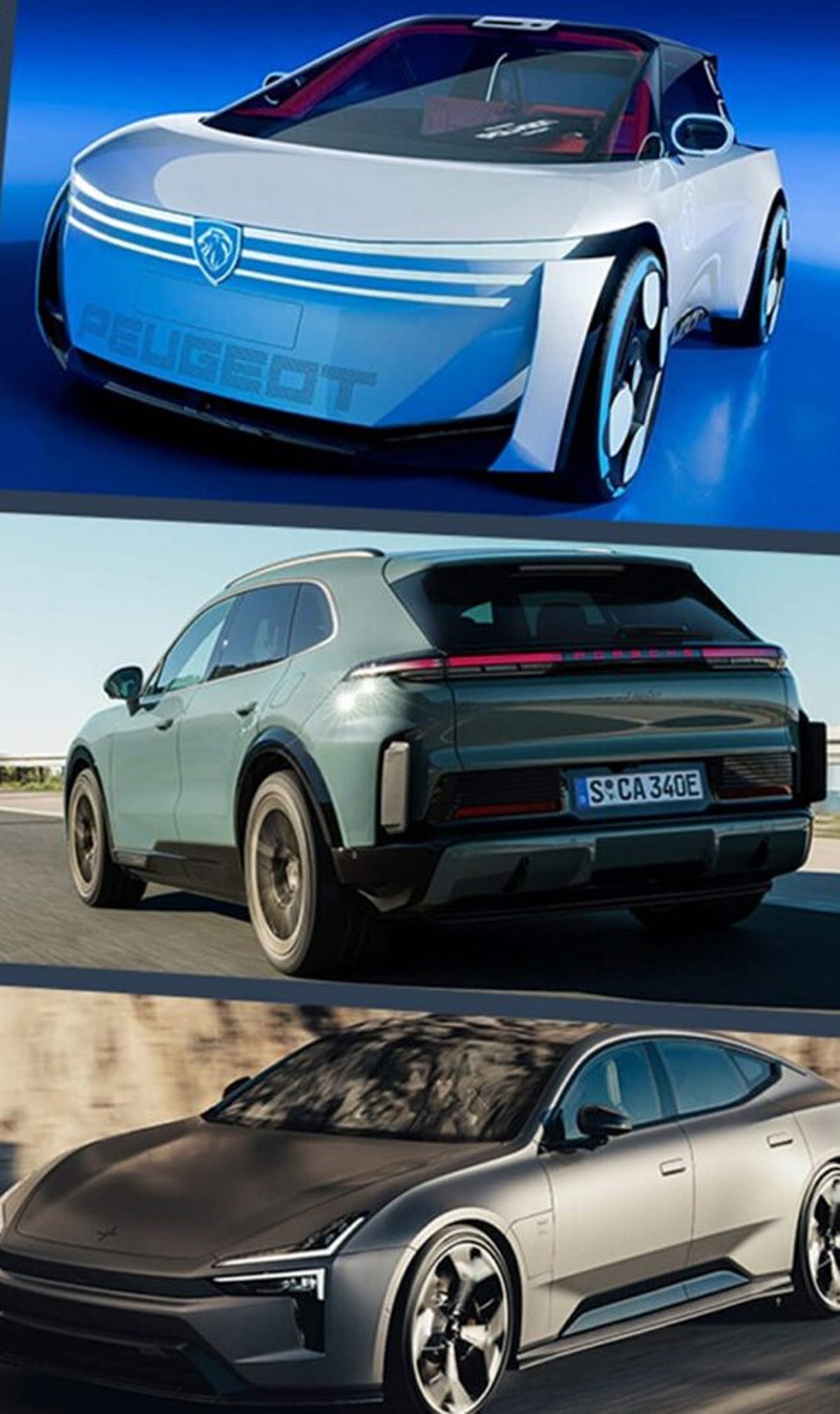
    Porsche Cayenne EV

    Blends sports car performance, premium craftsmanship, advanced battery technology, and practical SUV versatility without compromising driving excitement or luxury. Porsche electrifies its best-selling model.

  • Zelio E-Mobility Opens New Coimbatore Plant to Boost South India EV Manufacturing

    Zelio E-Mobility Opens New Coimbatore Plant to Boost South India EV Manufacturing

    Zelio E-Mobility, a rapidly growing electric two- and three-wheeler manufacturer, has announced the opening of a new manufacturing facility in Coimbatore, Tamil Nadu, to strengthen its presence in South India. The move supports the company’s strategy to expand across key southern markets including Tamil Nadu, Karnataka, Kerala, Telangana, Andhra Pradesh, and South Maharashtra.

    The new facility, located on Trichy Road in Nagiyyaan Thottam, Lakshmi Nagar Kannampalayam, spans approximately 39,000 square feet. It will handle electric scooter assembly, storage, logistics, and allied operations. The plant has an installed production capacity of 60,000 units per year, initially targeting 24,000 to 30,000 electric two-wheelers annually, with plans to scale production based on demand.

    This expansion adds to Zelio E-Mobility’s existing manufacturing network, which includes plants in Ladwa (Haryana), Patan (Haryana), and Cuttack (Odisha). With the new facility, the company’s total installed manufacturing capacity increases by 33% to 240,000 units per year, up from 180,000 units previously.

    The Coimbatore plant currently employs 30 direct workers and is expected to contribute to the company’s goal of surpassing 500 employees this fiscal year, adding over 100 personnel in the coming months. Established with a capital investment of up to INR 1 crore, the facility will produce models from Zelio E-Mobility’s product portfolio, with specific model details to be announced later.

    Kunal Arya, Managing Director of Zelio E-Mobility, said: “The launch of our Coimbatore facility marks a major milestone in Zelio E-Mobility’s growth journey. South India represents one of the most promising electric mobility markets in the country, and this expansion strengthens our ability to serve customers, dealers, and partners with greater speed and efficiency.”

    The plant follows the same manufacturing standards and quality protocols as the company’s existing facilities. Future technology upgrades and sustainability initiatives will be announced in due course.

    Zelio E-Mobility has reported strong financial growth, with revenue rising 81.8% year-on-year to INR 313.68 crore in FY2025–26 and a four-year revenue CAGR of 121%. The company has remained profitable since inception and, following its BSE SME listing in October 2025 (where it raised INR 78.34 crore), continues to expand its dealer network, which now exceeds 400 dealerships across 25+ states, with plans to reach 550+ by FY27.

  • 10 Breakthrough Technologies Driving a Sustainable Future

    10 Breakthrough Technologies Driving a Sustainable Future

    The path to a sustainable future is being paved by remarkable innovations across multiple sectors. From energy generation to waste management, these technologies are transforming how we interact with our planet. Below, we explore ten revolutionary advancements that promise to reduce environmental impact and build a greener world.

    Next-Generation Solar Panels

    Innovations in solar power are delivering higher efficiency and lower costs, making renewable electricity more accessible worldwide. Advanced photovoltaic materials and manufacturing techniques are pushing the boundaries of energy generation from sunlight.

    Green Hydrogen

    Produced using renewable energy sources, green hydrogen offers a clean fuel alternative for transportation, heavy industries, and long-term energy storage. It has the potential to decarbonize sectors that are hard to electrify directly.

    Carbon Capture Technology

    Advanced systems now capture carbon dioxide directly from industrial emissions and the atmosphere. These technologies help reduce greenhouse gas concentrations and support global climate goals by enabling carbon removal at scale.

    Vertical Farming

    Indoor farming using controlled environments dramatically reduces water consumption and land requirements while enabling year-round food production in urban areas. This approach minimizes transportation emissions and ensures local food security.

    Smart Grids

    Intelligent electricity networks optimize energy distribution, seamlessly integrate renewable sources, and improve overall efficiency. Smart grids reduce power outages and transmission losses while enabling better demand management.

    Electric Vehicles

    Modern electric vehicles are reducing dependence on fossil fuels and lowering emissions. Improving battery technology and expanding global charging infrastructure are making EVs more practical and affordable for everyday use.

    Biodegradable Materials

    Sustainable alternatives to conventional plastics are being developed that naturally decompose without harming the environment. These materials support environmentally responsible packaging and manufacturing across industries worldwide.

    Ocean Cleanup Systems

    Innovative technologies are being deployed to remove floating plastic waste from our oceans. These cleanup systems help restore marine ecosystems and protect aquatic biodiversity from the growing threat of plastic pollution.

    AI for Sustainability

    Artificial intelligence is being harnessed to optimize energy usage, predict climate patterns, improve agricultural practices, and enhance resource management. Data-driven decision-making powered by AI is unlocking new efficiencies in sustainability efforts.

    These technologies represent just a glimpse of the innovations shaping a sustainable future. As research continues and adoption scales, their collective impact will be instrumental in addressing the environmental challenges of our time.