Tag: Ethereum

  • Bitcoin Dips to $62,702, Solana Slides Amid Iran Tensions and Senate Stalemate on Clarity Act

    Bitcoin Dips to $62,702, Solana Slides Amid Iran Tensions and Senate Stalemate on Clarity Act

    Bitcoin traded near $62,702 on July 13, down 1.99% in the past 24 hours, as renewed geopolitical tensions and a stalled U.S. crypto regulation bill weighed on market sentiment. Solana slipped 0.83% but held a weekly gain above 5%, while Ethereum stayed near $1,782, supported by steady ETF demand.

    The pullback follows a period of cautious trading after last week’s rally cooled. Key support for Bitcoin sits at $61,600, with resistance between $64,000 and $64,600. Analysts note that while institutional interest is showing early signs of recovery through spot Bitcoin ETF inflows, the broader market remains risk-off due to Middle East tensions and the Clarity Act’s uncertain path in the Senate.

    Bitcoin Price Today
    Bitcoin trades near $62,702.00, down 1.99% over the past 24 hours, according to CoinMarketCap data. Despite the dip, the asset retains a modest 0.72% weekly gain. Renewed U.S.-Iran friction and elevated oil prices continue to pressure risk assets, with traders eyeing the $61,600 support level.

    Expert Commentary
    Akshat Siddhant, Lead Quant Analyst at Mudrex, said: “Bitcoin remains resilient near key support even as geopolitical tensions stay elevated. Spot Bitcoin ETFs have posted renewed net inflows after a prolonged stretch of outflows. Investors are watching upcoming inflation data closely. A softer print could help Bitcoin retest resistance near $64,600, while renewed selling could expose support closer to $60,000.”

    The CoinSwitch Markets Desk added: “BTC has held its ground despite fresh geopolitical shocks tied to the collapsed Iran ceasefire. Spot Bitcoin ETF flows have turned positive after weeks of steady redemptions. This shift signals early-stage institutional recovery rather than a confirmed trend.”

    Riya Sehgal, Research Analyst at Delta Exchange, noted: “Global markets remain in a risk-off posture tied to renewed Middle East tensions and firmer bond yields. Bitcoin faces resistance near $63,800 to $64,000. Downside support sits closer to $62,000. Ethereum needs to hold its current structure to avoid a deeper correction.”

    Nischal Shetty, founder of WazirX, said: “Bitcoin is trading between key moving averages, and buyers still hold a modest near-term edge. A failure to reclaim recent highs could keep price action range-bound through the week. Ethereum has held firm near $1,780, supported by steady spot ETF demand.”

    Top 10 Coins at a Glance
    Biggest Decliners: HYPE (-2.82%), BTC (-1.99%), XRP (-1.94%). Most Resilient: USDC, USDT (near flat), TRX (-0.18%).

    Market Drivers
    Clarity Act Stalls: Galaxy Research cut passage odds to ~50%, with the bill stuck in Senate reconciliation. Failure before the August recess could push crypto regulation into election-year gridlock.

    Iran Tensions: Renewed hostilities after a ceasefire collapse keep risk sentiment subdued, with elevated oil prices and Strait of Hormuz concerns persisting.

    Tether Expansion: Tether invested $20 million into Mercado Bitcoin to expand Latin American payment infrastructure, signaling a shift toward regions with lighter compliance burdens.

    DOJ Operation Riptide: The Justice Department dismantled a major crypto laundering network linked to the Huione Group, seizing cloud servers tied to illicit transactions.

    Market Outlook
    Bitcoin holds near $62,700 as traders weigh geopolitical risk against steady ETF demand. A close above $64,000 could open a path to $65,500 resistance, while a slip below $61,600 risks exposing $60,000 support. Solana and XRP retain healthy weekly gains despite the pullback. The Fear and Greed Index near 31 reflects cautious sentiment. Key catalysts include the Clarity Act’s Senate progress, upcoming inflation data, and continued ETF flow trends.
  • Ethereum ETF Inflows Surge to $70.5M as Bitcoin Sees $84.86M in Outflows

    Ethereum ETF Inflows Surge to $70.5M as Bitcoin Sees $84.86M in Outflows

    Ethereum attracted $70.5 million in institutional ETF inflows, marking five consecutive days of gains, while Bitcoin ETFs recorded $84.86 million in outflows, highlighting a short-term shift in investor preference.

    Key Takeaways

    • Ethereum ETFs recorded $70.5 million in net inflows, extending a five-day positive streak.
    • Fidelity’s FETH contributed nearly $69 million of the total Ethereum inflows.
    • Bitcoin ETFs saw $84.86 million in net outflows as some institutions shifted allocations.

    Ethereum Records Strong ETF Inflows

    Spot Ethereum ETFs received approximately $70.5 million in net inflows during the latest trading session. This result also marked the fifth straight trading day with positive inflows for Ethereum funds. Such a streak shows that institutional investors continue to place fresh capital into Ethereum despite market uncertainty.

    Among all Ethereum ETFs, Fidelity’s FETH stood out as the biggest contributor. The fund attracted close to $69 million in fresh investments. This means that Fidelity accounted for almost all of the day’s net inflows. The strong performance of FETH reflects growing confidence among large investors who want exposure to Ethereum through regulated investment products instead of direct cryptocurrency purchases.

    Bitcoin Faces Investor Withdrawals

    While Ethereum enjoyed another day of positive inflows, Bitcoin moved in the opposite direction. Spot Bitcoin ETFs recorded net outflows of nearly $84.86 million during the same period.

    Several well-known Bitcoin funds reported investor withdrawals. These included products from Grayscale, BlackRock, and Fidelity. The outflows do not necessarily mean that institutions have lost confidence in Bitcoin. Instead, they may show that some investors decided to reduce exposure or shift part of their money into other digital assets, especially Ethereum.

    Why Institutions Show More Interest in Ethereum

    According to many experts in finance, Ethereum offers utility beyond serving as a cryptocurrency. The Ethereum platform is useful when it comes to decentralized finance, tokenization, smart contracts, and numerous other blockchain applications. These capabilities make Ethereum attractive as they support decentralized finance, tokenization, and other emerging blockchain applications.

    Another reason for the current inflow of capital might be the strategy of portfolio diversification. It means that instead of investing all their funds into Bitcoin, institutional investors may prefer to use various virtual currencies. Ethereum is chosen for investment as the second most popular currency after Bitcoin for its established ecosystem and possible applications.

    Market Prices Stay Stable

    Despite the positive ETF inflows, Ethereum’s price has not experienced an explosive rally. The cryptocurrency traded above $1,740, which reflects a partial recovery after earlier weakness. The steady price movement suggests that institutional buying has helped support market confidence, even though broader economic concerns still affect investor sentiment.

    Bitcoin traded around $62,000 to $63,000 during the same period. Global economic uncertainty and geopolitical developments continue to influence the cryptocurrency market. These external factors often affect investor decisions, regardless of how much money enters or leaves ETF products.

    What the Latest Data Means

    The difference between Ethereum and Bitcoin ETF flows does not automatically signal a permanent market shift. Daily ETF numbers often change since institutional investors regularly adjust their portfolios based on market conditions, economic news, and investment strategies.

    However, five consecutive days of positive inflows into Ethereum ETFs present a meaningful trend. Continuous investment from institutions usually reflects confidence in the asset’s long-term potential. Large investors often make careful decisions after detailed research, so steady inflows can become an important signal for the broader market.

    Why This Matters

    This divergence signals a tactical institutional rotation, with investors favoring Ethereum’s utility-driven smart contract ecosystem over Bitcoin’s store-of-value narrative. Five straight days of ETH inflows validate growing corporate interest, even as spot Bitcoin ETFs face short-term profit-taking.

    Outlook for Ethereum and Bitcoin

    Recent ETF statistics show that institutional interest in Ethereum is growing. The figure of $70.5 million in net flows and Fidelity FETH’s almost $69 million contribution indicate that there is a strong demand for regulated products in Ethereum investment. The opposite situation is observed in Bitcoin, where there is a recorded net outflow of $84.86 million. This seems to imply that some institutions have shifted their interest for a while.

    Both Ethereum and Bitcoin are important cryptocurrency players. Bitcoin retains the status of the biggest cryptocurrency and the number one choice of many long-term investors. Ethereum, in turn, is strengthening its position given the increasing number of real-world applications and increased institutional interest.

    The following weeks will show whether the trend continues or whether investors return to Bitcoin in larger volumes. For now, the latest ETF statistics clearly show that Ethereum gained some momentum as a cryptocurrency for institutional investors while Bitcoin experienced a small period of weaker fund flow.

  • Ethereum Holds Near $1,800 as ETF Inflows Counter Retail Bearish Pressure

    Ethereum Holds Near $1,800 as ETF Inflows Counter Retail Bearish Pressure

    Ethereum traded near $1,800 on Friday, gaining roughly 3% between Thursday and Friday as renewed demand for spot exchange-traded funds (ETFs) and continued expansion in tokenized assets provided support. The move outpaced other major cryptocurrencies, but futures market data revealed that retail traders continued to sell into the weekend, creating a tug-of-war between institutional buying and weak short-term sentiment.

    Institutional Demand Returns After Nine Weeks

    Spot U.S. Ethereum ETFs recorded their first weekly inflow in nine weeks, with $84.4 million in net buying, according to SoSoValue. This ended eight consecutive weeks of net outflows and signaled a shift in institutional demand. The funds experienced net outflows only on July 9, when Ethereum dropped to roughly $1,748 and funds lost $52.08 million. The renewed buying helped Ethereum maintain its position near $1,800 through the weekend.

    Institutional demand was further reflected in broader corporate accumulation. BitMine added 198,370 ETH over the past 30 days, bringing its reserves to approximately $10.3 billion. Additionally, a transfer of 20,500 ETH (worth about $36 million) from Galaxy Digital to a new wallet was flagged by Arkham Intelligence, following a pattern previously linked to large corporate ETH purchases.

    Retail Traders Turn Bearish

    In contrast, retail traders in the perpetual futures market moved in the opposite direction. Ethereum’s long-to-short ratio fell to 0.946, indicating that short positions now outnumber long positions. CoinGlass data showed an “extremely bearish” reading for large traders on OKX and Bybit, which handled roughly $4.10 billion and $1.19 billion in perpetual trading volume, respectively. One trader opened an ETH short position worth $12.43 million before the weekend.

    Despite the bearish tilt, short sellers faced higher liquidation losses. Short liquidations reached $11.49 million, compared to $8.30 million for long traders, suggesting that bearish bets carried near-term risk even as selling activity increased.

    Tokenization Growth Adds Support

    Ethereum also gained support from the expanding tokenized asset market and the launch of Robinhood Chain, a layer-2 network that uses ETH for gas fees. Robinhood Chain attracted about $106 million in bridge deposits and offers tokenized stocks to users in 120 countries, adding activity to the Ethereum-compatible ecosystem.

    Ethereum currently holds a 47% share of the real-world asset tokenization market, according to RWA.xyz. Analyst Leon Waidmann noted that Ethereum’s total value locked has reached $260 billion, surpassing Ether’s market value of about $210 billion, describing ETH as “underpriced.” However, network activity remains below earlier peaks. Ethereum decentralized applications generated $11 million in weekly revenue, down from $20 million in the first quarter, while active addresses fell to 3.2 million from 5.4 million.

    Funding Rates and Resistance Levels

    The annualized funding rate for ETH perpetual futures dropped to 3%, below the 6% level typically associated with balanced demand. This, combined with lower network activity, has kept Ethereum’s price recovery limited. ETH now faces resistance near $1,800 as ETF buying and tokenization demand compete with retail selling and weakening on-chain metrics.

  • Why Binance Coin (BNB) Is Poised to Challenge Bitcoin and Ethereum Dominance

    Why Binance Coin (BNB) Is Poised to Challenge Bitcoin and Ethereum Dominance

    Binance Coin (BNB) has transformed from a simple exchange token into the backbone of a vast blockchain ecosystem. With real-world applications spanning decentralized finance (DeFi), NFTs, gaming, AI, and payments, BNB is increasingly seen as a strong contender to rival Bitcoin and Ethereum. While overtaking these giants remains a monumental challenge, BNB’s unique features continue to drive its adoption and value.

    Key Takeaways

    • BNB powers a large blockchain ecosystem including DeFi, NFTs, gaming, AI, and payment applications.
    • Regular token burns reduce BNB’s supply, potentially supporting long-term value appreciation.
    • Fast, low-cost transactions and strong developer support drive ecosystem growth.

    Bitcoin leads on market cap. Ethereum dominates smart contracts and blockchain applications. BNB has established itself as one of the most significant tokens in the market. BNB started as a simple token for the Binance exchange. Today, it has become the main coin of a large blockchain network. It supports many online services, apps, and digital projects. Given its fast growth and many real uses, many people believe BNB has the power to become even bigger in the future. Even though passing Bitcoin and Ethereum will not be easy, BNB has many strong features that make it one of the top cryptocurrencies.

    What Is Binance Coin?

    Binance Coin, also called BNB, is the main cryptocurrency of the Binance ecosystem. It was launched in 2017 during the Binance Initial Coin Offering (ICO). In the beginning, BNB worked on the Ethereum blockchain as an ERC-20 token. Later, it moved to its own blockchain called the BNB Chain. Today, BNB is much more than an exchange token. It helps run the BNB Smart Chain, the BNB Beacon Chain, Layer-2 solutions, and cross-chain technology. It has become an important part of many blockchain services.

    A Large Blockchain Network

    The main reason for the success of BNB is its massive blockchain network. Many cryptocurrencies serve a single purpose, but BNB enables numerous projects at the same time. Many decentralized apps are operational on BNB Chain. These include decentralized finance (DeFi), blockchain games, NFT marketplaces, AI-powered Web3 projects, and stablecoin applications. The more people use these applications, the greater the demand for BNB to pay transaction fees. This leads to an ongoing need for the coin itself. The big network encourages new users and developers to join the platform as well.

    BNB Has Many Real Uses

    BNB is useful in many ways. It is not only a coin for buying and selling. People use it to pay transaction fees on the BNB Chain. It is also used for staking, governance voting, liquidity farming, and joining new token launches. People who trade on Binance can also use BNB to receive discounts on trading fees. Some businesses and payment services also accept BNB as a payment method. Since BNB has many real uses, its value does not depend only on market trading. Regular use across the ecosystem also creates demand.

    Also Read: Why Stablecoins Are Important for the Cryptocurrency Market

    A Supply That Gets Smaller

    One special feature of BNB is its supply system. Binance follows an automatic quarterly token burn program. During every burn, some BNB coins are permanently removed from circulation. This means the total supply becomes smaller over time. When supply goes down and demand stays strong, the value of a coin may increase. Many investors like this system as it makes BNB different from cryptocurrencies that continue to create new coins.

    Fast Transactions and Low Fees

    The BNB Chain is well known for its fast speed and low transaction fees. Many users choose it because sending money and using blockchain applications costs much less than on Ethereum. Lower costs make the network attractive for both users and developers. Many blockchain projects choose the BNB Chain as it offers a smooth and affordable experience.

    Support for New Projects

    Binance continues to support developers who build new blockchain projects. The company offers grants, accelerator programs, venture funding, hackathons, and better network tools. This support helps new projects grow on the BNB Chain. More projects attract more users, increasing demand for BNB. This steady growth helps make the ecosystem stronger every year.

    Can BNB Become Bigger Than Bitcoin and Ethereum?

    BNB already ranks as one of the largest currencies in the industry. However, overtaking Bitcoin or Ethereum is still a daunting task. For this to happen, blockchain adoption would need to expand significantly. The BNB ecosystem would need to continue growing, more businesses would need to adopt its technology, and more users would need to use BNB across a wider range of services. At present, Bitcoin is still the leading digital currency in terms of stored value, and Ethereum stands out as the largest smart contract platform.

    There Are Still Risks

    Like every cryptocurrency, BNB also has risks. Government rules and regulations could affect Binance and its services. Competition from Ethereum, Solana, Avalanche, and other blockchain networks is also very strong. The cryptocurrency market is also known for large price changes. Security problems in blockchain projects can also affect confidence. Given these reasons, future growth is never guaranteed.

    Also Read: Top Smart Contract Cryptocurrencies by Market Cap to Watch in 2026

    Final Thoughts

    Binance Coin has grown from a simple exchange token into one of the world’s most useful cryptocurrencies. It has a large blockchain network, many real uses, low transaction fees, a steadily decreasing supply, and strong support for new projects. Although surpassing Bitcoin and Ethereum is still a big challenge, BNB has built a strong place in the cryptocurrency market. If its network continues to grow and more people use its services, Binance Coin could become one of the most valuable digital assets in the future.

    Frequently Asked Questions

    1. What is Binance Coin (BNB)?
      BNB is the native cryptocurrency of the Binance ecosystem and powers the BNB Chain for transactions, staking, governance, and decentralized applications.
    2. Why do investors consider BNB valuable?
      Its wide range of real-world uses, growing ecosystem, low transaction fees, and automatic token burn mechanism contribute to its appeal.
    3. Can BNB overtake Bitcoin or Ethereum?
      It’s possible in theory, but Bitcoin and Ethereum currently have much larger adoption, market presence, and established use cases.
    4. What makes BNB Chain attractive?
      It offers fast transaction processing, lower fees than many competitors, and supports thousands of decentralized applications.
    5. What are the main risks of investing in BNB?
      Key risks include cryptocurrency market volatility, regulatory changes, security concerns, and strong competition from other blockchain networks.

    Disclaimer: This article is provided for informational purposes only and does not constitute investment advice. Cryptocurrencies are high-risk assets; you may lose your entire investment. Always conduct your own research (DYOR) before making any financial decisions.

  • Bitcoin ETFs See $90M Inflow Surge as BTC Approaches $65K Barrier

    Bitcoin ETFs See $90M Inflow Surge as BTC Approaches $65K Barrier

    US spot Bitcoin exchange-traded funds returned to net inflows on July 10 as Bitcoin moved back above $64,000. The products attracted $90.44 million during the session, while spot Ethereum ETFs added $18.43 million.

    The flow data arrived as Bitcoin traded near $64,150 and approached resistance level around $65,000. The recovery followed a volatile week in which the asset fell near $62,000 before moving higher again. Lower oil prices and a weaker dollar supported risk assets during the session, though ETF demand stayed concentrated in a few products. Market participants now track whether the demand can persist.

    BlackRock Leads Bitcoin ETF Demand

    BlackRock’s iShares Bitcoin Trust recorded $86.83 million in net inflows, accounting for most of the daily total. VanEck’s HODL added $3.61 million, while the other listed spot Bitcoin funds reported no net movement.

    IBIT’s cumulative net inflows reached about $60.29 billion after the July 10 session. HODL’s total stood near $1.14 billion. Across the market, US spot Bitcoin ETFs held about $77.42 billion in net assets, equal to roughly 6.05% of Bitcoin’s market value.

    Cumulative net inflows across the products reached about $51.28 billion. The latest reading followed a difficult period for the funds. A 10-day withdrawal run removed about $2.73 billion before positive flows returned in early July.

    Ethereum ETFs Add $18.43 Million

    Spot Ethereum ETFs also returned to positive flows on July 10. BlackRock’s ETHA attracted $16.20 million, while Fidelity’s FETH received $2.23 million. The remaining products posted no net flows for the day.

    The Ethereum inflow followed a $52.2 million withdrawal on July 9, which ended a five-day positive run. Ether traded near $1,800 as the funds recorded the new capital, while Bitcoin drew nearly five times more money during the same session.

    The two markets showed concentrated demand rather than broad buying across every fund. BlackRock supplied most of the inflows in both asset groups. As a result, daily totals depended heavily on activity in its IBIT and ETHA products.

    Bitcoin Tests the $65,000 Resistance Zone

    Bitcoin’s return above $64,000 placed the market close to a key short-term barrier. The asset earlier reached about $64,500 before losing momentum. Falling futures open interest, weak spot demand and a negative Coinbase premium had raised doubts about the strength of the July advance.

    Short-term holder data also points to possible supply above the current price. The newest buyers hold an average cost near $61,600, while the three-to-six-month group has a realized price close to $74,900. Traders who bought at higher levels may sell as Bitcoin moves toward their entry prices.

    Analyst Axel Adler Jr. said, “Buying pressure is once again outweighing selling pressure at the lows.” His model showed buying scores between 37% and 46% during June and July, while selling pressure stood near 16%.

    Adler identified $71,000 as an important recovery level. A move above that price would bring Bitcoin closer to the average cost of older short-term holders. The $73,200 to $77,500 range may carry heavier supply if the rebound extends.

  • Ethereum at Critical Crossroads: Key Support Level Holds the Key to Next Move

    Ethereum at Critical Crossroads: Key Support Level Holds the Key to Next Move

    Ethereum has reached a pivotal moment after a strong upward move, with traders and investors closely watching a key support zone between $1,700 and $1,720. The next few days could determine whether the second-largest cryptocurrency resumes its rally or enters a short-term correction.

    Key Support Zone Under Scrutiny

    The $1,700 to $1,720 area has become the most important support level for Ethereum. Buyers have previously stepped in at this zone, helping the price recover. If Ethereum holds above this support, it could boost buyer confidence and pave the way for further gains. However, a break below this level could shift market sentiment quickly, potentially driving the price down to the next support range of $1,550 to $1,600.

    Resistance at $1,800 Remains the Next Hurdle

    While support holds firm, Ethereum faces strong resistance near $1,800. This level has repeatedly attracted sellers. A daily close above $1,800 with robust volume would be a bullish signal, potentially opening the door to the $1,900 to $2,000 range.

    RSI Signals Strong Momentum

    The Relative Strength Index (RSI) stands at 67.73, indicating that buyers remain in control. However, the RSI is approaching the overbought threshold of 70, which may prompt caution among traders after the recent rally.

    ETF Inflows and Institutional Demand Bolster Outlook

    Spot Ethereum ETFs have seen steady inflows, boosting market confidence. Institutional investors, including firms like Bitmine, have increased their ETH holdings, signaling long-term bullish sentiment. These factors provide a solid foundation for Ethereum’s price.

    Global Economic Factors and Leverage Risks

    Global economic events, particularly US Federal Reserve interest rate decisions, continue to influence cryptocurrency markets. Lower rates tend to support risk assets like Ethereum. Additionally, the futures market shows many leveraged long positions, which could amplify volatility if the price drops below key support.

    What’s Next for Ethereum?

    Ethereum’s immediate future hinges on holding the $1,700-$1,720 support. A successful hold keeps the bullish outlook intact, with the next target at $1,800. A break above $1,800 could lead to a rally toward $1,900 and $2,000. Conversely, a breakdown below support could trigger selling pressure and a drop to $1,550-$1,600. The RSI, ETF demand, and institutional buying will all play key roles in determining Ethereum’s next move.

  • July 2026’s Top Altcoin Performers: SOL, HYPE, ETH, ZEC, and ONDO Lead the Recovery

    July 2026’s Top Altcoin Performers: SOL, HYPE, ETH, ZEC, and ONDO Lead the Recovery

    Bitcoin has dropped nearly 20% in recent weeks, but several altcoins are bucking the downtrend. Projects with strong fundamentals, network upgrades, and institutional backing are drawing investor attention and spearheading the crypto recovery in July 2026.

    Solana (SOL)

    Solana remains one of July’s strongest performers, powered by its fast, low-cost blockchain, expanding developer ecosystem, and major upgrades such as Firedancer and Alpenglow. Rising institutional adoption and growing DeFi activity continue to bolster Solana’s long-term outlook despite market volatility.

    Hyperliquid (HYPE)

    Hyperliquid has emerged as a standout winner in July 2026. The decentralized perpetual trading platform dominates on-chain derivatives, supported by permissionless HIP-3 markets, surging trading volume, and upcoming native options features that have boosted investor confidence.

    Ethereum (ETH)

    Ethereum maintains its position as the leading smart contract network. Institutional demand, Real-World Asset (RWA) tokenization, DeFi growth, and ongoing scalability improvements help ETH outperform many large-cap cryptocurrencies during the current correction.

    Zcash (ZEC)

    Privacy-focused Zcash is gaining renewed interest as investors look beyond speculative assets. Upcoming network upgrades, Bitcoin-like supply scarcity, and improving institutional interest have helped ZEC hold relative strength while many cryptocurrencies remain under pressure.

    ONDO and Render (RENDER)

    Real-world utility continues to drive crypto investment in 2026. ONDO benefits from the rapid growth of tokenized real-world assets, while AI-focused projects like Render remain popular as decentralized GPU computing and AI infrastructure become major blockchain investment themes.

    July’s strongest altcoins are propelled by real catalysts rather than hype alone. While Solana, Hyperliquid, Ethereum, Zcash, and ONDO lead the market, investors should remember that crypto remains highly volatile. Diversification, thorough research, and risk management are essential before investing in any digital asset.

  • Ethereum Holds Key Support Above $1,770 Amid Geopolitical Tensions and AI Security Advances

    Ethereum Holds Key Support Above $1,770 Amid Geopolitical Tensions and AI Security Advances

    Ethereum (ETH) maintained its position above critical support levels on July 10, 2026, trading at $1,779.23 — a 1.58% daily gain — even as rising geopolitical tensions in the Middle East dampened overall market sentiment. The cryptocurrency held above both its 20-day moving average ($1,759) and 50-day moving average ($1,747) on the four-hour chart, though it remained below the longer-term 200-day moving average at $2,240.

    Middle East Tensions Weigh on Crypto Demand

    Renewed conflict in the Middle East, including reports of Iranian fire on civilian shipping near the Strait of Hormuz and subsequent U.S. airstrikes, prompted investors to shift capital into traditional safe-haven assets. According to Cryptonews, this flight to safety reduced demand for Ethereum and other cryptocurrencies. Traders are closely monitoring the situation for any signs that could influence market direction.

    Technical Indicators Present Mixed Signals

    Immediate support appears near the Ichimoku Kijun level at $1,773. The Relative Strength Index (RSI) stands at 56.97, indicating some buying interest. However, the Moving Average Convergence Divergence (MACD) has generated a strong sell signal, while the Average Directional Index (ADX) remains neutral. The Stochastic RSI and Bull/Bear Power suggest overbought conditions, whereas the Commodity Channel Index (CCI) and Awesome Oscillator point to a neutral market. Analysts expect ETH to trade between $1,725 and $1,847 in the next two to three sessions. A breakout above $1,847 could confirm upward momentum, while a drop below $1,725 might increase selling pressure.

    Ethereum Foundation Advances AI Security Research

    Separately, the Ethereum Foundation’s Protocol Security team revealed that validating genuine software vulnerabilities has become the biggest challenge in AI-assisted security research. AI agents identify many potential issues, but most require extensive verification. The Foundation reported that coordinated AI testing uncovered real flaws across Ethereum’s software systems, including a remotely triggerable panic in the gossipsub component of libp2p, which underpins the peer-to-peer networking layer. That vulnerability was fixed before being disclosed as CVE-2026-34219.

    Multi-Agent System Improves Verification

    The Foundation now treats AI agents as hypothesis generators rather than decision-makers. They inspect source code, trace execution paths, and prepare proof-of-concept material. To improve reliability, multiple AI agents are assigned to the same software repository, each performing a separate role. Reconnaissance agents identify attack surfaces, hunting agents attempt to create reproductions, gap-filling agents track accepted and rejected reports to avoid duplication, and validation agents independently review findings. Each accepted report must include a reachable target, a security invariant, an explanation of the failure mechanism, observable evidence, a self-contained reproducer, and a deduplication key. This rigorous process ensures that researchers can verify every claim directly against production code.

    What’s Next for Ethereum?

    Ethereum remains above key technical support despite weaker demand from geopolitical uncertainty. The Foundation’s AI security research continues to evolve, improving vulnerability verification. Traders will watch the $1,725–$1,847 range for the next significant move. A sustained break above $1,847 could signal a bullish trend, while a fall below $1,725 may trigger further downside.

  • Bitcoin ETFs See $95M Outflows, Bitmine Adds 20,500 ETH, TRON Hits 392M Accounts — Crypto Roundup

    Bitcoin ETFs See $95M Outflows, Bitmine Adds 20,500 ETH, TRON Hits 392M Accounts — Crypto Roundup

    Market Overview

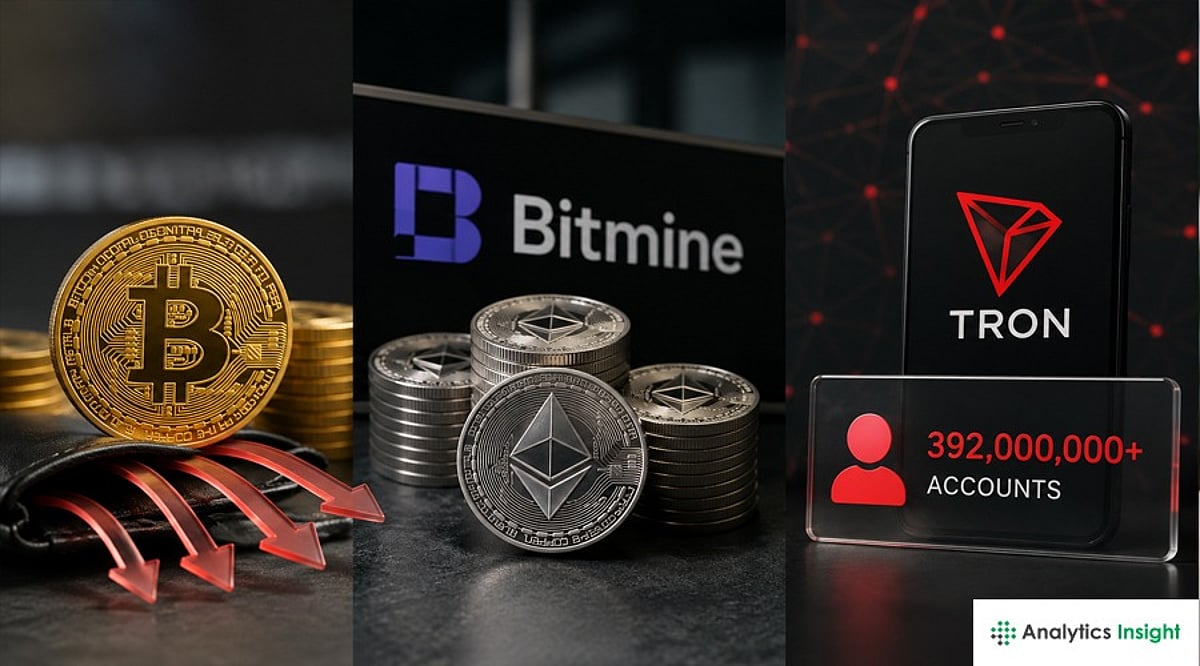
    Major developments unfolded in the crypto space as Bitcoin spot ETFs recorded $95.30 million in net outflows, Bitmine expanded its Ethereum treasury with a major acquisition, and TRON surpassed 392 million wallet addresses. Additionally, Zcash confirmed its Ironwood upgrade for late July, while New Hampshire rejected a Bitcoin-backed bond proposal.

    Bitcoin Spot ETFs See $95 Million in Net Outflows

    According to SoSoValue, Bitcoin spot ETFs experienced a total net outflow of $95.30 million on the reporting day. Fidelity’s FBTC led outflows with a daily net draw of $63.25 million, bringing its total historical net inflow to $10.15 billion. On the inflow side, VanEck’s HODL ETF recorded the highest daily net inflow at $5.36 million (cumulative $1.13 billion), followed by Morgan Stanley’s MSBT with $2.17 million ($377.14 million total). The combined net asset value of all Bitcoin spot ETFs now stands at $76.51 billion, with an ETF net asset ratio of 6.03% and historical cumulative net inflows of $51.19 billion.

    Bitmine Acquires 20,500 ETH for $36 Million

    Bitmine Immersion Technologies purchased 20,500 ETH for approximately $35.92 million via an over-the-counter transaction with Galaxy Digital, executed around July 10, 2026. The purchase price was roughly $1,752 per ETH. This acquisition pushes Bitmine’s total Ethereum treasury to about 5.7 million tokens — worth nearly $10 billion — representing an estimated 4.7%–4.8% of the entire circulating ETH supply of ~120.7 million tokens. The move signals a quiet accumulation strategy by the company.

    TRON Surpasses 392 Million Accounts

    TRON’s blockchain explorer confirmed the network has surpassed 392 million wallet addresses since inception. According to DeFiLlama, TRON remains the dominant platform for Tether (USDT) transfers due to fast settlement times and extremely low fees — processing up to 2,000 transactions per second at roughly 0.0003 TRX per transaction. Lookonchain reported that TRON’s Total Value Locked (TVL) has risen by approximately $1.95 billion since July 1, a gain of 7.8%.

    New Hampshire Rejects Bitcoin-Backed Bond Proposal

    The New Hampshire Executive Council voted down a regulatory proposal to authorize $100 million in Bitcoin-backed bonds. The initiative, pushed by the state’s Business Finance Authority (BFA) and Governor Kelly Ayotte, had passed risk assessments from Moody’s. Opposition was led by Democrat Karen Liot Hill, joined by councilors Janet Stevens and David Wheeler; officials Joseph Kenney and John Stephen voted in favor. The rejection halts the state’s attempt to introduce this financial instrument.

    Zcash Confirms Ironwood Activation on July 28

    Zcash core developer Sean Bowe announced that the Ironwood upgrade will activate at block height 3,428,143, expected around 8 am EST on July 28 — a one-week delay from the original July 21 target. The postponement came after Shielded Labs raised concerns that exchanges, mining pools, and wallet providers might need more time to prepare, particularly as many are transitioning from the legacy zcashd software to the Z3 stack (Zebra, Zaino, Zallet). Ironwood addresses an ‘infinity’ bug discovered in Zcash’s Orchard shielded pool, the network’s primary privacy-focused transaction system.

    FAQs

    • How much outflow did Bitcoin spot ETFs record? Bitcoin spot ETFs recorded total net outflows of $95.30 million. Fidelity’s FBTC saw the largest outflow at $63.25 million, while VanEck’s HODL led inflows with $5.36 million.
    • How much Ethereum did Bitmine buy? Bitmine Immersion Technologies acquired 20,500 ETH for around $35.92 million through an OTC transaction with Galaxy Digital at approximately $1,752 per ETH.
    • Why is TRON’s 392 million account milestone important? TRON crossing 392 million accounts highlights its growing user base and network activity, especially for fast, low-cost Tether transfers.
    • What happened to New Hampshire’s Bitcoin bond proposal? The New Hampshire Executive Council rejected a proposal to authorize $100 million in Bitcoin-backed bonds, halting the initiative.
    • When will Zcash activate Ironwood? Zcash plans to activate Ironwood at block height 3,428,143 on July 28, delayed one week to allow more preparation time for ecosystem participants.
  • Today’s Tech Roundup: Meta AI Chip Production, ONGC Recruitment, European M&A Surge, Claude AI Insights, and Ethereum Rally

    Today’s Tech Roundup: Meta AI Chip Production, ONGC Recruitment, European M&A Surge, Claude AI Insights, and Ethereum Rally

    Good morning!

    Here’s your rapid rundown of some of the most important news from today on artificial intelligence, recruitment, business M&A, productivity tools, and the cryptocurrency market.

    Meta to Start Producing Next-Generation AI Chip in September

    Meta plans to roll out its next-gen AI chip in September to keep up with the organization’s increasing requirements, as AI workloads grow heavier. The company aims to increase its computational capacity and reduce reliance on other chip providers. In parallel, Meta wants to sharpen its AI capabilities while industry competition is getting increasingly intense. Read More…

    Graduate Trainee Positions Opened by ONGC for 2026

    Oil and Natural Gas Corporation (ONGC) has begun accepting online applications for Graduate Trainee positions across various engineering and geoscience streams. The recruitment process will give freshers a chance to join one of India’s largest public sector companies. Read More…

    European B2B M&A Activity at an All-Time High of $129 Billion

    Europe saw a record $129 billion in business-to-business mergers and acquisitions in the second quarter of 2026, driven by private equity transactions and strong demand for enterprise technology and industrial firms amid global economic uncertainty. Read More…

    Claude AI Review: Features, Prompts, Tips for Increased Productivity

    The Claude AI language model by Anthropic has become popular for writing, coding, research, and other professional activities. Learn about its features, prompt-writing tips, how to save tokens, and how to use the language model effectively. Read More…

    Ethereum Gains 1.58% on Improved Crypto Sentiment

    Ethereum edged up by about 1.58%, trading around $1,779, while crypto market sentiment looked a bit better. In the Ethereum price analysis, you can see hopeful investor sentiment as traders keep an eye on macroeconomic shifts, stronger institutional participation, and evolving blockchain activity for possible hints about what comes next. Read More…