Tag: Ethereum

  • Ethereum Surges as Fed Rate Worries Subside: Institutional Demand and Network Upgrades Fuel Rally

    Ethereum Surges as Fed Rate Worries Subside: Institutional Demand and Network Upgrades Fuel Rally

    Ethereum has been gaining momentum as concerns over prolonged high U.S. interest rates fade. Cooling inflation has shifted expectations toward a softer Federal Reserve stance, prompting investors to rotate capital into higher-growth assets like ETH. This macroeconomic tailwind, combined with strong institutional demand, ongoing network upgrades, and expanding Layer-2 adoption, is bolstering Ethereum’s long-term outlook.

    Lower Interest Rate Concerns Support Ethereum

    Interest rates heavily influence financial markets. Recent inflation data has eased fears that the Fed will maintain elevated rates for an extended period. This shift in sentiment has drawn fresh money back into risk assets, including Ethereum.

    Institutional Investors Continue to Show Interest

    Growing institutional demand is a key driver of Ethereum’s price movement. Major investment firms are increasing their exposure through spot Ethereum ETFs. While weekly inflows fluctuate, the overall trend points to rising institutional backing.

    Ethereum Network Remains Strong

    Ethereum maintains its position as the largest smart contract blockchain. Thousands of decentralized finance (DeFi) platforms, blockchain applications, and stablecoin projects rely on its network daily. Developers continue building new products on Ethereum, drawn by its robust infrastructure and large user base. This steady growth supports long-term demand for ETH.

    Staking Reduces Supply

    Ethereum’s proof-of-stake system allows holders to lock their coins to secure the network and earn rewards. As more investors stake their ETH, fewer coins remain available for trading. This supply reduction often supports prices when demand stays strong, giving Ethereum an advantage over many other cryptocurrencies.

    Network Upgrades Improve Performance

    Years of upgrades have boosted processing efficiency, validator performance, wallet security, and transaction speeds. These technical improvements attract developers, enterprises, and financial institutions, making Ethereum a more attractive long-term investment.

    Layer-2 Networks Help Ethereum Grow

    The rapid growth of Layer-2 networks makes transactions faster and cheaper. Lower costs encourage broader use of DeFi platforms, blockchain games, digital collectibles, and other services. Since these Layer-2 systems rely on the main Ethereum blockchain, increased network activity benefits ETH directly.

    Strong Market Position Supports Price Growth

    Ethereum’s total market capitalization exceeds $214 billion, with a circulating supply of about 120.7 million ETH. Daily trading volume regularly surpasses $10 billion, indicating strong engagement from both retail and institutional participants. This liquidity attracts major investment firms.

    Better Economic Outlook Helps Risk Assets

    U.S. Treasury yields have stabilized compared to the period of aggressive rate hikes, reducing pressure on growth-focused investments. Anticipation of a less restrictive Fed posture, assuming inflation trends toward target, typically fuels gains in tech stocks and crypto tokens. Ethereum has historically performed well under such conditions.

    Tokenization Creates New Opportunities

    Real-world asset tokenization is gaining traction. Banks and financial institutions are exploring ways to place traditional assets like bonds and funds on blockchain networks, opening new use cases for Ethereum.

    Risks Still Remain

    Despite the rally, Ethereum remains volatile. Economic reports, Fed statements, ETF flows, and sentiment changes can cause sharp price swings. However, the easing of interest rate concerns has created a more favorable environment for cryptocurrencies.

    Final Thoughts

    Ethereum’s recent rise reflects a convergence of factors: easing Fed rate fears, strong institutional participation via spot ETFs, network upgrades, Layer-2 growth, expanding blockchain adoption, and tokenization. With a market cap above $214 billion and daily trading volume over $10 billion, Ethereum remains a dominant digital asset. While short-term volatility persists, the combination of improved economic conditions and solid network fundamentals supports its long-term growth.

  • Bitcoin, Ethereum, and Solana Drive Crypto Market Rally in Early July

    Bitcoin, Ethereum, and Solana Drive Crypto Market Rally in Early July

    The cryptocurrency market kicked off July with a notable surge as Bitcoin, Ethereum, and Solana posted solid gains. Bitcoin rose nearly 9% over four days, Ethereum held key support levels, and Solana outperformed other major assets. Increased on-chain activity and strong support zones fueled the recovery, while traders keep a close watch on critical price levels for the next market move.

    Bitcoin and Ethereum Continue to Lead Market Recovery

    The latest rally remains concentrated among top-tier cryptocurrencies. According to CoinMarketCap, the combined market value of the eight largest crypto assets reached roughly $1.71 trillion, representing about 78.8% of the total crypto market cap of approximately $2.17 trillion. Bitcoin dominates with a 57.8% share, while Ethereum accounts for 9.8%. Together, they make up over two-thirds of the market, meaning their price movements heavily influence overall direction.

    Bitcoin gained nearly 9% in early July, and Ethereum maintained support above key levels after recovering from June lows. CoinDesk noted that “the recent recovery in the crypto market has still been primarily driven by a small number of top-tier assets,” adding that increased concentration means Bitcoin and Ethereum continue to shape broader performance.

    Network activity also improved. Data shows that 24-hour active addresses on several blockchains increased from mid-June, indicating stronger user participation during the recovery.

    June Support Levels Remain Key Market Reference Points

    Price action in June established several support zones. Bitcoin found buying interest near $60,000, Dogecoin around $0.078, BNB near $557, and XRP close to $1.05 before later testing lower levels. Ethereum held demand near $1,559, Solana stayed above $60, TRX near $0.31, and HYPE around $52.99. These levels remain important as traders assess market strength.

    By the end of June, Bitcoin, Dogecoin, BNB, and XRP briefly dipped below their earlier support before recovering. CoinDesk reported that “selling pressure had not yet fully subsided” during that period. However, Solana, TRX, and HYPE stayed above their June lows throughout the pullback, distinguishing them from larger cryptocurrencies that temporarily broke support.

    Solana Outperforms as Broader Rebound Expands

    The recovery broadened in early July as more major cryptocurrencies moved higher alongside Bitcoin. If momentum continues, CoinDesk suggests Bitcoin could revisit the mid-June level near $67,050, while Dogecoin, BNB, and XRP could retest around $0.091, $630, and $1.30, respectively.

    Solana recorded one of the strongest performances, moving above its mid-June high and trading beyond $75. Continued buying could push Solana toward $98 if market conditions remain supportive. Other assets under watch include TRX near resistance at $0.37, HYPE in the $76–$80 range, and Ethereum positioned for a possible retest of $2,395.

    Alongside price gains, blockchain activity improved. Rising active addresses across several networks suggest increased user engagement during the recovery period.

    Disclaimer: This article is for informational purposes only and does not constitute investment advice. Cryptocurrencies are risky assets; always do your own research before investing.

  • Ethereum Price Targets $1,800 as ETF Inflows Return and Binance Withdrawals Surge

    Ethereum Price Targets $1,800 as ETF Inflows Return and Binance Withdrawals Surge

    Ethereum rallied 2.22% to $1,756.15 on Thursday, outperforming the broader cryptocurrency market’s 1.47% gain. The move came as spot Ethereum ETF inflows resumed after a nine-day outflow streak, while on-chain data revealed the highest level of ETH withdrawals from Binance in over three years. A whale wallet also accumulated $31.43 million in ETH and $6.24 million in Wrapped Bitcoin (WBTC), signaling renewed interest from large holders.

    ETF Inflows Turn Positive After Extended Outflow Period

    According to SoSoValue data, U.S. spot Ethereum ETFs recorded net inflows of $29.08 million on July 2, following $14.89 million the previous day. BlackRock’s ETHA led the latest daily inflows. This reversal ended a nine-day stretch of outflows and suggests that institutional demand may be recovering after recent selling pressure. ETF flows are closely watched as a proxy for regulated investment interest in Ethereum. The positive inflows, combined with ETH’s correlation with the S&P 500, indicate that macro conditions also supported the rally.

    Binance ETH Withdrawals Hit Three-Year High

    CryptoQuant data showed more than 166,000 ETH withdrawal transactions from Binance on July 3 — the highest figure in more than three years. Large exchange withdrawals often indicate that holders are moving assets into self-custody, long-term storage, or decentralized finance (DeFi) protocols. CryptoQuant analyst Darkfost noted that the surge “could reflect genuine demand” near the $1,500 level, though some funds may be flowing into DeFi yield opportunities. The data underscores increased wallet activity, though the exact purpose of each transfer remains unclear.

    Whale Wallet Accumulates $37.67 Million in ETH and WBTC

    Lookonchain tracking revealed that a single whale wallet accumulated $31.43 million in ETH and $6.24 million in WBTC, totaling $37.67 million. The allocation is heavily skewed toward Ethereum — roughly 83% ETH and 17% WBTC. WBTC allows holders to deploy Bitcoin-linked capital within Ethereum’s ecosystem. The wallet owner has not been identified, and it is unknown whether the tokens came from fresh purchases, exchange withdrawals, or internal transfers. Despite these uncertainties, the accumulation adds to the narrative of large investors positioning for further upside.

    Price Levels to Watch

    Ethereum is currently testing a key short-term resistance zone. Holding above $1,700 keeps attention on the $1,767 level, followed by the $1,800 to $1,847 range. A drop below $1,700 could bring the $1,620 to $1,650 support area into focus. Traders are watching whether ETF inflows continue beyond two sessions, as a longer streak would provide stronger evidence of rebuilding institutional demand.

  • Ethereum at Critical Crossroads: $1,500 Support Decides Next Move, Analyst Says

    Ethereum at Critical Crossroads: $1,500 Support Decides Next Move, Analyst Says

    Ethereum is facing a pivotal moment as it tests the critical $1,500 support level. Analysts warn that holding above this threshold could spark a recovery toward $1,700–$2,000, while a breakdown may trigger further losses amid broader market uncertainty.

    Why $1,500 Is So Important

    Over the past few weeks, Ethereum has dropped sharply and tested this level multiple times. In the last month alone, ETH has lost nearly 20% of its value, making traders nervous. The $1,500 level acts as a safety zone: staying above it typically boosts buyer confidence, while falling below gives sellers control. Analysts emphasize that Ethereum must remain above $1,500 to avoid another major decline.

    Possible Price Moves Ahead

    If Ethereum holds above $1,500, experts see potential for a move to $1,700 in the coming days, and possibly toward the $2,000 resistance level if momentum strengthens. However, if the price breaks below support, it could slide to the $1,350–$1,400 range, signaling that sellers remain dominant.

    Market Signals Look Unclear

    Ethereum currently trades below its 20-day moving average of $1,708 and its 50-day average near $1,865, indicating ongoing weakness. While some indicators show selling pressure slowing, there is no clear sign of a strong recovery yet. Traders remain cautious.

    Wider Market Pressure Hurts Ethereum

    Global financial markets have weakened, with big tech stocks and AI companies declining sharply. This has driven risk aversion, pulling capital away from cryptocurrencies. Concerns over interest rates and slow economic growth have added pressure. Bitcoin and Ethereum both touched multi-week lows as market confidence eroded.

    Ethereum Still Has Strong Long-Term Value

    Despite short-term struggles, Ethereum remains a leading blockchain for decentralized finance, NFTs, stablecoins, and smart contracts. Its transition to proof-of-stake and the EIP-1559 token-burning mechanism strengthen its long-term fundamentals.

    What Could Happen Next

    If buying strength returns, Ethereum may test $1,600–$1,625 this week. Yet all eyes are on the $1,500 support level. The next few days will be crucial in determining whether Ethereum stages a recovery or faces another leg down.

    FAQs

    1. Why is $1,500 important for Ethereum? It serves as a major support level where buyers typically defend the price.
    2. What happens if Ethereum stays above $1,500? Analysts expect a possible recovery toward $1,700, with potential upside near $2,000.
    3. What happens if Ethereum falls below $1,500? Selling pressure could increase, pushing ETH down toward $1,350–$1,400.
    4. Why has Ethereum been under pressure recently? Weak global markets, falling tech stocks, interest rate concerns, and reduced risk appetite have affected crypto prices.
    5. Is Ethereum still strong long term? Yes. Ethereum remains a leading blockchain powering DeFi, NFTs, stablecoins, and smart contracts with solid fundamentals.
  • Ethereum Q3 2026 Recovery Gains Traction as ETH/BTC Breakout and Record Binance Withdrawals Fuel Optimism

    Ethereum Q3 2026 Recovery Gains Traction as ETH/BTC Breakout and Record Binance Withdrawals Fuel Optimism

    Ethereum has entered the third quarter of 2026 with renewed momentum, breaking a two-quarter losing streak. An ETH/BTC breakout and a three-year high in Binance withdrawals are signaling growing demand, though the cryptocurrency still needs to sustain a move above $2,000 to confirm a broader market recovery.

    Historical Q3 Performance Offers Support

    According to CoinGlass data, Ethereum has delivered an average third-quarter return of 7.47% since 2016, with a median return of 7.77%. This follows a challenging first half of 2026, during which ETH fell 29.26% in Q1 and another 25.28% in Q2. The early Q3 positive performance provides some relief, and historical patterns suggest that weak first-half performances have sometimes preceded firmer trading later in the year. While history does not guarantee future gains, the Q3 record indicates that Ethereum has often used this period to rebuild momentum after weaker quarters.

    ETH/BTC Breakout Changes the Near-Term Signal

    Ethereum also strengthened against Bitcoin at the start of July. After trading between 0.0260 BTC and 0.0270 BTC for most of June, the ETH/BTC pair broke above resistance and moved toward 0.0275 BTC, its strongest level in several weeks. This shift suggests that Ethereum attracted more capital relative to Bitcoin. A higher ETH/BTC ratio has historically preceded wider altcoin rallies, though it does not guarantee an immediate dollar-price surge.

    Fundstrat’s Tom Lee highlighted stablecoins, tokenization, and blockchain-based financial infrastructure as long-term drivers for Ethereum, supporting further relative strength against Bitcoin this year.

    Binance Withdrawals Add Another Market Signal

    Binance recorded more than 166,000 Ethereum withdrawal transactions in a single day, according to CryptoQuant, marking the highest daily level in three years. CryptoQuant noted that the surge could reflect changing market sentiment and rising demand for Ethereum. Large withdrawal spikes often signal that traders are moving assets away from exchanges, indicating accumulation rather than immediate selling.

    While Ethereum continues to trail Bitcoin in overall performance, the withdrawal increase points to renewed activity among traders and investors during the early Q3 recovery.

    What’s Next?

    Market watchers are now tracking whether withdrawal volumes continue rising and whether ETH can hold its ETH/BTC breakout. The $2,000 level remains a critical threshold for sustained demand. Investors should monitor exchange outflows, relative strength against Bitcoin, and overall market sentiment for confirmation of a broader recovery.

  • Ethereum Institutional Launches as Independent Nonprofit Backed by Bitmine, Sharplink, and Joe Lubin

    Ethereum Institutional Launches as Independent Nonprofit Backed by Bitmine, Sharplink, and Joe Lubin

    Ethereum Institutional has officially launched as an independent nonprofit organization, marking a significant step in bridging Ethereum with traditional financial institutions. The initiative is backed by Bitmine Immersion Technologies, Sharplink Inc., and Ethereum co-founder Joe Lubin.

    The organization aims to serve as a dedicated gateway for banks, asset managers, custodians, fintech companies, market operators, and government institutions looking to engage with the Ethereum ecosystem. It will focus on outreach, coordination, and market access rather than trading, software development, or protocol research.

    David Walsh, who led the Ethereum Foundation’s enterprise unit for over five years, has been appointed as executive director. Alongside co-founder Matthew Dawson, Walsh previously built institutional relationships through the foundation, establishing a network of more than 500 institutional contacts. That network includes senior figures from both traditional finance and the digital asset industry.

    In early 2026, before the official launch, the Institutional Ethereum Forum attracted over 150 senior executives representing approximately $250 trillion in assets under management—demonstrating early access to major financial institutions.

    Board Composition and Strategic Backing

    Bitmine and Sharplink provide anchor funding for Ethereum Institutional. Both publicly listed companies hold substantial Ethereum reserves and rank among the largest publicly traded ETH treasury firms. The board includes Bitmine chairman Tom Lee, Sharplink CEO Joseph Chalom, and David Walsh. Joe Lubin, co-founder of Ethereum and CEO of Consensys, also supports the initiative.

    The treasury companies have a direct financial interest in broader Ethereum adoption, as greater institutional demand could increase ETH prices and raise the value of their corporate reserves. The organization maintains it will operate as a neutral body for the wider ecosystem.

    Global Expansion Plans

    Ethereum Institutional will initially operate across New York, London, Hong Kong, and Singapore, with plans to expand into Zurich, Frankfurt, Tokyo, and Abu Dhabi. These cities are among the world’s main centers for banking, asset management, capital markets, and digital finance, providing access to institutions that may consider Ethereum-based financial services.

    Complementary Organizations

    The launch follows the creation of EthLabs, another independent organization supported by the same anchor financiers. While EthLabs focuses on protocol research and infrastructure, Ethereum Institutional handles financial-sector outreach. Both organizations describe their operations as complementary parts of Ethereum’s next development phase.

    Their formation comes during a wider restructuring at the Ethereum Foundation, which has reduced its workforce by 20% and introduced the CROPS mandate as part of its strategic realignment. The foundation now transfers specialized responsibilities to independently funded organizations, with former foundation employees leading these units while private backers provide financial support and direct board participation.

    As a result, institutional engagement now moves outside the foundation’s nonprofit core. Ethereum Institutional will manage those relationships through a structure linked more closely to Ethereum treasury companies and infrastructure providers.

    What’s Next

    Ethereum Institutional brings formal coordination to Ethereum’s engagement with banks, asset managers, custodians, and public institutions. Backed by Bitmine, Sharplink, and Joe Lubin, the nonprofit enters with an established network and global expansion plan. Its progress will show whether structured outreach can deepen institutional Ethereum adoption while preserving operational neutrality.

  • Bitcoin, Ethereum, and XRP Surge Ahead of $2.2 Billion Options Expiry

    Bitcoin, Ethereum, and XRP Surge Ahead of $2.2 Billion Options Expiry

    Crypto markets rallied on July 3 as Bitcoin, Ethereum, and XRP climbed ahead of a major options expiry totaling over $2.2 billion. The upward movement followed weaker-than-expected U.S. payroll data, which strengthened expectations for a Federal Reserve rate cut. The rally was further fueled by nearly $300 million in short liquidations, improved liquidity signals, and deep unrealized losses among holders that historically precede market recoveries.

    Bitcoin Options Signal Bullish Shift

    Bitcoin rose more than 6% to approximately $62,000 after a recent market reset, moving above its seven-day moving average. Deribit data showed $1.9 billion in Bitcoin options expiring with a put-to-call ratio of 0.70 and a maximum pain level near $61,000. The market price hovered around $61,626, with traders showing stronger interest in contracts above $61,500 and upcoming calls at $64,000, $66,000, and $70,000. Call trading volume exceeded put volume in the previous 24 hours, producing a bullish 0.75 put-to-call ratio across active Bitcoin options.

    Falling implied volatility and a rising 25-delta skew indicated that options markets were shifting from panic toward greater stability. This shift suggests that stronger call demand and improving volatility measures could support a wider recovery as traders move beyond the July 3 expiry.

    Ethereum and XRP Recover on Rate-Cut Hopes

    Ethereum traded near $1,713 before $230 million in options expired, with a maximum pain price of approximately $1,650. The expiry carried a 1.29 put-to-call ratio, though that figure declined toward one as traders opened September calls around the $2,500 strike. Deribit data assigned Ethereum a 91% probability of finishing above $1,700, reflecting stronger positioning after the recent rebound.

    XRP gained about 5% in 24 hours, trading near $1.10 as softer employment data strengthened expectations for a future Federal Reserve rate cut. Approximately $3.7 million in XRP options reached expiry with a 1.06 put-to-call ratio and a maximum pain level near $1.06. Deribit data also indicated a possible $1.14 XRP target by the end of July as the market continued to recover.

    Holder Losses and July Seasonality Shape Outlook

    Santiment data showed deep unrealized losses across short-term and long-term holder groups, with 30-day and 365-day MVRV ratios near minus 45% and minus 47%. The MVRV ratio, which compares market value with realized value, offers insight into how current prices differ from the average token cost basis. Large negative readings have historically appeared after speculative excess declined, leaving a market with fewer short-term participants and more conviction-driven holders.

    Bitcoin still traded below its 30-day moving average, while 10x Research identified continued supply pressure from large transfers to the Gemini exchange. The Winklevoss twins transferred about $67 million in Bitcoin and Ethereum to Gemini, a move linked to profit-taking pressure. However, long-term holders increased purchases, helping to form a firmer price floor after Federal Reserve Chair Kevin Warsh avoided signaling immediate interest rate increases.

    Markus Thielen of 10x Research noted that July has historically delivered Bitcoin’s strongest monthly performance, averaging 9.1% gains before flatter trading in August and September.

    What’s Next for Crypto Markets?

    Bitcoin, Ethereum, and XRP gained ahead of the $2.2 billion options expiry as weaker U.S. jobs data increased rate-cut hopes. Strong call demand, short liquidations, and renewed long-term buying supported the rebound. Traders should now watch key expiry levels and liquidity trends for signs of sustained recovery.

  • Crypto Market Recap: Bitcoin ETF Inflows Surge, Ethereum Funds Gain, Polygon Hits Record Transactions

    Crypto Market Recap: Bitcoin ETF Inflows Surge, Ethereum Funds Gain, Polygon Hits Record Transactions

    The cryptocurrency market witnessed significant activity as Bitcoin spot ETFs recorded $221.72 million in net inflows, Ethereum spot ETFs added $29.08 million, and Polygon reached a historic milestone of 743 million transactions in Q2 2026. Meanwhile, eToro led a $12.5 million funding round for Extended, and Stripe’s Bridge secured key European licenses.

    Bitcoin ETFs See $221 Million Inflow

    According to SoSoValue, Bitcoin spot ETFs saw a total net inflow of $221.72 million on the latest trading day. Fidelity’s FBTC led with $165.96 million in daily inflows, bringing its historical total to $10.24 billion. Ark Invest and 21Shares’ ARKB followed with $91.84 million, accumulating $1.26 billion historically. BlackRock’s IBIT experienced the largest outflow at $40.43 million, yet its historical net inflow remains strong at $59.99 billion. The total net asset value of Bitcoin spot ETFs now stands at $74.37 billion, with a net asset ratio of 6.02% and cumulative inflows reaching $51.08 billion.

    Polygon Achieves All-Time High in Transactions

    Polygon’s Q2 2026 closed with a record-breaking 743 million transactions on its network. In May 2026 alone, the network processed $79.25 billion in stablecoin transfer volume, ranking first across the blockchain ecosystem for stable asset transactions, surpassing Solana and BNB Chain. Despite this activity, POL trades near $0.073, far below its all-time high of $1.29 from March 2024.

    Ethereum Spot ETFs Add $29 Million

    Ethereum spot ETFs recorded total net inflows of $29.08 million yesterday. BlackRock’s ETHA led with $29.74 million in single-day inflows, while VanEck’s ETHV added $1.24 million, bringing its historical total to $165 million. Grayscale’s ETHE saw outflows of $2.75 million. The total net asset value of Ethereum spot ETFs is $9.02 billion, with a 4.38% net asset ratio and cumulative historical inflows of $10.89 billion.

    eToro Leads $12.5 Million Strategic Round in Extended

    Trading platform eToro led a $12.5 million strategic investment in Extended, an on-chain perpetual futures exchange. The investment is tied to a partnership with Zengo, a self-custody wallet eToro acquired earlier this year. eToro stated the partnership will “expand access to global financial markets through next-generation on-chain infrastructure” and explore bridging traditional assets with decentralized trading. Jump Crypto also participated in the round.

    Stripe’s Bridge Secures MiCA and EMI Licenses

    Bridge obtained both a Markets in Crypto-Assets (MiCA) authorization and an Electronic Money Institution (EMI) license in Luxembourg, enabling regulated services across all 27 EU member states. The licenses cover capital reserves, custody, and operational safeguards. Bridge can now offer custom euro-backed stablecoins, virtual IBANs, and euro accounts without requiring separate banking relationships in each country.

  • Hinkal Protocol Drained of $830K in Proofless Deposit Exploit; Stolen Funds Laundered Through Tornado Cash and Thorchain

    Hinkal Protocol Drained of $830K in Proofless Deposit Exploit; Stolen Funds Laundered Through Tornado Cash and Thorchain

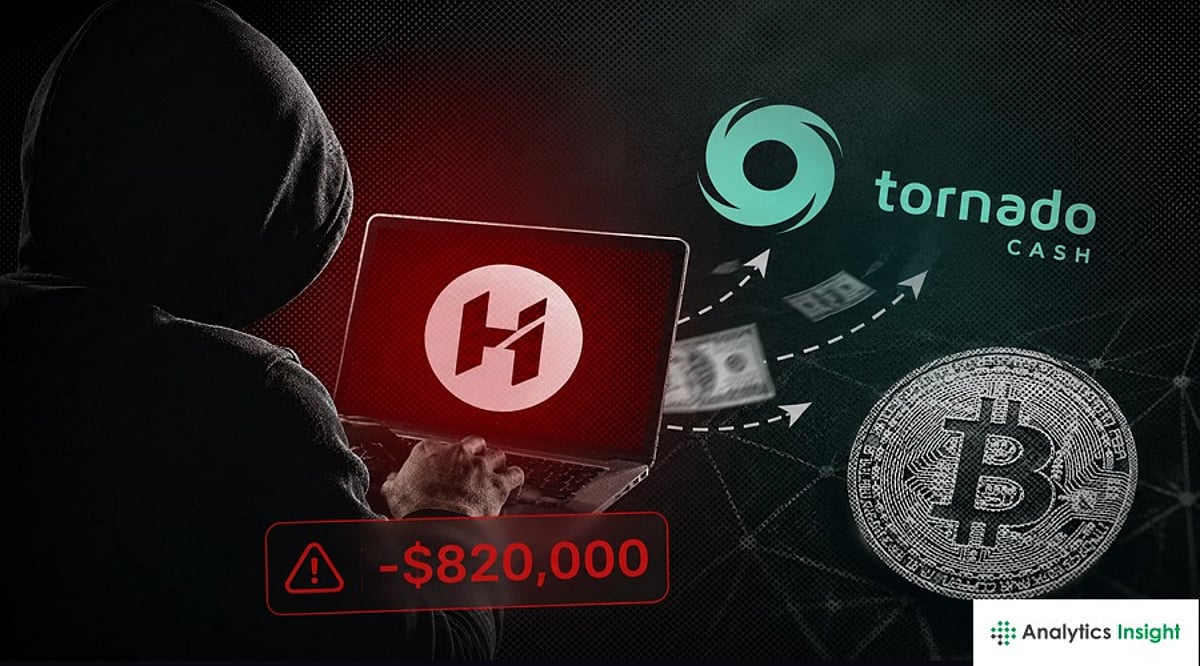
    On July 3, attackers exploited Hinkal, a privacy-focused DeFi protocol, draining approximately $830,000 in USDC — nearly the entire total value locked (TVL) across the five blockchains it supports. Blockchain security firm CertiK traced the breach to an externally owned account that repeatedly executed ‘Transact’ calls after completing a ‘proofless deposit.’ According to DeFiLlama, Hinkal’s TVL stood at roughly $829,000 just before the attack.

    How the Exploit Worked

    CertiK identified the attacker’s wallet as 0xbB3f01a1b1C68F3DEB36C55342b5F5706c32fc20 and reported that it siphoned over $800,000 from a Hinkal smart contract. Meanwhile, PeckShield, citing on-chain investigator Specter, placed the total loss near $820,000 — slightly lower than CertiK’s estimate. The exploit leveraged a vulnerability in Hinkal’s deposit mechanism, allowing the hacker to withdraw funds without providing the required proof.

    Laundering the Stolen Crypto

    After the theft, the attacker converted the stolen USDC into Ether and quickly moved the funds through privacy tools and cross-chain bridges. CertiK noted that the wallet deposited 410 ETH (worth about $700,000) into Tornado Cash, an Ethereum mixer currently under U.S. sanctions. Separately, PeckShield reported that the attacker sent 44.67 ETH through Thorchain, converting it into Bitcoin, which eventually reached an address beginning with bc1qr2sf. This laundering pattern — combining sanctioned mixers with decentralized bridges — is commonly observed in DeFi exploits.

    A research article presented at the ACM Web Conference 2026 found that sanctioned cryptocurrency mixers still provide effective anonymity despite increased regulatory pressure. CertiK has also noted that both criminals and legitimate privacy-conscious users continue to use Tornado Cash, complicating efforts to distinguish illicit transactions from lawful ones.

    Impact on Hinkal’s Institutional Privacy Model

    Hinkal markets itself as an institutional-grade privacy layer, enabling users to create shielded addresses and perform swaps, transfers, and payments without exposing balances or counterparties. The protocol operates on Ethereum, Arbitrum, Base, Polygon, and OP Mainnet. It raised $5.5 million in seed and strategic funding from investors including Draper Associates, Quantstamp, and NGC Ventures. Just one day before the exploit, Hinkal announced a partnership with wallet infrastructure provider Turnkey to bring privacy features to Turnkey users.

    At the time of the attack, Hinkal ranked near the bottom of privacy protocols by TVL. DeFiLlama listed Tornado Cash at $440 million, Railgun at $77.5 million, and Privacy Pools at about $7.8 million — while Hinkal held just $829,000 before the exploit drained nearly all of it.

    What’s Next

    The Hinkal exploit removed roughly $830,000 in USDC, nearly matching the protocol’s total locked value. Users are advised to monitor official updates from Hinkal and carefully assess the risks associated with privacy-focused DeFi platforms.

  • Bitcoin Holds Above $61K as Ether and Solana Lead Market Recovery: June Jobs Data Eases Fed Rate Hike Fears

    Bitcoin Holds Above $61K as Ether and Solana Lead Market Recovery: June Jobs Data Eases Fed Rate Hike Fears

    Market Overview: Bitcoin Rebounds Above $61,000

    Bitcoin is trading near $61,390, up 1.28% over the past 24 hours, as a weaker-than-expected June jobs report cools expectations of a near-term Federal Reserve rate hike. The recovery has lifted the broader crypto market, with Ethereum and Solana posting stronger gains. However, analysts warn that the rally may be a relief bounce rather than a confirmed reversal, citing persistent ETF outflows, thin liquidity, and regulatory uncertainty.

    Bitcoin Price Today: Key Levels and Analyst Insights

    Bitcoin stands at $61,547.78 (CoinMarketCap), having recovered roughly $3,400 from last week’s 21-month low near $58,115. It remains well below its 52-week high above $126,000.

    Akshat Siddhant, Lead Quant Analyst at Mudrex, notes: “Bitcoin is holding strong above $61,500 after weaker US jobs data reduced rate hike expectations. However, on-chain data shows exchange inflows have climbed above 50,000 BTC per day, historically followed by increased volatility. If Bitcoin loses $60,000 support, it could retest the realized price near $53,000. On the upside, a break above $62,600 could pave the way toward $65,000.”

    The CoinSwitch Markets Desk adds: “BTC’s rebound toward $62K was driven primarily by a short squeeze. Institutional demand remains weak due to persistent ETF outflows, while higher bond yields compete with risk assets. Entering Q3, the market is healthier from a leverage perspective but more susceptible to sharp price swings.”

    Top Crypto Prices Today: Biggest Gainers

    Ethereum leads the top ten with a 4.51% gain, supported by fresh ETF inflows. Hyperliquid follows at 4.29%, extending strong momentum in derivatives trading. Solana adds 2.85%, holding gains from its recent rally toward $80. No asset in the top ten posted losses today.

    News Driving Market Sentiment

    Weak June Jobs Report Cools Rate Hike Fears

    US payrolls grew by only 57,000 in June, missing expectations by a wide margin. The soft print reduced bets on further Fed tightening, lifting risk assets including Bitcoin and Ether. Traders now see a more accommodative Fed stance, with the next policy signal expected at the July 29 FOMC meeting.

    CLARITY Act Delayed

    The White House targeted a July 4 signing, but a Senate recess pushed the vote further out. Prediction markets trimmed 2026 passage odds. XRP traders watch closely, as the bill would set clearer digital asset rules.

    Citi Cuts Bitcoin and Ether Price Targets

    Citi lowered its 12-month Bitcoin forecast from $112,000 to $82,000 and Ether from $3,175 to $2,240, citing weak ETF flows and softer investor appetite. The bear case places Bitcoin near $53,000 if outflows persist.

    JPMorgan Flags Risk in Strategy’s Bitcoin Sales Policy

    JPMorgan said Strategy’s approach to selling Bitcoin adds unnecessary market uncertainty. The bank recommended equity issuance instead, adding scrutiny to corporate treasury strategies tied to Bitcoin.

    Investor and Market Outlook

    Bitcoin’s hold above $61,000 marks a steadier session, but most desks call it a relief bounce. The $60,000–$61,000 zone is key support. A break below could reopen the path toward $58,000, then realized price near $53,000. On the upside, $62,600 and $65,000 are targets for bulls. Ether’s strength above $1,650 and Hyperliquid’s climb suggest capital rotation into higher-beta names. Investors should track daily ETF flows, the CLARITY Act’s delayed Senate vote, and Fed commentary ahead of the July 29 FOMC meeting.

    Frequently Asked Questions

    What is the Bitcoin price today?

    Bitcoin is trading near $61,390.46, up 1.28% over 24 hours. Support near $60,000, resistance at $62,600 and $65,000.

    Why did Bitcoin recover this week?

    A weaker-than-expected June jobs report cooled Fed rate hike expectations, lifting Bitcoin and broader risk assets.

    What is the biggest crypto news today?

    The CLARITY Act’s delayed July 4 deadline, Citi’s price target cuts, and JPMorgan’s note on Strategy’s Bitcoin sales policy.

    Which coins are gaining the most today?

    Ethereum (+4.51%), Hyperliquid (+4.29%), and Solana (+2.85%) lead gains. No top-ten coin posted losses.

    What should crypto investors watch this week?

    Daily ETF flow data, CLARITY Act Senate vote, Fed commentary, and the $60,000 Bitcoin support level.

    Disclaimer: This article is for informational purposes only and does not constitute investment advice. Cryptocurrencies are risky assets; always conduct your own research before investing.