Tag: Ethereum

  • Ethereum Price Outlook for August 2026: Key Levels, ETF Inflows, and Whale Activity

    Ethereum Price Outlook for August 2026: Key Levels, ETF Inflows, and Whale Activity

    Ethereum (ETH) continues to trade below key technical resistance despite steady institutional buying and whale accumulation. As the second-largest cryptocurrency hovers near $1,850–$1,890, traders are weighing improving ETF inflows against weakening derivatives sentiment. The asset struggles to hold above the 100-day Exponential Moving Average (EMA), leaving the market poised for a potential breakout or further decline.

    ETF Inflows Signal Institutional Confidence

    According to SoSoValue, on August 5, Ethereum spot ETFs recorded a total net inflow of $60.8576 million. BlackRock’s ETF ETHA led with a single-day net inflow of $50.3442 million, bringing its cumulative total to $11.53 billion. BlackRock’s Staked ETH ETF ETHB followed with a single-day net inflow of $4.9382 million, reaching a cumulative total of $555 million. Additionally, the Morgan Stanley MSSE ETF saw its first inflow, indicating rising institutional participation.

    Technical Resistance Caps Upside Moves

    Ethereum has failed to break above the May peak and the 100-day EMA at $1,930 three times, signaling strong seller defense at that level. The Relative Strength Index (RSI) sits near the mid-50s, reflecting neutral momentum. The asset is currently confined within a narrow trading range of $1,840–$1,950, a pattern of price compression that often precedes sharp directional moves.

    Immediate support lies between $1,837 and $1,872, where the 20-day EMA, 50-day EMA, and the 0.382 Fibonacci retracement converge. A break below this band could push ETH toward the next horizontal support at $1,711. On the upside, a daily close above $1,930 would open the path to $1,940, $2,042, and the psychological resistance zone around $2,000–$2,170.

    Whale Accumulation Offsets Bearish Derivatives Sentiment

    While perpetual futures positioning has turned cautious, the spot market tells a different story. CryptoQuant data shows increased ETH derivatives volume, with Net Taker Volume shifting negative and the Taker Buy-Sell Ratio dropping below 1—indicating aggressive sellers currently outnumber buyers.

    Yet whales continue to accumulate. Lookonchain reports that one whale deposited 19,000 ETH from Gemini into staking and has accumulated 112,000 ETH over the past three weeks. Another wallet has purchased nearly 79,216 ETH since late June at an average price of $1,777. Meanwhile, BitMine Immersion Technologies grew its stake to 5.797 million ETH—about 4.8% of circulating supply—and expanded its buyback program. Staking revenue from its holdings is estimated at approximately $247 million annually.

    Historical Context and Outlook

    August has historically been a mixed month for Ethereum, with a median return of -1.87% over the past 11 years; seven of those years ended with a negative monthly close. While seasonal weakness remains a headwind, continued ETF inflows, whale accumulation, and a breakout above the $1,930–$1,961 resistance zone could allow ETH to reclaim the $2,000 mark in the coming weeks.

  • Bitcoin Steadies Near $64,800 as Ethereum Outshines Broader Crypto Market

    Bitcoin Steadies Near $64,800 as Ethereum Outshines Broader Crypto Market

    Bitcoin traded near $64,800 on Wednesday, supported by a six-day streak of inflows into spot Bitcoin ETFs, while Ethereum outpaced the broader market with a 2.08% gain. XRP also advanced, rising 1.90%, as investors rotated into large-cap altcoins.

    According to live data from CoinMarketCap, Bitcoin is currently trading at $64,806.54, up 0.79% over the past 24 hours. Its market cap stands near $1.3 trillion, with 24-hour trading volume at $22.47 billion. The price action remains tied to ETF demand and ongoing custody concerns stemming from the Coldcard exploit.

    Bitcoin Price Today

    Bitcoin holds near $64,800, staying range-bound between $64,000 and $65,000. Resistance sits at $65,000–$65,500, while support is near $64,000. A break above $65,000 could open a path toward $65,500, while a slip below $64,000 risks exposing support closer to $62,300.

    Analyst Insights

    CoinSwitch Markets Desk noted that BTC remained range-bound near $65,000 despite a risk-on tone across global markets. The S&P 500 extended its rally past 7,793 points, and gold jumped 2.8% to a six-week high near $4,213 an ounce. A sustained Bitcoin recovery may need stronger ETF inflows and softer Treasury yields.

    Prateek Gupta, Head of Business at Mudrex, said Bitcoin stayed inside its broad $64,000–$64,700 band. He noted that the S&P 500 closed above Bitcoin on relative performance for the first time since 2012. Long-term holders sold over 11,500 BTC this week.

    Nischal Shetty, founder of WazirX, said Bitcoin traded near $64,469, largely unmoved despite steady ETF demand. US spot Bitcoin ETFs added $211.5 million, while Ethereum ETFs drew $53.8 million in fresh inflows. CryptoQuant flagged renewed accumulation among large Bitcoin and Ethereum holders.

    Riya Sehgal, Research Analyst at Delta Exchange, said gold climbed to a seven-week high near $4,286 an ounce. Lower Treasury yields and renewed safe-haven demand drove the move. Bitcoin consolidated near $64,500, holding a constructive structure while staying above $64,000.

    Crypto Prices Today: Top 10 Coins at a Glance

    Live data sourced from CoinMarketCap as of today’s session.

    Biggest Gainers: ETH, XRP, BNB

    Ethereum led today’s session with a gain above 2%. XRP followed closely, adding nearly 1.90% through the day. BNB rounded out the top movers, supported by strong weekly momentum near 4.29%.

    Biggest Losers: Solana and Dogecoin Lag

    Solana and Dogecoin posted only marginal daily moves today. TRON stayed nearly flat, gaining just 0.12% through the session. Stablecoins USDT and USDC held their peg with barely any movement.

    Crypto News Today: Top Headlines Impacting Prices

    Coldcard Exploit Losses Widen Past $130 Million

    Galaxy Research now estimates at least 15 separate attackers are exploiting the Coldcard firmware flaw. Confirmed and suspected losses have climbed to roughly 2,055 BTC across more than 7,700 wallet addresses. Coinkite founder Rodolfo Novak apologized publicly and pledged support for affected users. Nearly 90% of the stolen Bitcoin remains untouched, suggesting attackers are holding funds rather than rushing to sell.

    Bitcoin ETFs Post a Clean Inflow Streak in August

    US spot Bitcoin ETFs have recorded zero outflow sessions so far this month, extending a six-day inflow run. BlackRock, Fidelity, and Franklin Templeton all added fresh Bitcoin exposure on August 3. Cumulative net inflows since launch have now crossed $52 billion across the fund complex. The streak follows an eight-week outflow stretch that had tested confidence in the broader ETF adoption story.

    Hashdex to Close Its Smallest Bitcoin ETF

    Hashdex confirmed it will close and liquidate the Hashdex Bitcoin ETF, trading under the DEFI ticker on NYSE Arca. Trading ends on August 17, with shareholders receiving cash payouts after liquidation. The fund held just $14.7 million in assets against BlackRock’s IBIT at over $47 billion. The closure highlights a growing gap between dominant issuers and smaller competitors in the ETF space.

    Bernstein Flags CLARITY Act Delay as a Risk Factor

    Bernstein warned that fading odds for CLARITY Act passage could pressure crypto prices as the Senate enters recess. Analysts said a failed vote may trigger an immediate negative market reaction. The firm still expects crypto markets to find a bottom and build momentum later this quarter. Policy uncertainty remains a key variable for institutional positioning heading into September trading sessions.

    Metaplanet Raises $137 Million for Its Bitcoin Treasury

    Japan’s Metaplanet confirmed a $137 million capital raise through third-party allotment to expand its Bitcoin holdings. The move follows a wider trend of public companies building corporate Bitcoin treasuries this year. Analysts see these raises as a steady demand source that runs independent of ETF flow data. Corporate accumulation in Asia continues to grow despite recent volatility across Bitcoin’s broader price structure.

    Coinbase Signals Doubts Over Senate Crypto Bill

    Coinbase indicated it may withdraw backing for the Senate’s crypto market structure bill over unresolved provisions. The exchange’s hesitation adds fresh uncertainty to an already fragile legislative timeline this month. Industry lobbying groups remain split as the bill faces recess deadlines and competing political priorities. A weaker industry coalition could complicate the bill’s passage chances ahead of the midterm election cycle.

    Investor and Market Outlook

    Bitcoin holds near $64,800 as steady ETF inflows offset lingering worries from the Coldcard exploit. A close above $65,000 could open a path toward stronger resistance near $65,500. A slip below $64,000 risks exposing support closer to $62,300.

    Ethereum and XRP remain the most responsive names to shifts in institutional risk appetite this week. Bitcoin’s next move hinges on ETF flow consistency and Senate action on the CLARITY Act. Coldcard-related fund tracing and corporate treasury announcements stand as key catalysts through the coming sessions.

    FAQs

    What is the Bitcoin price today? Bitcoin trades near $64,806.54, up 0.79% over the past 24 hours, holding steady above $64,700. Support sits close to $64,000, while resistance builds between $65,000 and $65,500 through the coming trading sessions this week.

    Why are Bitcoin ETFs seeing inflows this month? US spot Bitcoin ETFs have posted zero outflow days so far in August, extending a six-day inflow streak. BlackRock, Fidelity, and Franklin Templeton led fresh buying, pushing cumulative inflows past $52 billion since launch.

    What is the biggest crypto news today? The Coldcard exploit crossing $130 million and Bernstein’s CLARITY Act warning are shaping sentiment today. Hashdex’s ETF closure and Coinbase’s hesitation over the Senate bill add further caution across trading desks.

    Which coins are performing best today? Ethereum leads daily gains with a rise above 2%, followed closely by XRP near 1.90%. BNB also posted solid weekly momentum, while stablecoins stayed largely flat through today’s trading session.

    What should investors watch this week? Track the Senate’s recess deadline, CLARITY Act developments, and daily Bitcoin ETF flow data closely. Coldcard-related fund movements and fresh corporate treasury announcements could also shift near-term market positioning.

  • Top Crypto Hardware Wallets for 2026: Secure Your Digital Assets Offline

    Top Crypto Hardware Wallets for 2026: Secure Your Digital Assets Offline

    As cryptocurrency adoption continues to accelerate, securing digital assets has never been more critical. Hacks, phishing attacks, and exchange breaches cause billions of dollars in losses annually. While keeping crypto on exchanges is convenient, many long-term investors turn to hardware wallets because they store private keys offline, drastically reducing exposure to online threats.

    Hardware wallets, also known as cold wallets, keep private keys out of reach of third parties, making them one of the safest ways to store Bitcoin, Ethereum, NFTs, and other digital assets. Below are the most recommended crypto hardware wallets for 2026.

    1. Ledger Nano X – Best Overall Hardware Wallet

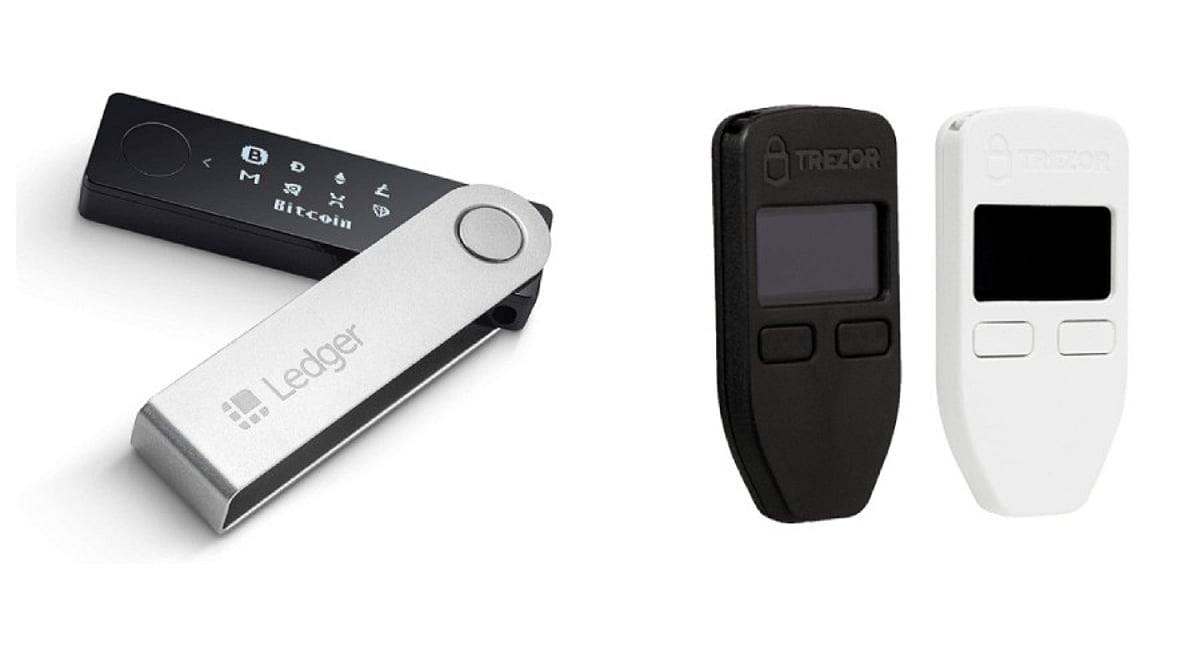
    The Ledger Nano X strikes an excellent balance between security and convenience. Through the Ledger Live app, users can stake, trade, buy, and sell over 5,000 cryptocurrencies. It connects via Bluetooth or USB-C for desktop and mobile devices and features Ledger’s Secure Element chip.

    Ideal For: Investors seeking an all-in-one mobile-enabled hardware wallet.
    Approximate Price: $99

    2. Ledger Stax – Best Premium Hardware Wallet

    For a premium experience, the Ledger Stax offers a large curved E-Ink touchscreen and Bluetooth connectivity. It supports thousands of cryptocurrencies and NFTs, using the same Secure Element technology as other Ledger devices. The larger display makes transaction verification easier at a glance.

    Ideal For: Long-term investors aiming for a premium user experience.
    Approximate Price: $399

    3. Trezor Model T – Best Open-Source Wallet

    The Trezor Model T features open-source firmware, which allows independent security researchers to inspect the code, enhancing transparency. It includes a color touchscreen and USB-C port, and manages hundreds of cryptocurrencies through the Trezor Suite app.

    Ideal For: Security-focused users who prefer open-source solutions.
    Approximate Price: $129

    4. Trezor Model One – Best Budget Choice

    The Trezor Model One remains an excellent entry-level wallet. It lacks a touchscreen but provides solid offline storage, open-source firmware, and simple two-button operation. It is compatible with most major cryptocurrencies and is one of the most affordable hardware wallets available.

    Ideal For: Newcomers to crypto investing.
    Approximate Price: $49

    5. Bitkey – Best Bitcoin-Only Wallet

    Block’s Bitkey is designed specifically for Bitcoin security, using a multi-signature architecture. It eliminates single points of failure through a combination of hardware, mobile app, and cloud-based recovery. Features like inheritance and recovery make it ideal for long-term Bitcoin holders.

    Ideal For: Maximum security for Bitcoin holders.
    Approximate Price: $215

    6. Tangem Wallet – Best Seedless Hardware Wallet

    Tangem takes a unique approach by eliminating traditional seed phrases. Its NFC-enabled smart cards store private keys in a certified secure chip. Users access their wallets by tapping the card on an NFC-enabled smartphone. It supports over 14,000 digital assets and offers an easy setup process.

    Ideal For: Beginners looking for a seed phrase-free wallet.
    Approximate Price: $54–$180

    Why This Matters

    As cryptocurrency-related cyber threats evolve, choosing the right hardware wallet is essential for protecting digital assets. Keeping funds offline reduces exposure to online attacks, giving investors more control over their private keys and enhancing long-term portfolio security.

    Final Thoughts

    In 2026, the hardware wallet market offers diverse options for every type of investor. Ledger’s feature-packed lineup continues to dominate, while Trezor’s open-source transparency appeals to those prioritizing trust. Bitkey’s multisig solution is ideal for Bitcoin-only investors, and Tangem’s seedless NFC design attracts users seeking simplicity. Regardless of the device chosen, storing private keys offline remains one of the best ways to safeguard digital assets from cyberattacks, phishing, and exchange-related risks.

    Frequently Asked Questions

    1. What is a crypto hardware wallet?

    A hardware wallet is a physical device that stores your cryptocurrency private keys offline. Because it remains disconnected from the internet, it offers significantly better protection against hacking, phishing, and malware compared to online wallets.

    2. Which hardware wallet is best for beginners?

    The Trezor Model One and Tangem Wallet are excellent choices for beginners. Both are easy to set up, affordable, and provide strong security without requiring advanced technical knowledge.

    3. Are hardware wallets safer than keeping crypto on exchanges?

    Yes. Hardware wallets give users complete control over their private keys, reducing the risk of exchange hacks or account compromises. However, users must safely store their recovery information to avoid losing access.

    4. Which hardware wallet supports the most cryptocurrencies?

    Tangem Wallet supports more than 14,000 digital assets, while the Ledger Nano X offers compatibility with over 5,000 cryptocurrencies and tokens through the Ledger ecosystem.

    5. Is a hardware wallet worth buying in 2026?

    For anyone holding a meaningful amount of cryptocurrency, a hardware wallet remains one of the best security investments. Offline storage greatly reduces exposure to online threats and gives users full ownership of their digital assets.

  • Bitcoin and Ethereum ETFs See Renewed Inflows as Institutional Interest Picks Up

    Bitcoin and Ethereum ETFs See Renewed Inflows as Institutional Interest Picks Up

    US spot crypto ETFs recorded fresh inflows on August 4, with Bitcoin funds attracting $211.49 million and Ethereum products gaining $53.75 million. The renewed demand supported Bitcoin above $64,000 as investors focused on institutional flows and market positioning.

    Bitcoin traded near $64,043, up 0.57% over 24 hours. Stronger ETF demand and short liquidations added buying pressure above $64,000. Bitcoin accounted for the larger share of combined ETF demand.

    Bitcoin ETFs Extend Inflows

    According to SoSoValue data, Spot Bitcoin ETFs recorded $211.49 million in net inflows on August 4. BlackRock’s iShares Bitcoin Trust led the group with $111.4 million. The two-day inflow period reversed the $265.37 million outflow recorded on July 31. Bitcoin funds previously lost 4,217 BTC during that session.

    The change marked a return of capital after a single withdrawal period. However, daily ETF flows can shift as institutions adjust positions or complete fund transactions. BlackRock’s IBIT provides Bitcoin exposure through exchange-traded shares. Investors can access Bitcoin through brokerage accounts without managing private keys or direct custody.

    Authorized participants create and redeem ETF shares based on market demand. These transactions can reflect institutional buying, arbitrage activity, or portfolio adjustments.

    Moreover, the SEC approved in-kind creations and redemptions for crypto exchange-traded products in July 2025. Qualifying institutions can exchange underlying assets directly for fund shares.

    Ethereum ETFs Reverse Outflow Trend

    Ethereum spot ETFs recorded $53.75 million in net inflows on August 4. The figure reversed the $11.42 million outflow reported on August 3. Cumulative net inflows across US Ethereum spot ETFs reached $11.25 billion. Total net assets increased to $10.32 billion during the session.

    The asset total rose from $10.23 billion on August 3. Trading volume reached $387.96 million on August 4, compared with $519.88 million during the previous session.

    Ethereum products recorded withdrawals on August 3 while Bitcoin ETFs attracted $170.09 million. The August 4 figures showed renewed demand across both major crypto ETF categories.

    Fees, liquidity levels and portfolio rules can influence daily allocations. Fund creations can also reflect arbitrage activity instead of direct retail purchases.

    XRP products attracted $1.15 million on August 3, while HYPE funds recorded withdrawals of around $964,320. Other products covering Solana, Chainlink, BNB, Avalanche, Polkadot, Dogecoin, and Litecoin posted positive token flows.

    Bitcoin Faces $64,300 Resistance

    Bitcoin’s move above $64,000 triggered $27.36 million in short liquidations during the reported 24-hour period. Short positions represented about 83% of all Bitcoin liquidations.

    Forced closures required traders to buy Bitcoin to exit bearish positions. That activity added momentum during the recovery.

    Bitcoin faces resistance near $64,300. A confirmed four-hour close above that level could open a path toward $64,757 and $65,500.

    The first support area sits near $63,933. A rejection from resistance could send Bitcoin toward the $62,000 to $63,000 zone.

    Bitcoin also maintained an 84% correlation with the S&P 500, keeping the asset connected with broader market movements.

    Investors will monitor upcoming ETF flow reports for changes in institutional demand. Fund-level creation data can provide further information on allocation trends across crypto investment products.

  • Bitcoin ETF Inflows Hit $211M, BlackRock Tokenizes $311B Funds, Uniswap Launches Lending, SpaceX Reduces Crypto Holdings

    Bitcoin ETF Inflows Hit $211M, BlackRock Tokenizes $311B Funds, Uniswap Launches Lending, SpaceX Reduces Crypto Holdings

    The crypto market saw significant developments as spot Bitcoin ETFs recorded $211.49 million in daily net inflows, BlackRock expanded tokenized fund offerings in Europe, Uniswap entered the lending space, and SpaceX reduced its crypto exposure.

    Bitcoin ETF Inflows Surge

    According to SoSoValue, U.S. spot Bitcoin ETFs saw total net inflows of $211.49 million. BlackRock’s IBIT led with $170.35 million in daily inflows, bringing its historical total to $60.76 billion. Fidelity’s FBTC followed with $19.58 million, reaching a cumulative $9.97 billion. The total net asset value of Bitcoin spot ETFs now stands at $78.26 billion, with an ETF net asset ratio of 6.06% and historical cumulative net inflows of $51.71 billion.

    BlackRock Tokenizes $311 Billion in European Money Market Funds

    On August 4, 2026, BlackRock introduced 12 tokenized share classes tied to six of its Institutional Cash Series (ICS) money market funds in Europe. This marks the firm’s first tokenized fund access in the region. The six funds collectively hold $311 billion in assets under management as of June 30, 2026. Only the tokenized share class operates on blockchain, and BlackRock expects initial adoption to be modest, growing as institutional investors opt in.

    Uniswap Launches Decentralized Lending Service

    Uniswap expanded its DeFi ecosystem with the launch of Earn, a lending product developed in partnership with Morpho. Users can deposit USDC, USDT, and Ether into professionally managed lending vaults to earn passive income. Assets are supplied to borrowers through Morpho’s decentralized lending markets, with interest returned to depositors. Users retain custody and can withdraw funds at any time. This reflects a broader trend of decentralized exchanges evolving into comprehensive financial platforms.

    SpaceX Reduces Crypto Holdings by $539 Million

    Space Exploration Technologies Corp. reported that the carrying value of its digital assets fell from $1.637 billion at the end of 2025 to $1.098 billion in Q2 2026, a 33% decline. The company did not specify whether the reduction resulted from asset sales, price movements, or both. Despite this, SpaceX’s total revenue reached $7.8 billion for the period, exceeding Wall Street estimates of $6.81 billion.

    Strategy-Linked Wallet Moves 1,030 BTC

    On-chain analytics platform Lookonchain identified a wallet linked to Strategy transferring 1,030 Bitcoin (worth approximately $66.14 million) on August 5. This occurred two days after Strategy disclosed a Bitcoin sale, but the company has not confirmed whether the latest transfer was a sale. Strategy’s most recent SEC filing reported holdings of 842,138 BTC as of August 2.

    FAQs

    1. How much money flowed into Bitcoin spot ETFs?
    According to SoSoValue, U.S. spot Bitcoin ETFs recorded $211.49 million in net inflows. BlackRock’s IBIT led with $170.35 million, followed by Fidelity’s FBTC with $19.58 million.

    2. What did BlackRock announce for its European funds?
    BlackRock introduced 12 tokenized share classes linked to six Institutional Cash Series money market funds. The funds collectively manage $311 billion in assets, though only the tokenized share classes operate on blockchain.

    3. What is Uniswap’s new lending service?
    Uniswap launched Earn, a decentralized lending product developed with Morpho. Users can deposit USDC, USDT, and ETH into lending vaults to earn passive income while maintaining custody of their assets.

    4. Why did SpaceX’s crypto holdings decline?
    SpaceX reported that the carrying value of its digital assets fell from $1.637 billion to $1.098 billion in Q2 2026. The company did not disclose whether the decline resulted from asset sales, price movements, or both.

    5. Did Strategy sell another 1,030 Bitcoin?
    Not necessarily. Lookonchain identified a wallet linked to Strategy transferring 1,030 BTC, but the company has not confirmed it was a sale. An on-chain transfer alone does not establish ownership changes or transaction purpose.

    Disclaimer: This article is for informational purposes only and does not constitute investment advice. Cryptocurrencies are risky assets; conduct your own research before investing.

  • Bitcoin ETF Inflows Surge as Ether Funds Experience Outflows

    Bitcoin ETF Inflows Surge as Ether Funds Experience Outflows

    US spot crypto exchange-traded funds posted mixed flows on August 3, as Bitcoin products gained $170.09 million while Ether funds recorded $11.42 million in withdrawals. XRP funds also attracted modest demand, while HYPE products posted losses.

    Bitcoin Funds Reverse the Previous Session

    SoSoValue recorded 2,657 Bitcoin entering listed US funds during the session. The holdings carried an estimated value of $170.09 million. The inflow reversed Bitcoin funds’ July 31 performance. Those products lost 4,217 Bitcoin, worth about $265.37 million, during that earlier session.

    Still, two daily readings do not establish a lasting trend. Crypto ETF flows can shift quickly as institutions adjust positions, manage liquidity, or complete fund creations and redemptions.

    Ether Outflows Break from Bitcoin Demand

    Ether products moved in the opposite direction on August 3. SoSoValue recorded 5,805 Ether leaving US funds, with an estimated value of $11.42 million. The result reversed the July 31 reading, when Ethereum funds gained 4,834 Ether worth about $9.03 million. Therefore, Bitcoin demand recovered as Ether demand weakened.

    Could this split show that investors now assess each crypto asset separately instead of treating the market as one trade? The August 3 data showed clear asset-level differences. XRP products gained 1.06 million tokens worth nearly $1.15 million. Meanwhile, HYPE funds lost 17,770 tokens, valued at about $964,320.

    Funds linked to Solana, Chainlink, BNB, Avalanche, Polkadot, Dogecoin, and Litecoin also reported positive daily flows. However, the available data did not include complete dollar totals.

    ETF Mechanics Shape Daily Flow Figures

    BlackRock describes its iShares Bitcoin Trust ETF as a vehicle offering Bitcoin exposure through exchange-traded shares. Investors can gain access without managing wallets or direct custody. The SEC approved spot Bitcoin exchange-traded products in January 2024. Former Chair Gary Gensler said the decision covered listed products and did not represent approval of Bitcoin itself.

    In July 2025, the SEC allowed in-kind creations and redemptions through authorized participants. Commissioner Mark Uyeda said cash-only processing could create transaction costs and price slippage. In-kind processing allows qualifying institutions to exchange underlying assets directly for fund shares. As a result, daily flows can reflect institutional arbitrage, portfolio adjustments, and redemption activity.

    The SEC’s Division of Corporation Finance requires issuers to explain custody, valuation, creation, redemption, and material risks. These disclosures help investors compare products beyond one session’s totals.

    BlackRock also operates separate Ether products, including a staked Ether fund. Fees, liquidity, staking exposure, and portfolio rules can affect demand across similar Ethereum investment products. CoinShares recorded similar asset-level divergence earlier in 2026. Its May 5 report showed Bitcoin inflows alongside Ethereum withdrawals during uneven market conditions.

    Bitcoin funds led US crypto ETF activity on August 3 with $170.09 million in inflows, while Ether products lost $11.42 million. XRP funds posted smaller gains, and HYPE funds recorded withdrawals. The split followed opposite July 31 readings and reflected separate demand across listed crypto assets.

  • Bitcoin Holds Above $64,200 as ETF Inflows Counter Coldcard Fears and Legislative Stalemate

    Bitcoin Holds Above $64,200 as ETF Inflows Counter Coldcard Fears and Legislative Stalemate

    Bitcoin traded near $64,236.97 on Tuesday, up 0.48% over the past 24 hours, as fresh institutional inflows offset ongoing security concerns and political uncertainty. The leading cryptocurrency steadied above $64,200 after a choppy start to August, supported by $170.1 million in net inflows into US spot Bitcoin ETFs on Monday.

    Bitcoin Price Today

    Bitcoin trades at $64,236.97, with a market cap of approximately $1.28 trillion and 24-hour trading volume of $23.11 billion. Key support lies near $62,800, while resistance is seen between $64,500 and $65,600, according to analysts.

    Analyst Perspectives

    Mudrex: $65,000 Key for Sentiment Shift

    Akshat Siddhant, Lead Quant Analyst at Mudrex, noted that Bitcoin trades above $64,000 as easing geopolitical tensions lift risk assets. He highlighted that Bitcoin futures open interest slipped to 740,000 BTC from a July peak of 776,000 BTC, a pattern that preceded April’s large short-side liquidation wave. “For now, $65,000 remains major resistance while support holds near $62,800,” he said.

    CoinSwitch: Equities Rally Supports BTC

    CoinSwitch Markets Desk observed that BTC held near $64,000 even as risk assets rallied on US-Iran de-escalation hopes. “Holding above $64,000 keeps the short-term structure positive for a push toward $64,400. A slip below $64,000 opens the next support zone near $63,600,” the desk stated.

    Delta Exchange: Break Above $64,500 Needed

    Riya Sehgal, Research Analyst at Delta Exchange, said Bitcoin reclaimed $64,000 after defending $62,200-$62,400 demand. “Bitcoin needs a sustained break above $64,500 to target $65,000-$65,600. Ethereum must reclaim $1,880 to confirm a broader breakout structure,” she added.

    Giottus: Weak Spot Demand Caps Recovery

    Vikram Subburaj, CEO of Giottus, placed Bitcoin near $64,260, up about 0.7% on the day. He advised investors to favor staggered buying ahead of Friday’s jobs report, noting that Bitcoin holds support near $63,000-$63,400, with resistance between $64,500 and $66,000.

    WazirX: Institutional Absorption Continues

    Nischal Shetty, founder of WazirX, said Bitcoin trades near $64,176 as easing tensions lift appetite. On-chain data shows 155,000 BTC accumulated between $62,000 and $65,000. Wintermute’s H1 2026 report shows institutions now drive 72% of spot volume. “A move above $64,800-$65,000 could trigger fresh long positions. Losing $63,900-$64,000 may raise the odds of a pullback toward $63,200,” he noted.

    Top 10 Coins at a Glance

    • Biggest Gainers: Hyperliquid (HYPE) led with a gain past 3%, followed by BNB (+1.27%) and XRP (+1%).
    • Biggest Losers: Stablecoins (USDT, USDC) and Solana (SOL) remained flat with minimal movement.

    Key Headlines Impacting Prices

    Bitcoin ETFs Return to Inflows With $170.1 Million

    US spot Bitcoin ETFs recorded $170.1 million in net inflows on Monday, ending a brief redemption streak. BlackRock’s IBIT led with $111.4 million, followed by Fidelity’s FBTC at $33.4 million. Ether ETFs slipped into modest net outflows of $11.9 million.

    Coldcard Firmware Flaw Fallout Continues

    A firmware bug in Coldcard hardware wallets has been linked to over $100 million in stolen Bitcoin this month. Emergency fixes have been rolled out, but security researchers warn that updating firmware alone is insufficient. Affected holders must generate fresh recovery phrases and migrate balances immediately.

    CLARITY Act Stuck Without Senate Floor Vote

    The Digital Asset Market Clarity Act remains absent from the Senate’s floor schedule. Senate Majority Leader John Thune indicated a vote could occur before recess, but Republicans need roughly seven Democratic votes to clear the 60-vote threshold. An unresolved ethics dispute over presidential crypto holdings remains a sticking point.

    Cardano Rallies on Heavy Whale Accumulation

    Cardano’s ADA token surged more than 26% this week as whale wallets added over 240 million tokens. Combined whale holdings have climbed to roughly 14.5 billion ADA, according to Santiment. Analysts say holding above $0.17 support keeps the bullish structure intact, with next resistance near $0.20 and then $0.24-$0.25.

    Ether ETFs Slip Into Mild Outflows

    US spot Ether ETFs recorded an $11.9 million net outflow on Monday, ending a two-day inflow streak. BlackRock’s ETHA and Grayscale’s ETHE led the modest redemptions. Analysts view the pullback as routine rotation rather than a shift in institutional demand.

    ISM Manufacturing Data Signals Resilient Economy

    The US ISM Manufacturing PMI climbed in July, pointing to resilient economic activity. Stronger readings reduce near-term expectations of Fed rate cuts. Traders now await Wednesday’s ADP payrolls and services PMI data, with Friday’s jobs report as the week’s most closely watched macro catalyst.

    Investor and Market Outlook

    Bitcoin holds above $64,200 as fresh ETF inflows offset lingering custody worries and legislative delays. A close above $64,500 could open a path toward resistance near $65,600. A slip below $63,900 risks exposing deeper support closer to $62,800. Cardano and Hyperliquid remain the most sensitive names to shifts in institutional risk appetite. Key catalysts this week include ETF flow trends, Fed rate signals, Friday’s jobs report, and the CLARITY Act’s Senate outcome.

  • How to Select the Best Cryptocurrency Exchange in 2026: Key Factors for Secure Trading

    How to Select the Best Cryptocurrency Exchange in 2026: Key Factors for Secure Trading

    Cryptocurrency adoption continues to expand globally, and selecting the right exchange is more critical than ever. Despite ongoing regulatory uncertainty and market fluctuations, India remains one of the fastest-growing markets for crypto trading. According to CoinMarketCap Research, centralized exchanges recorded approximately $4.74 trillion in trading volume in June 2026, highlighting the sector’s immense scale.

    Choosing an ideal cryptocurrency exchange involves more than just comparing trading fees. Key factors include security, regulatory compliance, liquidity, and the ability to safely store and transfer digital assets.

    Prioritize Regulation and Compliance

    The first checkpoint should always be regulatory compliance. Investors must opt for exchanges that adhere to Know Your Customer (KYC) and Anti-Money Laundering (AML) guidelines. In India, exchanges registered with the Financial Intelligence Unit (FIU-IND) offer an extra layer of compliance under local anti-money laundering laws. Leading global exchanges are also obtaining licenses to enhance investor protection through frameworks like Europe’s Markets in Crypto-Assets (MiCA) regulation.

    Evaluate Security Infrastructure

    Security is the most significant differentiator among exchanges. When opening an account, check whether the platform provides:

    • Two-factor authentication (2FA)
    • Cold storage for customer assets
    • Withdrawal whitelist protection
    • Proof of Reserves (PoR)
    • Independent security audits
    • Insurance mechanisms for certain digital assets

    After major exchange failures, Proof of Reserves has become essential, as it allows users to verify that customer assets are fully backed.

    Compare Liquidity and Trading Costs

    High liquidity enables investors to execute trades with minimal price slippage, especially during volatile market conditions. Larger exchanges typically offer tighter spreads, deeper order books, and faster execution. Investors should compare:

    • Spot trading fees
    • Deposit and withdrawal charges
    • Futures funding costs
    • INR or fiat deposit availability
    • Supported payment methods

    While low fees are appealing, they should not be the sole criterion—security and liquidity are equally important.

    Asset Selection and Features

    Investors have varying needs. Beginners may only require Bitcoin and Ethereum, while advanced traders seek features like staking, perpetual futures, margin trading, recurring buys, or institutional custody. Choose an exchange that aligns with your investment strategy rather than one with the largest token list.

    Also Read: BitMart Announces Crypto Exchange Shutdown as BMX Crashes 81%

    Customer Support and Transparency

    Customer support is crucial, particularly during market volatility. Select exchanges that regularly share system status updates, publish clear reserve reports, disclose regulatory licenses, and respond promptly to user complaints. Review uptime history, incident reports, and community feedback to gauge reliability.

    Why This Matters

    With global trading volumes hitting trillions and adoption surging across India, choosing a regulated and secure exchange safeguards your capital against market volatility, cyber threats, and sudden exchange failures in an evolving regulatory environment.

    Final Thoughts

    When selecting the best cryptocurrency exchange in 2026, consider security, compliance, liquidity, and user-friendliness. Despite a strict tax regime, India remains a top country for grassroots crypto adoption. While low trading fees may seem attractive, they should not be the deciding factor. Prioritize platforms with strong reputations, robust regulation, solid security measures, and transparency for long-term success.

    FAQs

    1. What is the most important factor when choosing a cryptocurrency exchange?

    Security should be the top priority. Choose an exchange with two-factor authentication (2FA), cold storage, Proof of Reserves, and a strong history of protecting customer assets.

    2. Are FIU-registered crypto exchanges safer in India?

    FIU-registered exchanges comply with India’s anti-money laundering regulations and KYC requirements. While registration doesn’t eliminate risk, it adds an extra layer of regulatory oversight.

    3. Why does liquidity matter on a crypto exchange?

    High liquidity allows trades to be executed faster with lower price slippage, especially during high market volatility or when placing large orders.

    4. Should beginners use exchanges with hundreds of cryptocurrencies?

    Not necessarily. Beginners often benefit more from exchanges offering major cryptocurrencies like Bitcoin and Ethereum, along with an easy-to-use interface and strong educational resources.

    5. Is the lowest trading fee always the best option?

    No. Low fees are beneficial, but security, regulatory compliance, transparency, liquidity, and reliable customer support are often more important for long-term investing success.

  • BlockDAG and RedotPay Launch Crypto Super App as Ethereum and Worldcoin Face Critical Price Levels

    BlockDAG and RedotPay Launch Crypto Super App as Ethereum and Worldcoin Face Critical Price Levels

    Fresh trading data highlights key digital coins approaching essential chart levels. Ethereum is nearing a critical point where clearing $2,500 is necessary to build upward momentum, while falling short could push it toward deeper support zones. Meanwhile, Worldcoin hovers near $0.30, a key level that must hold to prevent further declines, even though oversold signals create room for a short bounce if buyers step in.

    BlockDAG is taking a different path by expanding real-world usability through its partnership with RedotPay and the upcoming unified Super App. With BDAG valued at $0.000000017, the system merges mining, payments, staking, trading, and spending into one platform while its active user base grows. These milestones help explain why BlockDAG is positioning itself as a top crypto to buy right now.

    Ethereum Near a Key Breakout

    Ethereum recently bounced off lower levels, but price charts show it remains stuck in a firm downward trend. Many overhead supply zones still sit above current trading values, leaving the asset at an uncertain junction. To signal a real trend change, Ethereum must achieve a clean push above the $2,500 barrier with heavy trading activity. Success would open a path toward previous peaks. However, another rejection at this level could send the coin sliding back toward $1,500 or $1,000 floors. Network activity, spot ETF demand, and future tech upgrades will set the direction.

    Worldcoin Searches for Stability

    Worldcoin recently encountered heavy selling pressure, sitting near $0.30 as technical charts indicate a shaky market stance. Short-term indicators hint that the token could start another downward slide if sellers remain in control. To steady itself, Worldcoin must defend support between $0.29 and $0.30 to avoid dropping toward $0.26. Moving averages look weak, but oversold gauges show space for a quick rally if buyers push past $0.35 resistance. Future moves depend on fresh buying power, broader market health, and reduced token unlock pressure.

    RedotPay and BlockDAG Team Up to Launch a Crypto Super App

    Strong partnerships often separate real projects from those struggling to find their place, and BlockDAG has entered that group through its fresh alliance with RedotPay. Together, the projects are creating a Super App that brings mining, claiming, staking, trading, storage, games, global transfers, payment cards, and daily purchases into one clear system. This transforms BDAG from a simple held token into a practical daily currency.

    This deal matters because BlockDAG brings a massive active community. Over 4 million users rely on the X1 mobile mining software, and community members have locked up nearly 10 billion coins for weekly rewards. RedotPay adds a real-world spending layer, giving users something most Layer 1 networks fail to offer. The underlying technology easily matches these big plans. BlockDAG handles roughly 7,000 transactions per second with block finality in about two seconds, while maintaining full compatibility with Ethereum developer tools.

    Together with a live on-chain casino and physical X-series mining gear shipping out to buyers, the RedotPay connection serves as the bridge that connects every feature into one smooth flow. The token value sits at $0.000000017, featuring a 22% Live Swap discount alongside $0.025 Buybacks currently running. With the Super App releasing this month and top-tier exchange listings set to follow, this partnership acts as the primary spark that places BDAG high on the list as a top crypto to buy right now.

    Final Thoughts

    Ethereum still needs to break past $2,500 with solid volume to confirm strong growth, while Worldcoin must hold the $0.29 to $0.30 range before aiming for any steady recovery. Both coins rely heavily on broader market action and continuous buying momentum. BlockDAG, however, pairs fast growth with clear results through its RedotPay deal, over 4 million X1 users, nearly 10 billion staked tokens, 7,000 TPS speed, 2-second finality, Ethereum compatibility, an active casino, X-series miner shipments, a $0.000000017 price, Live Swap discounts, buybacks, and its strong pitch as a top crypto to buy right now.

    Disclaimer: This article is for informational purposes only and does not constitute investment advice. Cryptocurrency investments are risky and may result in total loss. Always do your own research before making any investment decisions.

  • On-Chain Activity Surges for Ethereum, Solana, and Avalanche Despite Steep Token Price Declines

    On-Chain Activity Surges for Ethereum, Solana, and Avalanche Despite Steep Token Price Declines

    Ethereum, Solana, and Avalanche have recorded significantly higher on-chain activity and lower transaction costs over the past year, even as their native tokens lost roughly half or more of their value. A new staking report from Bitwise attributes the improvement to larger blockspace, cheaper transactions, and rising institutional participation. However, token prices remain far below their 2025 peaks, signaling that blockchain performance and market sentiment are no longer moving in lockstep.

    More Activity at Lower Cost

    Bitwise found that activity expanded while user fees declined across all three proof-of-stake networks. The report attributes this shift mainly to protocol upgrades rather than weaker demand. Ethereum, Solana, and Avalanche increased network capacity to process more transactions at lower cost. As a result, users gained cheaper access while developers received more room to build applications.

    Previous market cycles often treated congestion and expensive transactions as signs of strong demand. Now, greater capacity allows networks to handle heavier use without creating the same fee pressure. Lower costs also reduced protocol revenue because the networks earn much of their direct income from transaction fees. Developers accepted that trade-off to improve scalability and encourage wider adoption.

    Institutional Staking, Declining Yields

    Proof-of-stake networks depend on validators who lock digital assets to secure transactions and receive staking rewards. Institutional investors drove much of the additional Ethereum entering validator pools during the second quarter. Exchange-traded products, corporate treasuries, and other large holders increased their staking exposure.

    More than 40 million ETH—roughly one-third of Ethereum’s circulating supply—had entered staking by the end of the period. BitMine, the largest public Ethereum treasury company, reported staking nearly 4.9 million ETH from total holdings of about 5.8 million ETH.

    However, staking yields continue to decline because rewards now reach a larger group of validators. More participants share the available token issuance and transaction-fee income. Bitwise estimates that about 93% of Ethereum staking rewards and more than 90% of Solana rewards came from newly issued tokens.

    That structure increases token supply and dilutes holders who do not stake. Meanwhile, lower fee revenue raises further questions about long-term staking economics.

    Liquid staking products also continue attracting attention because they let holders earn rewards while retaining usable tokenized assets. Investors can deploy those assets as collateral, supply them to lending markets, or place them in liquidity pools. Institutions can therefore combine staking income with broader capital use.

    Token Market Performance

    Developers continue launching applications, institutions add staked assets, and users remain active across decentralized finance platforms despite weaker token valuations. The trend suggests that practical blockchain use now plays a larger role in network activity. Meanwhile, token prices remain tied to market sentiment and wider economic conditions.

    For developers, lower fees and greater capacity support broader adoption. For investors, falling yields, inflation-funded rewards, and weaker fee income create different measures for assessing returns.

    Ethereum, Solana, and Avalanche processed more activity at lower costs despite sharp token-price declines. Institutional staking also expanded, although yields and protocol revenue fell. The data show that investors must evaluate network usage, token issuance, fee income, and staking returns separately from short-term market performance.