Tag: Federal Reserve

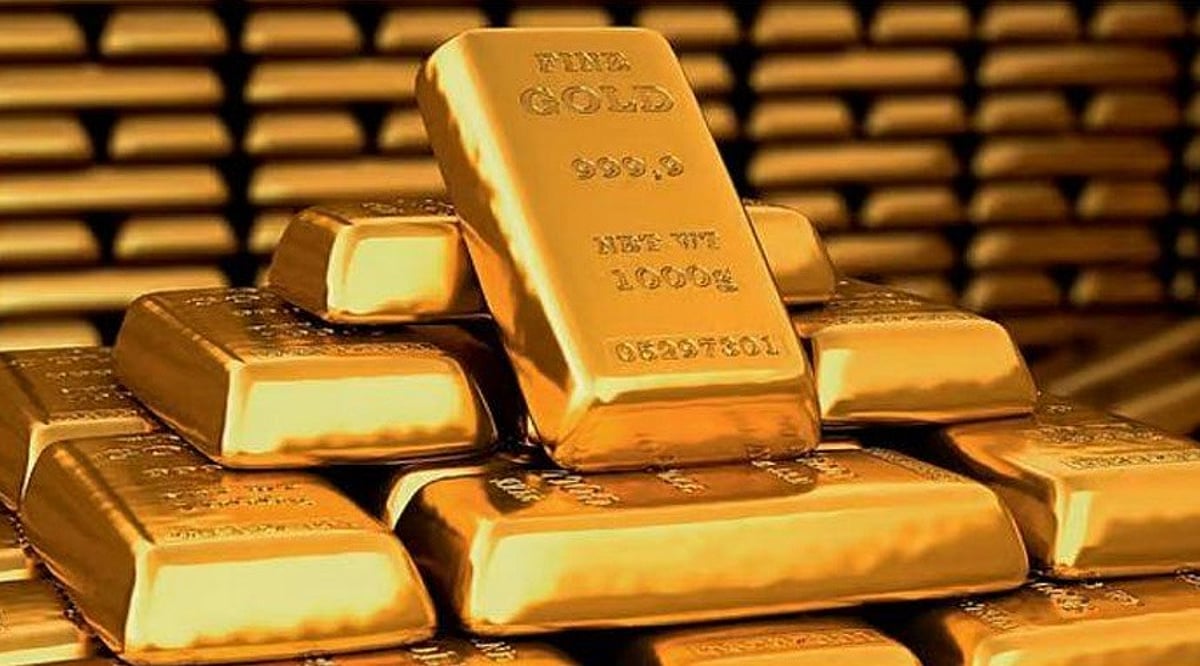
  • MCX Gold Prices Slide 0.12% to ₹1,53,950 as Oil Rises and US Inflation Data Looms

    MCX Gold Prices Slide 0.12% to ₹1,53,950 as Oil Rises and US Inflation Data Looms

    Gold futures on the Multi Commodity Exchange (MCX) edged lower on Wednesday, September 10, as market participants adopted a cautious stance ahead of key US inflation data and the Federal Reserve’s upcoming policy decision. The October gold contract fell 0.12% to ₹1,53,950 per 10 grams, while September silver futures declined 0.34% to ₹2,43,375.

    In the energy markets, Brent crude futures slipped 0.16% to $101 per barrel, while US West Texas Intermediate (WTI) edged up 0.06% to $96.11 per barrel. Rising oil prices often fuel inflation concerns, adding to the uncertainty surrounding gold’s short-term direction.

    According to the CME FedWatch Tool, markets are currently pricing in a 39.8% probability that the Fed will hold rates steady in September and a 60.2% chance of a rate hike. Higher interest rates typically weigh on gold, a non-yielding asset.

    Domestic Gold Prices

    Despite the dip in futures, spot gold prices in India moved higher. 24K gold rose by ₹120 to ₹1,55,510 per 10 grams, and 22K gold advanced by ₹110 to ₹1,42,550. Regionally, Mumbai and Kolkata quoted 24K gold at ₹1,55,510, Delhi at ₹1,55,660, and Chennai at ₹1,55,510.

    US Gold Prices

    In international markets, spot gold traded 0.3% higher at $4,412.84 per ounce, supported by a softer dollar. However, US gold futures for December delivery edged 0.1% lower to $4,457.10. Spot silver rose 0.2% to $67.42 per ounce, platinum fell 0.6% to $1,885.02, and palladium gained 0.2% to $1,355.50.

    “For now, the geopolitical developments in the Persian Gulf are of secondary importance to gold. Gold instead is teeing off on a weaker dollar, which notably is not moving up despite the fact that US rates are going higher,” said Edward Meir, analyst at Marex.

    Daniel Hynes, senior commodities strategist at ANZ, noted that gold is supported “as US fiscal pressures continue to undermine confidence in the long-term value of government debt and the currency used to finance it.”

    Key Levels to Watch

    On MCX, gold has support at ₹1,52,500 and ₹1,51,650, while resistance is seen at ₹1,54,400 and ₹1,55,500. For silver, support lies at ₹2,41,400 and ₹2,39,100, with resistance at ₹2,45,800 and ₹2,48,000.
  • MCX Gold Slips 0.14% to Rs 1,52,370 as Middle East Tensions and Fed Rate Hike Expectations Weigh

    MCX Gold Slips 0.14% to Rs 1,52,370 as Middle East Tensions and Fed Rate Hike Expectations Weigh

    Gold prices moved lower on the Multi Commodity Exchange (MCX) on September 9, pressured by rising inflationary concerns after fresh attacks on ships in the Middle East and growing expectations of a US interest rate hike. October gold futures fell 0.14% to Rs 1,52,370 per 10 grams, while September silver futures declined 0.13% to Rs 2,39,113.

    Oil Prices Edge Higher

    Brent crude futures climbed 1.46% to USD 99.35 per barrel, while US West Texas Intermediate (WTI) rose 1.30% to USD 94.24 per barrel, adding to inflation worries in global markets.

    Fed Rate Hike Expectations

    According to the CME FedWatch Tool, markets currently price in a 39.5% probability that the Federal Reserve will keep rates unchanged in September, and a 60.5% chance of a rate hike. The possibility of higher borrowing costs continues to cap gold’s upside momentum.

    Domestic Gold Prices

    In the Indian domestic market, 24K gold fell by Rs 104 to Rs 1,54,310 per 10 grams, while 22K gold declined by Rs 95 to Rs 1,41,450. City-wise, Mumbai and Kolkata quoted gold at Rs 1,54,310, Delhi at Rs 1,54,460, and Chennai at Rs 1,54,310.

    US Gold Prices and Other Metals

    In the international market, spot gold rose 0.56% to USD 4,380.01 per ounce. US gold futures for December delivery dropped 0.38% to USD 4,422.31. Spot silver gained 0.73% to USD 66.23 per ounce, platinum rose 0.78% to USD 1,833.60, and palladium firmed 0.28% to USD 1,349.50.

    Key Levels to Watch

    “Gold is range-bound because it is capped by a higher probability of raising interest rates, which continues to hinder momentum in the market,” said Daniel Pavilonis, senior market strategist at Stone X.

    Ahmad Assiri, market strategist at Pepperstone Group Ltd, noted: “A softer reading will be a relief for gold traders, as it would support the case for holding rates steady. The greater risk lies in an upside inflation surprise, which would likely strengthen the case for a hike, creating what could be massive pressure on the precious metal.”

    Internationally, gold is likely to find support at USD 4,400–USD 4,365 per troy ounce, with resistance at USD 4,474–USD 4,510. Silver support is at USD 65.80–USD 64.70, while resistance is placed at USD 68–USD 69.10 per troy ounce.

    On the MCX, gold has support at Rs 1,51,500–Rs 1,50,150 and resistance at Rs 1,53,300–Rs 1,54,100. Silver is expected to find support at Rs 2,37,700–Rs 2,35,000, with resistance at Rs 2,41,400–Rs 2,44,000.

  • Wall Street Futures Drop as Brent Crude Surges Past $100, Reviving Inflation Fears

    Wall Street Futures Drop as Brent Crude Surges Past $100, Reviving Inflation Fears

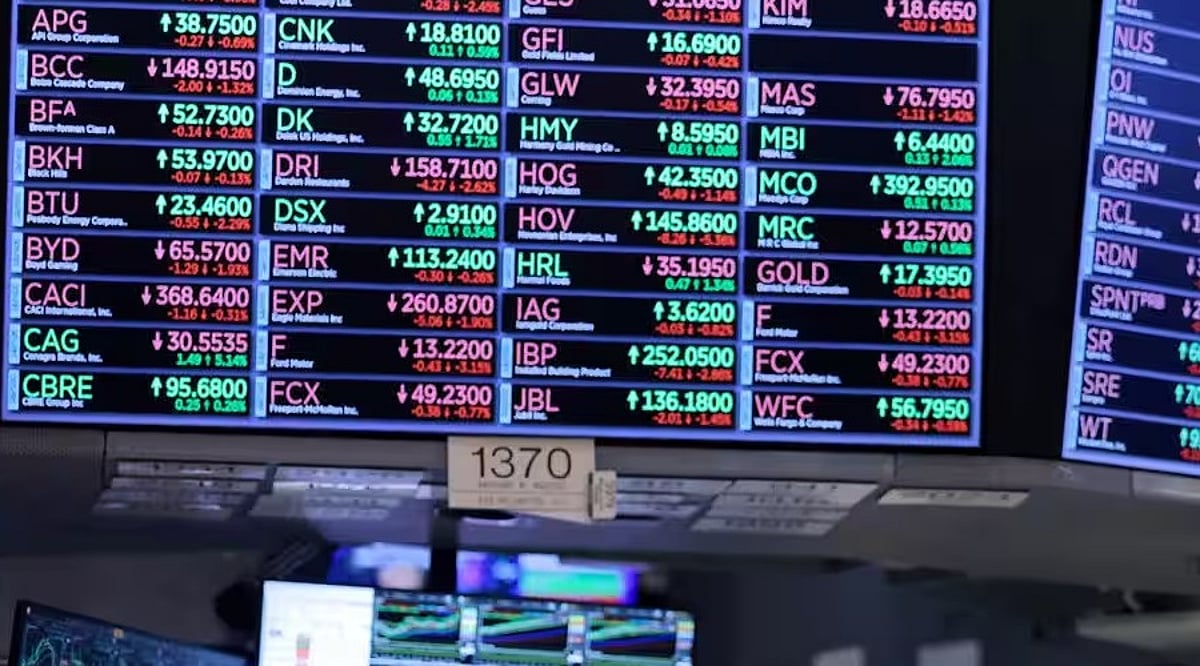
    US stock futures declined on Wednesday as Brent crude oil prices climbed above $100 per barrel for the first time since July, reigniting concerns about inflation ahead of key economic data releases. Investors are closely monitoring rising oil prices, elevated Treasury yields, and the Federal Reserve’s upcoming policy decision.

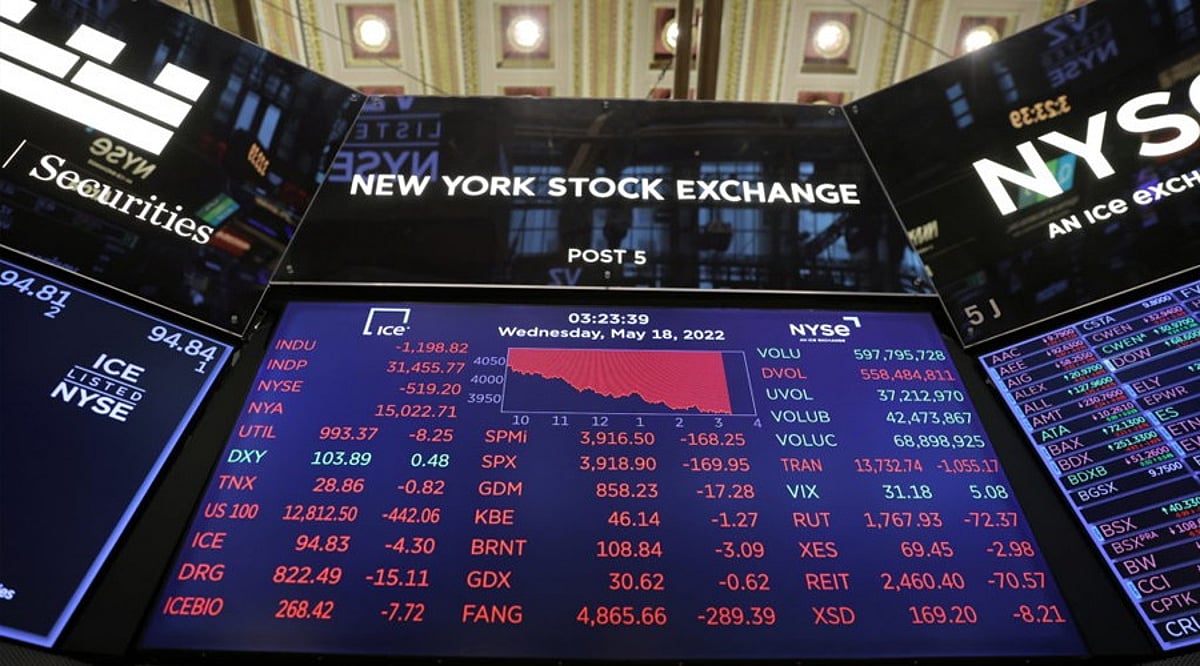
    Dow Jones Industrial Average futures fell approximately 331 points, or 0.6%, while S&P 500 futures dropped 0.4%. NASDAQ-100 futures also declined 0.5%. The losses followed a weak session on Tuesday, when the Dow dropped 1.2%, its largest one-day decline in nearly three weeks. The S&P 500 fell 0.6%, and the NASDAQ Composite lost 0.3%.

    Brent crude rose more than 2%, briefly surpassing $100 per barrel. The surge was driven by escalating tensions between the United States and Iran, which raised worries about energy supplies from the Middle East. Reports of attacks involving oil tankers and military assets heightened concerns about shipping through the Strait of Hormuz.

    Kara Murphy, chief investment officer at Kestra Investment Management, described the market move as “a little bit of a speed bump.” She noted that with fewer earnings reports to follow, investors are focusing more on macroeconomic risks.

    Treasury yields also rose, with the 10-year US Treasury note briefly exceeding 4.8% on Tuesday. Higher yields can pressure stock valuations by making government bonds more attractive relative to equities.

    Investors are now preparing for two critical inflation reports: the Producer Price Index on Thursday and the Consumer Price Index on Friday. These data points will help shape expectations ahead of the Federal Reserve’s September policy meeting. Market pricing currently implies about a 60% probability of a 25-basis-point rate increase. A stronger-than-expected inflation reading could boost those expectations, while a softer reading might support holding rates steady.

    Fed Chair Kevin Warsh and other policymakers have continued to emphasize inflation in their recent communications, keeping oil prices and inflation data at the center of trader attention.

    Global markets also reflected the cautious mood. European stocks traded lower, with the Stoxx 600 falling 0.7%. Germany’s DAX and France’s CAC 40 declined, while Italy’s FTSE MIB recorded a steeper drop. The UK’s FTSE 100 also moved lower. In Asia, results were mixed: Japan’s Nikkei 225 closed 0.19% lower, South Korea’s Kospi gained 1.4%, Australia’s S&P/ASX 200 fell 0.11%, and China’s CSI 300 rose 0.3%.

    The Cboe Volatility Index (VIX) remained near 15, below its long-term median of 17.6, suggesting that while near-term volatility is low, traders face several risk events in the coming weeks, including inflation data, the Federal Reserve meeting, and further developments in the US-Iran conflict.

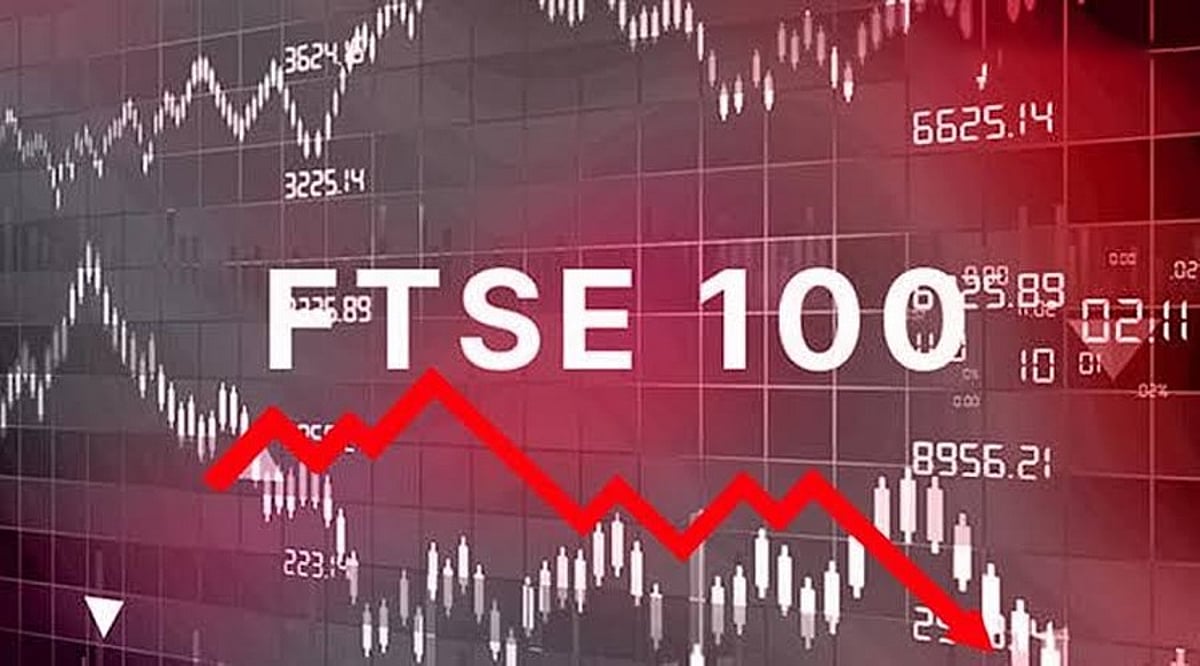
  • FTSE 100 Dips as Oil Prices Surge and Fed Rate Hike Expectations Strengthen

    FTSE 100 Dips as Oil Prices Surge and Fed Rate Hike Expectations Strengthen

    Global stock markets traded mixed on Monday as rising oil prices and growing expectations of a Federal Reserve rate hike shaped investor sentiment. European shares remained subdued, while several Asian markets advanced sharply after strong gains in technology stocks.

    Oil prices stayed near six-week highs as the conflict between the United States and Iran disrupted shipping and crude flows. Meanwhile, strong US employment data raised expectations that the Fed could increase interest rates at its September meeting.

    European Stocks Struggle as Oil Prices Rise

    The pan-European Stoxx 600 slipped almost 0.1% during morning trading. Germany’s DAX fell 0.14%, while France’s CAC 40 and Italy’s FTSE MIB each gained about 0.1%.

    London’s FTSE 100 fell 0.1% to 10,824.74 points by 0927 GMT, while the FTSE 250 also declined 0.1%. Consumer-focused sectors led losses. Beverage stocks dropped 1.6%, while personal care, drug and grocery shares declined 0.8%.

    Energy shares provided support as higher crude prices lifted oil companies. BP and Shell gained around 1% each. Standard Life rose 1.5% after reporting first-half profit above market expectations, while Ashmore fell 1.4% after annual profit missed forecasts.

    Spire Healthcare gained around 3% after agreeing to a takeover by funds managed by Toscafund, Three Hills and Ares. The deal values its share capital at about EUR 1.03 billion.

    Fed Rate-Hike Bets Rise After Strong US Jobs Report

    Investors increased bets on a September Federal Reserve rate hike after US nonfarm payrolls rose by 162,000 in August. Economists had expected an increase of about 56,000 jobs. The unemployment rate remained at 4.1%.

    Traders now see about a 58% chance of a Fed rate increase at the September 15-16 meeting. Expectations stood near 44% a month earlier. Investors will therefore watch US producer and consumer inflation data later this week for further direction.

    Gold slipped as higher rate expectations reduced demand for non-yielding assets. Spot gold fell 0.2% to about USD 4,421 per ounce.

    Ole Hansen of Saxo Bank said gold had found buying interest below USD 4,400, while resistance remained above USD 4,500. He added that stronger employment data had ‘reinforced expectations of a Fed rate hike on 16 September.’

    Middle East Conflict Keeps Energy Markets in Focus

    Oil prices remained elevated after further US-Iran hostilities affected vessels around the Strait of Hormuz. Iran also said it plans to announce a new restricted zone in the Gulf and provide details of a shipping corridor.

    US Energy Secretary Chris Wright also raised doubts over the chances of a near-term nuclear agreement with Iran. “There may not be a nuclear agreement,” Wright said, adding that an agreement ‘may await the next administration in Iran.’

    Higher energy costs have added pressure to inflation expectations across major economies. Markets are now tracking whether rising fuel prices could affect future central bank decisions.

    Asian Markets Rise While Wall Street Remains Closed

    Asian markets mostly advanced on Monday. South Korea’s Kospi jumped 4.61%, while Japan’s Nikkei 225 gained 2.12%. Samsung rose 5.68%, SK Hynix climbed 8.26%, and SoftBank advanced 11.22%.

    Mainland China’s CSI 300 gained 0.59%, while Australia’s S&P/ASX 200 edged 0.06% higher. Hong Kong’s Hang Seng moved in the opposite direction and fell around 0.9%.

    US stock exchanges remained closed Monday for Labor Day. Regular trading will resume on Tuesday, September 8. Investors will return to markets with oil prices, Treasury yields, inflation data, and the September Fed decision in focus.

    Disclaimer: This article is provided for informational purposes and does not constitute investment advice. You are responsible for conducting your own research before making any investments.

  • MCX Gold Rises 0.77% to Rs 1,53,992 on Spot Demand, Brent Crude at $97.57

    MCX Gold Rises 0.77% to Rs 1,53,992 on Spot Demand, Brent Crude at $97.57

    Gold prices advanced on the Multi Commodity Exchange (MCX) on September 8, driven by robust spot market demand and supportive global cues. The October gold futures contract climbed 0.77% to Rs 1,53,992 per 10 grams, while silver futures for September slipped 0.96% to Rs 2,41,304 per kilogram.

    In the international oil market, Brent crude futures rose 0.59% to USD 97.57 per barrel, and US West Texas Intermediate (WTI) gained 1.64% to USD 92.98 per barrel.

    Market participants are closely watching the Federal Reserve’s next move. According to the CME FedWatch Tool, there is a 41.6% probability that the Fed will keep interest rates unchanged in September, while a 58.4% chance points to a rate hike.

    Domestic Gold Prices

    In the Indian bullion market, 24K gold rose by Rs 120 to Rs 1,55,350 per 10 grams, and 22K gold advanced by Rs 110 to Rs 1,42,400. Regional prices varied slightly: Mumbai and Kolkata quoted Rs 1,55,350, Delhi at Rs 1,55,500, and Chennai at Rs 1,55,670.

    US Gold Prices

    Gold prices in the US climbed on Tuesday as the US dollar weakened. Investors are now focused on upcoming inflation data, which could influence the Federal Reserve’s policy direction. Spot gold rose 0.6% to USD 4,429.89 per ounce, while US gold futures for December delivery traded at USD 4,475.10.

    Other precious metals also gained: spot silver added 1% to USD 66.78 per ounce, platinum rose 0.4% to USD 1,834.00, and palladium firmed 1% to USD 1,402.87.

    Key Levels to Watch

    Chris Weston, head of research at Pepperstone Group, noted that gold remains in a tug-of-war between buyers and sellers, with neither side showing enough conviction for a sustained directional move. Edward Meir of Marex added in a monthly note that gold is unlikely to fall sharply even if the central bank raises rates, emphasizing that market unease about Fed and Treasury signals matters more than the rate move itself.

    On MCX, gold faces support at Rs 1,51,750 and Rs 1,50,500, with resistance at Rs 1,53,850 and Rs 1,54,700. Silver has support at Rs 2,36,600 and Rs 2,35,000, and resistance at Rs 2,41,000 and Rs 2,44,000.

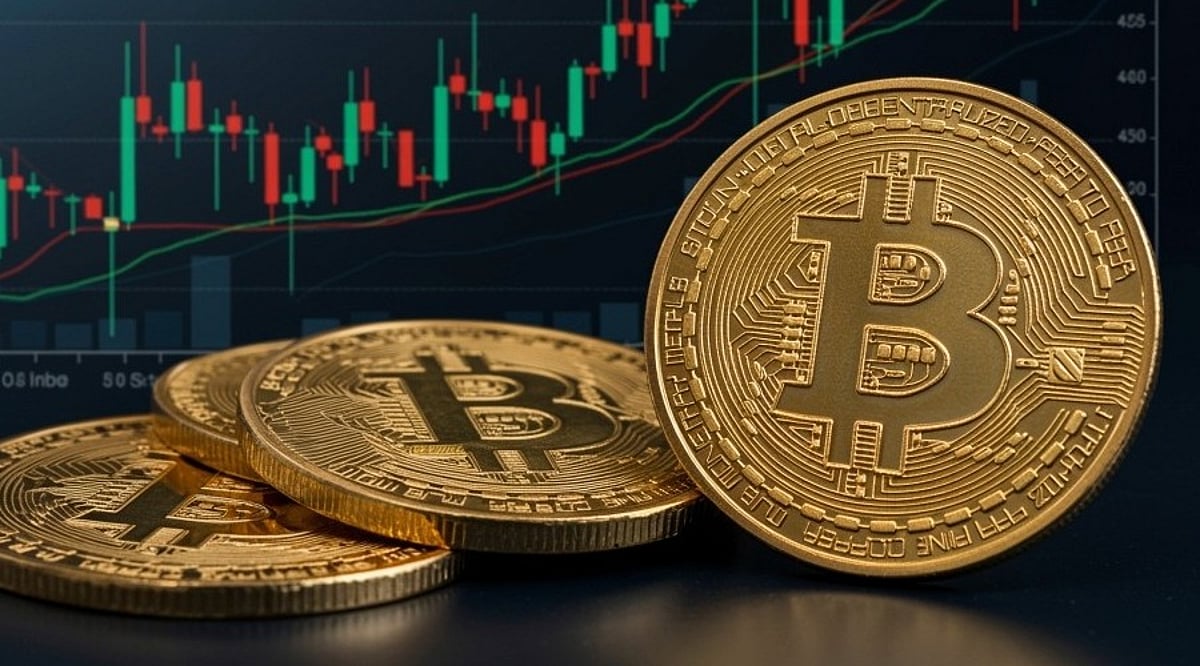
  • Bitcoin at $80K Faces Fed Rate-Hike Pressure as September 2026 Inflation Data Looms

    Bitcoin at $80K Faces Fed Rate-Hike Pressure as September 2026 Inflation Data Looms

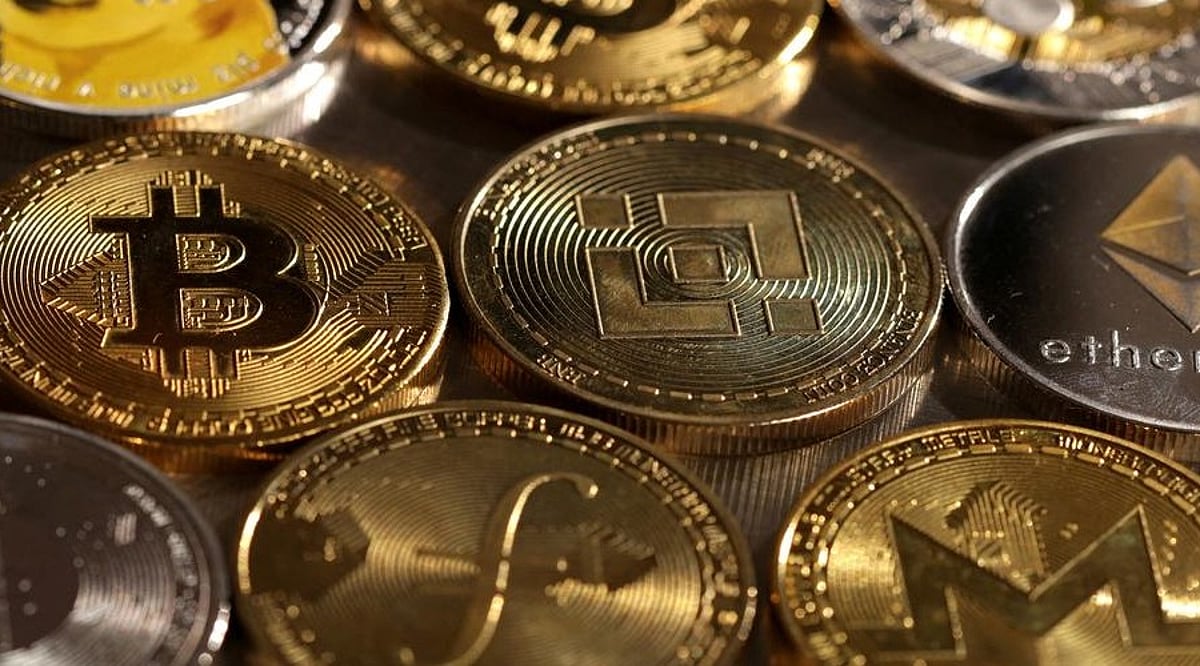
    The crypto market enters September with monetary policy again becoming one of its biggest short-term risks. Bitcoin has recovered toward USD 80,000, but stronger US employment data, elevated energy prices and rising Treasury yields have revived expectations that the Federal Reserve could raise interest rates this month.

    September Rate-Hike Odds Rise

    US employers added 162,000 jobs in August, comfortably above expectations, while unemployment held steady at 4.1%. The stronger labor-market reading pushed investors toward a more hawkish outlook for the Federal Reserve.

    According to CME FedWatch data, markets are pricing in a 58.4% probability of a 25-basis-point rate hike at the September 15-16 Federal Open Market Committee meeting, up from 52% before the jobs report. UBS also changed its forecast and now expects 25-basis-point increases in both September and December.

    That would take the federal funds target range from 3.50%-3.75% currently to 4%-4.25% by year-end.

    The next major catalyst is August consumer inflation data. UBS noted that July Personal Consumption Expenditures inflation stood at 3.7% year over year, while supply bottlenecks and resilient economic activity have increased upside inflation risks.

    Why Higher Rates Matter for Crypto

    Higher rates can pressure cryptocurrencies as investors receive better returns from comparatively lower-risk government securities. Tighter monetary policy can also strengthen the US dollar and reduce financial-system liquidity available for risk assets.

    Fed Governor Christopher Waller recently argued policymakers should ‘give disinflation a chance,’ temporarily pushing September hike expectations below 50%. Markets subsequently reversed after the stronger employment report.

    Energy prices add another complication. Brent crude recently traded around USD 97 per barrel as geopolitical tensions increased, keeping inflation concerns elevated ahead of the Fed meeting.

    Bitcoin Still Has Support From ETF Demand

    Bitcoin has nevertheless recovered strongly from its 2026 lows. BTC recently completed an approximately 30% rebound and moved back above several major moving averages.

    Institutional demand remains another counterweight to monetary tightening. Spot Bitcoin ETFs recorded approximately USD 987 million in net inflows last week, indicating that regulated investment demand remains active even as rate expectations turn more hawkish.

    This matters as persistent ETF inflows can reduce available market supply and provide buying pressure during periods of macroeconomic uncertainty.

    Final Thoughts

    September is becoming a test of whether Bitcoin’s recovery can withstand tighter financial conditions. A hotter inflation reading could strengthen expectations for another Fed hike, lift yields and pressure crypto valuations. Softer inflation could instead revive expectations for a pause.

    For investors, the Fed decision, Treasury yields, the US dollar and ETF flows may therefore matter as much as crypto-specific developments in determining Bitcoin’s next major move.

    FAQs

    Why are Fed rate-hike expectations important for Bitcoin?

    Higher interest rates can make government bonds more attractive and reduce liquidity available for risk assets. A stronger dollar and higher Treasury yields can also create additional pressure on Bitcoin.

    What are markets expecting from the Federal Reserve in September 2026?

    Markets recently priced roughly a 58% probability of a 25-basis-point September rate hike. Strong US employment data has strengthened expectations that monetary policy could remain tighter.

    How is Bitcoin performing ahead of the Fed decision?

    Bitcoin has recovered to USD 80,000 after gaining roughly 30% from its 2026 lows. BTC has also moved above several major moving averages, although macroeconomic risks remain elevated.

    Are Bitcoin ETF inflows supporting the market?

    Yes. Spot Bitcoin ETFs recently recorded around USD 987 million in weekly net inflows, showing that institutional demand remains active despite renewed concerns about higher interest rates.

    What could move Bitcoin next in September?

    US inflation data, Treasury yields, the dollar and the Federal Reserve’s September decision are likely to be key drivers. Softer inflation could support BTC, while a hotter reading may increase pressure on crypto valuations.

  • Wall Street Rises After Surprise July Job Cuts Fuel Hopes of Fed Rate Pause

    Wall Street Rises After Surprise July Job Cuts Fuel Hopes of Fed Rate Pause

    The S&P 500 posted gains on Friday after a surprising decline in U.S. payrolls for July dampened expectations of a September interest rate hike by the Federal Reserve. Technology and software stocks led the rally, while Treasury yields fell following the release of the employment report.

    The index moved toward a second consecutive weekly gain after hitting a record high earlier in the week. Traders are now turning their attention to July inflation data, which could further shape the central bank’s next policy move.

    S&P 500 Rises on Weak Payroll Data

    The S&P 500 climbed 0.6%, while the NASDAQ Composite gained 1.1%. The Dow Jones Industrial Average added approximately 140 points, a 0.3% increase. According to the Labor Department, U.S. employers cut 23,000 jobs in July, contrasting sharply with economists’ expectations of an 83,000-job gain (Dow Jones poll) and an 80,000 increase projected by a Reuters survey.

    The unemployment rate edged down to 4.1% from 4.2%, but the labor force participation rate fell to its lowest level in more than five years. Revised data also eliminated a combined 103,000 jobs from May and June payroll figures.

    The disappointing report reduced the probability of a Fed rate hike at its September meeting. LSEG data placed the likelihood of an increase near 20%, down from 55% before the payroll release.

    Fed Rate Outlook Shifts Toward a Pause

    Fed funds futures traders now largely expect policymakers to hold rates within the current 3.50% to 3.75% range. The central bank kept rates unchanged during its July meeting. Under Chair Kevin Warsh, the Fed has offered limited guidance on its next move, leading investors to scrutinize labor, inflation, and wage data closely.

    Anthony Saglimbene, chief market strategist at Ameriprise Financial, noted that the report gives policymakers more time. “Even with a negative job print, the job market remains healthy. But it gives the Fed some room to pause in September,” he said.

    Former Dallas Fed Chair Richard Fisher added that he did not view the report as entirely weak. He pointed to slowing wage growth, which could affect consumer spending, and said he did not support raising rates at this time.

    Technology Stocks Lead Wall Street Rally

    Software and semiconductor shares fueled Friday’s gains. Atlassian surged more than 30% after its quarterly profit and revenue exceeded estimates, and the company issued a stronger financial forecast. Cloudflare also rose after raising its annual revenue outlook above market expectations. Microchip Technology advanced after forecasting quarterly revenue above estimates. NVIDIA and Broadcom also recorded gains.

    The Philadelphia Semiconductor Index rose more than 2%, while the S&P 500 software and services index gained about 1.3%. The iShares Semiconductor ETF increased nearly 7% over the week.

    Airbnb climbed approximately 14% after reporting stronger quarterly profit and revenue and raising its full-year revenue and margin guidance, pushing its shares to their highest level in four years. In contrast, Trade Desk dropped nearly 25% after issuing a third-quarter revenue forecast below analysts’ expectations.

    Inflation Data Becomes the Next Market Test

    The S&P 500 has gained more than 3% this week, while the NASDAQ has risen about 5%, on track for its strongest weekly performance since May. The Dow has added about 3%. Corporate earnings have supported the recovery: more than 400 S&P 500 companies have reported quarterly results, with over 85% exceeding analysts’ estimates, according to LSEG data.

    Investors will now monitor the July consumer price index report on Wednesday. Economists expect annual headline inflation of 3.4% and core inflation of 2.5%. Producer price data will follow on Thursday. Retail sales figures are due Friday, offering another measure of household spending. Applied Materials, Cisco, and CoreWeave will also report earnings next week.

    Treasury yields declined after the payroll release. The 10-year yield slipped to 4.65%, while the two-year yield fell to 4.20%, before partially recovering. Oil prices rose about 1% as investors watched US-Iran talks concerning the Strait of Hormuz. Brent crude traded near $83 per barrel, while West Texas Intermediate held around $78. Oil movements remain central to inflation expectations and future Fed decisions.

    Weaker U.S. jobs data boosted hopes of a Federal Reserve pause, lifting Wall Street and supporting gains in technology stocks. Investors will now watch upcoming inflation and retail sales data for further clues on the direction of interest rates.

  • MCX Gold Rises 0.5% to Rs 1,49,608 Ahead of US Jobs Data; Key Levels to Watch

    MCX Gold Rises 0.5% to Rs 1,49,608 Ahead of US Jobs Data; Key Levels to Watch

    Gold prices edged higher on the Multi Commodity Exchange (MCX) on Friday, August 7, as investors awaited the release of the US non-farm payrolls (NFP) report for clues on the Federal Reserve’s interest rate trajectory. August gold futures rose 0.5% to Rs 1,49,608 per 10 grams, while September silver futures advanced 1.09% to Rs 2,28,300.

    Domestic Gold Prices

    In the Indian bullion market, 24K gold increased by Rs 16 to Rs 1,49,890 per 10 grams, and 22K gold gained Rs 15 to Rs 1,37,400. Regional prices remained largely uniform: Mumbai and Kolkata quoted Rs 1,49,890, Delhi Rs 1,50,040, and Chennai Rs 1,50,000.

    Global Gold and Commodity Markets

    Internationally, spot gold rose 0.6% to $4,262.39 per ounce, heading for its biggest weekly gain since January. US gold futures climbed 0.5% to $4,321.50. The rally was supported by weaker oil prices and expectations that the Fed may adopt a more dovish stance.

    Spot silver added 1.3% to $62.27, platinum rose 0.5% to $1,737.25, while palladium slipped 0.2% to $1,368.37. In the energy market, Brent crude futures rose 1.83% to $84 per barrel, and US West Texas Intermediate (WTI) edged up 1.67% to $78.58.

    Key Technical Levels

    Analysts noted that the $4,000 level has emerged as solid support for gold. XAU/USD trades at $4,260.68 on the daily chart, holding above the 21-day simple moving average (SMA) at $4,083.25 and the 50-day SMA at $4,151.23, keeping the near-term bias bullish.

    On the upside, immediate resistance is at the 100-day SMA of $4,389.72, followed by a more substantial barrier at the 200-day SMA around $4,494.54. On the downside, support lies at the 50-day SMA near $4,151.23 and then $4,083.25.

    “Regardless of how NFP plays out, $4,000 has proven to be a solid support level — and I suspect bulls are waiting for dips to take advantage of a much-needed correction higher towards $4,600. NFP may provide some noise over the near term, but price action has spoken, and gold looks like it wants to rally,” said market analyst Simpson.

    Investors now await the US non-farm payrolls data, which could provide further direction for gold prices in the near term.

  • S&P 500 Holds Steady as Chip and Software Declines Offset Broader Market Gains

    S&P 500 Holds Steady as Chip and Software Declines Offset Broader Market Gains

    The S&P 500 traded near the flatline on Thursday as steep losses in chip and software stocks offset gains across most other sectors. Investors weighed corporate earnings, labor data, and ongoing negotiations over reopening the Strait of Hormuz.

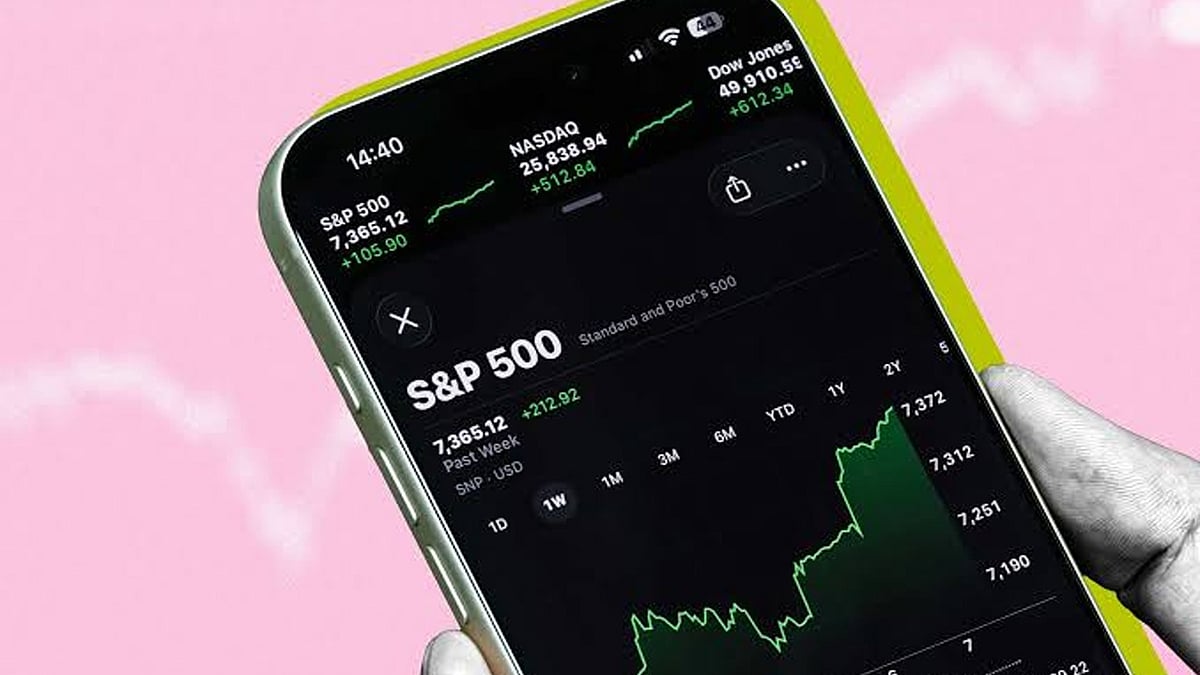
    At 11:20 a.m. ET, the S&P 500 slipped 0.08% to 7,723. The Dow Jones Industrial Average added 0.49% to 54,350, while the Nasdaq Composite edged up 0.05% to 26,380.

    Western Digital and Sandisk Shares Tumble

    Western Digital shares fell 18.5% in early trading despite reporting fourth-quarter results above Wall Street estimates. Its fiscal first-quarter forecast disappointed investors. Sandisk shares dropped 11.3% after releasing its fiscal fourth-quarter results. Both companies forecast quarterly revenue above estimates, driven by demand for artificial intelligence infrastructure. However, investors focused on valuations after significant gains earlier this year — Western Digital had climbed about 200%, and Sandisk had gained around 400%.

    Hank Smith, investment strategy director at Haverford Trust, noted that expectations had reached demanding levels, calling the price action “some digestion going on in the market.”

    The Philadelphia Semiconductor Index declined 1.5% during early trading. Intel and AMD also traded lower, adding pressure to the technology sector. However, several chip stocks later recovered: Broadcom gained nearly 2%, Marvell Technology rose about 3%, and NVIDIA moved higher during the session.

    Software Earnings Add Pressure to Technology

    Software stocks also recorded steep declines following several earnings reports. Atlassian, Salesforce, Adobe, and Zscaler traded lower. AppLovin shares fell about 17% after missing quarterly revenue estimates. The stock had previously benefited from investor demand for AI-linked companies. Datadog dropped roughly 17% after management forecast slower revenue growth in the third quarter, raising questions about enterprise software demand and valuations.

    Peloton shares fell more than 14% after forecasting lower sales in the coming fiscal year, citing higher prices for equipment and subscriptions. Still, Microsoft and Amazon each gained around 1%, helping limit broader losses across major indexes.

    Most S&P 500 Sectors Trade Higher

    Despite technology weakness, nine of the S&P 500’s 11 sectors traded higher during the morning session. Energy, consumer staples, and healthcare led the gains. Parker-Hannifin rose 8.5% after forecasting annual profit above analysts’ estimates. Albemarle gained 6.7% after beating quarterly profit estimates. Diageo rose about 6% after announcing a three-year plan targeting $1.2 billion in savings.

    Restaurant Brands International reported adjusted earnings of $1.07 per share, above the expected $1.03. Revenue reached $2.52 billion, matching estimates. Burger King recorded an 8.5% increase in comparable restaurant sales, though other brands within the group delivered weaker results.

    Labor Data Sets Up July Jobs Report

    New applications for unemployment benefits increased slightly to 199,000 for the week ending August 1, below the Dow Jones estimate of 204,000. Layoffs fell to their lowest level in two years during July. Second-quarter productivity increased 1.4% (versus 0.8% prior), while unit labor costs rose 1.3% (below the 2.1% estimate). Investors will now examine Friday’s July employment report for clues about the Federal Reserve’s policy path. Fed Chairman Kevin Warsh has reduced forward guidance, increasing the market’s focus on incoming economic data.

    Iran Talks Keep Oil and Gold in Focus

    Brent crude traded near $80 per barrel as investors monitored negotiations involving Iran and Oman focused on reopening shipping routes through the Strait of Hormuz. An Iranian official said a temporary agreement would allow ships to travel without fees or tolls, but final conditions had not been settled. Deutsche Bank strategist Jim Reid noted “unresolved questions” about whether Iran could later charge vessels.

    Gold rose for a fourth consecutive session as geopolitical uncertainty supported demand. Spot gold gained 0.6% to $4,271.33 per ounce, and US gold futures rose 0.6% to $4,330.20. Earlier, spot prices reached their highest level since June 18.

    Conclusion

    Technology losses kept the S&P 500 near the flatline, despite gains across nine of its 11 sectors. Western Digital, Sandisk, AppLovin, and Datadog recorded the sharpest declines following earnings updates. Meanwhile, investors monitored Iran-Oman shipping talks and Friday’s July employment report, both of which could shape energy prices and Federal Reserve rate expectations.

  • Bitcoin Holds Near $64,600 as S&P 500 Surges $2.1 Trillion on AI Rally

    Bitcoin Holds Near $64,600 as S&P 500 Surges $2.1 Trillion on AI Rally

    The S&P 500 has added $2.1 trillion in market value this month, driven by an AI-led rally, while Bitcoin trades near $64,600 with limited gains. Crypto-specific pressures, rising bond yields, shrinking stablecoin supplies, and uneven ETF demand have restrained Bitcoin’s upside despite stronger sentiment across US equities.

    The S&P 500 has gained 3.12% this month, boosting its market cap by about $2.1 trillion—almost matching the entire global cryptocurrency market. Bitcoin, however, has risen only 2% in the same period, hovering near $64,600. Analysts attribute the divergence to AI-focused stock demand, crypto market headwinds, higher bond yields, and cautious trader positioning.

    AI Stocks Drive Wall Street’s Gains

    The S&P 500 now holds a record market value near $70.5 trillion, with the index around 7,723 points. The Nasdaq and Dow have also advanced as investors pour capital into large technology companies.

    Adam Haeems, head of asset management at Tesseract Group, noted that the equity rally centers on sectors with limited ties to Bitcoin. “Partly because the equity rally is being driven by areas to which bitcoin has little direct exposure, particularly AI and semiconductor stocks,” he said.

    Lower oil prices have provided additional support to listed companies through reduced operating costs. Haeems suggested Bitcoin may benefit later from softer inflation expectations and potential Federal Reserve policy changes, though uncertainty around the September outlook limits that path.

    Paul Howard, senior director at Wincent, linked the gap to concentrated equity demand. “The stock rally is biased towards AI and mega-caps which doesn’t necessarily translate into crypto flows,” he said.

    Crypto Pressures Limit Bitcoin Demand

    Bitcoin faces sector-specific challenges that do not affect equities directly, including the $120 million Coldcard exploit, uncertainty surrounding the CLARITY Act, and Strategy’s recent Bitcoin sales.

    Haeems said these events have weakened sentiment without triggering a wider credit crisis or forced selling cycle. Strategy has sold Bitcoin for three consecutive months, adding concern for traders monitoring corporate demand.

    Rising bond yields also make government debt more attractive than non-yielding crypto assets. Real Treasury returns are at their highest since 2008, encouraging some capital to stay outside digital asset markets.

    Stablecoin supplies reflect the same pressure. Haeems noted that USDT supply dropped from about $190 billion in April to $183 billion, while USDC supply declined from $79.5 billion to $72 billion over the same period.

    Traders Watch October, ETF Flows

    Markus Thielen, founder of 10x Research, said many traders expect Bitcoin’s four-year cycle to produce an October bottom, prompting them to wait rather than build positions during the equity rally.

    However, Thielen said Bitcoin’s ability to hold steady despite the Federal Reserve’s firm stance could support another reading. “Traders are underestimating the upside risk from a less hawkish Fed, and overlooking the possibility that the four-year cycle has already bottomed,” he said.

    ETF activity has been mixed. US spot Bitcoin funds recently recorded $61.53 million in outflows, ending three weeks of modest inflows. They then attracted $626 million this week, their strongest total since early May.

    Giottus CEO Vikram Subburaj said several consecutive inflow days would help confirm stronger institutional demand. He identified Bitcoin support between $63,000 and $63,400, with resistance from $64,500 to $66,000.

    Wintermute noted that some ETF demand may reflect arbitrage rather than direct bullish positioning. Analysts expect possible fourth-quarter catalysts from regulatory progress and renewed stablecoin growth.