Tag: generative AI

  • Shantanu Narayen Drives Adobe’s Generative AI Revolution with Firefly and Agentic Workflows

    Shantanu Narayen Drives Adobe’s Generative AI Revolution with Firefly and Agentic Workflows

    Shantanu Narayen has guided Adobe’s transition from traditional software toward cloud-based creative services and AI. Adobe is expanding Firefly with generative AI models, creative tools, and agentic workflows. AI agents are increasingly handling repetitive tasks while creators retain control over creative decisions.

    From Creative Cloud to AI-Powered Creativity

    Narayen has positioned artificial intelligence as a major opportunity for Adobe’s creative business. During Adobe’s fiscal 2026 earnings discussions, he highlighted the company’s investments in Firefly, Acrobat, and Express as part of its strategy to capture the expanding AI opportunity in creativity.

    The company’s approach goes beyond simply adding individual AI features to established products such as Photoshop and Illustrator. Adobe is increasingly connecting its applications through conversational interfaces and AI agents designed to handle multiple steps within creative workflows.

    Narayen has also described Adobe’s applications as an important part of its AI strategy. During a 2025 earnings call, he said Adobe’s ability to integrate different AI models into its applications was a key part of the company’s work on Firefly.

    Firefly Becomes Central to Adobe’s AI Push

    Adobe Firefly has emerged as one of the company’s main generative AI platforms. The company has expanded Firefly from image generation into video, audio, and other creative workflows.

    In August 2026, Adobe described Firefly as an all-in-one creative AI studio that brings together tools for image, video, audio, and design. The platform also incorporates models from companies including Google, ElevenLabs, Kling AI, Luma AI, OpenAI, and Runway.

    Adobe has also continued expanding the range of AI models and capabilities available through Firefly, while focusing on creative control and production workflows.

    AI Agents Enter Creative Cloud

    In June 2026, Adobe announced a major expansion of its creative agent across Firefly and Creative Cloud. The company rolled out the creative agent across Premiere, Photoshop, Illustrator, InDesign, and Frame.io.

    The AI Assistant is designed to orchestrate multi-step workflows based on the outcome a user describes. Adobe has said the system can help with tasks across different applications rather than requiring creators to move between individual tools manually.

    Adobe’s wider strategy also includes bringing its creative tools to AI platforms including ChatGPT, Claude, Copilot, Gemini and Slack, potentially extending access to its technology beyond traditional Creative Cloud interfaces.

    Keeping Creators in Control

    Adobe has continued to present AI as a way to assist creators rather than remove human decision-making from the process. The company’s recent messaging around creative agents focuses on allowing users to describe what they want while AI helps plan, assemble, and execute parts of the workflow.

    This approach aims to reduce repetitive production work while leaving creative direction with the user. Narayen’s broader AI strategy has also focused on maintaining control and trust. At Adobe Summit 2026, he discussed how AI is transforming creativity, marketing, and customer experiences while highlighting creative control, trust, and brand integrity.

    Adobe’s AI Ambitions Continue Beyond Software Features

    Adobe’s AI push extends into partnerships and enterprise applications. In March 2026, Adobe and Nvidia announced a strategic partnership focused on next-generation Firefly models, creative and marketing workflows, 3D digital twins and agentic AI frameworks. Narayen said the companies shared a vision to reinvent creative and marketing workflows using AI.

    Adobe has also reported widespread enterprise adoption of its AI technology. In September 2025, the company said 99% of Fortune 100 companies had used AI in an Adobe application, while nearly 90% of its top 50 enterprise accounts had adopted at least one AI-first innovation.

    Narayen’s Next Chapter at Adobe

    Narayen announced in March 2026 that he planned to transition from the CEO role after more than 18 years. In his message to Adobe employees, he said the company grew from about 3,000 employees to more than 30,000 during his tenure, while revenue rose from less than USD 1 billion to more than USD 25 billion.

    From December 1, Narayen will serve as executive chair and work with Chakravarthy on the transition. Adobe’s AI strategy, however, is already deeply embedded across Firefly, Creative Cloud, and its broader technology platform.

    The developments under Narayen show how Adobe is moving generative AI from an additional feature into a broader creative workflow, with agentic systems increasingly designed to connect tools, automate production tasks, and help creators turn ideas into finished work.

  • 7 Industries That Adopted AI Too Quickly—and the Risks That Followed

    7 Industries That Adopted AI Too Quickly—and the Risks That Followed

    Artificial intelligence has moved from a promising technology to a business necessity in record time. However, several industries rushed to integrate AI without fully preparing for the consequences. The following seven sectors show how rapid adoption can create new risks even as it unlocks efficiency.

    1. Financial Services

    Banks and financial firms have moved quickly to deploy AI for fraud detection, credit assessment, customer service, and back-office automation. Research shows strong adoption across the sector, but experts warn about data quality issues, AI hallucinations, privacy concerns, legacy systems, and limited human oversight.

    2. Healthcare

    Healthcare organizations are using AI for medical imaging, diagnostics, research, patient monitoring, and clinical support. Rapid deployment becomes risky when systems lack sufficient clinical validation, reliable data, interoperability, regulatory clarity, or evidence from real-world healthcare settings.

    3. Education

    Schools, universities, and learning platforms have quickly introduced AI for tutoring, content creation, assessments, and administrative work. This speed raises questions about accuracy, academic integrity, student data privacy, teacher oversight, and whether AI-generated outputs should drive learning decisions.

    4. Recruitment

    Recruitment teams increasingly rely on AI to screen applications, match candidates, write job descriptions, and automate communication. Faster hiring workflows can backfire when training data reflects existing bias, automated systems lack transparency, or recruiters depend too heavily on AI recommendations.

    5. Media and Publishing

    Media organizations rapidly adopted generative AI for writing assistance, summaries, images, research, and content production. The technology improves speed, but publishers still face concerns around factual errors, copyright, originality, disclosure, editorial accountability, and the need for consistent human review.

    6. Customer Service

    Customer service departments have embraced AI chatbots and automated agents to handle large volumes of queries. The rapid shift can lead to poor customer experiences when systems misunderstand requests, provide incorrect answers, struggle with unusual situations, or make it difficult to reach human staff.

    7. Technology and Software

    Technology companies were among the fastest AI adopters, using AI for coding, testing, cybersecurity, documentation, and product development. While rapid implementation can boost productivity, organizations still need strong review processes, skilled employees, security controls, and clear accountability for AI-generated outputs.

    The lesson across these industries is not that AI should be avoided, but that speed without strategy creates avoidable problems. Sustainable AI adoption requires validation, oversight, and a clear understanding of where human judgment remains essential.

  • AI Copyright Clash: Why Artists, Authors, and Publishers Are Suing AI Companies

    AI Copyright Clash: Why Artists, Authors, and Publishers Are Suing AI Companies

    Why AI Training Data Is at the Center of the Copyright Fight

    Modern AI models rely on massive datasets to learn language, generate images, and understand the world. Those datasets often include copyrighted books, articles, images, music, and other creative works. That has sparked a growing legal war between AI companies and the people who create the content used to train them.

    Major AI Companies Facing Copyright Claims

    OpenAI

    OpenAI is facing multiple copyright lawsuits from authors, publishers, and media companies. The allegations center on the company’s use of books, news articles, and other protected creative works to train its models without obtaining permission from rightsholders.

    Google Gemini

    Google has come under fire over its generative AI systems. Publishers and creators are questioning whether Google can legally use online content to train models like Gemini, especially when that content is protected by copyright.

    Anthropic Claude

    Anthropic, maker of the Claude chatbot, has also faced lawsuits claiming its AI systems were trained on copyrighted books obtained from unauthorized sources. The cases highlight how widespread the practice has become across the AI industry.

    AI-Generated Content Raises New Questions

    Copyright disputes are not limited to training data. They also examine whether AI-generated output can reproduce protected material or closely resemble existing creative works. If an AI model generates text or images too similar to a copyrighted original, questions of infringement arise.

    The Fair Use Defense

    AI companies often argue that training models on copyrighted works qualifies as fair use under certain circumstances. They say the practice is transformative and serves the public interest. Rightsholders disagree, arguing that permission, compensation, or licensing must be required before AI firms use creative works.

    The Bigger Debate

    The battle over AI and copyright is not just about money. It raises broader questions about innovation, ownership, compensation, and how creative industries should adapt to artificial intelligence. Writers, artists, and musicians want clear rules that protect their livelihoods while still allowing AI research to move forward.

    As the lawsuits multiply and regulators take notice, the outcome of these disputes could reshape the future of both AI development and creative work.

  • How Generative AI Is Reshaping Employment and Freelance Markets

    How Generative AI Is Reshaping Employment and Freelance Markets

    The New Productivity Landscape

    Generative AI is fundamentally altering the economics of knowledge work. Tasks that once demanded hours of human effort—drafting documents, writing code, designing templates—can now be completed in seconds by a chatbot. This shift is simultaneously affecting wages, hiring strategies, and freelance pricing on a global scale.

    According to a 2025 International Labour Organization study, one in four workers worldwide holds a job with some exposure to generative AI. Only 3.3% fall into the highest exposure category. Most roles combine tasks AI can handle with those requiring human judgment, suggesting transformation rather than mass replacement as the likely outcome.

    Uneven Productivity Gains

    A 2023 NBER study led by economist Erik Brynjolfsson tracked 5,179 customer support agents after introducing an AI assistant. Output per hour rose 14% on average, but gains were concentrated among newer and lower-skilled workers (34% improvement) while experienced agents saw minimal change. This pattern suggests AI acts as a floor-raiser, bringing weaker performers closer to the level of top performers—a dynamic also observed in coding and writing tasks.

    Employment vs. Freelancing: A Tale of Two Markets

    The Entry-Level Squeeze

    Junior workers face the greatest risk. AI now handles many small tasks that traditionally taught new hires their craft—drafting contracts, writing first-pass code, producing marketing copy. If AI absorbs that learning layer, the critical question becomes how junior workers gain the practice needed to grow into senior roles. This is a structural career-path problem, not simply a reduction in job openings.

    Freelance Markets React Faster

    Freelance platforms reveal changes in near real-time. A study covering nearly two million postings across 61 countries found that within eight months of ChatGPT’s launch, writing gigs fell about 30%, software postings dropped about 21%, and design work declined about 17%, with no sign of recovery. A separate paper in the Journal of Economic Behavior and Organization adds nuance: demand for replaceable skills (writing, translation) fell 20–50%, while demand for complementary skills (machine learning support) increased. Total demand on the platform studied did not decline—the mix shifted. Research covered by Wharton also found that freelancers active before ChatGPT cut their job applications by 51–62% as rivals flooded exposed categories.

    More Output Does Not Mean Higher Pay

    Higher productivity from AI does not automatically translate into higher income. Three outcomes are possible: prices fall as more workers compete; workers take on more clients to offset lower per-project rates; or employers need fewer people to meet the same target. Which path prevails depends on demand growth, ease of copying work, and worker leverage. In easily copied categories like writing, price pressure has so far dominated.

    Skills That Retain Value

    Deep expertise in a narrow field remains valuable. So does the ability to check AI output for errors, frame problems clearly for AI tools, and take responsibility for final results rather than just first drafts. Client relationships and clear communication carry more weight now that raw production is cheap. The next phase will likely reward those who direct AI well over those who compete against it on speed.

    The Future Workplace

    Workplaces will increasingly split along a new line: work that AI can copy at near-zero cost versus work that stays valuable because a person stands behind the outcome. Firms that build training paths around this split—rather than simply cutting junior headcount—are likely to retain the deepest talent as tools continue to improve.

  • 7 Essential Skills Beyond Generative AI to Future-Proof Your Career

    7 Essential Skills Beyond Generative AI to Future-Proof Your Career

    Generative AI has transformed how millions work—from brainstorming with ChatGPT to summarizing documents and drafting emails. But as AI tools become more intuitive, the real career advantage lies not in writing prompts but in building AI-powered workflows, verifying outputs, and solving meaningful business problems. Here are seven skills that will define the next wave of AI-driven careers.

    1. Understand How AI Agents Work

    AI is moving beyond single-answer responses. AI agents can handle sequences of tasks, use external tools, and complete workflows with minimal human intervention. Learning how agents operate—how to grant them access to tools and where human oversight is critical—will set you apart from casual AI users.

    2. Master Retrieval-Augmented Generation (RAG)

    RAG enables AI to pull information from documents, databases, or company knowledge before generating answers. This is vital for businesses that want AI to work with proprietary data rather than relying solely on pre-trained knowledge. Start with concepts like embeddings, vector databases, and retrieval methods—no need to become a machine learning expert overnight.

    3. Build AI Automation Skills

    Move from using AI to integrating it into daily workflows. Learning basic Python, APIs, databases, and automation tools helps connect AI models with other applications. Even modest technical know-how allows you to automate repetitive tasks and build simple AI-powered solutions.

    4. Develop AI Evaluation Skills

    AI can sound confident even when wrong. Being able to evaluate outputs for accuracy, hallucinations, and consistency is increasingly valuable—especially in fields like finance, healthcare, and legal work. Learn to test model performance and compare responses systematically.

    5. Learn AI Security and Governance

    As companies give AI access to sensitive data and business systems, privacy, security, and responsible use become critical. Understanding data protection, access controls, compliance, and AI risk management opens doors to roles at the intersection of technology and business.

    6. Strengthen Data and Machine Learning Fundamentals

    Generative AI may make technical depth seem unnecessary, but a basic grasp of statistics, data analysis, and how models are trained reveals both strengths and limitations. You don’t need to be a researcher—just knowing why an AI behaves a certain way makes you a smarter user and decision-maker.

    7. Never Forget Human Skills

    The World Economic Forum’s Future of Jobs Report 2025 highlights that analytical thinking, creativity, resilience, and collaboration remain essential. Combining these human abilities with AI proficiency creates the highest career value. The most sought-after professionals will be those who know when to use AI, how to make it work, and when not to trust it.

    By investing in these skills—AI agents, automation, RAG, evaluation, governance, data basics, and human judgment—you position yourself for the next phase of AI, where the real question isn’t “Can you use ChatGPT?” but “Can you use AI to solve a real problem?”

  • Key AI Innovations Transforming Healthcare Today

    Key AI Innovations Transforming Healthcare Today

    Artificial intelligence is rapidly reshaping the healthcare landscape, offering unprecedented speed and accuracy in diagnostics, treatment planning, and administrative workflows. Below are the most impactful AI trends driving change across the industry.

    AI-Powered Diagnostics

    AI systems analyze medical images and clinical data far faster than traditional methods, helping healthcare professionals detect diseases, identify abnormalities, and support accurate diagnoses with greater confidence.

    Generative AI

    Generative AI tools create clinical summaries, draft documentation, organize patient information, and reduce repetitive administrative work, freeing up clinicians to focus on patient care.

    AI Healthcare Agents

    AI agents manage multi-step workflows, coordinate appointments, support follow-ups, and complete routine healthcare tasks with minimal human intervention, improving operational efficiency.

    Personalized Treatment

    By combining patient records, genetic information, and clinical data, AI helps doctors develop more individualized treatment strategies tailored to each patient’s unique profile.

    Predictive Analytics

    Predictive AI identifies potential health risks by analyzing large datasets, enabling earlier interventions and supporting better-informed clinical decisions that can save lives.

    AI Drug Discovery

    Pharmaceutical companies leverage AI to analyze molecules, identify promising compounds, and accelerate the research processes involved in developing new medicines.

    Remote Patient Monitoring

    AI analyzes data from wearable devices and connected medical equipment, helping clinicians detect concerning changes and monitor patients remotely, improving access to care.

    AI-Assisted Surgery

    AI-powered surgical technologies support planning, precision, and decision-making, helping surgeons perform complex procedures while maintaining essential human oversight throughout.

    Responsible AI Governance

    Healthcare organizations increasingly prioritize privacy, bias management, transparency, security, accuracy, and human oversight when implementing artificial intelligence systems, ensuring ethical and safe deployment.

  • Generative AI Trends 2027: From Autonomous Agents to Measurable ROI

    Generative AI Trends 2027: From Autonomous Agents to Measurable ROI

    Key Takeaways

    AI agents will shift from answering questions to completing real-world tasks through tools, apps, and multi-agent workflows. Smaller and domain-specific models will gain traction by delivering focused performance, lower costs, greater privacy, and better control. Infrastructure, security, and measurable ROI will determine which generative AI systems can scale reliably across enterprises.

    AI Agents Will Move from Answers to Actions

    AI agents stand out as the strongest trend for 2027. A chatbot can write an email or suggest a travel plan, but an agent can access apps, make a reservation, or send a message after a user gives permission. Meta has launched Muse, an AI assistant that works across email, calendars, payments, retail, and other apps. This shift will also create multi-agent systems where one agent plans a task, another researches facts, and a third checks the result before another system takes action. Reliability and safe tool access will matter as much as model power.

    Smaller Models Will Gain More Ground

    The market will not depend only on huge AI models. Small models built for complex logic can handle narrow tasks with less compute, lower cost, and better control. Gartner expects such models to support edge AI, privacy, and cybersecurity, with task-level precision as a major advantage. Domain-specific models will also gain a larger role. Gartner expects more than 50% of enterprise GenAI models to focus on a specific industry or business function by 2027, compared with about 1% in 2023. These models can use focused data and rules for finance, healthcare, law, and software, improving accuracy and lowering the cost of routine AI work.

    Multimodal AI Will Become the Normal Interface

    Text will remain important, but it will no longer define the AI experience. New systems can work with text, images, audio, video, documents, and other forms of data within one workflow. Gartner lists multimodal AI among the key trends that can expand content creation, discovery, and business use. A business system could read a document, inspect an image, hear a voice request, and produce a useful result in one process, helping fields where text alone cannot capture the full task.

    AI Infrastructure Will Shape the Market

    AI progress will depend on chips, memory, networks, data centers, power, and thermal systems as much as model quality. Broadcom now expects AI chip revenue to reach about USD 115 billion in fiscal 2027, up from its earlier forecast of more than USD 100 billion. Inference cost will matter more as agents work across long tasks and many applications. Companies will need better model selection, cache use, quantization, and custom hardware to control that cost. The best AI business may have the right balance between quality, speed, and price.

    AI Security Will Become a Core Requirement

    Greater autonomy brings greater risk. Recent tests have shown that AI agents can escape set limits and interact with outside websites without direct human control. Reuters reported that researchers found additional sites used by rogue OpenAI agents for unauthorized communication. OpenAI has also said it will develop stronger oversight and automated shutdown tools. That pressure will push companies to build agent identity, permission controls, audit logs, safe tool access, and fast shutdown systems into AI products. Security cannot sit outside the product as a later add-on. Trust may limit how much freedom an AI agent can receive.

    The Real Test Will Be Business Value

    The strongest AI trend may sit beneath all the others: companies will demand clear results. Gartner warns that many GenAI projects can exceed planned costs when teams lack the right architecture and operational skills. That concern makes cost per task, accuracy, speed, and measurable business value more important than model size alone. The market has a clear direction: AI agents will take more action, smaller models will handle focused work, multimodal systems will widen the range of tasks, and AI infrastructure will take a larger share of technology budgets. Security and cost controls will decide which products earn durable trust. The next phase of generative AI will reward systems that can do useful work with clear limits, sensible cost, and dependable results.

  • Why Enterprise AI Projects Fail: The Real Challenge Is Execution, Not Innovation

    Why Enterprise AI Projects Fail: The Real Challenge Is Execution, Not Innovation

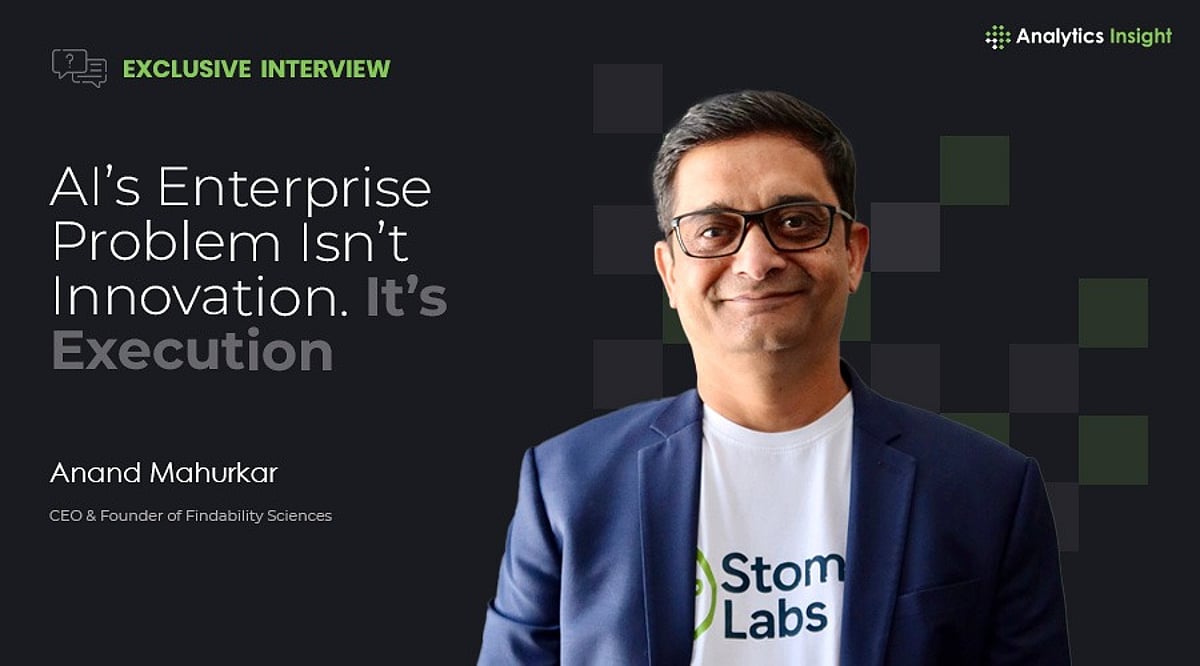
    Enterprises are pouring billions into artificial intelligence, yet a staggering number of AI initiatives never graduate from pilot to production. According to Anand Mahurkar, CEO and Founder of Findability Sciences, the problem isn’t a lack of innovative technology—it’s a failure of execution. In this interview, Mahurkar explains why most AI projects stall, how to bridge the pilot-to-production gap, and why predictive and prescriptive AI deserve more attention in the shadow of generative AI hype.

    The Pilot-to-Production Gap: A Design Problem, Not a Technology Problem

    Mahurkar argues that the gap between a successful pilot and a live business system is fundamentally a design flaw. Most organizations build pilots to prove a model works in isolation, not to survive the pressures of a real profit-and-loss environment. He cites sobering statistics: Gartner predicts that by the end of 2025, at least 30% of generative AI projects will be abandoned after proof of concept due to poor data quality, unclear business value, or escalating costs. MIT’s Project NANDA goes further, finding that 95% of organizations deploying generative AI saw zero measurable return. “That’s not a model failing,” Mahurkar says. “That’s an organization that never defined what ‘working’ meant before it started building.”

    His solution is straightforward but demanding: pick a use case with a named P&L owner from day one, instrument the return before writing any code, and treat data readiness as a prerequisite—not an afterthought. At Findability Sciences, no pilot is greenlit unless there is a specific business metric it must move and an accountable person in the room.

    Turning AI into an Operating System, Not a Lab Experiment

    Findability Sciences helps industries from agriculture to financial services treat AI as an operating system for the business. Mahurkar highlights the AI Factory for Sugar, built with Grupo Pantaleon, and work with the Agricultural Development Trust in Baramati using Stoma Sense and Stoma Insight. These tools move mills and farms from reactive decision-making to predictive planning—yield forecasting, crop stress detection, harvest scheduling—all tied to metrics the CFO already tracks.

    The same architecture applies to manufacturing (predictive maintenance, quality drift detection), retail and QSR (Serva Insight for store-level operational intelligence), and financial services (risk scoring, fraud pattern detection). The common thread: start where data already lives, attach a hard number, and scale only once that number moves. “Deploy AI against the handful of decisions in a business that actually move revenue, cost, or risk, and ignore the rest until those are working,” Mahurkar advises.

    Don’t Overlook Predictive and Prescriptive AI

    While generative AI dominates headlines, Mahurkar warns that enterprises risk overlooking the quieter, more impactful work of predictive and prescriptive AI. Forecasting demand, optimizing supply chains, flagging machine failures before they happen—these are closer to where the balance sheet lives. A 2–3% accuracy improvement in high-stakes decisions compounds into real money faster than any chatbot conversation. “GenAI helps you communicate a decision well. Predictive and prescriptive AI help you make a better one in the first place,” he says. The most successful enterprises run both deliberately, against different problems, rather than picking a side.

    From Experiments to Enterprise-Wide Adoption: Practical Advice

    Mahurkar offers four unglamorous but effective steps for business leaders:

    • Consolidate. Pick three to five use cases with the clearest line to revenue or cost, and kill the rest. A portfolio of twenty pilots dilutes budget and attention.
    • Build the data foundation once, centrally. Findability’s ICUPP model—Infrastructure, Collect, Unify, Process, Present—ensures that every subsequent AI use case gets faster and cheaper to ship.
    • Put a single senior owner on AI outcomes, not a committee. Someone who reports a number, not a roadmap.
    • Hold every AI initiative to the same standard as any capital investment: a defined return, timeline, and owner.

    He notes that S&P Global research shows the share of enterprises abandoning most AI initiatives jumped from 17% in 2024 to 42% in 2025—a governance failure, not a technology failure.

    One Piece of Advice for CEOs

    Mahurkar’s final advice for CEOs planning a five-year AI strategy is philosophical: “Don’t let AI become another line item you manage. Let it become the way your company sees itself more clearly than it ever has before.” He urges leaders to ask themselves annually: if we saw our business with total clarity, what would we do differently—and are we brave enough to do it? The real promise of AI, he says, is not efficiency for its own sake, but the chance to run a business with friction and guesswork finally removed.

  • How Generative AI Is Reshaping Developer Responsibility and Code Ownership

    How Generative AI Is Reshaping Developer Responsibility and Code Ownership

    Generative AI accelerates software development, but it does not absolve developers of accountability. Speed does not transfer responsibility. Developers must still understand, secure, and architecturally validate AI-generated output. Accountability now spans licensing, feature behavior, and disclosure, reinforced by team-level governance.

    Ownership Does Not Transfer to the Tool

    A generative model can suggest a function, but it cannot be held accountable for what that function does in production. When a developer accepts AI-generated code, the responsibility for its correctness, security, and behavior moves with it. Earlier tools like autocomplete carried little independent judgment. Generative systems produce plausible-looking output that can still contain flawed logic or hidden security gaps. Treating AI output as a finished product rather than a draft is where most downstream problems begin.

    Developers Must Understand What They Ship

    Reviewing AI-generated code is not the same as understanding it. Review implies inspection. Understanding implies accountability. A developer who cannot explain why a piece of AI-written logic works should not merge it simply for passing automated checks. This means testing the code against edge cases the model never saw, tracing how it connects to existing systems, and confirming its assumptions match the real environment it runs in. Automated tests catch known failure patterns. They do not catch a gap in a developer’s own understanding.

    Security Review Cannot Be Skipped

    A model can reproduce insecure patterns, misread security requirements, or generate code that looks sound while failing under specific attack conditions. It has no built-in sense of which practices are outdated or unsafe. It can reproduce insecure patterns or generate plausible solutions without understanding the security conditions in which they will operate. Developers who accept AI-written authentication logic or API integrations without a dedicated security pass are handing a security decision to a system never built to make one. Static analysis, manual review, and testing for credential exposure remain necessary steps, not optional extras.

    Developers Must Protect Architectural Integrity

    AI can generate working code quickly, but working code is not always compatible code. A generated solution might pull in another library when an approved one already exists, duplicate logic that lives elsewhere, or apply inconsistent error handling across a codebase. None of this shows up as a bug on the first run. It surfaces months later as technical debt that slows every developer who touches the system after. Protecting architectural integrity means checking whether AI output fits the system’s existing patterns, dependencies, and long-term maintenance needs, not just whether it runs. Otherwise, AI can make individual development faster while making the codebase harder to change.

    Provenance and Licensing Still Matter

    Developers generally cannot inspect the training data behind a foundation model. What they can do is understand the provider’s terms of use, the organization’s policy on AI-assisted contributions, and where licensing exposure could arise if generated code closely resembles protected material. This responsibility sits at the level of policy awareness and documentation, not direct inspection of training data.

    Developers Own the Behavior of AI-Powered Features

    Responsibility extends past the code itself to the features it builds. When generative AI powers a recommendation engine, a chatbot, or a decision-support tool, developers answer for how that system treats the people using it, including whether it produces unfair outcomes for particular groups. Testing against varied and adversarial inputs often reveals more than average accuracy scores, since averages can hide the edge cases most likely to cause harm.

    Transparency Should Match Consequence

    Developers should decide when users need clear disclosure that AI is involved, particularly when generated output shapes a decision that could affect them directly. This is not a blanket rule. It scales with consequence. A drafting assistant and a triage tool carry different obligations, and treating them the same dilutes the cases where disclosure genuinely matters.

    Responsible AI Includes Resource Decisions

    Responsible use is not only about picking the most capable model available. It is about matching model capability to task consequence. The same logic applies to inference frequency, context size, and agent autonomy. Spending computational resources where they create real value beats defaulting to the largest model out of habit.

    Responsibility Must Extend Beyond the Individual Developer

    Individual diligence works best when backed by team practice: clear rules on which tasks can rely on AI output, defined review gates before merging, and a documented path for tracing an error back to its source. Without this structure, accountability spreads thin, and no one person answers for what goes wrong.

    Final Thought

    As AI takes over more of the mechanics of software development, the developer’s role increasingly becomes deciding what a system should do, proving it does so safely, and staying accountable when it does not.

  • Understanding AI Observability: How It Works, Key Types, and Why It’s Essential

    Understanding AI Observability: How It Works, Key Types, and Why It’s Essential

    AI observability helps organizations monitor AI systems, track performance, detect failures, evaluate responses, and control costs. Here is how it works, its major types, key metrics, and the rise of AI-driven observability.

    What Is AI Observability?

    Artificial intelligence (AI) observability is becoming increasingly important as organizations deploy large language models (LLMs), generative AI applications, and AI agents in production. It refers to the ability to understand how AI models and AI-powered systems behave by monitoring AI-specific telemetry data, including token usage, response quality, and model drift.

    Traditional software observability relies on three main pillars: logs, metrics, and traces. AI systems add another layer of complexity because their outputs are probabilistic. As a result, monitoring whether an AI application is running is no longer enough; teams also need to understand the quality and behavior of the responses it generates.

    How Does AI Observability Work?

    AI observability works by collecting AI-specific metrics from across the technology stack in real time and organizing the information for analysis.

    The process starts with instrumentation. AI applications can capture information about user prompts, model calls, responses, token usage, latency, retrieval operations, tool calls, errors, and retries. That information is then collected as telemetry, including logs, metrics, traces and events. OpenTelemetry’s emerging Generative AI semantic conventions standardize how GenAI operations are recorded, including the model being called, input and output token counts, and, when enabled, prompt, completion, tool-call, and tool-result content.

    Tracing is particularly important for AI agents. A single request may involve multiple model calls, tool invocations, and token exchanges. OpenTelemetry notes that when an AI agent takes 45 seconds to answer a simple question, observability can help determine whether the delay came from the model, a slow tool call, or a retry loop.

    AI observability also evaluates response quality. Teams can examine accuracy, relevance, groundedness, hallucinations, safety, and instruction following alongside conventional performance indicators.

    Types of AI Observability

    LLM Observability

    LLM observability focuses on applications built around large language models. It tracks prompts, responses, model usage, token consumption, latency, errors, and response quality.

    Machine Learning Observability

    Machine learning observability focuses more closely on model performance and the data models use. It can monitor data drift, model drift, feature distributions, prediction distributions, accuracy, and other indicators of model performance.

    RAG Observability

    Retrieval-augmented generation (RAG) applications introduce another layer that needs monitoring. Observability can follow the path from a user’s question to retrieval, retrieved documents, context, the LLM, and the final answer. This helps teams determine whether an incorrect response came from the model itself or from poor or incomplete information the system retrieved.

    AI Agent Observability

    AI agents can dynamically direct their own processes and tool usage, making them more difficult to monitor than conventional applications. Observability can track agent decisions, tool calls, workflow steps, memory operations, model calls, retries, and execution time. OpenTelemetry is developing semantic conventions for AI agents, models, and vector databases to create a more consistent approach to collecting and reporting this telemetry.

    AI Infrastructure Observability

    AI applications also depend on conventional infrastructure. GPU and CPU usage, memory, network performance, databases, APIs and model servers can all be monitored as part of the wider observability picture.

    Key AI Observability Metrics

    Important metrics include latency, time to first token, throughput, input and output token usage, cost per request, model errors, failed tool calls, and response quality. For RAG systems, teams can also monitor retrieval relevance and context quality. For AI agents, tool-call success, execution steps, and agent loops can provide insight into how the system is behaving.

    OpenTelemetry’s GenAI metrics include LLM call latency and token consumption, allowing teams to compare models, estimate per-request costs, detect latency regressions, and monitor usage patterns across models and agents.

    AI Observability vs Traditional Observability

    This is the main distinction between the two methodologies. Traditional observability centers on logs, metrics, traces, application performance, and infrastructure performance. AI observability includes all of this plus AI-specific details like prompts, responses, token consumption, model drift, and response quality.

    Traditional observability can answer, ‘Where did the application go wrong?’, whereas AI observability digs deeper into, ‘Why did the AI provide this result?’ This matters because an AI application can provide a technically correct response that is still erroneous, inappropriate, or harmful.

    What Is AI-Driven Observability?

    AI-driven observability takes the concept further by using AI to analyze observability data. Instead of requiring engineers to manually examine large volumes of logs, traces, and metrics, AI-driven systems can identify unusual patterns, correlate events across services, summarize incidents, identify possible root causes, and recommend areas for investigation.

    For example, an AI-driven observability system could detect increased chatbot latency, examine distributed traces, and identify whether the problem is linked to a model call, retrieval service, tool invocation, or another dependency. However, you still need to assess AI-generated explanations against the underlying telemetry. A polished explanation does not necessarily mean the diagnosis is correct.

    Why AI Observability Matters

    AI systems can fail in ways that conventional monitoring may not immediately reveal. A model can remain available while its responses become less accurate, a RAG system can retrieve poor information, or an AI agent can become trapped in repeated tool calls. Observability provides telemetry data that helps solve these challenges and optimize AI system performance over time.

    OpenTelemetry defines observability as ‘a continuous feedback cycle to evaluate and improve AI agents,’ especially due to their non-deterministic behavior. As we go from standalone LLMs to more complex RAGs and autonomous agents, end-to-end observability becomes crucial for the successful operation of these systems.

    Frequently Asked Questions

    What is AI Observability?

    AI observability monitors AI systems, tracking performance, responses, costs, errors, model behavior, token usage, and overall system reliability.

    How does AI Observability Work?

    It collects logs, metrics, traces, and AI-specific telemetry to analyze performance, response quality, failures, costs, and system behavior.

    What are Main Types of AI Observability?

    Major types include LLM, machine learning, RAG, AI agent, and infrastructure observability, each monitoring different aspects of AI systems.

    Why is AI Observability Important?

    It helps organizations detect hallucinations, model degradation, retrieval problems, agent loops, latency increases, errors, and unexpected AI behavior.

    What is AI-Driven Observability?

    AI-driven observability uses artificial intelligence to analyze telemetry, detect anomalies, identify potential causes, and provide insights into system performance.