Tag: generative AI

  • Why Artificial Intelligence Matters More Than Ever in 2026: Productivity, Science, and Policy Impacts

    Why Artificial Intelligence Matters More Than Ever in 2026: Productivity, Science, and Policy Impacts

    Key Takeaways

    • AI is becoming a major productivity tool, improving performance across software, customer support, advertising, and other structured tasks.
    • AI is reshaping economies and science, driving massive investment while helping researchers solve increasingly complex problems.
    • AI brings greater risks and responsibilities, making human oversight, cybersecurity, regulation, and responsible deployment increasingly important.

    Artificial intelligence now sits at the center of business, science, software, security, and public policy. Stanford’s 2026 AI Index reports that 88% of surveyed organizations use AI, while 70% use generative AI in at least one business function. Generative AI also reached 53% population adoption within three years—a faster path than the personal computer or the internet.

    AI Gives Businesses a New Productivity Tool

    AI has a clear effect on work that has set rules and clear results. Studies cited by Stanford report a 14% to 15% rise in customer support output, a 26% rise in software development output, and a 50% rise in ad output per worker. The gains vary by task, so human review still matters for deep judgment.

    AI agents add another layer to this change. These systems can handle several steps on a computer rather than only a reply. On the OSWorld test, agent accuracy rose from about 12% to 66.3%. That result still leaves a failure rate of about one in three attempts, which shows its limits.

    AI has Become a Major Economic Force

    Money also shows the scale of AI. Global corporate AI investment more than doubled in 2025. Private investment rose 127.5%, while generative AI investment rose more than 200%. The United States led private AI investment with USD 285.9 billion in 2025, compared with USD 12.4 billion in China. Stanford also reports more than USD 150 billion in annual capital outlay by Google in 2025, reflecting the high cost of AI data centers and compute systems.

    The labor market already shows clear effects. Employment for software developers aged 22 to 25 fell nearly 20% from 2024. One-third of surveyed organizations expect AI to reduce their workforce in the next year, although broad job losses have not yet appeared across the whole economy. The pattern points to new task and skill needs.

    AI Expands the Reach of Science

    AI now has a role in science, medicine, mathematics, and technology. The 2026 AI Index added a full science section that covers biology, chemistry, physics, and astronomy. Advanced models can solve difficult science and math tasks, while some models now meet or exceed human results on several expert tests. This gives researchers a new tool for data analysis and complex problem-solving.

    AI still has sharp limits. AI can win a gold medal-level result on the International Mathematical Olympiad yet read an analog clock correctly only 50.6% of the time, compared with 90.1% for humans. Such uneven skill shows why expert review remains essential. AI has great value when a task fits its strengths, but weak results can appear on simple tasks as well.

    AI Shapes National Policy and Security

    Governments now treat AI as a matter of economic power, security, and national policy. Stanford reports that national AI plans have expanded across many countries, while AI sovereignty has become a central policy goal. Countries seek local control over models, data, chips, and compute capacity. This makes AI part of wider competition across trade, technology, and national security.

    Security risks also rise as AI gains more power. Stanford recorded 362 documented AI incidents in 2025, up from 233 in 2024. AI can help security teams find threats, yet advanced models can also help attackers find software flaws and automate cyberattacks. Strong safeguards, human checks, and clear rules therefore matter as much as model capability.

    Regulation Gives AI a New Set of Rules

    AI now faces real legal duties in major markets. Under the European Union AI Act, some enforcement powers started on August 2, 2026. The rules cover prohibited AI practices, transparency duties for certain systems, and rules for general-purpose AI models. Legal compliance now joins product quality and business value in Europe.

    AI matters in 2026 not simply for its ability to produce text, images, or code. Its real importance comes from its effect on productivity, science, jobs, security, investment, and public policy at the same time. The strongest results will come from clear use cases, reliable systems, and careful human judgment. AI has reached a point where its limits still matter, yet its economic and social impact now matters far more.

    FAQs

    1. Why is artificial intelligence important in 2026?

    AI is important since it is influencing productivity, scientific research, employment, cybersecurity, investment, and government policy simultaneously.

    2. How is AI improving business productivity?

    AI can automate repetitive tasks, assist employees with complex workflows, and improve output in areas such as customer support, software development, and advertising.

    3. Is AI affecting employment in 2026?

    Yes. AI is changing the tasks and skills required for many jobs, with some roles experiencing employment declines while new AI-related opportunities emerge.

    4. Why is AI important for science and research?

    AI can analyze large datasets, assist with difficult scientific problems, and support researchers across fields such as biology, chemistry, physics, mathematics, and astronomy.

    5. Why does AI regulation matter?

    Regulation establishes legal requirements for AI systems, helps manage risks, and encourages safer and more transparent development and deployment of AI.


  • India’s Data Science Job Market Set to Surge 34% as Generative AI Creates New Roles

    India’s Data Science Job Market Set to Surge 34% as Generative AI Creates New Roles

    India’s data science job market is entering a dynamic new phase, propelled by the rapid adoption of Generative AI, AI agents, and automation. According to the Data Science Education Report 2026, the sector is projected to grow by 34% between 2024 and 2034, with approximately 23,400 annual openings and 82,500 additional jobs over the period. Traditional roles like data analyst and machine learning engineer are being supplemented—and in some cases overtaken—by emerging positions in AI engineering, product management, governance, architecture, and domain-specific applications.

    GenAI Engineers Take Center Stage

    Generative AI is driving demand for professionals skilled in building and managing systems powered by Large Language Models (LLMs), Retrieval-Augmented Generation (RAG) pipelines, and AI agents. GenAI Engineers are responsible for developing AI applications, workflow automation, and intelligent decision-making systems. Prompt Architects, meanwhile, are evolving into “Logic Designers” focused on reducing AI hallucinations—a challenge cited by 56% of Indian companies. The report estimates that around 40% of Indian business applications could adopt AI agents by 2026.

    Bridging Technology and Business

    As AI projects move from pilots to scaled products, the AI Product Manager role is gaining prominence. These professionals understand how AI capabilities translate into business value, working across engineering and business teams to oversee adoption, track performance, and ensure commercial scalability. With 72% of Indian companies expanding Generative AI initiatives, the need for such cross-functional leaders is acute.

    AI Governance: A Trending Career Path

    The rise of AI also creates demand for governance and risk specialists who oversee ethical deployment, regulatory compliance, and risk management. According to EY India data, 51% of organizations have experienced negative outcomes from unmanaged AI systems, and there is a 53% talent gap in professionals skilled in algorithmic bias audits and Explainable AI (XAI). For data professionals, knowledge of data protection and responsible AI is becoming as essential as technical expertise.

    AI Architects Building Infrastructure

    AI Solutions Architects design the infrastructure for deploying AI across hybrid-cloud and multi-cloud environments. They build scalable systems, manage complexity, and support AI agents, distributed computing, and sovereign AI initiatives that comply with data residency regulations.

    Domain Expertise: A Key Differentiator

    The next wave of data science jobs will not be limited to tech companies. Hybrid roles combining AI skills with domain knowledge in healthcare, finance, agriculture, retail, and logistics are in high demand. Specialized positions include Foundation Model Scientists, Model Deployment Specialists, Revenue Intelligence Scientists, Product Intelligence Scientists, FinTech Analytics Scientists, retail analytics scientists, supply chain intelligence scientists, graph data scientists, risk data analysts, and experimentation scientists.

    Skills to Lead the Market

    To thrive, professionals should strengthen machine learning, Python, big data, cloud computing, real-time analytics, data engineering, deep learning, NLP, computer vision, and AI automation. Soft skills like critical thinking, debugging, and data quality management are increasingly vital. The employment outlook remains robust: data scientist roles are projected to grow 34% from 2024 to 2034, with about 23,400 annual openings.

    In summary, the future of data science belongs not only to those who can work with data, but to professionals who can build, deploy, govern, and apply AI to real business problems.

  • 2027 Augmented Reality Outlook: AI Glasses, Spatial Computing, and Privacy Take Center Stage

    2027 Augmented Reality Outlook: AI Glasses, Spatial Computing, and Privacy Take Center Stage

    Augmented reality is entering a new phase in 2027, driven by AI-powered smart glasses, spatial computing, enterprise adoption, immersive shopping, gaming, translation, and growing privacy concerns. Here’s what to expect.

    AI-Powered Smart Glasses Go Mainstream

    The most significant shift is the integration of AI assistants into smart glasses, enabling them to recognize what users see, hear, and ask. Google’s Android XR glasses, powered by Gemini, offer hands-free directions, messaging, and photography. IDC reports global smart-glass shipments jumped 167% year over year in Q1 2026, signaling strong momentum for 2027.

    Lightweight AR Glasses Replace Bulky Headsets

    Consumers prefer sleek, normal-looking frames over heavy headsets. Omdia forecasts XR headwear shipments to reach 6.5 million units in 2027, with growth driven by lighter XR glasses. Expect better battery life, improved displays, and wireless connectivity.

    Practical Spatial Computing

    AR will understand physical environments, anchoring digital information and 3D objects to real-world spaces. This makes AR useful for work, navigation, education, design, retail, and entertainment. The integration with AI creates systems that know where users are and what they need.

    Enterprise AR Expansion

    Manufacturing, healthcare, energy, and utilities remain strong adopters. Applications include remote assistance, training, maintenance, surgical support, and digital-twin visualization. AI agents using video, audio, and sensor data will assist workers in real time.

    Generative AI Simplifies AR Content Creation

    Developers will create 3D objects, scenes, and animations using natural language prompts, reducing costs and lowering technical barriers. Generative AI also makes AR experiences more contextual.

    AR Navigation and Real-Time Translation

    Hands-free directions and contextual assistance through glasses become normal. Real-time translation via integrated microphones, cameras, and AI will aid international travel, business meetings, and learning.

    AR Shopping and Location-Aware Gaming

    Retailers increasingly let customers visualize products before purchase. AR gaming incorporates real places and objects into gameplay, making streets and homes part of the game.

    Privacy Becomes a Major Debate

    Always-on cameras and microphones raise concerns about recording, facial recognition, data collection, and consent. As smart glasses become common, clearer rules will be required.

    The Big Picture

    The defining trend of 2027 is the convergence of AI, smart glasses, spatial computing, and real-time context. IDC expects optical see-through display glasses to grow from 3 million units in 2026 to 12.2 million by 2030. Omdia sees the XR market returning to growth as lighter glasses replace bulky headsets. AR is evolving from something we deliberately ‘use’ to something that quietly works around us.

  • OpenAI vs Anthropic: Divergent Paths in the AI Race

    OpenAI vs Anthropic: Divergent Paths in the AI Race

    Two AI Giants, Divergent Visions

    OpenAI and Anthropic have emerged as two of the most influential forces in generative AI. Both develop cutting-edge language models and AI assistants, yet they pursue fundamentally different philosophies, product strategies, and commercial goals. While OpenAI has built a broad ecosystem spanning consumers and developers, Anthropic has carved a niche around safety, reliability, and controllable AI.

    OpenAI: Broad Adoption and Ecosystem Depth

    OpenAI’s approach centers on creating a comprehensive AI ecosystem that includes conversational assistants, developer tools, multimodal systems, and enterprise solutions. ChatGPT remains its flagship product, powering applications in writing, coding, research, and automation. The company’s strategy prioritizes widespread adoption, continuous model advancement, and deep integration across computing platforms.

    Anthropic: Safety-First with Claude

    Anthropic focuses on developing Claude, its primary AI assistant and model family, with a strong emphasis on safety, reliability, and controllability. Its Constitutional AI framework guides model behavior through explicit principles, making Claude particularly popular for writing, analysis, coding, and enterprise tasks that demand dependable AI interactions.

    Model Capabilities: A Moving Target

    Both companies compete on advanced capabilities including reasoning, coding, multimodal understanding, and long-context handling. Their model lineups evolve rapidly, meaning direct comparisons are fleeting. Performance varies by task, model version, and evaluation methodology, so the competition is less about a single winner and more about specialized strengths and practical utility.

    Safety Philosophies: Shared Goals, Different Emphases

    Safety is central to both organizations, but their approaches differ. Anthropic has prominently championed Constitutional AI and alignment research, while OpenAI invests heavily in safety, preparedness, and alignment. Both recognize the need for safeguards, evaluation, and monitoring as systems grow more powerful, though their organizational philosophies and implementation strategies diverge.

    Business Models and Ecosystems

    OpenAI has achieved significant reach through ChatGPT, developer APIs, and partnerships, spanning consumer and enterprise markets. Anthropic has concentrated on Claude, APIs, and business deployments, with partnerships with major tech companies strengthening its infrastructure and distribution. OpenAI’s ecosystem provides a broad platform, while Anthropic focuses on reliability and enterprise trust.

    The Broader AI Race

    The rivalry between OpenAI and Anthropic encapsulates a larger contest over AI’s future. It’s no longer just about chatbot performance—model efficiency, reasoning, safety, enterprise adoption, developer ecosystems, computing infrastructure, and product integration increasingly define leadership. This competition accelerates both innovation and scrutiny across the industry, shaping the trajectory of artificial intelligence for years to come.

  • Bridging the Imagination Gap: Why AI Media Demos Fail in Production and How to Fix It

    Bridging the Imagination Gap: Why AI Media Demos Fail in Production and How to Fix It

    Every AI media demo looks the same: someone types a prompt, a stunning video appears, and the room applauds. Then the same team tries to generate ten thousand product videos for a real catalog, and the applause stops.

    The distance between those two moments has a name: the imagination gap—the space between what a person intends and what a generative model actually returns. Closing it is the real work of AI media, and it is mostly invisible in demos.

    Demo vs. Production: A Fundamental Difference

    A demo shows you the best output of many attempts. Production forces you to live with the whole distribution: the great outputs, the mediocre ones, and the failures that arrive after you have already paid for them.

    Teams running generative media at scale report the same pattern repeatedly. Getting an output is easy. Getting an accepted output—one that matches brand, format, and intent well enough to ship—routinely takes multiple attempts. When a creative director needs several tries to accept a result, every headline metric changes: cost per asset is no longer the model’s list price, latency is no longer the model’s benchmark time, and throughput is no longer what the pricing page implies.

    This is why the most useful metric in AI media production is not price per generation. It is cost per accepted output: what you actually paid, across all retries and failures, for the asset that shipped.

    Where the Gap Comes From

    Three mechanics create the imagination gap, and none of them show up in a single-prompt demo:

    • Model choice is a moving target. The generative media landscape now updates weekly. Across the 475 production model endpoints we operate at each::labs, the median image endpoint returns in about 20 seconds of observed runtime, while the median video endpoint takes two full minutes, and a third of video endpoints exceed three minutes. New releases regularly beat last quarter’s favorite on one dimension while regressing on another. A team locked into one model in January is usually running the wrong model by June.
    • Prompts do not transfer. A prompt tuned for one video model produces different framing, motion, and color on another. Every model swap silently invalidates prompt libraries, which is why “just switch to the newer model” is never a one-line change in a production pipeline.
    • Failures are asymmetric. A failed API call in classic software costs milliseconds. A failed video generation can cost minutes of wall-clock time and real money before you learn it failed. At scale, unmanaged failure and retry behavior quietly dominates budgets.

    What Closing the Gap Actually Requires

    The teams that ship AI media reliably treat generation the way engineering teams treat infrastructure, with four practices that compound:

    1. Route, don’t marry. Production pipelines need a routing layer across many models, so each job goes to the model that fits its use case, budget, and deadline, with fallbacks when a provider degrades. Multi-model is not a luxury; it is how you absorb a weekly-changing model market without rewriting your product.
    2. Measure the whole funnel. Instrument intent to accepted output: attempts per acceptance, p50 and p95 runtime per model, failure rates by input type. If you only track “generations succeeded,” your dashboard will look healthy while your unit economics rot.
    3. Price the failure path. Ask any platform you evaluate one question: what happens to my bill when a generation fails? The honest answers shape production economics more than list prices do.
    4. Build for pipelines, not calls. Real workloads are multi-step: generate, upscale, edit, watermark, format for each channel. Treating each step as an isolated API call multiplies the failure surface. Treating the pipeline as the unit of work is how consistency survives scale.

    Platforms are emerging to do exactly this job. Our own team at each::labs runs this production layer across image, video, and audio models for AI-native apps, agencies, and consumer platforms, and the pattern we see is consistent: the winners are not the teams with the best single prompt. They are the teams with the best acceptance rate per dollar.

    The Uncomfortable Conclusion for 2026 Budgets

    Frontier model quality keeps rising, but so does the volume ambition of the products built on top. The imagination gap does not close by waiting for better models, because every quality jump raises expectations by at least as much. It closes operationally: routing, measurement, failure handling, and pipeline design.

    The companies treating AI media as a production discipline are already separating from the ones still treating it as a demo. The gap between imagination and output is where the next layer of AI infrastructure is being built, and in 2026 it is being built in production, not in slide decks.

    How to Measure Your Own Gap This Week

    You do not need new tooling to find out where you stand. Pull last month’s generation logs and answer three questions:

    • How many generations did you run, and how many assets actually shipped? Divide the first by the second: that ratio is your attempts per accepted output, and most teams are surprised by it.
    • Multiply your total generation spend by that ratio’s overhead to get your real cost per shipped asset.
    • Look at the slowest 5 percent of jobs and ask what the user experienced while waiting.

    Those three numbers are your imagination gap, in dollars and seconds, and they are the baseline any production investment should be judged against.

  • AppVerticals Unveils AIVerticals: A Comprehensive Enterprise AI Practice for Scalable Production Solutions

    AppVerticals Unveils AIVerticals: A Comprehensive Enterprise AI Practice for Scalable Production Solutions

    AppVerticals has announced the launch of AIVerticals, an expanded enterprise artificial intelligence practice designed to help organizations transform AI opportunities into secure, scalable, and production-ready solutions. The new practice consolidates AI consulting, product engineering, custom development, systems integration, intelligent automation, and governance under a single delivery model.

    Addressing the Enterprise AI Challenge

    Many enterprises struggle to move AI initiatives beyond experimentation. AIVerticals directly tackles this by embedding AI into real products, workflows, and business operations. The practice is built on two core principles: organizations need connected AI capabilities rather than isolated services, and AI systems must reflect industry-specific workflows, data environments, regulatory obligations, and customer expectations.

    What Is AIVerticals?

    AIVerticals is AppVerticals’ end-to-end enterprise AI practice covering AI strategy, product engineering, custom development, system integration, automation, and responsible AI governance. It combines consulting, engineering, integration, and governance to deliver lasting value.

    Why Enterprise AI Initiatives Stall

    While generative AI models have made experimentation easier, production deployment remains complex. Common obstacles include fragmented data, unclear business objectives, legacy-system limitations, unpredictable model behavior, and insufficient governance. AppVerticals defines enterprise AI readiness as the ability to connect a validated business case with usable data, production-grade engineering, integration, governance, and measurable operational ownership.

    The Five-Stage AI Delivery Lifecycle

    1. Advise: Assess readiness, identify valuable use cases, and establish an implementation roadmap.
    2. Engineer: Design product experience, data architecture, system controls, and technical foundation.
    3. Build: Develop AI applications, models, agents, copilots, and automation capabilities.
    4. Integrate: Connect AI with enterprise data, applications, platforms, and workflows.
    5. Govern and Scale: Monitor reliability, control risk, optimize performance, and expand successful implementations.

    This lifecycle ensures AI decisions are evaluated in a broader business and technical context, considering data privacy, integration requirements, expected usage, response accuracy, latency, and operating cost.

    AI Consulting with Implementation Focus

    AIVerticals begins with AI consulting to determine where AI can create meaningful value. Services include AI-readiness assessments, process analysis, use-case discovery, data evaluation, technology selection, risk identification, and implementation planning. The consulting stage distinguishes between use cases that require generative AI, conventional machine learning, rules-based automation, or software modernization.

    AI Product Engineering and Custom Development

    At the core of AIVerticals is AI product engineering—the complete process of designing, developing, evaluating, deploying, monitoring, and improving AI-powered software products. This includes user experience, application architecture, data pipelines, model orchestration, security controls, testing, observability, cost management, and feedback mechanisms. Development capabilities span custom AI applications, machine-learning systems, generative AI products, predictive analytics, NLP, and model-powered workflow solutions.

    AI Agents, Copilots, Chatbots, and Voice Agents

    AIVerticals covers intelligent interfaces and autonomous systems, including AI agents (autonomous task execution), AI copilots (assistive recommendations), chatbots (structured text interactions), and voice agents (conversational AI for phone and voice environments). These solutions are developed around specific workflows rather than as standalone features.

    Enterprise Integration and Intelligent Automation

    AI delivers limited value when operating separately from existing systems. AIVerticals provides AI integration services connecting AI capabilities with CRM, ERP, SaaS products, content platforms, analytics environments, internal databases, and legacy software. Additionally, robotic process automation (RPA) is combined with AI agents to automate both predictable actions and information-intensive decisions.

    AI Governance Built into the Product Lifecycle

    Governance is treated as an engineering requirement, not a final compliance exercise. AIVerticals addresses model evaluation, data privacy, access control, human oversight, output reliability, audit trails, risk classification, and continuous monitoring. The governance framework defines ownership, permitted information access, performance evaluation criteria, human review triggers, change documentation, incident handling, and user transparency.

    Industry-Specific AI Applications

    AIVerticals extends AppVerticals’ experience across healthcare, fintech, logistics, education, e-commerce, real estate, automotive, travel, restaurant, and sports sectors. Each solution accounts for the sector’s terminology, operating processes, users, data, and regulatory environment.

    Repositioning AppVerticals as an AI Engineering Partner

    The launch marks a strategic shift for AppVerticals, moving from a broad digital solutions provider to a focused enterprise AI partner. By combining consulting with product engineering and implementation, the company aims to help organizations navigate the transition from AI experimentation to scalable, governed production systems.

    Frequently Asked Questions

    What is AIVerticals by AppVerticals?

    AIVerticals is AppVerticals’ enterprise AI practice combining AI consulting, product engineering, custom development, system integration, intelligent automation, and AI governance.

    What AI services does AppVerticals provide?

    AppVerticals provides AI consulting, AI product engineering, custom AI development, generative AI consulting and development, machine-learning development, AI integration, chatbot development, RPA development, AI governance, and the development of AI agents, copilots, and voice agents.

    What is AI product engineering?

    AI product engineering is the end-to-end process of designing, building, testing, deploying, monitoring, and improving software products whose core functionality depends on artificial intelligence.

    How is AI product engineering different from AI development?

    AI development typically focuses on creating a specific model or capability. AI product engineering includes the broader product architecture, user experience, data systems, integrations, security controls, governance, monitoring, and continuous improvement required for production deployment.

    How does AppVerticals help enterprises adopt AI?

    AppVerticals supports the AI implementation lifecycle from strategy and use-case discovery through engineering, development, integration, governance, deployment, and ongoing optimization.

    What is the difference between AI agents and AI copilots?

    AI agents perform tasks with a defined level of autonomy, while AI copilots assist users within existing workflows and generally keep a person directly involved in decision-making.

    Why is AI integration important?

    Integration connects AI with the applications, data, permissions, and processes required to perform useful work. Without effective integration, an AI system often remains an isolated experiment rather than becoming part of business operations.

    Why should AI governance begin during development?

    Early governance allows privacy, security, human oversight, accuracy, and auditability requirements to influence the product architecture. Adding these controls after development can create avoidable risk and costly redesign.

  • Apple Intelligence Explained: Complete Guide to iPhone AI Features

    Apple Intelligence Explained: Complete Guide to iPhone AI Features

    Apple Intelligence is Apple’s built-in AI system that helps users write, communicate, edit photos, and complete everyday tasks across iPhone apps. Only iPhone 15 Pro and newer support it, a hardware limit rather than a marketing choice.

    In 2026, the system behind those features has quietly shifted: Apple now leans on an outside AI partner for its hardest reasoning tasks, a development covered later in this guide. First, here’s what Apple Intelligence actually does and how it works.

    What Apple Intelligence Actually Does

    Siri is one of the most noticeable Apple Intelligence features. It understands what’s on screen, maintains conversational context, and performs actions across multiple apps without requiring users to switch between them. Writing Tools lives inside Mail, Notes, and Messages, rewriting drafts and fixing tone without pulling anyone out of the app they are typing in.

    In Photos, Clean Up erases people or objects from the background of a shot, and search works by plain description instead of date or album. Live Translation handles real-time conversation inside Messages, Phone, and FaceTime, useful for travel or chatting across languages.

    Genmoji and Image Playground turn a text description into a custom image or emoji, mostly used inside Messages and Notes. Notification Summaries condense a busy thread into one line instead of ten.

    The Architecture Behind the Features

    These features run on a system layer built into iOS itself, not a separate app. Simple tasks, like notification summaries, run right on the iPhone’s Neural Engine. Heavier requests travel to Private Cloud Compute, Apple’s server system designed to process data and then discard it rather than store it.

    Some work stays on the phone while other moves to Apple’s own servers. That split is the core idea, and it holds steady no matter which outside model powers the cloud side in a given year.

    Foundation Models, Explained Simply

    A foundation model is a large AI system trained on huge amounts of text and images, built to understand language, recognize objects, and follow instructions. Most consumer AI tools lean on one big cloud model to handle every request. Apple splits the job instead. A compact model runs on the phone for routine tasks, while a larger model sits on Apple’s servers for anything that needs deeper reasoning. Simple tasks feel instant. Complex ones take a moment longer.

    Why Some iPhones Miss Out

    Apple Intelligence needs an A17 Pro chip or newer, starting with the iPhone 15 Pro. Running AI models on a phone demands high Neural Engine performance and sufficient memory to avoid lag, overheating, and slower app performance. Older chips cannot hold that load without slowing everything else down. That limit shapes Siri’s design too: it still passes harder requests to the cloud rather than solving them on the device alone.

    Apple picked a smaller pool of supported phones over a weaker experience spread across older ones, a bet that stretched out the timeline for features first shown back in 2024.

    What It Actually Costs

    Apple Intelligence comes with supported iPhones, but its on-device AI features use extra storage and may increase battery usage. On-device models take up several gigabytes of storage, a fixed and measurable cost. Some users report higher battery usage after turning on Apple Intelligence, though it varies by device and Apple has not shared official figures. There have also been reports of software updates re-enabling Apple Intelligence after users had turned it off.

    How It Stacks Up Against Rivals

    Apple keeps sensitive tasks on the device by default. Samsung and most Android tools send far more to the cloud as a matter of routine. Apple pairs a small local model with a larger cloud one, balancing speed with depth. That pairing runs across the whole Apple lineup too: Live Translation and Writing Tools behave the same way on iPhone, iPad, and Mac rather than living inside one app alone.

    Is It Worth an Upgrade?

    The iPhone 15 Pro or newer already gets the full feature set as it rolls out through 2026. For anyone on an older phone, Apple Intelligence should count as one factor among several, since the biggest features still lean on cloud access and an active rollout schedule. Writers, photographers, and anyone deep inside Apple’s ecosystem gain the most. Casual users may barely notice the difference day to day.

    Recent Developments

    Industry reports from early and mid-2026 point to Apple licensing Google’s Gemini models for the cloud side of its Foundation Models, alongside a rebuilt Siri AI shown at WWDC 2026. Cost figures and technical specifics remain reported rather than officially confirmed, so this section will need a refresh as the story develops.

    Final Thought: What This Means Going Forward

    The Gemini reports do not change what Apple Intelligence is. They change which model handles the cloud half of a system Apple had already built. The on-device split, the A17 Pro hardware floor, and the privacy-first default remain Apple’s own design choices, separate from whichever outside company powers its toughest reasoning tasks in a given year. Providers can shift. The features and the architecture running underneath them are the part worth understanding and the part that will still be true after the next partnership announcement.

    FAQs

    1. What is Apple Intelligence? Apple Intelligence is Apple’s built-in personal intelligence system that uses generative AI to help users write, communicate, organize information, edit photos, and interact more naturally with Siri. It is integrated into iOS, iPadOS, and macOS rather than being a separate app.
    2. Which iPhones support Apple Intelligence? Apple Intelligence is available on iPhone 15 Pro, iPhone 15 Pro Max, the iPhone 16 lineup, and newer compatible models. It requires supported hardware and the appropriate version of iOS to access its AI-powered features.
    3. What AI features does Apple Intelligence include? Apple Intelligence includes Writing Tools, notification summaries, smarter Siri, ChatGPT integration, Genmoji, Image Playground, Visual Intelligence, natural language photo search, and AI-powered photo editing features like Clean Up.
    4. How does Apple Intelligence protect user privacy? Apple Intelligence performs many AI tasks directly on the device. For more demanding requests, it uses Apple’s Private Cloud Compute, which is designed to process data securely while minimizing the sharing and storage of personal information.
    5. Is Apple Intelligence worth upgrading your iPhone for? If you frequently use Siri, write emails and messages, edit photos, or want AI-powered productivity features, upgrading to a compatible iPhone can provide access to Apple’s latest AI capabilities and future software enhancements.
  • AI Copyright Showdown in 2026: Key Lawsuits, Fair Use Questions, and What’s Next for Creators

    AI Copyright Showdown in 2026: Key Lawsuits, Fair Use Questions, and What’s Next for Creators

    Generative AI has revolutionized digital content creation, but it has also sparked one of the biggest copyright debates in technology. Courts across the US and Europe are determining whether AI companies can legally use copyrighted artworks without creators’ consent to train image-generating models. The outcomes of these cases could reshape AI development, licensing, and digital creation for years to come.

    The legal issues extend beyond ownership of AI-generated images. They also cover fair use of copyrighted material for AI training, whether AI-generated content infringes existing IP rights, and how creators can be compensated when their work benefits AI models.

    Major Lawsuits Defining the Future of AI Copyright

    Several landmark court cases are underway. Artists Sarah Andersen, Kelly McKernan, and Karla Ortiz are testifying in the closely watched Andersen v. Stability AI case. They argue that their copyrighted work was illegally used to train AI image models from Stability AI, Midjourney, and DeviantArt. This case is expected to become a pivotal development in copyright law and a major influence on AI technology’s future.

    Stability AI also faces lawsuits from Getty Images, which claims the company’s AI tool was trained on millions of its licensed photos without permission. Litigation continues in the US, while a UK court previously ruled against Getty’s copyright claims, allowing only a limited trademark ruling.

    Meanwhile, Disney, Universal, and Warner Bros have filed lawsuits against Midjourney for allegedly using their characters—including those from Star Wars, Marvel, and Shrek—without permission in its image generator. Midjourney argues its AI training falls under the “fair use” doctrine, making this one of the most important tests of AI copyright law to date.

    Why These Cases Matter

    These landmark decisions will determine whether training AI models on copyrighted art without permission constitutes fair use. The rulings will redefine future technology development, dataset licensing requirements, and fair compensation for digital creators.

    Copyright Rules Continue to Evolve

    Another major issue is whether AI-generated images themselves qualify for copyright protection. The US Copyright Office has long held that works produced solely by AI are not eligible for copyright, reflecting the traditional need for human creativity.

    By late 2025, industry estimates placed the number of generative AI copyright lawsuits—covering training data, generated graphics, and intellectual property rights—at over 50. As AI image generators grow more powerful and popular in advertising, design, entertainment, and marketing, the debate has become more urgent.

    AI companies say they need massive datasets to train innovative models, but artists, photographers, and media companies argue their copyrighted works should not be used without consent or compensation. As governments and courts interpret existing copyright laws for the AI era, 2026 is emerging as a pivotal year. The decisions made now will likely set the course for training AI models, safeguarding creators, and introducing new copyright laws or alternative licensing systems for datasets.

  • H3: China’s New AI Video Model Challenges Global Competitors

    H3: China’s New AI Video Model Challenges Global Competitors

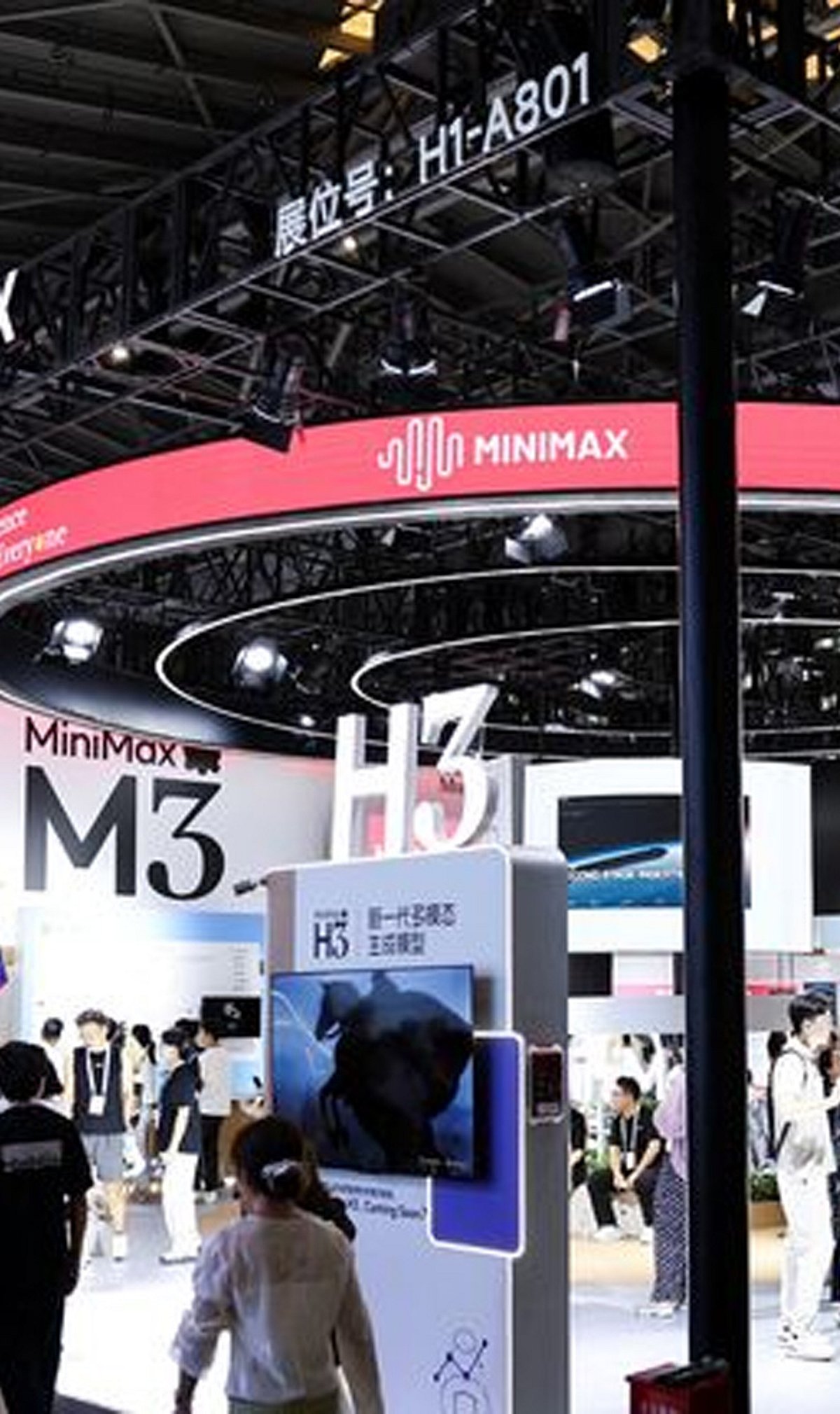
    Chinese AI startup MiniMax has officially launched H3, a new AI video model designed to generate high-quality, realistic videos from text prompts. The model emphasizes faster rendering and efficient performance, positioning itself as a strong competitor in the global AI video generation race.

    H3 is built with an enterprise focus, making it suitable for applications in marketing, education, and creative production. This launch reflects China’s continued investment in generative AI technologies and aims to make AI video creation more accessible to businesses and creators.

    By introducing H3, MiniMax strengthens China’s position in the global AI ecosystem, offering a powerful tool that rivals leading video generators from other countries. The model’s speed and quality are key differentiators, promising to deliver impressive results for a variety of professional use cases.

  • Harvard Business School Online: Data Science and AI for Strategic Decision Making

    Harvard Business School Online: Data Science and AI for Strategic Decision Making

    Harvard Business School Online has launched a self-paced course designed for business professionals who want to leverage data science, artificial intelligence, and analytics to make evidence-based decisions. Participants gain hands-on experience with AI tools, large language models (LLMs), and data modeling to translate insights into strategic business outcomes.

    What You’ll Learn in This Course

    This course enables learners to:

    • Build a business-focused understanding of data science, machine learning, and generative AI.
    • Understand generative AI systems, large language models (LLMs), and prompt engineering to apply them responsibly.
    • Use LLM-powered analytical tools like Julius to explore, build, and validate data models.
    • Apply unsupervised and supervised learning techniques for pattern recognition, segmentation, and forecasting.
    • Translate data analysis into actionable strategic business decisions and design evidence-based experiments.

    Accessibility and Value

    The self-paced online course requires 20 to 30 hours of study time, allowing students to choose their own schedule. For a fee of $1,850, participants receive both a Certificate of Completion and access to practical business-oriented AI training. The course teaches essential skills through a combination of real-world AI applications, data science methodology, and decision-making strategies.

    Comprehensive Curriculum

    • Foundations of Data Science: The scientific principles of data science establish fundamental concepts that serve as the foundation for analytical methods and data modeling techniques.
    • AI and Machine Learning in Business: The field of AI and machine learning research develops applications for business use through generative AI technology and LLM systems.
    • Experimentation and Strategy: Business experiments require design through experimentation, and companies should base their decisions on collected evidence.
    • Data Modeling Tools: The LLM-based platform Julius provides analytical capabilities and validation functions for data modeling.
    • Applied Business Projects: The applied business projects program requires students to work on practical tasks that demonstrate how AI knowledge can be used to make important business decisions.

    Eligibility Criteria

    • Intermediate-level understanding of business, data analysis, or statistics.
    • Basic familiarity with data-driven decision-making and technology tools.

    What Makes This Course Stand Out?

    Harvard Business School Online offers a distinct educational experience that integrates practical AI and data science applications into business strategy development. The program provides students with practical training in generative AI, LLMs, and analytical tools, enabling them to transform data insights into business solutions. The program uses real projects to help students learn practical skills they can immediately use in their work.

    Final Thoughts

    The course teaches professionals how to use data science and AI for their business decision-making processes. Participants learn to develop real-world skills in analytics, experimentation, and evidence-based strategy through their work with AI tools, data modeling, and business applications.