Tag: Google

  • Alphabet Stock at $356 in July 2026: Strong Buy Backed by AI and Cloud Growth

    Alphabet Stock at $356 in July 2026: Strong Buy Backed by AI and Cloud Growth

    Alphabet Inc., the parent company of Google, YouTube, Android, and Google Cloud, remains one of the most dominant technology stocks in July 2026. Trading near $356 to $367 per share, the stock has delivered nearly 20% gains year-to-date, driven by stellar earnings, rapid cloud expansion, and aggressive artificial intelligence investments. Despite regulatory headwinds, Wall Street analysts maintain a positive outlook, with price targets ranging from $399 to $435.

    Current Stock Price Performance

    As of July 3, 2026, Alphabet Class C shares (GOOG) trade around $356–$358, while Class A shares (GOOGL) hover between $360 and $367. The stock surged to a 52-week high of $404.47 in May 2026, and although it has pulled back slightly, momentum remains strong. Year-to-date returns of 15–20% outperform many large-cap tech peers.

    Strong Financial Results Drive Investor Confidence

    Alphabet reported quarterly revenue of $109.9 billion, a 22% increase year-over-year. Earnings per share came in at $5.11, far exceeding analyst expectations of $2.68. These robust figures underscore the company’s ability to generate massive profits while investing heavily in future technologies.

    Google Cloud Emerges as a Key Growth Engine

    Google Cloud posted a remarkable 63% year-over-year revenue growth in the latest quarter. Enterprises increasingly rely on cloud services for data storage, AI workloads, and cybersecurity, positioning Google Cloud as a formidable competitor to Microsoft Azure and Amazon Web Services. Analysts expect this segment to become a major profit driver in the coming years.

    Massive AI Investment Plans

    Alphabet is allocating $180–$190 billion in 2026 for AI infrastructure, including data centers, custom TPU chips, and its Gemini AI platform. The company recently raised $80–$85 billion to finance this expansion. While such spending may pressure short-term margins, investors view it as essential for maintaining leadership in the global AI race.

    Entry into the Dow Jones Industrial Average

    On June 29, 2026, Alphabet joined the prestigious Dow Jones Industrial Average, replacing Verizon Communications. This milestone boosts institutional demand and underscores Alphabet’s significance in the U.S. economy, adding positive sentiment around the stock.

    Regulatory Challenges Persist

    On July 3, 2026, Alphabet lost its final appeal against a €4.1 billion ($4.68 billion) EU antitrust fine related to Android practices. Shares dipped about 1% in pre-market trading. Regulatory oversight remains a key risk, though the company had already provisioned for the penalty.

    Analyst Outlook Remains Bullish

    Wall Street remains optimistic. Firms like Morgan Stanley view recent weakness as a buying opportunity, with target prices between $400 and $415. Consensus fair value estimates range from $399 to $435 over the next 12 months, implying 15–20% upside from current levels.

    Final Outlook for July 2026

    Alphabet continues to be a top large-cap tech stock, supported by superior revenue growth, expanding profitability, and leadership in AI and cloud computing. While regulatory risks and high capital expenditure may create volatility, the company’s strong fundamentals and innovation pipeline make it a compelling long-term investment.

  • EU Court Rejects Google’s Final Appeal, Upholds $4.4 Billion Android Antitrust Fine

    EU Court Rejects Google’s Final Appeal, Upholds $4.4 Billion Android Antitrust Fine

    The Court of Justice of the European Union, Europe’s highest court, has dismissed Google’s final appeal against a €4.1 billion ($4.4 billion) antitrust fine, bringing an eight-year legal battle to a definitive close. The ruling confirms that Google abused its dominant market position through agreements tied to its Android mobile operating system.

    The European Commission originally imposed a €4.34 billion penalty in 2018 after finding that Google required smartphone manufacturers to pre-install Google Search, Chrome, and the Google Play Store on Android devices. Regulators also said Google restricted manufacturers from using alternative versions of Android, limiting competition from other mobile platforms.

    In its ruling, the court stated, “The appeal brought by Google and its parent company Alphabet against the judgment of the General Court is dismissed, thereby confirming the penalty imposed for Google Search’s abuse of a dominant position in the context of the Android operating system.” A lower court had reduced the fine to €4.1 billion in 2022, and today’s decision makes that penalty final.

    Following the ruling, a Google spokesperson defended the company’s Android business model, saying, “This judgment fails to take into account our investment to ensure Android remains open, interoperable and free.” The spokesperson added, “In any event, we adapted our agreements to comply with the initial decision back in 2018 and we remain focused on continued innovation and openness for our users, partners and developers.”

    Over the past several years, Google has already implemented changes for Android users in Europe, including allowing device owners to choose different search engines and web browsers during device setup instead of automatically using Google’s services.

    This case is part of a broader series of antitrust investigations. Over the past decade, Google has faced nearly €11 billion in EU competition fines across multiple cases involving search, shopping, Android, and digital advertising. The European Commission has now expanded its focus beyond traditional competition law, enforcing the Digital Markets Act and Digital Services Act, which introduce new obligations for major tech companies.

    Google remains under investigation over alleged preferential treatment of its own products in search results and practices involving its app store. Other large technology companies, including Apple and Meta, are also facing scrutiny under the EU’s updated digital regulations. Alphabet shares traded modestly lower in premarket trading following the ruling.

  • Today’s Top Tech Roundup: OpenAI Hardware, WhatsApp Privacy, Pixel Watch 5 Leaks, Google Engineer Debunks Myths, and Elon Musk on AI Risks

    Today’s Top Tech Roundup: OpenAI Hardware, WhatsApp Privacy, Pixel Watch 5 Leaks, Google Engineer Debunks Myths, and Elon Musk on AI Risks

    Top Tech News Today: OpenAI AI Device, WhatsApp Privacy Upgrade, Pixel Watch 5, Google Engineer Reveals Truth & Elon Musk on AI

    In a packed day of tech developments, OpenAI has teased its first dedicated AI hardware device, signaling a major push into consumer electronics. WhatsApp is rolling out a username-based privacy feature that lets users communicate without sharing phone numbers. Leaked details of the Pixel Watch 5 suggest it will include Satellite SOS functionality, a first for Google’s wearable line. A Google engineer has publicly debunked several viral tech myths, clarifying common misconceptions about AI and search algorithms. Meanwhile, Elon Musk has echoed Tim Cook’s recent warnings about the existential risks of advanced AI, adding his voice to a growing chorus of industry leaders calling for robust regulation.

    These stories highlight the accelerating pace of innovation and the critical conversations shaping the future of technology.

  • Google Restricts Meta’s Gemini AI Access Amid Global Compute Crunch

    Google Restricts Meta’s Gemini AI Access Amid Global Compute Crunch

    Google has reportedly limited Meta’s access to its Gemini AI models after the social media giant requested more computing capacity than Google could provide. The move highlights mounting infrastructure challenges faced by even the world’s biggest AI companies as demand for generative AI continues to surge.

    According to a Financial Times report, Google informed Meta around March that it could not fulfill the company’s full request for Gemini capacity, disrupting some of Meta’s internal AI projects. Reuters has not independently verified the report.

    Compute Shortage Hits AI Expansion

    The report says Meta has been affected more than other Google Cloud customers because of its unusually high demand for Gemini models. The restrictions have reportedly delayed several internal projects that rely on Google’s AI infrastructure.

    In response, Meta has encouraged employees to use AI tokens more efficiently. AI tokens measure how much computing power AI applications consume, making them a key factor in managing large-scale AI workloads.

    Meta Pushes Ahead with Its Own AI Strategy

    Meta has used Gemini for content moderation, scam detection, customer service, advertising tools, and software development. It is said that Meta began using Gemini because it outperformed some of its own AI models on certain tasks.

    Nonetheless, Meta has recently been moving some of its workloads from Gemini to its own Muse Spark model, thereby reducing its dependence on external AI providers while still investing billions of dollars in building its infrastructure.

    AI Infrastructure Emerges as Next Battleground

    The reported restrictions reflect a broader challenge across the AI industry. Companies are investing billions in chips, servers, and data centers, yet demand for AI computing continues to outpace supply.

    Google has previously acknowledged that limited computing capacity has constrained growth in its cloud business despite strong customer demand. If the report is accurate, the latest development suggests that access to AI infrastructure is becoming as strategically important as the AI models themselves, with compute power emerging as one of the industry’s most valuable resources. Neither Google nor Meta has publicly commented on the report.

  • Alphabet to Replace Verizon in Dow Jones Industrial Average on June 29

    Alphabet to Replace Verizon in Dow Jones Industrial Average on June 29

    Alphabet, the parent company of Google, will join the Dow Jones Industrial Average on June 29, replacing Verizon Communications in the 30-stock benchmark. S&P Dow Jones Indices announced the change on June 23, placing Google’s parent company alongside other major technology groups already in the index.

    The decision comes after a difficult trading session for Alphabet stock. Its shares fell 5% on June 22 as technology stocks weakened and two senior artificial intelligence researchers prepared to join rival firms. The decline put fresh attention on Google’s ability to keep leading AI researchers.

    The change also expands the Dow’s exposure to businesses tied to cloud computing, digital advertising, and AI. It follows the additions of Amazon and NVIDIA in 2024, which moved the benchmark further toward large technology companies.

    Alphabet Replaces Verizon in the Dow

    The index provider said the change will take effect before trading opens on June 29. Alphabet will join under its Class A ticker, GOOGL, while Verizon will leave the index after holding a place since 2004.

    S&P Dow Jones Indices said Alphabet’s market value, share price, and broad business mix made it a “more representative Communication Services constituent.” Its operations cover digital advertising, cloud services, AI, hardware, healthcare technology, autonomous vehicles, and media distribution.

    Price-Weighted Structure Drives the Change

    Unlike the S&P 500, the Dow uses share prices to set each company’s weight. A company with a higher stock price has more influence on the index, regardless of its total market value.

    Verizon accounted for about 0.5% of the Dow with a lower share price. Alphabet’s higher share price will give it a larger role in daily index moves. The index provider will also adjust the Dow divisor to prevent the membership change from creating an artificial move in the benchmark.

    AI Researcher Exits Pressure Alphabet Shares

    Meanwhile, Alphabet shares closed 5% lower on June 22, marking their steepest daily fall since May 2025. The stock had fallen 6% earlier in the session and was on track to erase more than $256 billion in market value.

    John Jumper, a senior Google DeepMind scientist and 2024 Nobel Prize winner, said he would leave for Anthropic. Noam Shazeer, a Google engineering vice president and co-lead of the Gemini models, also said he would join OpenAI. Both departures came within days of each other.

    The moves added to investor concerns over competition for AI researchers. Google has invested heavily in Gemini, cloud infrastructure, and AI tools across Search, YouTube, and other services. Alphabet’s Dow entry therefore arrives as the company gains index recognition while managing changes within its AI leadership.

    Honeywell Keeps its Dow Position

    Additionally, Honeywell International will stay in the Dow after completing the planned spinoff of Honeywell Aerospace on June 29. The remaining parent company will change its name to Honeywell Technologies.

    Honeywell Aerospace will trade as a separate company but will not enter the Dow. The index will keep 30 members after the Alphabet-Verizon swap and Honeywell separation.

    Funds that track the Dow will need to adjust their portfolios before the change takes effect. They will add Alphabet shares and remove Verizon shares to match the updated index. Alphabet will join Apple, Microsoft, Amazon, NVIDIA, and Salesforce among the benchmark’s major technology-related companies.

  • Google’s Gemini 3.5 Flash Gains Computer Control: AI Agents Can Click, Type, and Fill Forms

    Google’s Gemini 3.5 Flash Gains Computer Control: AI Agents Can Click, Type, and Fill Forms

    Google has introduced a more advanced ‘Computer Use’ capability for Gemini 3.5 Flash, enabling developers to build AI agents that can interact with apps and perform tasks on a computer. This update moves Gemini beyond simple chat and text generation, allowing AI agents to click buttons, fill forms, and complete complex tasks instead of just answering questions.

    Announced on June 24, the Computer Use feature is now accessible via the Gemini API and the Gemini Enterprise Agent Platform. According to Google’s official blog post, ‘developers can now use 3.5 Flash to reliably build custom agents that can see, reason, and take action across browser, mobile and desktop environments.’

    Unlike traditional chatbots that rely on rigid, pre-coded prompts, Gemini 3.5 Flash can understand what is happening on a screen and respond accordingly. The AI takes time to consider before clicking an option, mimicking human behavior. This marks a significant shift for large language models, which previously could only explain how to complete a task but not perform it themselves.

    AI agents built on Gemini can now assist with repetitive office work, software testing, scheduling, data entry, and other routine jobs. For businesses, this could save time and reduce manual effort. The rise of AI agents is already changing how digital assistants are perceived, as they can carry out entire workflows rather than just respond to commands.

    However, the ability for software to control a computer raises security and privacy concerns. AI agents may gain access to sensitive files or personal information, and if permissions are not handled carefully, mistakes could lead to serious consequences. There is also the risk of cybercriminals exploiting similar technology for harmful purposes.

    Google’s latest move demonstrates the direction of the AI industry, with capabilities advancing rapidly. The challenge now is ensuring these new abilities are used safely and responsibly.

  • Google Gemini 3.5 Pro Launch Reportedly Pushed to July for Extra Testing

    Google Gemini 3.5 Pro Launch Reportedly Pushed to July for Extra Testing

    Google has reportedly delayed the launch of its advanced Gemini 3.5 Pro AI model from June to July 2026, according to sources familiar with the development. The company is said to be using the additional time to gather feedback from early testers and refine the model’s performance in coding, token efficiency, and long, multi-step tasks.

    The postponement has not been officially confirmed by Google. A company spokesperson declined to comment when asked about the revised timeline. As a result, the July release window remains based on information from an unnamed insider.

    Extended Testing Phase

    Early users have been testing Gemini 3.5 Pro through Google’s Antigravity development environment and the LMArena benchmarking service. The company is reportedly collecting feedback and making adjustments before a wider release, particularly focusing on complex, multi-step workflows that require maintaining context over several stages.

    Google introduced the Gemini 3.5 model family at its I/O developer conference in May. CEO Sundar Pichai stated that Gemini 3.5 Pro would arrive the following month, though no firm date was provided. The company first launched Gemini 3.5 Flash, a model optimized for coding, AI agents, and complex workflows. Gemini 3.5 Pro is expected to offer greater computing power for demanding tasks.

    Feedback from Gemini 3.5 Flash Influences Pro Development

    Reports indicate that Google has incorporated feedback from Gemini 3.5 Flash users into the Pro model’s development. Some users noted that Flash consumed tokens too quickly, potentially raising costs for long prompts or extended tasks. Google is reportedly examining this issue while preparing Gemini 3.5 Pro.

    Token usage directly affects how much text a model processes and generates. Higher consumption can increase costs for developers and enterprises running large numbers of AI requests. The upcoming Pro model is also expected to improve performance on long-horizon tasks that require planning, tool use, and sustained context, such as software development, data analysis, and automated business processes.

    However, Google has not published full technical details or benchmark results for Gemini 3.5 Pro. Claims about speed, efficiency, and coding abilities will remain unverified until official data is released or wider access is granted.

    Competition in AI Coding Intensifies

    The reported delay comes as major AI developers compete for business customers, especially in coding tools. OpenAI and Anthropic have also released models aimed at coding and agent-based tasks. Google already offers Gemini through AI Studio, Vertex AI, Android Studio, and Antigravity. Gemini 3.5 Pro could expand those services once available.

    Earlier in June, Google introduced Gemma 4 12B, a lightweight multimodal model designed to run locally on laptops with 16GB of RAM or video memory. Unlike Gemini’s closed commercial models, Gemma provides open model weights for developers seeking more control over local deployment.

    For now, Gemini 3.5 Pro has no confirmed public launch date. Reports point to July, but Google has not specified which products, users, or regions will receive access first.

  • Google’s AI Uses Smartphone Camera for Passive Heart Rate Monitoring with Medical Accuracy

    Google’s AI Uses Smartphone Camera for Passive Heart Rate Monitoring with Medical Accuracy

    Google researchers have developed a new deep-learning system that can passively measure a user’s heart rate through a smartphone’s front-facing camera during normal device use. The technology, described in recently published research, aims to bring medical-grade heart rate monitoring to billions of people without requiring any wearable hardware.

    Resting heart rate is a key biomarker linked to cardiovascular health and long-term disease risk. High resting heart rate is associated with adverse cardiovascular events and certain chronic conditions. With roughly five billion smartphones worldwide already equipped with the necessary camera hardware, the potential for widespread passive health monitoring is significant.

    How the System Works

    The system, called passive heart rate monitoring (PHRM), uses the front-facing camera to record short video clips of the user’s face. A temporal shift convolutional neural network then analyzes these clips to estimate heart rate. The method relies on detecting subtle changes in light reflection caused by blood pulsing through the skin—a technique known as remote photoplethysmography (rPPG).

    According to Google, the system achieves a mean absolute percentage error of less than 10%, meeting industry accuracy standards across all skin tones. “To our knowledge, PHRM marks the first large-scale demonstration of passive HR and daily RHR monitoring during everyday smartphone use,” said Eric S. Teasley, Product Manager, and Ming-Zer Poh, Staff Research Scientist at Google Research.

    The researchers added: “As the only rPPG method to meet heart rate accuracy standards for people of all skin tones – even in unpredictable real-world conditions – it sets a new standard for the field. It also represents the first use of rPPG to estimate daily RHR, achieving wearable-level accuracy across all skin tones.”

    Diverse Training Data and Real-World Testing

    Previous studies in this area have often underrepresented people with dark skin, as melanin can make optical signals harder to detect. To address this, Google’s team built their model using more than 350,000 video clips from nearly 700 participants. The Monk Skin Tone Scale was used to ensure diverse representation: participants with light and medium skin tones each comprised at least 25% of the datasets, while those with dark skin tones made up at least 33%. This makes it the largest and most diverse rPPG study to date.

    The system was tested in both laboratory and real-world conditions. In the lab, researchers recorded facial video and simultaneous electrocardiogram (ECG) data from 365 participants, and the PHRM system outperformed 15 leading published rPPG models. In a real-world study, 231 participants installed a data collection app on their phones and used them normally while wearing an ECG chest strap and a Fitbit tracker. The app captured an average of 231 video clips per day.

    The researchers note that further optimization of camera exposure and handling of excessive head movement could improve performance. Google plans to make its data and modeling resources available to qualified researchers.

  • Anthropic Pays AI Researchers Over $1M Amid Mass Layoffs at Microsoft, Google, Amazon

    Anthropic Pays AI Researchers Over $1M Amid Mass Layoffs at Microsoft, Google, Amazon

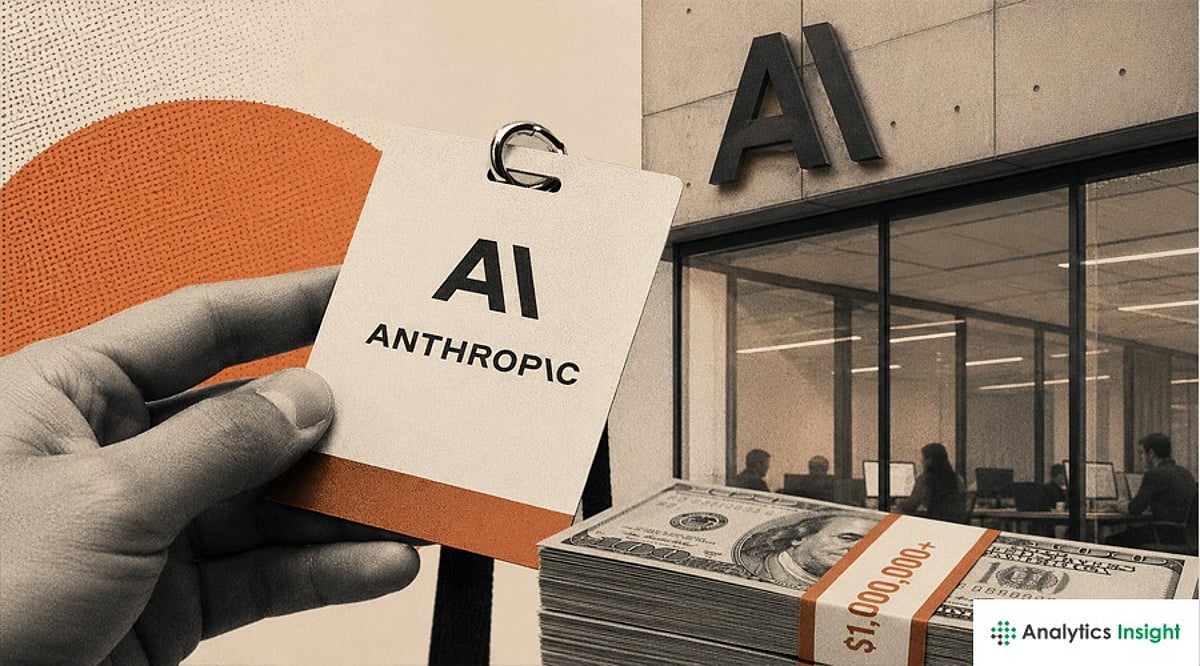
    The race for top AI talent has reached new heights. Reports indicate that Anthropic, a leading artificial intelligence company, is now offering some of its researchers annual compensation packages exceeding $1 million. These packages include base salary, company stock, and other benefits, setting a new benchmark in the tech industry.

    The revelations come from H-1B visa filings, which show that Anthropic has been paying base salaries of $1.12 million and $1.38 million to two Members of Technical Staff during its first two fiscal years of 2026. Notably, these figures exclude bonuses and stock awards, meaning the total compensation is significantly higher. The filings do not disclose names, but they underscore the intense demand for specialized AI expertise.

    This surge in AI salaries contrasts sharply with a wave of layoffs sweeping through major tech companies. Microsoft, Google, Amazon, Meta, and Intel have all announced job cuts as they reallocate resources toward AI initiatives. While thousands of software engineers and support staff face unemployment, top AI researchers command unprecedented pay.

    The disparity highlights a fundamental shift in hiring priorities. Companies are aggressively cutting non-core roles while investing heavily in AI talent, which they view as critical to staying competitive. Beyond salary, firms like Anthropic, OpenAI, Meta, Google DeepMind, and xAI offer signing bonuses, large stock grants, and flexible work arrangements to attract the best minds.

    As the AI arms race intensifies, the competition for talent is expected to widen. For now, the biggest beneficiaries are the researchers at the center of this high-stakes battle.