Tag: Google

  • San Francisco Demands Apple and Google Remove AI Deepfake Nudify Apps from Stores

    San Francisco Demands Apple and Google Remove AI Deepfake Nudify Apps from Stores

    San Francisco has taken legal action against Apple and Google, demanding the removal of AI-powered ‘nudify’ apps from their app stores. The city alleges these apps enable users to create non-consensual intimate deepfake images, violating California law.

    In cease-and-desist notices sent to both companies, San Francisco City Attorney David Chiu accused Apple and Google of continuing to host dozens of such apps and processing payments for them despite the risks. The city warned that further legal action could follow if the companies fail to comply.

    ‘Nudify’ apps use artificial intelligence to generate fake nude images by digitally removing clothing from photographs. Authorities say the technology is increasingly used to target women and girls without their consent. The notices argue that Apple and Google are facilitating the distribution and monetization of software that enables non-consensual intimate deepfakes.

    The city has asked both companies to remove the apps, cut ties with their developers, and strengthen measures to prevent similar apps from appearing on their platforms. David Chiu stated that companies should not profit from software that enables digital exploitation.

    While AI technology has made image editing easy, it has also made it simple to create highly realistic fake images that can harm victims. According to San Francisco officials, investigations revealed that some nudify apps were still in use despite app store policies against abusive, exploitative, and sexually explicit material.

    This case adds to mounting pressure on major technology companies to take greater responsibility for AI-powered apps distributed through their marketplaces. Google stated that it removed hundreds of nudify apps and restricted related search terms. Apple had not publicly responded to the legal notices at the time of reporting.

    The move marks one of the strongest attempts by a U.S. city to hold app store operators accountable for hosting AI tools capable of generating non-consensual intimate deepfakes. It also signals growing regulatory pressure on technology platforms as AI-powered applications become more widely available.

  • Google Opens Android to Rival App Stores Starting July 22 in Landmark Policy Change

    Google Opens Android to Rival App Stores Starting July 22 in Landmark Policy Change

    Google is set to allow third-party app stores on Android in the United States beginning July 22, marking one of the most significant changes to the Play Store since its launch. The move follows the company’s decision to abandon its proposed settlement with Epic Games and comply with a federal court injunction, aiming to increase competition in Android app distribution.

    Google Play Store Opens to Competitors

    The change introduces Google’s new Play Catalog Access Program, which allows eligible third-party app stores to access the Play Store’s app catalog. Developers’ apps and games will automatically appear on participating third-party marketplaces unless they choose to opt out.

    This development stems from the ongoing court case between Google and Epic Games. In 2024, a U.S. federal court found that Google had unlawfully maintained monopoly power in Android app distribution and billing services. The ruling required Google to open its platform to competing app stores and distribution systems.

    Google had initially negotiated a settlement with Epic Games that would have allowed smaller registered app store systems instead of permitting competing app stores within the Google Play Store. However, both parties abandoned the proposed settlement after concluding that court approval was unlikely.

    What Changes for Developers and Users

    Under the new program, eligible app store providers can join Google’s Play Catalog Access Program. Google will audit participating stores’ adherence to policies and security standards, levying an annual fee of $5,000 to conduct these audits.

    For developers, the transition will be largely automated. Their listings on the Play Store will automatically be made accessible to third-party stores unless they opt out.

    The changes currently apply only to the United States, where the court injunction is in force. Google will continue using its existing Play Store model in other markets unless local regulations require similar reforms.

  • Google Reveals Pixel Glow for Pixel 11: Pre-Orders Set for August 12

    Google Reveals Pixel Glow for Pixel 11: Pre-Orders Set for August 12

    Google has officially confirmed Pixel Glow, a new feature coming to its next-generation Pixel smartphones. The company revealed it through a teaser on the Google Store homepage, alongside announcing that pre-orders for the Pixel 11 series will begin on August 12, coinciding with the Made by Google event.

    Pixel Glow Teaser Unveils a New Camera Bar Element

    Early leaks suggested Pixel Glow would appear as a glowing ring around the camera module, but the teaser tells a different story. The video shows a small circular light built into the camera bar, displaying a sequence of changing colors. Google has not explained its purpose, but the design has led to speculation that it could support notifications or display app-specific icons. The company has not confirmed these reports.

    The teaser also appears to show the Pixel 11 Pro without the temperature sensor seen on earlier Pro models. If accurate, Pixel Glow could be limited to the Pro lineup rather than the standard Pixel 11.

    Expected Pixel 11 Lineup

    Google has confirmed that pre-orders will open on August 12, when it is expected to unveil the Pixel 11 lineup at its Made by Google event. Based on previous reports, the lineup is expected to include the Pixel 11, Pixel 11 Pro, Pixel 11 Pro XL, and Pixel 11 Pro Fold. Google is also likely to announce other hardware products during the event.

    More Details on August 12

    For now, Google has revealed only the existence of Pixel Glow. Further details regarding its functionality, as well as Pixel 11 series specifications, price, and availability, are likely to be announced ahead of the launch event. The latest teaser provides the first glimpse at the upcoming flagships but does not disclose anything else. In less than a month before the release, Google may share more information about whether Pixel Glow adds any functionality or works only as a design feature.

  • Leading Smart Glasses Brands Shaping 2026: Meta, XREAL, Apple & More

    Leading Smart Glasses Brands Shaping 2026: Meta, XREAL, Apple & More

    The smart glasses market is rapidly evolving, with 2026 poised to be a breakthrough year for wearable AI and augmented reality. From stylish consumer frames to enterprise-grade headsets, several brands are leading the charge. Here’s a look at the companies defining the future of smart eyewear.

    Meta Ray-Ban

    Meta’s collaboration with Ray-Ban has produced stylish smart glasses integrated with AI features, a camera, speakers, and voice assistance. These glasses blend fashion with functionality, making them a popular choice for everyday use.

    XREAL

    XREAL (formerly known as Nreal) offers popular AR glasses designed for immersive entertainment and productivity. Their lightweight form factor and compatibility with smartphones make them a leader in consumer AR.

    Google

    Google continues to develop AI-powered smart eyewear that integrates with its Gemini AI platform. Leveraging years of research, Google aims to bring contextual assistance and hands-free computing to users.

    Apple

    Apple’s wearable roadmap is expected to redefine premium mixed-reality experiences. While the Apple Vision Pro sets the stage, future iterations may bring more accessible smart glasses, combining high-end design with advanced sensors.

    Vuzix

    Vuzix focuses on enterprise-grade smart glasses for logistics, healthcare, and industrial applications. Their headsets provide rugged, hands-free solutions for workers requiring real-time data overlays.

    Lenovo

    Lenovo offers innovative AR wearables designed for business collaboration and virtual workspaces. Their ThinkReality series targets professionals seeking augmented productivity tools.

    Rokid

    Rokid produces affordable AR smart glasses that are gaining popularity for education and entertainment. Their devices focus on accessibility, making AR experiences available to a wider audience.

    Samsung

    Samsung is building an AI-powered XR ecosystem expected to expand wearable computing. With deep expertise in displays and mobile technology, Samsung’s upcoming smart glasses could integrate seamlessly with Galaxy devices.

    These brands are pushing the boundaries of what wearable AI and AR can achieve, from personal assistants to immersive work tools. Keep an eye on 2026 as these companies release next-generation smart glasses.

  • Why These 10 Major Companies Changed Their Names – And What It Means

    Why These 10 Major Companies Changed Their Names – And What It Means

    Rebranding is a bold strategic move that can signal a shift in vision, target audience, or even an entire industry. Over the years, several high-profile companies have changed their names to reflect new ambitions, shed outdated associations, or simplify their identity. Here are ten notable examples and the stories behind their name changes.

    • Facebook to Meta: Mark Zuckerberg rebranded the social network to emphasize its focus on virtual reality, augmented reality, and the metaverse, moving beyond traditional social media.
    • Google to Alphabet: In 2015, Google created a parent company called Alphabet to allow its core business and experimental ventures (like self-driving cars and life sciences) to operate independently under one umbrella.
    • Twitter to X: After Elon Musk acquired Twitter, he rebranded it as X, aiming to transform the platform into an all-in-one digital services hub for payments, messaging, and more.
    • Square to Block: The payment processing company expanded its scope to include blockchain, financial services, and decentralized technology, adopting the name Block to reflect that broader vision.
    • Dunkin’ Donuts to Dunkin’: The chain dropped “Donuts” from its name to emphasize its growing beverage menu and modern coffee-shop identity, appealing to a wider audience.
    • Weight Watchers to WW: The weight-loss program rebranded to WW, focusing on holistic wellness and healthy lifestyles rather than just weight loss.
    • Philip Morris to Altria: The tobacco giant adopted a new corporate name to distance itself from its cigarette heritage while diversifying into other industries.
    • Andersen Consulting to Accenture: After a legal split from Arthur Andersen, the consulting firm needed a fresh identity. The name Accenture (meaning “accent on the future”) was born and has since become a global leader in technology consulting.
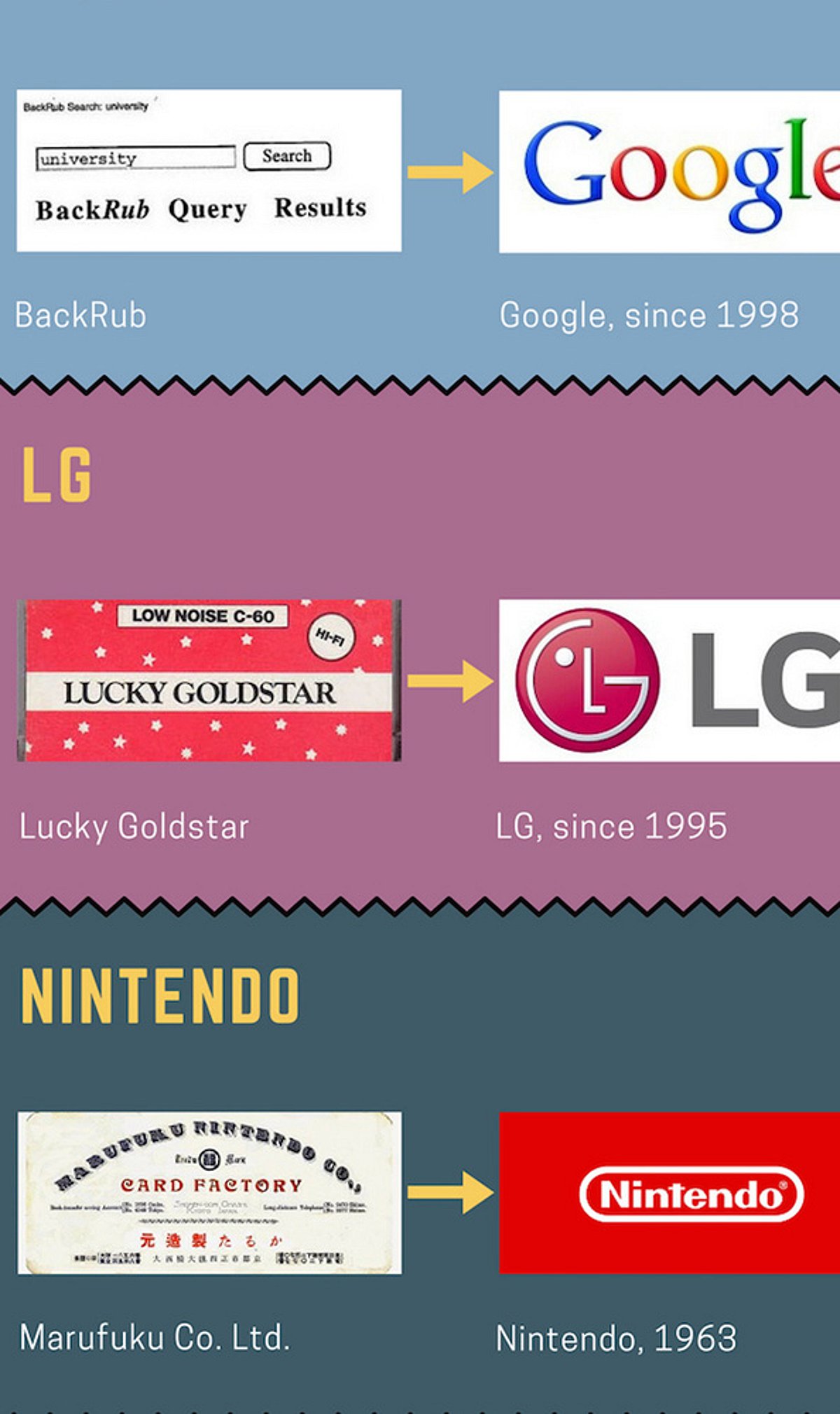
    • BackRub to Google: Before becoming a household name, Google started as BackRub. Founders Larry Page and Sergey Brin renamed it to represent the immense scale of information they aimed to organize.

    Each of these name changes was a carefully calculated decision, often accompanied by a shift in business strategy. Whether to pivot to new technologies, shed negative connotations, or simplify branding, these companies show that a name is more than just a label—it’s a statement of intent.

  • Pixel 11 Pro Fold Leak Reveals New Color, Upgraded Storage, and AI Features Ahead of August Launch

    Pixel 11 Pro Fold Leak Reveals New Color, Upgraded Storage, and AI Features Ahead of August Launch

    Google’s next foldable smartphone is coming into sharper focus ahead of its official debut. Fresh leaks surrounding the Pixel 11 Pro Fold suggest the company is preparing a refreshed color palette, larger base storage options, and new AI-powered features for its premium foldable lineup. While Google has yet to confirm the specifications, the latest reports indicate the device could become one of the company’s biggest hardware upgrades this year.

    New Color Option and Premium Design Surface

    The latest leak has revealed yet another color variant of the Pixel 11 Pro Fold, giving it that distinctive minimalist look that Google is known for. Though the form factor is similar, rumors point out that Google has tweaked a few aspects of the design, which include making it slimmer and tweaking the camera module.

    Google will be showcasing its Pixel 11 line, which includes Pixel 11, Pixel 11 Pro, Pixel 11 Pro XL, and Pixel 11 Pro Fold on August 12 at its Made by Google event. The firm is expected to flaunt the foldable phone as the flagship product, competing against Samsung’s foldable phones among others.

    Storage, AI Features, and Tensor G6 Take Center Stage

    Hardware improvements will not be limited to the aesthetic side of things, and there are reports that the Pixel 11 Pro Fold will get some hardware upgrades as well. Reports claim that Google will stop manufacturing Pixel devices with 128GB of storage, with the lowest amount of onboard storage being 256GB, but the high-end models will have up to 1TB of storage space.

    Moreover, the foldable phone will use Google’s upcoming Tensor G6 processor for better efficiency and improved on-device AI capabilities. Gemini AI features will become more prominent when it comes to taking photos and providing productivity and assistance services.

    Expected Price and Market Position

    This upgrade will most likely result in a more expensive phone. According to industry sources, Google’s next Pixel phone – the Pixel 11 Pro Fold – will be priced at €1,999 in Europe due to storage and hardware upgrades. The pricing for other regions like the US and India is yet unknown.

    However, regardless of the price hike, Google seems to concentrate on creating added value via storage upgrades and AI and hardware advancements rather than redesigning the product entirely. It is believed that Google aims to target premium Android foldable phone owners with this product.

    Official Launch Expected in August

    While the Pixel 11 series is still unofficial until Google’s August launch event, the constant leaks give us a clearer idea about the upcoming phones. According to the leaks, if everything turns out to be true, then the Pixel 11 Pro Fold will launch with updated color options, more storage, and advanced integration with Gemini AI and Tensor by Google.

    As the competition in the foldable smartphone market gets tougher, Google’s next flagship is expected to be evaluated not just by its hardware improvements but also by its software capabilities.

  • Master Dynamic Programming in 2026: Top Patterns and Interview Questions

    Master Dynamic Programming in 2026: Top Patterns and Interview Questions

    Dynamic programming remains one of the most important coding interview topics in 2026. Mastering common DP patterns, understanding company-specific expectations, and practicing representative problems can significantly improve problem-solving skills and increase success in technical interviews at top technology companies.

    Why Pattern Recognition Beats Memorization

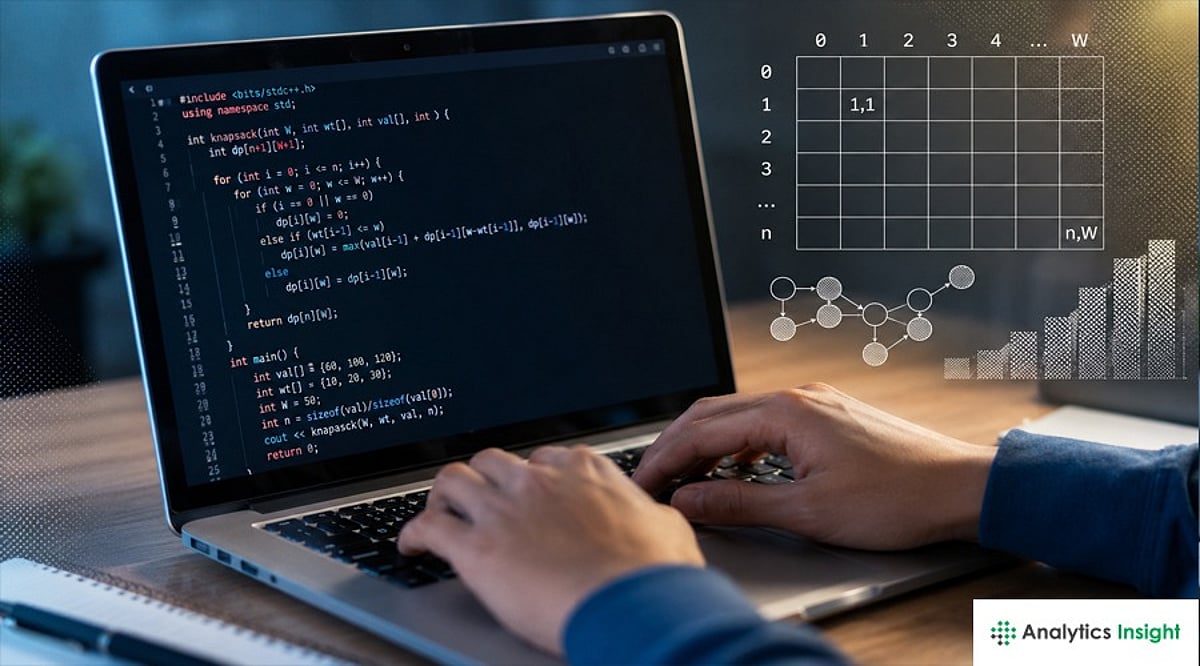
    Interview data from recent hiring cycles suggests that around 87% of coding questions at Google, Meta, Apple, Netflix, and Amazon are built around just 10 to 12 core problem-solving patterns, with dynamic programming forming one of the most versatile among them. The core idea behind DP is simple even when the problems aren’t: break a larger problem into smaller, overlapping subproblems, solve each one exactly once, and store the results, typically through memoization or a tabulation array, so the same subproblem is never recomputed. Any time a question asks for a maximum, minimum, or count of ways to do something under constraints, there’s a strong chance dynamic programming applies.

    The Core Patterns Worth Mastering

    DP breaks down into a manageable number of recognizable categories rather than one giant, undifferentiated topic. Knapsack-style problems (0/1 and unbounded variants) cover resource allocation and optimization questions. Grid-based 2D DP tests a candidate’s ability to reason across two-dimensional state spaces with multiple transition directions. String DP handles text-processing challenges like edit distance and longest common subsequence, patterns with direct application in areas like version control and bioinformatics. Interval DP applies to scheduling and matrix chain multiplication-style problems, while state-machine DP models transitions governed by specific rules, useful in problems involving buy/sell timing or step-based decisions.

    Frequently Asked DP Problems in 2026

    Company-Specific Differences Worth Knowing: Every organization does not follow the same approach toward DP problems. The first difference between companies is that Google requires higher DP expertise compared to other organizations, not only in 1D problems such as staircase problems but 2D Grid, String DP and even DP on Trees/Graphs problems and an overall preference for harder problems in general. The next two organizations, Meta and Amazon, have more focus on array and string DP problems with medium-level difficulty. Microsoft avoids going into hard problems related to DP and prefers medium-level difficult problems along with good explanations. This shows that preparation according to the requirements of a particular company pays off in a bigger way.

    How to Actually Prepare for DP Interviews

    The most optimal form of preparation is no different from the tried and tested methods of pattern-based preparation. The method is to select a canonical example for each pattern, practice solving it until the logic of the solution takes under two minutes to describe and then use that logic for other variations. Interviewers are much more concerned about the ability of candidates to recognize the structure of subproblems, verbally derive a recurrence relation for the same and explain their trade-offs on time and space than knowing whether the candidate has seen the problem or not. Considering the frequent appearance of DP questions on arrays, strings, trees and grids, spending the effort to really comprehend a few basic patterns goes a long way.

    Why This Matters

    Dynamic programming is one of the most frequently tested problem-solving techniques in software engineering interviews. Understanding its recurring patterns helps candidates solve complex coding challenges efficiently, improve algorithmic thinking, and perform better in technical interviews across leading technology companies.

    FAQs

    What is dynamic programming in programming?

    Dynamic programming (DP) is an algorithmic technique used to solve complex problems by breaking them into smaller overlapping subproblems. Instead of solving the same subproblem repeatedly, DP stores previously computed results using memoization or tabulation, significantly improving time efficiency.

    Why is dynamic programming important for coding interviews?

    Dynamic programming tests a candidate’s problem-solving ability, optimization skills, and understanding of algorithms. Many leading technology companies include DP questions because they evaluate logical thinking, recurrence formulation, state transitions, and the ability to optimize brute-force solutions into efficient algorithms.

    Which companies frequently ask dynamic programming questions?

    Dynamic programming questions commonly appear in interviews at Google, Meta, Amazon, Microsoft, Apple, Netflix, Adobe, Uber, and many other technology companies. Google generally asks more advanced DP problems, while Amazon and Meta often focus on medium-difficulty array and string-based DP questions.

    What are the most common dynamic programming patterns?

    The most frequently tested DP patterns include 0/1 Knapsack, Unbounded Knapsack, Grid DP, String DP, Interval DP, State Machine DP, Tree DP, and Bitmask DP. Learning these core patterns enables candidates to solve a wide variety of interview problems efficiently.

    How should beginners start learning dynamic programming?

    Beginners should first understand recursion before learning memoization and tabulation. They should then practice simple problems like Fibonacci, Climbing Stairs, and House Robber before progressing to Knapsack, Longest Common Subsequence, Coin Change, and more advanced DP patterns.

  • Google Challenges Rs. 30 Lakh Delhi High Court Ruling in Hindware AdWords Trademark Dispute

    Google Challenges Rs. 30 Lakh Delhi High Court Ruling in Hindware AdWords Trademark Dispute

    Google has filed an appeal in the Delhi High Court against a recent order that held the company liable for trademark infringement in the Hindware AdWords case. The earlier ruling imposed a penalty of Rs. 30 lakh on Google and prohibited the company from allowing advertisers to use Hindware’s registered trademark as advertising keywords on its AdWords platform.

    Legal Proceedings

    A division bench of Justices V. Kameswar Rao and Manmeet P.S. Arora heard Google’s appeal on Friday. The court issued a notice to Hindware and scheduled the next hearing for July 24. The judges did not grant interim relief, meaning the previous order remains in effect pending a final decision.

    Google’s Arguments

    Senior advocate Abhishek Manu Singhvi, representing Google, argued that the earlier judgment contradicts several prior court decisions and established global practices. He noted that in many countries, bidding on competitors’ trademarks as advertising keywords is not considered trademark infringement. Google maintains that the AdWords system provides a legitimate way for businesses to reach potential customers through search advertising.

    Background of the Dispute

    The legal battle began when Hindware, a leading sanitaryware brand, alleged that rival companies were purchasing its trademark as a keyword through Google’s AdWords service. This caused advertisements from competitors to appear when users searched for Hindware on Google. Hindware claimed that this practice unfairly diverted its customers to competing brands.

    Earlier Court Findings

    In its May 22 judgment, the single judge ruled in favor of Hindware. The court found that Google derived commercial benefit from selling another company’s registered trademark as an advertising keyword, giving competitors an unfair advantage. The court also noted that Google never obtained permission from Hindware before making its trademark available for advertising. Additionally, the court rejected Google’s claim of protection under Section 79(1) of the Information Technology Act, stating that Google’s role exceeded that of a passive intermediary because it actively sold trademarked keywords.

    Implications for Digital Advertising

    The outcome of this appeal could have significant implications for digital advertising in India. If the court upholds the earlier ruling, companies may be barred from using competitors’ trademarks as advertising keywords. Conversely, a decision in Google’s favor would allow the current advertising model to continue, enabling businesses to reach audiences through keyword-based search ads. The July 24 hearing is expected to be a pivotal moment for the future of online advertising and trademark protection in the country.

  • Chrome 150 for Android Adds Long-Awaited Dedicated Back Button to Overflow Menu

    Chrome 150 for Android Adds Long-Awaited Dedicated Back Button to Overflow Menu

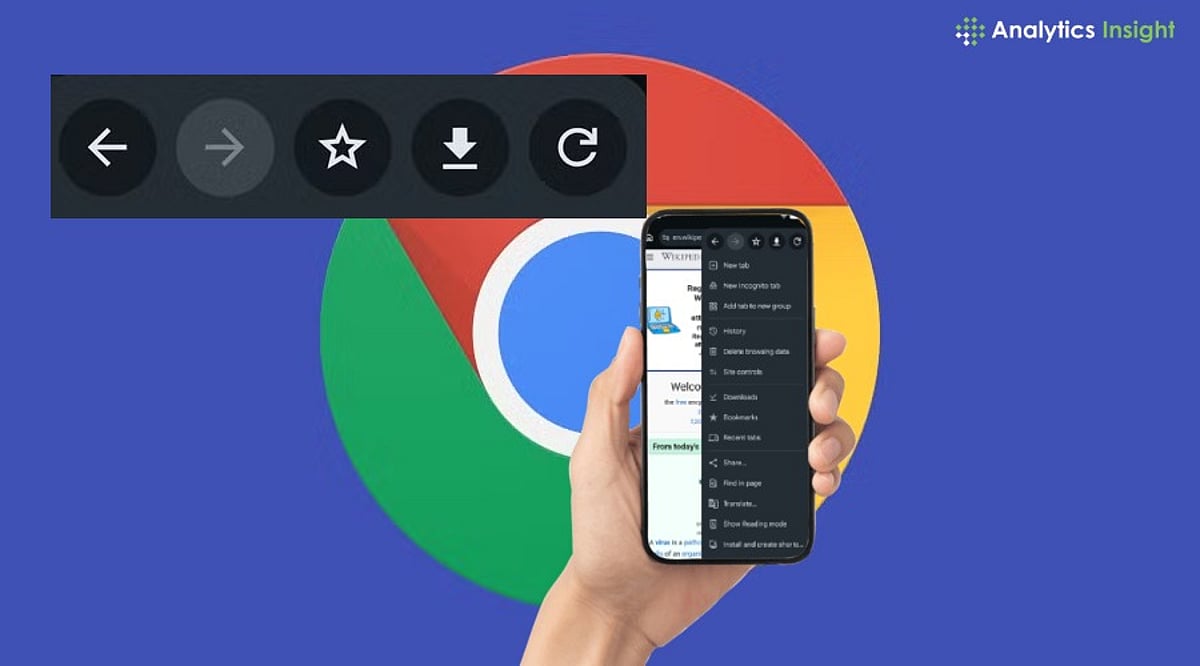
    Google has finally answered one of the most persistent user requests for Chrome on Android. With the release of Chrome 150, the browser now includes a dedicated Back button in its three-dot overflow menu, giving users an alternative to relying solely on Android’s system back gesture or navigation bar.

    Until now, Android users could only navigate backward using the device’s built-in controls, while the Forward button was already present in Chrome’s menu. This asymmetry has been a common complaint for years. Chrome 150 corrects this by placing a Back button directly next to the Forward button, aligning the Android experience with the version already available on iOS.

    The new Back button is part of a broader overhaul of Chrome’s overflow menu. Google has removed the traditional Info button and replaced it with a Site controls option that provides quick access to website permissions and settings. Additionally, the ‘Add to Home screen’ option has been renamed to ‘Install’ and ‘Create Shortcut,’ reflecting its dual function: installing supported web apps or creating simple website shortcuts.

    While the redesigned menu may take some getting used to, Google says the changes are intended to make frequently used features easier to find. The update is rolling out gradually via the Google Play Store for Android phones and tablets, so users can expect to see the new interface over the coming days.

    Although Chrome 150 doesn’t introduce major new features, the improvements focus on usability. The dedicated Back button is designed to simplify one-handed navigation, reducing dependence on Android’s system-level controls.

  • Google Selects 20 AI-First Startups for India Accelerator 2026 Cohort

    Google Selects 20 AI-First Startups for India Accelerator 2026 Cohort

    Google has chosen 20 homegrown AI-first startups for the 2026 cohort of its Google for Startups Accelerator: India program. The tech giant selected these companies from more than 2,500 applications, highlighting the growing depth of India’s AI startup ecosystem.

    The selected startups recently completed an in-person bootcamp at Google’s Bengaluru campus. Over the next three months, Google will provide mentorship, AI tools, cloud resources, and technical guidance to help founders refine their products, strengthen infrastructure, and scale globally.

    A Cohort Built Around Applied AI Infrastructure

    This year’s selections lean heavily toward startups building AI infrastructure and vertical-specific tools rather than consumer apps. Several are tackling embedded and industrial AI: CraftifAI and H2Loop AI automate embedded software and firmware development for robotics, automotive, and semiconductor hardware, while Jidoka applies computer vision to manufacturing quality inspection.

    Others focus on enterprise workflows: Binocs automates financial due diligence, OnFinanceAI builds compliance and risk tools for banks and insurers, and TartanHQ handles identity verification and onboarding through AI-powered APIs. Healthtech and climate tech also feature prominently, with Aikenist building AI-accelerated radiology tools, FlexifyMe offering AI-guided chronic pain therapy, and Aurassure and Fitsol tackling environmental monitoring and carbon emissions tracking respectively.

    Notable Names and Their Backers

    A few startups in the cohort have already built visible track records. Adalat AI, incubated at MIT, applies speech transcription and workflow automation to reduce courtroom case backlogs. Dodo Payments, backed by Antler and 100Unicorns, is building global payment infrastructure for SaaS and AI companies across more than 150 countries. Pipeshift, which came out of Y Combinator’s Summer 2024 batch, focuses on low-latency inference infrastructure for open-source AI models, while Soundverse AI, featured on Shark Tank India, offers a generative AI music platform for prompt-based composition. Several others, including CraftifAI, H2Loop AI, and Binocs, have already raised institutional funding from investors such as Accel, Ankur Capital, and IvyCap Ventures.

    What the Accelerator Offers Founders

    Google India vice president and country manager Preeti Lobana said the program is designed to equip founders with Google’s full AI stack and deep technical mentorship. She framed it as a way to accelerate their path to enterprise scale while strengthening the technical capabilities that support the broader India AI Mission. Google first launched the accelerator in April 2024, and its 2025 cohort included companies such as Apptile, Knit, MyWonder, Phot.AI, and SparkyAI.

    What Comes Next for the Cohort

    Beyond mentorship, Google’s accelerator model typically emphasizes technical depth over generic startup coaching. Founders will stress-test their architecture and prepare for scaled, enterprise-grade deployment rather than simply polishing a pitch deck. With this cohort skewing heavily toward infrastructure-level AI tools serving manufacturing, financial services, and healthcare, the selections suggest Google is positioning the program as a pipeline for startups building the underlying technical layers of India’s AI economy, rather than consumer-facing AI products alone.