Tag: India

  • AI, Cloud, and Cybersecurity: The Three Forces Reshaping Tech Stocks in 2026

    AI, Cloud, and Cybersecurity: The Three Forces Reshaping Tech Stocks in 2026

    Technology stocks are entering a pivotal period as artificial intelligence, cloud computing, cybersecurity, and shifting enterprise spending patterns reshape the IT sector. For investors tracking technology companies, the focus is moving from traditional outsourcing growth to how businesses adapt to newer technology cycles.

    In India, this transition is already influencing the outlook for IT services companies. Recent industry assessments point to muted near-term growth as clients remain cautious about discretionary technology spending, while AI simultaneously creates new demand for cloud, data engineering, cybersecurity, and digital transformation.

    AI Is Changing the IT Services Model

    AI will be a major factor influencing technology stocks in the coming years. But AI will not only open new avenues for companies—AI-driven productivity gains are also pressuring IT service providers’ business models.

    According to Crisil Ratings, the IT services industry in India would see subdued revenue growth of 1-3% this fiscal year and next, driven by disruption from artificial intelligence, subdued discretionary spending, and geopolitical uncertainties. Companies will have to reimagine their models and move into newer services, the rating agency said.

    Meanwhile, ICRA forecasts an annualized revenue growth rate of 3-5% for its basket of Indian IT services firms in FY2027 from 3.5% in FY2026. It says demand for traditional services will continue to be affected by delays in discretionary spending tied to generative AI.

    Cloud Spending Remains Key Growth Area

    Cloud computing remains an important part of the technology investment cycle as businesses move more applications and workloads to scalable infrastructure.

    Gartner forecasts that end-user spending on public cloud services in India will grow 28.1% in 2026 to USD 17.5 billion, up from USD 13.7 billion in 2025. The research firm said demand for AI-ready infrastructure and application modernization is driving this increase.

    For technology companies, this creates opportunities beyond traditional application development. Cloud migration, modernization, and consumption-based technology models are becoming increasingly connected to enterprise AI strategies.

    Data Centers and Semiconductors Gain Importance

    The AI revolution is creating investment opportunities not only for software companies but also for the technologies needed to build and sustain AI infrastructure.

    According to Deloitte, India’s data center power capacity will increase from around 1.5 GW in 2025 to around 10 GW by 2030. Moreover, the sector’s electricity consumption would be around 57 TWh in FY2030.

    This indicates that tech investors are increasingly interested in firms that build infrastructure for AI and cloud-based computing, rather than focusing only on software firms.

    Importance of Cybersecurity Grows

    As more companies adopt cloud computing and AI applications, cybersecurity is becoming a critical area of technology investment. As per CRISIL, Indian IT firms will invest selectively in AI, cloud, cybersecurity, and digital engineering in the future. Healthy balance sheets and cash flow will enable these investments.

    What It Means for IT Stocks

    The evolving technology ecosystem is adding complexity for IT stocks. Firms heavily dependent on legacy services face pressure from subdued discretionary spending and productivity gains from artificial intelligence. On the other hand, AI deployment, cloud adoption, cybersecurity, and modernization create business opportunities.

    Recent market trends stem from this uncertainty. As reported by The Economic Times in September, the Nifty IT index surged 5% in a single day of trading, adding Rs 1.13 lakh crore to market cap.

    The Next Phase of Technology Growth

    The future performance of tech stocks is likely to depend not on AI use alone but on companies’ ability to turn AI demand into revenue and preserve margins despite improved productivity. For the Indian IT industry, this transition will also mean shifting its focus toward offering higher value-added services like AI-driven transformation, application modernization, data engineering, cloud, and cybersecurity solutions.

    According to ICRA, these verticals are expected to grow as organizations move generative AI initiatives from pilots to broader implementations across the company. Overall, the technology industry is currently experiencing a structural change cycle, not just a boom cycle, driven by AI changing how technology is developed and used, growing cloud infrastructure demand, and cybersecurity becoming crucial to operations.

  • Sachin Tendulkar Partners With OpenAI to Make ChatGPT a Daily Habit in India

    Sachin Tendulkar Partners With OpenAI to Make ChatGPT a Daily Habit in India

    Cricket legend Sachin Tendulkar has announced a multi-year partnership with OpenAI, aiming to encourage more Indians to incorporate ChatGPT into their everyday lives. The former Indian captain shared the news on X (formerly Twitter), writing: “We have some interesting things coming up, and I can’t wait to share them with you.”

    Tendulkar, known for his curiosity and love of learning, explained how ChatGPT has fueled that habit. In his announcement, he noted that one question often leads to another, and ChatGPT has encouraged that exploration. He also revealed a relatable use case: he planned his last family trip using the AI assistant.

    “Discovering what else I can do with ChatGPT, sharing what I find useful, and encouraging more people to give it a try with something they care about.” — Sachin Tendulkar

    OpenAI Expands Its India Push

    The partnership arrives as OpenAI increases its focus on India. The company reports that more than 10 crore (100 million) people in India use ChatGPT every week. OpenAI has also outlined plans around AI infrastructure, business adoption, and worker training in the country, signaling a long-term commitment to one of the world’s fastest-growing AI markets.

    A Familiar Face for Everyday AI

    Tendulkar gives OpenAI a powerful way to reach beyond the typical technology audience. By using ChatGPT for something as simple as planning a family vacation, he demonstrates that AI tools are accessible to everyone — not just engineers or tech enthusiasts.

    For OpenAI, the collaboration is about more than driving initial sign-ups. The real goal is building a lasting daily habit among Indian users. A trusted, familiar figure like Tendulkar can help transform AI from a passing curiosity into a routine tool, supporting OpenAI’s broader efforts to solidify its user base in India.

    As AI becomes easier to use, the next challenge is no longer whether people will try it, but how often they will return to it. With Tendulkar on board, OpenAI is betting that everyday use cases like travel planning, learning, and quick information searches will make ChatGPT a natural part of daily life.

  • Fireflies.ai Targets India as Fred Evolves From Meeting Note-Taker to Workplace AI Agent

    Fireflies.ai Targets India as Fred Evolves From Meeting Note-Taker to Workplace AI Agent

    India has emerged as a critical growth market for Fireflies.ai as the company expands its AI assistant Fred beyond simple meeting transcription and summaries. Fred is now being shaped into a full-fledged workplace AI agent that can handle routine follow-up tasks such as drafting emails, updating CRM records, and creating tasks, all based on conversations it has captured.

    Fireflies.ai co-founder and CEO Krish Ramineni revealed that India is the company’s second-largest market by user count, with paid teams in the country tripling over the past two years. This rapid adoption is influencing both product development and pricing strategy, with the company planning a lower-cost tier specifically for Indian users.

    From Meeting Notes to Workplace Execution

    Fireflies initially gained traction as a tool that records, transcribes, and summarizes meetings. Now, Fred is evolving into a broader workplace companion. The platform connects meeting insights with email, CRM systems, and project-management software, enabling Fred to draft follow-up emails, update records, create tasks, and organize post-conversation information. Fireflies currently offers more than 200 AI skills across its platform.

    The company has also ventured into voice agents, which can conduct certain calls and automatically prepare summaries and transfer data into business systems. Fireflies reports that its voice agents have handled over 40,000 conversations globally.

    “Fireflies.ai started as an AI meeting assistant and note-taker. From day one, the vision was to build a personal assistant that helps with your work,” Ramineni shared. “Back then, we were experimenting with chatbots and Slack bots, but the technology was too early, and there were no LLMs. We eventually went all in on meetings, and the note-taker found product-market fit quickly.”

    India Shapes Product and Pricing Plans

    India’s growing user base is directly influencing Fireflies’ roadmap. The platform already supports 11 Indian languages, including Hindi, Bengali, Tamil, Telugu, Gujarati, and Marathi, as part of its broader language coverage. A lower-cost pricing tier tailored to the Indian market is also in development.

    Ramineni confirmed plans to continue hiring from India’s deep technology and AI talent pool. Fireflies operates as a fully remote company with employees distributed across multiple locations rather than concentrated in a single office.

    AI Takes on More Routine Work

    The broader strategy is to transform Fireflies from a tool that simply records discussions into one that helps complete follow-up work. Ramineni draws a clear line between routine execution and decisions requiring human judgment. Tasks such as screening, qualification, drafting, routing, and follow-ups can be automated, while hiring decisions, financial choices, and other high-impact judgments should remain under human control.

    For Fireflies, India’s rapid adoption provides both a large user base and a real-world testing ground for this shift as workplace AI moves further from note-taking toward active task execution.

  • Indian Mobile Retailers Plan ‘No UPI Day’ on October 2 to Protest Proposed MDR Fees

    Indian Mobile Retailers Plan ‘No UPI Day’ on October 2 to Protest Proposed MDR Fees

    Mobile phone retailers across India are planning to observe October 2 as ‘No UPI Day’ in protest against the proposed Merchant Discount Rate (MDR) on certain UPI merchant payments. The campaign, organized by the All India Mobile Retailers Association (AIMRA), will see participating retailers temporarily halt acceptance of UPI payments and symbolically cover their QR codes with black cloth.

    Why Are Mobile Retailers Protesting?

    AIMRA states that the proposed MDR could significantly increase the financial burden on mobile retailers, especially those operating on thin margins. Under the new framework, a 0.4% MDR will apply to eligible person-to-merchant UPI transactions above Rs. 2,000, starting October 15, 2026. The charge is merchant-side only and will not be directly passed to consumers.

    The association explains that a small retailer processing between Rs. 5 lakh and Rs. 30 lakh in UPI payments monthly could face additional costs of Rs. 2,000 to Rs. 12,000 per month. AIMRA estimates the overall burden on small mobile retailers across India could reach about Rs. 40 crore per month, or nearly Rs. 500 crore annually.

    AIMRA Vice President and Delhi NCR President Tarvinder Singh emphasized that the protest is not against UPI or digital payments but against the additional financial strain on merchants.

    What Will Happen on October 2?

    Retailers participating in the protest are expected to refrain from accepting UPI payments for the day and may physically cover their UPI QR codes with black cloth. However, this is a voluntary action by individual mobile retailers and does not mean UPI services will stop nationwide. Other businesses will continue to accept UPI as usual.

    Customers planning to purchase smartphones, accessories, or other products from physical mobile stores on October 2 are advised to carry cash or card payments as alternatives.

    What Changes from October 15?

    The October 2 protest precedes the implementation of the new MDR framework on October 15. Under the framework:

    • Eligible person-to-merchant UPI transactions above Rs. 2,000 will attract a 0.4% MDR.
    • Transactions up to Rs. 2,000 and person-to-person transfers remain exempt.
    • Small merchants receiving up to Rs. 1 lakh per month through UPI QR payments are eligible for mandatory zero MDR.

    The proposed MDR is a merchant-side charge, so customers will not see any direct impact. The protest is therefore focused on retailers’ concerns about the cost of accepting eligible UPI payments, not a call for a nationwide suspension of UPI.

  • India Supreme Court Urges Stricter Social Media Safeguards for Minors

    India Supreme Court Urges Stricter Social Media Safeguards for Minors

    India is moving toward tighter regulations on children’s access to social media, with the Supreme Court directing the central government to examine statutory safeguards for users under 18. The focus is not on banning internet access for minors but on whether they should be allowed to independently create and manage social media accounts.

    What the Supreme Court Said

    A bench led by Chief Justice of India Surya Kant, along with Justices Joymalya Bagchi and V Mohana, asked the Centre to consider strengthening existing intermediary rules to ensure social media platforms comply with Indian laws concerning minors. Justice Bagchi emphasized that safeguards should have a statutory basis rather than remain mere guidelines. Solicitor General Tushar Mehta assured the court that the government would examine possible measures.

    The proceedings follow a petition filed by the Just Rights for Children Alliance (JRCA), which seeks enforceable safeguards for minors using social media and other digital platforms.

    Why Age 18 Matters

    The petition relies on Section 11 of the Indian Contract Act, which addresses the legal capacity to enter into contracts. Senior advocate H.S. Phoolka, representing JRCA, argued that existing law already covers minors’ contractual capacity, making it unnecessary to wait for the proposed data protection framework. Signing up for social media involves accepting a platform’s terms and conditions, raising questions about how platforms allowing younger users align with Indian law.

    Parental Consent Under Consideration

    One proposed option is requiring parental or legal guardian consent before users under 18 can enter into contracts with social media platforms. The petition also suggests identity verification or e-KYC for parents or guardians. These changes would require platforms to build systems compliant with Indian legal requirements, rather than relying solely on their existing minimum-age policies. Currently, platforms like Facebook and Snapchat allow account creation from age 13.

    What Happens Next

    The JRCA petition highlights risks including online grooming, sexual exploitation, trafficking, sextortion, cyberbullying, behavioral profiling, misuse of personal information, and exposure to age-inappropriate content. The Centre is now examining whether stronger safeguards can be incorporated into the statutory framework governing digital intermediaries. The Supreme Court is expected to hear the matter again after the government reviews the issue.

  • India’s Largest Small-Cap Funds: How Many Stocks Do They Hold?

    India’s Largest Small-Cap Funds: How Many Stocks Do They Hold?

    Introduction

    India’s small-cap mutual fund space features a diverse range of portfolio strategies. A recent analysis of the seven largest small-cap funds by assets under management (AUM) reveals significant variation in the number of individual stocks held. Below is a breakdown of each fund’s stock count and AUM.

    Fund-by-Fund Breakdown

    Bandhan Small Cap Fund

    Holds the highest stock count among the seven funds at 258 stocks, with an AUM of ₹34,176 crore. Its portfolio breadth slightly exceeds that of Nippon India Small Cap.

    Nippon India Small Cap Fund

    With 254 stocks and an AUM of ₹82,580 crore, this fund is the largest by AUM and holds the second-highest number of stocks, indicating a diversified approach.

    Axis Small Cap Fund

    Holds 128 stocks with an AUM of ₹31,448 crore. Its stock count is moderate compared to peers.

    Quant Small Cap Fund

    Manages 104 stocks and ₹35,557 crore in AUM, placing it in the middle of the range.

    HDFC Small Cap Fund

    Holds 84 stocks with an AUM of ₹41,891 crore, showing a more concentrated portfolio relative to its AUM.

    DSP Small Cap Fund

    Holds 82 stocks and manages ₹21,659 crore in AUM, similar in stock count to HDFC but with lower AUM.

    SBI Small Cap Fund

    Holds the fewest stocks at 68, with an AUM of ₹42,631 crore. This highlights that a lower stock count does not necessarily mean lower AUM.

    Key Takeaways

    The data shows that small-cap funds vary widely in their portfolio construction. Bandhan and Nippon India hold over 250 stocks each, while SBI and DSP hold fewer than 100. AUM also varies, with Nippon India leading at over ₹82,000 crore. Investors should consider both stock count and AUM when evaluating fund diversification.

  • Meta Muse AI Still Unavailable in India: VPN Risks, Pricing, and Alternatives

    Meta Muse AI Still Unavailable in India: VPN Risks, Pricing, and Alternatives

    Meta’s new AI agent, Muse, is not available in India. For now, only adults in the US and Canada can use it. Meta launched Muse in the US on September 8 and expanded access to Canada on September 18. The company has not announced when — or if — India will get access.

    What Makes Muse Different From Meta AI?

    Muse is not the same as Meta AI, which Indian users already have through WhatsApp, Instagram, and Facebook. Meta AI mostly answers questions. Muse goes further: it runs on its own cloud computer and browser, and it can complete tasks across different apps. It keeps working even after someone closes the app, and it asks for approval before doing things like sending an email or making a purchase.

    Why VPN Workarounds Are Risky

    Some online suggestions claim that using a US-based VPN can help Indian users reach the Muse website. That approach is not safe. Meta’s terms require users to be physically located in a country where Muse operates. A VPN does not change a person’s actual location, so using one violates the rule. Anyone who tries it risks having their linked Meta account suspended.

    Phones make this even harder. Whether Muse appears in the App Store or Google Play depends on the account’s region settings. The app is not listed on the Indian App Store at all.

    Muse Pricing

    • Free plan: limited use
    • Power plan: USD 20 per month (around Rs. 1,900)
    • Max plan: USD 100 per month (around Rs. 9,500)

    Both paid plans are billed through Apple or Google. The shopping and payment features inside Muse currently work only for US users.

    What Indian Users Can Use Instead

    For those who want a taste of the technology behind Muse, the underlying model, called Muse Spark 1.3, is available through OpenRouter. Users pay per token. This provides access to the model, not the full Muse agent experience with tasks and browsing.

    Meta AI remains the practical option for Indian users on Meta’s own platforms.

    Will Muse Come to India?

    Meta says Muse will reach more countries over time, but it has not confirmed a date for India. Anyone tempted to try unofficial workarounds should weigh the risk to their Meta accounts against the limited benefit they would actually gain.

  • Weekend Laser Printer Sale: 7 HP, Canon, and Kyocera Models With 40%+ Discounts

    Weekend Laser Printer Sale: 7 HP, Canon, and Kyocera Models With 40%+ Discounts

    Seven laser printer discounts for home and office buyers

    Laser printers continue to make sense for households, home offices, and workplaces that print documents regularly. They offer sharp text, fast output, and consistent results without ink cartridges. This weekend, online marketplaces in India are listing seven HP, Canon, and Kyocera laser printers at discounts above 40% on several models.

    Below is a breakdown of the listed prices, advertised discounts, and key features. Prices and availability can change during the sale, so confirm the final checkout amount before ordering.

    HP Laser 1008w

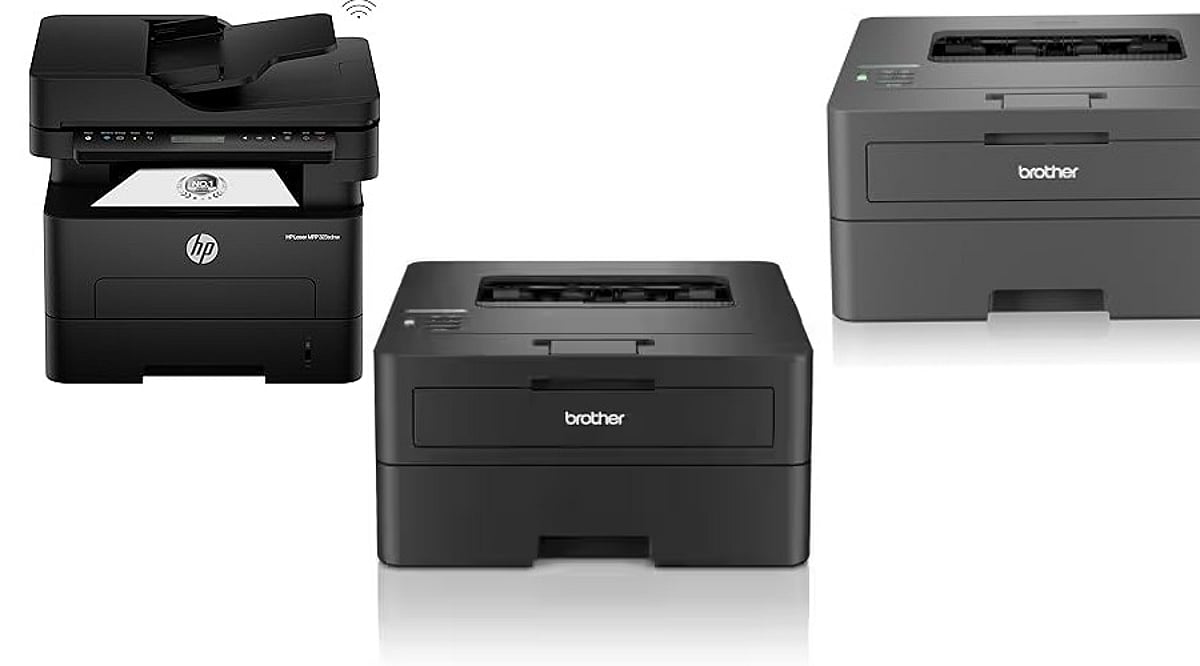
    The HP Laser 1008w is listed on Flipkart at Rs. 14,699, down from Rs. 29,999, for a 51% discount. It is a single-function monochrome laser printer with Wi-Fi and USB connectivity. HP’s listing describes it as a personal printer capable of up to 1,500 pages per month. Wireless support means users can print without a physical connection to a computer.

    HP Laser 303dw

    The HP Laser 303dw carries one of the largest discounts in this roundup. Flipkart lists it at Rs. 19,200, down from Rs. 42,999, a 55% discount. It is a single-function monochrome laser printer with automatic duplex printing, Wi-Fi, and USB connectivity. HP’s own store currently shows the model at Rs. 15,998.99 against an MRP of Rs. 27,000, though marketplace pricing can vary.

    HP LaserJet Pro CP1025

    Buyers who need color output can consider the HP LaserJet Pro CP1025, listed at Rs. 10,099 on Flipkart, down from Rs. 18,899. That works out to a 46% discount. Flipkart describes it as a single-function color laser printer and marks the price as the lowest of the year. It is aimed at users who want color printing while retaining the benefits of laser-based document output.

    HP LaserJet Pro MFP 4104fdn

    The HP LaserJet Pro MFP 4104fdn is a multifunction monochrome laser printer for office environments that need more than basic printing. Flipkart lists it at Rs. 41,577, down from Rs. 77,999, a 47% discount. Another seller also lists the same model at Rs. 39,397.

    Canon imageCLASS MF465dw

    The Canon imageCLASS MF465dw is priced at Rs. 39,637 on Flipkart, down from Rs. 69,999, for a 43% discount. This multifunction Wi-Fi monochrome laser printer is designed for office use and combines printing with additional document functions. Wireless connectivity can be useful in workplaces where multiple users need access to the printer.

    HP LaserJet M208dw

    The HP LaserJet M208dw is a compact monochrome laser printer for home and small-office users. HP’s official store currently lists it at Rs. 14,742, down from an MRP of Rs. 22,488, a saving of Rs. 7,746. Its official-store discount is below the 40% threshold, but it remains a relevant option for buyers seeking an HP wireless monochrome laser printer.

    Kyocera ECOSYS MA4000x

    The Kyocera ECOSYS MA4000x stands out with a listed 59% discount on Moglix. It is priced at Rs. 36,779 against an MRP of Rs. 90,000. The monochrome multifunction laser printer supports printing, copying, and scanning, with print speeds of up to 42 pages per minute. It also includes a dual-scan document processor and cloud and mobile utilities.

    Compare final prices before buying

    The seven deals cover different needs, from basic home printing to higher-volume office workloads. Before ordering, buyers should compare the final checkout price, seller details, warranty coverage, toner costs, and replacement-cartridge availability.

    Marketplace discounts can change during the weekend, and stock levels and additional bank offers may affect the final purchase price. HP’s official store currently shows direct discounts on several laser printers, so comparing the marketplace price with the manufacturer’s listing can help buyers judge the actual savings.

    Frequently asked questions

    Which laser printer is suitable for home use?

    The HP Laser 1008w suits home users who want compact monochrome printing, wireless connectivity, and affordable document printing.

    Which laser printer offers the highest discount?

    The Kyocera ECOSYS MA4000x carries a listed 59% discount, making it one of the steepest discounts in this list.

    Which printer supports color printing?

    The HP LaserJet Pro CP1025 is the color laser printer among the seven models featured.

    Are these laser printers suitable for offices?

    Yes. Multifunction models such as the HP LaserJet Pro MFP 4104fdn and Kyocera ECOSYS MA4000x target office requirements.

    What should buyers check before purchasing?

    Buyers should compare final prices, seller ratings, warranty coverage, toner costs, replacement availability, and additional offers before purchasing.

  • Amazon Commits $48 Billion to India’s Digital Future with AI, Cloud, and Quick Commerce Expansion

    Amazon Commits $48 Billion to India’s Digital Future with AI, Cloud, and Quick Commerce Expansion

    Amazon has announced a massive $48 billion investment plan for India through 2030, focusing on artificial intelligence, cloud infrastructure, e-commerce, and quick commerce. The commitment follows a June 2026 meeting between Amazon CEO Andy Jassy and Indian Prime Minister Narendra Modi in New Delhi.

    More than $21 billion of the total will be directed toward AI and cloud infrastructure, with AWS expanding data center capacity in Mumbai and Hyderabad. Amazon plans to add fulfillment centers and last-mile delivery stations nationwide, targeting India’s rapidly growing digital economy. The company also intends to invest an additional $3 billion specifically in quick commerce by 2030, scaling its Amazon Now service to compete in the ultra-fast delivery segment.

    The latest pledge includes a $13 billion top-up for AI and cloud announced in June, building on a previous $35 billion commitment across Indian businesses in 2025. AWS remains central to the strategy as Indian enterprises, startups, and government entities increase adoption of cloud computing and AI tools. Amazon will provide custom AI chips, managed AI services, and developer tools, along with support for local data storage to help organizations build AI applications within India’s cloud ecosystem.

    Amazon’s cloud business is already showing strong momentum: AWS sales reached $42.2 billion in the second quarter of 2026, up 37% year over year, and the company’s AI business annual revenue run rate exceeded $25 billion. Jassy said the investment addresses strong demand across Amazon’s Indian operations and aligns with goals to digitize small businesses, create jobs, and boost exports.

    On the retail front, Amazon plans to open more than 20 new fulfillment centers and over 100 last-mile delivery stations, with expanded capacity in smaller Indian cities. The quick-commerce push, reported by Reuters on September 24, 2026, intensifies competition in the minutes-delivery space. Amazon also targets bringing AI benefits to 15 million small businesses and providing AI education to 4 million government-school students by 2030. Cumulative investment in India is expected to exceed $88 billion through the end of the decade.

  • Samsung Wallet Adds Fingerprint Authentication for UPI Payments in India

    Samsung Wallet Adds Fingerprint Authentication for UPI Payments in India

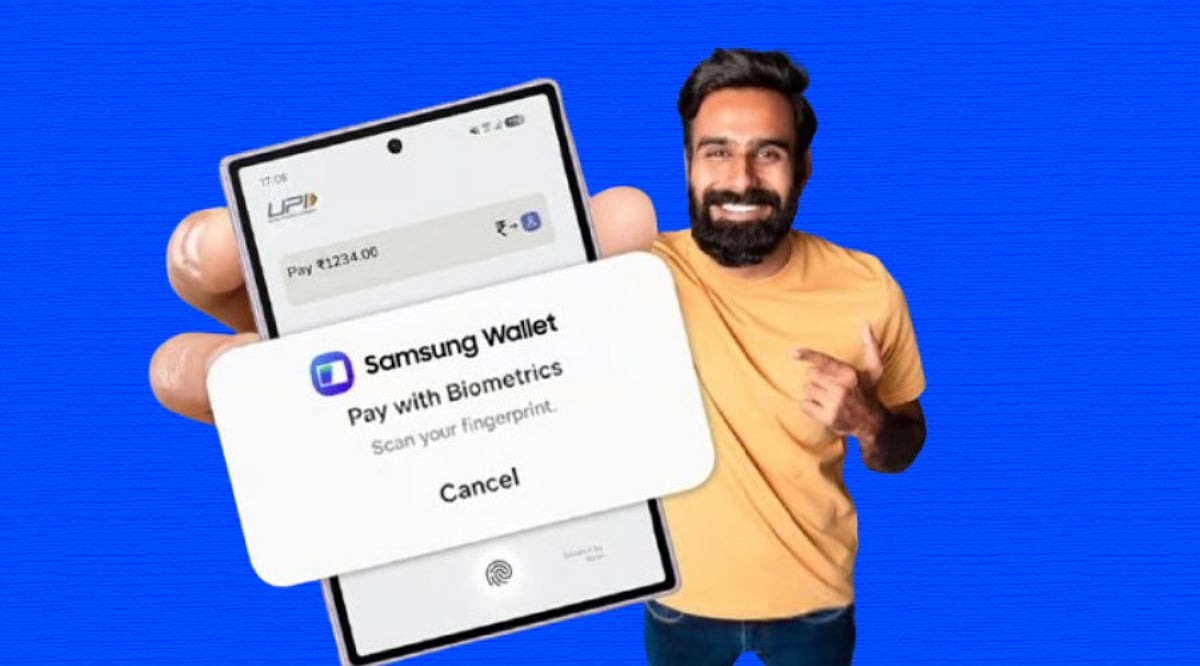
    Samsung has introduced a new fingerprint-based authentication feature for UPI payments through its Samsung Wallet app in India. The update allows users of compatible Galaxy smartphones to approve eligible transactions using the device’s built-in fingerprint sensor, eliminating the need to manually enter a UPI PIN for qualifying payments.

    How Fingerprint UPI Payments Work

    The authentication process is designed to be as seamless as unlocking a Galaxy phone. When a user initiates an eligible UPI payment of up to Rs. 10,000 via Samsung Wallet, the app prompts them to authenticate using the fingerprint sensor. Once the fingerprint is recognized, the transaction proceeds without requiring the user to type their UPI PIN on the screen.

    Samsung has confirmed that the biometric verification occurs entirely on the device. The company leverages its Knox security platform and encryption to protect sensitive payment information, ensuring that fingerprint data is stored securely.

    Enhanced Convenience and Privacy

    This update is particularly beneficial for frequent small-ticket UPI transactions. By removing the manual PIN entry step, Samsung aims to make routine payments faster. The feature also enhances privacy in crowded public spaces, where entering a PIN on a phone screen can risk exposure.

    According to Samsung, on-device biometric authentication can help reduce payment failures caused by incorrect UPI PIN entries. The move aligns with the National Payments Corporation of India’s (NPCI) broader initiative to introduce additional authentication methods for UPI transactions.

    More Than Just UPI

    Samsung Wallet serves as a comprehensive digital wallet. Beyond UPI, it supports contactless payments using tokenized credit and debit cards, utility bill payments, and storage for digital keys, boarding passes, tickets, and ID cards. Samsung emphasizes that the Knox security platform, combined with fingerprint recognition and encryption, creates a secure environment designed to protect sensitive data from both digital and physical threats.

    For Galaxy users in India, this update brings the UPI payment experience closer to the simplicity of unlocking their phone: a simple fingerprint scan is all it takes to complete an eligible payment.