Tag: India

  • Starbucks to Open Global Tech Hub in Chennai, Create 800 Jobs

    Starbucks to Open Global Tech Hub in Chennai, Create 800 Jobs

    Starbucks Plans Global Capability Center in Chennai

    Starbucks has announced plans to establish a global technology center in Chennai, India, as part of its international expansion. The coffee giant signed an agreement with the Tamil Nadu government and expects to hire around 800 technology professionals for the facility. The state government confirmed the deal on Monday but did not disclose the investment amount.

    Chennai Center to Support Global Operations

    The new center will provide technology services for Starbucks’ worldwide operations. Global capability centers typically handle software development, finance, data analysis, and research. They help companies support their main offices and optimize internal systems. Starbucks’ technology chief, Anand Varadarajan, highlighted Chennai’s skilled workforce, strong infrastructure, and low employee turnover as key advantages, according to a government press release. The company did not comment further outside regular business hours.

    The center is expected to create roughly 800 technology jobs in Chennai, adding to the city’s growing base of global business professionals. Starbucks has not yet announced a recruitment timeline, facility opening date, or specific roles.

    Expanding Starbucks’ Footprint in India

    Starbucks already operates about 500 cafes in India through its joint venture with Tata Consumer Products. The proposed Chennai center will extend the company’s presence beyond retail coffee into technology services. The agreement gives Starbucks access to India’s vast engineering talent pool and Chennai’s established office infrastructure and network of global business centers. The center will support technology needs across multiple markets.

    The Tamil Nadu government did not specify whether the facility will be a new campus or an existing office building, and Starbucks has not provided a project completion timeline.

    Chennai Attracts Global Tech Investments

    Starbucks’ deal comes shortly after US pharmacy chain Walgreens signed a similar agreement to set up a technology center in Chennai, creating about 250 jobs. Companies like Citi, Barclays, and American Express already operate global business and technology centers in the city. According to the Tamil Nadu government, Chennai accounts for about 10% of India’s global capability center base. The city attracts overseas firms due to its trained workforce, strong transport links, and lower turnover rates.

    India now hosts over 2,100 global capability centers, employing about 2.36 million people and generating nearly USD 100 billion in revenue, according to a 2026 Nasscom-Zinnov report. These centers handle finance, software development, research, and other high-value functions. Starbucks will join this expanding network with its Chennai technology center.
  • How ChatGPT India’s ‘Astra Uthao, Parth’ Instagram Bio Signals a New Era of AI Localization

    How ChatGPT India’s ‘Astra Uthao, Parth’ Instagram Bio Signals a New Era of AI Localization

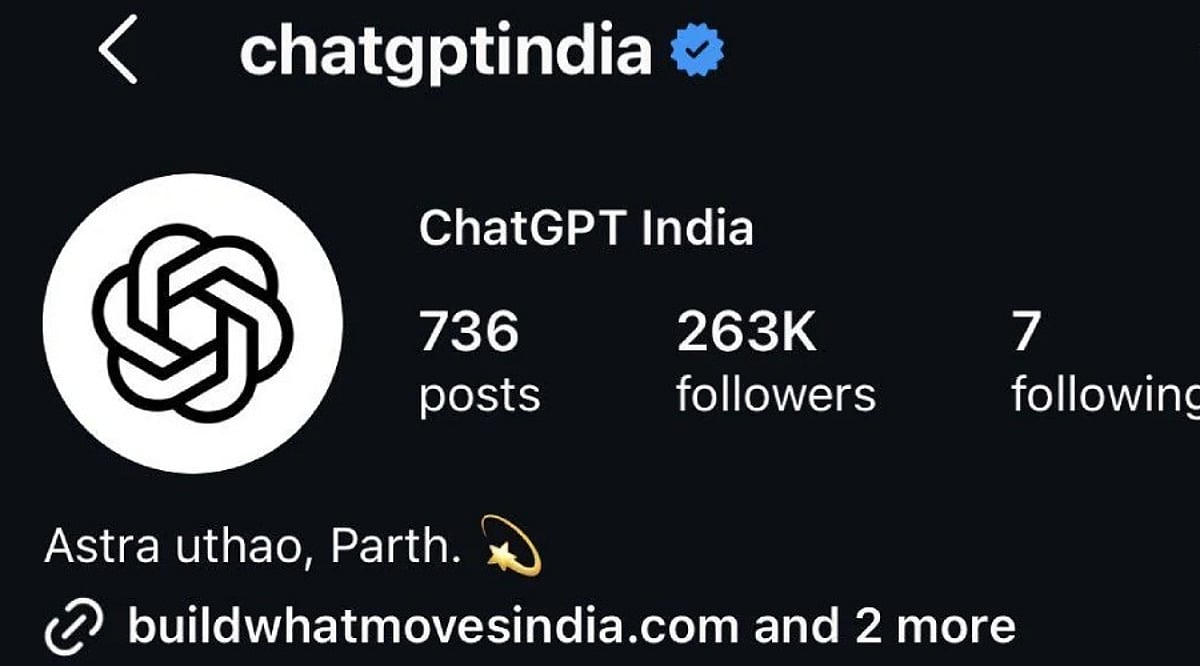
    OpenAI’s ChatGPT India has captured attention with a simple yet culturally resonant Instagram bio: ‘Astra uthao, Parth.’ This four-line bio, also shared on the company’s official X account, references the Mahabharata epic by using ‘Parth’ (a name for Arjuna) and ‘Astra’ (weapon), tweaking the famous line ‘Shastra uthao, Parth.’ The message is a clever nod to Indian mythology, making the AI brand feel more relatable to local internet users.

    The move highlights a shift in how global tech companies approach localization. Rather than merely translating content into Hindi or other Indian languages, OpenAI is tapping into cultural knowledge and humor. The reference is not explained; it relies on the audience’s familiarity with the epic, creating an inside joke that resonates with those who understand it.

    This campaign demonstrates that effective localization goes beyond language translation. It involves understanding pop culture, myths, and online habits. By using a line that sounds like something a friend might say, ChatGPT India positions itself as a brand that ‘gets’ its audience.

    The strategy is part of a broader trend where AI companies are trying to make global products feel local. As AI becomes more integrated into daily life, cultural relevance will be key to adoption. The ‘Astra uthao, Parth’ bio is a small but powerful example of this approach.

    Also read: From ChatGPT to Cameras: OpenAI Acquires Apple-Founded Glass Imaging

    The creativity behind this campaign shows that not all marketing requires huge budgets. A simple, well-placed cultural reference can generate buzz and engagement. It also signals that OpenAI is paying attention to regional nuances, which could be crucial for expanding its user base in India and other diverse markets.

    In conclusion, the ChatGPT India bio is more than a quirky line; it’s a lesson in modern localization. By blending technology with tradition, OpenAI is setting a new standard for how AI brands communicate with local audiences.

  • Tech Giants Amazon, Google, and Microsoft Commit $80.5 Billion to India’s AI Infrastructure

    Tech Giants Amazon, Google, and Microsoft Commit $80.5 Billion to India’s AI Infrastructure

    Amazon, Google, and Microsoft have announced a combined investment of $80.5 billion in India’s AI and cloud infrastructure through 2030, signaling the country’s growing importance as a global technology hub. Meta and Nvidia are also expanding their presence through strategic partnerships and hardware supply deals.

    Amazon leads with a $48 billion commitment through 2030, including $13 billion specifically for AI and cloud infrastructure. The company plans to expand AWS capacity in Mumbai and Hyderabad, and support over 20 fulfillment centers and 100 delivery stations. Amazon also aims to provide AI tools for millions of small businesses in India.

    Microsoft has pledged $17.5 billion between 2026 and 2029 for cloud and AI infrastructure, including a fourth cloud region in Hyderabad. The company also launched a nationwide AI skilling program targeting 20 million people by 2030.

    Google is investing approximately $15 billion from 2026 to 2030 to build its first Indian AI hub in Visakhapatnam. The project includes gigawatt-scale computing, data centers, and new subsea connectivity, developed in partnership with AdaniConneX and Airtel.

    Meta is leasing capacity at Reliance’s 168 MW AI-enabled data center in Jamnagar, Gujarat, and has contracted nearly one gigawatt of renewable energy. While Meta did not disclose a specific financial commitment, the projects mark a significant step in its Indian infrastructure expansion.

    Nvidia is supplying advanced GPUs for India’s AI computing ecosystem. L&T is building an AI factory in Chennai with 10,000 Nvidia B300 GPUs to support Together AI workloads, demonstrating Nvidia’s role in powering India’s AI growth without a direct investment figure.

    The combined $80.5 billion from Amazon, Microsoft, and Google excludes Meta’s undisclosed deals and Nvidia’s hardware partnerships, reflecting different investment models. India’s growing AI demand, developer talent, and infrastructure plans continue to attract major technology investments, marking a shift toward building AI compute capacity inside the country.

  • India Retains 30% Crypto Tax and Enforces Stricter VDA Reporting Rules

    India Retains 30% Crypto Tax and Enforces Stricter VDA Reporting Rules

    India has reaffirmed its 30% tax on income from virtual digital assets (VDAs) and the 1% tax deducted at source (TDS) on qualifying transfers. At the same time, the government has expanded transaction reporting requirements for prescribed crypto entities, effective from April 1, 2026.

    The Income Tax Department’s new VDA explainer consolidates the tax, TDS, and reporting provisions into a single document. It also clarifies which digital assets are covered and outlines penalties for non-compliance by reporting entities.

    India Keeps 30% VDA Tax and 1% TDS

    According to the Income Tax Department, income from transferring a VDA remains taxable at a flat 30% rate, plus applicable surcharge and cess. The new reporting framework does not alter this rate or the method for calculating taxable income.

    Under Section 115BBH, taxpayers may only deduct the cost of acquiring the asset. Other expenses are not allowed, and VDA losses cannot be offset against other income or carried forward to a later financial year.

    Section 194S continues to mandate 1% TDS on payments made to Indian residents for VDA transfers. For specified individuals and Hindu Undivided Families, the annual threshold is Rs. 50,000; for others, it stands at Rs. 10,000.

    VDA Definition Includes Crypto Assets and Certain NFTs

    The VDA definition covers cryptocurrencies, certain non-fungible tokens (NFTs), and other notified digital assets. It also includes digital representations of value that use a cryptographically secured distributed ledger or similar technology to validate transactions.

    However, Indian currency, foreign currency, and India’s central bank digital currency (CBDC) are not classified as VDAs. The government may exclude additional digital assets through official notifications.

    Exclusions include gift cards, vouchers, reward points, loyalty cards, and subscriptions to websites or digital platforms. Some NFTs are also excluded when their transfer legally passes ownership of an underlying physical asset.

    Crypto Reporting Rules Take Effect

    Section 285BAA introduced a separate reporting duty for prescribed entities handling crypto-asset transactions. These entities must provide transaction information to the Income Tax Department in the required form, within the specified period, and through the designated filing process.

    The Income-tax Act, 2025, which took effect on April 1, 2026, now carries the reporting requirement under Section 509. Thus, Section 285BAA refers to the earlier framework, while Section 509 contains the corresponding rule under the current act.

    The reporting duty does not replace individual tax filings. Crypto investors must continue reporting their transfers through Schedule VDA in their income tax returns and maintain records of acquisition costs, sale values, swaps, and other transfers.

    Penalties for Delayed or Inaccurate Reports

    A prescribed entity that misses the reporting deadline may face a penalty of Rs. 200 for each day the failure continues. Authorities may also impose a Rs. 50,000 penalty if an entity submits inaccurate information, fails to correct an identified error, or does not complete required checks.

    When authorities identify a defective statement, they may direct the reporting entity to correct it. Entities must also amend information when they discover errors after filing. These requirements place the reporting responsibility primarily on exchanges, service providers, and other prescribed intermediaries.

    The new framework increases transaction information available to the tax department but does not create a new tax for investors. The 30% VDA tax, 1% TDS, deduction limits, and loss-offsetting restrictions remain unchanged.

  • Bengaluru Police Unearth Major Cyber Fraud Ring Involving 507 Mule Accounts and Crypto Transfers

    Bengaluru Police Unearth Major Cyber Fraud Ring Involving 507 Mule Accounts and Crypto Transfers

    Bengaluru police have uncovered an extensive cyber fraud network that used fake investment applications, hundreds of mule accounts, and cryptocurrency transfers to siphon off stolen money. The investigation was triggered by a complaint from a Peenya resident who lost approximately Rs. 94 lakh (Rs. 93.58 lakh) in a fraudulent investment scheme.

    Officials traced the funds through 507 mule bank accounts, with Rs. 13 lakh moving through a government-owned bank account and over Rs. 38 lakh passing through a private bank current account. The trail also led to a Binance crypto wallet, indicating that digital assets were used to obscure the money flow. Investigators have identified digital connections to Kolkata, Hong Kong, and California, although foreign links are still being verified.

    Arrests and Recovered Evidence

    One suspect, Amit Mishra, was arrested in Bengaluru on September 8. The following day, police detained two alleged accomplices: Tausif Ahmed and Parashuram Sadanand Kannanavar. Six mobile phones were recovered from the three individuals. According to the official police statement: “Initially, we thought they could be victims, but on September 8, when the technical analysis of Amit Mishra was being done, we found they were his partners. We arrested both of them on September 9.”

    Tools and Methods Used

    The investigation revealed names such as Sumon, Nick, Dilawar, Iftikhar, Abhinav, and Vivek—contacts of Mishra on the ZNPAY platform. Other associates included Nawaz, Shihab Boy, Dinesh, Sulpikar, and Ashraf. Police are verifying each individual’s involvement.

    The group is accused of collecting current, corporate, and trust accounts along with SIM cards and banking details. Mule account holders were allegedly paid commissions ranging from Rs. 1.5 lakh to Rs. 2 lakh. Investigators also discovered the ZNPAY app and several SMS-forwarding APK files, which are believed to have been used to intercept banking messages and one-time passwords (OTPs).

    Broader Implications

    This case highlights a sophisticated, multi-layered fraud operation rather than a simple phishing attack. The fake investment platform lured victims, while mule accounts distributed stolen funds across different banks. The use of cryptocurrency added another layer of complexity, making transactions harder to track. Police continue to examine more accounts, devices, and digital trails as they expand the investigation.

  • India’s Payment Methods Compared: UPI, Debit Cards, and Credit Cards – Fees and MDR Explained

    India’s Payment Methods Compared: UPI, Debit Cards, and Credit Cards – Fees and MDR Explained

    When you tap, swipe, or scan to pay, the costs behind that transaction vary dramatically depending on the method. While customers rarely see these charges, merchants bear the burden. Understanding Merchant Discount Rate (MDR) is key to comparing India’s payment landscape.

    What is MDR?

    Merchant Discount Rate (MDR) is the fee merchants pay for processing digital payments. This charge is typically divided among banks, payment networks, and app providers. Although it is a merchant-side cost, it influences business decisions and pricing strategies.

    UPI: Free for Consumers, New Merchant Fee Above ₹2,000

    UPI remains free for consumer-to-consumer transfers, with no upper limit. However, from October 15, 2026, NPCI introduces a 0.4% MDR on person-to-merchant transactions above ₹2,000. This charge is capped at ₹300 for payments of ₹75,000 or more. For instance, a ₹50,000 payment incurs ₹200 in MDR, while a ₹1 lakh payment costs only ₹300 due to the cap. Special sectors like railways, telecom, insurance, fuel, and agriculture inputs attract a flat ₹5 charge.

    Small merchants receiving up to ₹1 lakh per month through UPI QR codes continue to enjoy zero MDR on all transactions. Those crossing the threshold for three consecutive months are moved to the standard category. NPCI estimates this new fee will affect only about 4% of merchant transactions, mostly larger ones. Consumer platform fees and merchant surcharges are prohibited under the new rules.

    Debit Cards: Regulated and Tiered MDR

    Debit-card MDR is set by the RBI, with different caps for merchant categories and acceptance methods. Small merchants and QR-based payments enjoy lower rates, while larger merchants using card machines or online checkout face higher limits. RuPay debit cards benefit from a zero-MDR policy with no cap, making them a cost-effective choice for smaller everyday purchases.

    Credit Cards: Higher Cost, Commercially Negotiated

    Credit-card MDR is not fixed by regulation but is determined through commercial agreements between merchants and banks. Industry estimates place it between 1.5% and 2.5%. This higher cost funds rewards, cashback, and other card perks. Additionally, credit cards carry other fees like annual charges, interest on unpaid balances, late fees, and cash-advance fees. Consumers who pay their bill in full each month avoid most of these extra costs, but carrying a balance quickly becomes expensive.

    RuPay Credit Cards on UPI: A Separate Rulebook

    Eligible RuPay credit cards can be linked to UPI apps for merchant payments, but these transactions follow credit-card rules, not standard UPI zero-MDR rules. Small offline merchants get nil MDR up to ₹2,000; beyond that, standard credit-card MDR applies. The key difference is the source of funds—a credit line versus a bank account.

    Comparsion: Which Is Cheapest?

    For everyday purchases under ₹2,000, all three methods cost the same to consumers. The differences emerge for merchants processing high volumes or handling larger transactions. UPI’s new capped fee is modest compared to credit-card MDR, while debit cards remain regulated and relatively low. Merchants are likely to steer customers toward cheaper methods, such as UPI or RuPay debit cards, especially for larger payments.

    Final Thoughts

    India’s digital payment system is moving beyond a simple free-vs-fee classification. The real cost lies in the merchant-side MDR, not in visible customer charges. As UPI scales, the new merchant fee above ₹2,000 aims to sustain its infrastructure. Debit cards stay regulated, and credit cards carry premium costs tied to rewards and lending. Understanding these dynamics helps both merchants and consumers make informed choices.

    Frequently Asked Questions

    Is UPI free for customers in India?

    Yes, eligible UPI payments do not carry a consumer transaction fee. From October 15, 2026, specified merchant UPI payments above ₹2,000 will incur a merchant-side MDR, but merchants cannot pass this cost on to customers.

    What is MDR in digital payments?

    MDR is the processing charge paid by merchants for accepting certain digital payment methods. It is primarily a merchant-side cost and does not automatically mean a separate customer fee.

    Is credit card MDR higher than debit card MDR?

    Generally, yes. Debit-card MDR is regulated by RBI, while credit-card MDR is commercially negotiated. Industry estimates commonly place credit-card MDR above debit-card MDR.

    Can a RuPay credit card be used through UPI?

    Yes, eligible RuPay credit cards can be linked to supported UPI apps for merchant payments. However, the transaction is funded by the credit card, so it follows credit-card rules rather than standard UPI rules.

    Who pays the UPI MDR above ₹2,000?

    The merchant pays the MDR on eligible person-to-merchant UPI transactions above ₹2,000. Customers should not be charged a separate UPI transaction fee for this MDR.

  • Apple’s iCloud+ Expansion in India Adds Apple TV, Arcade, and Music Select

    Apple has started rolling out an expanded iCloud+ subscription in India, now bundling Apple TV and Apple Arcade at no extra cost. The updated plans also introduce Apple Music Select, a new ad-free music station feature. Meanwhile, Apple One subscriptions are being closed to new users in the country.

    Apple TV and Apple Arcade Now Included

    The new iCloud+ plan gives subscribers access to Apple TV content and Apple Arcade’s library of over 200 games, including titles like Hello Kitty Island Adventure, Sneaky Sasquatch, and Football Manager 26 Touch. Users began receiving notifications about the updated plan, which combines cloud storage with video streaming and gaming services.

    The iCloud+ plan starts at Rs. 75 per month for 50GB of storage, with higher storage options available. Subscribers can share their plan with up to five family members through Family Sharing.

    Apple Music Select Added

    Apple is also adding Apple Music Select to the package for Indian users. This feature offers ad-free music stations within the existing Apple Music app. It does not provide the full Apple Music subscription; users who want complete access can subscribe separately. For iCloud+ users, Apple lists the Individual plan at Rs. 115 per month and the Family plan at Rs. 145 per month.

    The company is ending direct standalone subscriptions for Apple TV and Apple Arcade in India. Existing subscribers will continue accessing these services through their iCloud+ plans. Apple assured that Arcade game progress and saved data will be preserved.

    Apple One Closed to New Subscribers

    Apple is also closing Apple One subscriptions to new customers in India. Existing Apple One subscribers will continue with their current plans. Apple One previously combined services such as Apple Music, Apple TV, Apple Arcade, and iCloud+ storage, priced at Rs. 195 per month for an Individual plan and Rs. 365 per month for a Family plan.

    The expanded iCloud+ offering will roll out through September across more than 100 countries and regions, with India among the first markets to receive the new subscription structure.

  • Best Gadget Shopping Stores in India: A Guide to Top Electronics Retailers

    Best Gadget Shopping Stores in India: A Guide to Top Electronics Retailers

    Introduction

    India offers a diverse range of electronics retailers, from sprawling big-box stores to specialized mobile outlets. Whether you’re looking for the latest smartphone, a powerful laptop, or smart home devices, these stores provide extensive selections and competitive prices. Below is a look at some of the top gadget shopping stores in India.

    Croma

    Croma is a well-known electronics retailer in India, offering a comprehensive range of products including smartphones, laptops, televisions, home appliances, accessories, and gaming gear. With physical stores in numerous cities and a user-friendly online platform, Croma gives customers access to multiple brands and frequent promotional offers, making it a popular choice for gadget purchases.

    Reliance Digital

    Reliance Digital is a leading consumer electronics chain, stocking smartphones, laptops, televisions, cameras, headphones, smart devices, and more. Its widespread retail presence makes it easily accessible across the country, and it offers products from a variety of brands to suit different budgets and preferences.

    Vijay Sales

    Vijay Sales has established a strong foothold in India’s electronics retail sector, particularly in major cities. The store offers a wide array of products including smartphones, laptops, televisions, home appliances, gaming products, and accessories. Its online store complements its physical outlets, and regular discounts and exchange offers make gadget shopping more attractive.

    Sangeetha Mobiles

    Sangeetha Mobiles is a prominent electronics retailer, especially in South India. It specializes in smartphones, tablets, laptops, accessories, and other consumer electronics. The retailer frequently runs promotional offers and exchange deals, giving shoppers additional value when comparing prices across different brands.

    Poorvika Mobiles

    Poorvika Mobiles is another major electronics retailer, particularly popular in southern Indian markets. Its product range includes smartphones, laptops, tablets, smartwatches, headphones, and accessories. The company operates physical stores alongside an online platform, allowing customers to compare devices and explore different brands before making a purchase.

    Lot Mobiles

    Lot Mobiles has a strong retail presence in several parts of India and focuses primarily on smartphones and related electronics. Customers can explore devices from leading brands along with accessories and other gadgets. Its physical stores provide an option for shoppers who prefer hands-on product inspection before buying.

    Amazon India

    Amazon India is a major online destination for gadget shopping, offering a vast selection of smartphones, laptops, gaming accessories, smartwatches, headphones, cameras, and other electronics. The platform’s large inventory allows shoppers to compare brands, specifications, ratings, and prices easily. Major sale events like the Great Indian Festival bring attractive discounts across a wide range of electronic products.

    Conclusion

    Whether you prefer the hands-on experience of a physical store or the convenience of online shopping, India’s gadget retail landscape has something for everyone. From the extensive showrooms of Croma and Reliance Digital to the specialized mobile outlets like Sangeetha and Poorvika, and the e-commerce giant Amazon, shoppers have access to a wealth of options and deals.

  • India’s Internet Growth Exposes Fragility in Submarine Cable Network

    India’s Internet Growth Exposes Fragility in Submarine Cable Network

    India’s digital revolution is surging—broadband subscriptions have crossed 1.06 billion and data usage jumped from 73,324 petabytes to 77,953 petabytes in just one quarter. Yet the backbone of this connectivity, the undersea cables that carry nearly all intercontinental internet traffic, reveals a critical weakness.

    At least 13 of India’s 18 international submarine cables make landfall within about six kilometers of Mumbai’s Versova coast. This concentration means a single geographic point bears the brunt of the country’s international bandwidth. Meanwhile, 11 of those 18 cable systems are over 20 years old—pushing beyond their typical design life just as artificial intelligence, cloud computing, and video streaming drive demand even higher.

    India also lacks its own submarine cable repair fleet. There is no Indian-flagged, Indian-owned, or India-stationed repair vessel, so the country depends entirely on foreign operators and ships for fixes. While a single cable cut does not automatically crash the internet—traffic can reroute—multiple cuts, congested alternatives, or repair delays can lead to slower international connections and higher latency. Important routes like the Red Sea and Strait of Hormuz add another layer of risk.

    New projects offer hope. The I-2SEA system, connecting India with Malaysia and Singapore via landings at Machilipatnam and South Chennai, targets 2029. But the Telecom Regulatory Authority of India (TRAI) has also recommended developing Indian-flagged repair vessels and cable depots on both coasts. More landing sites, fresher cables, and faster repair capacity are essential to keep India’s internet boom from stalling.

  • NSE IPO Day 1: Retail and HNI Demand Outpaces Institutional Interest

    NSE IPO Day 1: Retail and HNI Demand Outpaces Institutional Interest

    The National Stock Exchange (NSE) of India launched its much-anticipated initial public offering (IPO) on Day 1, with overall subscription reaching 43%. The Rs. 22,562 crore offer saw bids for nearly 3.8 crore shares against the 8.9 crore shares on offer. However, the response from institutional investors was notably cautious, with only 19% of their allotted portion subscribed.

    In contrast, retail investors subscribed 44% of their quota, while non-institutional investors (HNIs) showed stronger demand at 72%. The employee portion was almost fully subscribed, underscoring broad-based interest from smaller investors.

    Key Details of the NSE IPO

    The IPO is structured as an offer for sale, meaning the exchange will not receive any fresh capital from the proceeds. The price band is set at Rs. 1,700 to Rs. 1,785 per share, placing NSE’s valuation at around Rs. 4.42 lakh crore at the upper end. This is lower than earlier expectations of approximately Rs. 5 lakh crore, partly due to concerns over derivatives trading and future earnings.

    NSE remains a cornerstone of India’s financial markets, but its FY26 revenue dipped 3.1% and profit fell 15.5%, which may have contributed to the tempered institutional appetite.

    Why Institutional Investors Are Holding Back

    The low institutional participation on Day 1 does not necessarily signal rejection. In large IPOs, institutional bids often build up closer to the closing date. Domestic institutions such as SBI, SBI Caps, SHCIL, Bank of Baroda, and several private life insurers hold NSE stakes valued at roughly Rs. 72,000 crore, indicating long-term confidence.

    Investors are weighing NSE’s dominant market position against its recent earnings performance. The next few days will be crucial to see if institutional investors increase their participation, which could significantly boost overall subscription numbers.

    As the IPO enters its critical phase, market watchers will closely monitor the demand from qualified institutional buyers (QIBs) in the coming days.