Tag: NVIDIA

  • Big Tech’s Magnificent 7 Stocks Plunge $2.3 Trillion as AI Investment Doubts Mount

    Big Tech’s Magnificent 7 Stocks Plunge $2.3 Trillion as AI Investment Doubts Mount

    June proved disastrous for the Magnificent 7 stocks as investor anxiety over massive AI spending and uncertain returns triggered a selloff that erased nearly $2.3 trillion in market value. The decline ranks among the steepest monthly losses ever recorded for Big Tech.

    The group—comprising Microsoft, NVIDIA, Apple, Alphabet, Amazon, Meta, and Tesla—had led the market for months on AI enthusiasm. However, June brought a sharp reversal as attention shifted from future promise to current spending and profitability.

    The Magnificent 7 Index fell roughly 10% in June, extending its decline to more than 13% from a mid-May peak. Investors now demand concrete evidence that billions poured into AI infrastructure will translate into higher earnings.

    Microsoft suffered the steepest drop among the seven, with its stock tumbling about 20% in June. NVIDIA lost nearly 13%, while Apple and Amazon each declined around 8%. The broad selloff reflects growing caution around companies investing heavily in AI without clear financial payoffs.

    Big Tech continues to pour capital into AI. Microsoft, Amazon, Alphabet, and Meta are expanding data centers and purchasing advanced AI chips to support future growth. Industry analysts estimate AI-related spending could exceed $700 billion in 2026. Such outlays have depressed free cash flow expectations, undermining investor confidence in valuations.

    Analysts believe the upcoming earnings season will be pivotal. Investors want to see that AI investments are boosting revenue rather than simply inflating costs. Wedbush analyst Dan Ives noted that the next earnings reports could clarify whether the AI investment cycle is on the right track.

    Recent market moves suggest a preference for tangible results over ambitious promises. Companies that successfully convert AI spending into stronger earnings may recover investor trust more quickly.

    Capital has also rotated toward AI hardware makers. Semiconductor and memory companies have outperformed the Magnificent 7 this month. The Philadelphia Semiconductor Index gained about 6% in June and is still up more than 90% year-to-date, indicating that investors currently favor businesses directly benefiting from AI demand.

    Many experts argue that the selloff does not signal the end of the AI story. Instead, the market is demanding clearer proof that expensive AI projects will generate improved profits. The coming round of earnings reports will be crucial in determining whether the Magnificent 7 rebound or remain under pressure for the rest of the year.

  • Top Employers for Computer Vision Engineers in 2026: NVIDIA, Tesla, OpenAI, and More

    Top Employers for Computer Vision Engineers in 2026: NVIDIA, Tesla, OpenAI, and More

    Computer vision is one of the fastest-growing fields within artificial intelligence, enabling machines to interpret and analyze visual data like humans. From autonomous vehicles and robotics to medical imaging and security systems, the technology is transforming industries. As demand surges, leading companies are competing for skilled computer vision engineers. Here are the best employers in 2026.

    NVIDIA

    NVIDIA remains a powerhouse for computer vision engineers, thanks to its dominance in AI hardware and software. Its recent RTX Spark AI chip, designed for local AI processing, has driven demand for engineers skilled in image recognition, model optimization, and edge computing. The company provides access to cutting-edge tools for large-scale AI development.

    Google DeepMind

    DeepMind continues to push boundaries in AI research, focusing on advanced machine learning, image understanding, and multimodal systems like Gemini. Engineers work on projects that define the future of visual reasoning, benefiting from a research-driven culture and vast computing infrastructure.

    Tesla

    Tesla offers one of the most exciting opportunities for real-world computer vision applications. Its camera-based self-driving technology relies on fast image processing, object recognition, and multi-camera analysis. Engineers solve massive-scale challenges while working on systems deployed in millions of vehicles.

    Meta

    Meta has intensified its AI investments, particularly in augmented reality, smart glasses, and visual AI. Engineers work on facial recognition, video generation, scene understanding, and wearable devices. Its aggressive AI expansion makes Meta a top career destination.

    OpenAI

    OpenAI has expanded beyond language models into multimodal AI, including image generation, robotics, and visual reasoning. Demand for computer vision engineers has grown as the company pursues advanced general intelligence. Employees gain access to cutting-edge research and world-class infrastructure.

    Scale AI

    Scale AI is a fast-growing infrastructure company specializing in data preparation for autonomous vehicles and enterprise AI. Computer vision engineers work with synthetic data, automated labeling, and large visual datasets. As multimodal AI adoption rises, Scale AI offers strong long-term prospects.

    Microsoft

    Microsoft provides a stable, powerful environment for computer vision engineers through Azure and enterprise AI solutions. Key areas include optical character recognition, healthcare imaging, industrial automation, and cloud-based vision APIs. The company balances research with product development.

    DeepSeek

    DeepSeek has emerged as a surprise success, securing $7.4 billion in funding and planning to double its workforce. It focuses on advanced AI and general intelligence systems, creating major demand for engineers. Its rapid growth makes it an attractive option for computer vision professionals.

    Industry Outlook for 2026

    The global computer vision market is projected to grow over 35% annually through 2030, driven by robotics, autonomous vehicles, healthcare, surveillance, industrial automation, and generative AI. Key skills include PyTorch, TensorFlow, Vision Transformers, YOLO, edge AI, CUDA optimization, and distributed training.

    Final Thoughts

    The job market has shifted dramatically. While traditional tech companies once dominated, now AI startups, robotics firms, and autonomous vehicle manufacturers offer outstanding opportunities. NVIDIA, Google DeepMind, Tesla, Meta, OpenAI, Microsoft, Scale AI, and DeepSeek provide exceptional career growth for computer vision engineers working on technologies that will shape our future.

    Frequently Asked Questions

    Which company is best for computer vision engineers in 2026?

    NVIDIA currently stands out with its strong AI ecosystem and advanced computing infrastructure.

    Is computer vision a good career in 2026?

    Yes, demand continues to rise rapidly across robotics, healthcare, autonomous vehicles, and AI.

    Which skills matter most for computer vision jobs?

    PyTorch, TensorFlow, Vision Transformers, YOLO models, CUDA optimization, and edge AI deployment are highly valuable.

    Are startups good for computer vision careers?

    Yes, fast-growing AI startups like DeepSeek and Scale AI offer excellent growth opportunities and cutting-edge projects.

    What industries hire computer vision engineers the most?

    Autonomous vehicles, robotics, healthcare technology, surveillance systems, industrial automation, and generative AI lead hiring demand.

  • Best Energy-Efficient Graphics Cards of 2026: Nvidia, AMD, and Intel Options

    Best Energy-Efficient Graphics Cards of 2026: Nvidia, AMD, and Intel Options

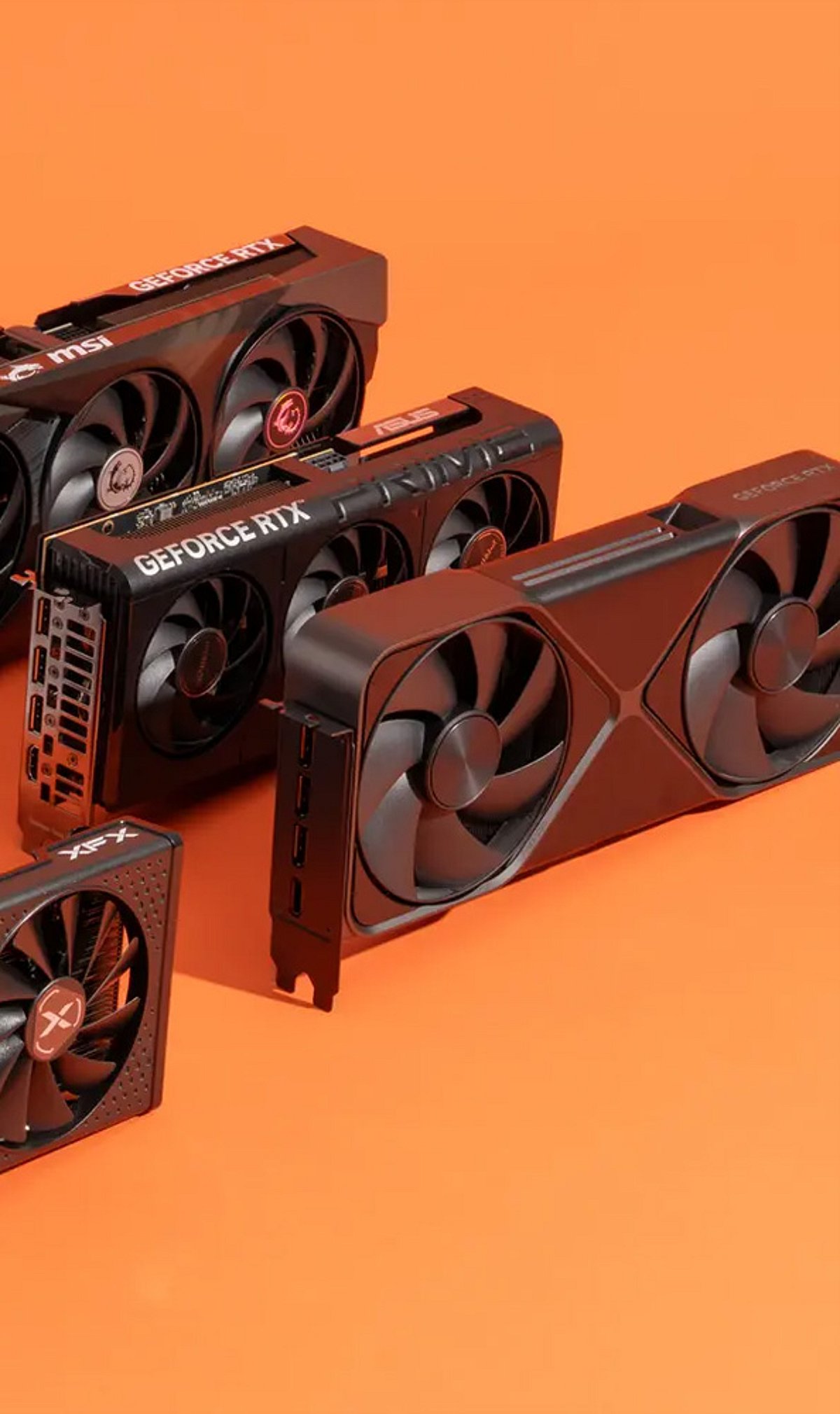
    As power efficiency becomes a top priority for gamers, creators, and enterprise users, the graphics card market in 2026 offers several compelling options that balance performance with lower energy consumption. From mainstream gaming GPUs to professional workstation cards, here are the most energy-efficient graphics cards to consider this year.

    Consumer Gaming GPUs

    NVIDIA GeForce RTX 5060

    Delivers excellent 1080p gaming performance with improved AI features, lower power consumption, and efficient thermal management for mainstream users.

    NVIDIA GeForce RTX 5070

    Balances performance and efficiency through advanced architecture, supporting demanding games, AI workloads, and creative applications with optimized power usage.

    AMD Radeon RX 9060 XT

    Offers competitive gaming performance, efficient power utilization, modern ray tracing capabilities, and excellent value for performance-conscious buyers worldwide.

    AMD Radeon RX 9070

    Provides efficient graphics processing, strong rasterization performance, enhanced AI acceleration, and balanced energy consumption across demanding gaming workloads consistently.

    Intel Arc B580

    Affordable graphics solution delivering respectable gaming capabilities, AI acceleration, media encoding improvements, and competitive efficiency for mainstream desktop users today.

    Professional Workstation GPUs

    NVIDIA RTX 5000 Ada Generation

    Professional workstation GPU delivering exceptional AI computing, rendering performance, advanced graphics capabilities, and optimized energy efficiency for enterprise professionals.

    AMD Radeon PRO W7800

    Professional graphics card balancing workstation performance, AI acceleration, content creation capabilities, and efficient power management for demanding production environments.

    NVIDIA RTX 4000 Ada Generation

    Compact professional GPU offering efficient rendering, CAD acceleration, AI computing, and energy-conscious workstation performance across various industries globally.

    Intel Arc Pro B60

    Professional graphics solution designed for visualization, AI workloads, media production, and reliable power-efficient performance in enterprise computing environments effectively.

    Whether you are building a gaming rig or outfitting a workstation, these energy-efficient graphics cards help reduce electricity costs and heat output without sacrificing performance.

  • Best Stocks to Buy Now With $3,000: Turn a Small Investment Into Long-Term Wealth

    Best Stocks to Buy Now With $3,000: Turn a Small Investment Into Long-Term Wealth

    Investing doesn’t require a fortune. With just $3,000, you can build a diversified portfolio of high-quality stocks that have strong growth potential. Here are some of the top picks for long-term wealth creation.

    NVIDIA (NVDA)

    The AI chip leader continues to benefit from booming demand for data centers and artificial intelligence. NVIDIA’s GPUs are essential for training large language models and powering AI applications, making it a core holding for any tech-focused portfolio.

    Microsoft (MSFT)

    Its cloud business (Azure) and AI investments, including its partnership with OpenAI, make Microsoft one of the strongest long-term technology stocks. The company’s diversified revenue streams from productivity software, gaming, and enterprise services provide stability and growth.

    Amazon (AMZN)

    Beyond e-commerce, Amazon’s cloud platform (AWS) and AI services continue driving future growth. AWS remains the dominant cloud provider, and Amazon’s logistics network and advertising business add further upside.

    Alphabet (GOOGL)

    Google’s AI expansion and advertising business keep Alphabet among the market’s strongest performers. The company’s search dominance, YouTube growth, and investments in autonomous driving (Waymo) and cloud computing provide multiple growth engines.

    Meta Platforms (META)

    Meta is investing heavily in AI while maintaining strong revenue from digital advertising. Its social media platforms (Facebook, Instagram, WhatsApp) generate massive user engagement, and its metaverse and AI initiatives could unlock new revenue streams.

    Broadcom (AVGO)

    Its semiconductor and infrastructure software businesses continue benefiting from enterprise AI demand. Broadcom’s networking chips are critical for data centers, and its software acquisitions (VMware) provide recurring revenue.

    Eli Lilly (LLY)

    Strong demand for weight-loss and diabetes treatments makes Eli Lilly a healthcare favorite. Its drugs like Mounjaro and Zepbound have blockbuster potential, and the company’s pipeline includes promising treatments for Alzheimer’s and other conditions.

    Visa (V)

    Global digital payments continue expanding, giving Visa steady long-term growth potential. As cash transactions decline worldwide, Visa’s network effects and transaction volume growth provide reliable returns.

    Disclaimer: This article is for informational purposes only and does not constitute financial advice. Always do your own research before investing.

  • NVIDIA vs AMD: Which Chip Stock Offers Better Returns in 2026?

    NVIDIA vs AMD: Which Chip Stock Offers Better Returns in 2026?

    The global technology market has transformed rapidly, driven by artificial intelligence. AI has become one of the biggest growth areas worldwide, and semiconductor companies now sit at the center of this shift. Among all chipmakers, NVIDIA and AMD have captured the most investor attention. Both companies play a vital role in the future of computing, but the key question remains: which stock looks better for investment right now?

    The answer depends on business strength, growth rate, market position, and future opportunities. Both companies offer strong potential, but there are major differences between them.

    NVIDIA’s Strong Position in the AI Market

    NVIDIA currently leads the AI chip market with a commanding share. The company controls more than 75 percent of the global AI GPU market. Graphics Processing Units (GPUs) power advanced artificial intelligence systems, large data centers, and machine learning models. Major technology companies such as Microsoft, Amazon Web Services, Google, and OpenAI rely heavily on NVIDIA hardware. This strong demand has helped NVIDIA build a dominant industry position.

    Revenue Growth Shows NVIDIA’s Strength

    Financial growth remains one of the biggest reasons behind NVIDIA’s popularity among investors. Recent reports show that NVIDIA recorded nearly 73 percent year-over-year revenue growth. The company’s data center business alone generated around $62 billion. Profit margins also remain extremely strong. NVIDIA currently maintains gross margins close to 75 percent, reflecting excellent business efficiency. High profitability allows more investment in research, product development, and shareholder rewards.

    The Power of CUDA Creates a Huge Advantage

    One major reason behind NVIDIA’s success is its software ecosystem called CUDA. Developers worldwide use CUDA to build AI models and software applications. This creates an advantage beyond hardware itself. Even when competitors offer strong chips, many companies hesitate to switch because their systems already depend on NVIDIA software tools.

    AMD Offers Higher Growth Potential

    AMD stands as NVIDIA’s biggest competitor in advanced chips. Although AMD remains much smaller in the AI accelerator market, the company has started to gain serious momentum. AMD reported around 34 percent revenue growth, showing healthy expansion. Data center revenue currently stands near $5.4 billion, far below NVIDIA, but the company continues to grow at a strong pace. Since AMD operates from a smaller base, faster stock growth becomes possible if market share expands in the coming years.

    AMD Builds Strong Products Across Multiple Areas

    AMD continues to strengthen its position through several important products. EPYC server processors have gained popularity in enterprise computing. Ryzen processors continue to perform well in consumer markets. The Instinct MI series AI accelerators also help AMD compete directly with NVIDIA in artificial intelligence hardware. Unlike NVIDIA, AMD has lower profit margins near 55 percent, indicating stronger competition and lower pricing power.

    Risks Investors Should Understand

    NVIDIA remains the safer company, but risks still exist. The company already has an enormous market value, making extremely large future gains harder to achieve. Any slowdown in AI spending could also affect investor confidence. AMD carries different risks. The company still remains far behind NVIDIA in AI GPUs. Its software ecosystem, called ROCm, still lacks the maturity of NVIDIA’s CUDA platform. Lower margins also show weaker overall profitability.

    Final Comparison and Investment Decision

    Both companies remain strong investments, but they serve different investor goals. NVIDIA offers better business quality, stronger profits, market leadership, and lower risk. It appears more suitable for long-term investors who prefer stability and steady growth. AMD offers greater upside potential given its smaller size. If AMD captures even 10 to 15 percent more AI market share, stock performance could rise faster than NVIDIA’s. At present, NVIDIA ranks as the stronger and safer investment choice. AMD remains the better option for investors who seek higher return potential and accept higher risk.

    Frequently Asked Questions

    1. Why does NVIDIA rank ahead of AMD right now?
    NVIDIA commands over 75 percent of the global AI GPU market, delivering exceptional financial performance with superior data center revenue and premium pricing power that outpaces its closest competitors.

    2. Does AMD have growth potential despite lower market share?
    AMD offers considerable growth potential. Operating from a smaller market base means expanding its data center presence or capturing minor market share shifts can trigger accelerated stock appreciation.

    3. What gives NVIDIA a competitive advantage?
    NVIDIA’s proprietary CUDA software ecosystem creates deep customer lock-in. Developers globally build AI models using these integrated tools, making it logistically difficult for enterprises to switch hardware providers.

    4. Is AMD considered a risky investment?
    AMD carries an elevated risk as its AI software platform, ROCm, is less mature than NVIDIA’s ecosystem. It also operates with lower profit margins, reflecting stiffer market competition.

    5. Which stock suits long-term investors better?
    NVIDIA is highly suited for long-term investors seeking financial stability. Its absolute market leadership, massive corporate profitability, and robust full-stack ecosystem minimize downside risk across changing technology cycles.

    Disclaimer: This article is provided for informational purposes only and does not constitute investment advice. You are responsible for conducting your own research before making any investments.

  • Qualcomm Stock Surges 12% on $40 Billion AI Revenue Target Beyond Smartphones

    Qualcomm Stock Surges 12% on $40 Billion AI Revenue Target Beyond Smartphones

    Qualcomm stock rose more than 12% in premarket trading on Thursday after the chipmaker raised its long-term revenue target outside smartphones. The company now expects its non-handset businesses to generate $40 billion in revenue by fiscal 2029, twice its previous goal.

    The revised target includes $15 billion from data center products and $10 billion from the automotive business. Qualcomm presented the plan at its investor day in New York, where executives outlined a broader shift into artificial intelligence infrastructure, servers, personal computers, and connected devices.

    Qualcomm Targets $15 Billion in Data Center Revenue

    Qualcomm plans to offer several products for AI data centers, including processors, server systems, software, and custom chips. The company expects these operations to generate $15 billion in annual revenue by fiscal 2029. Its strategy places the business in direct competition with NVIDIA and AMD.

    Chief Executive Cristiano Amon said cloud and AI companies have shown interest in having more chip suppliers. “I have not met a single one of those cloud and AI companies that have not said to me how excited they are,” Amon said. Nevertheless, the revenue target depends on Qualcomm winning customers in a market where established suppliers hold strong positions.

    China Forms Part of Qualcomm’s AI Expansion

    Qualcomm also plans to market its data center products in China, although US export rules may limit access to advanced technology. “Everything that we’re building for the data center, you should assume that China is going to be a target market,” Amon said.

    However, the company faces doubts over which processors it can legally sell in the country. The US government has changed its approach to AI chip exports several times over security concerns. While certain NVIDIA processors received clearance for sale, Chinese authorities have not approved all of them for import.

    Smartphone Dependence Falls Under Wider Growth Plan

    The data center push forms part of Qualcomm’s effort to reduce its reliance on mobile phone chips. The company expects its automotive business to produce $10 billion in fiscal 2029. It is also expanding its computer chip business, where it competes with Intel and AMD.

    Additionally, Qualcomm has agreed to acquire AI software company Modular. The deal gives the company access to tools that help developers build and run AI programs across different processors. Qualcomm aims to create a software system that can compete with NVIDIA’s CUDA platform, which developers widely use for GPU-based computing.

    Micron Results Support Semiconductor Stock Rally

    Qualcomm’s investor update arrived as Micron reported quarterly results that exceeded market forecasts. Micron said customers had committed about $22 billion toward chip purchases. It also reported that its high-bandwidth memory supply for 2026 had already sold out.

    Micron shares gained more than 15% in extended trading, while Qualcomm rose about 12% before Thursday’s opening bell. The updates supported gains across semiconductor stocks and helped push US stock index futures higher.

    Meanwhile, investors are assessing whether Qualcomm can meet its fiscal 2029 targets while competing with NVIDIA, AMD, and custom processors developed by large cloud companies. Its $15 billion data center forecast reflects management’s plan, but actual sales will depend on customer orders, product performance, export rules, and the pace of global AI infrastructure spending.

  • AI News Roundup: Investment Hurdles, Strategic Scaling, Chip Deals, and Global Regulation Efforts

    AI News Roundup: Investment Hurdles, Strategic Scaling, Chip Deals, and Global Regulation Efforts

    Weekly AI News Briefing

    This week’s AI landscape highlights critical shifts from experimentation to enterprise execution, major chip industry deals, and new regulatory frameworks. Below are the key stories.

    • AWS Co-Founder Matt Domo on Why AI Investments Are Stalling – Domo explains how organizations can move beyond pilot projects to full-scale AI deployment and unlock real value.
    • Micron and Rivals Secure US$22bn AI Deals with NVIDIA – To break the semiconductor boom-bust cycle, chipmakers like Micron are locking in multi-year contracts with NVIDIA, ensuring steady revenue streams.
    • McKinsey: Scaling AI Beats Fragmented Business Pilots – Partner Rahul Shahani reports that embedding AI across multiple functions yields double the profit margins compared to isolated experiments.
    • AIB Overhauls Mobile Banking App With Advanced AI Insights – The Irish lender uses machine learning to turn transaction data into personalized financial guidance for customers.
    • Pangaea Data and Sanofi Partner to Tackle Disease Underdiagnosis – Their AI scans electronic health records to help clinicians identify patients with Alpha-1 Antitrypsin Deficiency earlier.
    • UN’s New Environmental Initiative for AI – Secretary-General António Guterres launches a program to track the power and water consumption of AI systems during London Climate Action Week.
    • The Global Awards 2026: Tech and AI Categories – The upcoming awards will recognize AI-led innovation in sustainability, procurement, and supply chain.
    • Tech CEOs Push for US-Led AI Coalition at G7 Summit – Global executives propose an international framework to address national security risks and regulate advanced frontier models.
  • Trump’s Beijing Visit Opens Door for Nvidia Chips to Power Chinese AI Giants

    Trump’s Beijing Visit Opens Door for Nvidia Chips to Power Chinese AI Giants

    President Donald Trump’s recent trip to Beijing, accompanied by a delegation including Apple’s Tim Cook, Tesla’s Elon Musk, and Nvidia’s Jensen Huang, signals a potential reset in AI supply chains between the U.S. and China. The visit, focused on high-level negotiations, suggests a shift toward a transactional relationship where American semiconductor technology may support Chinese AI development.

    At the state banquet, President Xi Jinping emphasized the possibility of common cause between China’s rejuvenation goals and America’s “Make America Great Again” agenda. Behind the diplomatic smiles, however, lies a strategic contest: Beijing’s “new productive forces” policy prioritizes AI, advanced manufacturing, and robotics, exemplified by the transformation of Chongqing into a high-tech megacity. Yet China remains dependent on U.S.-controlled high-end accelerators for training frontier AI models.

    Nvidia’s Jensen Huang’s presence is particularly significant. After years of tightening export controls, Washington is now considering case-by-case reviews for advanced AI compute exports. Nvidia is positioned to ship H200 data center GPUs to major Chinese cloud platforms like Alibaba and Tencent. Although not the top-tier Blackwell-class chips, the H200 is roughly six times more powerful than any domestic Chinese alternative, potentially compressing AI training timelines for Chinese firms.

    For Apple and Tesla, the mission focuses on supply chain stability and regulatory clarity. Apple aims to protect its manufacturing resilience and consumer base, where the iPhone 17 has seen success. Tesla views China as crucial for production and full self-driving deployment, seeking clarity on mapping and data policies to compete with domestic rivals.

    This delegation represents an attempt to reverse the 20% decline in U.S. imports from China. By leveraging tech leaders for targeted access—compute in exchange for market openness and IP protections—both nations may enter a more transactional era. The true metrics of success will be the speed of Chinese hyperscalers building H200 clusters and the regulatory wins secured by Apple and Tesla. Ultimately, compute access shapes capability, and this visit suggests a hard-nosed accommodation that keeps the AI flywheel spinning on both sides of the Pacific.

  • Micron Locks in $22 Billion AI Chip Deals with NVIDIA to Break Memory Market Cycles

    Micron Locks in $22 Billion AI Chip Deals with NVIDIA to Break Memory Market Cycles

    Memory chipmakers are rewriting their playbook. Long treated as interchangeable commodities, memory chips forced suppliers into brutal boom-bust cycles. Now, with AI demand surging, Micron Technology has secured $22 billion in multi-year commitments from customers like NVIDIA — a move designed to stabilize cash flow and shield production from market volatility.

    The agreements follow similar long-term deals by rivals SK Hynix and Samsung. Under these “take-or-pay” contracts, clients must either purchase chips or pay up anyway. Micron’s Chief Business Officer Sumit Sadana told Reuters that billions of dollars have been placed on Micron’s balance sheet as a show of confidence in the new business model.

    While the deals provide visibility and validate the AI demand narrative, analysts warn that the strategy remains a gamble. Memory stocks stay vulnerable to sudden downturns, and any cooling of AI demand could send buyers back to the negotiating table. Micron itself posted a $5.3 billion loss in 2023 when consumer electronics spending collapsed.

    Investors are watching whether Micron’s pricing power can last. The company argues that these long-term contracts push financial risk further into the future and turn chipmakers into strategic partners rather than commodity suppliers. New factory expansions will now require collaborative customer funding, keeping supplies tight until at least 2027.