
Tag: NVIDIA

  • 7 High-Growth US Tech Stocks to Watch in 2026: Key Drivers and Risks

    7 High-Growth US Tech Stocks to Watch in 2026: Key Drivers and Risks

    The US technology sector continues to be shaped by artificial intelligence, cloud software, and semiconductor innovation. Companies delivering consistent revenue and earnings growth remain in focus. These high-growth tech stocks stand out for their strong business momentum and long-term potential.

    Overview

    Seven US tech companies posted verified double- or triple-digit revenue growth in their most recent 2026 quarterly reports. Each stock carries a distinct growth driver, from AI infrastructure demand to NAND storage contracts, rather than a repeated AI narrative. Every pick comes with a specific, company-disclosed risk factor investors should track before buying.

    Revenue separates market leaders from market stories. The strongest US tech companies are proving their growth through earnings rather than expectations. From AI infrastructure to cybersecurity and digital commerce, these seven stocks are backed by measurable performance instead of market hype.

    NVIDIA Stock: Why it Remains a Top High-Growth AI Stock in 2026

    NVIDIA posted first-quarter fiscal 2027 revenue of $81.6 billion, up 85% year over year, with data center revenue up 92%. The Blackwell ramp is still driving that growth, and the Rubin platform is set to contribute revenue for the first time next quarter. The clearest risk sits in the guidance itself: NVIDIA is assuming zero data center compute revenue from China going forward, a quantified exposure rather than a vague valuation concern.

    Palantir Stock: Enterprise AI Growth Makes it a Top Tech Stock in 2026

    Palantir grew revenue 85% year over year in Q1 2026, its fastest pace since 2020, with US commercial revenue up 133%. The company raised its full-year guidance to 71% growth and reported a Rule of 40 score of 145. Operating expenses rose 32% in the same quarter, so any slowdown in commercial deal velocity would hit margins faster than revenue could offset it.

    Shopify Stock: Commerce Growth and AI Innovation Drive 2026 Performance

    Shopify crossed $100 billion in quarterly GMV for the second straight quarter, with revenue up 34%. The Universal Commerce Protocol, now backed by Amazon, Meta, Microsoft, Salesforce, and Stripe, is the structural story here. Investors should still note that the stock fell 8.7% on the print itself, as rising transaction losses and a price-to-earnings ratio near 135 offset the headline growth.

    Zscaler Stock: Cybersecurity Growth Powered by AI Demand

    Zscaler grew revenue 25% and ARR 25% in its third fiscal quarter, positioning itself as the cybersecurity layer for AI agents. Strip out the Red Canary acquisition, and organic ARR growth drops to 21%, and the company’s own early guidance for fiscal 2027 points to a step down to 16 to 17% growth.

    HubSpot Stock: AI-Powered CRM Growth Supports Long-Term Potential

    HubSpot grew revenue 23% in Q1 2026, with total customers approaching 300,000 and active AI seat users up 90% year over year. The company’s push into agentic tools, including its new Customer, Prospecting, and Data Agents, is driving upmarket deal sizes higher, with deals above $120,000 in ARR up 64%. But pricing and go-to-market changes made in April slowed sales capacity, and management has already guided Q2 growth down to 18%. That is a declaration the company disclosed itself, not a market guess.

    SanDisk Stock: AI-Driven NAND Demand Fuels Revenue Growth

    Revenue more than tripled to $5.95 billion as AI workloads drove NAND demand, and the company locked in $42 billion of long-term supply contracts covering a third of its fiscal 2027 bit shipments. Management has flagged the risk directly: the variable-priced portions of those contracts could erode margins fast if NAND supply outpaces demand.

    Reddit Stock: Advertising and AI Data Licensing Drive Growth

    Reddit rounds out the list with a genuinely different growth driver. Revenue grew 69% in Q1 2026, its seventh straight quarter above 60% growth, powered by advertising revenue up 74% and a data licensing relationship with AI model builders built on more than 25 billion posts and comments. Active advertisers on the platform grew more than 75% year over year, and the company’s own automated campaign product, Reddit Max, is already showing measurable results for advertisers. The gap to watch: US daily active users sit at 53.5 million, approximately half of management’s own stated target of 100 million.

    What is Driving High-Growth US Tech Stocks in 2026?

    None of these seven stocks is growing for the same reason. NVIDIA and SanDisk are riding AI infrastructure demand from opposite ends of the supply chain. Palantir and HubSpot are monetizing AI inside enterprise software. Shopify is building a two-decade-old commerce network. Zscaler is selling security for a threat landscape that did not exist five years ago. Reddit is turning its content archive into a licensing asset.

    Final Thoughts

    Every stock on this list beat growth expectations this year, and every one of them also handed investors a specific reason to stay disciplined. The market has stopped rewarding growth on its own; it now waits to see whether a China exposure, a slowing organic ARR line, or a guided deceleration actually shows up in the next print. The companies that manage their own disclosed risk will separate from the ones that only manage the headline. Watch the risk column as closely as the growth column, because that is where the real verdict gets written.
  • White House Urges Apple, NVIDIA, and SpaceX to Boost Intel’s US Chip Production

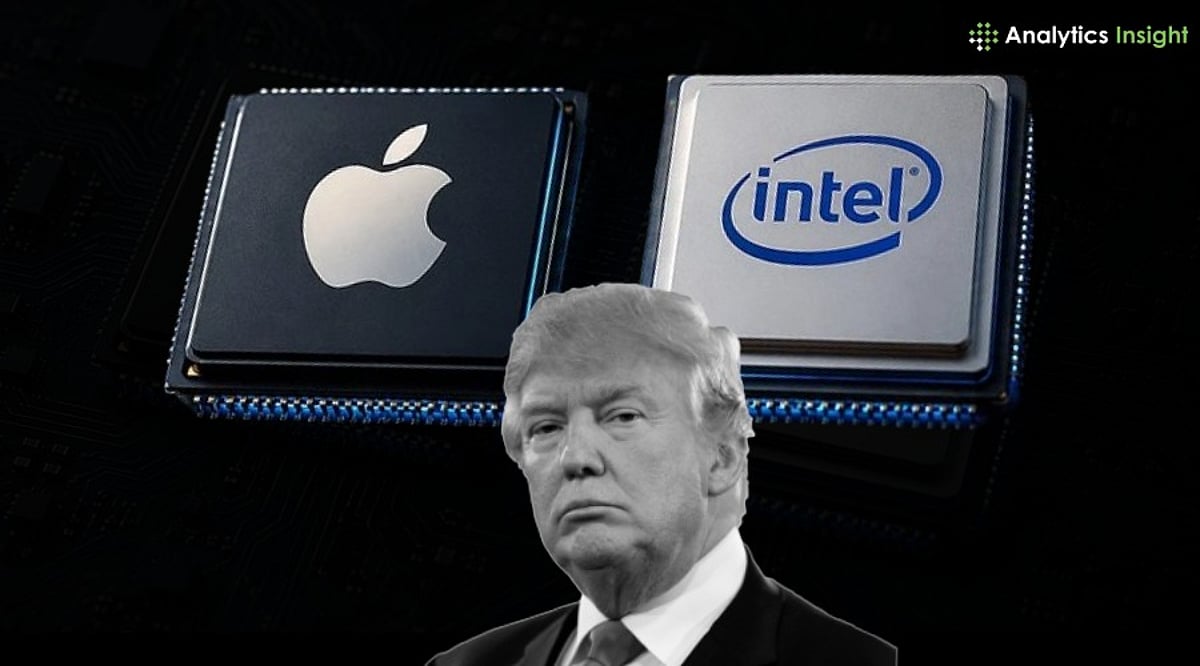
    White House Urges Apple, NVIDIA, and SpaceX to Boost Intel’s US Chip Production

    The Trump administration has taken an active role in Intel’s recovery, urging major US technology companies to invest in or work with the chipmaker. Apple, NVIDIA, and SpaceX have entered talks or partnerships with Intel as Washington seeks to expand semiconductor production within the United States.

    This support has improved Intel’s access to capital and raised demand for its processors. However, the company’s contract manufacturing business still relies heavily on work from Intel’s own product units. Outside foundry revenue remains small compared with the wider manufacturing division.

    White House Presses Tech Firms to Back Intel

    President Donald Trump and Commerce Secretary Howard Lutnick urged Apple Chief Executive Tim Cook to use Intel’s US factories during talks over proposed semiconductor tariffs. Apple later reached a preliminary agreement for Intel to manufacture selected chips, though large-scale production may take several years.

    Washington also converted about $8.87 billion in federal funding into an equity position of roughly 10% in Intel, making the US government the company’s largest shareholder. NVIDIA subsequently invested $5 billion, while SoftBank added $2 billion. Officials also encouraged Intel to work with NVIDIA and SpaceX.

    Meanwhile, Intel Chief Executive Lip-Bu Tan reorganized engineering teams and shifted spending toward equipment for advanced production and packaging. Intel also recruited managers with experience at Samsung Electronics and SK Hynix.

    Server Sales Rise as Intel Posts a Loss

    Intel reported first-quarter revenue of $13.6 billion, up 7% from one year earlier. Data Center and AI revenue rose 22% to $5.1 billion as cloud and AI customers bought more Xeon processors. Intel still recorded a net loss of $3.7 billion, partly linked to restructuring charges.

    The company expects second-quarter revenue between $13.8 billion and $14.8 billion and projects adjusted earnings of $0.20 per share. Tan said AI inference is ‘significantly increasing the need for Intel’s CPUs and wafer and advanced packaging offerings.’

    Additionally, Intel expanded its work with Google Cloud. The companies agreed to use Intel Xeon processors across AI, inference, and general computing tasks. The agreement gives Intel a large processor customer, though it does not establish Google as a major outside buyer for Intel’s foundry plants.

    Outside Foundry Revenue Stays Limited

    Intel Foundry reported $5.4 billion in first-quarter revenue, up 16% from a year earlier. Most of that amount came from Intel’s internal product groups. External foundry revenue reached only $174 million, compared with $31 million in the same quarter of 2025.

    The increase mainly came after Altera became an outside customer following its separation from Intel. Intel’s filing said the change accounted for much of the $143 million annual rise. Chief Financial Officer David Zinsner described the outside sales as ‘legacy business that we have mainly on the wafer side.’

    Intel has identified external foundry growth as a key long-term strategy. The company has secured capital, processor agreements, and government support, but first-quarter figures show that third-party manufacturing orders have not yet become a major source of revenue.

  • SK Hynix Stock Jumps 13% on Nasdaq Debut After Record $26.5 Billion IPO

    SK Hynix Stock Jumps 13% on Nasdaq Debut After Record $26.5 Billion IPO

    SK Hynix shares surged nearly 13% in their Nasdaq debut on Friday, marking a strong entry into the U.S. market for the South Korean chipmaker. The company’s American depositary receipts opened at $170 and closed at $168.01, well above the $149 offer price.

    The $26.5 billion raised through the sale sets a record for the largest U.S. initial share offering by a foreign company. The listing gives American investors direct access to one of the leading suppliers of memory chips for artificial intelligence systems, amid a busy IPO market.

    Record-Breaking $26.5 Billion Sale

    SK Hynix sold 177.9 million American depositary receipts, with each ADR representing one-tenth of a common share. Demand exceeded available shares by more than seven times, according to reports, allowing the company to price the offer at $149 per ADR.

    The shares traded under the temporary ticker SKHYV during Friday’s when-issued session. Nasdaq said the ticker will change to SKHY on Monday, July 13, when regular trading begins. The company’s main stock market listing will remain on the Korea Exchange.

    AI Memory Demand Fuels Investor Interest

    SK Hynix leads the market for high-bandwidth memory (HBM), a type of chip placed close to advanced processors. HBM provides AI systems with quick access to data for complex computing tasks. Nvidia uses the technology in graphics processors built for data centers.

    Chairman Chey Tae-won said customer demand has remained high as companies expand AI infrastructure. “The demand is enormous, exponentially,” he said. He added that customers asked for more supply after SK Hynix announced plans to double production capacity within five years.

    The company supplies major technology firms, including Nvidia and Apple. Its regulatory filing indicates it holds 56.4% of the HBM market. Samsung Electronics and Micron Technology also produce HBM and storage chips for servers, phones, computers, and other electronic devices.

    New Funding Targets Factories and Equipment

    SK Hynix plans to use the proceeds from the U.S. offering to finance factories and production equipment. The company is expanding capacity as memory shortages raise prices and limit supply across the technology sector. New chip plants take several years to build and prepare for production.

    Part of the expansion includes a $4 billion advanced packaging facility in Indiana. The company also plans large manufacturing projects in South Korea, including a chip cluster in Yongin. These sites will support production of HBM and other memory products for AI servers.

    Memory manufacturing has a long history of sharp supply cycles. High demand can lead chipmakers to add capacity, while later oversupply can push prices lower. SK Hynix said newer uses, including AI agents and robots, require more memory than earlier computing systems.

    The U.S. listing follows a steep rise in SK Hynix’s Korea-listed shares. The stock gained 634% over the past year, supported by higher memory prices and AI spending. Friday’s Nasdaq debut broadens the company’s investor base while its Seoul listing remains active.

  • Top GPUs for AI and Machine Learning Workloads in 2026: A Comprehensive Guide

    Top GPUs for AI and Machine Learning Workloads in 2026: A Comprehensive Guide

    As artificial intelligence and machine learning continue to evolve, the demand for powerful graphics processing units (GPUs) has never been higher. In 2026, several new and updated GPUs are set to dominate the market, offering exceptional performance for training, inference, and deployment of AI models. Below is a curated list of the best GPUs for AI and machine learning workloads in 2026, covering options from NVIDIA, AMD, and Intel.

    NVIDIA RTX 6090

    The NVIDIA RTX 6090 delivers exceptional AI training performance, massive VRAM, advanced Tensor Cores, and outstanding capabilities for generative AI and deep learning projects. It is the top choice for researchers and developers who need maximum compute power.

    NVIDIA RTX 6080

    The RTX 6080 offers powerful AI inference, high-speed processing, efficient energy consumption, and excellent value for researchers and AI developers building modern applications. It strikes a strong balance between performance and cost.

    NVIDIA RTX Pro 7000 Blackwell

    Built for enterprise AI, the RTX Pro 7000 Blackwell features enormous memory capacity, workstation reliability, advanced ray tracing, and the ability to handle demanding machine learning workloads worldwide.

    NVIDIA H300 Tensor Core GPU

    Optimized for large-scale AI model training, inference acceleration, enterprise deployment, and high-performance computing, the H300 Tensor Core GPU is a powerhouse for modern data centers globally.

    AMD Instinct MI400

    AMD’s Instinct MI400 provides competitive AI acceleration, strong memory bandwidth, enterprise scalability, and efficient processing for machine learning and scientific computing applications worldwide.

    AMD Radeon AI Pro R9700

    The AMD Radeon AI Pro R9700 delivers workstation-grade AI performance, creative acceleration, efficient multitasking, and optimized support for professional AI development environments and workflows.

    Intel Gaudi 4 Accelerator

    Intel’s Gaudi 4 Accelerator focuses on cost-effective AI training, scalable infrastructure, efficient networking, and enterprise deployment for advanced machine learning applications across industries.

    NVIDIA L50 GPU

    Designed for AI inference, virtualization, graphics acceleration, cloud deployment, and efficient enterprise AI workloads, the NVIDIA L50 GPU offers balanced performance and flexibility consistently.

    AMD Radeon RX 9900 XTX

    The AMD Radeon RX 9900 XTX offers strong local AI performance, gaming capabilities, content creation acceleration, and affordability for enthusiasts experimenting with machine learning projects regularly.

    NVIDIA RTX 5080

    The NVIDIA RTX 5080 balances AI performance, gaming power, efficient Tensor processing, and competitive pricing for developers, creators, and AI enthusiasts building personal workstations.

    For the latest news, exclusives, and videos, join our WhatsApp Channel.

  • Meta to Begin Production of Custom Iris AI Chip in September, Targets 14 GW Computing Capacity

    Meta to Begin Production of Custom Iris AI Chip in September, Targets 14 GW Computing Capacity

    Meta Platforms has announced plans to begin production of its in-house artificial intelligence chip, code-named Iris, in September as part of a broader strategy to expand custom hardware development and reduce reliance on external suppliers. The move, outlined in an internal company memo reviewed by Reuters, aims to boost Meta’s computing capacity to 14 gigawatts next year while supporting the growing demands of AI workloads across Facebook, Instagram, and other services.

    Iris AI Chip: A Step Forward for Meta’s MTIA Program

    The Iris chip is part of Meta’s MTIA (Meta Training and Inference Accelerator) program. According to the memo, the chip completed bug testing in just six weeks with no major issues—a notable achievement for a program that has faced earlier delays since its launch over five years ago. Broadcom is assisting with design, while Taiwan Semiconductor Manufacturing Co (TSMC) is expected to handle production. The chip will not immediately replace GPUs from Nvidia and AMD but will complement them, supporting large-scale AI training and inference workloads.

    The memo notes that adopting the latest GPUs at Meta’s scale “has been a heavy lift, and it has cost us time,” underscoring the company’s push for greater control over its AI hardware stack. Meta declined to comment on the Reuters report.

    Computing Capacity Expansion: 14 GW by Next Year

    Meta plans to deploy 7 gigawatts of computing infrastructure this year, having added 1 gigawatt in the first half and expecting to add another 5.5 gigawatts by year-end. The company then aims to double total capacity to 14 gigawatts next year. To put that in perspective, 1 gigawatt can power approximately 800,000 homes, highlighting the immense energy requirements of large-scale AI data centers.

    This expansion comes as major tech firms ramp up AI infrastructure spending. Meta expects to spend up to $145 billion on AI infrastructure this year, part of a projected $700 billion in Big Tech spending on AI technology.

    Reducing Supplier Dependence with Custom Silicon

    Meta’s custom chip initiative is designed to reduce cost pressures tied to purchasing advanced AI chips from external suppliers like Nvidia and AMD. It also enables faster hardware iteration: Meta unveiled Iris under its technical name in March, along with three other AI processors, and plans to release a new chip roughly every six months through 2027—a much faster cycle than the industry standard of one year or more.

    Mike Gualtieri, a vice president and principal analyst at Forrester, commented, “You can’t become an AI titan if you are dependent on another company for chips.” He added that hyperscalers and SpaceX are also pursuing custom chip designs as model usage becomes more price-driven.

    Long-Term Supply Deals Support Data Center Growth

    To support its data center buildout, Meta has secured multi-year supply agreements with Samsung Electronics for memory chips, Sandisk for flash storage, and Sumitomo Electric for fiber-optic equipment. These deals are critical as AI demand strains the global chip supply chain, driving up prices for memory, storage, and AI processors. Sandisk declined to comment, while Samsung and Sumitomo Electric did not respond to Reuters requests.

    Morgan Stanley analysts have described rising chip and memory prices as “chipflation,” a broader concern for the technology sector. Meanwhile, companies like Apple have raised prices on some products amid memory supply constraints.

    Meta shares initially fell after the Reuters report but later recovered, trading up 4.6% in late afternoon trading after the company announced developer access to an AI coding model that competes with tools from OpenAI and Anthropic.

  • Morning Tech Roundup: NVIDIA’s New PC AI Chip, Enlife Raises ₹6 Crore, BOI Opens 779 Credit Officer Jobs, and More

    Morning Tech Roundup: NVIDIA’s New PC AI Chip, Enlife Raises ₹6 Crore, BOI Opens 779 Credit Officer Jobs, and More

    Good morning, tech fam! Here are the top headlines you need to know: NVIDIA has launched a new AI chip for personal computers, Enlife Research secured ₹6 crore in seed funding, Bank of India announced 779 Credit Officer vacancies, AI agents are advancing automation, and the Bank of England clarified its crypto policy stance.

    NVIDIA Introduces a New AI Chip for Personal Computers

    NVIDIA has unveiled a new AI chip designed specifically for laptops and desktops. This chip processes AI tasks directly on the device, reducing reliance on cloud services. The company promises faster performance, better privacy, and improved energy efficiency. NVIDIA believes this innovation will bring advanced AI capabilities to everyday PCs, transforming personal computing.

    Enlife Research Raises ₹6 Crore in Seed Funding

    Bengaluru-based deep-tech startup Enlife Research has raised ₹6 crore in a seed round led by Piper Serica VC Fund. The company is developing an AI-based blood test that could detect Alzheimer’s disease years before symptoms appear. The funds will be used to advance research, refine the product, and prepare for broader deployment.

    Bank of India Credit Officer Recruitment 2026: Key Details

    Bank of India has announced 779 Credit Officer vacancies in the GBO stream across MMGS-II, MMGS-III, and SMGS-IV scales. Online applications open from 30 June to 20 July 2026. The notification covers eligibility, age limits, education, work experience, fees, salary, selection process, and the revised exam pattern with English Language and Professional Knowledge sections.

    Future of AI Agents and Autonomous Workflows

    AI agents are evolving beyond simple chat interfaces into tools that can plan, use software, retain information, and complete tasks with minimal human intervention. Enhanced reasoning allows them to solve complex problems step by step. Teams of AI agents can collaborate, improving results. Companies are adopting these agents to save time and increase accuracy while maintaining safety, monitoring, and human oversight for critical tasks.

    Bank of England Says Farage Did Not Affect Crypto Policy

    Bank of England Governor Andrew Bailey stated that a private meeting with Nigel Farage did not result in any policy changes. Bailey emphasized the bank’s ability to recognize lobbying and make independent decisions. Farage had urged the bank to abandon plans for a potential state-backed digital currency. The Bank of England continues to study whether such a currency should be introduced.

  • Wall Street Today: NASDAQ Declines as DeepSeek Chip Ambitions and Samsung Selloff Weigh on Sentiment

    Wall Street Today: NASDAQ Declines as DeepSeek Chip Ambitions and Samsung Selloff Weigh on Sentiment

    U.S. stocks opened mixed on Tuesday, with weakness in chip stocks dragging down the NASDAQ Composite and S&P 500. The Dow Jones Industrial Average hovered near record levels, buoyed by gains in healthcare, financials, and select large-cap names.

    Investor attention returned to the AI trade after reports emerged that China’s DeepSeek is developing its own AI chip. The news introduced fresh uncertainty about demand for U.S.-linked semiconductor names, even as Samsung posted a strong profit update.

    NASDAQ Falls as Chip Stocks Retreat

    The NASDAQ Composite opened 161 points lower, or 0.62%, at 25,960.13. The S&P 500 fell 20.8 points, or 0.28%, to 7,516.63. The Dow Jones Industrial Average rose 48.1 points, or 0.09%, to 53,104.06 at the opening bell. Later in the morning, the Dow gave back part of its early gain and traded near the flat line. The blue-chip index had earlier touched a new all-time intraday high. The S&P 500 declined 0.5%, while the NASDAQ lost 1.3% as chip selling intensified.

    DeepSeek AI Chip Report Roils Semiconductor Sentiment

    According to reports, DeepSeek is working on its own AI chip, a move that could reduce its reliance on suppliers such as NVIDIA and Samsung. NVIDIA shares traded more than 1% lower as investors assessed the implications. The selling spread across major chip names: Micron fell about 7%, while KLA, Marvell Technology, Broadcom, and AMD also posted losses. The VanEck Semiconductor ETF dropped more than 5%, reflecting broad weakness across the sector.

    Samsung Reaction Adds to Doubts About AI Earnings Bar

    The pressure originated in Asia-Pacific markets before reaching Wall Street. South Korea’s Kospi dropped nearly 5% after Samsung Electronics fell close to 7%. Samsung reported a sharp rise in second-quarter profit, but the market focused on spending plans and demand concerns. Adam Crisafulli of Vital Knowledge noted that the Samsung reaction highlights one of the biggest risks heading into earnings season: “Q2 earnings results are likely to be quite robust on an absolute basis … but unlike with the Q1 season, expectations are presently very bullish.” His comment pointed to uncertainty about whether strong earnings alone can support AI-linked stocks, given that the S&P 500 has moved significantly higher since the first-quarter reporting season.

    Dow Holds Near Record as Investors Rotate

    While chip stocks came under pressure, investors rotated into other parts of the market. Eli Lilly gained more than 2%, while JPMorgan Chase and Microsoft also advanced. Walmart added more than 2% after announcing price cuts on products such as ground beef and Coca-Cola. The rotation helped the Dow stay near 53,000 even as the NASDAQ weakened, showing that selling was concentrated in AI- and chip-linked shares rather than across the full market.

    Apple, Rivian, Amazon, and Trade Data in Focus

    Apple drew attention after JPMorgan raised its price target to $345 from $325, maintaining an Overweight rating. Analyst Samik Chatterjee said Apple’s revenue and earnings could be better than feared, even after a 20% price increase on iPads and Macs. Rivian shares fell more than 13% in morning trading after the electric vehicle maker announced a public offering of 75 million Class A shares. The drop followed a 8.1% rise on Monday and a 19% gain last week. Amazon also stayed in focus after sources said the company planned to raise $25 billion through a bond sale; its shares gained 0.8% in premarket trading.

    Meanwhile, the U.S. trade deficit widened sharply in May. The Commerce Department reported a deficit of $77.6 billion, up from a revised $54.6 billion in April. Exports fell 3.2%, while imports rose 3.3%. Economists polled by Dow Jones had expected a deficit of $78.08 billion.

    The market now shifts its attention to upcoming corporate earnings, which will determine whether the recent rotation out of AI chip stocks is temporary or the start of a broader change in investor sentiment.

  • Top 9 Long-Term Growth Stocks to Buy in July 2026

    Top 9 Long-Term Growth Stocks to Buy in July 2026

    Investors seeking stable, long-term growth should consider these nine stocks that are well-positioned for sustained performance across technology, healthcare, and financial services. Each company benefits from strong fundamentals, recurring revenue streams, and exposure to secular trends such as AI, cloud computing, digital payments, and advanced manufacturing.

    1. NVIDIA

    NVIDIA maintains its leadership in AI hardware innovation through advanced GPUs that power data centers, autonomous vehicles, enterprise computing, and AI applications worldwide.

    2. Microsoft

    Microsoft continues to expand its cloud computing and AI software offerings while maintaining robust recurring revenues from enterprise services, supporting long-term shareholder value and consistent growth.

    3. Amazon

    Amazon benefits from e-commerce dominance, AWS cloud leadership, and growing investments in AI, driving sustained revenue and profitability across global markets.

    4. Alphabet

    Alphabet strengthens its digital advertising, cloud computing, and AI platforms while investing aggressively in future technologies, supporting diversified long-term business expansion globally.

    5. Meta Platforms

    Meta Platforms continues to grow advertising revenue while advancing AI infrastructure, smart devices, and immersive technologies for future digital experiences.

    6. Taiwan Semiconductor Manufacturing Company (TSMC)

    TSMC manufactures advanced semiconductor chips that power smartphones, AI servers, automotive technologies, and next-generation computing platforms worldwide.

    7. Eli Lilly

    Eli Lilly strengthens its pharmaceutical leadership through innovative treatments for diabetes, obesity, and neuroscience, supported by expanding global healthcare demand and robust research pipelines.

    8. Visa

    Visa benefits from increasing digital payment adoption and cross-border transactions, along with resilient financial services that support dependable long-term earnings growth across international markets.

    9. Broadcom

    Broadcom delivers semiconductor and infrastructure software solutions while benefiting from accelerating AI networking demand and enterprise digital transformation investments globally.

  • How Leading Companies Are Redefining Leadership Development in 2026

    How Leading Companies Are Redefining Leadership Development in 2026

    The definition of corporate leadership is rapidly evolving. By 2026, organizations are no longer grooming executives simply to deliver quarterly results. Instead, they are cultivating leaders who can drive digital transformation, navigate uncertainty, harness artificial intelligence, and build resilient teams. As technology reshapes every industry, leadership development now revolves around lifelong learning, mentorship, global exposure, and data-driven decision-making.

    Companies that excel in this arena create work environments that encourage experimentation, collaboration, and strategic thinking. Below, we explore how nine of the world’s most influential organizations are setting the benchmark for next-generation leadership.

    Leadership Development Moves Beyond Traditional Training

    The era of classroom-only leadership training is over. Today’s best employers embed learning into daily operations through AI-powered learning platforms, executive coaching, cross-functional projects, and international assignments. Employees gain hands-on experience solving real business problems rather than working through theoretical case studies. Equally important is the renewed emphasis on soft skills: emotional intelligence, adaptability, communication, ethical judgment, and resilience are now as critical as technical expertise.

    Companies Setting the Benchmark

    Microsoft

    Microsoft continues to position itself as a leadership powerhouse by fostering an AI-first workplace culture. Employees have access to advanced learning resources, leadership coaching, and opportunities to collaborate with global teams. The company’s relentless focus on innovation allows individuals to deepen their technical skills while sharpening strategic thinking.

    Amazon

    Amazon’s famous Leadership Principles remain central to employee development. Team members are expected to take ownership, think long term, and make customer-centric decisions. Internal mobility and challenging business assignments help professionals gain the experience needed before stepping into senior leadership roles.

    Alphabet

    Alphabet encourages leadership growth by giving employees autonomy to innovate, experiment, and learn from outcomes. A collaborative culture sparks creative thinking and cross-functional teamwork, even when projects are complex. Exposure to cutting-edge tools and technologies prepares emerging leaders to tackle tough business problems with confidence.

    NVIDIA

    With the rapid rise of AI, NVIDIA has become a hub for technological innovation. Employees work in a fast-paced environment where agility, technical rigor, and continuous learning are paramount. This exposure helps future leaders build strategic decision-making skills in highly competitive markets.

    JPMorgan Chase

    As banking embraces AI and digital modernization, JPMorgan Chase has broadened its leadership development beyond traditional finance. Employees now lead technology-driven initiatives while reinforcing strong risk controls, innovative thinking, and customer-centric judgment.

    Deloitte

    Deloitte’s consulting ecosystem offers professionals ongoing exposure to diverse industries, clients, and real-world business challenges. This breadth sharpens strategic thinking, communication, and problem-solving abilities, making employees well-suited for leadership roles in a changing sector.

    PwC

    PwC invests heavily in structured learning tracks focusing on digital skills, sustainability, and responsible leadership. Employees receive mentoring, certifications, and team-based projects that build the ability to lead transformation efforts effectively.

    EY

    EY emphasizes inclusive leadership and future-ready capabilities. Employees participate in leadership academies, global mobility programs, and innovation-driven assignments, equipping them to manage diverse teams and navigate shifting business environments.

    IBM

    IBM remains a strong supporter of technology leaders. Combining decades of enterprise expertise with ongoing investment in AI, cloud computing, and digital skills, IBM enables employees to develop leadership strengths alongside technical excellence.

    Common Traits Behind Their Success

    Despite operating in different industries, these organizations share several characteristics: a commitment to continuous learning, mentorship, cross-functional collaboration, and real-world problem-solving. They prioritize emotional intelligence and adaptability as much as technical prowess.

    Why This Matters

    For professionals planning long-term careers, choosing the right employer is akin to choosing the right learning environment. Organizations that invest in leadership development offer smoother career progression, stronger mentoring relationships, and more opportunities to lead high-impact initiatives. As AI continues to reshape industries, leadership will depend less on hierarchy and more on adaptability, shared thinking, and a commitment to growth.

    By building these strengths now, companies are not only preparing their teams for the future—they are shaping the next generation of executives who will define the global business landscape.

  • NVIDIA Stock Stays Below $200 Ahead of Vera Rubin Launch Amid Rising Competition and AI Spending Trends

    NVIDIA Stock Stays Below $200 Ahead of Vera Rubin Launch Amid Rising Competition and AI Spending Trends

    NVIDIA shares continue to trade below the $200 mark despite a modest rebound, as investors shift their attention to the company’s upcoming Vera Rubin platform and its expanding robotics business. The stock has underperformed the broader semiconductor sector in 2026, even as demand for artificial intelligence infrastructure remains robust.

    NVIDIA Trails Semiconductor Sector Despite AI Demand

    Shares of NVIDIA rose about 1.5% to $197.96 in early Tuesday trading. However, the stock has gained only about 5% year-to-date, while the PHLX Semiconductor Index has surged approximately 94% in the same period, making NVIDIA one of the weaker performers among major chip companies. Investors have been reallocating capital to other areas of the AI supply chain, including memory chipmakers, custom chip developers, and CPU manufacturers. Intel and Advanced Micro Devices have posted significantly stronger gains in 2026, and the iShares Semiconductor ETF has also outperformed NVIDIA. Analysts point to concerns over export restrictions affecting China and questions about future growth rates as factors weighing on the stock.

    Vera Rubin Platform and Robotics Expansion

    The market is now focused on NVIDIA’s next-generation Vera Rubin platform, which could strengthen the company’s position in AI infrastructure if it delivers substantial performance improvements. Competition is intensifying as large technology companies diversify their AI spending across multiple suppliers. Meanwhile, NVIDIA is expanding beyond AI chips into robotics, having opened more than a dozen robotics-related positions in Beijing, Shanghai, and Shenzhen. The roles cover embodied intelligence, simulation, implementation, and robotics solutions. NVIDIA says the robotics team aims to build a leading platform and ecosystem for autonomous machines, speeding the transition from research to commercial use. Employees will work on Project GR00T, the Cosmos physical simulation world model, and NVIDIA’s GPU computing platform.

    Market Watches AI Spending and China Competition

    NVIDIA remains one of the world’s largest listed companies with a market valuation of about $4.696 trillion—a 1% move changes its value by approximately $47 billion. Investors are tracking broader AI capital expenditure: the Bank for International Settlements projects that the five largest hyperscalers will invest more than $1 trillion in AI capex over 2025 and 2026, while also noting funding pressure and supply constraints around power, advanced chips, and grid infrastructure. Separately, Reuters reported that Baidu’s Kunlunxin chip business targets a $50 billion Hong Kong IPO, and IDC data shows domestic suppliers now hold 41% of China’s AI accelerator server market. Despite these headwinds, NVIDIA continues to project strong growth. The company forecast fiscal second-quarter revenue of $91 billion, above analyst expectations, and announced an $80 billion share buyback. CEO Jensen Huang stated, ‘We should be growing faster than hyperscale capex.’ Analysts are monitoring whether AI investment can sustain its pace through the coming years.