Tag: NVIDIA

  • NASDAQ Futures Climb as Chip Stocks Rebound and Oil Prices Pull Back

    NASDAQ Futures Climb as Chip Stocks Rebound and Oil Prices Pull Back

    US technology stocks entered the new week after another sharp pullback led by semiconductor companies. The NASDAQ 100 has become more sensitive to daily moves in NVIDIA, Micron, AMD and Intel. Their rising market values have also increased their weight within the index.

    Wall Street futures moved higher on Monday as several chipmakers recovered before the opening bell. However, oil prices and the conflict involving the United States and Iran kept pressure on stocks. Investors also prepared for earnings from Alphabet, Tesla, IBM and Intel.

    Chip Stocks Drive Sharp NASDAQ Swings

    Semiconductor shares now play a larger role in NASDAQ 100 volatility. Assenagon says the weight of chip companies other than NVIDIA rose from about 15% to nearly 30%. Micron, AMD and Intel gained more influence as their valuations climbed during the AI rally.

    The asset manager said average one-year expected volatility for those companies moved above 80 points at times. That marked the highest level since the global financial crisis. Assenagon said, “Semiconductor stock volatilities are doing the heavy lifting.” Lower correlation between NASDAQ companies reduced part of the pressure, but it did not remove it.

    The Philadelphia Semiconductor Index also entered a bear market after closing more than 20% below its late-June record. Earlier data showed the index had gained 83% during 2026 before the July reversal. Chip funds then recorded large inflows and outflows as traders changed positions quickly.

    Apple and NVIDIA Trade the Top Market Spot

    Apple overtook NVIDIA on Friday to become the world’s most valuable listed company. Apple carried a market value of about $4.88 trillion. NVIDIA stood near $4.86 trillion after its shares fell 3.5%. Apple had not held the top position since April 2025.

    The change came as investors reviewed the prices attached to AI-linked companies. New model releases from China added competition within the sector. Meanwhile, concerns grew over the pace of spending on chips, servers and data centers. NVIDIA and other semiconductor companies had led much of the market’s 2026 advance.

    Bianca Botes of Citadel Global said, “The AI demand story is real,” but prices had moved ahead of earnings evidence. Recent losses in Micron, NVIDIA and other chipmakers showed how quickly sentiment could change. The moves also spread to South Korean technology stocks, including Samsung Electronics and SK Hynix.

    Oil Retreat and Earnings Lift Stock Futures

    NASDAQ 100 futures rose about 0.8% early Monday, while S&P 500 futures gained around 0.4%. Dow futures added about 0.3%. Memory chipmakers also advanced before the market opened. Micron, Western Digital, Seagate and SanDisk gained between 3.2% and 4.2%.

    Brent crude briefly moved above $90 per barrel after US forces struck Iran for a ninth straight day. Prices later eased after Iran said diplomatic contacts remained open. The early oil rise raised fresh concerns about transport costs, inflation and interest rates.

    Investors will now focus on quarterly results from major technology companies. Alphabet, Tesla, IBM and Intel will report during the week. Intel and Texas Instruments will provide new data on chip demand and AI infrastructure spending. Their reports could guide the next move across semiconductor stocks and the NASDAQ 100.
  • Nvidia Partners with Japanese Robotics Firms to Accelerate AI-Powered Automation

    Nvidia Partners with Japanese Robotics Firms to Accelerate AI-Powered Automation

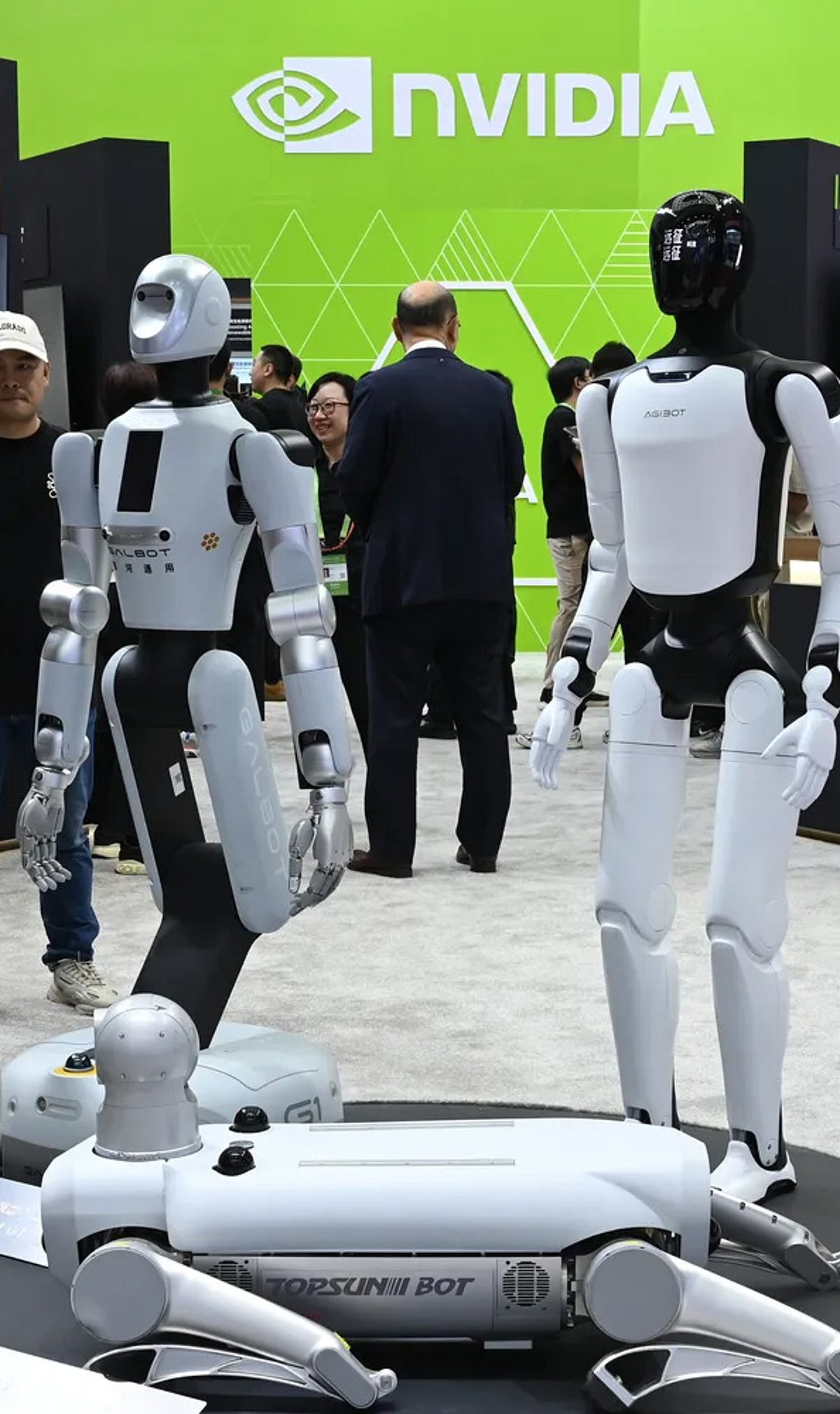
    Nvidia is deepening its commitment to robotics by partnering with leading Japanese companies to develop advanced AI-powered machines. This collaboration targets the creation of next-generation factory robots, AI-powered humanoids, and digital twin simulations that streamline development and testing.

    Japan’s longstanding leadership in robotics, combined with Nvidia’s powerful GPU computing platforms, positions the partnership to drive a new wave of industrial automation. The goal is to improve productivity and efficiency in manufacturing through smarter, AI-driven systems.

    Beyond factories, the technology could extend to healthcare, logistics, and service robots, enabling more intelligent and autonomous operations. The move reflects the global race to invest in intelligent automation, with Nvidia providing the computational backbone for training and deploying robotics AI models.

    This strategic partnership underscores how Japan is strengthening its role in global AI development, leveraging digital twins and advanced simulations to accelerate innovation. The collaboration is expected to have a significant impact on the future of robotics and AI across multiple industries.

  • NVIDIA Jetson Thor T3000: A Game-Changer for Robotics and Edge AI

    NVIDIA Jetson Thor T3000: A Game-Changer for Robotics and Edge AI

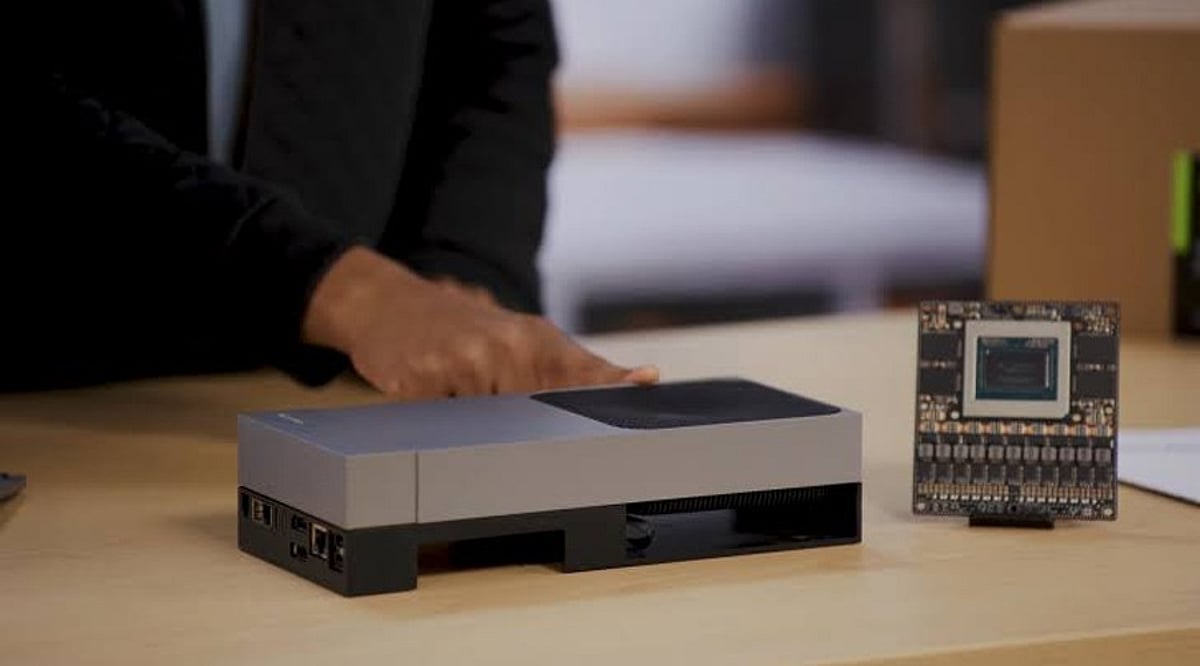
    NVIDIA introduced the Jetson Thor T3000 and T2000 AI modules on July 15 to support robotics and Edge AI applications. The new NVIDIA Blackwell-powered modules help developers build smarter robots and AI machines with less power and smaller hardware. The company plans to launch both modules in the first quarter of 2027.

    The launch comes as more industries adopt robots for real-world work. NVIDIA created the new Jetson Thor modules to run powerful AI models directly on robots and edge devices. This approach reduces cloud dependence while improving speed, safety, and overall performance.

    The Jetson Thor T3000 is the more powerful model in the lineup. It delivers up to 865 FP4 teraflops of AI performance and includes an eight-core Arm Neoverse CPU with 32GB LPDDR5X memory. NVIDIA said that the module is about half the size and uses nearly half the power of the larger T5000 while offering similar AI performance for language, vision, and robotics tasks.

    The Jetson Thor T2000 targets developers looking for a more affordable option. It delivers up to 400 FP4 teraflops with 16GB memory and supports visual AI, autonomous mobile robots, and industrial machines. NVIDIA also introduced new software tools that reduce memory use and make advanced AI models easier to run on smaller systems.

    NVIDIA stated that companies like Amazon Robotics, Boston Dynamics, Agile Robots, Hitachi, 1X, and Techman Robot already use the Jetson Thor platform. Developers can test the T3000 through JetPack 7.2.1 emulation today, while T2000 support will arrive later. Both modules are expected to become available in the first quarter of 2027.

  • Today’s Tech Roundup: Tata’s Semiconductor Strategy, NVIDIA Robotics, Bybit in Indonesia, and Cognizant Hiring

    Today’s Tech Roundup: Tata’s Semiconductor Strategy, NVIDIA Robotics, Bybit in Indonesia, and Cognizant Hiring

    Welcome to today’s tech roundup! From chips and AI to crypto, climate tech, and hiring, here’s a quick look at the stories shaping the technology world today.

    Tata Group Resorts to Older Tech to Launch Its Chip Foray

    Tata Group’s entry into the field of semiconductors takes an efficient course whereby the company begins its venture from older and tested technologies of chips rather than advanced technology. This ensures cost efficiency, quicker production, and helps meet demands in fields such as the automotive industry, power, and industrial electronics.

    Climate Tech Venture Funding Surges Driven by AI Infrastructure Demand

    There has been renewed interest in climate technology, driven by the accelerated development of AI infrastructure. With the increased usage of energy by data centers, venture capital firms are funding startups that specialize in renewable energy, batteries, smart power grids, and energy efficiency.

    Bybit Launches in Indonesia After NOBI Acquisition

    Bybit crypto exchange has now officially made its entry into Indonesia after taking over local exchange platform NOBI. This marks the extension of their operations in Southeast Asia and gives the firm the ability to provide regulated crypto trading services to customers.

    NVIDIA Partners with Japanese Robotics Firms to Accelerate AI Development

    With the collaboration between NVIDIA and Japanese robotics firms, there is an effort to make progress in developing AI automation. By using its computing technology together with Japan’s robotics expertise, it hopes to produce industrial robots that are better than current ones.

    Cognizant to Hire 1,500 US Graduates by End of 2026

    As part of efforts to build its artificial intelligence team, Cognizant is set to recruit 1,500 graduates in the US by 2026. These new employees will be trained in areas such as artificial intelligence, digital engineering, and other new technologies.

  • NVIDIA Teams Up with Fanuc, Yaskawa to Boost Robotics and AI in Japan

    NVIDIA Teams Up with Fanuc, Yaskawa to Boost Robotics and AI in Japan

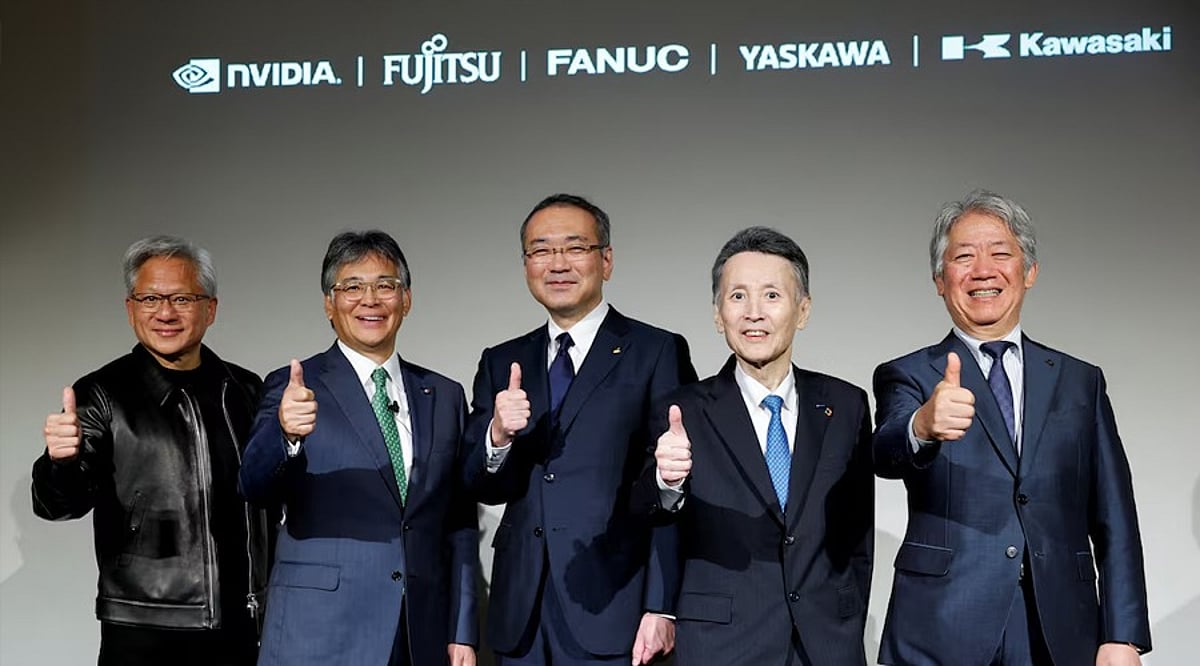
    NVIDIA has announced partnerships with major Japanese robotics manufacturers, including Fanuc and Yaskawa Electric, to accelerate the development of artificial intelligence and robotics. The chipmaker revealed the collaborations during a media event in Tokyo on Thursday, signaling a deepening commitment to Japan’s industrial automation sector.

    NVIDIA CEO Jensen Huang emphasized that AI can make industrial robots smarter, more adaptable, and easier to deploy. “With AI, robots will become smart, easily adaptable and accessible,” Huang said at the Tokyo event. Fanuc and Yaskawa Electric are among Japan’s leading industrial robotics suppliers, providing automation systems to factories worldwide in sectors such as automotive production, electronics, logistics, and industrial equipment.

    The partnerships integrate NVIDIA’s computing platforms and AI software into Japan’s established robotics ecosystem. Financial terms and specific rollout schedules were not disclosed. During his visit, Huang also met with executives from memory chipmaker Kioxia and semiconductor equipment producer Tokyo Electron, and attended an event hosted by Sega Sammy in Tokyo’s Akihabara district.

    Japanese Organizations Adopt NVIDIA’s Nemotron Models

    NVIDIA announced that several Japanese organizations are using its Nemotron open models, datasets, and software tools to build AI systems tailored for Japanese language tasks and industry-specific applications. The Institute of Science Tokyo leveraged NVIDIA datasets and NeMo software to develop the Swallow model family, which supports Japanese language processing, reasoning, coding, and mathematics. Companies are applying Swallow for financial document translation and asset management reports.

    SB Intuitions, SoftBank’s generative AI research arm, trained its Sarashina models with NVIDIA technology. Japan’s Digital Agency selected Sarashina3 mini for specialized AI projects, while SoftBank built a telecom model for automated network operations. Stockmark released a Japanese document-understanding model based on NVIDIA Nemotron 3 Nano Omni and is developing business knowledge systems for manufacturing, energy, and chemical sectors. Sakana AI is integrating Nemotron into its Fugu model-routing platform, which selects different AI models based on accuracy, speed, and cost.

    Enterprise Applications Expand Across Industries

    Japanese companies are deploying Nemotron for customer service, research, remote operations, and workplace automation. Avatarin is developing Japanese-language AI agents for customer conversations and remote-presence systems, using NVIDIA HGX B300 systems for private AI processing and NVIDIA Jetson hardware for digital avatar services at airports and other locations. ENEOS Holdings applies Nemotron tools to energy and materials research, combining document search, image analysis, language processing, and molecular simulations for cooling fluids, catalysts, and other industrial materials.

    NTT Data used NVIDIA’s Japanese training dataset to improve its tsuzumi 2 language model and is exploring a multi-agent system that assigns tasks to different AI models. Hitachi is developing physical AI systems with NVIDIA Nemotron and Cosmos open models, connecting information technology with factory and infrastructure operations. NVIDIA releases Nemotron models with open weights, datasets, and development instructions, allowing companies to customize and run them on private systems or cloud platforms. The models are available through Hugging Face, ModelScope, OpenRouter, NVIDIA’s developer platform, and selected cloud providers.

  • How AI Upscaling Boosts Performance in Modern PC Games

    How AI Upscaling Boosts Performance in Modern PC Games

    AI upscaling has revolutionized PC gaming, enabling players to enjoy high-resolution visuals and smooth frame rates without requiring the most expensive hardware. Instead of forcing the graphics card to render every pixel at full resolution, AI generates a sharp, detailed image from a lower-resolution source. This approach reduces the GPU’s workload while preserving visual fidelity.

    How AI Upscaling Works

    Traditionally, a graphics card renders each frame at the target resolution—4K demands significantly more power than 1080p. AI upscaling flips this process: the game renders at a lower resolution, then an AI model analyzes the image and fills in missing details before output. The result is a clear, high-resolution picture with much less computational strain.

    Key Technologies: DLSS, FSR, and XeSS

    Three major technologies dominate the market: NVIDIA’s DLSS (Deep Learning Super Sampling), AMD’s FSR (FidelityFX Super Resolution), and Intel’s XeSS (Xe Super Sampling). Each works differently but shares the same goal—boosting performance without sacrificing image quality. Games like Cyberpunk 2077, Alan Wake 2, and Black Myth: Wukong rely on these tools to maintain high frame rates with ray tracing enabled. Tests show frame rate gains of 30–100% or more, depending on the title and hardware.

    Benefits Beyond Speed

    AI upscaling also extends the life of existing GPUs, allowing mid-range PCs to run demanding titles smoothly. This democratizes access to modern games, letting more players experience rich, detailed worlds without frequent hardware upgrades.

    Current Limitations

    Despite its advances, AI upscaling isn’t perfect. Fast motion can introduce blurry edges, and fine details like text or thin objects may appear slightly off. DLSS requires NVIDIA RTX cards, while FSR and XeSS are more cross-compatible but perform best on their respective hardware. There’s also a concern that studios might lean too heavily on AI rather than optimizing games natively.

    AI Enhances, Not Replaces, Human Creativity

    AI upscaling does not generate stories, characters, or game worlds—it simply improves how those elements look on screen. Artists, writers, and programmers remain the heart of game development. AI is a powerful helper, not a substitute for human imagination.

    The Future of AI in Gaming

    As the technology matures, image quality will improve and artifacts will diminish. AI upscaling will likely become a standard feature, making future games more accessible while empowering developers to create even more ambitious worlds. For now, it’s one of the best ways to get more performance from your existing PC.

  • NVIDIA GeForce NOW Cloud Gaming Launches in India: Play Steam and Epic Games on Any Device

    NVIDIA GeForce NOW Cloud Gaming Launches in India: Play Steam and Epic Games on Any Device

    NVIDIA has officially launched GeForce NOW in India, bringing cloud gaming to millions of users who want to play high-end PC games without investing in expensive hardware. The service streams supported titles from popular platforms like Steam, Epic Games Store, Ubisoft Connect, and Xbox directly to a user’s device, processing the game on NVIDIA’s servers and delivering it over the internet.

    This launch allows players to access their existing game libraries without repurchasing titles. NVIDIA has confirmed that over 5,000 games, including many free-to-play options, will be supported at launch. The service eliminates the need for large downloads or updates, as games run on cloud servers, enabling users to start playing almost immediately on older laptops, tablets, or basic computers.

    GeForce NOW offers several subscription tiers in India. The Performance membership is priced at Rs. 999 per month, while the Ultimate membership costs Rs. 1,999 per month. For those who want to test the service before committing, day passes are available at Rs. 399 for the Performance tier and Rs. 799 for the Ultimate tier.

    The arrival of GeForce NOW could reshape how people shop for laptops. With cloud gaming, a thin, lightweight office laptop with a good internet connection may be sufficient for both work and gaming, reducing the need for costly gaming laptops. Tablets might also become more appealing to casual gamers who prefer a larger screen without carrying heavy equipment.

    Gaming cafés may need to adapt as cloud gaming gains traction. While fewer players may visit cafés solely for powerful computers, these venues can pivot toward esports events, tournaments, and social gaming experiences that cloud services cannot replicate. Cafés could become community hubs where gamers meet, compete, and enjoy fast internet connections.

  • Top Graphics Cards for GTA 6 Ultra Settings: What You Need for Smooth 4K Gaming

    Top Graphics Cards for GTA 6 Ultra Settings: What You Need for Smooth 4K Gaming

    GTA 6 is expected to be one of the most demanding PC games ever released, making GPU performance a critical factor for players who want to experience the game at ultra settings. Whether you’re aiming for 1440p or 4K resolution, choosing the right graphics card is essential to achieve smooth, high-fidelity gameplay.

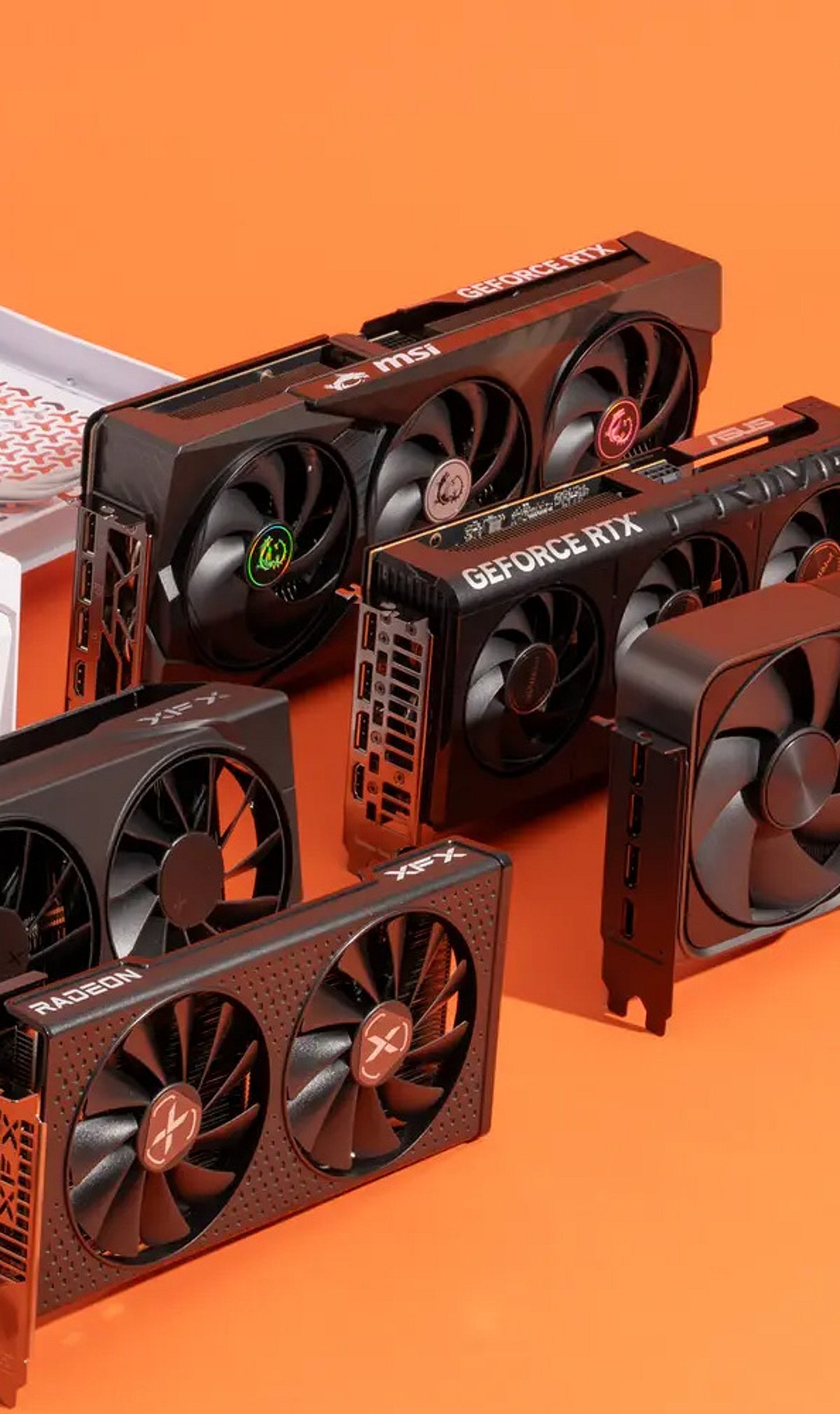
    For 1440p ultra settings with ray tracing and DLSS support, the NVIDIA GeForce RTX 5070 is an excellent choice. It delivers strong performance and advanced features that enhance both visuals and frame rates. AMD’s Radeon RX 9070 XT offers outstanding rasterization performance and generous VRAM, making it ideal for high-resolution gaming without relying heavily on upscaling.

    If you’re targeting 4K ultra settings, the NVIDIA GeForce RTX 5080 stands out as one of the top options for enthusiast gamers. It provides the raw power needed to handle the most demanding scenes while maintaining smooth gameplay.

    To maximize your GPU’s potential, pair it with a modern multi-core processor to minimize CPU bottlenecks in open-world environments. Additionally, at least 32GB of RAM and a fast NVMe SSD will significantly reduce loading times and improve overall system responsiveness.

    Take advantage of technologies like NVIDIA DLSS or AMD FSR where supported—they can boost frame rates while preserving impressive image quality. Keeping your graphics drivers updated ensures you get the latest performance optimizations and stability improvements for newly released titles.

    Finally, investing in a GPU with ample VRAM today will help future-proof your system for upcoming AAA games beyond GTA 6.

  • TSMC Posts Record Q2 Revenue as AI Chip Demand Drives 36% Growth

    TSMC Posts Record Q2 Revenue as AI Chip Demand Drives 36% Growth

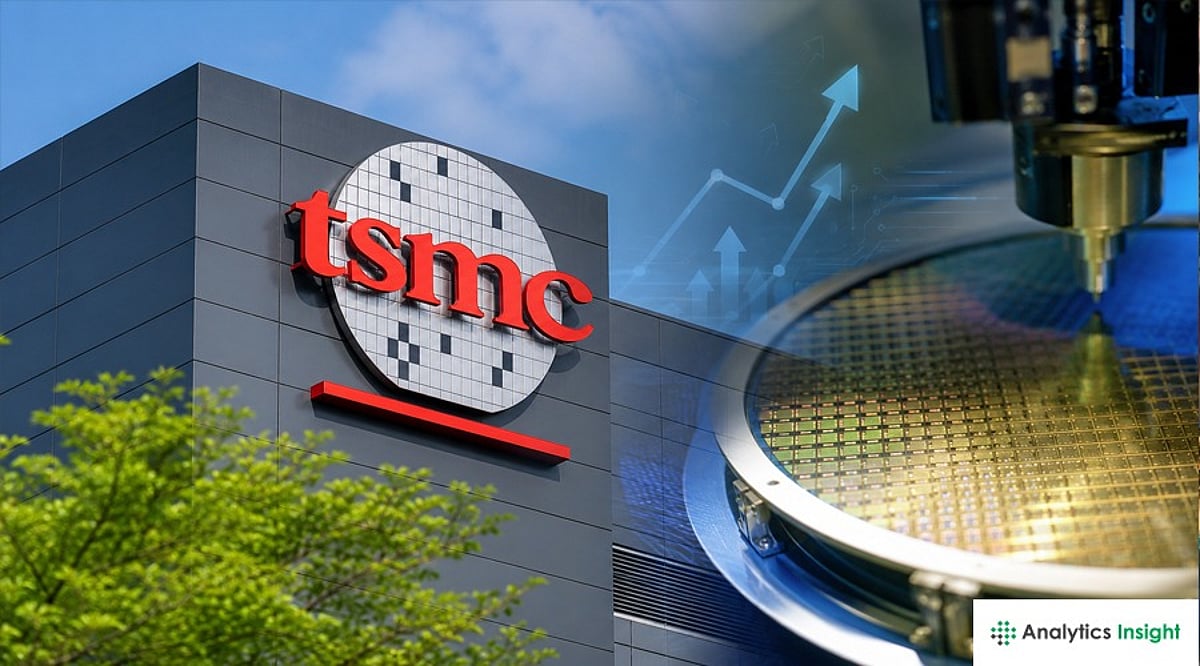
    Taiwan Semiconductor Manufacturing Co. reported record second-quarter revenue as demand for chips used in artificial intelligence systems lifted sales. The company generated NT$1.27 trillion, or about $39.62 billion, from April through June. Revenue rose 36% from a year earlier and came in slightly above the NT$1.264 trillion estimate drawn from 20 analysts.

    The result placed TSMC near the upper end of its official revenue forecast of $39 billion to $40.2 billion. The chipmaker supplies advanced processors to major technology companies, including NVIDIA and Apple.

    Investors now turn to the full earnings report, where profit, margins, spending and the next sales forecast will receive closer attention. TSMC gives its quarterly guidance in US dollars rather than Taiwan dollars, so currency movements can affect direct comparisons with reported sales.

    June Revenue Records Sharp Annual Growth

    TSMC generated NT$442.68 billion in June revenue. Sales rose 67.9% from June 2025 and increased 6.2% from May. The annual rise marked the company’s fastest monthly growth rate in 2026 and completed a record quarter for the Taiwan-based chip producer.

    Meanwhile, first-half revenue reached about NT$2.4 trillion, equal to approximately $74.99 billion. That figure was 35.6% higher than the same period last year. First-half sales were equal to about 63% of TSMC’s full-year revenue for 2025. TSMC originally planned the June report for Friday, July 10, but delayed the release after Typhoon Bavi closed financial markets in Taipei.

    AI Chip Orders Support TSMC Sales

    TSMC produces semiconductors designed by other companies and operates the world’s largest dedicated chip foundry business. Its production network gives the company a central role in supplying processors used by AI developers, cloud providers, smartphone makers and computer companies.

    Strong demand for high-performance computing chips has supported recent revenue growth. The brief sales statement did not show how much June revenue came directly from AI-related products. It also gave no product or customer revenue breakdown.

    Additionally, Taiwan plans to expand advanced chip packaging capacity in Chiayi Science Park. TSMC will add two more packaging plants at the site, according to Taiwan’s science and technology minister. The first facility already runs mass production, while officials expect the second facility to begin operations soon. Advanced packaging combines several chip parts for demanding AI computing systems.

    Earnings Report Shifts Focus to Outlook

    TSMC will release its full second-quarter results on Thursday, July 16. The earnings conference starts at 2 p.m. Taiwan time. Analysts expect second-quarter net profit to rise 58.8% from a year earlier, though the monthly sales statement did not include profit, earnings per share or margin figures.

    Investors will watch the company’s third-quarter revenue forecast, gross margin range and capital spending plans. TSMC previously guided for a second-quarter gross margin of 65.5% to 67.5% and an operating margin of 56.5% to 58.5%. Management did not issue updated guidance with the June sales release.

    TSMC’s Taipei-listed shares closed 1% higher on Monday before the sales figures became public. The broader Taiwan market finished the session almost unchanged. The company carried a market value of about $1.96 trillion at the time of the report, making it Asia’s most valuable publicly traded company.

  • Why Nvidia’s Forward P/E Is Falling Despite Its Rising Stock Price

    Why Nvidia’s Forward P/E Is Falling Despite Its Rising Stock Price

    Nvidia shares have climbed in 2026, yet the company’s forward price-to-earnings (P/E) ratio has dropped. This seemingly contradictory trend signals that analysts expect earnings to grow faster than the stock price, potentially leaving room for further gains.

    The stock closed the latest session at $210.96, with a forward P/E hovering near 22 to 23—well below its previous reading near 40. The decline in the valuation multiple reflects surging profit forecasts driven by robust AI demand and strategic investments.

    Earnings Growth Drives Down Forward P/E

    A forward P/E ratio divides a company’s share price by its expected earnings per share over the next year. The ratio can fall even as the stock rises when earnings estimates increase at a faster rate. Nvidia’s fiscal 2027 first-quarter revenue reached $81.6 billion, up 85% year-over-year, while GAAP net income soared 211% to $58.32 billion. Diluted earnings per share jumped 214% to $2.39, pushing future earnings estimates higher and compressing the valuation multiple.

    For the fiscal second quarter, Nvidia expects revenue of $91 billion (plus or minus 2%), indicating over 11% sequential growth. The company also projects gross margins near 75%, demonstrating that higher sales have not required a sharp decline in profitability.

    AI Demand Broadens Nvidia’s Growth Base

    Morgan Stanley maintains an Overweight rating on Nvidia with a $288 price target, calling the stock its “top semiconductor pick.” Analysts note that future growth may come from a wider customer base beyond the largest cloud companies, including AI laboratories, enterprise buyers, specialist cloud providers, industrial users, and national AI projects. Nvidia has also expanded beyond graphics processors into networking equipment and central processing units, adding more revenue opportunities inside large data centers.

    However, risks remain. Export restrictions could limit sales in China, and custom chips from major technology companies intensify competition. Nvidia has excluded China data-center computing revenue from its latest quarterly forecast, indicating that trade controls remain a factor in its planning.

    Supplier Investment Bolsters U.S. Expansion

    King Yuan Electronics, a Taiwan-based Nvidia supplier, plans to invest up to $1.4 billion in a U.S. chip-testing facility. The company said the project would expand its operations and strengthen its position in the semiconductor supply chain. Although specific location, construction schedule, and customers were not disclosed, the move follows broader investment by Taiwanese chip and electronics companies in the United States as demand for AI servers and advanced processors grows.

    Nvidia’s next quarterly report will provide a key measure of whether profit growth can continue outpacing the stock price. Revenue guidance, margins, and demand outside traditional cloud customers will shape the company’s forward P/E and its trajectory in the months ahead.