Tag: OpenAI

  • OpenAI Launches ChatGPT Health in the US — Here’s Why Global Users Are Still Waiting

    OpenAI Launches ChatGPT Health in the US — Here’s Why Global Users Are Still Waiting

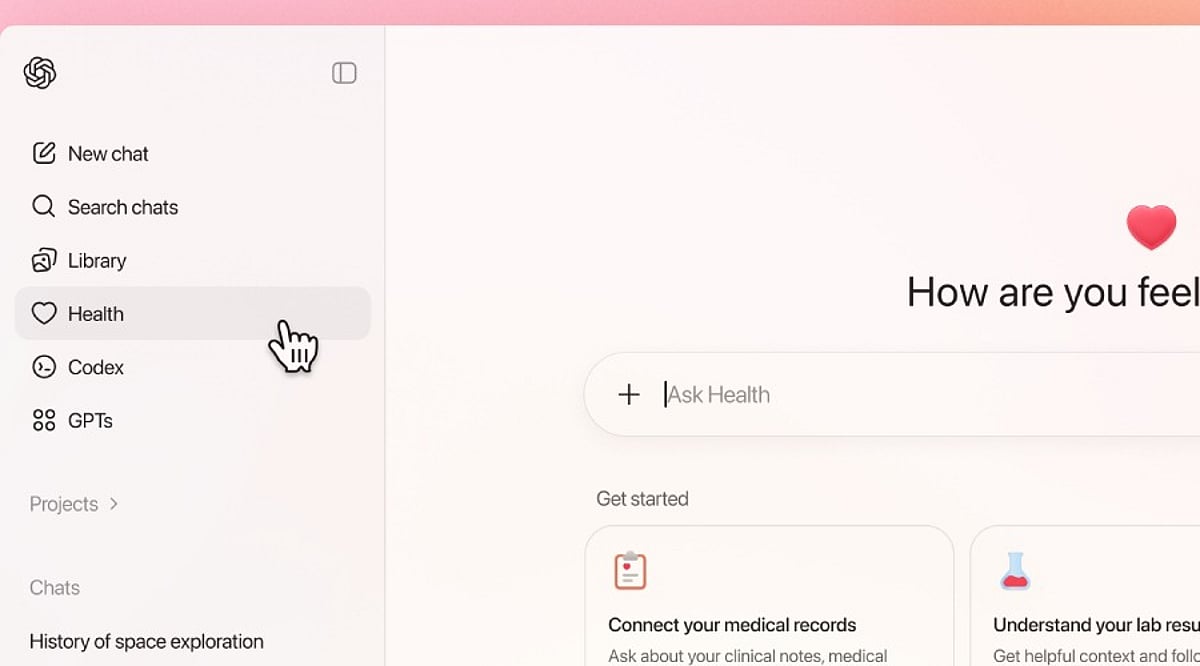
    OpenAI has begun rolling out its dedicated Health experience within ChatGPT to eligible users in the United States. However, the end of the waitlist does not mean the feature is available worldwide. Users in India and many other regions still cannot access the health-focused tool, regardless of their subscription plan.

    Who Can Access ChatGPT Health?

    The feature is currently limited to users who are 18 years or older and based in the US. It is accessible across ChatGPT Free, Go, Plus, and Pro plans on both the web and iOS platforms. Android support has not yet been introduced. This regional restriction means that even users who previously joined the waitlist outside the US will not see the Health option in their ChatGPT sidebar.

    Why the Delay for Other Regions?

    OpenAI has not announced a timeline for expanding ChatGPT Health to other countries. The phased rollout is a deliberate strategy, and the company has not indicated when users in India, Europe, or other regions can expect access. According to OpenAI’s Help Center, “Health is available on a phased basis, while Android support is yet to come.”

    What Does ChatGPT Health Do?

    ChatGPT Health is designed to integrate health-related information into a single platform. Users can link supported medical records and Apple Health data, then access lab results, medication details, sleep patterns, activity data, and ask questions based on their personal health information. The tool can help users understand medical information, prepare questions for appointments, track wellness trends, and identify changes over time.

    Privacy and Safety

    OpenAI has emphasized that ChatGPT Health is meant to support medical care, not replace doctors or professional treatment. The company also stated that health data and conversations using the feature are not used to train the underlying foundational model or for targeted advertising.

    As the rollout continues, users outside the US will have to wait for further announcements from OpenAI. The company has not provided a specific date for global availability.


  • Delhi High Court Rules No Copyright Breach in OpenAI’s AI Training Practices

    Delhi High Court Rules No Copyright Breach in OpenAI’s AI Training Practices

    The Delhi High Court has delivered a landmark ruling in favor of OpenAI, stating that the company’s use of copyrighted material to train its artificial intelligence models does not violate copyright law. The decision, announced on Friday, rejected an interim injunction sought by the news agency ANI in its ongoing copyright lawsuit against the AI developer.

    Justice Amit Bansal held that OpenAI’s act of storing ANI’s works for training its Large Language Models (LLMs) does not, by itself, constitute copyright infringement. The court further found that ANI failed to establish a prima facie case that ChatGPT had memorized or reproduced its copyrighted content in its responses.

    “OpenAI’s act of storing ANI’s works does not amount to copyright infringement,” Justice Bansal observed, adding that “ANI had failed to show that any memorization or regurgitation of ANI’s work has happened from responses generated by ChatGPT.”

    ‘Irreparable Injury’ to Public if AI Training is Stopped

    The court emphasized that granting an interim injunction would have wider consequences beyond the parties involved. Justice Bansal highlighted that irreparable injury would be caused not only to OpenAI but also to the public at large if such an injunction were granted. The ruling noted that restricting AI companies from training their models using copyrighted material could adversely affect technological innovation and scientific progress.

    ANI Sought Rs. 2 Crore in Damages

    ANI filed the lawsuit in November 2024, alleging that OpenAI had used its copyrighted news reports without permission to train ChatGPT. The agency sought Rs. 2 crore in damages and asked the court to permanently restrain the company from storing, publishing, reproducing, or using its content. ANI argued that ChatGPT generated responses that were “verbatim or substantially similar” to its reports, and also alleged that the chatbot produced “hallucinated” responses falsely attributed to the agency.

    OpenAI Cited Publicly Available Data

    OpenAI rejected the claims, stating that its AI models are trained based on publicly available data. According to the court, OpenAI informed the court that it had blacklisted the domain name of ANI in October 2024, following which no new content from the website can be used for training any AI model. Senior counsel Amit Sibal, representing OpenAI, argued that “copyright protects the expression of ideas; there is no monopoly on facts” and noted that OpenAI’s servers are located outside India.

    This case represents one of the first landmark decisions in India concerning the use of copyrighted works for training generative AI, setting a significant precedent for the technology sector.

  • Tech Roundup: Samsung Unpacked 2026, iPhone Price Increase in India, GTA 6 Launch, OpenAI Controversy, and Apple Lawsuit

    Tech Roundup: Samsung Unpacked 2026, iPhone Price Increase in India, GTA 6 Launch, OpenAI Controversy, and Apple Lawsuit

    Samsung is gearing up for its highly anticipated Unpacked 2026 event, while iPhone prices are expected to rise in India. Meanwhile, Grand Theft Auto 6 aims for a record-breaking launch, OpenAI faces growing backlash, and Apple has filed a lawsuit against OpenAI. Here’s a quick rundown of today’s top tech stories.

    Samsung Unpacked 2026
    Samsung is preparing to unveil new devices at its Unpacked 2026 event. The tech giant is expected to showcase the latest Galaxy smartphones, foldables, and possibly new wearables. Industry watchers anticipate significant upgrades in camera technology, battery life, and AI integration.

    iPhone Price Hike in India
    Apple may increase iPhone prices in India due to rising import duties and currency fluctuations. The potential hike could affect the entire lineup, including the latest iPhone models. This move comes as Apple continues to expand its manufacturing footprint in the country.

    GTA 6 Eyes Record Launch
    Rockstar Games’ Grand Theft Auto 6 is on track for a historic launch, with pre-order numbers and anticipation breaking records. The game is expected to set new benchmarks for the gaming industry, both in terms of sales and cultural impact.

    OpenAI Faces Backlash
    OpenAI is under fire over recent controversies, including allegations of unethical data usage and governance issues. Critics are calling for greater transparency and accountability from the AI research lab.

    Apple Sues OpenAI
    Apple has filed a lawsuit against OpenAI, accusing the company of violating intellectual property rights and misusing proprietary technology. The legal battle highlights the growing tensions between Big Tech and AI developers.

    Join our WhatsApp Channel to get the latest news, exclusives, and videos on tech.

  • OpenAI Elevates Indian-Origin Engineer Uday Ruddaraju to Chief Technology Officer of Compute

    OpenAI Elevates Indian-Origin Engineer Uday Ruddaraju to Chief Technology Officer of Compute

    OpenAI has promoted Indian-origin technology executive Uday Ruddaraju to the role of Chief Technology Officer (CTO) of Compute, marking a significant leadership milestone at the AI frontrunner. The appointment, announced nearly a year after Ruddaraju joined from Elon Musk’s xAI, positions him to steer the company’s compute infrastructure as it scales next-generation AI systems.

    In a LinkedIn post, Ruddaraju described his first year at OpenAI as “incredibly rewarding” and expressed enthusiasm for leading the compute division during a period of rapid expansion. As CTO of Compute, he will oversee the massive computing power required to train and deploy frontier models, including GPT-5.6. His team is focused on scaling capacity while strengthening compute, networking, storage, and machine learning systems.

    From Hyderabad to Silicon Valley

    Ruddaraju’s journey began in Hyderabad, India, where he earned a Bachelor’s degree in Computer Science from Chaitanya Bharathi Institute of Technology (CBIT). During his undergraduate studies, he interned at Amazon Web Services. He then moved to the United States for a Master’s degree in Computer Science at the University of Minnesota. His professional career includes stints at eBay and Robinhood before joining xAI as Head of Infrastructure Engineering. In 2025, he moved to OpenAI, rising from Head of Compute and Infrastructure to the CTO of Compute role.

    Strategic Importance for OpenAI

    Ruddaraju’s elevation underscores OpenAI’s push to strengthen its computing backbone as AI models grow more complex. The company is actively hiring talent in distributed systems, hardware engineering, manufacturing, and large-scale data center development to support future AI growth. His appointment also highlights the growing influence of Indian-origin technology leaders in shaping the future of artificial intelligence.

    Ruddaraju’s roadmap includes significantly scaling compute infrastructure to meet the demands of increasingly powerful AI systems, positioning OpenAI to maintain its competitive edge in the global AI race.

  • Apple Trade Secrets Case Escalates Legal Pressure on OpenAI’s Hardware Ambitions and Potential IPO

    Apple Trade Secrets Case Escalates Legal Pressure on OpenAI’s Hardware Ambitions and Potential IPO

    Apple has intensified its trade secrets lawsuit against OpenAI by sending preservation letters to approximately 40 former employees who now work at the AI company. The letters instruct recipients to retain all relevant documents and communications, and request meetings with Apple’s legal team. This move follows Apple’s initial lawsuit filed on July 10 in the Northern District of California, which accuses OpenAI, io Products, and two former Apple employees of using confidential hardware information. OpenAI has denied any interest in rivals’ trade secrets, and the claims remain untested in court.

    Apple Widens Its Search for Evidence

    Apple named former employees Chang Liu and Tang Yew Tan in the complaint. Tan serves as OpenAI’s chief hardware officer after years at Apple, while Liu worked as a senior electrical engineer at Apple. The complaint alleges Liu kept a company laptop and later accessed Apple’s network through an authentication flaw, downloading many confidential internal Apple hardware files. It also claims Tan emailed himself supplier details and internal reports before leaving Apple. Both claims remain allegations. Apple further says Tan encouraged Apple employees interviewing at OpenAI to bring physical parts for “show and tell” sessions. One candidate allegedly said, “I didn’t even know we could take those from the office.” OpenAI has not publicly answered each claim. The preservation letters show Apple wants records from a wider group than the two employees named in court. More than 400 former Apple workers now work at OpenAI, according to Apple’s filing. Employee movement alone does not prove trade secret theft under California law.

    Hardware Plans Face Court Scrutiny

    OpenAI moved deeper into consumer hardware after buying io Products, a company linked to former Apple design chief Jony Ive. Reuters valued the transaction at $6.5 billion. Apple says OpenAI used hiring practices and supplier contacts to speed up its hardware work. Apple also alleges OpenAI approached Apple suppliers for confidential production information. One claim involves a metal-finishing method that Apple describes as secret. Apple says a supplier believed OpenAI had permission to use the process. OpenAI disputes the accusation. The court could examine emails, interview records, product files, and supplier communications during discovery. Apple may seek limits on technology that a judge finds connected to protected information. No court has ruled that OpenAI used Apple trade secrets. OpenAI said, “We have no interest in other companies’ trade secrets.” It added that the company focuses on building technology for users. The statement does not address the separate claims against Tan, Liu, or io Products.

    OpenAI IPO Plans Meet New Legal Risk

    Reports say OpenAI has considered a public listing in late 2026 or 2027. The company has not announced an IPO date. Previous statements from OpenAI said a listing was not its main focus. The Apple OpenAI lawsuit adds another item for banks and investors to review before any share sale. An IPO filing must describe material lawsuits, business risks, management matters, and possible costs. The case may also require OpenAI to explain whether its hardware plans rely on disputed information. A long discovery process could overlap with IPO preparations. It could expose internal messages, hiring records, and product development documents. However, the lawsuit does not automatically stop a listing, and Apple has not proved its claims. The dispute comes after Apple and OpenAI worked together to add ChatGPT access to Apple devices in 2024. Their relationship now includes cooperation and competition. The legal case will proceed separately from any reported IPO timetable.

  • Today’s Top Tech Roundup: Gemini AI Voice Tests, India’s Semiconductor Mission, Meta AI Safety, and More

    Today’s Top Tech Roundup: Gemini AI Voice Tests, India’s Semiconductor Mission, Meta AI Safety, and More

    Stay ahead with the latest tech developments making headlines today. From Google’s Gemini AI voice experiments to India’s ambitious semiconductor push, here is your quick roundup of top tech news.

    Google Tests Custom Gemini Voices

    Google is reportedly testing custom voice options for its Gemini AI assistant, giving users more personalized interactions. The move signals growing competition in the AI voice assistant space as companies race to differentiate through natural language capabilities.

    India Launches Semiconductor Mission 2.0

    India approved a massive ₹1.27 lakh crore investment under Semiconductor Mission 2.0 to build a self-reliant global semiconductor ecosystem. The initiative aims to boost domestic chip manufacturing, reduce import reliance, and foster innovation in chip design and fabrication.

    Meta Adds AI Safety Alerts

    Meta is rolling out new AI safety alerts across its platforms, aiming to protect users from potential harms such as misinformation, hate speech, and malicious AI-generated content. The step aligns with broader industry efforts to implement responsible AI guardrails.

    IT Hiring Rebounds

    After a period of slowdown, IT hiring is showing signs of recovery. Companies are increasingly recruiting for roles in artificial intelligence, data science, and cybersecurity, driven by demand for digital transformation and emerging technologies.

    Microsoft Expands Beyond OpenAI

    While continuing its partnership with OpenAI, Microsoft is actively exploring other AI partnerships and internal projects. This diversification strategy aims to reduce dependency on a single vendor and accelerate AI integration across its product suite.

    These stories underscore the rapid pace of change in technology. For deeper insights, explore related coverage on India’s Semicon 2.0 and other breaking tech news.

  • OpenAI Unveils Codex Micro: A Programmable Macropad for AI Coding Workflows

    OpenAI Unveils Codex Micro: A Programmable Macropad for AI Coding Workflows

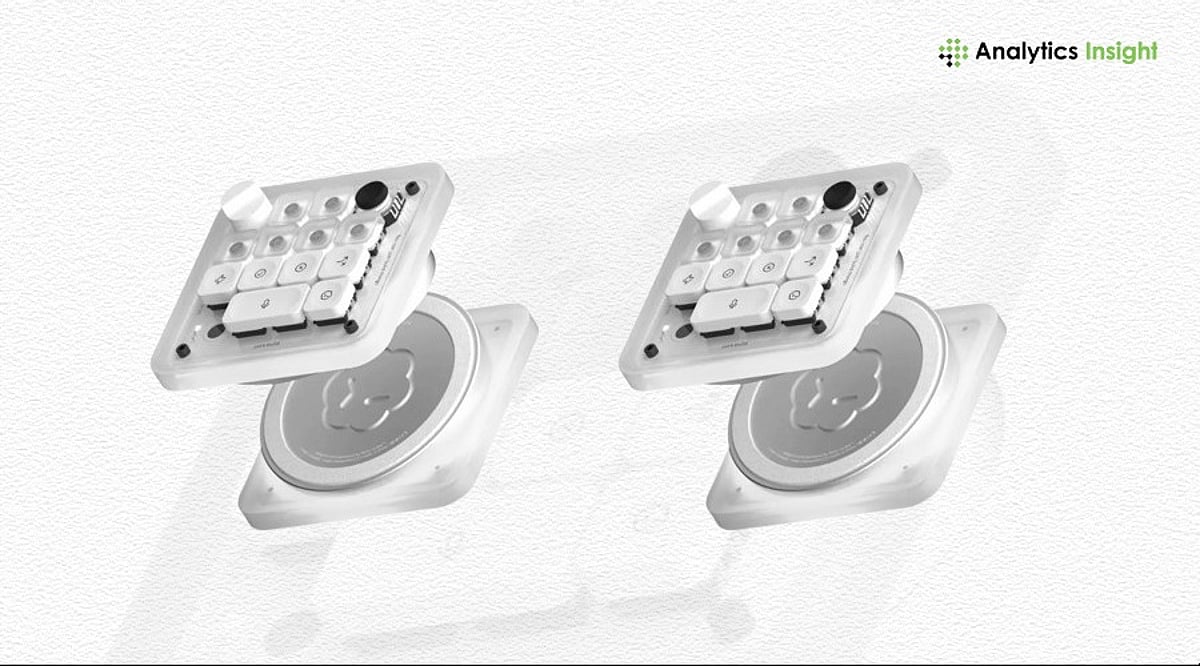
    OpenAI has launched its first branded hardware product, the Codex Micro, a programmable mechanical macropad developed in partnership with Work Louder. This strategic release moves beyond earlier speculation about a Jony Ive-designed AI device, focusing instead on developers who rely on Codex, OpenAI’s AI coding and productivity assistant.

    Priced at $230 and available in limited quantities, the Codex Micro arrives as Codex approaches 9 million users globally. The device is a niche yet targeted accessory designed to streamline AI coding workflows.

    What Is Codex Micro?

    Codex Micro is a compact mechanical macropad that enables users to monitor and control AI agents more efficiently. OpenAI describes the product as a “limited-run collaboration” with Work Louder, built on the hardware foundation of Work Louder’s Creator Micro 2 but customized with Codex-specific controls. While the standard Creator Micro 2 starts at around $144, the OpenAI version commands a higher price due to its dedicated AI-agent features.

    Key Features of Codex Micro

    The most notable addition is a row of six Agent Keys that glow in different colors to indicate the live status of Codex agents:

    • Idle: White light
    • Processing: Blue light
    • Complete: Green light
    • Error: Red light

    Double-tapping activates the agent, while a single tap selects the assigned agent. Users can customize these keys using Work Louder’s Input setting tool to map them to pinned Codex tasks, recent tasks, specific workflows, or individual agents.

    The bottom row features six programmable keys preprogrammed for functions such as accepting or rejecting code changes and branching threads. A larger key enables push-to-talk (PTT) voice control with Codex.

    Joystick, Dial, and Connectivity

    The Codex Micro also includes a joystick for navigating Codex’s composer bar and a rotary dial for selections by default, both of which are remappable. An LED-lit acrylic edge illuminates when Codex is listening and the microphone is active. Users can choose between silent and clicky switches, and the device supports USB-C, Bluetooth, and keycap swapping. Work Louder includes 32 additional keycaps, including playful options like “yolo” and “yeet.”

    Why It Matters

    Codex Micro is not a consumer AI gadget; it is a specialized AI agent management control device designed for developers to rapidly control AI agents during coding. This launch marks OpenAI’s first major step into hardware, prioritizing workflow productivity over consumer-focused AI devices.

  • Morning Briefing: ASML’s AI Boom, OpenAI’s First Hardware, and High-Paying Degrees

    Morning Briefing: ASML’s AI Boom, OpenAI’s First Hardware, and High-Paying Degrees

    ASML Lifts Guidance Again on Surging AI Chip Demand

    Dutch semiconductor equipment leader ASML has raised its financial outlook for the second time this year, citing robust demand for its advanced lithography systems used in AI chip production. The company’s order backlog remains strong as major chipmakers continue expanding AI compute capacity. ASML expects AI infrastructure spending to remain a key growth driver despite broader economic uncertainties.

    Top Bachelor’s Degrees for Highest Salaries in 2026

    A new analysis reveals that bachelor’s degrees in engineering, computer science, and healthcare offer the best earning potential and job stability. Employers are prioritizing specialized technical skills, steering students toward fields that align with tech-driven industry shifts.

    Europe’s Founder Factories Accelerate Startup Growth

    Europe’s startup ecosystem is being transformed by “founder factories” like Antler, which combine funding, mentorship, and operational support to launch multiple high-growth companies. This model is cultivating serial entrepreneurs and strengthening the region’s position on the global innovation map.

    Best Crypto Exchanges for Beginners in 2026

    Cryptocurrency exchanges are increasingly focusing on user-friendly interfaces, educational resources, and robust security to attract newcomers. This guide ranks platforms by ease of use, fees, and available cryptocurrencies, helping beginners choose reliable entry points into the volatile market.

    OpenAI’s First Consumer Device Rumored to Be a Screenless Smart Speaker

    OpenAI is reportedly developing its debut hardware product—a voice-first smart speaker without a screen. If launched, it would mark the company’s entry into the consumer electronics space, extending its AI capabilities beyond software.

  • OpenAI Reportedly Developing Screen-Free AI Smart Speaker as First Consumer Hardware

    OpenAI Reportedly Developing Screen-Free AI Smart Speaker as First Consumer Hardware

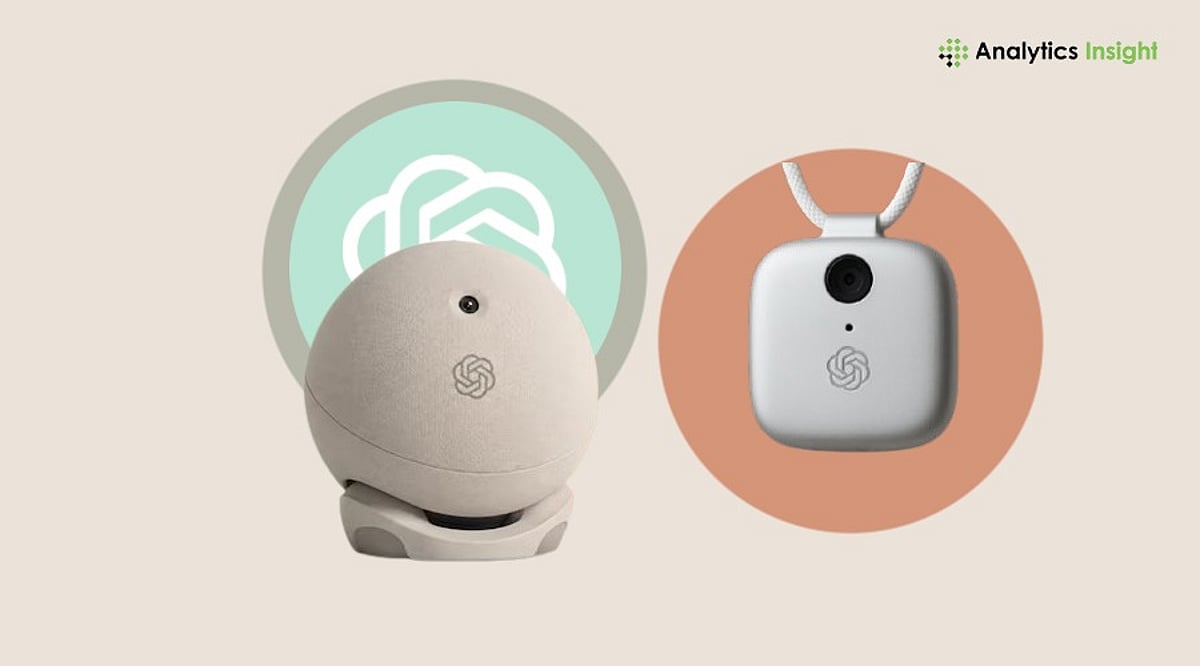
    OpenAI is reportedly making its first foray into consumer hardware with a portable, screen-free smart speaker powered by ChatGPT. According to a recent report, the device is designed as an AI companion for the home, emphasizing natural voice interaction over a traditional display.

    Unlike conventional smart speakers, this new device is expected to feature a self-recharging battery, allowing users to carry it from room to room. It will also include a camera and various sensors to understand its environment and respond contextually. The speaker will manage smart home devices, play music, answer questions, handle messages, and provide access to ChatGPT, likely leveraging the advanced GPT-Live voice technology.

    One of its standout features is a mechanism that enables physical movement, adding a new dimension to home AI interaction.

    Design Team Led by Jony Ive

    The project reportedly involves Jony Ive, the former Apple design chief, and his firm LoveFrom, along with former Apple employees. This comes after OpenAI’s $6.5 billion acquisition of the AI hardware startup founded by Ive. Notably, Apple has filed a lawsuit against OpenAI, accusing the company and former Apple employees of misusing trade secrets in the development of consumer hardware. OpenAI has denied the allegations and declined to comment on the latest reports.

    Potential Launch Timeline

    While OpenAI has not officially announced the product, rumors suggest the smart speaker could be unveiled later this year and hit the market in 2027. The company is also working on other AI hardware projects beyond ChatGPT.

  • Top Technology Stacks Every SaaS Startup Should Consider for 2026

    Top Technology Stacks Every SaaS Startup Should Consider for 2026

    Choosing the right technology stack is critical for SaaS startups aiming to build scalable, high-performance applications. In 2026, the landscape continues to evolve, offering powerful tools that combine speed, flexibility, and intelligent features. Below are the essential technologies your startup should evaluate.

    Frontend: React and Next.js

    React paired with Next.js remains a leading frontend combination. It delivers outstanding performance, a scalable architecture, and excellent user experiences. Its built-in SEO support is crucial for SaaS platforms that rely on organic discovery.

    Backend: Node.js and Python with FastAPI

    Node.js provides a robust runtime for building real-time services, scalable APIs, and distributed applications using JavaScript end-to-end. For startups integrating artificial intelligence, Python with FastAPI offers a powerful backend stack that supports rapid API development, automation, analytics, and enterprise-grade solutions.

    Databases: PostgreSQL and MongoDB

    For relational data, PostgreSQL stands out as a reliable open-source database with strong security, advanced querying, and proven scalability for growing businesses. When handling unstructured or rapidly changing data, MongoDB provides a flexible NoSQL alternative that supports agile development and adaptable storage.

    Containerization and Orchestration: Docker and Kubernetes

    Docker and Kubernetes simplify deploying, scaling, and managing applications. These containerization technologies enable seamless cloud-native software delivery across multiple environments, reducing infrastructure complexity for engineering teams.

    Cloud Platform: AWS

    AWS remains a comprehensive cloud provider offering scalable computing, storage, databases, security, AI services, and global infrastructure. It supports startup growth efficiently, allowing teams to focus on product development rather than hardware management.

    CI/CD: GitHub Actions

    Automated continuous integration and deployment streamline software releases. GitHub Actions improves development productivity, reduces errors, and accelerates feature delivery, making it an essential tool for modern engineering workflows.

    Intelligence Layer: OpenAI APIs

    OpenAI APIs empower SaaS platforms with AI-driven capabilities such as intelligent chatbots, content generation, personalized user experiences, and advanced automation. Integrating these APIs can differentiate your product in a competitive market.

    Selecting the right mix of these technologies can set your startup on a path to success in 2026. Evaluate your specific needs, team expertise, and growth projections to build a stack that scales with you.