Tag: robotics

  • Amazon’s Next-Gen Technologies: Satellite Internet, AI Models, and Autonomous Deliveries

    Amazon’s Next-Gen Technologies: Satellite Internet, AI Models, and Autonomous Deliveries

    Amazon is far more than an online marketplace. The company is investing heavily in emerging technologies that span satellite internet, generative AI, robotics, autonomous vehicles, biometrics, healthcare, and sustainability. Here’s a look at the key innovations shaping Amazon’s future beyond e-commerce.

    Project Kuiper: Global Satellite Internet

    Amazon is building a satellite internet network called Project Kuiper to deliver affordable broadband connectivity globally. This initiative competes with existing low-Earth orbit providers, aiming to bridge the digital divide.

    Amazon Nova AI Models

    Amazon’s Nova foundation models power generative AI applications, enabling businesses to create intelligent assistants, content, and enterprise automation efficiently. These models are designed to make AI accessible for a wide range of use cases.

    Warehouse Robotics

    Advanced warehouse robots improve inventory handling, package sorting, and fulfillment speed while reducing operational costs across Amazon’s expanding logistics network. These robots are a cornerstone of Amazon’s operational efficiency.

    Autonomous Delivery Drones (Prime Air)

    Prime Air drones aim to deliver eligible packages within minutes, improving last-mile logistics through autonomous navigation and advanced aviation technology. This service promises faster delivery for customers.

    Zoox Robotaxis

    Amazon-owned Zoox develops fully autonomous electric robotaxis designed for urban transportation, offering driverless mobility with enhanced passenger safety and convenience. Zoox is poised to disrupt the ride-hailing industry.

    AI-Powered Alexa+

    Alexa+ integrates advanced conversational AI, delivering personalized assistance, smarter automation, and natural interactions across compatible smart home ecosystems. It represents a major leap in voice assistant technology.

    Amazon One Biometrics

    Palm-recognition technology enables secure identity verification and seamless payments, simplifying customer experiences across retail stores, workplaces, and entertainment venues. Amazon One is expanding its footprint.

    Amazon Health Services

    Amazon continues expanding healthcare through digital pharmacy, virtual consultations, and integrated health solutions focused on accessibility, affordability, and patient convenience. The company is becoming a key player in health tech.

    Sustainable Logistics Innovation

    Amazon invests in electric delivery vehicles, renewable energy, and eco-friendly packaging to reduce emissions while supporting sustainable global supply chains. These efforts align with its Climate Pledge commitment.

  • Tau Robotics Launches Humanoid Robot Cleaning Service in San Francisco – $30/Hour with Remote Human Control

    Tau Robotics Launches Humanoid Robot Cleaning Service in San Francisco – $30/Hour with Remote Human Control

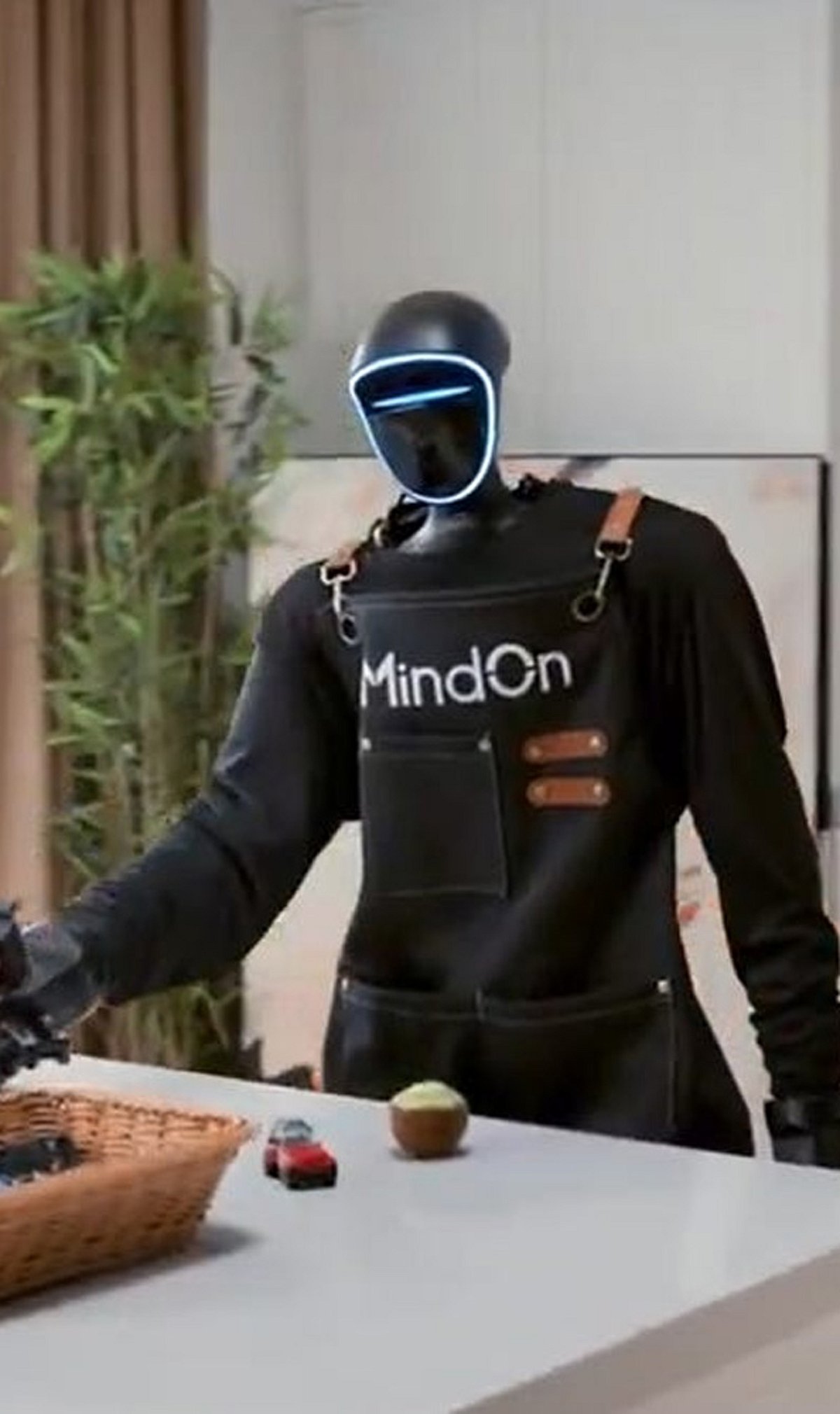
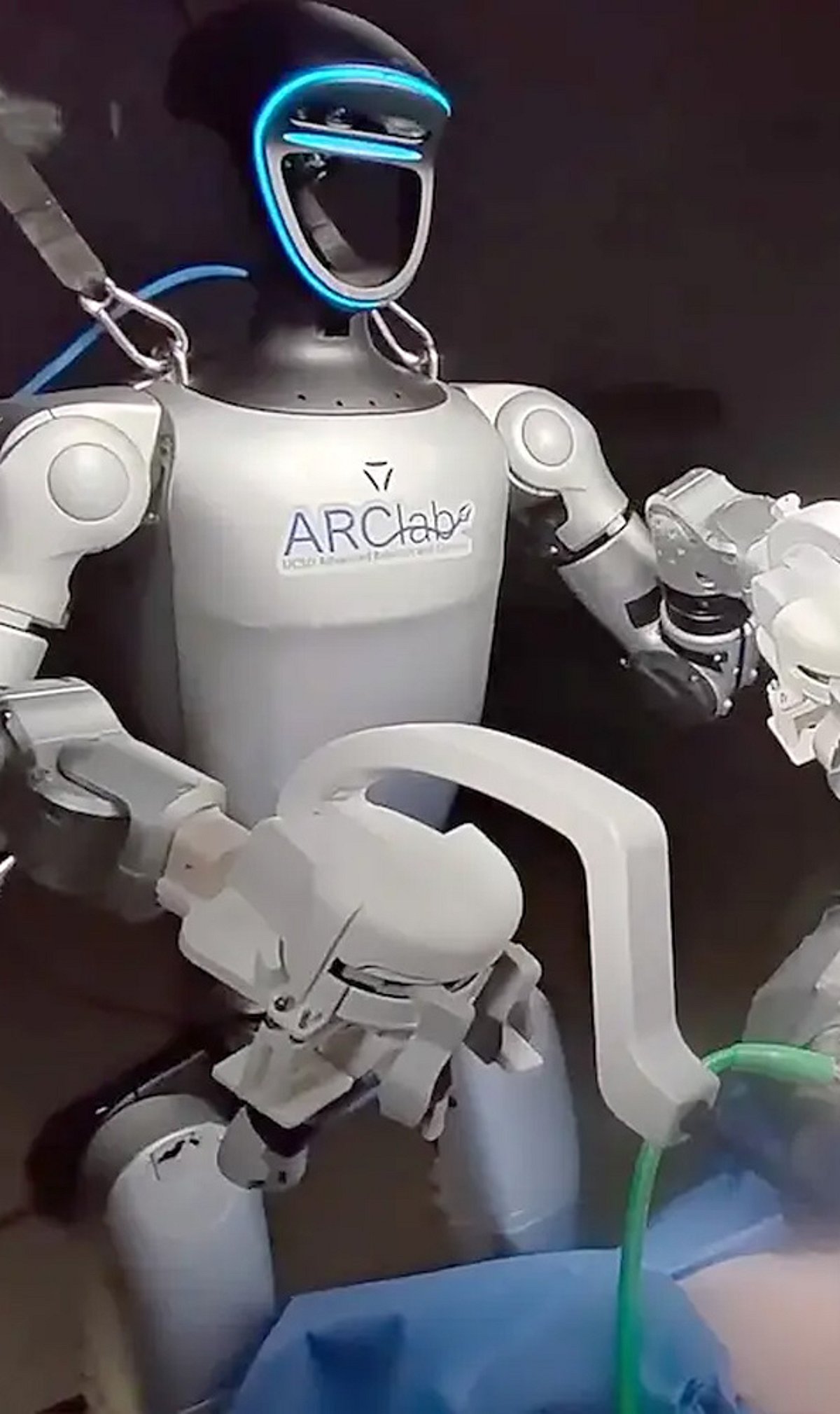
    Tau Robotics has launched an invite-only home cleaning service in San Francisco using humanoid robots that cost $30 (approximately ₹3,000) per hour. These robots are not fully autonomous — a remote human operator controls every move while AI assists with balance, navigation, and simple actions.

    The robots can vacuum floors, wipe counters, wash dishes, tidy rooms, and take out the trash during routine home cleaning sessions. Tau offers different robot models for different jobs: Chelsea cleans kitchens and bathrooms, Elon handles weekly tidying, and Tony tackles deep cleaning.

    Every cleaning session helps Tau collect valuable real-world household data, allowing its AI to learn how homes differ from controlled lab environments. For safety, an adult resident must stay at home while the robot works, and human supervision remains essential during every visit.

    The service is currently a paid beta test available only through an invite-only waitlist as Tau improves reliability before expanding. The biggest concern is privacy — since humans remotely operate the robots using cameras, users may worry about data security inside their homes.

    Experts believe fully autonomous home robots are still years away. Today’s human-assisted cleaners are an important step toward smarter household AI.

  • AI and Robotics Revolutionize Food and Beverage Manufacturing

    AI and Robotics Revolutionize Food and Beverage Manufacturing

    In the food and beverage (F&B) sector, artificial intelligence (AI) and robotics are reshaping how the industry operates, addressing labor shortages, rising production costs, stricter food safety regulations, and evolving consumer demand. While conventional automation relies on manual analysis of production data, AI systems can automatically analyze data in real-time, detect quality problems, forecast equipment failures, and optimize manufacturing processes with minimal human intervention. Combined with robotics, these technologies are creating smarter, faster, and more efficient production facilities.

    Smarter Production Through AI

    AI enhances nearly every aspect of food production. Machine learning models help manufacturers predict demand more accurately, minimizing inventory waste and optimizing production planning. Computer vision systems inspect products at high speed, detecting defects, contamination, or packaging issues that are difficult for the human eye to catch. AI also powers predictive maintenance, tracking equipment performance and predicting potential failures before they cause costly downtime. This reduces maintenance expenses and boosts production uptime.

    According to Grand View Research, the global AI in food and beverages market is projected to grow from $22.6 billion in 2026 to $84.7 billion by 2030, at a compound annual growth rate (CAGR) of 39%.

    Robotics Enhances Speed and Food Safety

    Robotic systems are increasingly handling repetitive, hygienic tasks such as sorting, cutting, filling, packaging, pick-and-place, and palletizing. Humans can fall short in accuracy and pose greater contamination risks, whereas robots perform precisely and without contamination. Collaborative robots, or cobots, are also being deployed in food processing plants. These machines work alongside human workers, augmenting their abilities in physically draining or repetitive tasks while ensuring safety and productivity.

    The global food robotics market is expected to expand at a CAGR of 20.9% from 2026 to 2034, reflecting a growing trend of automation investments in the food sector.

    Real-World Adoption Is Accelerating

    AI-powered robotic systems are being deployed on a large scale. Chef Robotics recently announced that its AI-powered food preparation robots have prepared over 100 million meals in North America and Europe, continuously increasing the number of meals they can prepare per minute. Meanwhile, advanced robotics manufacturers are developing intelligent systems that enable greater precision and adaptability in handling delicate food products.

    Challenges Ahead

    Despite rapid progress, several barriers remain. High implementation costs, integration with legacy production lines, cybersecurity concerns, and a shortage of skilled workers are major challenges, especially for small and medium-sized enterprises (SMEs). Building trustworthy AI models also requires extensive, high-quality production data.

    Outlook

    AI and robotics are no longer just research projects in food manufacturing; they are increasingly seen as strategic investments. AI-powered quality checks, predictive maintenance, automated material handling, and intelligent production planning are expected to become standard as technology evolves and implementation costs decrease.

    Frequently Asked Questions

    • How is AI used in food and beverage manufacturing? AI helps optimize production planning, forecast demand, inspect product quality using computer vision, and predict equipment failures through predictive maintenance, improving efficiency while reducing waste and downtime.
    • What tasks do robots perform in food processing plants? Robots handle repetitive, hygiene-sensitive tasks such as sorting, cutting, packaging, filling, palletizing, and pick-and-place operations, improving consistency, reducing contamination risks, and enhancing productivity.
    • What are collaborative robots (cobots)? Cobots are designed to work safely alongside human employees, assisting with repetitive or physically demanding tasks so workers can focus on higher-value activities while improving safety and efficiency.
    • What challenges are slowing AI and robotics adoption? Major challenges include high implementation costs, integration with existing lines, cybersecurity risks, limited access to quality production data, and a shortage of skilled professionals.
    • What is the future of AI and robotics in the food industry? As technology becomes more affordable, AI and robotics will become standard in food manufacturing, leading to smart factories that improve food safety, production efficiency, sustainability, and supply chain resilience.
  • Trump Administration Bans New Chinese Robots to Safeguard US AI Infrastructure

    Trump Administration Bans New Chinese Robots to Safeguard US AI Infrastructure

    The Trump administration has implemented new technology restrictions aimed at Chinese-made humanoid robots, quadruped robots, and connected power inverters, citing national security concerns and the need to protect America’s rapidly expanding artificial intelligence infrastructure. The measures, announced by the US Federal Communications Commission (FCC), took effect immediately upon publication.

    The restrictions apply exclusively to new product models not yet released in the United States. However, the FCC retains the authority to revoke approvals for products already authorized for sale if deemed necessary.

    Focus on AI, Cybersecurity, and Critical Infrastructure

    According to US officials, the measure is designed to reduce the risk of cyberattacks, surveillance, and supply chain vulnerabilities as the country invests heavily in building AI data centers and computing infrastructure. Inverters used to connect renewable energy devices and batteries to the electric grid have become increasingly important for AI data centers.

    The administration has also raised concerns about the potential use of networked robots for espionage and remote interference by foreign entities. Officials stated the measure is intended to secure key technologies vital to the nation’s security and economy.

    Chinese Firms Likely to Be Hit Hardest

    While the order does not explicitly name individual companies, it is expected to have the greatest impact on Chinese manufacturers, including Unitree Robotics, one of the world’s leading producers of humanoid and quadruped robots. China currently dominates the global humanoid robotics market, making the restrictions a significant setback for its expansion into the US market.

    The FCC indicated that manufacturers outside China may still qualify for exemptions, provided they satisfy security requirements.

    Beijing Condemns Move

    China condemned the move, claiming that the US unfairly singled out Chinese companies for punitive action and vowing to do whatever is necessary to defend its business interests. These restrictions, among others implemented by the US government in recent times, reflect the increased competition between the two countries as they vie for supremacy in AI and semiconductor production and supply chains.

    This development underscores a convergence of technology policies and national security issues, with AI infrastructure emerging as a key area of competition.

  • 7 Innovative Ways Camera Robots Are Revolutionizing Key Industries

    7 Innovative Ways Camera Robots Are Revolutionizing Key Industries

    Camera robots are rapidly transforming how industries operate, from enhancing security to improving medical procedures. By combining artificial intelligence, advanced optics, and autonomous navigation, these machines are delivering unprecedented capabilities across multiple sectors. Below, we explore seven key areas where camera robots are making a significant impact.

    1. Autonomous Surveillance

    Camera robots equipped with AI continuously monitor environments, detecting suspicious activity and improving security in commercial, industrial, and public spaces. Their ability to operate around the clock without fatigue enhances threat detection and response times.

    2. Cinematic Filmmaking

    Advanced robotic camera systems capture smooth, repeatable, and highly precise shots that elevate filmmaking quality. By automating camera movements, they reduce the need for manual operation and allow directors to achieve complex angles with ease.

    3. Infrastructure Inspection

    Camera robots safely inspect bridges, power plants, pipelines, and construction sites. They identify structural issues such as cracks or corrosion without exposing human workers to hazardous environments, thereby improving safety and reducing downtime.

    4. Medical Assistance

    In healthcare, robotic cameras support surgeons by providing enhanced visualization during minimally invasive procedures. This leads to greater precision, smaller incisions, and improved patient outcomes.

    5. Wildlife Observation

    Researchers deploy camera robots to monitor wildlife behavior without disturbing natural habitats. These systems collect valuable ecological data over long periods, aiding conservation studies and biodiversity assessments.

    6. Warehouse Automation

    Robotic cameras track inventory movement, identify misplaced goods, and assist automated logistics systems. This boosts warehouse efficiency, reduces errors, and streamlines supply chain operations.

    7. Disaster Response

    Camera-equipped robots enter dangerous disaster zones—such as collapsed buildings or fire sites—transmitting live visuals that help emergency teams assess damage and locate survivors more effectively.

    Additional applications include sports broadcasting, where robotic cameras deliver dynamic angles and automated tracking, and agricultural monitoring, where farmers use them to assess crop health and optimize irrigation. As technology advances, camera robots will continue to reshape industries by improving accuracy, safety, and productivity.

  • How AI-Powered Machine Vision Transforms Modern Robotics: Capabilities, Challenges, and Future Trends

    How AI-Powered Machine Vision Transforms Modern Robotics: Capabilities, Challenges, and Future Trends

    Overview

    AI-powered machine vision enables robots to perceive, interpret, and respond to real-world environments using advanced sensors, deep learning, and real-time decision-making. Modern vision systems improve robotic capabilities such as adaptive object handling, quality inspection, autonomous navigation, and safe human-robot collaboration across industries. Advances in vision-language-action models, edge AI, and intelligent automation are making robots more flexible, efficient, and capable while addressing increasingly complex tasks.

    From Blind Automation to Visual Intelligence

    Traditional robotic cells depend on precision fixtures, fixed trajectories, and tightly structured environments. A part out of place stops the line cold. Modern systems replace that rigidity with cameras, depth sensors, and trained models that estimate an object’s position and orientation in real time. Machine vision has evolved from an optional sensing layer into a core component that directly shapes perception, planning, and control.

    Inside the AI Vision Stack

    Perception in a modern robotic system moves through several layers. Sensors, ranging from 2D cameras to time-of-flight units and lidar, capture raw visual and spatial data. Many systems now push early processing directly into the sensor itself and onto edge devices near the robot. This cuts latency and bandwidth before data ever reaches the main compute unit. Deep learning models handle detection, segmentation, and pose estimation. Most run on convolutional networks or transformer architectures. Robots often mix input types too, pairing RGB cameras with depth sensors and force feedback, so one missed signal does not stop the whole task.

    What sets current systems apart from older automation is the tight link between what a robot sees and what it does next. The system reads what it sees and acts on it right away. It adjusts grip or movement mid-task instead of waiting for a person to check the work first.

    New Capabilities This Unlocks

    • Adaptive pick-and-place: A robot estimates the pose of a randomly oriented part directly from a mixed bin, work that once demanded a custom fixture for every product variant.
    • Inline inspection systems: Built on convolutional networks and vision transformers, they catch scratches, weld defects, and misaligned assemblies that rule-based image checks routinely miss.
    • Safe human-robot collaboration: Cobots track a person’s position and proximity closely enough to slow down before a collision rather than after one, letting them work near people without a safety cage.
    • Autonomous mobile robots: Use vision-based mapping to reroute around a spilled pallet or a parked cart without needing the warehouse floor plan reprogrammed.
    • Vision-language-action models: Such as Figure AI’s Helix and NVIDIA’s GR00T N1, these pair a vision-language backbone with a fast motor-control policy, letting a robot act on an instruction like ‘pick the damaged blue container’ instead of only flagging objects it was separately trained to detect.

    Together, these shifts underpin Industry 4.0, where flexible, data-driven automation replaces fixed programming across a plant floor.

    Where This Shows Up Today

    • Manufacturing: Plants use vision-guided bin picking and defect classification to shorten quality checks and catch problems earlier in the line.
    • Warehousing: Barcodes are read visually, and routes are adjusted around clutter without fixed paths, letting operators redesign storage layouts without reprogramming every route.
    • Agriculture: Robots and drones scan crop rows for early signs of disease.
    • Healthcare and retail: Service robots identify people, signage, and obstacles well enough to navigate spaces never built with a machine in mind.

    Limits and Open Problems

    A model trained on one factory floor or one lighting setup often struggles on another. Closing that gap remains active engineering work, not a solved problem. Creating the labeled datasets needed to train these systems is expensive, so manufacturers increasingly use synthetic images generated from digital twins to reduce data collection costs. Dust, reflections, and sensor failure still test the limits of what a camera-based system can handle reliably. Safety certification for vision-driven decisions has not kept pace with the technology itself, and operators still need clear evidence of what a robot ‘saw’ before trusting its judgment call.

    Final Thoughts

    Vision-language-action models point toward robots that take a spoken instruction and work out the steps themselves—without a specialist rewriting detection rules for every new task. That shift, from programming behavior to describing intent, is the next real test for factories deciding how much autonomy to hand a machine.

  • 10 Computer Vision Unicorn Startups Redefining Industries in 2026

    10 Computer Vision Unicorn Startups Redefining Industries in 2026

    Computer vision has become one of the fastest-growing areas of artificial intelligence, enabling machines to interpret images and video like humans. Businesses now leverage this technology to improve factory operations, inspect products, guide autonomous vehicles, detect fraud, monitor workplaces, and assist doctors with medical imaging. As AI advances, computer vision opens new business opportunities across many sectors. Industry reports project the global computer vision market will surpass $30 billion by 2030, and investors continue to back companies building practical AI solutions instead of experimental products.

    Several startups have already achieved unicorn status (valuations above $1 billion). Many have raised fresh funding, signed major enterprise deals, and expanded into new markets. Here are ten computer vision unicorn startups worth watching in 2026.

    Key Takeaways

    • Computer vision unicorns solve real business problems across multiple industries.
    • Strong funding and billion-dollar valuations reflect growing investor confidence.
    • These startups will drive the next phase of enterprise AI adoption.

    Shield AI

    Shield AI is a leading defense-focused AI company founded in 2015. Its Hivemind software enables aircraft to operate without GPS, relying on computer vision and sensors to navigate buildings, roads, and targets. In 2026, Shield AI is valued at nearly $12.6 billion, thanks to new investments and increased defense collaborations. Governments worldwide are expected to boost spending on autonomous defense solutions, positioning Shield AI for further growth.

    Netradyne

    Netradyne transforms commercial fleet safety with AI-powered dashboard cameras that analyze driver behavior in real time. It rewards safe driving and detects distracted driving, phone use, fatigue, harsh braking, lane changes, and road hazards. The company became India’s first unicorn of 2025 after a $90 million Series D round from Point72 Asset Management, Qualcomm Ventures, and Pavilion Capital. Netradyne now processes over 4 trillion sensor data points annually across more than 550,000 connected vehicles, helping logistics companies lower accidents and insurance costs.

    Gecko Robotics

    Gecko Robotics builds robotic inspection systems for large factories, power plants, oil refineries, and defense facilities. Its robots use advanced cameras and AI to detect corrosion, cracks, leaks, and structural damage early. The company crossed unicorn status in 2025 and works with major industrial firms and government organizations. As predictive maintenance investment grows, Gecko Robotics stands out as a top industrial AI company.

    Tractable

    Tractable revolutionizes insurance claims with computer vision. Customers upload photos of damaged vehicles or property, and the AI estimates repair costs in minutes. This speeds up claims, reduces fraud, and improves customer experience. Hundreds of insurers across North America, Europe, and Asia now rely on Tractable, which continues to expand as digital claims become standard.

    Runway

    Runway is a popular AI video creation platform. Its software removes objects, tracks motion, edits clips, changes backgrounds, and generates new videos from simple scripts, saving hours of manual editing. With strong investor backing and partnerships with media companies, Runway is well positioned for growth in enterprise AI.

    Covariant

    Covariant addresses the challenge of robotic grasping in warehouses. Its AI combines computer vision and machine learning to enable robots to identify and handle a wide variety of products, regardless of size, shape, or packaging. This improves efficiency, reduces costs, and speeds up operations. As e-commerce drives warehouse automation, Covariant expects strong revenue growth in 2026.

    Voxel

    Voxel uses computer vision to improve workplace safety. Its AI platform connects to existing security cameras in factories, warehouses, and industrial sites to detect safety violations like improper lifting, forklift hazards, and unauthorized access. By preventing accidents, Voxel helps businesses reduce injuries and financial losses. Stricter safety regulations are driving increased adoption.

    Magic Leap

    Magic Leap develops advanced augmented reality headsets equipped with computer vision that maps rooms, tracks eye movements, recognizes objects, and overlays information. The technology aids medical specialists, factory workers, engineers, and military personnel. Initially known for hardware, Magic Leap’s software has become equally valuable.

    Verkada

    Verkada modernizes enterprise security with cloud-connected AI cameras. Its platform recognizes faces, reads license plates, counts people, tracks occupancy, and detects unusual activity across thousands of cameras. Security teams receive instant alerts. Businesses choose Verkada for smarter security without large on-site infrastructure, making it one of the fastest-growing companies in the market.

    Afresh

    Afresh applies computer vision to grocery store inventory management. The AI analyzes product images and inventory data to predict demand for fresh produce, reducing food waste and improving stock availability. Retailers using Afresh see better profit margins and sustainability, gaining attention across the retail industry.

    Why This Matters

    Computer vision now supports tasks once done manually, helping businesses save time, lower costs, improve safety, and make faster, more accurate decisions. As AI adoption grows, companies leading computer vision innovation will shape the future of healthcare, manufacturing, transportation, retail, defense, and many other sectors.

    Final Thoughts

    Computer vision technology has evolved rapidly, powering unmanned vehicles, warehouse robots, insurance systems, workplace safety, and smart cameras. Companies like Shield AI, Netradyne, Gecko Robotics, Tractable, Runway, Covariant, Voxel, Magic Leap, Verkada, and Afresh are solving real organizational problems with strong funding and billion-dollar valuations, proving market confidence.

    FAQs

    1. What is a computer vision startup? A computer vision startup develops AI software that allows machines to understand and analyze images, videos, and visual data for real-world applications.
    2. What makes a startup a unicorn? A startup becomes a unicorn when its private valuation reaches $1 billion or more.
    3. Which industries use computer vision the most? Healthcare, manufacturing, logistics, retail, automotive, insurance, defense, agriculture, and security are the biggest users.
    4. Why do investors support computer vision startups? These companies build scalable AI solutions that improve efficiency, reduce costs, increase safety, and create long-term business opportunities.
    5. Why should businesses watch these startups in 2026? These companies lead innovation with advanced AI products, strong funding, expanding customer bases, and technologies that will influence enterprise automation.
  • 10 Revolutionary Capabilities of Liquid Robots Transforming Science and Medicine

    10 Revolutionary Capabilities of Liquid Robots Transforming Science and Medicine

    Imagine a robot that can squeeze through a crack under a door, reform itself after being cut in half, and deliver medicine precisely to a tumor inside your body. This isn’t science fiction—it’s the emerging field of liquid robotics. Using materials like ferrofluids, liquid metals, and hydrogels, researchers are creating flexible, adaptive machines that defy traditional mechanical limitations. Here are ten astonishing things these liquid robots can already do or are being developed to accomplish.

    1. Shape-Shifting for Confined Spaces

    Liquid robots can alter their shape to squeeze through tiny openings and navigate complex, cluttered environments. This ability makes them ideal for search-and-rescue operations, pipe inspections, and medical procedures requiring navigation through narrow blood vessels.

    2. Targeted Drug Delivery

    Scientists are designing liquid robots that carry therapeutic payloads directly to diseased organs or tumors. By controlling their movement with magnetic fields or chemical gradients, these robots could dramatically improve treatment precision while minimizing systemic side effects.

    3. Minimally Invasive Surgery

    Tiny liquid robots could assist surgeons in performing delicate procedures inside the human body with unprecedented flexibility. They might deliver tools, clear blockages, or even perform micro-suturing through natural openings, reducing the need for invasive incisions.

    4. Self-Healing Capabilities

    Unlike conventional machines that break when damaged, liquid robots can merge back together after being cut or separated. Their ability to re-form and continue functioning without manual intervention promises greater durability in harsh environments.

    5. Adaptive Obstacle Navigation

    The flexible, deformable nature of liquid robots allows them to flow around barriers, through narrow gaps, and along uneven surfaces. This gives them a mobility advantage over rigid robots in environments like disaster rubble or industrial piping.

    6. Safe Hazardous Inspections

    Liquid robots can be deployed into radioactive zones, chemical plants, or disaster areas where human presence is dangerous. They can sample toxic materials, measure radiation levels, or assess structural integrity without risking human lives.

    7. Environmental Cleanup

    Researchers envision liquid robots that absorb oil spills, heavy metals, or microplastics from water and soil. Their ability to navigate hard-to-reach ecosystems—such as marshes, coral reefs, or groundwater—makes them powerful tools for environmental restoration.

    8. Precision Micro Manufacturing

    Liquid robots can manipulate and assemble microscopic components with exceptional accuracy. This capability could revolutionize semiconductor fabrication, medical device production, and the assembly of next-generation electronics at scales impossible for human hands or traditional machines.

    9. Extreme Environment Adaptation

    Because liquid robots can operate in extreme temperatures, pressures, and corrosive conditions, they are being explored for use in deep-sea exploration and volcanic monitoring. Their resilience opens new frontiers for scientific discovery.

    10. Space Exploration

    Future planetary missions may deploy liquid robots that reconfigure themselves to navigate rocky terrain, enter caves, or withstand temperature swings on Mars or the Moon. Their versatility could make exploration safer and more efficient, gathering samples from places traditional rovers cannot reach.

    Liquid robots are still largely in the research phase, but their potential spans healthcare, manufacturing, environmental remediation, and space travel. As material science and control systems advance, these remarkable machines will likely become a staple of the technological landscape.

  • Anthropic Robotics Speculation Intensifies as Federal Reserve Faces Extended Delay in Accessing Mythos AI

    Anthropic Robotics Speculation Intensifies as Federal Reserve Faces Extended Delay in Accessing Mythos AI

    Anthropic is drawing attention on two fronts after reports linked the company to robotics startup Physical Intelligence and raised questions about federal access to its Claude Mythos Preview model.

    The robotics report points to Anthropic’s possible interest in physical-world AI. Meanwhile, the Mythos case focuses on how authorities and banks prepare for models that can find software weaknesses.

    Anthropic Held Talks with Physical Intelligence

    A weekend claim on X said Anthropic was buying Physical Intelligence, a San Francisco startup that develops AI systems for robots. Tech blogger Robert Scoble shared the claim, and it spread quickly across technology accounts.

    Physical Intelligence CEO Karol Hausman later told employees that the reports were ‘not true,’ according to The Information. However, Anthropic and the startup held acquisition discussions during the spring, TechCrunch reported. No company has announced a deal, and neither side has confirmed that current talks continue. It has not publicly disclosed details of those discussions.

    Physical Intelligence has attracted major investors and researchers since its launch. The company develops robot foundation models, including its π0.5 system, which researchers use to control different machines and complete physical tasks.

    An acquisition would give Anthropic an established robotics team without requiring it to build a hardware operation from the start. Still, the reported discussions do not show that Anthropic submitted an offer or reached agreed terms. As of July 22, Anthropic has not announced a robotics acquisition or dedicated hardware laboratory.

    Robotics Race Draws OpenAI into the Picture

    Anthropic has tested Claude’s ability to support robotics work through Project Fetch. The company asked employees without specialist training to program a commercial robot dog with help from Claude. A later test found that a newer model completed similar tasks faster than the strongest human-and-Claude team from the earlier study.

    The research does not amount to a full robotics division. However, it shows that Anthropic is examining how its models can work with machines outside standard computer tasks. Anthropic also said the tests did not cover difficult areas such as low-level robot control.

    OpenAI has taken a more direct route. Chief Executive Sam Altman said OpenAI Robotics was hiring staff across hardware, operations, systems, and machine learning. He described infrastructure-support robots as the near-term focus and personal robots as a longer-term goal.

    OpenAI also invested in Physical Intelligence, according to TechCrunch. This position could affect any future sale, depending on the rights attached to the investment. Neither company has publicly explained those terms.

    Fed Sought Mythos Access After Bank Warning

    Anthropic introduced Claude Mythos Preview through Project Glasswing in April. The company gave selected organizations access so they could find and repair security flaws before similar tools became widely available. Anthropic later said Mythos had identified thousands of possible high- or critical-severity weaknesses across open-source projects.

    Federal Reserve and Treasury officials also called bank executives to an urgent April meeting about the model’s cyber abilities. Reports said officials warned that Mythos could identify and possibly exploit weaknesses in major operating systems and browsers.

    However, the Federal Reserve lacked direct access to Mythos for at least three months after that meeting, CNBC reported. The central bank was still seeking access as of July 15, although its current status is ‘not clear.’ The Fed declined to comment, while Anthropic did not provide an immediate response.

    The gap placed the Fed behind some banks and technology companies already using the model to test systems and prepare fixes. Anthropic has kept Mythos access restricted while working with government agencies and private organizations on security controls.

  • Dan Moore on AI, Robotics, and the New Frontier of Creative Expression

    Dan Moore on AI, Robotics, and the New Frontier of Creative Expression

    Introduction

    Dan Moore is an artist, designer, technologist, and educator working at the intersection of art, technology, and culture. His practice explores what it means to create alongside machines, treating AI not simply as a tool, but as a collaborator in the production of images, objects, performances, and systems.

    Moore is a Senior Technical Artist at NVIDIA, where he works with real-time graphics, generative AI, robotics, simulation, and creative production technologies. In this role, he bridges artistic practice and advanced technical systems, helping translate emerging tools into workflows for artists, designers, and creative teams.

    Moore’s independent work spans painting, textiles, time-based media, robotics, and interactive installations. His projects examine distributed authorship, machine agency, and the shifting relationship between human intuition and computational process. Among his notable works are AI-generated painting series, live generative fashion through GLITCHWEAR, robotic performance works, and The Great American Pastime: Berra and the Bronx Legends, an AI-driven infinite baseball broadcast commissioned by the Yogi Berra Museum.

    Moore also teaches creative technology at The New School, helping students understand code, AI, and digital systems as expressive materials.

    The Interview

    Q: Please introduce yourself and tell us about your journey.

    A: I am Dan Moore, an artist, technologist, and educator working with AI, robotics, and generative systems. I am also a Senior Technical Artist at NVIDIA. My journey has always moved between engineering and art. Early in my career, I became fascinated by tangible interaction and computational media, leading to projects involving robot arms, large-scale interactive installations, real-time graphics, and later generative AI. My practice has expanded from building tools into making cultural works that question authorship, agency, and collaboration between humans and machines. I also teach at The New School, where I work with students to think critically about software, AI, and the social impact of technology.

    Q: What inspired you to pursue a career in creative technology?

    A: I’m bored by technology that’s just functional. I’m drawn to the expressive, the strange, and the emotionally resonant. Creative technology lets me smash engineering discipline into artistic curiosity. The most interesting moment is when a machine does something I didn’t predict. In most fields, that’s an error; in mine, it’s the point. That discovery keeps me moving. Whether at NVIDIA, in my studio, or in the classroom, I treat creative technology as a way for artists to hijack the future of tools and culture before they’re handed to us as finished products.

    Q: What achievement are you most proud of?

    A: I’m proud of building a practice that refuses to sit still. The Great American Pastime series is a highlight. It won the 2025 AI Creative Future Award for turning fictional baseball into an infinite, AI-generated radio broadcast. I also value my time as an educator. Teaching students that code and AI are raw, expressive materials is as vital to me as the work I hang on a gallery wall.

    Q: What has been the most exciting project you’ve worked on so far, and why does it stand out?

    A: GLITCHWEAR. It’s a live generative system that knits one-of-one garments from a visual stream that never repeats. The project stands out because it rethinks fashion as a time-based medium. A garment is no longer just designed, selected, and reproduced—it is encountered, coming from a specific moment in a system that will never repeat in the same way. GLITCHWEAR brings together generative art, real-time graphics, textile production, e-commerce, and physical craft.

    Q: How do you see AI and real-time technologies changing the future of creative industries?

    A: AI and real-time technologies are shifting the role of the creator from someone who only makes final artifacts to someone who designs systems, behaviors, prompts, constraints, and relationships. The future of creative work will involve building living systems that can generate, respond, adapt, and evolve. At NVIDIA, I see how real-time tools, simulation, and generative AI are already changing creative production, making it more immediate, iterative, and performative. AI will not replace creativity, but it will change where creativity happens.

    Q: What advice would you give to aspiring innovators?

    A: Do not wait for permission. The best way to understand emerging technology is to use it, break it, misuse it, and push it into places it was not designed to go. Don’t define yourself too narrowly—learn enough engineering to build your ideas, enough art to question them, and enough culture to understand why they matter. Innovation is not just using the newest tool; it’s asking a better question. Protect your curiosity and stay open to surprise.

    Q: What emerging technology excites you the most?

    A: I’m most excited by the convergence of AI, robotics, and real-time simulation. The next major shift will happen when intelligent systems move more directly into physical space. Robotics forces AI to deal with the material world—movement, balance, force, timing, and failure. Combined with real-time simulation and generative models, we can create machines that improvise behaviors, not just execute instructions. This convergence opens incredible possibilities for performance, installation, manufacturing, fashion, and public art.

    Q: What is one challenge you’ve faced in your career, and how did you overcome it?

    A: One challenge has been learning to work in fields that do not always share the same language—art, engineering, fashion, education, and technology all have different expectations. I overcame that by treating translation as part of the practice. Innovation is not only about making something new; it’s also about helping people understand why the new thing matters. Communication, framing, and storytelling are as important as the technical execution.

    Additional Insight

    One thing I would add is that the future of creative technology depends on artists being deeply involved in the development of emerging tools. AI and robotics should not only be shaped by efficiency and automation—they should also be shaped by questions of meaning, authorship, beauty, culture, and human experience. Artists reveal what a technology is really doing beneath its surface, exposing assumptions and turning failures into new forms of expression. As AI becomes more embedded in daily life, creative practitioners will be essential in helping society understand not only what machines can do, but what we want them to become.