Tag: robotics

  • How AI-Powered Robotics Are Helping Farmers Slash Pesticide Use by 70%

    How AI-Powered Robotics Are Helping Farmers Slash Pesticide Use by 70%

    Precision agriculture is entering a new era thanks to a robotics startup that uses artificial intelligence and computer vision to drastically reduce pesticide use. By identifying weeds individually and applying chemicals only where needed, these autonomous machines help farmers cut pesticide consumption by up to 70 %, lowering costs and reducing environmental harm.

    Precision Spraying Robots

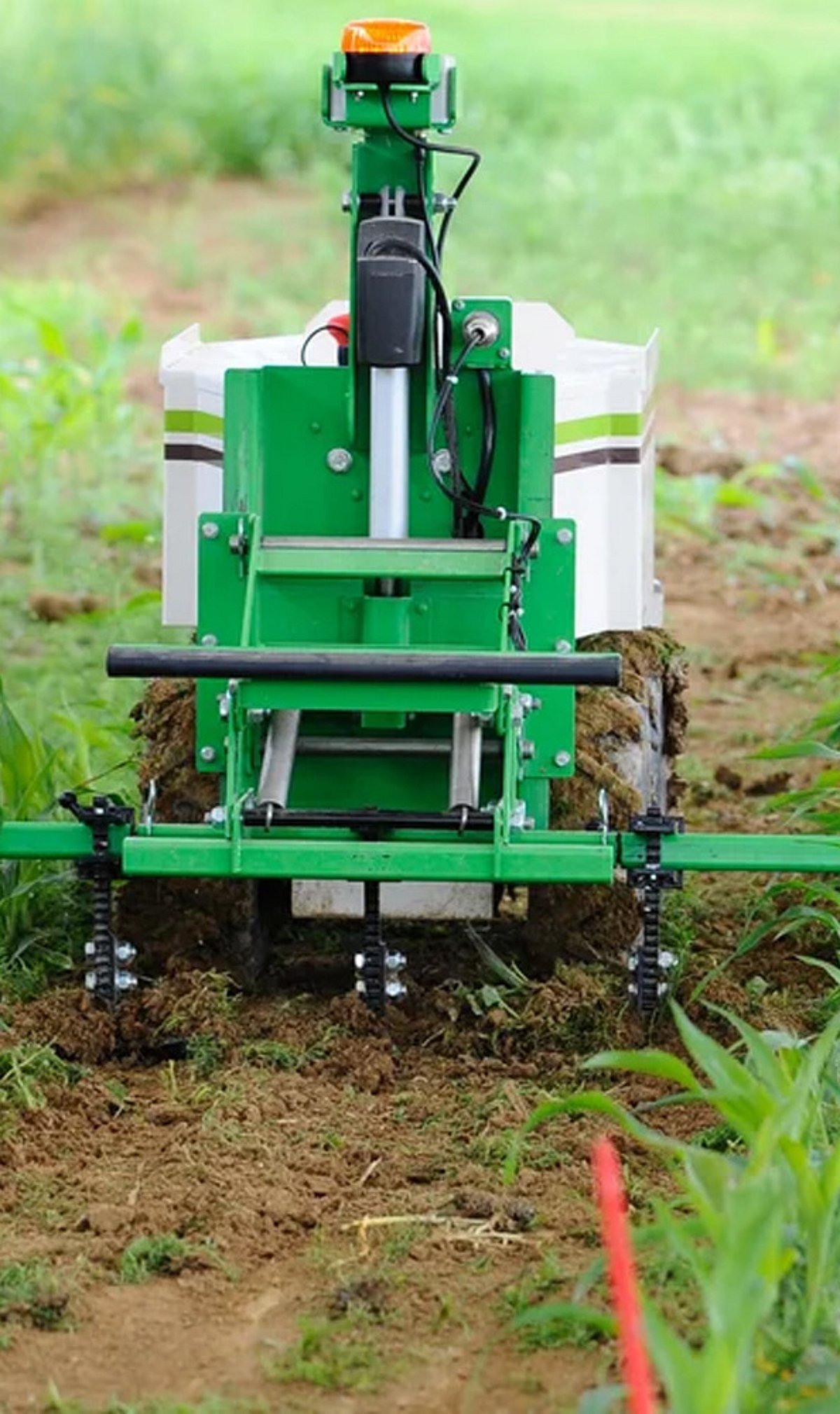
    Equipped with AI-driven algorithms, the spraying robots scan fields row by row, distinguishing crops from weeds in real time. Instead of blanket spraying, they target only the unwanted plants, significantly cutting the volume of chemicals released into the soil and air.

    Computer Vision Technology

    Advanced cameras and machine learning models enable the robots to differentiate between crops and weeds with high accuracy. This ensures that every drop of pesticide or herbicide is applied precisely where it is needed, minimizing waste and preventing damage to healthy plants.

    Reduced Farming Costs

    With lower pesticide consumption comes a direct decrease in operational expenses. Farmers can maintain or even improve crop yields while spending less on chemicals, which boosts profitability and makes farming more economically sustainable.

    Sustainable Agriculture

    By reducing chemical runoff, precision spraying protects local biodiversity, conserves soil health, and promotes environmentally responsible farming. This approach aligns with global efforts to make agriculture more sustainable and resilient.

    Higher Crop Productivity

    Healthy crops receive fewer unnecessary chemical treatments, leading to stronger growth and more consistent yields. Targeted application also reduces the risk of pesticide resistance, ensuring long-term effectiveness.

    Autonomous Field Operations

    These self-driving robots navigate fields independently, covering large areas with minimal human supervision. They can operate day and night, handling repetitive tasks efficiently and freeing up farm workers for other critical duties.

    Water Conservation Benefits

    Because the robots apply chemicals only where needed, they also reduce the amount of water used in spraying operations. This helps conserve precious water resources, especially in regions prone to drought.

    Scalability for Large Farms

    The robotics platform is designed to adapt to farm sizes ranging from small family plots to vast commercial fields. Autonomous operation and data-driven insights make it easy to scale up without requiring proportional increases in labor or resources.

    The Future of Smart Farming

    Robotics, artificial intelligence, and data analytics are transforming agriculture into a high-tech, sustainable industry. As these technologies become more affordable and accessible, the vision of fully automated, environmentally friendly farming is quickly becoming a reality.

    Want to stay updated on the latest in agtech and robotics? Join our WhatsApp channel for exclusive news and insights.

  • NVIDIA Stock Stays Below $200 Ahead of Vera Rubin Launch Amid Rising Competition and AI Spending Trends

    NVIDIA Stock Stays Below $200 Ahead of Vera Rubin Launch Amid Rising Competition and AI Spending Trends

    NVIDIA shares continue to trade below the $200 mark despite a modest rebound, as investors shift their attention to the company’s upcoming Vera Rubin platform and its expanding robotics business. The stock has underperformed the broader semiconductor sector in 2026, even as demand for artificial intelligence infrastructure remains robust.

    NVIDIA Trails Semiconductor Sector Despite AI Demand

    Shares of NVIDIA rose about 1.5% to $197.96 in early Tuesday trading. However, the stock has gained only about 5% year-to-date, while the PHLX Semiconductor Index has surged approximately 94% in the same period, making NVIDIA one of the weaker performers among major chip companies. Investors have been reallocating capital to other areas of the AI supply chain, including memory chipmakers, custom chip developers, and CPU manufacturers. Intel and Advanced Micro Devices have posted significantly stronger gains in 2026, and the iShares Semiconductor ETF has also outperformed NVIDIA. Analysts point to concerns over export restrictions affecting China and questions about future growth rates as factors weighing on the stock.

    Vera Rubin Platform and Robotics Expansion

    The market is now focused on NVIDIA’s next-generation Vera Rubin platform, which could strengthen the company’s position in AI infrastructure if it delivers substantial performance improvements. Competition is intensifying as large technology companies diversify their AI spending across multiple suppliers. Meanwhile, NVIDIA is expanding beyond AI chips into robotics, having opened more than a dozen robotics-related positions in Beijing, Shanghai, and Shenzhen. The roles cover embodied intelligence, simulation, implementation, and robotics solutions. NVIDIA says the robotics team aims to build a leading platform and ecosystem for autonomous machines, speeding the transition from research to commercial use. Employees will work on Project GR00T, the Cosmos physical simulation world model, and NVIDIA’s GPU computing platform.

    Market Watches AI Spending and China Competition

    NVIDIA remains one of the world’s largest listed companies with a market valuation of about $4.696 trillion—a 1% move changes its value by approximately $47 billion. Investors are tracking broader AI capital expenditure: the Bank for International Settlements projects that the five largest hyperscalers will invest more than $1 trillion in AI capex over 2025 and 2026, while also noting funding pressure and supply constraints around power, advanced chips, and grid infrastructure. Separately, Reuters reported that Baidu’s Kunlunxin chip business targets a $50 billion Hong Kong IPO, and IDC data shows domestic suppliers now hold 41% of China’s AI accelerator server market. Despite these headwinds, NVIDIA continues to project strong growth. The company forecast fiscal second-quarter revenue of $91 billion, above analyst expectations, and announced an $80 billion share buyback. CEO Jensen Huang stated, ‘We should be growing faster than hyperscale capex.’ Analysts are monitoring whether AI investment can sustain its pace through the coming years.

  • Humanoid Robot Companies Dominating 2026: Key Players to Watch

    Humanoid Robot Companies Dominating 2026: Key Players to Watch

    Humanoid robots are steadily moving into factories, warehouses, and industrial environments. Competition is accelerating as companies refine AI, mobility, and manufacturing efficiency. The industry’s next phase will be shaped by scalable deployments and reliable real-world performance.

    Overview

    Figure AI has moved past demos. Its robots have logged real production hours inside a BMW plant, setting it apart from most competitors. Unitree has turned volume and low cost into a profitable business strong enough to support a Shanghai IPO filing. Tesla, Apptronik, Boston Dynamics, and Agility each chase a different edge: factory scale, enterprise trust, engineering precision, or warehouse focus.

    A humanoid robot sorted more than 200,000 packages on a public livestream this year, almost unnoticed outside robotics circles. That quiet detail reveals the state of the industry — humanoid robots have left the demo stage but remain far from mass adoption. A small group of companies is now placing very different bets on how to close that gap.

    Quick Comparison

    • Figure AI: Real factory deployment with 1,250+ production hours at BMW.
    • Tesla: Leveraging existing manufacturing infrastructure; still in R&D stage.
    • Apptronik: Enterprise partnerships with Mercedes-Benz and GXO, backed by DeepMind AI.
    • Unitree: Highest volume shipped (5,500+ units) with strong margins and an IPO filing.
    • Boston Dynamics & Agility: Specialists in dynamic manipulation and warehouse automation.

    Figure AI: Deployment is the Real Headline

    Figure has become the closest thing to a proof point in the industry. Its robots have run production shifts inside BMW’s Spartanburg plant for more than 1,250 hours, loading over 90,000 parts across roughly 30,000 vehicles. The newer Figure 03 has scaled to 40 units at the same site. This track record sits atop Helix, Figure’s in-house vision-language-action model, which lets a robot respond to spoken instructions without task-specific programming. A Series C round above $1 billion in September 2025 valued the company at $39 billion, and Figure now sells access through a subscription model priced at roughly $1,000 per robot per month.

    Tesla: Manufacturing Muscle, Proof Still Pending

    Tesla’s edge comes from the infrastructure it already owns. The company runs car factories at a scale most rivals face building from scratch, and Optimus draws on perception software adapted from Tesla’s self-driving systems. Roughly $20 billion of Tesla’s 2026 capital spending plan is tied in part to Optimus production, though this covers wider manufacturing and AI compute. Musk has described Optimus as still in early R&D on recent earnings calls, and outside customer deployments remain limited compared to Figure or Apptronik.

    Apptronik: Betting on Enterprise Partnerships

    Apptronik’s Apollo robot is currently piloting inside Mercedes-Benz manufacturing lines and GXO Logistics warehouses, made possible by a partnership with Google DeepMind that brings Gemini Robotics models into Apollo’s software. This enterprise-first approach is backed by $935 million raised across its Series A round and extension, pushing valuation close to $5.5 billion. Apptronik favors named customers and real factory data over flashy public demos.

    Unitree: Winning on Price, Volume, and Actual Profit

    Unitree shipped over 5,500 humanoid units in 2025, more than any competitor worldwide, built on an affordable actuator design and reinforcement learning methods. An open SDK has attracted a wide base of researchers and universities. Revenue grew 335% year-over-year with gross margins above 60%, strong enough to support a roughly $610 million IPO filing on Shanghai’s STAR Market in March 2026. Most revenue still comes from research and education buyers, so the industrial proof point that Figure and Apptronik hold is one Unitree is still working to earn.

    Boston Dynamics and Agility: Specialists Worth Watching

    Boston Dynamics rebuilt Atlas around electric actuators and whole-body motion planning, choosing precise dynamic manipulation over raw hydraulic power. Agility Robotics focuses on warehouse work, running some of the earliest humanoid pilots inside Amazon facilities. Two other names to watch are 1X Technologies and Sanctuary AI, both pushing embodied AI research that could reshape next year’s rankings.

    What This Means Going Forward

    This race is not just about who can build the most impressive prototype. It has become a contest of deployment scale, software reliability, manufacturing efficiency, and cost per productive hour. The companies that solve those problems — not simply those with the largest funding rounds — will define the next phase of industrial automation.

    Final Thoughts

    The rise of humanoid robots will depend on more than technological breakthroughs. Success will increasingly be shaped by how well these machines integrate into existing workflows, earn workforce trust, and deliver consistent performance across diverse industries.

    FAQs

    1. What are the top humanoid robot companies to watch in 2026? Figure AI, Tesla, Apptronik, Unitree, Boston Dynamics, and Agility Robotics are among the leaders, competing through AI, real-world deployments, manufacturing scale, and industrial automation.
    2. Which humanoid robot company is leading in commercial deployments? Figure AI stands out with robots operating in BMW manufacturing facilities; Apptronik and Agility are also expanding enterprise pilots in logistics and industrial environments.
    3. Which company offers the most affordable robots? Unitree Robotics is recognized for affordable humanoid robots like the G1, making advanced robotics more accessible for research, education, and early commercial applications.
    4. How are humanoid robots being used in 2026? They are deployed for material handling, warehouse logistics, manufacturing support, quality inspection, and repetitive industrial tasks, mostly in pilot or early commercial stages.
    5. What will determine the success of humanoid robot companies? Long-term success depends on reliable AI, scalable manufacturing, cost-effective production, real-world performance, and the ability to deliver measurable productivity gains for enterprise customers.
  • Leading OpenCV Innovators: Top Companies and Startups for 2026

    Leading OpenCV Innovators: Top Companies and Startups for 2026

    OpenCV (Open Source Computer Vision Library) continues to power groundbreaking innovations across industries. In 2026, several companies and startups stand out for their advanced computer vision solutions built on OpenCV. Here are the top innovators:

    OpenCV.ai

    Develops enterprise computer vision solutions for manufacturing, healthcare, retail, quality inspection, and AI-powered visual automation across diverse industries globally.

    Roboflow

    Simplifies computer vision development through dataset management, annotation, model training, deployment tools, and collaborative AI workflows for developers everywhere.

    LandingAI

    Builds industrial computer vision solutions enabling manufacturers to automate inspections, improve quality assurance, and optimize production using artificial intelligence.

    V7 Labs

    Offers advanced image annotation platform accelerating AI model development with automated labeling, collaboration features, and computer vision workflow optimization.

    Covariant

    Develops AI-powered robotics using computer vision for warehouse automation, object recognition, logistics optimization, and intelligent robotic picking operations globally.

    AnyVision

    Provides facial recognition and visual intelligence technologies supporting security, retail analytics, smart infrastructure, and enterprise computer vision deployments responsibly worldwide.

    Deep Vision AI

    Delivers custom computer vision applications for healthcare, manufacturing, surveillance, and automation using advanced OpenCV-powered artificial intelligence technologies effectively.

    Scandit

    Specializes in smart barcode scanning, augmented reality, inventory management, and mobile computer vision solutions enhancing enterprise productivity and customer experiences.

    Viso.ai

    Enables organizations to deploy, manage, and scale computer vision applications through cloud-based infrastructure supporting enterprise artificial intelligence initiatives efficiently.

  • Top Employers for Computer Vision Engineers in 2026: NVIDIA, Tesla, OpenAI, and More

    Top Employers for Computer Vision Engineers in 2026: NVIDIA, Tesla, OpenAI, and More

    Computer vision is one of the fastest-growing fields within artificial intelligence, enabling machines to interpret and analyze visual data like humans. From autonomous vehicles and robotics to medical imaging and security systems, the technology is transforming industries. As demand surges, leading companies are competing for skilled computer vision engineers. Here are the best employers in 2026.

    NVIDIA

    NVIDIA remains a powerhouse for computer vision engineers, thanks to its dominance in AI hardware and software. Its recent RTX Spark AI chip, designed for local AI processing, has driven demand for engineers skilled in image recognition, model optimization, and edge computing. The company provides access to cutting-edge tools for large-scale AI development.

    Google DeepMind

    DeepMind continues to push boundaries in AI research, focusing on advanced machine learning, image understanding, and multimodal systems like Gemini. Engineers work on projects that define the future of visual reasoning, benefiting from a research-driven culture and vast computing infrastructure.

    Tesla

    Tesla offers one of the most exciting opportunities for real-world computer vision applications. Its camera-based self-driving technology relies on fast image processing, object recognition, and multi-camera analysis. Engineers solve massive-scale challenges while working on systems deployed in millions of vehicles.

    Meta

    Meta has intensified its AI investments, particularly in augmented reality, smart glasses, and visual AI. Engineers work on facial recognition, video generation, scene understanding, and wearable devices. Its aggressive AI expansion makes Meta a top career destination.

    OpenAI

    OpenAI has expanded beyond language models into multimodal AI, including image generation, robotics, and visual reasoning. Demand for computer vision engineers has grown as the company pursues advanced general intelligence. Employees gain access to cutting-edge research and world-class infrastructure.

    Scale AI

    Scale AI is a fast-growing infrastructure company specializing in data preparation for autonomous vehicles and enterprise AI. Computer vision engineers work with synthetic data, automated labeling, and large visual datasets. As multimodal AI adoption rises, Scale AI offers strong long-term prospects.

    Microsoft

    Microsoft provides a stable, powerful environment for computer vision engineers through Azure and enterprise AI solutions. Key areas include optical character recognition, healthcare imaging, industrial automation, and cloud-based vision APIs. The company balances research with product development.

    DeepSeek

    DeepSeek has emerged as a surprise success, securing $7.4 billion in funding and planning to double its workforce. It focuses on advanced AI and general intelligence systems, creating major demand for engineers. Its rapid growth makes it an attractive option for computer vision professionals.

    Industry Outlook for 2026

    The global computer vision market is projected to grow over 35% annually through 2030, driven by robotics, autonomous vehicles, healthcare, surveillance, industrial automation, and generative AI. Key skills include PyTorch, TensorFlow, Vision Transformers, YOLO, edge AI, CUDA optimization, and distributed training.

    Final Thoughts

    The job market has shifted dramatically. While traditional tech companies once dominated, now AI startups, robotics firms, and autonomous vehicle manufacturers offer outstanding opportunities. NVIDIA, Google DeepMind, Tesla, Meta, OpenAI, Microsoft, Scale AI, and DeepSeek provide exceptional career growth for computer vision engineers working on technologies that will shape our future.

    Frequently Asked Questions

    Which company is best for computer vision engineers in 2026?

    NVIDIA currently stands out with its strong AI ecosystem and advanced computing infrastructure.

    Is computer vision a good career in 2026?

    Yes, demand continues to rise rapidly across robotics, healthcare, autonomous vehicles, and AI.

    Which skills matter most for computer vision jobs?

    PyTorch, TensorFlow, Vision Transformers, YOLO models, CUDA optimization, and edge AI deployment are highly valuable.

    Are startups good for computer vision careers?

    Yes, fast-growing AI startups like DeepSeek and Scale AI offer excellent growth opportunities and cutting-edge projects.

    What industries hire computer vision engineers the most?

    Autonomous vehicles, robotics, healthcare technology, surveillance systems, industrial automation, and generative AI lead hiring demand.

  • Top Physical AI Development Tools and Frameworks to Watch in 2026

    Top Physical AI Development Tools and Frameworks to Watch in 2026

    Physical AI is revolutionizing robotics and automation by enabling machines to operate in unpredictable, real-world environments. In 2026, several advanced tools and frameworks are leading the charge, helping developers simulate, train, and deploy intelligent robots more efficiently. From NVIDIA’s powerful commercial stack to promising open-source alternatives, here’s a detailed look at the best physical AI development platforms this year.

    Key Platforms for Physical AI Development

    1. NVIDIA Isaac Sim & Isaac Lab

    Built on Omniverse with the PhysX 5 engine, NVIDIA Isaac Sim is the most comprehensive option for creating digital twins and generating synthetic perception data. Its companion framework, Isaac Lab, is a reinforcement learning platform optimized for training humanoid and quadruped locomotion on NVIDIA GPUs. These tools are widely adopted in industrial robotics, from surgical systems to autonomous construction equipment.

    2. MuJoCo (with MuJoCo-Warp)

    MuJoCo remains the go-to open-source physics engine for academic research, especially for manipulation tasks and vision-language-action policy evaluation. Google DeepMind’s MuJoCo-Warp provides a GPU-accelerated reimplementation that delivers parallel-simulation speed while maintaining full backward compatibility with existing models.

    3. NVIDIA Cosmos 3 – World Models

    Announced in 2026, Cosmos 3 is NVIDIA’s frontier foundation model for physical AI. It understands both video and text, predicts physical scene outcomes, and generates synthetic training data at scale—eliminating the need for extensive real-world data capture. Companies like FieldAI and Skild AI already use Cosmos to overcome data bottlenecks.

    4. Genesis & Newton – Open-Source Alternatives

    Genesis is a pure-Python physics engine designed to avoid vendor lock-in, mixing rigid-body, deformable, and fluid dynamics in a single framework. Newton, built on NVIDIA’s Warp library but governed by the Linux Foundation, was developed with Google DeepMind and Disney Research to offer GPU-level performance without single-vendor dependency. Both are production-viable for teams prioritizing platform independence.

    How to Choose the Right Tool

    Selection depends on your hardware commitment and tolerance for vendor dependence. If you are deeply invested in NVIDIA GPUs and need the most mature, best-documented pipeline, Isaac Sim and Isaac Lab remain the safest bet. For those seeking open-source flexibility, Genesis or Newton provide robust, platform-independent alternatives that are now production-ready, not just research projects.

    Why Physical AI Matters

    Physical AI is reshaping industries like manufacturing, healthcare, logistics, and autonomous vehicles. Using advanced simulation, reinforcement learning, and world models, developers can reduce hardware costs, accelerate training, improve safety, and deploy intelligent machines more efficiently in real-world environments.

    Frequently Asked Questions

    What is Physical AI?
    Physical AI refers to AI systems that control robots and autonomous machines interacting with the physical world, combining perception, reasoning, planning, and movement to perform complex tasks.

    Why is simulation important?
    Simulation enables training and testing without physical hardware, reducing costs, minimizing risks, and enabling large-scale experimentation.

    What is NVIDIA Isaac Sim used for?
    It’s a robotics simulation platform for creating digital twins, generating synthetic data, and training reinforcement learning models.

    How does MuJoCo differ from Isaac Sim?
    MuJoCo is an open-source academic physics engine focused on manipulation and reinforcement learning, while Isaac Sim offers broader industrial simulation and NVIDIA hardware integration.

    What is NVIDIA Cosmos 3?
    Cosmos 3 is a world foundation model that predicts physical interactions and generates synthetic training data for physical AI development.

  • Algorithms Research at MIT: Recent Breakthroughs and Developments

    Algorithms Research at MIT: Recent Breakthroughs and Developments

    MIT Algorithms News

    Massachusetts Institute of Technology continuously pushes the boundaries of algorithm research. Below are some of the latest stories from MIT News covering breakthroughs in AI, robotics, optimization, and theoretical computer science.

    • LLMs help robots understand vague instructions and focus on key details — A new approach uses one language model to clarify instructions and another to ignore irrelevant info. (June 26, 2026)
    • Improving the speed and energy-efficiency of AI agents — The Murakkab system optimizes multistep workflows for AI applications. (June 25, 2026)
    • Computer model could enable bridges and buildings that use less material — Approach generates more buildable structures, bridging optimized design and real-world construction. (June 24, 2026)
    • Exploring the societal impacts of AI — MIT researchers examine AI’s influence on employment and democracy. (June 23, 2026)
    • New chip could help tiny robots traverse complex environments — Efficient algorithm and dedicated hardware generate 3D maps for navigation. (June 23, 2026)
    • In game theory, generalists sometimes win out over specialists — Overlooked class of algorithms performs better than expected. (June 17, 2026)
    • Could AI tell you where you left your keys? — Spatial memory system for robots captures object details. (June 17, 2026)
    • When it comes to predicting preferences, it pays to consider “the power of three” — Upgrade to random utility models. (June 11, 2026)
    • NSF renews support for MIT-led AI and physics institute — IAIFI enters second phase. (June 4, 2026)
    • Teaching AI agents to ask better questions by playing “Battleship” — Small AI model outperforms larger ones at lower cost. (June 3, 2026)
    • New research enables a robot to chart a better course — MIGHTY system streamlines disaster recovery and delivery. (May 19, 2026)
    • Researchers “reprogram” materials by quickly rearranging their atoms — Method gives rise to exotic quantum properties. (May 13, 2026)
    • Method for stress-testing cloud computing algorithms helps avoid network failures — MetaEase technique predicts scenarios causing outages. (May 6, 2026)
    • Games people — and machines — play: Untangling strategic reasoning to advance AI — Gabriele Farina mines decision-making in multi-agent scenarios. (May 5, 2026)
    • The MIT-IBM Computing Research Lab launches to shape the future of AI and quantum computing — Convergence of AI, algorithms, and quantum computing. (April 29, 2026)

    For full articles, visit the MIT News Algorithms topic page.

  • Latest MIT Research on Aging: Alzheimer’s Breakthroughs, Caregiving Tech, and Longevity Insights

    Latest MIT Research on Aging: Alzheimer’s Breakthroughs, Caregiving Tech, and Longevity Insights

    MIT continues to lead in aging research with groundbreaking studies spanning neuroscience, immunology, and assistive technology. From understanding how immune system changes contribute to Alzheimer’s and Parkinson’s to developing wearable imaging for elderly care, MIT researchers are tackling aging from multiple angles.

    Key Highlights

    • Li-Huei Tsai’s leadership: After 16 years directing the Picower Institute, Tsai will focus on Alzheimer’s and Down syndrome research.
    • W.M. Keck Foundation grant: Assistant Professor Alison Ringel explores the intersection of immunology and aging biology.
    • Wearable ultrasound for elderly care: SMART’s WITEC group aims to develop real-time monitoring for chronic conditions.
    • Tau protein structure: Chemists reveal the fuzzy coat around Tau proteins, potentially blocking Alzheimer’s tangles.
    • Immune-informed brain aging: Symposium highlights new treatments for Alzheimer’s and Parkinson’s based on immune factors.
    • Ianacare for caregivers: Steven Lee’s startup provides resources for family caregivers.
    • Tissue flexibility: Fluid between cells influences organ rigidity, with implications for aging and disease.
    • Eldercare robot: New robot assists sitting, standing, and fall prevention for aging in place.
    • Long-term care challenges: A new book explores global solutions for elder care burden.
    • Expansion microscopy: Since 2015, this technique has powered discoveries in kidney disease, Alzheimer’s, and more.
    • 40Hz gamma stimulation: Evidence grows for using gamma rhythms to fight Alzheimer’s.
    • Aging innovation clusters: MIT AgeLab’s book compares regions competing to serve an aging population.
    • Longevity planning: PLAN Forum imagines new industry around financial planning for longevity.
    • Super-healing species: Albert Almada studies stem cell regeneration mechanisms.
    • Blood cell production with age: New tool traces how blood cell family trees change in old age.

    These studies represent MIT’s comprehensive approach to understanding and improving healthspan.

  • MIT Aeronautics and Astronautics News: Key Breakthroughs and Updates

    MIT Aeronautics and Astronautics News: Key Breakthroughs and Updates

    Explore the latest developments in aeronautical and astronautical engineering from MIT. This roundup covers recent research and innovations, including AI-powered robotics, satellite traffic management, quantum systems, and more.

    • LLMs help robots understand vague instructions and focus on key details – To help robots do chores in places like homes and factories, a new approach from MIT uses one language model to clarify users’ instructions, then another to ignore irrelevant info. June 26, 2026
    • Exploring the societal impacts of AI – During the AI and Society Forum, leading MIT researchers examined critical questions about AI’s influence on employment and democracy. June 23, 2026
    • New chip could help tiny robots traverse complex environments – Researchers combined an efficient algorithm with dedicated hardware to rapidly generate 3D maps for navigation using minimal memory and power. June 23, 2026
    • QS ranks MIT the world’s No. 1 university for 2026-27 – Ranking at the top for the 15th year in a row, the Institute also places first in 12 subject areas. June 17, 2026
    • Could AI tell you where you left your keys? – A new spatial memory system for robots efficiently captures details about the objects they see while exploring their environment. June 17, 2026
    • The tenured engineers of 2026 – Ten faculty members have been granted tenure in five units across MIT’s School of Engineering. June 15, 2026
    • How to create distinguishable states for quantum systems – Researchers establish key insights for reading and writing information for quantum sensing, communication, computing, and control. June 15, 2026
    • New imaging system sees through murky waters – The “Sonar-MASt3R” combines sonar and visual data to create real-time 3D maps, even in cloudy water. June 11, 2026
    • The crucial human component in computing and AI – The MIT Ethics of Computing Research Symposium brought together experts and researchers working at the heart of ethical and social impact in technology. June 5, 2026
    • New propulsion system could make tiny satellites both fast and fuel-efficient – For satellites as small as a briefcase, getting around in space just got a whole lot easier. June 1, 2026
    • New research enables a robot to chart a better course – By rapidly generating a smooth path plan that cuts travel time and avoids obstacles, the open-source “MIGHTY” system could streamline disaster recovery and parcel delivery. May 19, 2026
    • MIT School of Engineering faculty receive awards in winter 2026 – Faculty members and researchers were honored in recognition of their scholarship, service, and overall excellence. May 7, 2026
    • MIT affiliates awarded 2026 Guggenheim Fellowships – Afreen Siddiqi, Kathleen Thelen, and Vinod Vaikuntanathan, along with alumna Kate Manne, are appointed to the 2026 class of “trail-blazing fellows.” May 1, 2026
    • Tackling the housing shortage with robotic microfactories – Reframe Systems, co-founded by Vikas Enti SM ’20, creates microfactories for modular home construction, reducing carbon emissions and costs. April 21, 2026
    • Managing traffic in space – Associate Professor Richard Linares is helping satellites safely navigate in increasingly congested orbits. April 19, 2026

    For more details, visit the MIT News topic page on Aeronautical and astronautical engineering.

  • MIT’s Latest Breakthroughs in 3D Technology: Augmented Reality, Bioprinting, and Holography

    MIT’s Latest Breakthroughs in 3D Technology: Augmented Reality, Bioprinting, and Holography

    MIT continues to push the boundaries of three-dimensional technology across multiple disciplines. From medical imaging to advanced manufacturing and computer vision, researchers at the institute are developing solutions that transform how we interact with the physical and digital worlds. Below is a curated overview of recent innovations in 3D technology from MIT labs.

    Medical and Health Applications

    An augmented reality system developed at MIT makes medical ultrasounds easier to interpret by generating a real-time 3D representation of the imaged object. Another project leverages machine learning to model fetal shape and movements in 3D, aiding doctors in detecting abnormalities. In bioprinting, the MagMix magnetic mixer enables scalable 3D printing of tissues, and a deep-learning model predicts cellular formation in fruit flies, potentially applicable to human tissues.

    Photonics and Manufacturing

    MIT engineers created tiny 3D photonic devices with features small enough to channel visible light, using a powerful shrinking technique. A new chip tests cooling solutions for stacked microelectronics, addressing overheating in 3D integrated circuits. Additionally, an AI agent called VideoCAD learns to create 3D objects from sketches, boosting design productivity.

    Robotics and Simulation

    PhysicsGen, a simulation-based pipeline, tailors training data for dexterous robots to handle items in homes and factories. A method for predicting forces needed to push objects through granular material can help drive robots or anchor ships. Smart textiles sense wearer activities like walking and running through fabric-embedded sensors.

    Computer Vision and Display Technology

    A new computer vision technique enhances 3D understanding from 2D images. Tensor holography uses artificial intelligence to generate 3D holograms in real-time, even on a smartphone, benefiting virtual reality and medical imaging. SeaSplat, a color-correcting tool, removes the effect of water in underwater scenes for more realistic 3D imagery.

    For the full collection of MIT news on 3-D, visit the original topic page.