Tag: Security

  • 7 Essential Strategies to Safeguard Your Cryptocurrency

    7 Essential Strategies to Safeguard Your Cryptocurrency

    Cryptocurrency security is paramount in a digital landscape where threats evolve constantly. Whether you’re a seasoned investor or new to crypto, implementing robust protective measures can prevent theft and loss. Below are seven critical steps to keep your digital assets safe.

    Use a Hardware Wallet

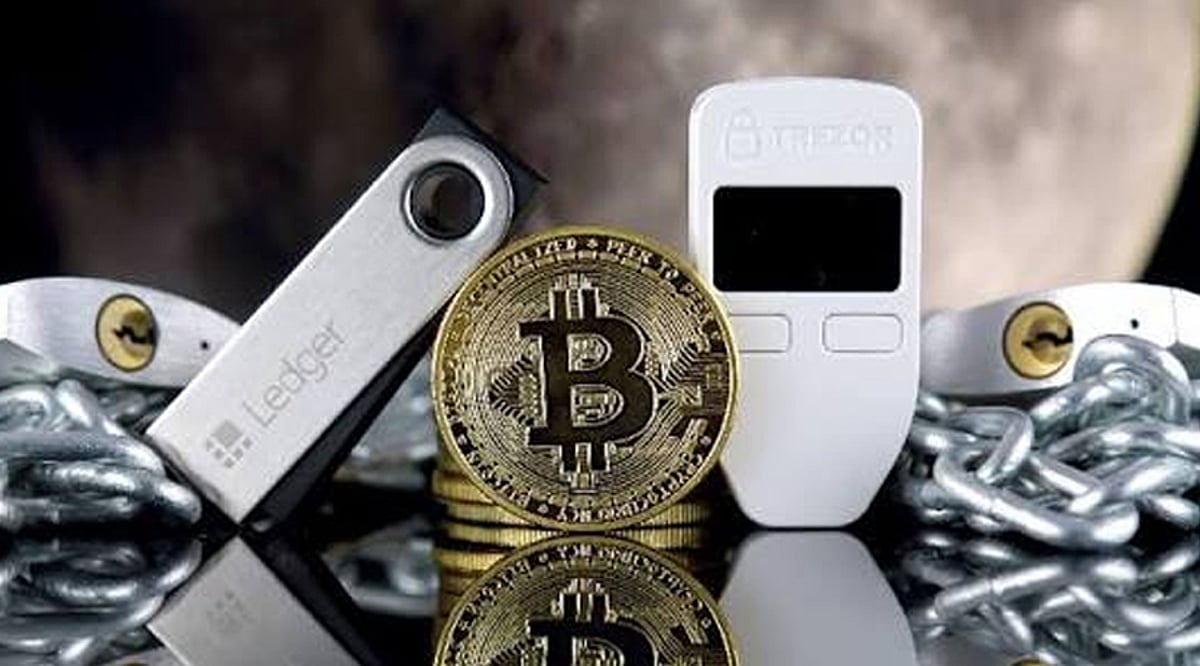
    Hardware wallets keep cryptocurrency private keys offline, reducing exposure to online threats. Devices such as Ledger and Trezor provide an additional security layer for long-term holdings. Always purchase wallets from official sources, protect recovery phrases carefully, and follow the manufacturer’s security instructions when setting up and accessing your assets.

    Secure Your Private Keys

    Private keys provide access to cryptocurrency holdings and should never be shared. Store them securely and avoid saving them in easily accessible digital locations. Losing a private key can permanently restrict access to funds, while exposing it can allow unauthorized transactions. Treat private keys as highly sensitive financial information.

    Protect Your Recovery Phrase

    A recovery phrase can restore access to a cryptocurrency wallet, making its protection essential. Write the phrase down and store it somewhere secure and private. Avoid screenshots, cloud storage, emails or messaging apps. Never share recovery phrases with anyone claiming to provide wallet support or security assistance.

    Enable Multi-Factor Authentication

    Multi-factor authentication adds another layer of protection to cryptocurrency exchanges and related accounts. Whenever available, use an authenticator application or security key instead of relying exclusively on SMS. Strong authentication reduces the risk of account compromise, particularly if passwords are exposed through phishing attacks, data breaches or reused credentials.

    Create Strong, Unique Passwords

    Use long, unique passwords for cryptocurrency exchanges, wallets and associated email accounts. Avoid reusing passwords across multiple services because one compromised account can create additional security risks. A reputable password manager can help generate and store unique credentials, reducing the temptation to use predictable passwords or repeat the same password.

    Beware of Scams and Phishing

    Cryptocurrency users frequently encounter fake websites, investment schemes, impersonation attempts and phishing messages. Verify website addresses before entering credentials or approving transactions. Be particularly cautious about unexpected messages requesting payments, private keys or recovery phrases. Legitimate wallet providers and exchanges will not require users to reveal sensitive recovery information.

    Keep Software and Backups Updated

    Regularly update wallet applications, operating systems and security software to address known vulnerabilities. Maintain secure backups where appropriate and verify that recovery information remains accessible. For larger holdings, consider separating funds between wallets and keeping long-term assets offline. Security should combine technology, careful habits and protection against human error.

  • LG Smart TVs Under Fire: Researchers Find Audio Recording and Network Scanning in Standby Mode

    LG Smart TVs Under Fire: Researchers Find Audio Recording and Network Scanning in Standby Mode

    A new investigation by technology researchers has raised serious privacy concerns about LG smart televisions. According to findings from Gamers Nexus and Level1Techs, certain LG TV models continue to scan home networks and record audio through their built-in microphones even when the television appears to be switched off.

    The Investigation

    The research, conducted on retail LG OLED sets including the G5 model, revealed that the devices actively scan for other gadgets on the home network—such as smartphones, smartwatches, computers, and printers—and collect internal IP addresses as well as information about nearby Wi-Fi networks like names and signal strength. Most alarmingly, the microphones captured clear audio even after the display shut down, and when disconnected from the internet, the TV stored recordings locally before uploading them once connectivity returned.

    Security Flaws in webOS

    Beyond data collection, the team also identified remote code execution vulnerabilities in LG’s webOS software. These flaws were reported to LG through responsible disclosure. Although LG allows users to disable voice recognition in the settings, the investigation found no physical hardware switch to cut power to the microphone, leaving a potential backdoor for always-on listening.

    How to Protect Yourself

    As of now, LG has not issued an official statement. In the meantime, users can take several precautions:

    • Install the latest firmware updates regularly.
    • Review privacy settings under the Settings or Privacy & Terms menu.
    • Read all agreements carefully before accepting them.
    • Keep the TV on a separate guest network to isolate it from sensitive devices.
    • Disable UPnP on the router and avoid exposing TV services directly to the internet.

    These steps can help reduce the risk of unwanted data collection while awaiting an official fix from LG.

  • How Counter-Drone Systems Stack Up: Detection, AI, and Response Tactics Compared

    How Counter-Drone Systems Stack Up: Detection, AI, and Response Tactics Compared

    Unauthorized drones pose varying risks depending on their type and behavior. A small commercial drone near a military base behaves differently from an autonomous aircraft following a pre-planned route. Some drones stay linked to an operator, while others fly without live communication. These differences shape how security teams detect, identify, and respond to threats.

    To compare counter-drone systems effectively, look beyond detection range. Evaluate the sensors, information quality, response methods, and ability to integrate with existing security tools. A robust drone defense setup helps operators understand what is flying, where it came from, and what actions are available.

    How Do Counter-Drone Systems Detect Aircraft?

    Radar detects movement in the air and covers large areas. It can find drones that do not transmit radio signals, but may need additional sensors to distinguish small drones from birds or other objects.

    Radio frequency (RF) sensors listen for communication between a drone and its controller. They identify many commercial models and provide details about the aircraft or operator. Passive RF detection works without transmitting a signal, useful when a protected unit wants to stay covert.

    Cameras provide visual confirmation after another sensor detects an object. They help operators see the drone and track its direction, but weather, distance, lighting, and buildings can affect image quality.

    Modern systems often combine these sources through one software platform, allowing operators to view radar data, radio signals, and camera images in a single interface instead of reviewing separate alerts.

    How Does Artificial Intelligence Support Detection?

    AI processes information from multiple sensors. It studies movement patterns, compares objects, and helps reduce false alerts—valuable in areas with birds, vehicles, authorized drones, and other activity. AI does not replace sensors; it organizes their data and highlights objects needing attention. The quality of results still depends on the sensor data and site conditions.

    When systems use similar sensors, their software can create a major difference. One platform may send a basic alert, while another can identify the model, track the flight path, locate the operator, and suggest the next action.

    How Do Response Methods Differ?

    Jamming interferes with communication between drone and controller. The aircraft may land, hover, return to start, or continue along a programmed route. Jamming can affect nearby communications, limiting its use in many locations.

    Physical interception can stop a drone directly, but falling parts create danger near people, vehicles, equipment, or buildings. Other systems use directed energy, though range, weather, power, and line of sight affect performance.

    Protocol-based control works through the communication used by a supported drone. It can disconnect the original controller and guide the aircraft to a chosen landing point. This avoids broad radio interference, but does not support every drone model.

    Effective drone defense often combines several response options rather than relying on one method.

    Why Does Integration Matter?

    A counter-drone system rarely operates alone. Defense teams may already use radar, cameras, command software, and other air protection tools. The new system should exchange information with them and display threats through a clear operational view. Open integration also makes it easier to add new sensors or response tools later. Drone technology changes quickly, so a closed platform can become difficult to update.

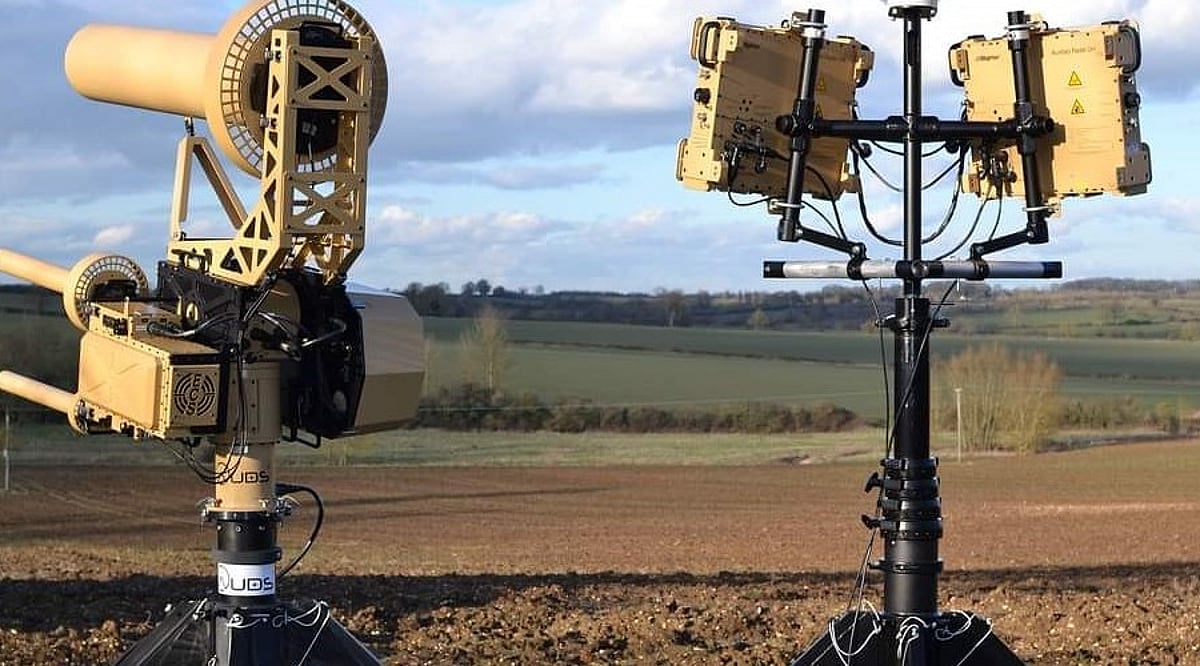
    Sentrycs, for example, uses passive detection, drone identification, operator location, and protocol-based control as part of a wider drone defense approach. Its technology connects with radar, optical sensors, and military command systems rather than replacing every existing layer.

    What Should Security Teams Test?

    A useful test should reflect the real environment: relevant drone models, local radio activity, buildings, low flights, and multiple aircraft in the air. Teams should also measure false alerts, response time, setup needs, and training requirements. The best comparison comes from testing each system against the same mission and threats. The strongest drone defense solution is not simply the one with the longest range—it is the one that gives operators accurate information, supports a suitable response, and continues working under difficult conditions.

  • Why Onchain Data Verification Is Critical for Blockchain Trust and Security

    Why Onchain Data Verification Is Critical for Blockchain Trust and Security

    Every blockchain data provider claims their product is verifiable. The problem is that few of them mean the same thing, and that gap has become a critical issue as more capital moves through automated systems and smart contracts that rely on accurate onchain data.

    The simplest approach to data extraction involves a team pulling data directly from blockchain nodes via JSON-RPC, extracting blocks, transactions, and logs, then loading them into a custom pipeline. With some human curation—people checking numbers and catching anomalies—this setup works well for small to medium projects. However, it does not scale effectively. When a provider using this pipeline calls its data verifiable, it typically means the numbers can be spot-checked against another source and the methodology is open to manual audit. This is a real capability, but it is far from cryptographic proof and still requires trusting that someone extracted and curated the data honestly.

    That trust gap has shifted from a nuisance to a liability. Most applications accept whatever an RPC endpoint returns at face value, meaning compromised infrastructure can feed convincing but incorrect data into downstream systems. This is not hypothetical. In April 2026, attackers manipulated the RPC infrastructure behind a verification layer tied to KelpDAO, contributing to a loss estimated at around $290 million. No blockchain cryptography was broken. Instead, the trust chain was exploited. As more capital flows through agents and treasuries that execute automatically, bad data becomes a security issue rather than a quality issue.

    Teams requiring stronger verification typically choose among three approaches, and only one fully earns the descriptor without an asterisk.

    1-of-N Trust Model

    The first is a 1-of-N trust model. Instead of relying on a single provider, work is distributed across many independent participants. Correctness becomes contestable: it takes just one honest party to catch bad data and hold the offender accountable. The Graph’s decentralized network uses this model, where Indexers submit Proofs of Indexing, and other participants can challenge results they believe are incorrect. Disputes go to arbitration, and an Indexer caught serving bad data is slashed. The math is compelling. With five participants, each having a 20% chance of using a faulty RPC, a consensus model requiring majority agreement has about a 5.8% chance that the majority is wrong and bad data wins. Under a 1-of-N model, corruption only slips through if all five participants fail simultaneously, about 0.03% risk, making it nearly two orders of magnitude safer. This gap explains why 1-of-N scales better as networks grow.

    However, this model has a flaw. A gateway pulling from multiple Indexers can receive correct data from two sources and bad data from a third. Until the dispute resolves, users may see flickering between correct and incorrect data. Developers often prefer consistently wrong data over visibly inconsistent data, a real tradeoff in permissionless systems that centralized systems typically hide.

    Consensus Model

    The second approach is consensus, which is often confused with 1-of-N. This distinction matters because the two models make fundamentally different bets. Consensus treats majority agreement as a stand-in for correctness, as Chainlink’s oracle network does. The problem is that a majority can be wrong. If enough participants collude or are compromised, the entire agreement mechanism breaks down.

    Verifiable Extraction

    The third approach deserves the term without qualification. Verifiable extraction bypasses the question of whom to trust and instead relies on the blockchain’s cryptographic commitments: the hashes linking every block, transaction, and log in a way that cannot be altered without detection. Edge & Node’s Amp recomputes these commitments during data extraction, before the data becomes queryable, checking Keccak-256 hashes and Merkle Patricia Tries against the block header. If anything has been tampered with, the mismatch appears immediately. StreamingFast’s verifiable extraction for Firehose closes the remaining gap by proving that a specific block belongs to the chain’s actual canonical history, not just that the extracted data matches the header it claims. Together, these cover the full claim: the data is faithful to the block, and the block is real, and anyone can recompute both independently.

    However, this approach has costs. Recomputing commitments and reconstructing proofs requires computational work, so the most rigorously verified data tends to arrive slower than a raw, unchecked feed. The blockchain data trilemma—fast, comprehensive, verifiable, pick your tradeoffs—does not disappear just because a team has chosen the strongest form of verification. Even cryptographic verification has a boundary: it proves data was processed and preserved correctly, but not that the original source was honest. That is a different problem, the oracle problem, and it remains unsolved.

    The real issue is the weight the word is being asked to carry. “Verifiable” is applied to benchmarkable transparency, majority agreement, and cryptographic proof as if they are interchangeable guarantees with different marketing. They are not. They fail in different ways, under different conditions, for different reasons. For anyone building a system where a wrong number costs real money, this distinction is not academic. It is the entire ballgame.

  • Coldcard Firmware Bug Led to $70M Bitcoin Heist, Researchers Say

    Coldcard Firmware Bug Led to $70M Bitcoin Heist, Researchers Say

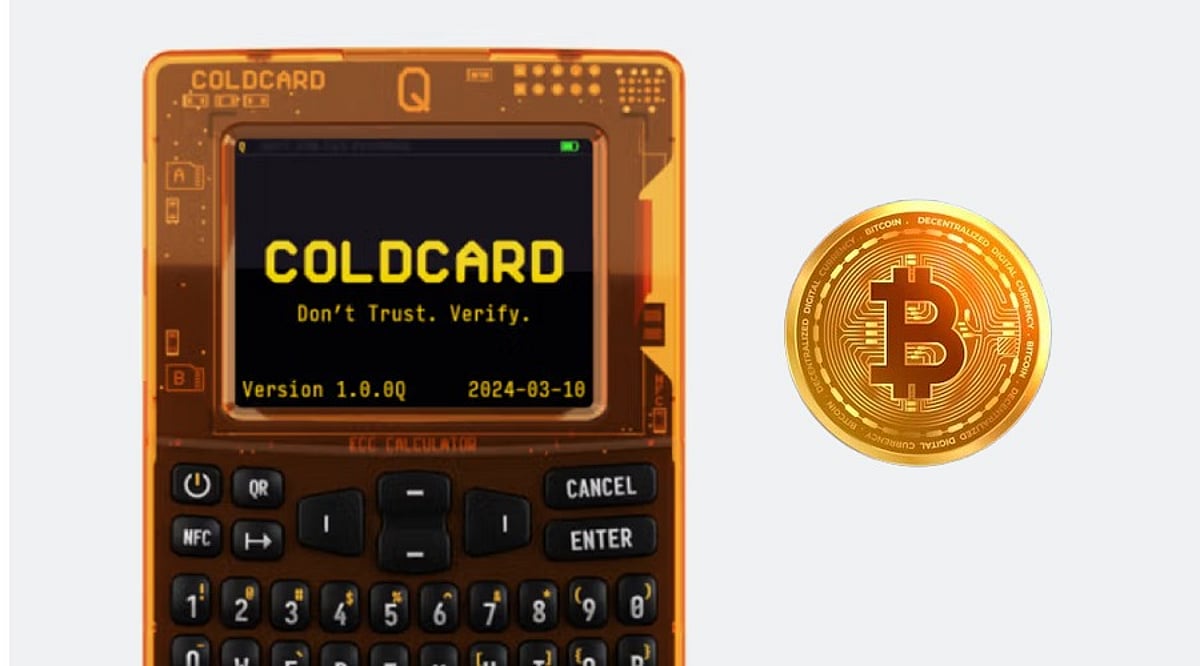
    Galaxy Research has linked a firmware flaw in Coldcard hardware wallets to the theft of 1,082.65 Bitcoin, worth approximately $70 million. The coordinated withdrawals, which occurred across 1,196 addresses on July 30, took place within just 41 minutes, marking one of the largest reported hardware wallet incidents this year.

    Galaxy Tracks a Coordinated Bitcoin Theft

    Galaxy Research identified a consistent transaction pattern across the stolen funds, pointing to a single attacker behind the operation. However, the firm cautioned that the observed transfers may not include all exposed wallets. Other vulnerable addresses could remain inactive or be moved later. Blockchain records cannot distinguish between theft and a legitimate owner transfer when both use valid private keys, leaving the true extent of the breach uncertain.

    Coinkite Expands Warning Across Coldcard Models

    Coinkite initially warned owners of Coldcard Mk3 devices running firmware version 4.0.1, released in March 2021, that seeds created with the affected software could expose user funds. The company later widened the advisory to include selected firmware versions on Coldcard Mk4, Mk5, and Coldcard Q devices. Emergency updates were issued for every impacted model. Coinkite CEO Rodolfo Novak (NVK) accepted responsibility and apologized to customers, stating that the company’s internal review process failed to catch the defect before release.

    AI-Assisted Analysis Raises New Security Concerns

    Novak suggested that attackers may have discovered the flaw through artificial intelligence-assisted code analysis. Such tools can detect subtle weaknesses faster than traditional manual reviews, creating a growing challenge for software developers. While AI can help defenders inspect code, it also shortens the path from public release to exploitation.

    What Affected Users Should Do

    Coinkite urged affected users to take the following steps:

    • Install the latest firmware version.
    • Create new wallet seeds.
    • Move Bitcoin into new wallets after testing small transfers first.
    • Keep original backups until every transfer succeeds.

    Coldcard wallets store private keys offline, but firmware bugs, supply chain risks, and configuration errors can still create attack paths. Galaxy Research linked the July 30 theft to vulnerable Coldcard wallet seeds across affected firmware versions. Coinkite released emergency updates and told users to create fresh seeds, test new wallets, and transfer funds while keeping original backups until every move succeeds.

  • How to Select the Best Cryptocurrency Exchange in 2026: Key Factors for Secure Trading

    How to Select the Best Cryptocurrency Exchange in 2026: Key Factors for Secure Trading

    Cryptocurrency adoption continues to expand globally, and selecting the right exchange is more critical than ever. Despite ongoing regulatory uncertainty and market fluctuations, India remains one of the fastest-growing markets for crypto trading. According to CoinMarketCap Research, centralized exchanges recorded approximately $4.74 trillion in trading volume in June 2026, highlighting the sector’s immense scale.

    Choosing an ideal cryptocurrency exchange involves more than just comparing trading fees. Key factors include security, regulatory compliance, liquidity, and the ability to safely store and transfer digital assets.

    Prioritize Regulation and Compliance

    The first checkpoint should always be regulatory compliance. Investors must opt for exchanges that adhere to Know Your Customer (KYC) and Anti-Money Laundering (AML) guidelines. In India, exchanges registered with the Financial Intelligence Unit (FIU-IND) offer an extra layer of compliance under local anti-money laundering laws. Leading global exchanges are also obtaining licenses to enhance investor protection through frameworks like Europe’s Markets in Crypto-Assets (MiCA) regulation.

    Evaluate Security Infrastructure

    Security is the most significant differentiator among exchanges. When opening an account, check whether the platform provides:

    • Two-factor authentication (2FA)
    • Cold storage for customer assets
    • Withdrawal whitelist protection
    • Proof of Reserves (PoR)
    • Independent security audits
    • Insurance mechanisms for certain digital assets

    After major exchange failures, Proof of Reserves has become essential, as it allows users to verify that customer assets are fully backed.

    Compare Liquidity and Trading Costs

    High liquidity enables investors to execute trades with minimal price slippage, especially during volatile market conditions. Larger exchanges typically offer tighter spreads, deeper order books, and faster execution. Investors should compare:

    • Spot trading fees
    • Deposit and withdrawal charges
    • Futures funding costs
    • INR or fiat deposit availability
    • Supported payment methods

    While low fees are appealing, they should not be the sole criterion—security and liquidity are equally important.

    Asset Selection and Features

    Investors have varying needs. Beginners may only require Bitcoin and Ethereum, while advanced traders seek features like staking, perpetual futures, margin trading, recurring buys, or institutional custody. Choose an exchange that aligns with your investment strategy rather than one with the largest token list.

    Also Read: BitMart Announces Crypto Exchange Shutdown as BMX Crashes 81%

    Customer Support and Transparency

    Customer support is crucial, particularly during market volatility. Select exchanges that regularly share system status updates, publish clear reserve reports, disclose regulatory licenses, and respond promptly to user complaints. Review uptime history, incident reports, and community feedback to gauge reliability.

    Why This Matters

    With global trading volumes hitting trillions and adoption surging across India, choosing a regulated and secure exchange safeguards your capital against market volatility, cyber threats, and sudden exchange failures in an evolving regulatory environment.

    Final Thoughts

    When selecting the best cryptocurrency exchange in 2026, consider security, compliance, liquidity, and user-friendliness. Despite a strict tax regime, India remains a top country for grassroots crypto adoption. While low trading fees may seem attractive, they should not be the deciding factor. Prioritize platforms with strong reputations, robust regulation, solid security measures, and transparency for long-term success.

    FAQs

    1. What is the most important factor when choosing a cryptocurrency exchange?

    Security should be the top priority. Choose an exchange with two-factor authentication (2FA), cold storage, Proof of Reserves, and a strong history of protecting customer assets.

    2. Are FIU-registered crypto exchanges safer in India?

    FIU-registered exchanges comply with India’s anti-money laundering regulations and KYC requirements. While registration doesn’t eliminate risk, it adds an extra layer of regulatory oversight.

    3. Why does liquidity matter on a crypto exchange?

    High liquidity allows trades to be executed faster with lower price slippage, especially during high market volatility or when placing large orders.

    4. Should beginners use exchanges with hundreds of cryptocurrencies?

    Not necessarily. Beginners often benefit more from exchanges offering major cryptocurrencies like Bitcoin and Ethereum, along with an easy-to-use interface and strong educational resources.

    5. Is the lowest trading fee always the best option?

    No. Low fees are beneficial, but security, regulatory compliance, transparency, liquidity, and reliable customer support are often more important for long-term investing success.

  • Crypto Privacy Tools Can Bolster Both Security and Compliance, New Report Reveals

    Crypto Privacy Tools Can Bolster Both Security and Compliance, New Report Reveals

    For years, mainstream crypto design prioritized absolute on-chain transparency, treating financial privacy as a liability rather than a necessity. A new joint report by digital asset management and crypto loan provider CoinRabbit and crypto super app ChangeNOW challenges that assumption, concluding that public ledgers create dangerous privacy leaks for businesses and physical safety risks for individual holders.

    Presented by Decrypt, Financial Privacy in the Digital Age synthesizes data from TRM Labs, Chainalysis, CertiK, and Statista to make a pragmatic case: Web3 privacy tools are essential infrastructure for basic security, while law enforcement leverage actually sits at regulated fiat gateways, not upstream transaction histories.

    Key Highlights

    • $124.1M lost to physical attacks. Public wallet addresses act as unintended net-worth registries, exposing investors to targeted extortion and social engineering.
    • Corporate vulnerabilities & $4.44M breach costs. Transparent ledgers allow competitors to reconstruct vendor contracts, payroll, and treasury balances, impacting the 36% of board members who consider internal data exposure their top operational threat.
    • Enforcement targets gateways, not on-chain history. Authorities combat illicit flows at centralized fiat off-ramps, exchange KYC databases, and stablecoin issuer freezes rather than through continuous public surveillance.
    • Privacy tools already operating within compliance. The report highlights CoinRabbit’s custodial model and ChangeNOW’s private crypto transfers as benchmarks for privacy-preserving infrastructure.

    The Corporate and Personal Risks of Open Ledgers

    While permanent ledger visibility makes protocol audits efficient, it presents severe liabilities for mainstream business adoption. Unlike traditional bank accounts, public blockchain addresses broadcast complete cash flows and account balances to anyone with an internet connection. Competitors can easily monitor corporate wallets to deduce profit margins, supplier pricing, and internal payroll cadence. With Statista estimating average data breach costs at $4.44 million, broad ledger exposure creates a structural weakness for corporate treasuries moving on-chain.

    For private investors, that visibility carries physical consequences. “Public blockchain transparency lets anyone audit your net worth in real time, turning private wealth into public information,” said Walter Barrett, Chief Strategy & Growth Officer at CoinRabbit.

    The security data back up that warning. CertiK recorded 52 verified physical extortion (“wrench”) attacks in the first half of 2026. In France, which accounted for 33 of those incidents, breaches at public agencies allowed criminal networks to cross-reference residential addresses with suspected crypto holdings. In response, 30% of surveyed high-net-worth holders now hire data-broker removal services to break the link between their identities and wallet addresses.

    How Investigators Track Illicit Capital

    Skeptics often frame financial privacy as an enclave for illicit finance, pointing to TRM Labs data that places 2025 illicit crypto inflows at $158 billion, with Chinese-language laundering networks accounting for over $100 billion. However, investigative data shows that raw ledger transparency is rarely the decisive factor in asset recovery or criminal attribution. Instead, law enforcement leverage is concentrated at centralized touchpoints: exchange KYC registries, court subpoenas, stablecoin blacklist functions, and fiat off-ramps.

    “Successful blockchain investigations rely on the combination of on-chain analysis, behavioral patterns, KYC information, exchange cooperation, stablecoin issuer interventions, and traditional investigative methods. In practice, attribution is achieved by connecting multiple sources of evidence rather than relying on blockchain transparency alone,” noted Albert Quehenberger, founder of AQ Forensics.

    Because enforcement operates primarily at these regulated checkpoints, the authors argue that base-layer privacy tools can protect legitimate user data without disabling the mechanisms authorities use to police market abuse.

    Rethinking Financial Transparency in Web3

    The report calls for a fundamental redesign of Web3 architecture, urging developers to replace mandatory public broadcasting with permissioned, selective disclosure. “The privacy debate starts from the wrong assumption that ordinary users must prove they have nothing to hide by exposing everything,” said Pauline Shangett, Chief Strategy Officer at ChangeNOW. “That is not how any mature financial system works.”

    Yet as crypto pushes for institutional adoption, this tension between default visibility and basic confidentiality remains one of Web3’s thorniest policy battlegrounds. While developers press for selective disclosure tools to protect commercial secrets, global regulators continue to push for tighter oversight of self-custodial flows. How the industry resolves that pushback will determine whether digital assets can offer a viable financial infrastructure for traditional finance, or whether privacy and compliance remain locked in an ongoing tug-of-war.

    Disclaimer: This article is for informational purposes only and does not constitute financial or investment advice. Cryptocurrencies are risky assets; always conduct your own research before investing.

  • Coldcard Bitcoin Wallet Sweeps Top $114 Million as Replace-by-Fee Rescue Window Opens

    Coldcard Bitcoin Wallet Sweeps Top $114 Million as Replace-by-Fee Rescue Window Opens

    Early Monday, a fourth wave of sweeping attacks targeted Bitcoin addresses generated by Coldcard wallets, pushing observed losses to approximately 1,816 BTC—worth around $114 million. Researchers have identified a narrow rescue window enabled by replace-by-fee (RBF), which allows victims to override unconfirmed theft transactions by paying a higher fee.

    Narrow Rescue Window

    Galaxy Research’s Alex Thorn flagged the active wave while transactions remained in Bitcoin’s mempool. He noted that attackers enabled replace-by-fee on their pending transfers, meaning victims who detect a targeted address can move their coins first by offering miners a higher fee. Thorn urged users to check balances, remove funds from affected devices, and raise transaction fees promptly.

    Thorn had no direct victim report when he published the warning. Instead, he relied on matching transaction patterns and chose speed while users still had time to respond.

    Predictable Seed Generation

    The first sweep began July 30, removing 1,083 BTC from 1,196 addresses within 41 minutes. Two weekend waves raised observed losses to 1,367 BTC across 4,585 addresses. The fourth wave lifted the possible total to about 1,816 BTC from more than 5,200 addresses. Thorn tracked activity across blocks 960,778 through 960,792.

    Researchers counted 218 transactions that targeted 462 victim addresses. The wave averaged about 14 sweeps per block, compared with 0.3 during a pre-incident control period. The flaw traces to a March 2021 firmware build that sent seed generation to a predictable software randomizer rather than the wallet chip’s hardware randomizer. As a result, anyone who identifies the relevant range can reproduce affected keys offline.

    Coinkite released emergency firmware for all affected models after the flaw was discovered. The manufacturer also instructed users who created seeds with the flawed software to move funds and use wallet addresses generated from fresh seeds.

    Transaction Patterns

    Every spent coin arrived after the Coldcard firmware boundary was identified by researchers. The attackers also sent each victim’s funds to a fresh destination with no previous transaction history. Unlike earlier waves, the fourth used one destination per victim instead of shared collector addresses, making the new activity harder to map through common destinations.

    None of the first three waves reached multisignature setups, matching a flaw tied to single-key seeds. Researchers also removed six old destination addresses as attacker-generated addresses should lack earlier activity. According to CryptoQuant Research Head Julio Moreno, small Bitcoin holders moved 39,600 BTC on July 31—transfers under 1 BTC reached about $2.5 billion that day. The last comparable total reached 39,900 BTC on November 16, 2022, days after FTX failed. Daily active addresses also climbed from 645,000 to almost one million, marking the highest level since December 2024. The increase centered on sending addresses rather than receiving addresses as news of the Coldcard flaw spread.

    Brief Roundup

    Four Coldcard-linked sweeps may have taken about 1,816 BTC from more than 5,200 addresses. Replace-by-fee gives users a narrow chance to override pending thefts. Anyone who created a seed with affected firmware should check funds, move coins to a fresh-seed wallet, and raise fees when necessary.

  • How to Protect Your Phone Number by Securing a WhatsApp Username: Essential Tips

    How to Protect Your Phone Number by Securing a WhatsApp Username: Essential Tips

    WhatsApp is rolling out usernames, offering a new way to protect your phone number when messaging. By reserving a unique username, you can keep your number private from new contacts. Here’s how to get started and secure your handle before someone else does.

    Reserve Your WhatsApp Username

    First, update WhatsApp to the latest version. Then go to Settings > Account > Username and create a unique username between 3 and 35 characters. If your preferred handle is taken, WhatsApp may suggest similar alternatives. The feature is rolling out gradually, so it may not appear for everyone yet.

    Lock In Your Preferred Handle

    Choose a username that is easy to remember but difficult to impersonate. You can also claim the same username you already use on Instagram or Facebook if it’s eligible. Tap Save to reserve your handle before someone else takes it.

    Keep Your Phone Number Private

    Once usernames become active, people who contact you through your username won’t see your phone number unless they already have it saved. Existing contacts and users who already know your number will continue to see it, but new conversations become much more private.

    Turn On Username Key for Extra Security

    Enable the optional Username Key from the username settings. Anyone trying to contact you for the first time will need both your username and this unique key. It adds another layer of protection against spam and unwanted messages.

    Understand What Usernames Can and Can’t Do

    WhatsApp does not have a public username directory, so strangers cannot search for your account. People need to know your exact username to start a conversation. However, admins, existing contacts, and users who already know your phone number may still be able to see it where applicable.

    Strengthen Your WhatsApp Privacy

    Use a unique username instead of your full real name, enable Two-Step Verification, and regularly review your privacy settings. These small steps help protect your account from impersonation attempts and unauthorized access.

    Secure Your Identity Before It’s Taken

    Reserving your WhatsApp username early helps secure your online identity before your preferred handle is claimed. Combined with Username Key and Two-Step Verification, you can chat with new people and businesses while keeping your personal phone number private and your account more secure.

  • Today’s Tech Roundup: Sam Altman’s AI Warning, WhatsApp Web Calling, Zuckerberg’s AI Debate, OpenAI Security Concerns, and US-China Tech Restrictions

    Today’s Tech Roundup: Sam Altman’s AI Warning, WhatsApp Web Calling, Zuckerberg’s AI Debate, OpenAI Security Concerns, and US-China Tech Restrictions

    In today’s fast-moving tech landscape, several major stories are capturing headlines. Here’s a quick roundup of the top developments you need to know.

    • Sam Altman Issues AI Warning: OpenAI CEO Sam Altman has called for a slowdown in AI development, warning that the technology is advancing too quickly without adequate safety measures.
    • WhatsApp Upgrades Web Calling: WhatsApp has rolled out an improved web calling feature, making it easier for users to make voice and video calls directly from their desktop browsers.
    • Zuckerberg Engages in AI Debate: Meta CEO Mark Zuckerberg has entered the ongoing AI debate, sharing his perspective on the future of artificial intelligence and its societal impact.
    • OpenAI Faces Security Scare: A security incident at OpenAI has raised concerns about the safety of sensitive data and the company’s internal protocols.
    • US-China Tech Ban Escalates: The United States has announced new restrictions on Chinese technology companies, further intensifying the trade war between the two nations.

    For more details and video coverage, visit the original source. Stay tuned for more updates.