Tag: Security

  • The Critical Role of Localization in Messaging Apps for Global Users

    The Critical Role of Localization in Messaging Apps for Global Users

    Messaging apps have become an essential part of global digital communication. People use them to manage business discussions, coordinate remote work, stay connected with communities, share documents, and communicate across borders. As digital communication becomes more international, one important factor is often overlooked: localization.

    Localization is not just about translating buttons or menus into another language. It is about helping users understand how a platform works in their own language, cultural context, and daily communication environment. For messaging apps, this can affect account setup, privacy settings, notification control, security awareness, and overall user confidence.

    As more people rely on messaging platforms for both personal and professional communication, localized experiences are becoming more important. A clear interface, understandable settings, and reliable setup guidance can help users communicate more efficiently and safely.

    The Growing Need for Localized Messaging Platforms

    Digital communication is no longer geographically constrained. A small business could be talking to suppliers in other countries. Remote team members can be based in different geographical areas. Messaging apps might be how students, freelancers, creators, and online communities stay connected across languages and time zones.

    Messaging platforms must, in this context, be inclusive of users with different language preferences. Users may miss important settings, ignore security features, or use unverified instructions from unknown sources in difficult-to-understand apps. This can create confusion during installation, account registration, device login, or privacy configuration.

    Localized messaging experiences help reduce these barriers. When users can read instructions, settings, and security options clearly, they are more likely to use the app correctly. This is especially important for users who are setting up a messaging app for the first time or switching between mobile and desktop devices.

    How Language Support Improves Digital Communication

    Language support has a direct impact on how people interact online. A messaging app can have powerful features, but if the user doesn’t know how to access or manage them, they aren’t very useful. For example, it is difficult for users unfamiliar with the interface to configure group settings, privacy controls, file-sharing options, and notification preferences.

    Good localization makes the users navigate the app more confidently. They know where to change account settings, manage contacts, change message notifications, and review connected devices. These details may seem simple, but they can make a big difference in the user experience.

    For global communication, language clarity can also reduce mistakes. In business or team environments, unclear app settings may lead to missed messages, accidental information exposure, or poor coordination. A localized interface makes communication tools more practical for daily use.

    Security Settings Should Be Easy to Understand

    Security is now one of the most important elements in messaging that users need to control. Users should know how to protect their accounts from harm, control their login sessions, understand their privacy settings, and recognize suspicious links or unofficial apps. Nevertheless, even the most efficient security features may not be of value unless they are comprehensible and usable by users.

    There is a risk that users will keep their default settings intact because they do not understand what the privacy settings represent. Users do not know how to restrict profile visibility, manage contacts or view their status in the system. Under such conditions, users may be unnecessarily exposed to dangers.

    Thus, user-friendly security instructions can simplify information processing. Understanding what the settings mean helps users realize the importance of each setting. Users can recognize dangerous activities, such as sharing codes or downloading unknown applications from dubious websites.

    Localization Improves User Confidence and Safety

    For many users, the first challenge is not advanced security. It is simply understanding how to install, open, and configure the messaging app safely. This is where localized resources can be useful. Users often look for language-specific guides to help them understand setup steps, account options, and basic safety practices.

    For Chinese-speaking users, resources such as telegram 中文版 can help users review relevant information in a more familiar language environment before they configure communication tools for daily use.

    This kind of localized guidance can improve user confidence. Instead of guessing through unfamiliar menus or relying on random third-party instructions, users can better understand what they are doing. This is especially important when managing account access, privacy settings, and device synchronization.

    Confidence also affects adoption. If users feel that a messaging app is difficult to understand, they may avoid using important features. If the experience is clear and accessible, they are more likely to use the platform effectively and responsibly.

    Cross-Border Communication and Productivity

    Messaging apps are now deeply connected to productivity. Teams use them to discuss projects, share files, confirm schedules, and coordinate decisions in real time. For cross-border teams, clear communication becomes even more important because members may work in different languages, regions, and time zones.

    Localized messaging tools can help reduce friction in these situations. Team members can manage their own settings more easily, understand notifications, and avoid missing important updates. This improves coordination and helps communication move faster.

    For businesses, localization can also support customer communication. A company that communicates with users in multiple regions may need messaging tools that are easy for both staff and customers to understand. When users feel comfortable with the communication platform, they are more likely to respond, ask questions, and stay engaged.

    Productivity is not only about speed. It is also about reducing confusion. A messaging app that supports clear setup, understandable controls, and reliable cross-device access can help users focus more on communication and less on technical barriers.

    The Role of Mobile and Desktop Access

    Modern users often move between devices throughout the day. They may start a conversation on a mobile phone, continue it on a desktop computer, and later check updates from a tablet. This cross-device behavior makes messaging apps more flexible, but it also creates new challenges.

    Users need to understand how device login works, how sessions are managed, and how to remove access from devices they no longer use. If these settings are not clear, users may leave old sessions active or fail to notice unusual account activity.

    Localized instructions can make cross-device access safer. When users understand how to connect and manage devices, they are better prepared to protect their accounts. This is especially important for people who use messaging apps in shared work environments, public computers, or multiple personal devices.

    Privacy Awareness in Global Messaging

    Privacy awareness is becoming a core digital skill. Users should know how much information they share through messaging apps, who can see their profile, how group visibility works, and what data may be exposed through public channels or shared links.

    In global communication, privacy expectations may vary by region and user group. Some users may prefer open communities, while others may need stricter account controls. A localized experience helps users understand these options more clearly and choose settings that match their needs.

    Privacy education should be simple and practical. Users do not need to become security experts, but they should understand the basics: avoid sharing verification codes, review active sessions, be careful with unknown contacts, check file sources, and update apps regularly.


  • Top 10 Essential Spring Boot Libraries for Developers in 2026

    Top 10 Essential Spring Boot Libraries for Developers in 2026

    Spring Boot remains one of the most popular frameworks for building Java applications, but creating robust software requires more than the framework alone. Developers rely on libraries to simplify security, testing, API documentation, logging, database access, and monitoring. Choosing the right libraries saves time, reduces effort, and improves application performance. Below are the ten most essential Spring Boot libraries for developers in 2026.

    Why Spring Boot Libraries Matter

    A typical Spring Boot application does more than serve HTTP requests. It connects to databases, secures APIs, validates user input, logs events, monitors performance, and integrates with cloud services. Instead of building these features from scratch, developers use well-tested, actively maintained libraries supported by the Java ecosystem.

    Best Practices for Using Spring Boot Libraries

    Adding more libraries does not always improve an application. Developers should select libraries that solve specific problems and avoid including multiple tools with overlapping functions. Keeping dependencies updated is critical, as newer versions often include security patches, bug fixes, and performance improvements. Reviewing library documentation before integrating new features into production is also recommended. Using trusted, well-maintained libraries reduces compatibility issues and simplifies long-term maintenance. A clean dependency structure makes applications easier to debug, upgrade, and scale as project requirements evolve.

    Trends Shaping the Spring Boot Ecosystem in 2026

    Spring Boot development continues to evolve alongside cloud-native technology and AI. Current trends include microservices architecture, event-based applications, and AI-powered APIs, which demand higher observability, enhanced security, and increased resiliency. Containerization support, cloud monitoring, automatic API generation, and automated testing are critical capabilities for modern application development. Additionally, native compiling and Kubernetes integration have influenced Java application design. As enterprise software becomes more distributed, developers increasingly focus on performance and maintainability when choosing Spring Boot libraries.

    Top Spring Boot Libraries at a Glance

    • Spring Data JPA – Simplifies database access and CRUD operations with ORM support.
    • Spring Security – Provides authentication, authorization, OAuth2, JWT, and protection against common threats.
    • Springdoc OpenAPI – Generates interactive API documentation automatically.
    • Lombok – Reduces boilerplate code with annotations for getters, setters, and constructors.
    • MapStruct – Simplifies object mapping between layers.
    • Logback – A reliable logging framework for production environments.
    • Testcontainers – Enables integration testing with disposable databases and services.
    • Resilience4j – Adds fault tolerance with circuit breakers, retries, and rate limiters.
    • Micrometer – Provides metrics collection for monitoring and observability.
    • Flyway – Manages database schema migrations safely.

    How to Choose the Right Libraries

    Not every project requires every library. The best approach is to select libraries based on application requirements. For example:

    • Database-driven applications benefit from Spring Data JPA and Flyway.
    • REST APIs typically require Spring Security and Springdoc OpenAPI.
    • Microservices often use Resilience4j and Micrometer.
    • Large enterprise projects usually combine MapStruct, Lombok, Logback, and Testcontainers to improve development speed and software quality.

    Choosing actively maintained libraries also ensures compatibility with future Spring Boot releases.

    Final Thoughts

    Spring Boot is an excellent framework for Java development, but libraries are essential for simplifying modern application development. Whether building RESTful APIs, enterprise-grade platforms, or cloud-native microservices, these libraries solve common development problems without adding unnecessary complexity. By selecting the right tools, developers can boost efficiency and productivity. As enterprise Java applications become increasingly cloud-native and distributed, choosing the right Spring Boot libraries is critical for performance, security, and long-term maintainability.

  • India’s Government Scrutinizes WhatsApp Username Feature Over Privacy and Security Concerns

    India’s Government Scrutinizes WhatsApp Username Feature Over Privacy and Security Concerns

    India’s central government is evaluating the potential risks of WhatsApp’s upcoming username feature, stating that it will not compromise national security while assessing the privacy-focused update. According to government sources, authorities are examining whether the username feature could be exploited for impersonation, fraud, and other cybercrimes before its wider rollout in the country.

    WhatsApp recently introduced optional usernames, allowing users to communicate without sharing their phone numbers. This feature is designed to enhance user privacy, particularly in group chats and when interacting with unknown individuals. Users can create a personal username in the app’s account settings, while creators and brands can set usernames matching their Instagram or Facebook handles.

    However, authorities view anonymity as a potential threat that could lead to fake profiles and internet fraud. According to sources, the government is carefully weighing the implications of this feature to avoid undermining India’s digital security framework and ongoing efforts to combat cyber fraud.

    On the other hand, WhatsApp continues to tie accounts to users’ mobile numbers. Meta maintains that usernames are simply another way to connect without revealing phone numbers, aiming to balance privacy with security.

  • India Scrutinizes WhatsApp’s New Username Feature Over Impersonation and Fraud Risks

    India Scrutinizes WhatsApp’s New Username Feature Over Impersonation and Fraud Risks

    The Indian government is closely examining WhatsApp’s upcoming username feature following concerns about fake accounts and online fraud. Sources from the Ministry of Electronics and Information Technology (MeitY) indicate that officials will thoroughly study the feature before it becomes widely available. The goal is to ensure the new capability does not introduce additional risks for users.

    WhatsApp’s username feature allows people to chat without sharing their phone numbers. Instead, users can create a unique identifier—up to 35 characters long, including letters, numbers, dots, and underscores—to communicate with new contacts, join groups, or connect with businesses. The company touts this as a privacy improvement, helping keep personal phone numbers private.

    Government Raises Safety Concerns

    While the feature enhances privacy, the government believes it could also create opportunities for abuse. For example, a malicious actor could register a username that closely resembles a real person’s name or a trusted business. Unsuspecting users might not notice the subtle difference and could end up interacting with impostors, leading to scams, fraud, or the spread of misinformation.

    Officials have stressed that user safety remains the highest priority. Every legal and security implication tied to the feature will be reviewed. If the government finds insufficient safeguards, MeitY may issue a notice to WhatsApp demanding stronger protections before the broader rollout.

    WhatsApp’s Planned Protections

    WhatsApp has already announced several measures to prevent misuse. The company will not maintain a public directory of usernames; users must know the exact username to start a conversation. Additionally, WhatsApp is introducing an optional username key—a secondary code that must be provided before a first message can be sent. This adds an extra layer of security.

    To further reduce impersonation risk, the platform plans to reserve usernames linked to government offices, public figures, celebrities, and well-known brands. WhatsApp says these steps will help keep the platform safe as the feature expands.

    Security experts caution, however, that fake accounts remain a challenge. A scammer could simply alter one letter or add a number to a legitimate username, creating a convincing impostor. Given that online fraud is already prevalent in India, robust verification mechanisms will be essential before the feature reaches millions of users.

    Why India Is Reviewing the Feature

    The government’s review is part of a broader effort to ensure that new technologies prioritize user protection. While privacy is important, strong security is equally necessary when a platform serves hundreds of millions of people daily.

    WhatsApp has already begun allowing users to reserve usernames prior to the official launch. Users can change or delete their usernames at any time. Businesses and creators can claim the same usernames they use on Instagram and Facebook.

    The Indian government has not announced a final decision yet, but the ongoing review signals that New Delhi wants stronger safeguards against online fraud, impersonation, and other digital security threats before the WhatsApp username feature goes live.

  • WhatsApp Usernames: Privacy Boost or New Scam Risk?

    WhatsApp Usernames: Privacy Boost or New Scam Risk?

    WhatsApp is rolling out a major privacy update that lets users start conversations without sharing their phone numbers. Instead of revealing a mobile number, people can now share a unique username. However, this new feature has also raised concerns among creators and entrepreneurs, who fear it could make impersonation and fraud easier if strong safeguards are not in place.

    The update is being released in stages, and users in supported regions can already reserve their usernames. WhatsApp says the feature will reach more countries in the coming months.

    WhatsApp Username Feature Expands Privacy

    The change comes as Meta works to make WhatsApp safer and more private for its billions of users. It follows the appointment of Indian fintech entrepreneur Kunal Shah to lead WhatsApp, as Meta continues adding new services to the platform.

    The biggest change is how conversations begin. Currently, anyone needs a phone number to send a message on WhatsApp. Once the new feature is available, a username will be enough for first-time chats. The phone number will remain hidden unless the user decides to share it.

    WhatsApp says this update is designed to give people better privacy, protecting personal numbers in situations such as joining large group chats, messaging a business for the first time, or talking to someone new. It can also reduce unwanted calls and spam messages.

    How to Create and Use a WhatsApp Username

    Creating a username is simple. Users need the latest version of WhatsApp. After updating the app, they can open Settings, tap Account, and choose Username. They can then pick an available name that contains between three and thirty-five characters.

    WhatsApp will not create a public list of usernames. People cannot search for random users as they can on many social media platforms. Someone must know the exact username before sending the first message, giving users more control over who can contact them.

    The app also includes another safety feature called a username key. Users can turn it on for extra protection. New contacts must enter both the username and the key before sending the first message. The key can be changed whenever needed.

    Why the New Privacy Update Matters

    WhatsApp’s Username feature makes sharing contact details much safer. Many people use WhatsApp for work, online selling, community groups, and school activities. A username allows them to stay connected without giving away a personal phone number.

    Businesses, creators, and organizations will also benefit from the update. They can reserve the same username already used on Instagram or Facebook. This keeps their online identity consistent across Meta’s apps and makes it easier for customers to recognize them.

    WhatsApp will also block usernames linked to celebrities, public figures, and government organizations. This step aims to stop fake accounts and reduce impersonation.

    More than 3 billion people use WhatsApp worldwide, so many popular usernames may be taken quickly. The company has opened early reservations to give users a better chance of getting the name they want before the full rollout ends.

    The update brings WhatsApp closer to other messaging apps that already use usernames. At the same time, it keeps privacy at the center with better phone number protection, stronger secure messaging, and a safer digital identity for everyday conversations.

  • Best Crypto Exchanges for High-Net-Worth Traders in 2026: Security, Liquidity, and OTC Desks Compared

    Best Crypto Exchanges for High-Net-Worth Traders in 2026: Security, Liquidity, and OTC Desks Compared

    High-net-worth crypto traders require platforms that offer robust security, deep liquidity, low fees, and advanced trading tools. In 2026, Binance, Coinbase, Kraken, OKX, and Crypto.com emerge as the top choices for wealthy investors. This article evaluates each exchange based on key criteria such as liquidity, security, regulatory compliance, and specialized services like over-the-counter (OTC) desks.

    Key Considerations for Wealthy Crypto Investors

    • Deep Liquidity: Essential for executing large transactions without significant price slippage.
    • Security and Compliance: Critical for protecting substantial portfolios and meeting regulatory standards.
    • Advanced Products: Exchanges now offer ETFs, futures, staking, and tokenized assets to cater to sophisticated investors.

    Binance: Dominant Liquidity and Expanding Services

    Binance remains the largest crypto exchange by trading volume, handling billions of dollars daily. Its deep liquidity allows high-net-worth traders to execute large orders with minimal market impact. The platform also features a robust OTC desk for private transactions and offers advanced futures products with reduced fees for VIP clients. In June 2026, Binance expanded beyond crypto by introducing direct access to U.S. stocks and ETFs, positioning itself as a competitor to traditional financial platforms.

    Coinbase: Trust Through Regulation

    Coinbase prioritizes regulatory compliance, making it a safe choice for investors seeking transparency and long-term security. Its premium service, Coinbase Prime, provides institutional clients with secure custody, advanced tools, and dedicated support. In June 2026, Coinbase restored Indian rupee support, enabling direct deposits and withdrawals, and launched index-based perpetual futures tied to AI, defense, and Nasdaq-linked sectors, broadening opportunities for advanced traders.

    Kraken: Unmatched Security

    Kraken is renowned for its strong security record, appealing to high-net-worth investors concerned about cyber threats. The exchange offers professional-grade trading infrastructure with rapid execution, deep spot liquidity, futures markets, and reliable API support. Its private OTC desk facilitates large trades without affecting public order books. Independent analysts consistently rank Kraken among the most secure platforms, with transparent reserve accounting and controlled asset management.

    OKX: Innovation for Institutional Clients

    OKX has rapidly grown into a leading exchange for wealthy traders, focusing on derivatives, automated trading, and structured products. A major milestone was its partnership with Intercontinental Exchange (owner of the NYSE) to form OKXICE, a joint venture targeting tokenized securities and blockchain-based financial products. This move bridges crypto and traditional finance, positioning OKX as a strong long-term platform.

    Crypto.com: Expanding Beyond Retail

    Originally popular with retail users, Crypto.com now attracts larger investors with over 450 supported cryptocurrencies, lending services, staking rewards, and asset management tools. In 2026, it ranks among the top platforms for crypto staking, offering both capital growth and passive income. Its growing institutional infrastructure signals a shift beyond small retail traders.

    What Wealthy Traders Should Focus On

    Large investors need more than basic trading access. Liquidity is paramount to avoid price slippage on million-dollar orders. Private OTC desks enable discreet execution of large transactions. Security measures like cold storage, insured custody, and reserve transparency reduce risk. Regulatory compliance is increasingly important as global regulations tighten. Additionally, exchanges are expanding into stocks, ETFs, tokenized securities, and lending services, creating integrated ecosystems.

    Final Outlook

    The crypto exchange industry now demands institutional-grade infrastructure for wealthy investors. Binance leads in liquidity and volume, Coinbase in trust and regulation, Kraken in security, OKX in innovation, and Crypto.com in diversification and passive income. As institutional money flows into digital assets, choosing the right exchange becomes a critical decision for serious investors.

    Frequently Asked Questions

    1. Which crypto exchange is best for high-net-worth traders? Binance offers the best combination of high liquidity, low fees, and advanced tools.
    2. Why do wealthy traders prefer OTC trading? OTC trading allows large transactions without affecting public market prices.
    3. Is Coinbase safe for large investments? Yes, due to strong regulatory compliance and secure custody systems.
    4. Which exchange offers the best security in 2026? Kraken is consistently ranked among the safest for its reserve transparency and security systems.
    5. What matters most when choosing a crypto exchange? Liquidity, security, legal compliance, custody protection, and advanced trading products are key factors.
  • Must-Have USB-C Gadgets for Productivity, Security, and Convenience in 2026

    Must-Have USB-C Gadgets for Productivity, Security, and Convenience in 2026

    USB-C has become the universal standard, powering everything from smartphones and laptops to accessories and smart devices. Today’s USB-C gadgets go far beyond simple charging—they boost productivity, strengthen security, expand connectivity, and simplify daily tasks. Here are some of the coolest USB-C gadgets worth adding to your tech toolkit.

    YubiKey 5C NFC for Stronger Security

    Cybersecurity remains a top concern, making hardware security keys more valuable than ever. The YubiKey 5C NFC provides passwordless login and two-factor authentication for your online accounts. Simply plug it into a USB-C port or tap via NFC. It adds an extra layer of protection against phishing attacks and unauthorized access.

    SanDisk Dual USB-C Drive for Easy Transfers

    Managing files across devices becomes effortless with a dual-interface USB-C flash drive. The SanDisk Ultra Dual Drive Luxe enables quick file transfers between smartphones, tablets, and computers. It reduces reliance on cloud storage and internet connectivity, making it especially useful for content creators, professionals, and frequent travelers.

    USB-C Hub Expands Connectivity

    Many modern laptops come with limited ports, creating a need for expansion solutions. A USB-C hub solves this by adding multiple USB ports, HDMI output, memory card readers, and power delivery support. Compact and portable, these hubs turn a single USB-C port into a versatile workstation for work and entertainment.

    Magnetic USB-C Dock for Smartphones

    A magnetic USB-C dock can transform your smartphone into a productivity powerhouse. These accessories provide additional ports, display output, charging capabilities, and storage options. Whether you’re delivering presentations, editing content, or connecting peripherals, a magnetic USB-C dock helps you get more functionality from your mobile device.

    USB-C Charging Stations Reduce Cable Clutter

    As the number of connected devices grows, managing chargers becomes a challenge. USB-C charging stations simplify this by powering multiple devices from a single location. Smartphones, tablets, earbuds, smartwatches, and accessories can be charged simultaneously, reducing cable clutter and creating a cleaner, more organized workspace.

    Small USB-C Gadgets Deliver Big Value

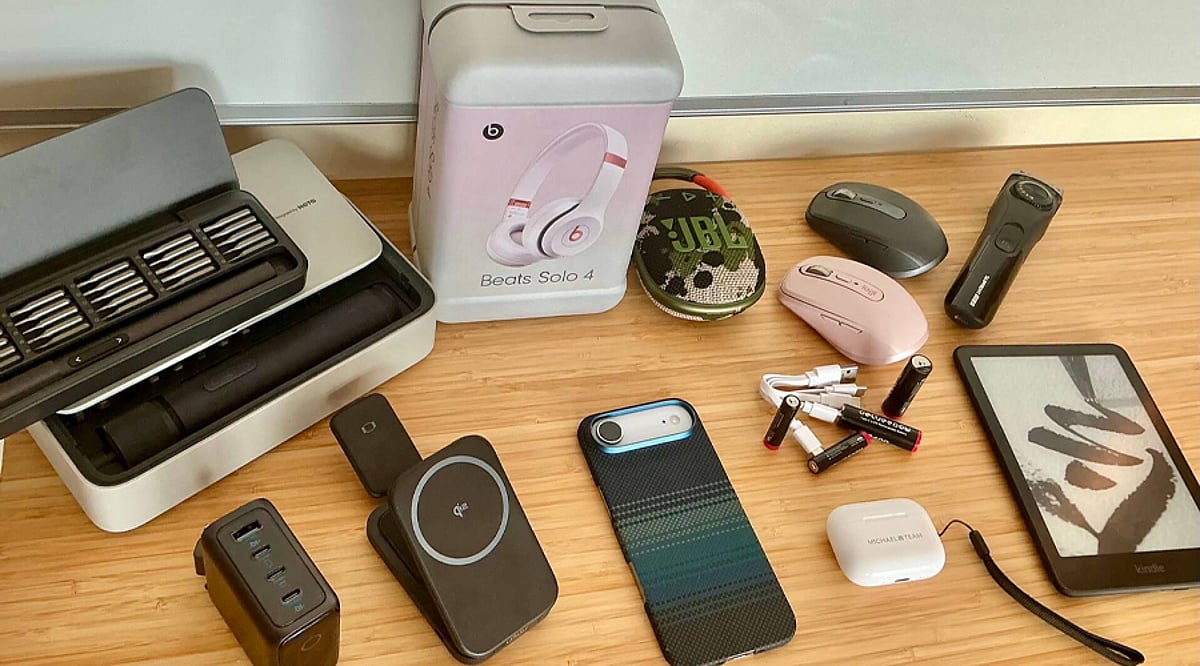
    Beyond mainstream accessories, innovative USB-C gadgets include mini flashlights, endoscope cameras, electric screwdrivers, and portable air pumps. These compact tools showcase the versatility of USB-C technology. Whether you focus on productivity, security, travel, or DIY projects, the right USB-C gadget can significantly improve everyday convenience.